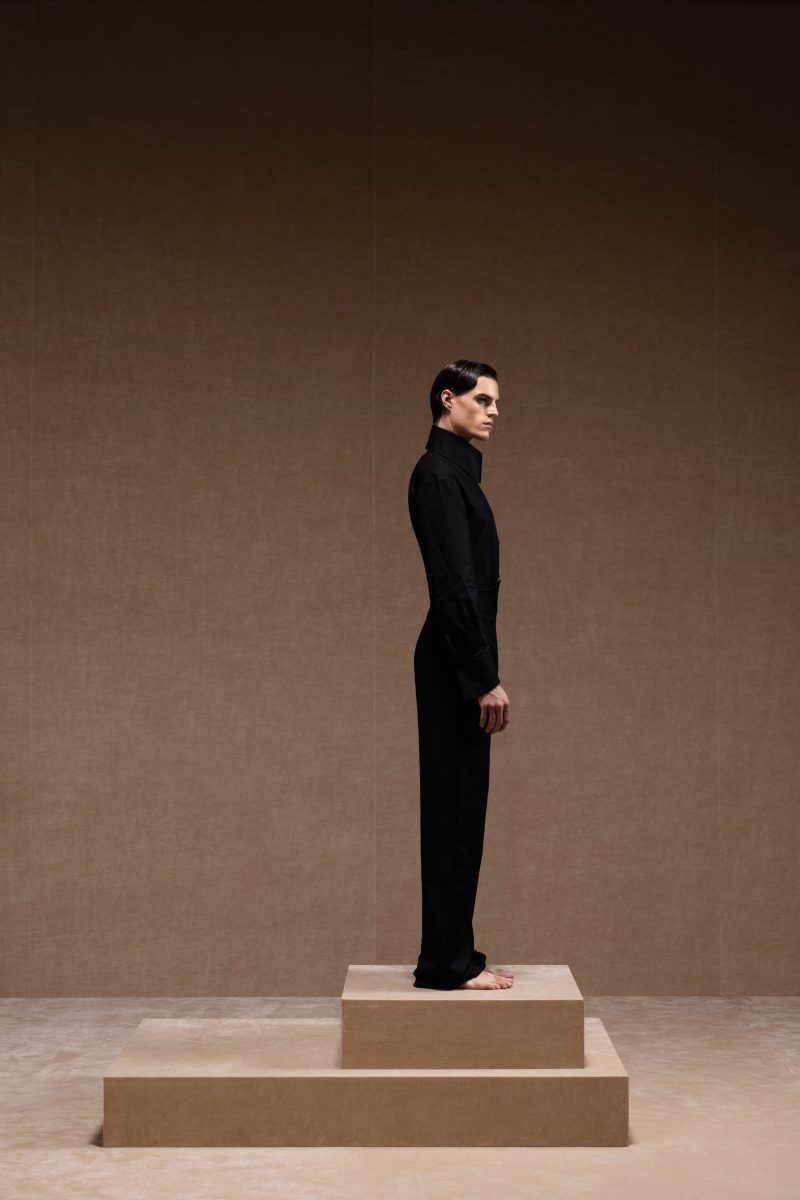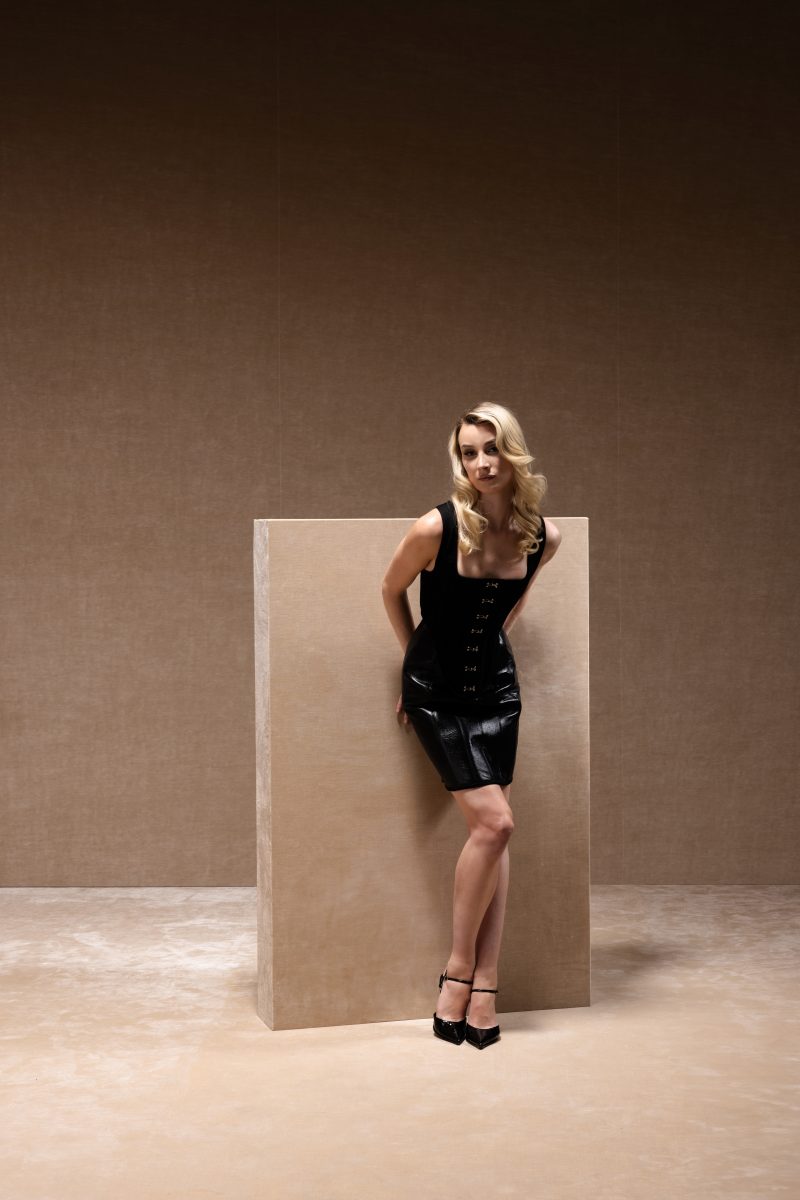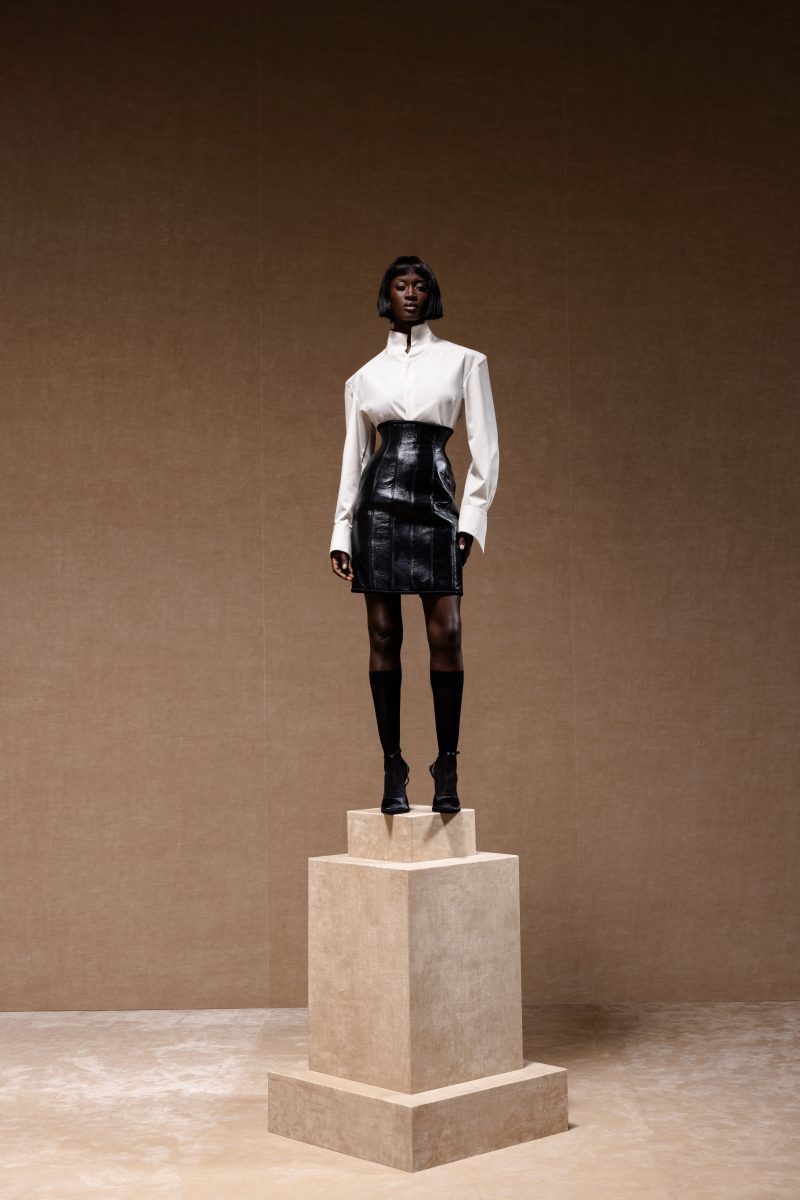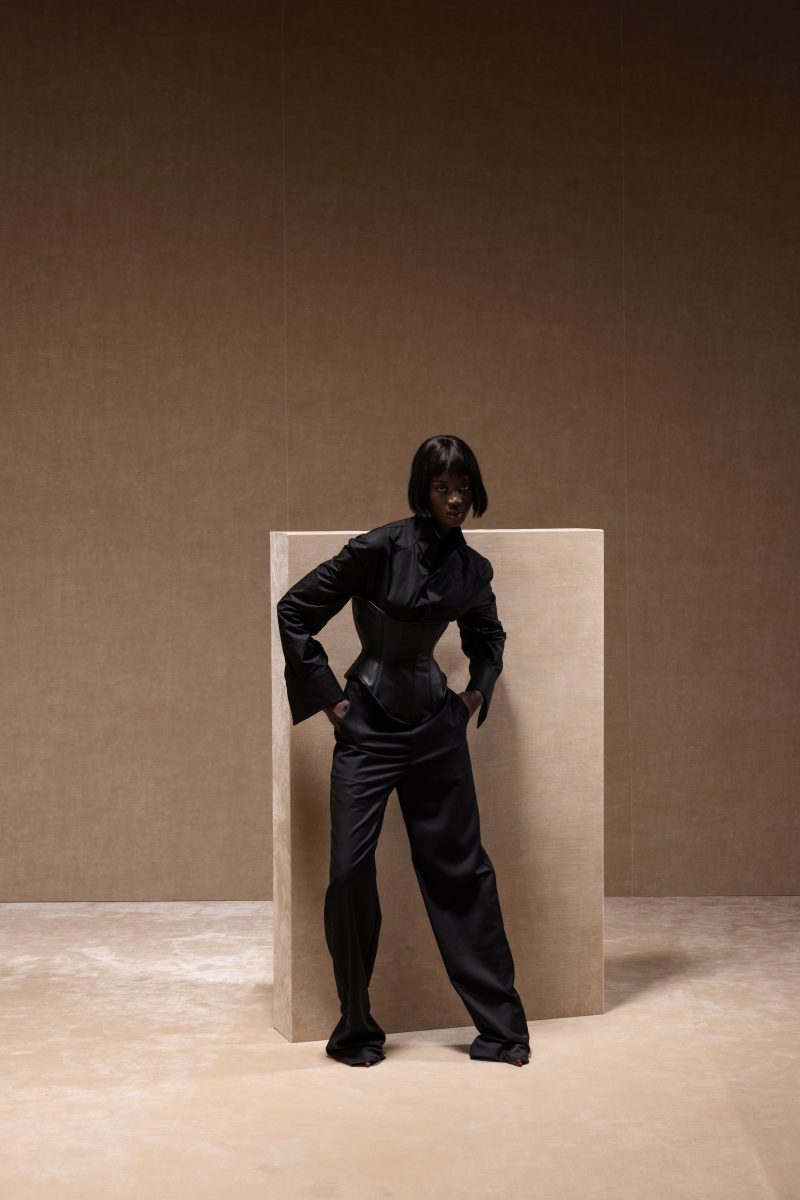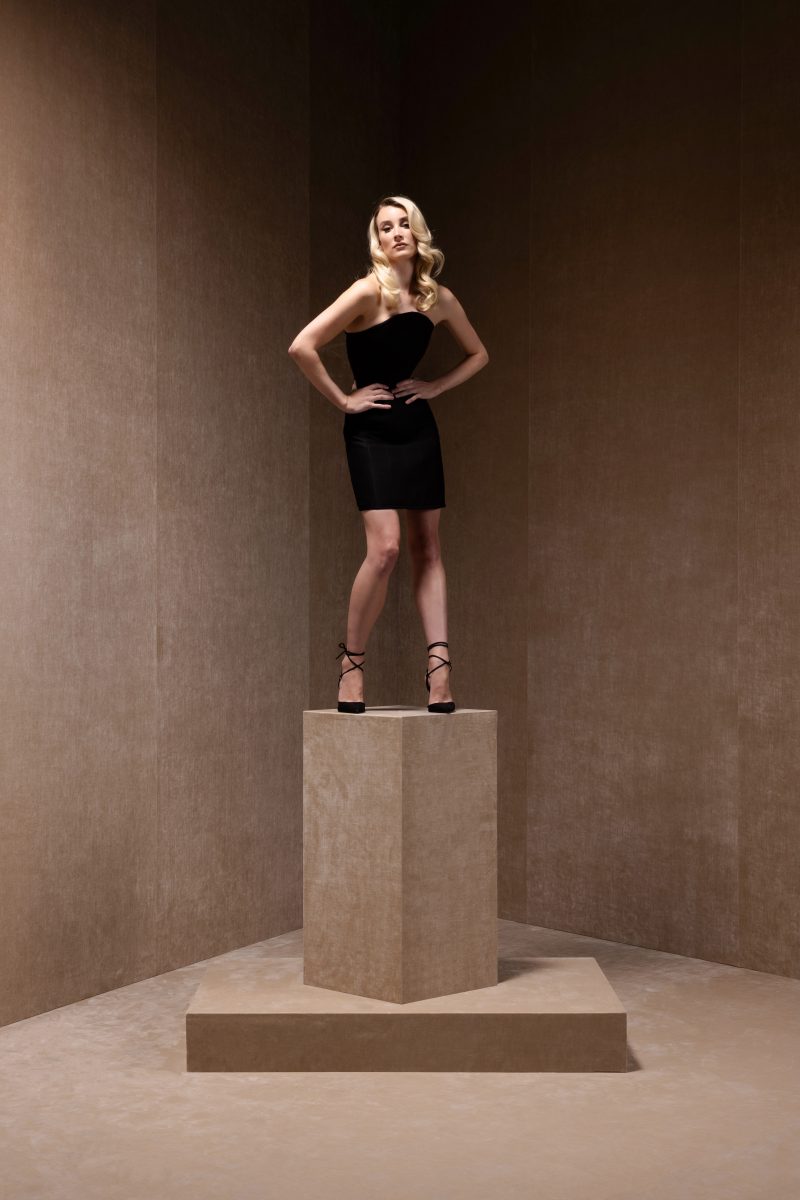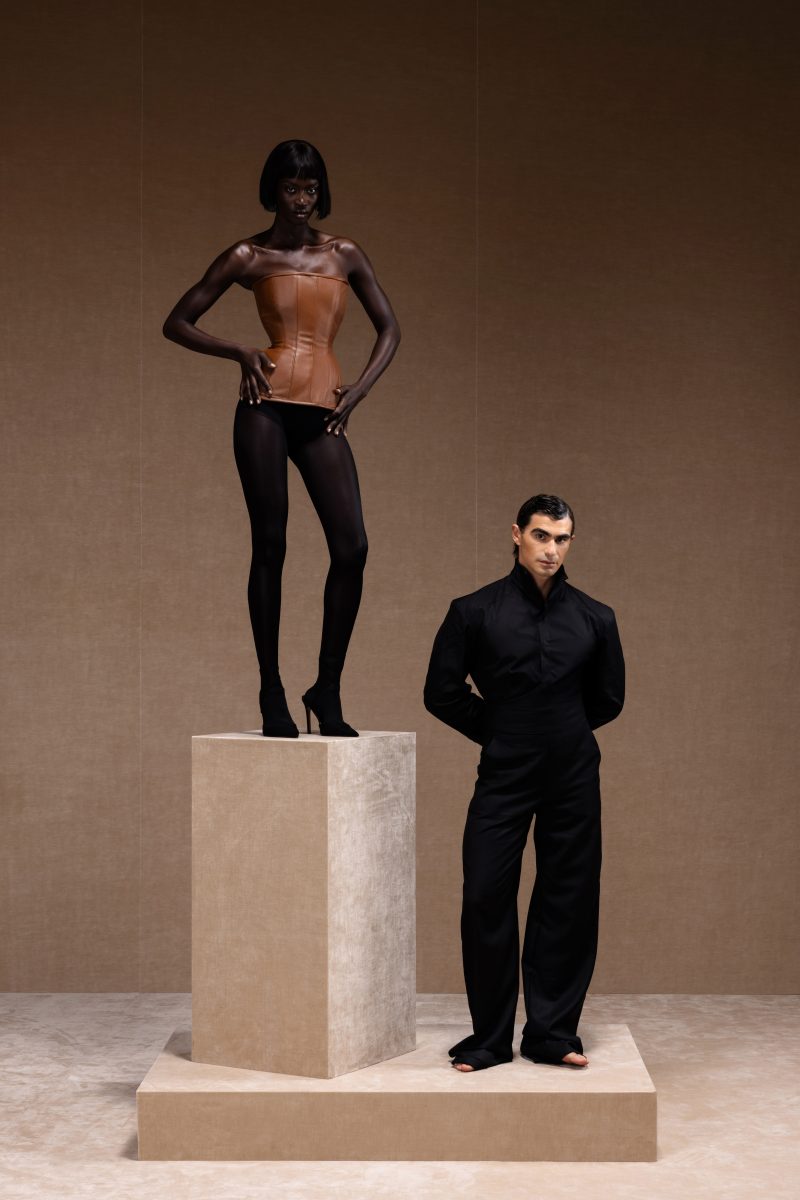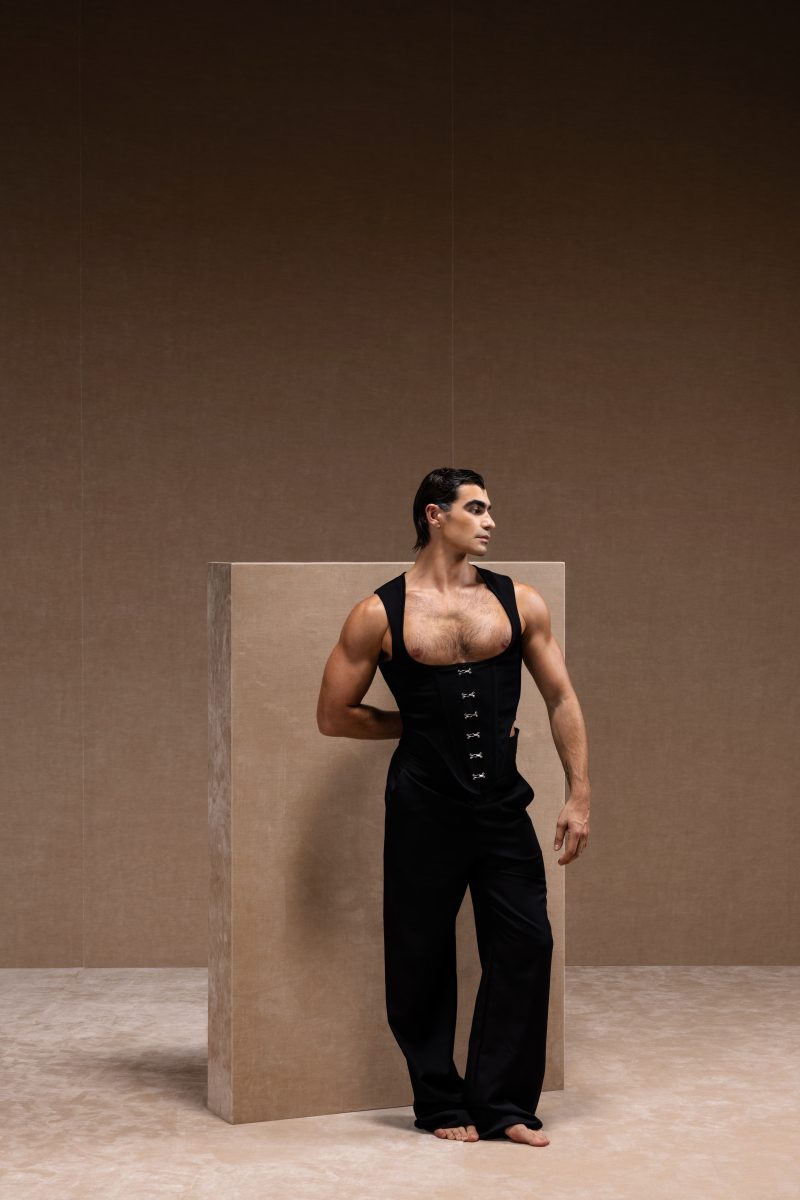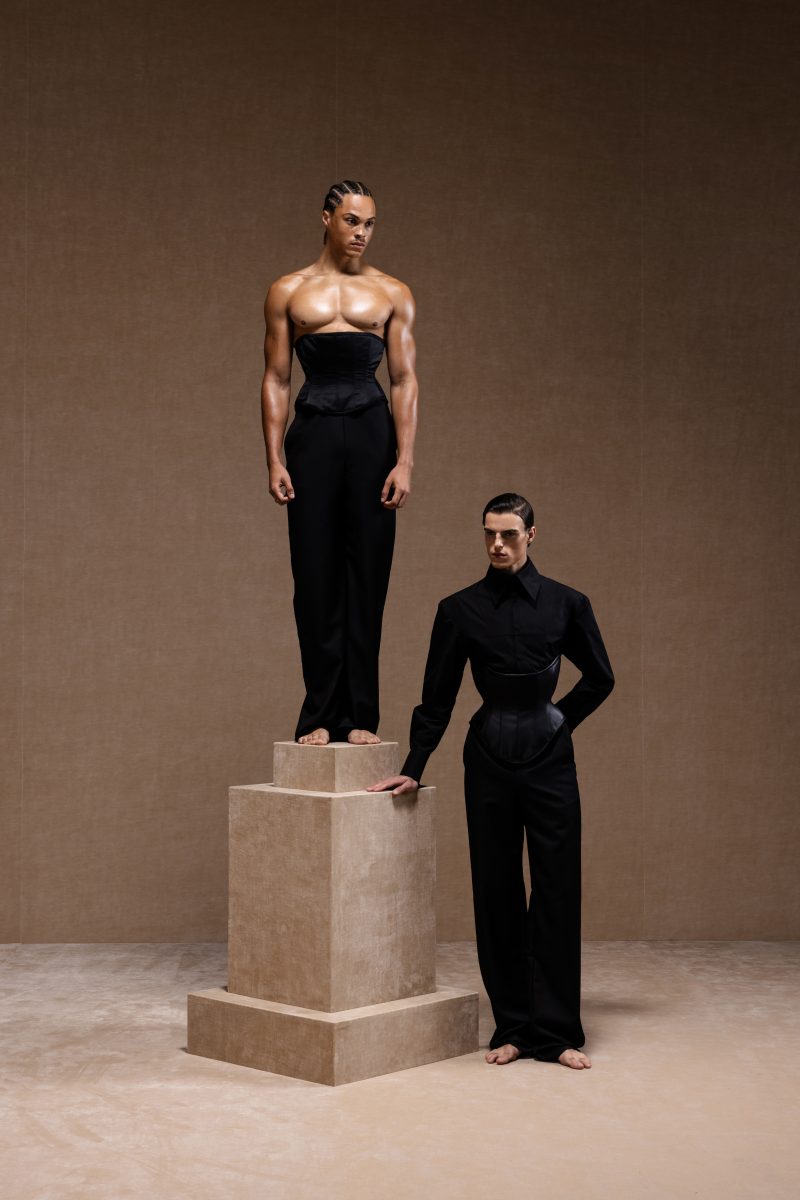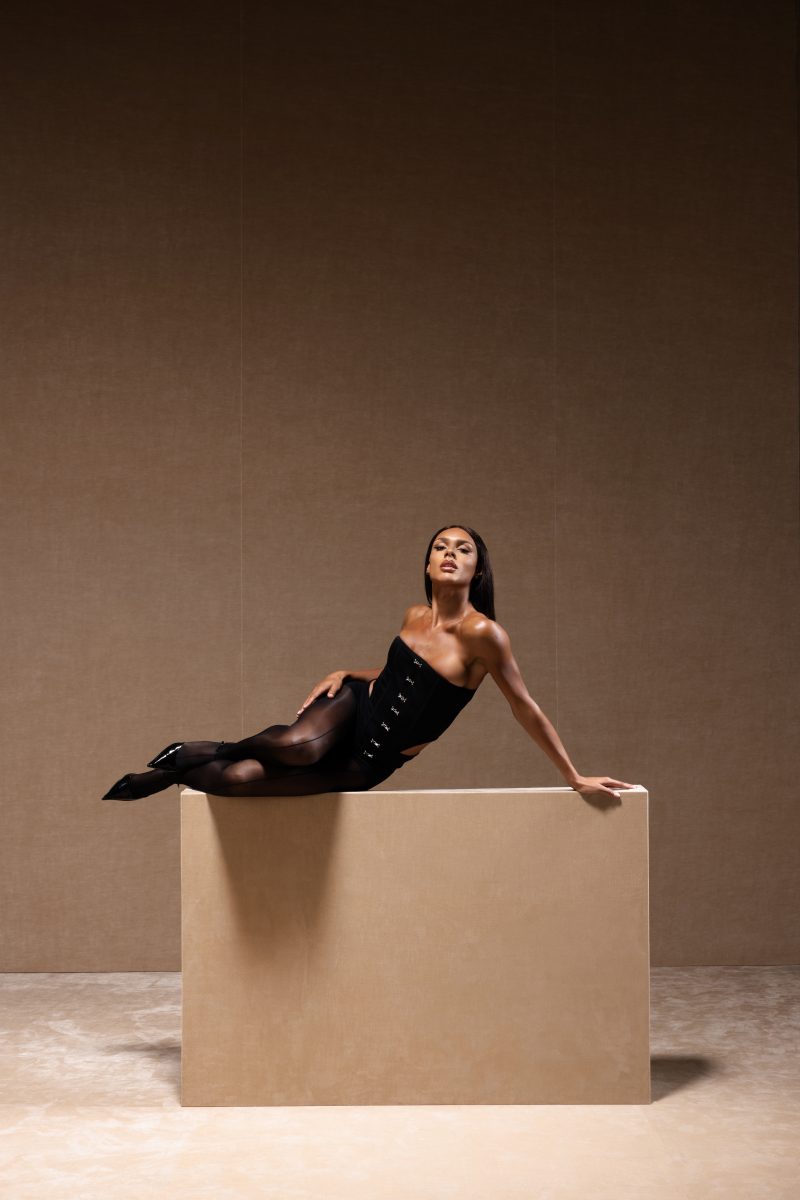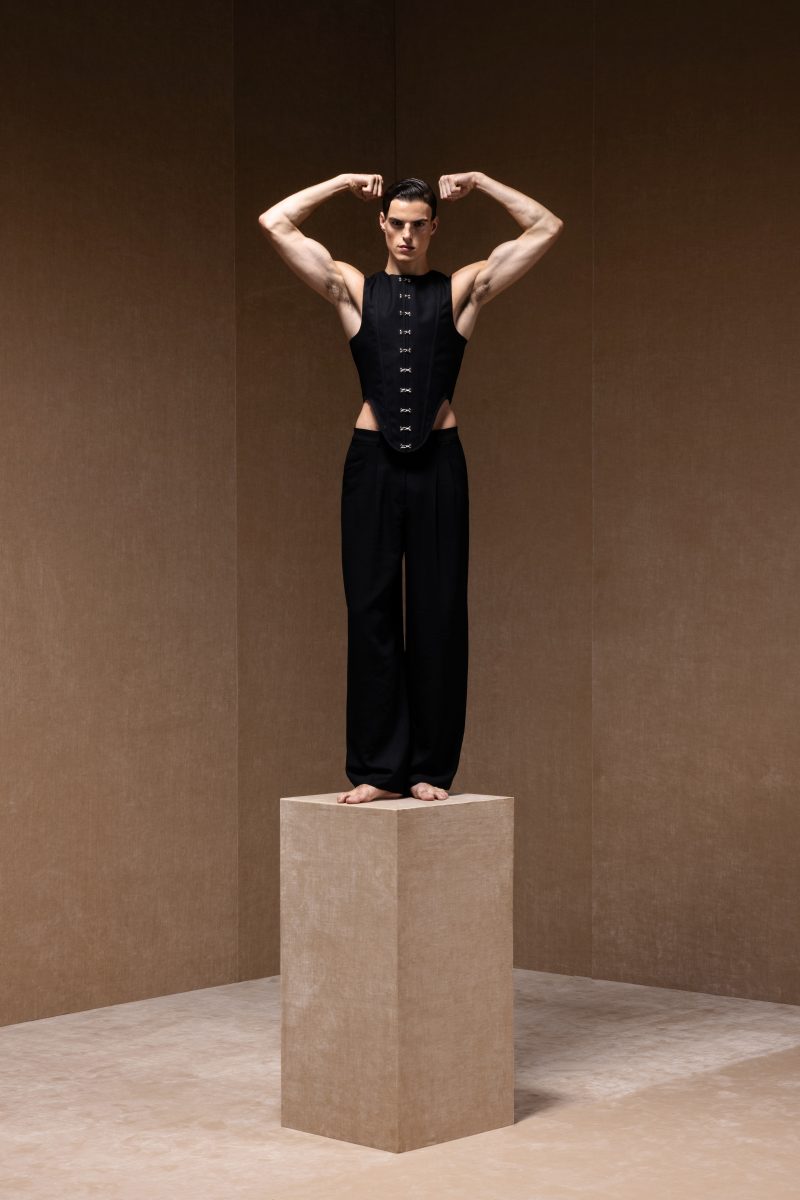


For Ledoux, the word uniform carries a layered meaning. It speaks both of collective identity – military, religious, athletic – and of personal mythology: the moment when a style becomes so distinctive it turns into a signature, instantly recognizable beyond the boundaries of fashion.
“Uniforms are incredibly powerful,” the designer reflects. “They speak a thousand words without saying anything.” It is precisely this silent authority that forms the backbone of Ledoux — a brand built on visual codes, restraint, and intention.
In the aftermath of COVID, a pivotal decision was made.
Practical, yes, but deeply conceptual: to focus on a single garment.
“Complete transparency matters,” he explains. “Building a full collection is expensive, so this choice was also economic.”
Yet the corset — the chosen piece — opened up a world of experimentation. Technical, structural, symbolic.
Historically, the corset has been a tool of control. In the Middle Ages, it was even imposed on children, believed to shape the body into ‘correct’ form. A garment once used to discipline and restrict — especially female bodies – is now being reclaimed, rewritten, reowned.
“Today, wearing a corset is a choice,” he says. “It happens on your own terms, by your own rules. And that changes everything.“
Ledoux’s aesthetic is sharp, reference-driven, chic — with a trace of severity. A controlled elegance that feels deliberate, never accidental. Still, the brand remains a work in progress, an identity in constant construction. A new project is currently underway, one that promises to sharpen its visual language and codify its universe even further.
We met the founder and CD Thibault Descamps for asking more about the brand:
Hi Thibault! How are you?
According to you, what is fashion today?
Hi ! I’m good, thank you!
To me, fashion is like a playground with infinite new discoveries to make. It is a great way to feel protected and empowered once you have found what makes you feel safe. Although it is a big business with many flaws, it remains a beautiful way of keeping the savoir-faire alive.
What is Ledoux? How do you talk about fashion through your creations?
I’m fascinated by both meanings of “uniform.” Uiforms that represent a profession or a group such as military, religious, or athletic uniforms. But also, uniform in the sense of someone who has cultivated a distinctive and unique style that it becomes immediately recognizable, even outside the fashion world. Uniforms are very powerful; they speak a thousand words without saying anything, and that’s what inspires me and makes the essence of Ledoux.
When did you decide to found a brand specializing in corsets and bustier? And why?
Just after COVID. To be totally transparent, focusing on a single piece was a choice mainly guided by the fact that developing a full wardrobe is far too expensive. However, I chose the corset because I’m fascinated by all the techical possibilities making a corset offer.
During middle age, people would also put corsets on children thinking it would help them developping correclty. So it is also a way of reclaiming a piece that was once was used to control the body, particularly the woman body.
Today, you have the possibility of wearing a corset by your own choice and on your own rules and that’s what makes all the difference and what I am standing for.
How would you describe your style?
If I had to choose words I want my work to evoke, I’d say: sharp, reference‑driven, chic, and a touch of strict. Nevertheless, the style of Ledoux is still under construction and I’m currently working on a new project that I hope will better define the identity of Ledoux through its image and codes.
Your background?
I went to the École Supérieure des Arts et Techniques de la Mode then COVID happened after I graduated and I launched Ledoux.
It started with corsets and the first campaign. Later on, I began working as a set designer’s assistant for luxury fashion houses, completely “by accident.” Even though I’m not working directly in fashion house, I had the chance to witness famous fashion photographers at work (and had them sign all of my books) which unlocked a great amount of opportunities to discover and understand the construction and composition of an image. Even more, it rose my attention to the creative process, the sourcing and the use of references that I’m appliyng to my collection. Now, not only can I make a dress but I’m also able to build a set to capture it.
Let’s talk about your latest collection, with is beautifully captured in Loïc Rodrigues’s shots.
When I reached out to Loic to talk about the project he said yes almost immediately and totally understood what I wanted.
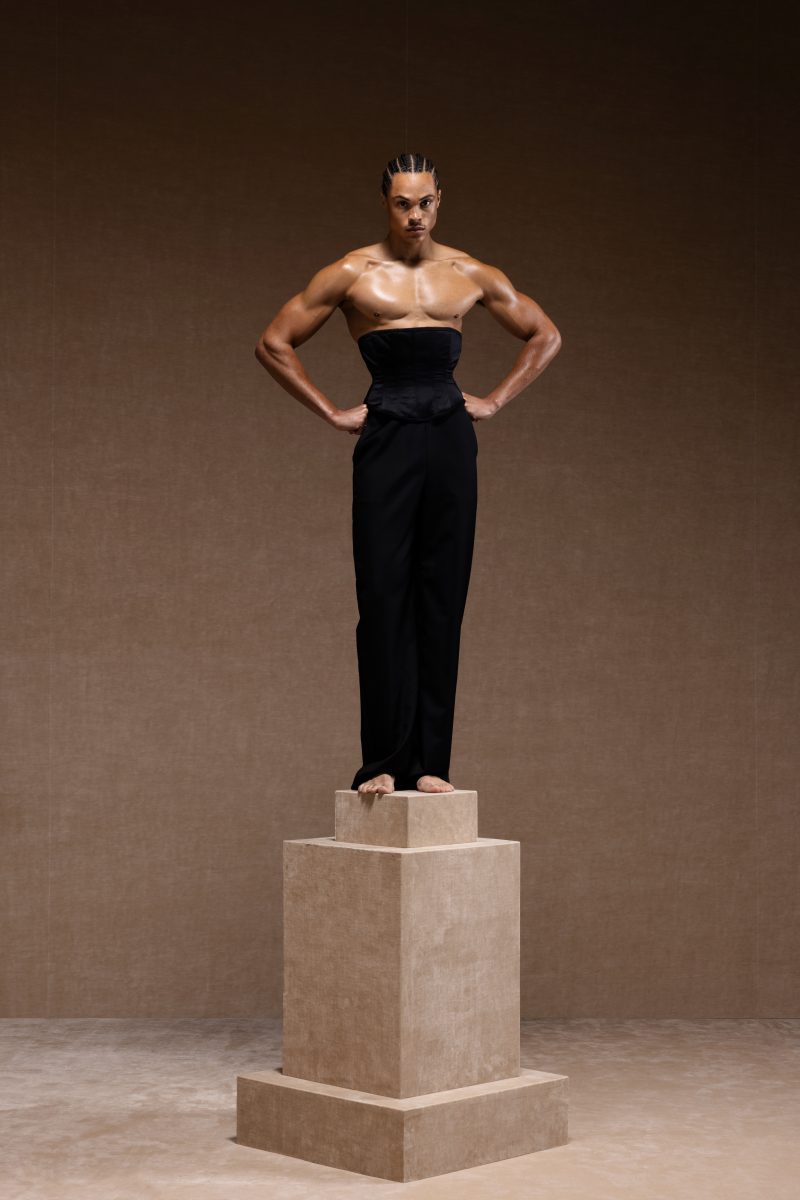
The idea was to highlight a small collection with pieces other than corsets and bustiers such as shirts, pants and skirts; while using everything I’ve learned from scenography. But I also wanted to embrace the men and women who would model for the campaign, chosen because they each represent something unique, full of pride. In short, it’s a dialogue between the space, the garment, and the person where each can shine. I partly called on people I knew who, in my opinion, perfectly embodied this notion of pride and kindness. It was a way to celebrate them and place them on a pedestal as they are portrayed as art pieces. He did an amazing job and the collaboration went so smoothly. We will work together again for sure.
Do you have any favorite pieces?
My favorite pieces are the one I haven’t made yet.
A letter to your future self.
Hope it was worth it!