

By Mira Postolache
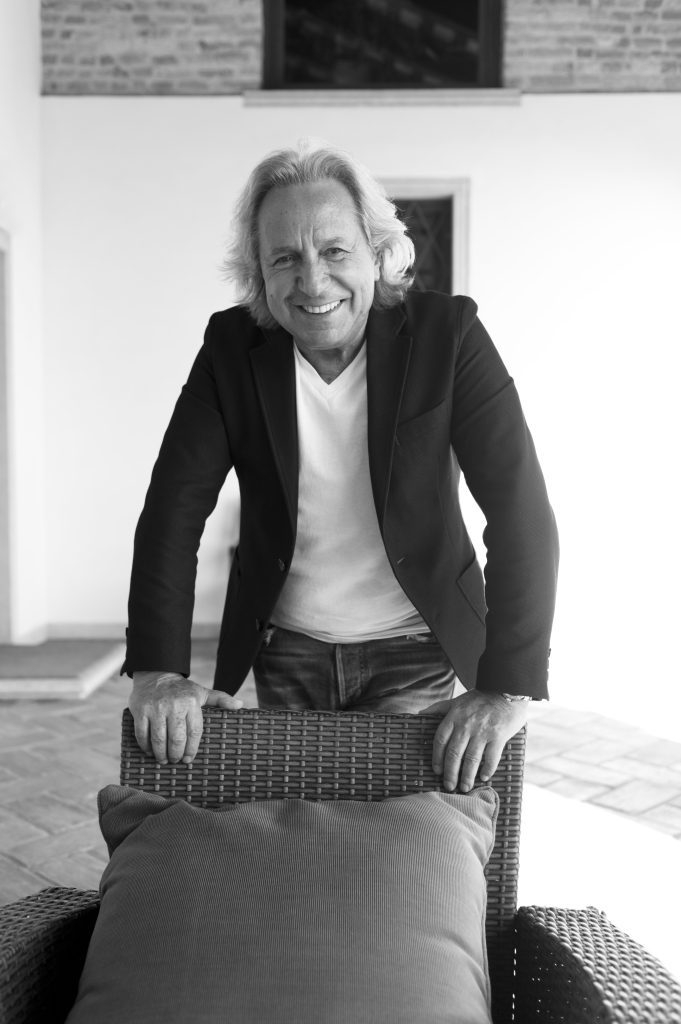
In the heart of the Padua countryside, a creative force named Enzo Fusco has been redefining the boundaries of fashion for decades. As the president of FGF Industry and the visionary behind the creative atelier Borromeo Design, Fusco’s career is a testament to the harmonious blend of passion, research, and innovation. He has cultivated a distinctive voice in the fashion world, drawing upon extensive industry experience while remaining deeply attuned to global trends.
A Journey Rooted in Experience – Enzo Fusco’s path to prominence in the fashion industry is anything but conventional. Lacking formal design diplomas or traditional training, he embraces a philosophy he refers to as “sidewalk school.” Instead of formal education, he learned through his rich experiences working with some of the most prestigious brands worldwide, including Kenzo, Versace, Armani, and Yves Saint Laurent. Over nearly thirty years as a stylist, he absorbed invaluable lessons that shaped his understanding of fabrics, styles, and the ever-evolving desires of consumers. This hands-on experience allowed Fusco to develop a keen insight into the industry, empowering him to anticipate and respond to fashion trends with remarkable agility. His ability to connect with audiences through aesthetic choices has set him apart as a leader in the competitive world of fashion.
Fusco’s creative vision is heavily influenced by his passion for Army style and a meticulous appreciation of textiles. He believes that every thread tells a story, and this understanding serves as the foundation of his design philosophy. In his work at Borromeo Design, he meticulously curates collections that reflect both historical context and modern sensibilities. Each piece is a testament to his commitment to craftsmanship and quality, embodying the unique character derived from his vast, curated archive of over 60,000 items. His artistic inspirations also extend beyond fashion; when asked to describe his collections through music and film, he cites Italian rock icon Vasco Rossi and the epic film “Gladiator.” These choices reveal a narrative of resilience and passion—qualities that resonate throughout his work.
Fusco’s approach to business is equally innovative. He has successfully integrated his family into his professional life, forming a dynamic partnership with his wife, Silvana, and their daughter, Federica. This familial bond not only strengthens the foundation of FGF Industry but also fosters a collaborative creative environment that fuels continuous innovation. Their shared commitment to excellence ensures that every collection resonates with authenticity and emotional depth.
As an entrepreneur, Fusco emphasizes the importance of understanding consumer desires. His practical insights make him a revered figure not only for his creations but also for his leadership style. He believes in mentoring the next generation of designers, fostering their unique perspectives while encouraging them to navigate the complexities of the fashion landscape with integrity and creativity.
As he continues to lead FGF Industry, Enzo Fusco remains at the intersection of tradition and innovation. His unwavering commitment to quality and passion for fashion positions him as a pivotal figure in shaping the future of the industry. With an eye on emerging trends and a dedication to his craft, Fusco embodies the spirit of resilience and creativity that the fashion world thrives upon. In a rapidly changing industry, Enzo Fusco stands as a beacon of inspiration—proving that with curiosity, dedication, and passion, one can create a lasting impact in fashion. His story is a reminder that the true essence of design lies not merely in aesthetics but in the narratives woven through fabrics, experiences, and the ever-evolving lives of those who wear them.
Blauer’s Secret Lies in Being an American Brand with Italian Design
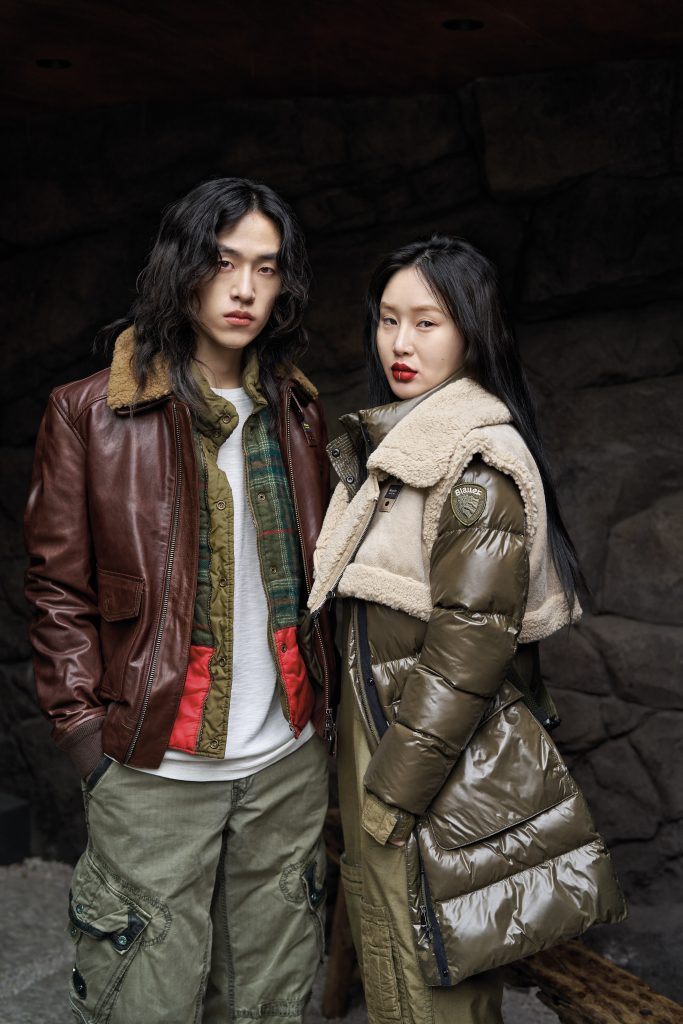
Enzo Fusco, the man behind Blauer, the brand renowned for its distinctive aesthetic, shows us that the secret lies in its unique fusion of American heritage and Italian craftsmanship. This combination is not merely a marketing strategy; it embodies a philosophy that embraces the gritty practicality of American workwear with the refined elegance and attention to detail characteristic of Italian design. This duality creates garments that are not only functional but also stylish, offering a seamless integration of performance and fashion.
Fusco’s keen eye for detail enables him to draw upon this extensive collection in crafting new projects that resonate with contemporary urban life. The influences he gathers from these garments breathe life into his creations, imbuing them with a metropolitan and cosmopolitan flair. He understands that today’s consumers seek apparel that can effortlessly transition from functional wear to stylish urban ensembles—garments that encapsulate the urgency of modern life while offering a nod to the past. In this way, Blauer transcends traditional fashion boundaries, appealing to a diverse clientele that values both heritage and innovation. Enzo Fusco’s commitment to sourcing inspiration from his military and technical garment collection not only fuels creativity but also aligns with the brand’s ethos of delivering clothing that meets the demands of a dynamic lifestyle. Through this approach, Blauer has carved a niche that celebrates its American roots while embracing the elegance of Italian design, creating a rich tapestry of style that is uniquely its own.
This article + exclusive interview for Vanity Teen encapsulates Enzo Fusco’s journey, philosophies, and contributions to the fashion industry, presenting him as a dynamic and influential creative director.
Your career now spans several decades, during which you have established relationships with prestigious brands such as Kenzo, Versace and Yves Saint Laurent. Can you take us on a detailed journey through your professional evolution? In particular, which formative experiences or challenges have you encountered in these roles that have profoundly influenced your design philosophy and approach to fashion?
I consider myself lucky to have had the opportunity to work with great designers in the early days of my career, it doesn’t happen every day, but above all the atmosphere back then was very different and far removed from today. Personal skills were united with a genuine passion for fashion and creativity was king. There was no need to chase after the end consumer because everything was magical, dreamy, la Dolce Vita was all the rage and celebrities wore clothes by Italian brands because it was here that the greatest designers who made fashion history were born. Today the way of dressing has changed a lot and in my opinion some good taste has been lost on the way…
You have famously stated that you ‘are not a designer’ and that your training comes from what you describe as ‘pavement school’. How do you interpret this perspective on fashion? Could you explain how your life experiences outside traditional educational contexts have contributed to your unique vision of design and your entrepreneurial success?
Progress and modern times, as well as the proliferation of so many new brands, have necessarily led to a specialisation of this profession. In some ways necessary given the jungle of styles and changes in aesthetic canons and the industrialisation of the sector; on the other hand, the training we had – the result of direct experience in the field and alongside self-created professionals – was unparalleled. Creativity was the result of constant research: London, Paris and NY were frequent and fundamental stops where the cues came directly from the street. In addition to this, knowing how to handle the entire creative process of making a garment, i.e. from drawing, cutting, sizing, accessories and subsequent industrialisation. Today, all these processes are followed separately by several figures; therefore, global knowledge is somewhat lost and consequently also the ability to identify where the critical points are concentrated in an immediate way.
Your passion for Army style and in-depth knowledge of fabrics and their history are significant aspects of your identity as a designer. Can you tell us how these inspirations manifest themselves in your work? Also, how do you balance these influences with the need to innovate and stay relevant in today’s fast-paced fashion environment?
The passion for military style has always been part of my interest ever since I started doing this job: proof of this is the vast collection of garments that I have collected over the years and which today totals more than 60,000 pieces. Each piece has its own story and its own meaning, and from each of them you can take inspiration, whether it is the workmanship of a rivet or a particular seam. This is where the real inspiration and honestly the most genuine part of the job comes in: seeing beyond and being able to integrate details of a vintage garment to one that has to be eye-catching and modern, adapting to the lifestyle of today’s consumer and new materials.
In an industry sometimes dictated by passing trends, research and innovation are core values in your work. How do you address these elements in the creation of your collections? Could you share a specific example where in-depth research or innovative thinking led to a breakthrough in one of your designs?
We must consider that trends have always been circular and that constant research is the basis of all work. High waists, miniskirts, cargo trousers, skinny trousers. In my working life I myself have seen trends from the 60s, 70s and 80s that have punctually returned only to disappear later. The truth is that in fashion all the novelties have already been explored, today the real challenge is to combine innovative or sustainable fabrics with cutting-edge design, enriched with desirable and unique details.
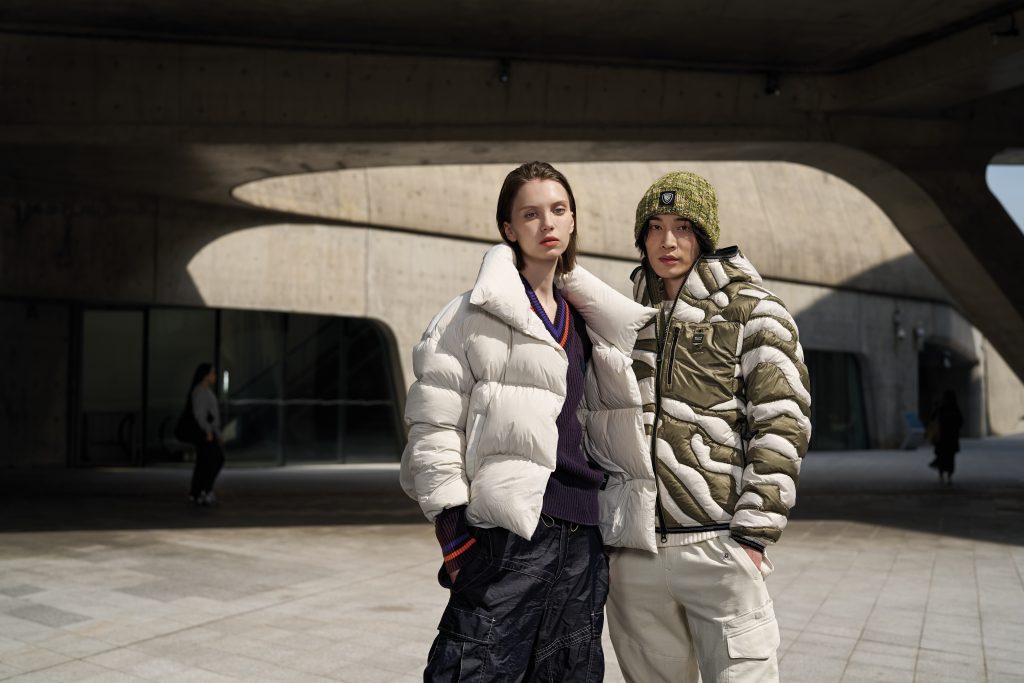
A prime example for Blauer is our best seller ‘ondina’, a down jacket that took inspiration from the inside of a military jacket that had ‘wave’ stitching but vertically. My idea was to reproduce them horizontally on the weave of the duvets when at the time everyone was making the seams of duvets in the classic way, straight and horizontal. It was an idea that struck a chord, since even today for years the ‘Ondina’ duvet remains one of the most iconic and best-selling – as well as copied – pieces in the collection.
The synergy between personal and professional life is evident in your activities with your family. How do you cultivate this family partnership within FGF Industry and what practices do you put in place to maintain a productive work atmosphere and a harmonious home life? Can you give examples of how this dynamic has influenced your creative decisions?
It is exciting to see how my family circle is all round shaped by the family business: of course, it is not easy to ‘disconnect’ and not bring work issues into the home at times, this is obvious and I would be lying if I said otherwise. But our secret is that we each take care of different areas that have little to do with each other. I take care of all the stylistic and creative parts, my daughter Federica of the Marketing and Communication strategies. My wife Silvana is in charge of the administrative and financial part of the group, while my son-in-law Giuseppe is in charge of the production/logistics part and the Blauer HT segment. Each of us has a well-defined/distinct role and our own close collaborators; the thing that works is certainly the trust we have for each other and the fact that we can always ask for dispassionate advice by confronting each other directly and cleanly.
With an amazing archive of some 60,000 items, you have created a treasure trove of inspiration and historical context. How do you use this huge collection in your design process? Could you talk about a particular case where a specific piece from your archive directly inspired a recent collection or design?
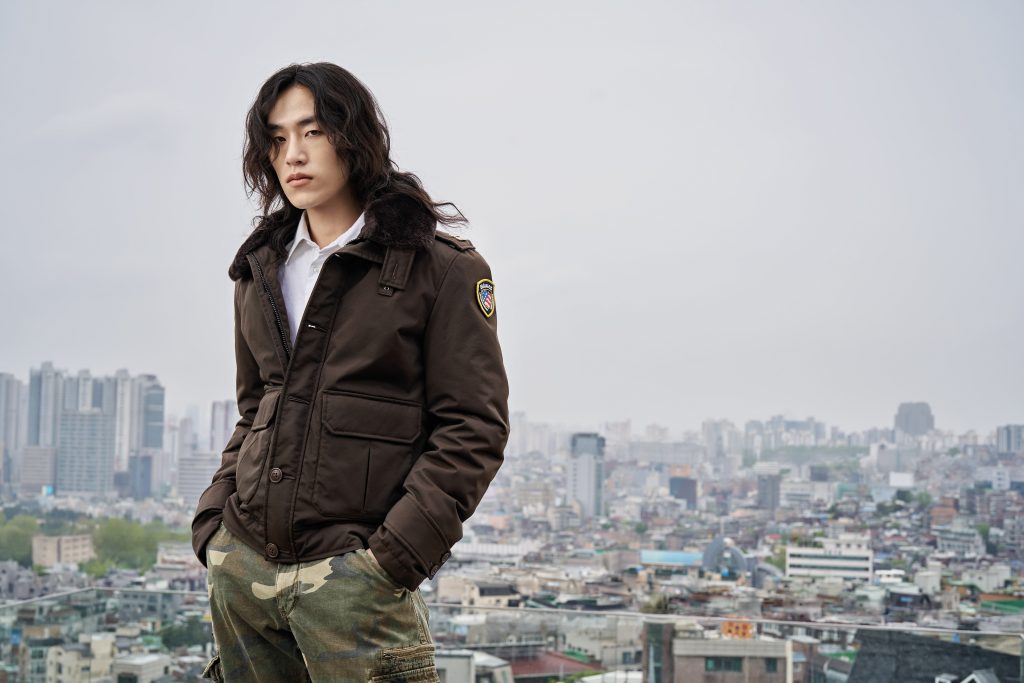
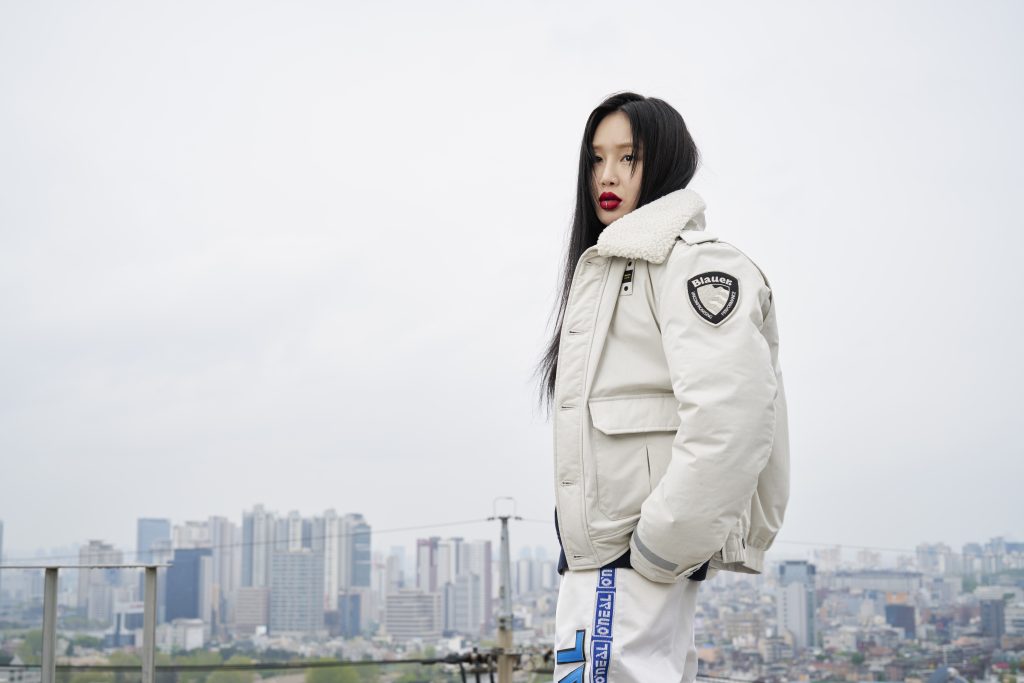
As mentioned in one of the previous questions, my archive is truly an inexhaustible source of inspiration. I happen to spend time in it when I have a lot on my mind and still marvel at how much richness of detail and style can still be found in many of the garments told within. Fashion is a continuous mixture of different styles and details from the past to fabrics and techniques of the present. One of our earliest historical garments is the ‘cop jacket’, a 4-pocket with technical fabric and fur collar that over the years has undergone a very interesting process of mutation/adaptation to modern aesthetic standards. Precisely in one of the FW24/25 ADV shots we took in Korea we present it in white, for men and women, and despite the passing years it still remains an attractive and timeless model.
The choice of Vasco Rossi’s music and the film ‘The Gladiator’ to represent your collections says a lot about you personally and your artistic spirit. Can you elaborate on the symbolism of these choices? What emotions or themes do they evoke that resonate with the narratives you try to encapsulate in your fashion work?
Vasco Rossi is Italian music par excellence, and proof of this is that every time one of his concerts is organised, stadiums and squares are filled with people of all ages; he is a transversal singer with stories that have inspired so many generations. Grit, love, friendship, nostalgia: all feelings and moods that accompany us even when creating a collection. The excitement of seeing it come to life, the grit of wanting to see it succeed, the bond with the people who helped you bring it to fruition, the nostalgia of having to say goodbye to it to make room for the new one – isn’t it wonderful how music and work are often connected? ‘The Gladiator’ is an American cult film set in Italy and about historical events in an adventurous/glorious key in the eternal city – Rome – symbol of the Dolce Vita par excellence and that despite today’s problems that we all know about, is also eternal in romantic inspiration on a symbolic level. Determination, courage, heroism, family bonding and originality are values in which I believe and which form the basis of my work, not to mention that the film’s protagonist Russell Crow often returns to Italy – to Rome recently – and calls it ‘his second home’: I therefore assume that this film had a special place in his career for him too!
Your life spans different geographical and cultural influences, from Piedmont to Apulia, and now Venice. How do these regional characteristics influence your design sensibility? Can you tell stories or experiences that highlight how these cultural elements have inspired particular collections or concepts in your work?
I was born in Turin but my parents were from Apulia; life then led me to open my business in Veneto despite the fact that I also spend a lot of time in Turin or often in Apulia where we have an estate with trulli and olive groves, so what can I say, I live 100% Italian without borders. Italy is unique in this, each region has its own characteristics and peculiarities, which have always inspired great designers. As a good man of the world, I live and absorb everything and transform it into the collection that is in my mind. It seems unbelievable, but the fact that I produce wine or oil or fresh eggs connects me with mother nature: her colours and shades are often a source of inspiration for the collections I work on.
As a fashion industry veteran, identifying and acting on trends is crucial. What specific strategies do you use to keep up with market trends and consumer preferences? Can you explain how your intuition and experience have played a role in accurately predicting changes in the industry?
Observation and curiosity, dedication and foresight: these are the foundations for being inspired by what happens around us every day and acting accordingly. Travelling is the glue that helps to meet this need: visiting those avant-garde countries where influences and styles ‘happen’ or simply originate from ordinary people who have an uncommon aesthetic taste. Little-known designers with particular visions, purely local ways of dressing that inspire entire collections and are then taken up by famous brands and eventually worn by celebrities: this is how trends are born that then want to be worn by everyone. You have to have a good intuition at the right time and then know how to place it in the right context.
Craftsmanship and commitment to quality seem to be fundamental to your brand. What methods do you use to ensure that these values are not only stated, but actually embodied in the products you create? Also, how do you educate your team and partners on the importance of maintaining these standards?
These two characteristics are fundamental for us and are the reason why we have a very loyal customer base, especially in Italy but also abroad. We were born with high standards and a good compromise between quality and price, so we almost never receive a purchased garment back because it does not meet expectations and this makes us proud because it means we are on the right track. Our team is highly qualified as well as our first buyer, prototypes and patterns are made by us directly; this also helps us to work together to overcome certain difficulties or to solve problems that we encounter even before reaching the final consumer.
In an industry that relies on collaboration, how do you foster a favourable creative environment within your team at Borromeo Design? What specific practices or values do you uphold to ensure that each team member feels empowered to contribute creatively? Can you give an example of a successful collaboration born out of your team dynamics?
I make use of a small historic creative team that has followed me almost since the beginning of my career; to this original nucleus come and go newcomers, young people and external collaborators who necessarily have a different vision and whom I like to listen to and consult frequently. Borromeo Design is housed in my villa where I currently live: in itself, therefore, the environment facilitates things because it seems to work in a familiar environment, not very industrialised and surrounded by greenery, with an appearance that is very far removed from the classic ‘office’; I therefore believe that all my collaborators feel very serene and consequently there is no need to create strategies to encourage the creative side of each one to emerge, everything is very spontaneous and welcome.
You mentioned ‘Gladiator’ as a metaphor for facing challenges. Could you describe a significant obstacle you encountered in your career? How did this experience shape your resilience and determination and what lessons did you learn from it that continue to inform your career path?
I have faced many obstacles and there would be many examples, but I think one of the most recent in everyone’s memory was during the Covid period. Even then, however, never giving up rewarded us and we overcame that difficulty too.
So never give up, especially when things are going well.
Given your vast experience, what advice or mentoring do you consider crucial for aspiring designers and entrepreneurs? How can they cultivate their unique voice and place in the fashion industry while facing its challenges?
It sounds obvious but the first piece of advice is to love what you do, don’t choose to do a profession for other reasons because each of us has a special hidden talent and that’s where we need to focus in order to feel truly fulfilled and happy, but above all to find the strength to pick ourselves up when things don’t go as we expect. Of course, this alone is not enough, we need tenacity, a touch of unconventionality and burning passion. As well as a healthy dose of luck and a spirit of sacrifice of course!
Looking to the future of the fashion industry, which emerging trends or technological innovations are you most excited about? How do you plan to integrate these advances into FGF Industry’s strategy or its approach to design in the coming years?
It is essential today to consider what the current climate change is bringing to our industry as well: therefore in future collections there is definitely a search for lighter weights and fabrics. We are not a brand that necessarily runs after the ‘latest trend’ of the moment; if anything, we have always been the ones anticipating certain trends, sometimes even too far ahead of the times, when the consumer was not yet ready (e.g. the jacket with thermofix that automatically warms up in particular cold conditions). Of course, we pay a lot of attention to what is happening around us and how the world of young people is moving and that is why we constantly monitor what is happening, but we try to make changes only in some particular models or by creating new models ad hoc and see how they are received but always without upsetting our DNA: our consumers know who we are and what they expect. Staying true to our world of reference without ever losing creativity/innovation is definitely the challenge and the goal we set ourselves every time we start to study a new collection.
Reflecting on your illustrious career and the path you have traced in the fashion world, what do you consider to be your most significant legacy? What impact do you hope to have on future generations of fashion designers and the industry as a whole, both through your creativity and your leadership?
It makes me smile to ask this question, because I think that the people concerned should answer it…those who know me know that I am a reserved person who does not like to be in the spotlight much and that I am only comfortable with people I know or who I feel are genuinely authentic. Consequently, I also don’t like to glorify or emphasise my person or my career. I hope I have certainly made a contribution on a creative level given the numerous and varied collections I have put together over all these years, not to mention the precious pieces in my archive, which alone tell much more about me and my story than I could ever do myself; for the rest, as the poet Alessandro Manzoni said, ‘to the posthumous the arduous judgment’.
Enzo Fusco’s remarkable journey through the worlds of fashion and design is not just a story of personal success; it is a narrative woven with inspiration, resilience, and an unwavering commitment to quality and innovation. Through his work at FGF Industry and as a creative leader at Borromeo Design, Fusco has not only crafted iconic pieces for Blauer, but also nurtured a vision that honors tradition while embracing the future.
His ability to blend personal passion, extensive experience, and a genuine love for storytelling through fashion allows him to create collections that resonate deeply with a diverse audience. As he navigates the complexities of an ever-evolving industry, Fusco exemplifies the importance of staying true to one’s roots while being open to exploration and change.
With a legacy built on mentorship, craftsmanship, and an extraordinary understanding of the lives and desires of consumers, Fusco inspires both current and future generations of designers to harness their unique voices and foster their creativity. As the fashion landscape continues to shift, Enzo Fusco stands as a guiding light, a reminder that authenticity, connection to heritage, and a forward-looking vision are what truly shape the future of fashion.
In an age where trends come and go, it is the stories—woven into every fabric, stitch, and design—that endure. Enzo Fusco’s dedication to his craft illustrates that the true essence of fashion lies not only in aesthetics but also in the timeless narratives that connect us all.