by Mira Postolache
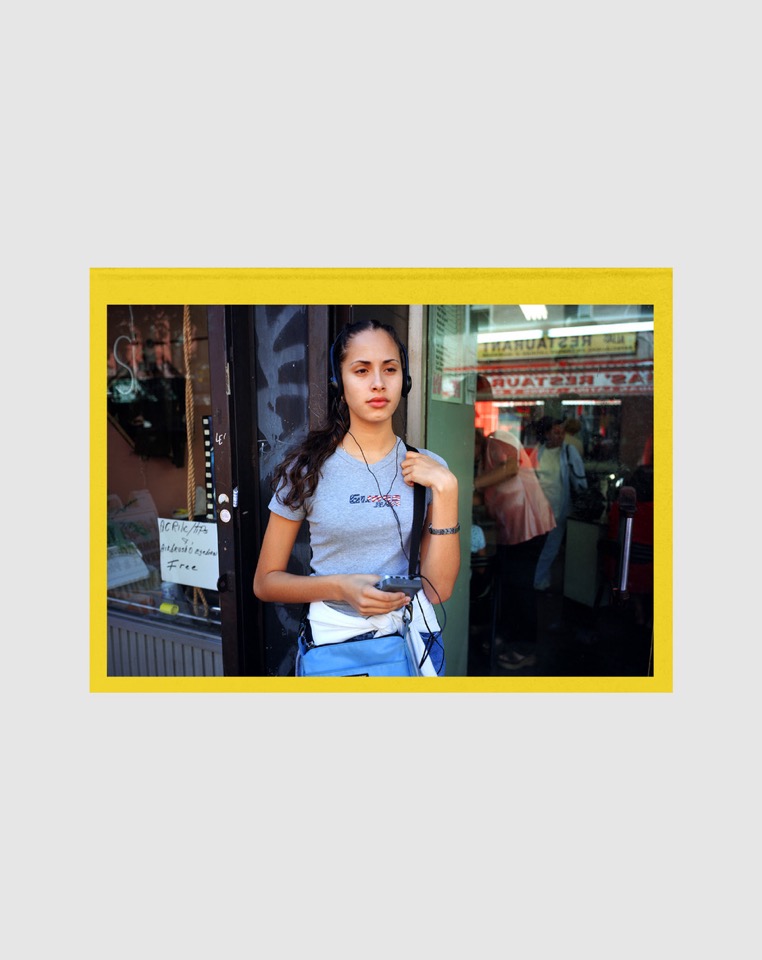
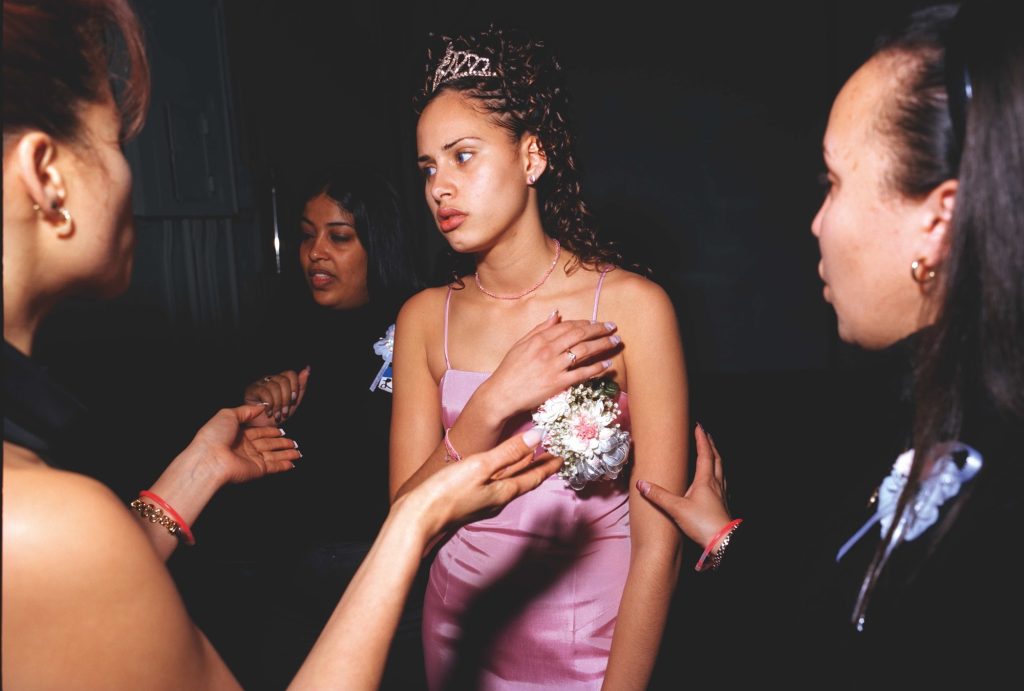
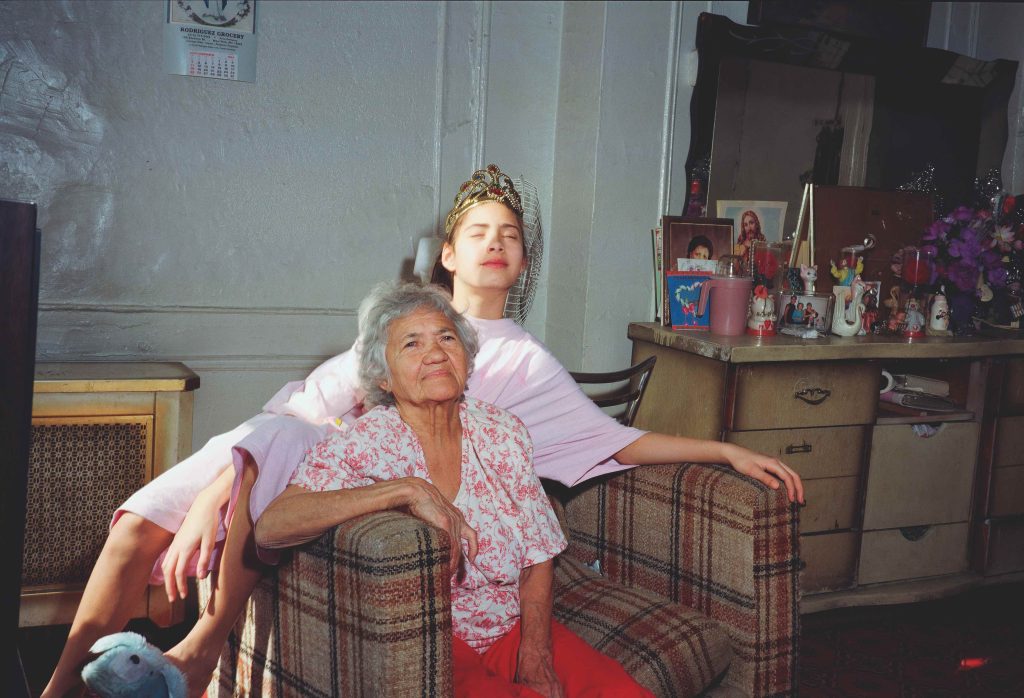
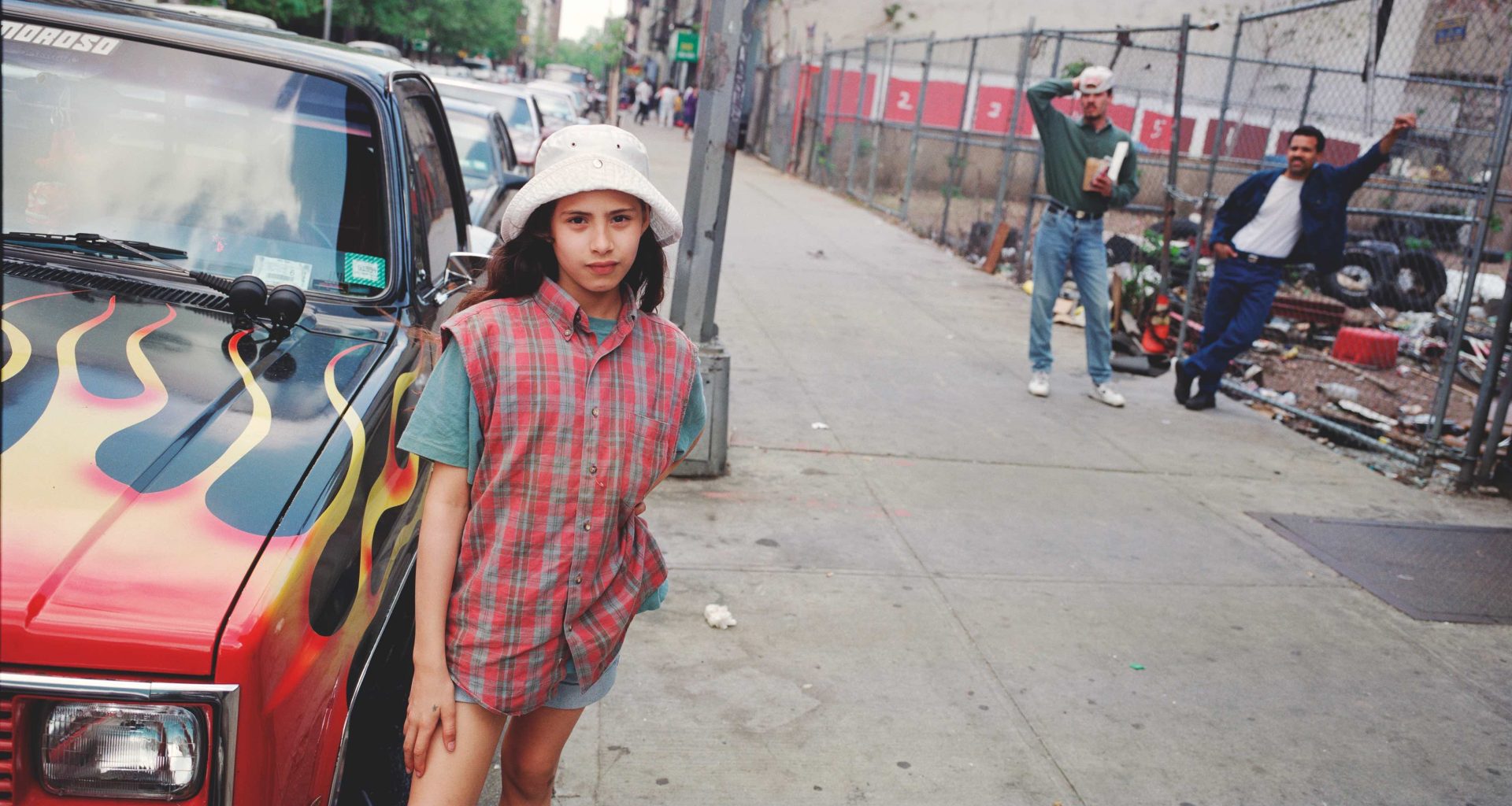
In the vibrant tapestry of New York City, where cultures converge and stories intertwine, photographer Angela Cappetta has dedicated over a decade to capturing the beauty and complexity of Puerto Rican girlhood through her latest book project, “Glendalis.” Beginning her photographic journey in the mid-1990s, Cappetta, a long-time resident of the Lower East Side, traversed her neighborhood with a camera in hand, instinctively drawn to the families that defined her surroundings. It was during this time that she came across the Glendalis family, whose warmth and openness became a focal point for her exploration of identity and community.
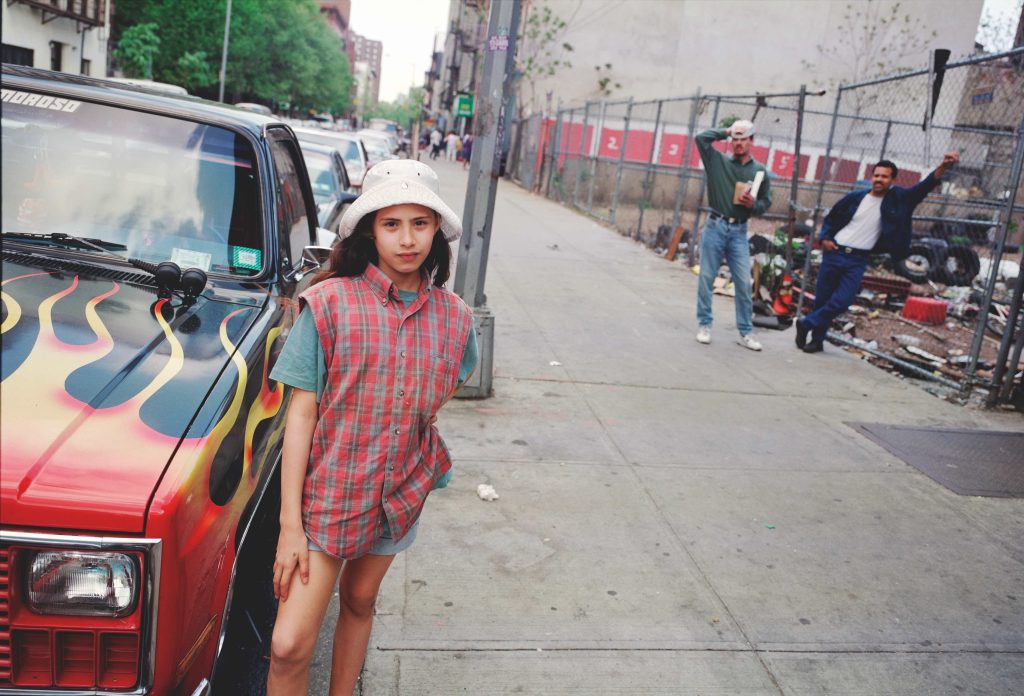
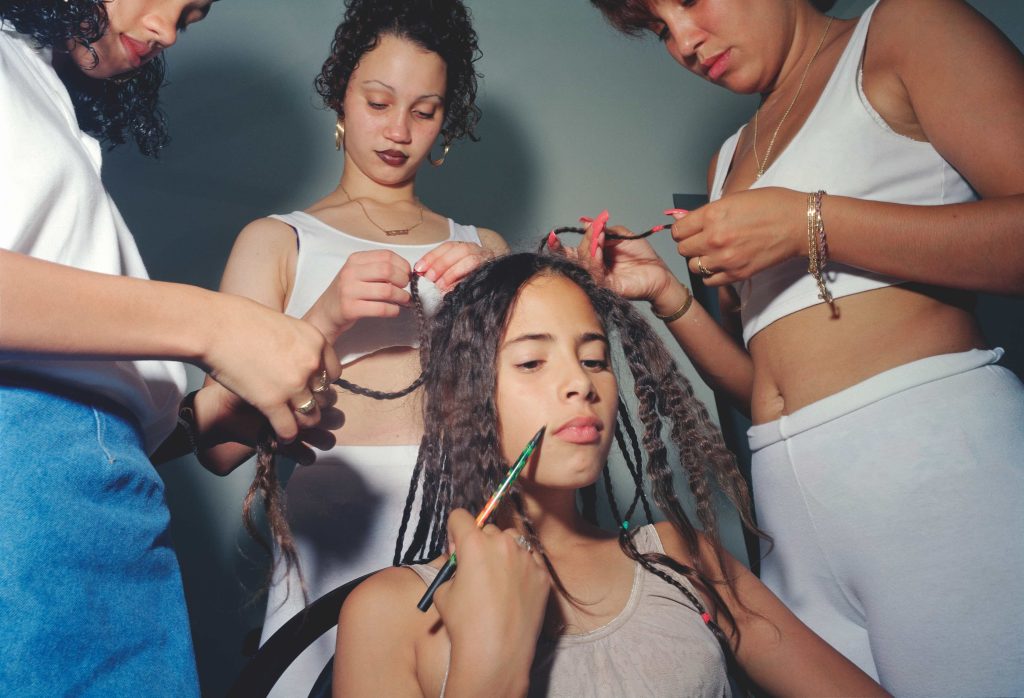
A Shared Narrative of Family and Community. Cappetta’s work resonates deeply with her own upbringing as a Gen X child in a Mediterranean household in racially and economically segregated New Haven, Connecticut. Her reflections on family dynamics capture a sense of chaos—a “cacophony” of relationships that blur personal boundaries and create a tight-knit communal fabric. “Everybody lives multi-generationally,” she notes, describing how children are often shuttled between households, absorbing love and stories from a myriad of relatives. This experience made her easily identify with Glendalis, the protagonist of her photographic narrative, who also grew up enveloped in a similar family network. Cappetta’s immersion into Glendalis’ world unfolded in the pre-gentrified streets of the Lower East Side, where the realities of urban life—both joyful and harsh—paint a vivid picture of their existence. Her candid photos reveal not only the familial bonds but also the shadows of trauma lurking within communities. As she acknowledges, crime, incarceration, gangs, and loss are part of the landscape she captures; yet, amid these adversities, there exists a resilience that shines through the images.
The Art of Observation and Storytelling. In an intimate and organic process, Cappetta becomes a part of her subjects’ lives, her artistic journey shaped by the relationships she builds over time. As she states, the life of a documentary-style photographer is both solitary and enriching, compelling artists not only to seek stories but often to confront their own. “Every artist leaves a piece of themselves behind when they commit to a project,” she reflects—illustrating how her journey to document Glendalis’ life became a personal exploration of girlhood, independence, and community.
“Glendalis” is not just a collection of striking photographs; it is a heartfelt odyssey that intertwines Cappetta’s own narrative with that of a young girl growing up in a multi-generational household. As the youngest in her family, Glendalis embodies the spirit of exploration and connection that Cappetta reminisces about from her own childhood—an echo of voices calling out from the past.
The culmination of Cappetta’s years of dedication is manifested in her new book project, a beautifully curated collection that embodies not only the visuals but also the spirit of her journey as a photographer and storyteller. With the assistance of L’Artiere Publishing, she has meticulously crafted a work that offers insight into her artistic process while serving as a resource for aspiring photographers looking to merge their artistic visions with meaningful narratives. Cappetta’s book promises to be more than just a visual feast; it provides an opportunity for readers to engage with the profound experiences of Puerto Rican girlhood in New York City. It serves as an invitation to connect with her story and to understand how her lens captured the essence of a community that is rich in tradition, resilience, and familial love.
As Angela Cappetta shares her world through “Glendalis,” she creates a space where audiences can witness the transformative power of photography in conveying human experiences. It’s a celebration of girlhood and the myriad threads that bind us together—reminding us that, through art and storytelling, we can explore the depths of life, love, and identity.
Your book “Glendalis” captures the essence of life in a pre-gentrified Lower East Side through the lens of a Puerto Rican family. Can you share the specific inspirations that drew you to Glendalis’s story? What unique aspects of her life and background particularly resonated with you?
I wish had a fancy, impressive answer for this. But truly, this project was born of access and convenience. I lived in the neighborhood and photographed a great many families in my surroundings as I still do. This is just one story of one family as told by me. It was the first time in my career I had ever connected a project with a path forward.
In what ways do you believe that Glendalis’s experiences reflect the broader struggles and triumphs of lower-middle-class families, particularly those from marginalized backgrounds? How do you strive to convey these universal themes through your photographs?
This is a common misconception about documentary work. I don’t really strive to convey a theme nor do I know what a subject’s individual life is like. I’m only there to photograph. Coming away with pictures which either succeed or fail is my primary purpose when on location. I’m not a psychologist, I’m just a photographer. I ring up my subject, ask if it’s an okay time to show up and I head over. I don’t strive to play out any universal theme. I doubt any one artist is that powerful. But if others want to extrapolate meaning on their own any artist would encourage them to do so. In my training, we are taught that a photograph is a new fact. It is not what was photographed. I employ that method when I’m working – it is very freeing. All these larger issues are at the viewer’s discretion.
The relationship between photography and storytelling is crucial in your work. Can you discuss the techniques you employed to intertwine visual storytelling with the emotional narratives of Glendalis and her family? How did you ensure that their story was depicted with both honesty and artistry?
I am a natural story teller. To accomplish this I keep things simple. My technique is pretty straightforward and consistent. I use a medium format 6×9, color film and a flash.
I’m not involved in any subject’s real-time narrative. I’m just putting a camera in front of them. It’s not the subject’s story we see in a project, it’s the artist’s story. No photograph is the truth. As Garry Winogrand said “the photograph isn’t what was photographed. It’s something else. It’s a new fact”. He believed that the photograph is a different entity from the subject being photographed. I believe he is right.
Setting plays a vital role in “Glendalis.” How did the Lower East Side’s cultural and historical context influence the narrative you aimed to create? Can you speak to any specific locations or elements that were particularly significant in your storytelling process?
I wasn’t, nor am I now, concerned with any historical context as I shoot. I doubt many photographers are. This was simply the neighborhood where I lived and worked. Back then, we lived there because we
could afford it. But I really enjoyed my surroundings. I loved the fearless color choices of the apartments, the wide open fields that bordered the streets, the huts where men would gather, listen to a game, smoke and drink, those chain link fences and that gorgeous light. I loved it all. Now, though, the neighborhood is now an overpriced hellscape of bars, boutiques and tattoo shops. I’m glad I shot it when it was still a real neighborhood.
To this end, no matter where I am, I shape my own narrative as I work. The location where a photographer works is their backdrop, a drapery of sorts. It is a scene upon which things are discovered. This can be anywhere — the subject can be anything. A photographer’s job is to discover what interests her and to look under the hood.
As Glendalis evolves from a child to a young woman, what parallels do you observe between her personal growth and the challenges faced by youth in today’s world? How can her journey inspire readers who may face similar circumstances?
Any subject’s personal evolution is not part of my work. I don’t strive to tell coming-of-age stories. I prefer to look for evidence of a compelling life lived. However, people are encouraged to come up with their own point of view when they look at the pictures. This is where photography is magical. It means different things to different people. It isn’t axiomatic.
Building trust is essential in documentary photography. What approaches did you take to establish a trusting relationship with the subject and her family? Can you share any particular strategies or experiences that facilitated this bond?
Living near someone, we all form neighborly ties with each other. These are sometimes visible – like helping them move – and sometimes invisible, like seeing them in the corner of your eye on a school run. This isn’t exclusive to photography. It informs a great many experiences we have with each other.
As you prepare to launch “Glendalis,” what key messages or reflections do you hope your readers will take away from the book? Are there specific feelings or realizations you want the audience to experience when engaging with Glendalis’s story?
My greatest wish is that people come up with their own narrative and enjoy the work on their own terms. I don’t offer an opinion on my subjects’ personal lives as this has very little, if anything, to do with the work. None of my work has titles and the pages don’t even have pages numbers. It is meant to be a mystery so you are free to draw your own conclusion.
For example, I could talk all day about the maternity pictures I take for my women’s health project. It is a deep dive at the ennui of non moments of maternal health in a post Dobbs America. Women are dying everyday, or sitting in jail for miscarrying into a toilet, yet no one asks me about my relationship with the
models of these, arguably, highly intimate pictures. I’m telling my own story and giving my own opinion which is separate from he subject’s. It is my story, not necessarily theirs. I want my audience to have the freedom to explore the work on their own terms.
Looking beyond “Glendalis,” what are the future directions of your artistic journey as a photographer? Are there any particular themes, projects, or causes that excite you and that you hope to pursue in your upcoming works? How do you envision your role as a storyteller evolving?
I am never not shooting. My subjects vary and I let myself drill down as far as I need, I’m a machine. I forget to eat and sleep when I’m working. Simultaneously, I watch my bank account dwindle as I pursue things I love to explore. To get a little focus on my work, I enjoy attending residencies and fellowships. These are a great way to welcome a change of scenery and have a quiet break to get work done. I just applied for one abroad, in fact. As for what’s coming next, thank you for asking! My next book is in the works. My Publisher is coming to the US later this year for a studio visit. Wish me luck!