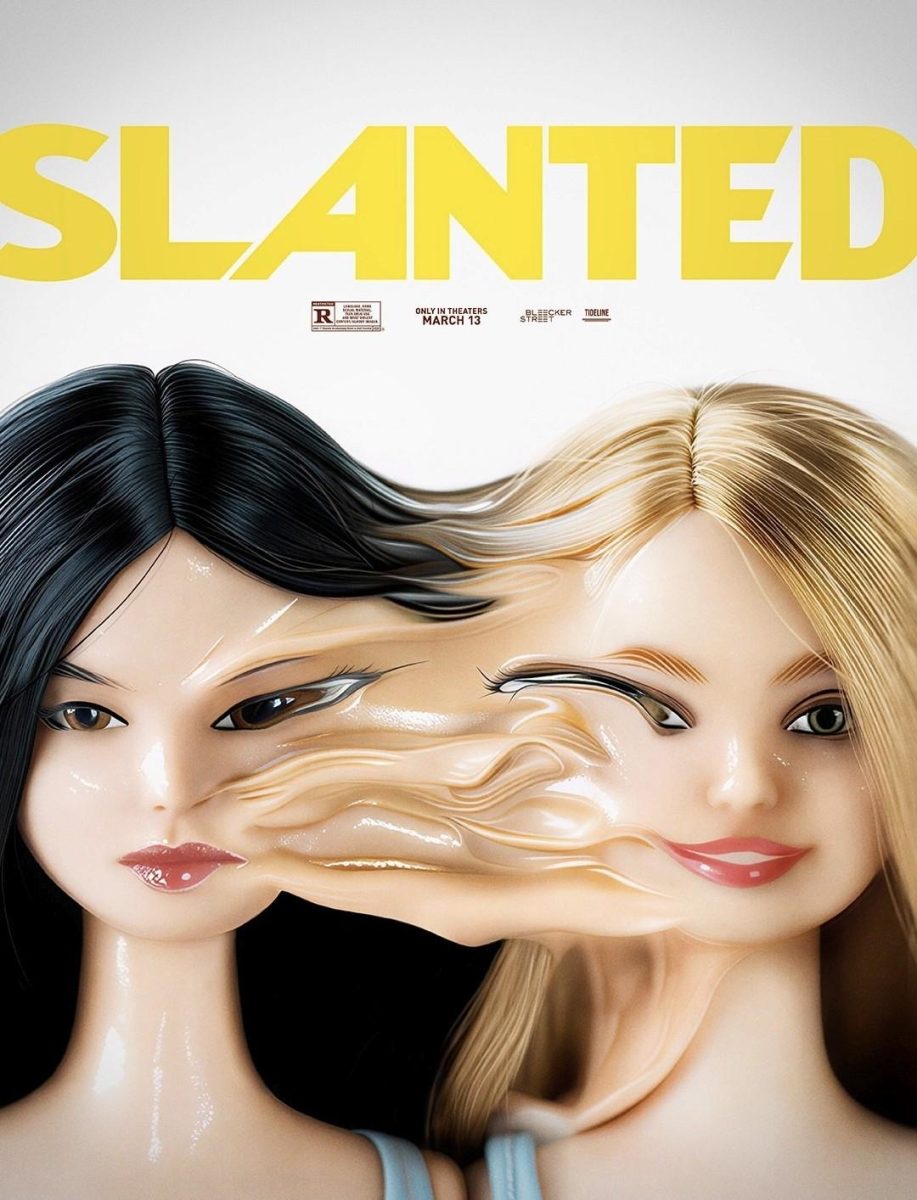
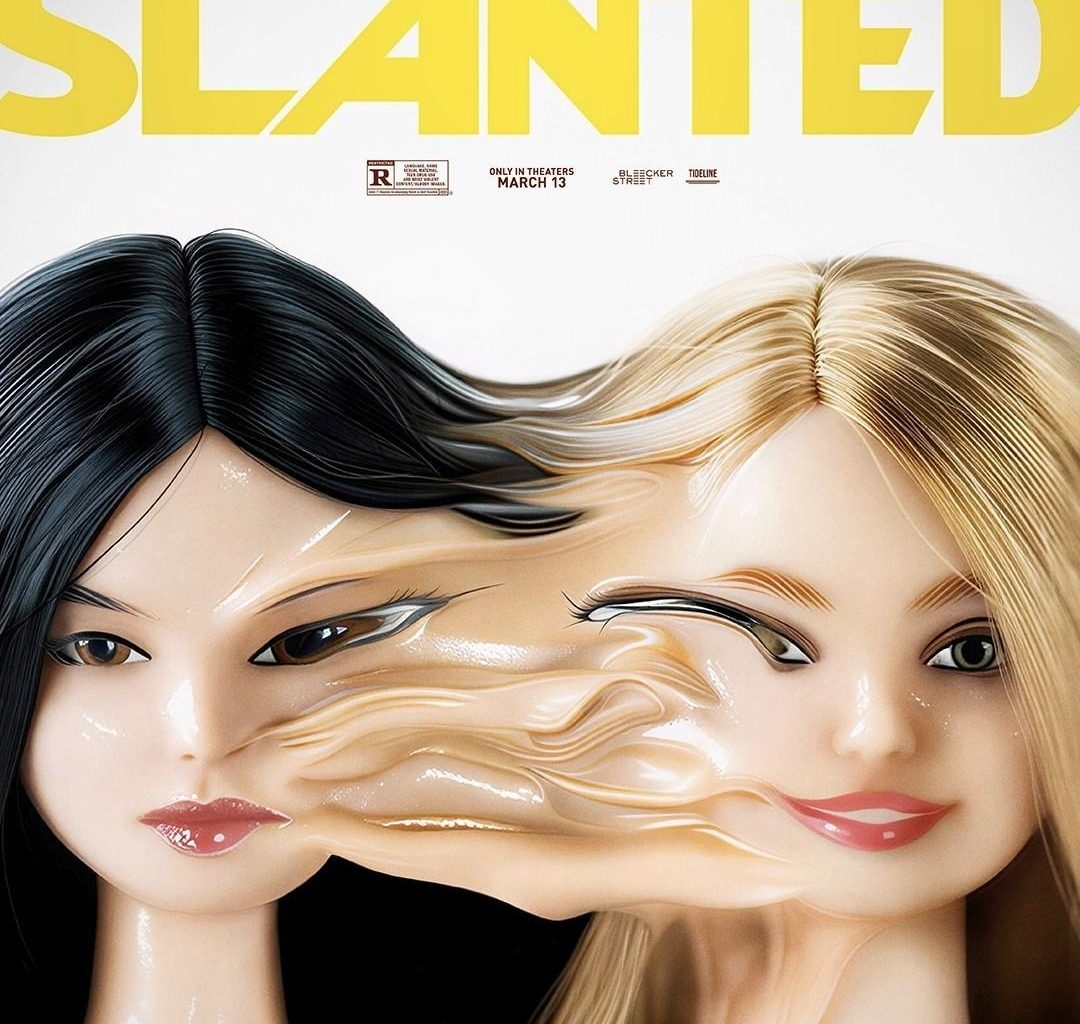
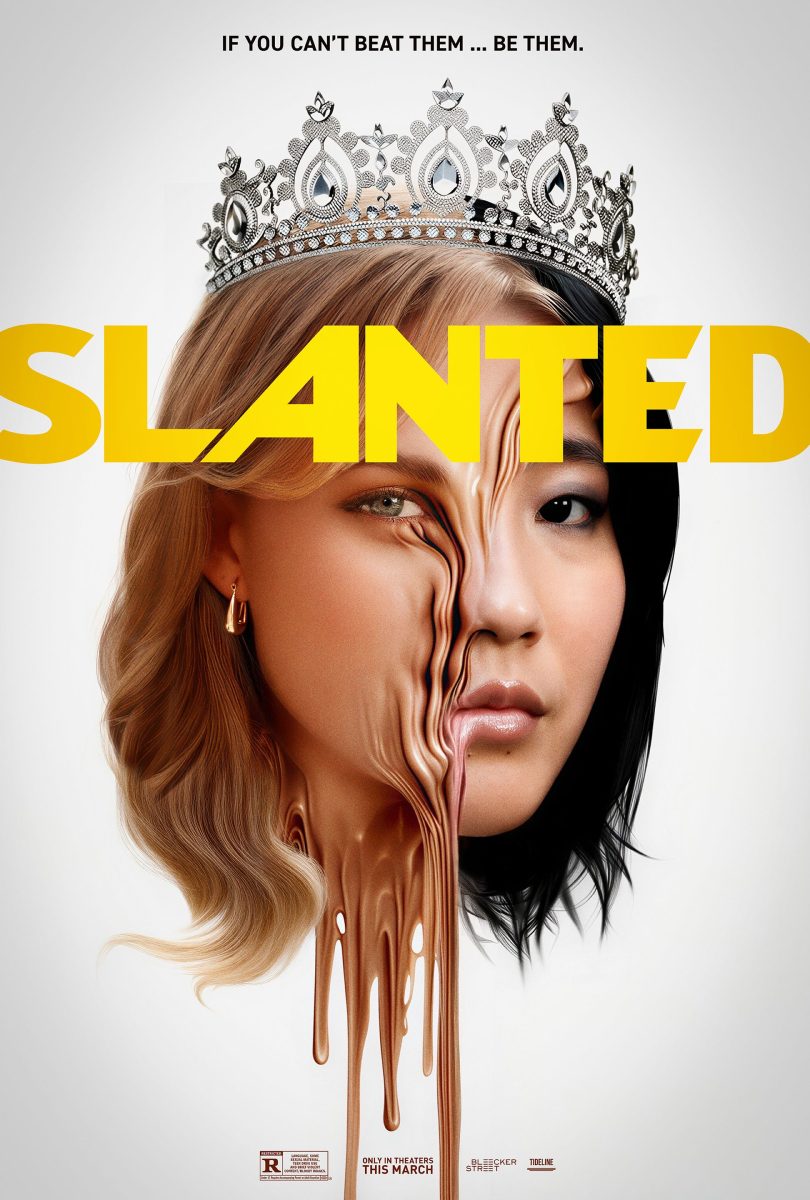
High school is ruthless, but Slanted makes its cruelty literal. Directed by Amy Wang, this audacious genre-bender fuses teen satire with sci-fi body horror, asking a chilling question: what are you willing to lose to belong?
The film follows Joan Huang (Shirley Chen), a high school outsider desperate to become prom queen in a world where every past winner looks the same. A mysterious clinic offers her a radical shortcut—transforming her into a blonde girl (Mckenna Grace) destined for the crown. As popularity and power arrive, so does the devastating cost of erasing one’s identity.
Part Mean Girls, part The Substance, Slanted interrogates society’s obsession with beauty and assimilation while delivering gut-punch horror and dark humor. Alongside Chen and Grace, Maitreyi Ramakrishnan and Amelie Zilber bring depth and levity to a story that is as provocative as it is unsettling.
Premiered at the South by Southwest Film Festival in 2025—winning the Grand Jury Prize in the Narrative Feature Competition—Slanted is set for a nationwide theatrical release this March.
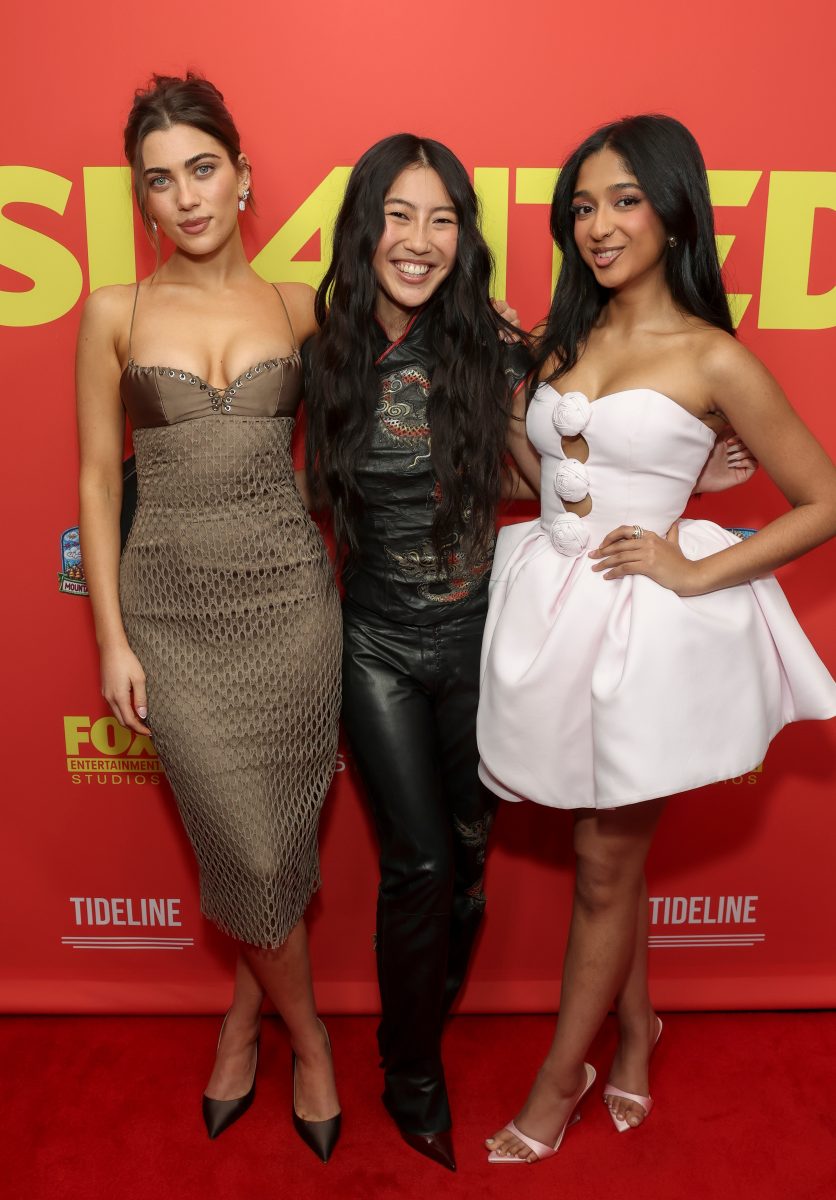
We sat down with the cast to discuss the film’s bold genre-bending, its exploration of beauty, race, and assimilation, and what it really means to belong in a world obsessed with conformity.
Joan literally changes everything about herself to fit in and win the crown. How did you tap into that kind of obsession without losing yourself?
To belong doesn’t necessarily mean anything, and it’s harmful if you crave so desperately to belong with people who don’t want you—and I mean, all of you—in the first place. I can really relate to parts of Joan, such as the feeling like you don’t belong, but unlike her, I’ve grown to just accept the parts of myself I don’t like. It’s so, so freeing to accept you’re flawed or a little strange or not perfect. Because it lets you dictate who you want to be on your terms, it lets you decide what you actually value and, as an actor, it lets you empathize with people and stories you otherwise would have never seen yourself in.
Slanted is part high school satire, part body horror nightmare. Which moment on set had you thinking, “Whoa… this is wild”?
Any moment McKenna Grace spoke Mandarin. Absolutely gagged.
Society’s beauty standards are insane—do you see teens really navigating this pressure in their daily lives, or is it all exaggerated?
I think as long as society exists, hierarchy exists and comparison exists. It’s hard. It’s natural. It’s so diminishing to young people’s lives to claim it’s not real. It’s literally historic, and biological. Humans pick out patterns and point out differences, it’s how we’re wired as social creatures. The thing that makes it feel different now is the scale: through social media, there’s literally ENDLESS people to compare yourself to. We’re not wired to handle that much information about strangers across the world that we, honestly, were probably never supposed to even know about in the first place. It’s not exaggerated. But I just don’t give it meaning. I only have my life, and the body I’m in.
If Joan walked out of the screen and onto your Instagram feed, what three words would describe her vibe?
Figuring herself out
Outside the camera, what’s something about you that no one would guess—and that maybe should be more celebrated?
I’m learning how to book-bind. I just made a huge collection of bound books to give as gifts to my cast. They’re my favorite things I’ve ever made.
Olivia’s navigating the brutal politics of teen life. How much of her social radar comes from your own experiences?
Honestly, the thing I drew from most wasn’t being Olivia in my own life, it was remembering what it felt like to be around an Olivia. Everyone’s had that person in their life who just instinctively knows how to make you feel special, and, it’s crazy, but I can still remember how good it felt to be picked by them. Olivia’s power is making people want her approval, and I just had to remember what it felt like to be on the other side of it.
Slanted pokes at conformity and beauty culture—have you ever felt the pressure to edit yourself for the world?
Yes, of course. When I was younger it was more about how I looked, and now it’s about how I think, what I say, making sure my opinions are palatable and agreeable, while also being honest and nuanced. In a way, that’s its own kind of conformity.
As an actor, how do you decide what projects are worth bending norms for?
It has to say something, that’s the baseline. I knew it was going to make people uncomfortable, but the question I asked myself was ‘who’s going to be uncomfortable and why’. If a project makes people uncomfortable because it’s being reckless or exploitative, that’s not interesting to me. But if it makes people uncomfortable because it’s telling the truth in a way that’s hard to sit with, that’s different. There’s a difference between a project that breaks rules to be edgy and one that breaks rules to create conversations about deeply important social, cultural, or political topics.
If you could whisper one truth to Joan after all the chaos, what would it be?
That the way Joan feels is the result of generations of structural racism and white supremacy that has always benefited from making people like Joan feel small. It has nothing to do with her, or any kind of personal failing whatsoever. We live in a historically immeasurably broken system that needs Joan to believe she’s the problem in order for it to stay alive.
Social media off for a day—what’s your go-to move? Sleep in? Create art? Go rogue?
I love to paint! I’ve been painting for years, which most people don’t know about me. And I’d probably go to my local arthouse theater in NYC to watch something foreign or old or weird, ideally all three.
Brindha watches Joan, challenges her, and sometimes throws shade that cuts deep. How did you channel that mix of empathy and edge?
I feel that all of Brindha’s decisions with Joan only ever come from a true place of love. Brindha deeply cares for Joan and even the shade she can toss Joan’s way is the kind that only really close friends can do towards one another.
Slanted tackles assimilation, identity, and the cost of “fitting in.” What’s the thing you want audiences to actually feel when they see your character?
Hopefully audiences embrace Brindha’s confidence when it comes to their own identities but that being said, it’s completely natural to not feel so confident all the time. Confidence comes and goes and it’s important that people are empathetic towards those who may not be so sure of themselves.
Teen energy meets dark horror—how did you keep Brindha playful without losing the weight of the story?
Amy Wang’s writing speaks for itself. I believe she masterfully crafted a script that walks the fine line of balancing so many genres. Amy is a phenomenal leader who allowed for us as a cast to play and experiment with how lighthearted and grounded we could be.
As a South Asian actress, did you bring personal experience to scenes that explore cultural representation?
It was nice to portray a girl who was confident in her identity and offered that foil to Joan’s character. I was a kid who constantly brought my leftovers to school and had no problem eating it because it tasted great. I thankfully grew up around a lot of diversity and had classmates that came from all walks of life which I think made a huge difference in how I grew up.
Outside the spotlight, what’s your escape or secret obsession that keeps you sane?
My dog, my Nintendo Switch, and anime. I live a simple life, and I know what brings me joy.