by Mira W.
Florania: Flora Rabitti’s Vision as Game-Changer in Fashion’s Sustainable Revolution
The fashion industry grapples with the realities of environmental degradation and overconsumption, and voices of innovation and responsibility are emerging to challenge the status quo. One of them is Flora Rabitti, fashion designer, illustrator, creative director, and founder of the brand Florania, committed to sustainability, conscious design, and creativity, as a powerful voice at the forefront of a movement that not only celebrates fashion but also advocates for a more respectful relationship with our planet.

With a degree in Fashion Design at the esteemed IED – Istituto Europeo di Design, Flora Rabitti discovered her passion for design, leading her on a career path that saw her work with prominent luxury brands including Prada, Miu Miu, and Alberta Ferretti. While these experiences provided invaluable insights into the mechanics of high fashion, they also ignited a profound realization within her—that the industry’s practices often clash with the values of sustainability and ethical consciousness she held dear.
In 2020, amidst the global lockdown, Flora Rabitti recognized the need for a radical shift. She founded Florania as an experimental venture in upcycling, driven by her lifelong environmentalist convictions—instilled in her from a young age by her family of passionate eco-activists.
Florania is a manifesto for change, embracing the potential of textile waste and turning it into innovative, desirable pieces that challenge consumer norms and promote ethical practices.
Flora Rabitti believes that clothing should empower people to embrace their true selves—regardless of gender, body type, or identity—without the need to conform to traditional fashion dictates. This ethos was inspired by her formative years spent at the Liceo Classico in Mantova, where the structured environment contrasted sharply with her burgeoning self-expression through punk-inspired fashion. Sewing her own clothes and repurposing existing garments became her means of asserting her identity, a journey of self-discovery that informs her creative vision today.
Education plays a necessary role in Flora Rabitti’s approach to fashion. Her continual pursuit of knowledge—encompassing studies at Central Saint Martins in London and Institute Français de la Couture in Paris—reflects her belief in the necessity of growth and awareness in this rapidly changing industry, nurturing a sense of responsibility among consumers and designers alike—a call to educate and engage with the complexities of fashion’s impact on the environment. Florania‘s recent accolades, including the “Design for Change Award” from the National Chamber of Italian Fashion and selections for highly regarded showcases like ‘Sustainable Style’ by the KERING Material Innovation Lab, underscore the brand’s commitment to redefining fashion through sustainable practices.
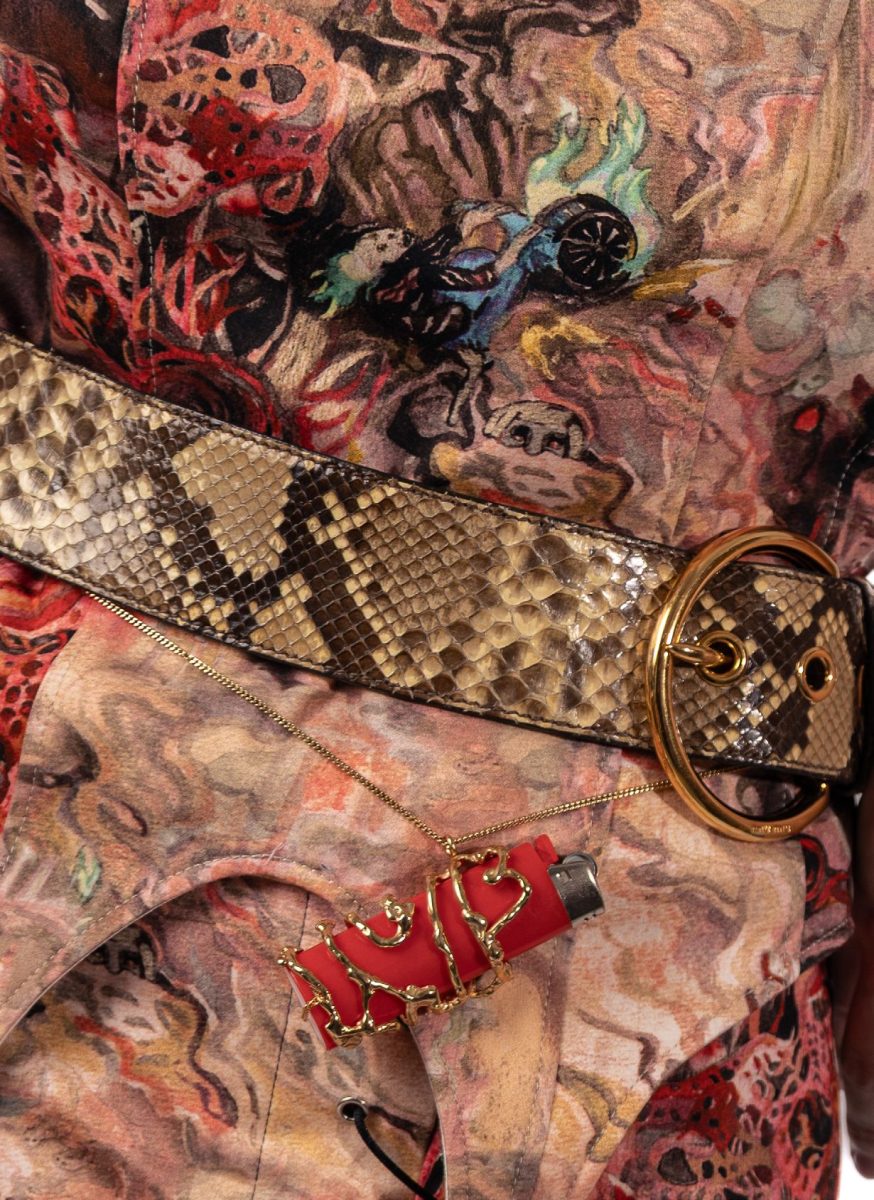
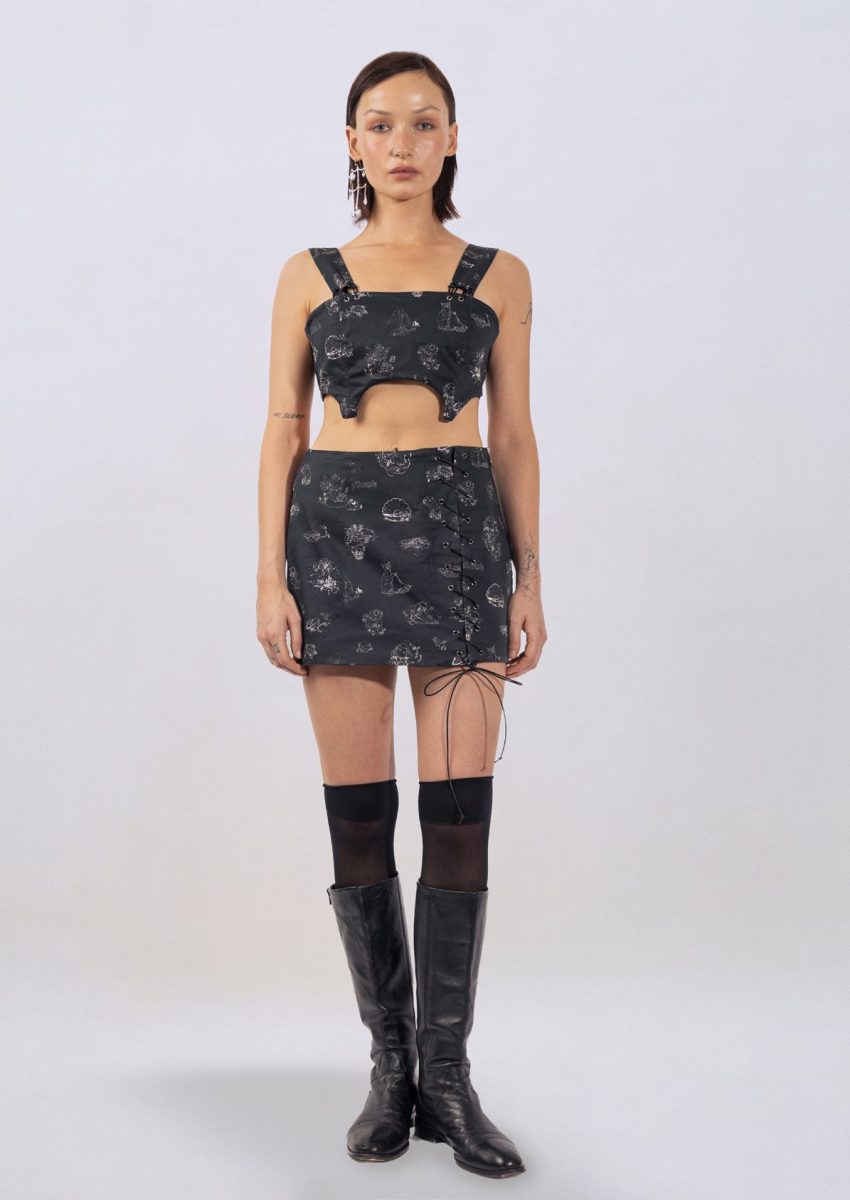
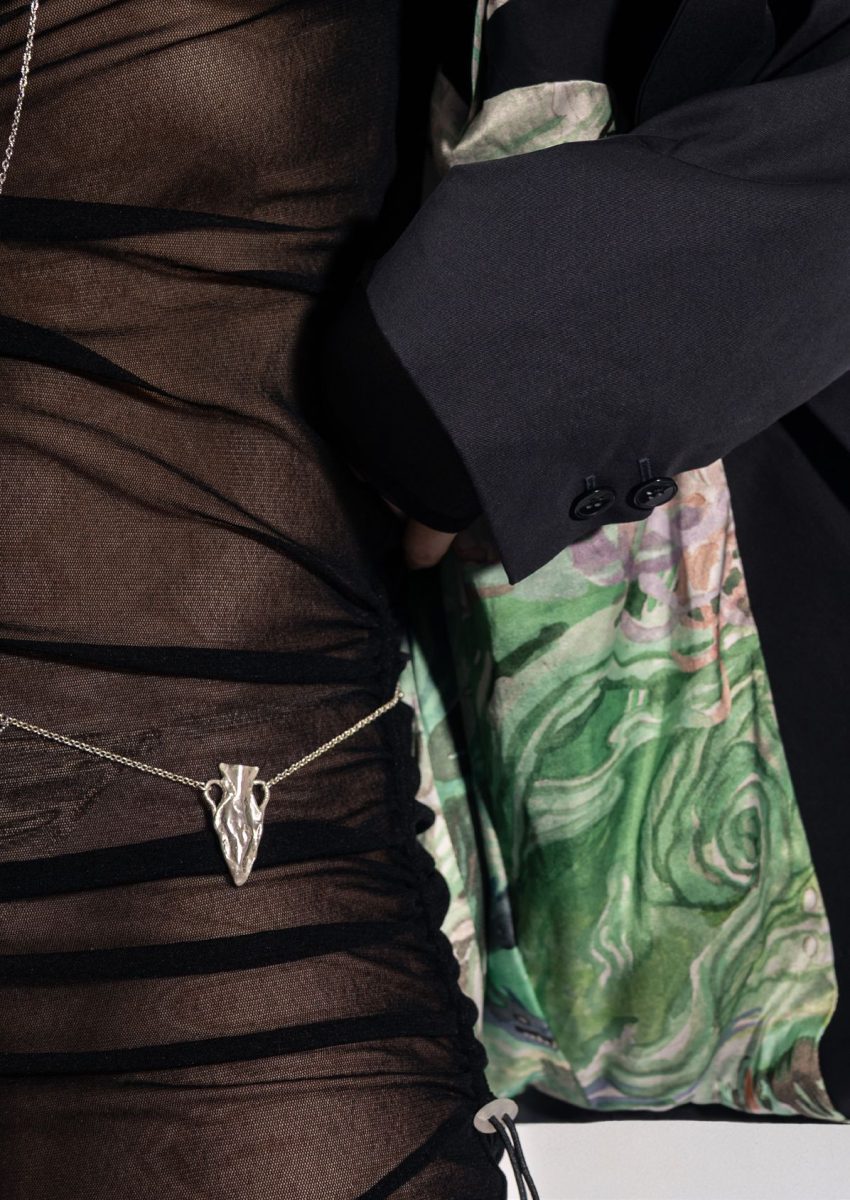
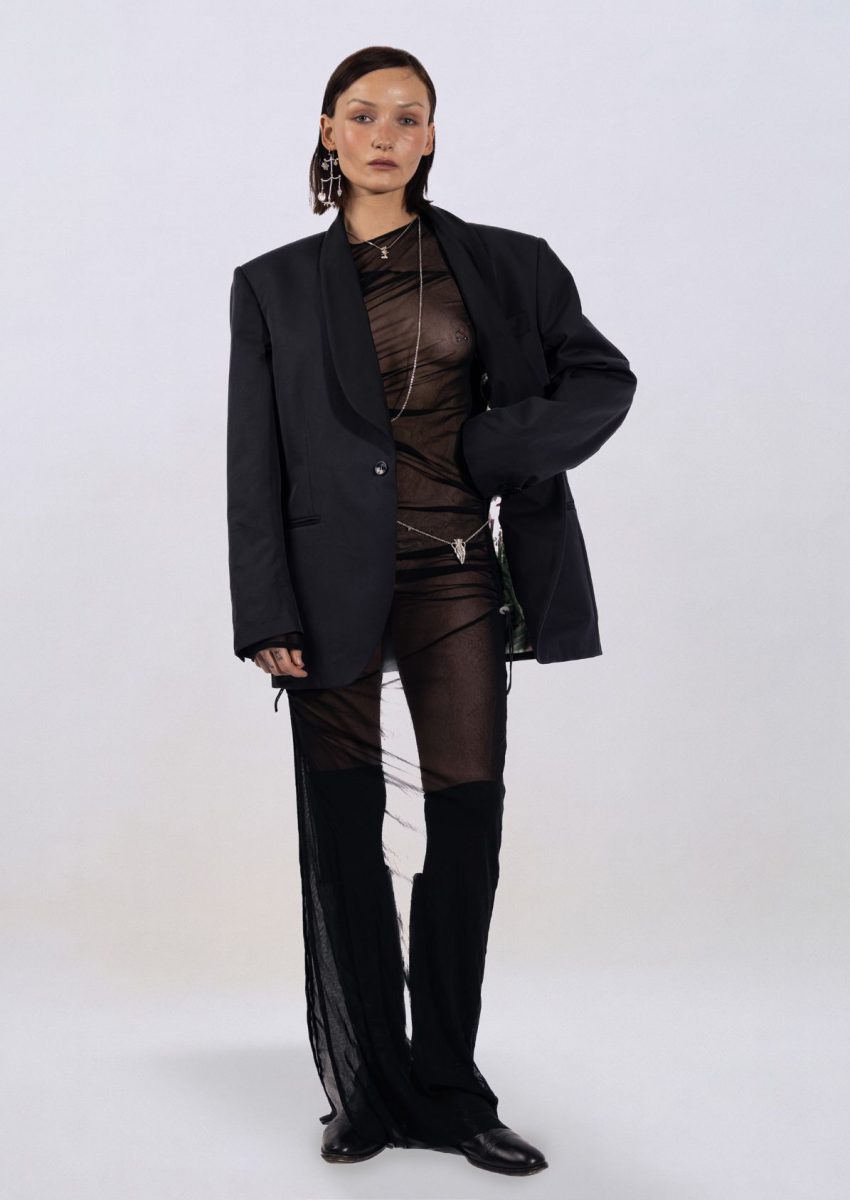
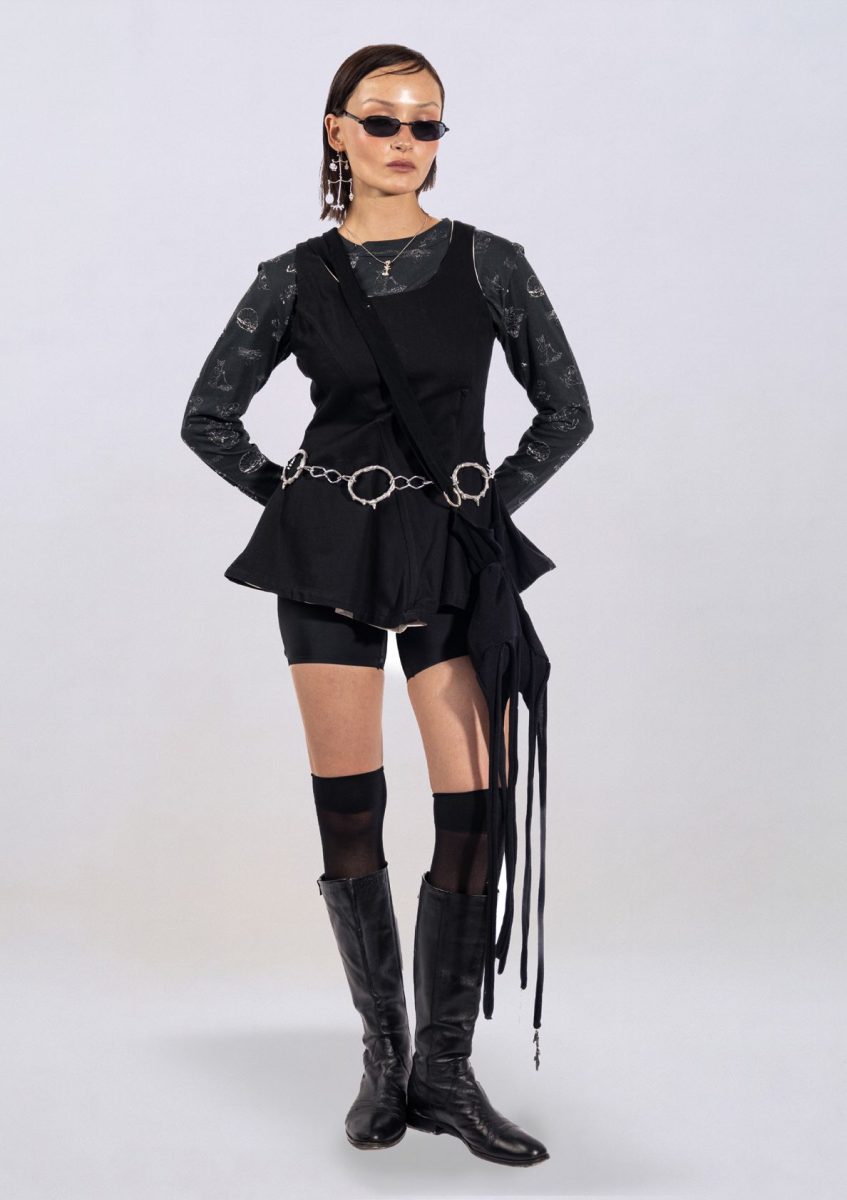
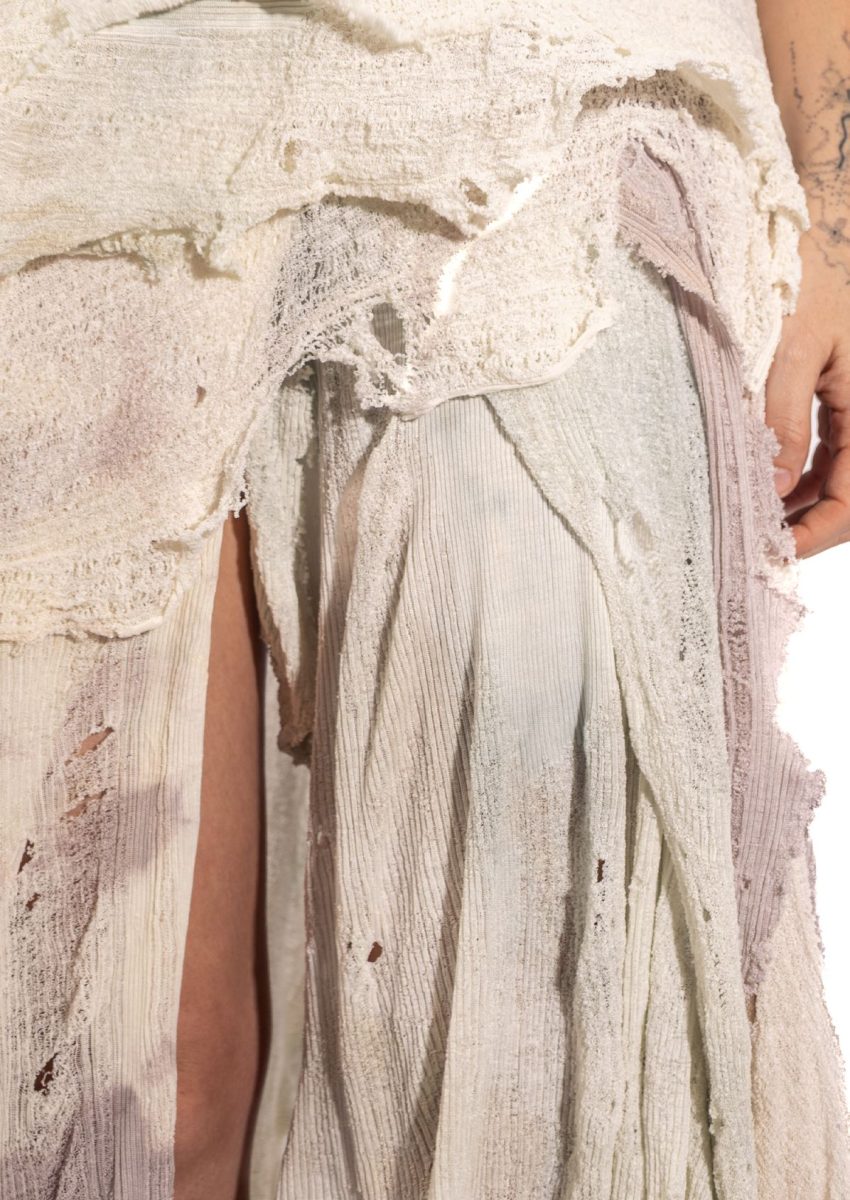
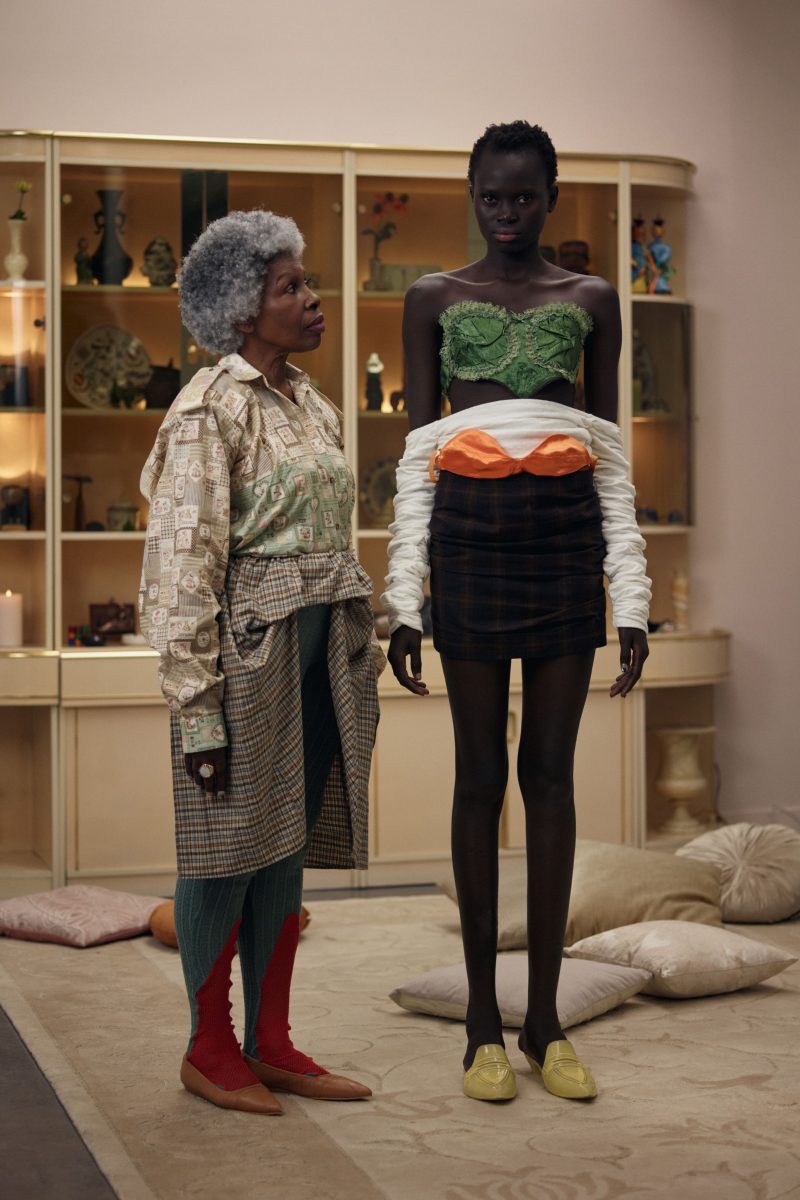
The Spring Summer 2026 collection, “Songs for Beasts,” is all about ecological consciousness, featuring textiles dyed with natural pigments and collaborating with other artists to create symbolic accessories that embody the brand’s philosophy.
In this interview, we will explore Flora Rabitti’s inspiring work, her dedication to ethical fashion, and the importance of education and consciousness in redefining the industry:
Hello Flora, welcome to Vanity Teen. What motivated your focus on upcycling and the transformation of waste into beauty within the fashion industry? Are there specific personal experiences or observations that influenced your commitment to sustainability in your designs?
I’ve started Florania as an upcycling project, when the world was in lockdown and I was coming from a very corporate fashion career (Miu Miu, Pucci, Alberta Ferretti) and needed a change. I felt like something was still disconnected within myself. The truth is, I’ve always been an environmentalist at heart. I come from a family of 80s and 90s environmentalists. With my upcycle experiments I wanted to build a space where people could feel beautiful in their own body, gender, and identity — without having to erase themselves to belong to fashion.
That instinct goes back to high school, at the Liceo Classico in Mantua — a place built on rules, rigor, and repetition. In the middle of all that order, I began showing up dressed in punk: loud, raw, visibly out of place. I didn’t realize it then, but sewing my own clothes, cutting them apart, reinventing them every day was my first act of authorship. My first way of ‘saying: this is who I am’, even if I didn’t yet have the words.
Reflecting on your education at IED – Istituto Europeo di Design, how did your experiences there shape your approach to design and your understanding of sustainability in fashion? Can you share particular lessons that had a lasting impact on your perspective regarding ethical practices?
IED – Istituto Europeo di Design was where I learned a design methodology and how to combine culture with a commercial structure. It gave me the tools to understand how fashion systems work — and how they can be changed from within. It was also the first time I realized how strongly my work is driven by music, art references, and values of responsibility and ecology.
Your early career included significant roles at prestigious fashion houses like Prada and Alberta Ferretti. How did these experiences inform your design aesthetics, particularly in relation to luxury fashion? Did they influence your thoughts on sustainability and ethical fashion in any way, especially as you transitioned to independent work with Florania?
These corporate jobs gave me a big opportunity to grow. I started working in Miu Miu when I was a child, 21 years old, and in the office they called me ‘La Bambina’. In those first years of my career I had to follow a lot of rules, learn how to create bulletproof communication across departments, really listen to everybody and take care of every need of my supervisors. I really learned how to do many jobs at once. In the sustainability and ethical vision, I think the fashion world was starting to gain interest but it still wasn’t a priority.I was surrounded by magnificent discarded fabrics, and even in my personal life I had closets full of unused clothes from my parents and my own past. I was ready to find an alternative — to build a business from scraps.
Ethically, my mother — who is also my business partner — played a fundamental role. She found an ethical production lab near our hometown, which we still work with today. There, women who are victims of violence or in vulnerable situations learn how to sew from retired pattern makers and tailors. We’ve grown together, and this is still the heart of Florania.
Winning awards such as the ’’Design for Change’’ Award signifies a recognition of your innovative and sustainable approach. How do you perceive the role of such accolades in your growth as a designer, and what do they mean to you personally and professionally in the context of promoting sustainability?
Receiving such recognition from Italy’s major fashion institution, Camera della Moda, and the most prestigious Italian fund for emerging designers was proof that I was creating something bigger than myself — something with a real impact. It gave me the push I needed to show the transversality of my designs and opened the door for me to present on the official Milano Fashion Week calendar starting in September 2023.
This Award signified also that I started to get in contact with many other great designers, who are still great friends of mine, and many mentors that are still following my path.
What specific inspirations and themes guided the creation of your Spring Summer 2026 collection, “Songs for Beasts,” and how do these elements reflect your vision for sustainable fashion?
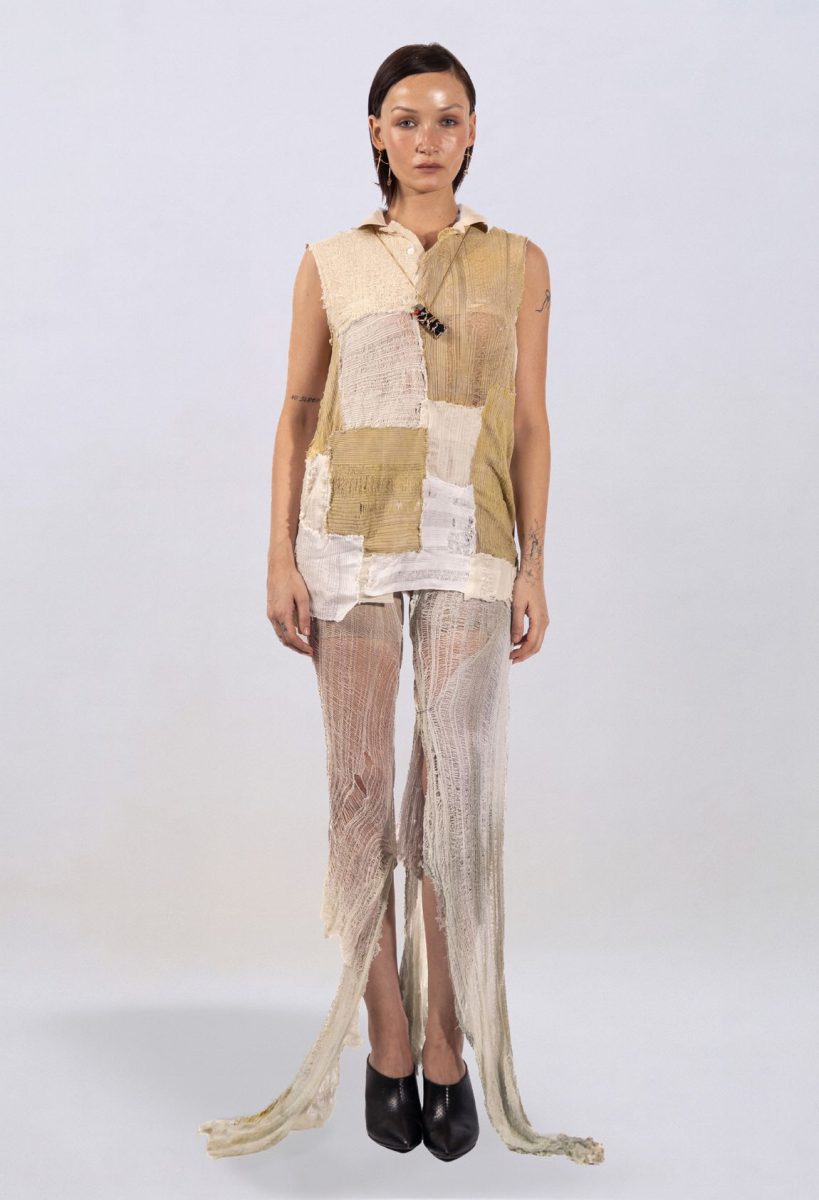
The collection Songs for Beasts was born from the idea of elevating upcycling to a couture language — exploring the tension between instinct and refinement. The inspiration comes from a hybrid, almost mythical space: where textile waste is reimagined as a living material, capable of transformation and rebirth.
I was drawn to fantasy worlds, feral creatures, and soft armors — my forever references are Leonora Carrington, Miyazaki, Donna Haraway. These elements are translated into textile manipulations, natural dyeing processes, and sculptural silhouettes. It’s a collection that doesn’t just speak of sustainability as a method, but as a narrative. Like Donna Haraway once said: ‘why should our bodies end at the skyn?’.
In the “Songs for Beasts” collection, you mentioned utilizing upcycling techniques and a more couture approach. Can you describe some of the standout pieces in this collection and the innovative methods used in their creation? How do these pieces exemplify the fusion of high fashion with sustainability?
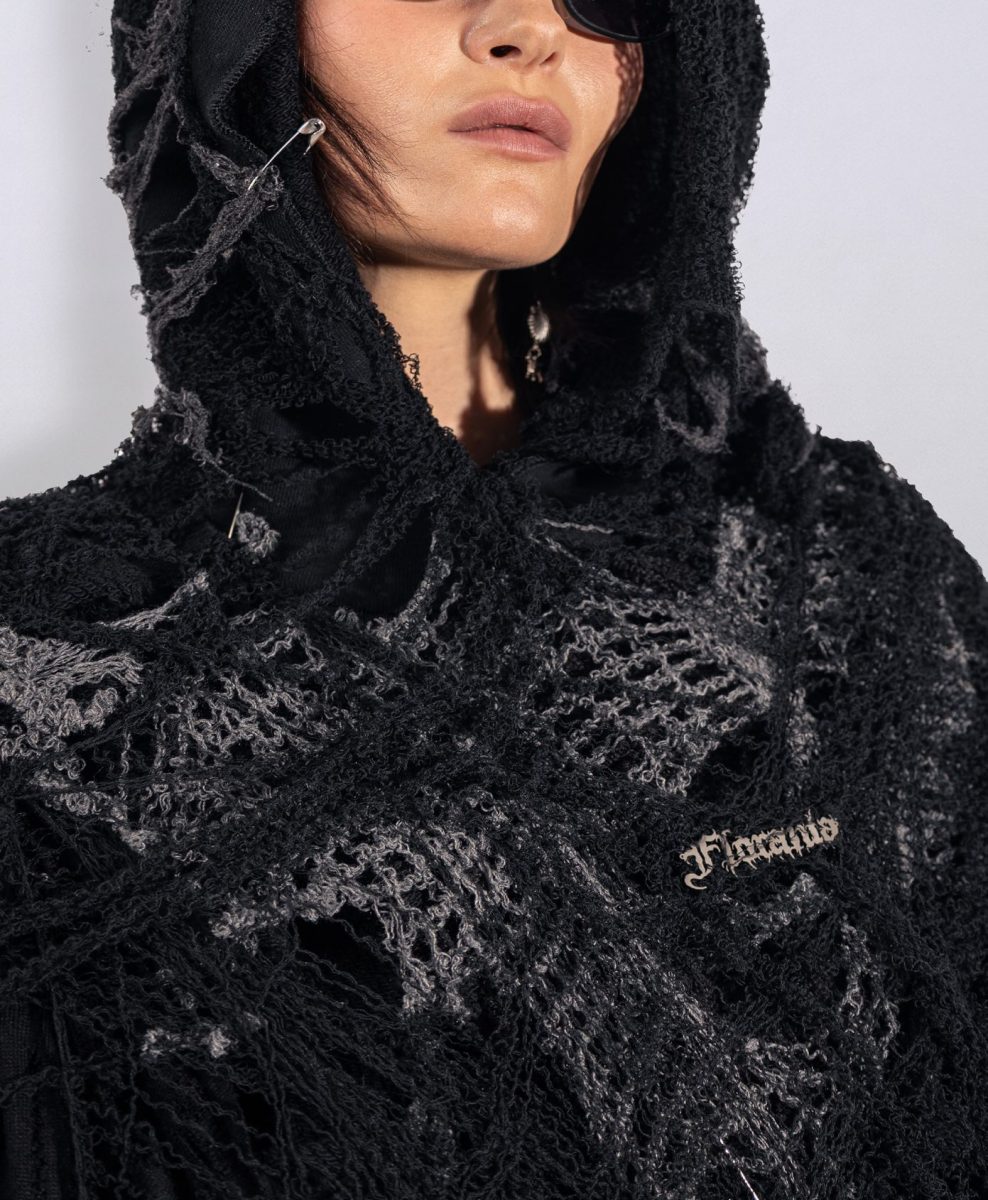
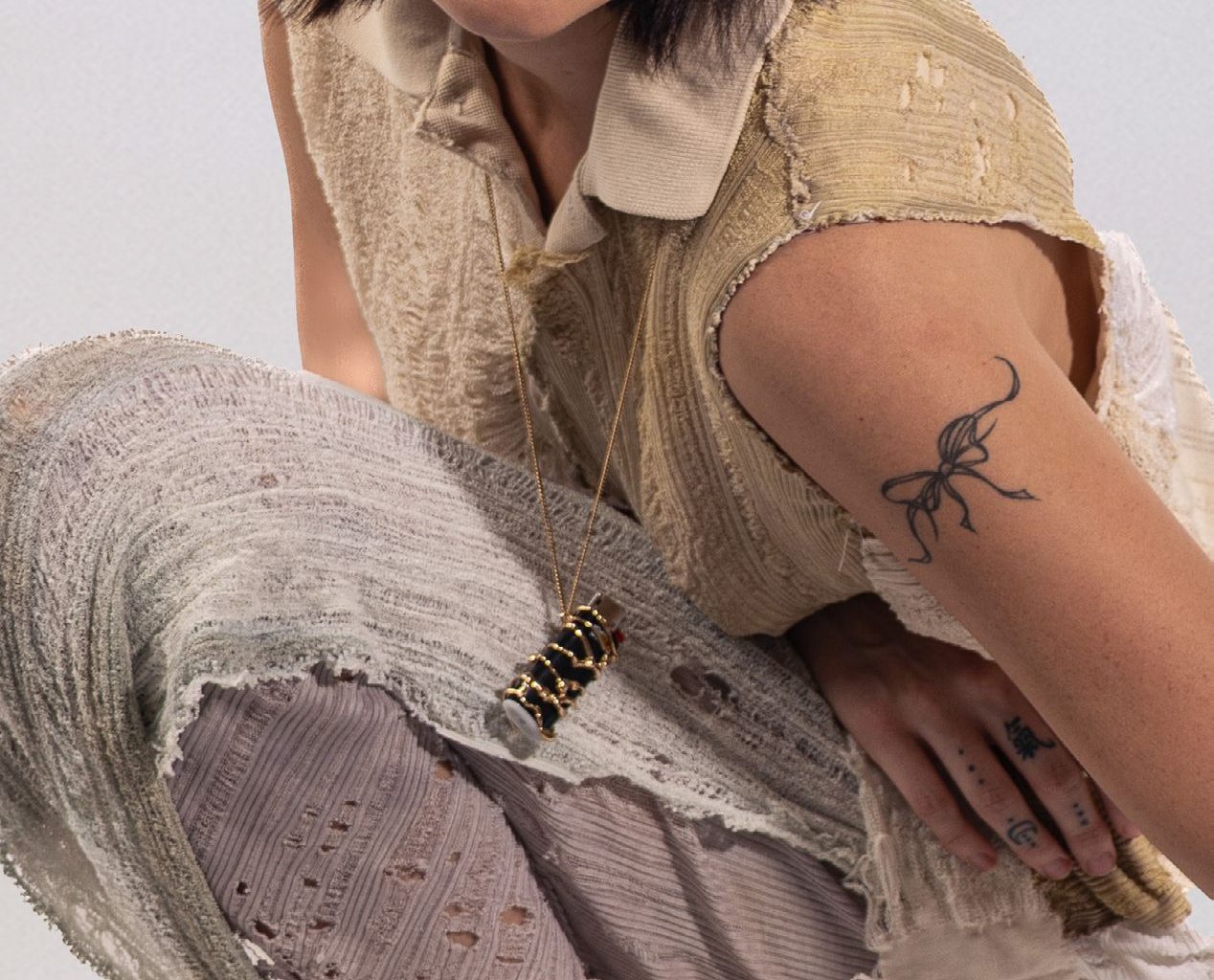
Some of the key pieces of Songs for Beasts embody a couture language born from fragments — materials reclaimed from Florania’s own archive and transformed through layered manipulations. One example is a series of draped knitwear pieces, first dyed with natural pigments, then unraveled, reassembled, and sculpted directly on the body.
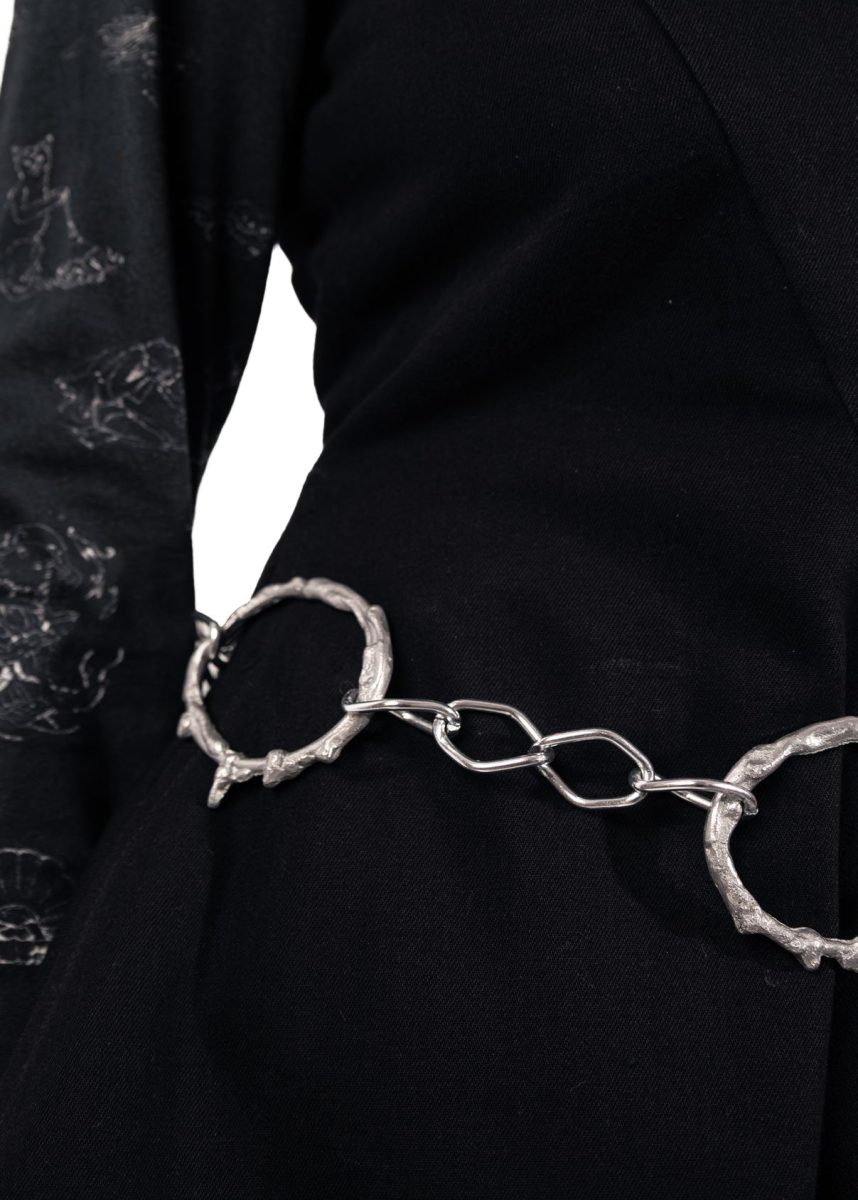
Other pieces use metallic appliqués, cords, and textile armor-like constructions, blending softness and strength.
How do you envision the collection “Songs for Beasts” resonating with consumers in the context of sustainability? What message do you hope to communicate through these designs regarding the relationship between fashion, nature, and ethical responsibility?
I imagine Songs for Beasts as a space of exchange between the garment and the person who chooses it. The pieces are created through a made-to-order process, which means they exist only when they are truly desired. This allows me to slow everything down and return to a rhythm that feels closer to nineteenth-century craftsmanship, when clothes were made with precision, intimacy, and a sense of permanence.
This approach builds a direct relationship with the client, restoring a human dimension to fashion that mass production has erased. It’s a quiet but radical gesture: producing less, caring more, and creating clothes that carry both memory and intention.
Innovation and technology seem central to your design process. Can you share specific examples of how you incorporate cutting-edge technology into your upcycling practices, and how these innovations help address the challenges of sustainability in today’s fashion industry?
Technology allows me to work with precision and imagination at once. With Florania, I’ve been developing a digital inventory system using AI to recognize, archive, and classify fabrics, making upcycling scalable and systematic.
We also work with waterless textile printing and embroidery machinery, which reduces environmental impact while expanding creative possibilities. Technology here isn’t just a tool — it’s a way to design new circular systems, not just new garments.
The natural dyeing process you utilize for your knitwear—using pigments from sources like cabbage, blueberries, and turmeric—highlights your commitment to sustainability. What inspired you to pursue natural dyes, and how do these choices reflect both your artistic vision and your responsibility toward the environment?
Natural dyes are, for me, a gesture of respect. Pigments from cabbage, blueberries, turmeric — they’re unpredictable, alive, imperfect. This unpredictability becomes a form of authorship, a tactile signature that can’t be replicated industrially.
It’s also an ecological act: to color without polluting. Every hue carries the story of the material it comes from — its fragility, its temporality, its quiet strength. The natural dyes also give a fun and witchy way to create fabrics, a new smell, a new texture.
Collaboration is a significant aspect of your practice, especially with brands that share your values, such as Max&Co and Pangaia. How do these partnerships enhance your design vision and the message of Florania? Can you discuss a specific collaboration that stands out in its impact on sustainability?
Collaboration allowed me to develop Florania with its own language, but without diluting its identity. Working with brands like Max&Co and Pangaia meant merging different scales — from independent craft to the reach of established platforms.
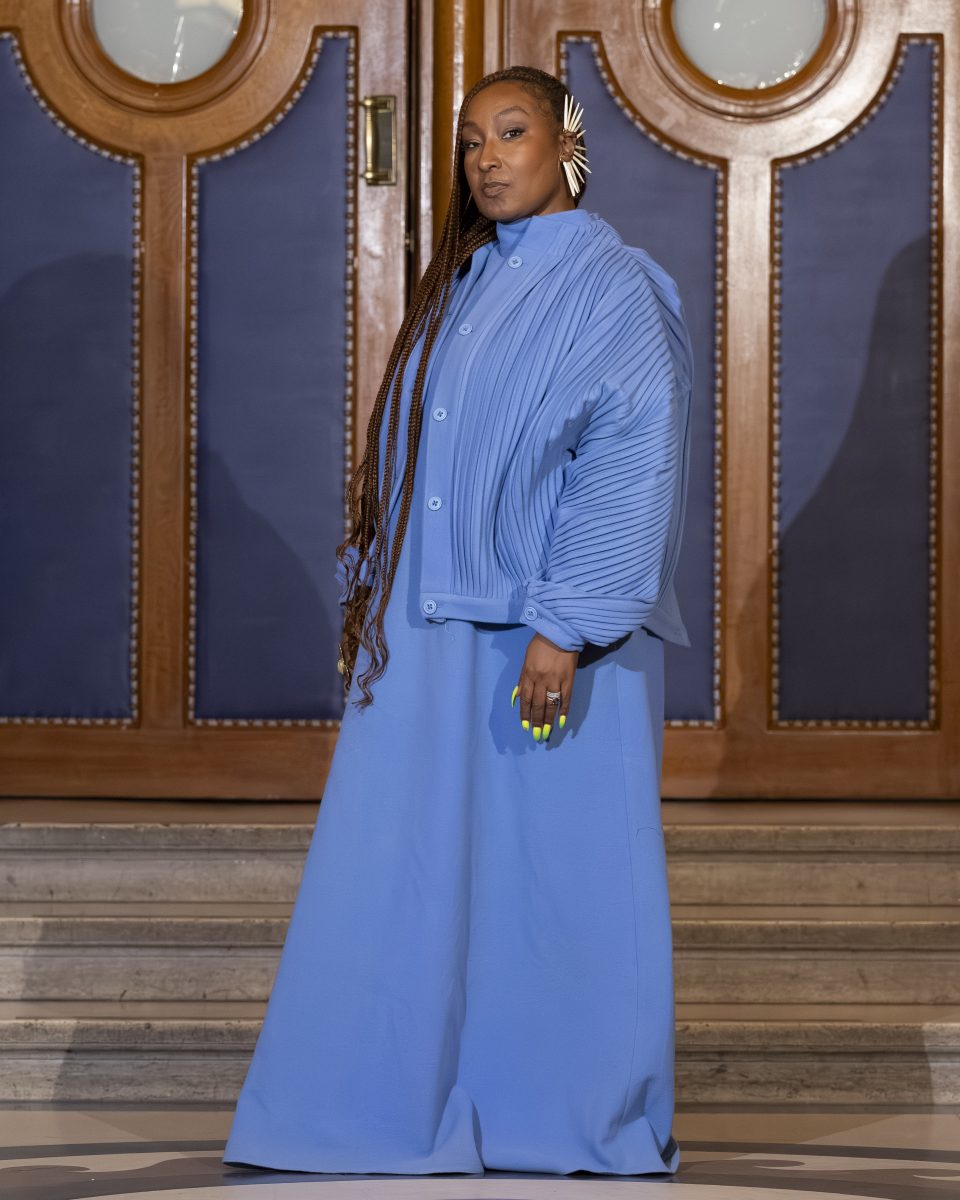
The Max&Co capsule was particularly meaningful: a fully certified, genderless collection that entered global distribution while staying faithful to circular design principles. It proved that sustainable fashion can be ambitious, desirable, and accessible at the same time. I was also allowed to give a ‘political’ message: the core of the collection were those 3 characters, the ‘circular fighters’: iconic figures present in our culture , people that use circularity in a meaningful way, restoring, reworking, reusing. A punk, an uncle, a sailor.
As an emerging designer in the Italian fashion scene, what unique challenges do you face, especially regarding sustainability and ethical practices? How does the environment in Italy encourage or hinder innovative design, and what strategies have you employed to navigate these obstacles?
At the beginning it was a little hard to get in contact and to work with manufacturers, as I still didn’t have a reputation. Then, the unfortunate crisis of the industry, had allowed me to work with factories I wouldn’t be able to reach before.
Italy has extraordinary craftsmanship and a deep textile heritage — but innovation in sustainability is often met with inertia. The challenge lies in bridging tradition with future systems. My strategy has been to work glocally: collaborating with social ateliers, local artisans, and technological partners to build a parallel, regenerative ecosystem.
It’s slower, but deeply rooted. I believe systemic change often starts at the margins, not the center.
As someone passionate about ethical fashion, how do you see the concept of circular fashion evolving in the industry, particularly in Italy? What role do you believe Florania plays in promoting these principles, and what future changes do you hope to see?
I believe my generation — Gen Z and Millennials — is offering the key to a new way of understanding fashion. We are not interested in replicating outdated systems; we want to rewrite them. We collaborate instead of competing, we build networks instead of silos, and we see circularity not as a trend but as a shared responsibility.
In Italy, this means reimagining the foundations of the Made in Italy system: transforming a heritage of excellence into a regenerative and collective practice. Florania gives a new opportunity in this shift, by creating a space where people can work on the front line of an ambitious, ethical, and circular project.
It’s about creating an alternative for the industry. We have to be the change we want to see in the world.
I’m intrigued by the figurative amulet-jewels you’ve created in collaboration with designer Margherita Potenza. What inspired these pieces, and how do they complement the sustainable vision of your collection? What meanings do the symbols hold in relation to sustainability and personal narratives?
The amulets I created with Margherita Potenza are an extension of the collection’s world. Cast in bronze and plated in gold or silver, they depict foxes, ships, and horses — small mythological figures, intimate and ironic.
These characters are meant to carry personal meaning. A talisman, recalling ancient italic populations, like Etruscans. A reminder that fashion can hold stories, protection, and symbolism — not just trends. I believe in a kind of ‘animism’ of objects.
During the presentation of your collection, the soundscape composed by Matteo Bertini enriched the experience. How do you believe auditory elements enhance a fashion presentation, especially when discussing themes of nature and sustainability? How do you envision using these elements in future presentations?
Sound changes everything. Matteo Bertini created a soundscape of animal calls, whispers, growls, and breath. It wasn’t a soundtrack, but a living creature within the space. Like I said, I was always driven by music, it lets you enter a parallel dimension.
Sound amplifies the emotional dimension of the collection, making it physical, visceral. I want to keep building this bridge between fashion and performance.
How do you plan to address the ongoing challenges in the fashion industry while remaining committed to sustainability and ethical design? What legacy do you hope to create through your work, particularly for future generations of designers?
Remaining committed to sustainability means embracing complexity. It’s not always glamorous, and it doesn’t follow the same rhythm as traditional fashion cycles. But that’s precisely where its strength lies.
I hope my work can leave behind a language — a way of creating desire without imposing rules or making people feel inadequate in their own skin. I want to help shape a way of imagining fashion as a regenerative system: poetic, powerful, and alive.
A note to your future self.
‘’Remember that high school rebellion. Keep your hands dirty and your vision clear.’’ – Flora Rabitti
Follow FLORANIA here .