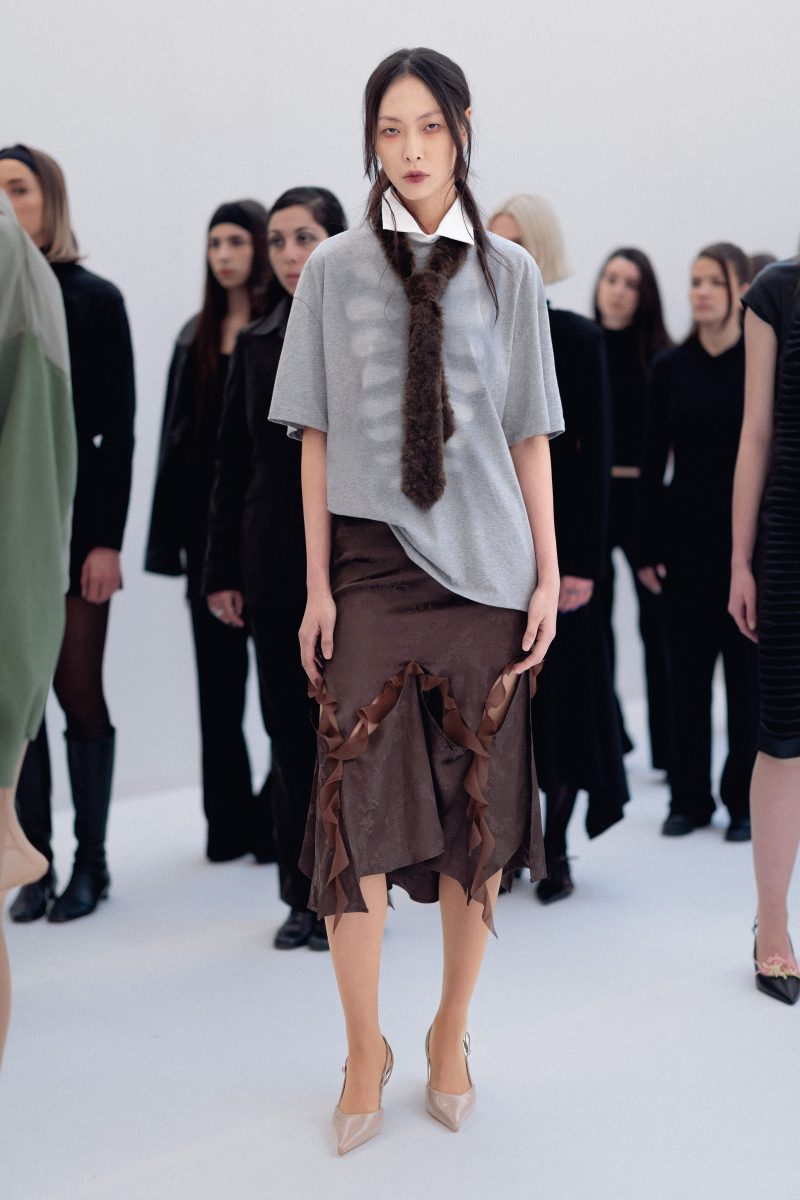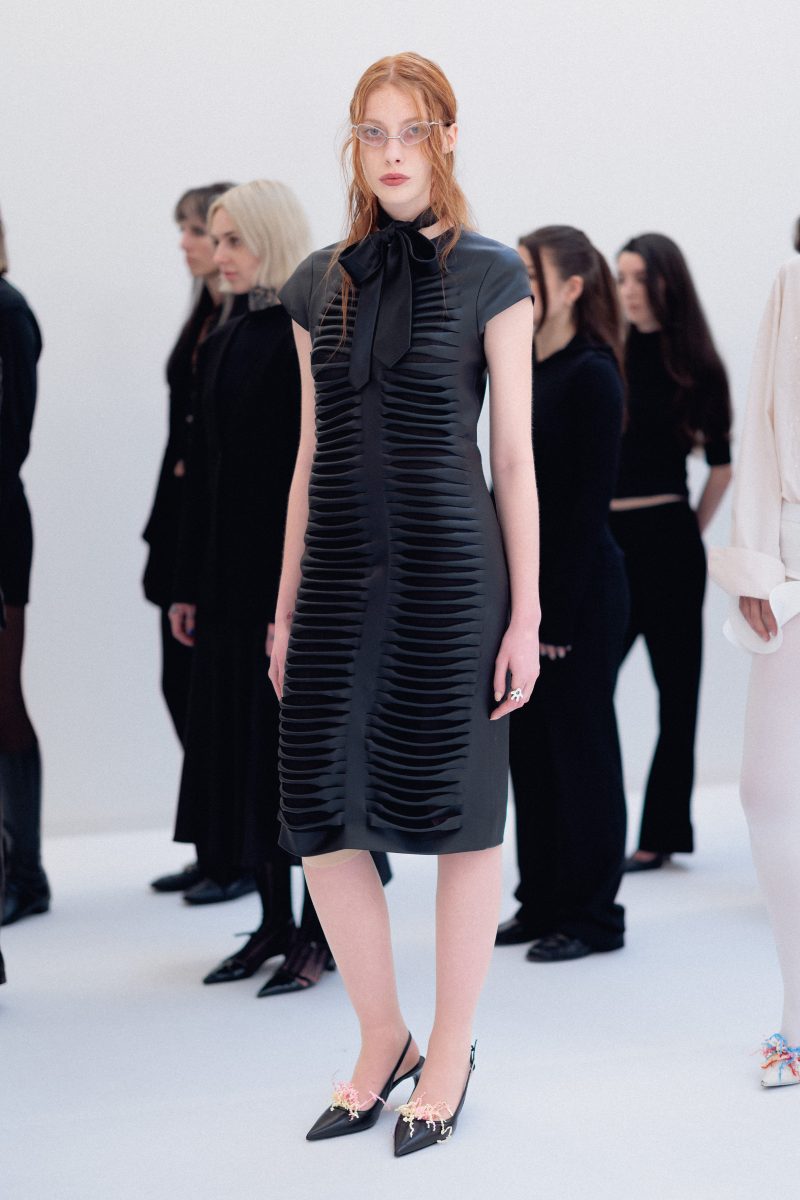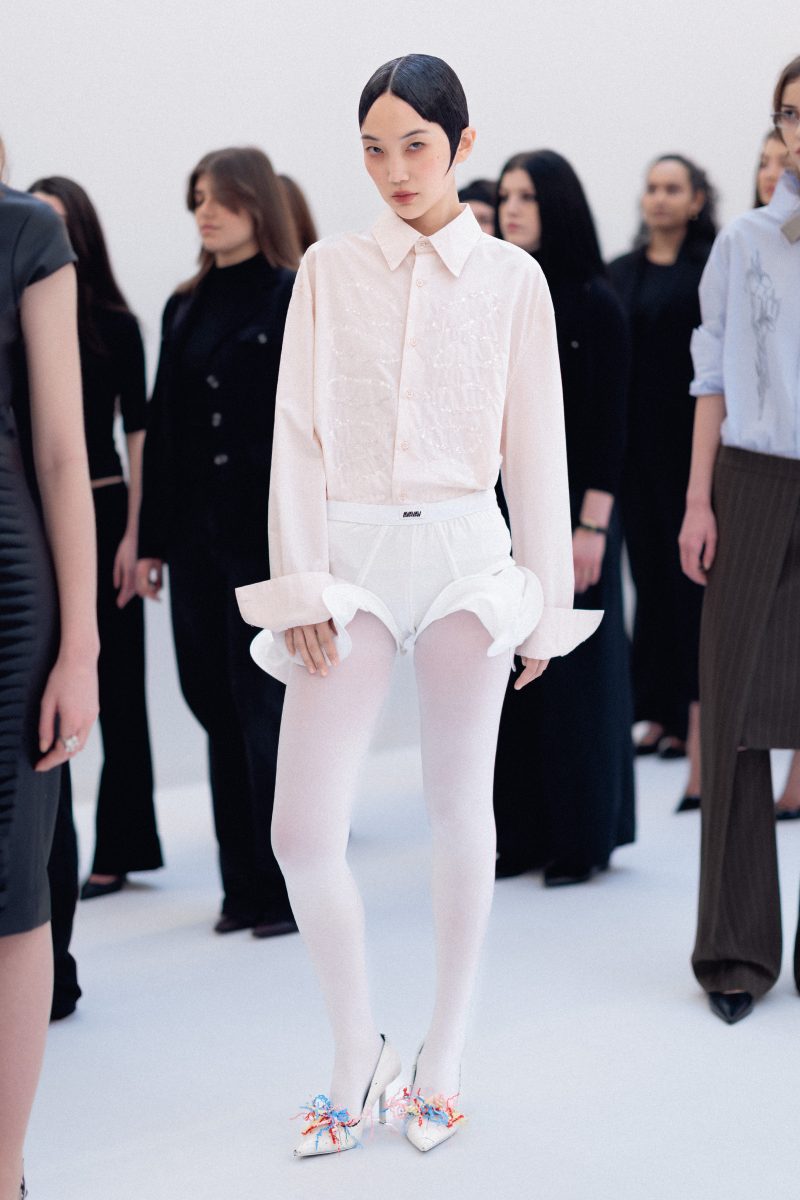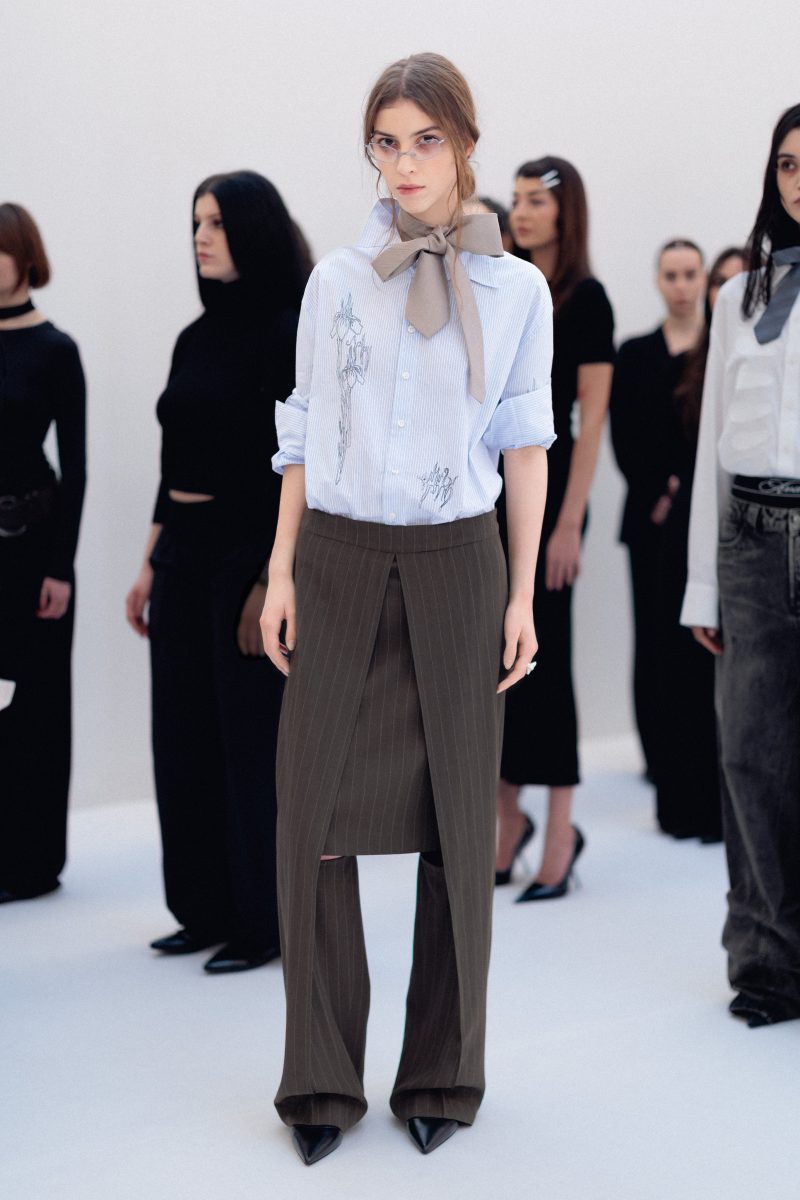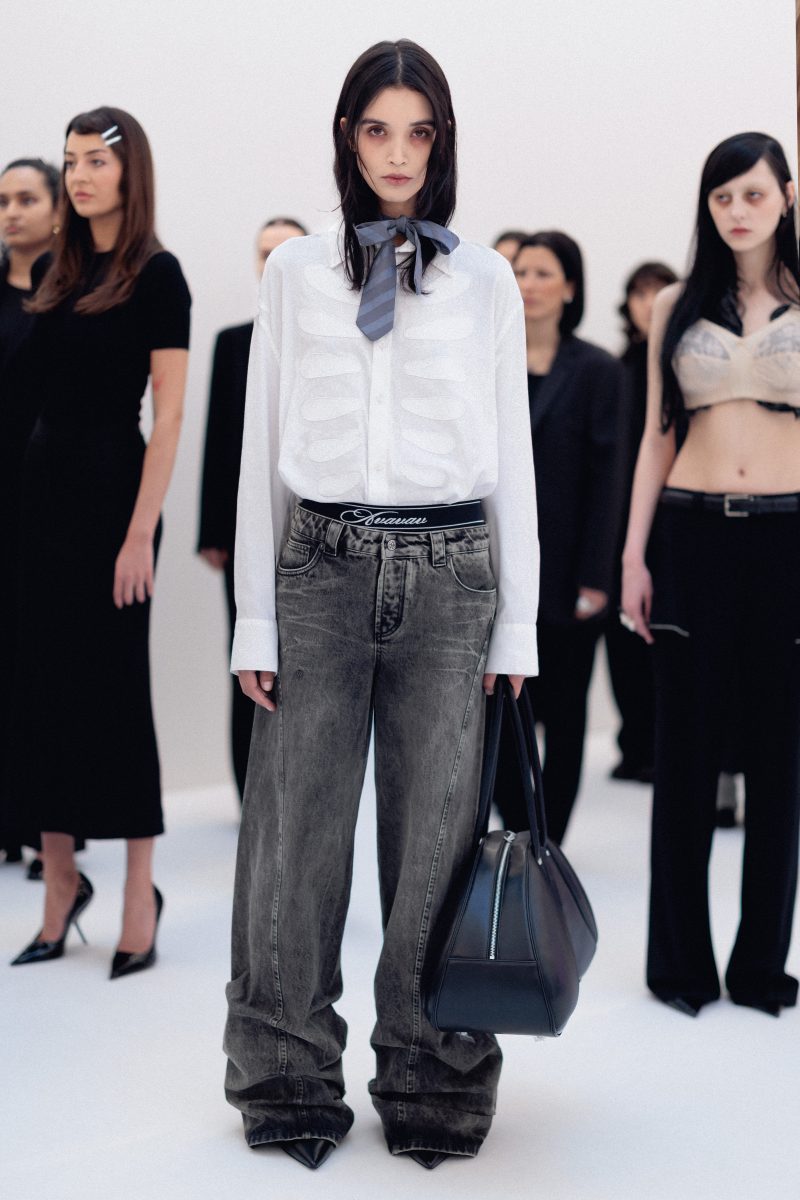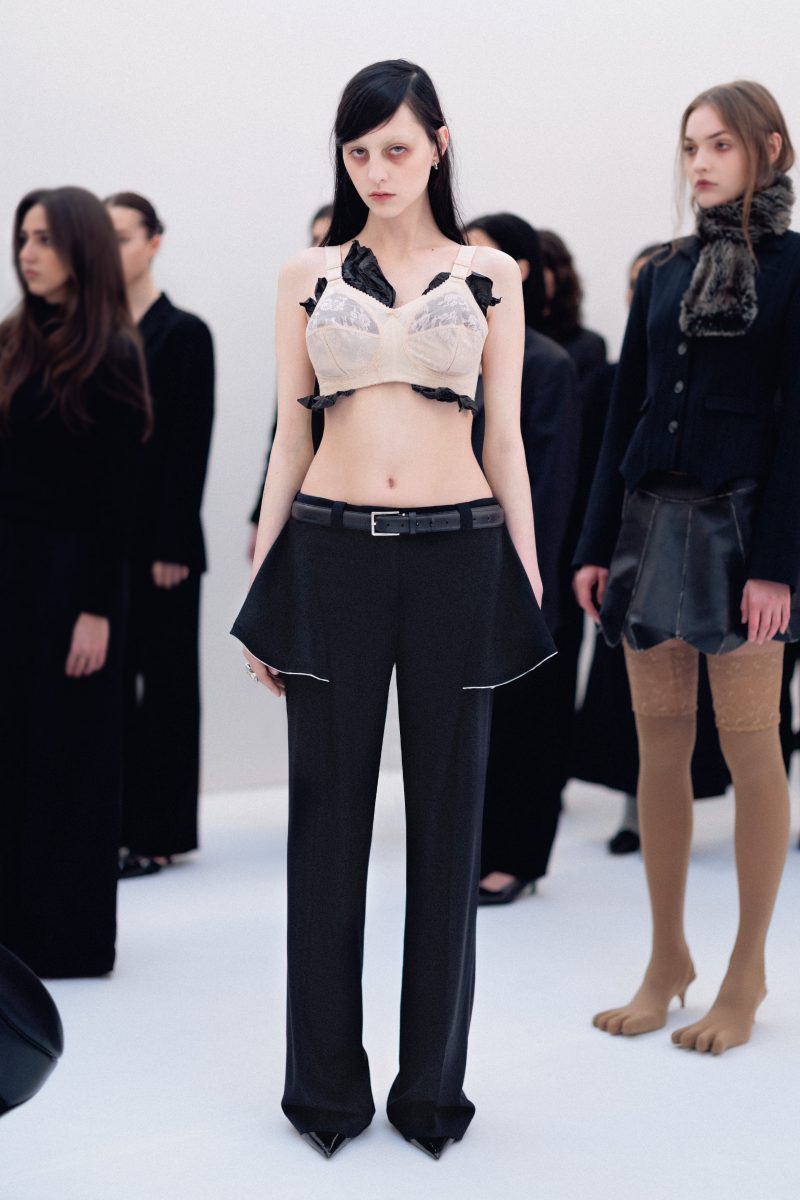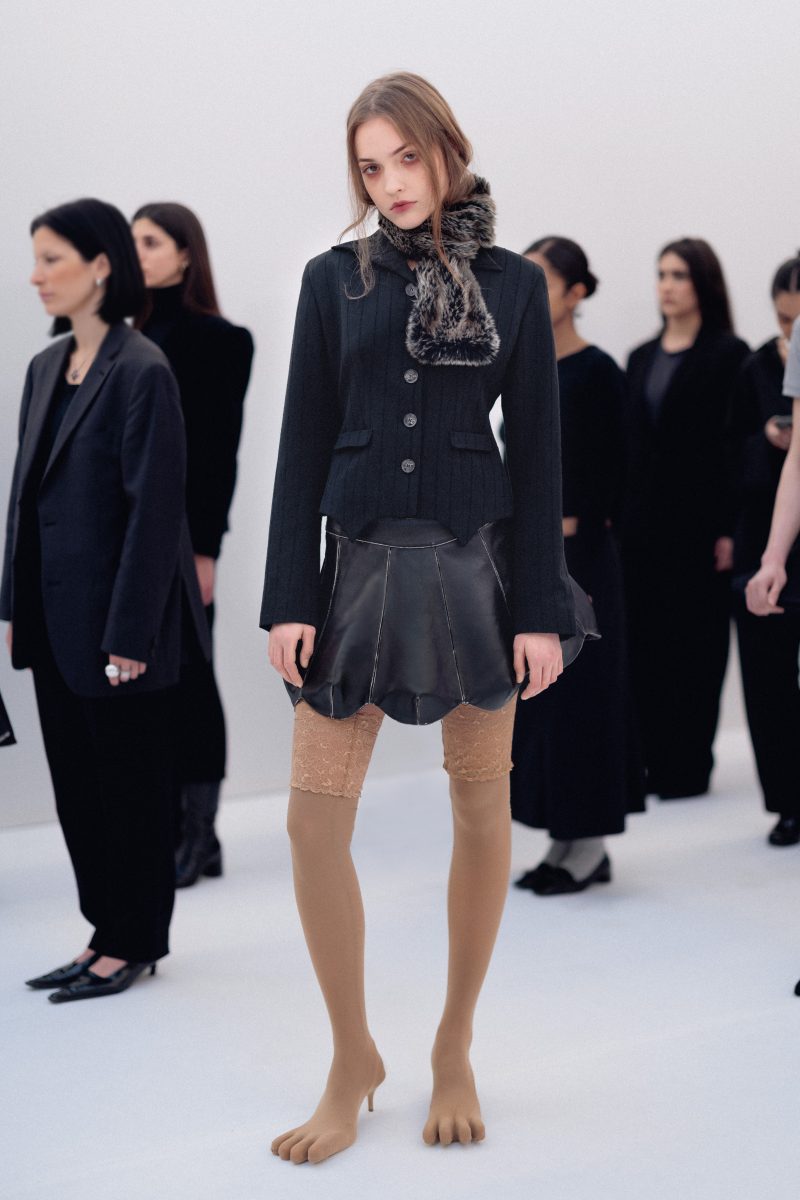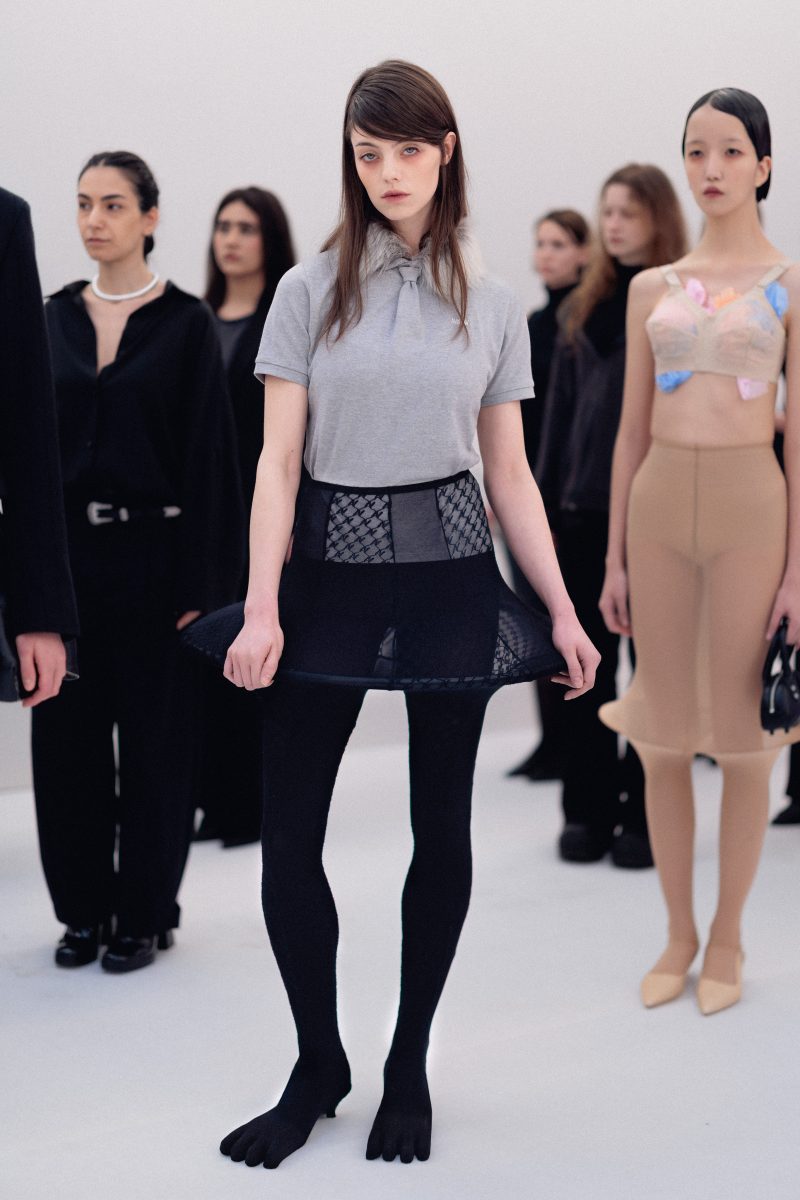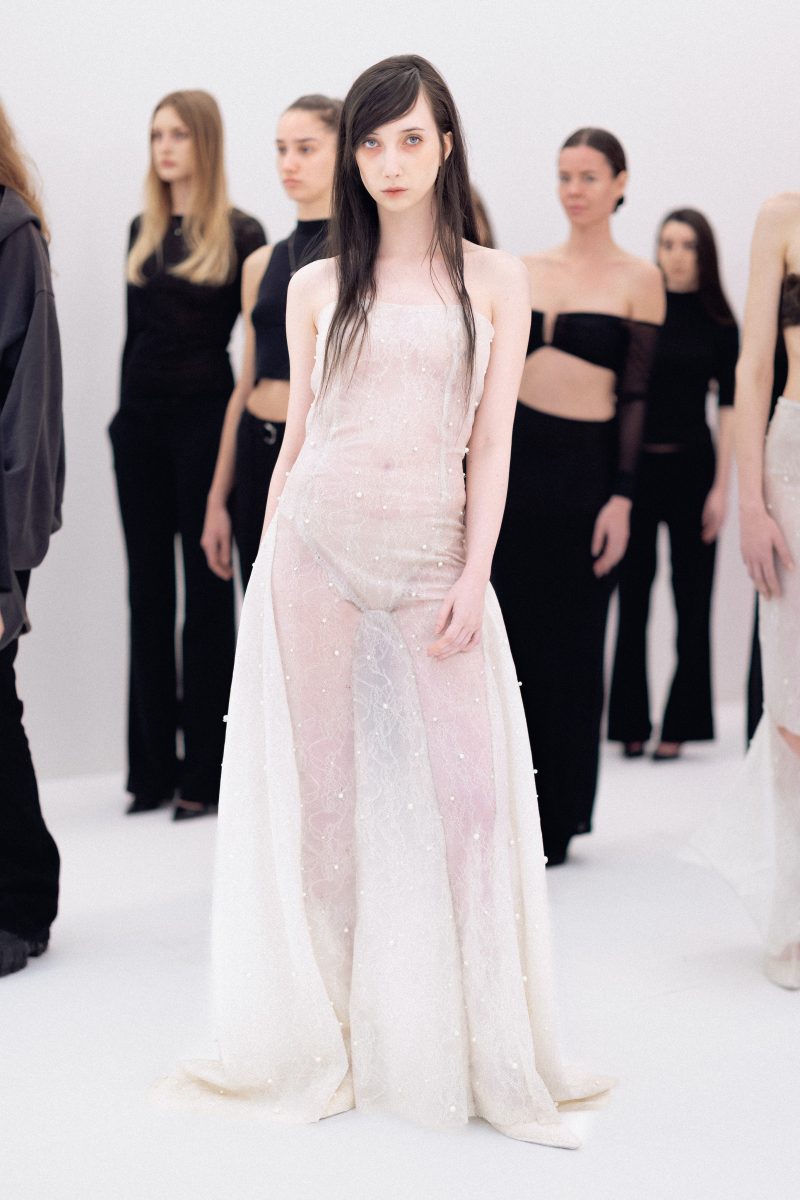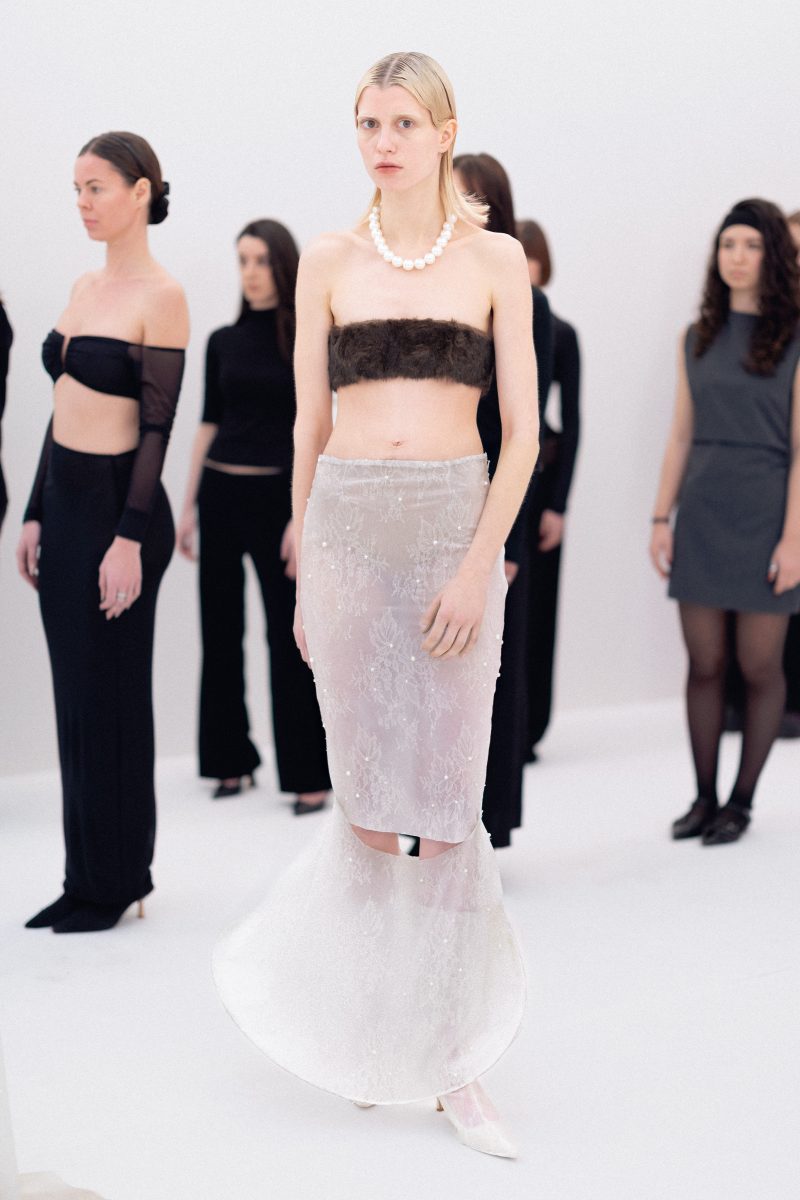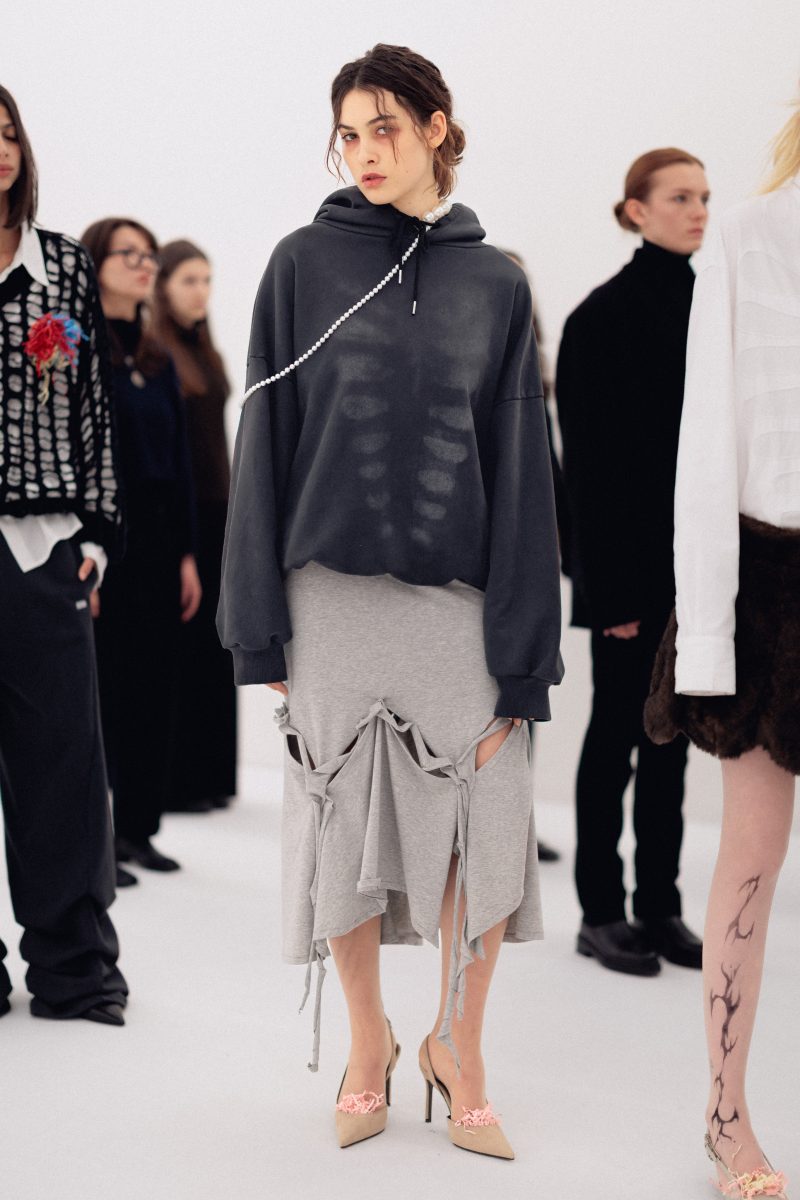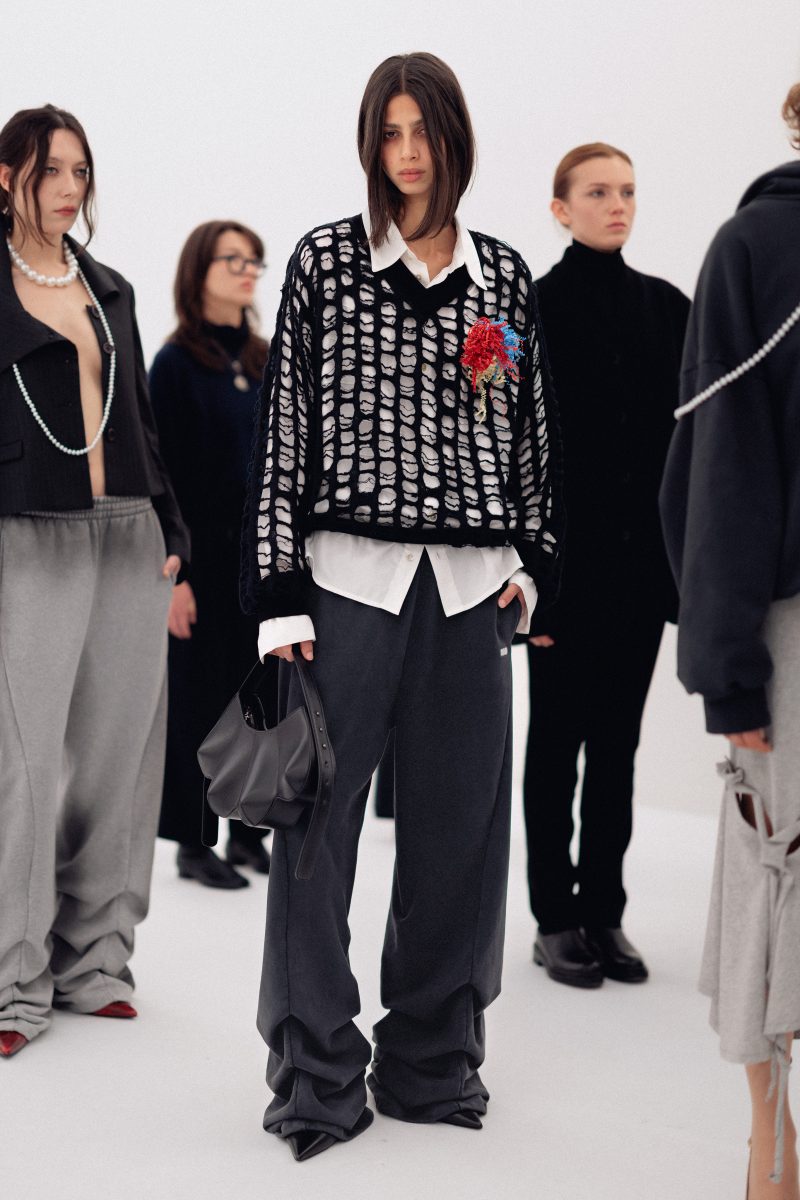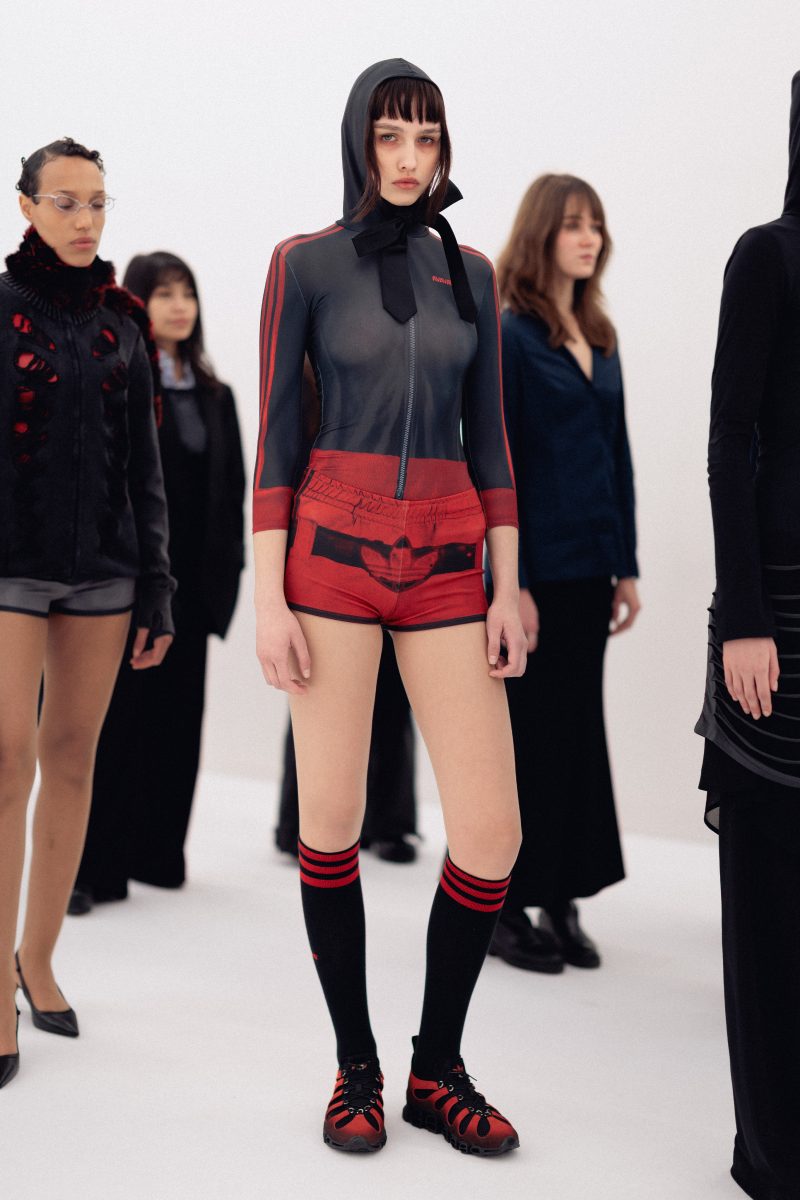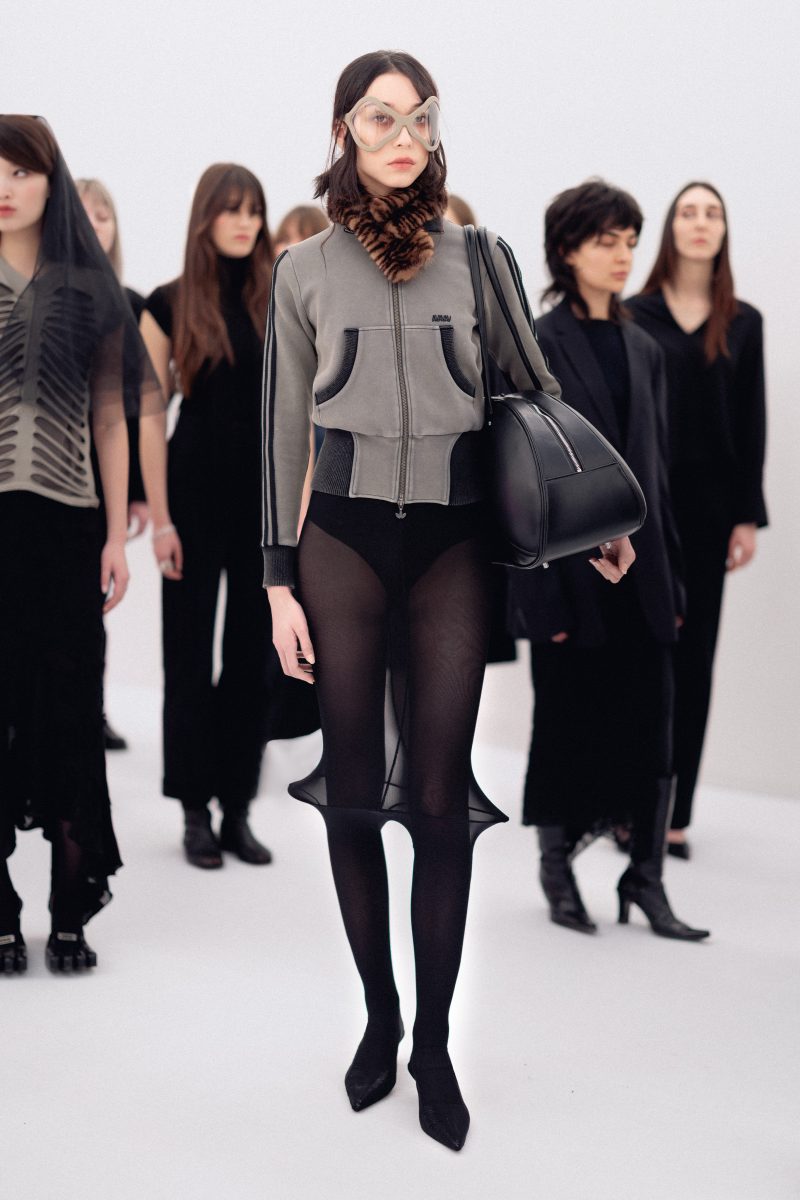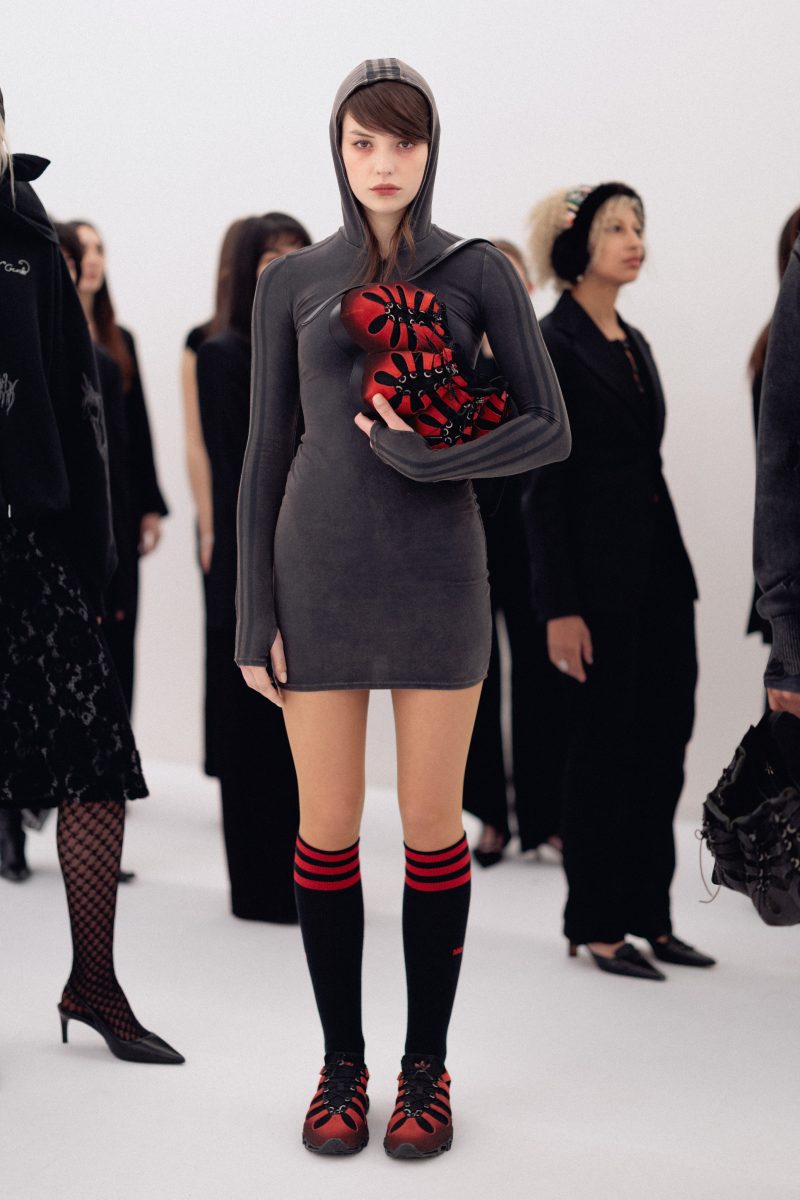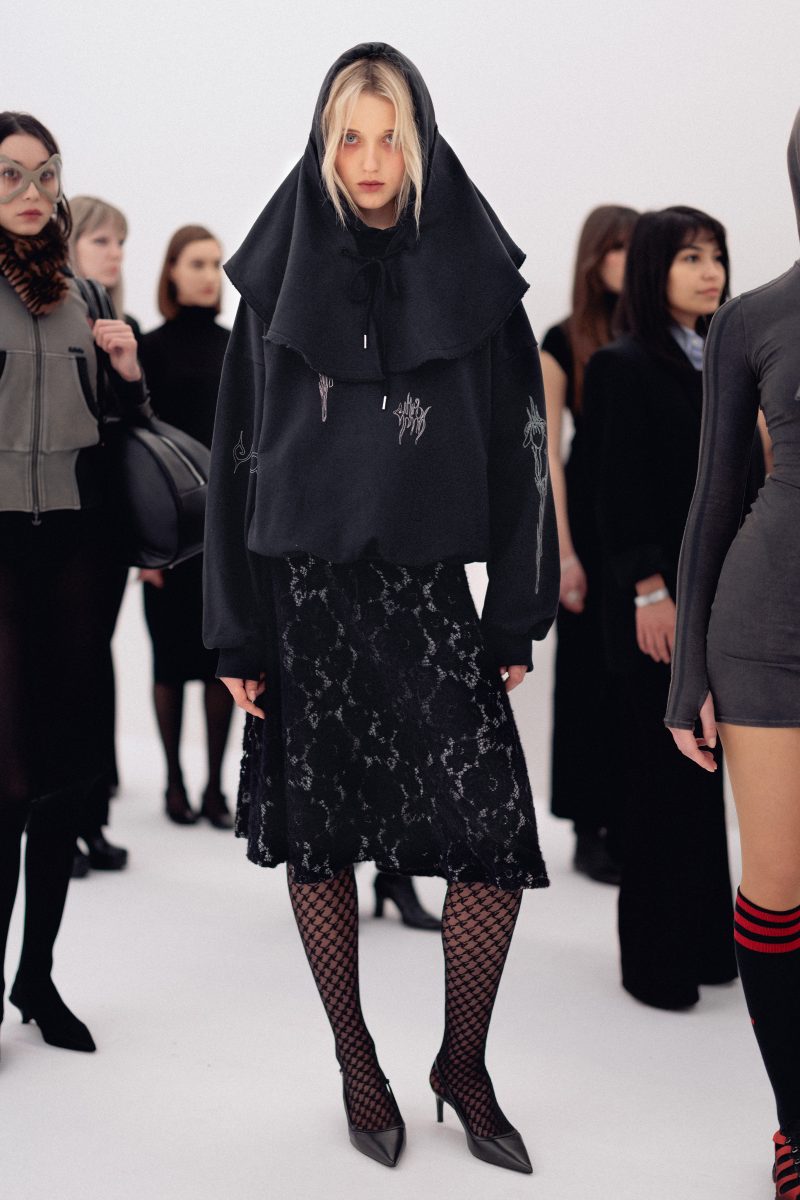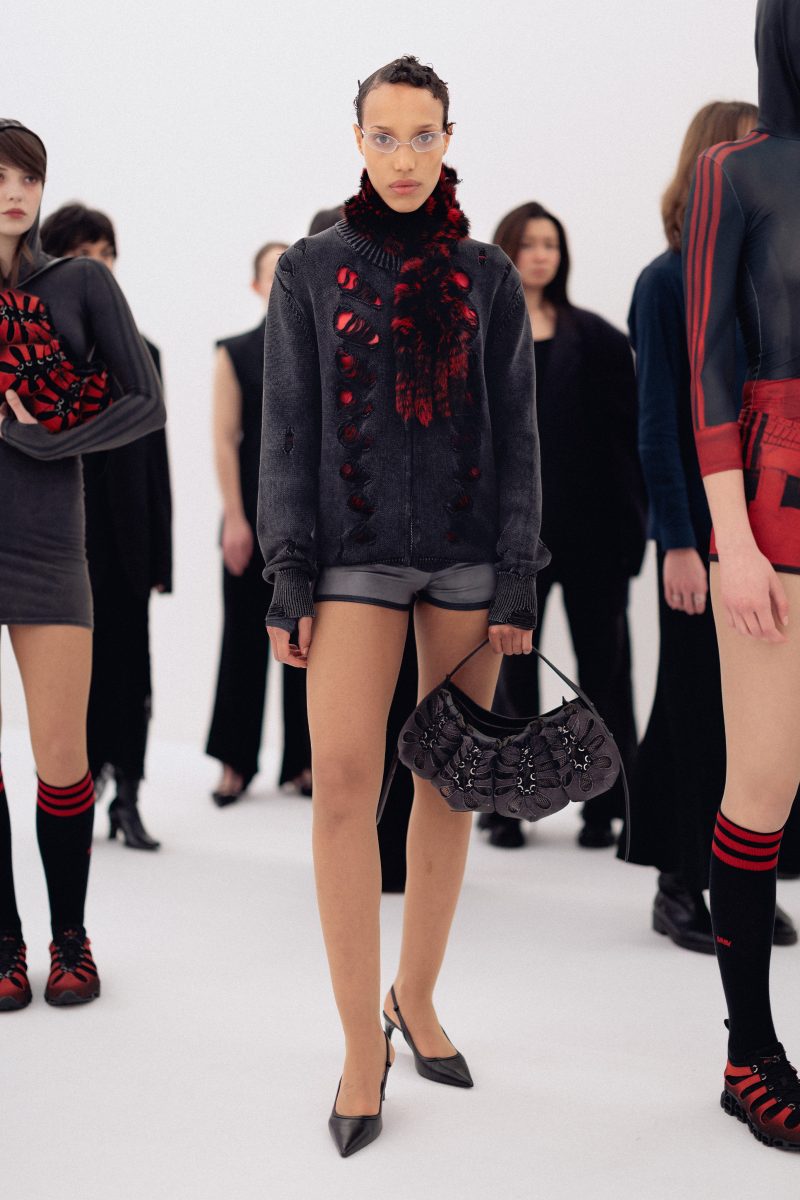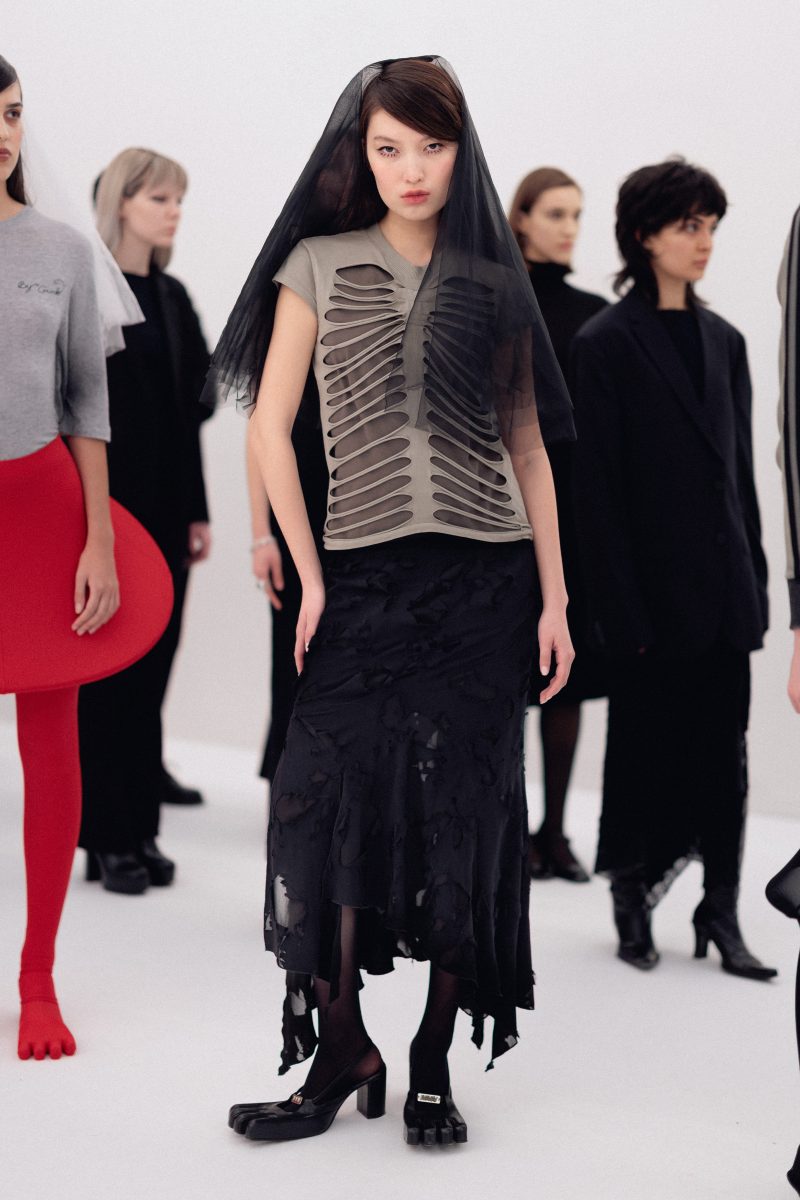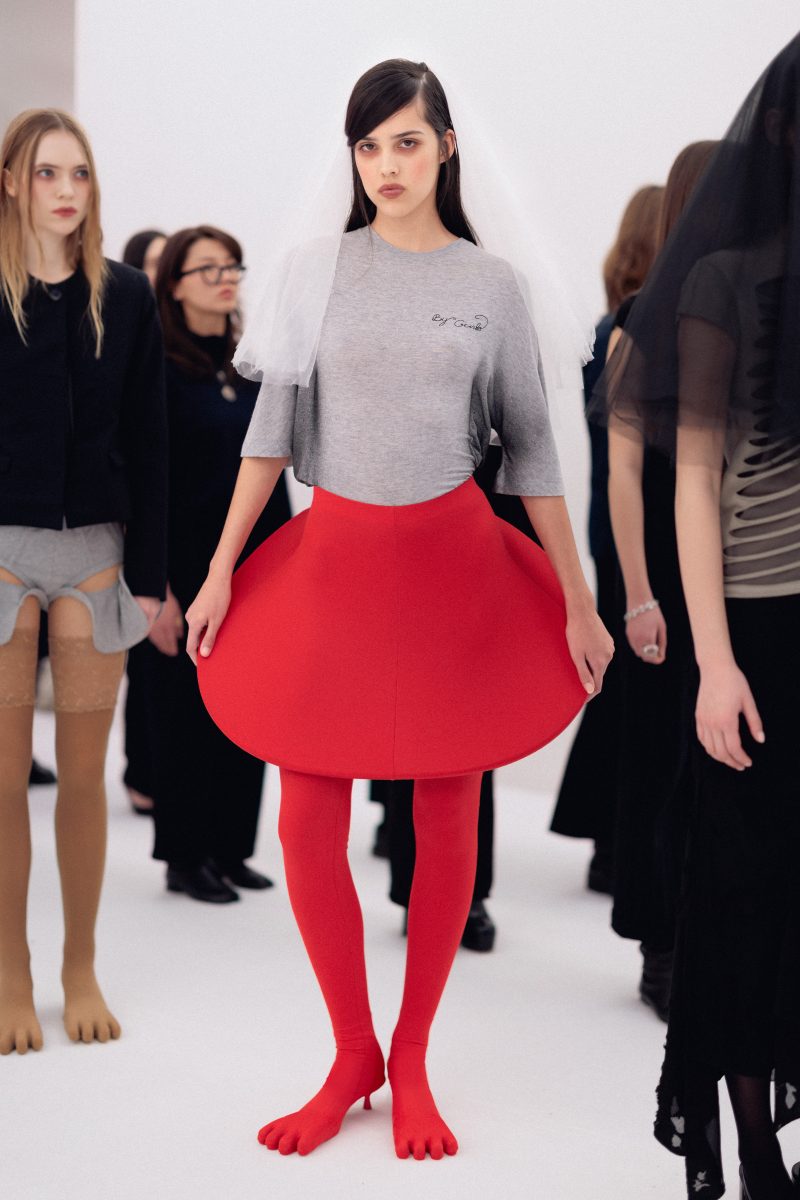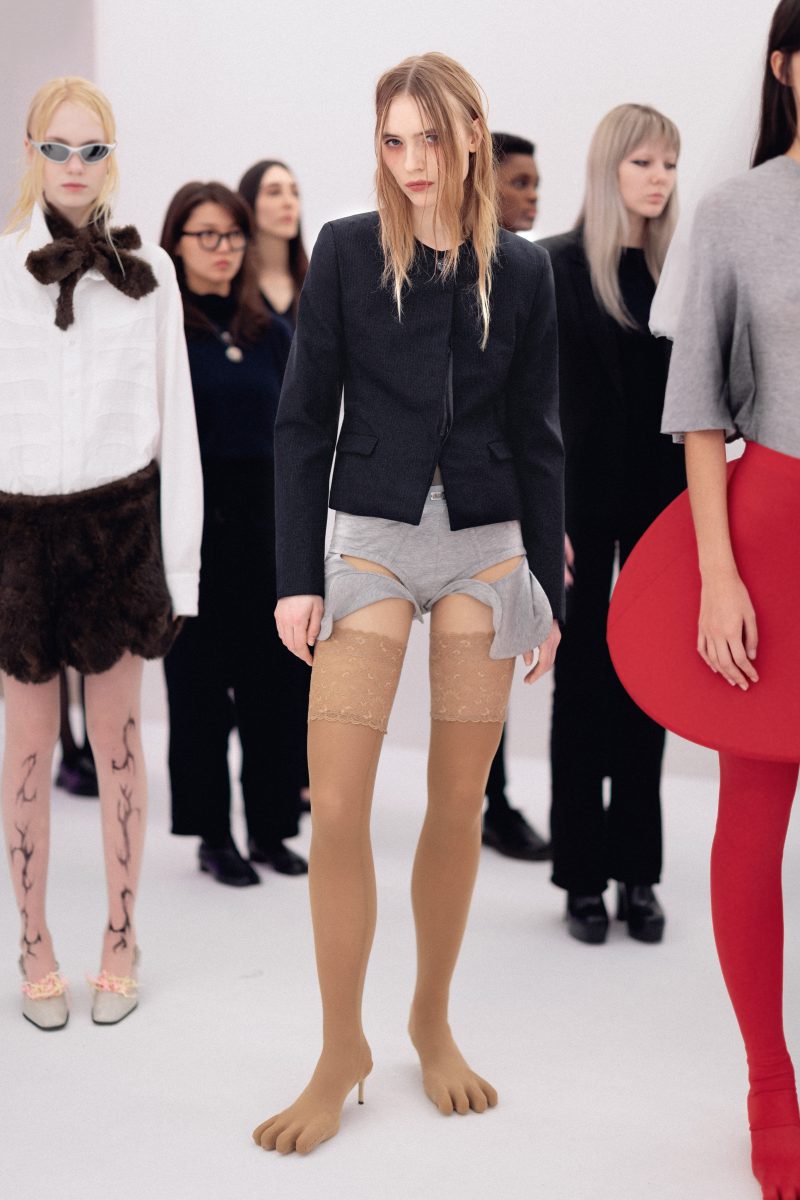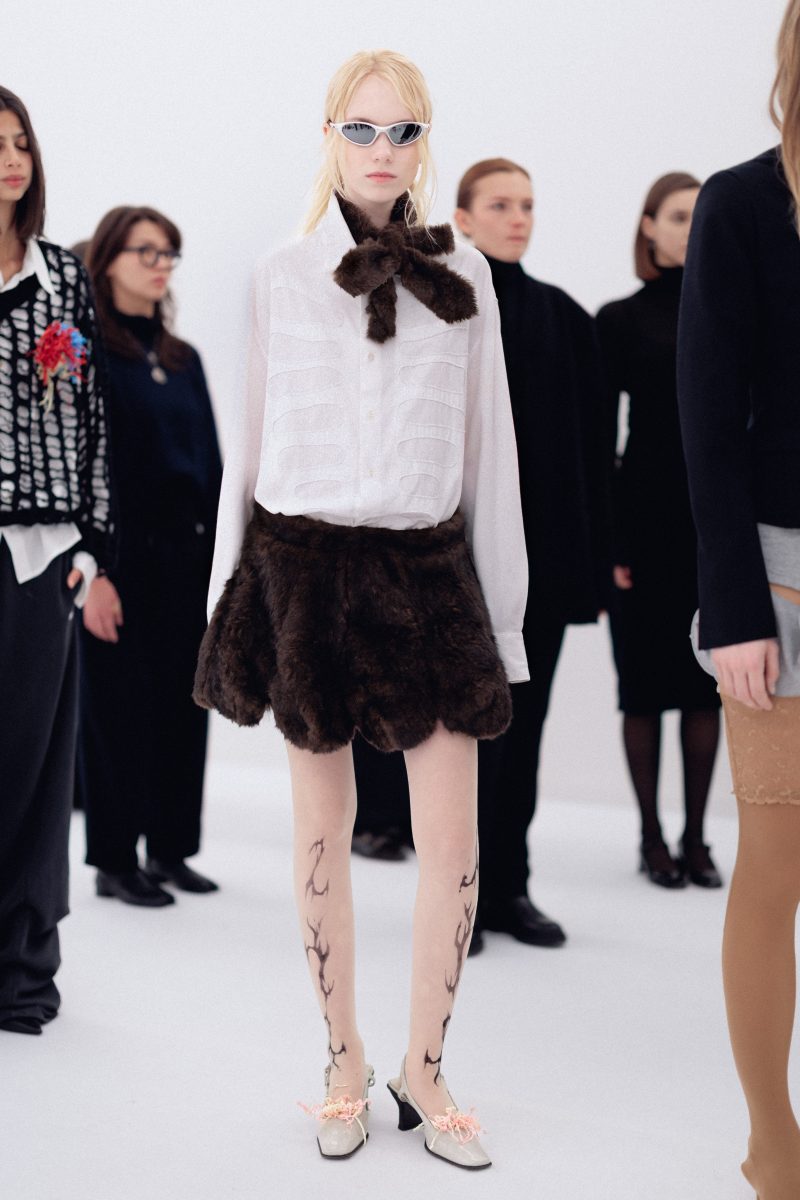
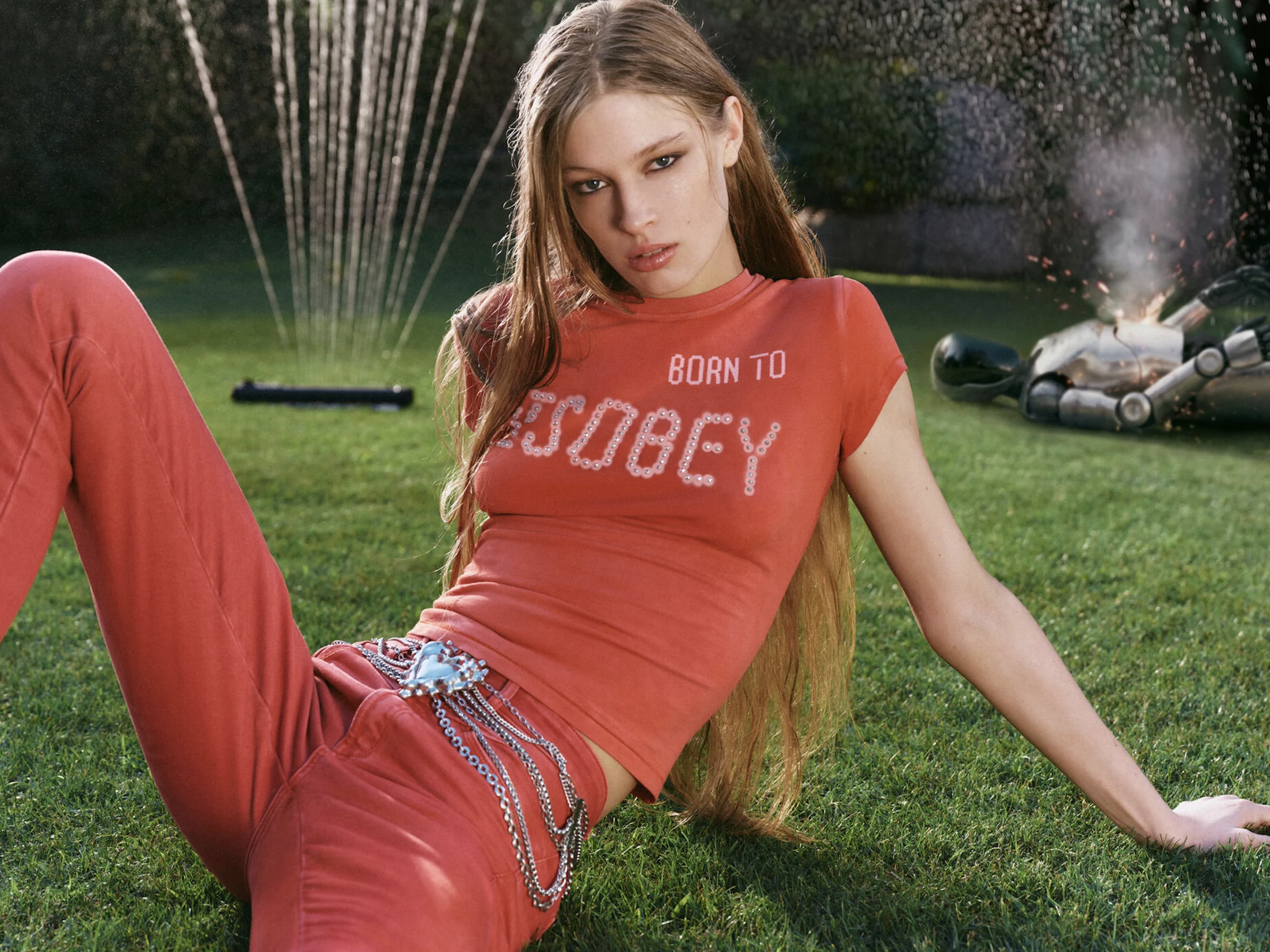
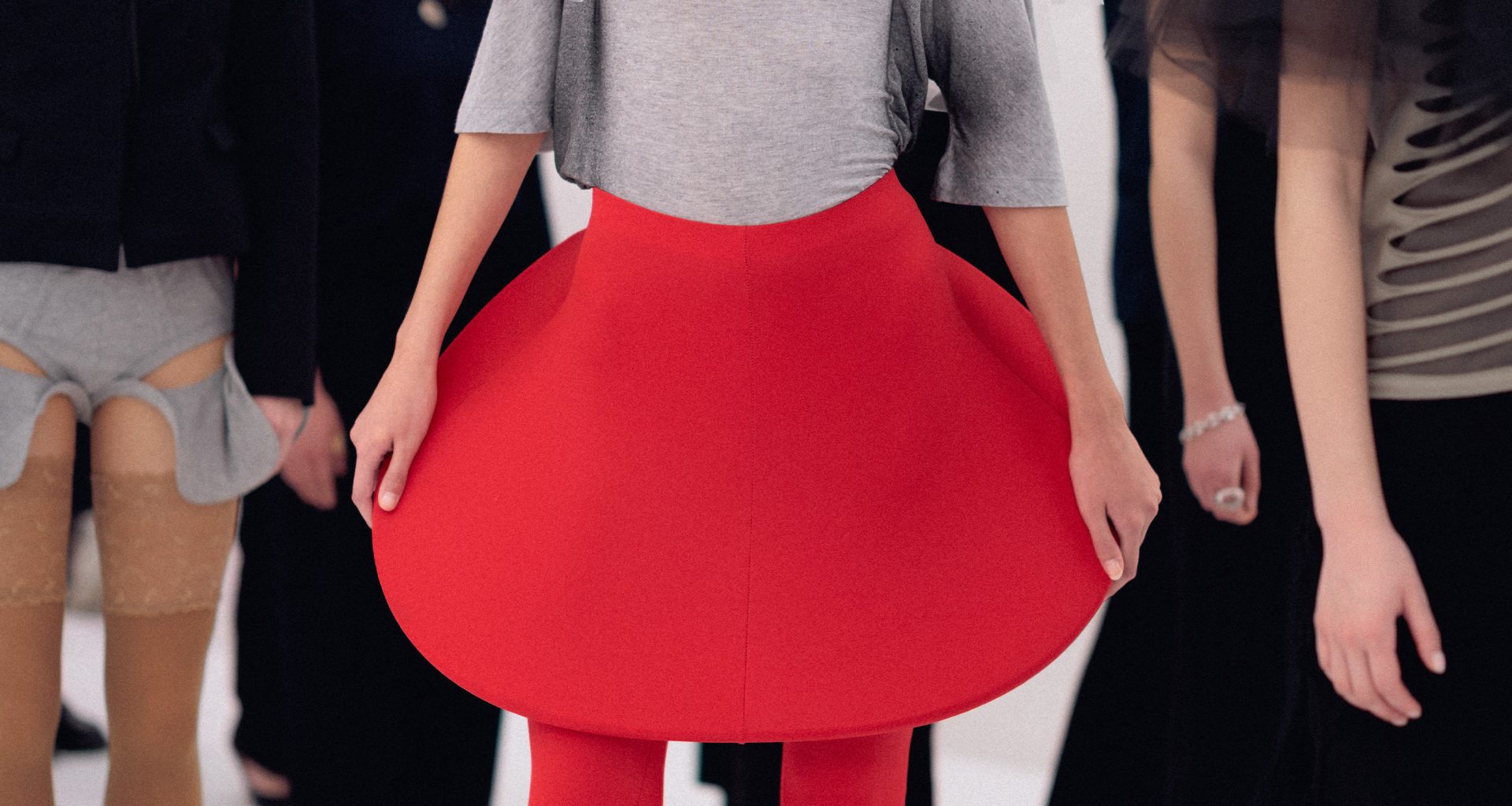
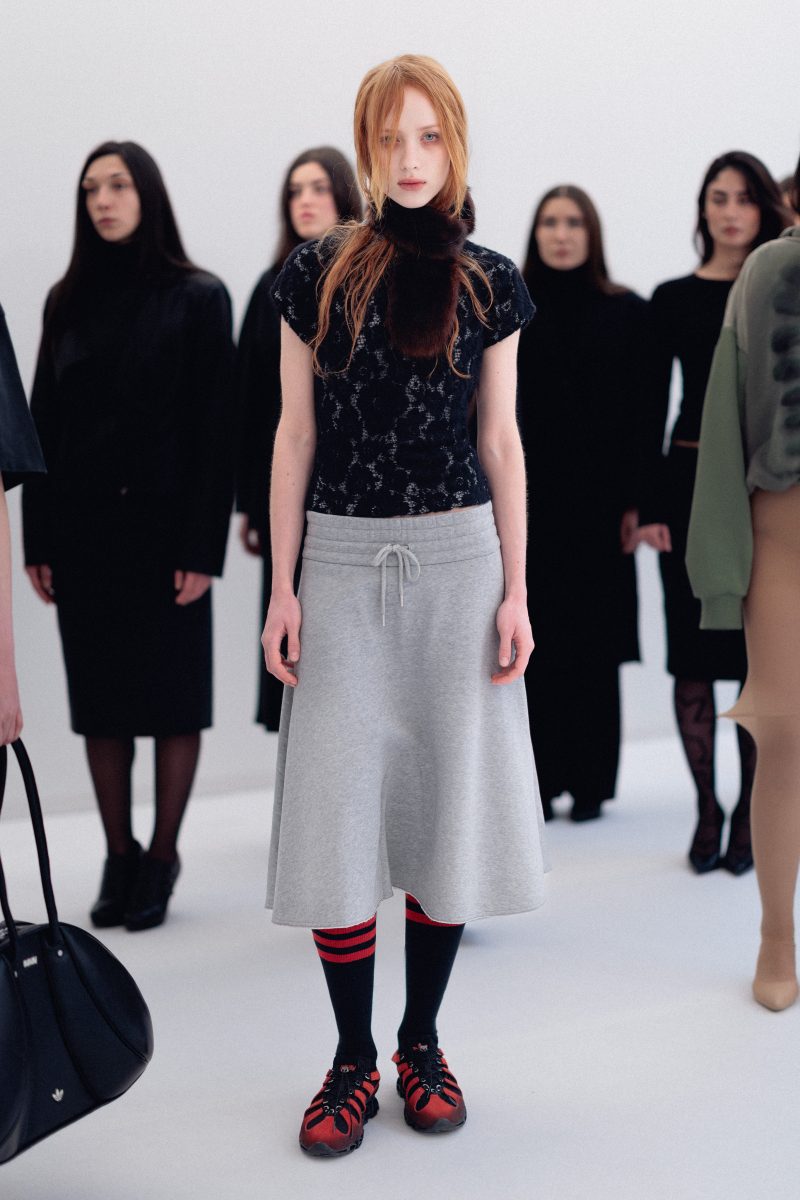
At Milan Fashion Week, where precision, polish, and performance are ritualized to near-violent perfection, Beate Karlsson continues to stage collapse as choreography. With AVAVAV’s Fall/Winter 2026 collection, she doesn’t simply present clothes — she destabilizes the architecture of expectation around them.
Season after season, Karlsson has transformed the runway into a site of public anxiety: models stumble, silhouettes distort, proportions misbehave. But beneath the spectacle lies something more surgical. Fall/Winter 2026 arrives at a moment of cultural and industrial tension, asking who fashion is really built for — and who is allowed to shape it. In an industry orbiting women yet still disproportionately governed by male power structures, Karlsson gently — and sometimes grotesquely — presses on the bruise.
What unfolds is not satire alone, nor sabotage. It is exposure therapy for an exhausted system. It is sculpture in motion. It is catharsis dressed as crisis.
Below, Beate Karlsson reflects on collapse, control, grotesque power, and why the product must always survive the performance.
Your shows often stage the failure of the fashion system in real time. Is it collective catharsis, or are you documenting an industry on the brink of collapse?
That’s a really good question. I think it’s mostly the first — a kind of collective catharsis.
For me, the shows are almost like exposure therapy. Instead of avoiding the things that frustrate or scare us about the fashion system, I try to put them right in the center of the runway. It’s a way of confronting them openly, sometimes exaggerating them, sometimes making them absurd. There’s something very therapeutic about that.
As a creative, I naturally work with strong emotions — fear, love, insecurity, excitement. Those feelings are always present in our concepts. But at the same time, I do think the fashion system can be destructive, and there is a real need for change.
What interests me is the contradiction: it’s a creative industry that demands artistic integrity and originality, yet it operates on an extremely rigid seasonal cycle. If you miss one season, you’re almost invisible.
That’s very different from being a musician or a filmmaker, where a project can take years to develop. In fashion, you’re expected to deliver profound creative work on a relentless schedule. I don’t think that tension is talked about enough.
So maybe the shows are both a release and a reflection — a way to process the system from within it, while still believing it can evolve.
AVAVAV turns contemporary anxiety into wearable clothes. Does your work stem from fear, or from a desire to control it?
I wouldn’t say my work stems from fear. It stems from emotion.
Anxiety can be one of those emotions, of course, but so can humor, love, insecurity, excitement, or contradiction. I’m interested in emotional intensity in general, not just the dark parts of it.
For me, there’s also a distinction between my visual language and the conceptual framing of a collection. The silhouettes, the materials, the exaggeration — that’s one layer. The social commentary or the narrative context is another. Sometimes they overlap, sometimes they create tension.
If anything, I’m less interested in controlling emotions and more interested in making space for them. Turning something intangible into something wearable is a way of acknowledging it — not necessarily solving it, but giving it form.
In an era dominated by algorithms, where everything is consumed in 15 seconds, how do you still create a genuine shock?
It’s a balance. As an independent and relatively young brand, we have to be visible and responsive to the time we live in. Ignoring the speed of today’s culture wouldn’t work.
But I don’t believe everything needs to move at the same pace. I see it more as working in layers. Some ideas are meant for fast, digital formats — immediate, sharp, and accessible. Others require more integrity, more space, and more physical presence. Both can coexist.
To me, creating genuine shock today isn’t about being louder — it’s about being precise. It’s about understanding which platform you’re speaking through, and resisting the pressure to compress everything into 15 seconds if the idea deserves more.
We all have our online selves and our physical selves. I’m interested in designing for both, without letting the algorithm dictate the depth of the work.
Your use of the grotesque and the “error” — is it a form of vulnerability or a new kind of power aesthetic?
There is vulnerability in embracing imperfection, but there is also strength in it.
Highlighting the “error” means refusing the illusion of flawlessness. It creates space for humanity. The grotesque disrupts conventional beauty codes and opens up new ones. In that sense, it can absolutely function as a form of power — but not in a polished or dominant way. More in a raw, self-aware one.
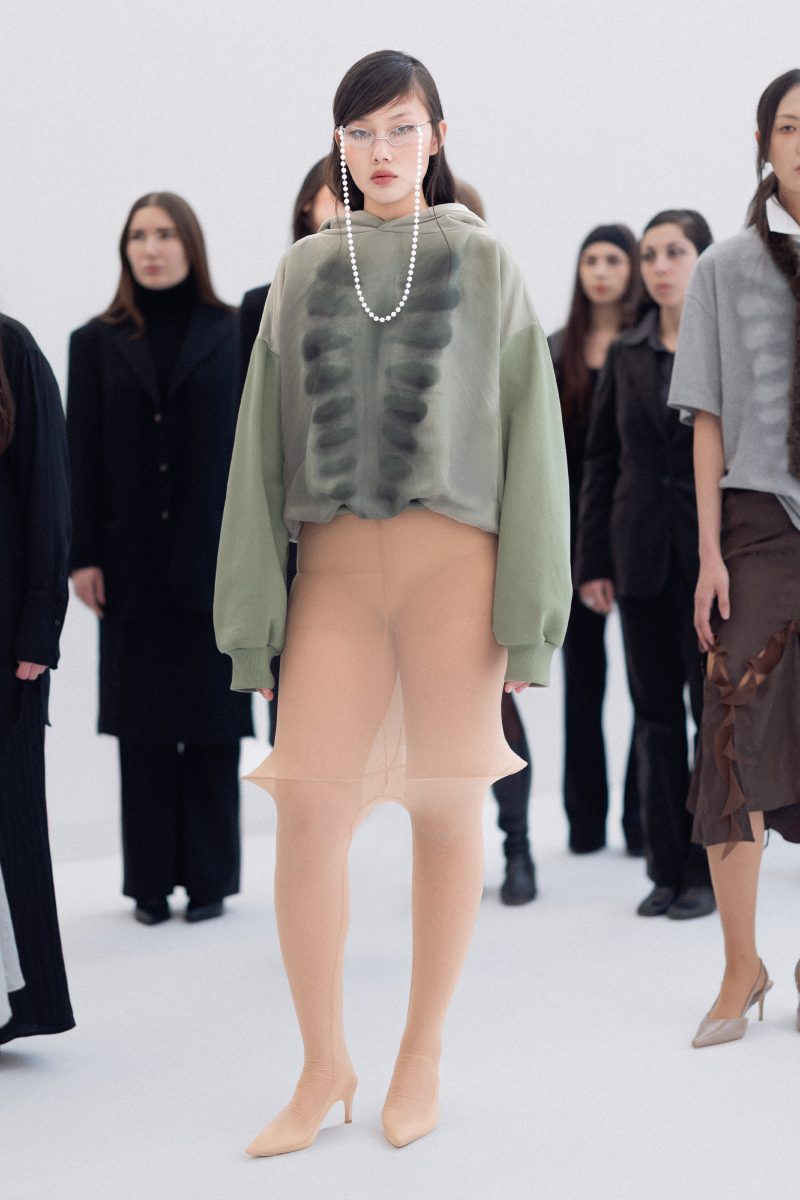
Your silhouettes often sabotage functionality: stumbling bodies, deforming shoes, destabilizing proportions. Is this your way of rejecting the “perfect performance” demanded today?
I wouldn’t frame it as a rejection of performance. For me, it’s much more instinctive than that.
What fascinates me most is sculpture — the act of shaping form and experimenting with new silhouettes. It’s something I’m almost primitively drawn to. On an intellectual level, I also find it the most exciting part of being a designer.
There’s something almost spiritual about giving shape to an object. It feels like bringing something into existence, like creating a small creature. I often experience my designs as if they have a heart, as if they’re alive in some way.
If they destabilize the body, it’s not about sabotage. It’s about expanding what a body — and a garment — can be.
Fashion is increasingly entertainment. Where does performance end and the product begin in AVAVAV?
It has to start with the product. At the end of the day, we are a business — and without a strong product, it’s very difficult to build anything sustainable.
That said, the relationship between performance and product isn’t rigid. Sometimes a performative idea comes first and pushes the product in a new direction. But most often, it begins with the garment — with construction, silhouette, material — and the performance grows naturally around it.
For me, the show should amplify the product, not replace it. If the clothes don’t hold their own without the spectacle, then something is missing.
The Fall/Winter 2026 collection you’re presenting this week at Milan Fashion Week arrives amid intense cultural tension. What do you want the audience to feel — discomfort, liberation, or complicity?
I’m more interested in opening up a space for reflection than dictating an emotion.
This season, I’m touching on something I think hasn’t been discussed enough within fashion. The industry has always revolved around women — womenswear, the female consumer, femininity. Women have been the focal point for as long as we can remember in contemporary fashion.
Yet there is still a noticeable lack of female perspective in positions of power and creative leadership. I find that contradiction fascinating. What does it do to our understanding of femininity when the industry centered on women is not equally shaped by women?
If there is a direction at all, it’s to gently bring that question to the surface. As a woman in this position, I feel a certain responsibility — and also a certain freedom — to speak about it.
If fashion suddenly ceased to exist as an industry, would AVAVAV survive as an artistic gesture?
I think it would survive, but maybe in a different form.
If fashion didn’t exist as an industry, and there was no commercial structure around it, I would still feel the need to create. Maybe AVAVAV wouldn’t be a brand in the traditional sense. Maybe it would become a more radical artistic collective, or exist purely as performance, sculpture, or film.
A letter to your future self.
I hope you’re stressing less. I hope you’ve managed to change something, even if it’s just the way you personally work within the industry. A slightly healthier rhythm. A slightly better balance. That would be enough.
Remember that no one ever wished they had spent more time on their phone. Go outside.