by Giorgia Cantarini
From Rihanna’s sculptural Margiela to Emma Chamberlain’s painterly Mugler, the Met Gala 2026 red carpet transformed fashion into living artworks, echoing masterpieces across centuries. Some celebrities did not miss the assignment, here our favorites.
EXCERPT (short & strong)
From Rihanna’s sculptural Margiela to Emma Chamberlain’s painterly Mugler, the Met Gala 2026 red carpet transformed fashion into living artworks, echoing masterpieces across centuries.
Met Gala 2026: When Fashion Becomes Art
The first Monday in May once again marked the return of the Met Gala, an event where fashion, celebrity, and cultural discourse collide on the steps of the Metropolitan Museum of Art.
Established in 1948 as a fundraising event for the Costume Institute, the gala has evolved into one of the most influential fashion moments globally. This year’s theme, “Fashion Is Art,” pushed the narrative further — inviting guests to embody fashion not just as clothing, but as living, breathing works of art.
On the red carpet, garments became references, reinterpretations, and sometimes direct translations of iconic artworks. The body was no longer simply dressed — it became a canvas.
Rihanna in Maison Margiela by Glenn Martens — A Sacred Icon Reimagined
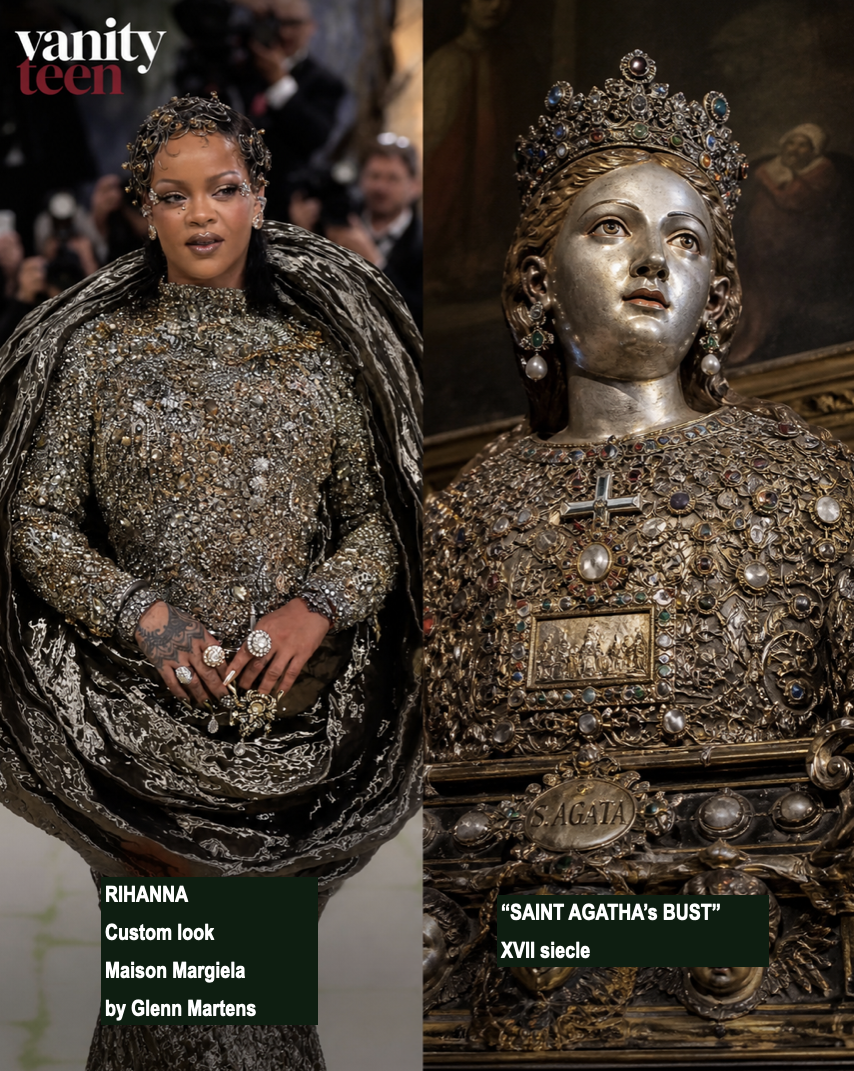
Rihanna’s look, designed by Glenn Martens for Maison Margiela, stood out as one of the most conceptually powerful of the night.
Covered in intricate embellishments and sculptural volumes, the ensemble echoed the ornate structure of religious relics — particularly the bust of Saint Agatha, a baroque representation of sanctity, martyrdom, and devotion. The resemblance was striking: the jewel-encrusted surface, the rigid, almost armor-like construction, the transformation of the body into an object of reverence. Rihanna didn’t just wear couture — she embodied iconography, she was “mothering” the Met Gala.
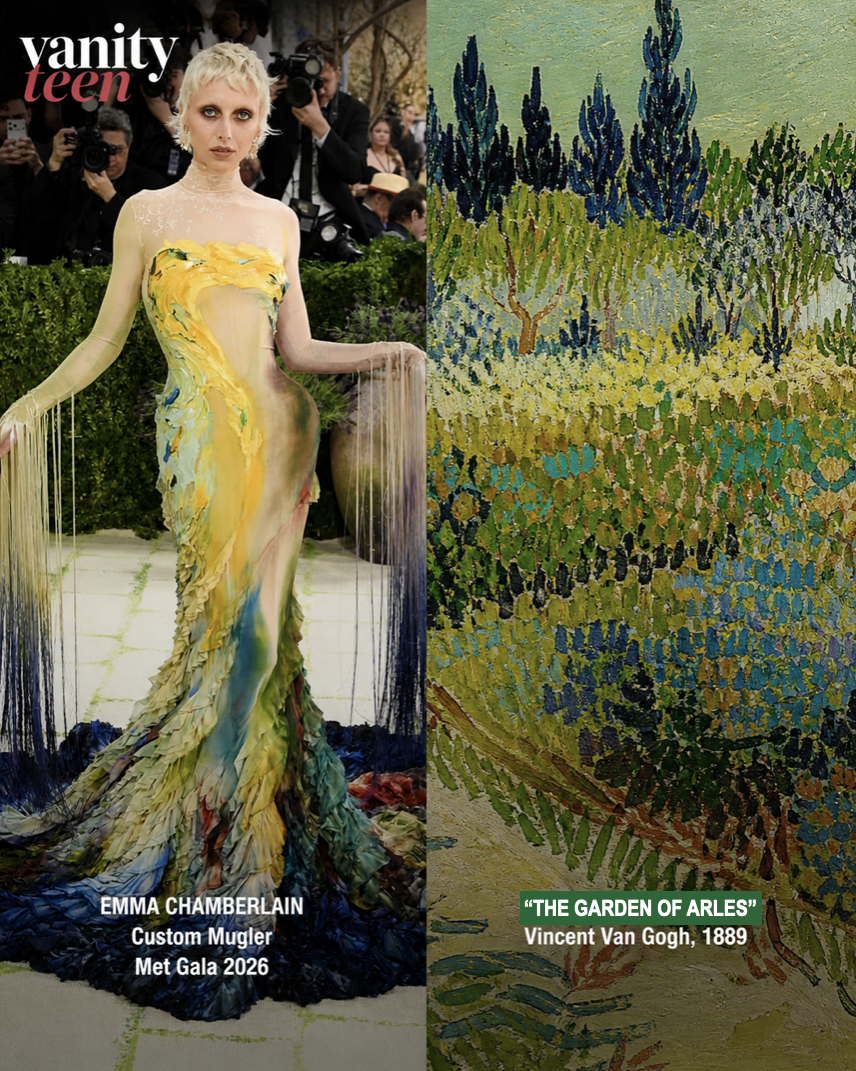
Emma Chamberlain in Mugler — Painting as Dress
Emma Chamberlain’s custom Mugler look translated painterly gestures into fabric. Fluid strokes of yellow, blue, and green cascaded along the silhouette, creating a direct dialogue with Vincent van Gogh’s The Garden of Arles (1889). Here, fashion became an extension of painting — a three-dimensional brushstroke that took several hours of painting at the Mugler’s atelier.
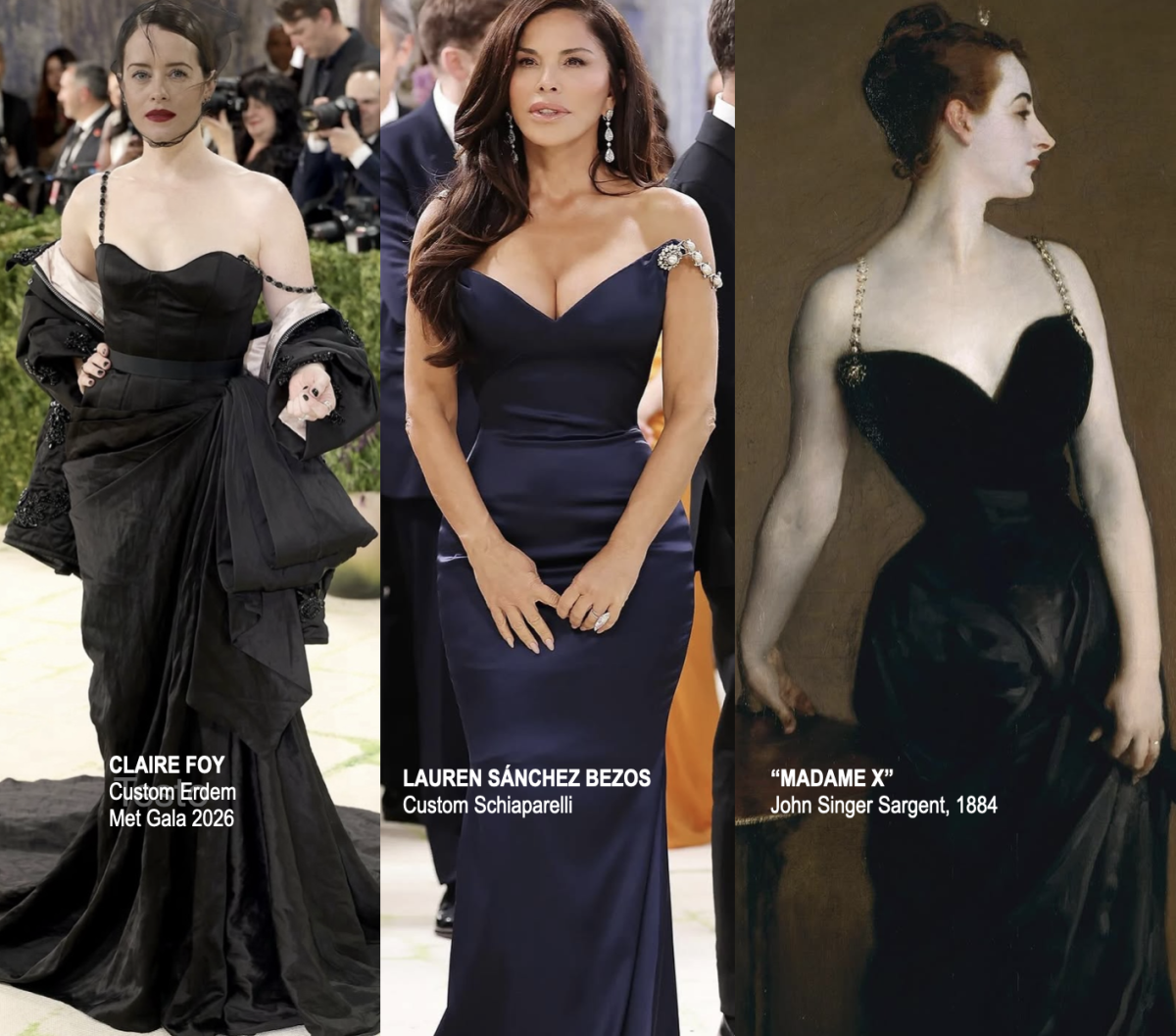
Claire Foy in Erdem & Lauren Sánchez Bezos in Schiaparelli — The Legacy of Madame X
One of the most intelligent visual dialogues of the night came from two different interpretations of a single masterpiece: Madame X (1884). The original painting was considered scandalous at the time as Madame X was portrayed with a strap falling off her shoulders so that the painter had to repaint it with the strap perfectly attached to the bodice.
Claire Foy in Erdem
Claire Foy’s look leaned toward fidelity — delicate, restrained, and closer to the original silhouette. The thin straps and structured bodice echoed the elegance and fragility of Sargent’s portrait, classy and coming from a different era.
Lauren Sánchez Bezos in Schiaparelli
In contrast, Lauren Sánchez Bezos, wearing Schiaparelli, embraced a more sculptural and empowered interpretation. The gown amplified the iconic neckline, transforming it into a statement of modern power dressing. Although we may not root for Mrs. Bezos the dress itself is worth the mention.
Together, the two looks illustrated how a single artwork can generate multiple contemporary narratives — one rooted in tradition, the other in reinterpretation.
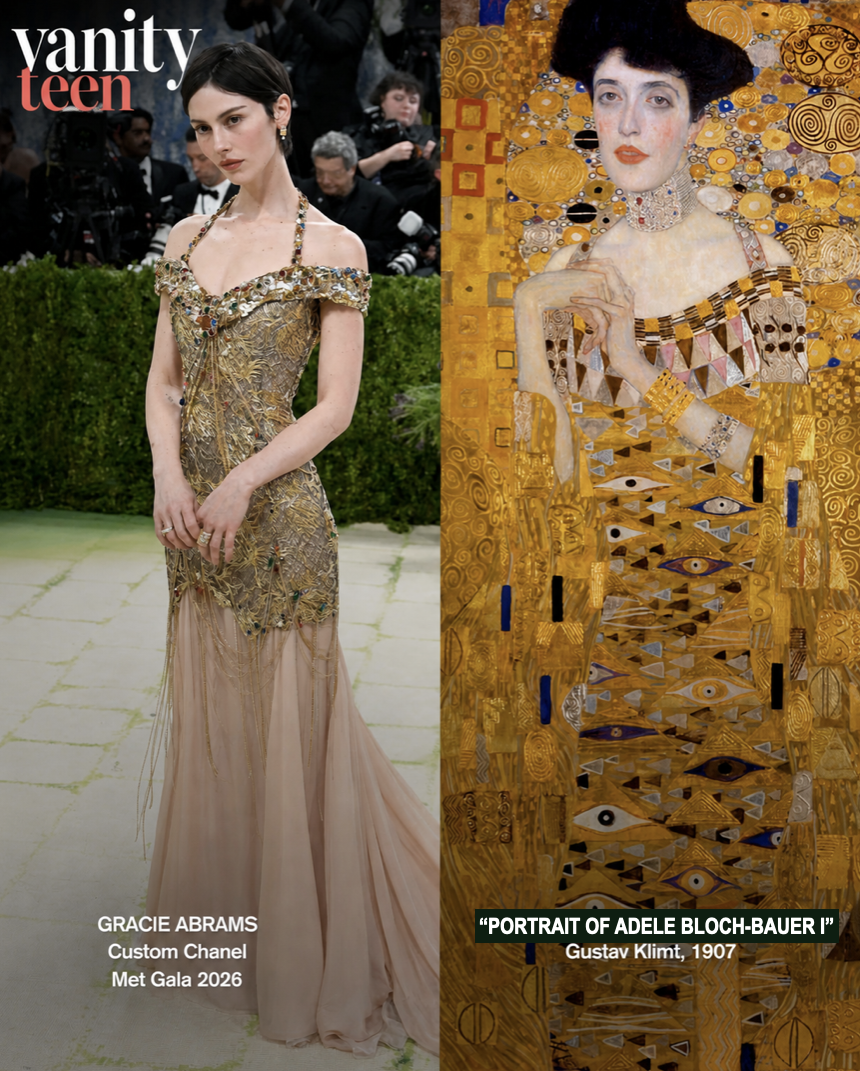
Gracie Abrams in Chanel — Klimt’s Golden Language
Gracie Abrams’ custom Chanel gown mirrored the opulent textures of Gustav Klimt’s Portrait of Adele Bloch-Bauer I(1907).
Gold embellishments, intricate detailing, and a sensual yet structured silhouette recreated Klimt’s signature visual language — where ornamentation becomes identity.
The result was not simply decorative, but deeply symbolic: a fusion of femininity, luxury, and artistic heritage.
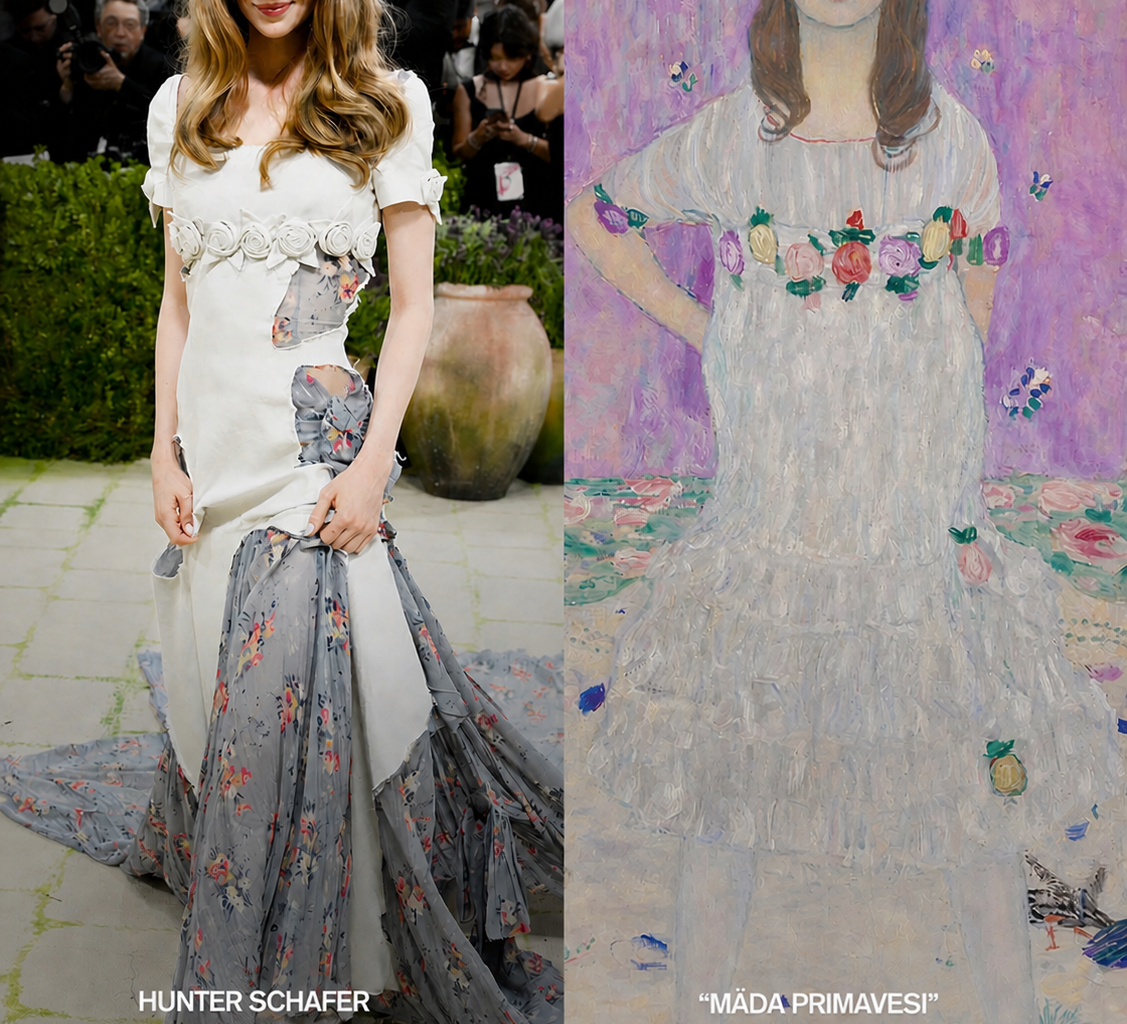
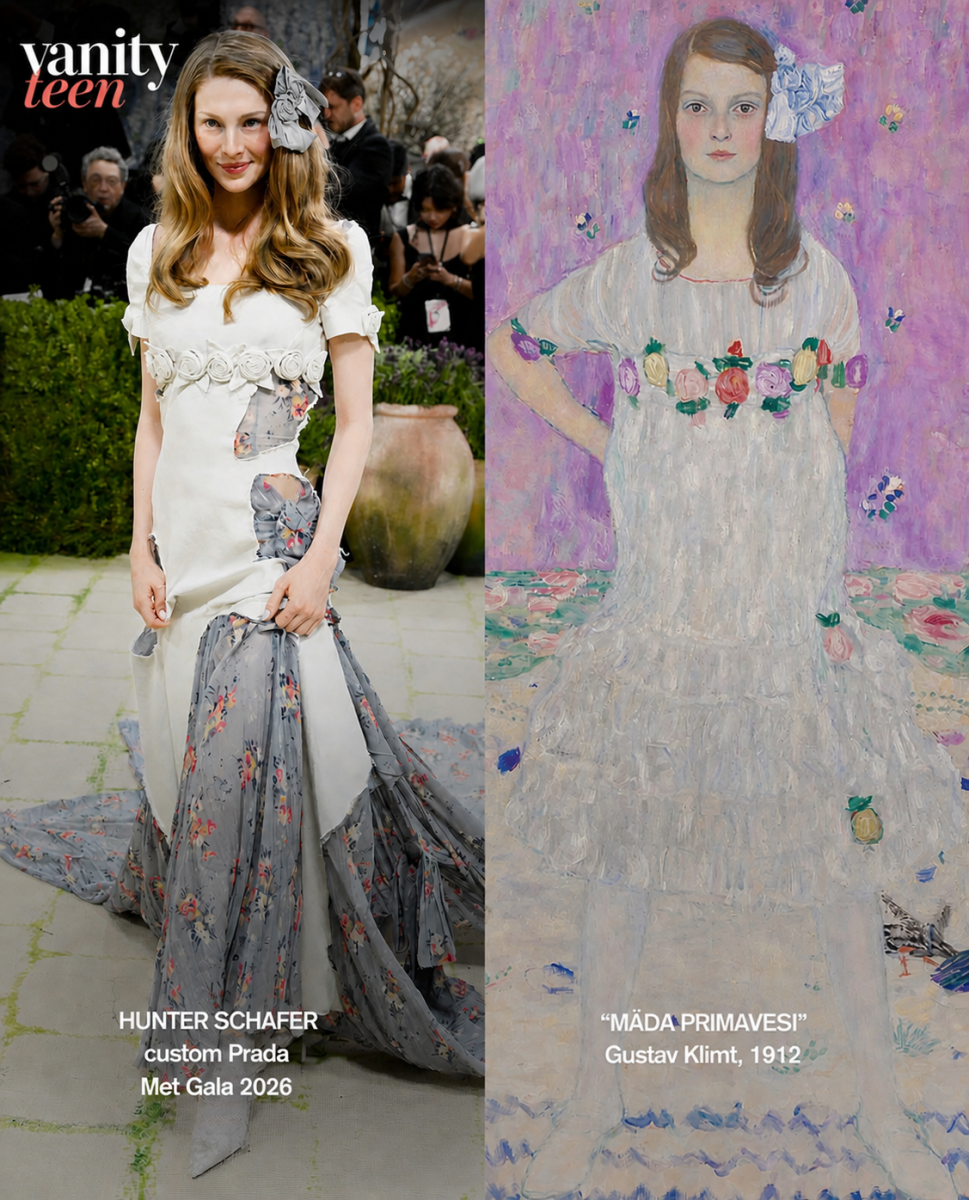
Hunter Schafer in Prada — Soft Romanticism Revisited
Hunter Schafer’s custom Prada look referenced Klimt once again, this time through Mäda Primavesi (1912). Where Klimt’s earlier works were opulent and gilded, this reference explored a more intimate and poetic dimension of his practice.
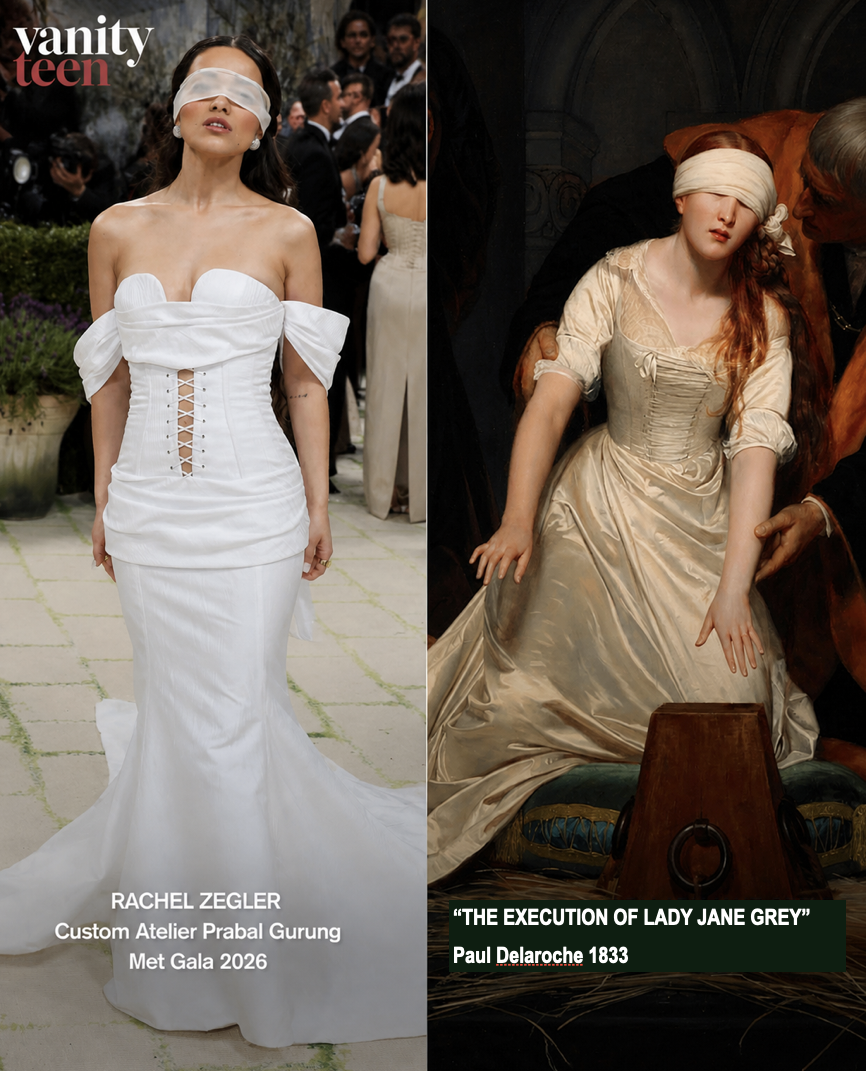
Rachel Zegler — The Drama of Neoclassical Painting
Rachel Zegler’s custom look by Prabal Gurung evoked the theatrical intensity of The Execution of Lady Jane Grey (1833) by Paul Delaroche.
The blindfold motif translated directly from painting to fashion, transforming the look into a narrative moment rather than a static outfit.
Here, fashion became storytelling — a frozen scene filled with tension and emotion.
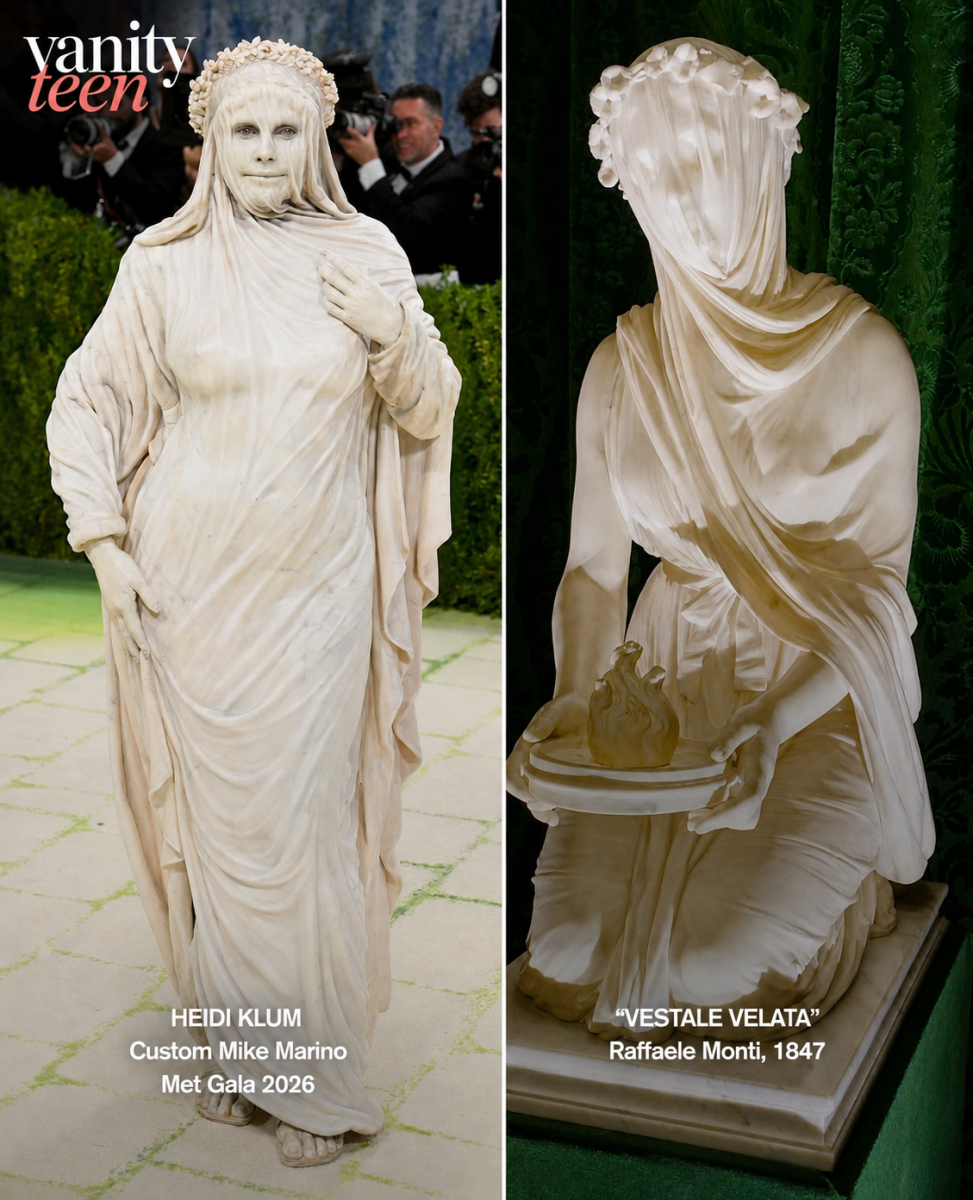
Heidi Klum — Sculpture in Motion
Heidi Klum’s look, designed by Mike Marino, echoed the marble purity of Raffaelle Monti’s Veiled Vestal (1847).
The draped fabric simulated carved stone, blurring the line between body and sculpture. The illusion of weight, texture, and concealment transformed Klum into a living statue.
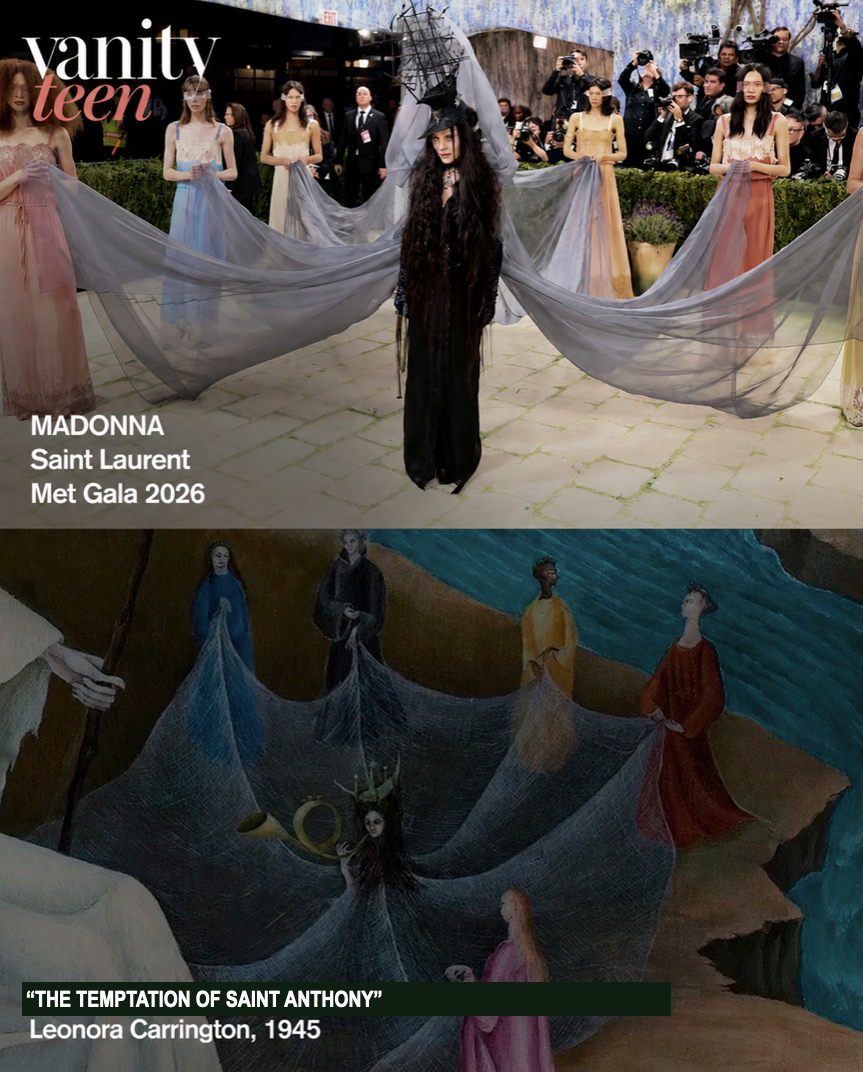
Madonna in Saint Laurent — Surrealism Reimagined
Madonna’s look by Anthony Vaccarello for Saint Laurent referenced the surreal world of Leonora Carrington.
The dramatic silhouette and theatrical veil echoed The Temptation of Saint Anthony (1945), merging mysticism, femininity, and rebellion — all central to Carrington’s visual language. Madonna was also wearing the “ship hat” by Philip Tracy that belonged to his muse and mentor: Isabella Blow.
Fashion Is Art — But Also a Reflection of Power
The Met Gala has always existed in a space of duality — between creativity and commerce, expression and power. This year, that tension felt more visible than ever.
With global conflicts shaping the world outside, the spectacle of the red carpet raises an inevitable question:
what is the role of fashion in times of crisis?
And yet, as these looks demonstrated, fashion remains one of the most immediate ways to translate culture into image — to make history, art, and identity visible in a single moment.
At the Met Gala 2026, fashion didn’t just reference art.
It became it.