
By Alegria Haro
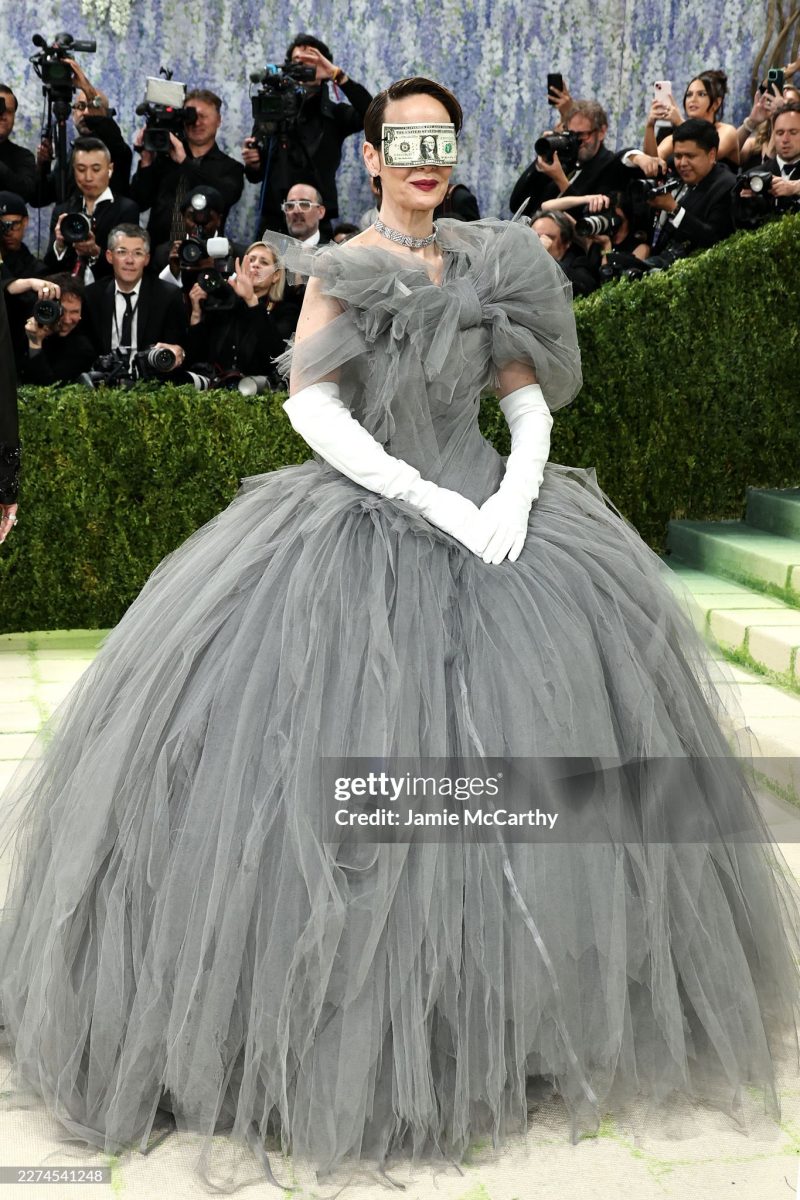
Sarah Paulson’s dollar-bill mask and destroyed tulle gown became one of the night’s most debated images. Read through Matières Fécales’ “The One Percent,” the look becomes a sharp study of fashion, money, performance and power.
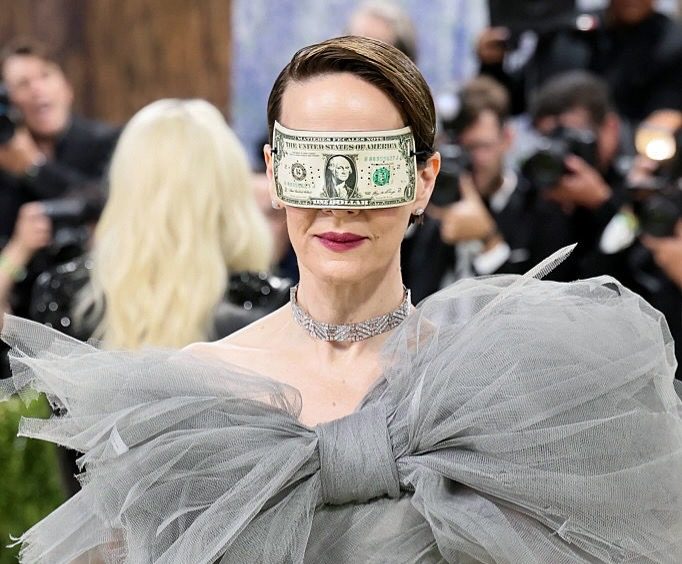
Sarah Paulson’s Met Gala 2026 look was never going to pass quietly. A dollar bill across the eyes, worn on the steps of one of fashion’s most photographed institutions, is an image designed to create friction. It interrupts the usual rhythm of the carpet, where even the strangest silhouettes are often expected to remain seductive, polished and flattering to the fantasy of the room.
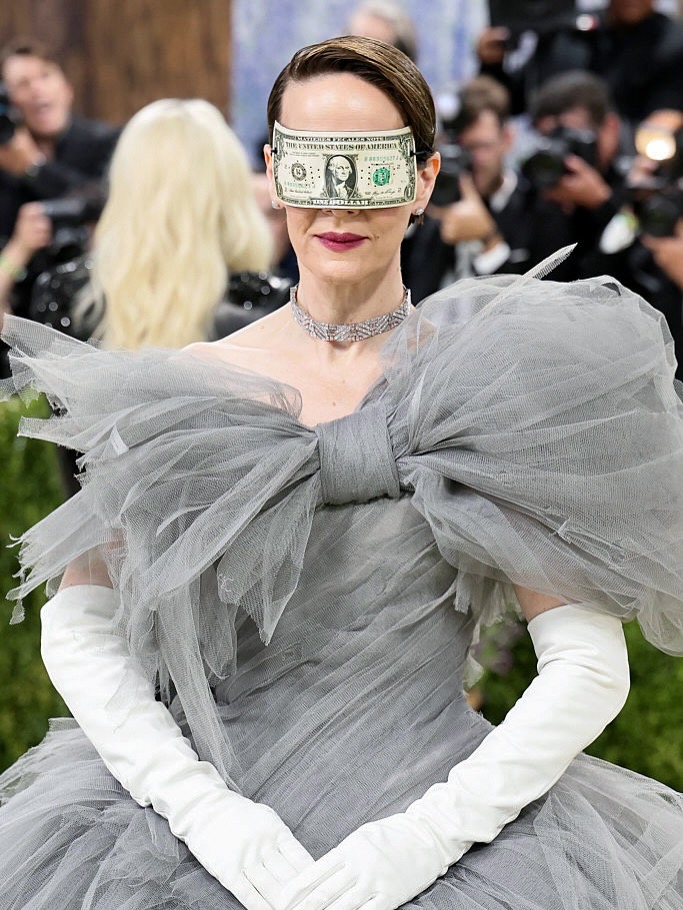
The reaction online moved quickly from confusion to criticism. Many viewers questioned the irony of wearing a dollar-bill blindfold inside the Met Gala itself, arguing that a critique of wealth felt compromised on a carpet so closely associated with money, access and institutional power. But treating the look only as a celebrity statement flattens what made it interesting. Paulson’s appearance becomes much sharper when read through the collection it came from, and through Matières Fécales’ wider presence on the red carpet.
The look was Matières Fécales Fall/Winter 2026-2027, from “The One Percent,” a collection by Hannah Rose Dalton and Steven Raj Bhaskaran. Presented at the Palais Brongniart in Paris, a former stock exchange commissioned under Napoleon, the show placed its critique of power inside a building historically linked to capital, speculation and financial authority. From the beginning, the setting was part of the language.
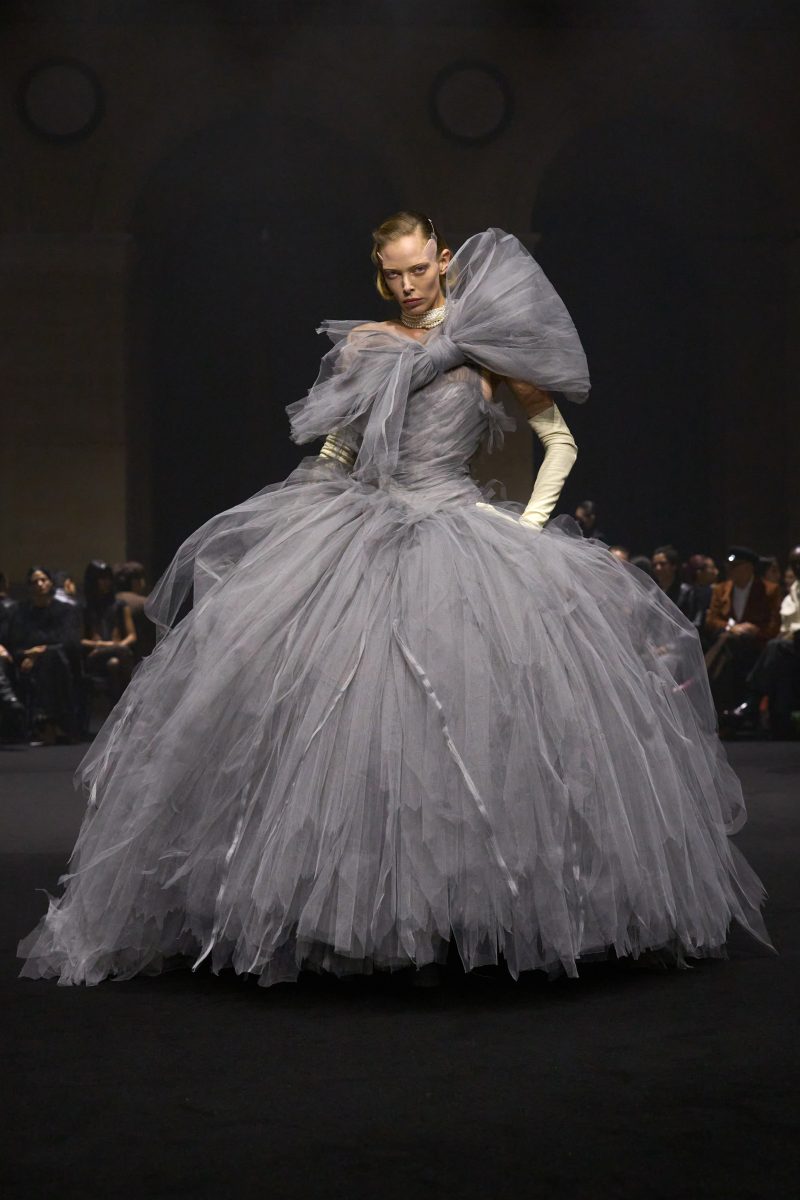
Matières Fécales built the collection around wealth, social hierarchy, beauty, guilt and the grotesque performance of status. Its show notes framed power as something no one can fully escape: something that can corrupt those who hold it, disappear from those who need it, and shape everyone’s relationship to the world. The title itself, “The One Percent,” points toward extreme wealth concentration and the fantasies built around it.
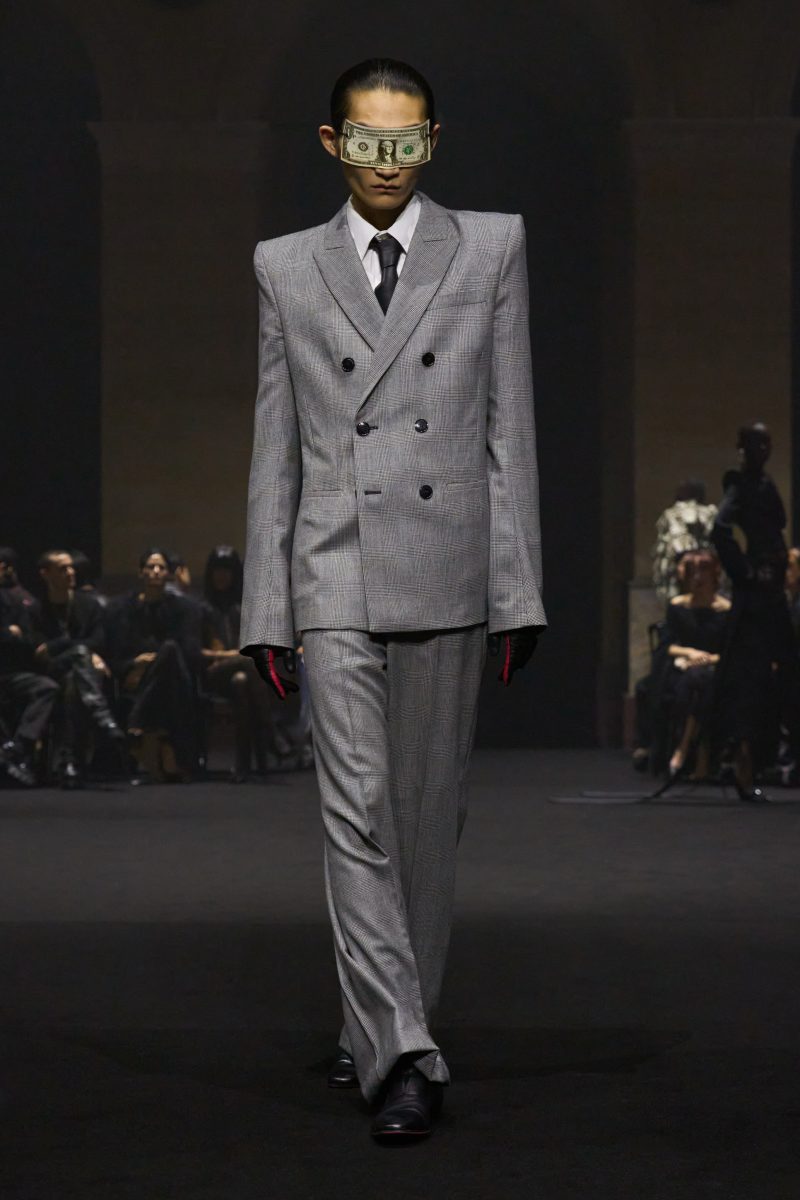
The brand identifies the ensemble as the ‘Destroyed Tulle Debutante Ballgown’, paired with the ‘Blinded by Money’ leather mask. The names are unusually direct, almost theatrical in their refusal to soften the message.
The gown carries the memory of ceremony: tulle, volume, a large bow, the codes of entrance and presentation. There is a recognizable couture fantasy inside it, the kind associated with grand arrivals, society rituals and women transformed into spectacle. But Matières Fécales does not preserve that fantasy in a pristine state. It distorts it. The tulle feels injured rather than delicate. The bow becomes too heavy to remain sweet. The dress keeps the grammar of elegance while making that grammar feel unstable.
The couture references are useful here. The collection works through the afterlife of Dior’s New Look, Galliano-era theatricality, McQueen’s romance with decay and Demna’s instinct for social caricature. The reference is less about copying a particular gown than about digesting a larger mythology: luxury as civilization, beauty as order, couture as proof of taste. In Matières Fécales’ world, that mythology has been contaminated by the systems that produced it.
The mask completes the thought with brutal clarity. ‘Blinded by Money’ places the banknote directly over the eyes, turning wealth into the frame of perception. It is funny for half a second, then uncomfortable. Money becomes costume, blindness, access, identity. The wearer can still move through the room, still be photographed, still participate in the ritual, but the image refuses to let the room pretend money is only background noise.
That is why the Met Gala setting was essential to the look’s force.
A cleaner protest might have been absence. Refuse the invitation, stay away from the carpet, leave the spectacle untouched. That kind of refusal has its own clarity, especially in a year when the gala was already surrounded by conversations about wealth, access and corporate power. But absence is not the only way to make a point.
The 2026 Met Gala dress code, “Fashion is Art,” invited guests to think of fashion as an embodied art form, in dialogue with the Costume Institute exhibition “Costume Art,” which explores the dressed body across art history. Paulson’s look answered that prompt by making the body part of the critique: dressed in class fantasy, blinded by money, and placed directly inside the spectacle it was addressing.
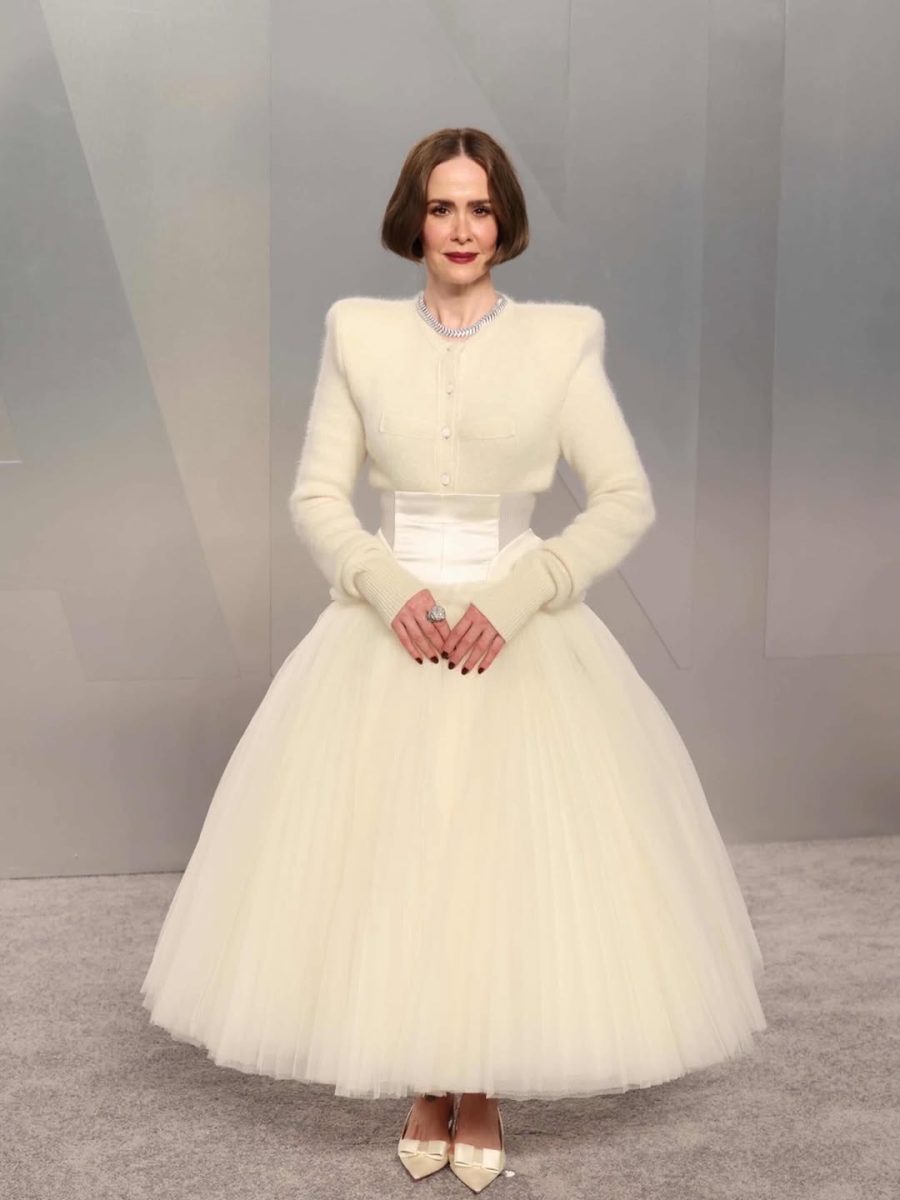
The choice also had continuity. Paulson had already worn Matières Fécales earlier in the year, appearing in Look 8 from “The One Percent” at the Vanity Fair Oscars Party.
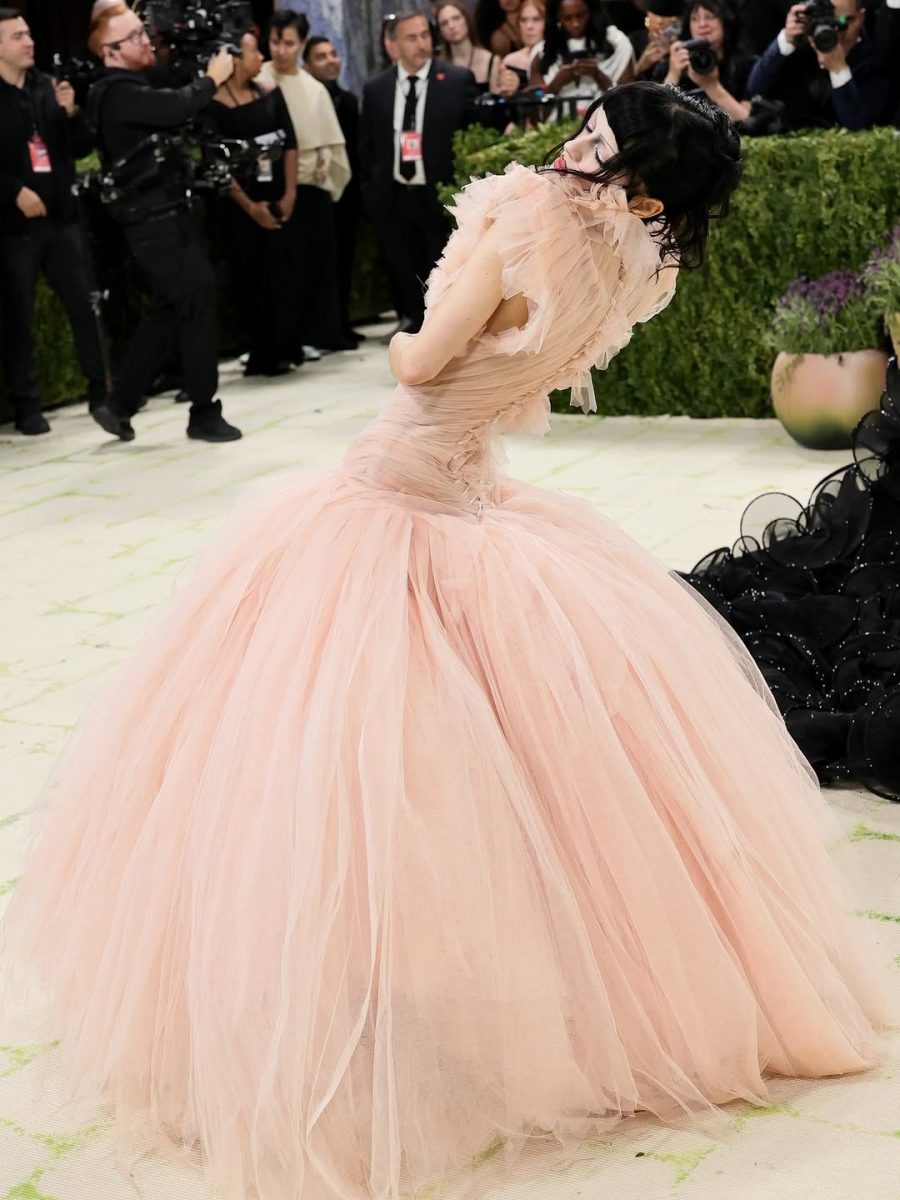
Matières Fécales’ presence at the Met also extended beyond Paulson. María Zardoya of The Marías wore Matières Fécales SS26 “Hannah” Haute Couture, a pink tulle dress with mutated hips and hand-slashed finishings. According to the brand, the storytelling behind her look returned to María’s upbringing in Puerto Rico and her connection to porcelain dolls.
That presence matters. Matières Fécales has built a world around distortion, alienation, post-human beauty and the grotesque. Its clothes often look as if glamour has survived some kind of mutation. On the Met steps, that language did not need to be softened. If anything, the event made it more legible. A collection about power entered an institution where fashion, celebrity, money, philanthropy, access and cultural preservation all meet in public view.
For a theme like “Fashion is Art,” that matters. Art is not limited to beauty, craft or historical reference. It can be theatrical, abrasive, funny, excessive and strange. It can carry contradiction without resolving it. Paulson’s Matières Fécales look understood fashion as image-making in the fullest sense: clothing, body, setting and audience working together.
By the time the gown reached the Met steps, its meaning was no longer contained in the garment alone. The damaged tulle, the oversized bow, the banknote mask, the cameras, the institution, the price of access and the fantasy of culture as spectacle all became part of the same image. That is what made Paulson’s look one of the night’s most precise interpretations of the theme. It treated fashion as art by allowing fashion to become uncomfortable, exposed and alive.