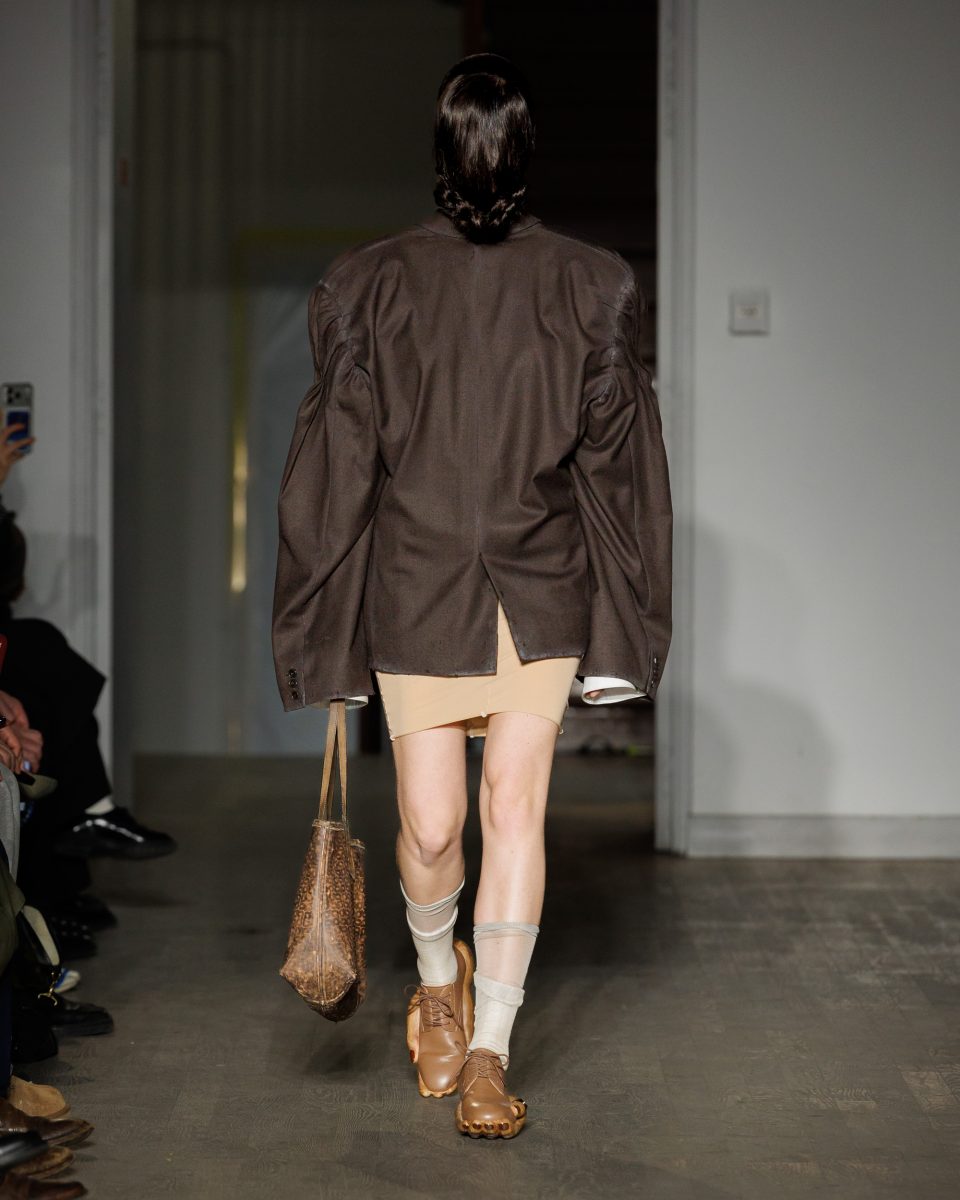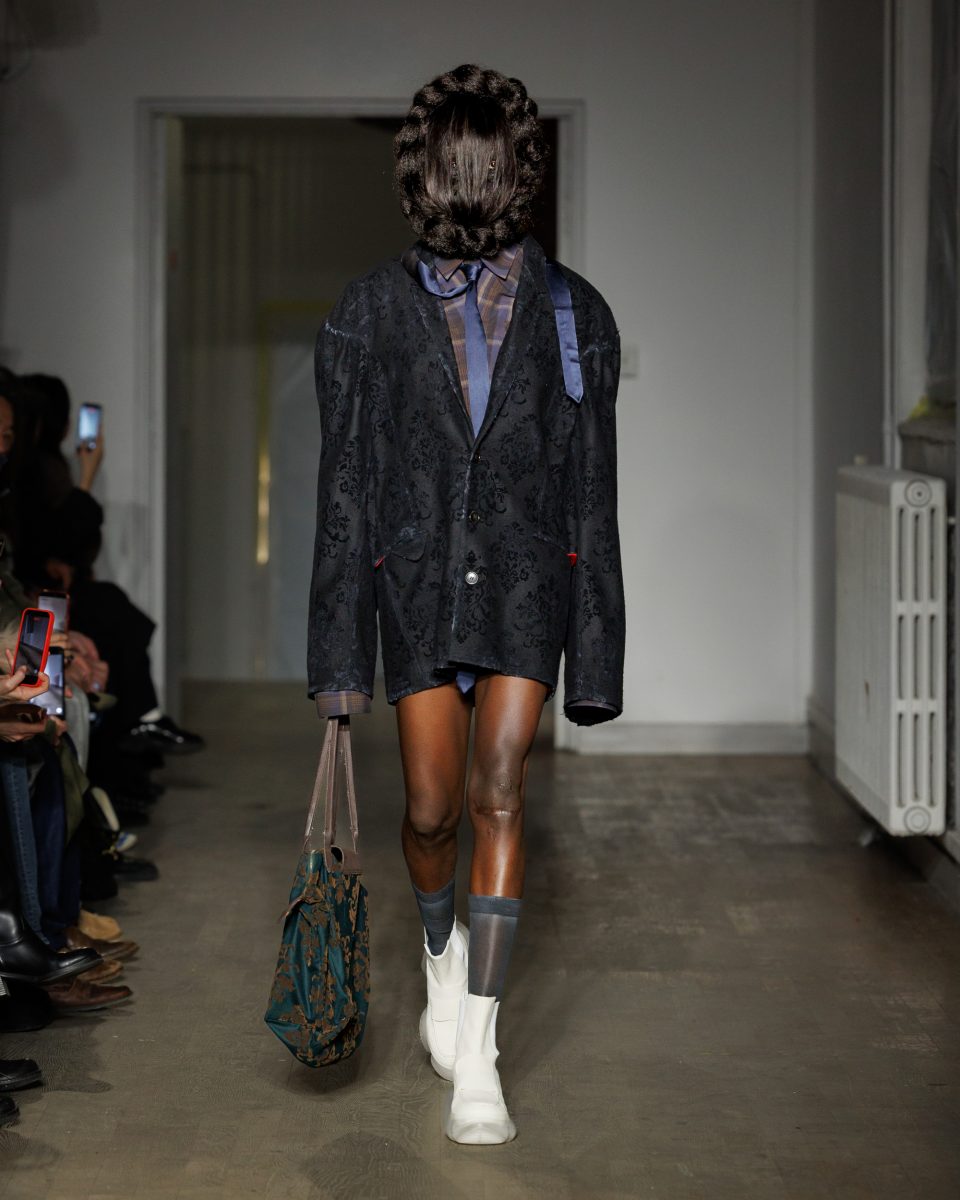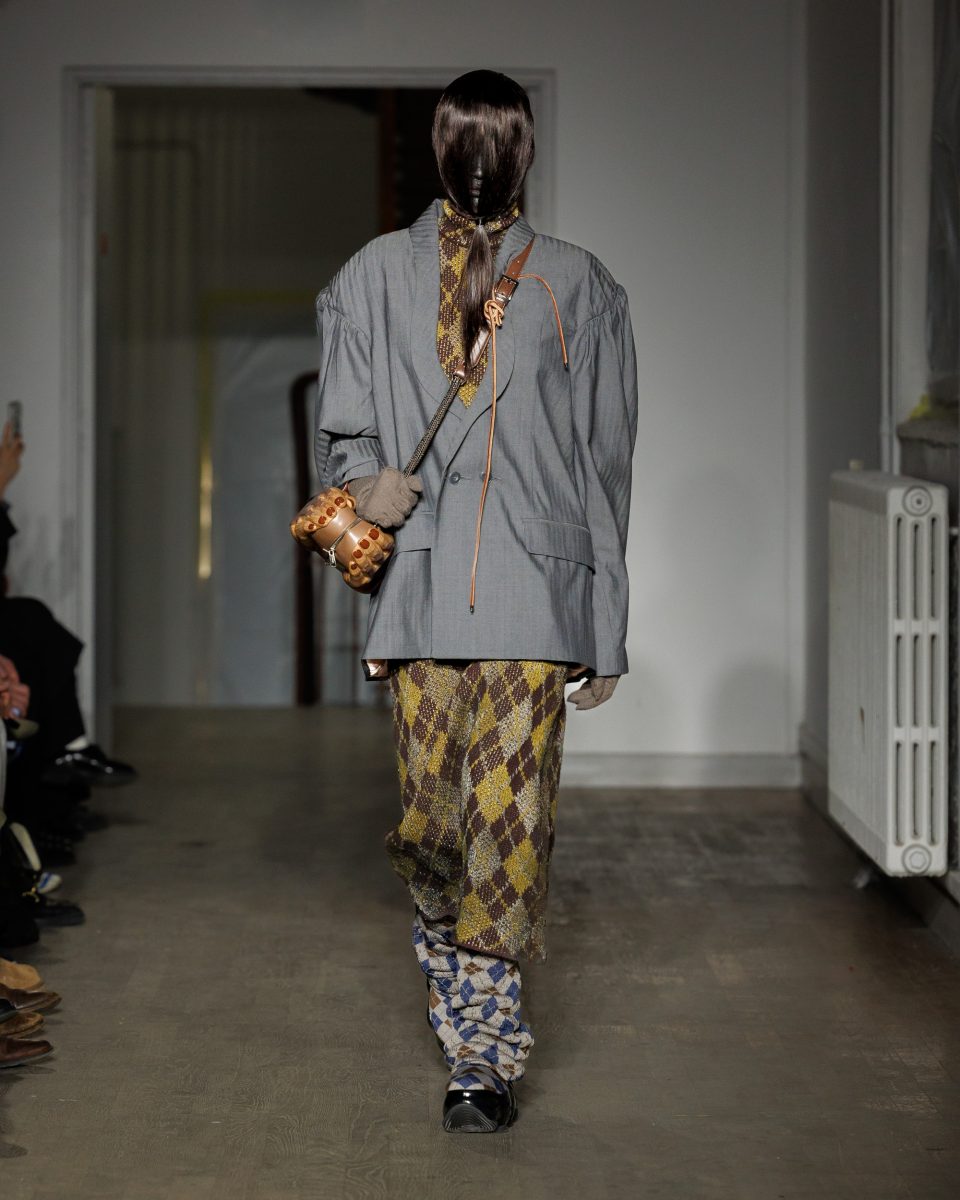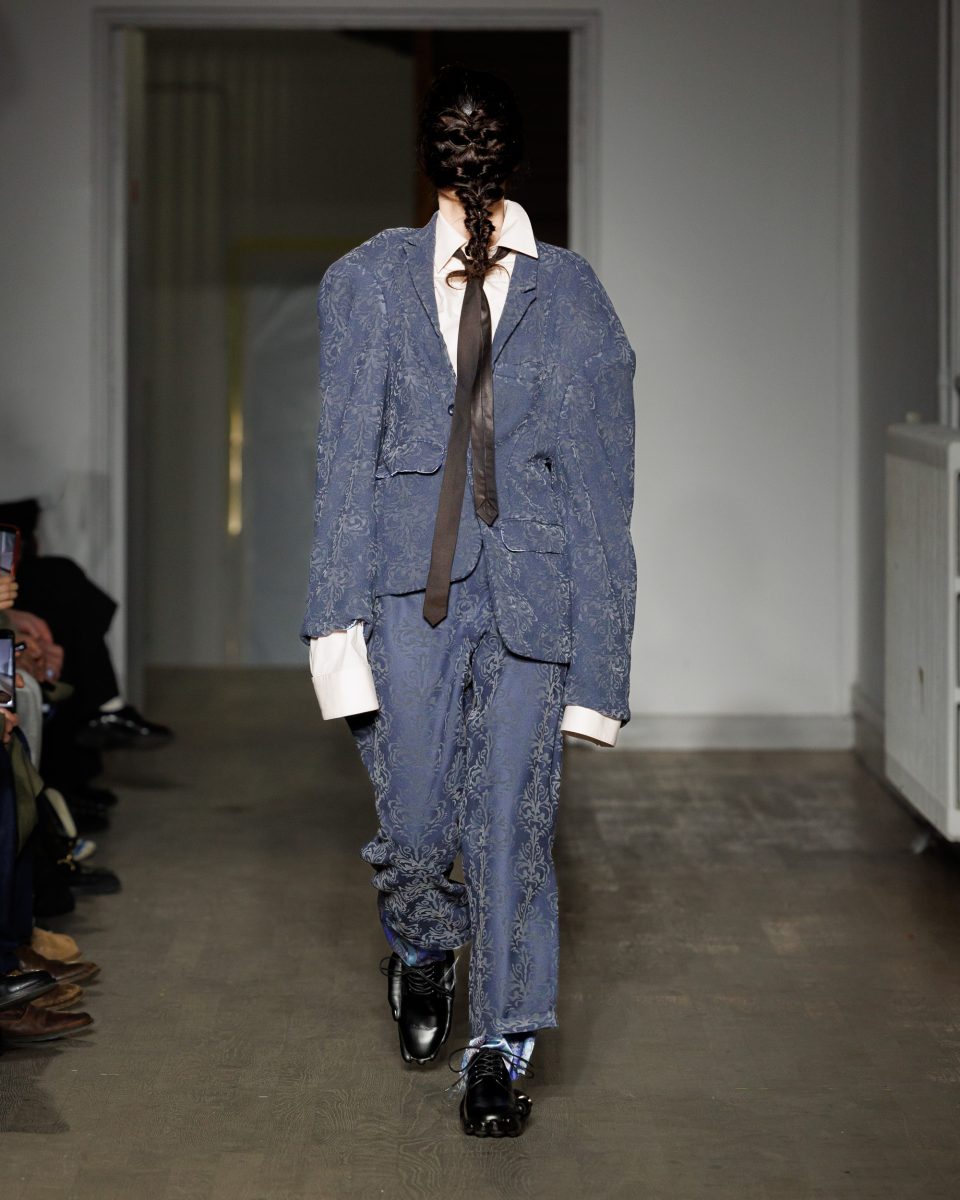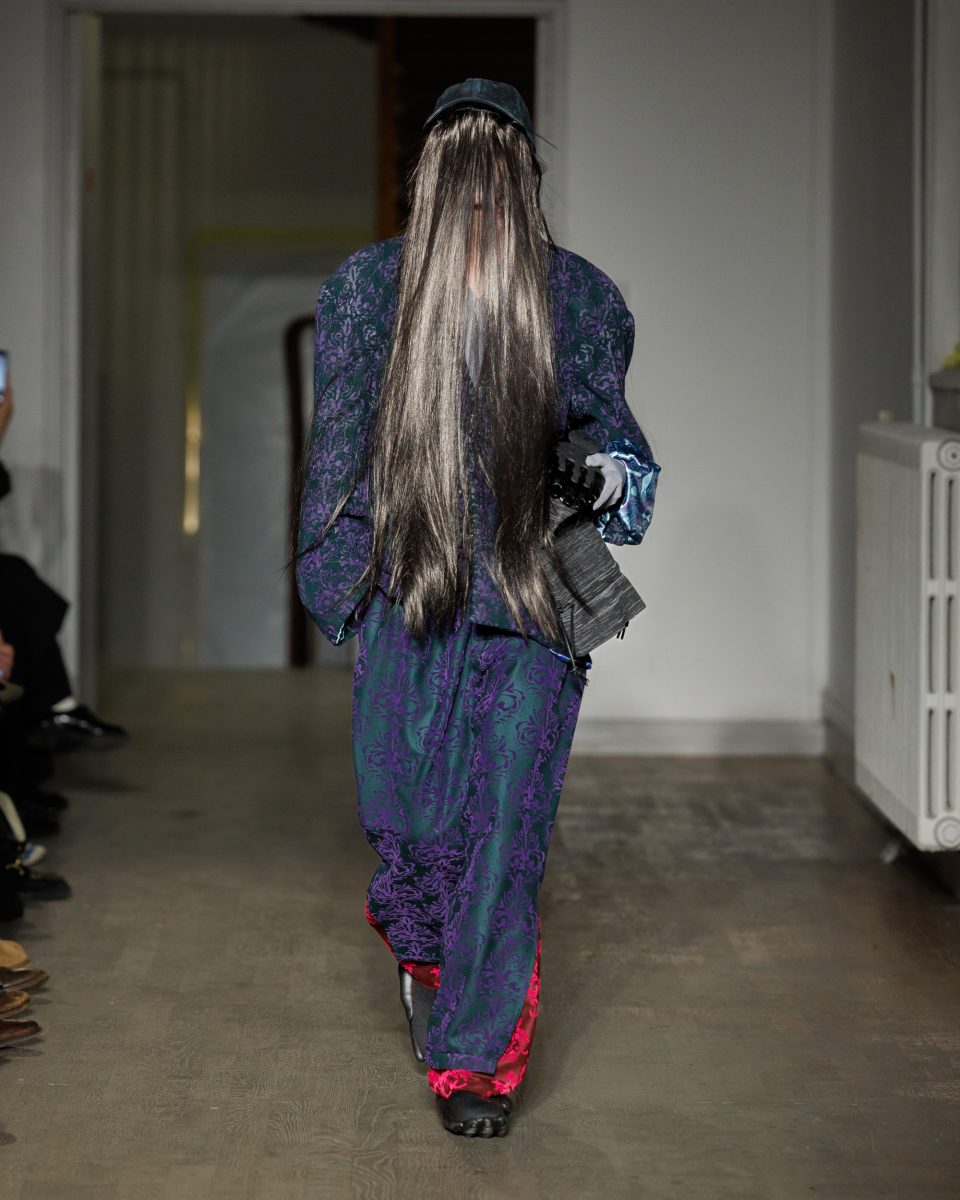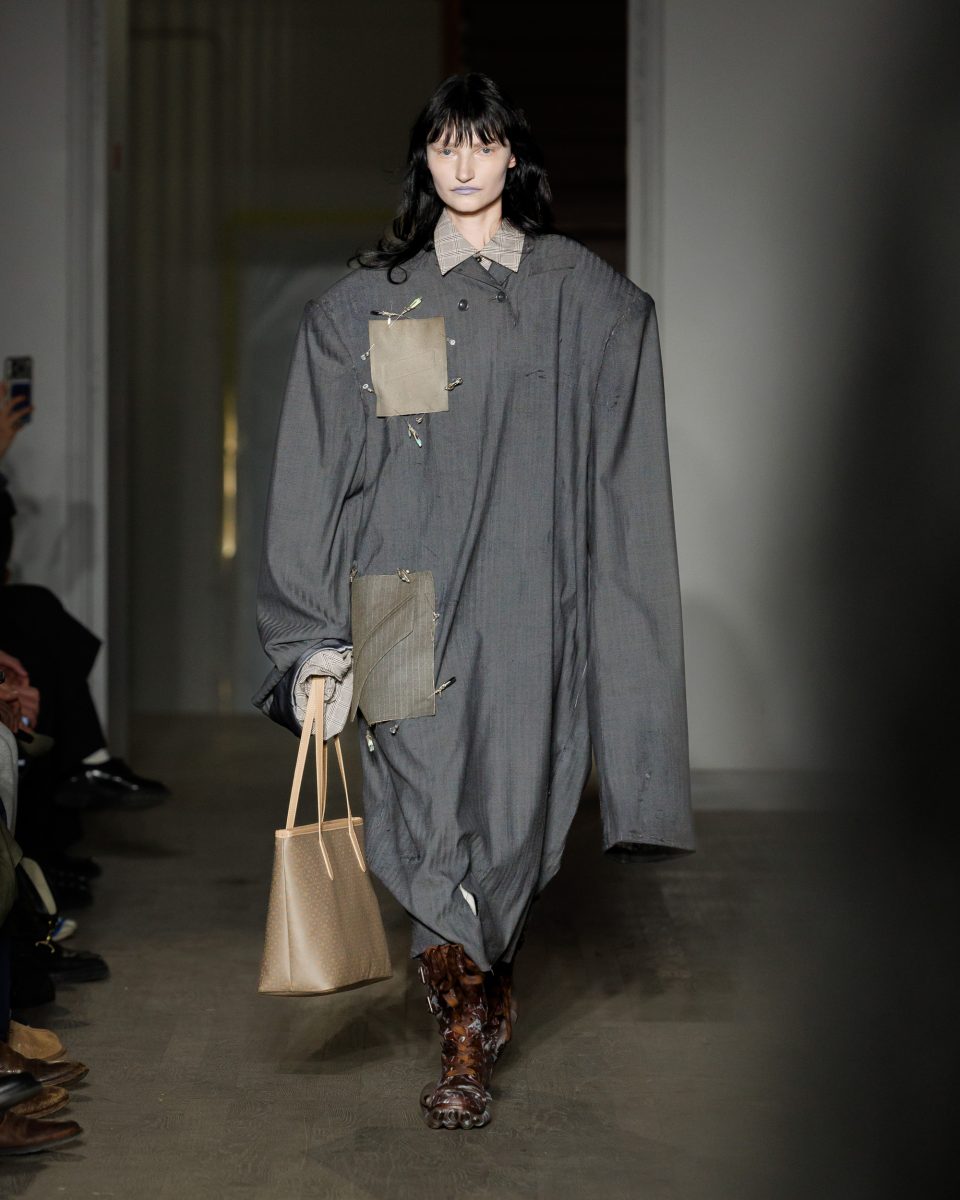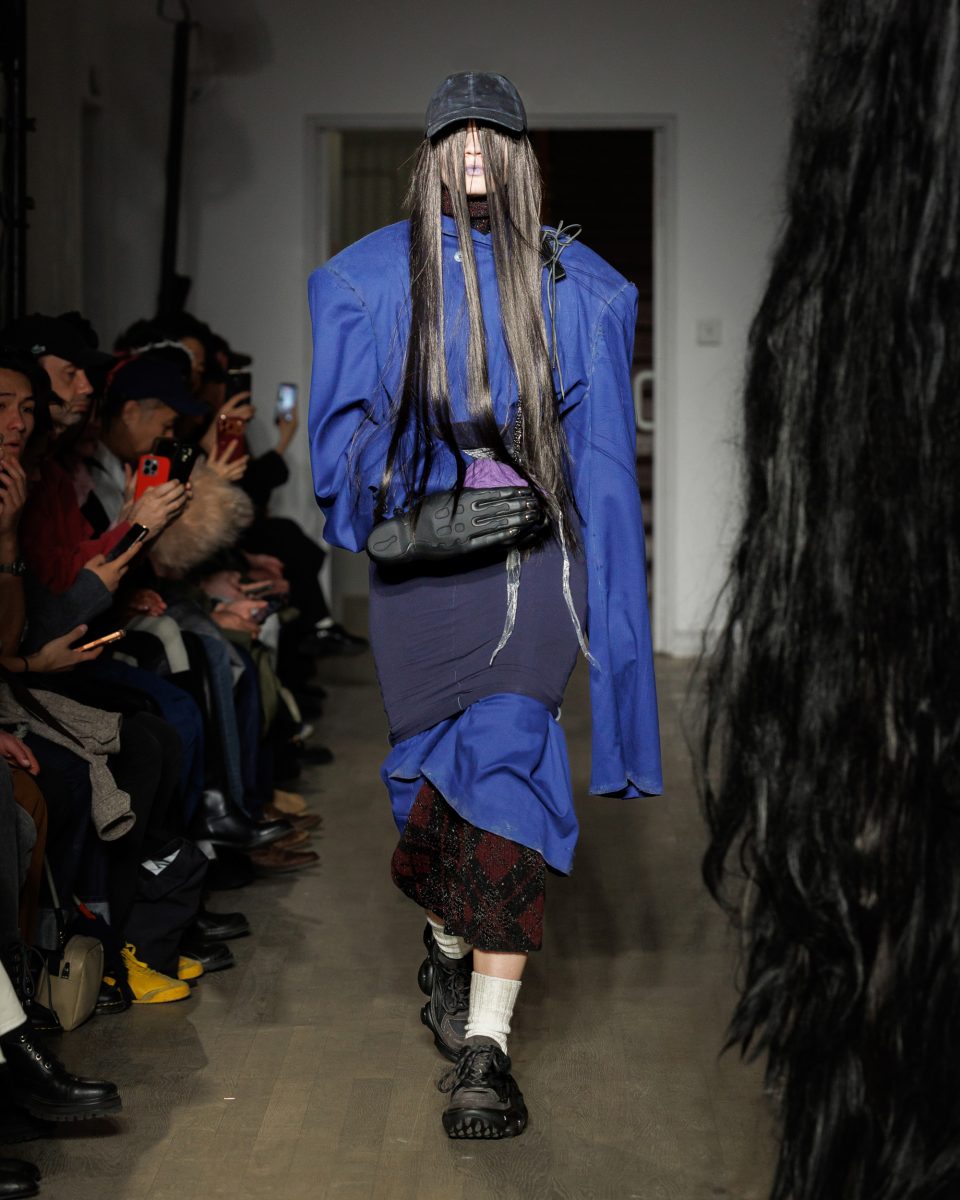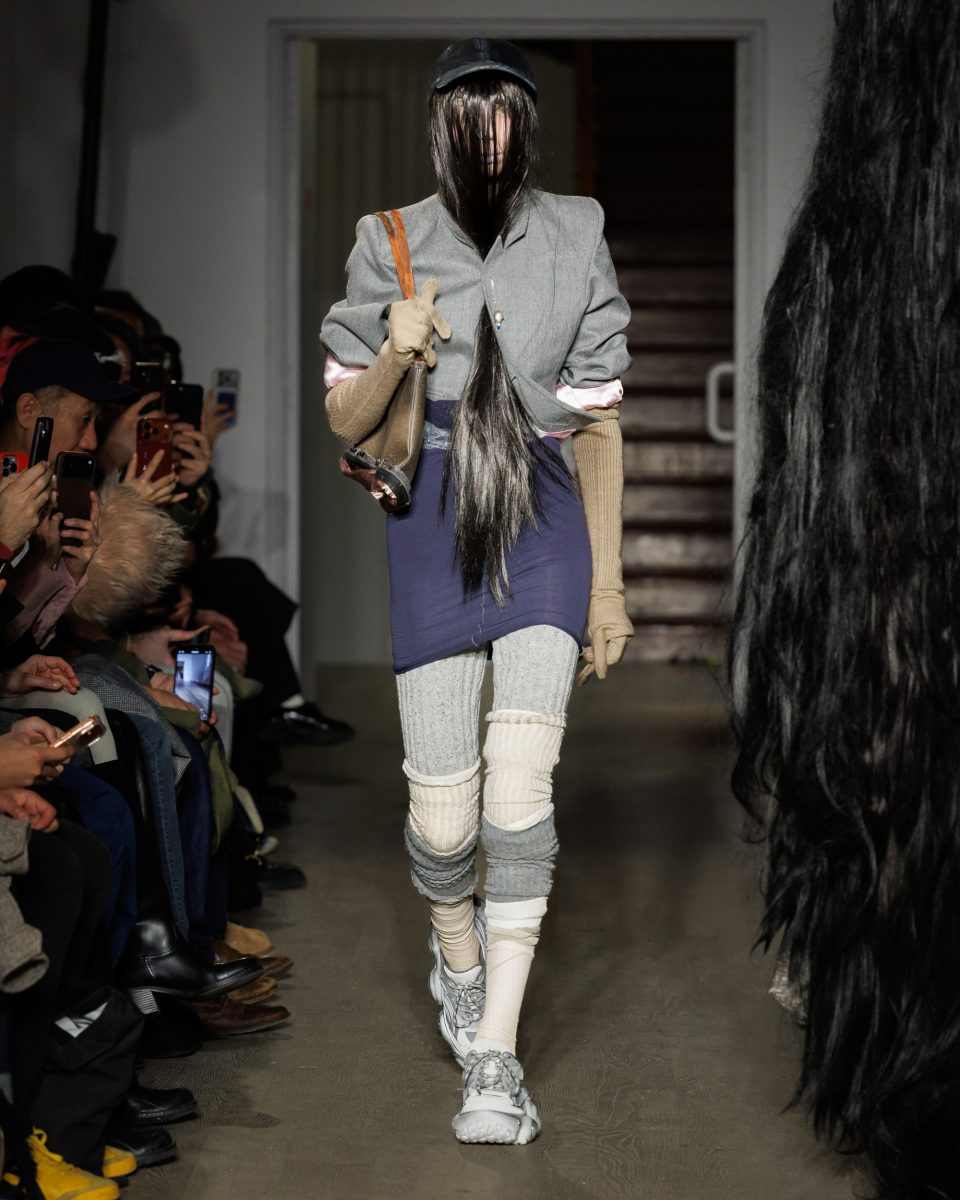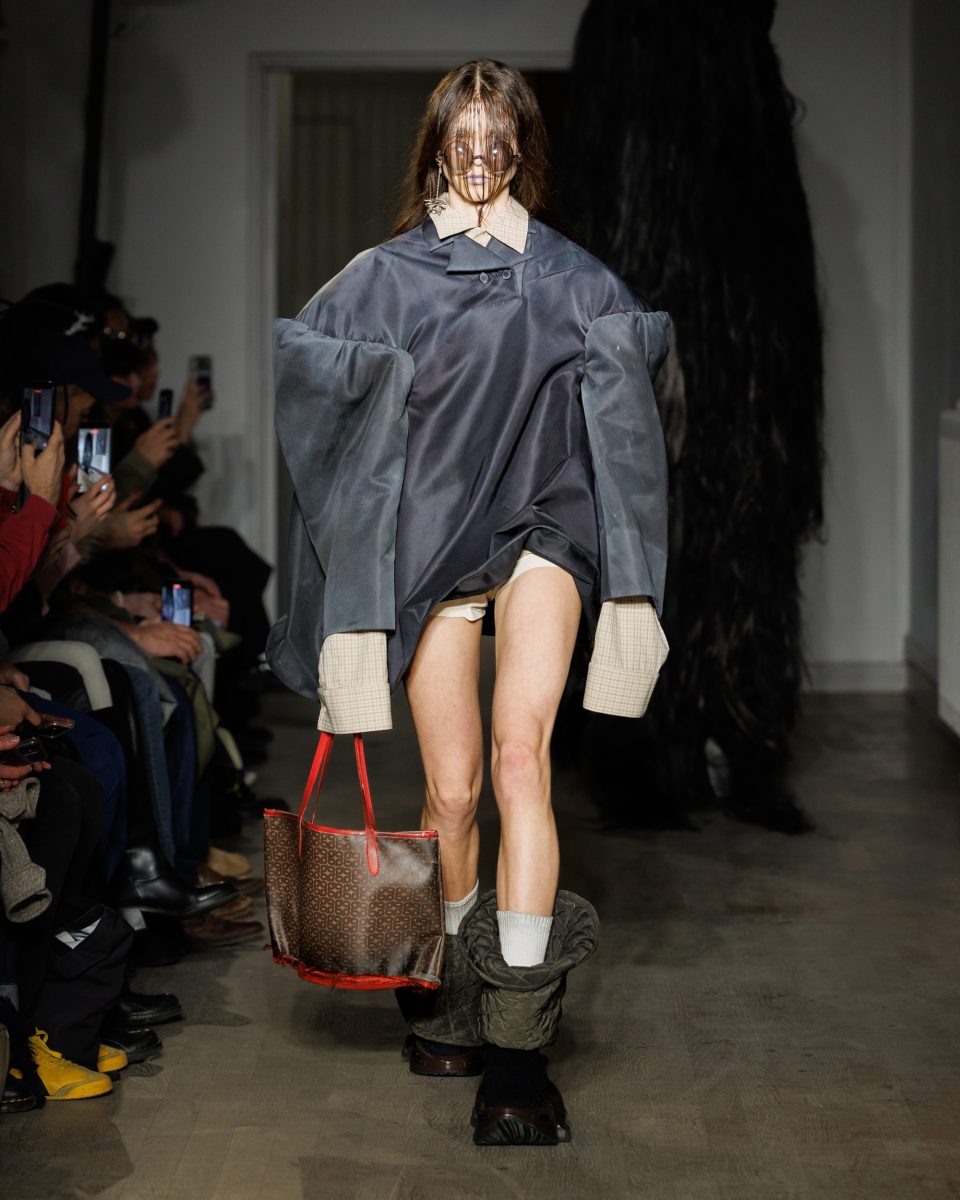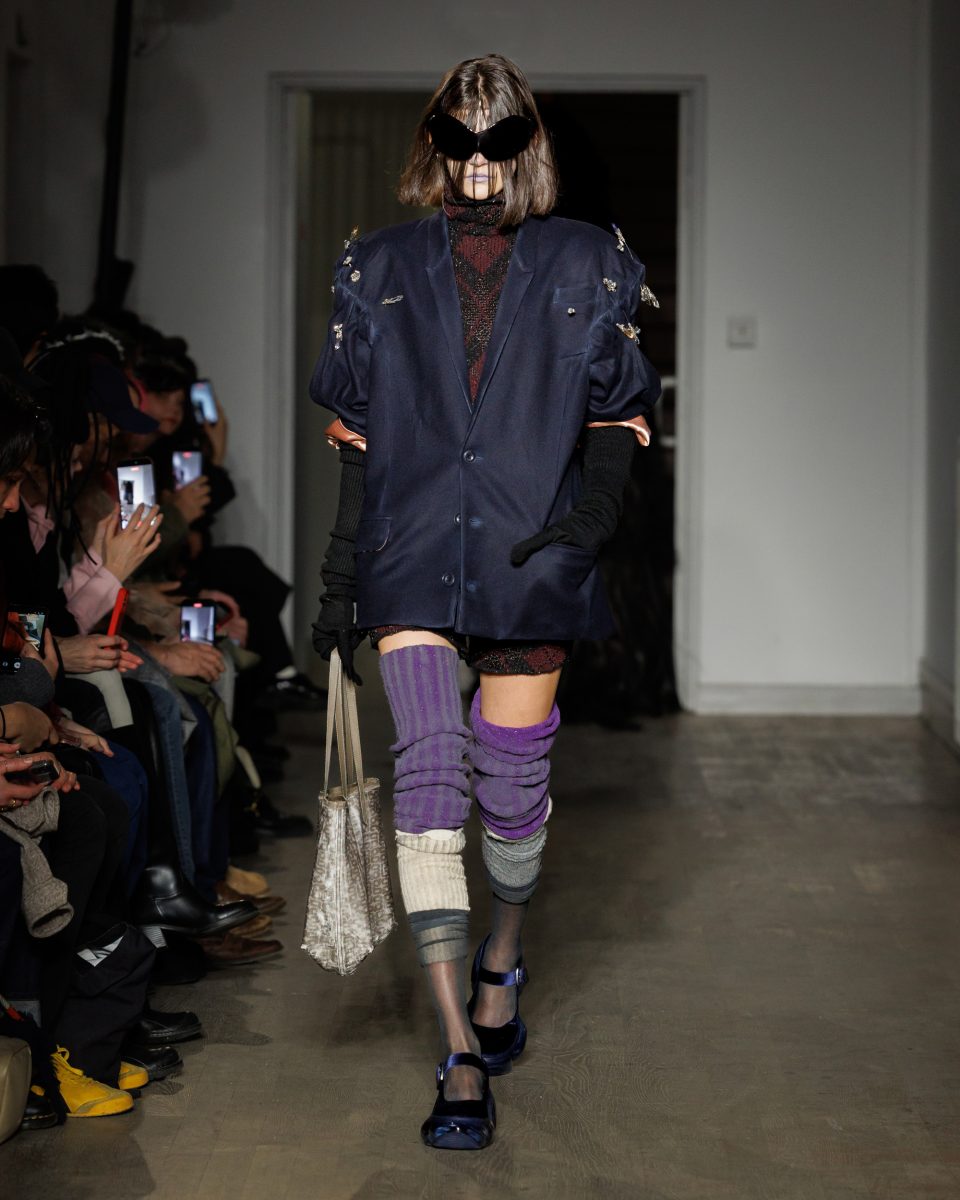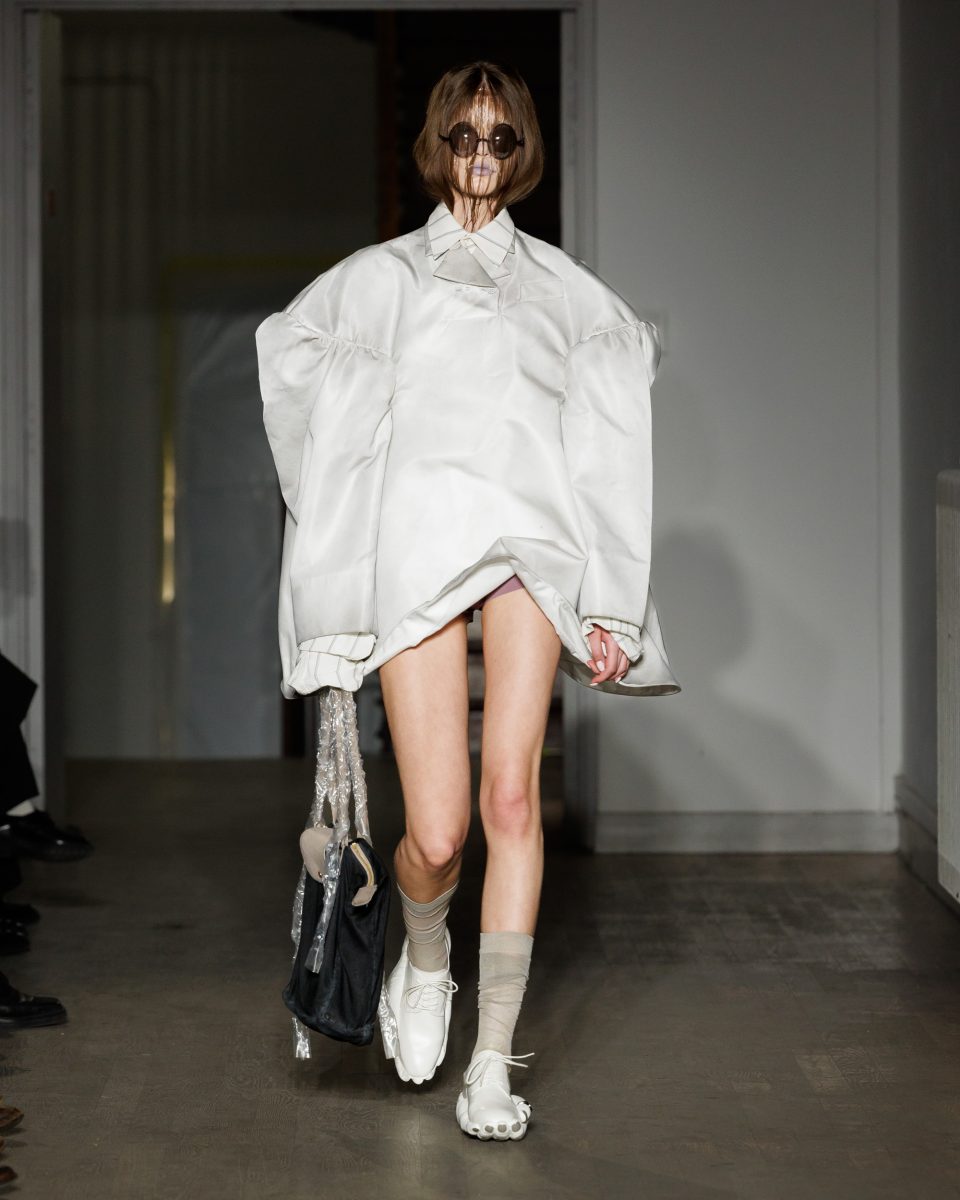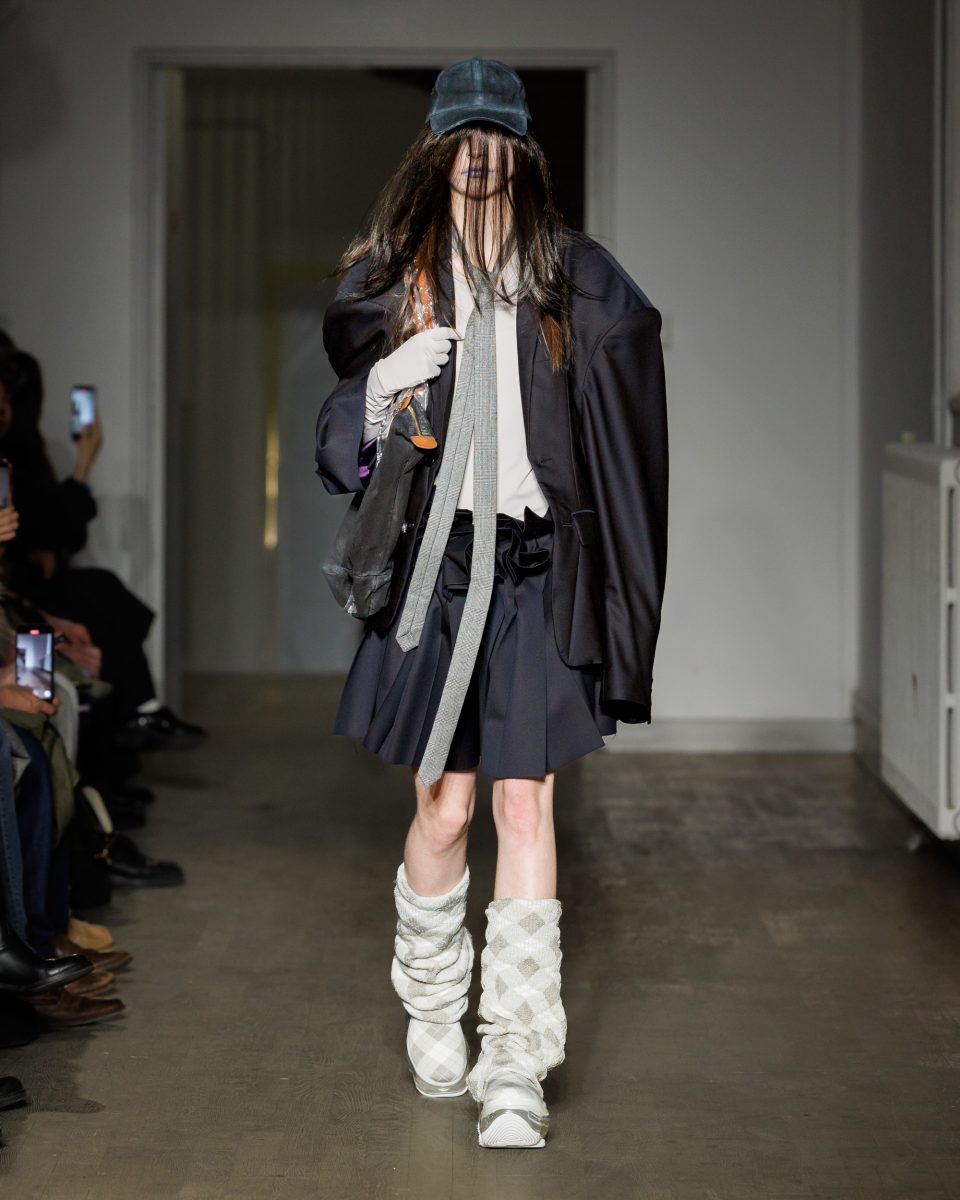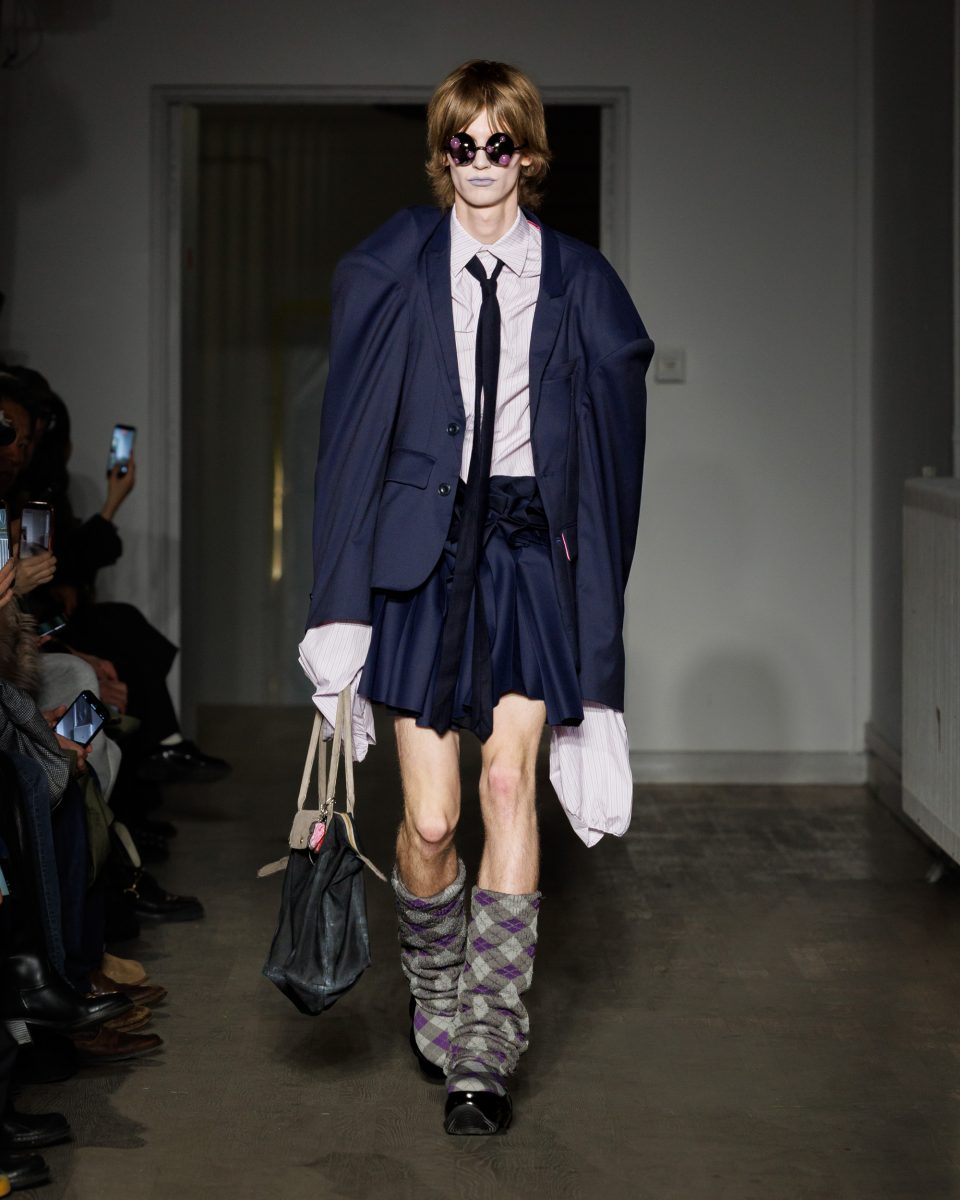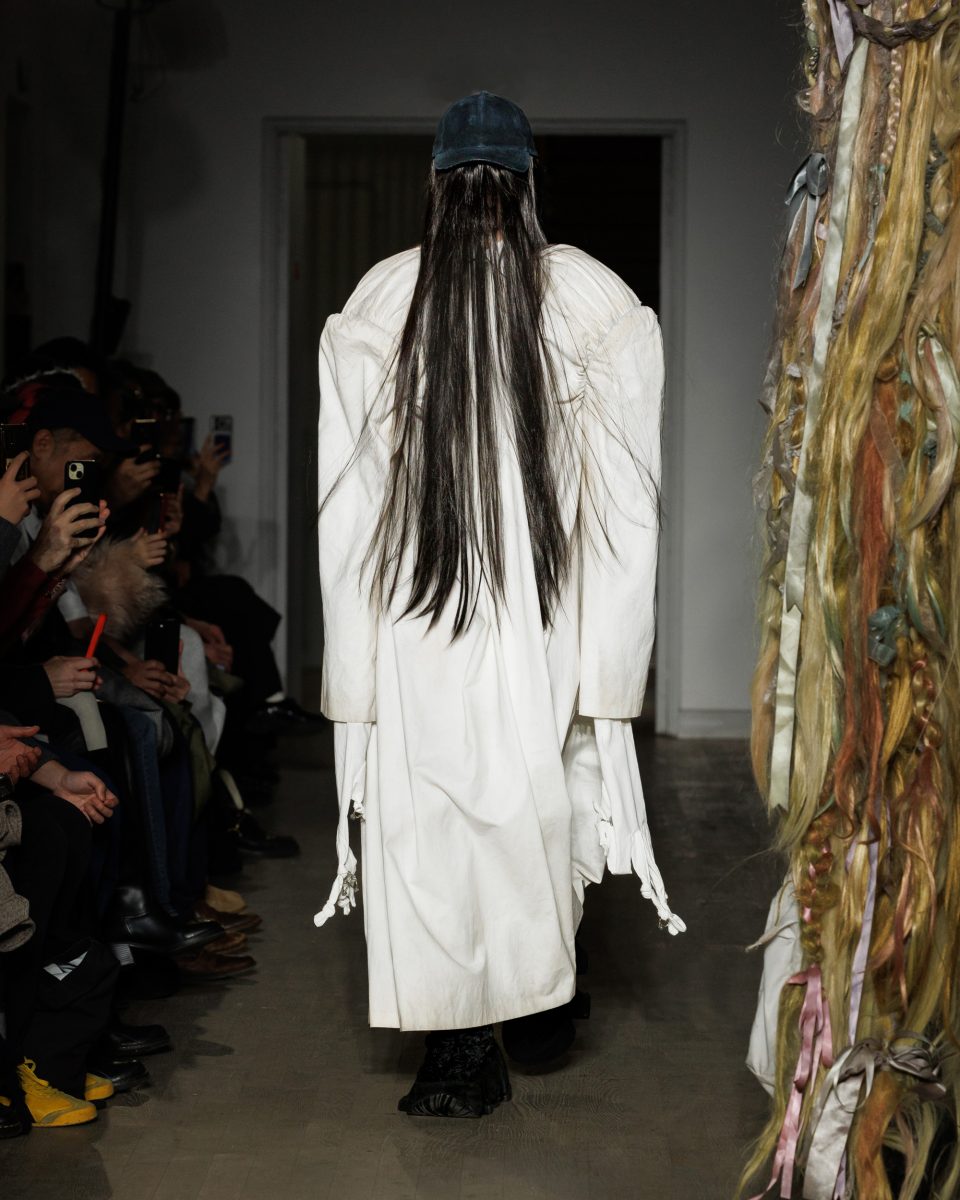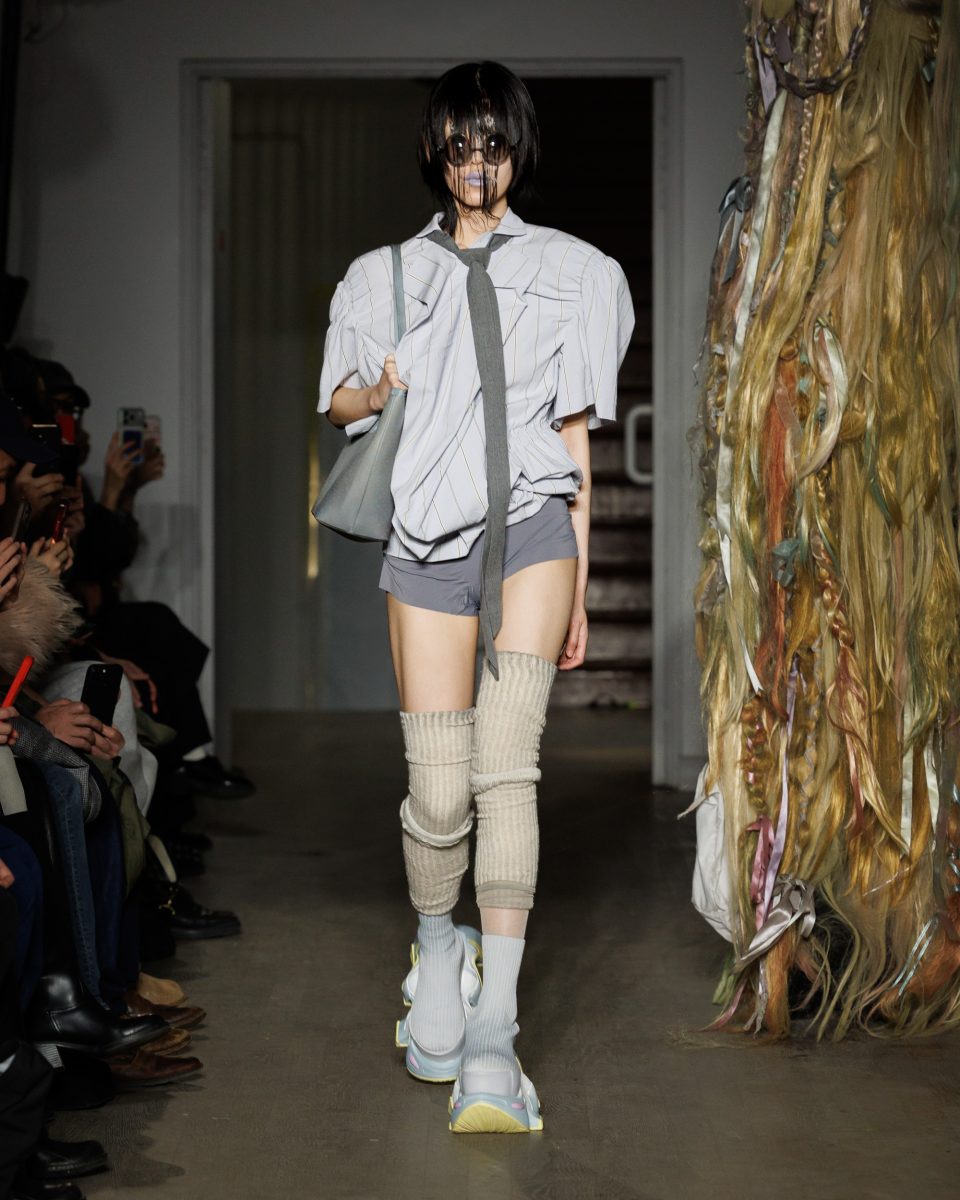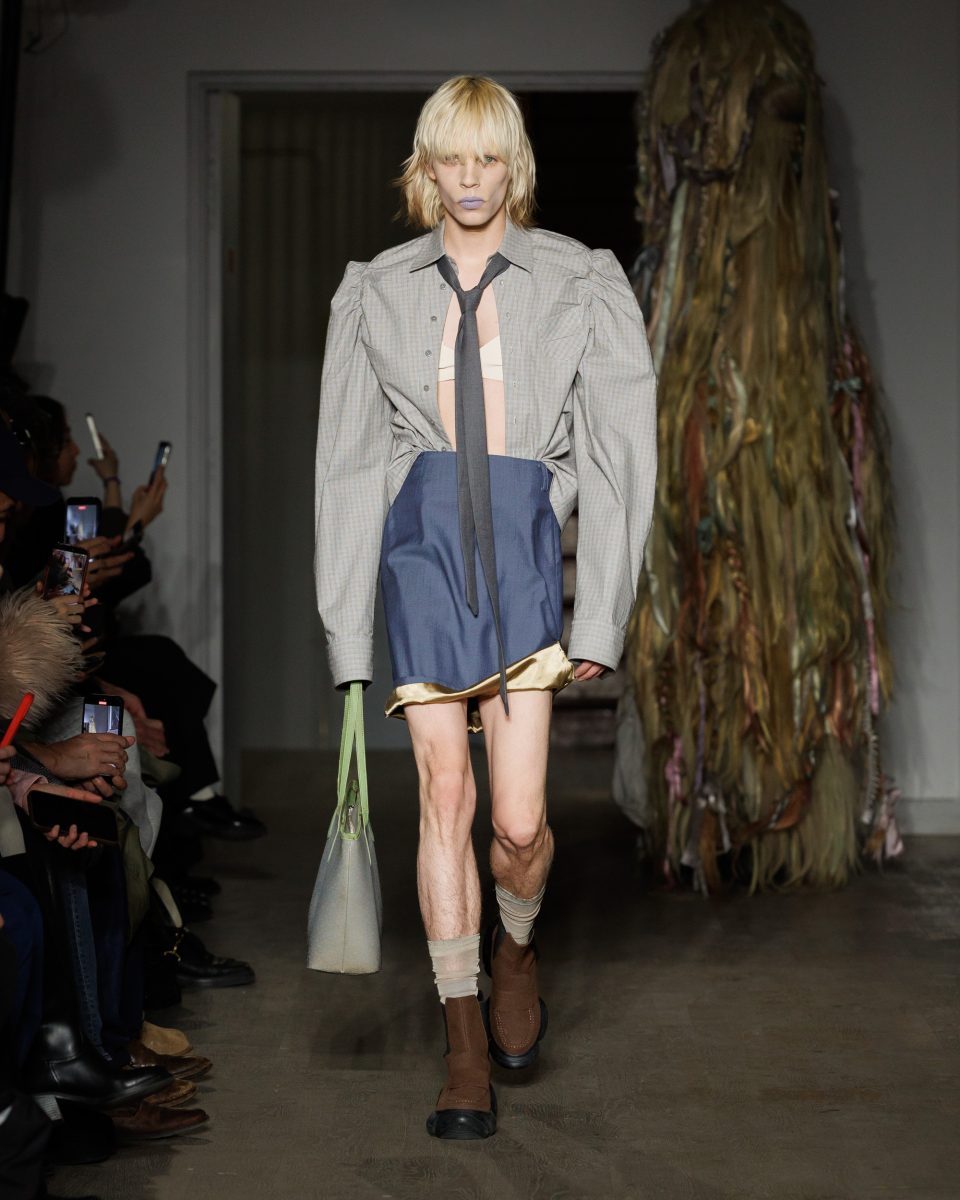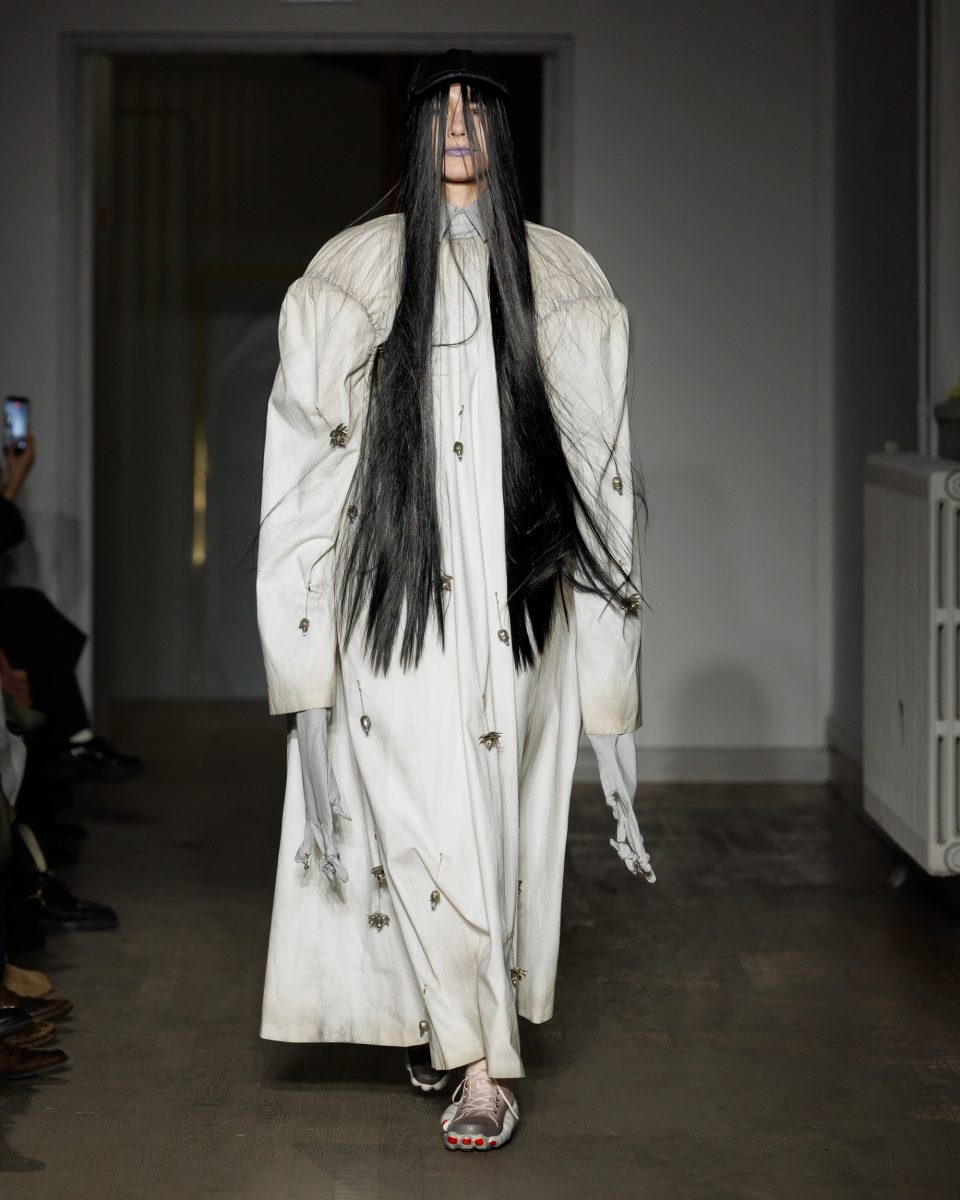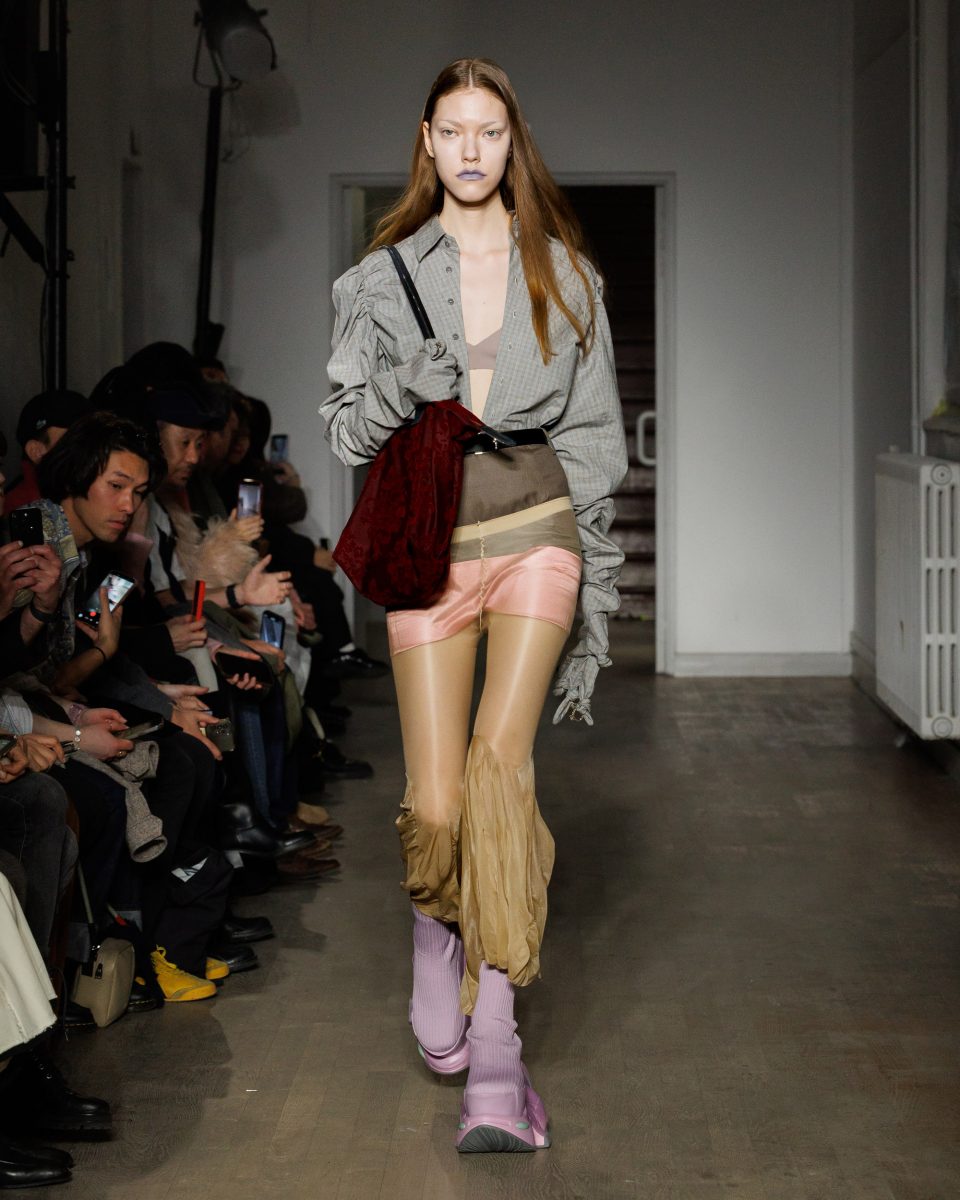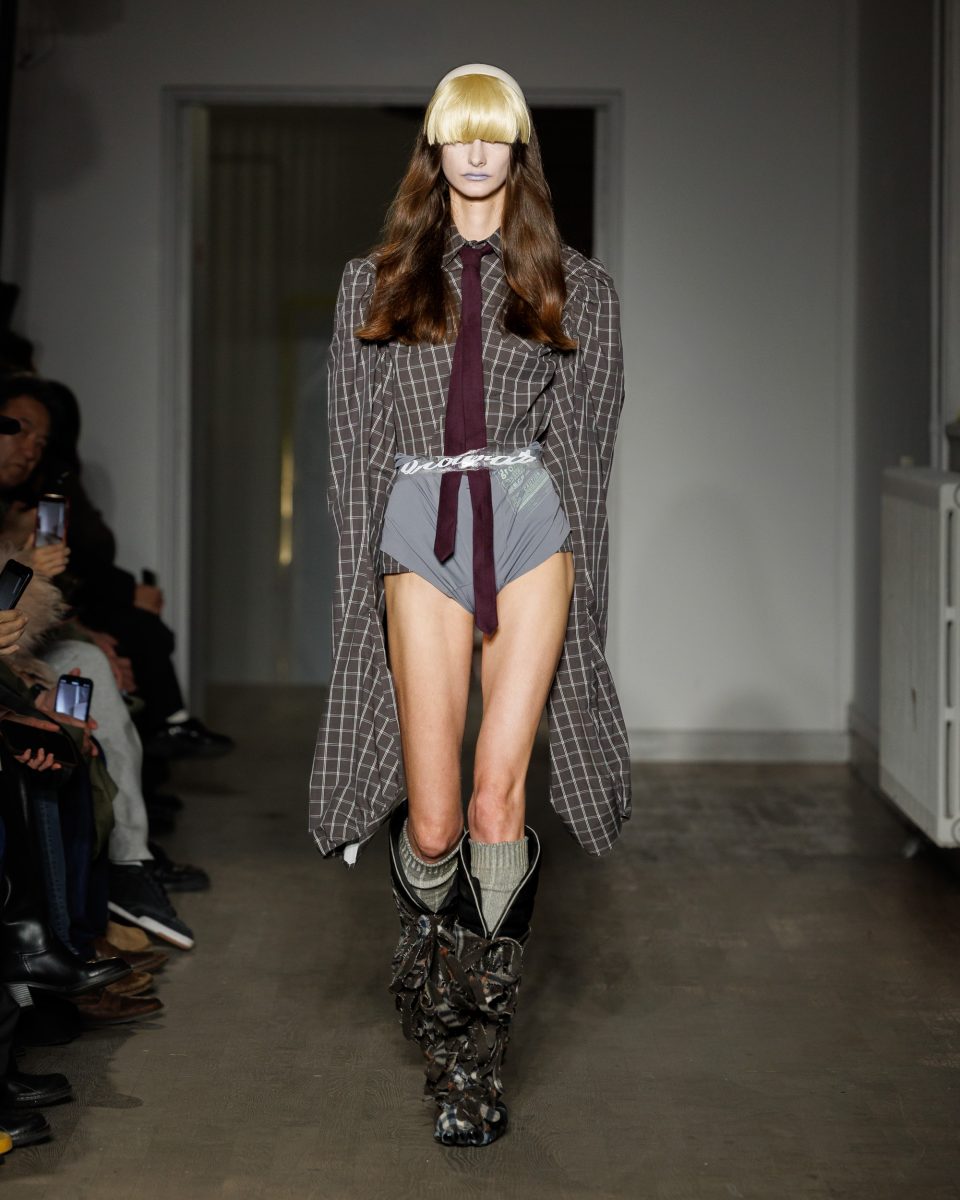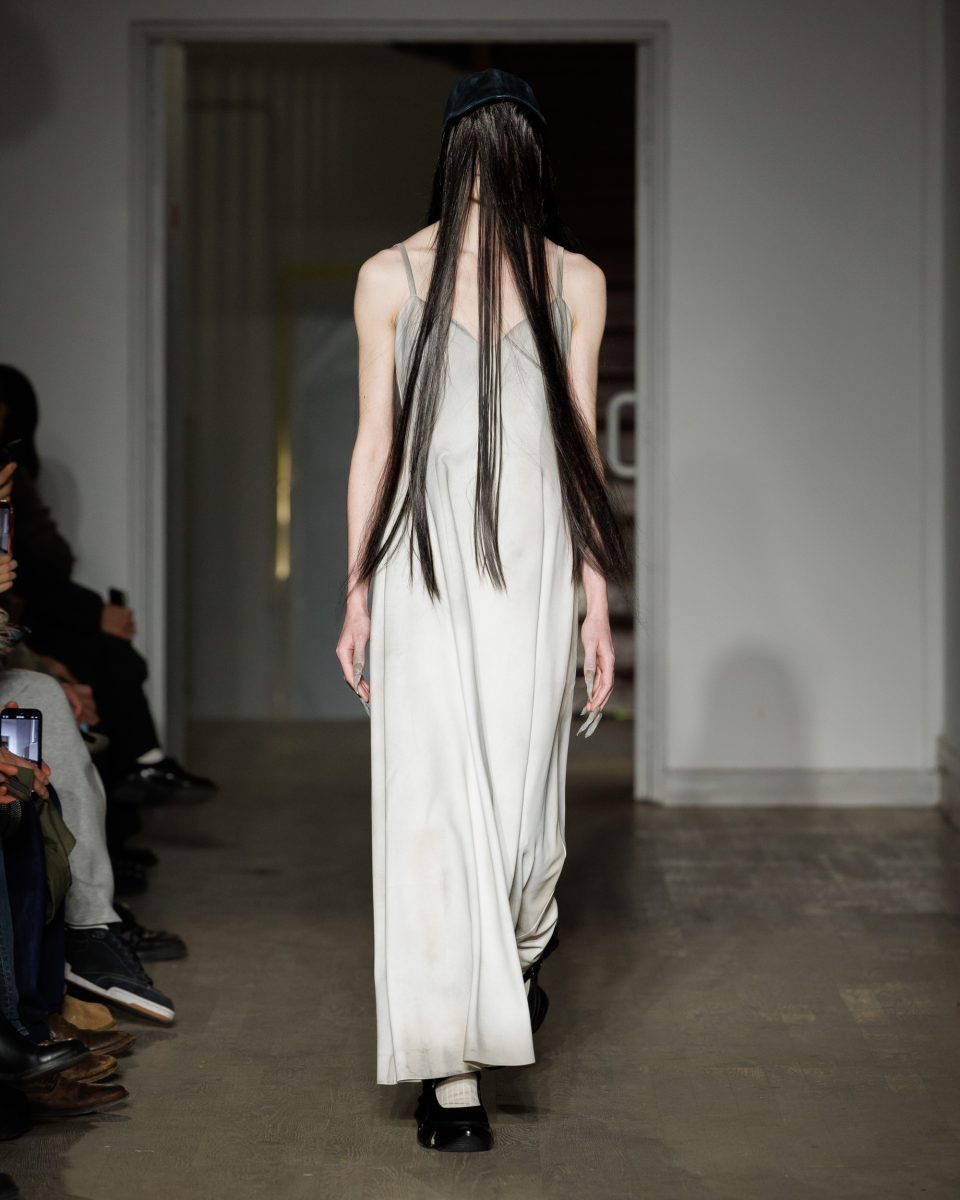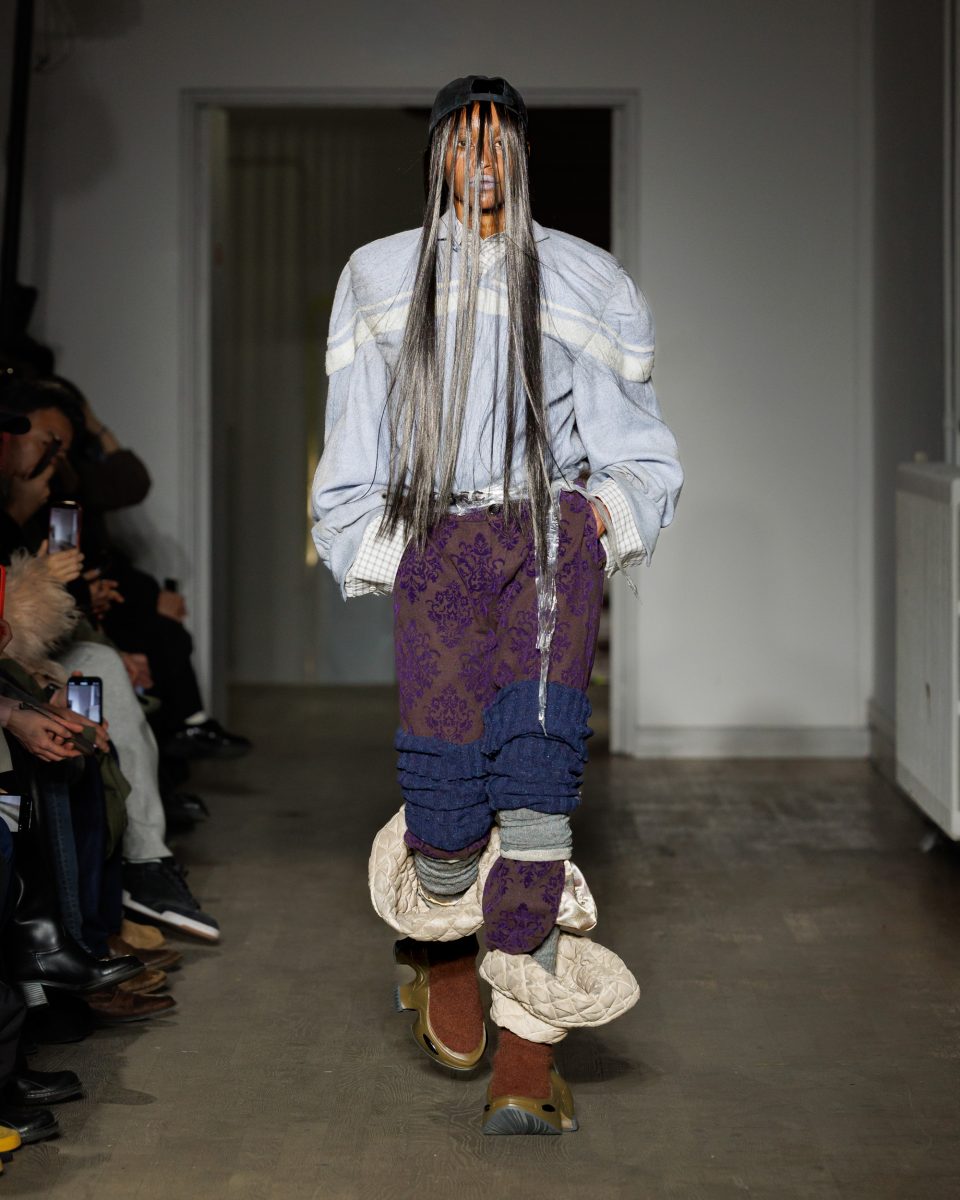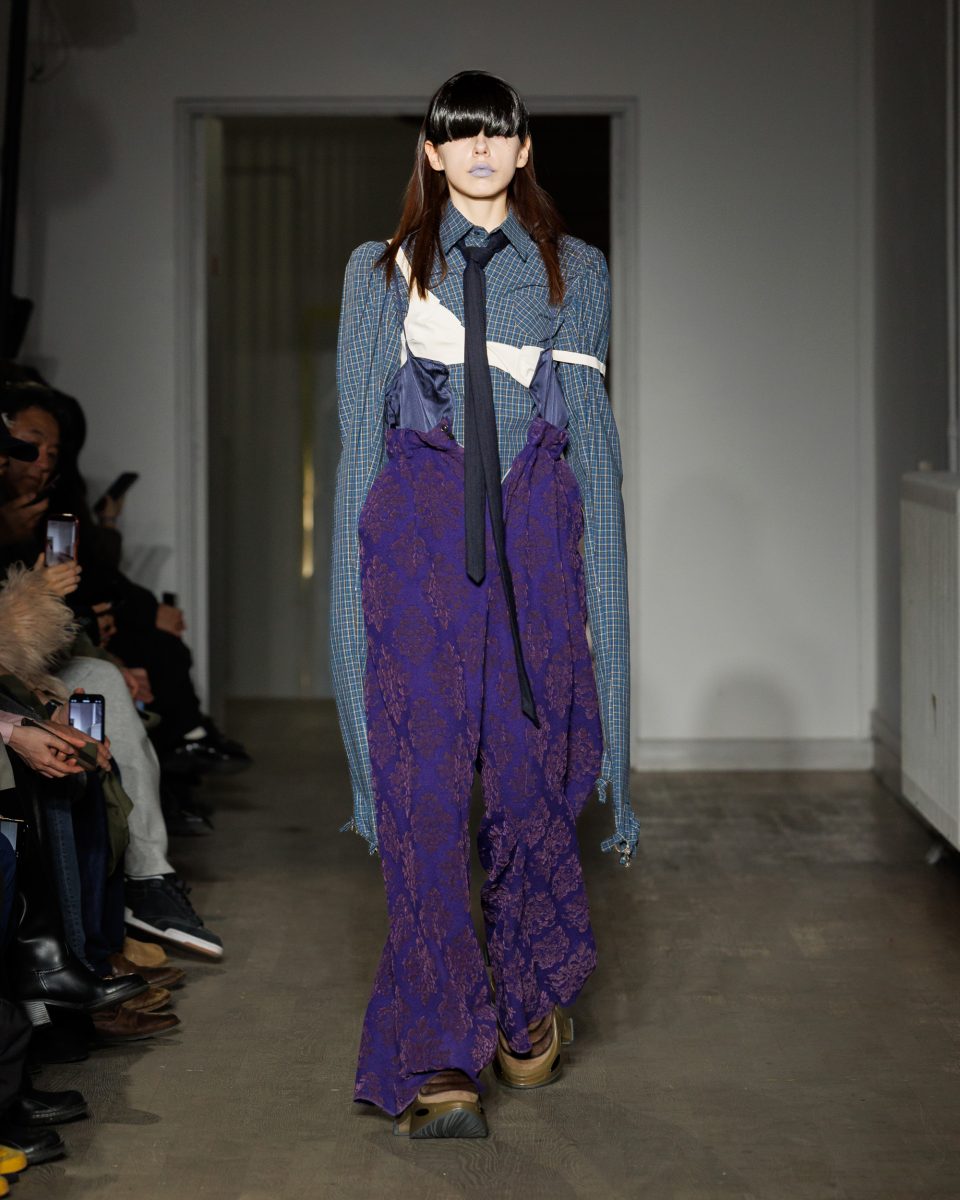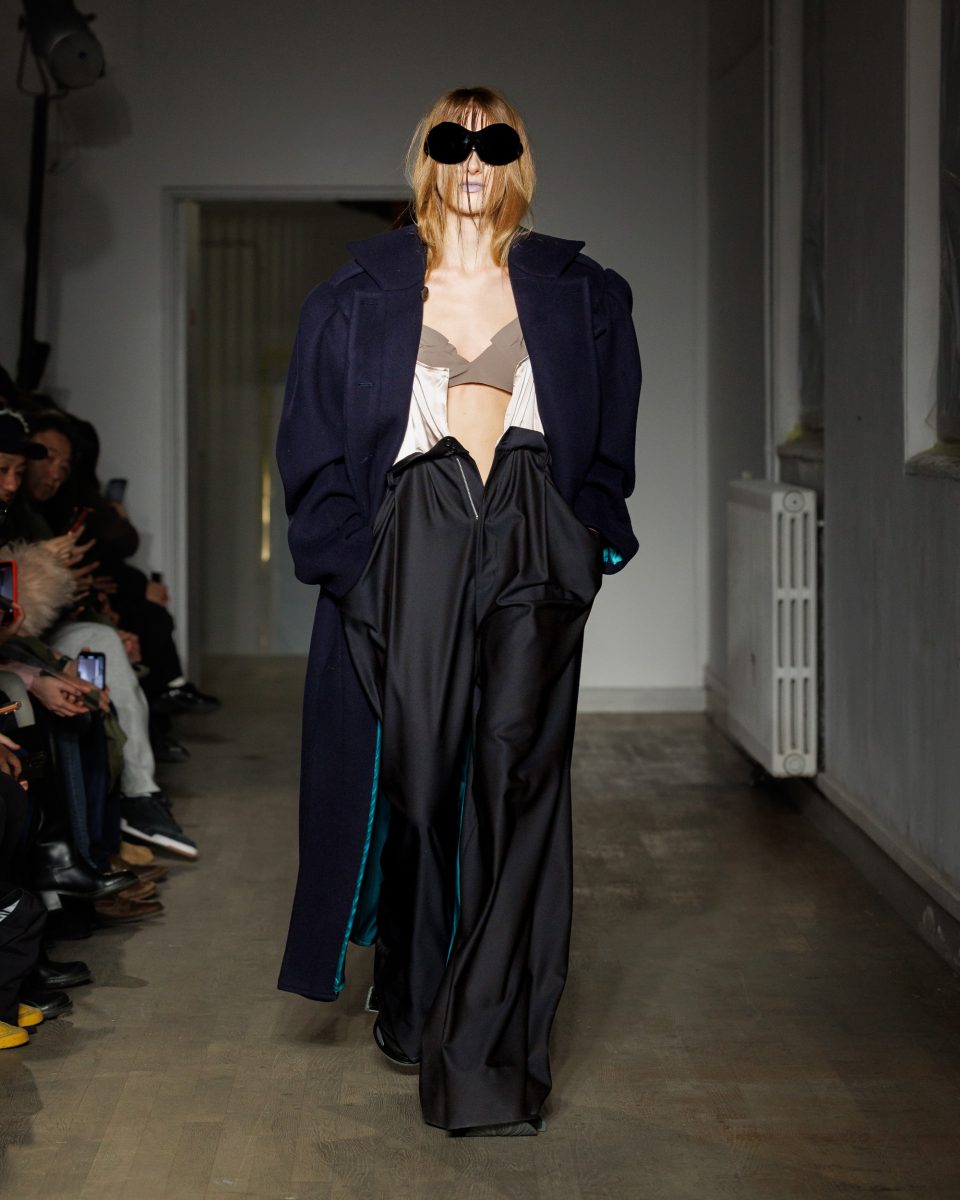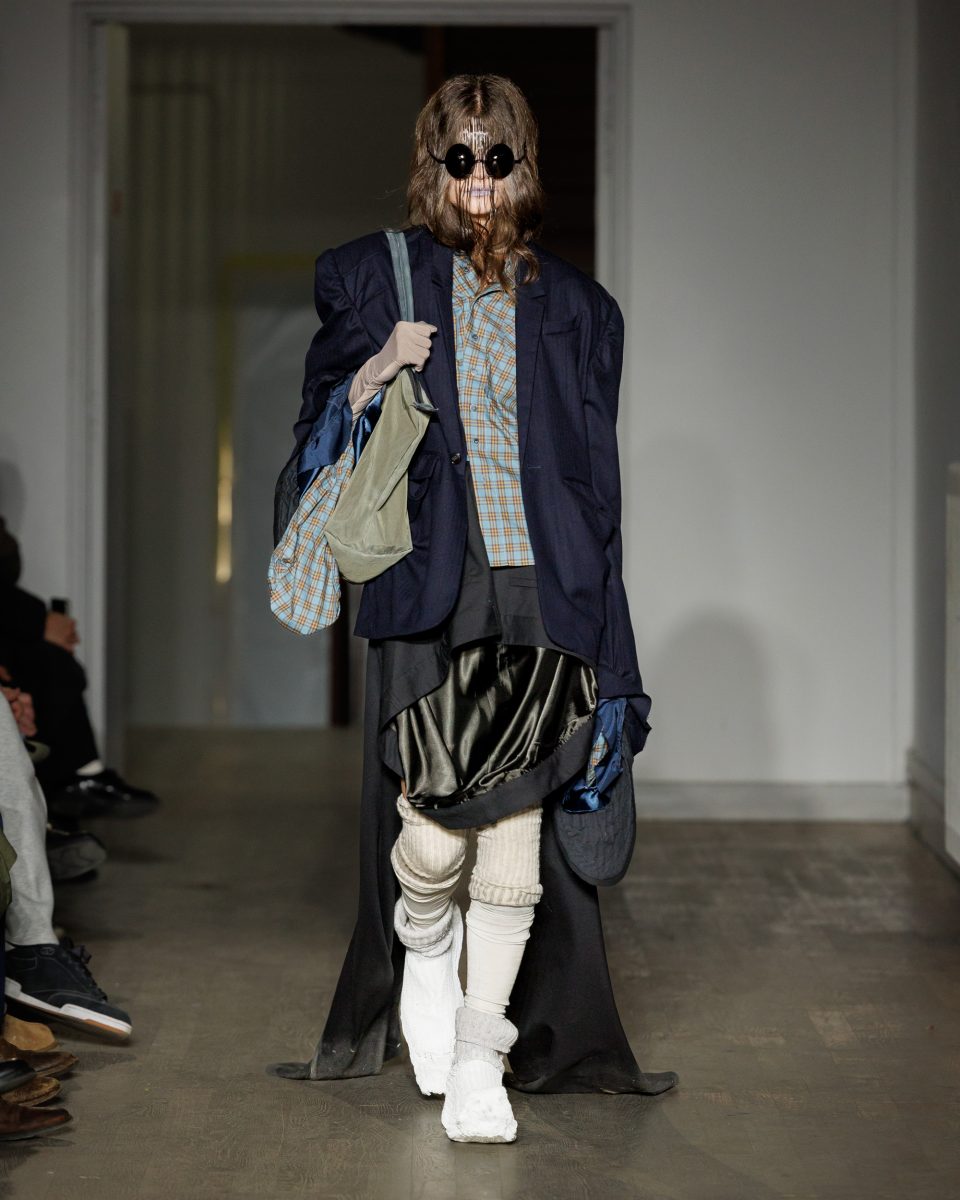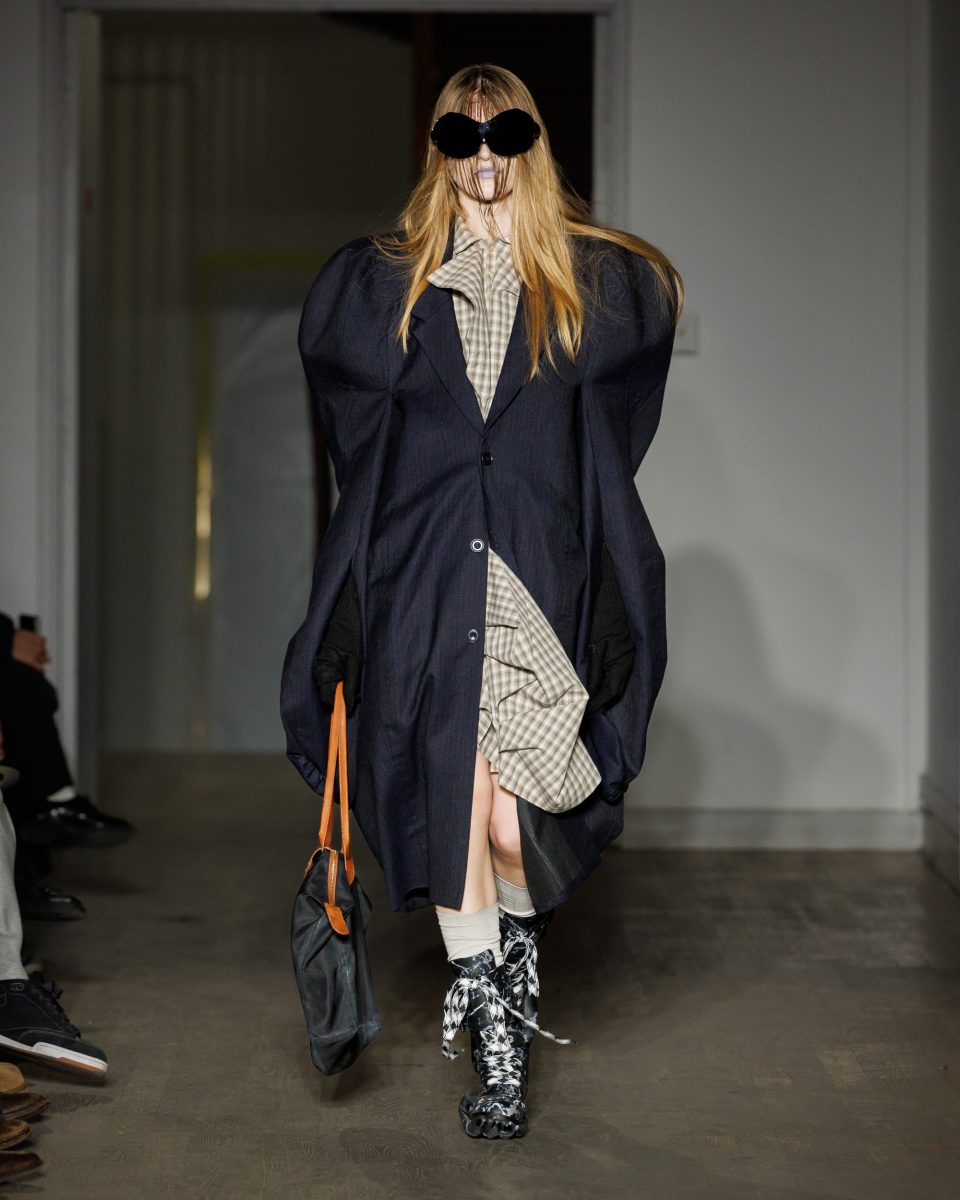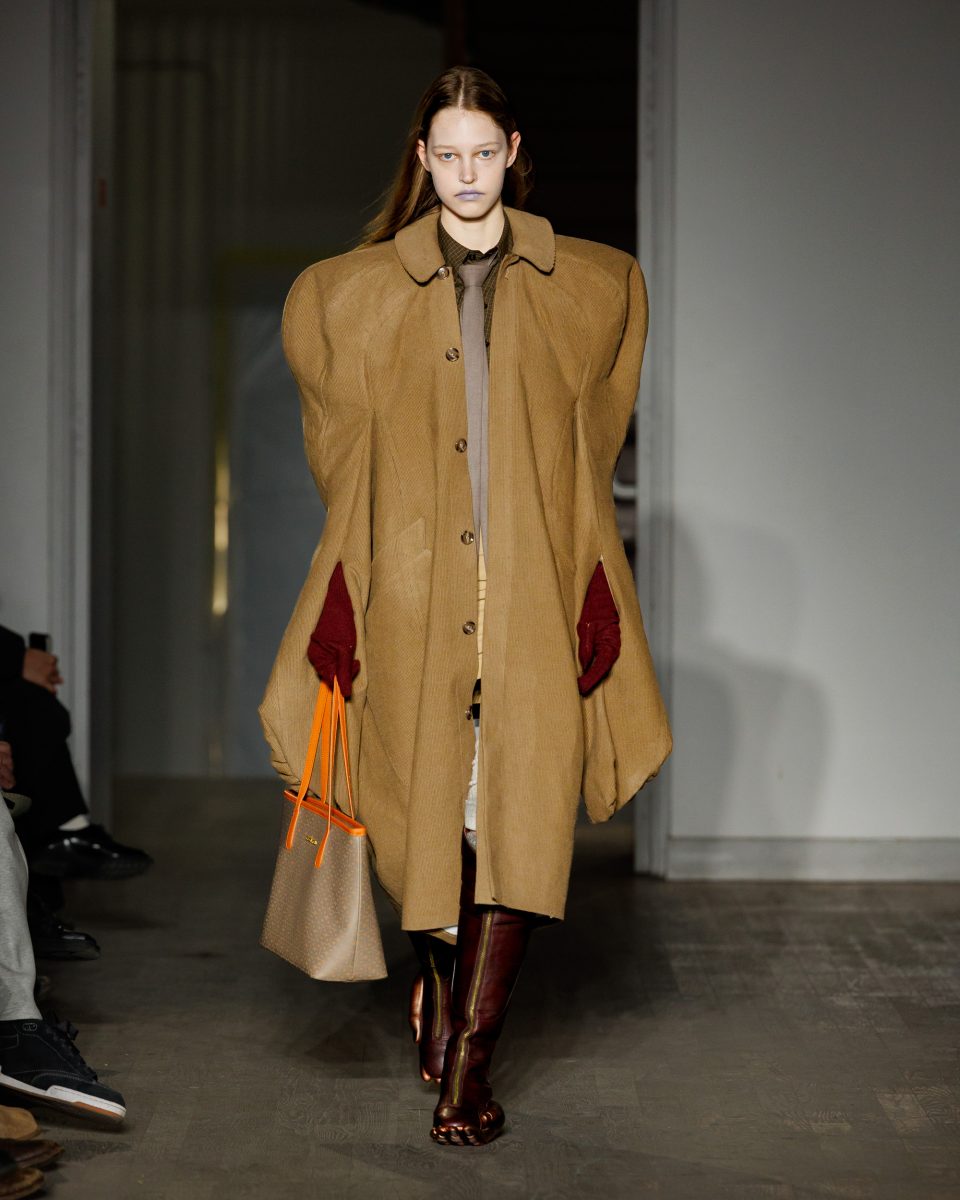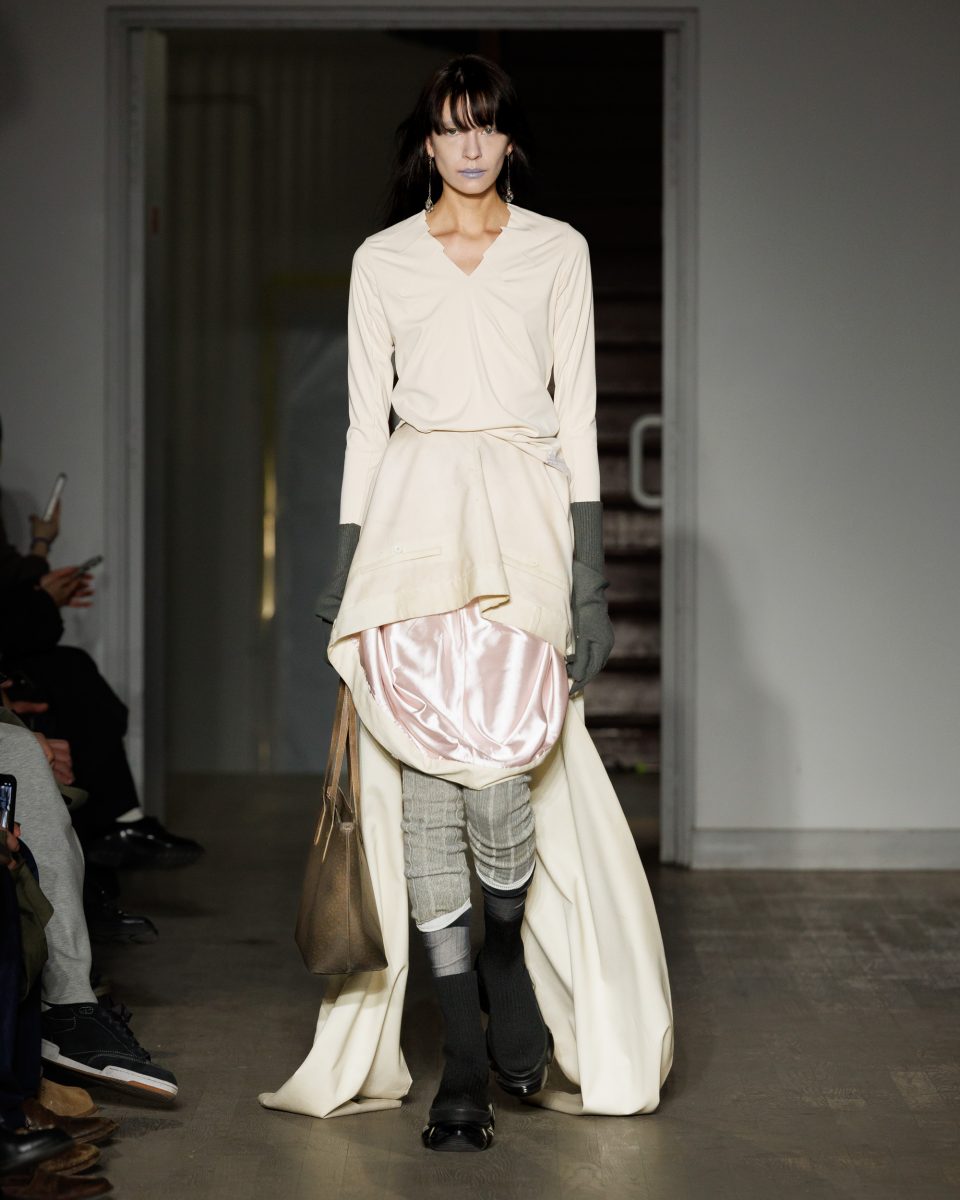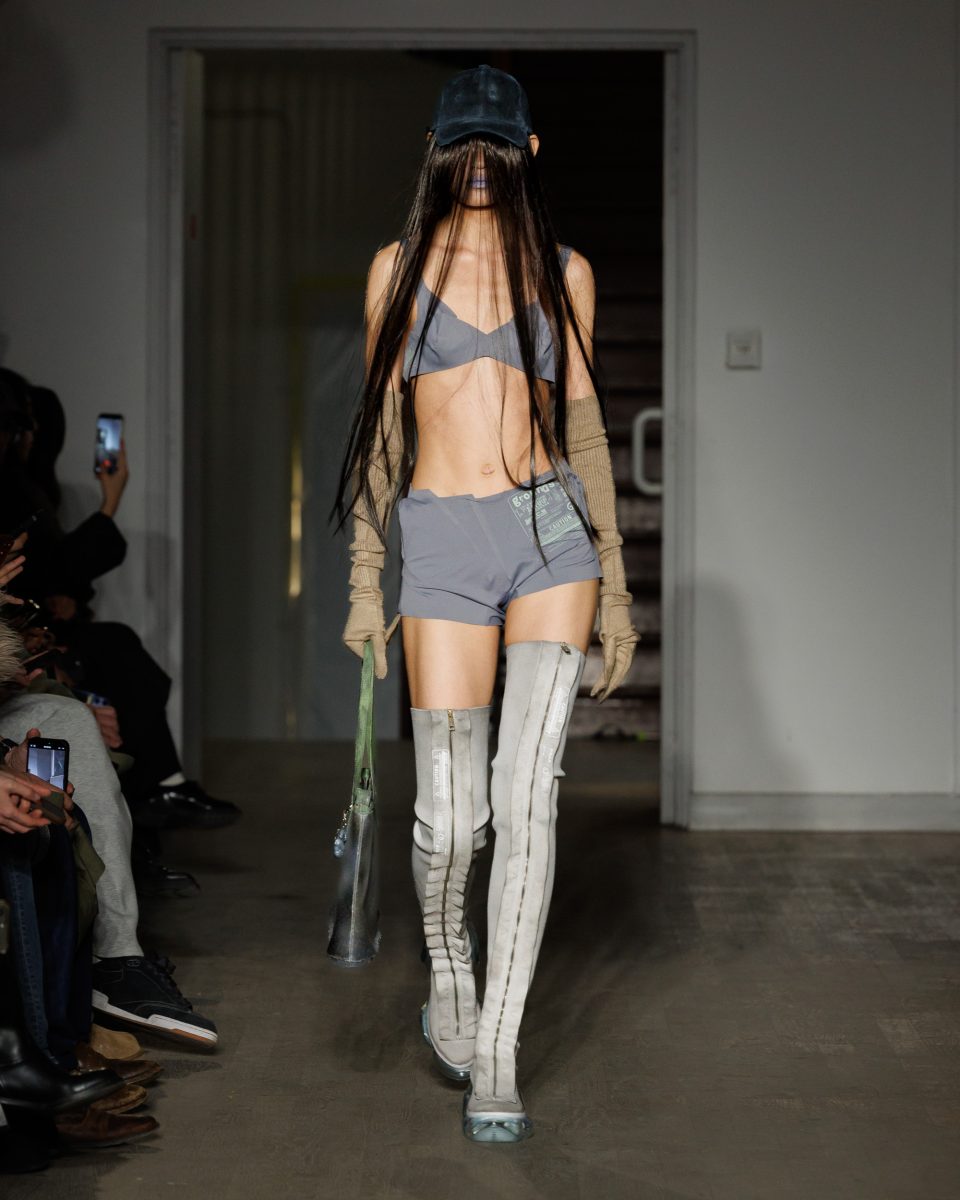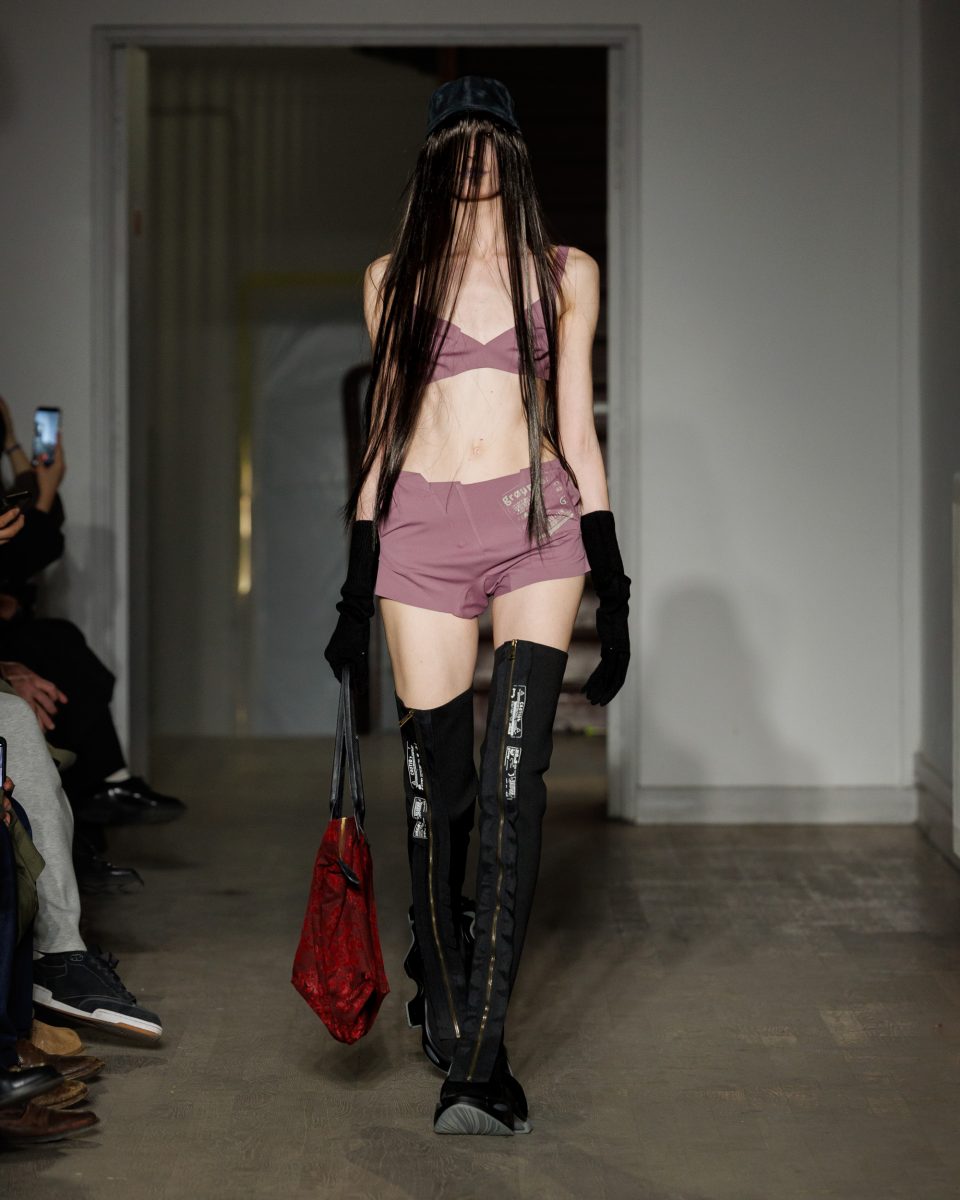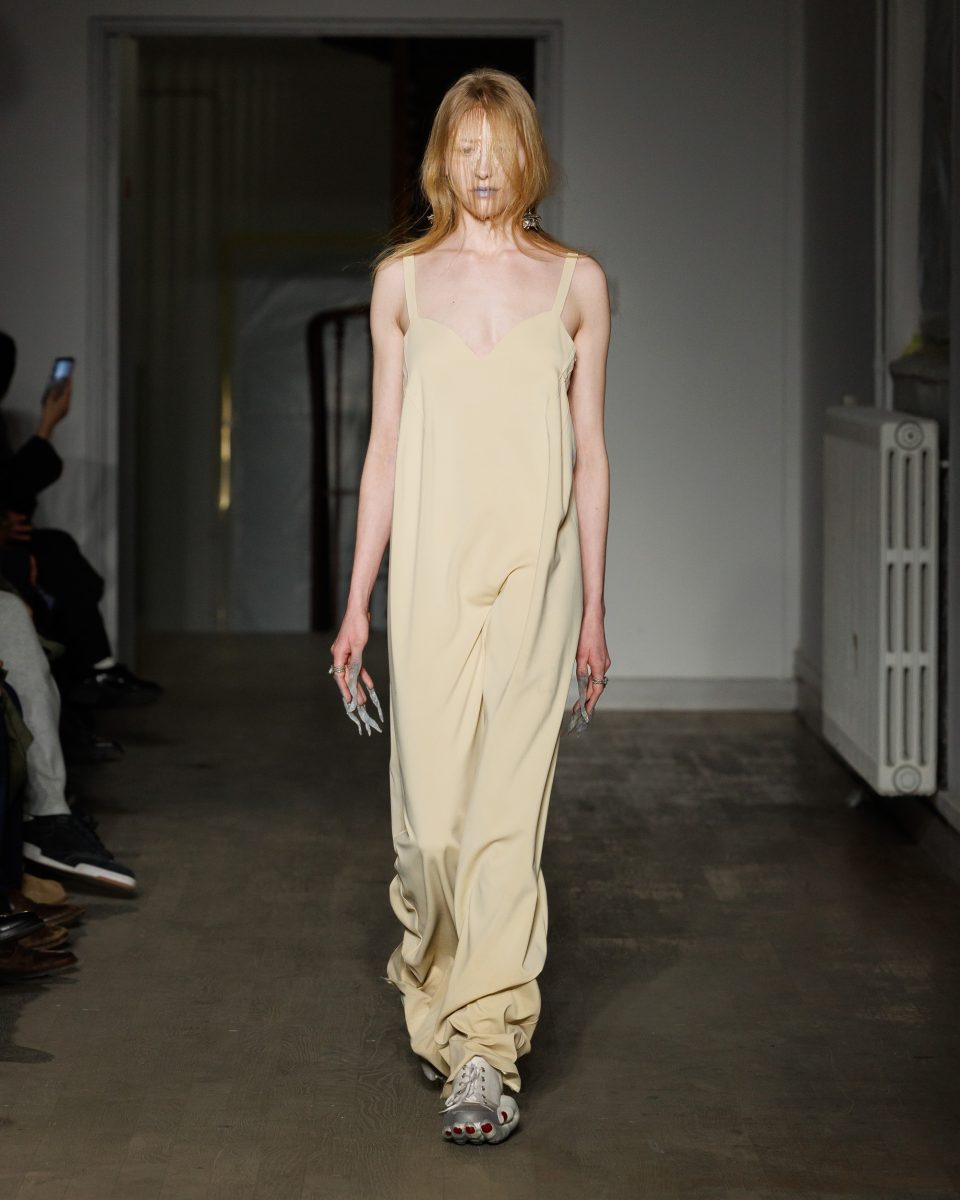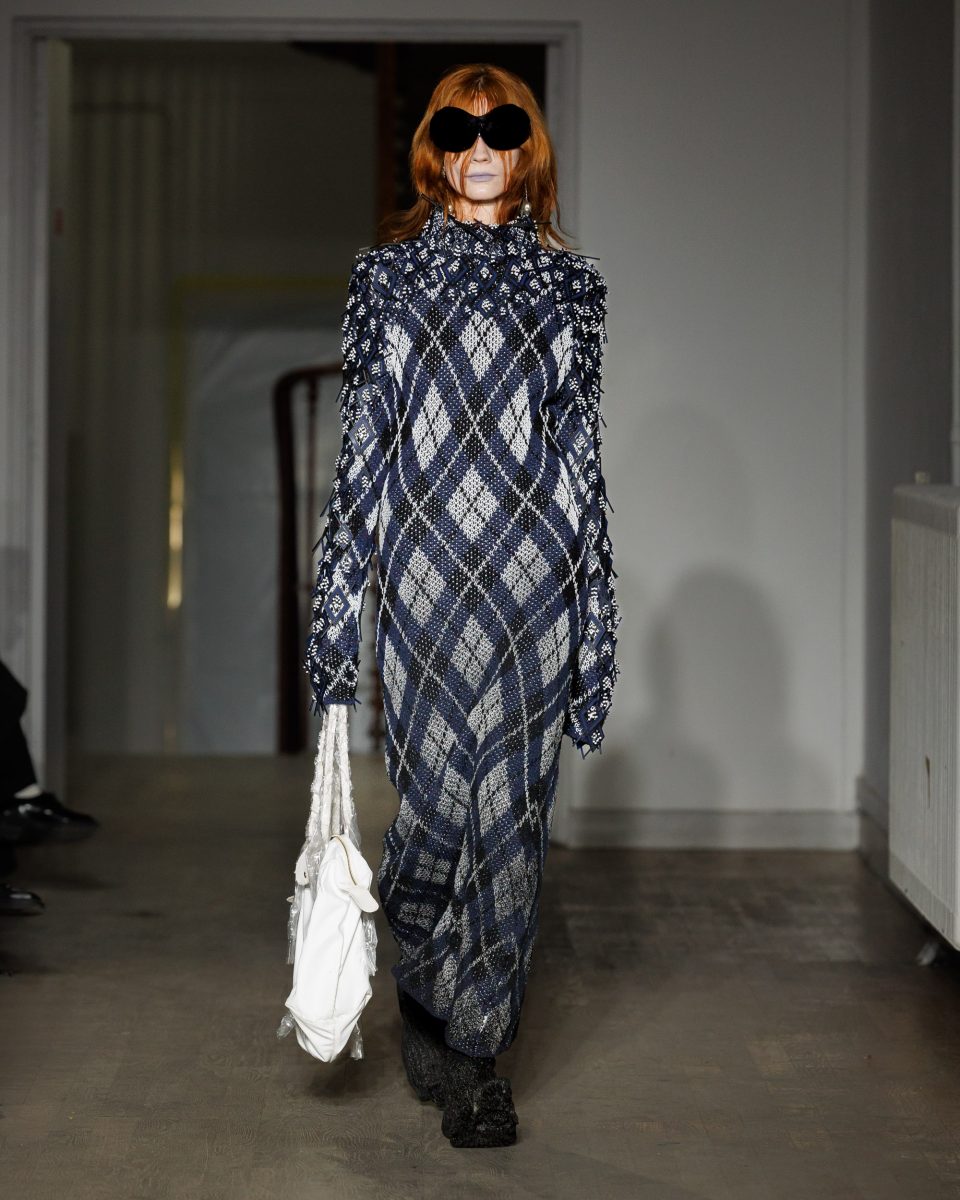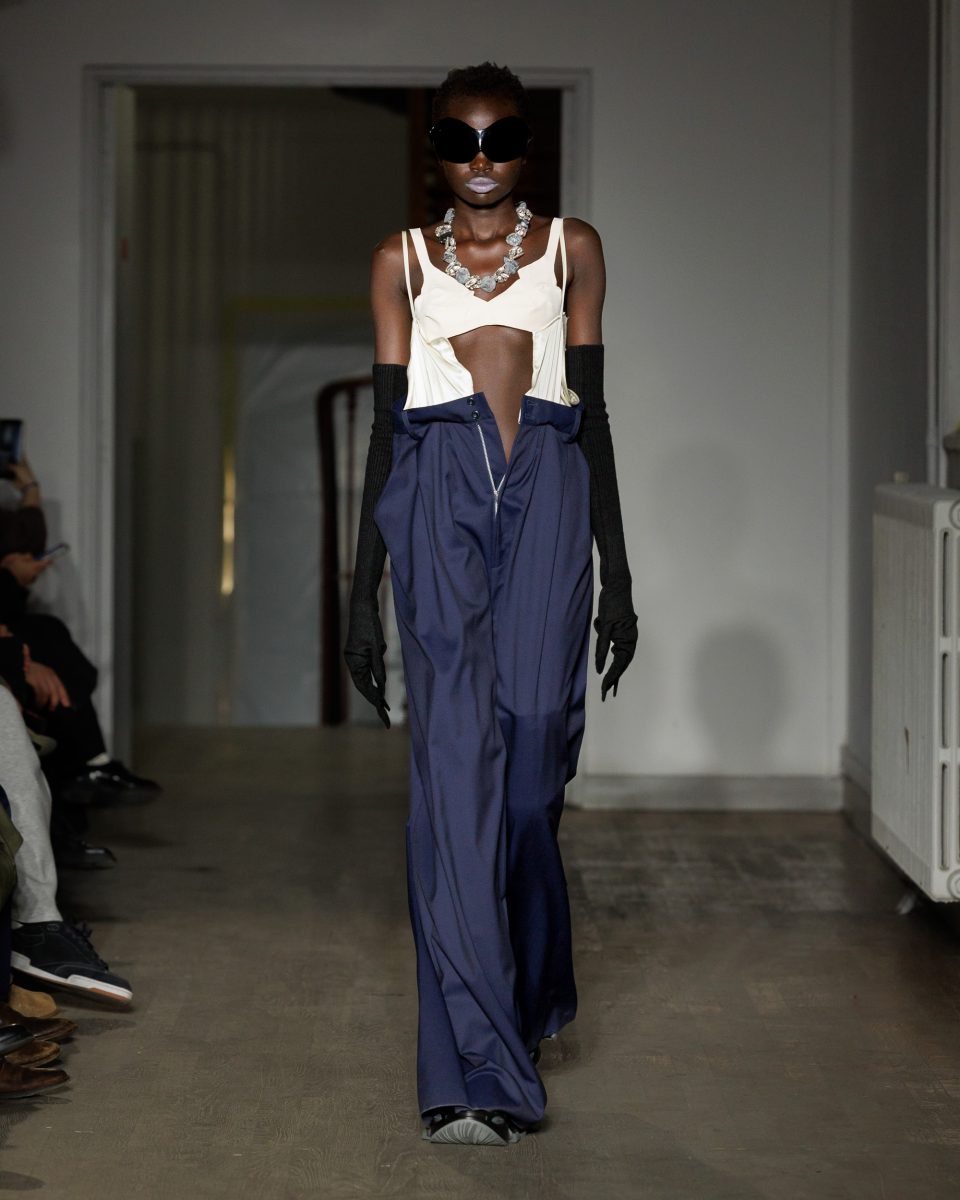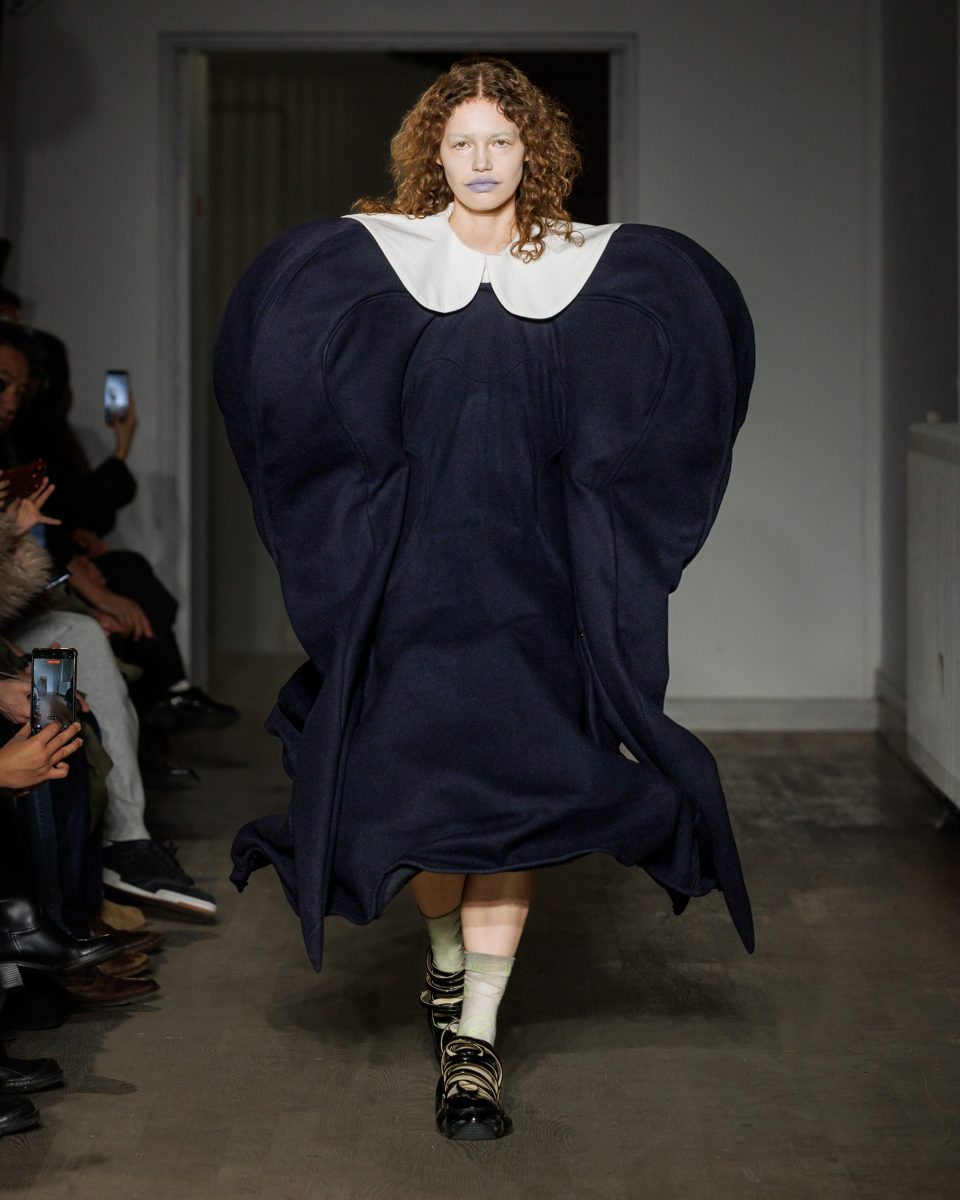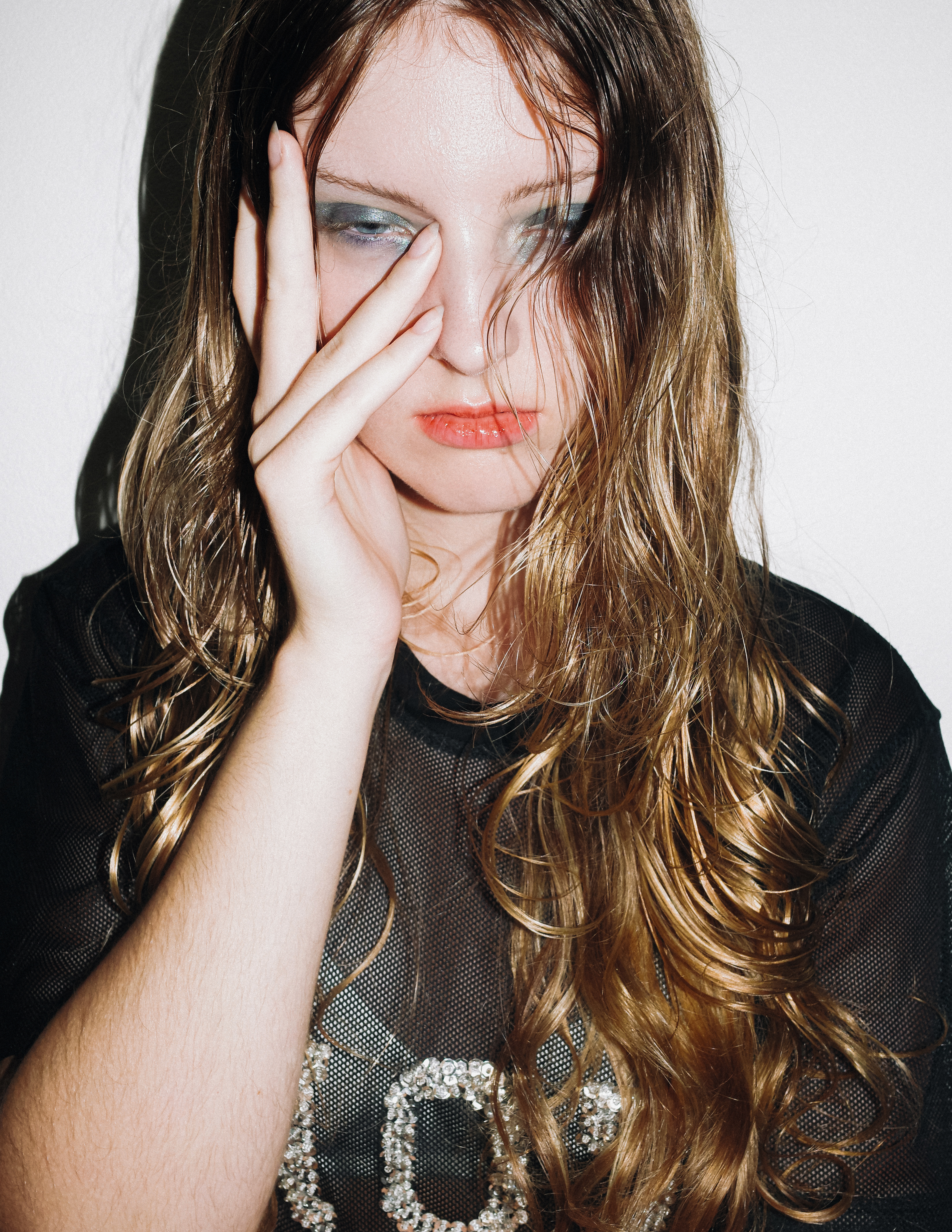
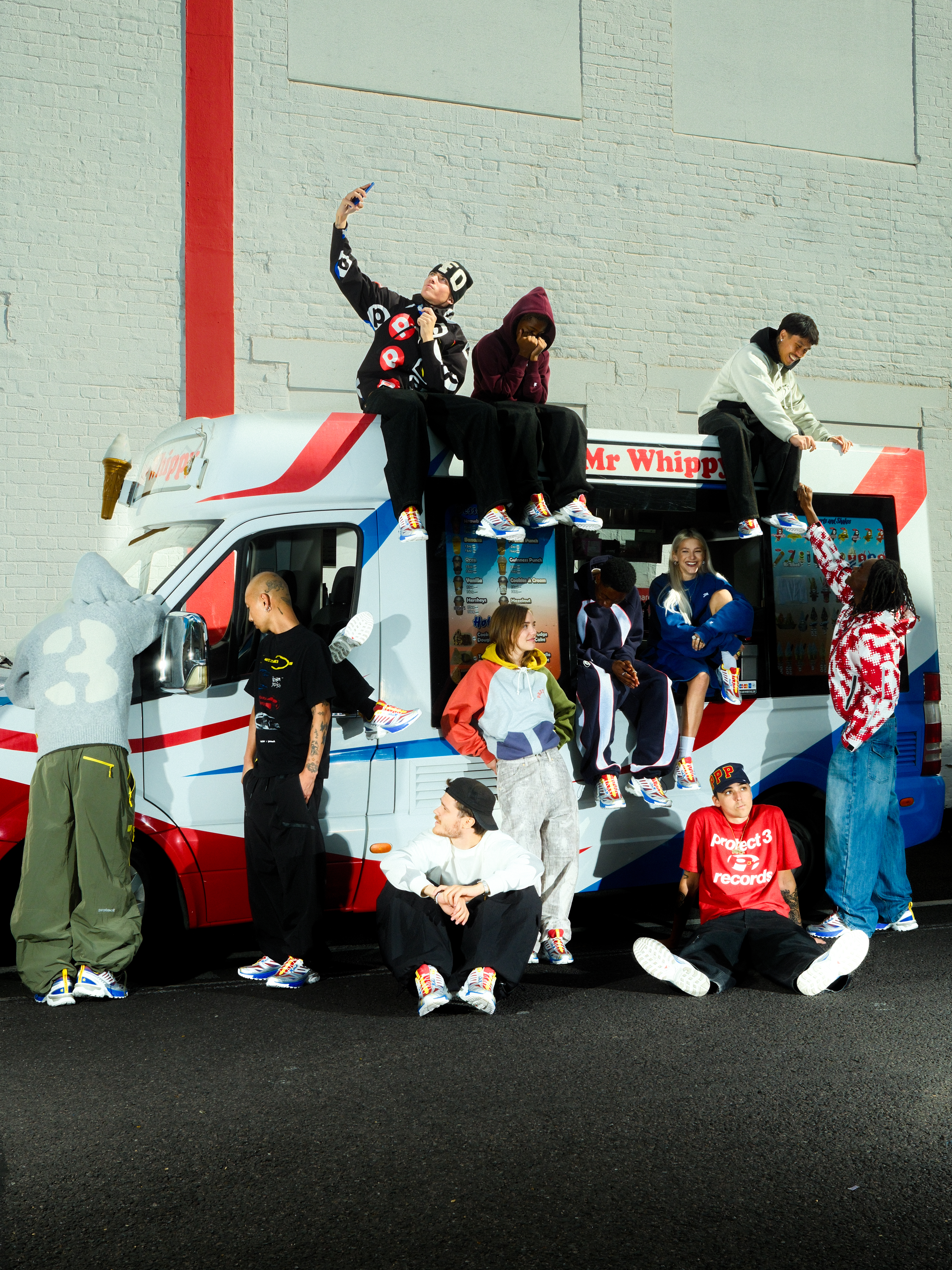
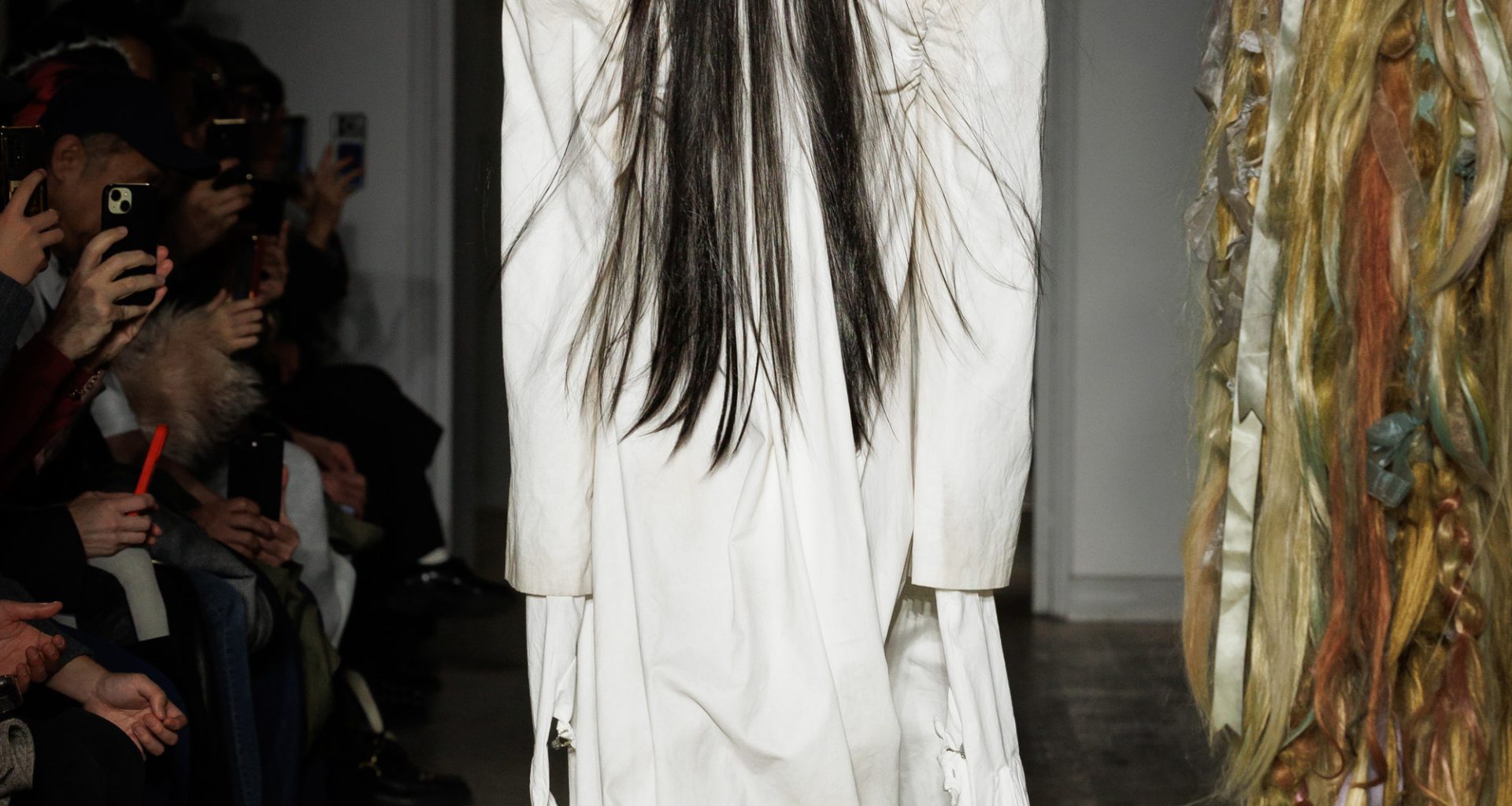
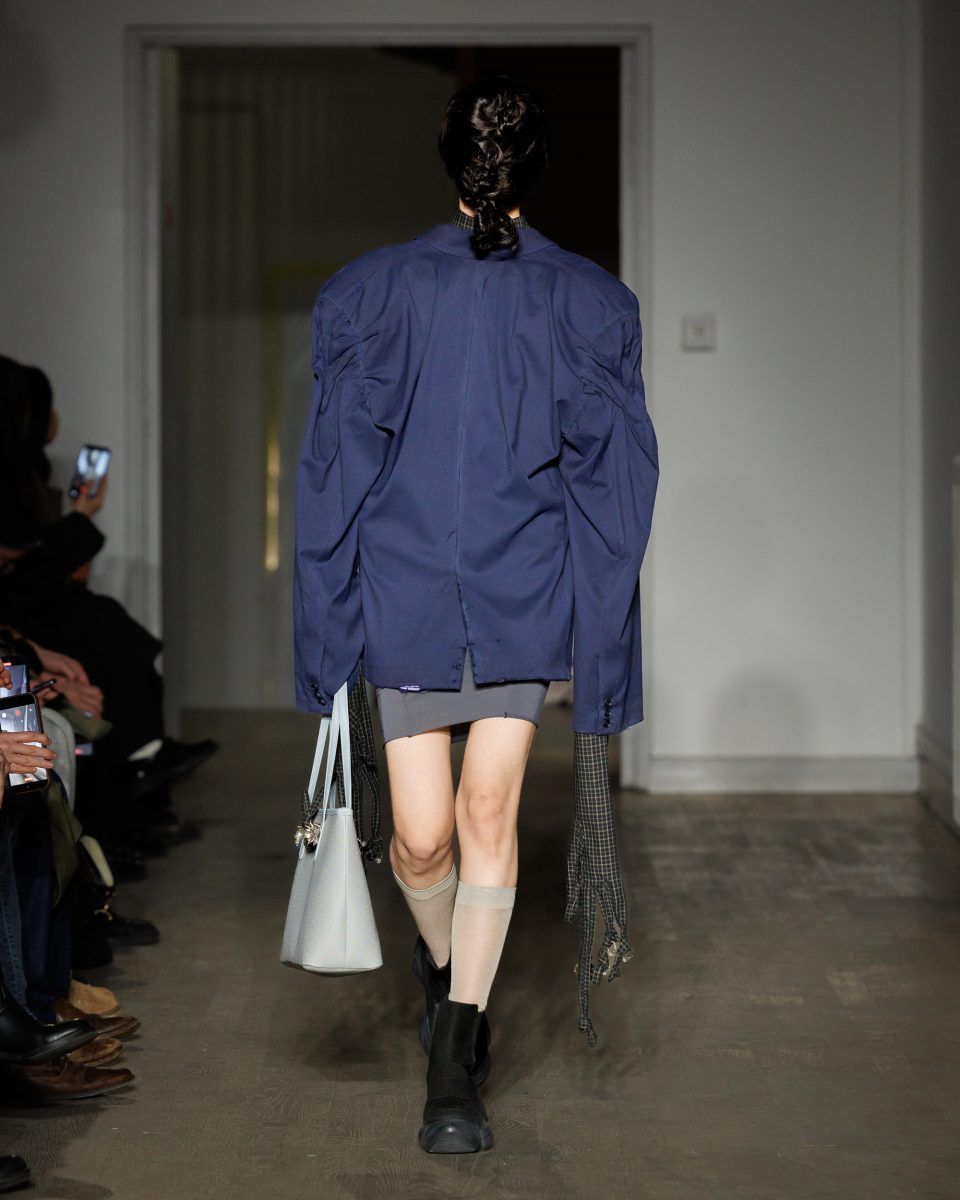
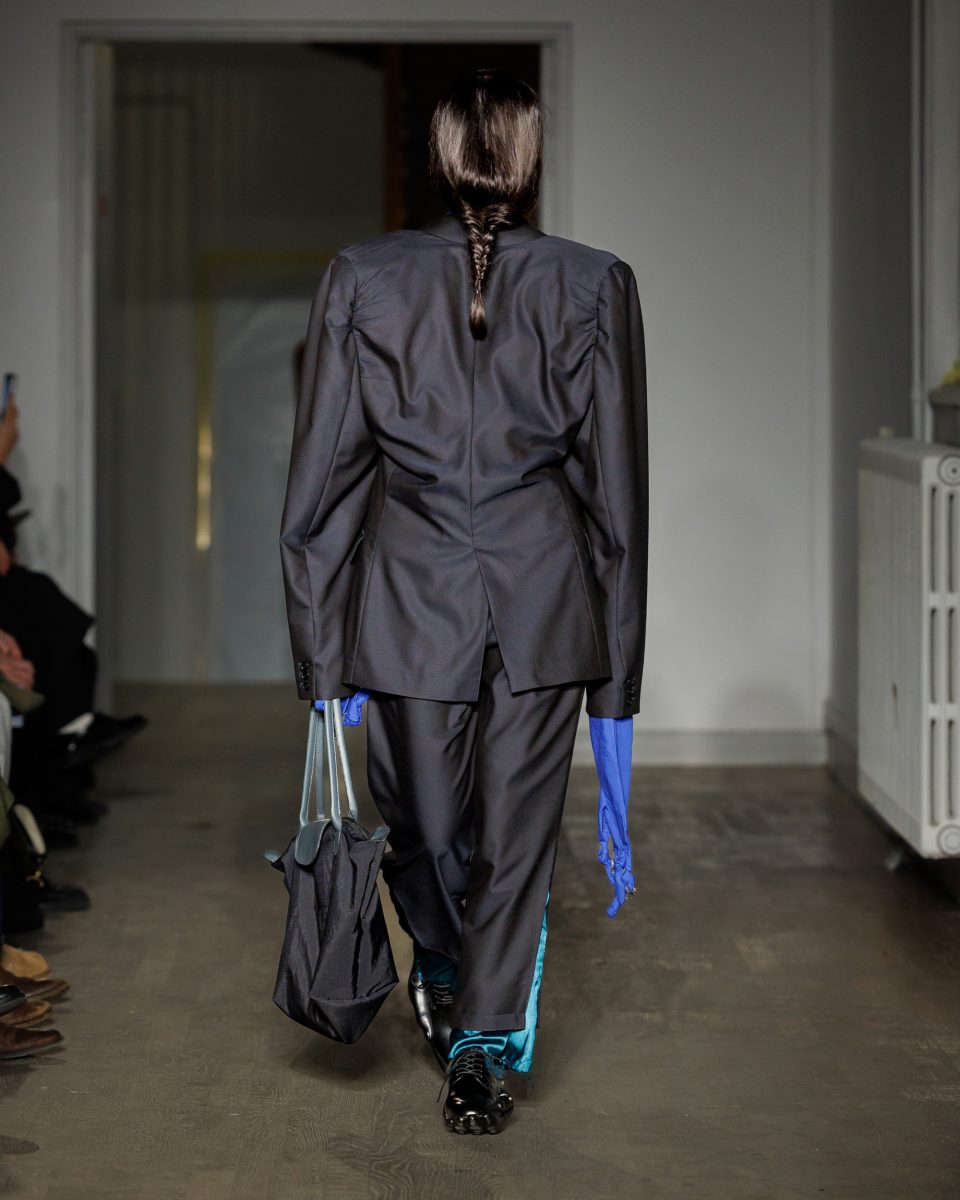
At Paris Fashion Week, where the future of fashion is constantly being rewritten (or should be rewritten), Grounds arrives like a quiet disturbance in the system. Known for its gravity-defying bubble soles that turned sneakers into sculptural statements, the Tokyo-born label has been steadily expanding its universe — moving from footwear obsession to a fully realized sartorial language.
Founded by Mikio Sakabe, Grounds has never simply been about shoes or clothes. It’s about building the silhouette of a different kind of human — one shaped by the tension between reality and fantasy, everyday life and the unknown. For the Fall/Winter 2026–27 season, that vision drifts into something even stranger: the idea of a ghost slipping into ordinary life, a spectral presence haunting the everyday wardrobe.
As part of On Our Radar: Special Edition FW26 in Paris, we spoke with Sakabe about future humans, Tokyo subcultures, and why mystery might be the most powerful thing fashion can offer right now.
Grounds started out primarily as a sneaker label, but over the seasons it has expanded into a full prêt-à-porter language.
What inspired you to explore this sartorial dimension beyond footwear, and how would you define your overall “total look” vision today?
I come from a fashion design background, before I did grounds I always designed full collections. The mission as a fashion designer is to make a new type of human. I always think about the future? What do humans in the future want to wear, what will they adore? Oi think mystery is very important, we all want mystery.
The collection you’re presenting today at Paris Fashion Week Fall/Winter 2026-27 follows years of experimentation between sole and body.
What are the key conceptual or narrative themes this season, and what do you want to communicate through clothing beyond the iconic soles?
I want to make a Japanese ghost connected with ordinary life. The entrance of a fantasy ghost into ordinary life. Fashion is also fantasy.
In recent years, Grounds has challenged traditional fashion categories, existing somewhere between art, fashion, and technology.
How does this conceptual frontier translate into the materials, construction techniques, and silhouettes of your clothing compared to your footwear?
Basically, we are not constructing the human figure through shoes alone; we think about shapes that fit the era through the entire body. As for materials, we aim to harmonize realism with something more futuristic.
Grounds’ prêt-à-porter shows often play with deconstructed forms and unusual silhouettes (like in FW25-26). How do you balance the line between extreme innovation and real-life wearability for the people who actually wear your pieces?
For example the total hair pieces are not even for humans, they are for ghosts. They are ransack silhouettes that are extreme. On the other hand the office lady silhouettes are more wearable and will be launched soon.
Paris Fashion Week is a huge stage for a brand so deeply rooted in Japanese youth culture and Tokyo’s scene.
How do you maintain an authentic dialogue between Tokyo’s cultural energy and the global fashion arena, especially when presenting such experimental collections?
By softening the entertainment aspect of the subcultures that emerge from Tokyo and instead deepening the concept as art, I aim to create a form of communication that can resonate on a global level.
Your work with “gravity” and the way Grounds redefines bodily perception through soles is deeply philosophical. How does this philosophy translate into your approach to prêt-à-porter, seasonal storytelling, and the dramaturgy of your runway shows?
Basically, through clothing, shoes, and fashion, we aim to create the human of the future.
On the runway, we express this using everything — the models, makeup, hair, the way they walk, the music, and the lighting.
Over the years you’ve collaborated with a range of creatives and brands (like Walter Van Beirendonck and Published By), yet Grounds is now establishing itself as a complete brand.
How important is collaboration for you in continuing to reinvent your work?
Through collaboration, we can discover new angles of creativity for the brand.
Looking at new generations of consumers and creatives, how do you think fashion needs to evolve to stay relevant in a world oscillating between nostalgia and total digital immersion? What role do you see a brand like Grounds playing in that future?
In any era, people are interested in future humans, so there is no problem.
If you could look back from ten years in the future, as the designer and creator of Grounds, what changes or progress would you hope to see in fashion — how people dress, move, and connect with clothing — and how would you like Grounds to have contributed to that transformation?
I would be happy if Japanese and Asian cultures became more intertwined with fashion, and if people could enjoy them more freely and without hesitation.