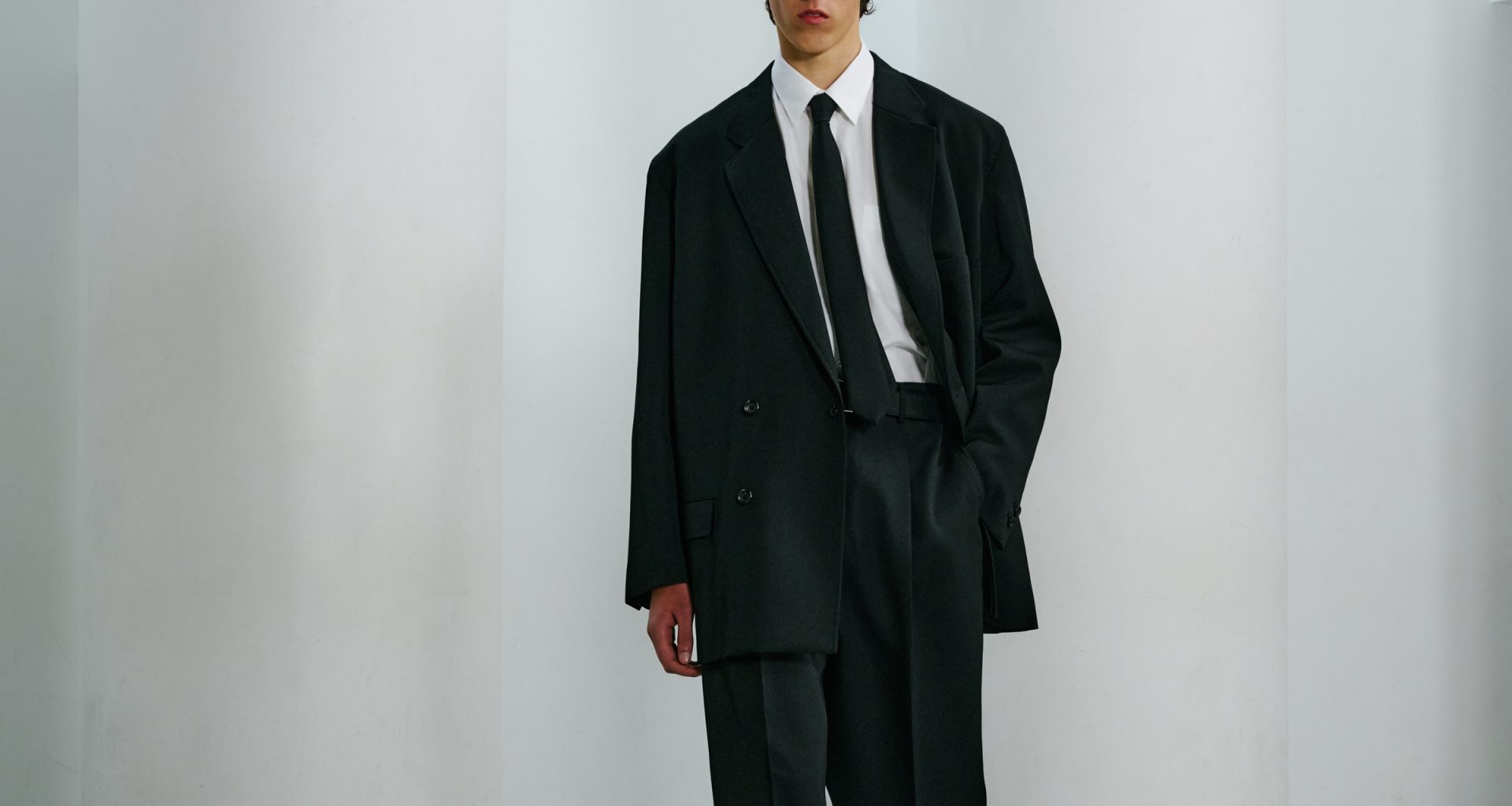
By Julia Radovich
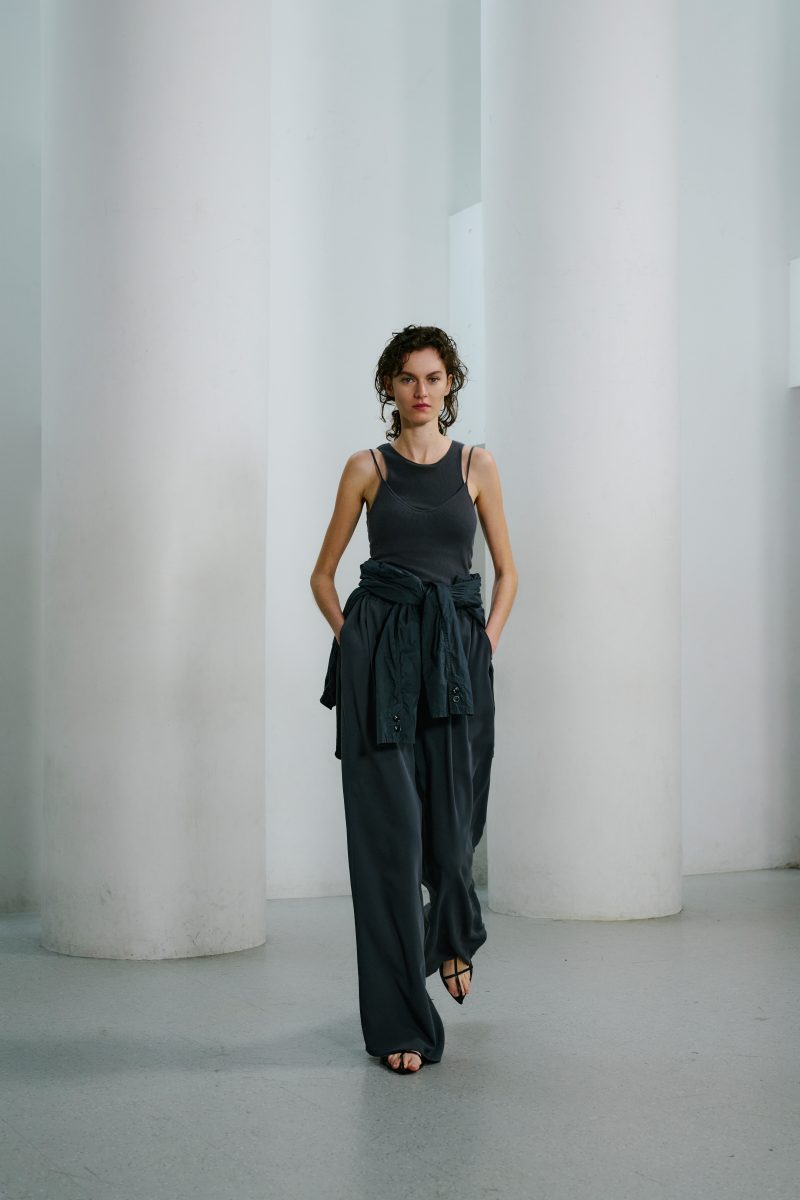
This wasn’t a Q&A.
It was a conversation – unhurried, attentive, human.
Takayuki Minami, the founder of Graphpaper, doesn’t speak in slogans. He speaks in textures. In intention. In time.
What stayed with me was not a single idea – but the rhythm of how he thinks.
In this exchange, he shares why design begins with listening, how clothing can hold space without taking it, and why the quietest choices often carry the most weight.
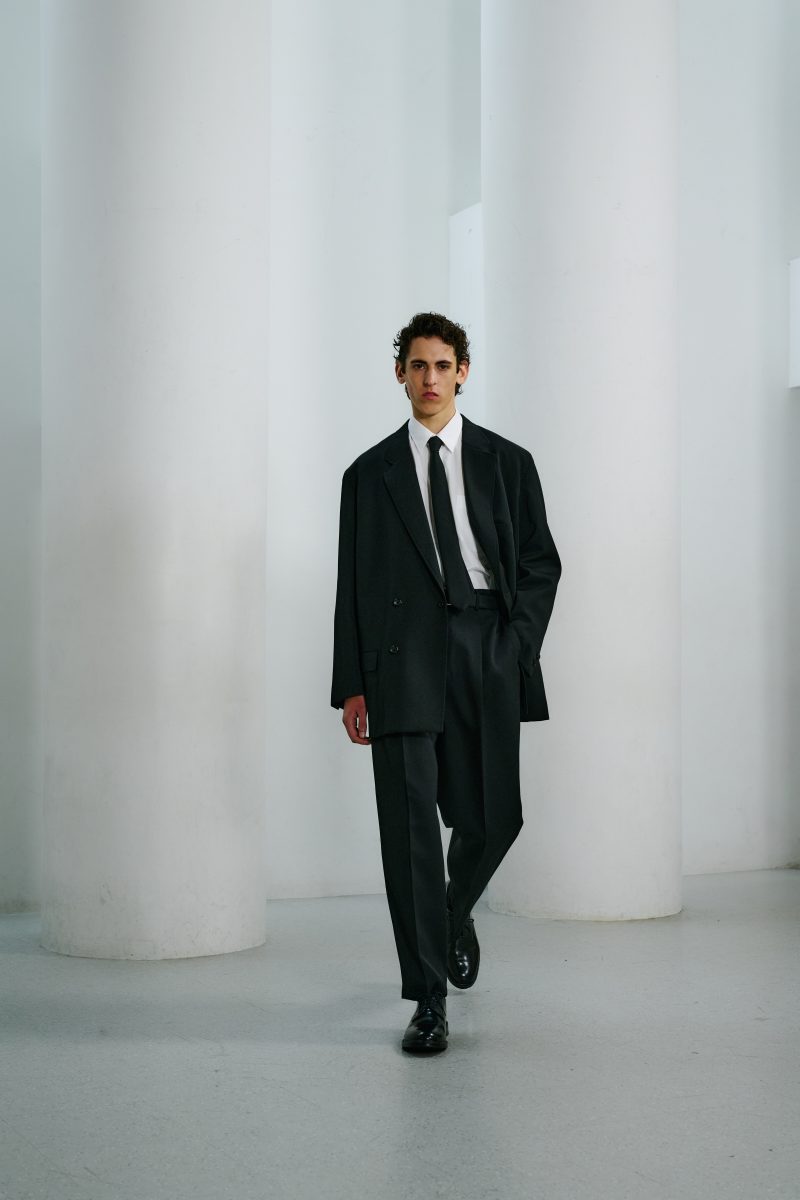
Julia:
I always think about how much we don’t know.
How many cities we’ll never walk through.
How many people are making beautiful things in quiet ways — and we only catch glimpses.
That’s why I love conversations like this.
Because I’m not here to ‘cover’ a brand.
I’m here to meet someone.
So – thank you for being here, Takayuki.
It means a lot.
Takayuki:
Thank you for such heartfelt words.
I often find that through conversations like this, I come to understand my own thoughts more clearly.
What meant the most was that you weren’t just looking at a brand, you were meeting a person.
And I truly felt that. Thank you for showing up, l’m grateful for this encounter.
Julia:
I understand this is the first time Graphpaper is showing work in Paris.
What made you want to bring it here?
And what does this moment feel like to you — to be present, in this city, right now?
Takayuki:
This is the first time Graphpaper is presenting its work in Paris.
I’ve always had a deep respect for this city — where fashion, art, and culture intersect so naturally, and where people’s perspectives feel both refined and receptive.
I wanted to experience how our clothing would be perceived in such an environment.
In fact, even before the pandemic, I had been planning to establish a company in Europe and to present our collections directly to customers in Paris. But when COVID-19 hit, we had to put everything on hold and focus on developing our presence in Japan.
Now, with things settled at home, we’ve finally been able to set up a company in the Netherlands, and this moment marks our debut here in Paris.
To be here, now — it’s a mix of anticipation and uncertainty, wrapped in a quiet sense of determination. I believe there’s a kind of understanding here that transcends borders and time.
Julia:
For those of us just discovering you – can you share a bit of your story?
What pulled you toward fashion in the first place?
And how did that grow into Graphpaper?
Takayuki:
My career began at a Japanese company called HP FRANCE, where I worked as a sales associate.
Over time, I had the opportunity to learn about buying, planning, and store operations – and eventually became involved in launching several shops and creative projects.
After leaving the company, my first independent project was developing the concept for a store called 1LDK, where I also served as director for several years. That experience led me to reflect more deeply on what I truly wanted to express through retail and clothing.
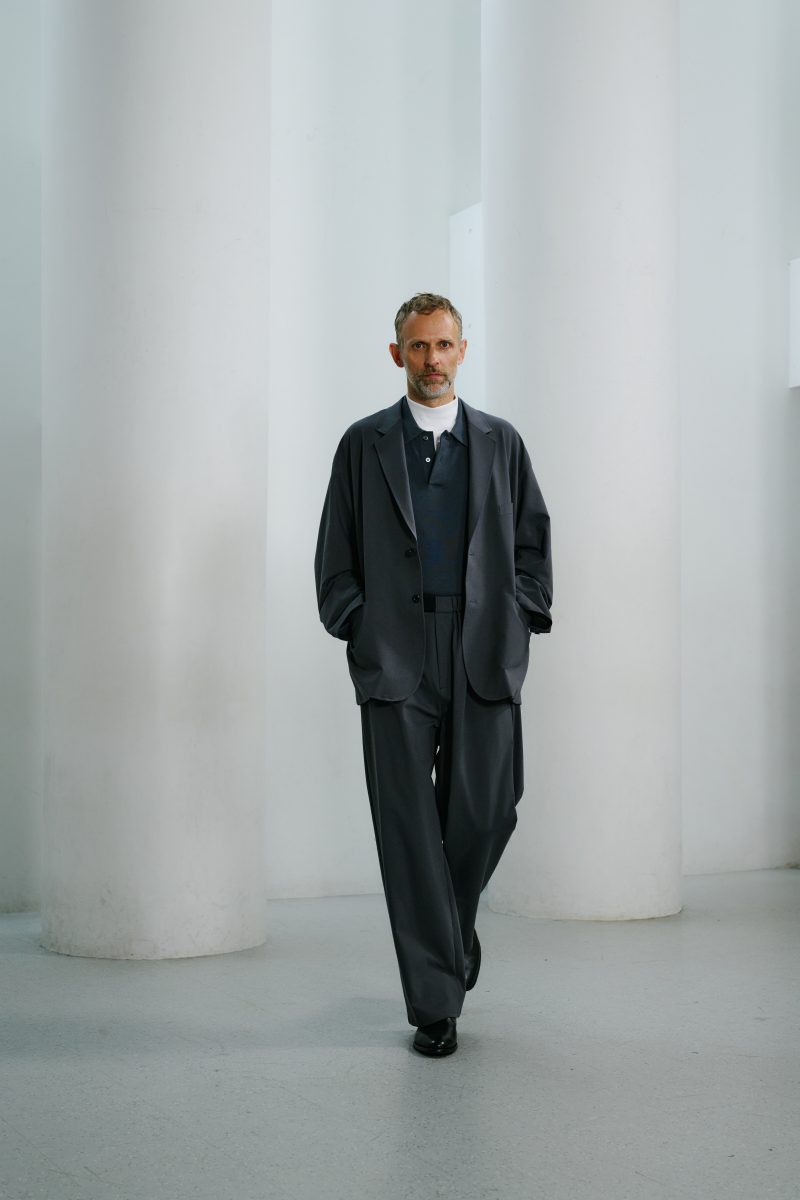
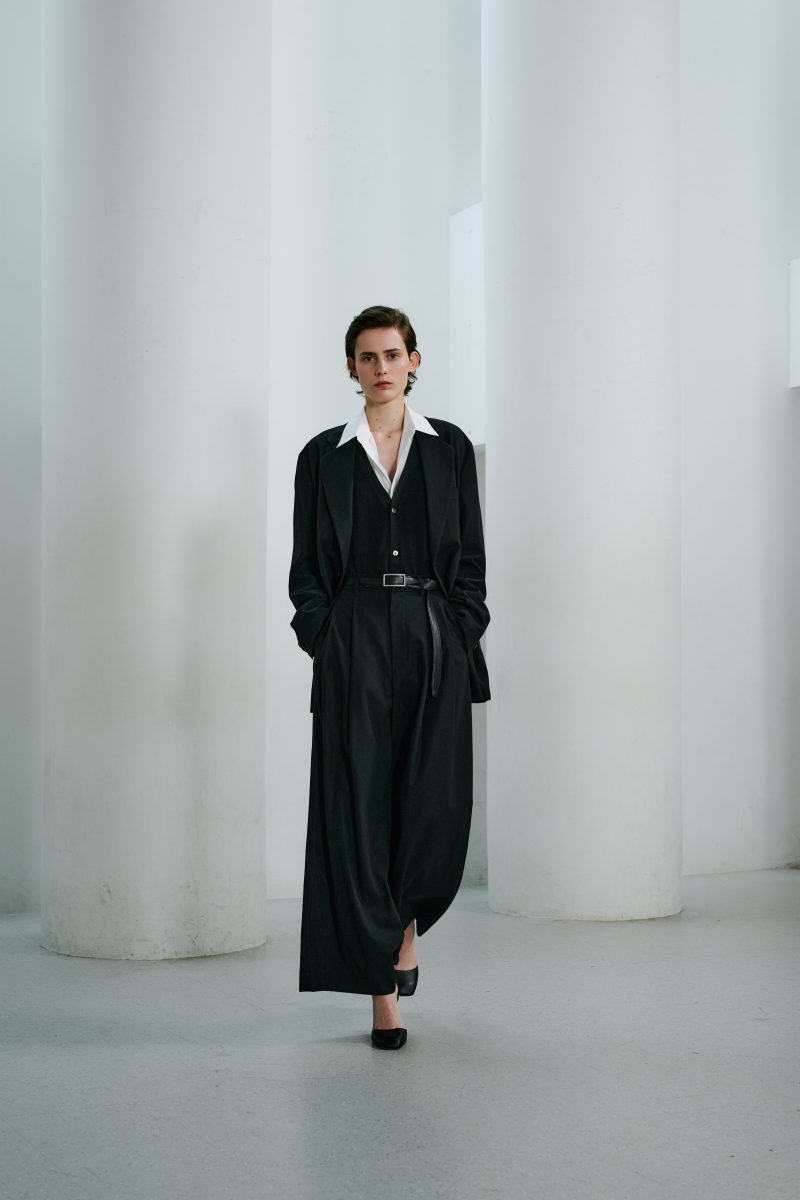
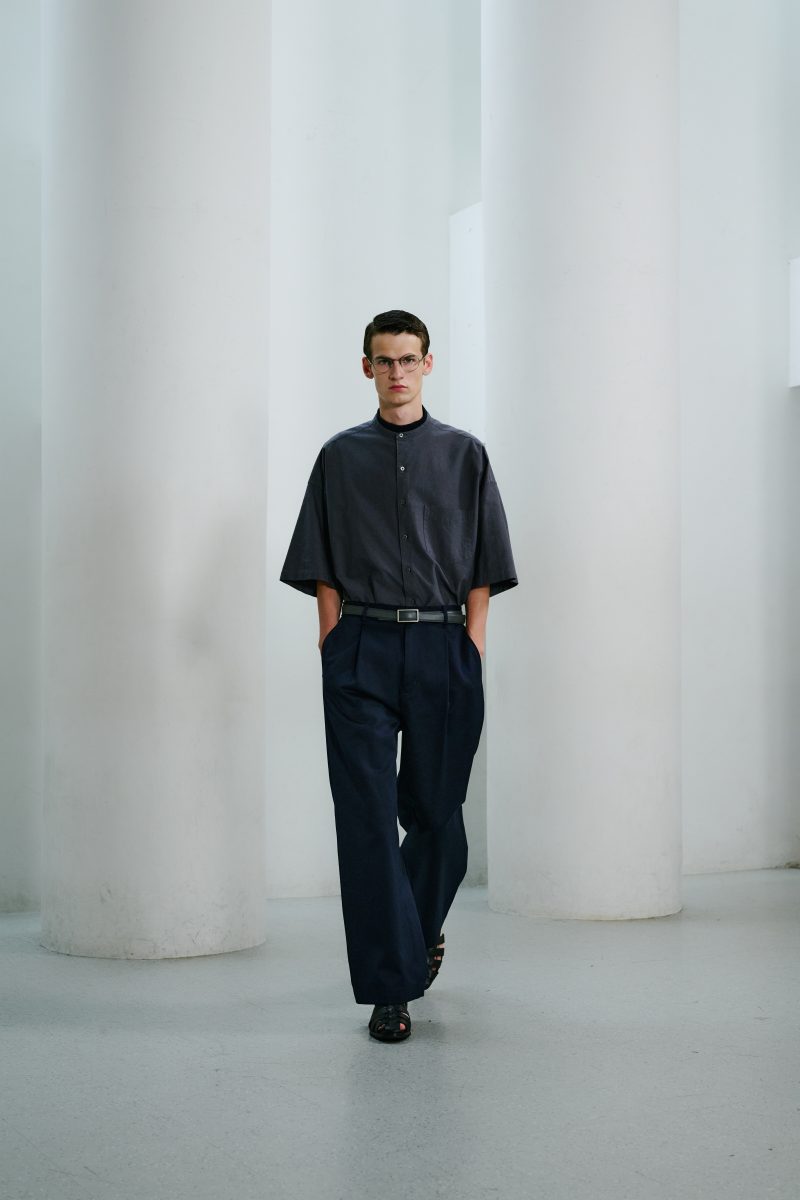
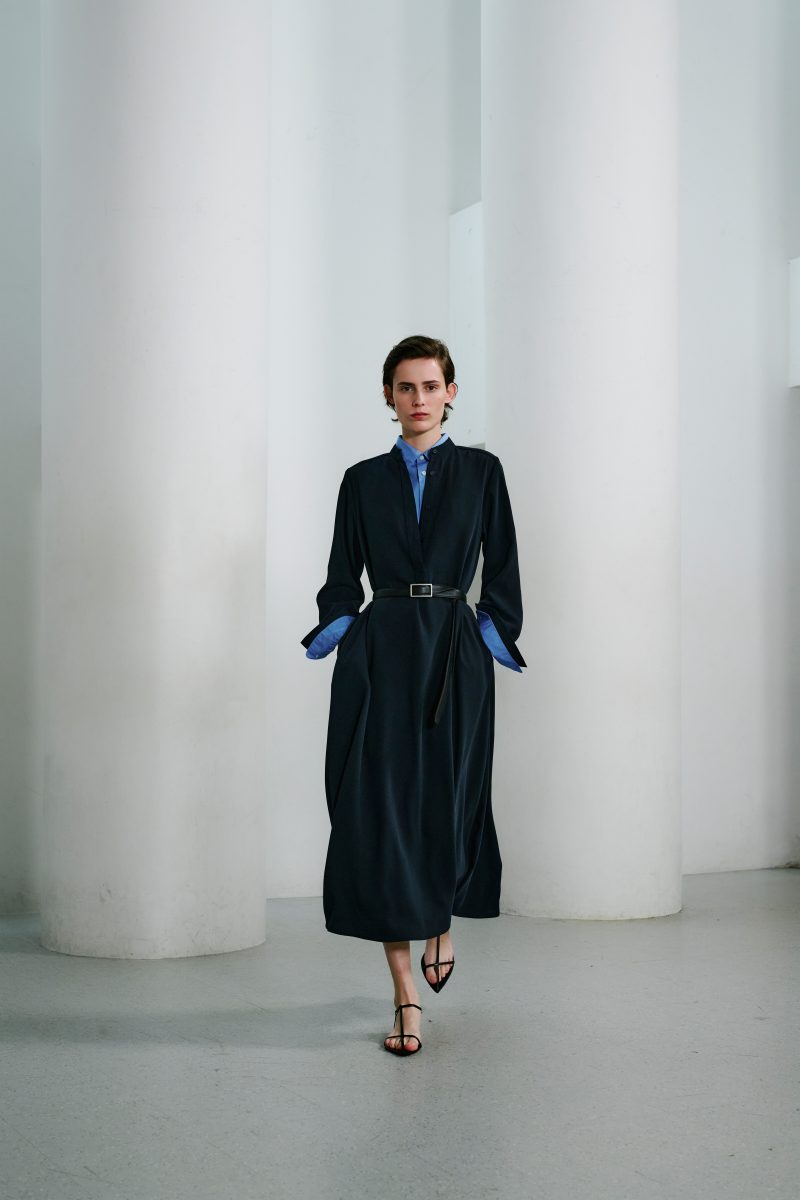
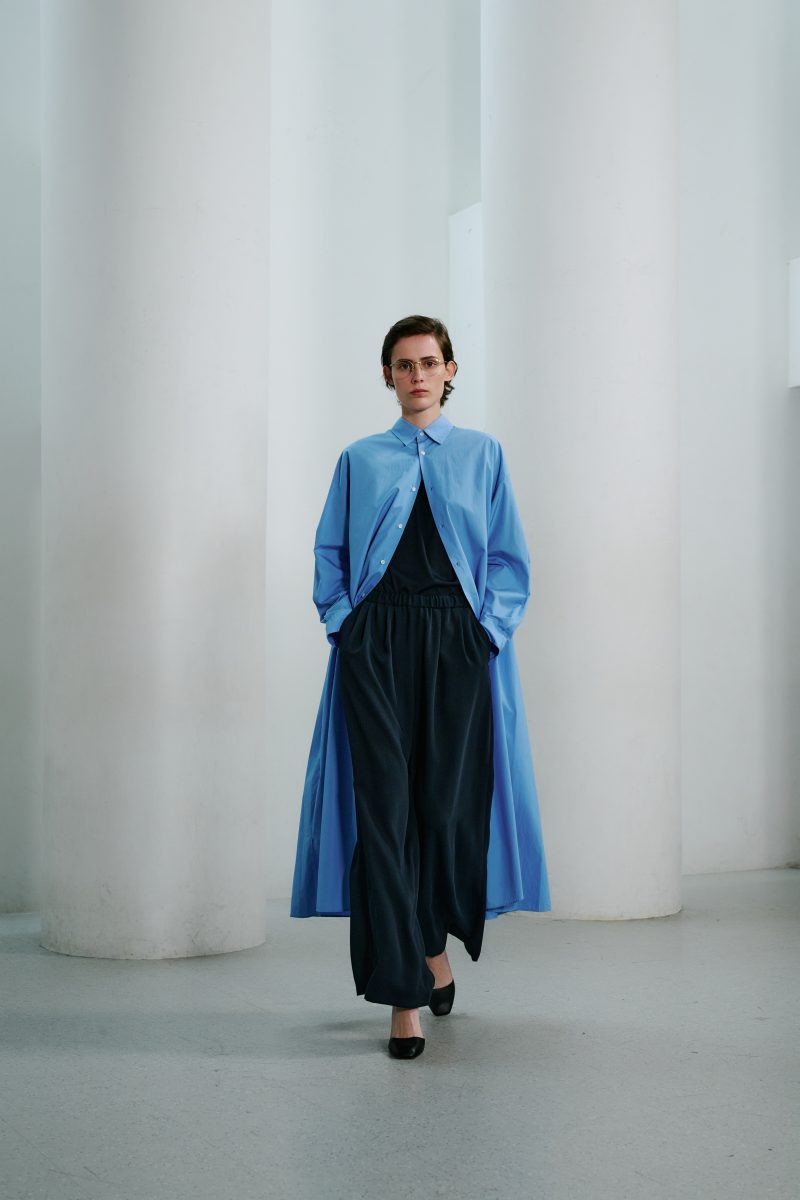
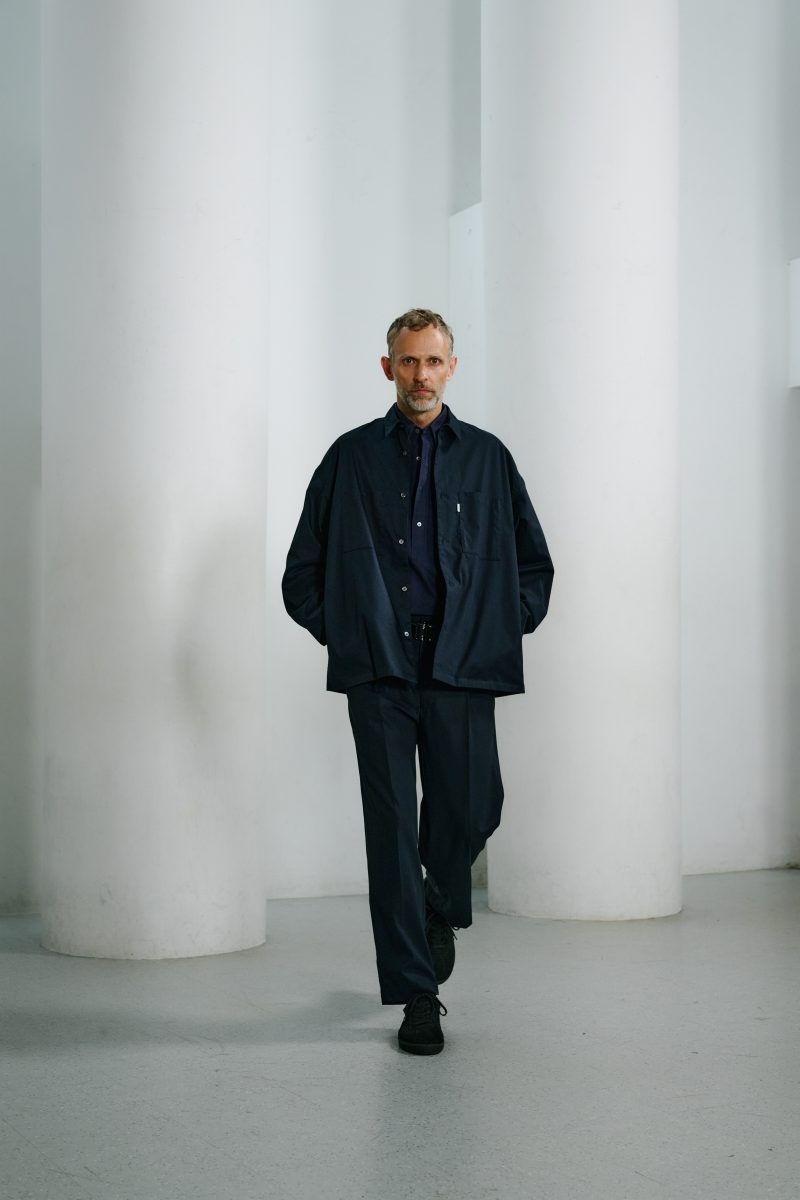
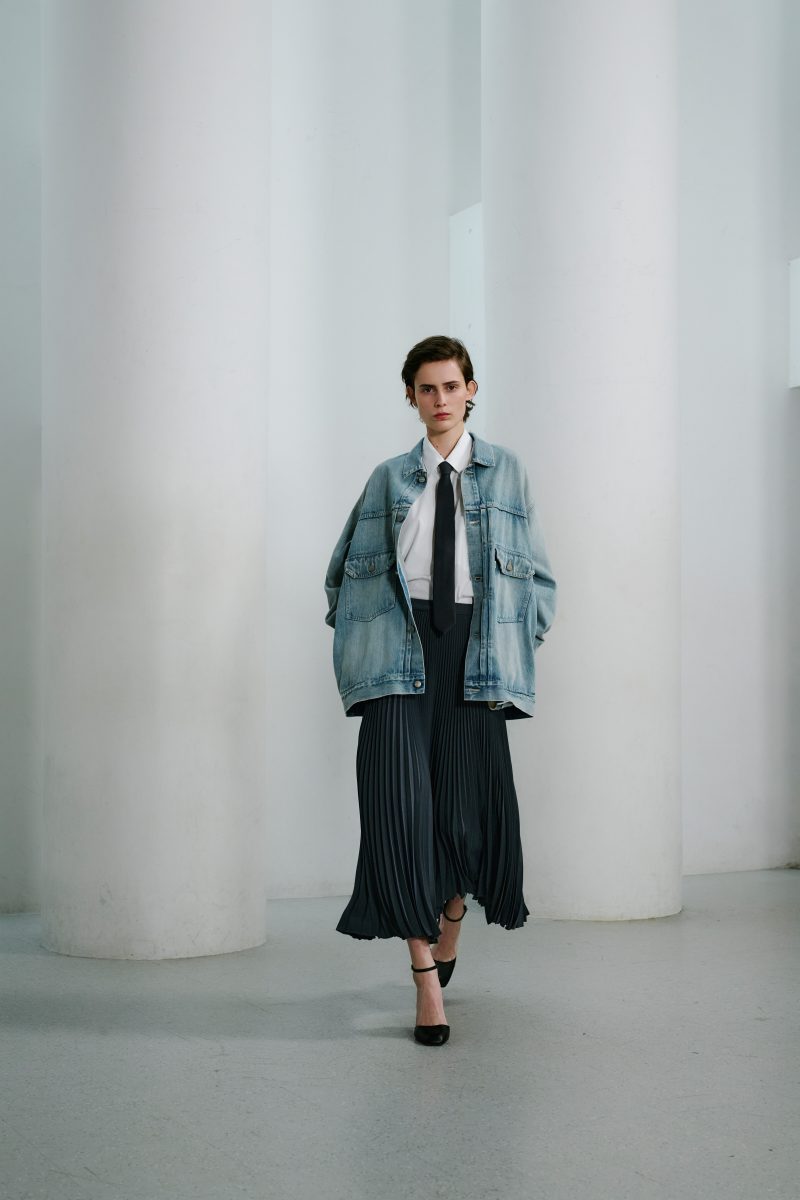
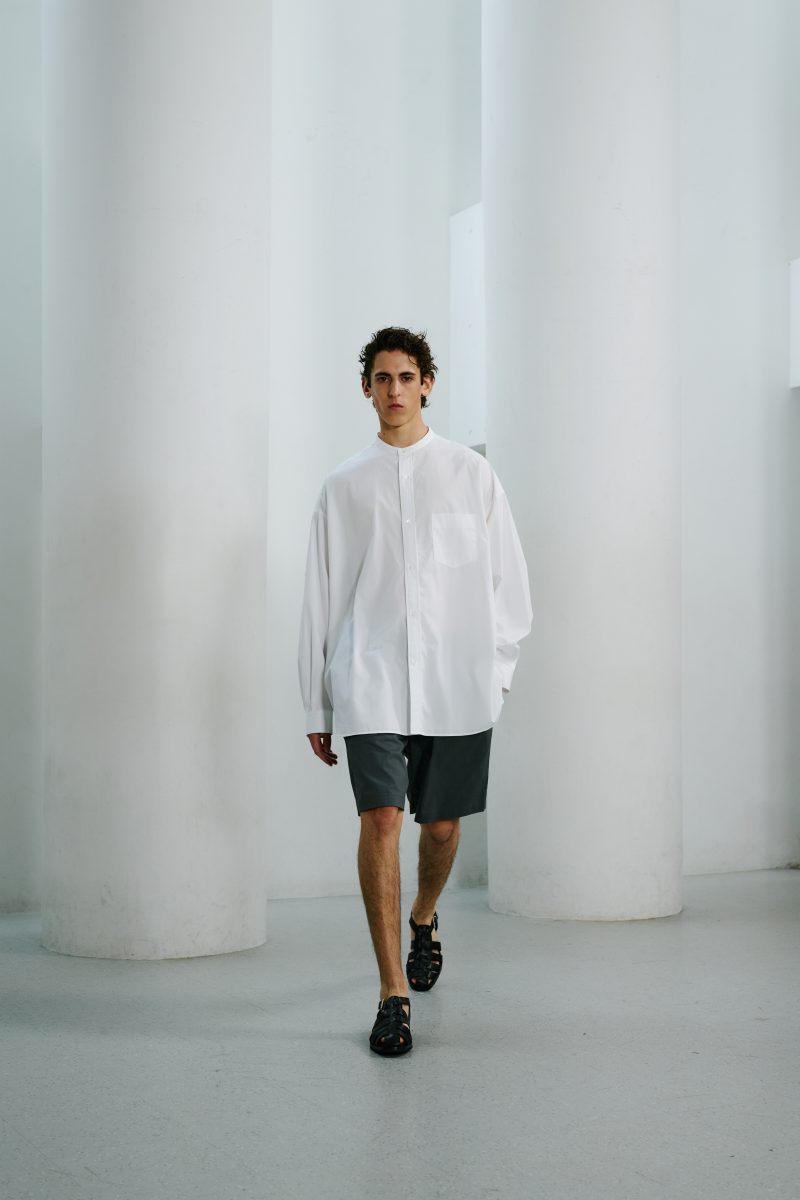
Out of that exploration came Graphpaper – both as a store in Aoyama and as a brand. While fashion is at the core, Graphpaper is intended to function more like a platform – one that engages with space, culture, and thoughtful ways of living.
Julia:
When you look at your work-not as a designer, but as a person – how would you describe what you’re building?
What are you most drawn to when you’re creating?
Takayuki:
When I look at my work not as a designer, but simply as a person, what matters most to me is creating space – not just physical space, but cultural space as well.
Fashion is only one part of it.
I’m deeply interested in art, music, architecture, and many other fields, and I’m always trying to learn, to expand my perception. The things I encounter in daily life – in work and in living – often become sources of inspiration.
By filtering them through my own sensibility, I feel I can create something new: a blend of different cultures and values.
Rather than setting out to “gain” something, I’m more drawn to subtle shifts – changing the angle from which I view everyday things. By doing so, I try to turn the ordinary into something quietly compelling – something meaningful in its simplicity.
Julia:
I know you’re collaborating with ILL-Studio on this project.
How did that connection begin?
What felt right about working together?
Takayuki:
I first heard about ILL-Studio through a friend from Paris who told me about this fascinating artist. It turned out he had visited our store in Tokyo before, and when we finally met, I felt a kind of intuitive connection. Even before we exchanged many words.
As we spoke, I became even more drawn to the way they work across disciplines. Art, architecture, music, design — but beyond that, to the way they think. Their work doesn’t chase surface-level beauty. It engages the senses, the body, and the passing of time. It’s about creating experiences that are not just seen, but felt — something I deeply relate to in my own approach.
We shared a fundamental concern: how people exist and move within space.
That shared sensibility made me feel it was only natural that we should create something together.
Julia:
And the space you’re building — what kind of world are you inviting us into?
What do you hope people feel when they step inside?
Takayuki:
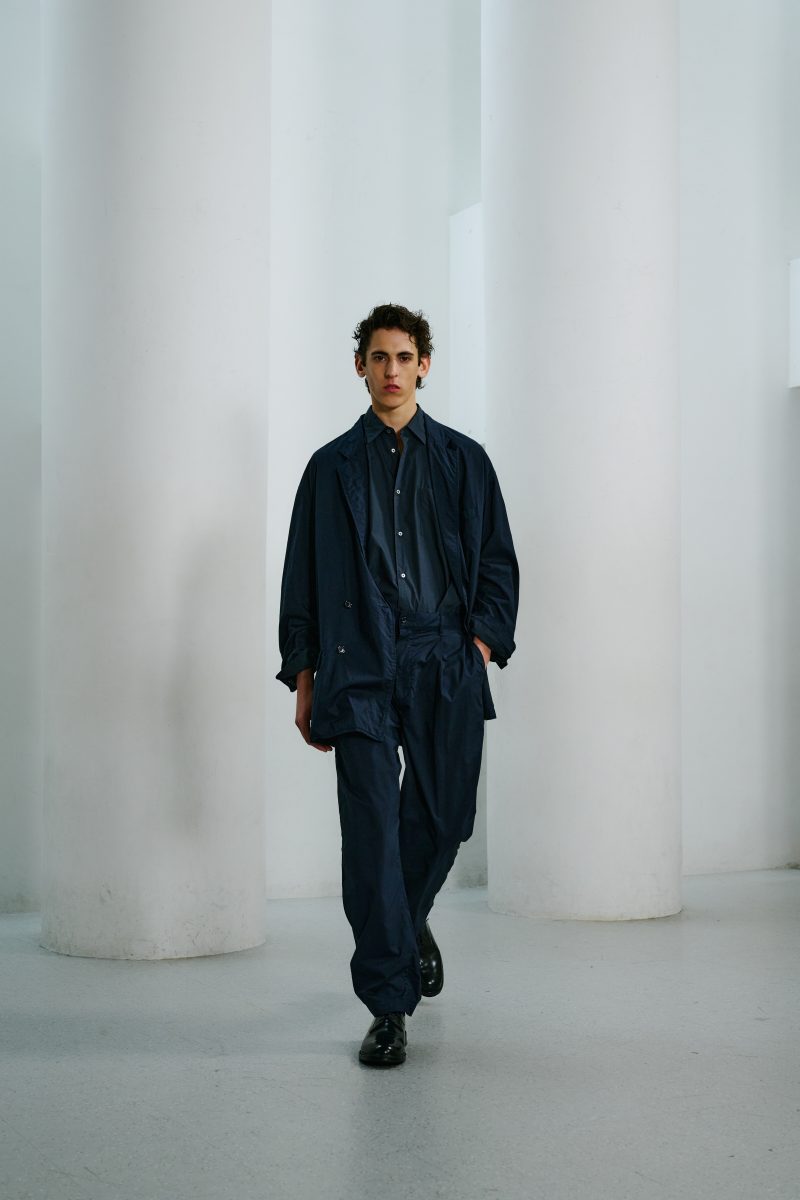
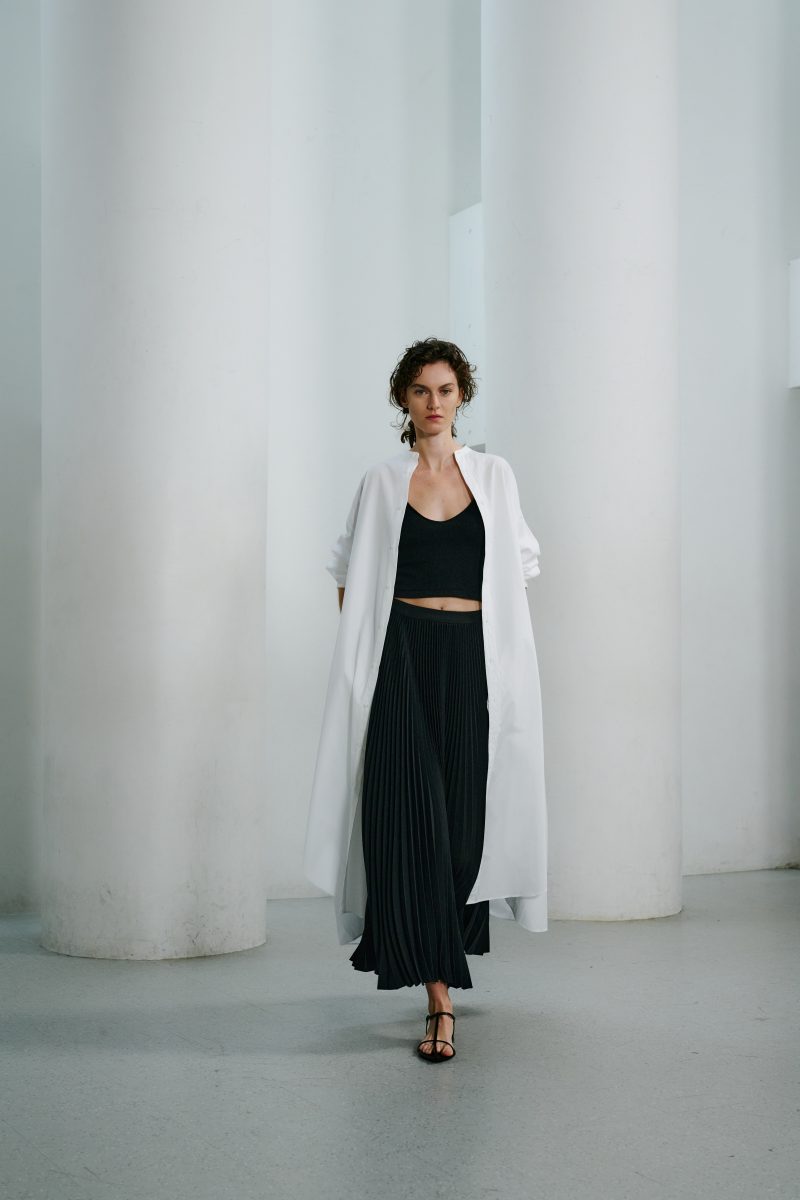
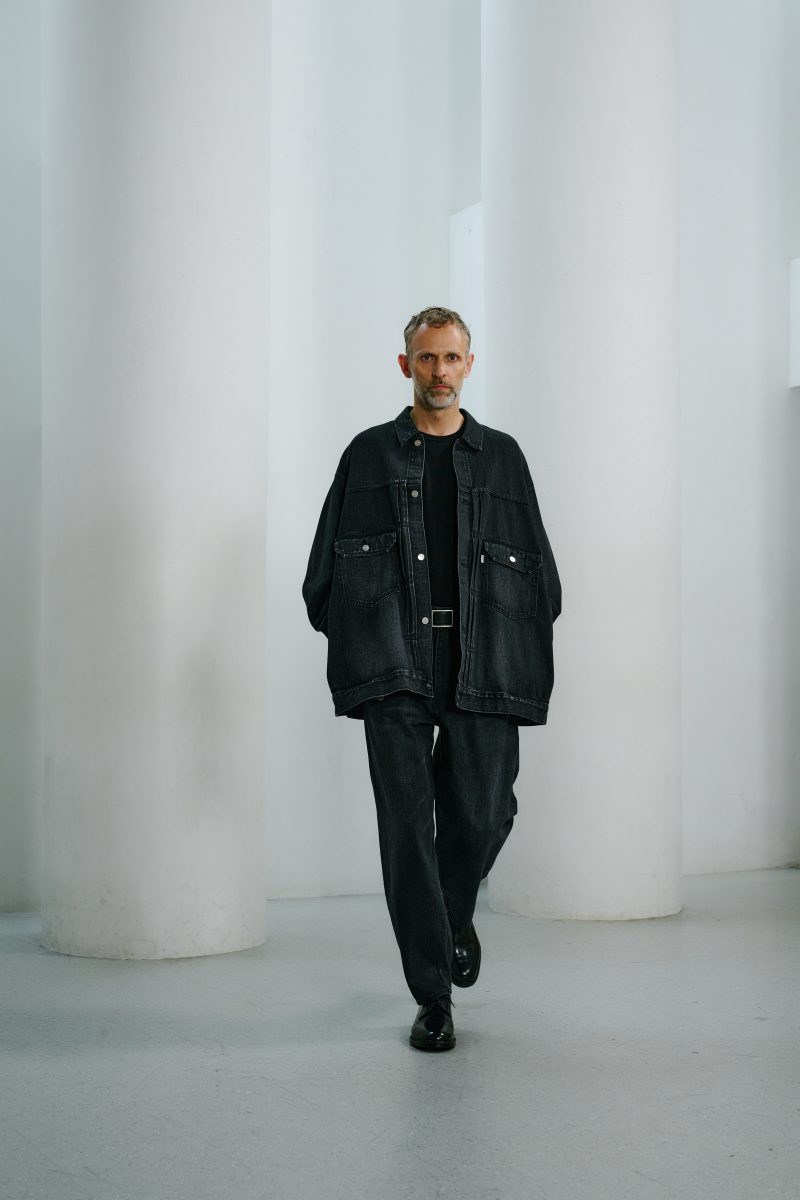
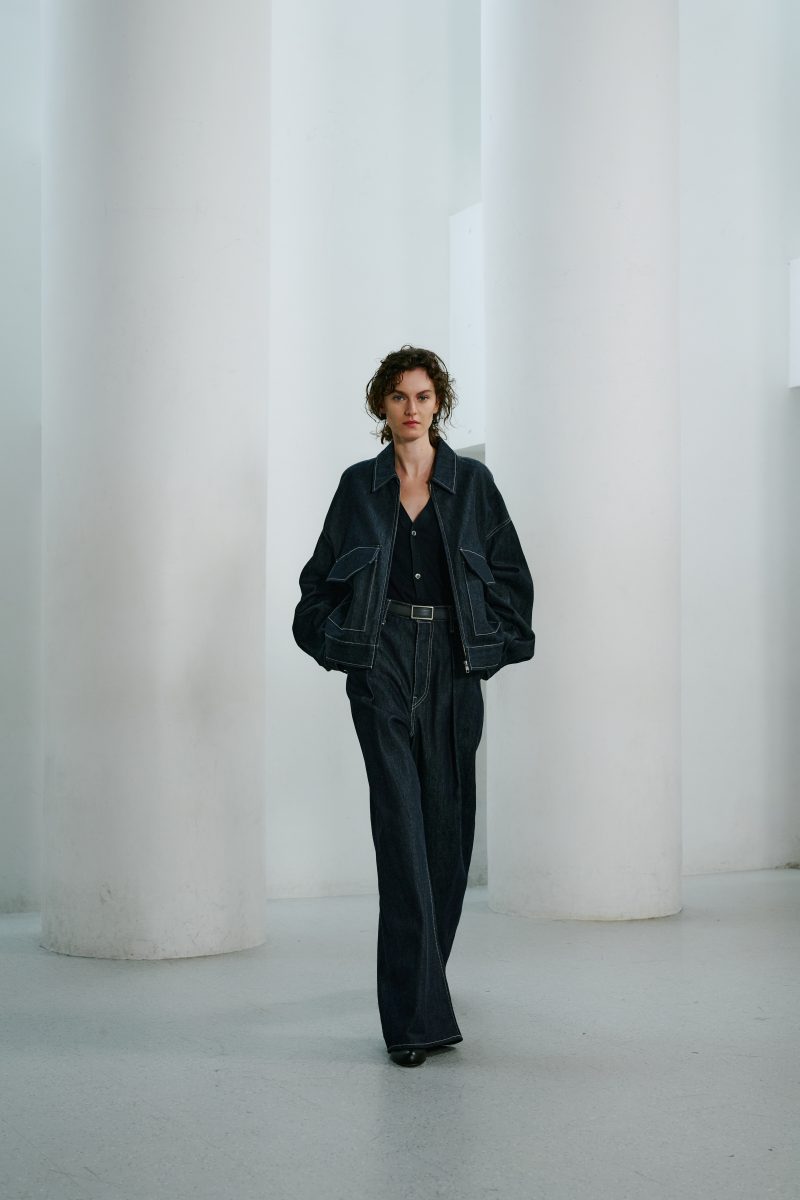
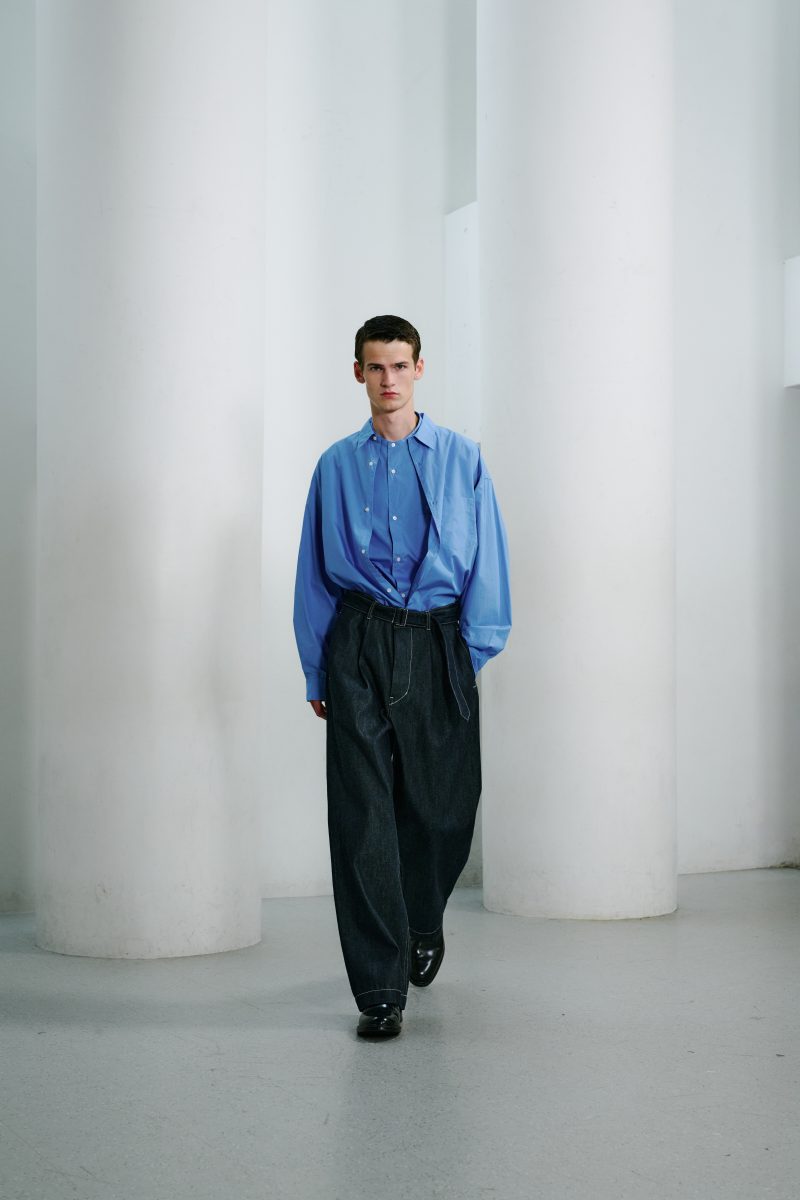
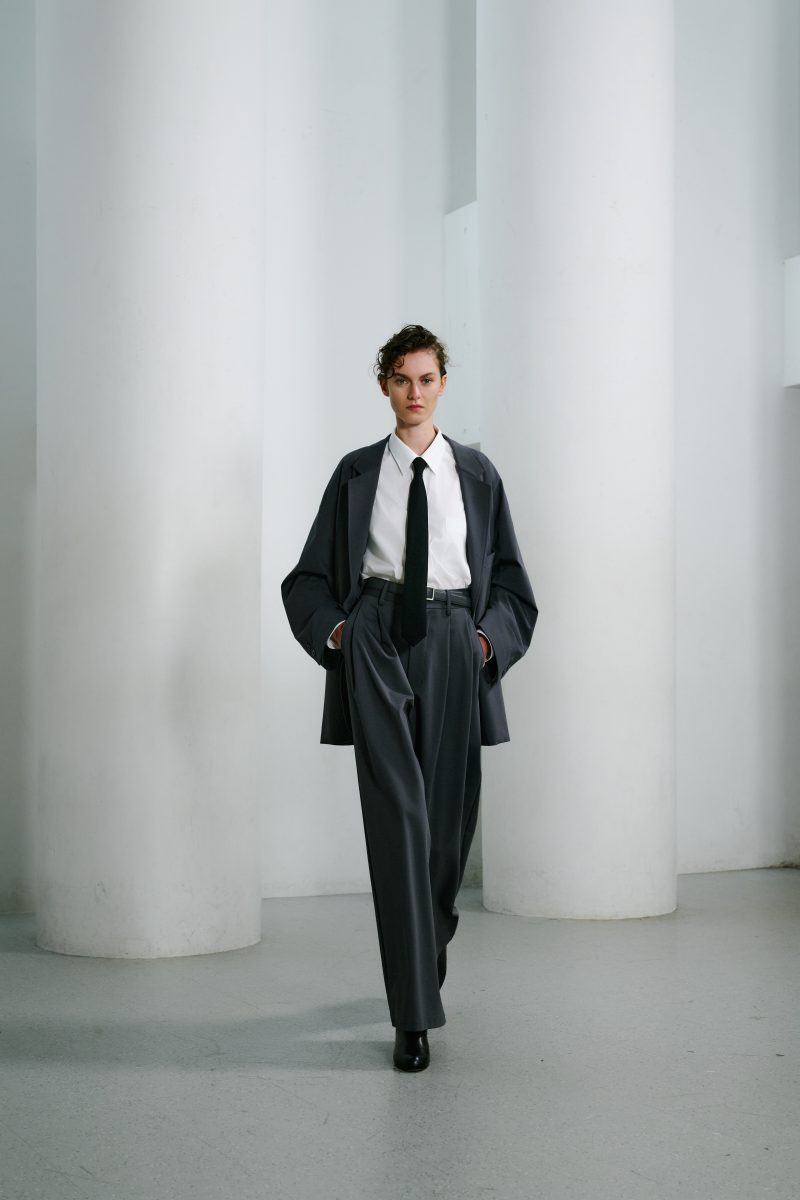
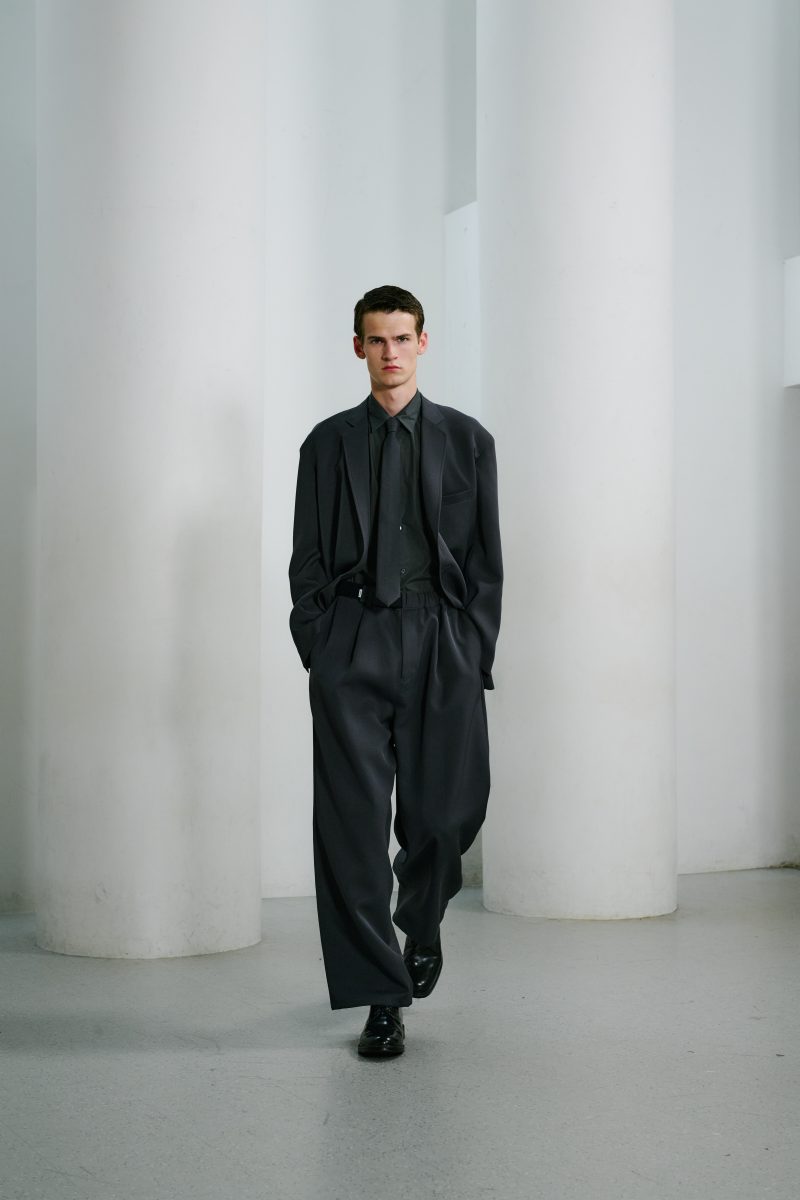
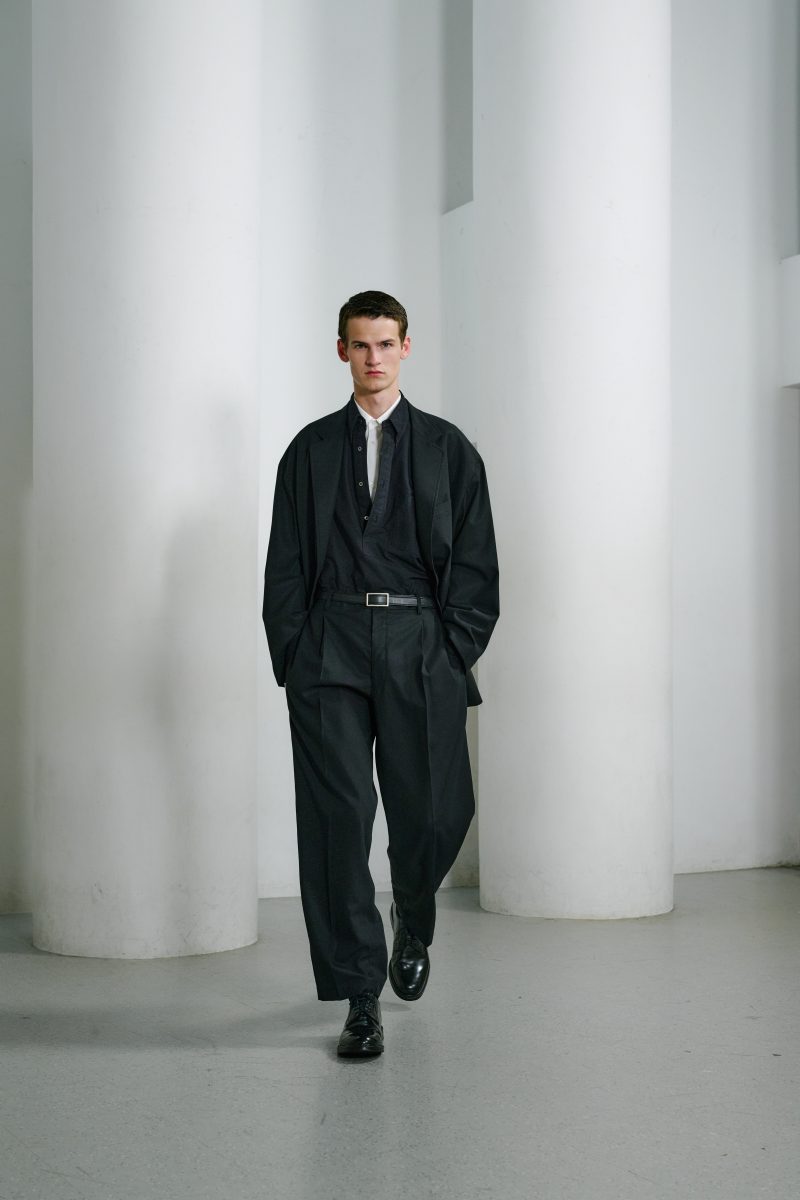
This installation was shaped around a concept developed by ILL-Studio. Their perspective sees garments not as static objects, but as dynamic forms that transform through culture, context, and memory – an idea that resonates strongly with me.
In this space, clothing, sound, imagery, and human presence converge.
Graphpaper pieces aren’t simply shown; they respond to the atmosphere, to bodies in motion, absorbing new layers of meaning through these interactions.
If visitors come away remembering not just what they saw, but what shifted – what changed through experience – then I think we’ve succeeded.
I hope people feel the space as an open field of thought. Something that lingers not through explanation, but through quiet traces — impressions of memory, sensation, and presence.
Julia:
Let’s talk about fabric.
You’ve seen so many materials in your life.
Which ones stop you?
What kind of fabric makes you want to build a whole idea around it?
Takayuki:
At Graphpaper, nearly every piece begins with original fabric development.
Each material we use has its own unique character – not in terms of bold visuals or decorative elements, but in the subtleties: the way it feels to the touch, the functions it holds, or the quiet story embedded in its construction.
Rather than starting with a design and then choosing fabric, we often begin with the fabric itself – asking how its qualities can shape what we create.
In fact, about 70 to 80 percent of our process is dedicated to developing materials. We build around what the fabric wants to become – responding to its texture, its weight, its behavior. For me, making clothes is less about imposing form, and more about listening to the material – letting it guide the idea into being.
Julia:
When you design, do you think about identity? Not just gender – but movement, energy, personality.
How someone feels in these clothes.
How they become in them.
Takayuki:
For me, design begins with a simple question: what functions are truly needed to live in the city today?
From there, it’s a process of adding and subtracting – distilling form down to what quietly serves the person wearing it.
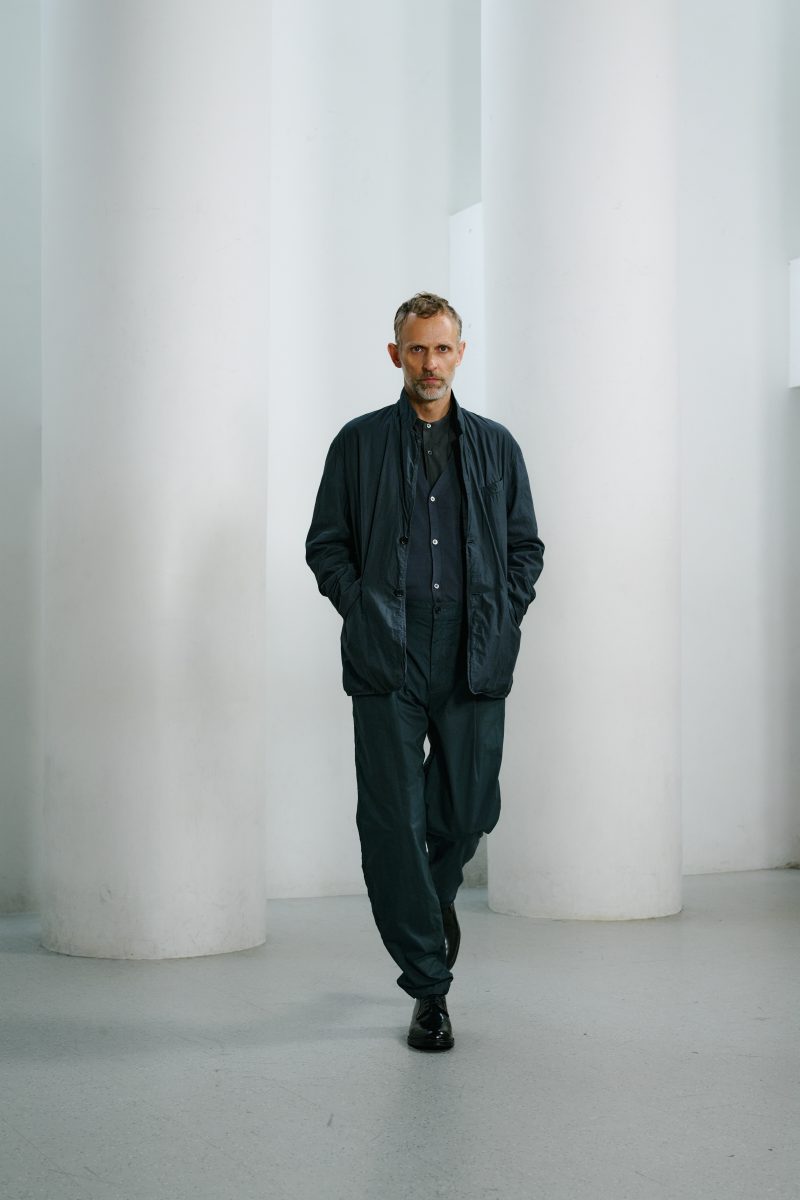
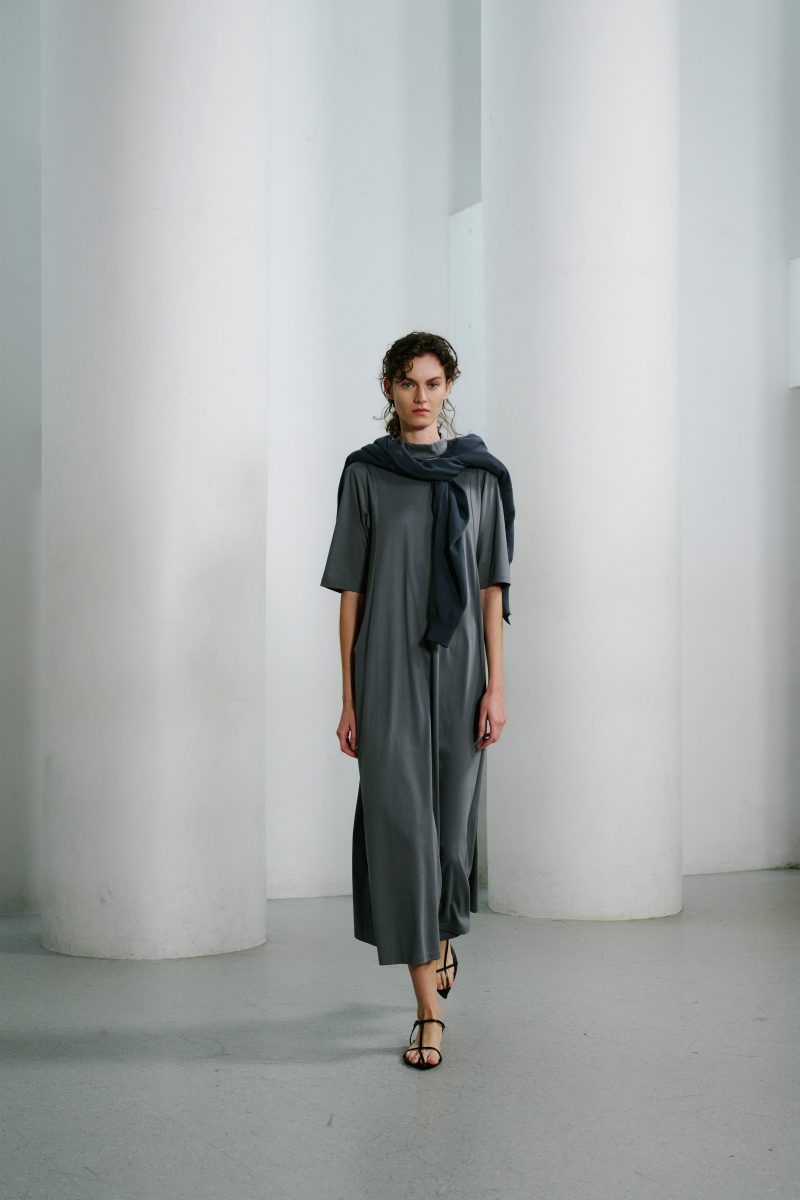
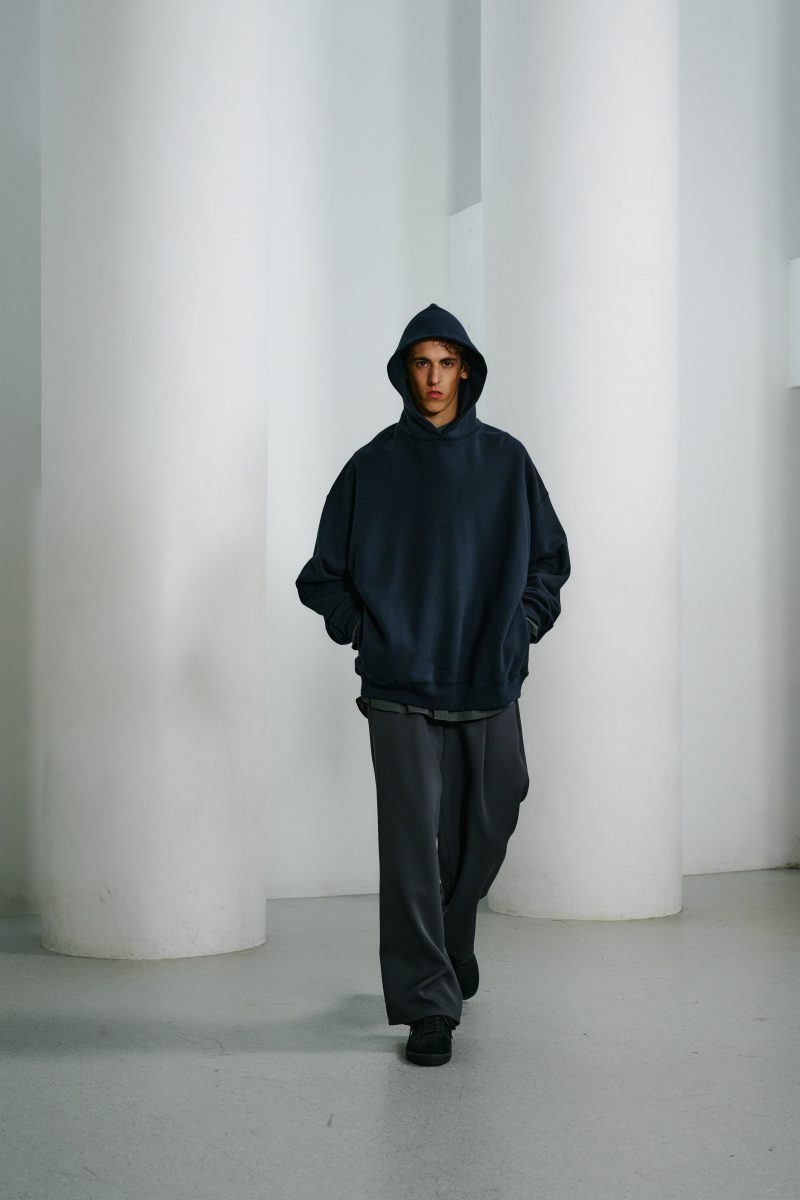
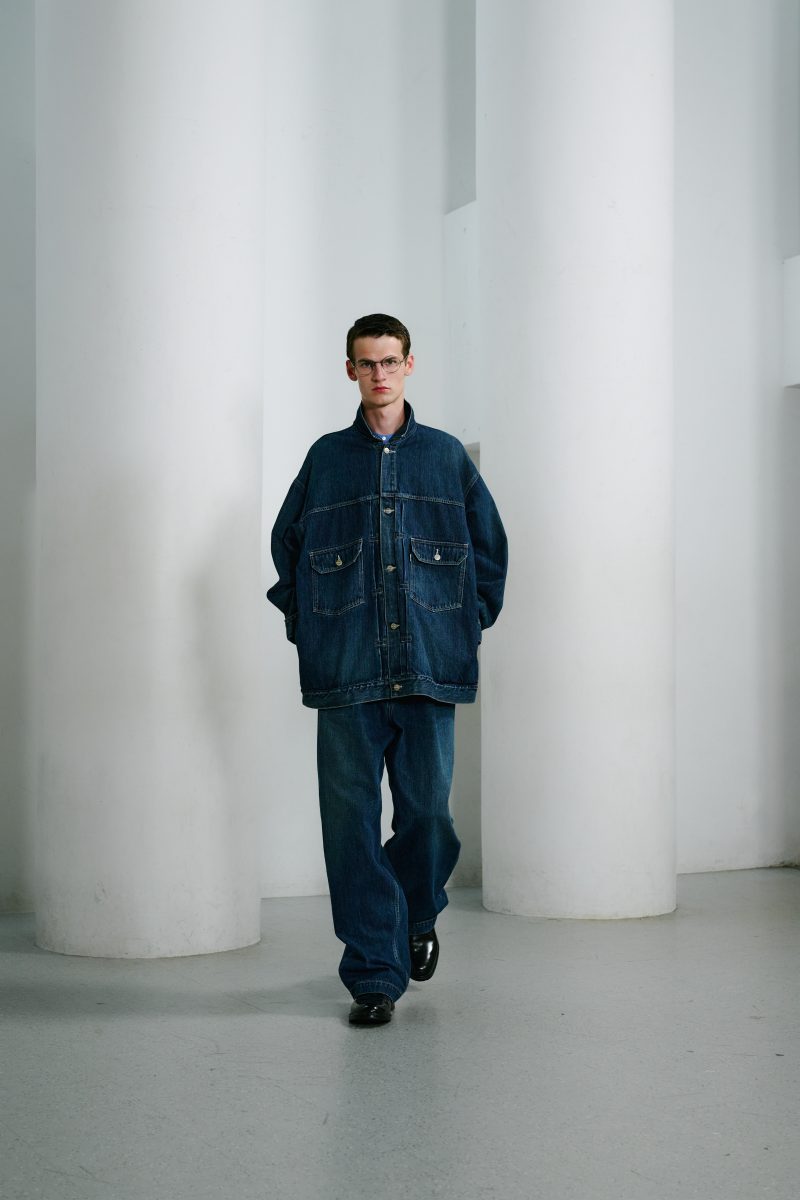
When someone puts on our clothes, I don’t want the garment to speak louder than the person. It’s not about emphasizing the body’s lines or constructing a conventional sense of sensuality. Instead, I aim for something more subtle – clothes that make the person more visible, not the clothing itself.
Through this kind of intentional restraint, I hope the wearer’s own energy, movement, and presence can emerge naturally.
Julia:
Sustainability is something many brands talk about – but I’m curious what it means to you, personally.
What does responsibility in design look like in your world?
Takayuki:
Personally, I don’t approach my work by emphasizing the word “sustainability.” But I do believe that creating garments people want to wear for a long time – that they choose to keep – is the most responsible thing a designer can do.
Instead of chasing trends or making pieces that go on sale at the end of the season, we focus on timeless basics – garments that naturally become part of someone’s everyday life.
Most of Graphpaper’s collection is made up of such pieces, and for our Paris presentation, we’re showcasing only our permanent line.
Because when you look at the full cycle of fashion, the seasonal system – where clothes are marked down and cleared out – creates unsustainable pressure. It affects not just the brand, but also fabric suppliers, yarn spinners, sewing factories, dye houses – everyone involved in the process.
If we want to respect that entire ecosystem, we have to design differently. For me, that starts with making clothing people won’t want to let go of.
Julia:
And when you picture the person wearing Graphpaper who comes to mind?
Not in terms of age or label – but presence. Mood. Intention.
Takayuki:
When I picture someone wearing Graphpaper, I don’t think in terms of age or profession.
What comes to mind is someone who is engaged in the quiet work of understanding themselves – someone who meets their daily life and their work with clarity and intention.
It’s not about surface-level style, but about a deeper kind of intelligence – an inner awareness, a thoughtful presence.
Those are the kinds of people I imagine inhabiting our clothes.
Julia:
And lastly – what keeps you inspired?
What keeps this meaningful for you, season after season?
Takayuki:
Graphpaper is often seen as a brand rooted in basics and I think that’s true. But for me, these basics are not fixed or final. They’re always evolving.
What keeps this meaningful season after season is the quiet pursuit of progression – never becoming complacent, but continuing to explore new techniques, materials, and ways of thinking.
That steady evolution, even within a consistent form, is where I find the deepest inspiration.
At the same time, I’m continually drawn to the small details of daily life. Not grand gestures – but the things that quietly catch my attention: a corner of the city, a stranger’s gesture, a conversation in a bar. Those everyday moments often shape the heart of what I make.
It may seem unchanged on the surface, but beneath it all, things are always moving – and that gentle rhythm is something I want to keep following.