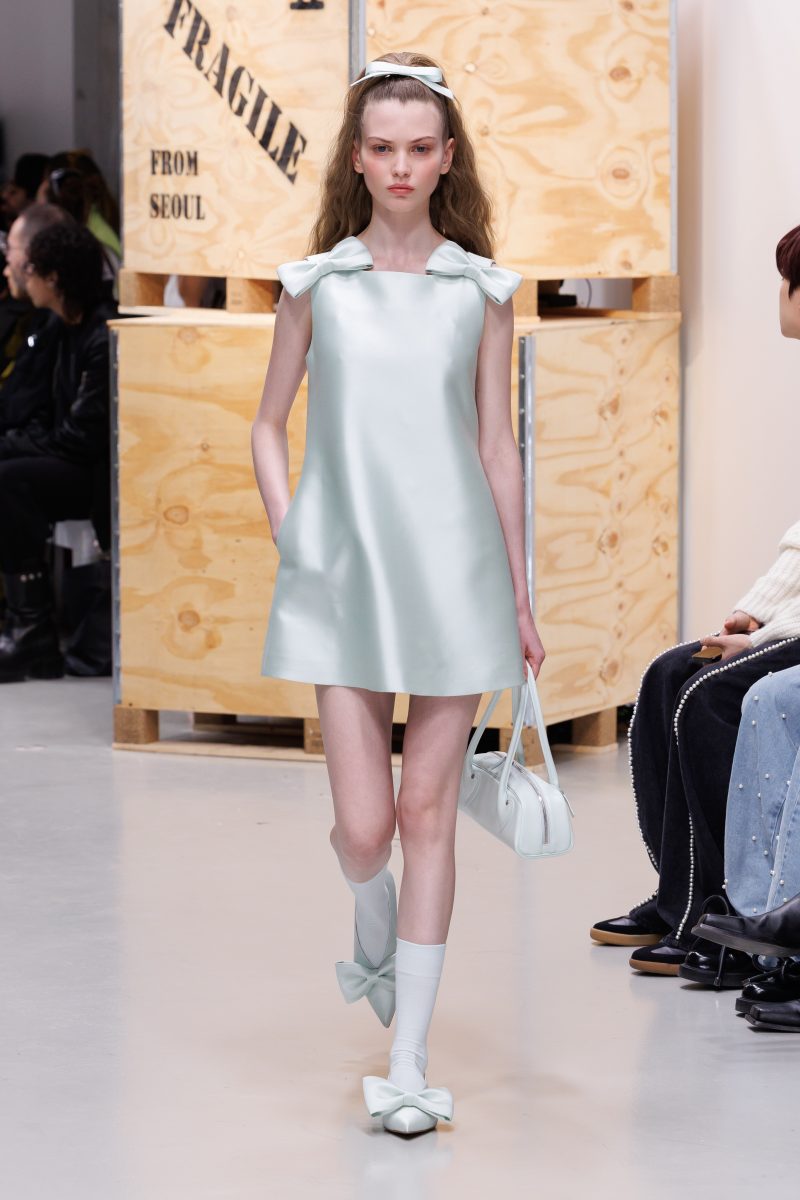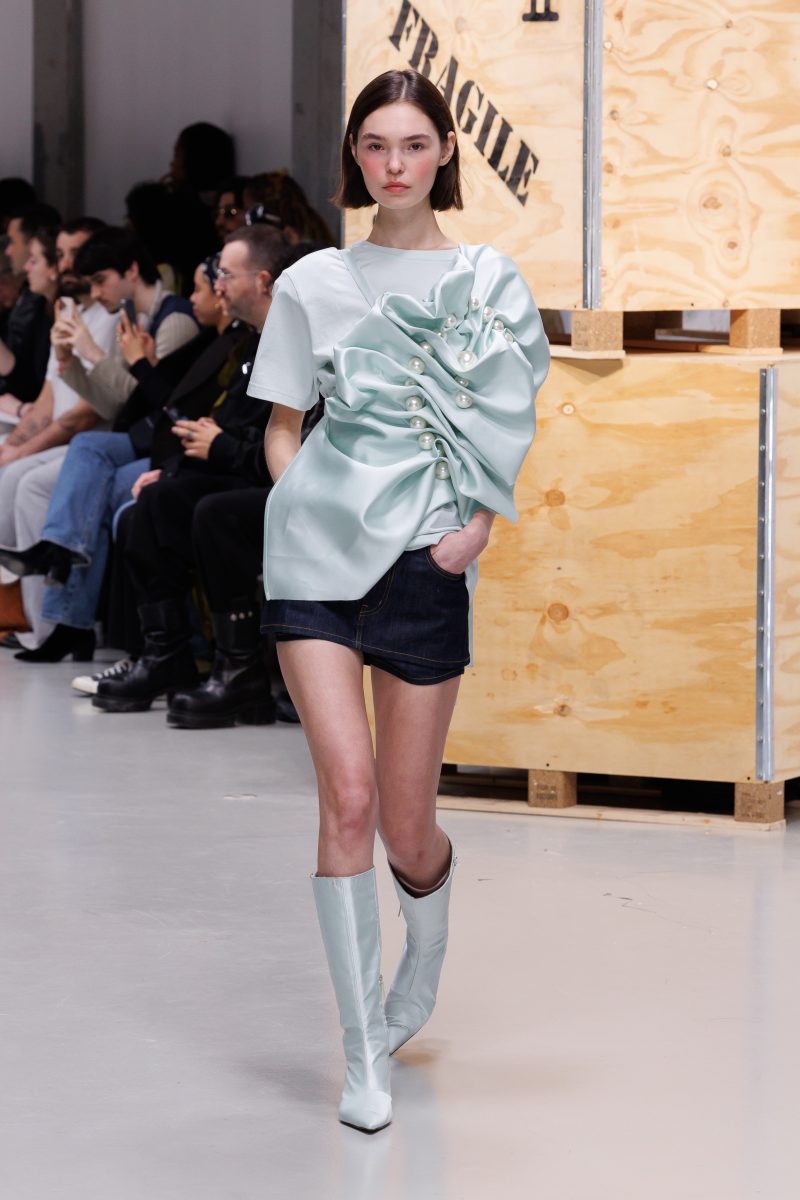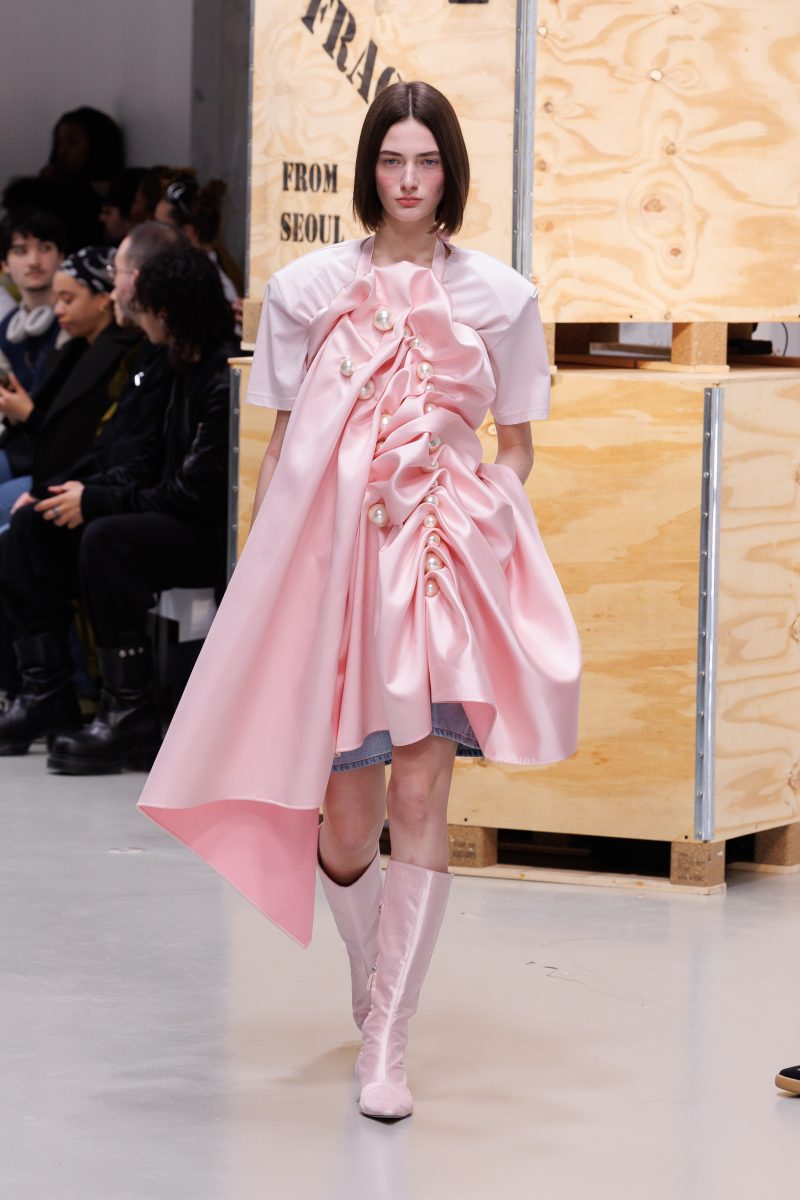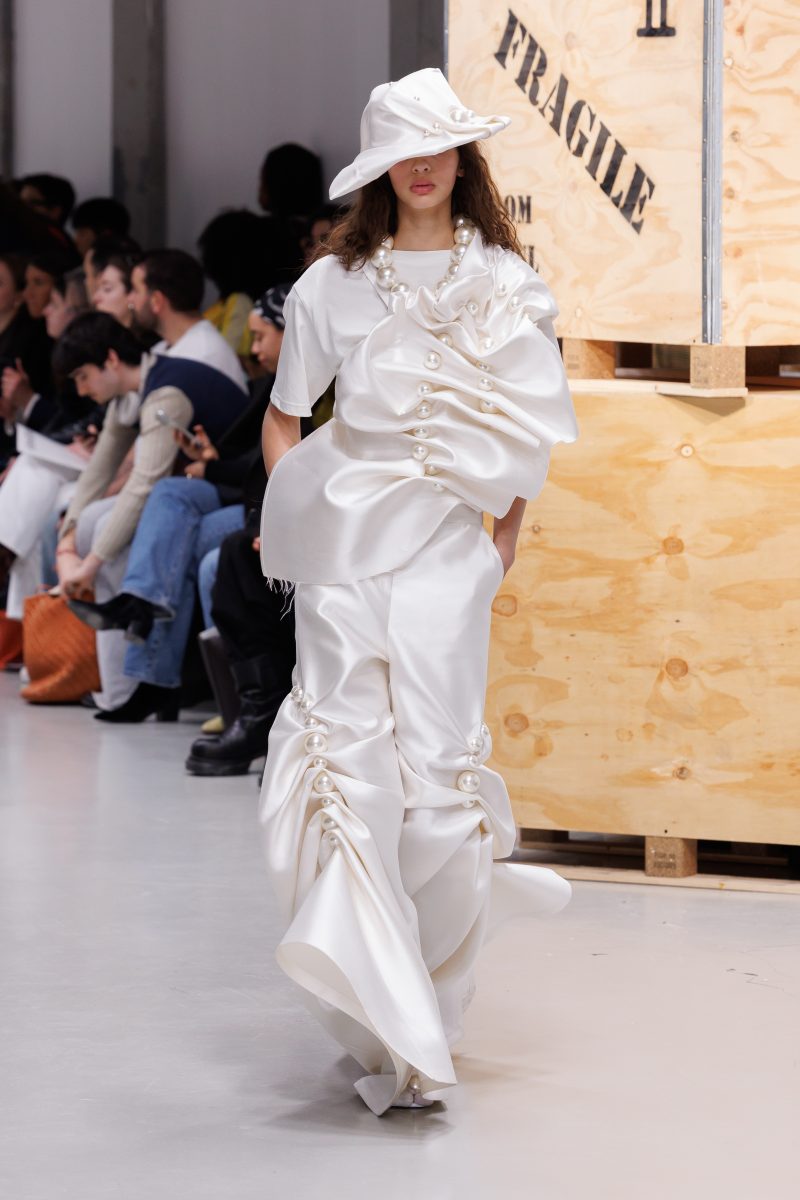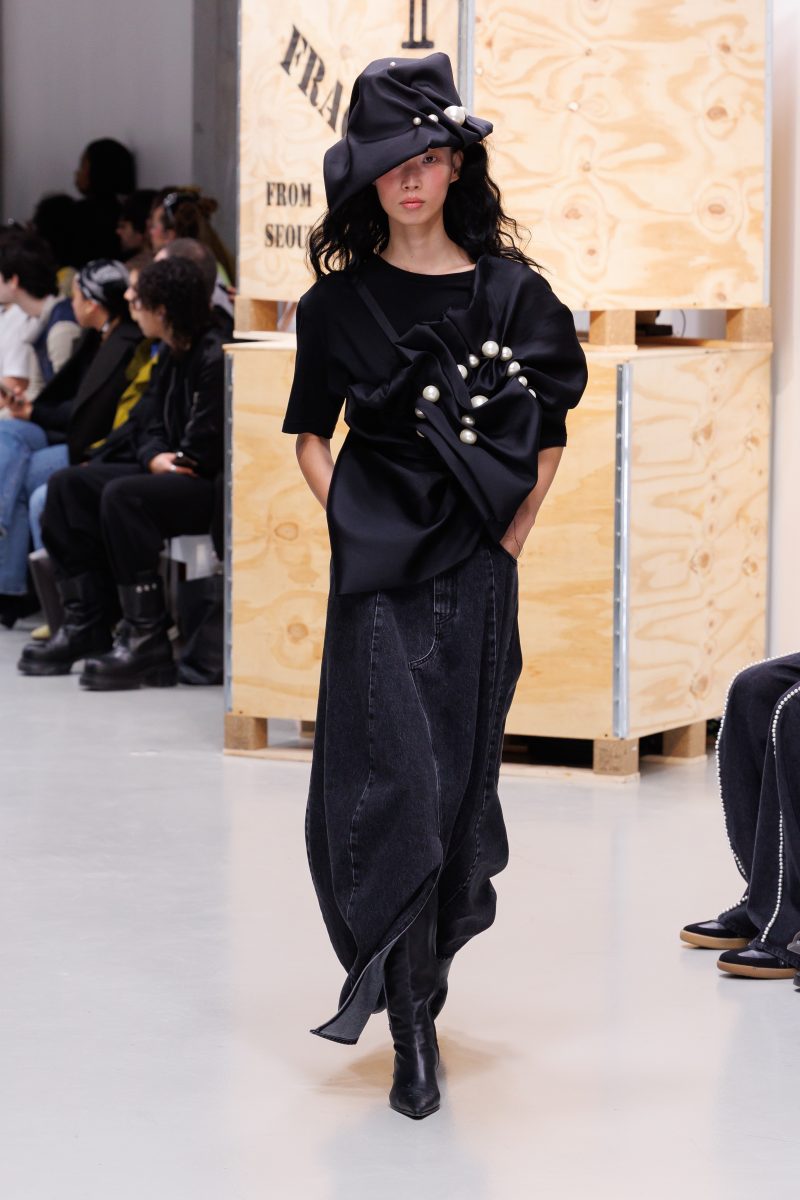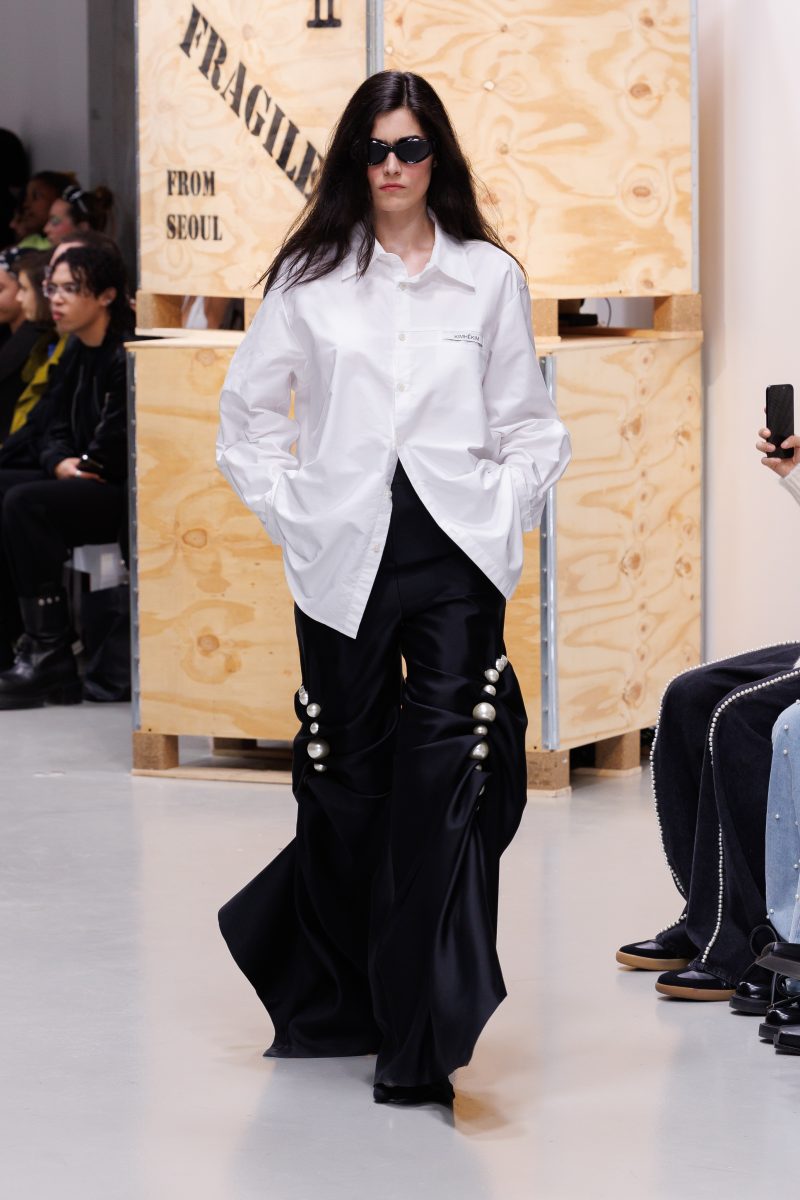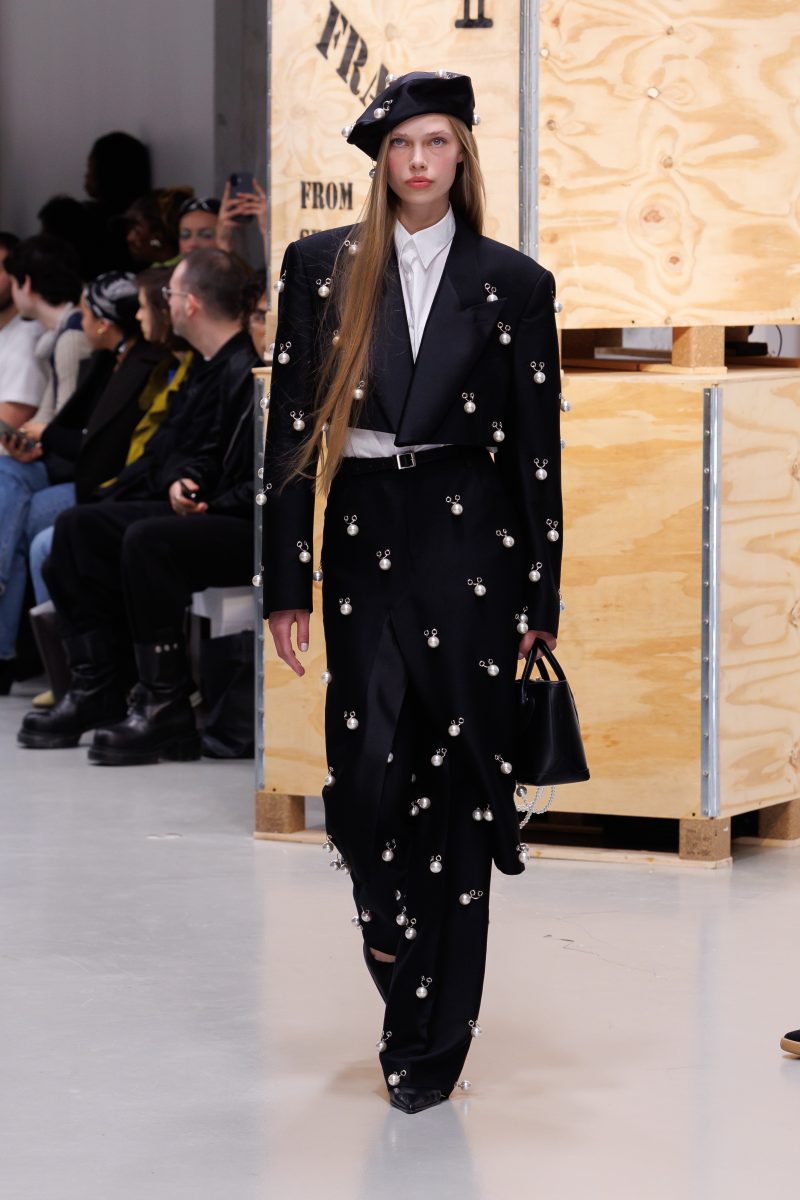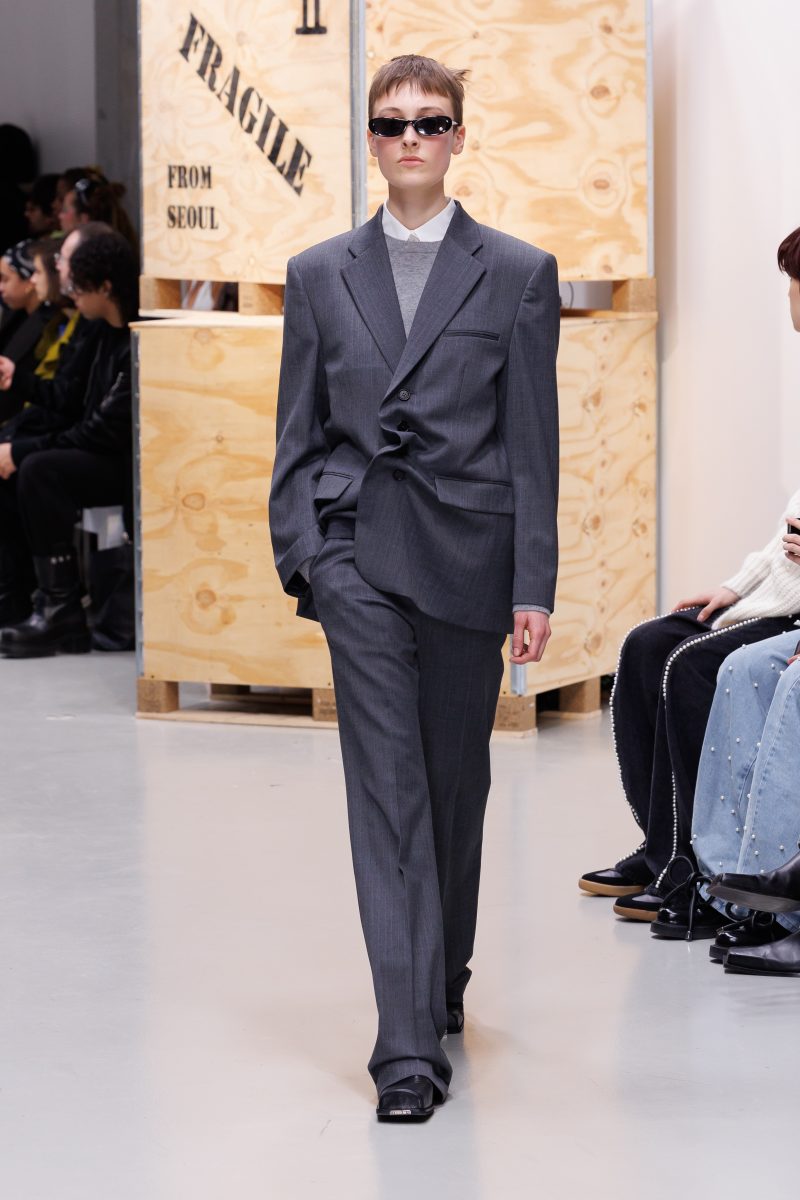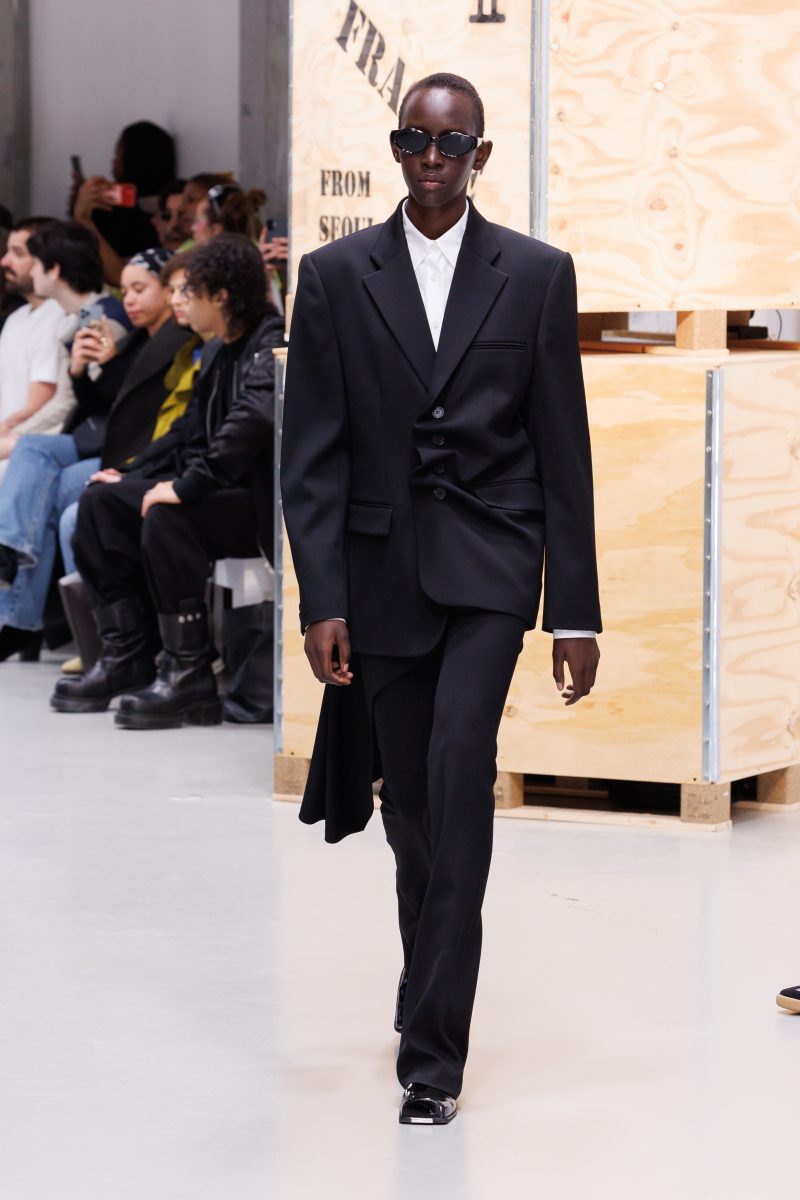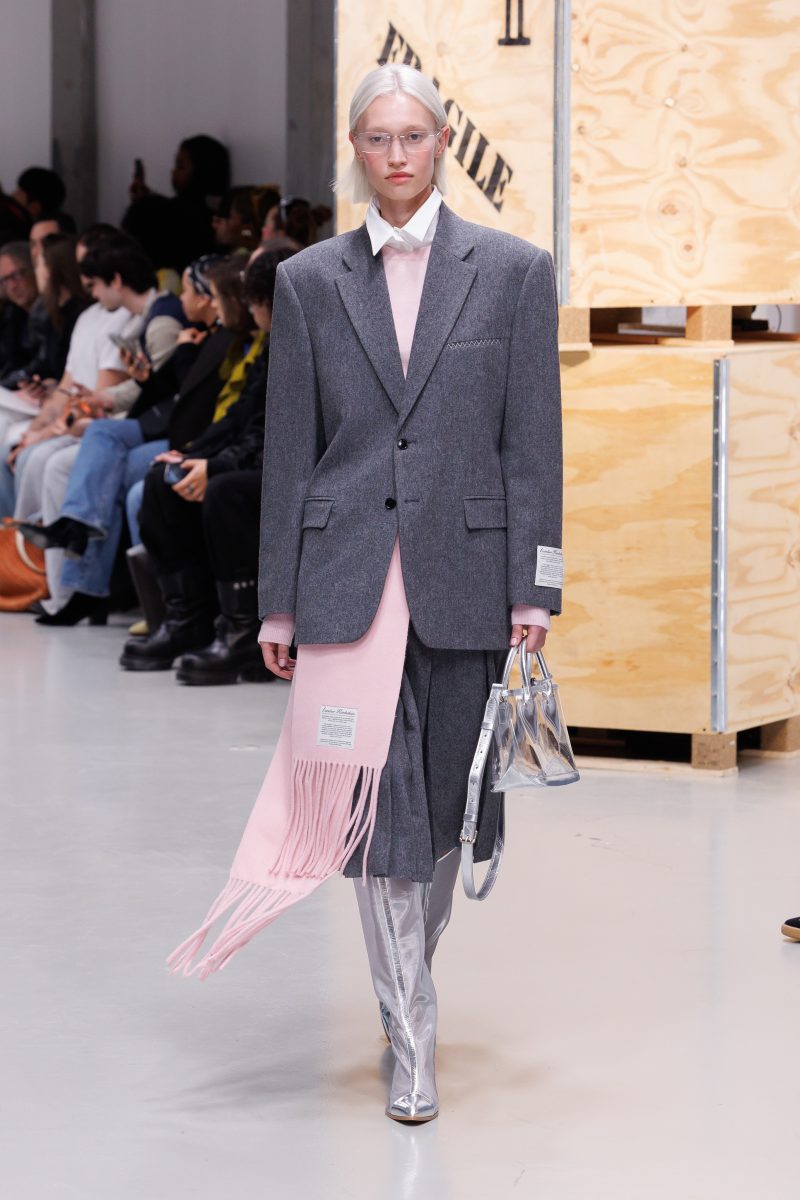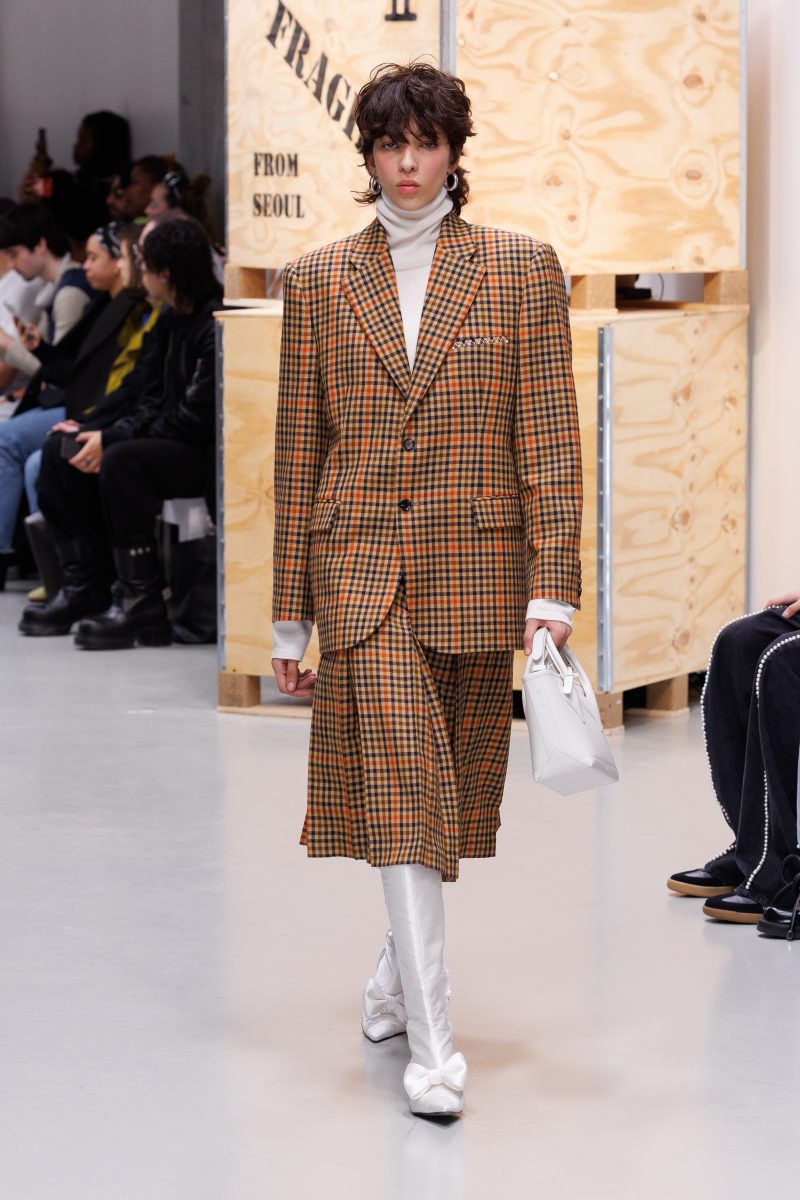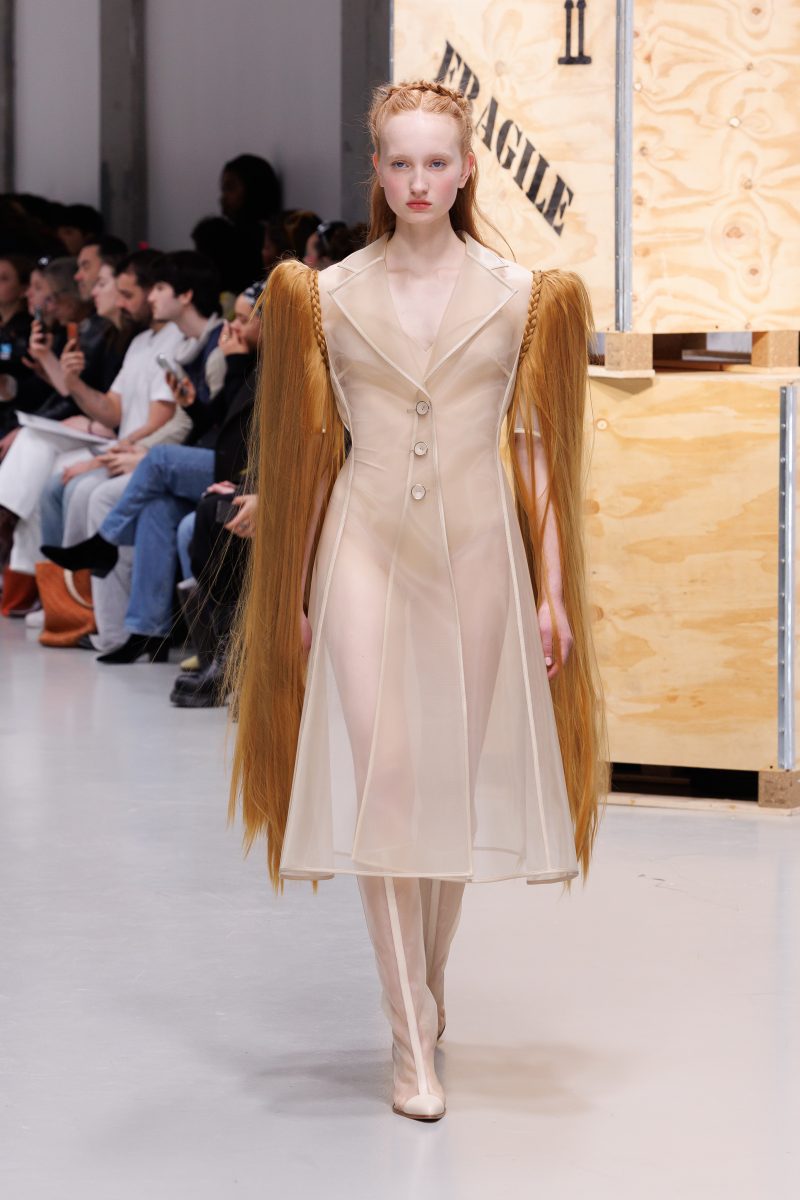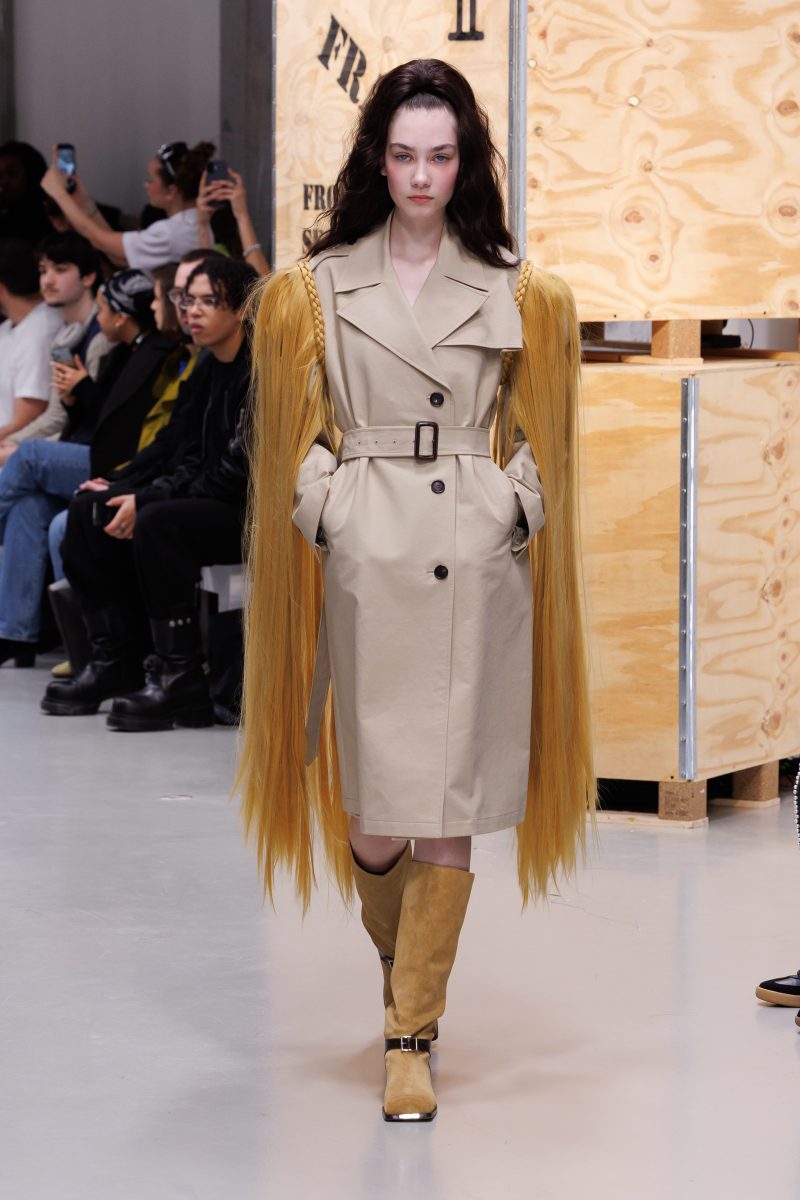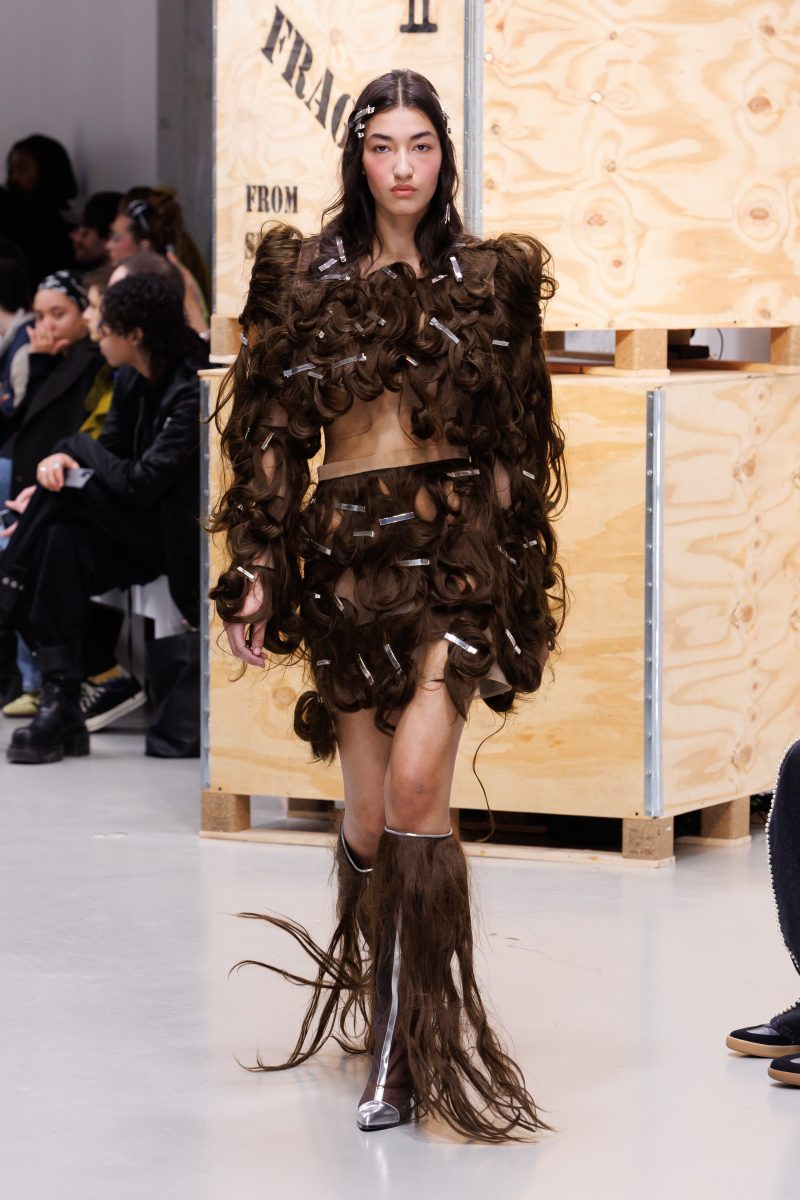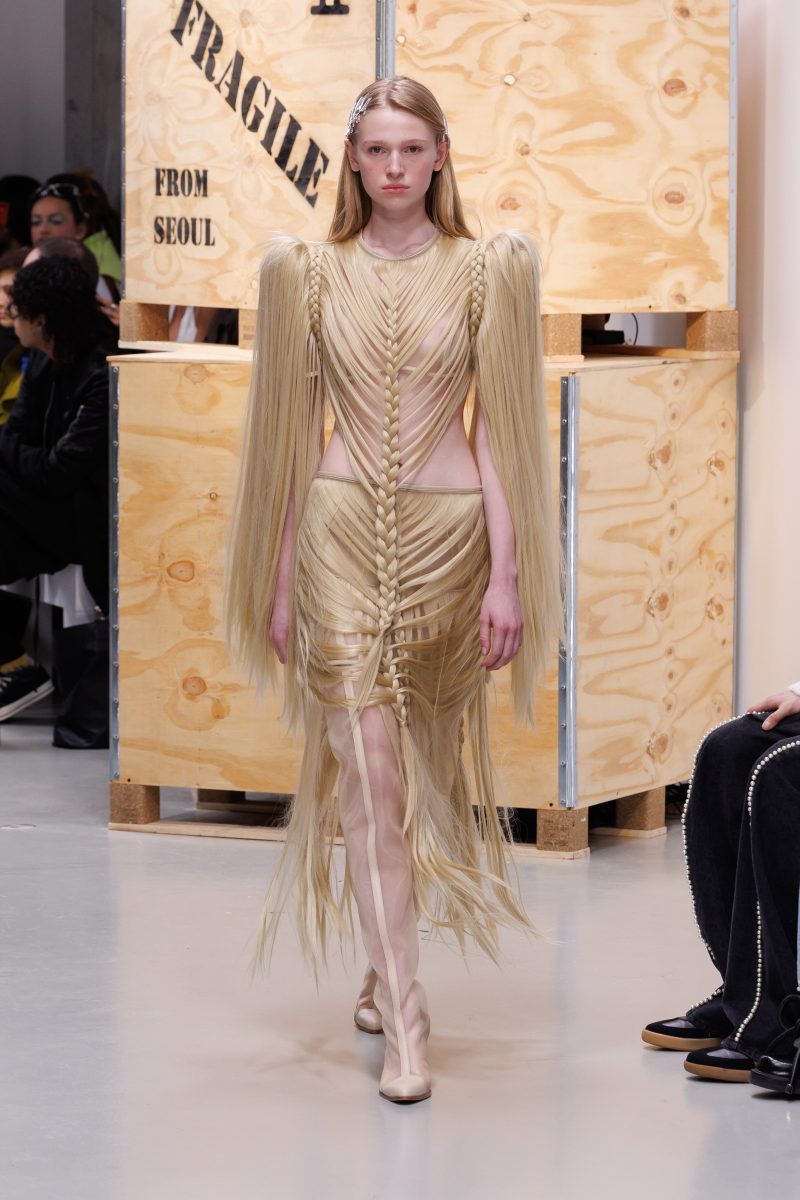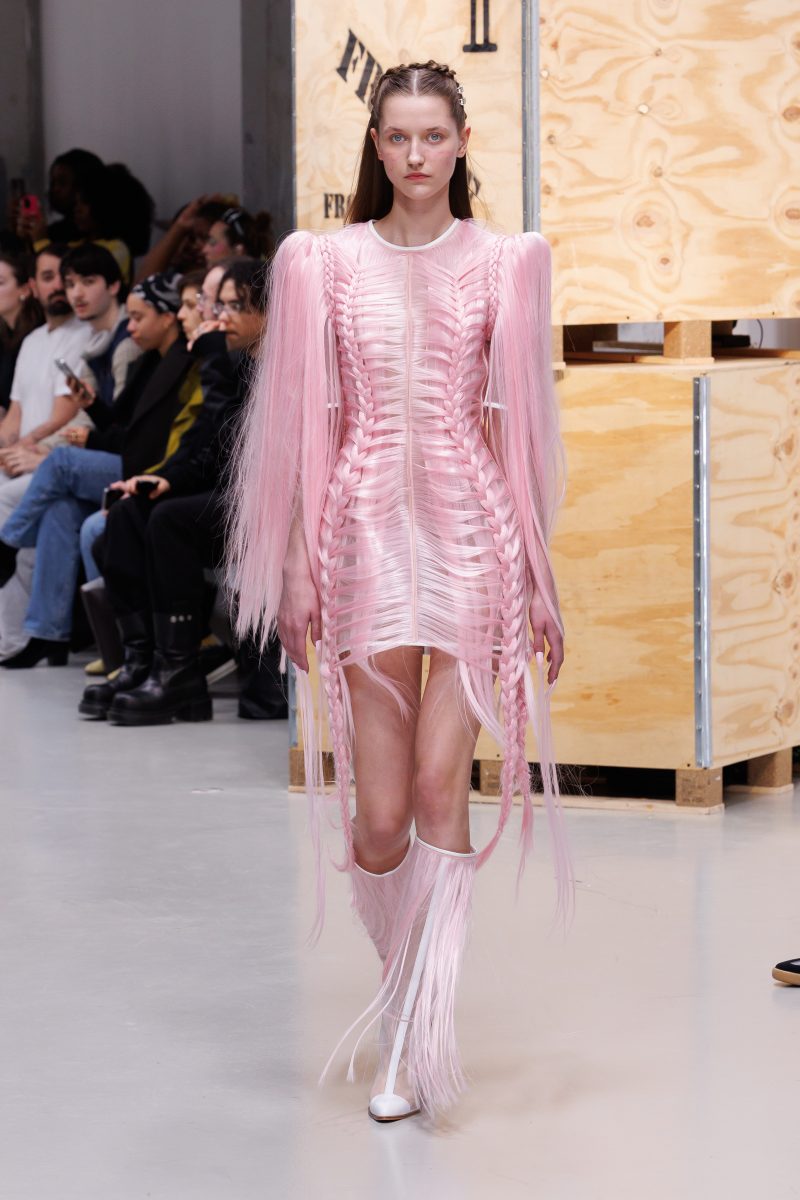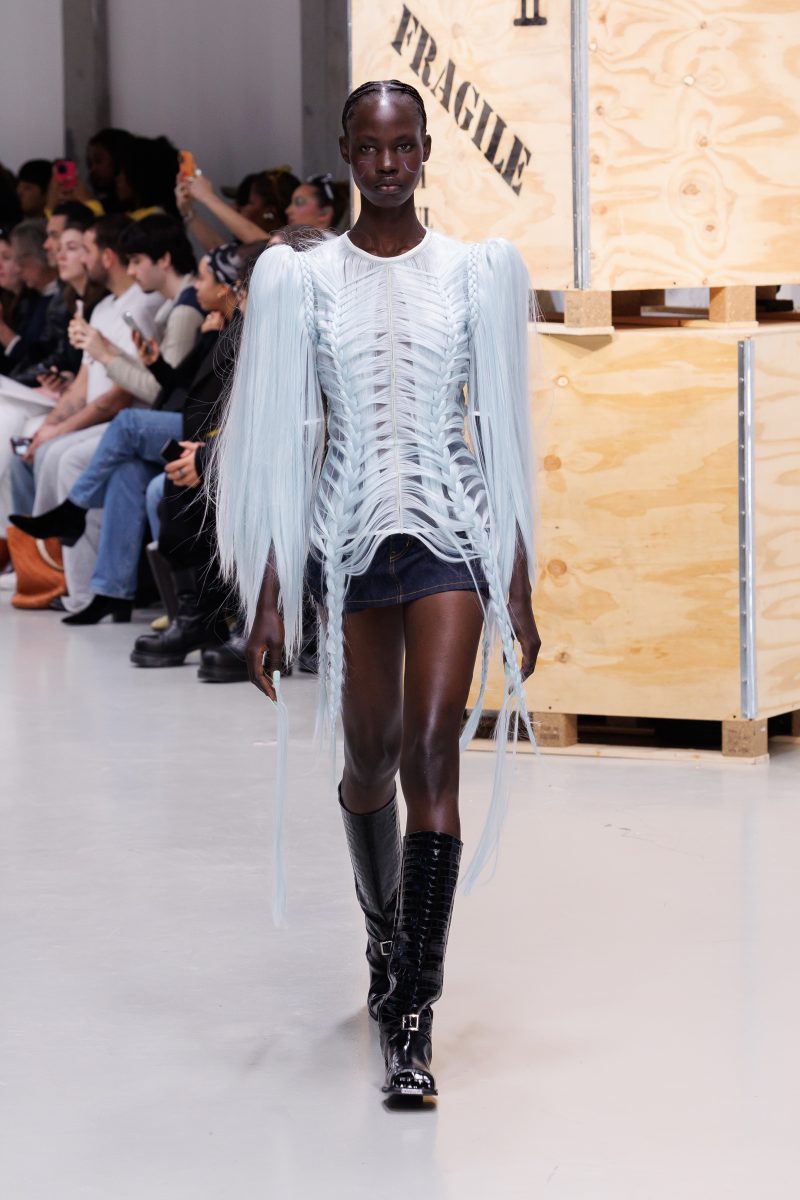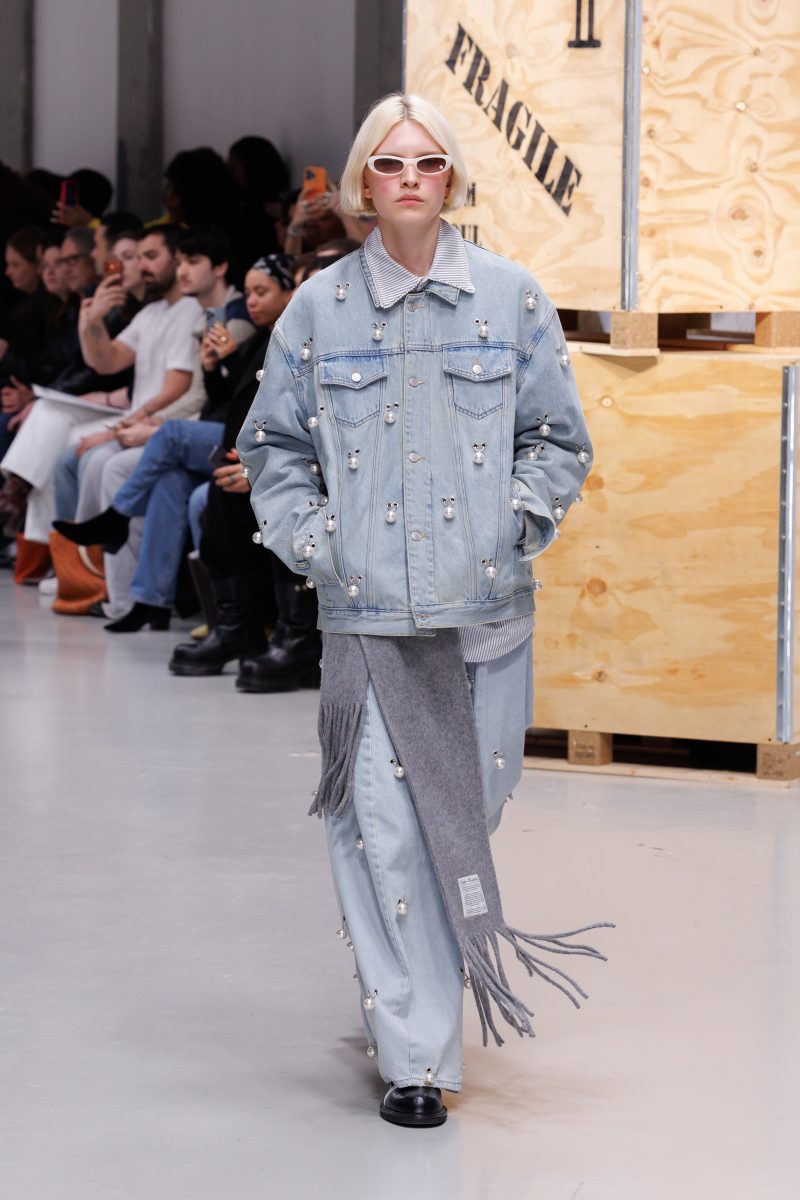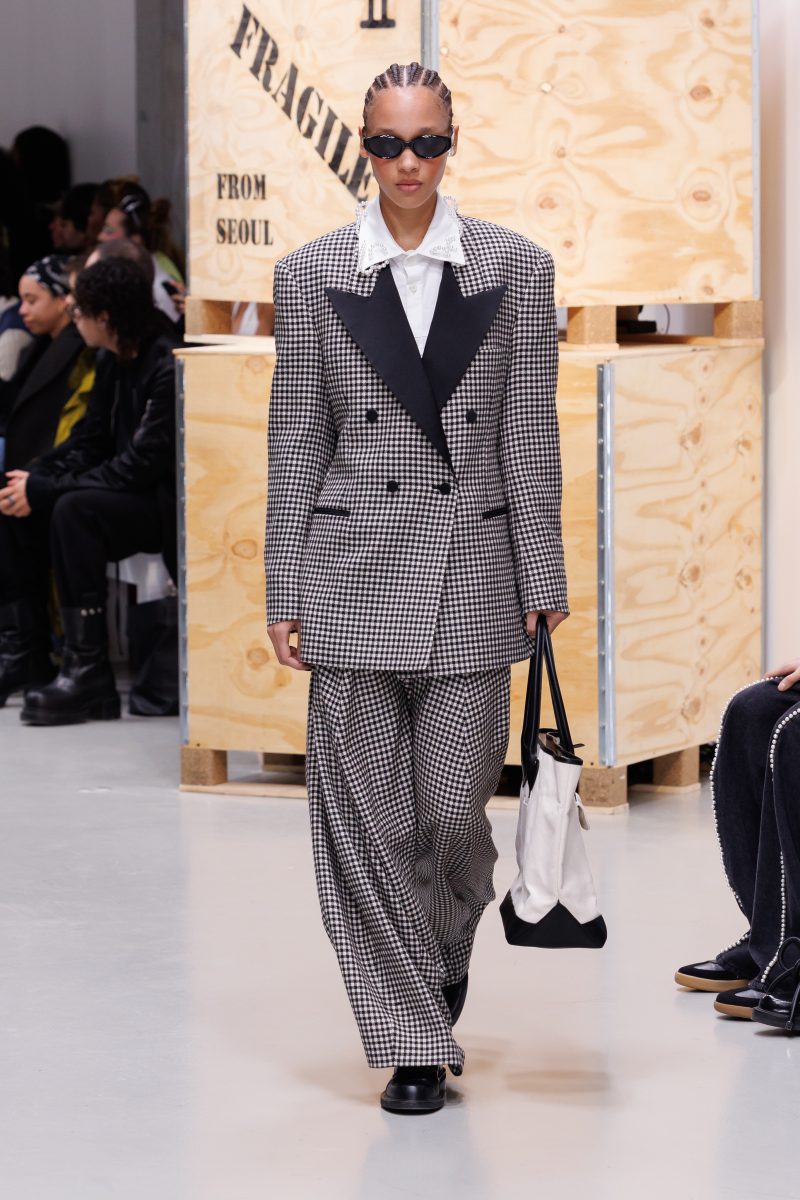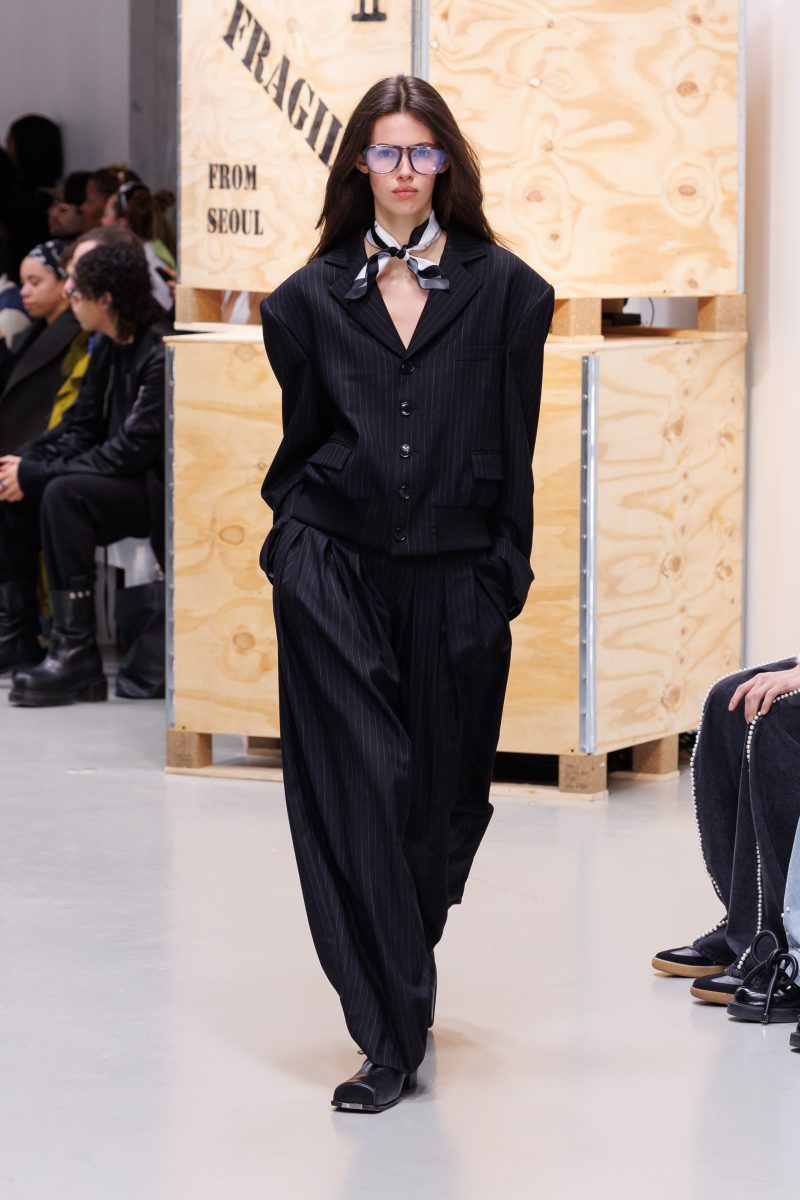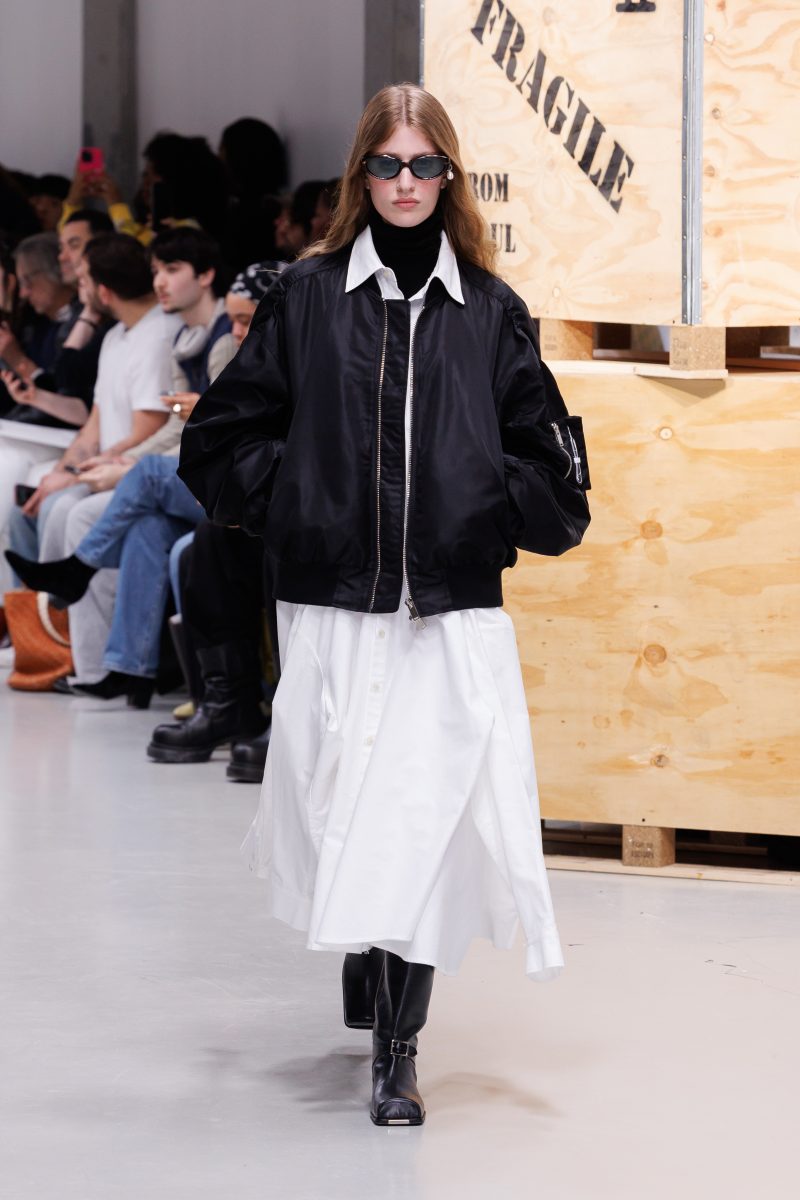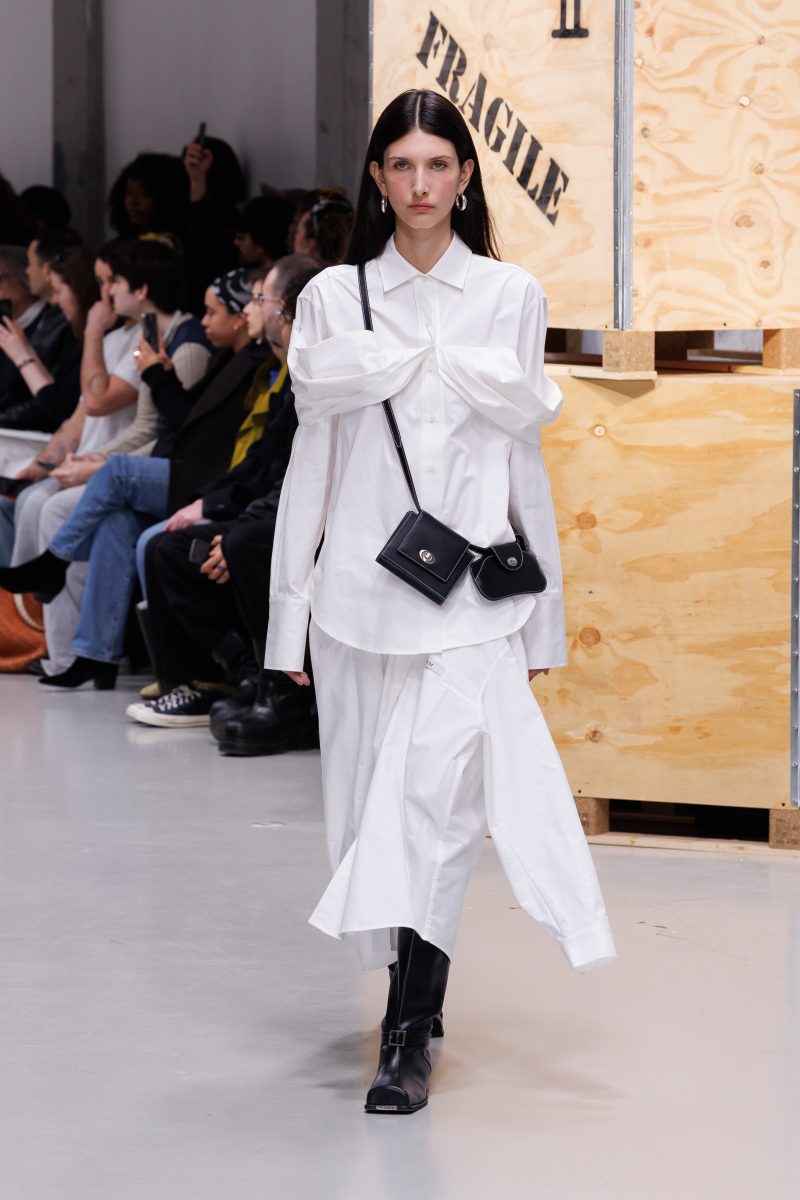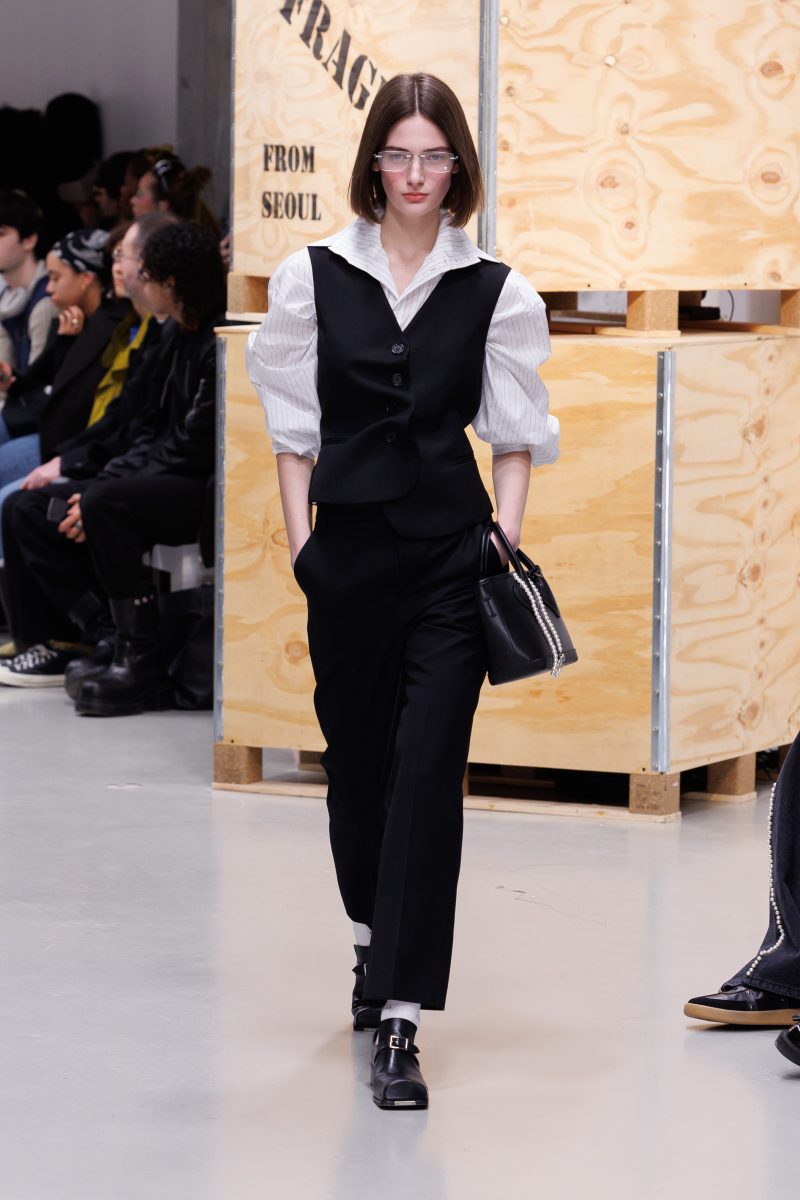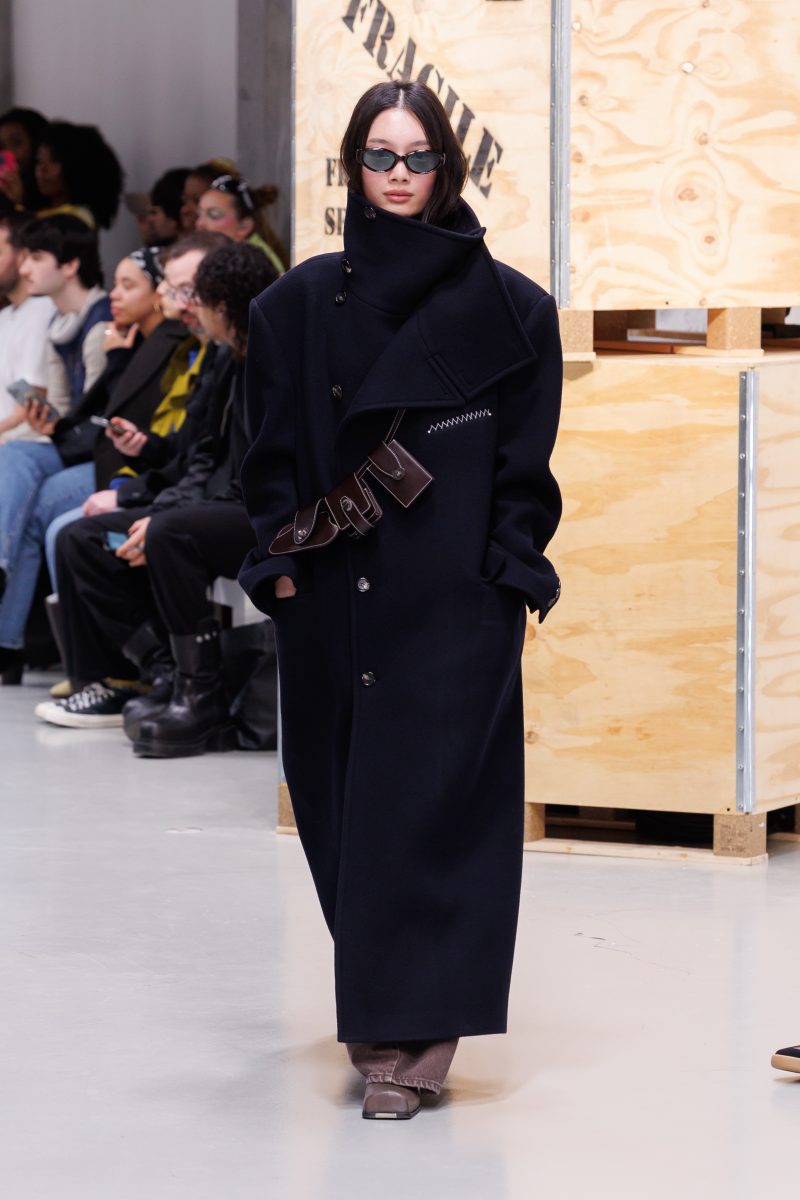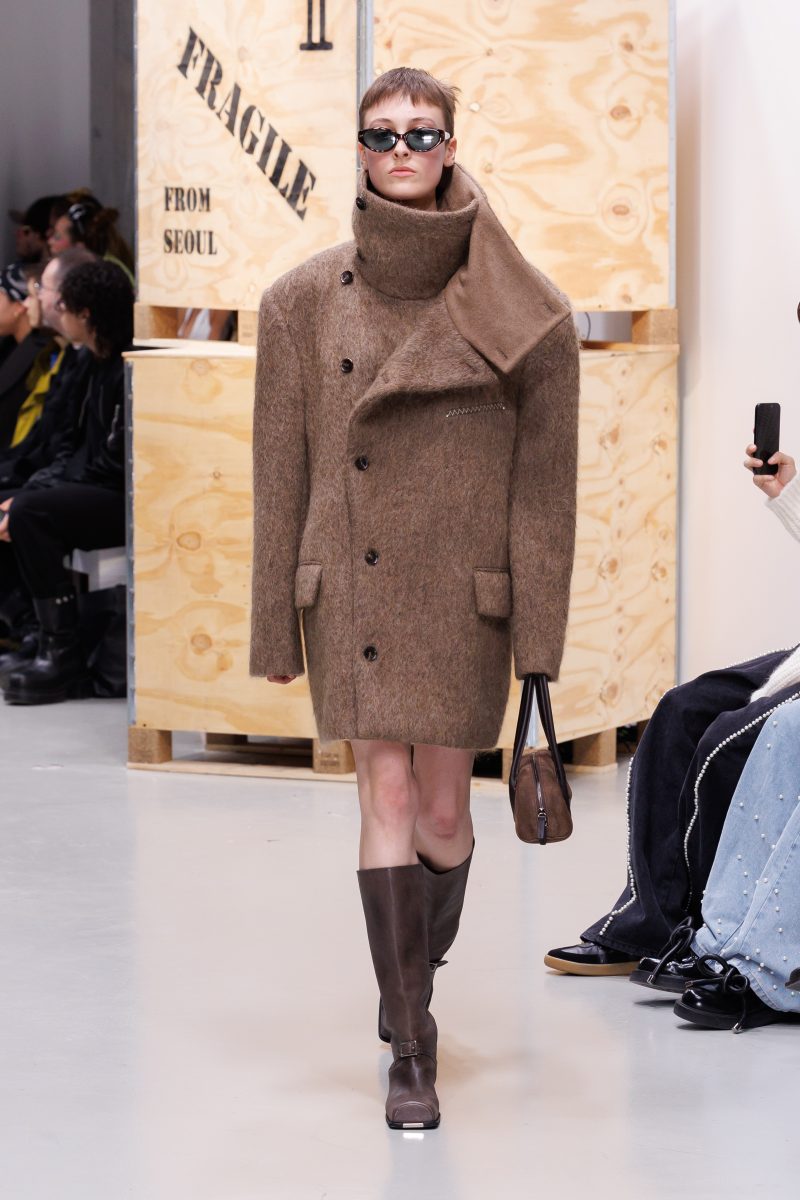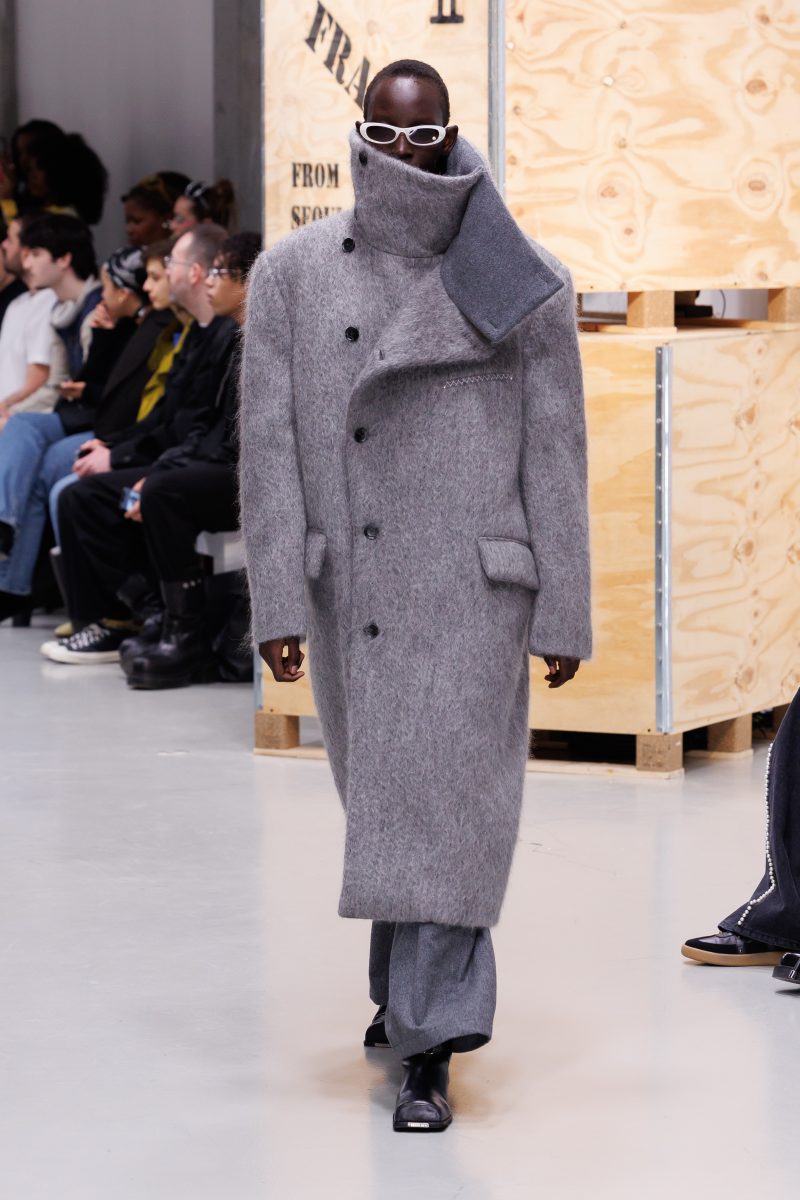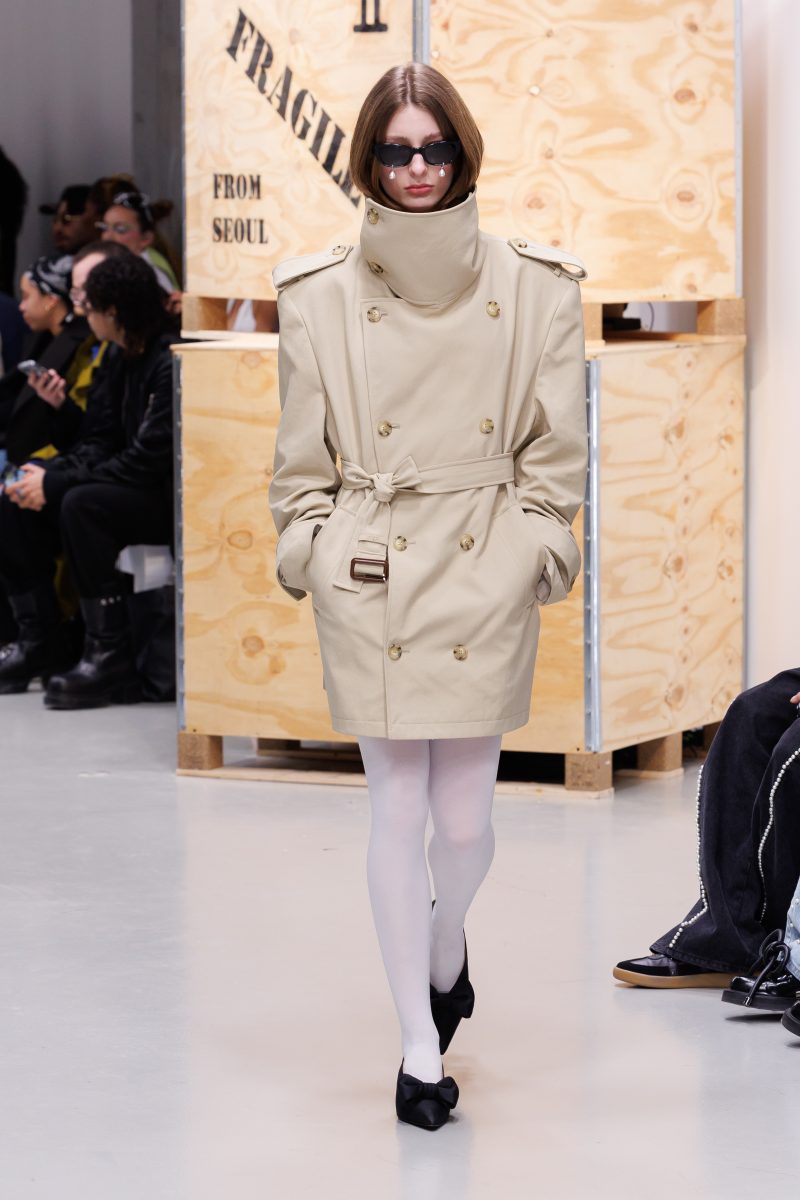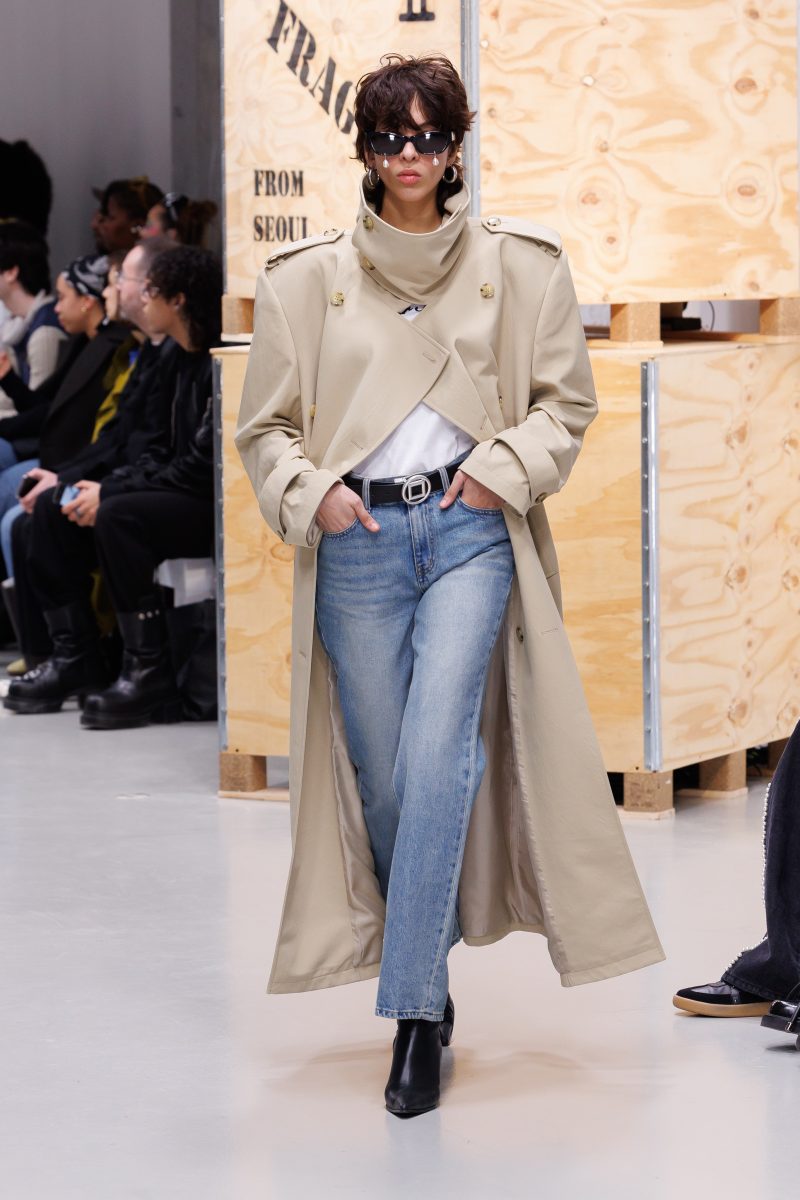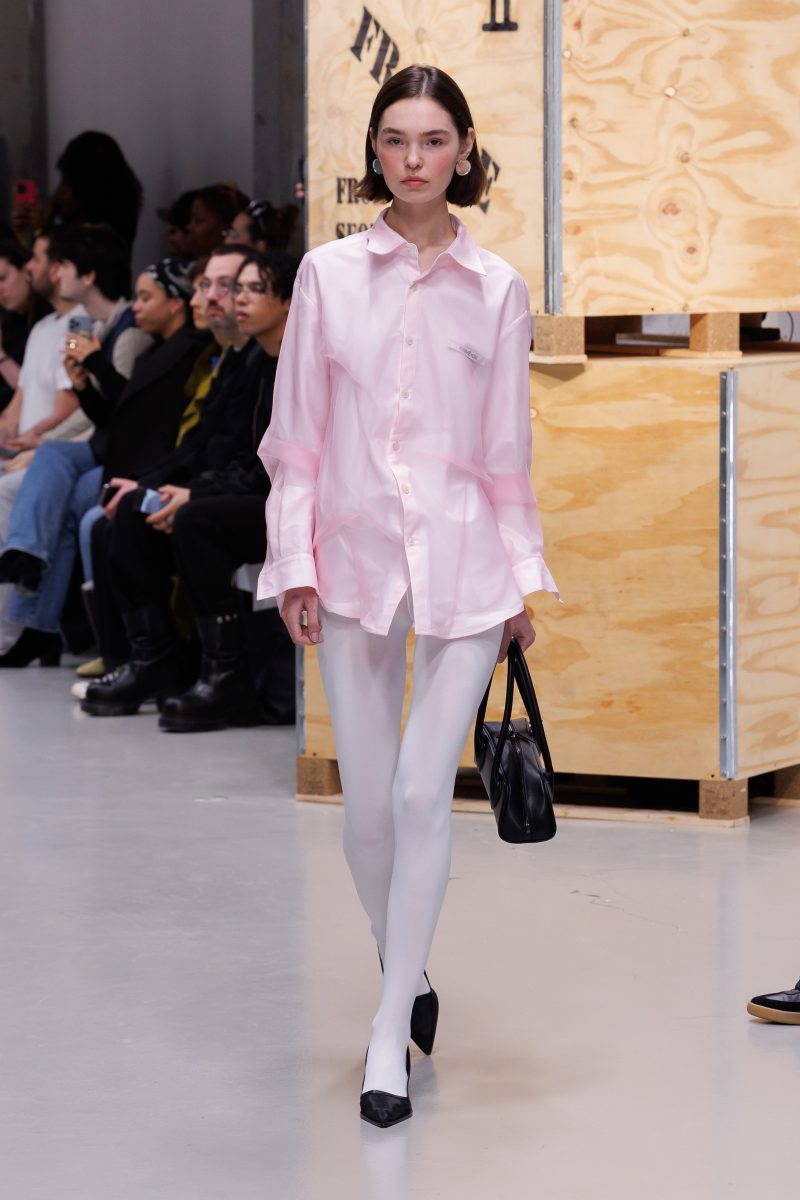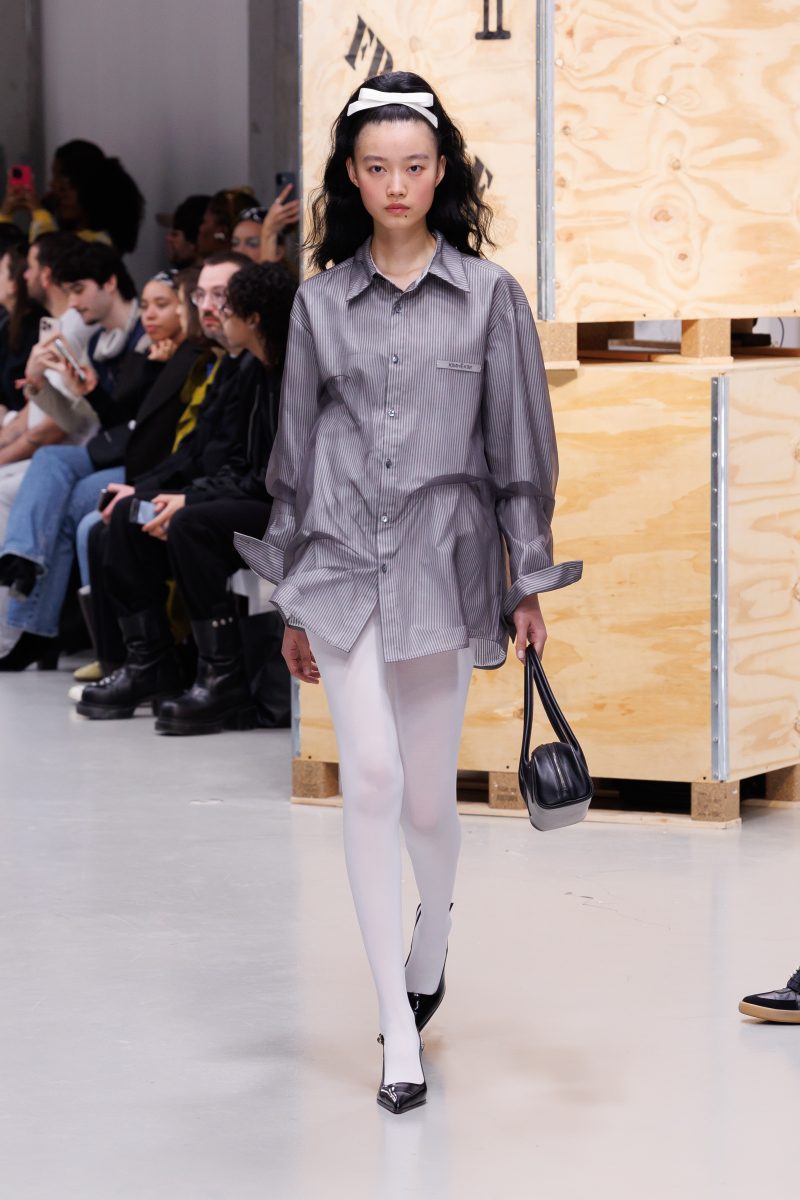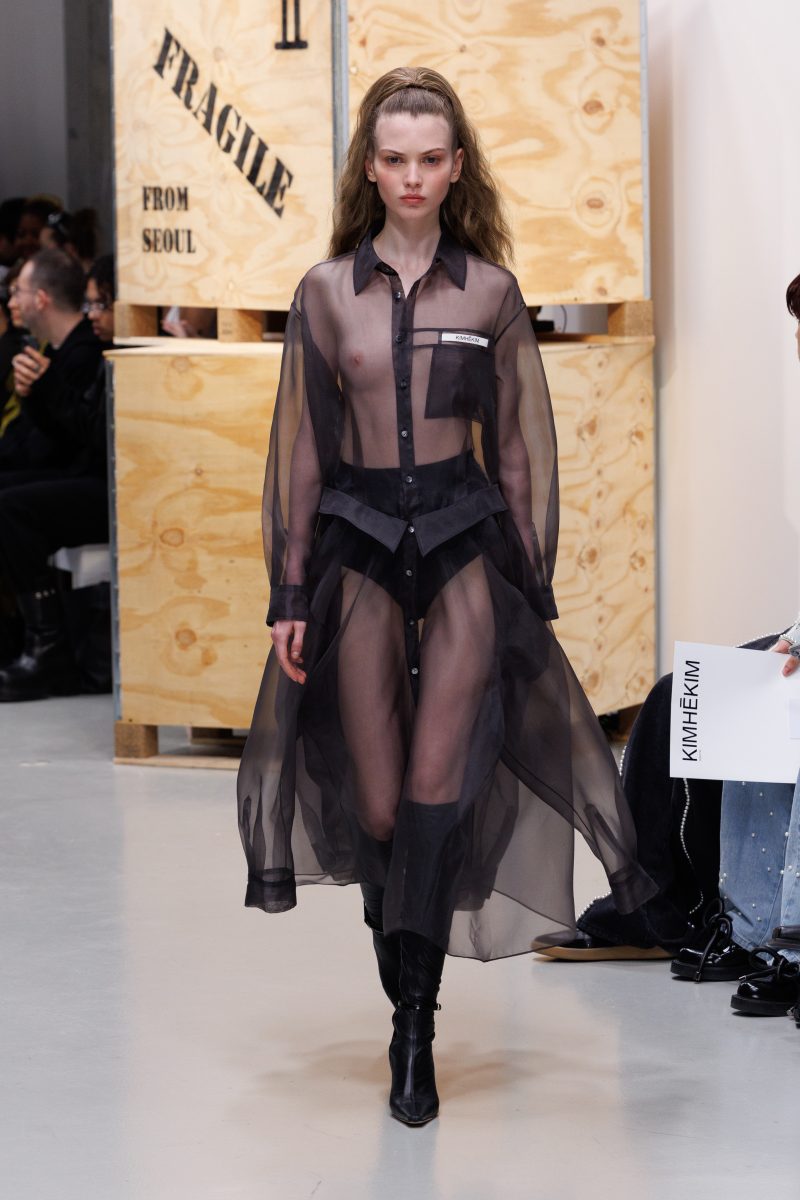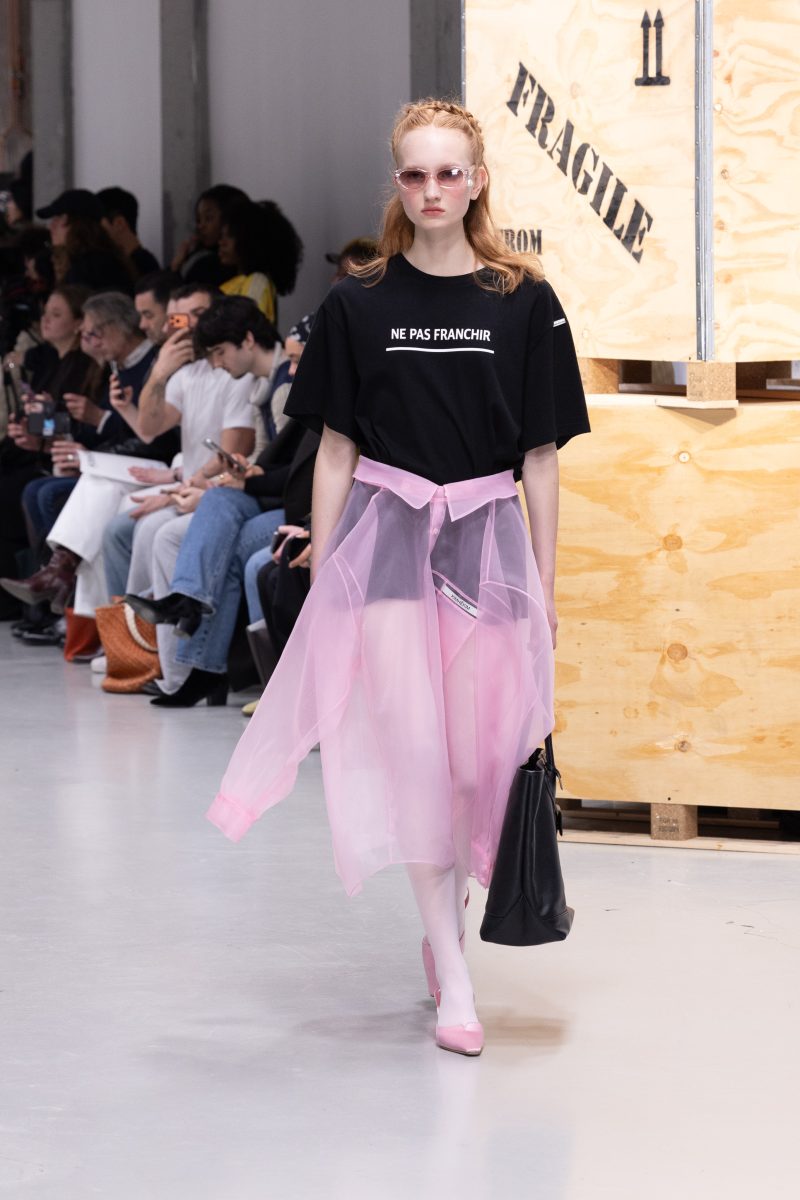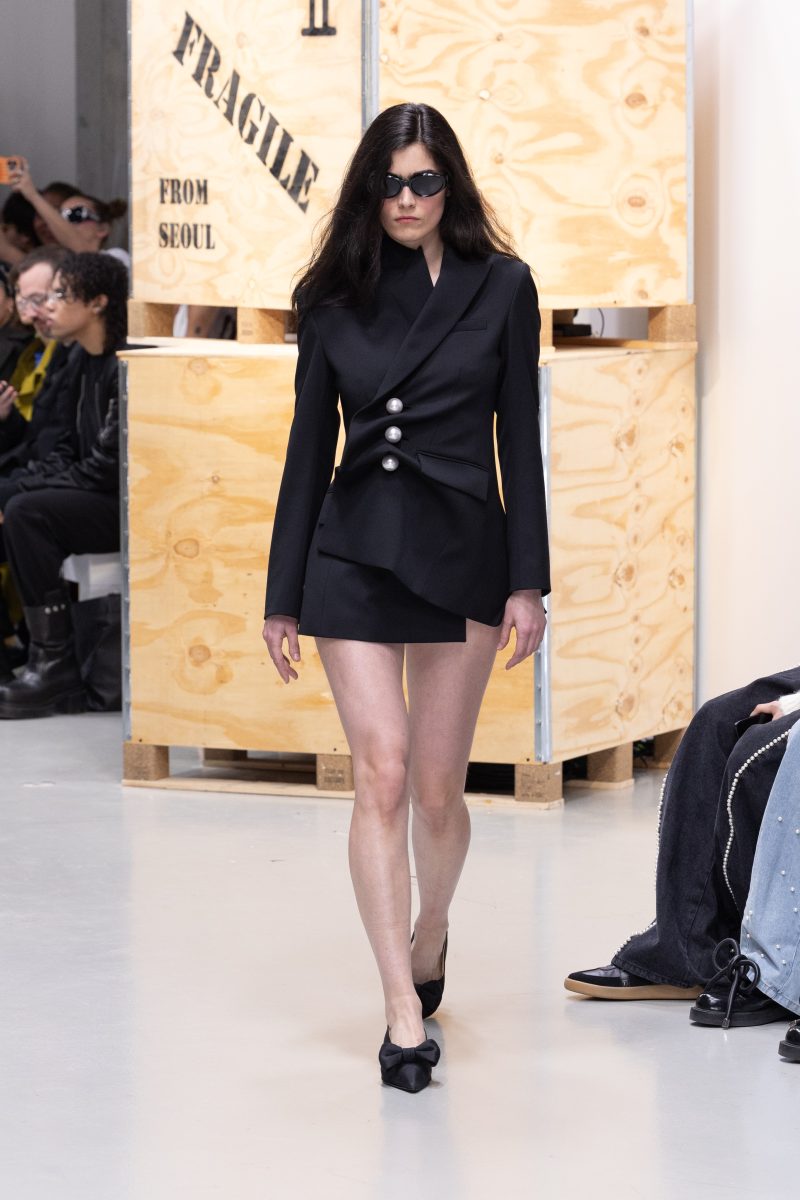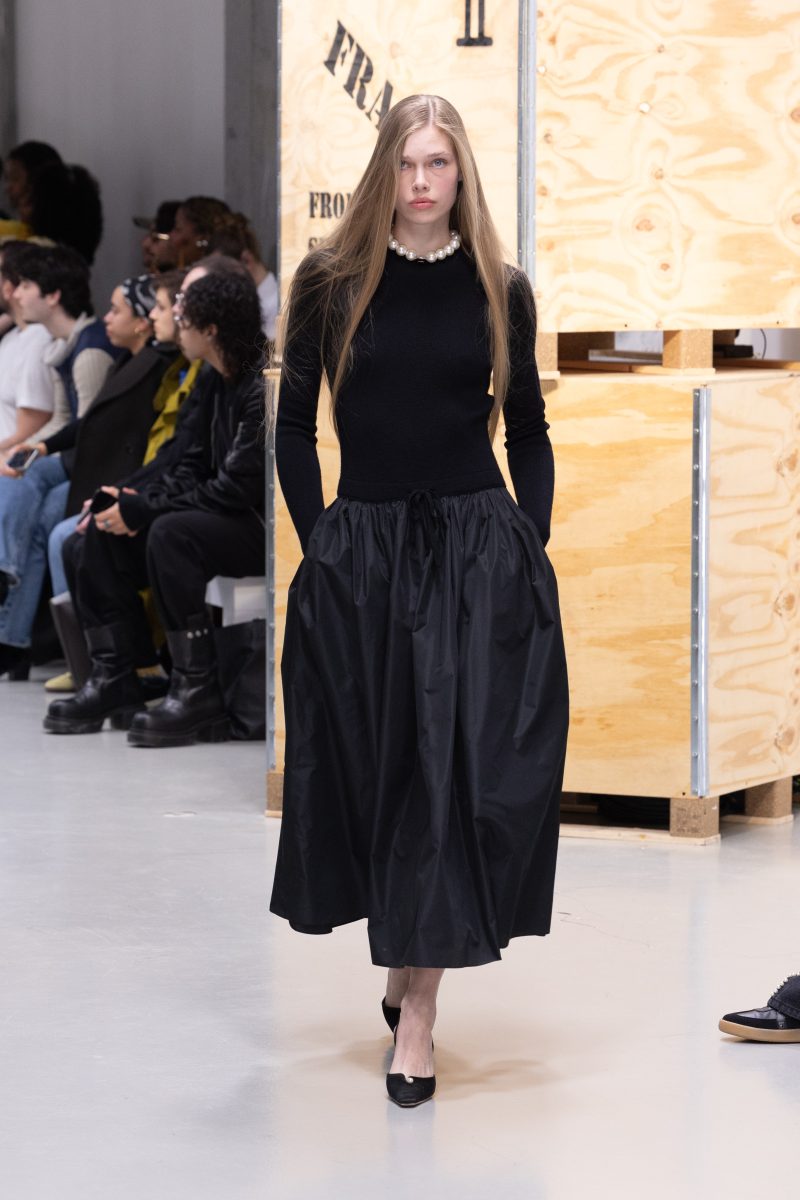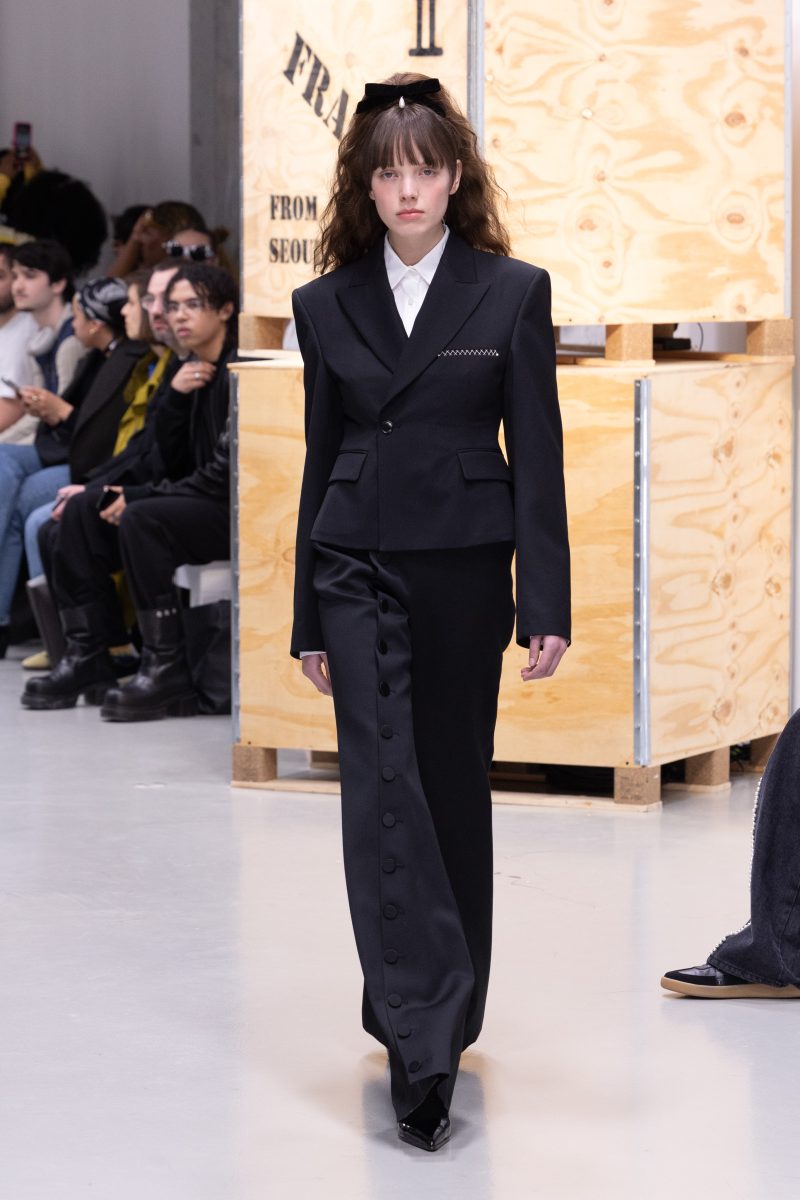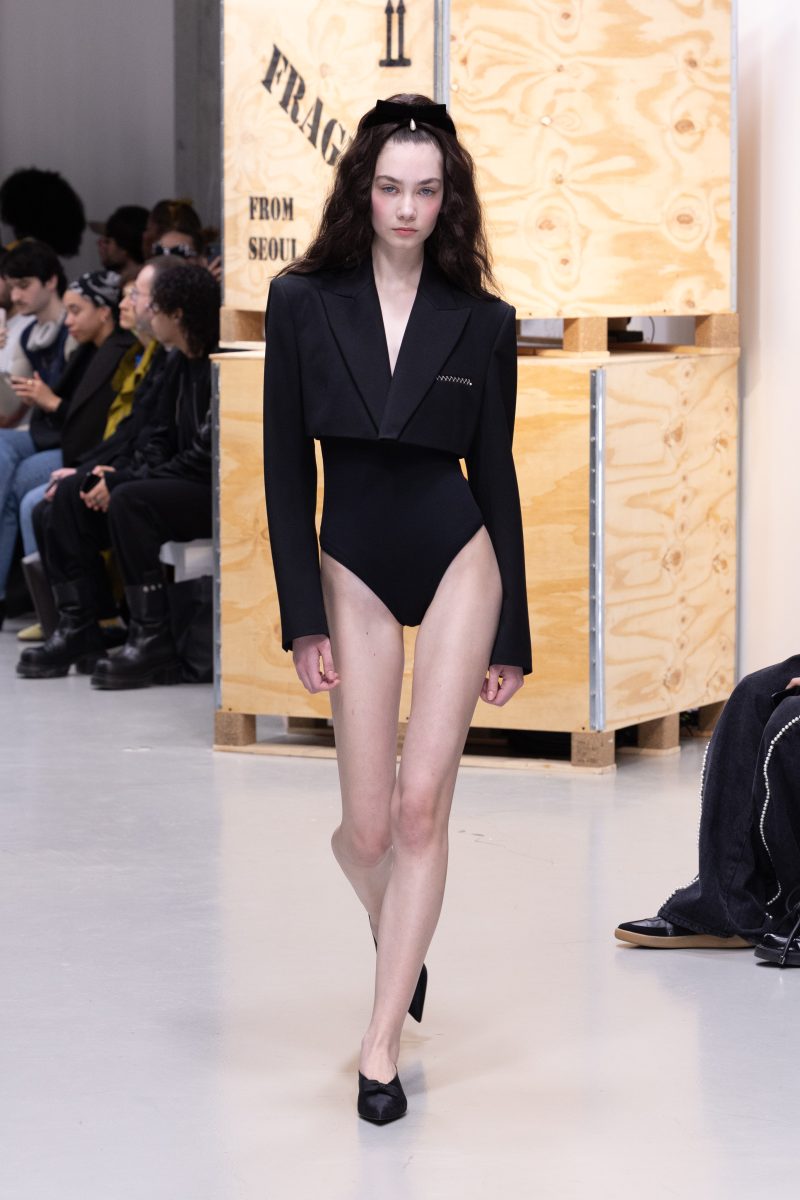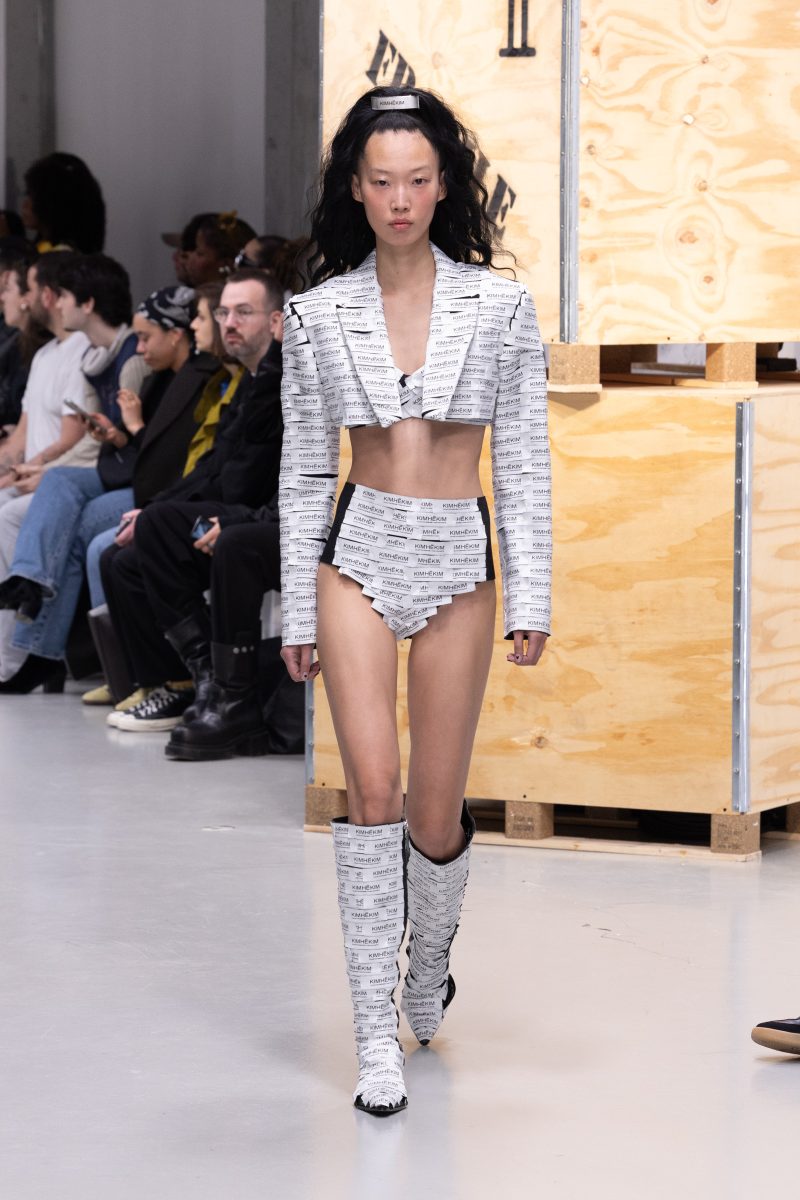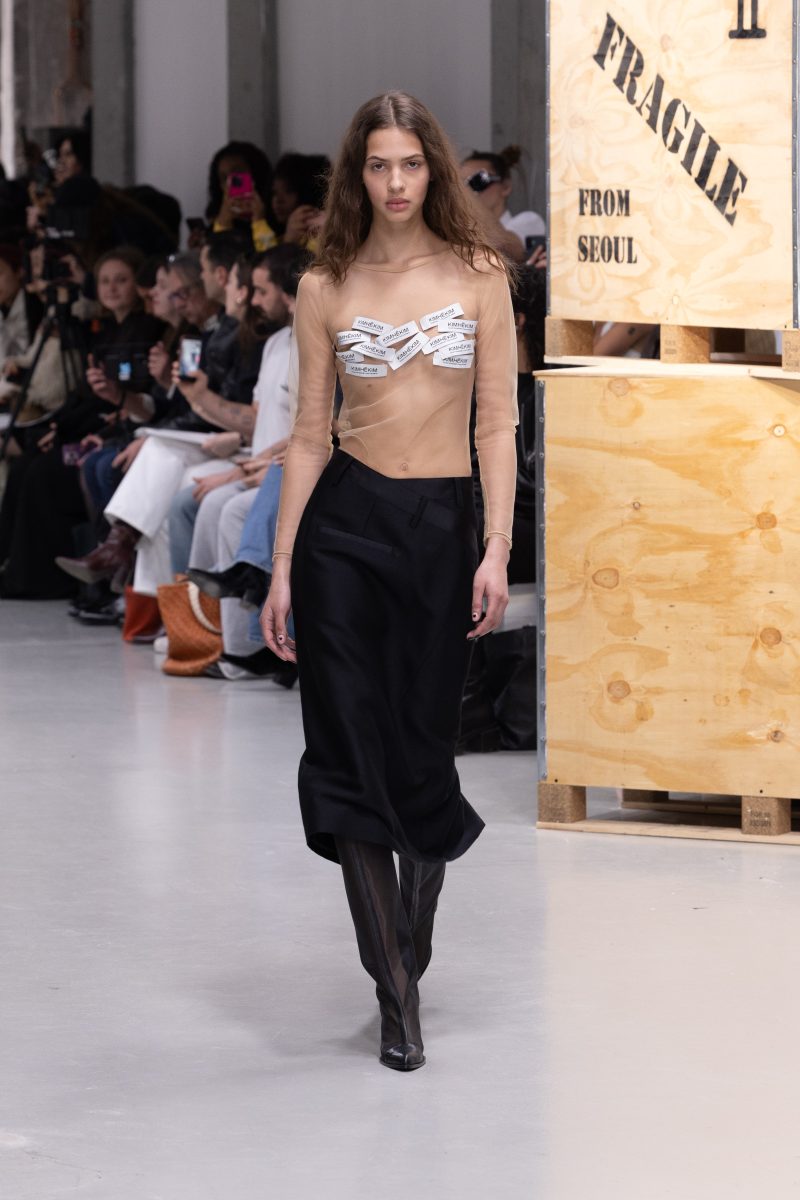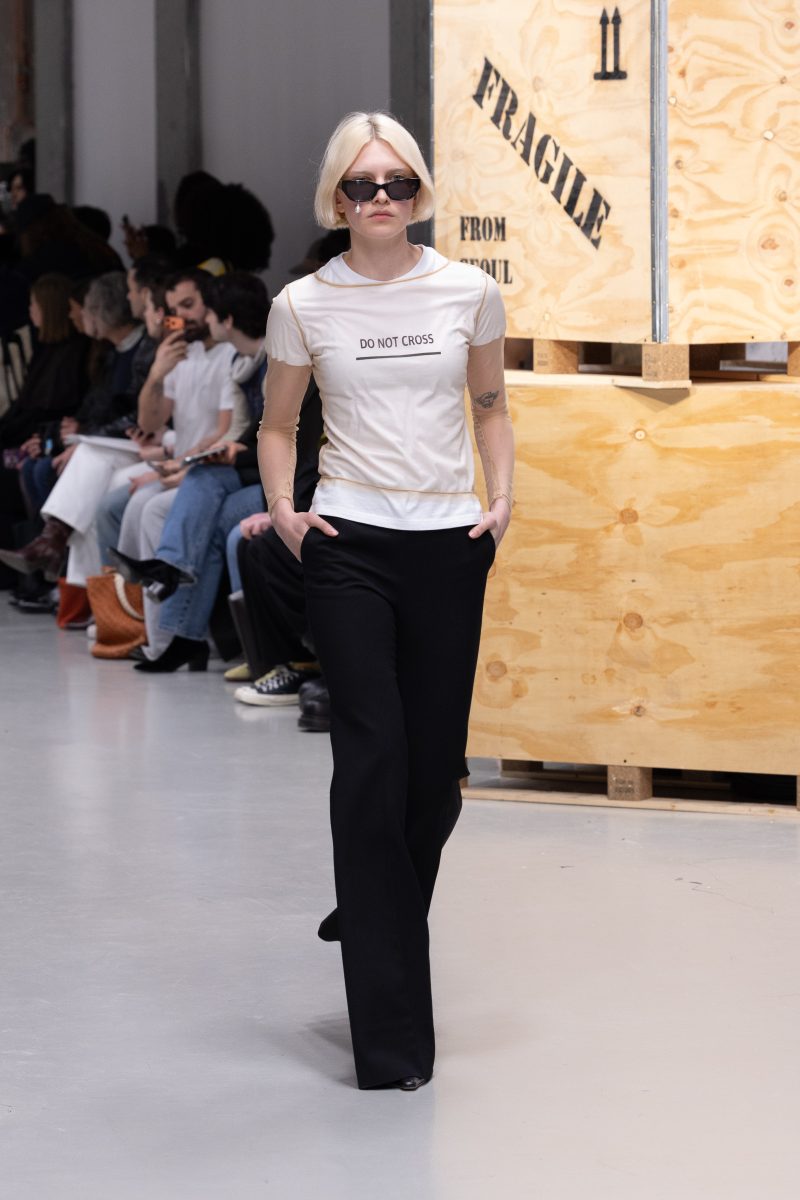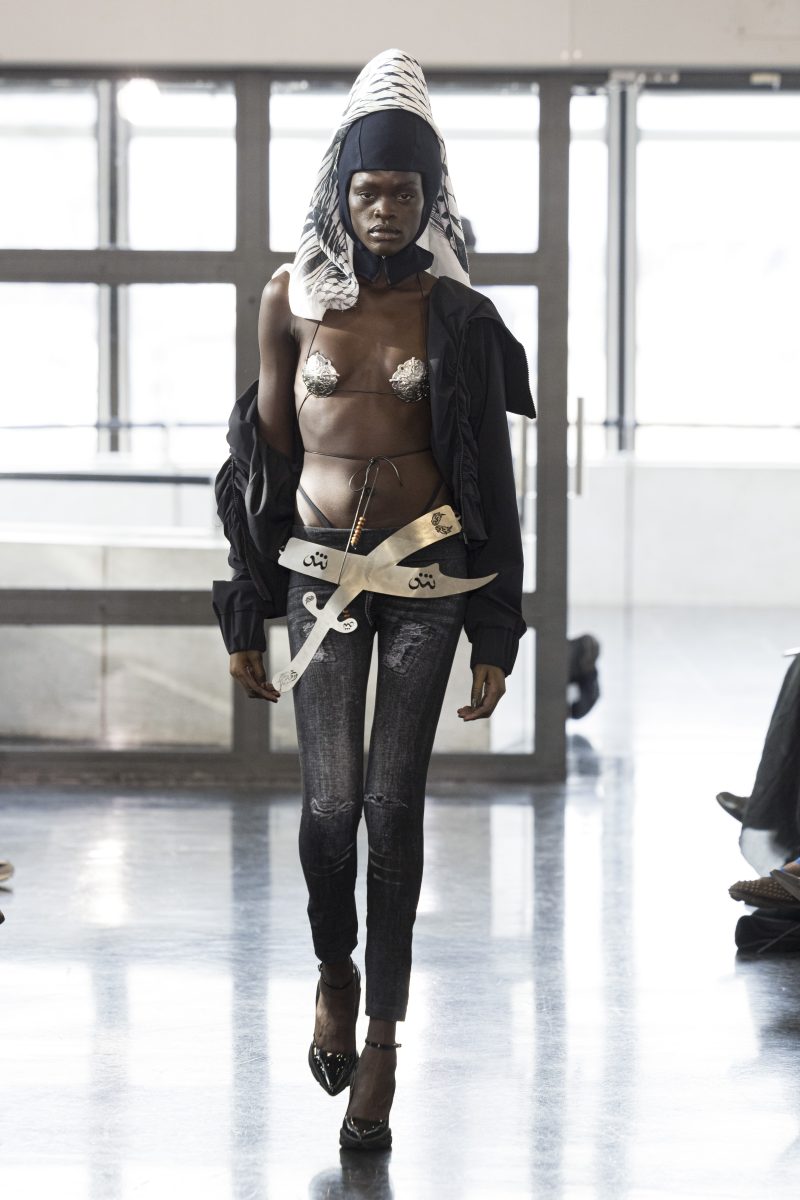
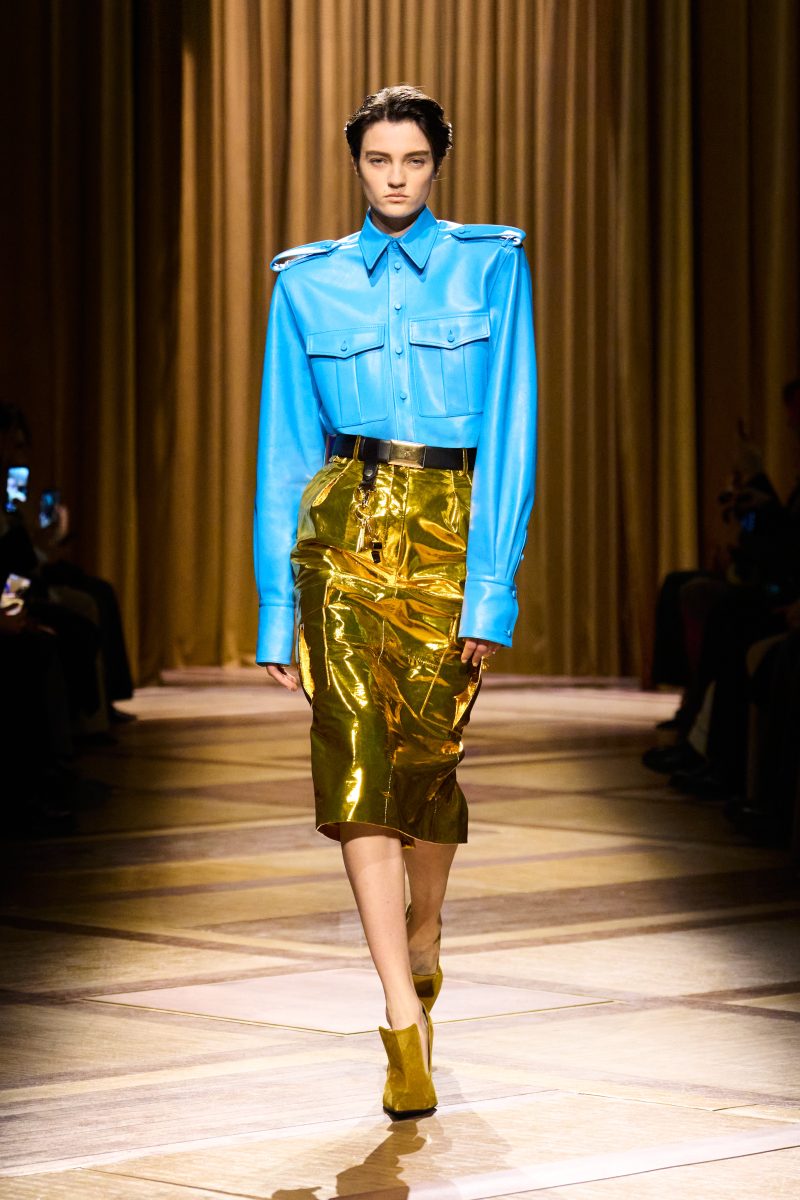
During Paris Fashion Week, the runway often becomes a place of spectacle. But for KIMHĒKIM, Fall/Winter 2026 felt more like a moment of reflection.
Presented in Paris as the brand marks its tenth year, the collection Enter the Spectrum doesn’t attempt to monumentalize a decade of work. Instead, designer Kiminte Kimhekim dissolves the boundaries between past and future, stripping back the language of the house to reveal something more intimate, more essential.
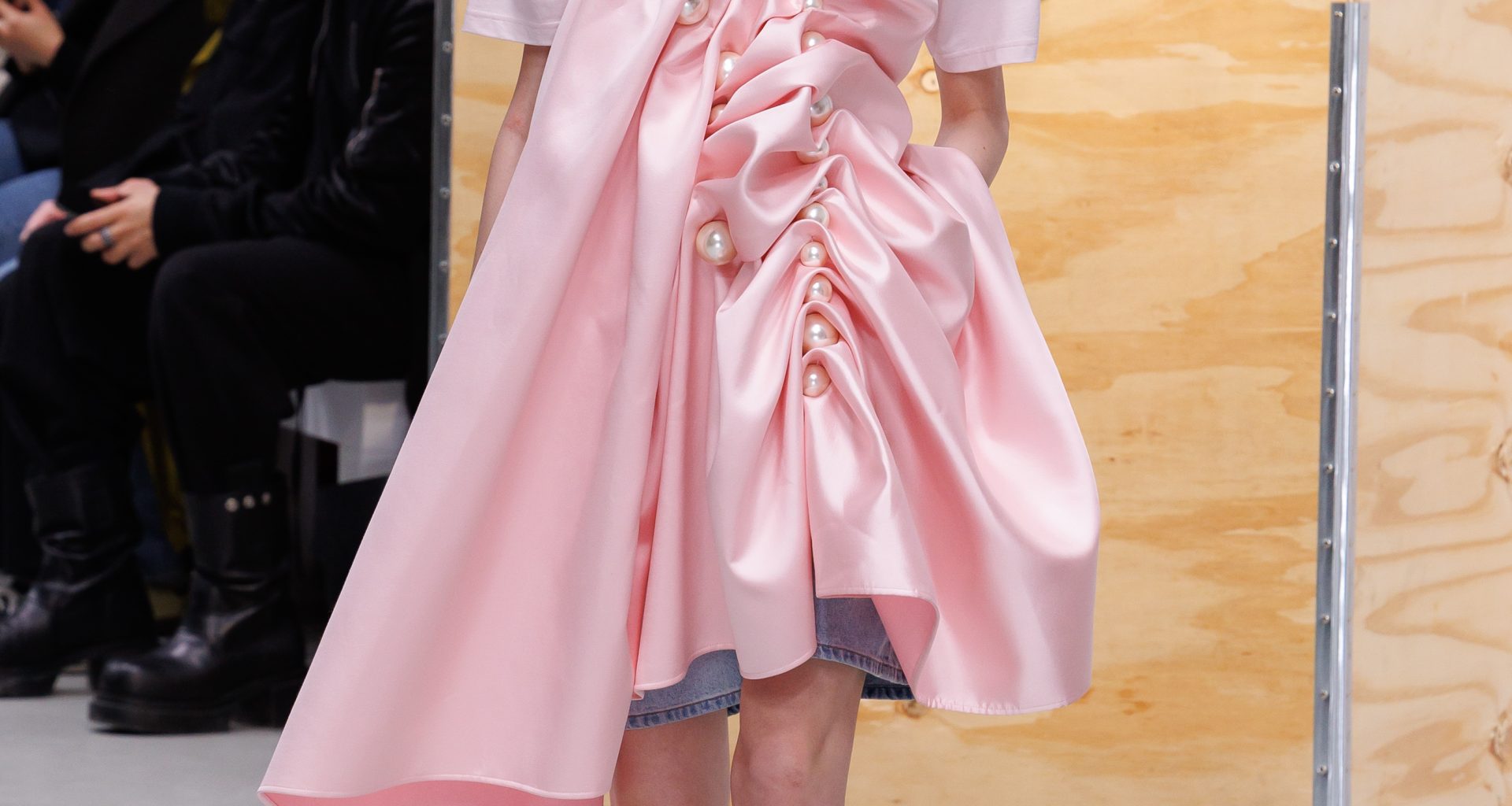
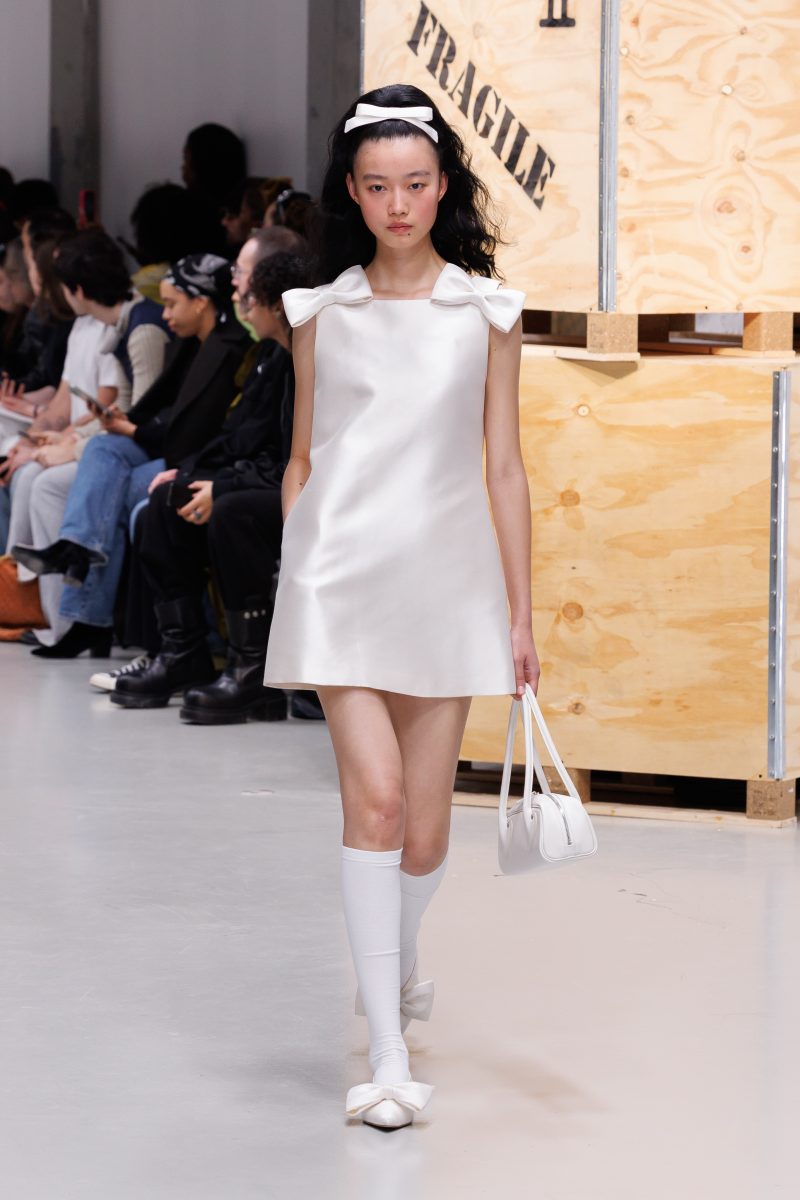
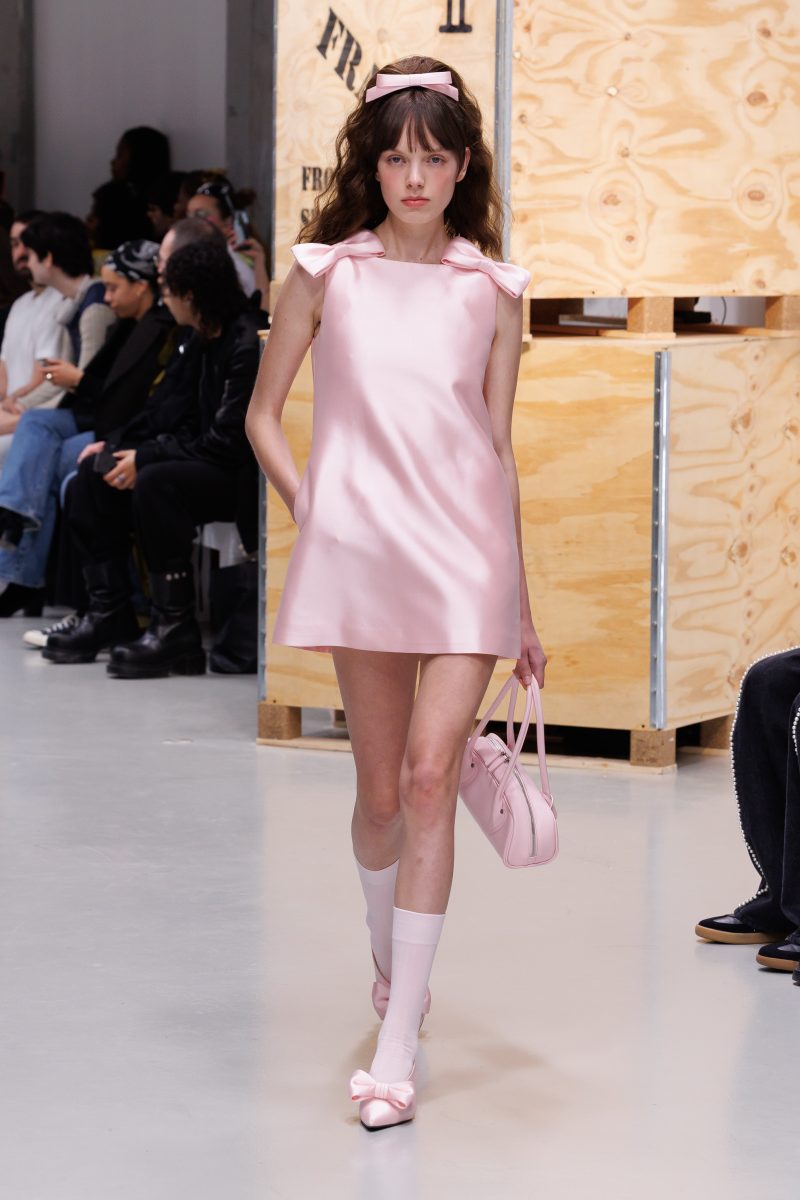
Hair dresses appear lighter. Couture gestures become closer to the body. Ornament — pearls, bows, and organza — floats between delicacy and discipline. The result is a collection that feels less about spectacle and more about clarity: a recalibration of the brand’s identity as it moves into its next chapter.
This conversation is part of On Our Radar, our special FW26 Edition, where we spotlight designers shaping the future of fashion. For this occasion, the format expands into a deeper interview — an opportunity to step inside the creative process behind the collection, and to explore the philosophy that has defined KIMHĒKIM’s poetic universe over the past decade.
Because sometimes the most radical move in fashion isn’t to look back — but to let the past dissolve into something entirely new.
Enter the Spectrum suggests dissolution rather than celebration. At ten years, why did you choose to blur your past and future instead of monumentalizing your archive?
I believe we all live with four desires: we want to stand out, but also feel comfortable. We want to try new things in the future, but we still feel emotional about the past.
After ten years of building KIMHĒKIM, I realized these ideas are what shape the brand. So in this collection, I wanted to reflect both our past and our future as we move into the next chapter.
This collection feels like a recalibration of your own language — quieter, closer to the body.
What were you unlearning as a designer while creating it?
Rather than unlearning something, I actually tried to learn more deeply about the things I truly love.
It was a process of removing the unnecessary elements and increasing the purity of the idea.
In that sense, the collection became a way for me to find my own voice more clearly.
You translate couture into something intimate and wearable. Do you see this as democratizing couture, or redefining what luxury intimacy means today?
I wouldn’t say I’m trying to democratize couture. For me, it’s more about bringing couture closer to everyday life and to the body.
I’m interested in a kind of luxury that feels personal and intimate — something you don’t just look at, but something you can actually experience.
In that sense, you can see the hair dresses this season are much lighter than the earlier ones, and maybe a little more comfortable than before.
The show was imagined as an art crate arriving from Seoul to Paris.
What does “in transit” represent for you right now — culturally, emotionally, creatively?
For me, my work is about coexistence. Seoul and Paris, The East and the West, past and future, living together in harmony. By going back and forth between Seoul and Paris, I hope my work can act as a bridge between the two cultures. To me, “in transit” also means flexibility and travel, meaning not staying in one place. Traveling allows us to feel and learn new things, and those experiences inspire not only my creative work, but life itself.
Your heritage references an ancient Korean royal lineage known for decorative arts, yet your silhouettes feel modern and restrained. Where does ornament end and discipline begin in your work?
I’ve always liked things that feel simple but poetic. Even the ancient Korean royal aesthetics that inspire KIMHĒKIM were quite minimal. Simple but not poorly done, elegant but not excessive. I think that balance is naturally part of my DNA.
I often use decorative materials like pearls, bows, and organza, but I balance them with restrained silhouettes and structure. Usually I start with a raw idea and keep removing things until the collection feels right.
The collection unfolds like a composition — scenes, rhythm, crescendo, release.
Do you approach fashion more like music than image?
That’s a very sharp question. I personally enjoy music that is experimental but still has a clear structure. A beginning, a development, and a release. I think that naturally influences the way I build a collection, especially a show. I try to give meaning to each moment so that the audience can experience it together, almost like watching a film or a theater piece.
Since your ‘Obsession’ series began in 2021, experimentation has intensified.
What are you currently obsessed with — and what are you trying to let go of?
My work is based on self-love, but it’s also an obsession with beauty. The process of finding harmony between the inner self and the outer self feels endless. Expressing that journey through fashion and decorative arts almost requires a certain obsession.
But these days, I’m trying to keep one simple principle: to stay healthy. Eating well, seeing beautiful things, exercising a little, and sleeping well. I think that’s how I can keep dreaming beautiful dreams.
Having trained in Parisian couture houses before founding your label, how do you protect sensitivity and nostalgia from becoming rigidity or nostalgia-as-branding?
I see the brand as a living organism. It’s still quite young, being only ten years old. It’s almost like a child who keeps dreaming, meeting people, being influenced, and growing. Within that process, I try to make careful decisions each time. Sometimes I follow emotion and memory, and sometimes I choose experimentation and challenge. I hope the brand can continue to grow like a story that never really ends.
In KIMHĒKIM, “everyone is a piece of art in motion.”
In a world increasingly curated and digitized, what does movement mean to you now?
We are all living beings. The parts of ourselves that are not curated or digitized. The worries, hopes, pain, and joy we feel in our private moments, all of it is very precious. I believe this journey, this movement, is what transforms us from a raw stone into a beautiful work of art.