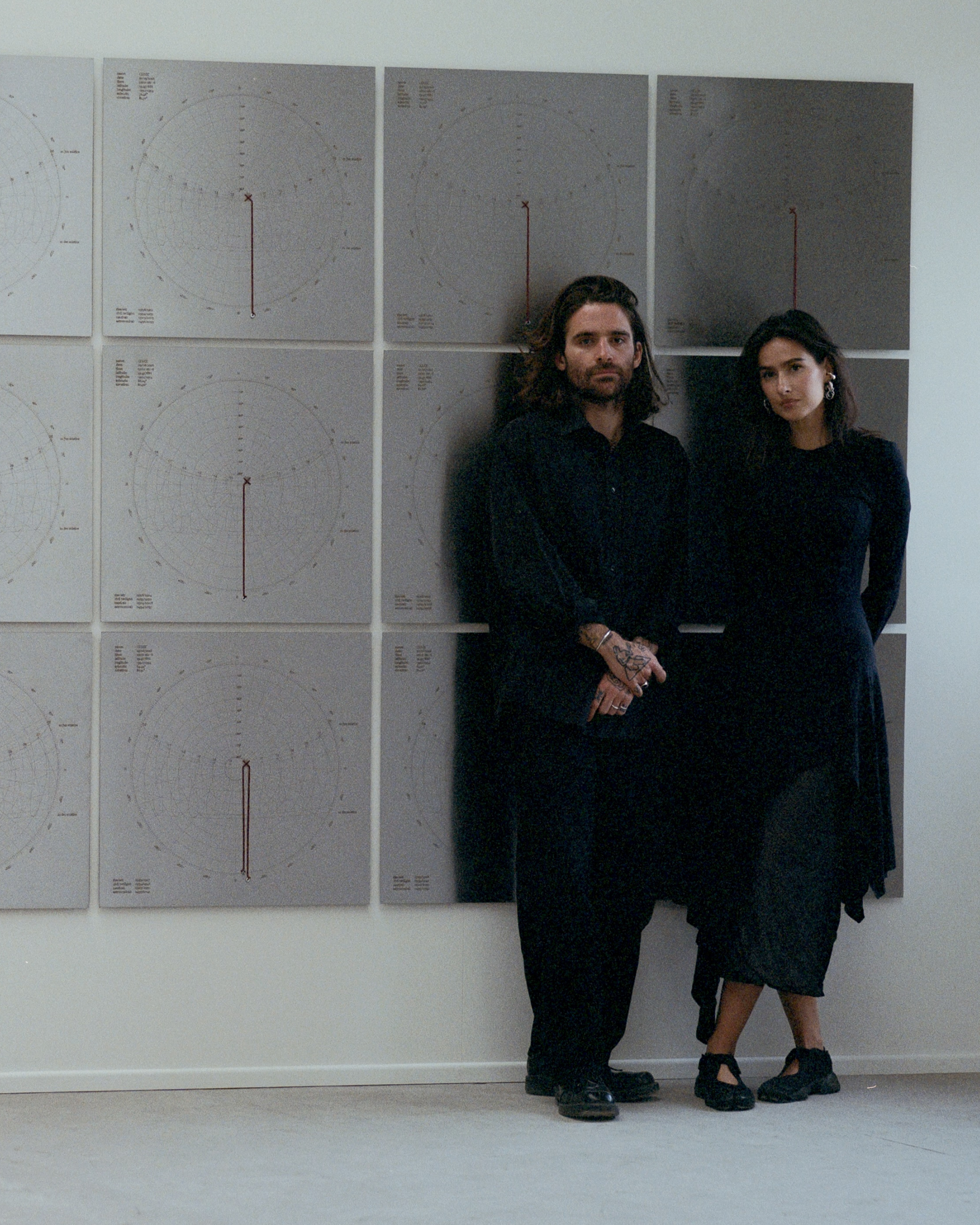
Inside the living systems, invisible forces, and radical perspectives of KiefferWoodtli.
What happens when art stops putting humans at the center?
Swiss artist duo KiefferWoodtli, formed by Sara Kieffer and Lucien Woodtli, operate at the intersection of contemporary art, science, technology, and the natural world, creating immersive environments where invisible forces become tangible experiences.
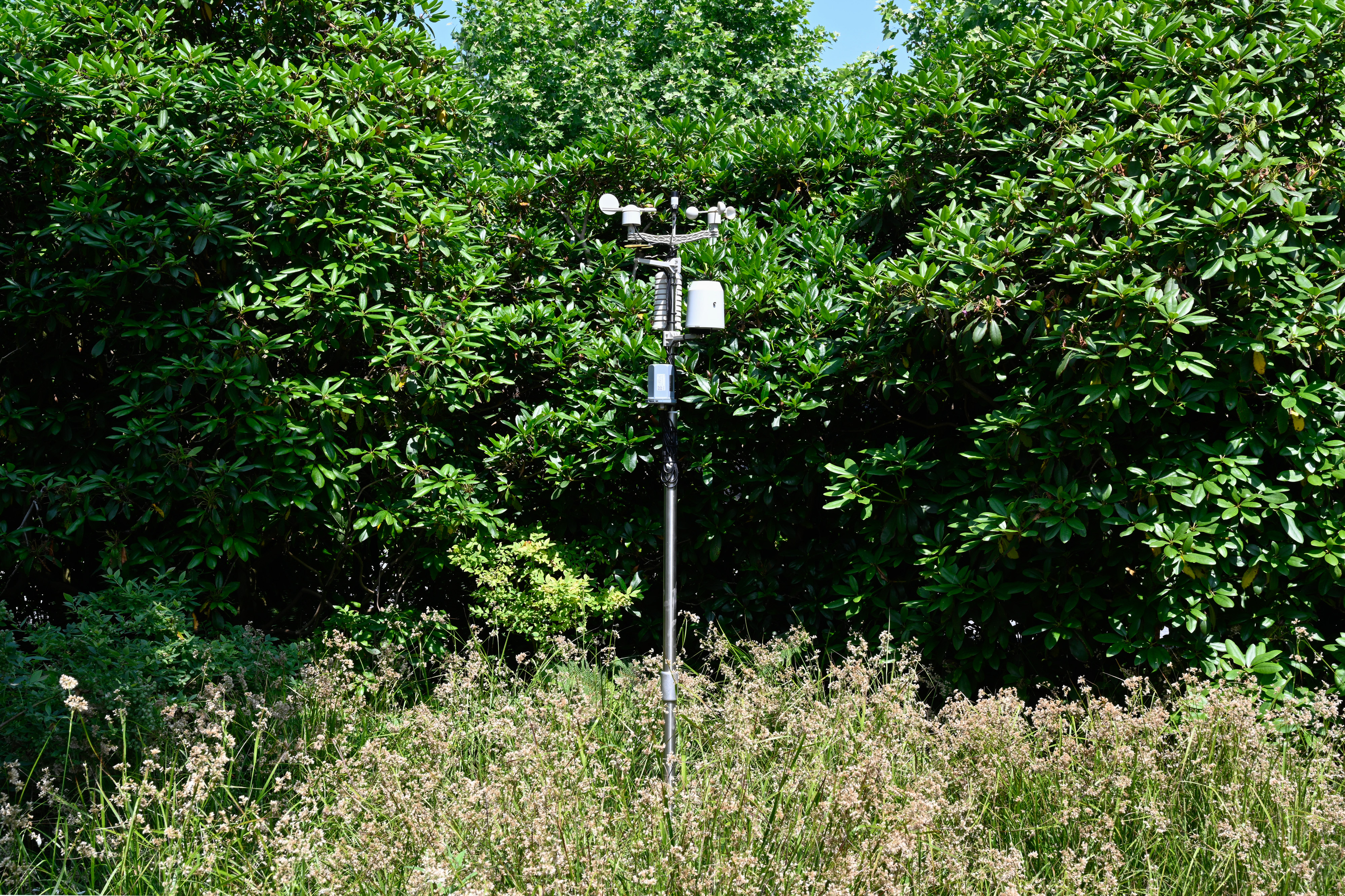
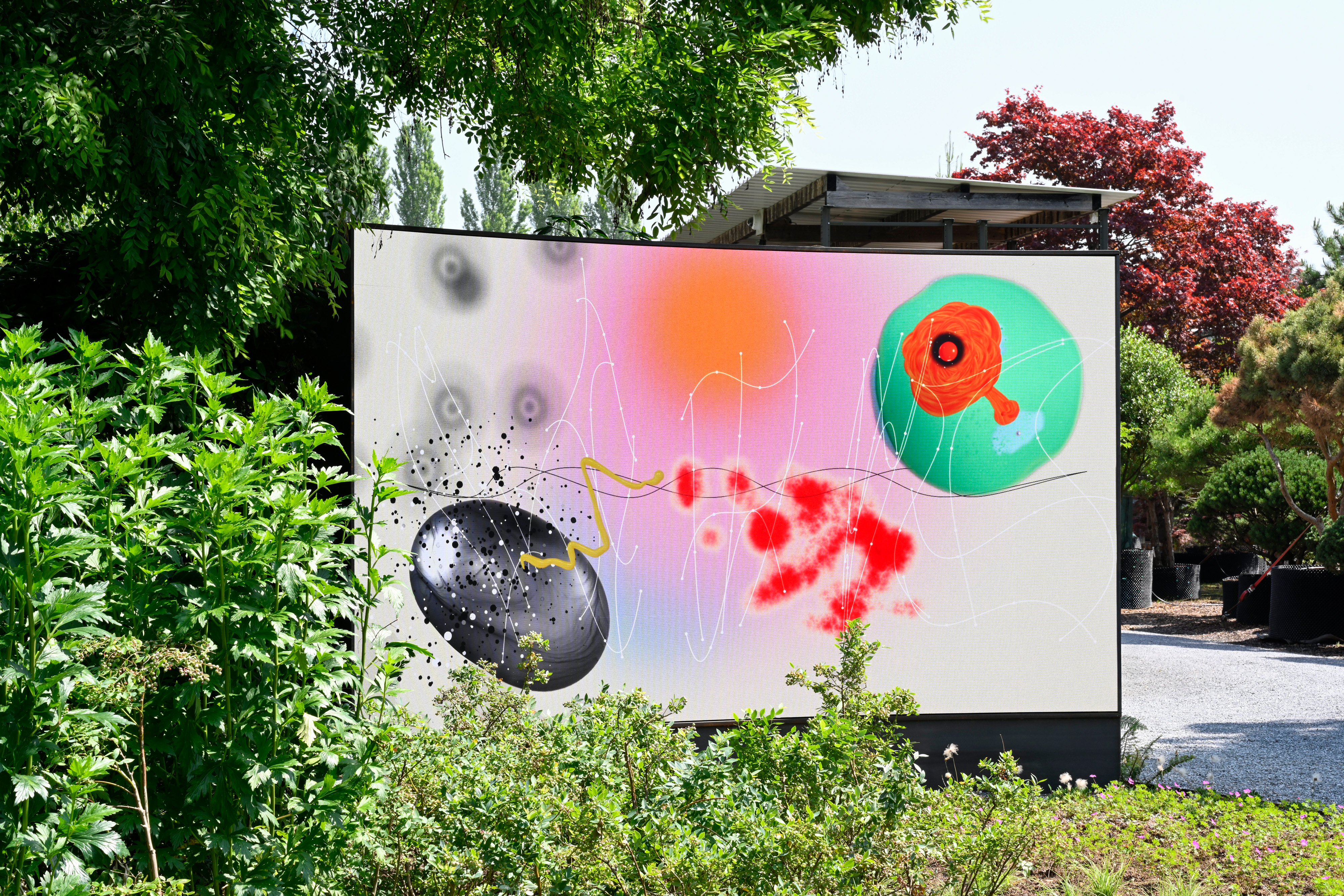
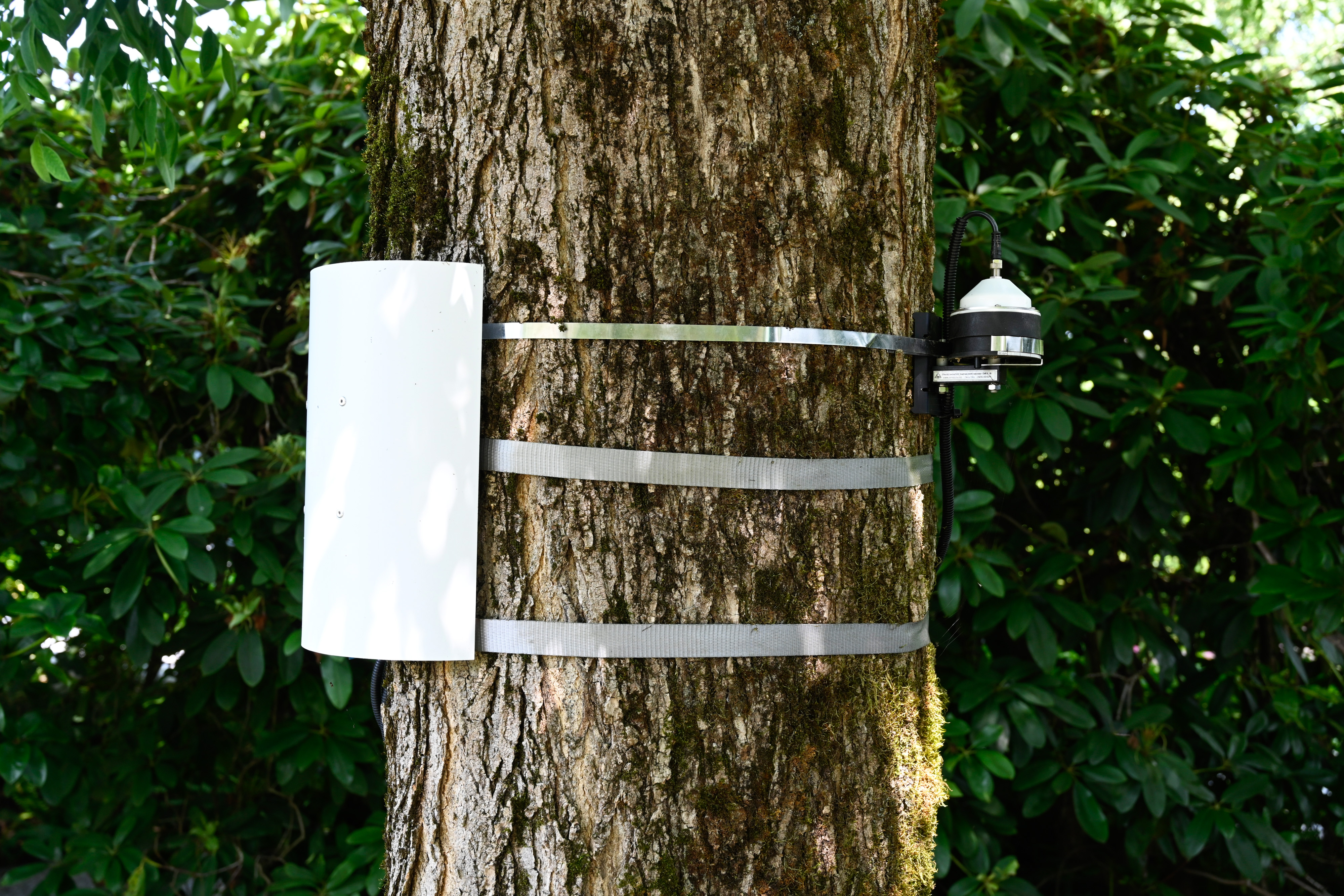
From Arboreal Serenade, an evolving audiovisual composition shaped by the real-time biological signals of a living tree, to AXES, their investigation into orientation, perception, and the relationship between opposing forces, their practice challenges our most ingrained assumptions about control, authorship, and existence.
Their work doesn’t attempt to explain nature or turn it into spectacle. It creates space for a different kind of encounter, one grounded in curiosity, uncertainty, and the recognition that we are part of something far greater than ourselves.
In this conversation, KiefferWoodtli reflect on listening without claiming authority, creating with rather than simply representing nature, and finding freedom in everything we cannot fully understand.
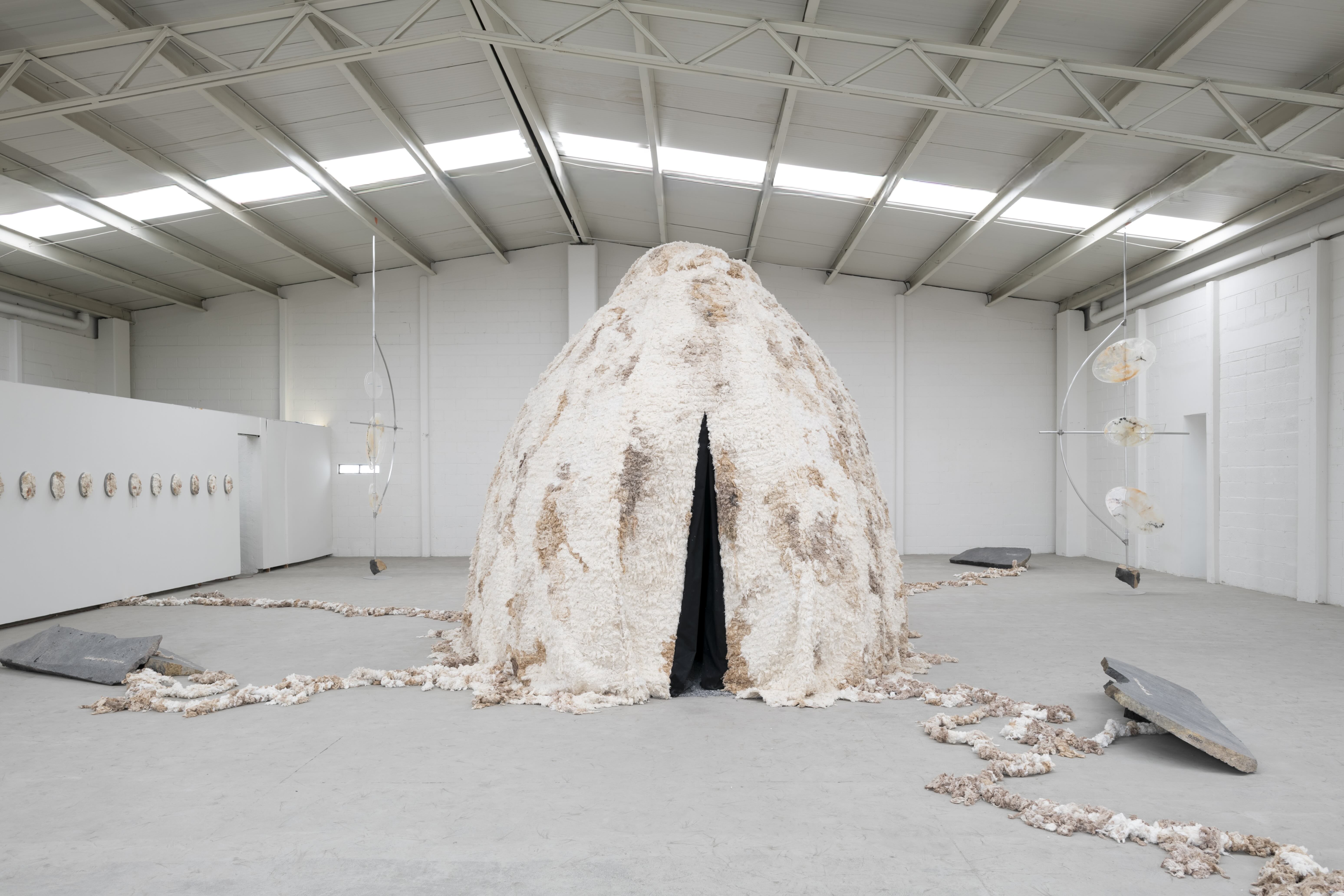
What if nature doesn’t need us to understand it?
Your work often gives visibility and sound to processes that usually escape human perception. Yet the desire to translate nature into something we can see, hear, or understand can itself become a form of control. Where do you draw the line between listening to a living system and imposing a human narrative on it?
Nature doesn’t need us to understand it. It exists and follows its own rhythms, whether we acknowledge them or not. Yet we humans seem increasingly uncomfortable with anything we cannot explain, predict, or control. One of our greatest illusions is believing that understanding something automatically means being connected to it.
We don’t see our work as giving nature a voice. It already has one, whether we are capable of perceiving it or not. What we create is inevitably shaped by our own encounters, observations, and sensibilities. We never claim to offer an objective or complete representation of nature, nor do we seek to dictate what others should experience through our work. We are interested in creating the conditions for an encounter while leaving space for what remains unknown.
That’s where we draw the line: between inviting attention and claiming authority. For us, art is less about explaining the world than about opening ourselves to it. It’s about recovering the ability to surrender to something without needing to fully understand it.
Can a tree become a collaborator rather than a subject?
In Arboreal Serenade, a living tree becomes part of an evolving audiovisual composition. This raises a fascinating question about authorship: if an organism contributes signals that shape an artwork, who—or what—is actually creating it? How much control are you willing to relinquish over the final result?
Perhaps the more interesting question is whether our understanding of authorship has always been too narrowly human.
Arboreal Serenade began with an encounter: our attempt to listen, observe, and develop a deeper sensitivity toward a living organism and its rhythms. From this dialogue, we developed an artistic language that remains in continuous exchange with the tree.
We see the tree as a co-author, not simply because its physiological processes shape the audiovisual composition, but because the entire work emerged from our relationship with it. We bring our own artistic sensibilities into that relationship, yet the tree continuously guides how the work unfolds.
For us, relinquishing control doesn’t mean stepping away from the creative process. It means accepting that the work is never entirely ours to determine. Its evolution belongs to an ongoing dialogue with a living being whose rhythms exist independently of our intentions.
We live in a world obsessed with optimization. What happens when we design for uncertainty instead?
Your installations bring together scientific data, technology, natural processes, and sensory experience. In a culture that wants everything measurable, predictable, and efficient, can art make uncertainty feel valuable rather than something to eliminate?
Uncertainty isn’t something we need to learn to value. It’s something we need to remember how to live with. It’s an inherent part of existence, yet we’ve become increasingly conditioned to treat it as a problem to solve.
Nature constantly moves between order and unpredictability, and we find this coexistence deeply fascinating. In our work, we use scientific data, technology, and carefully constructed systems not to eliminate uncertainty, but to make room for it. We create situations in which something unexpected can emerge, both for those encountering the work and for us throughout the creative process.
Our practice is also an ongoing exercise in letting go. We’re constantly learning to trust what we cannot entirely anticipate. The value of uncertainty lies precisely in its ability to open us up to possibilities we would never have discovered if we had insisted on knowing the outcome from the beginning.
What does it mean to experience something you cannot fully decode?
Your work moves between sound, sculpture, light, geometry, and space, often without offering a single, straightforward interpretation. Do you want audiences to understand the systems behind your installations, or to surrender to an experience they cannot entirely explain? Is not knowing a form of freedom?
Not knowing is absolutely a form of freedom. It allows us to remain curious, to play, to imagine, and to approach things without the pressure of needing everything to be definitive or fully explained. There’s also something deeply humbling about accepting that we will never know everything. Learning to make peace with that is part of what it means to be alive.
This is something we continually practice through our art. The systems and concepts behind our works are there for anyone who wants to explore them, but understanding them is never a prerequisite for the experience itself. What matters to us is that each person finds their own way into the work, through their senses, emotions, memories, or questions.
One of the most fulfilling aspects of our practice is witnessing how an encounter with an artwork can become an encounter with oneself. By learning to embrace what we cannot fully understand, we might find ourselves a little closer to life itself. To simply be.
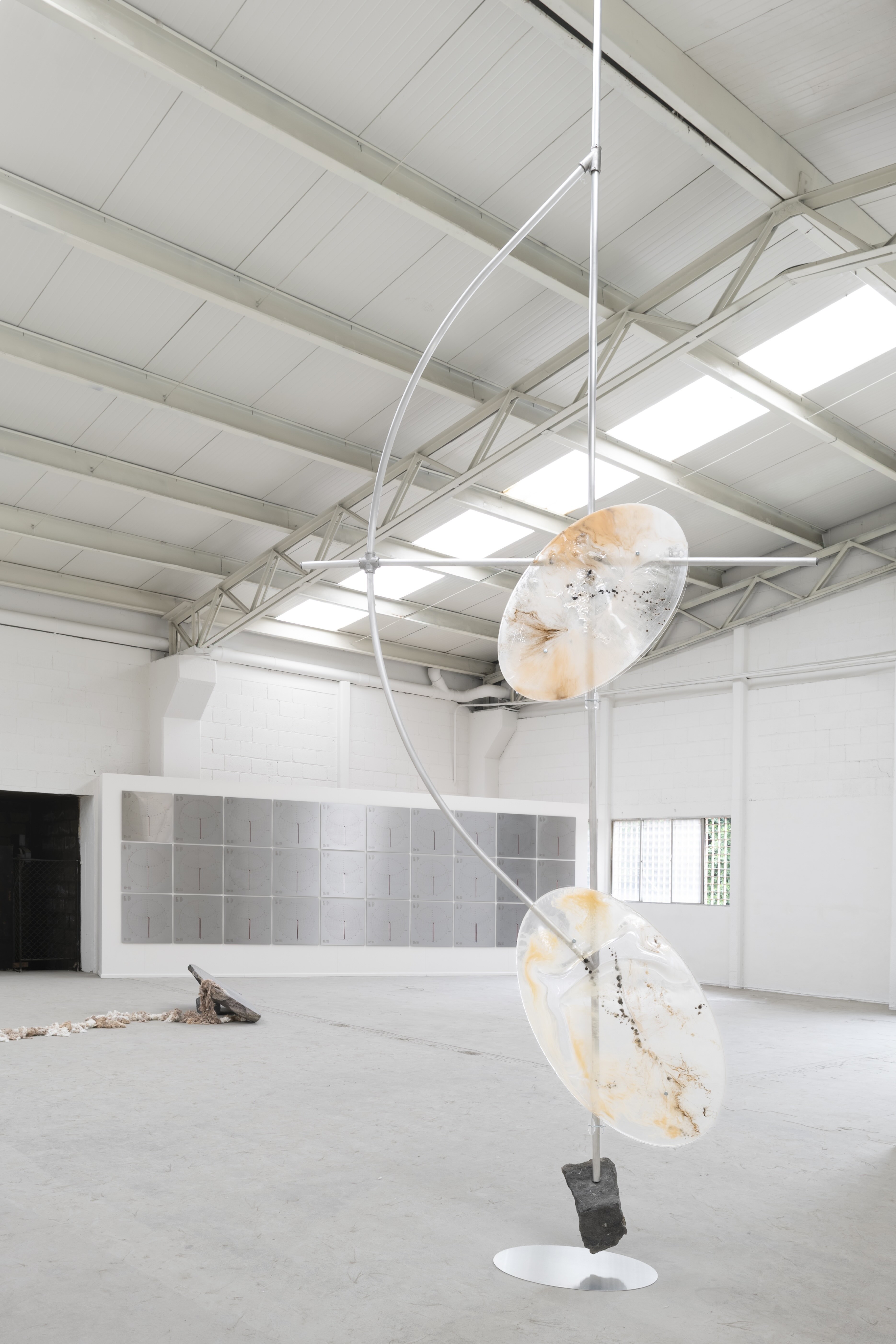
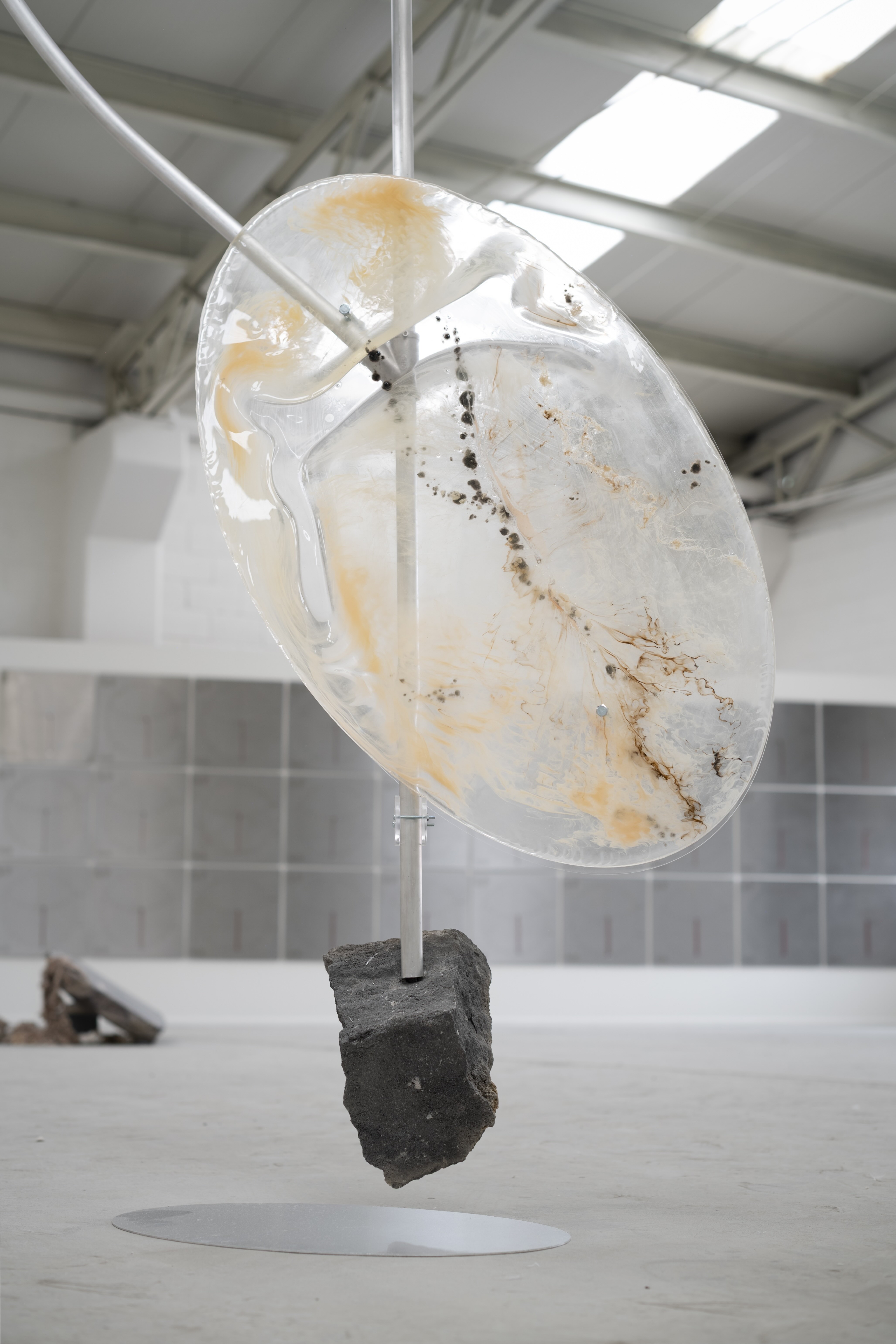
If the human body is no longer the center of the universe, how should art make us feel?
Across your practice, orientation, scale, movement, and perception challenge the idea that humans are the natural point of reference for everything. Can art help us experience what it means to be part of a larger system rather than its protagonists? What kind of discomfort—or liberation—does that shift create?
We’ve never been separate from the larger systems we belong to. Yet somehow, we’ve come to perceive ourselves that way. We’re not outside nature, observing it from a distance. We’re an expression of it, subject to the same forces, rhythms, and transformations.
Recognizing this can be unsettling because it challenges our deeply rooted sense of autonomy and importance. There’s also something profoundly liberating about it. Being a small part of something infinitely larger doesn’t make our existence insignificant. Our meaning doesn’t have to come from being at the center. It can come from belonging.
We don’t believe art should prescribe how we feel. It can, however, shift the perspective from which we experience ourselves. In our installations, we encounter rhythms, movements, and forces that exist independently of us, allowing us to experience ourselves not as observers of a world outside us, but as participants within it.
We don’t need to fully comprehend the whole to be an inseparable part of it.
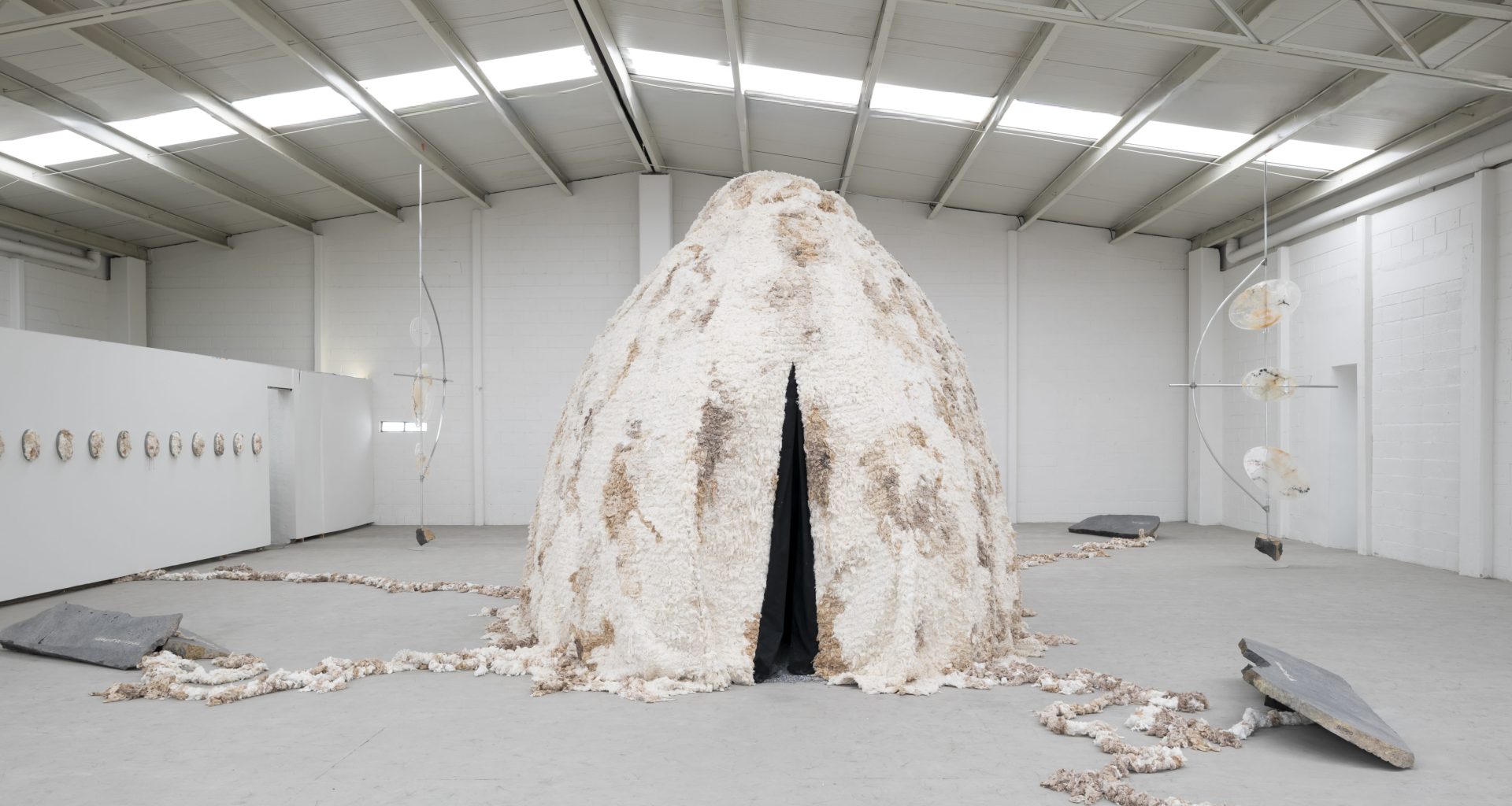
In AXES:TOTUM, you brought the universe of AXES from Mexico City into a new context in Paris. What changes when an artwork travels, and what must remain untouched?
Rather than simply reproducing the earlier exhibition, how did you approach the transformation of its ideas, materials, and spatial relationships? Did the move to Paris reveal something about AXES that you couldn’t have discovered in Mexico City? How do you know when a work has evolved into something new rather than simply becoming a different version of itself?
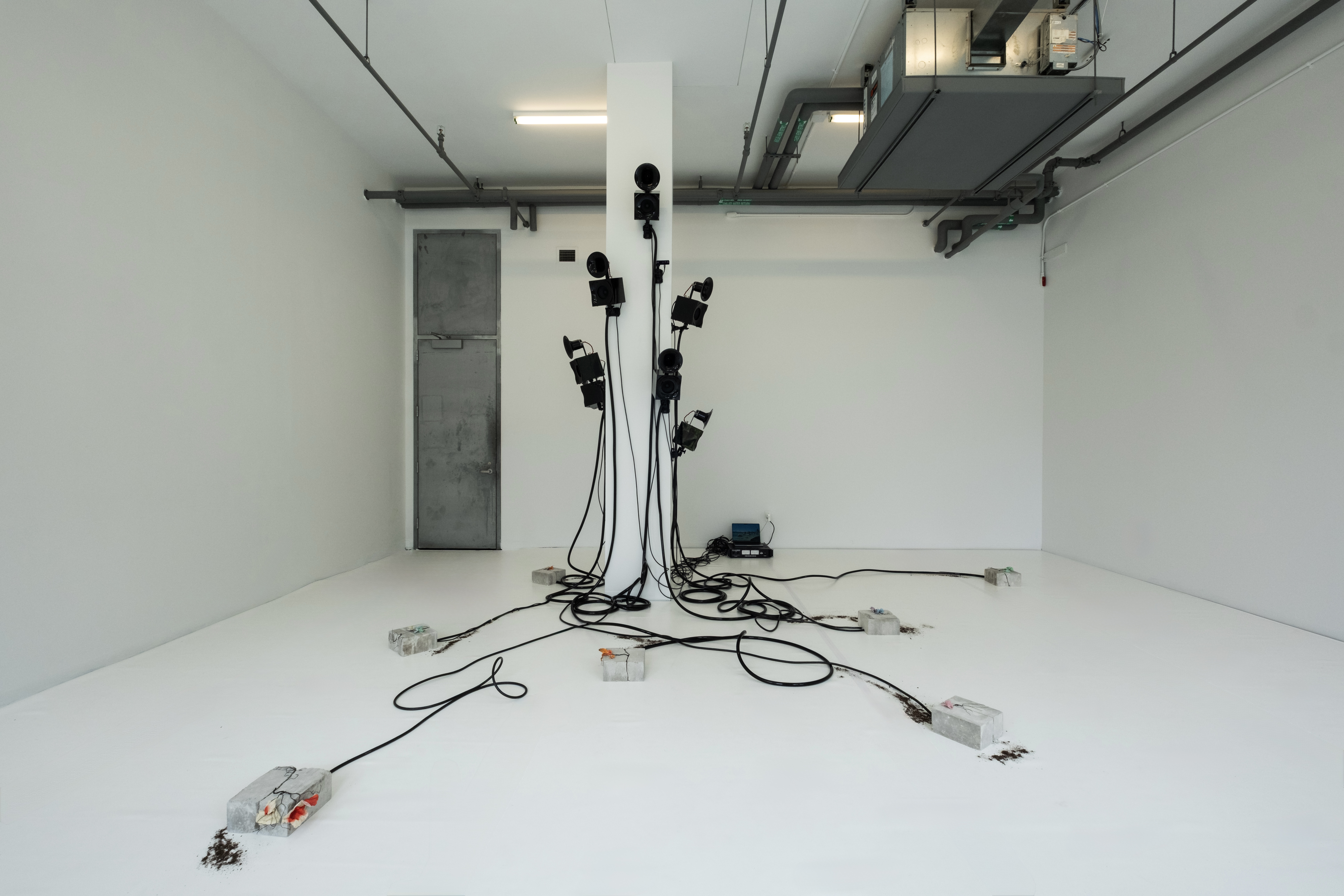
Bringing AXES from a space of nearly 300 square meters in Mexico City into just 20 square meters in Paris was an exciting challenge. We weren’t interested in simply reproducing the exhibition on a smaller scale. What mattered was preserving its essence—that almost intangible presence the space had developed in Mexico, as though it had taken on a life of its own—while allowing it to assume a new form.
What surprised us was that reducing the physical space didn’t diminish the experience. Quite the opposite. Everything became more concentrated, more immediate, more bodily. Introducing a movement performance with two dancers allowed the forces and tensions explored in AXES to find another expression through the human body.
Paris revealed something important to us: intimacy and vastness are not opposites, nor are they necessarily dependent on physical scale. The same questions can unfold across the most distant dimensions of our existence and within its most intimate layers. The space became smaller, but the world of AXES remained just as expansive, revealing another way of experiencing it.
We don’t think there’s always a clear moment when a work becomes something entirely new. Its identity can persist through transformation. What interests us is how the same underlying questions take on new meanings when the relationships between materials, bodies, and space begin to change.
As artists working at the intersection of ecology, technology, and contemporary art, what’s one belief about the future you’re already beginning to question?
Artistic practices often become associated with certain ideas or positions, yet some of the most interesting work begins when those positions become unstable. Is there something you believed when you started working together that your practice has since complicated, challenged, or even dismantled? What are you still trying to unlearn?
We’re beginning to question how deeply we’ve internalized the idea that meaningful change must always produce immediate, visible, or measurable results. Some transformations are immediate and unmistakable; others unfold quietly, over time, in ways we may never fully witness.
What’s interesting is how much this questioning turns back on ourselves. We often speak about the need to reconnect with natural rhythms and learn from processes that unfold without our constant intervention. Through our own practice, we’re continually reminded of how deeply conditioned we are by the very patterns we question.
Our work has become a kind of daily meditation, and often a mirror. It teaches us to recognize our own impatience, our desire for certainty, and our need to see an outcome. We’re learning that an encounter can leave something in another person without us ever knowing what it becomes.
What we’re trying to unlearn isn’t our belief in the possibility of change, but the expectation that we must be able to witness or measure it for it to matter.
A letter to your future selves: imagine reading this ten years from now.
What would you want the two of you to remember about who you were at this moment—and what would you hope you never became? Forget what you hope to achieve or how you want your work to be received. What do you want to protect in yourselves as artists and collaborators? What would you tell your future selves about ambition, failure, freedom, and the reasons you began making art together? What would you hope they would forgive you for not knowing yet?
Dear future selves,
We hope you still remember the wonder you felt when looking at the world. That childlike curiosity for everything you didn’t know, everything you couldn’t explain, and everything that wanted to find expression through you. We hope you’ve never lost the ability to be moved by the smallest things, or the joy of simply being alive.
Remember why we began making art together. Because it makes us feel alive. Because it allows us to question, to play, and to explore what it means to exist. Two individual minds coming together and giving rise to something neither could have imagined alone. There’s something extraordinary about witnessing that third entity emerge, and we hope you never stop feeling grateful for the privilege of creating together.
We hope ambition has never made you forget your curiosity, or success your freedom. We hope you still create from a place of honesty rather than expectation. That you’ve allowed yourselves to change without losing what feels true to you. Above all, we hope you haven’t become so concerned with finding answers that you’ve forgotten the joy of living the questions.
Forgive us for everything we don’t know yet. We hope you recognize that some of our greatest freedoms came precisely from that innocence—from not knowing what was possible or impossible, and daring to begin anyway.