

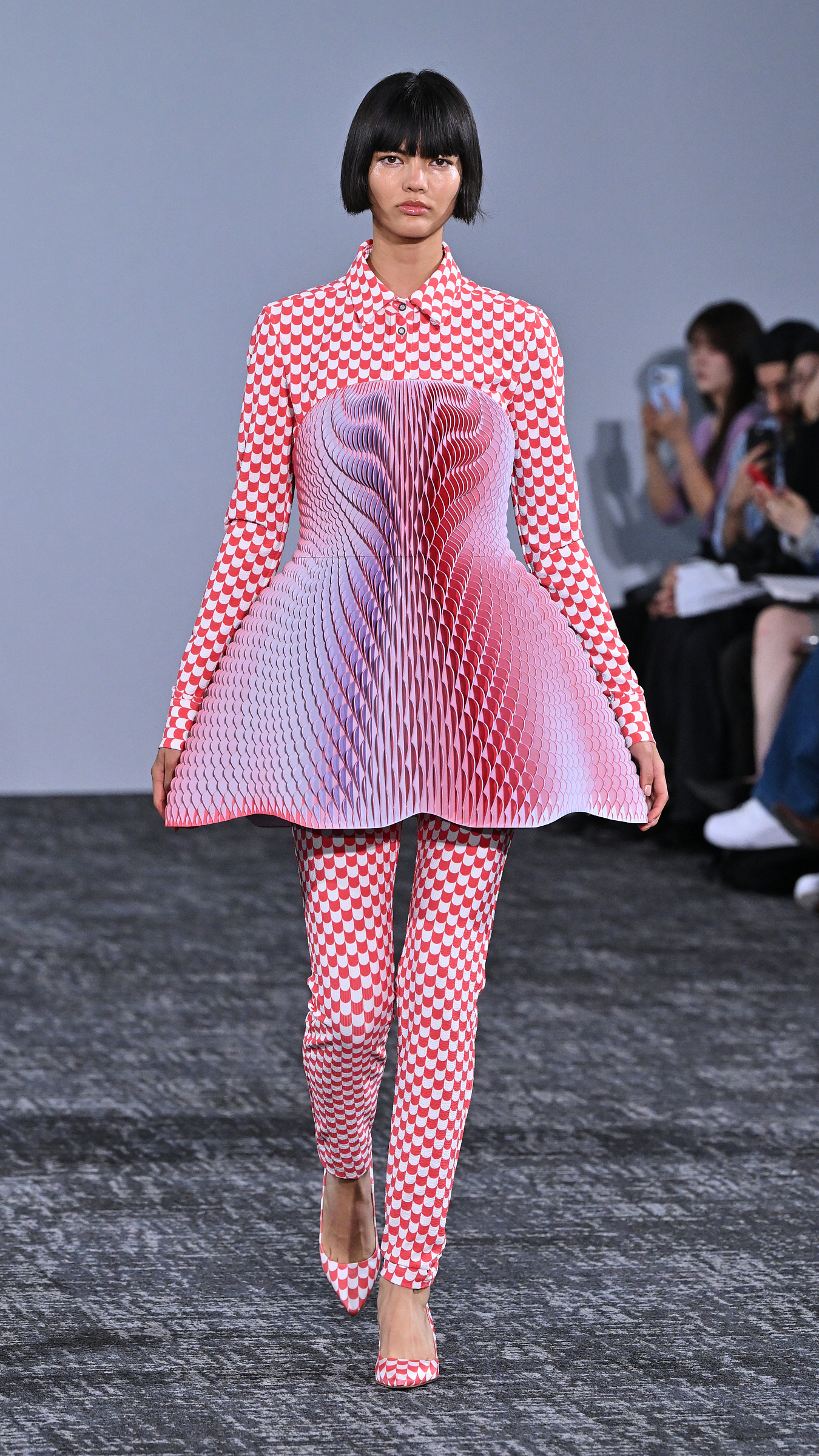
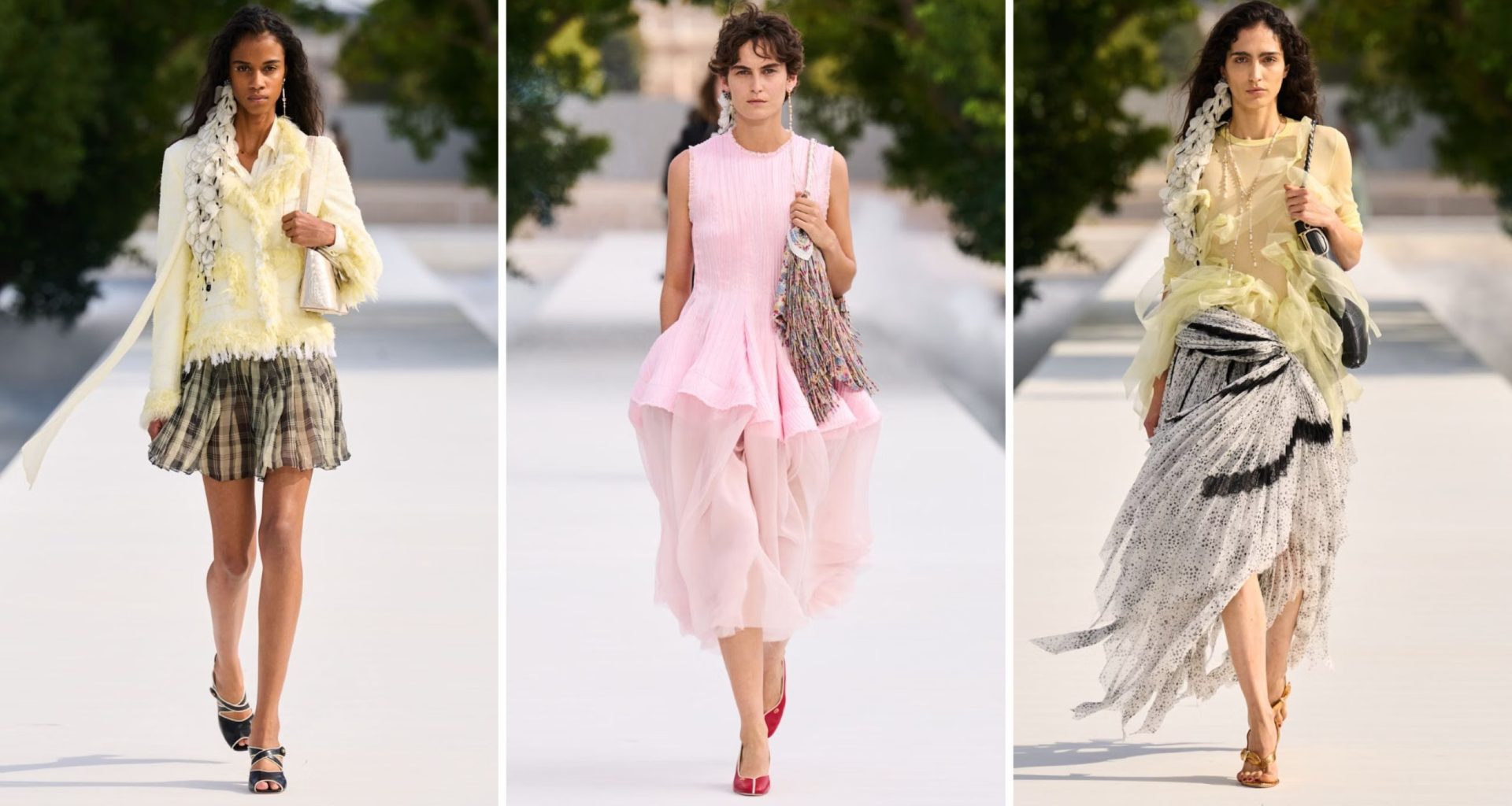
For Dior SS27, Jonathan Anderson takes Dior somewhere noticeably lighter.
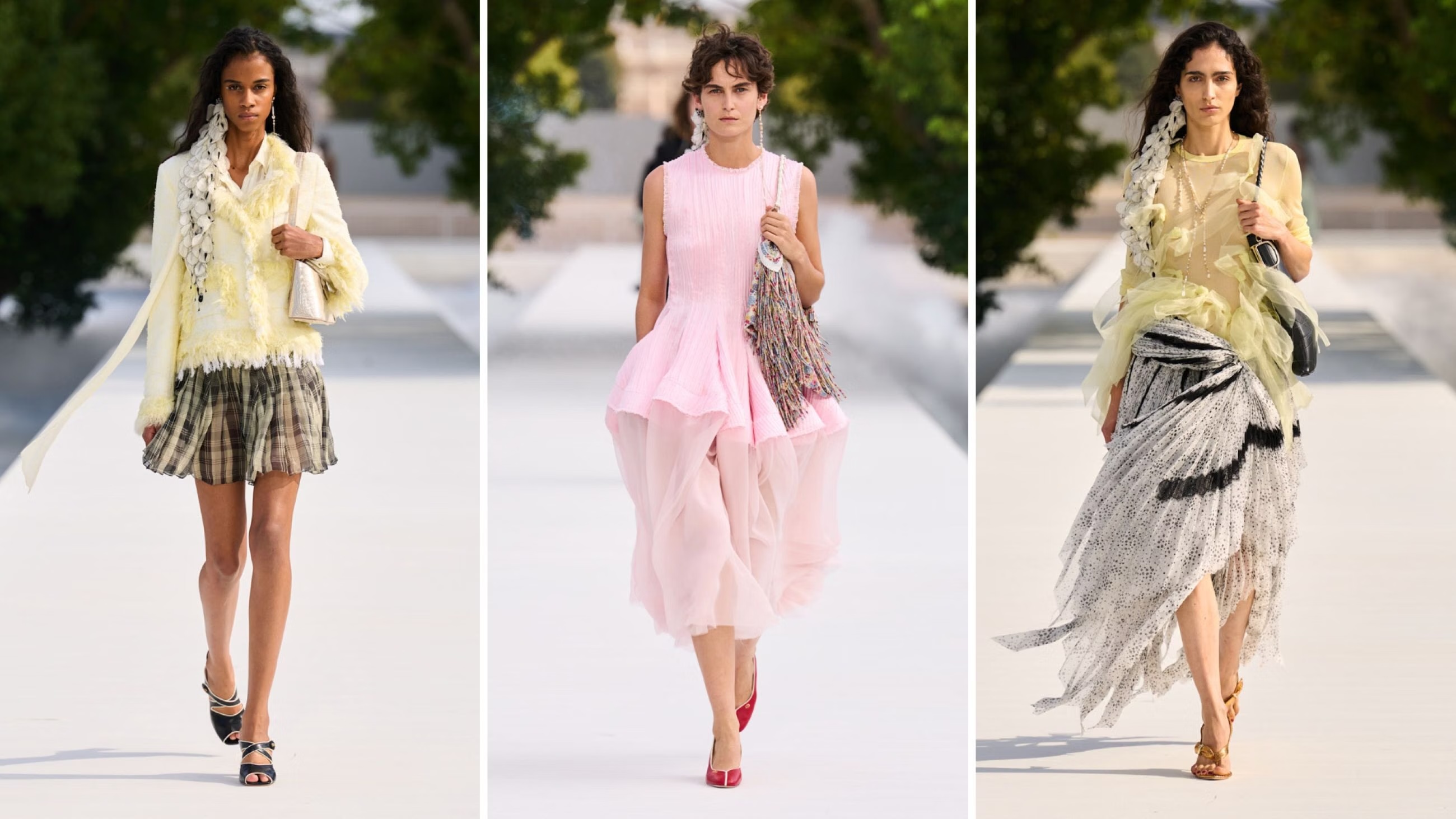
Presented in the Tuileries Garden under a layer of mist, Dior SS27 is a collection that plays with transparency, asymmetry and the idea that beauty doesn’t necessarily come from perfection.
The starting point of the Dior SS27 show was an unexpected object: the Chinese wénwán walnut. Traditionally held and rotated in the palm, the walnuts become smoother and develop a deep, glossy patina through years of touch. The practice requires patience and repetition, and has recently found a new audience among younger people looking for small, almost meditative ways to slow down.
It is a surprisingly fitting reference for Dior SS27. Rather than treating the collection as something precious and untouchable, he seems to be asking what happens when you keep handling, changing and slightly disrupting something until it becomes your own.
DIOR SS27 FEELS LESS PRECIOUS
The Dior codes are still there, but they feel much easier to play with. This isn’t entirely new territory for Anderson: his recent Dior Haute Couture Fall/Winter 2026 collection also looked at how familiar Dior constructions could be folded, pulled and transformed. And so the Dior SS27 seems a natural continuation and further evolution.
Tailoring is oversized and often deliberately relaxed, with fluid double-breasted blazers referencing Anderson’s recent menswear. Sheer shirts sit underneath transparent layers, while chiffon, lace and mousseline make traditionally structured pieces feel almost weightless.
There is also something intentionally undone about the styling. Shirts are left open, layers don’t always sit perfectly, and pieces that could easily have felt overly polished are instead thrown together. A blazer might be paired with something sheer and romantic; a structured jacket can suddenly sit over a soft, almost lingerie-like layer.
Dior doesn’t feel untouchable here. You can actually imagine messing with it.
That becomes even clearer through the collection’s mix of opposites. Romantic dresses sit next to severe tailoring. Pastel chiffon meets metallic trousers. Checks and stripes appear alongside floral prints, while oversized jackets contrast with barely-there sheer layers.
FINDING BEAUTY IN THE IMPERFECT
Asymmetry runs through almost everything.
Hems fall unevenly. In the Dior SS27 collection chiffon appears attached almost randomly. Lapels don’t always behave symmetrically. Floral details look as if they have grown rather than been placed, covering jackets and skirts in three-dimensional petals. Even the collection’s softness isn’t perfectly controlled.
That makes the wénwán walnut reference feel less like a clever invitation gimmick and more like the collection’s actual logic. The walnuts become beautiful precisely because of time, touch and small differences. Anderson similarly avoids making every look resolve into perfect symmetry. As he put it in the show’s notes, “What looks symmetrical in nature is often not quite.”
LETTING DIOR GET A LITTLE WEIRD
The collection isn’t entirely soft, either.
There are metallic, snakeskin-effect trousers, sharper jackets and flashes of darker tailoring breaking through the pastel palette. Some of the most interesting moments come from exactly this clash: the romantic Dior woman is there, but she’s wearing something that feels slightly strange, slightly off, or simply not as polished as you would expect.
The beauty also followed that logic. Peter Philips described the direction as fresh and beach-like, with salty-looking hair, glittering eyes and mismatched nails. It wasn’t about creating a perfectly finished Dior beauty look, but about letting a little imperfection remain visible.
And the setting!! the Tuileries, a white runway stretched across the water, trees rising from the middle and mist moving through the space. The clothes followed the same idea – light, fluid and constantly shifting as the models moved through the fog.
After a year of Anderson figuring out how to speak Dior, Dior SS27 feels like a collection where he is starting to play with the house rather than simply decoding it.