By Alegria Haro
Jonathan Anderson’s second Dior Haute Couture show opened inside a black-lacquered pavilion in the gardens of the Musée Rodin. Paper fans moved through the July heat before the first model appeared.
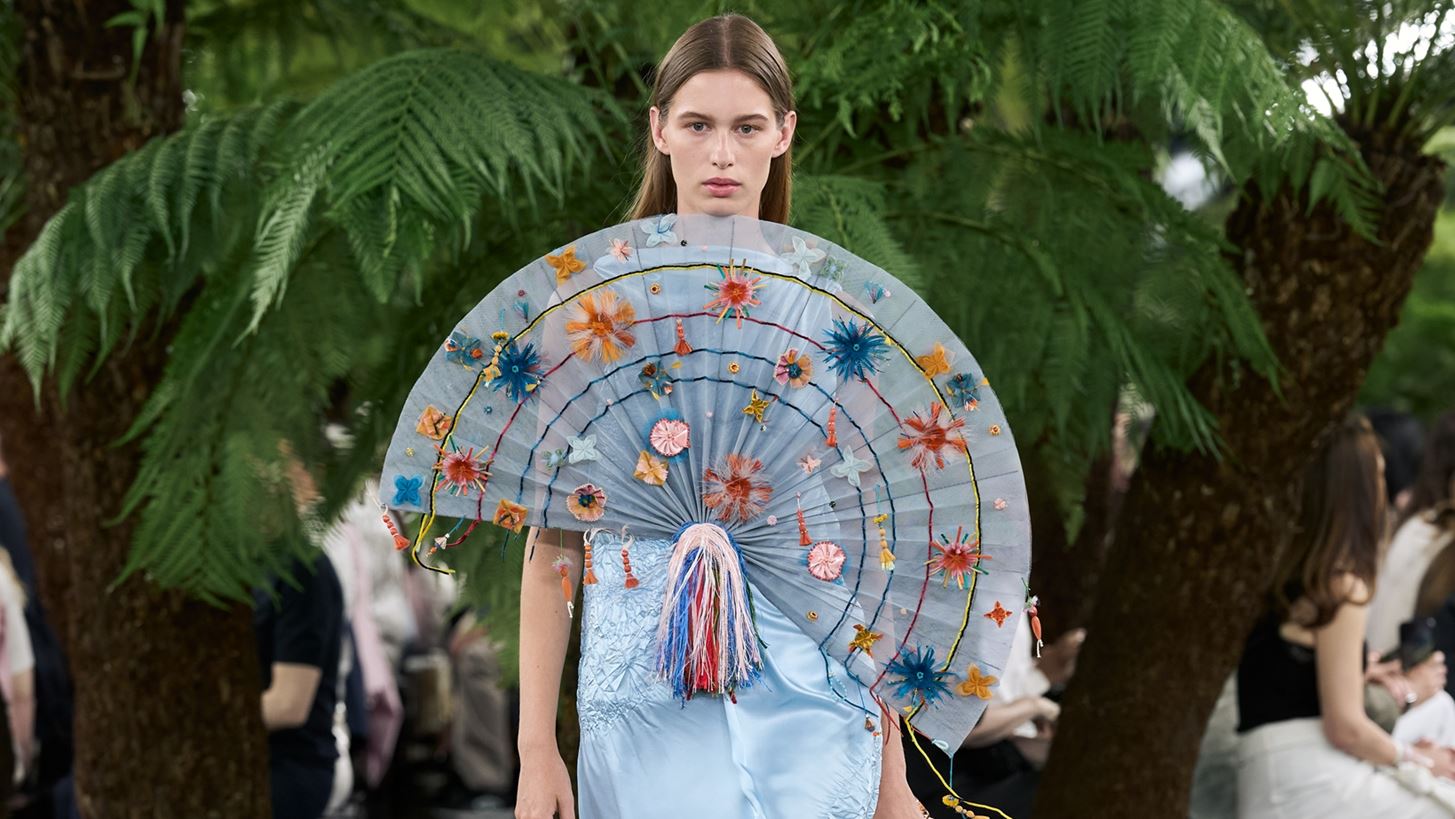
The fan was a prominent motif throughout the show. It shaped metallic hats, curved collars and pleated dresses. Beaded constructions opened across the torso. Silver embroidery spread over black fabric like a fan caught at full extension. Across 66 looks, Anderson explored what happens when a flat surface is folded, knotted and pulled into volume.
Presented on July 6, the collection followed Jonathan Anderson’s previous Dior show and showed him using the house’s archive with greater precision.
Dior Haute Couture Fall/Winter 2026 Begins With a Fan
The invitation contained a plain black fan inside a white Dior box. On the runway, that modest object became an instrument of construction.
Fine pleats radiated from knots and gathered waists. A pale blue dress carried a large fan across the body, decorated with brooches and coloured tassels. A silver gown pulled its folds from a central point. Petal-like plissé shifted with each step, giving the dresses movement without adding visual noise.
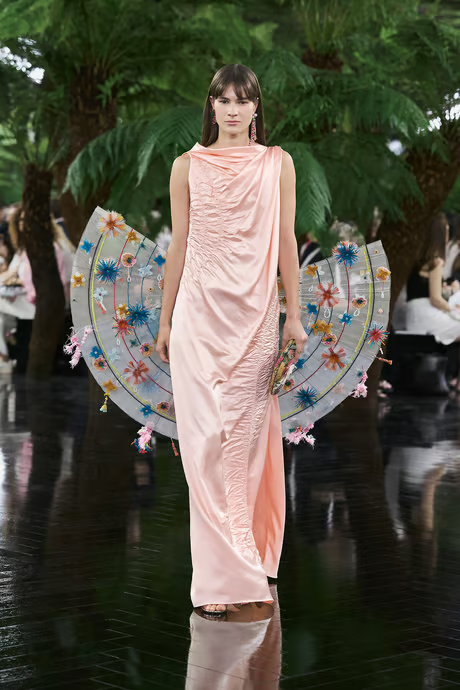
Anderson understood the fan as a piece of engineering. It converts a flat plane into a three-dimensional object through a repeated fold. Haute couture performs a similar operation. Fabric begins on a table, then gains shape through the work of the atelier.
The strongest garments kept that mechanism visible. Their volume came from pleating and draping. The eye could follow the hand of the maker across the cloth.
Lynda Benglis and the Physical Logic of Couture
American sculptor Lynda Benglis gave Anderson a working method for the season. Benglis has spent decades turning flexible or liquid materials into forms that appear poured, tied, slumped or frozen in motion.
Her sculptures often begin with paper, mesh or fabric. Knotting, pleating and moulding alter their physical state. Anderson translated those gestures through hand-plissé, draping and twisted lengths of cloth.
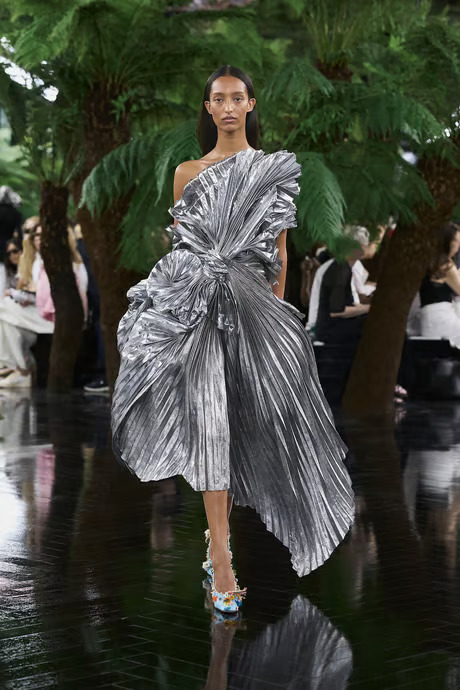
The connections were precise. Benglis’s Pleated works informed molten-looking lamé gowns. Her Sparkle Knots appeared through silver netting engineered to resemble chicken wire. The fan-shaped works of her Zanzidae: Peacock series returned as beaded ornaments placed across silk dresses and at the hip.
A silver lamé dress gathered into an oversized bow recalled the compressed metal of Benglis’s Toyopet Crown. Metallic surfaces looked hammered or crumpled. Paper-like textiles held their shape with a dry, irregular finish. Anderson carried the artist’s process into clothing without copying a sculpture garment by garment.
Dior’s Archive Learns to Move
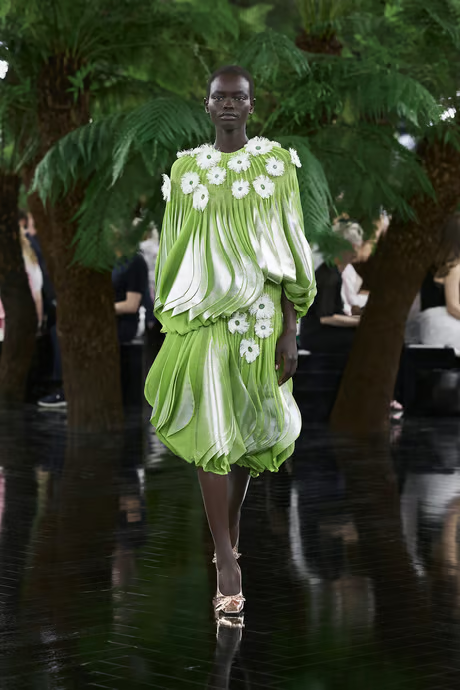
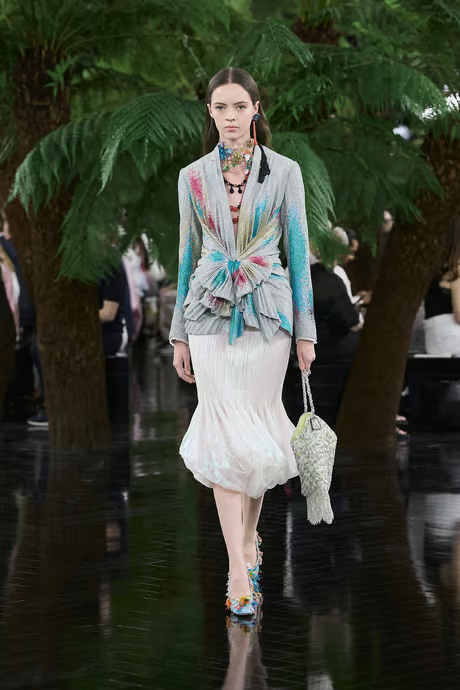
Pleating changed the posture of Dior’s familiar silhouettes. The Bar jacket kept its nipped waist, then opened through standing collars and rippling fronts. Threads of chiffon fell from tailored hems. Fluted jackets moved above narrow trousers and skirts.
Anderson also returned to specific archive pieces. The clasped stoles of Dior’s 1955 Y-line appeared in altered form. A red coat recreated the 1948 Arizona pattern. These references entered the collection through cut and proportion, without requiring a historical explanation from the viewer.
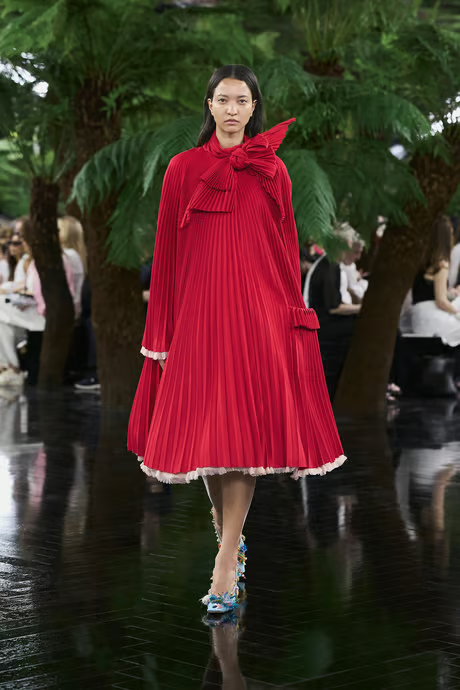
The short panniered dresses carried Anderson’s clearest signature. Made from plissé lamé in tarnished silver and gold, some were worn over trousers. Their volume sat firmly at the hips, with fabric twisted into bows or drawn tightly across the body.
Other pieces looked deliberately loose. Suit linings escaped at the cuffs. A soft jacket and trousers collapsed around the figure. Anderson described the fleecy ensemble backstage as his “Juicy Couture.” The joke pointed to a real shift in the collection: Dior’s structure could sag, swing and crease.
Ahmedabad, Chintz and the Decorative Surface
Benglis began her Peacock series after spending time at the Sarabhai family estate in Ahmedabad, Gujarat. Anderson followed that history into Indian textile and jewellery traditions.
Antique fragments of chintz and indiennes appeared on the Petit Dîner and mini Lady Dior bags. These painted and printed cottons once travelled from India into European interiors, influencing generations of decorative design. At Dior, small sections of the original cloth became part of singular couture objects.
The collection also drew from Benglis’s relationships with Ahmedabad and Santa Fe. Cactus flowers and eucalyptus appeared in embroidery. One white wool-silk Bar jacket carried eucalyptus foliage beneath a translucent chiffon coat.
Jewellery was produced by artisans in France and India, including workshops in Jaipur. Mother-of-pearl, carved green onyx and rock crystal were threaded onto tasselled cords. The materials connected the collection’s colours to the landscapes behind Benglis’s work.
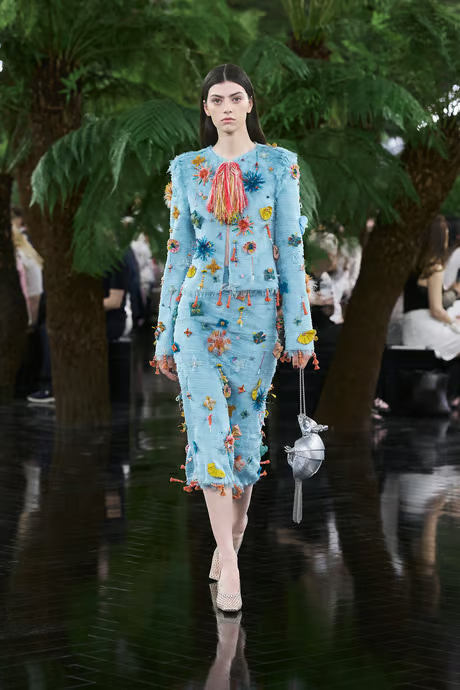
Anderson addressed the Indian contribution to couture directly before the show. He spoke about the depth of its embroidery knowledge and the fashion industry’s dependence on skills developed over centuries. Within the collection, those techniques received a clear material presence.
Accessories as Sculpture
The accessories extended the collection’s construction methods at a smaller scale. Four bags were developed with Benglis, including a metallic-plissé Dior Cigale, a sculptural Dior Bow and new versions of the Lady Dior and Petit Dîner.
Shoes carried elongated square toes, recalling the proportions of Roger Vivier’s work for Christian Dior. Some were covered in irregular paillettes and micro-sequins. Others featured floral embroidery or pleated metal bows.
A porcelain handbag was painted by artisans associated with Dior’s home collections. Antique chintz appeared on one-off pieces. These objects had enough formal clarity to stand alone, yet their surfaces remained connected to the collection’s pleats, knots and metallic finishes.
Metallic Green Eyes Under the Ferns
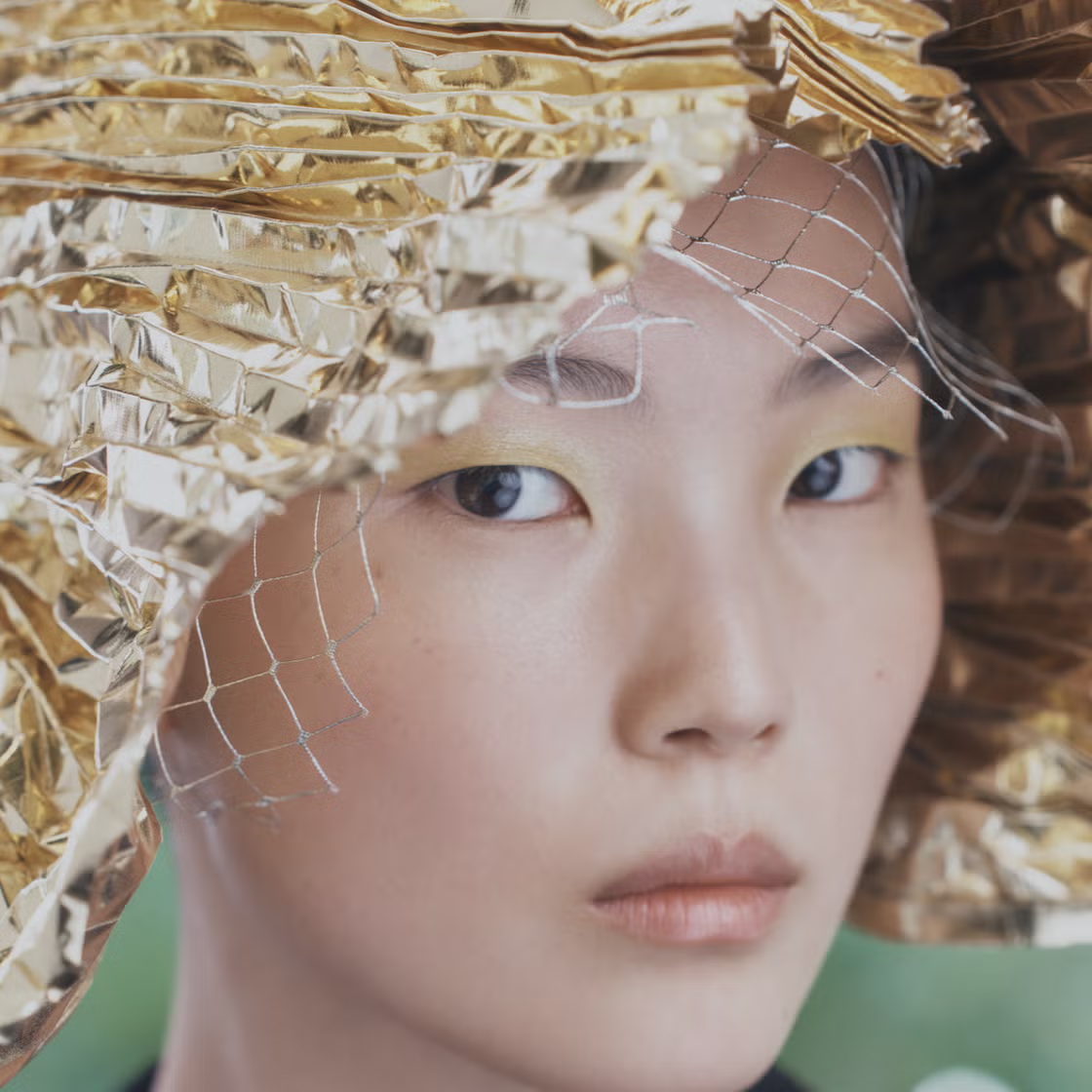
Peter Philips kept the complexion luminous and placed the colour around the eyes. Chartreuse shadow was layered with sheer gold glitter, producing a metallic flash as the models emerged from the dark entrance into the fern-filled set.
Some looks received deep green graphic liner. Skin carried a fresh sheen, with peach and rose tones blended lightly across the cheeks. Baby-pink gloss finished the lips.
Guido Palau kept the hair sleek and close to the head. Sculptural silver and gold headpieces reflected the eye makeup and repeated the hard shine of the collection’s metallic fabrics.
The Final Look
The show closed with couture’s traditional bride. A pearl-toned column dress sat beneath a canopy of hand-pleated chiffon. White feather dandelions and cactus-flower embroidery covered the veil, bringing the collection’s botanical references into its final silhouette.
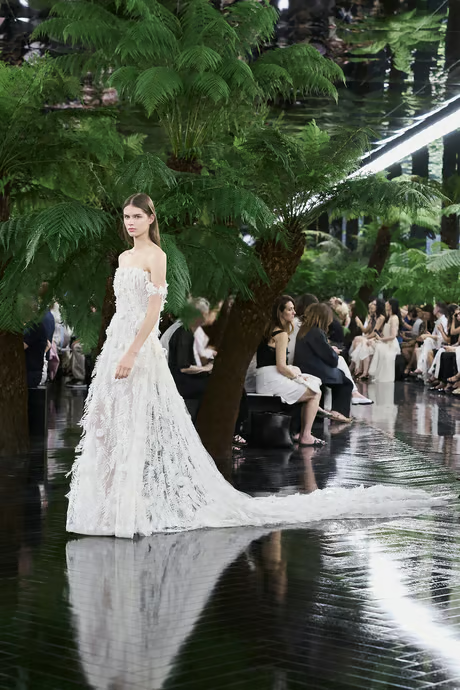
The bridal look arrived days after Dior confirmed that Anderson had designed Taylor Swift’s wedding dress. He declined to reveal details of that commission backstage. The runway gown remained connected to the collection itself through pleating, flora and the transformation of a narrow column into a larger sculptural form.
Dior Haute Couture Fall/Winter 2026 gave Anderson’s first year at the house a sharper outline. The collection did not depend on the audience recognising each artwork or archive reference. Its argument remained visible in the garments: a flat length of cloth, folded until it could hold space.