

In both the animal and digital worlds, skins change, and the same happens on the ANREALAGE runway. The Spring/Summer 2027 collection, presented in Paris under the title SKIN, explores the idea of skin as a mutable surface, capable of constantly transforming without altering what lies beneath.
The collection brings together two seemingly distant worlds. On one side, it looks to nature and to animals that change their skin, plumage, or color; on the other, it turns to the digital realm, where avatars can continuously change their skins while preserving the same identity.
It is precisely this potential for transformation that ANREALAGE transfers onto clothing, conceiving the garment as a second skin in constant evolution. Color, material, movement, and technology become tools for altering its perception, gradually turning the garment into a dynamic and ultimately programmable surface.
At the heart of the collection’s imagery is the Firebird, a legendary creature from Slavic folklore characterized by its luminous, shimmering plumage. Its feathers are said to retain their glow even when separated from its body, while in Russian fairy tales, encountering the Firebird often marks the beginning of a quest, a journey, or a transformation.
Founded in 2003 by Japanese designer Kunihiko Morinaga, ANREALAGE carries this tension within its very name, which combines A REAL + UNREAL + AGE. The brand builds its universe around the relationship between real and unreal, matter and perception. Its highly experimental language combines conceptual construction, material research, and technological innovation, often approaching a form of interaction design applied to fashion.
ANREALAGE SS27 Collection
SKIN can be seen as an evolution of the research developed in the previous collection, GHOST. There, Morinaga created LED garments capable of visually reproducing the imagery projected behind them. As a result, the clothes appeared to merge with their surroundings, creating a form of digital camouflage and challenging the boundaries between body, garment, and space.
If GHOST was primarily about adapting to the surrounding environment, SKIN shifts the focus toward the transformation of the garment’s surface itself.
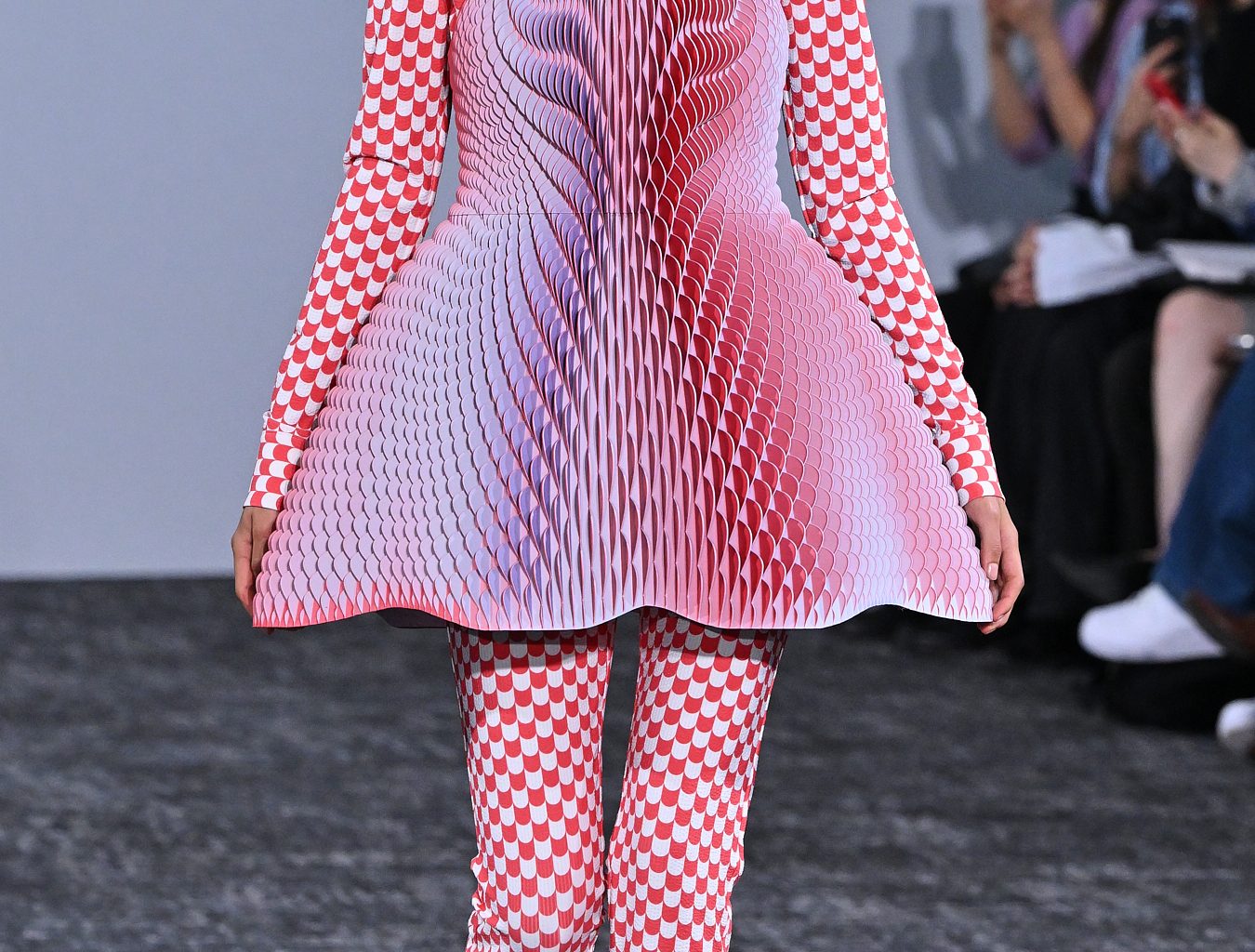
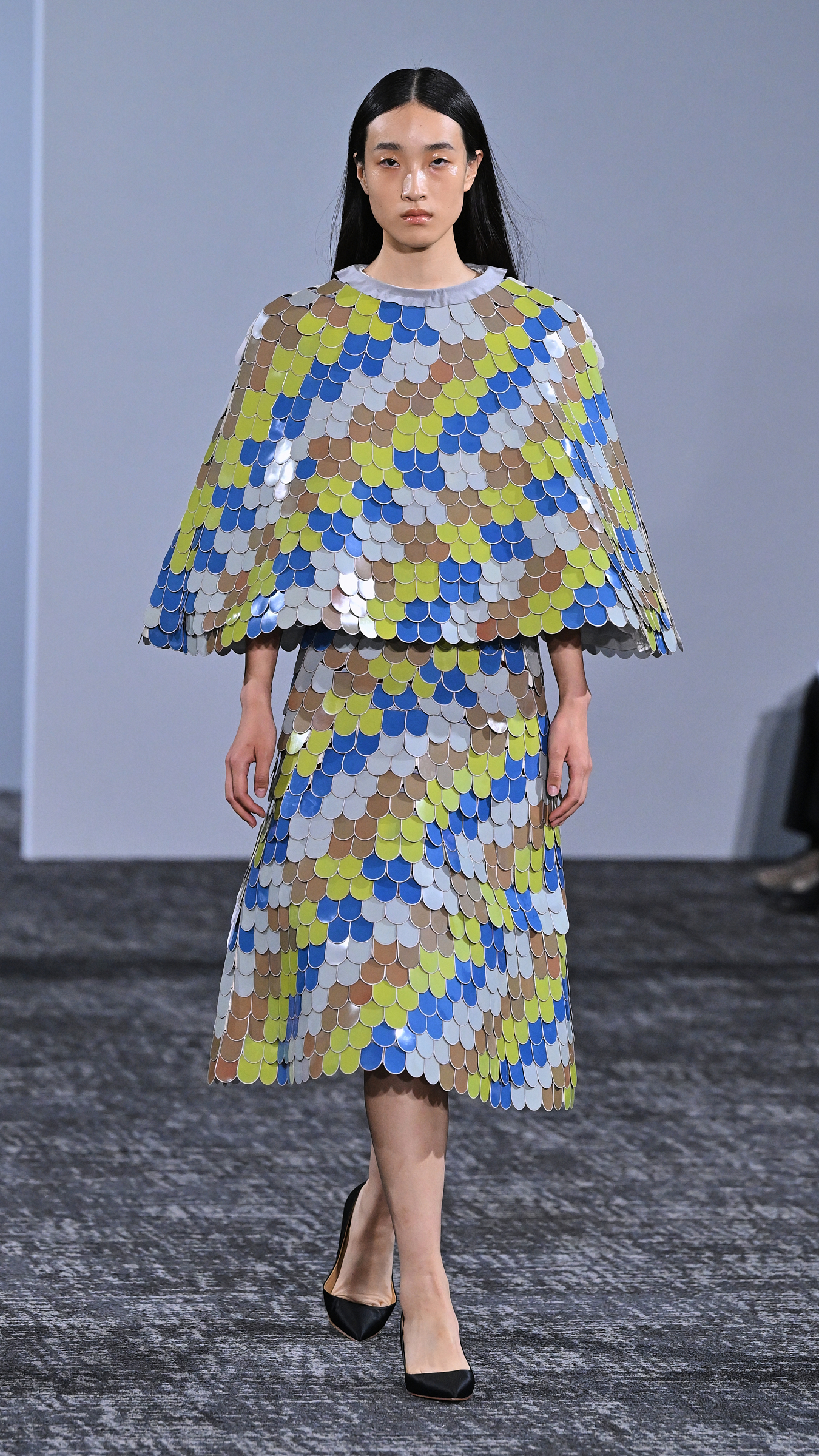
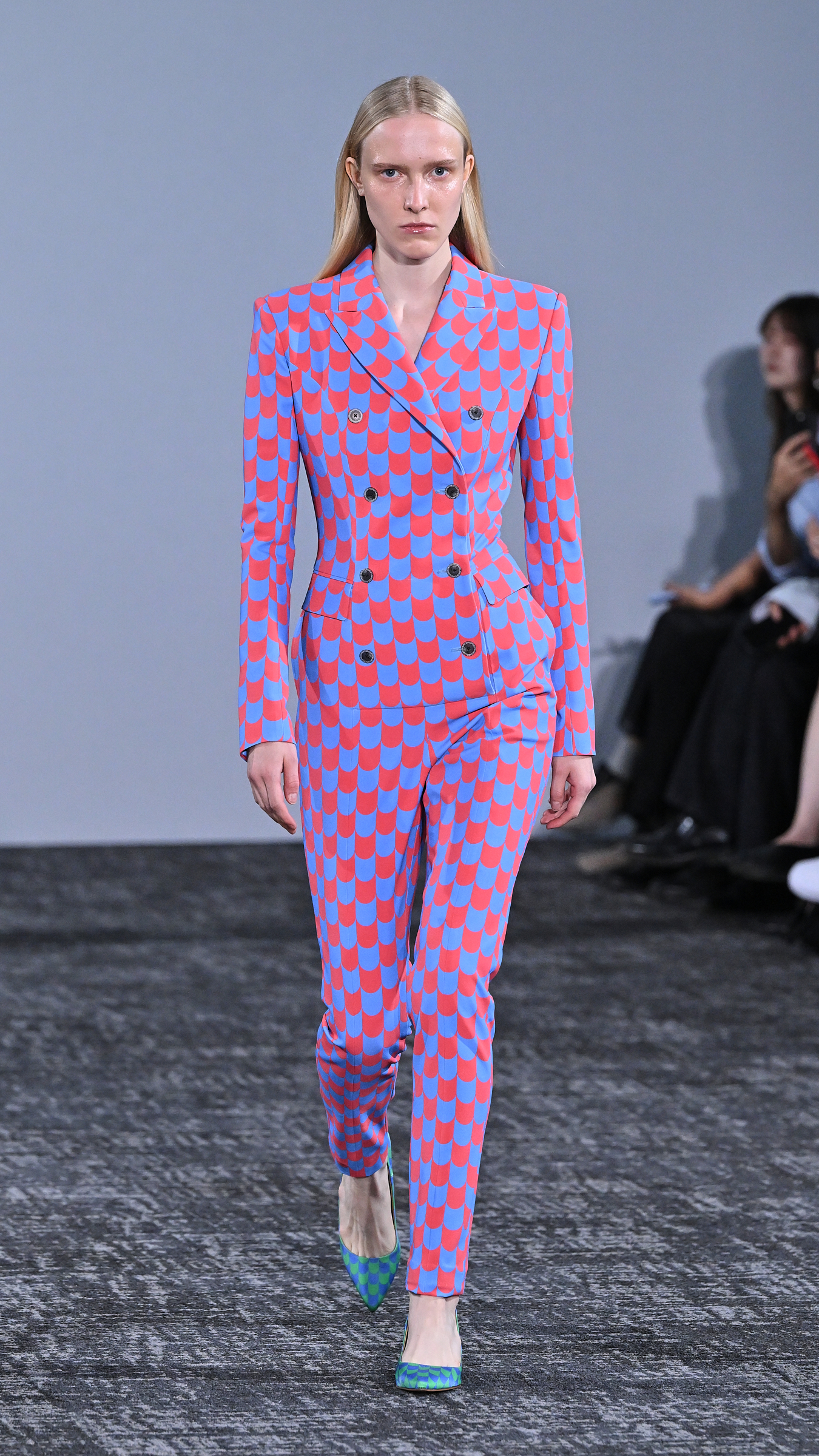
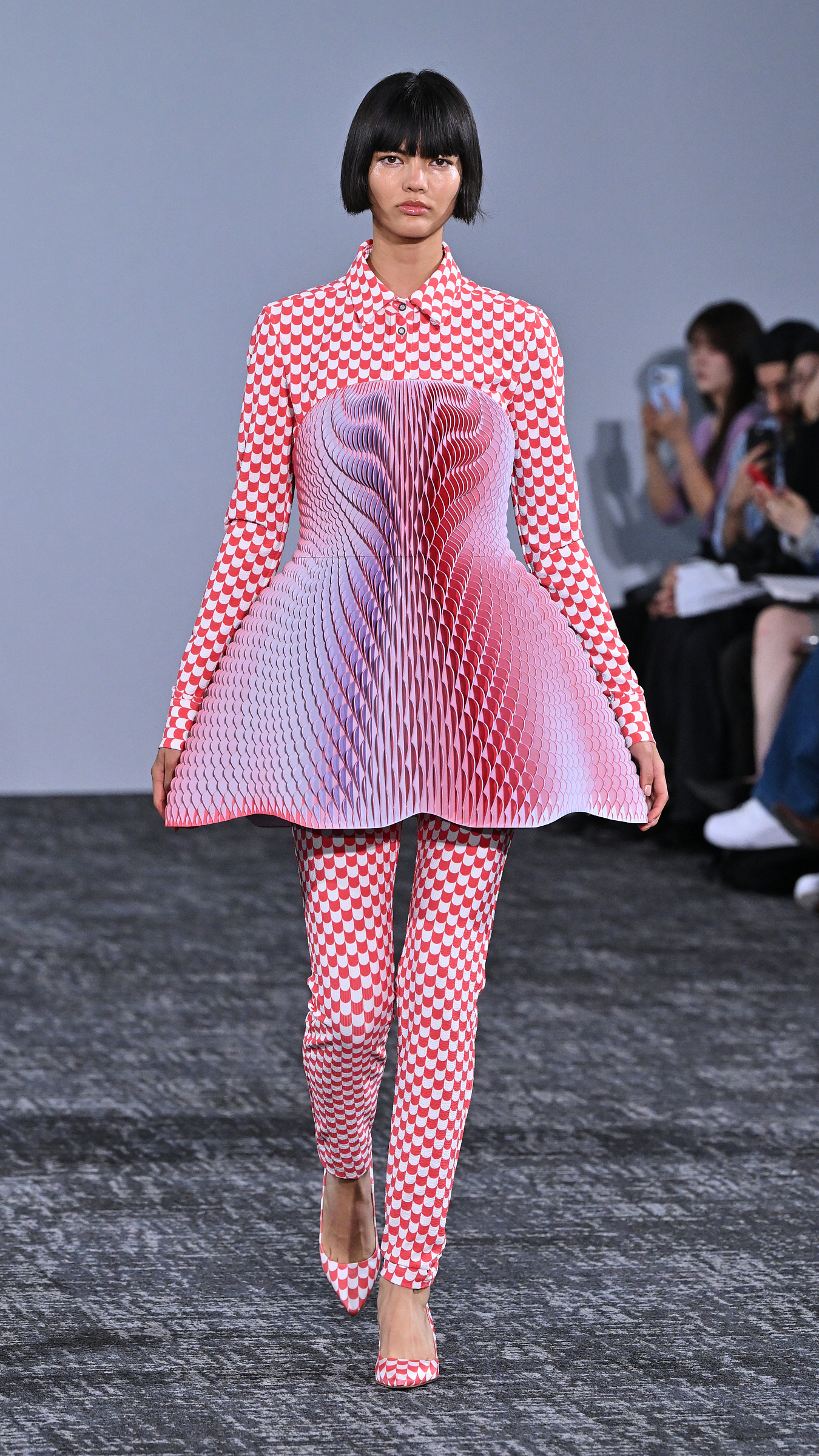
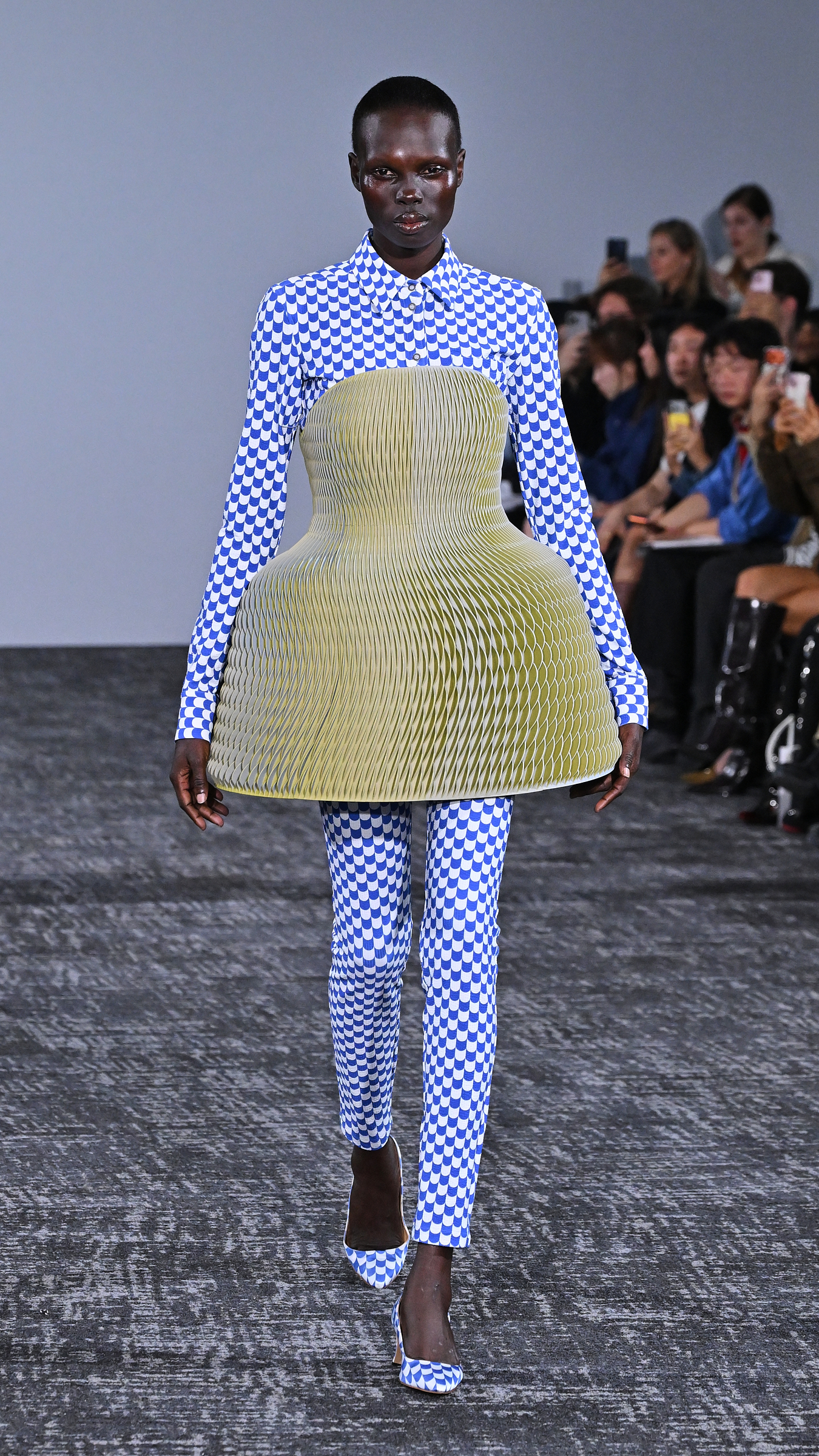
The runway progressively unfolds this idea. The first looks feature extremely close-fitting silhouettes, almost like second skins, establishing a direct relationship between fabric and body. Gradually, a recurring element begins to emerge: the scale. Layered across the garments, these scales create a new skin that simultaneously evokes animal hide, the Firebird’s plumage, protective armor, and, within a digital vocabulary, a surface made up of pixels.

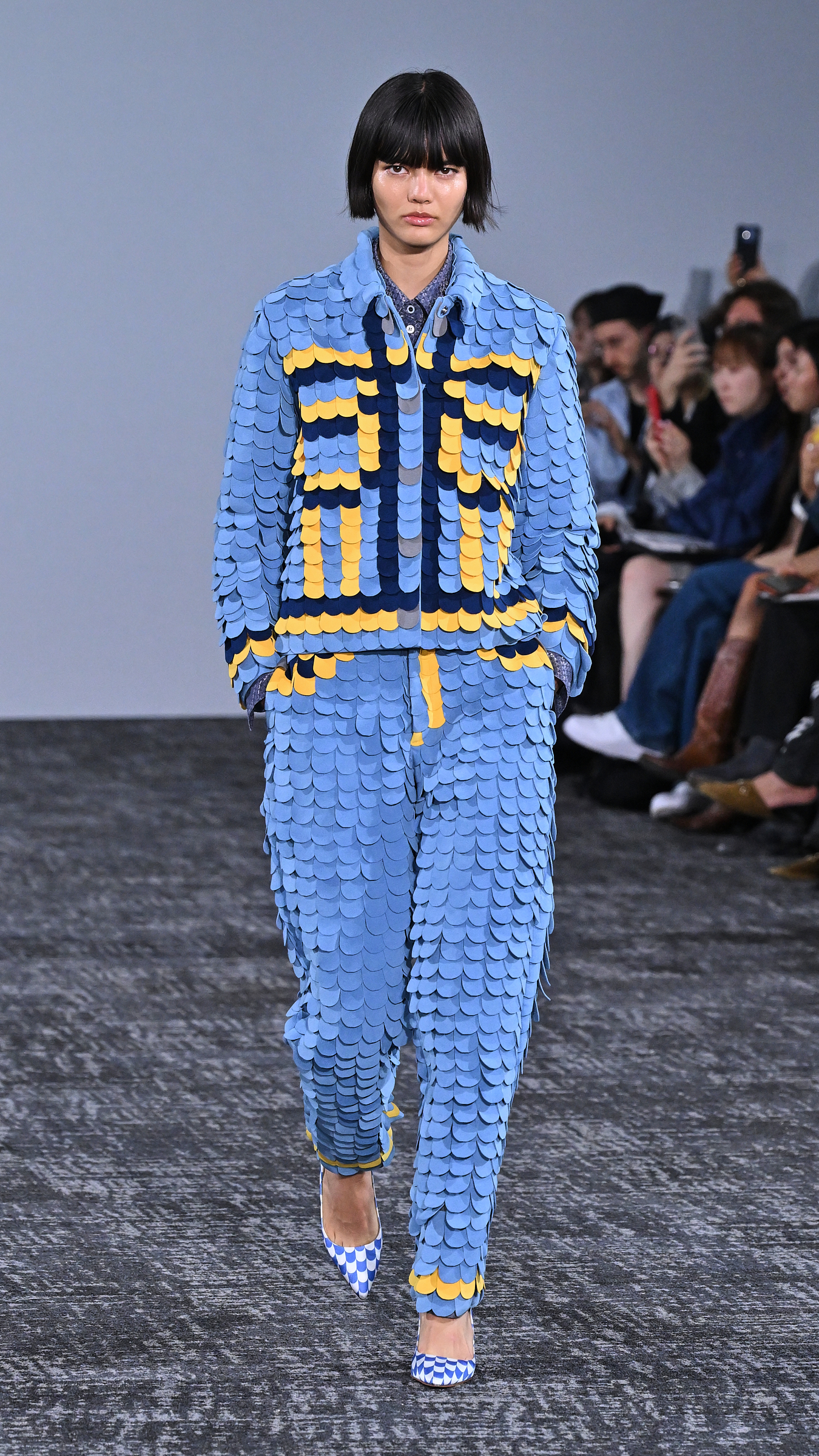
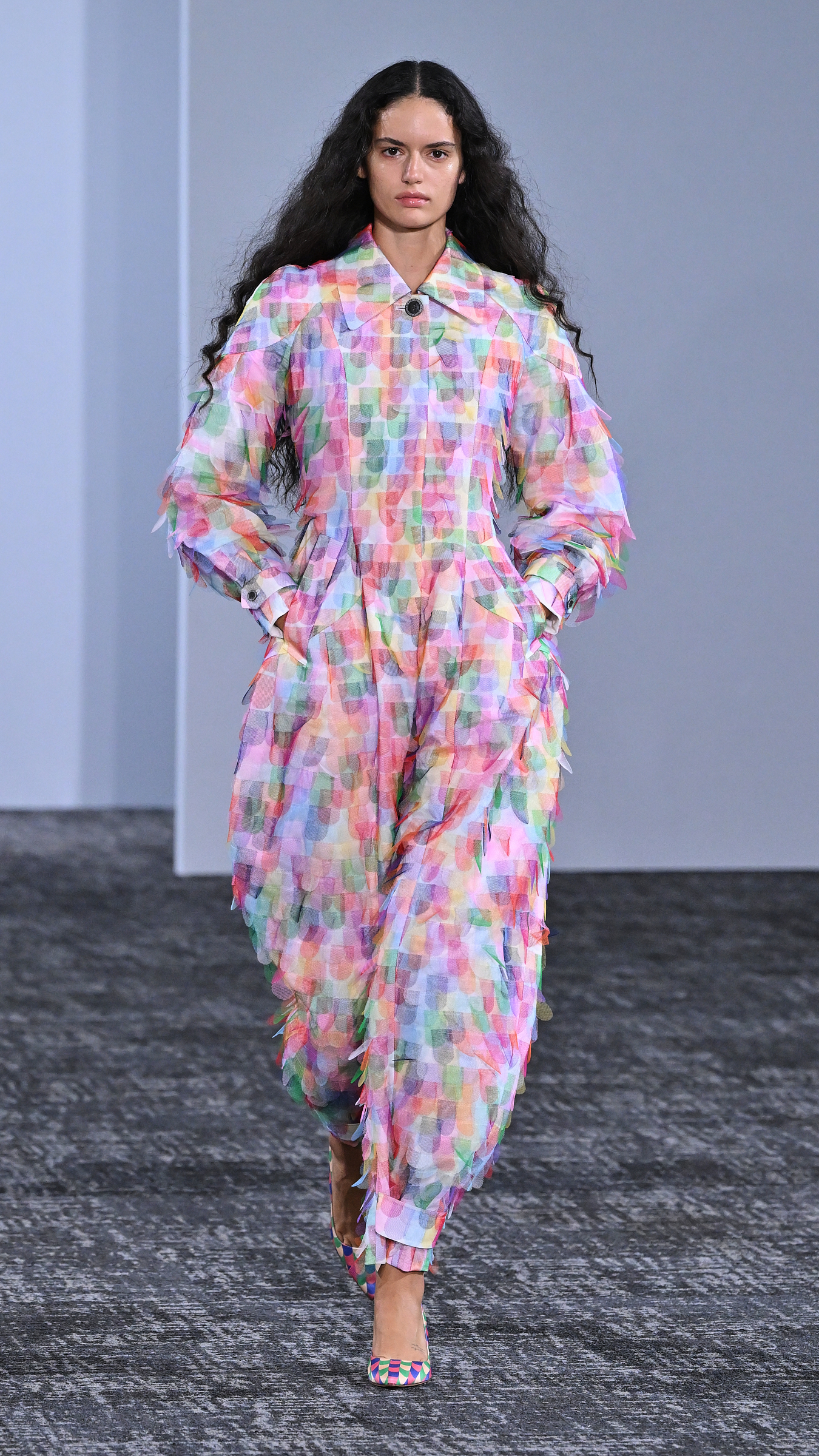
Before introducing any electronic component, Morinaga explores transformation through a purely material, geometric, and perceptual principle. Some skirts are constructed from three-dimensional scales created using a technique referred to as “Effective Skin,” designed to reveal different colors depending on the angle from which they are viewed. As the model walks, the relationship between surface and viewer changes: the perceived color of the garment shifts according to the spectator’s point of view. The garment no longer has a single, fixed appearance, but instead reveals multiple visual possibilities through movement.
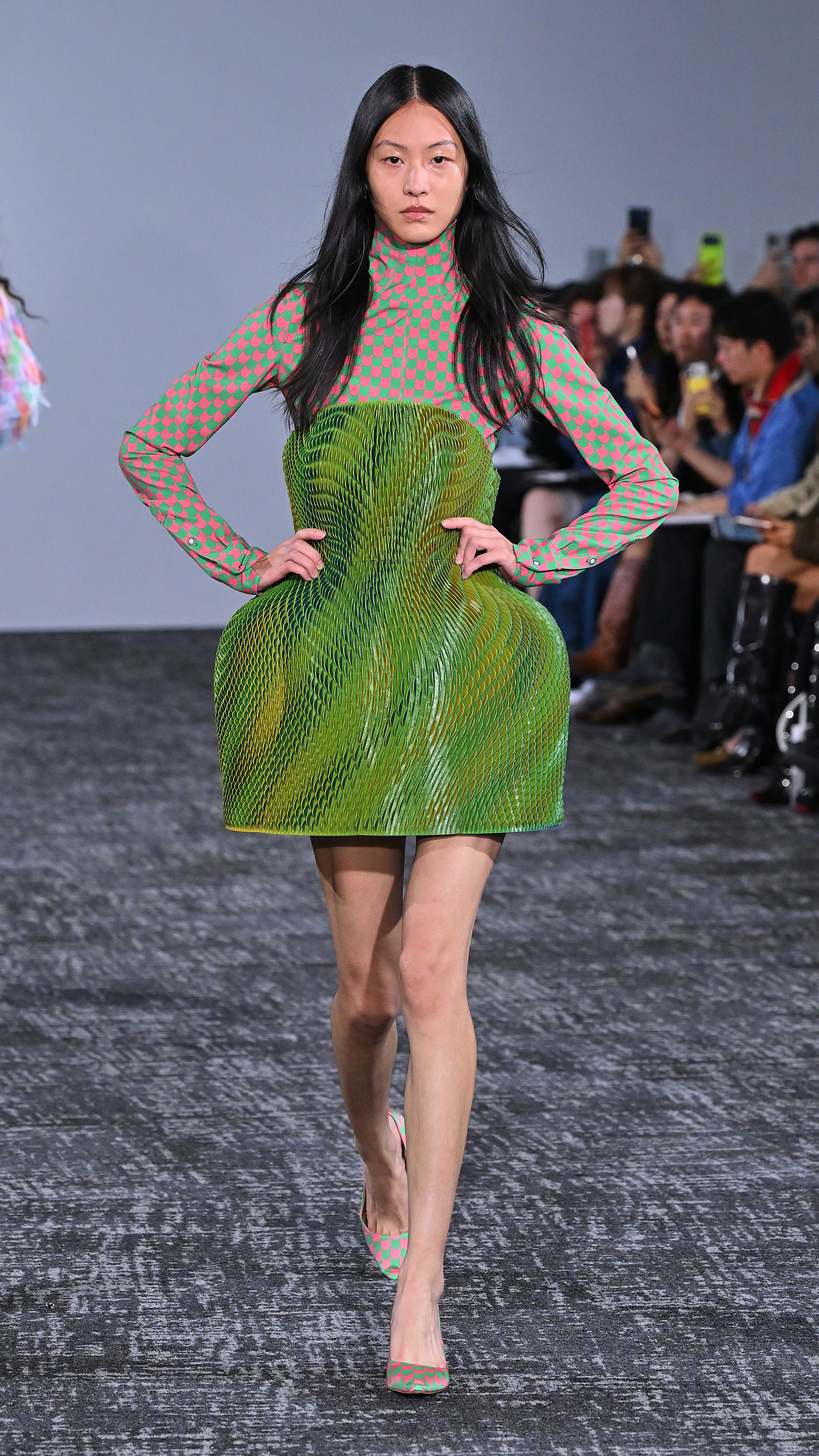
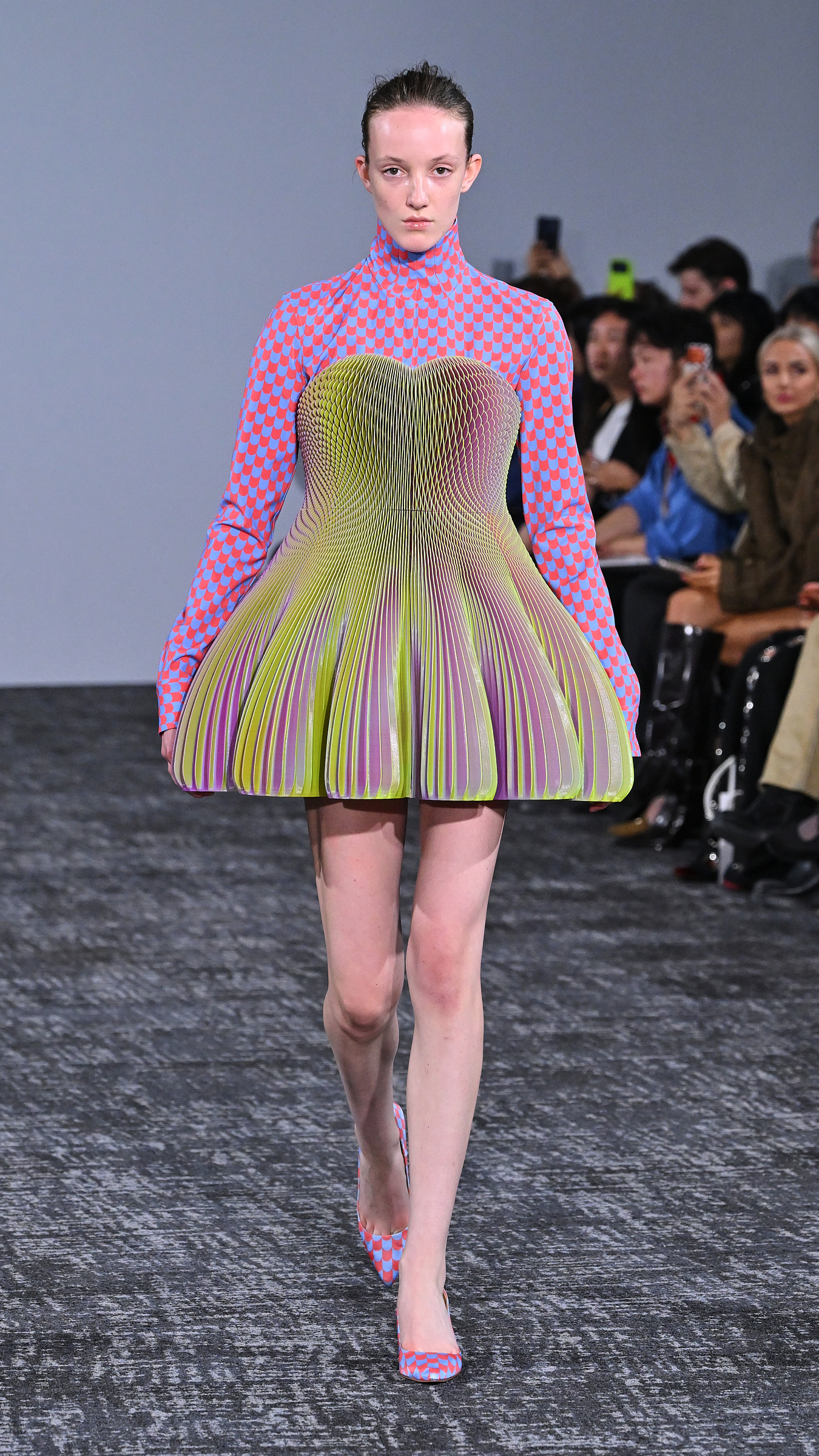
The decisive technological shift comes with six evening looks, resembling sculptural suits of armor and composed of approximately 1,000 to 2,000 individually controllable electronic scales. Using E Ink technology, each element of the surface can change its state, allowing temporary and constantly evolving patterns to emerge across the garment.
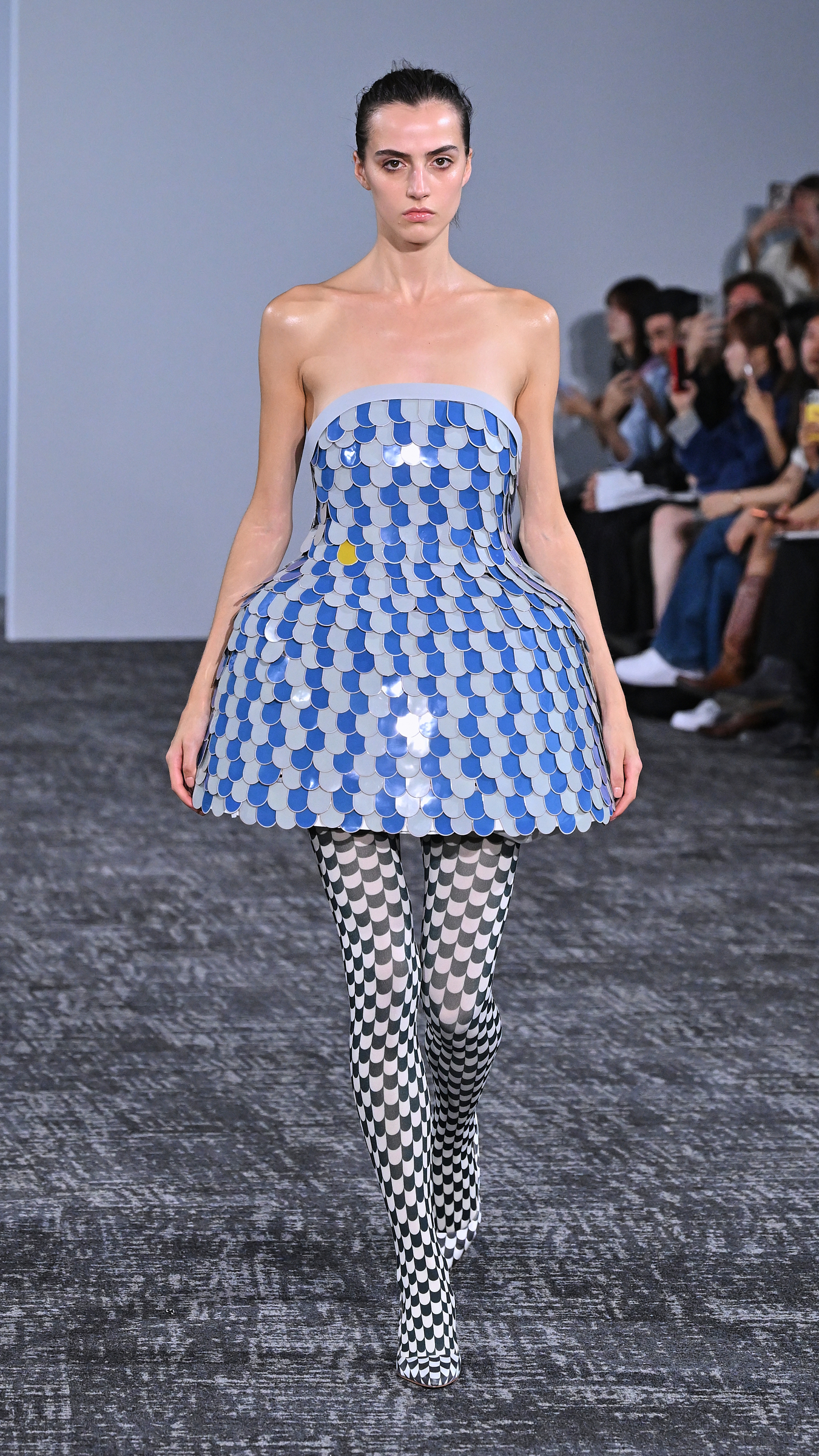
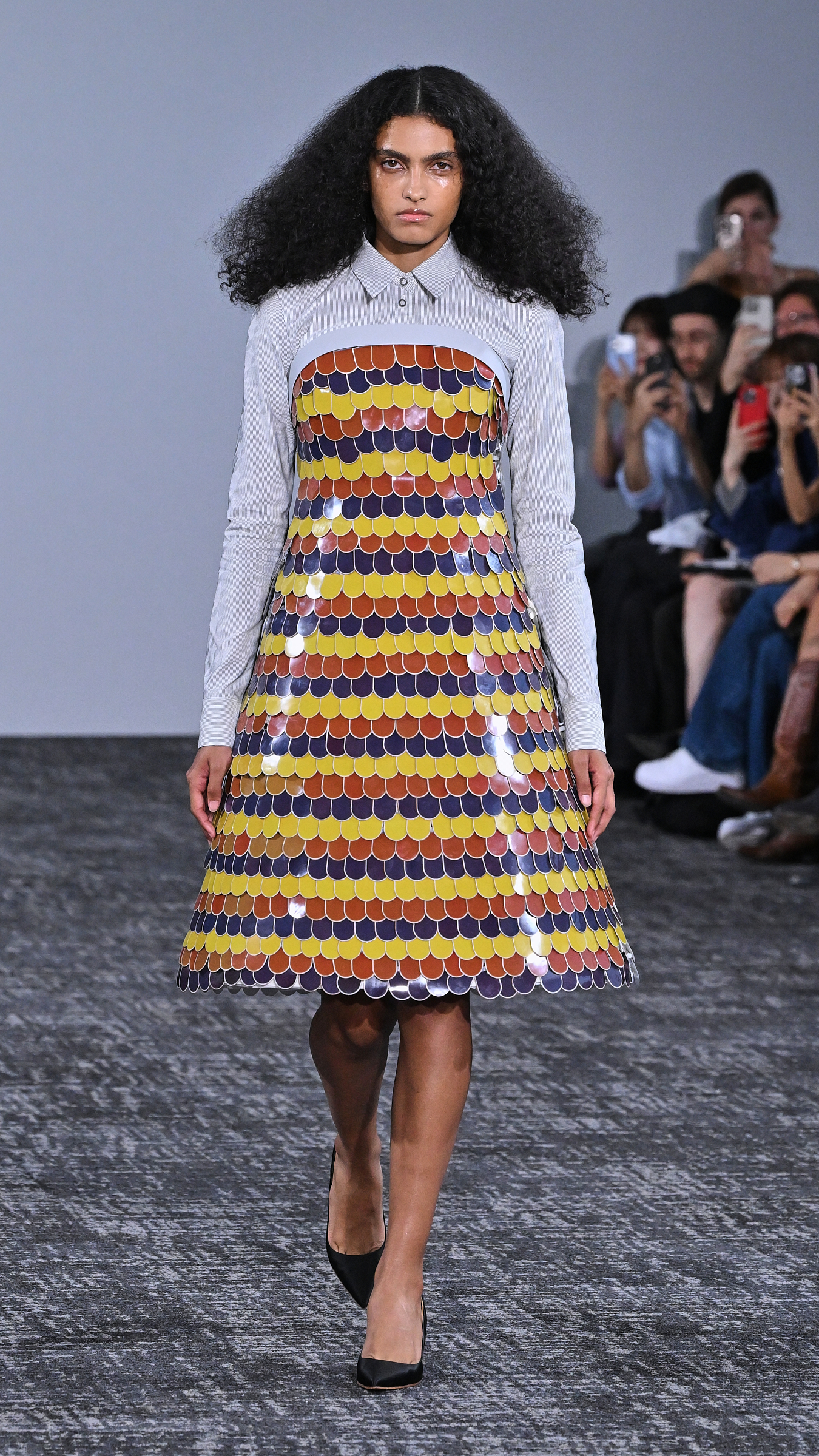
The dress thus becomes a kind of wearable display. Unlike a traditional print, where color and pattern are permanently fixed onto the fabric, here the appearance of the surface can be rewritten. Each scale functions almost like a physical pixel, allowing the garment to change its “skin” without altering its underlying structure.
It is at this point that the concept of SKIN reaches its fullest expression: the body remains, the form remains, while the surface transforms. The garment’s skin becomes an interface between matter and information, nature and the digital realm, transforming clothing from a static object into a dynamic, programmable surface.