By Julia Radovich

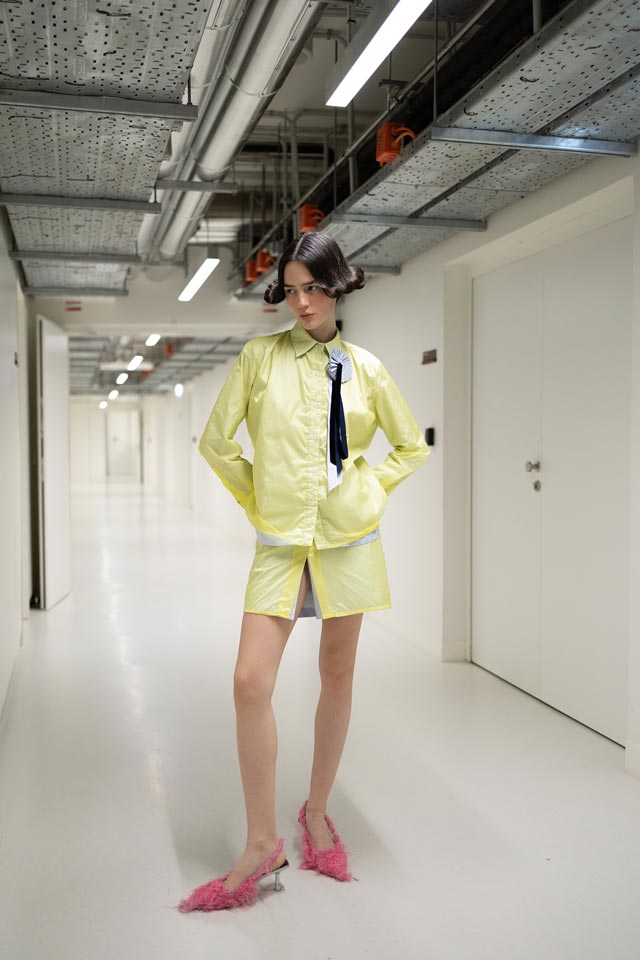
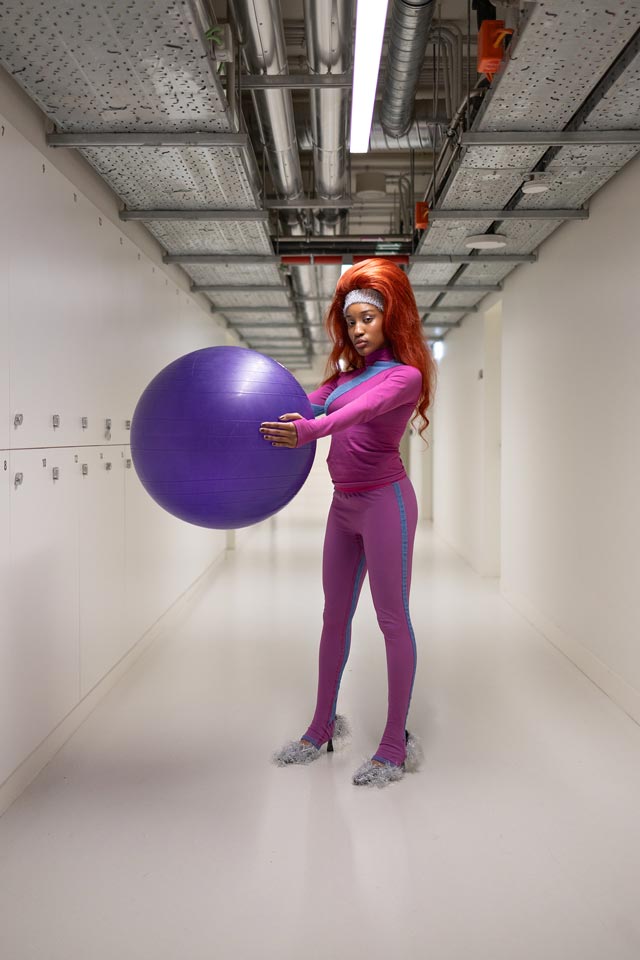
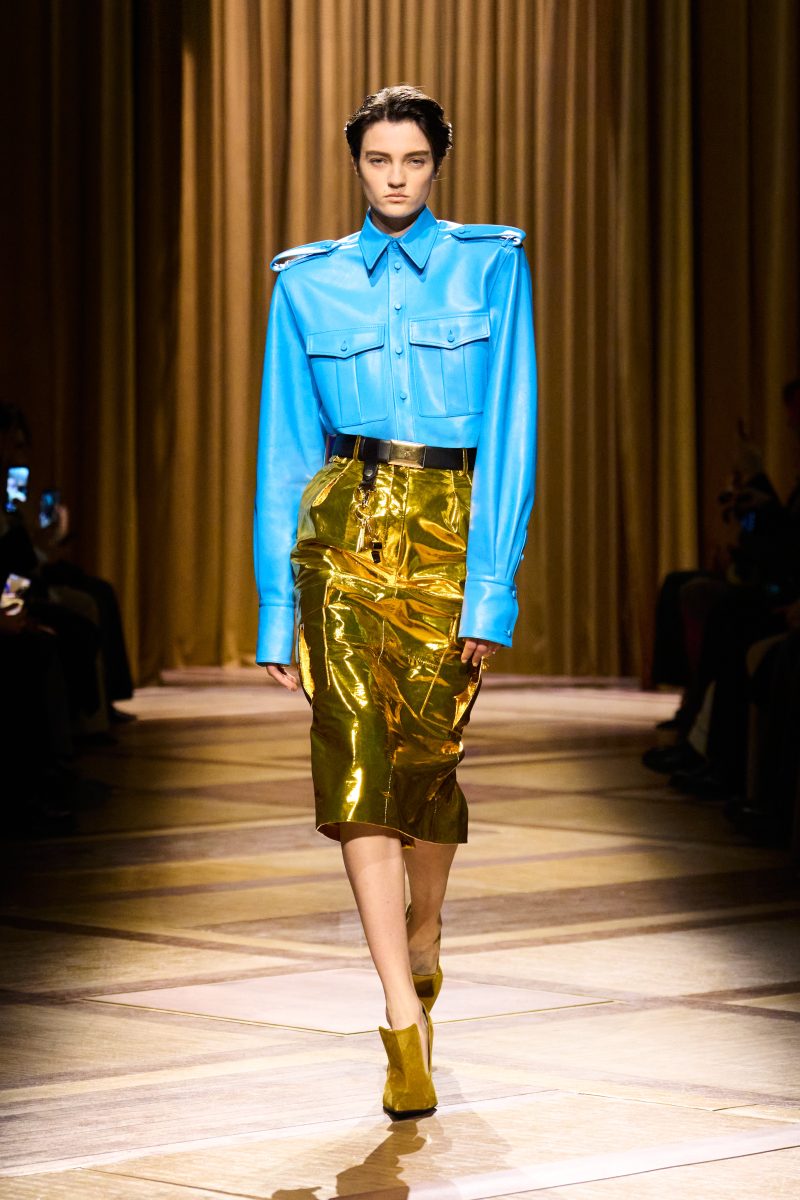
On March 7, 2025, in Lisbon, the new Constança Entrudo Fall/Winter 2025 collection was presented where the designer once again showcased her unique work with fabrics and innovative approach to textiles. Constança Entrudo is a designer who boldly experiments with textiles. After graduating from Central Saint Martins, she worked at Balmain, Peter Pilotto, and Marques’Almeida before founding her own brand.
Today, Constança Entrudo goes beyond trends, creating unique fabrics and sustainable solutions that challenge traditional manufacturing processes. In her collections, she combines craftsmanship, technology, and irony, making textiles the central element of her work. In the interview, Constança shared her journey in fashion, innovations, and how her brand continues to evolve.
Your path in fashion has been quite eventful: you graduated from Central Saint Martins and then worked at fashion houses like Balmain, Peter Pilotto, and Marques’Almeida. How did this experience influence your design vision? Why did you choose textiles as your main focus?
— Yes, my career started in textile design, but I have always been interested in visual arts. Before university, I was torn between sculpture and fashion, but in the end, I chose textiles because it’s a very versatile field: it applies to architecture, interiors, and fashion. During my studies, I interned at various brands, and all of them were connected to fashion. Gradually, I immersed myself more and more in this world. Working at big fashion houses, I realized I wanted to create something of my own, something independent, where textiles would not just be a tool but the central element of the design.
Your collections are known for their innovative work with fabrics. The brand’s description says that you challenge traditional manufacturing processes. What technologies or methods do you use to create your materials?
— My work may look crafted, but it is closely linked to technology. It all starts with testing in Photoshop and creating digital sketches. Right now, I am actively exploring the possibilities of artificial intelligence and its impact on textile production. This season, we tried to implement AI in the fabric creation process, especially in the area of cutting optimization and reducing textile waste. I see great potential in combining craftsmanship, sustainable production, and technology — they do not oppose eachother; they complement one another.
Does the collection presented on March 7 continue this philosophy? What key ideas did you incorporate into in?
— Yes, in the Fall/Winter 2025 collection, we continued our research into seamless design — creating clothes without waste, where garments are made from a single piece of fabric. We collaborated with the RDD factory to develop such items, and it was an important step forward. In this collection, I also worked with textile waste and deadstock materials, integrating them into new pieces. Inspiration came from reflections on the “second best” — how to give things new value and meaning.
Where do you draw inspiration for your collections?
— Inspiration is everywhere. It could be from traveling, music, everyday conversations.
I think it’s important to mention this in an interview because many people have the illusion that inspiration comes only from expensive trips or elite events. But in reality, curiosity plays a key role. For example, a dinner conversation can lead to a new idea. Of course, I explore contemporary art and design a lot, but even a chance encounter or a color palette in an urban landscape can kickstart the creative process.
What trends in textile design do you think will define the development of the industry in the coming years?
— Right now, textiles are going through an interesting stage: whereas they were once not considered art, today major museums are hosting textile exhibitions. In fashion, this is also becoming important: brands are striving to develop their own fabrics and create innovative materials. One of the key technologies of the future, in my opinion, is seamless design — creating clothing without waste, where garments are made from a single piece of fabric. We’ve already started working with the RDD factory on this concept. Additionally, digital printing is evolving: our prints are always created from scratch, whether they are hand-drawn designs or collages.
Where do you usually source fabrics for your collections?
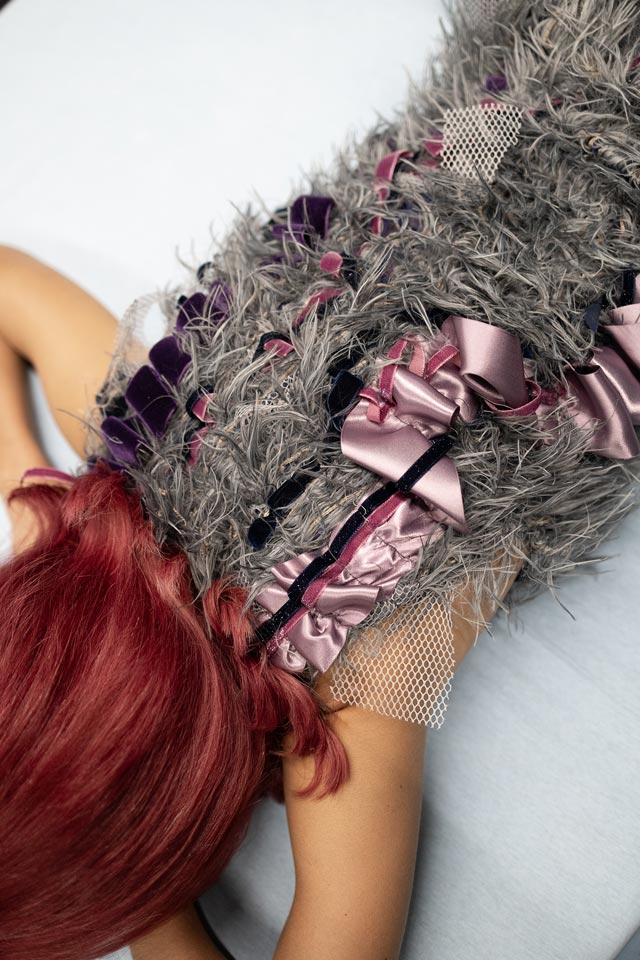
— We try to produce materials locally, in Portugal. This season, we focused on the concept of the “second best”, which led us to use deadstock — leftover fabrics from large fashion houses. We found huge supplies of materials from factories working with luxury brands and breathed new life into them. This is not only eco-friendly but also allows us to create unique textures.
Was there a product that unexpectedly became a hit with customers?
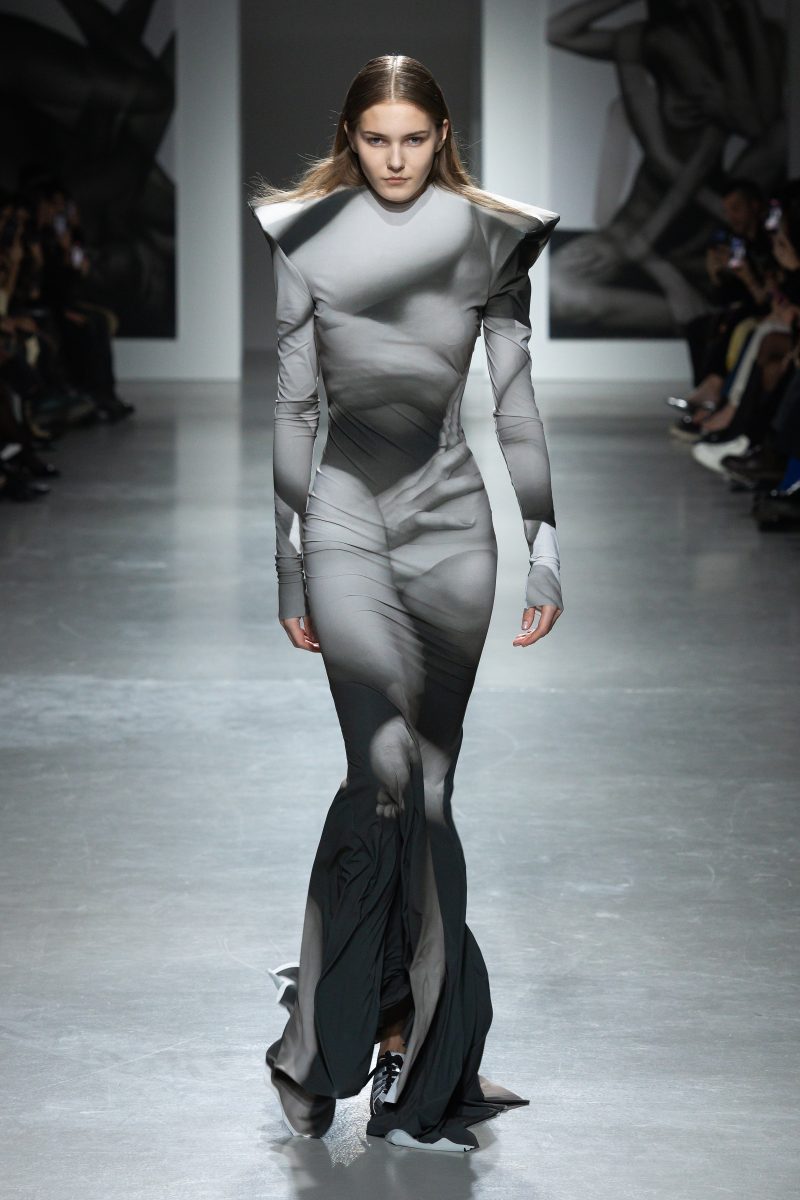
— Oh, yes! It was a dress with an image of a naked body both front and back. We created it as a joke, experimenting with factory techniques, and we didn’t expect it to become the best-selling item of the brand. I think customers felt our humor and appreciated the ironic take on the body and fashion. That was the moment when I was completely convinced that you shouldn’t try to predict what people will like. The most unexpected decisions often turn out to be the most successful.
What advice would you give to young designers, especially those who want to work with textiles?
— The key is to be curious and try a lot. Success doesn’t come instantly. You have to make mistakes, learn from them, and only then can you create something truly interesting. It’s also important to remain authentic: don’t blindly follow trends but form your own style.
If you had to describe your brand in three words, what would they be?
— Textured, bold, ironic.
Thank you very much, Constança!
— Thank you!