Paris after dark, disco detours and the art of losing control.
What if the best nights were the ones that ruined your outfit and your plans?
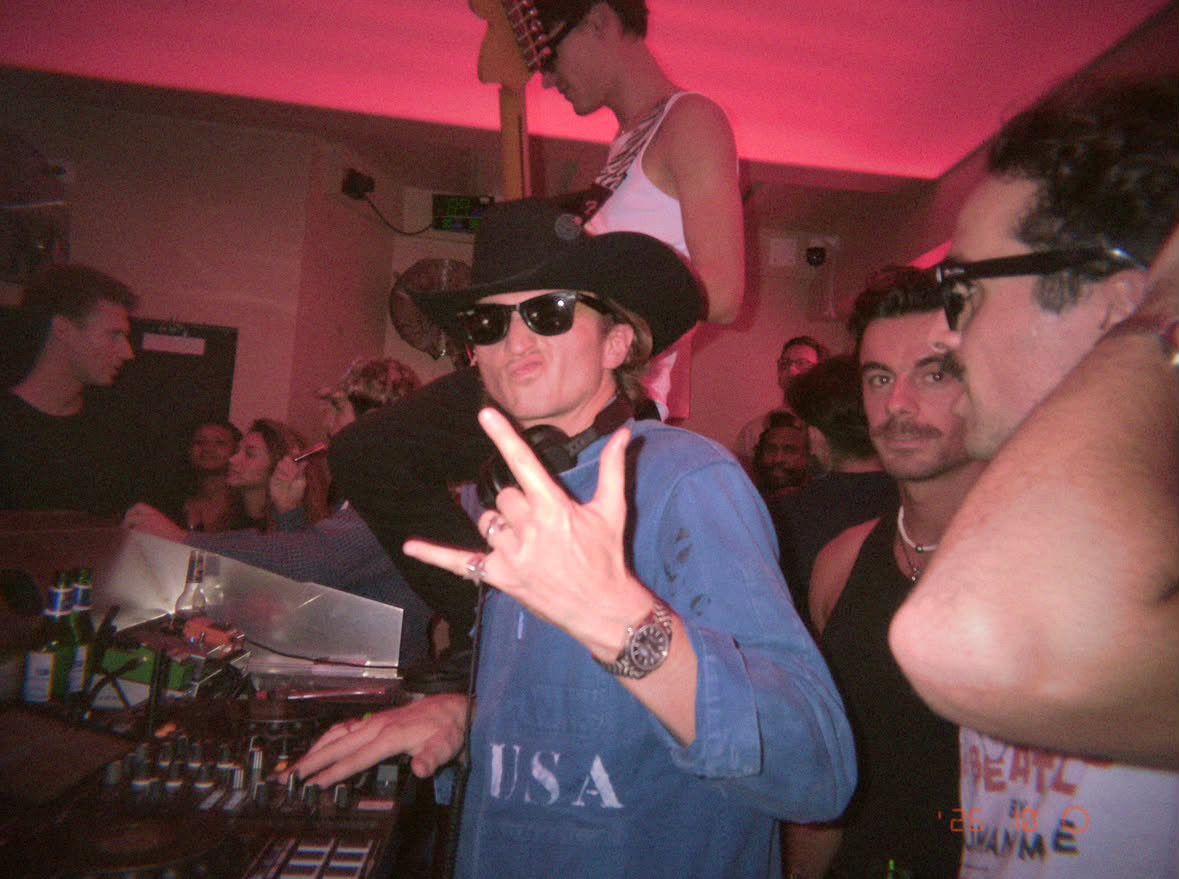
Behind the decks, Bryan has a soft spot for nights that refuse to behave, where Dalida meets disco, French chanson crashes into funk, and a cowboy hat becomes an unlikely nightlife uniform.
Through Midnight Rodeo and his Parisian residencies, he gravitates towards something increasingly rare: rooms with character, crowds without inhibitions, and a little chaos in a city that sometimes takes its own coolness too seriously.
His trajectory has taken him from multiple appearances at Silencio for Louis Savary to the dancefloors of Les Bains, Pamela during Paris Fashion Week, and a Jacquemus after-show, moving between Parisian nightlife, fashion and music without losing sight of his own aesthetic.
For Bryan, the dancefloor isn’t a showroom or a status symbol.
It’s where strangers become accomplices, guilty pleasures turn into collective anthems, and the night refuses to follow the script.
We caught up with the Paris-based DJ to talk musical obsessions, nightlife fantasies and the beautiful art of letting go.
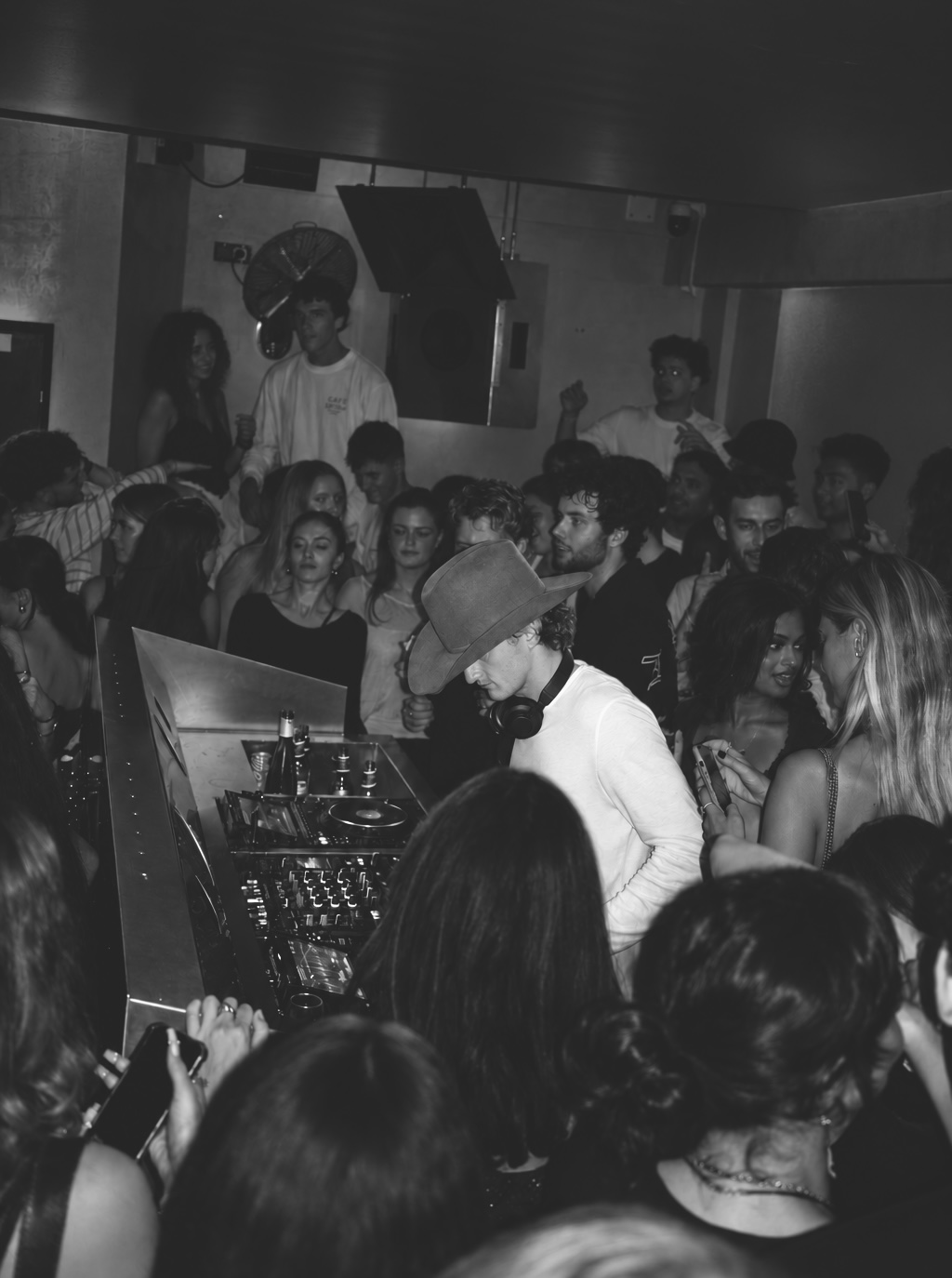
What does the night reveal about people that daylight tends to hide?
During the day, we often come with a job, a role, an image to maintain. At night, some of that starts to loosen up. I love watching someone who seemed really reserved an hour earlier suddenly singing their heart out. You discover another side of them, one that might not have had much room to come out during the day. Some people also play a character at night, and that’s part of the fun. You get to experiment with a different version of yourself, try something new, and see how it feels to step outside your usual identity.
You spend a lot of time reading a room, hundreds of people, different energies, different intentions. What is the first thing you instinctively look for when you walk into a crowd?
I look at whether people are looking at each other. Are they sticking to their own groups, facing the DJ, or is something already happening across the room? I’m also drawn to the people who dance without waiting for anyone else to start. They aren’t necessarily the ones who make the biggest entrance, but they’re often the ones who get everyone going. There’s something contagious about that kind of energy. One person lets go, someone else follows, and suddenly the whole room starts speaking the same language.
A DJ can technically control the music, but never completely controls what happens on the dancefloor. What is the most beautiful thing about losing that control?
Sometimes the crowd has a better idea than you do of where the night should go. You arrive with a selection of tracks you want to play, then one reaction makes you rethink everything that comes next. At Mishmish, my residency and my testing ground, the crowd is always up for it, so I can experiment with a lot of different things. A song can become a much bigger moment than I ever expected. That’s one of the reasons I love playing for people. They don’t just receive the music; they change what I do with it. The best moments are often the ones you couldn’t have planned in advance.
Your sets move through house, electro and more club driven sounds. Do you think of your music as a genre, a signature, or simply a reflection of your mood in that particular moment?
I think of it as a whole world. There’s also a lot of disco, funk, French chanson and rock in my sets. I like getting people dancing, giving them a breather, letting them sing, then picking things up again. I want the night to have different moods and different speeds. The connections between songs matter as much as the songs themselves. It’s about creating a journey rather than simply lining up tracks that work on their own.
Dalida captures that shared pleasure I’m looking for. “My Way” is about owning your choices, while Jamiroquai’s “Space Cowboy” connects with Midnight Rodeo through its groove, its cowboy spirit and the feeling of having your head somewhere else. I started Midnight Rodeo to give my tastes a clearer identity and show where I want to take them. It’s a way of bringing together all these references and letting them exist in the same universe, without having to choose just one direction.
Paris has always had a complicated relationship with nightlife, glamour and underground, exclusivity and freedom, fashion and music constantly crossing paths. From inside the scene, what do you think Paris is getting right about nightlife, and what is it getting wrong?
I love places where you can really feel someone’s taste and imagination. La Fête, for example, has music straight out of the seventies and eighties, wild characters and a real sense of fantasy. It reminds me of Babylon, of a party that feels as though it came straight out of the imagination of Dorion, the owner. I love when a venue has its own universe and doesn’t feel interchangeable with every other place in the city.
On the other hand, I struggle with some of the very uptight clubs in the 8th arrondissement. Lots of tables, deep house all night, very few vocals and hardly anyone dancing. I get bored. I love seeing people make an effort to dress up, but I also want them to look a little dishevelled by the end of the night. For me, that’s part of the magic. You arrive looking your best, and leave with your hair undone, your clothes slightly out of place and a story to tell. Glamour is great, but it should leave room for a little chaos.
When you look at the current Parisian club scene, what feels genuinely new to you? Is there a new generation changing the way people meet, dance, dress and exist at night?
In my own corner of the scene, I’m interested in places that bring different experiences together. At Nonsense, my second residency, you can have dinner, listen to jazz and eventually find yourself in the club. The new residency at Maxim’s with with55B also brings together live jazz and a Studio 54 atmosphere. I like that movement between different worlds, when a night doesn’t have to fit into one category from beginning to end.
I’m not going to claim that my generation invented this approach. But I love seeing those references come alive through the people who are here now. I’m more curious about a party where different worlds meet than a room where everyone shares the same references, the same look and the same idea of what a night out should be. The interesting things happen when those worlds start to overlap.
There is something almost cinematic about a great night. People who have never met become intimate for a few hours, strangers disappear together into the same soundtrack, and by morning most of it becomes memory. What makes a night unforgettable for you?
When I play “Paroles, paroles” by Dalida and Alain Delon and people start singing, there’s something incredibly liberating about it. Everyone knows the song, everyone can have fun with it, and people start singing it to each other. The whole room becomes expressive in a way that feels completely natural. For a moment, it doesn’t matter who you are or who you came with. You’re all part of the same scene.
That’s what stays with me: a reaction, a look, seeing my friends enjoying themselves. There are moments when I get as much pleasure from watching what’s happening in front of me as I do from DJing. You can spend hours thinking about the music, but sometimes the moment that makes the whole night is simply seeing everyone connect with a song at the same time.
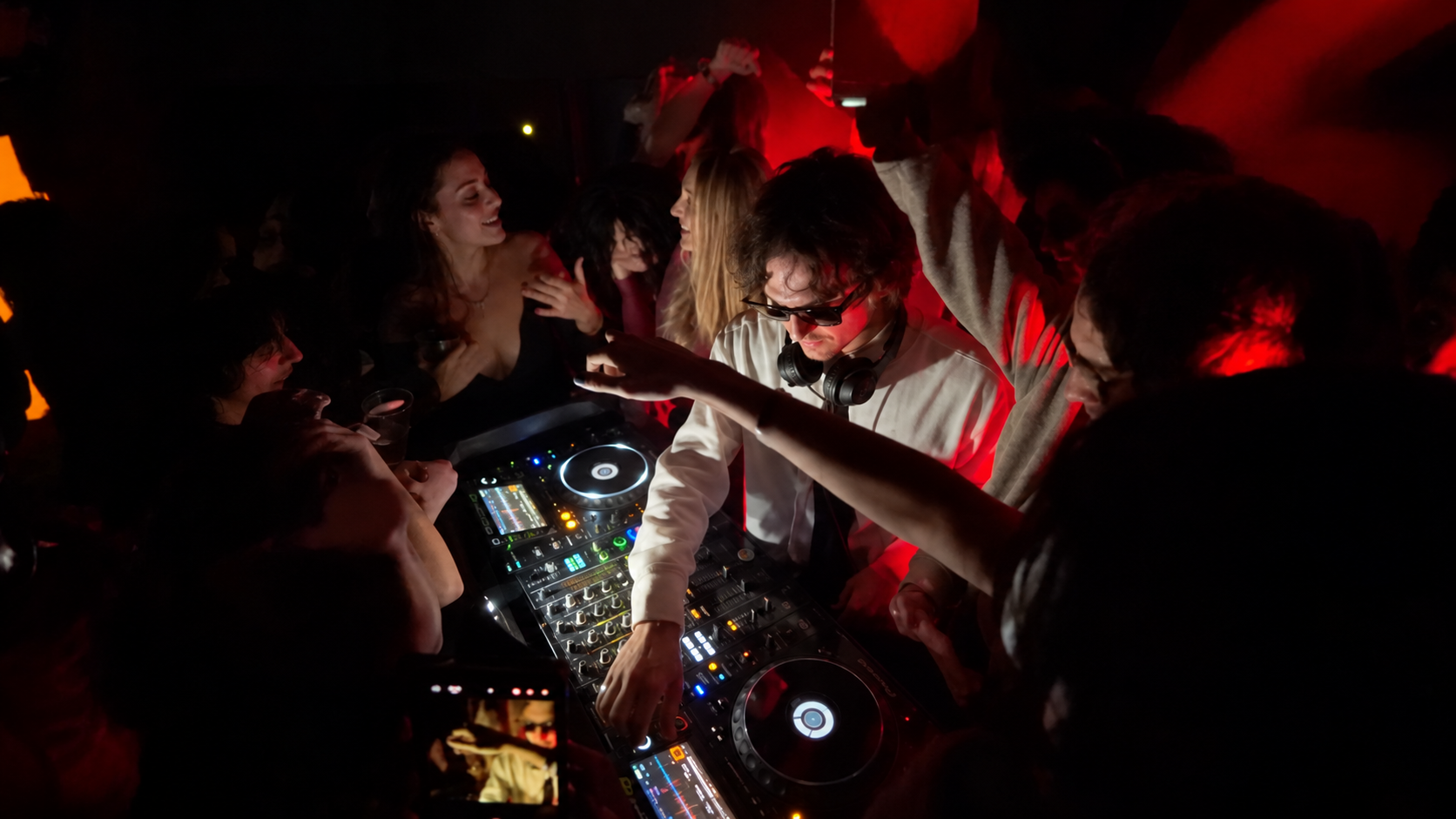
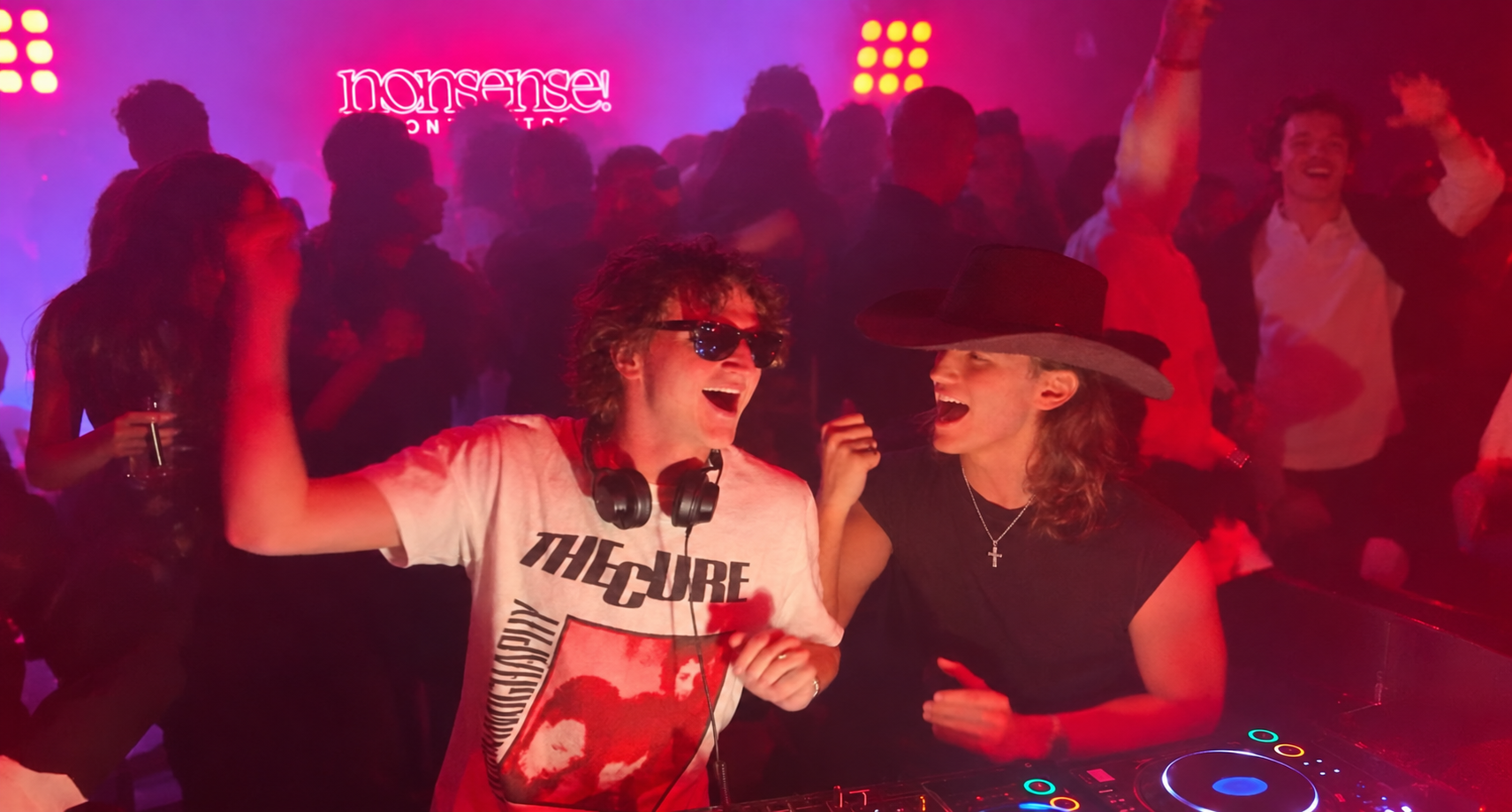
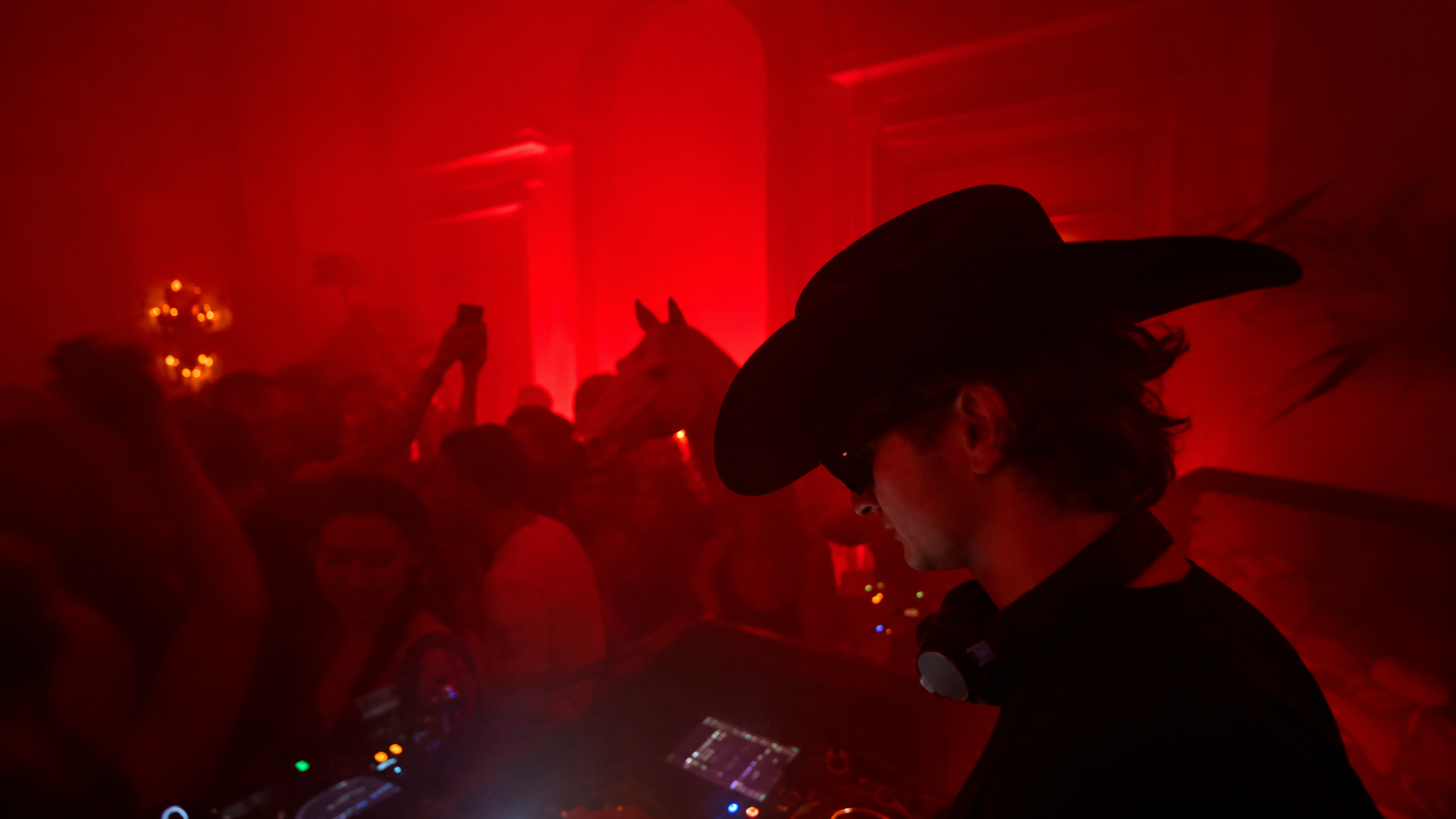
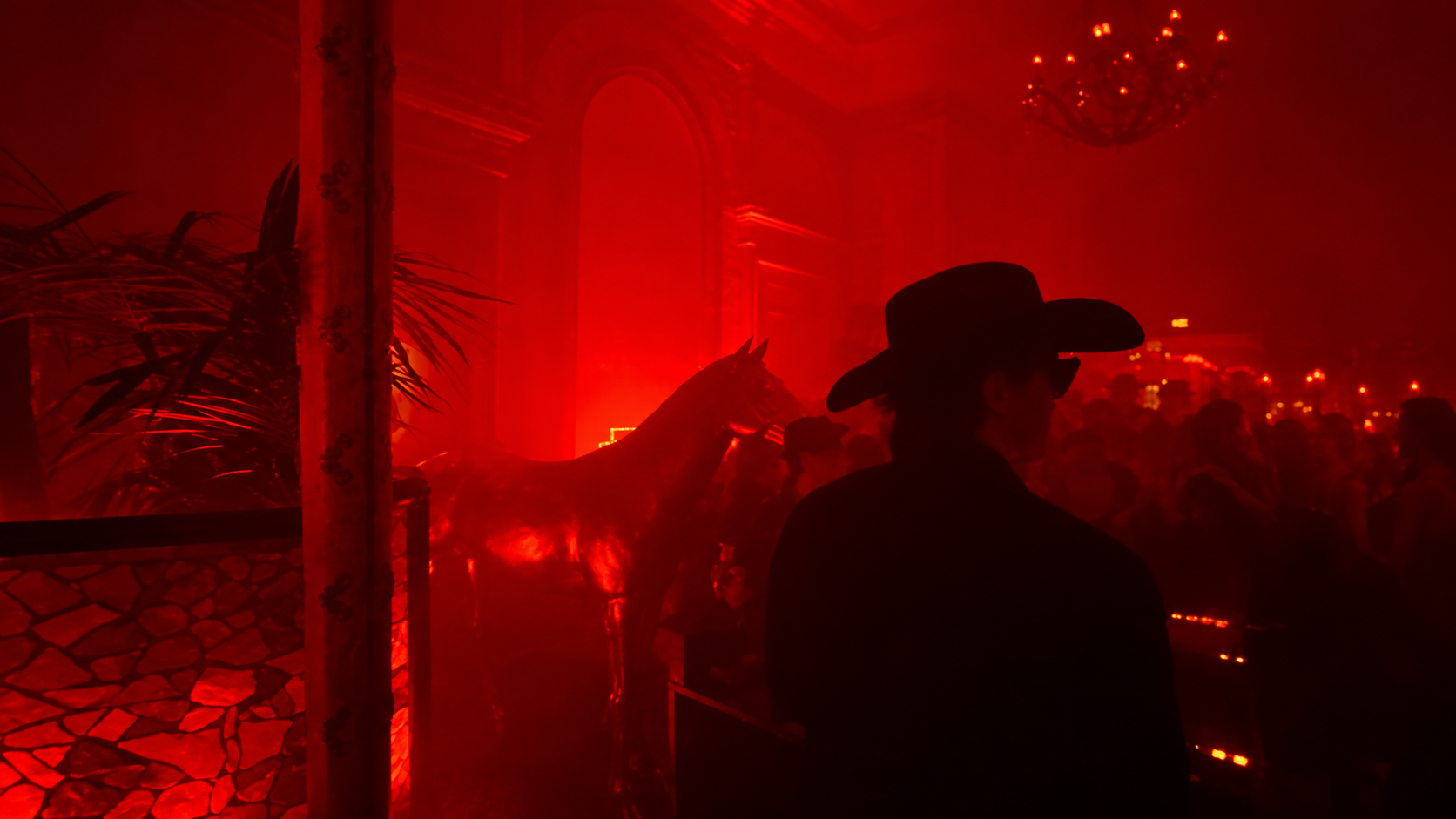
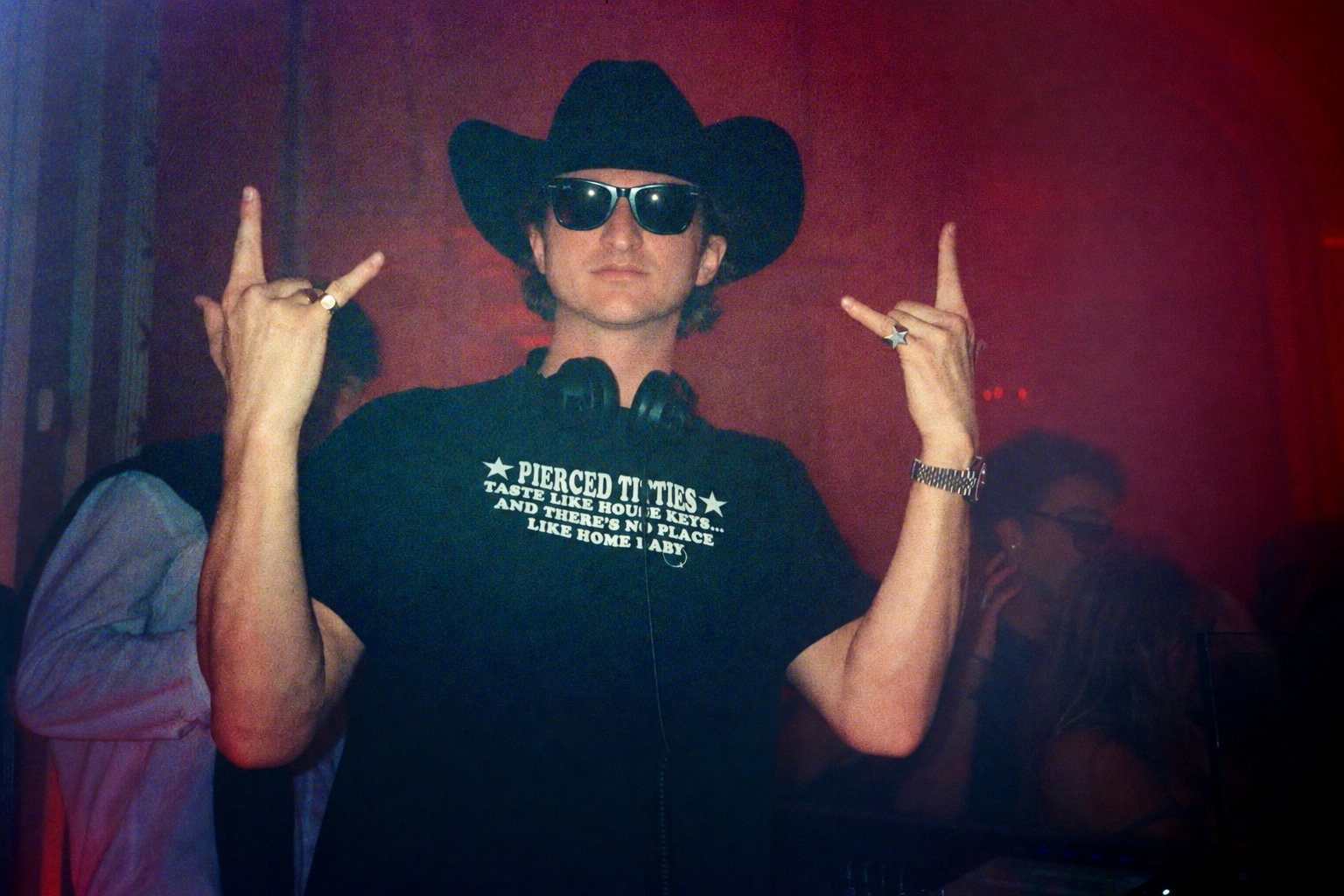
How much of your personality is actually revealed behind the decks, and how much of the DJ is still a character you consciously create?
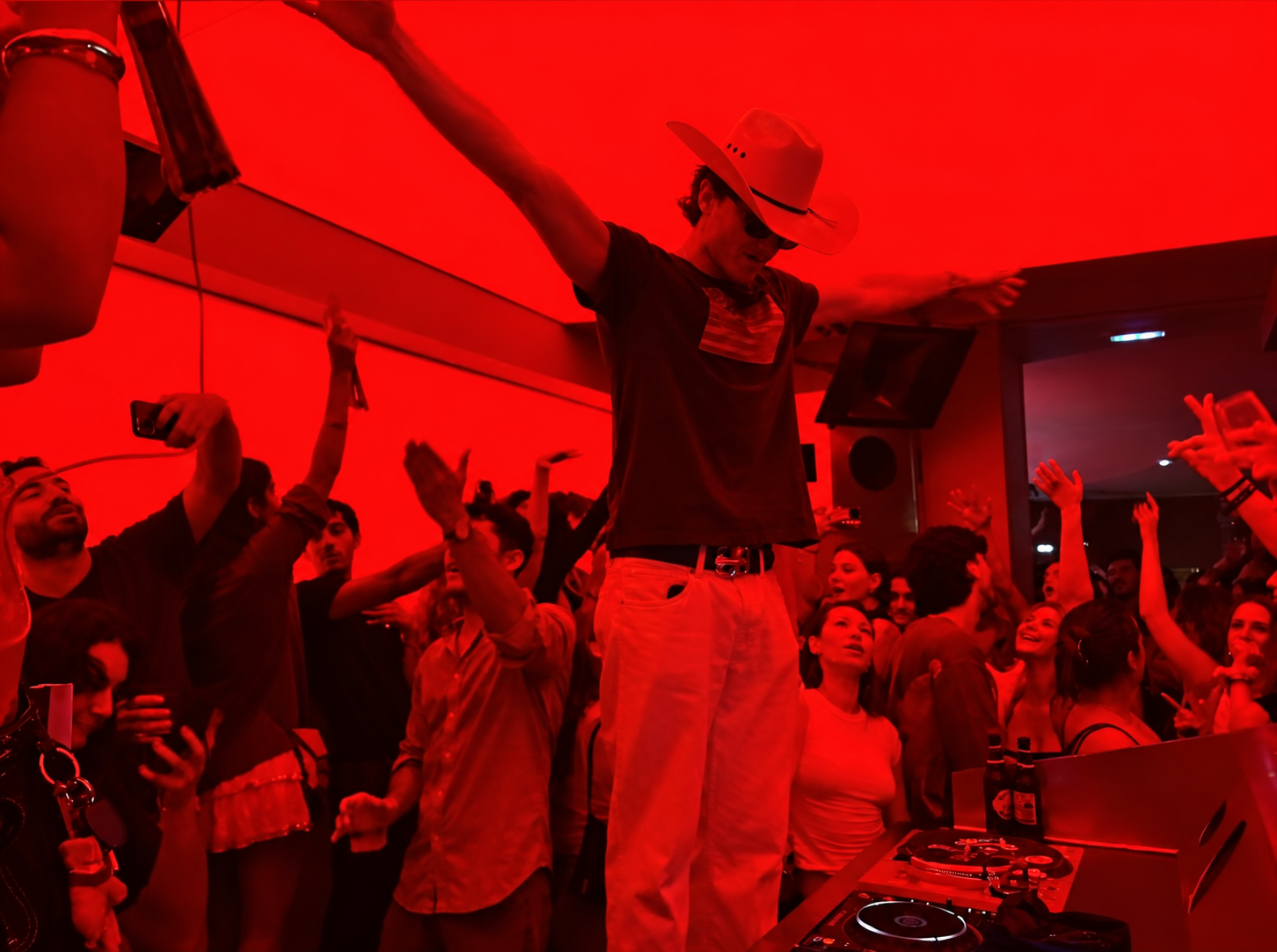
The hat is definitely part of the performance. I’ve always been intrigued by the imagery of rural America, and it gives Midnight Rodeo a recognisable silhouette. It creates a visual identity that connects with the music and the world I’m building around the project.
But it also does something for me personally. When I put it on to DJ, I enter my own little bubble, slightly removed from my daytime life and from other people’s gaze. It’s a strange paradox: it makes me more visible, but I feel more sheltered. The music, meanwhile, gives away a lot about my taste, my mood and my sense of humour. You can create a character through clothes and imagery, but the music will always reveal something about the person behind it.
Nightlife is often described as escapism. But could it also be the opposite, a place where people finally become more honest about who they are?
It can be both. You can go out to take your mind off things and end up allowing yourself something you usually hold back during the rest of the week: a different way of dancing, dressing or expressing desire. Sometimes stepping outside your everyday life is exactly what allows you to get closer to another part of yourself.
But you need to feel comfortable enough to do that. Inclusivity matters to me. Whatever your background, gender identity or sexuality, whether you know everyone in the room or no one at all, I want you to feel that you belong. That takes a proper welcome and mutual respect, including respect for everyone’s boundaries. Freedom on a dancefloor only works when people feel safe enough to enjoy it. That’s the kind of atmosphere I want to help create.
Fashion, music, friendship, desire, status and chaos. Nightlife is one of the few spaces where all of these things collide at once. What are you personally looking for when you go out, beyond the music?
Seeing my friends, eating well, laughing and meeting people I wouldn’t necessarily meet anywhere else. That’s already a pretty good night. I don’t think every night needs to become a big story. Sometimes the best thing is simply being surrounded by people you like, having a great meal and seeing where the evening takes you.
I love starting at L’Area. Édouard, the owner, is a sweetheart, the food is great, and you meet people from film, music and all sorts of different backgrounds. I also love La Patate Douce for the interiors, the people and Jules Effantin’s music selection. The way a place welcomes you makes a huge difference to whether you want to come back. A good venue isn’t just about what’s happening behind the decks. It’s also about how you feel the moment you walk through the door.
Imagine Paris ten years from now. What would you like its nightlife to have preserved, what would you like it to have completely reinvented, and what would you never want to lose?
I’d like Paris to hold on to places with character, even when they’re small or imperfect. I hope there’s still room to open a venue, start a night or try an idea without already knowing all the right people. Not everything needs to be perfectly polished or immediately successful to deserve a place in the city.
I’d also love to see more mixing between generations and different social circles. Nightlife can be one of the few places where people who might never cross paths during the day end up sharing the same space. What I’d never want to lose is the chance to stumble into a party I couldn’t have imagined beforehand, surrounded by people, outfits and music that still have the power to surprise me. That sense of discovery is what keeps a city alive after dark.
And finally, if you had to write a letter tonight to the Bryan who will read it ten years from now, somewhere after another long night, what would you tell him?
I’d start by asking: are you still having fun?
I’d want to know how far you’ve taken Midnight Rodeo, and whether you’ve had the nerve to do the things you were thinking about. I’d tell you to keep experimenting, especially if things are going well. That’s probably when repeating the same night becomes tempting, when you know what works and it feels easier to stay there.
Stay curious enough to play a song without knowing exactly how the room will react. Keep taking risks, keep surprising yourself and don’t become too attached to a formula. And above all, I hope you’re still finding the same pleasure in watching a room come alive. If that feeling is still there, then you’re probably doing something right.
The night doesn’t end here.
Hit play on the playlist Bryan Molas curated exclusively for Vanity Teen, and let the dancefloor follow you home.