
PARIS HAUTE COUTURE WEEK PRESENTED 25 COLLECTIONS FROM ESTABLISHED HOUSES AND INDEPENDENT ATELIERS ACROSS ITS FIRST THREE DAYS. THIS GUIDE FOLLOWS THE WEEK’S MAJOR DEBUTS, TECHNICAL EXPERIMENTS AND DISTINCT APPROACHES TO DRAPE, EMBROIDERY, REUSE AND FORM.
By Alegria Haro
Paris Haute Couture opened with a calendar shaped by transition. Schiaparelli, Iris van Herpen, Dior and Standing Ground established the first day’s focus on altered anatomy, engineered material and controlled drape. Chanel, Balenciaga and Jean Paul Gaultier followed with collections that tested how an established house can move forward under new creative direction.
Beyond those headline appointments, the first three days offered a broader account of contemporary couture. Some designers built collections around the needs of private clients; others used the runway to develop new material systems, reconsider regional craft traditions or reorganize the proportions of the body. The official calendar placed nine presentations on the first day, seven on the second and nine on the third.
Day One: Material Research and Handwork
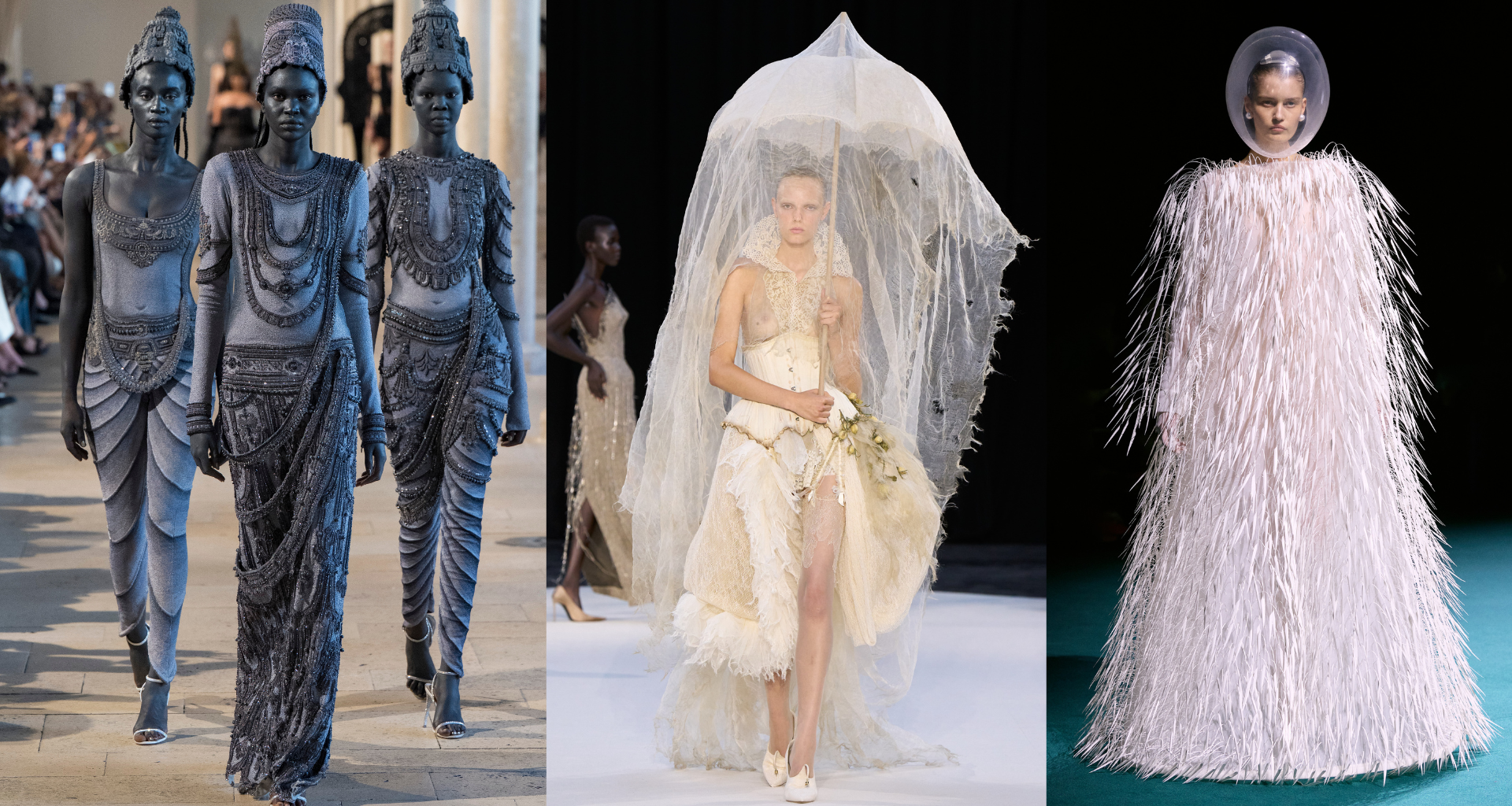
The first day of Paris Haute Couture Week placed material research, precise draping and specialized handwork at the center of the calendar. The day’s most visible appointments moved from Schiaparelli’s marine forms to Iris van Herpen’s particle-inspired surfaces, Dior’s fan constructions and Standing Ground’s official-calendar debut. Together, the four collections examined how couture can alter the body through unfamiliar materials, exacting drape and engineered structure.
Imane Ayissi
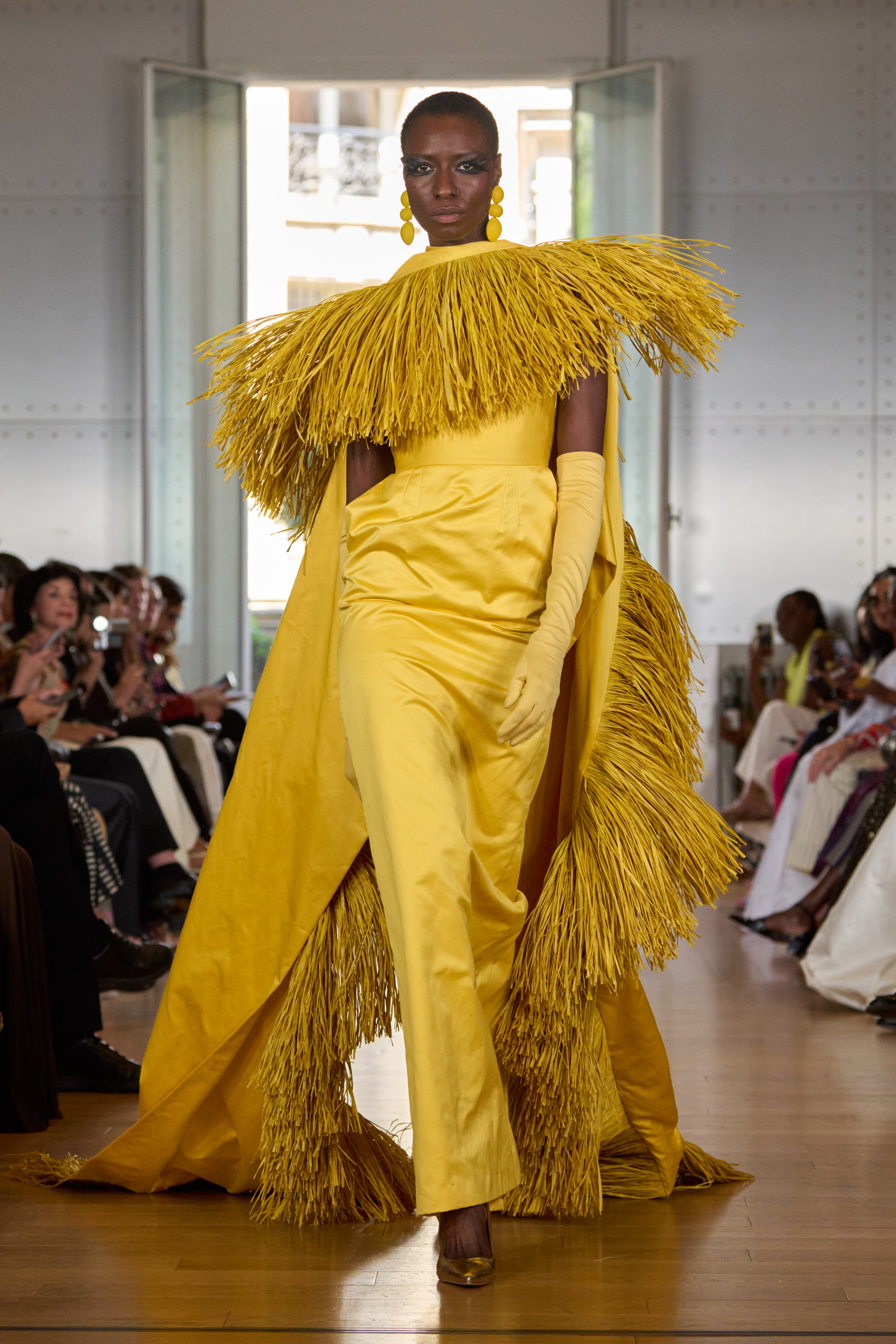
Imane Ayissi placed fabric at the center of the silhouette. Wrapped volumes, extended panels and deliberate folds allowed color and pattern to remain visible across the body. The Cameroonian designer carried his cultural references through construction, presenting African textiles and dress traditions through his own authorship.
Georges Hobeika
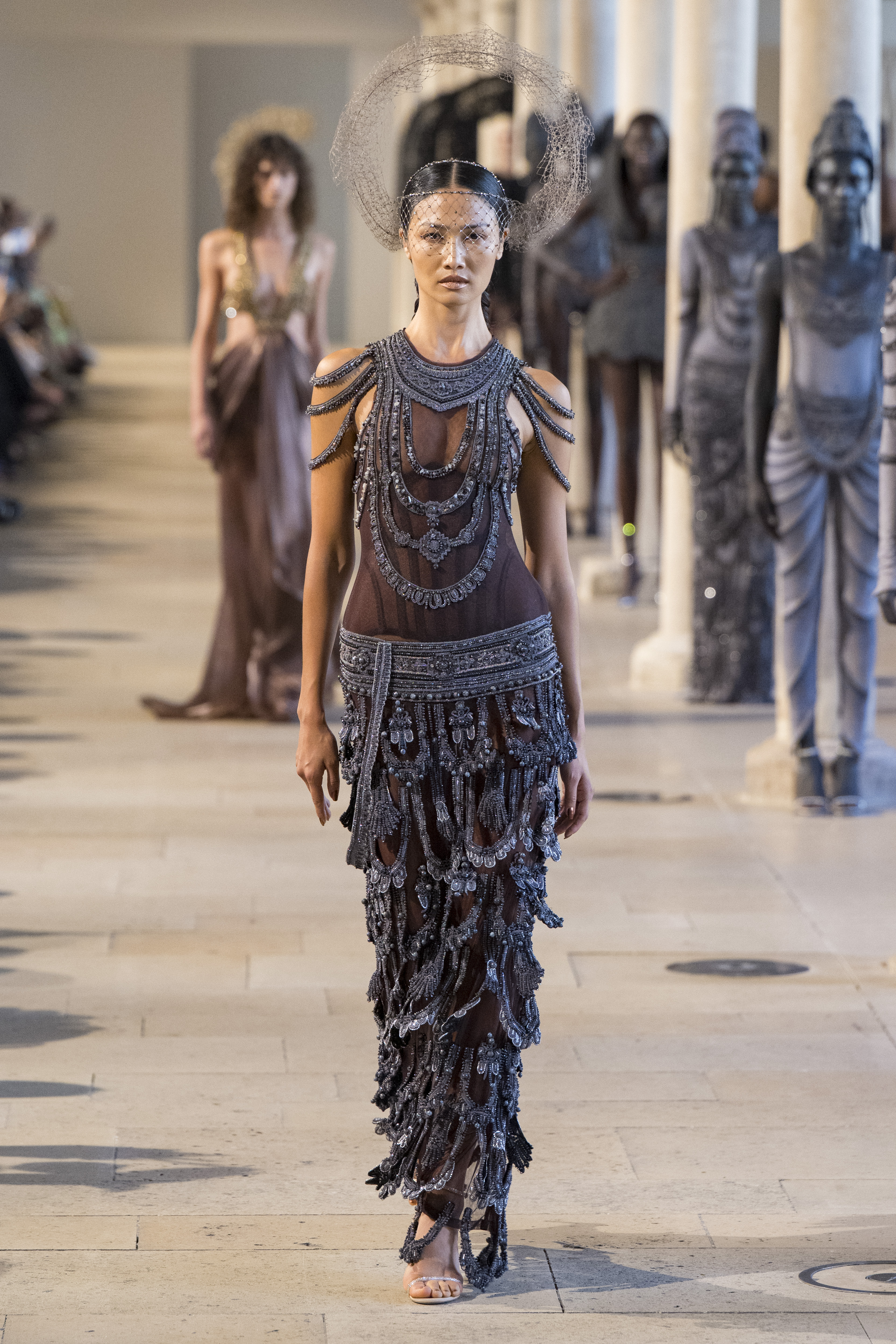
Georges and Jad Hobeika worked through fitted corsetry, elongated gowns and larger satin volumes. The strongest looks used crystal embroidery to clarify the waist, shoulders and line of the bodice, giving greater structure to the formal eveningwear vocabulary that remains central to the house.
Julie de Libran
Julie de Libran approached couture as an intimate, made-to-order wardrobe. Draped satin, lace, sequins and transparent layers appeared across close dresses and softly tailored separates. Fabric, finishing and the possibility of adjusting each garment around the individual client gave the collection its purpose.
Rahul Mishra
Rahul Mishra developed floral and anatomical forms through extensive Indian embroidery. The most successful looks kept a disciplined outline beneath the dense handwork, allowing the silhouette to remain visible. The expertise of Indian workshops formed part of the design proposition, with embroidery constructing volume and narrative.
ArdAzAei
Bahareh Ardakani continued to explore geometry through engineered construction. Curved panels, architectural shoulders and sharply controlled gowns created dimension through pattern cutting. The strongest pieces made their internal logic immediately visible, giving ArdAzAei one of the day’s clearest technical identities.
Day Two: Tailoring, Reuse and Continuity
On its second day, Paris Haute Couture shifted toward tailoring, recovered materials and the evolution of established house codes. At Chanel, Matthieu Blazy continued to define his couture language through light construction, natural motifs and the specialist work of the maisons d’art. The collection joined fairy-tale references with fresh interpretations of tweed, embroidery and handcrafted eveningwear.
Alexis Mabille
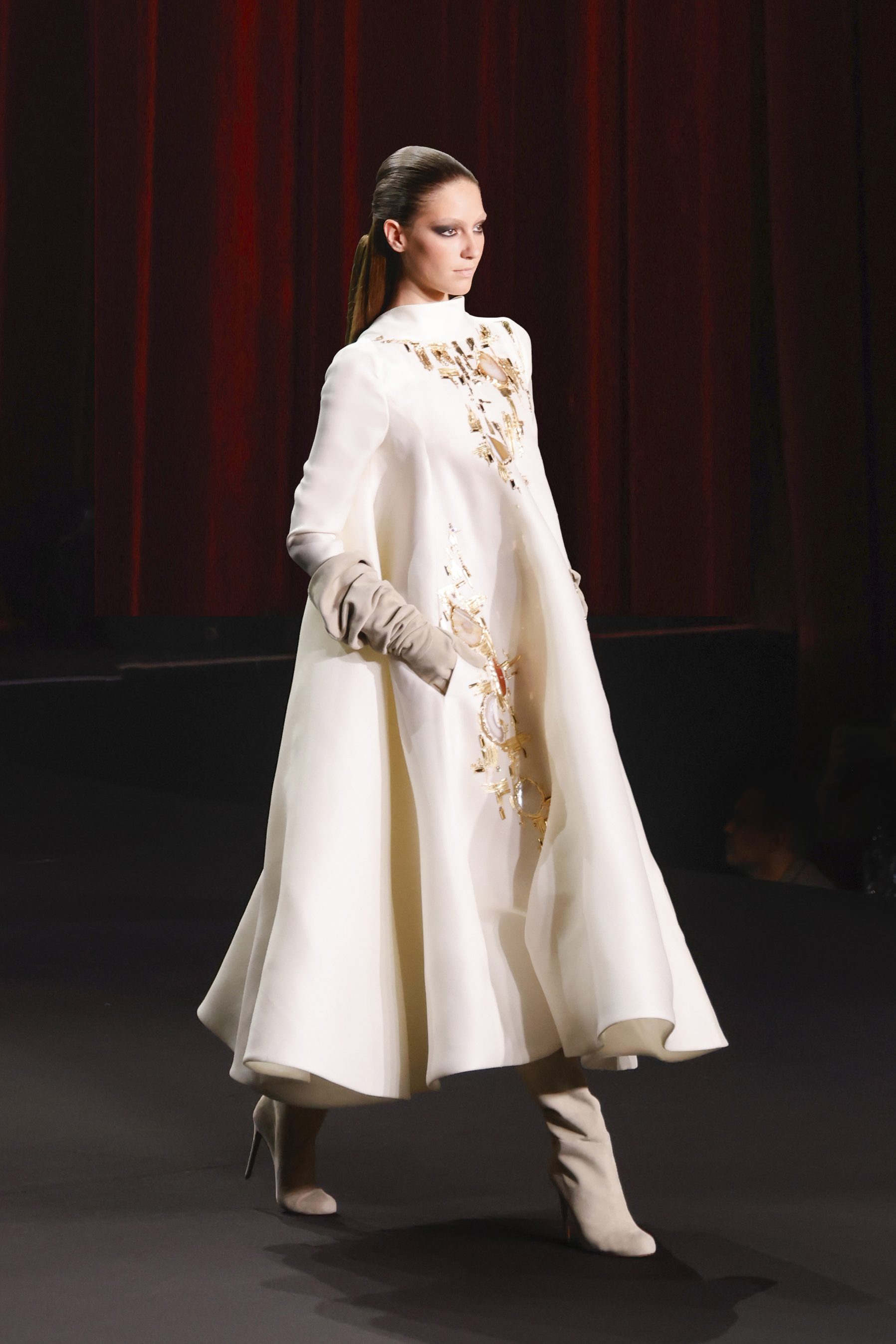
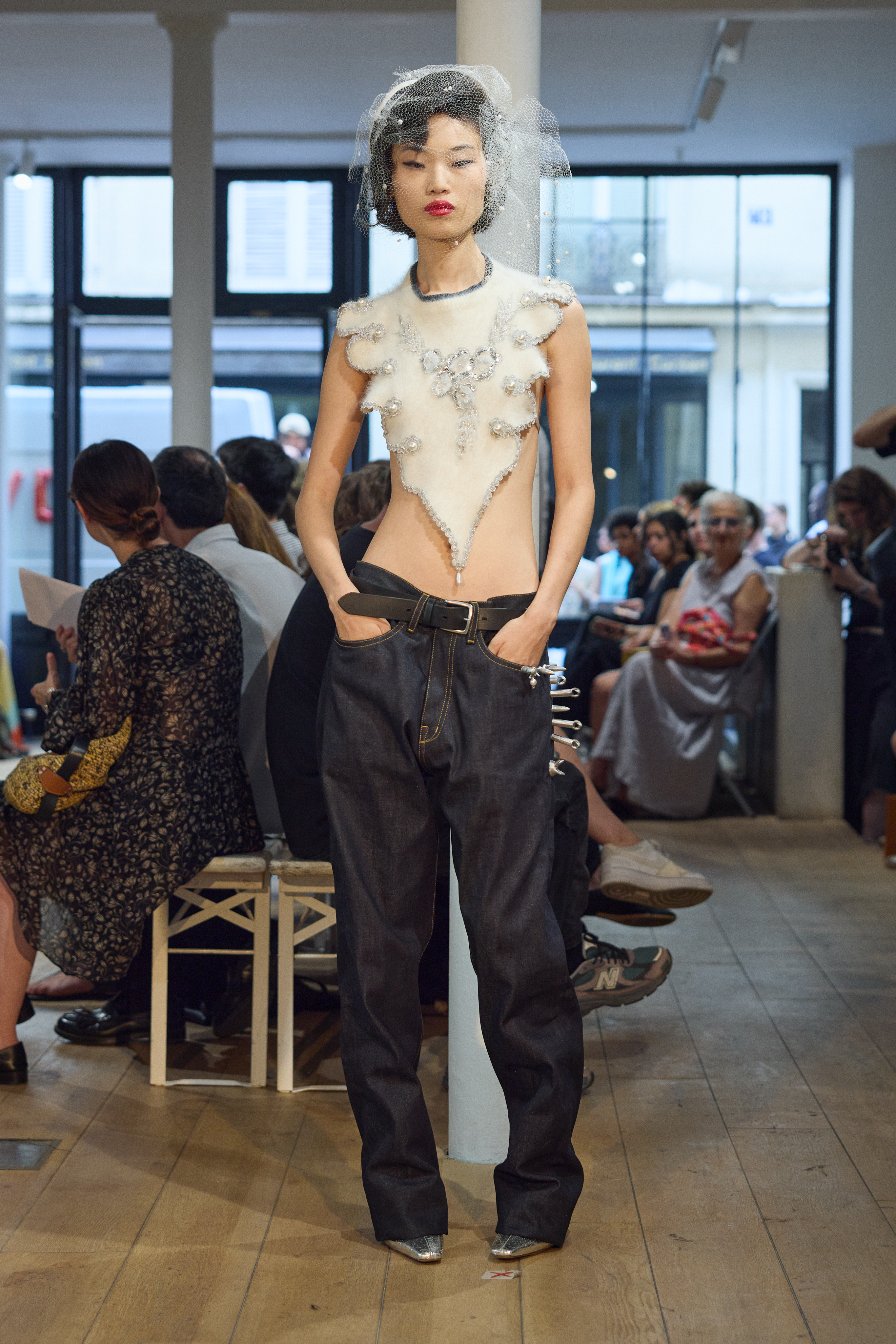
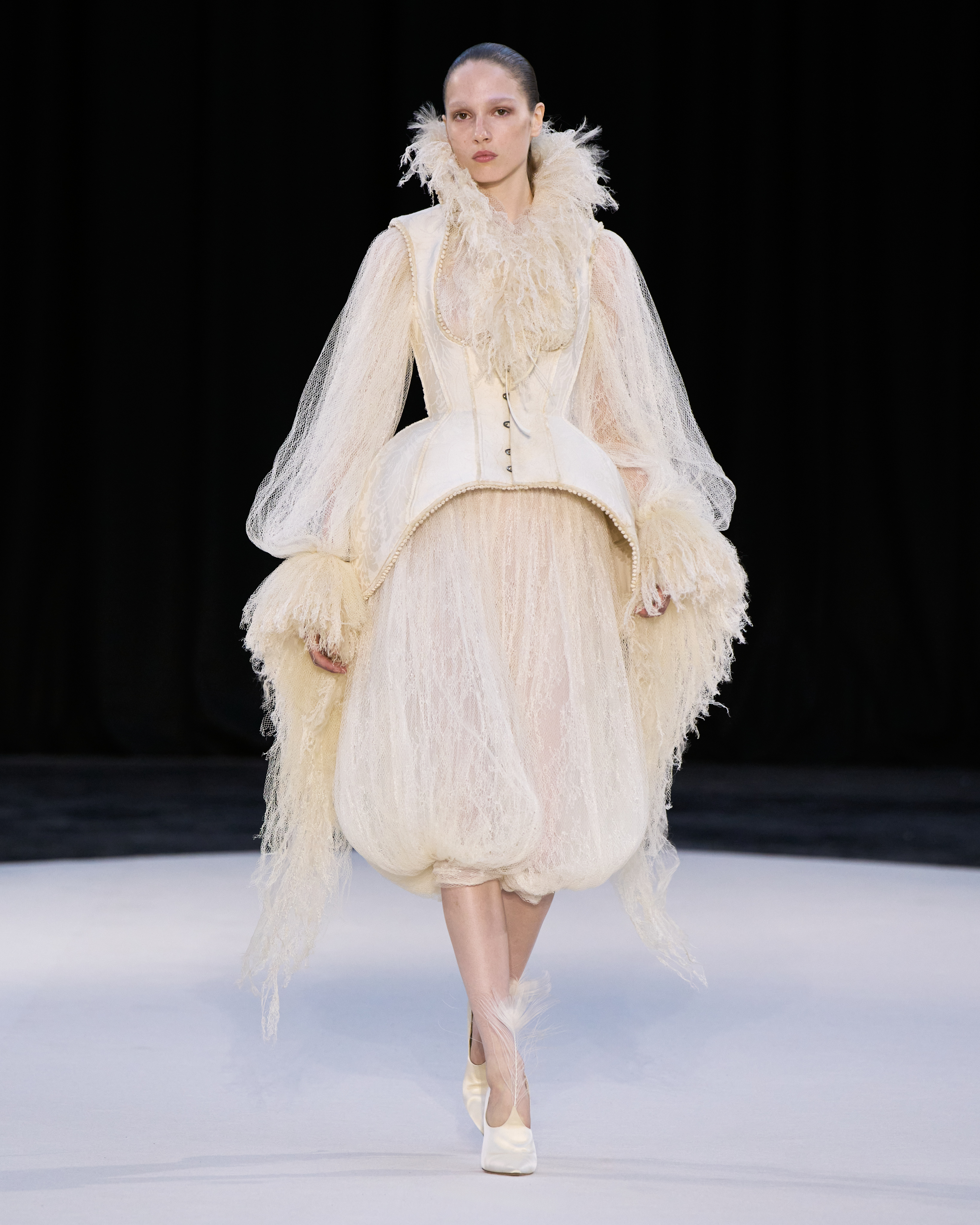
Alexis Mabille presented cocktail dresses, fluid gowns and polished tailoring designed with private clients in mind. Bows and folded details remained present, though the clearest looks concentrated their interest around one decisive gesture. The collection offered occasion dressing with practical movement, an increasingly relevant concern for the private clients who sustain Paris Haute Couture.
Stéphane Rolland
Stéphane Rolland returned to elongated columns, extended shoulders and broad volumes held away from the figure. Trains and projecting panels created scale, while uninterrupted areas of fabric preserved the outline. His strongest work relied on the balance between one large intervention and the space surrounding it.
RVDK Ronald van der Kemp
Ronald van der Kemp assembled one-off garments from existing textiles, vintage fabric and recovered embellishment. Tailored jackets and fitted bodices imposed order on combinations of print, metallic surfaces and appliqué. Available materials continued to determine each garment’s cut, quantity and final appearance.
Germanier
Kevin Germanier transformed discarded beads, crystals and surplus decoration into dense surfaces. The strongest compositions clustered embellishment around the shoulders, hips or neckline, allowing the recovered material to alter the silhouette. Concentrating the detail kept the clothing from becoming a uniform field of ornament.
Giorgio Armani Privé
Silvana Armani developed the house’s established language through velvet suits, fluid trousers, tactile jackets and controlled eveningwear. The tailoring carried the collection, especially where generous proportions created movement without weakening the line. Small shifts in styling and texture suggested a measured path forward for Privé.
Ashi Studio
Mohammed Ashi used corsetry and firm sculpted surfaces to alter the proportions of the body. Narrow waists appeared against amplified hips, shoulders and necklines. Within Paris Haute Couture, the strongest pieces centered on one principal distortion, allowing Ashi’s control of rigid volume to register with clarity.
Day Three: Debuts, Performance and Image-Making
The third day of Paris Haute Couture Week brought major creative debuts alongside collections built around performance, narrative and altered proportions. Pierpaolo Piccioli’s first Balenciaga couture collection and Duran Lantink’s debut as Jean Paul Gaultier’s permanent artistic director supplied two of the day’s major transitions. Balenciaga combined historic volumes with new fabrication, while Gaultier filtered court dress, corsetry and altered anatomy through Lantink’s irreverent approach.
Yuima Nakazato
Yuima Nakazato continued to use couture as a space for alternative textile systems and modular construction. Layered sections and fragmented panels gave the garments an adaptable quality. The technical research was most persuasive where its structure remained legible through movement and fit.
Franck Sorbier
Franck Sorbier presented fitted bodices, long skirts, cape-like forms and visibly worked surfaces within a theatrical framework. The strongest garments retained their presence outside the staging. A firm outline and controlled decoration allowed the atelier work to remain clear beneath the performance.
Robert Wun
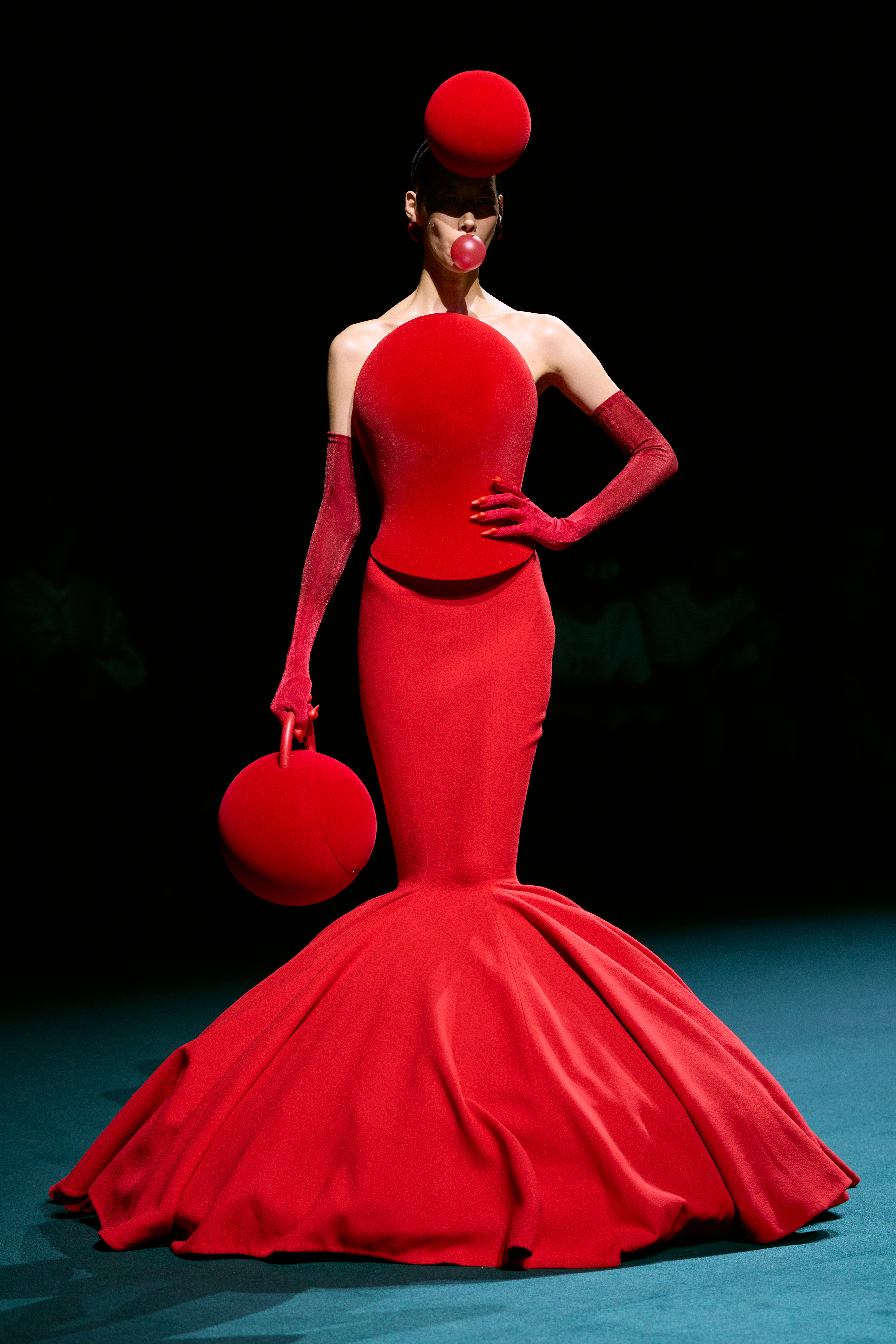
Robert Wun built the collection around childhood play, clown imagery and painted surfaces. Distorted formalwear and balloon-filled looks continued his command of the immediate runway image. Wun understands how to construct an immediate runway image. His strongest contributions to Paris Haute Couture developed beyond their initial premise through exact cutting and proportion; others delivered their complete idea at first glance.
Elie Saab
Elie Saab returned to embroidered columns, transparent foundations, capes and formal gowns. The clearest passages reduced the density of decoration, leaving uninterrupted fabric around a shoulder, waist or skirt. These quieter areas improved the legibility of the embroidery and the structure beneath it.
Viktor&Rolf
Viktor&Rolf altered the scale and placement of familiar elements of evening dress. Conventional garments provided a stable foundation from which sections could be displaced or expanded. The construction gave the conceptual sequence credibility and maintained the duo’s position between couture and performance.
Zuhair Murad
Zuhair Murad remained within the house’s established field of formal eveningwear, using close corsetry, transparent foundations, metallic embroidery, capes and long trains. Within Paris Haute Couture, the strongest looks included areas of visual calm, giving the surface work greater definition and allowing the architecture of the dresses to register.
Manish Malhotra
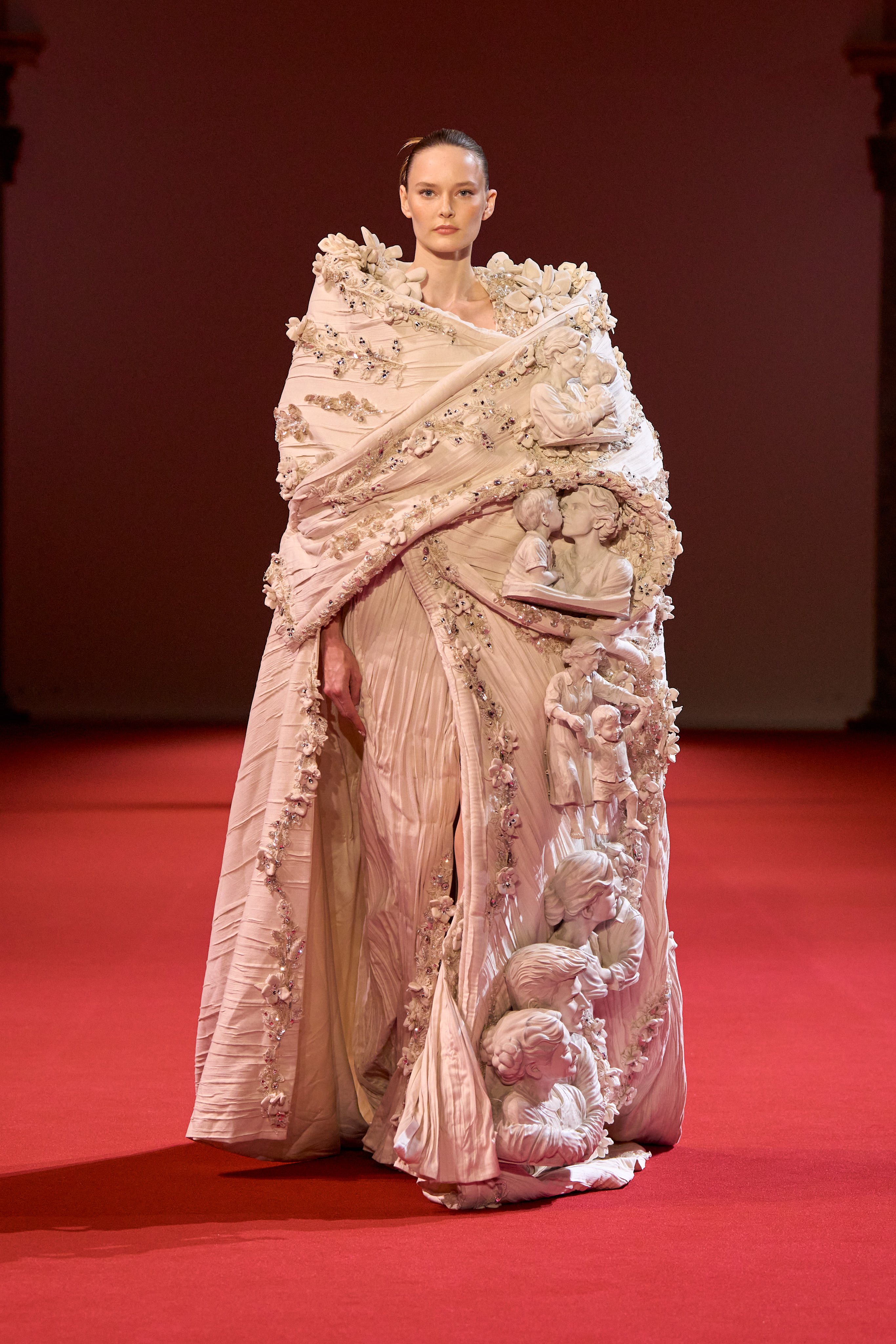
Manish Malhotra made his official Paris couture-calendar debut with Maa, a collection dedicated to motherhood and grounded in Indian clothing and handcraft. Saris, veils, fitted bodices, metallic thread and crystal embroidery connected his experience in cinema and bridalwear with the Paris stage.
The strongest pieces began with Indian systems of drape and construction, preserving their logic as the silhouettes grew in scale. Alongside Rahul Mishra, Malhotra brought greater visibility to the Indian designers and workshops whose technical knowledge has long supported international luxury.
What Defined Paris Haute Couture Week
Across its first three days, Paris Haute Couture Week presented several distinct models of contemporary couture. Armani Privé relied on continuity and tailoring; ArdAzAei concentrated on engineered construction; Rahul Mishra and Manish Malhotra centered Indian authorship and handwork; Robert Wun treated the runway image as a complete object.
The calendar gained strength from those differences. Traditional embroidery shared space with recovered materials, experimental textiles, client-focused wardrobes and bodies reshaped through drape or corsetry. The major houses set the week’s most visible appointments, while independent designers supplied many of its most specific propositions.