by Mira W.
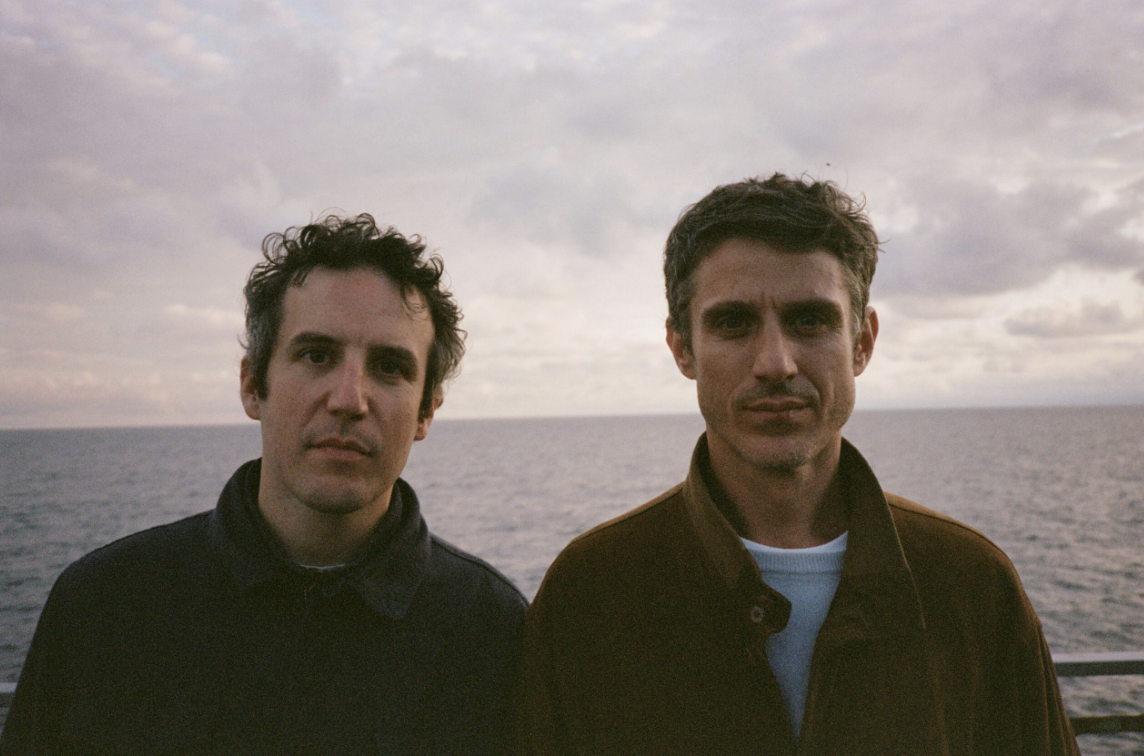
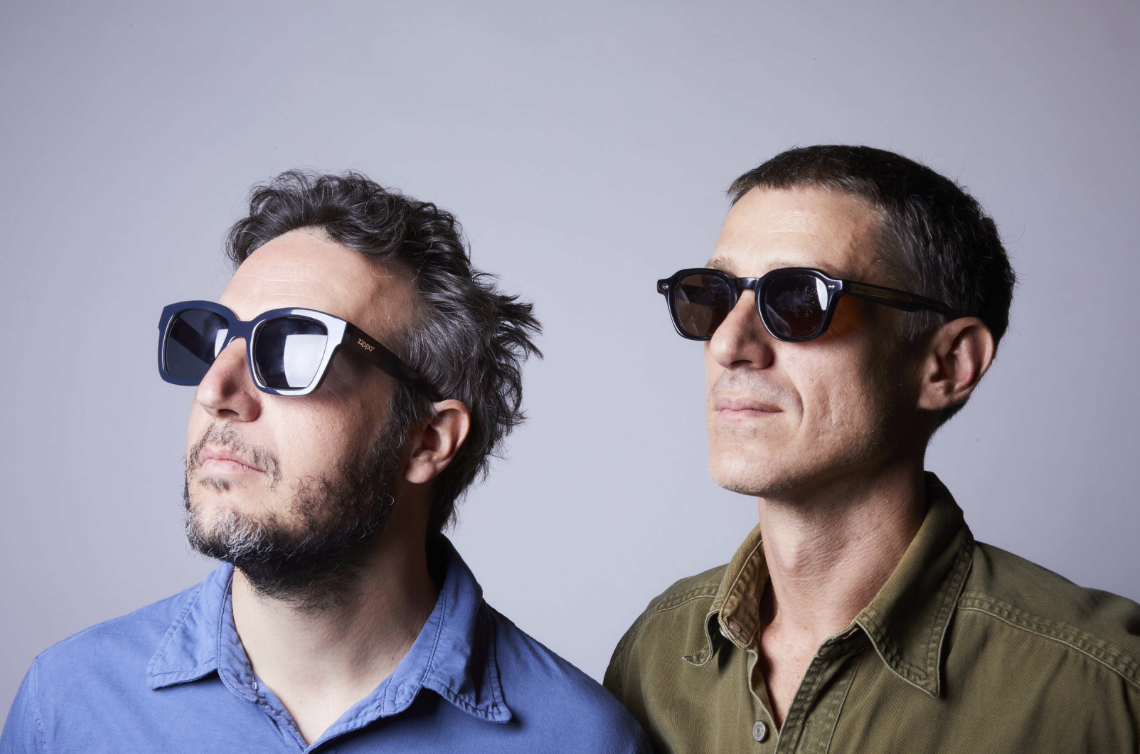
Ironic, visionary, and unconventional: Le Feste Antonacci are one of the most original acts on the Italian indie scene. Born in Paris from the meeting between Giacomo Lecchi d’Alessandro and Leonardo Rizzi, the duo blends electronic music, Italo disco, funk, and Italian singer-songwriter tradition into a sound that is both instantly recognizable and full of surprises. Even their name hints at their approach: playful, provocative, and perfectly capable of engaging with the Italian pop imagination without ever taking itself too seriously.
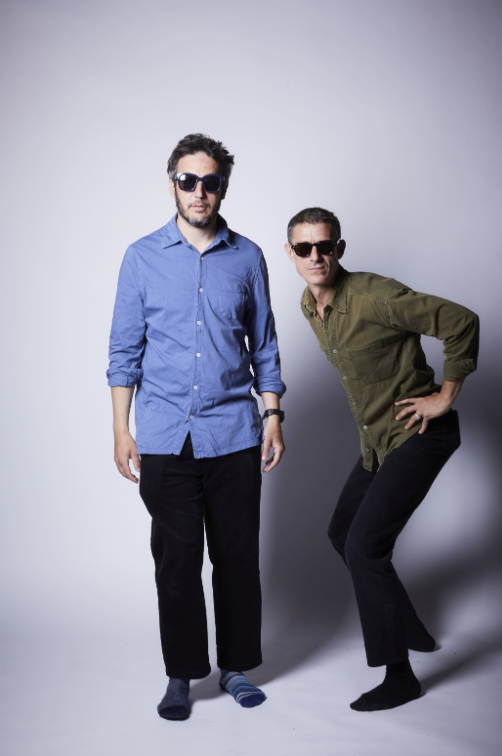
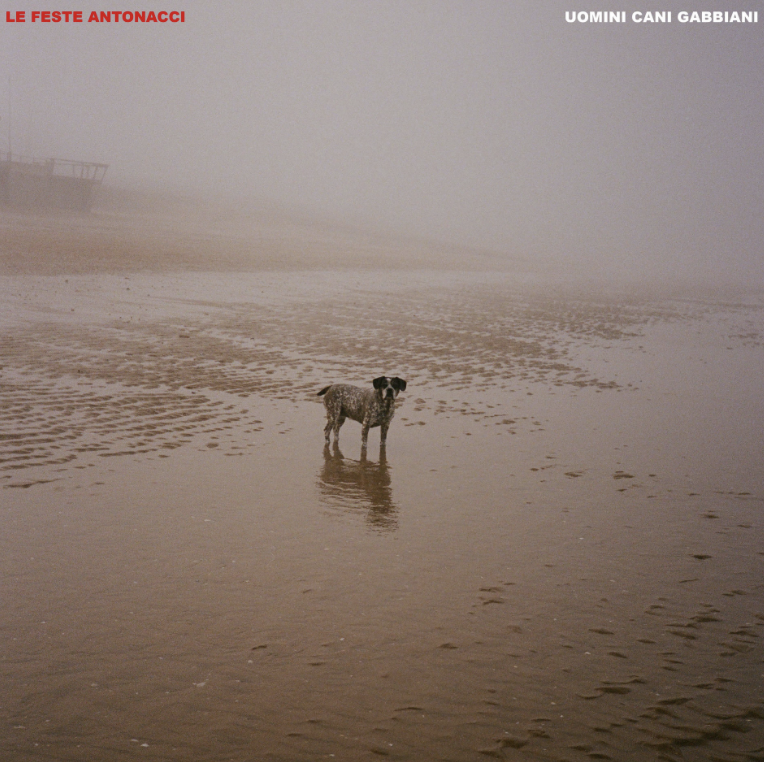
Behind the surreal atmosphere of their songs lies a strong commitment to musical experimentation. Over the years, they have released tracks that became small cult favorites, such as “Sigarette” and “La vita fa schifo,” building a personal artistic identity that stands apart from more commercial logic. At the same time, they also work as composers and producers for film and international platforms. After releasing the track “Uomini nudi,” their debut album, Uomini Cani Gabbiani, came out in June 2025 on Panico Dischi. The record explores the destruction of the ego, the discomfort of provincial life, anxiety about an increasingly dark future, and love as the key to unlocking a constant, very contemporary sense of apocalypse.
Giacomo and Leonardo, the two authors, composers, multi-instrumentalists, producers, and founders of Le Feste Antonacci, chose to collaborate for this interview with the students of the Full-Time Master in Fashion Styling AA2026 at Moodart School of Fashion Communication, in order to explore how a band’s image is deeply connected to its emotional state.
Mira: You describe the album as “madmantras” that carry uncomfortable truths and dig deep beneath a noisy surface. In a world where we are increasingly connected but also increasingly closed off in boxes, why do you still believe love remains the only way out?
We believe that communicating through love is essential for our future, and that the real step toward getting out of these boxes lies in recognizing and embracing what they represent. Closed boxes have meaning, but we often don’t fully understand it. The truth is that we are born with a filter, and that filter is love, which acts as a driving force. Our passion for humanity pushes us to connect and to overcome negative feelings such as envy and anger. Love, as we know, is the emotion that allows us to transcend barriers and find a sense of freedom and belonging, even when we feel isolated. In this way, love becomes not only a refuge, but also a path to redeem our humanity and build deep bonds, which are essential for an authentic and meaningful existence.
Matilde: You are a duo based in Paris. What led you to move there and continue your musical project from the city?
We were both already in Paris before starting this project, and we still chose to settle here because it seemed like the ideal place to develop it. We came to the city, one through an Erasmus experience and the other to study and refine our sound, both of us driven by the desire to study and deepen our passion for music. We realized that, to make our dreams come true, hard work would be necessary. The combination of study and a love for music pushed us to put down roots in such a vibrant and stimulating environment. Paris offers us unique opportunities to collaborate with artists and musicians from different backgrounds and cultures, and that greatly enriches our creative process. The city itself is a constant source of inspiration, and it has allowed us to find our voice in a dynamic and ever-evolving artistic context.
Pietro: In a recent interview, you spoke about the meaning behind “La vita fa schifo,” namely the idea that, just before the apocalypse, the community manages to come together as one. It’s a dense and timely message, accompanied by a music video that uses a much lighter and more playful language. In general, your aesthetic feels light, but often seems to conceal something more layered. Do you think that today the surface has become the most effective way to speak about depth?
No, I don’t think it’s essential. Maybe it’s just the method we found for ourselves. In any case, talking about deep things, if you have even a little bit of intelligence, doesn’t make you feel legitimate in doing it—you end up thinking, “Who am I to say this?” We manage to soften this crisis, this sense of illegitimacy, with a bit of irony, also because we’re not pretentious professors. This method comes from our own process of personal growth. Today we feel freer to express ourselves and to tell things as they are and as we would like them to be, with greater depth, while still respecting our playful spirit.
Nicole: Your style seems to play a lot with absurdity and irony: is that more a form of creative freedom or a way to tell reality differently?
At our core, we see ourselves as two odd characters, always living on the edge of a fantasy world, even if we still keep our feet on the ground. There is always this desire to go a little further, to explore more worlds. Irony and absurdity are part of our personalities. The absurd allows us to create metaphors that are not immediately clear—like naked men or man-dog—turning them into vehicles for an allegory that is abstract and flexible, so that everyone can digest and shape it in their own way. Going back to the man-dog metaphor: flowers are something we like, an image that can evoke different stories depending on the person who hears it and interprets it.
Simone: “Uomini nudi” is a single from your debut album, and it has already surpassed one million streams on Spotify, with electropop sounds. There is a line in the song that struck me particularly, and I’d like to focus on it: “uomo giacca vuole essere nudo, uomo giacca manca l’aria nel treno, uomo giacca sotto giacca sei nudo senza giacca siamo anime pulite” (“suit man wants to be naked, suit man is short of breath on the train, suit man under the jacket you are naked without the jacket we are clean souls”). We live in a society where image and how others perceive us are more central than ever; we disguise our true nature out of fear of judgment. Do you think it’s right to adapt to what people want from you, or is it right to choose to live freely? Do you project who you are through your image and aesthetics, or do you not care?
Giacomo: We’re definitely not the same person, but speaking for myself, I’ve always been fairly uninterested in, let’s say, projecting a certain kind of image rather than another. Even now, looking at it from a different age, the fact of not choosing to project an image and simply not caring is, in a way, itself a way of projecting an image. Now that I’m older, I’d say I still try not to project the wrong image—maybe that matters.
Leonardo: In any case, both of us project an image that resembles who we are, and we don’t create a character.
Giacomo: In any situation in life—whether in terms of clothes, home, or anything else—we look very much like what people see in public. There’s no attempt to mask ourselves, neither in life nor on stage, and that’s a bit of a motto. We wanted to express and show that; it’s an utopian motto we give ourselves too. As for other people’s judgment, I definitely come from a long battle to rebuild my own self-confidence after spending my whole life trying to be accepted by society. You eventually reach acceptance and free yourself from masks. Leonardo, on the other hand, was probably more at peace from the start (Leonardo agrees). In the end, it all comes down to self-confidence. Ultimately, it’s always better to build real self-confidence rooted in more important values than to focus on creating a character and slowly crumble inside day after day. Let’s say that both of us are moving in the direction of self-acceptance and acceptance of life itself. I’d just add that, in our musical choices too, there is always attention to the other person, which is part of communication. We do make pop choices, because that’s what we like, but there is also a desire to reach a shared goal.
Leonardo: So yes—zero masks, to answer your question.
Clarissa: Are the “naked men” people who are finally showing themselves for who they are… or individuals who have had everything taken away from them?
They are people who accept themselves for who they are. “The fish-man watching the seagulls” is actually a fascination with something dangerous. Or “the cuttlefish-man high among the branches” — the cuttlefish is in the sea, but the cuttlefish-man liked branches and climbed a tree. Love is what moves things. Personally, I had never thought about it as having lost everything. It is a somewhat Franciscan album, so in fact the choice depends. In general, it is about self-acceptance.
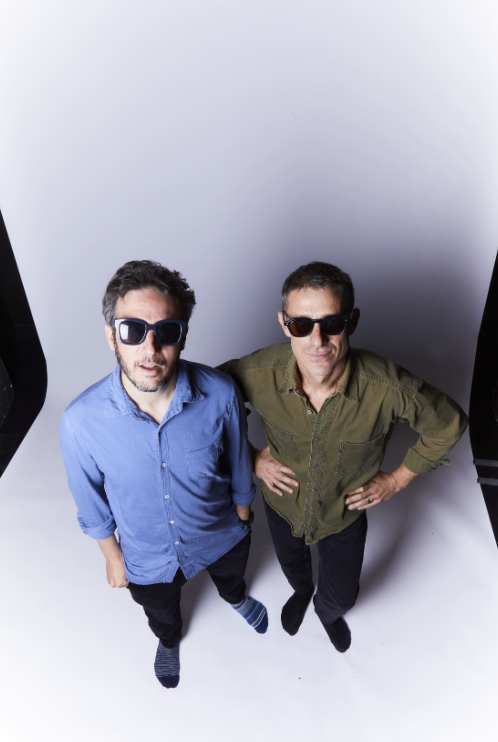
Martin:You are not a “mainstream” duo, and that is a distinctive and crucial aspect of your work. Do you have a specific niche audience that you would like to listen to your songs?
“Honestly? No. Our songs are aimed at everyone: we believe that everyone can find themselves and identify with our songs.”
Matteo: Do you prefer adapting to what the audience seems to like, or do you try to guide them toward something you feel is yours?
There is definitely an overall vision for the project, but what comes out is almost always born in a very intuitive way. The core of a song emerges from us in a fairly unpredictable manner, and then everything develops from there. In the production process, there is attention, of course, but not so much in trying to smooth out the edges: on the contrary, sometimes the point is precisely to make them sharper, when that serves to convey a message. At the same time, we try not to be carried away only by the desire to “go hard,” which is a bit part of all of us, because we also care that the song remains listenable. It’s a balance we like to seek.
The choices, though, are never made according to a calculated plan. Maybe while working on a track you think, “This will work,” or “This will do less well,” and often that’s exactly what happens. For example, with Uomini Nudi, we felt it could work, while other songs seemed much less immediate or even difficult to produce. Still, we carry them forward anyway, even knowing they may not become big hits, simply because we feel the need to complete them. Maybe the first album was the only one approached with a bit more attention in that sense, but even there, in the end, what we really are came through. Just think of a track like La vita fa schifo: it has the structure of a great rock ballad, but inside there are also very different influences. Other tracks are darker, rougher. In the end, what comes out comes out naturally. The coherence comes from our personality, from the mark we inevitably leave on the music, even when the tracks are very different from one another.
Irene: What is your relationship with success? Do you think that growing a lot and reaching a wider audience risks altering what you do, or is it a natural evolution for you?
There is definitely a desire to reach a bigger audience, also in terms of existence, because the more marketable the project is, the more it lives. A project that has no audience does not live unless you have a patron; a project that has an audience has that audience as its supporters. So there is a desire for recognition for the project, but no desire for status on our part.
Greta: Do you feel more like a band or a broader artistic project, in which music is the main expressive medium? And how does this vision translate concretely into your work?
We would like to expand the audiovisual dimension of the project more and more, not only through music videos, but also by developing other content and forms of expression. Ours is a fully rounded artistic project, even if music remains the main language through which we tell our story, because first and foremost we are musicians. The band dimension is also very important to us, especially because we are both involved not only as artists, but also as producers, and this allows us to maintain a coherent and independent vision.
In recent times, the live aspect of the project has also become increasingly important. Involving people and collaborating with others within our creative process is one of the parts we find most stimulating. We would like to keep expanding these different dimensions: from music production to the creation of audiovisual and cinematic content, all the way to the growth of the live band. The idea is to build an ever-larger creative universe. At the same time, choosing to remain completely economically independent also brings many difficulties. We often lack real financial support or a patron who could allow us to develop everything with greater freedom. For this reason, we constantly have to deal with very limited budgets, working almost always in a “do it yourself” mode, through adaptations, compromises, and improvised solutions. Despite everything, we continue to carry the project forward with determination, trying to stay true to our artistic vision.
Sofia: How much does your current personal emotional state actually influence your sound? And if it were to change drastically, do you think the genre you make would change too?
Without a doubt, yes. At the end of the day, these are in some way deeply autobiographical songs—let’s say a shared autobiography—so the music we make depends on what we are living through. In fact, Uomini Cani Gabbiani was supposed to be a dance record, a Le Feste Antonacci album that would pick up on all the codes of dance music, but then, given the historical period, it became more of an album that talks about our present in an abstract way and about future anxieties.
So do you see yourselves as dynamic in that sense?
Completely. We are slaves to our emotions, both personal and planetary. And planetary emotions become personal too.
Martin: You know very well that, we, Fashion Styling students are passionate about fashion. In the single “UOMINI NUDI,” the concept is repeated that “without the jacket we are clean souls.” Do you think that the clothes make the man? Or is it all a matter of appearances?
“Yes. We pretend that it’s not true, but in reality, in today’s society, clothes really do make the man.” Lorenzo smiles at his bandmate and then continues: “The important thing is to pay attention to what you choose to wear: clothing remains a language capable of telling who we are or how we want to appear, and I believe that a monk should do the monk thing and cannot hide under a wolf’s fur.”
Giulia: To close the circle… as for how you see yourselves in the future, do you already have new projects planned, or maybe ideas you want to turn into reality? Since you mentioned “going a little further”…
Definitely, right now we’d like to focus on producing and writing for our personal projects… mainly because we’ve also worked a lot “for others,” and now we’d like to dedicate ourselves to our own projects, including the ones we set aside some time ago for various reasons. By next winter, we’d already like to release two of our own songs that we’re currently working on.
Pietro: Would you like to go to Sanremo?
We’re very attached to Sanremo, especially to the older editions, the grandmothers’ editions. So yes, we’d like to, even though it’s very difficult to get there. You need the right song, one that fits the festival well. If God smiles on us, maybe in a few years we’ll give it a try!
Follow Le Feste Antonacci HERE
Listen Le Feste Antonacci HERE
YouTube Channel HERE
CREDITS:
Production: Moodart School of Fashion and Communication @moodart_fashion_communication
Editing + Publishing Coordinator: @mirawanderlust
Words + interview:
Clarissa Capone @clarissacaponee
Pietro Carli @carlipietro
Greta d’Allio @gretadallio
Martin Tosi @martintosii
Nicole Bergamini @nicole_bergamini
Irene Martelli @martellirene
Giulia Lonardi @giuliaalonardi
Sofia Rachele Brotto @sofibrotto
Simone Scurani @simoscurani
Matilde Giuliari @_robedamati_
Matteo Campa @teo__campa
Academic coordinator: Cecilia Bortolazzi @cecilia_bortolazzi
Press Office: GDG Press @gdgpressufficiostampa