By Giorgia Cantarini
Inside an enchanted Grand Palais, flowers bloomed across tweed, vines climbed sculpted heels and butterflies settled on couture silhouettes. Yet the true magic of Matthieu Blazy’s second Chanel Haute Couture collection was its radical wearability.
images courtesy of Chanel
At Chanel Haute Couture Fall/Winter 2026–2027, the fairy tale did not end when the model left the runway.
It continued into the street, the evening, the wardrobe and the private life of the woman wearing it.
For his second Chanel Haute Couture collection, Matthieu Blazy transformed the Grand Palais into an enchanted garden of monumental flowers, curling beanstalks and surreal vegetation. But beneath the theatrical setting—and the butterflies, vines, golden eggs and storybook creatures scattered throughout the collection—was a remarkably grounded proposition: couture conceived not as costume, but as clothing.
This is where Blazy’s Chanel begins to feel genuinely important.
At a moment when Paris Couture Week often confuses visual excess with creative ambition, he understands that fantasy does not require a woman to disappear beneath the concept. His clothes preserve the scale, technique and emotional charge of haute couture while remaining connected to movement, personality and real life. In other words, Blazy makes the dream wearable without waking us from it.
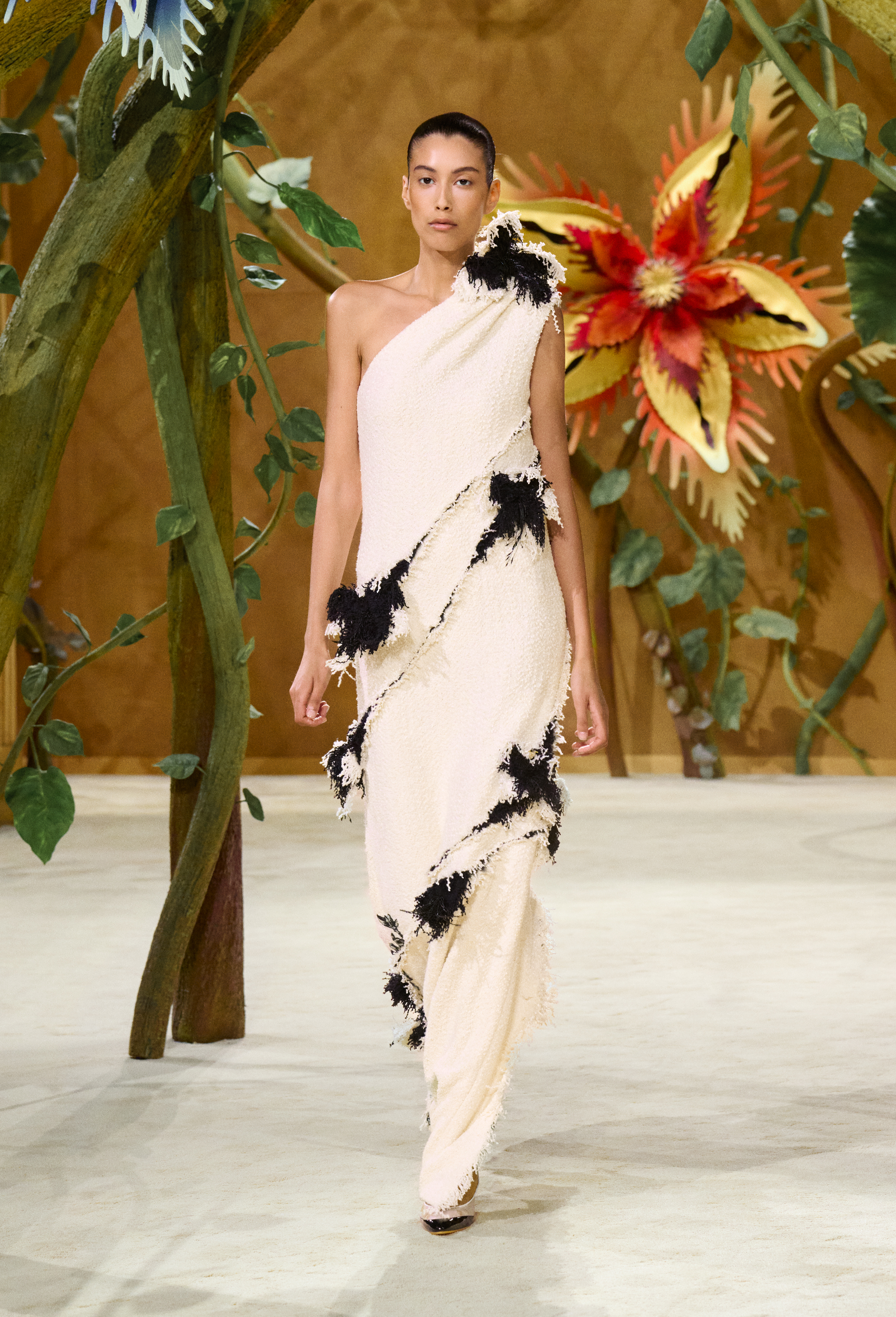
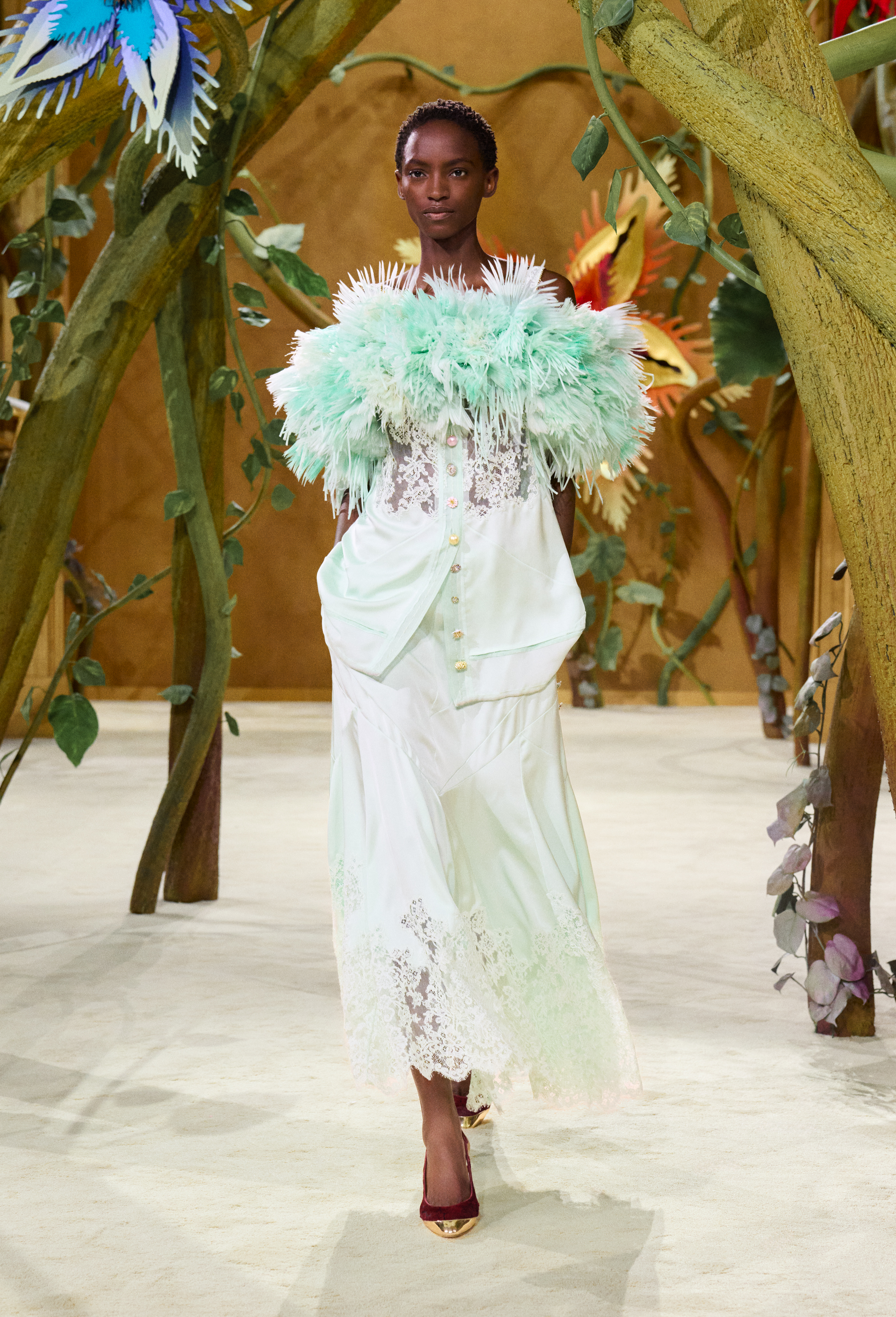
The opening model carried Les Fées, contes des contes, a volume of fairy tales taken from Gabrielle Chanel’s own library. From there, Blazy imagined the founder’s extraordinary journey—from an orphanage to the creation of one of the most powerful fashion houses in history—as a fable of transformation, ambition and self-invention.
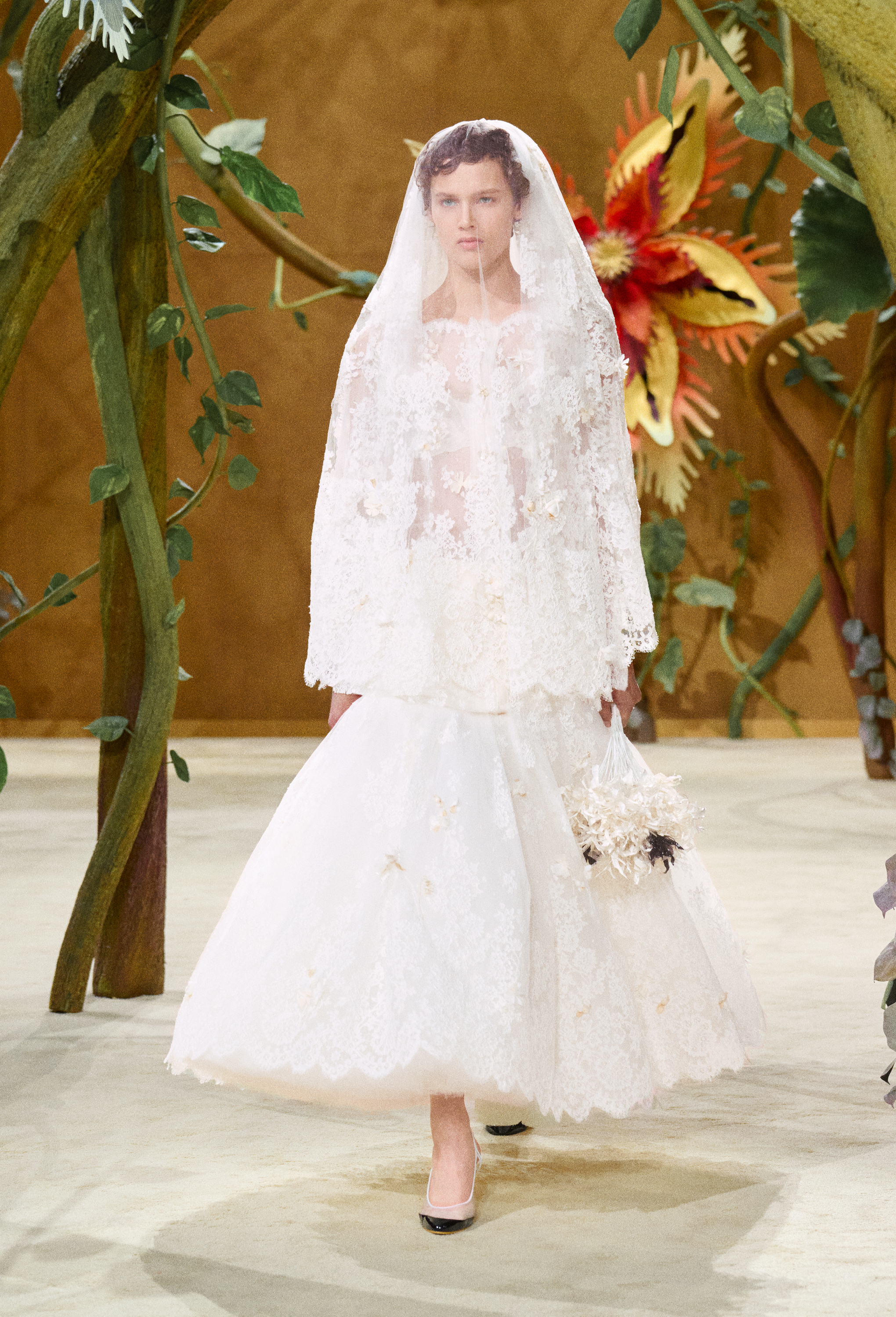
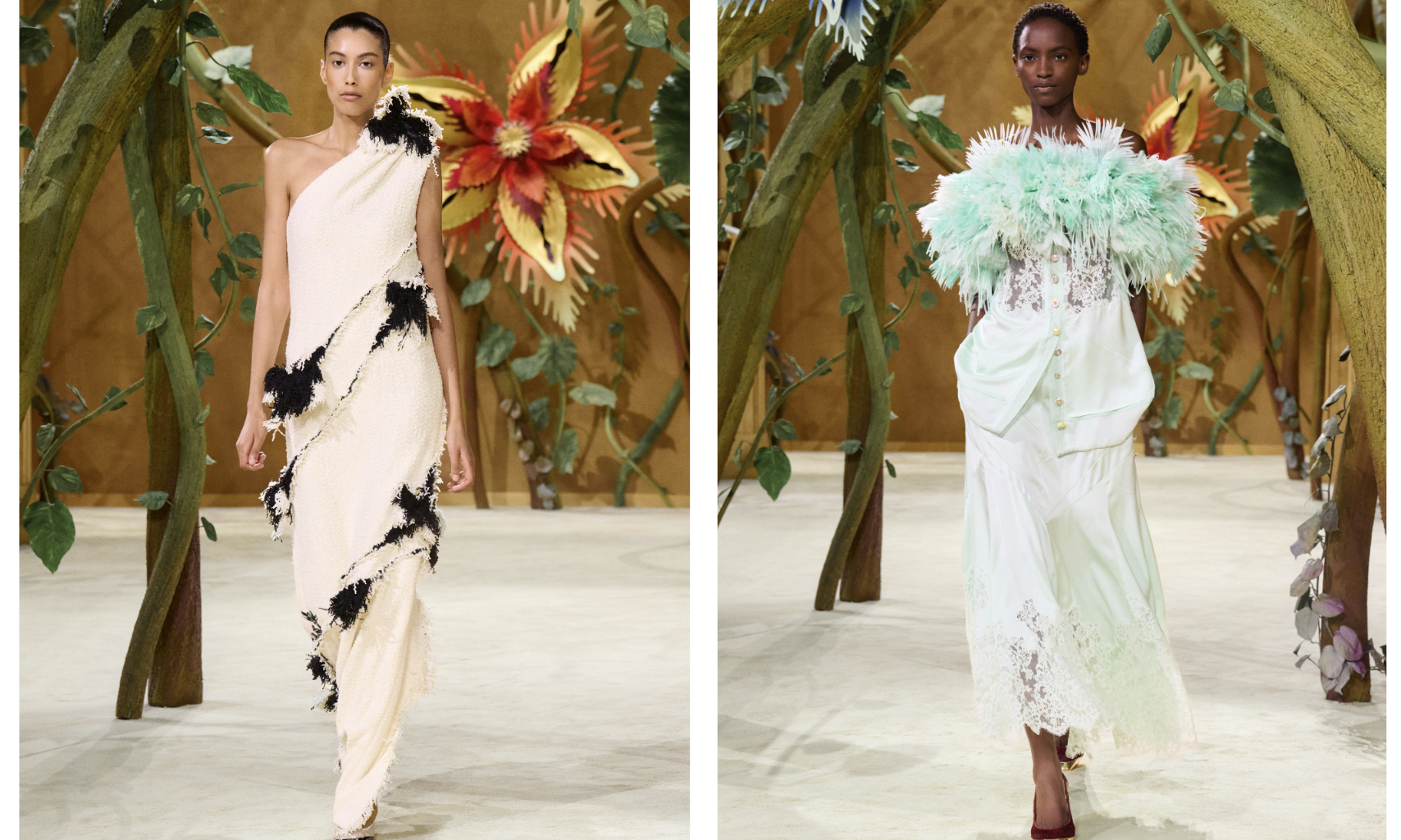
The first look established the vocabulary immediately: a Chanel suit constructed in guipure recalling the shapes of magic beans, interrupted by the transparency of weightless silk mousseline. It was unmistakably Chanel, yet freed from the stiffness and ceremonial formality that can sometimes surround the house’s most recognisable codes.
Raw edges, exposed lingerie, airy fabrics and deliberately unfinished surfaces gave the clothes the intimacy of pieces still being adjusted on the body. The effect was not careless. It recalled Gabrielle Chanel’s own habit of cutting, pinning and altering garments directly during fittings—a reminder that couture is not born fully formed on a pedestal. It evolves through contact with a woman.
That physical relationship between garment and wearer became the collection’s most convincing idea.
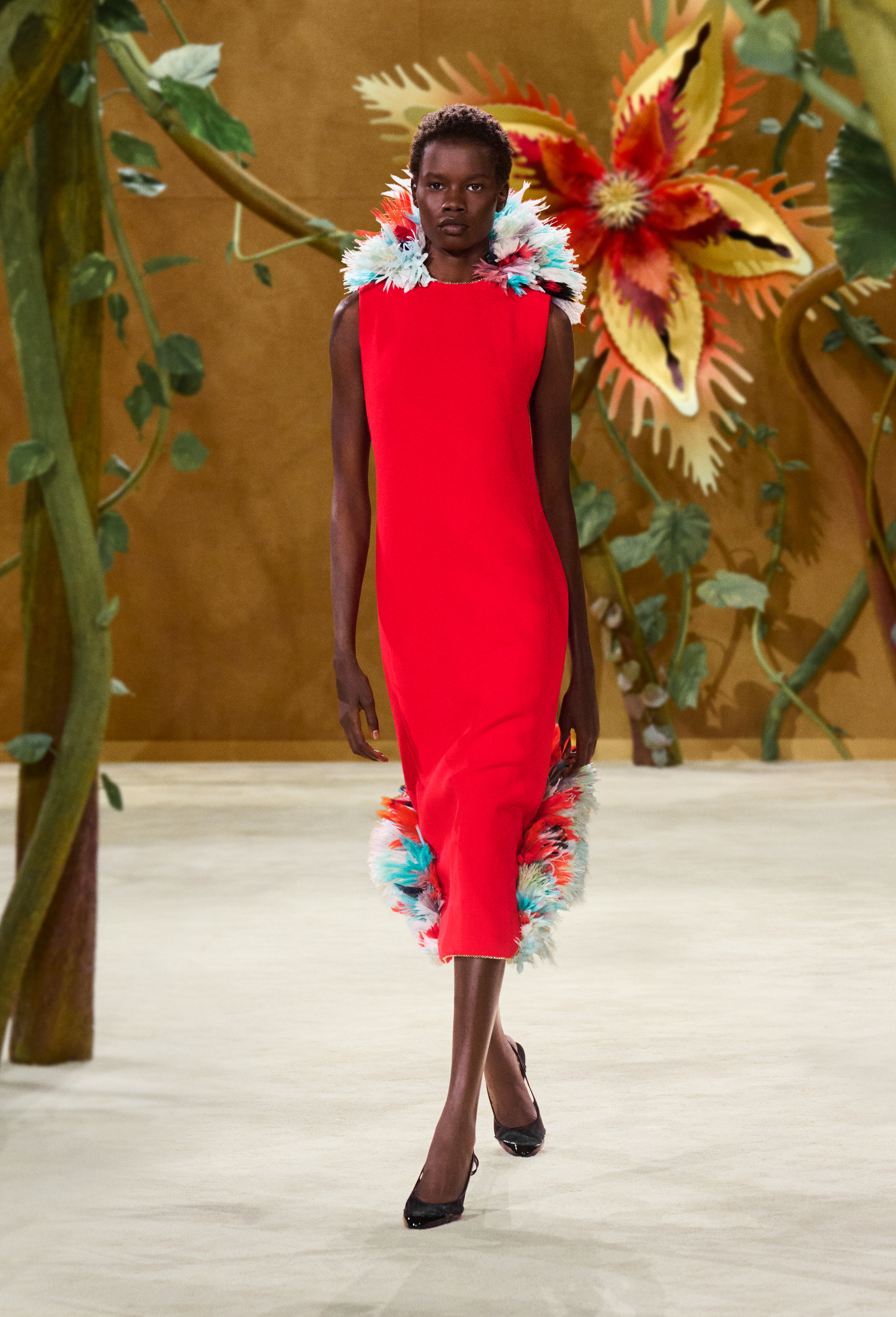
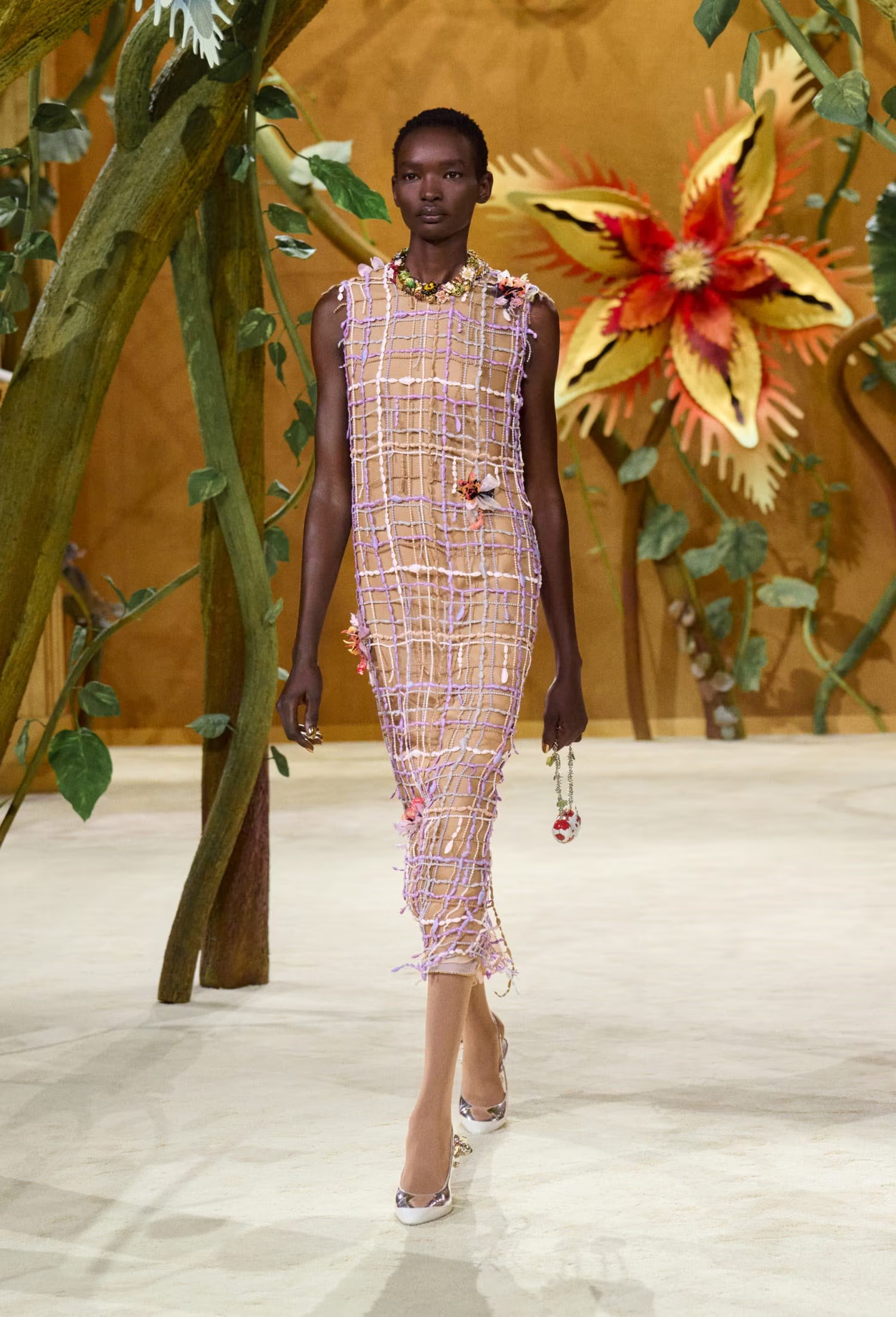
There were sharply cut coats, abbreviated evening dresses, fluid bias-cut gowns, black tunics, trousers and modern interpretations of the little black dress. These were not diluted versions of couture clothes. They were extraordinary clothes whose complexity did not need to overwhelm their wearer.
Blazy’s achievement lies in making wearable couture feel like a creative position rather than a commercial concession. This Chanel woman is allowed to sit down, walk quickly, attend dinner, change her mind and inhabit a room without becoming a static museum object. She does not serve the dress. The dress expands her presence.
The collection’s garden was not entirely innocent. Flowers became sharp, exaggerated and faintly dangerous. Blazy described them as Gabrielle’s “toxic flowers,” acknowledging that traditional fairy tales contain as much threat as beauty.
That trace of darkness prevented the collection from slipping into pure prettiness.
The Chanel woman navigating this garden was not a passive princess waiting to be rescued. She appeared independent, amused and fully in control of the narrative. The casting of women across different ages strengthened that proposition: these clothes were not designed around a single, idealised vision of femininity, but around women with distinct bodies, histories and lives.
images courtesy of Chanel
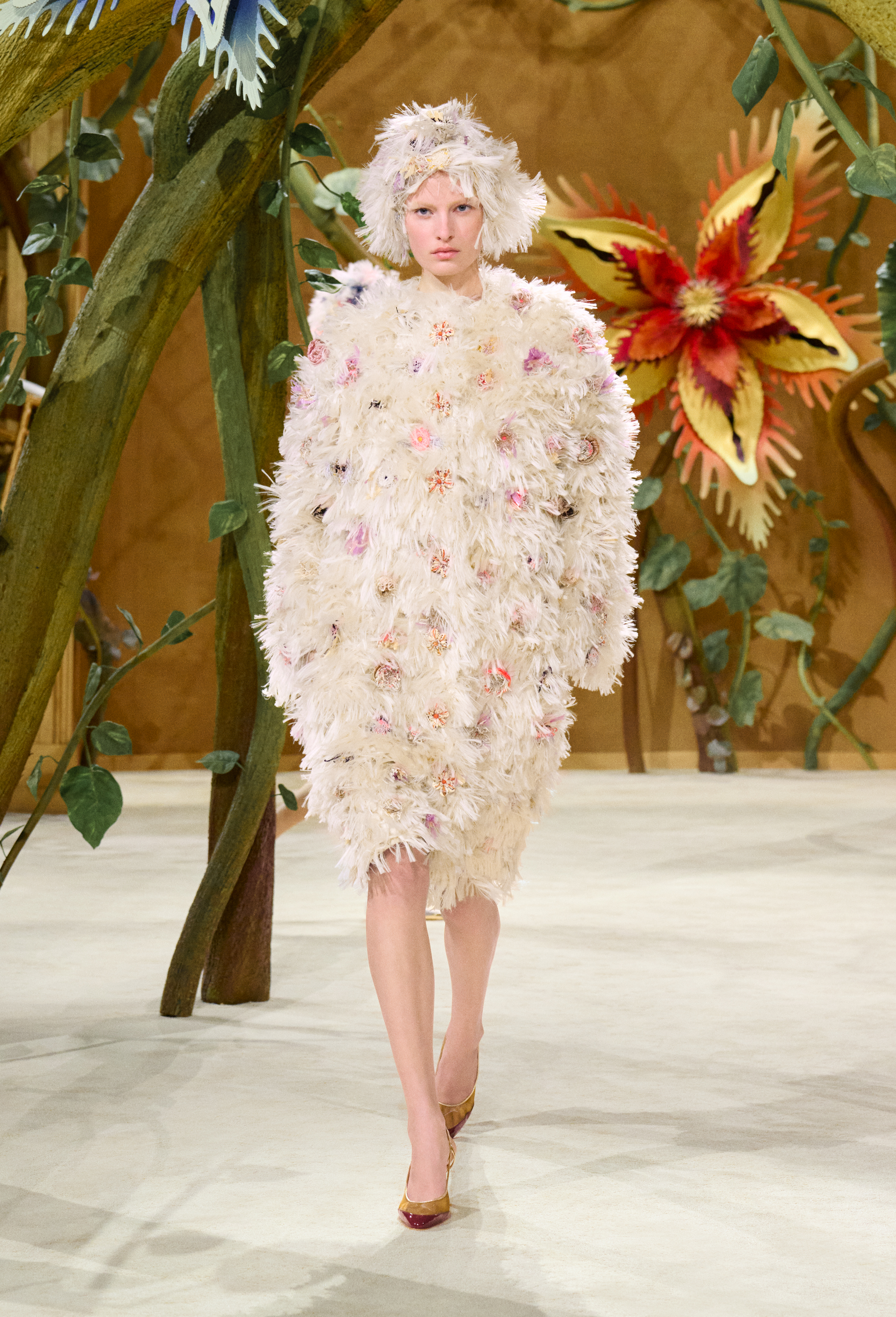
images courtesy of Chanel
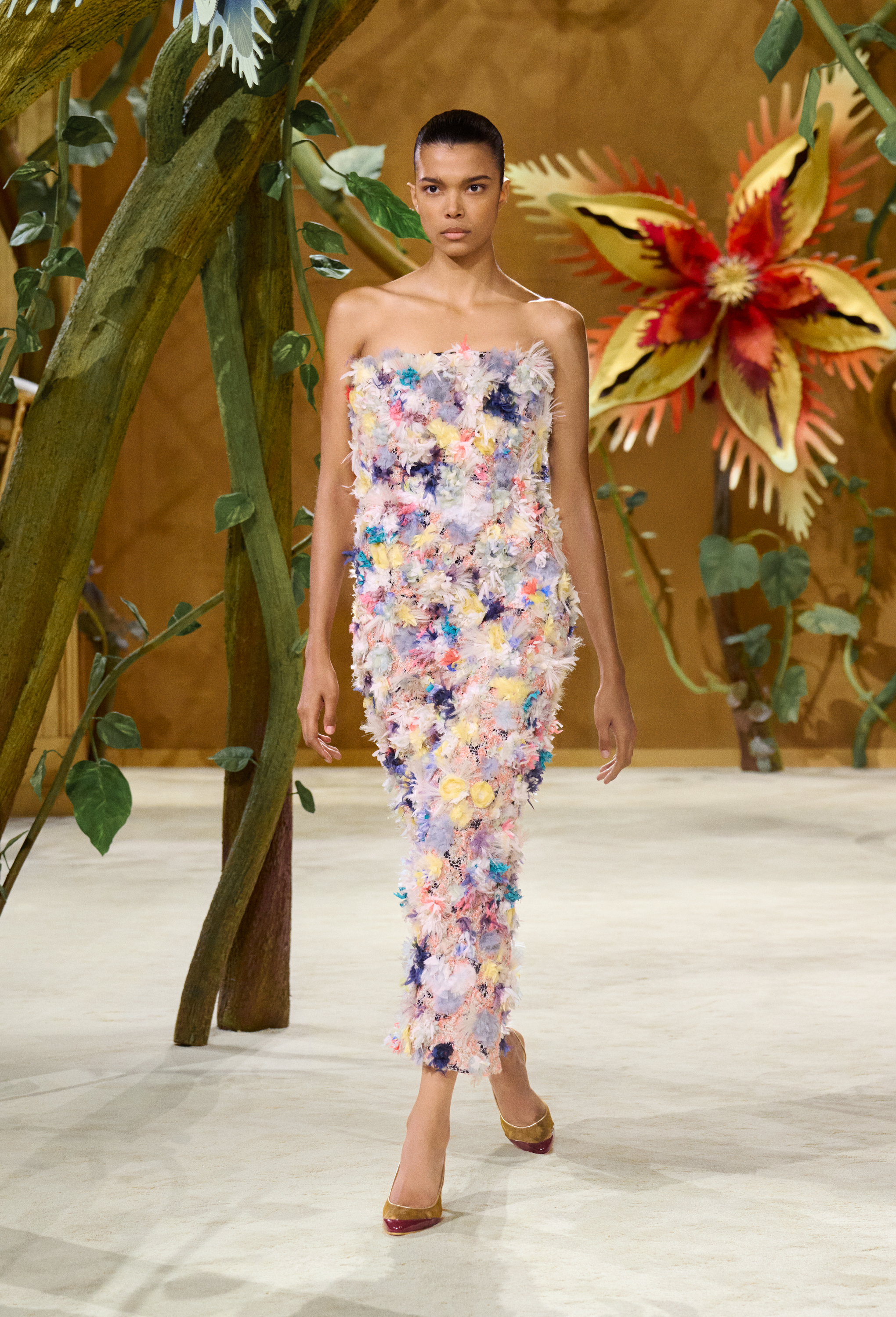
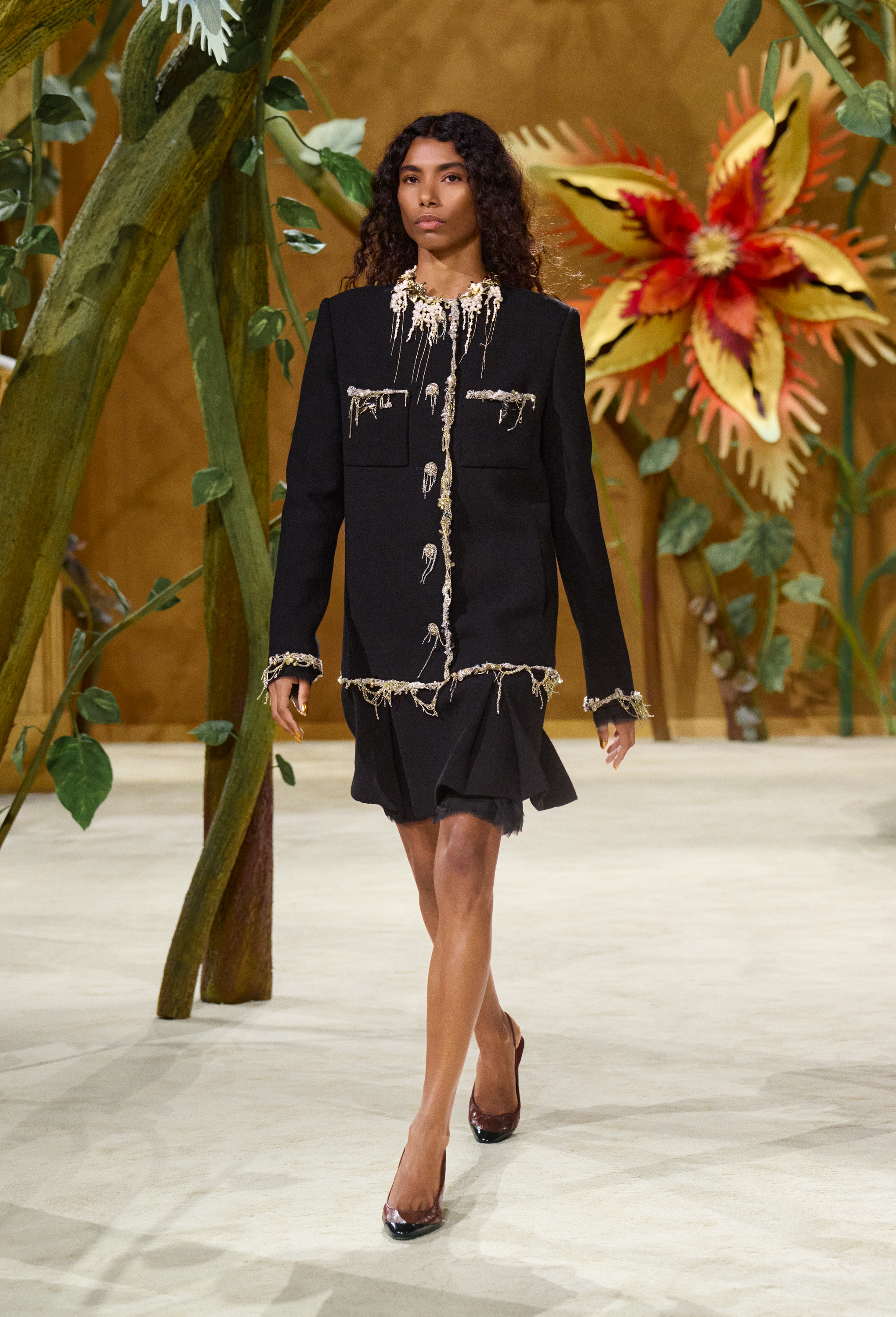
Couture is frequently presented as fashion’s final escape from reality. Blazy proposes something more intelligent: that reality itself can be transformed through craftsmanship.
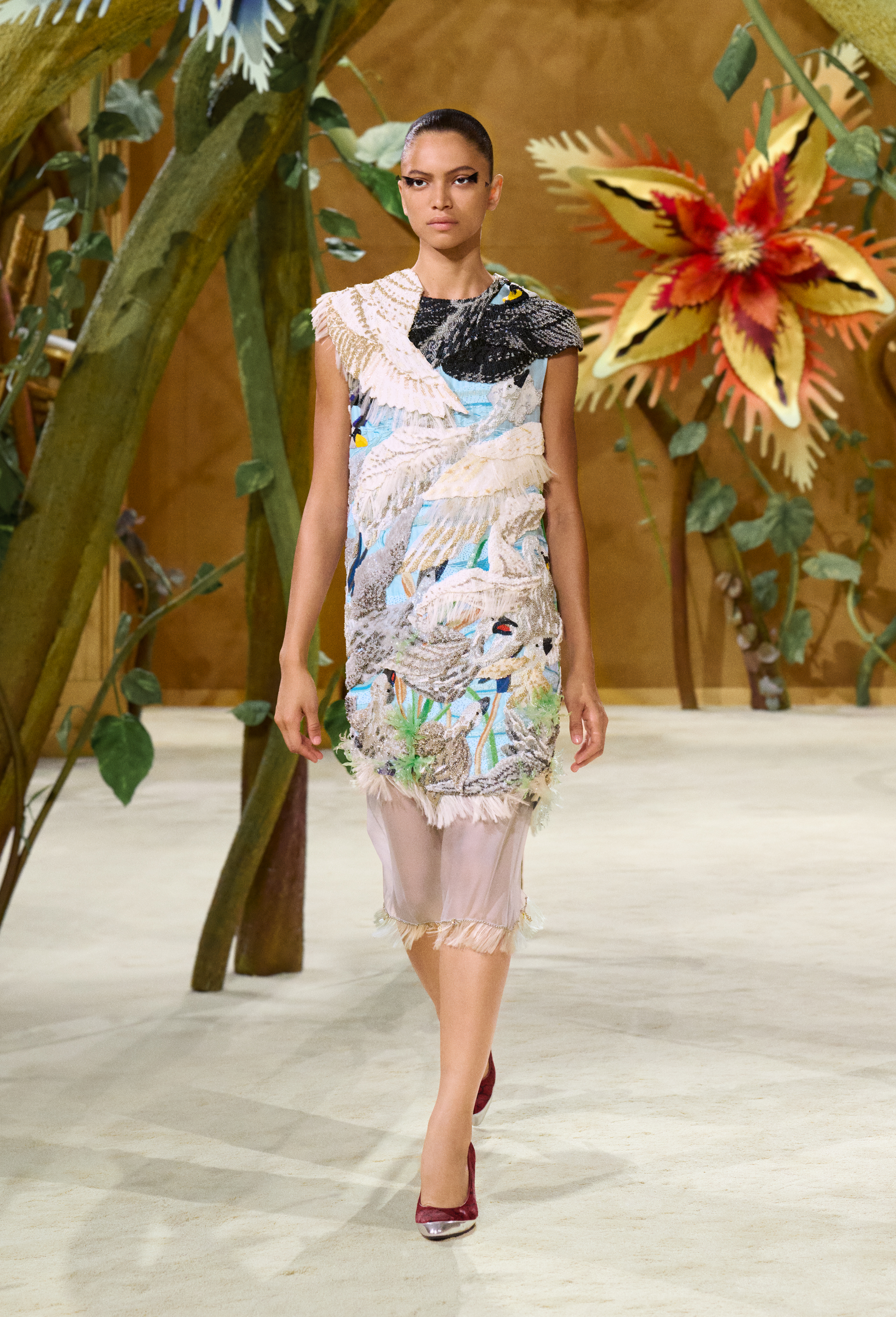
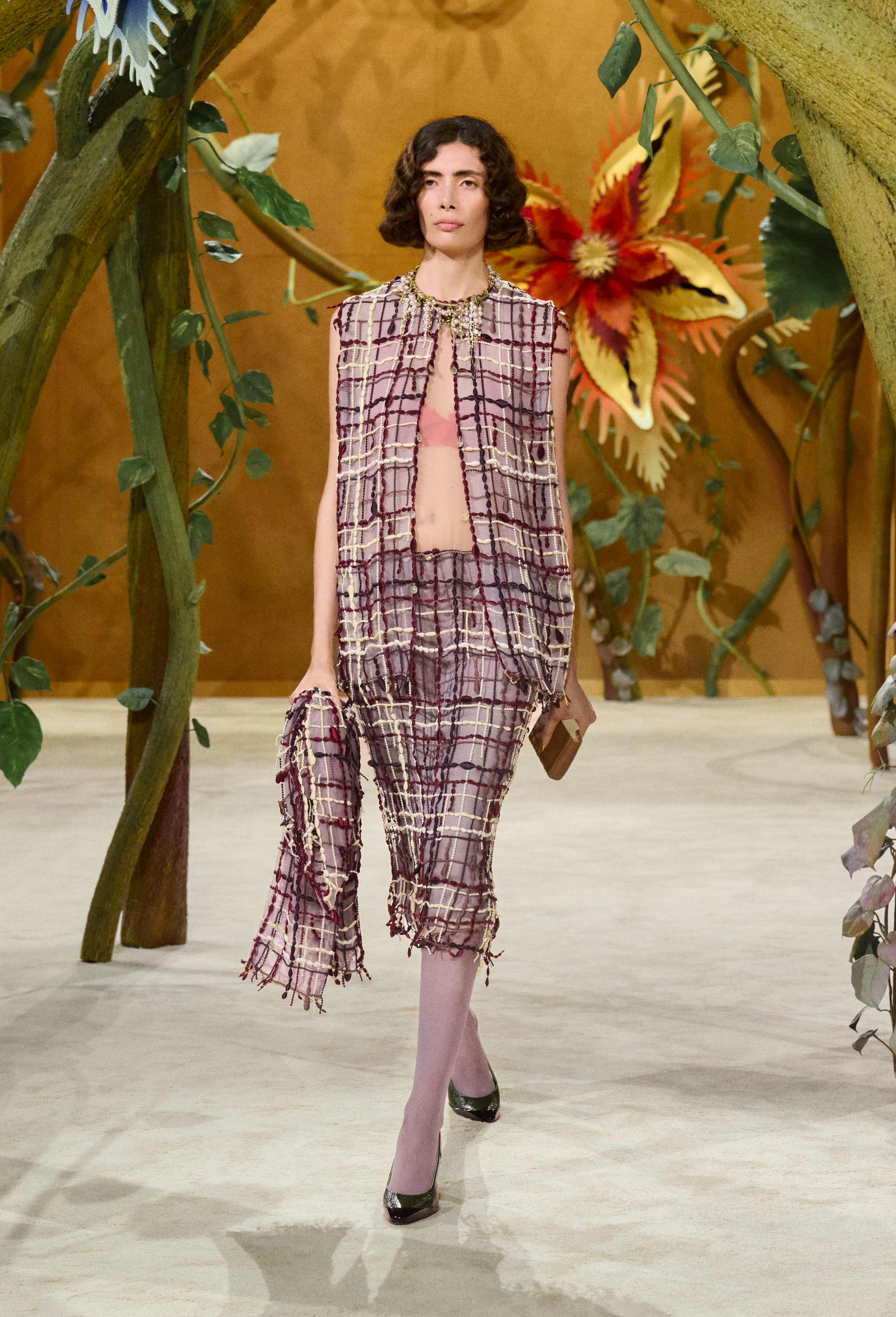
A red sequined shift, a precise coat or a spare black evening look may appear simple from a distance. Up close, however, they reveal the obsessive work of Chanel’s tailleur, flou and galon ateliers, alongside the embroiderers, pleaters, milliners, goldsmiths, shoemakers and textile specialists of Le19M.
The most irresistible elements of the collection emerged through the Chanel accessories, footwear and minute decorative interventions.
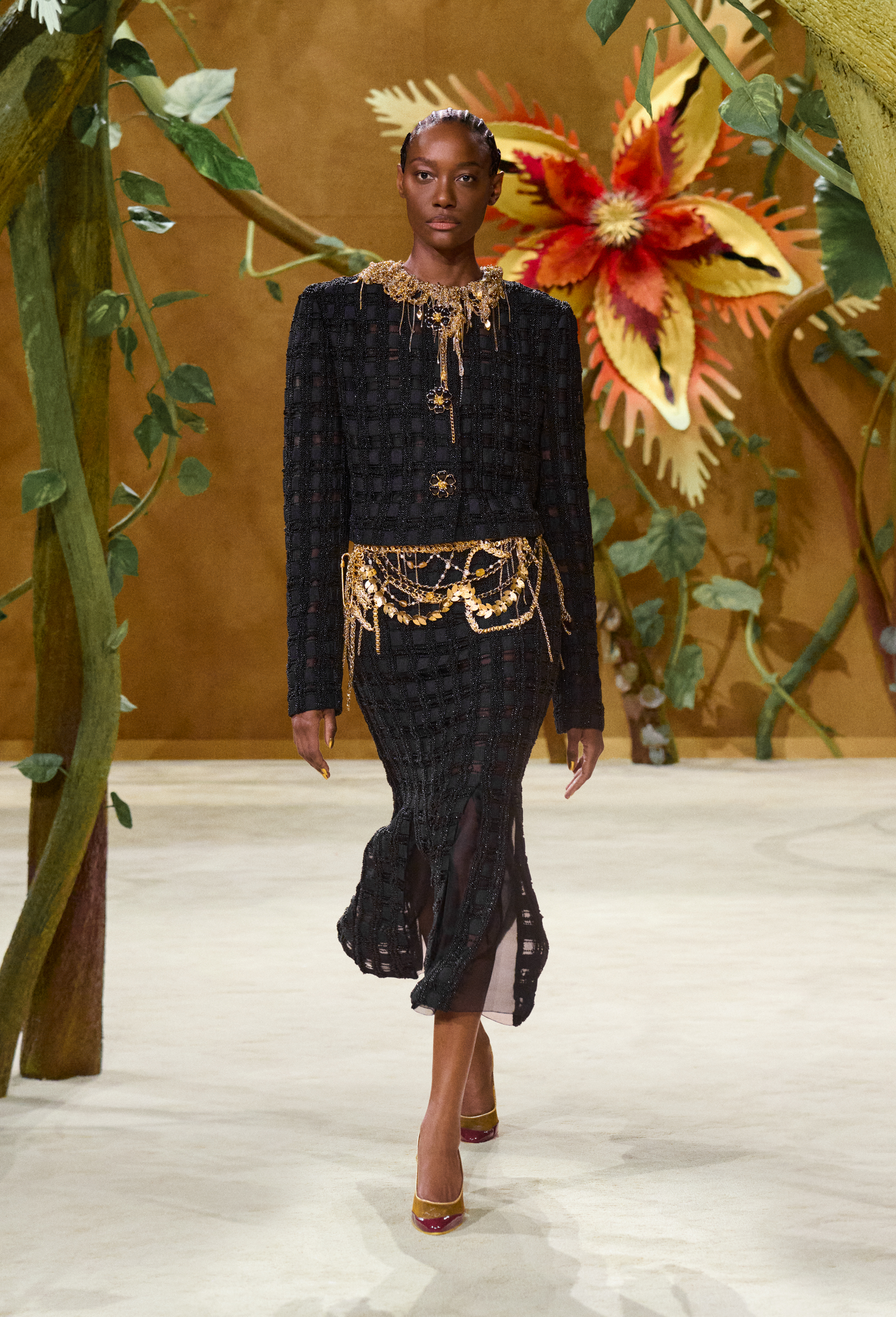
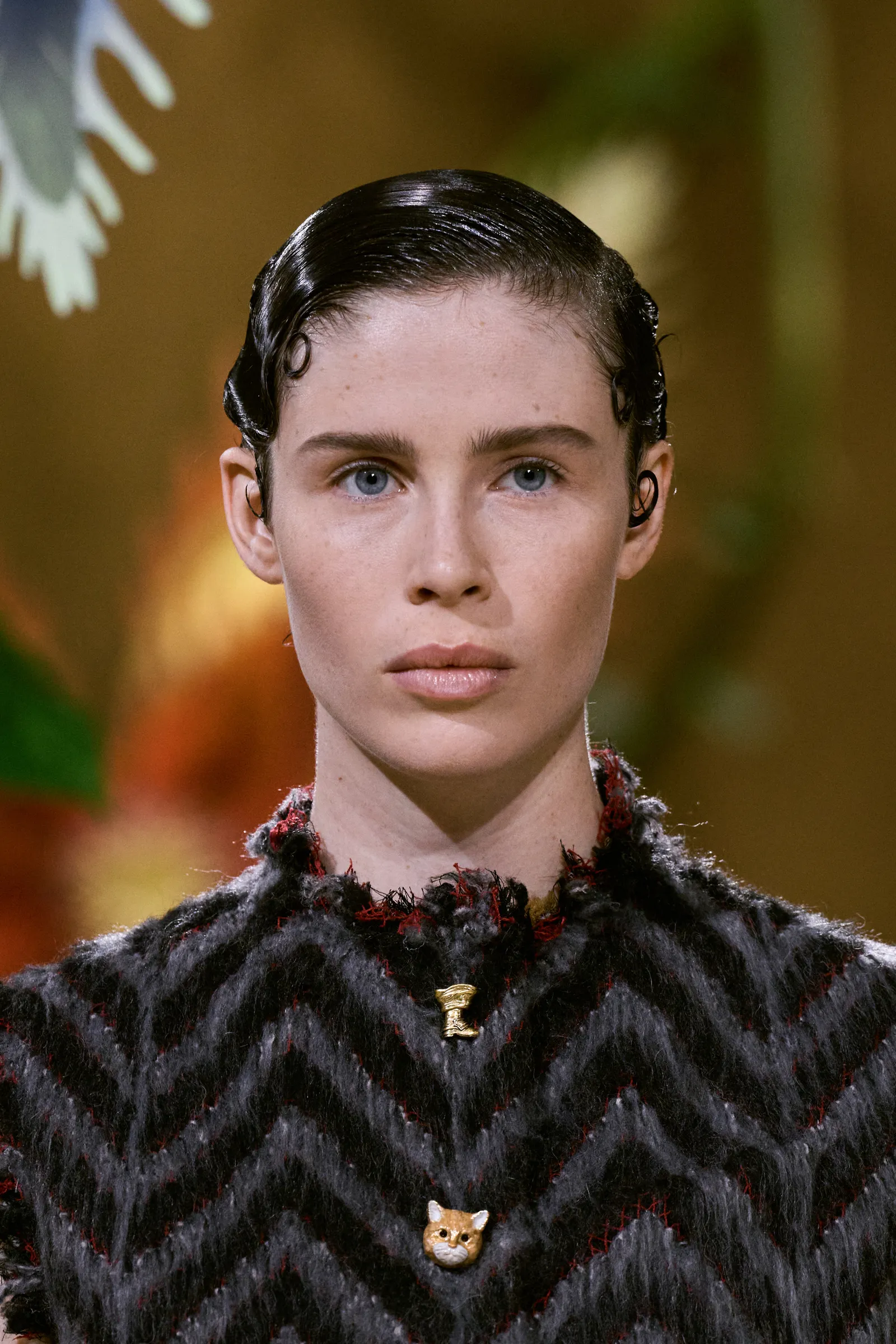
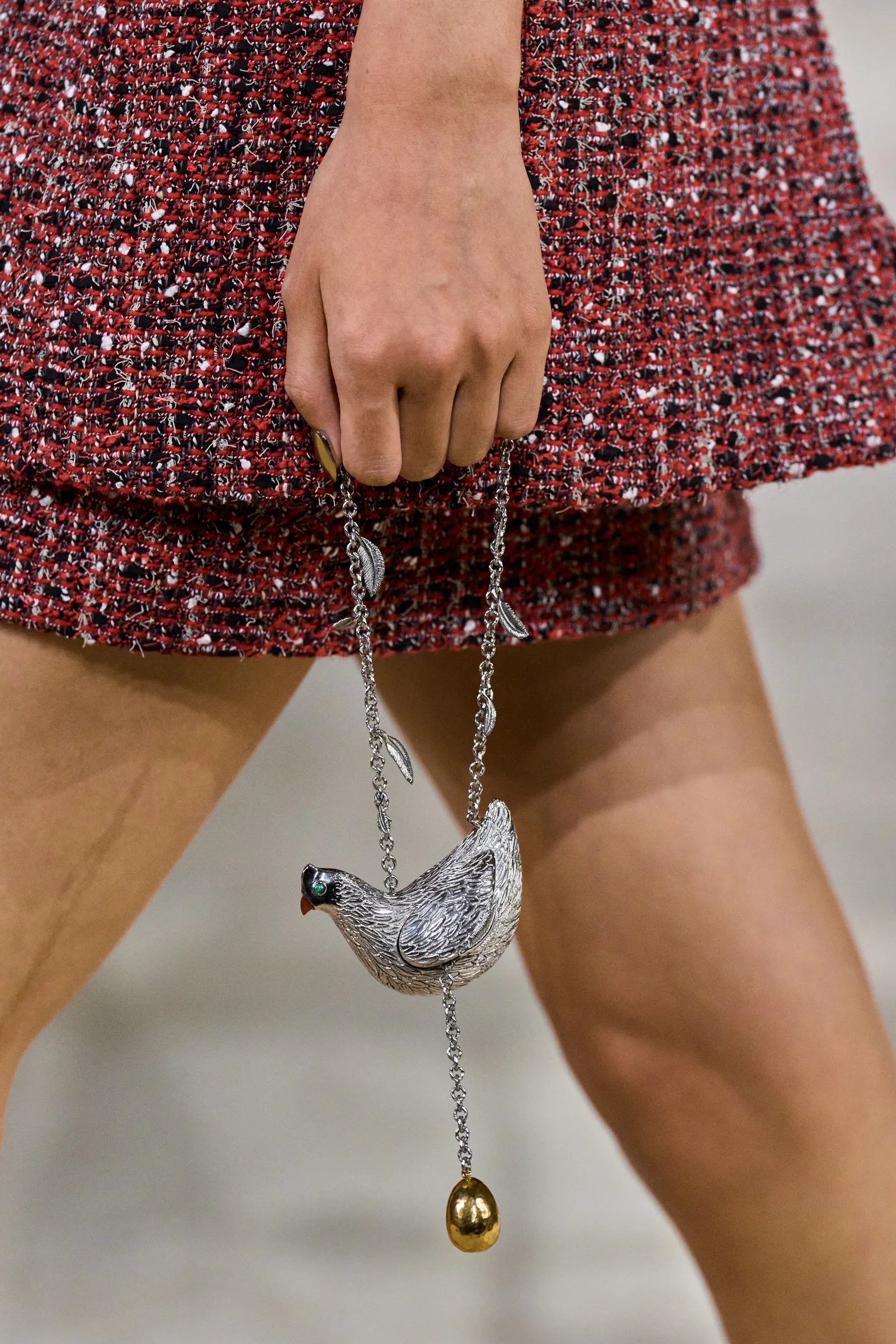
Flowers erupted from tweeds. Thorny vines crossed dresses and curled around shoes. Magpies, coins, miniature boots, cats, bears and chairs appeared as buttons, charms and talismans. A sequence of buttons transformed from an ugly duckling into a swan, while tiny evening bags assumed the shapes of beans and sleeping animals.
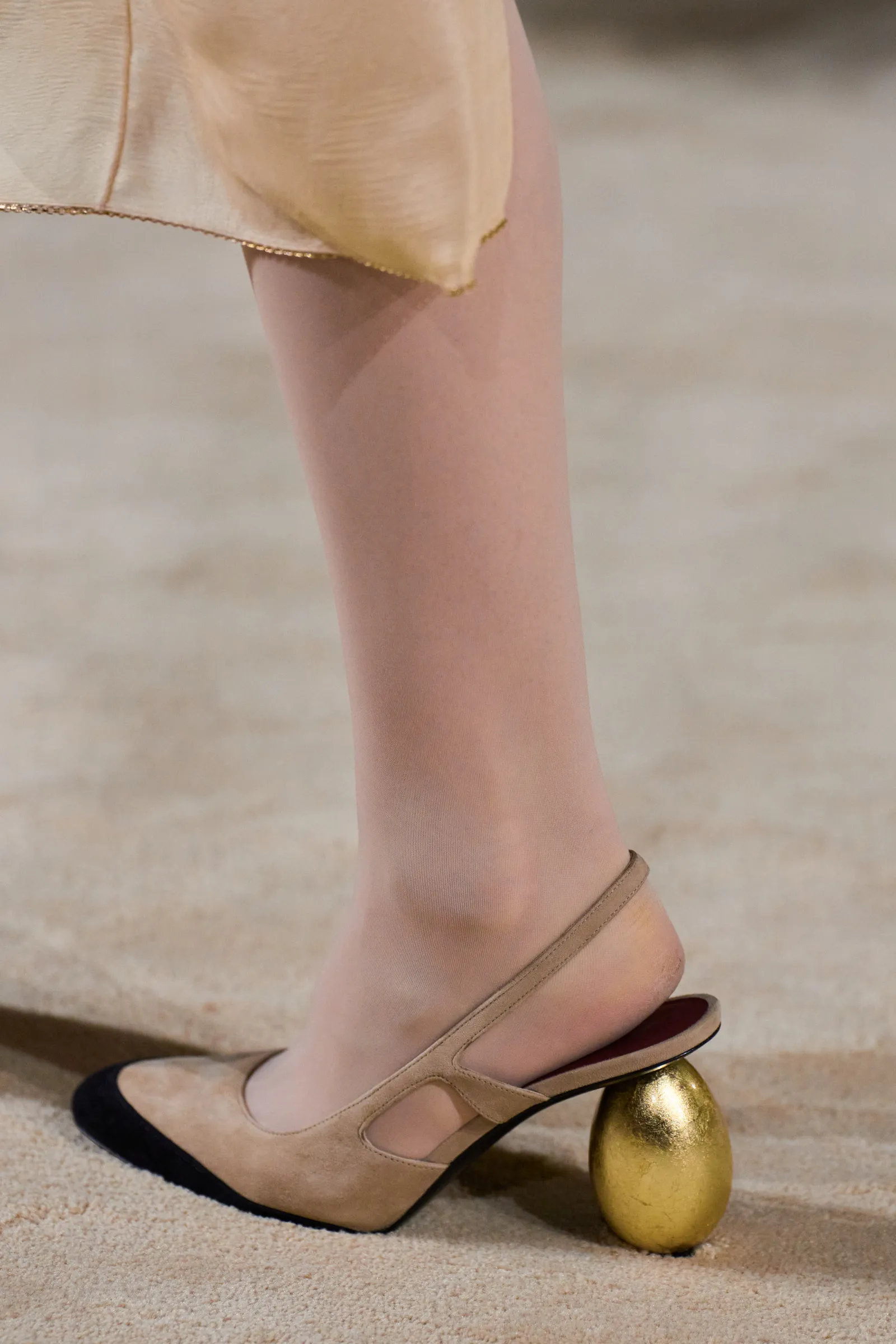
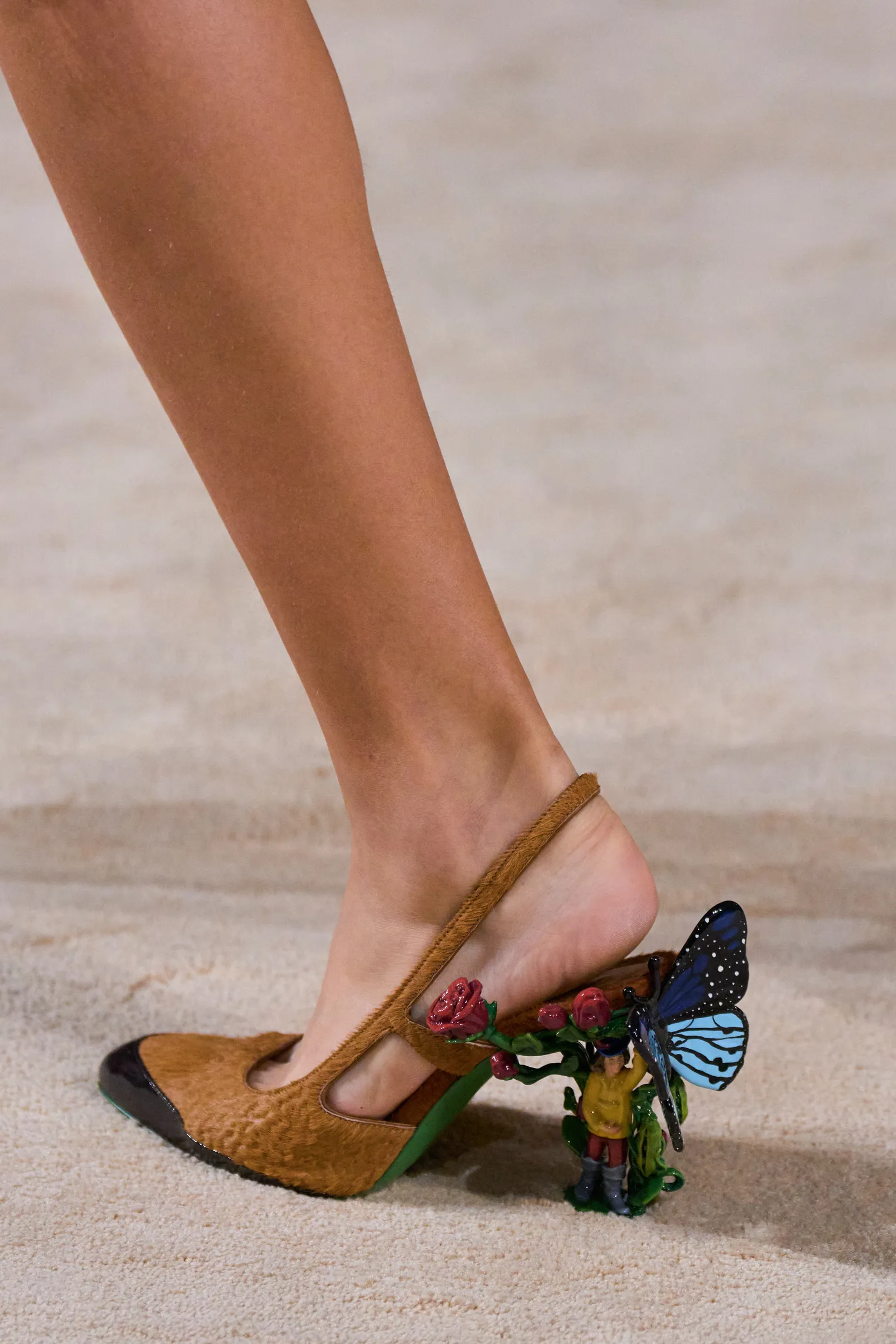
The Chanel Fall 2026 couture shoes were miniature sculptures in their own right.
Vines climbed the heels. Butterflies, hummingbirds and tiny garden scenes turned footwear into wearable landscapes. One shoe balanced on a golden egg; another referenced Jack and the Beanstalk, translating the collection’s narrative into an object that was whimsical, surreal and technically astonishing without becoming childish.
images courtesy of Chanel
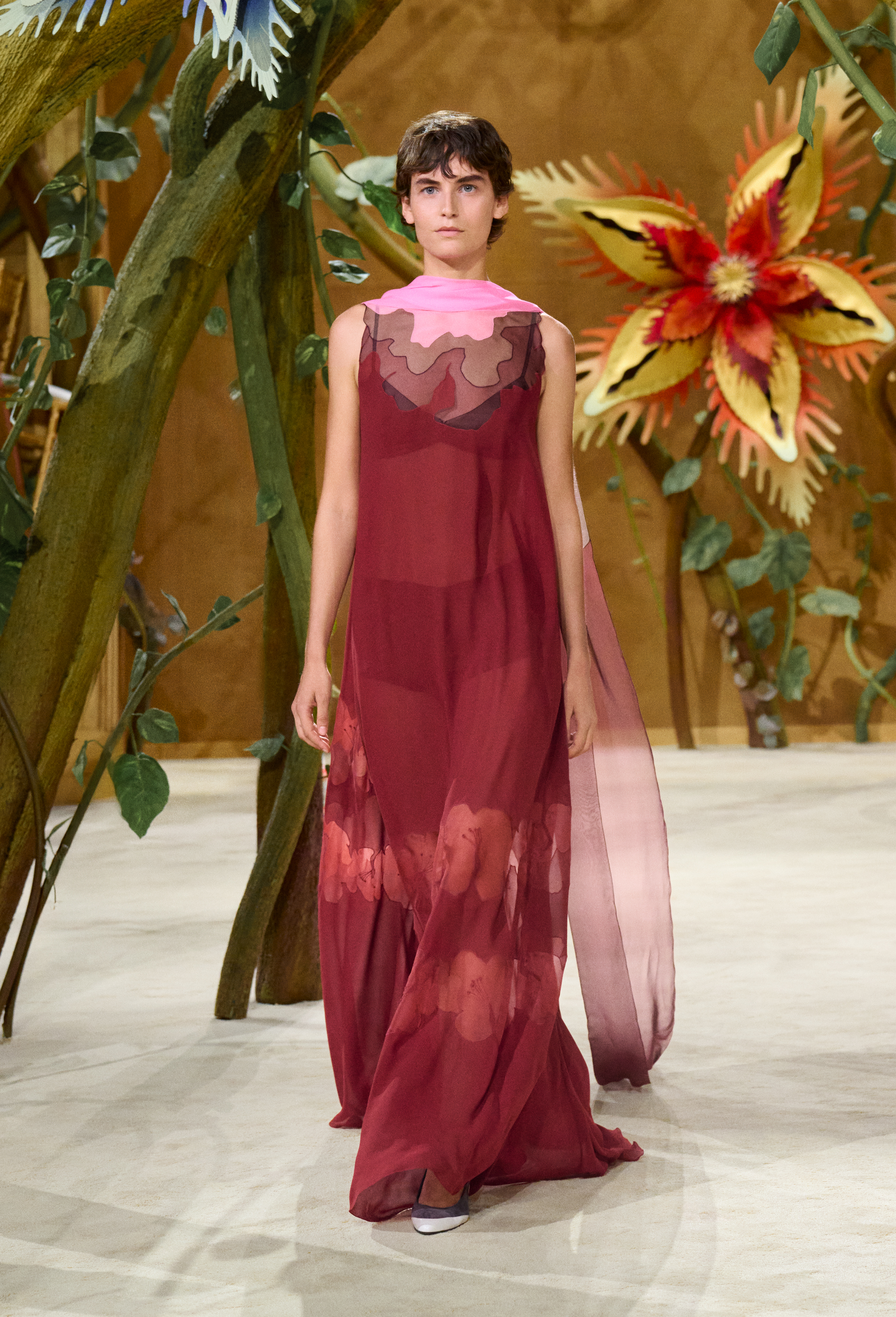
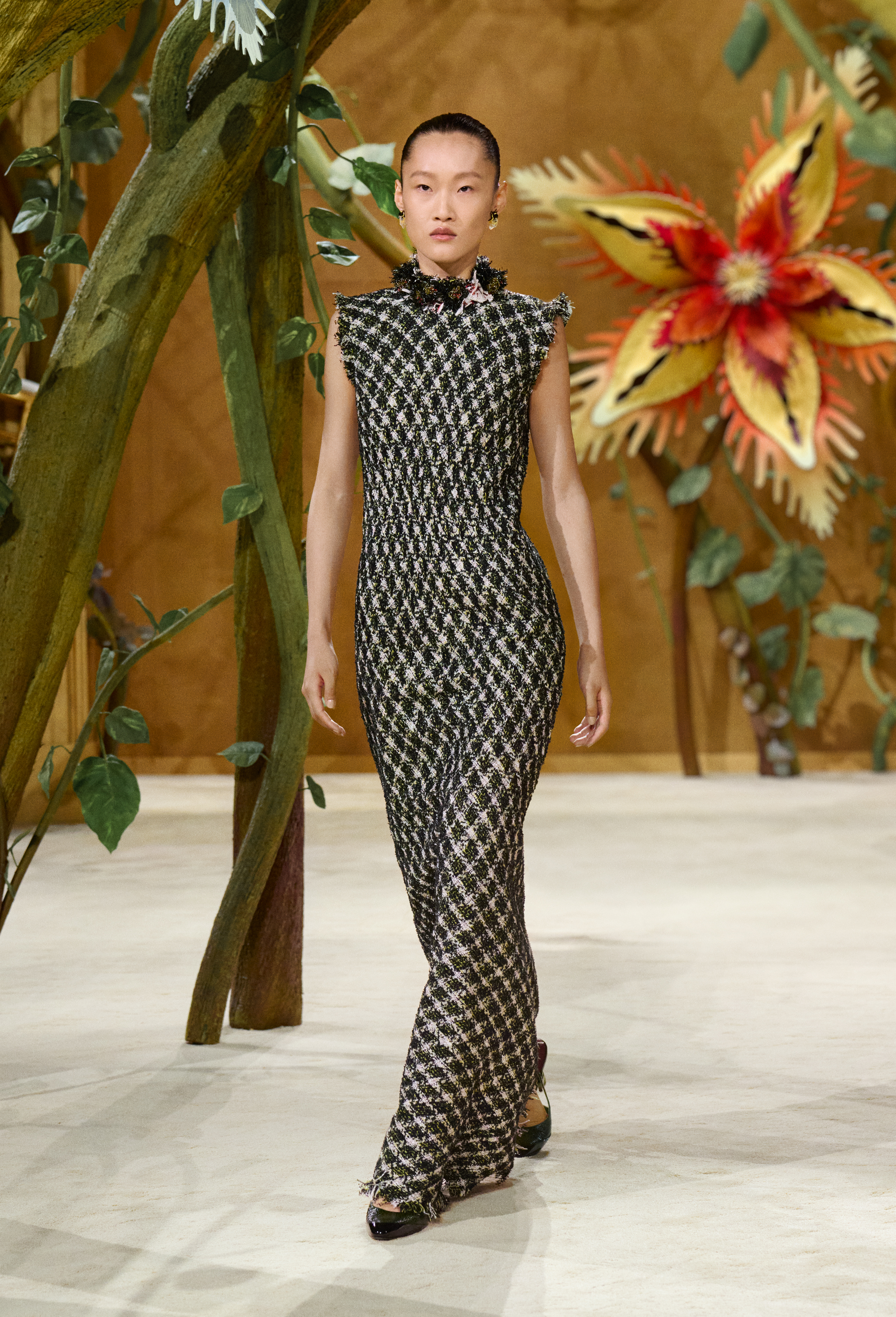
With Chanel Haute Couture Fall/Winter 2026–2027, Matthieu Blazy has not rejected the spectacle of couture. He has taken it to another level: it’s a dream we can wear, maybe not afford, but dream to wear, without obstacles, constraints or special occasions for which we need to be “extra”.
The spectacle lies in a vine winding around a heel. In a painted lining nobody else may see. In a jacket that carries the invisible work of countless hands yet feels almost weightless on the body. In the idea that a woman can wear something fantastical without being turned into someone else.
Blazy has grasped one of Gabrielle Chanel’s most enduring lessons: luxury reaches its highest expression not when it restricts a woman, but when it gives her freedom. She walked out wearing the dream. And, crucially, the dream belonged just to her