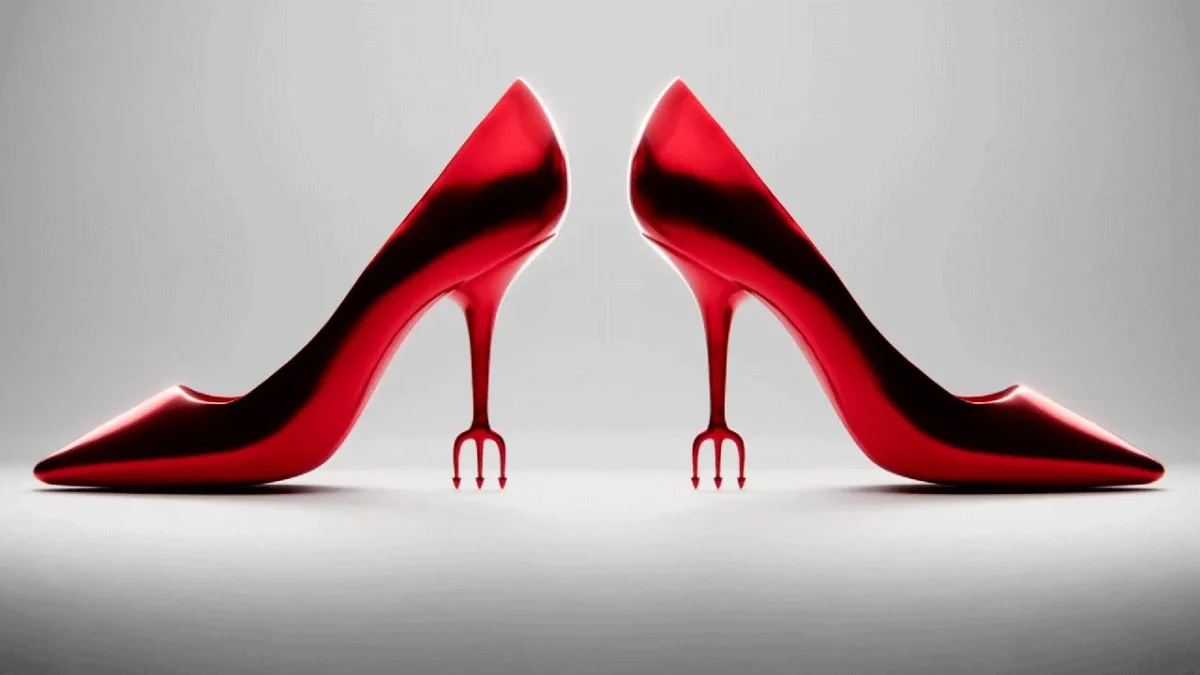
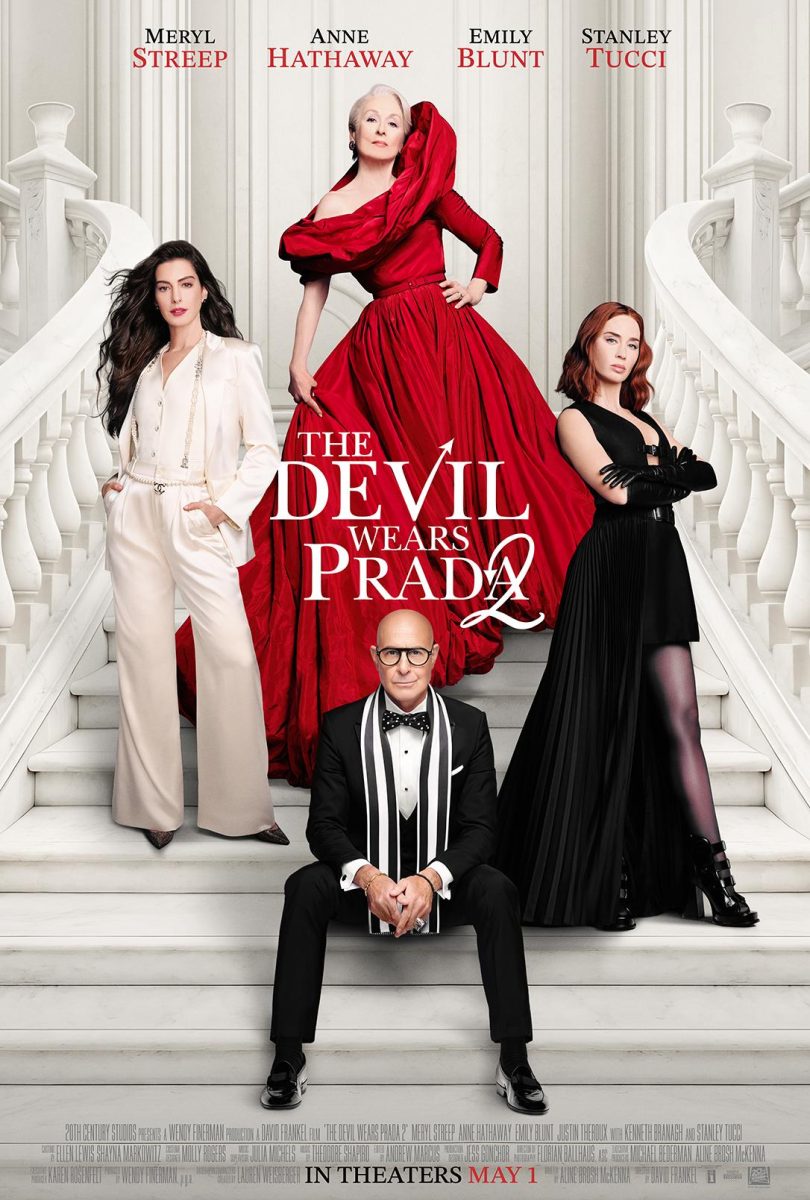
I watched The Devil Wears Prada 2, yesterday.
There is a question that the film pretends to ask, but never fully confronts: does fashion still make us dream?
The answer, buried beneath its polished surfaces, seems to be no.
Yet this “no” does not arrive as revelation—it arrives as limitation.
The film does not dismantle the myth of fashion; it quietly reduces it, until what remains feels like a recycled language of clichés and exhausted symbols.
What should have been a sharp reflection on desire, power, and cultural production becomes instead a surface-level exercise in recognition.
We are shown the same archetypes, the same gestures, the same coded figures of authority and ambition.
But they no longer carry weight.
They circulate like empty signs, repeated without tension, without risk, without surprise.
The problem is not that fashion has lost its ability to generate dreams (as seen in John Galliano’s latest Maison Margiela couture show, February 2024).
The problem is that the film no longer knows how to translate that ability into meaning.
Instead, we are left with a system of false symbolism—carefully staged, visually impeccable, but emotionally inert.
Fashion is reduced to posture.
Power is reduced to costume.
Ambition is reduced to dialogue we have already heard too many times.
What is missing is precisely what fashion, at its best, has always produced: contradiction.
Excess. Anxiety. Transformation.
The sense that behind every image there is something unstable, unresolved, alive.
Here, everything feels resolved before it begins.
And yet, perhaps the most revealing detail lies elsewhere—in the film’s own attempt at self-awareness, which ends up exposing its limits rather than its intelligence.
In the first Devil Wears Prada, power was theatrical and absolute: Miranda Priestly (Mery Streep) throwing a coat onto a desk, a silent command that turned hierarchy into choreography.
In the sequel, that same Miranda is shown struggling to hang her own coat.
A gesture meant to suggest vulnerability, maybe even change.
But it lands differently: not as depth, but as depletion. As if the myth had simply forgotten how to sustain itself.
It is a sterile symbol, mistaken for nuance. Because fashion is not failing due to a lack of humanisation—it is failing, here, because it is being reduced to gestures that pretend to say something profound while avoiding anything truly structural.
The real fractures are elsewhere, and the film briefly touches them only once, almost accidentally, through Nigel (Stanley Tucci), who reminds us that the system has changed its scale of value.
Once upon a time, entire productions could be justified by a few pages shot in Africa with legendary Richard Avedon.
Today, even a simple studio editorial becomes a bureaucratic negotiation, inflated, procedural, over-designed.
It is one of the few moments where the film brushes against something real: a system that is no longer driven by vision, but by administration.
A world where even creativity must justify its existence through layers of process.
But this insight is never developed.
It remains a line, not a direction.
Because the deeper truth is more uncomfortable than the film is willing to admit: the system is not evolving—it is imploding.
Not through collapse, but through inflation.
Everything becomes content.
Everything becomes production.
Everything becomes justification.
And in that shift, value quietly detaches itself from substance.
What matters is no longer what is made, but how visibly it circulates.
The critique becomes unavoidable: The Devil Wears Prada 2 does not fail because it is harsh on fashion.
It fails because it is not harsh enough.
It observes the industry through a filter of nostalgia and repetition, rather than through the discomfort that true observation requires.
Fashion, in reality, is not a museum of stereotypes.
It is labour. It is exhaustion. It is ambition stretched to its limits.
Those who work within it know that glamour is not a surface—it is a byproduct of pressure, discipline, and constant negotiation with time, image, and expectation.
But the film only gestures toward this truth. It never fully inhabits it.
Perhaps, then, the film is less a commentary on fashion than a reflection of something larger: a gradual cultural decay in which everything is flattened into surface.
A world where what once was dream and substance has been replaced by business and image alone.
And this is where the discomfort truly settles: because the problem is no longer only the film, or only fashion.
It is the shared condition they mirror.
A system in which cinema no longer interrogates, and fashion no longer aspires—both reduced to the management of appearances, endlessly circulating, endlessly hollow.
What remains is not critique, but confirmation. Not vision, but branding.