By Julia Radovich
Let’s be honest – rural punk isn’t new.
We’ve seen it on runways, in campaigns, in the hands of other young designers. But what makes Milk of Lime different is that they’re not trying to reinvent anything. They’re just doing what feels real to them.
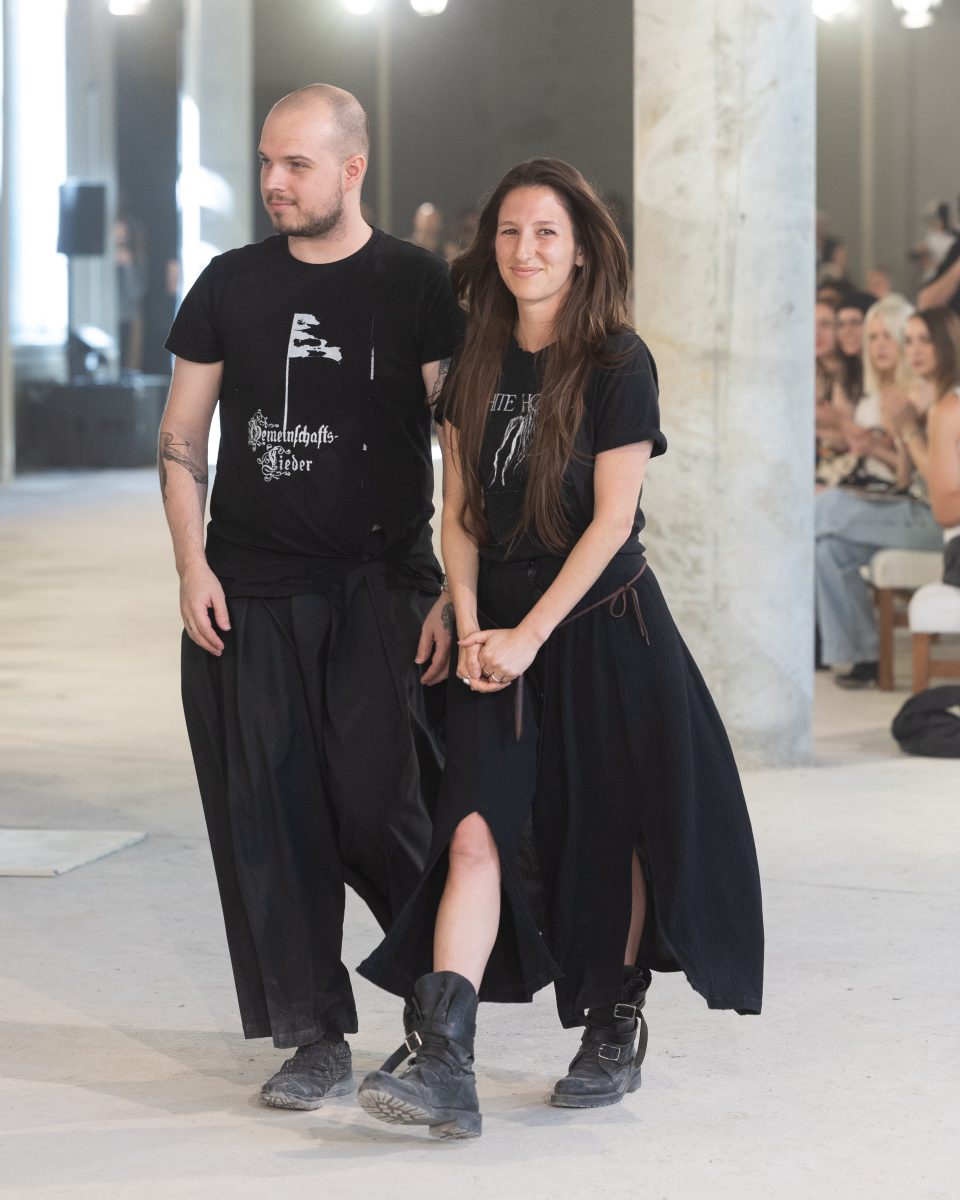
Founded by Julia Ballardt and Nico Verhaegen, the brand doesn’t shout.
It doesn’t chase trends. It speaks softly – and directly. About memory, craft, and clothes that don’t just look good but mean something.
In this interview for Vanity Teen, the designers talk about building something slow in a fast world, how punk can also be quiet, and why fashion should still matter – even when it’s not trying to be loud.
Hi Julia, hi Nico.
I’ll be honest — I discovered Milk of Lime only recently, but once I did, I couldn’t stop looking.
Today, I want to speak with you not just as designers, but as people building a world – inside and beyond fashion.
How do you work together?
What’s your dynamic like – do you challenge each other, complete each other’s thoughts? What does each of you bring into Milk of Lime?
Nico: We both have very different backgrounds. I come from graphic design and Julia has a more classic background in garment making. We work together on everything. We decide everything together from garments to the creative direction and layout of the show notes. But we work individually on the things we’re best at.
Julia: Even though we have had different training in our profession(s), there is a uniting factor that is always present. Both of us grew up quite rural, surrounded by nature and with a big hunger for creativity and expression.
You both studied in Antwerp.
What was the experience like for you? What did you take from it – and what did you choose to leave behind?
Nico: I loved my time there. It taught me trust myself and my decisions and gave me a lot of discipline. The super sculptural approach to fashion is something I’m leaving behind. But everything else the school has taught me I’m taking with me forever.
Julia: Same for me. Not going to lie – it was a challenging time with pressure and confrontation, but the things I learned and found out about myself are priceless. It was a unique experience. I’m leaving behind the elbow mentality — collaboration is much more fruitful!
When you talk about DNA of Milk of Lime – what do you really mean?
Who are you designing for? What kind of person, what kind of mindset, what kind of presence?
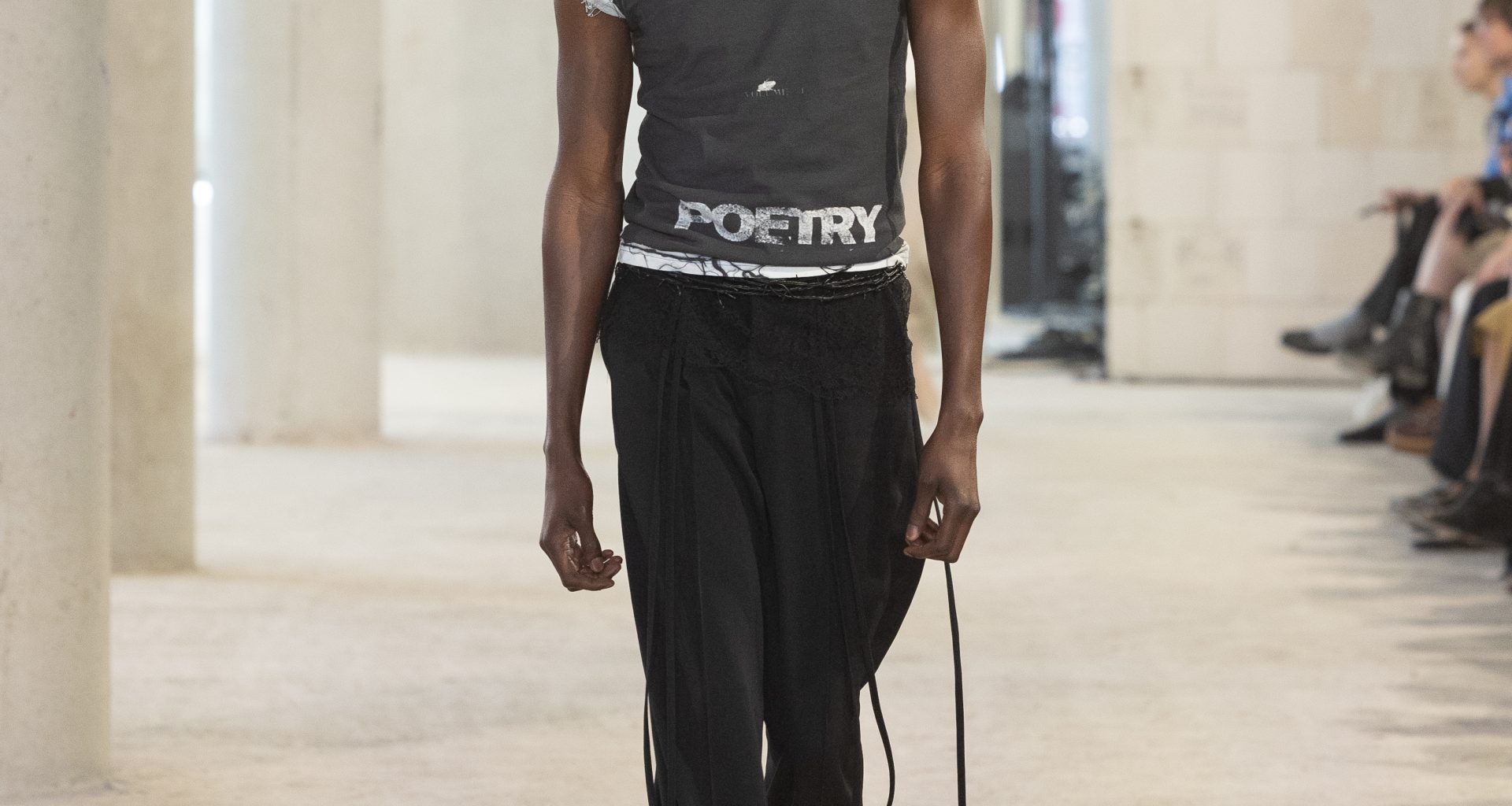
We’ve always been drawn to the more poetic side of fashion, whether it be dark or light. We design for characters with a sensitivity for beauty in the world they live in, people with hope and emotional approachability.
Our DNA is also mirrored in strong and sometimes dark or even morbid things, but there is always a sense of connection to nature and a spark of hope.
You describe the brand as ‘rural punk’ – it sounds like a collision of opposites.
What does that phrase mean to you, and why has it become so central to your creative identity?
Nico: I think being based in a place where there is nobody interested in fashion is some sort of a counterculture. Most people we meet here in the countryside see clothing as something functional. In the city we would be one of many and here we can just do things in our own way without compromises.
Julia: For me, growing up rural often meant colliding with my surroundings as well. I had this interest in fashion, that I could access through magazines and the early internet. None of this was mirrored in my hometown, so when I experimented with clothes, accessories and make-up, it could fascinate but also irritate people. I did not understand my style back then, and also did not imitate a classic punk look that comes up when you’d google it. I just expressed whatever I felt; colourful, dark, wild, flower crowns, glitter, tights, boots, pattern clashes, transparencies. Later, an old friend from those days told me “the way you dressed back then … it was quite punk.”
The description stuck with me and its core is certainly part of our sartorial work.
You’ve said that clothes should live alongside the person wearing them – age with them, evolve with them.
How does that philosophy shape your design decisions?
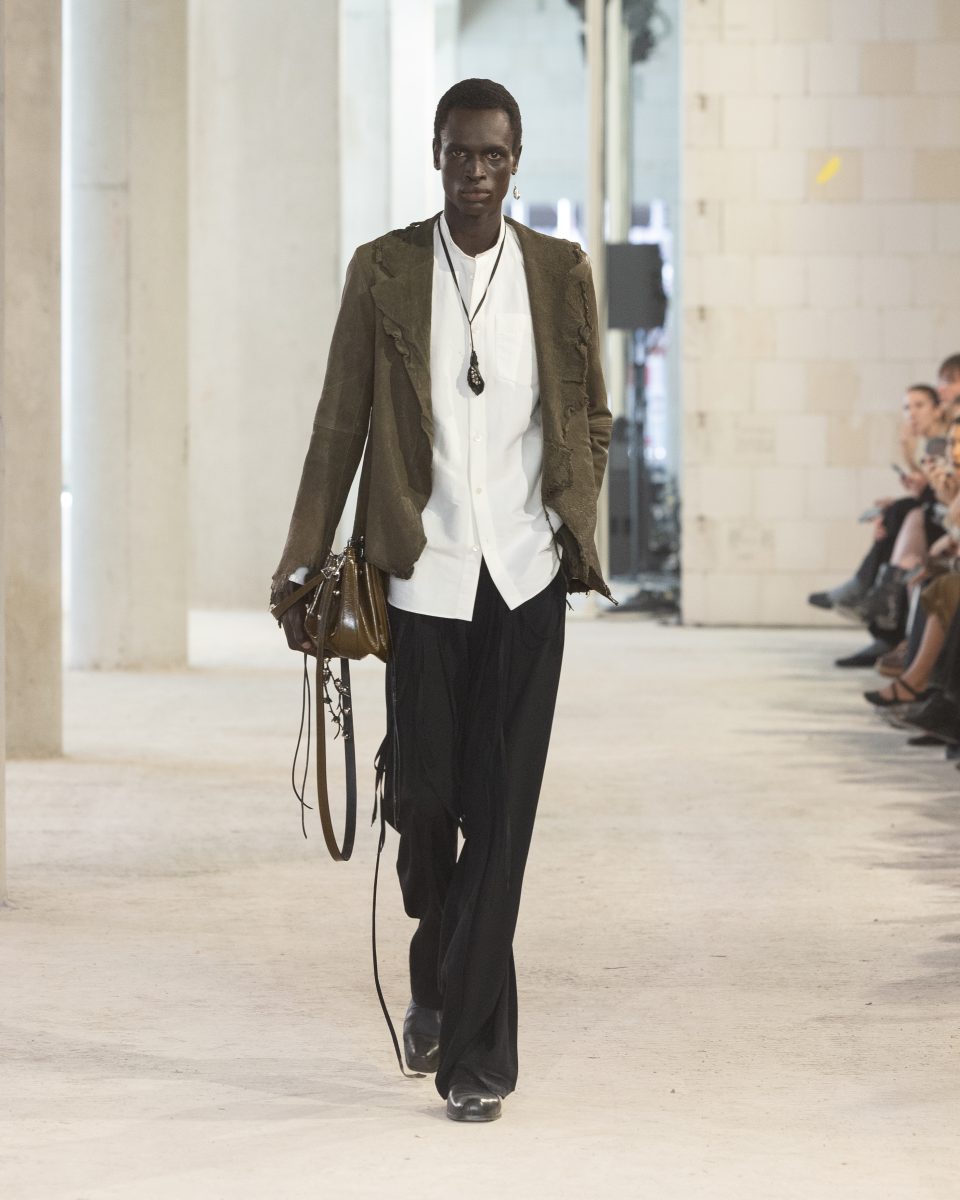
The boring explanation is that we only use natural materials and finishings that make it possible for the garment to last a long time. The romantic explanation is that we would like to make people’s favorite pieces that they want to take care of and own forever. This wish makes us gravitate towards materials that not only last longer, but even become better over time, like leather that gains a patina, or linen or hemp that become softer with every wash.
Tell me about the materials.
Why are natural fabrics so important to you? Where is your clothing produced, and how do you choose who you work with?
We mainly work with a small atelier with a few talented seamstresses, located in the town we’re based in. This allows for great flexibility. We’re also trying other workshops with more specialised services, since different items might ask for different techniques or because we are looking to broaden our network in a certain direction. Not every atelier can stitch a clean button hole into a leather jacket, so it’s nice to have a handful of allies working with you on beautiful products.
The reason why we prefer natural materials is quite personal and therefore the most authentic: We sorted out synthetic fibers from our personal wardrobes, because we did not like the feeling they gave us as wearers. The same counts for genuine leather vs. plastic imitations – isn’t it nicer to care for a beloved item and ‘freshen it up’ rather than throwing it away because it is irreparably broken?
What does sustainable fashion actually mean to you – beyond marketing or buzzwords?
What’s real, and what needs to be redefined?
Beauty is the most overlooked part of sustainability. Our task as designers lays more in giving shape to materials. Of course, materials matter, and where and how things are made matter.
However, somewhere between the long explanations of the production process, we are overlooking the factor of beauty, a quality that speaks to the eye and soul directly. A jacket with 5 pairs of sleeves to switch out might be declared sustainable. A t-shirt with the most ‘sustainable’ might still remain unworn if the fit is not great, the colour is not nice, and the wearer doesn’t feel beautiful.
Ideally those two, the discussion about materials AND a focus on beauty, can go hand in hand and are taken more into account in the future.
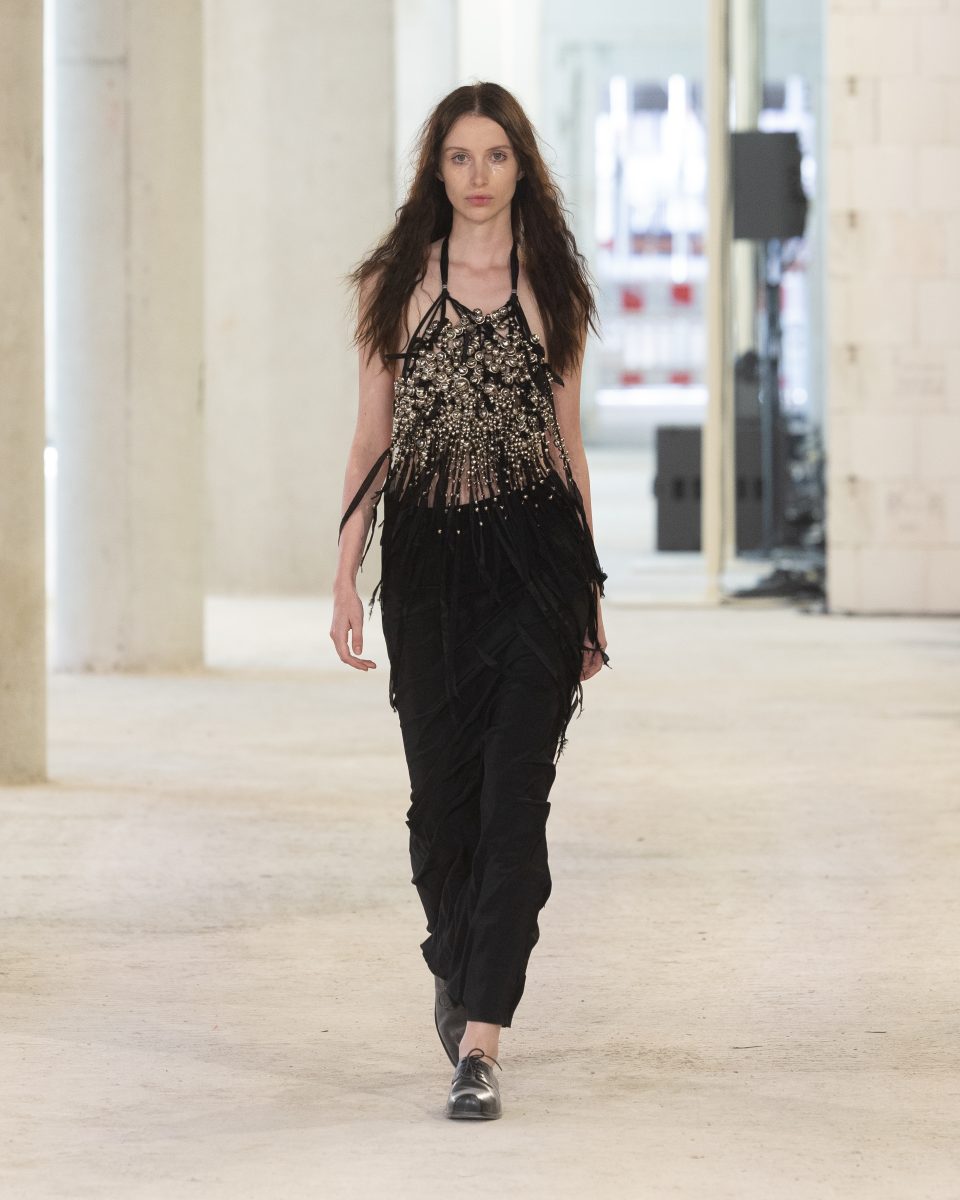
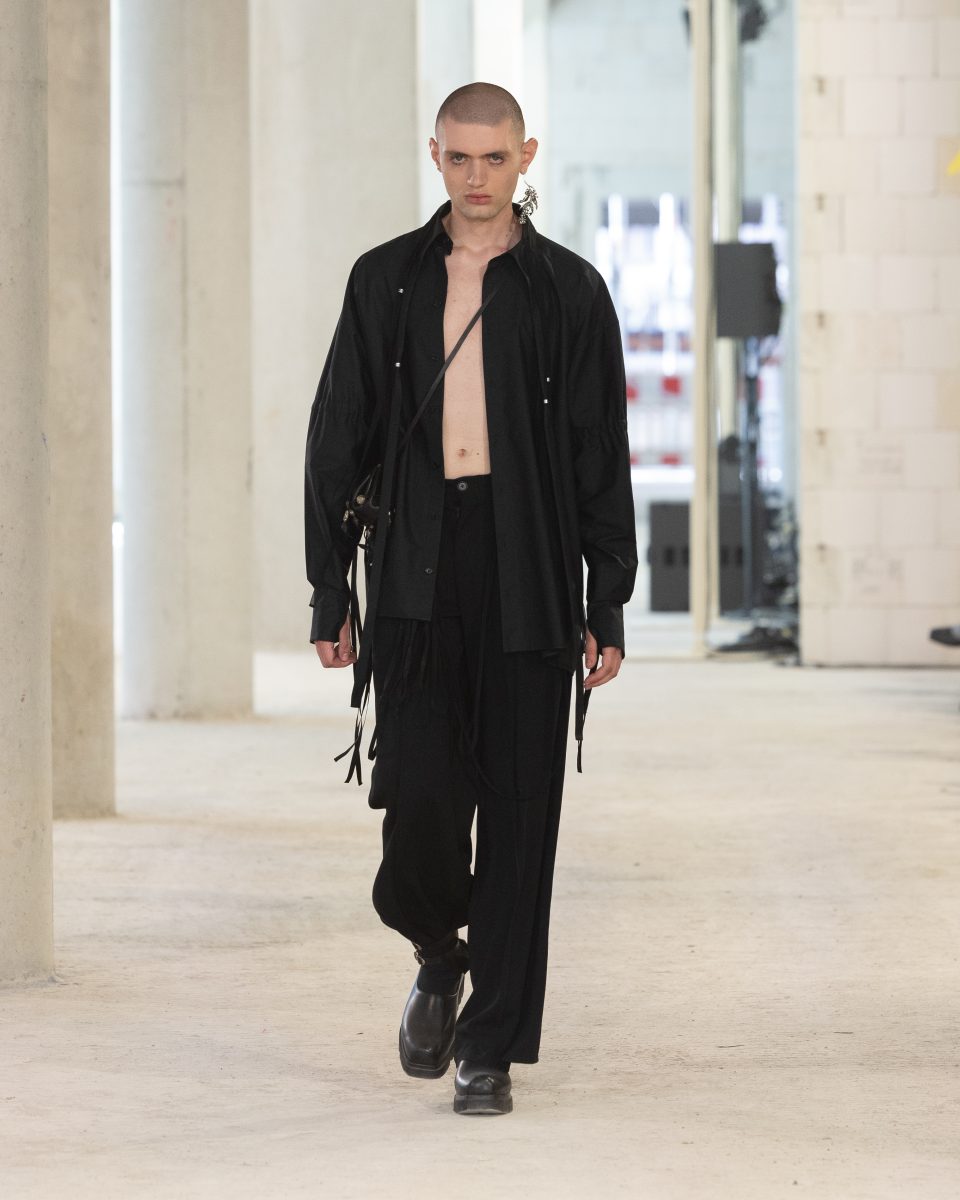
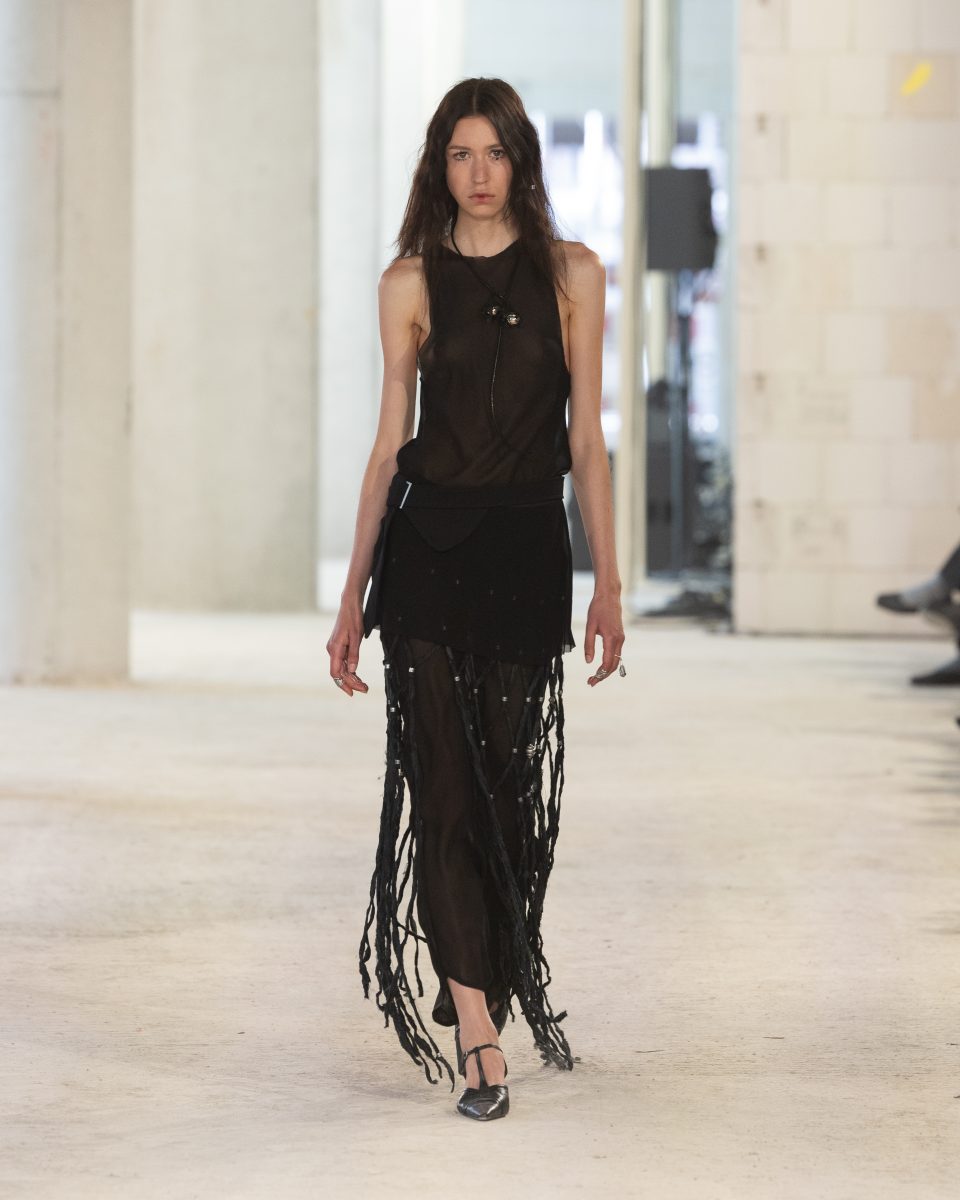
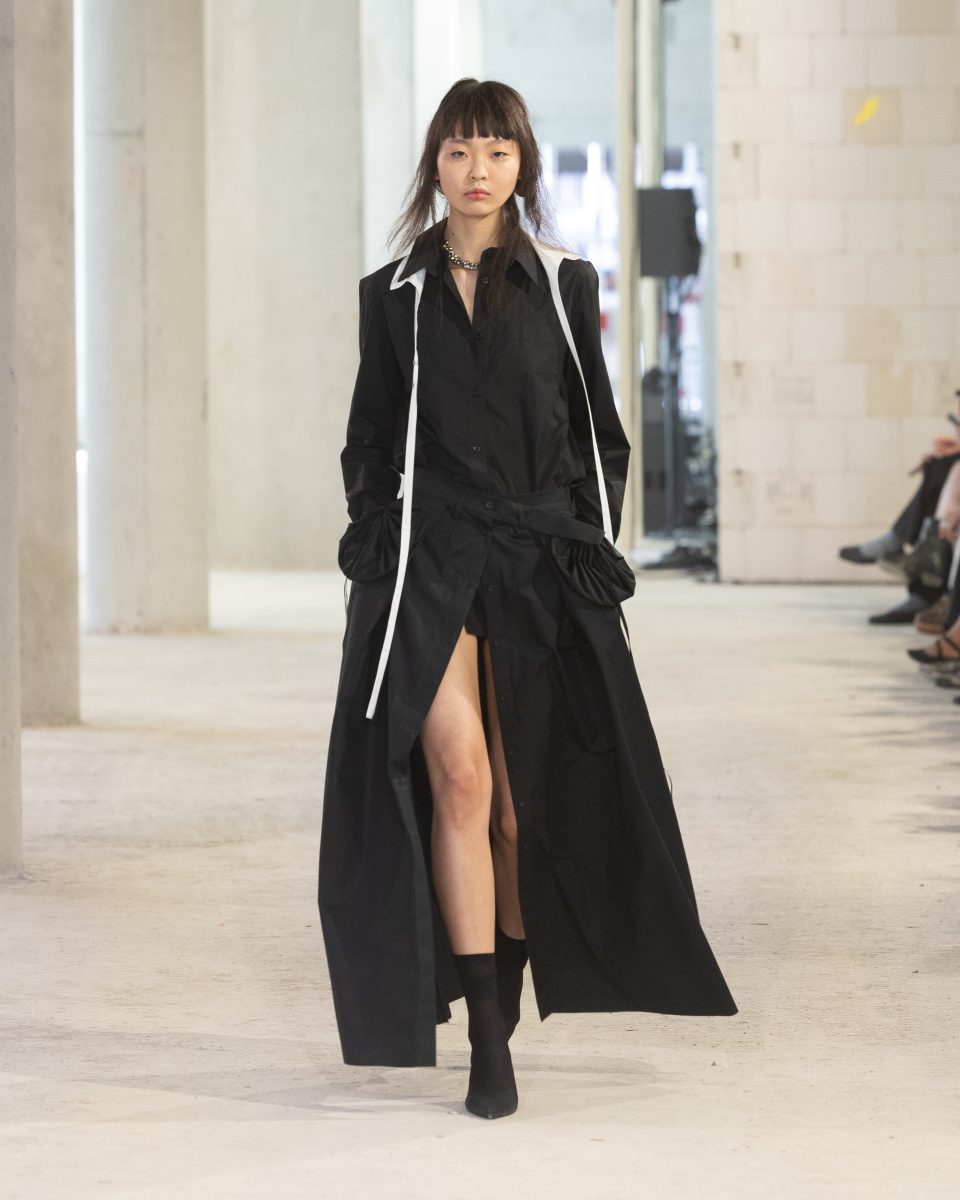
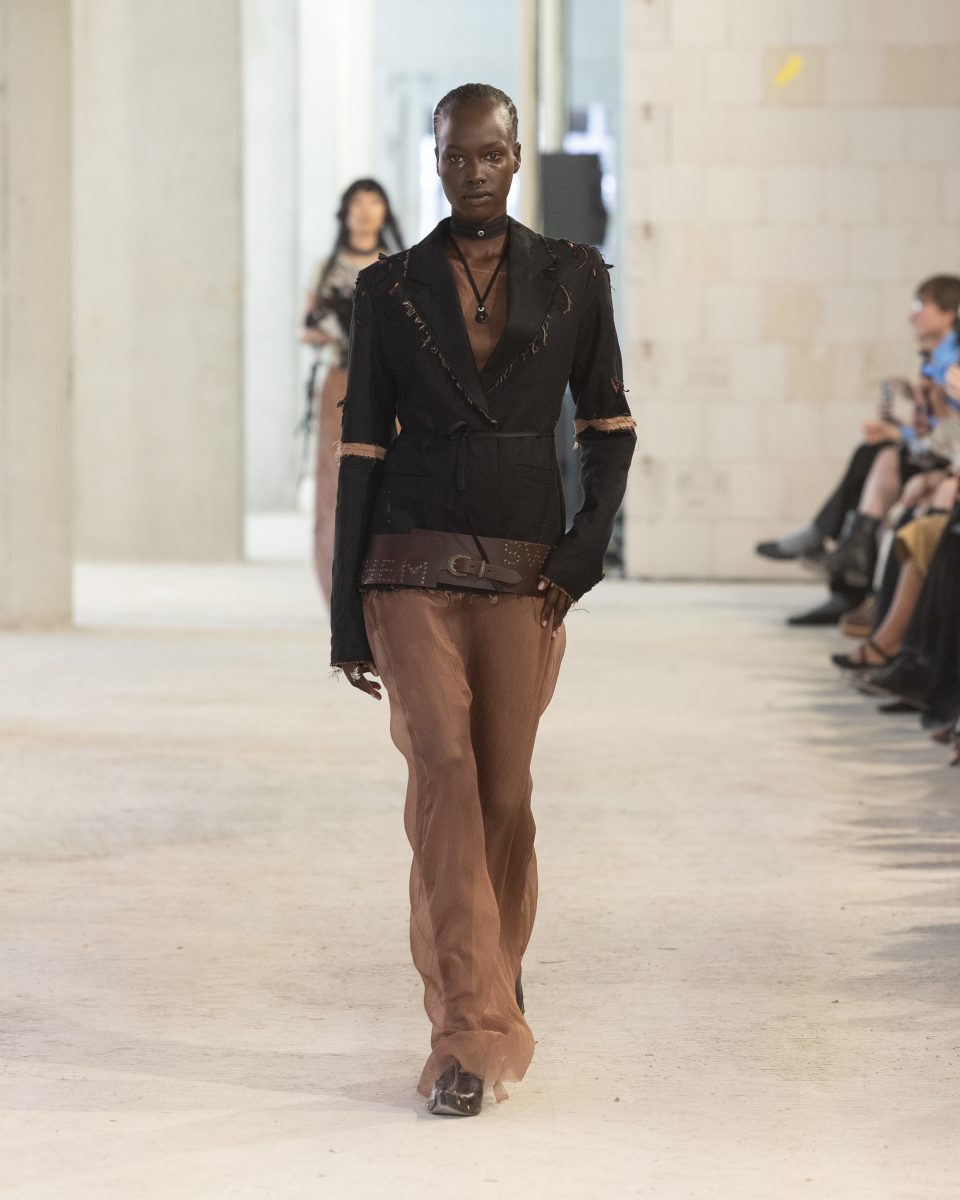
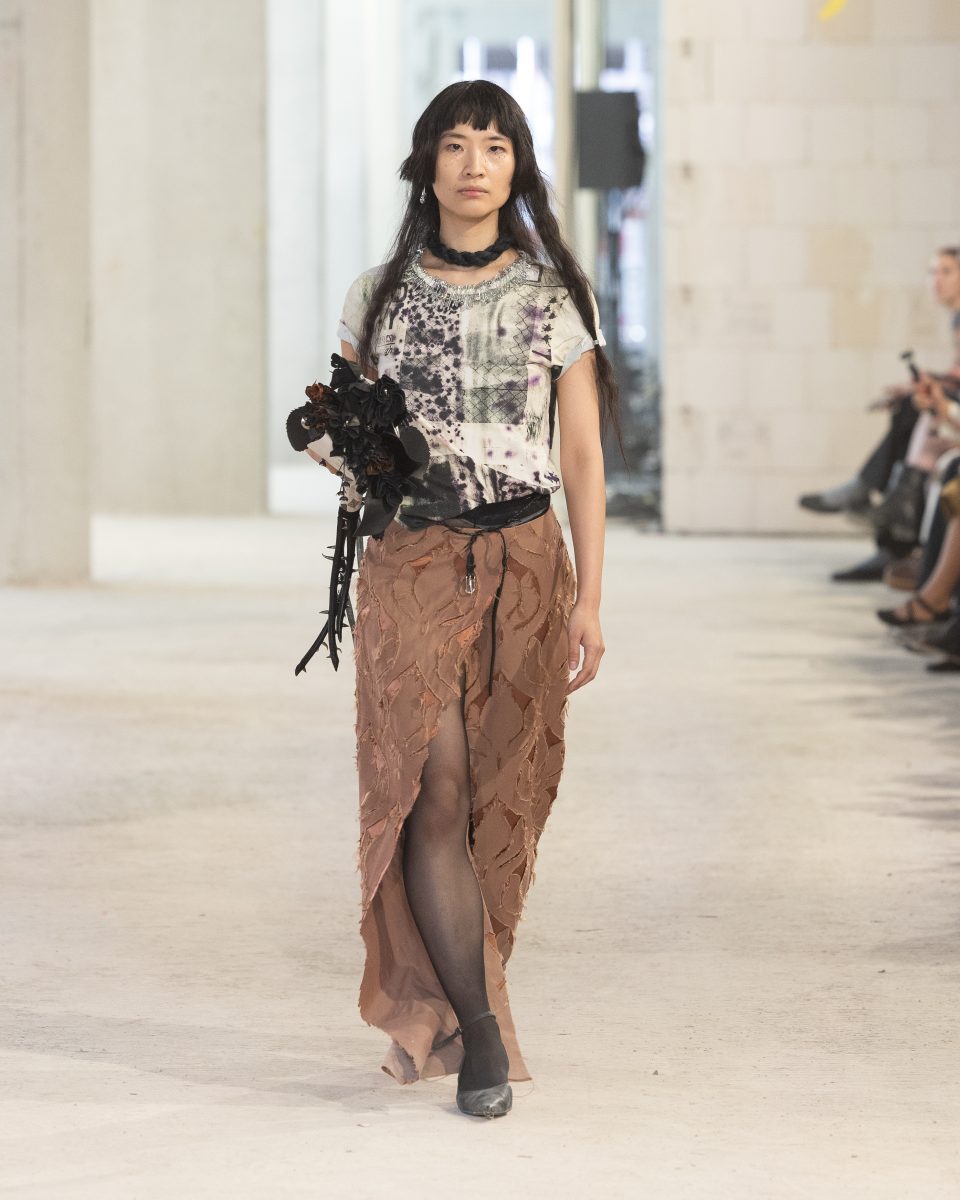
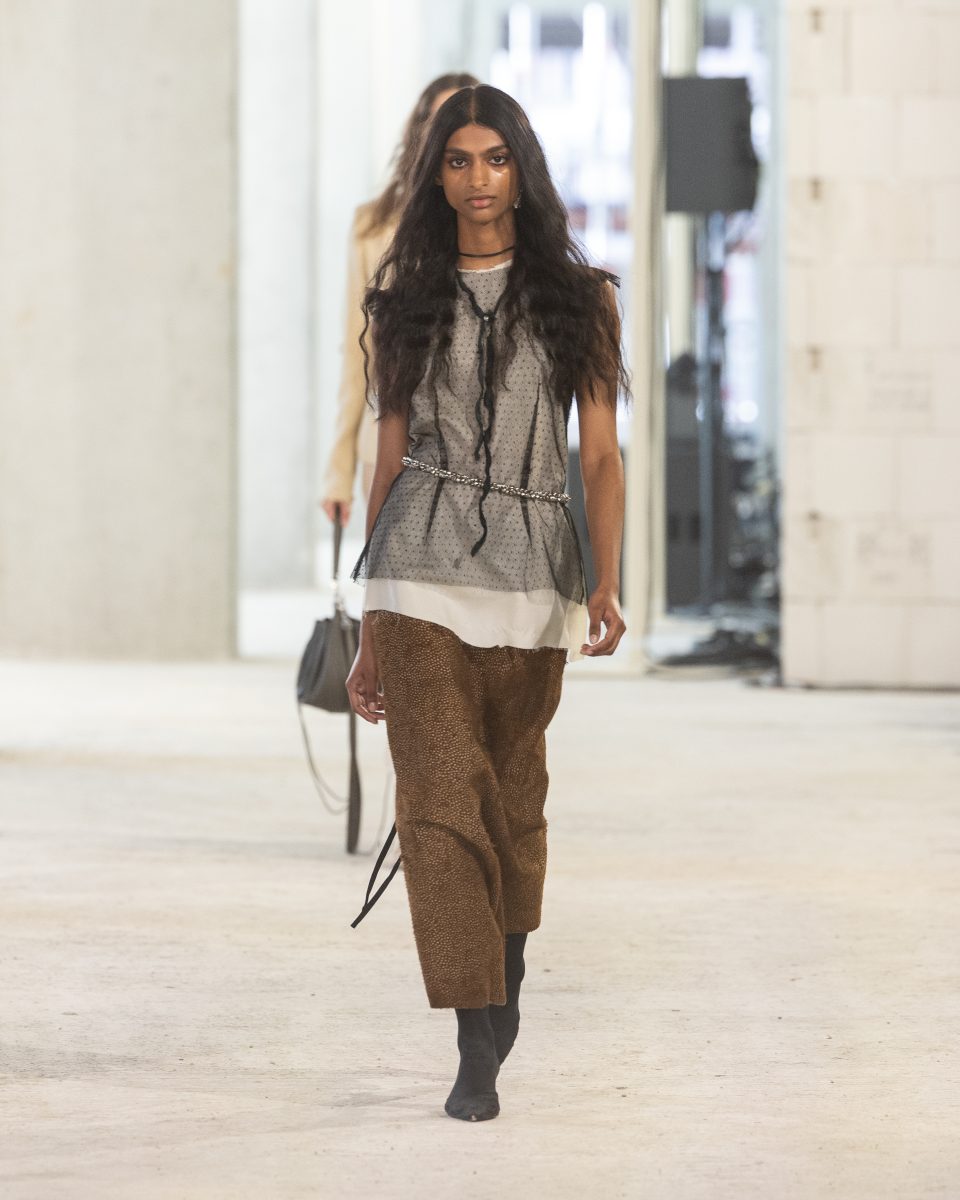
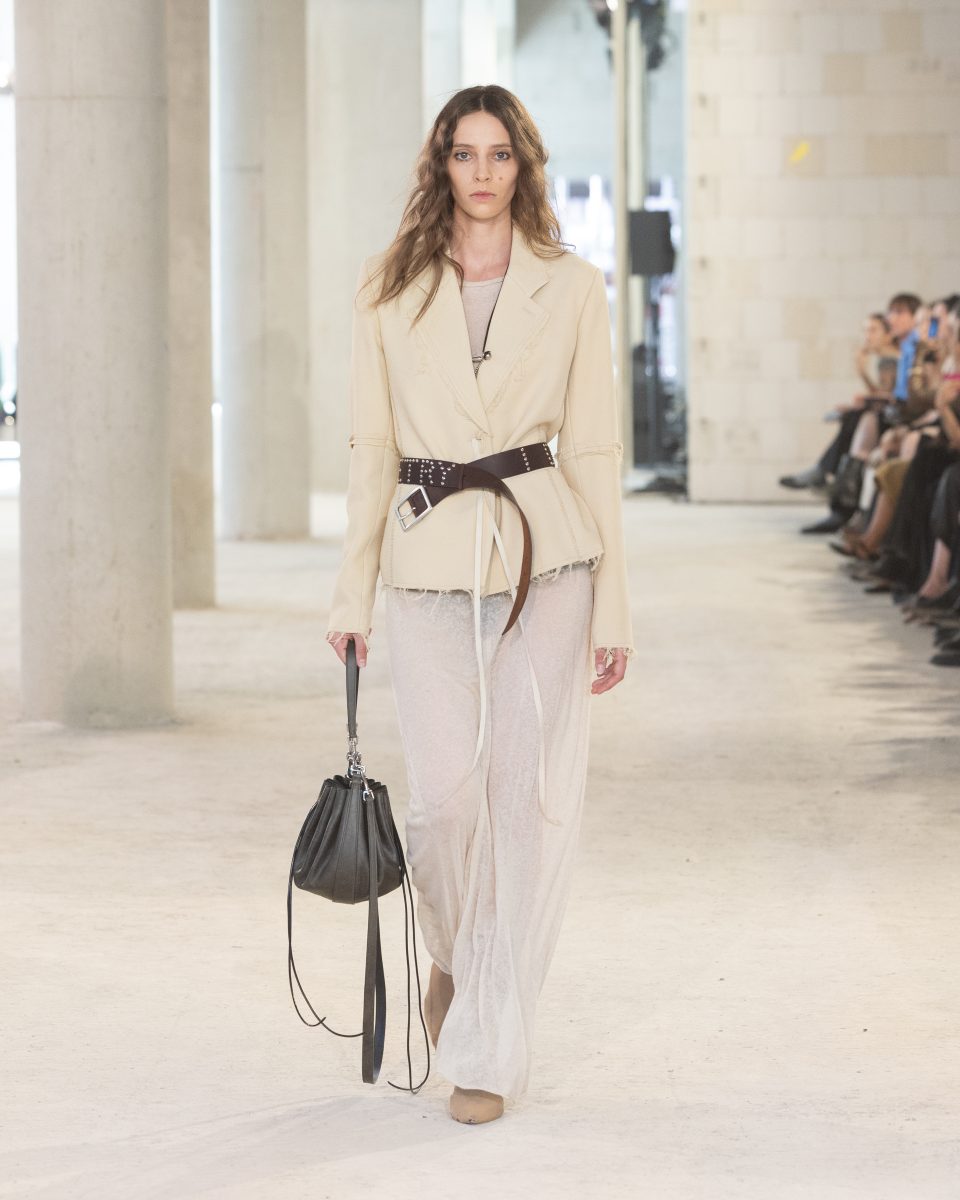
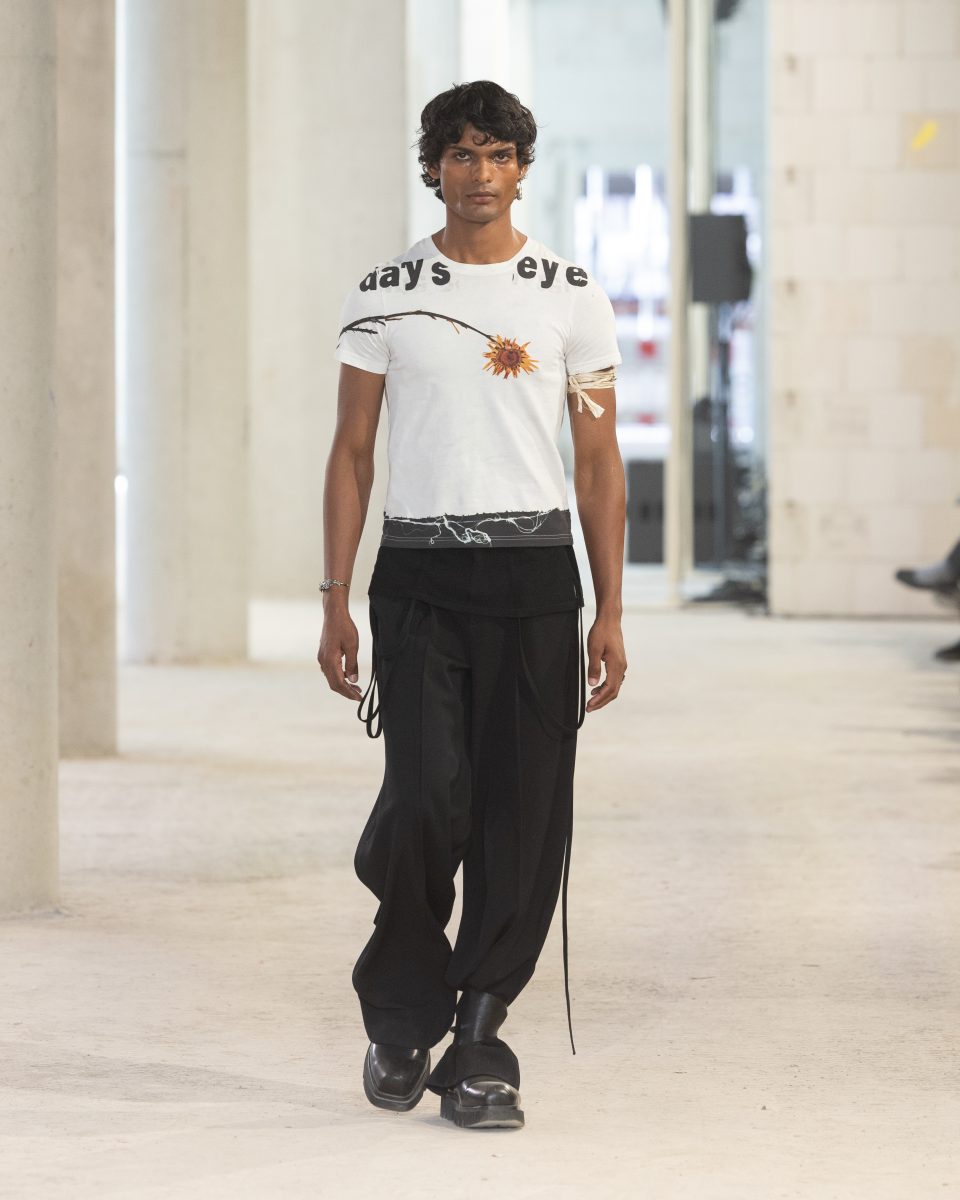
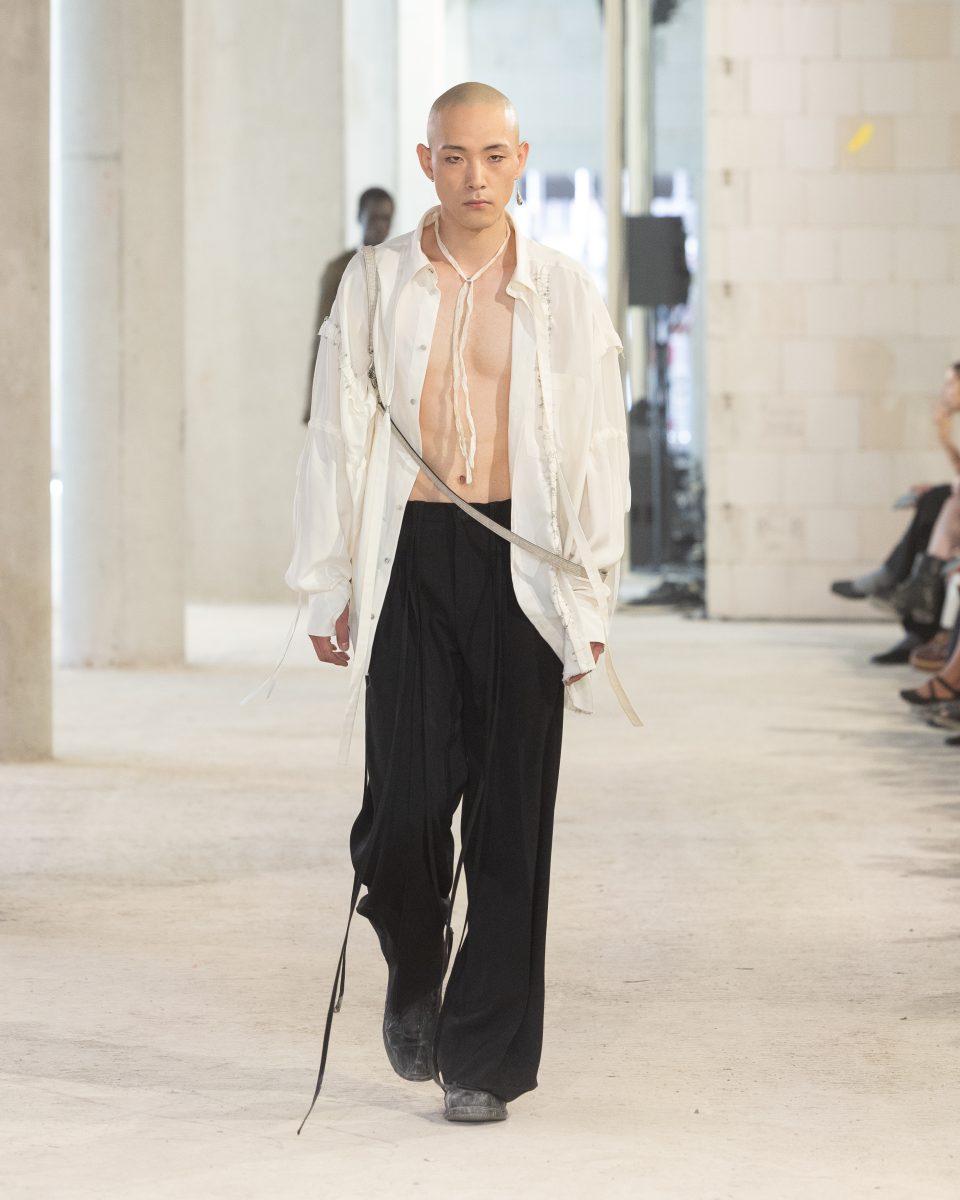
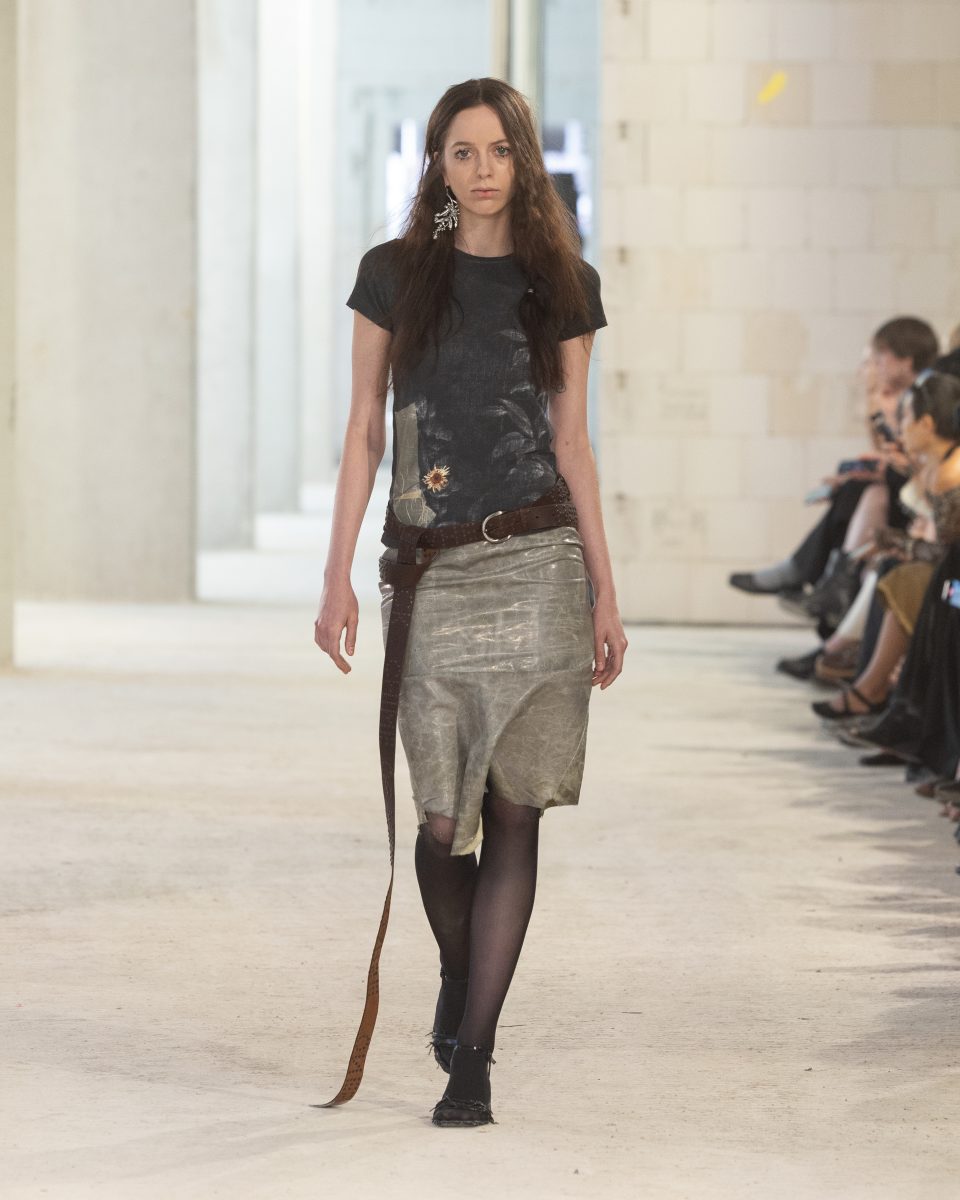
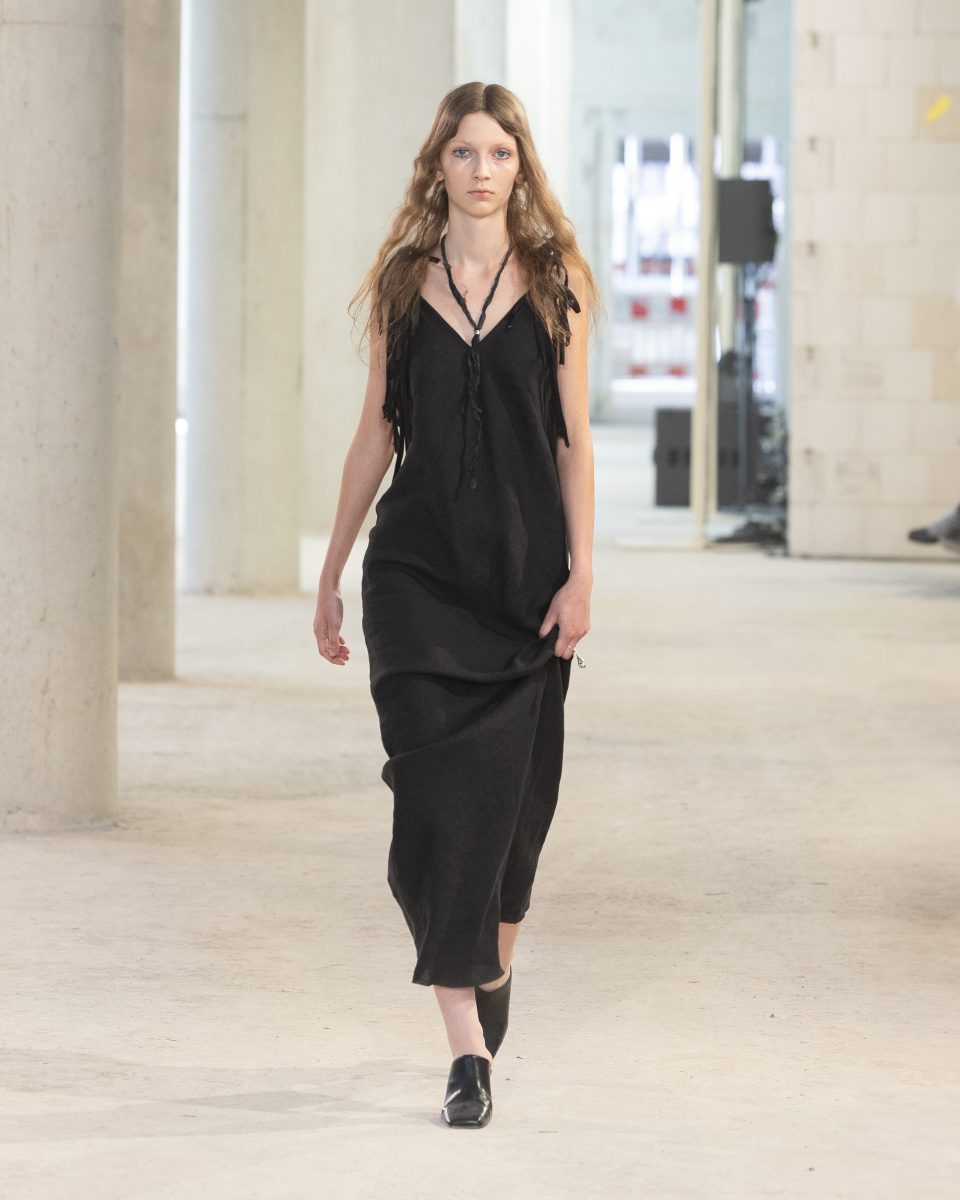
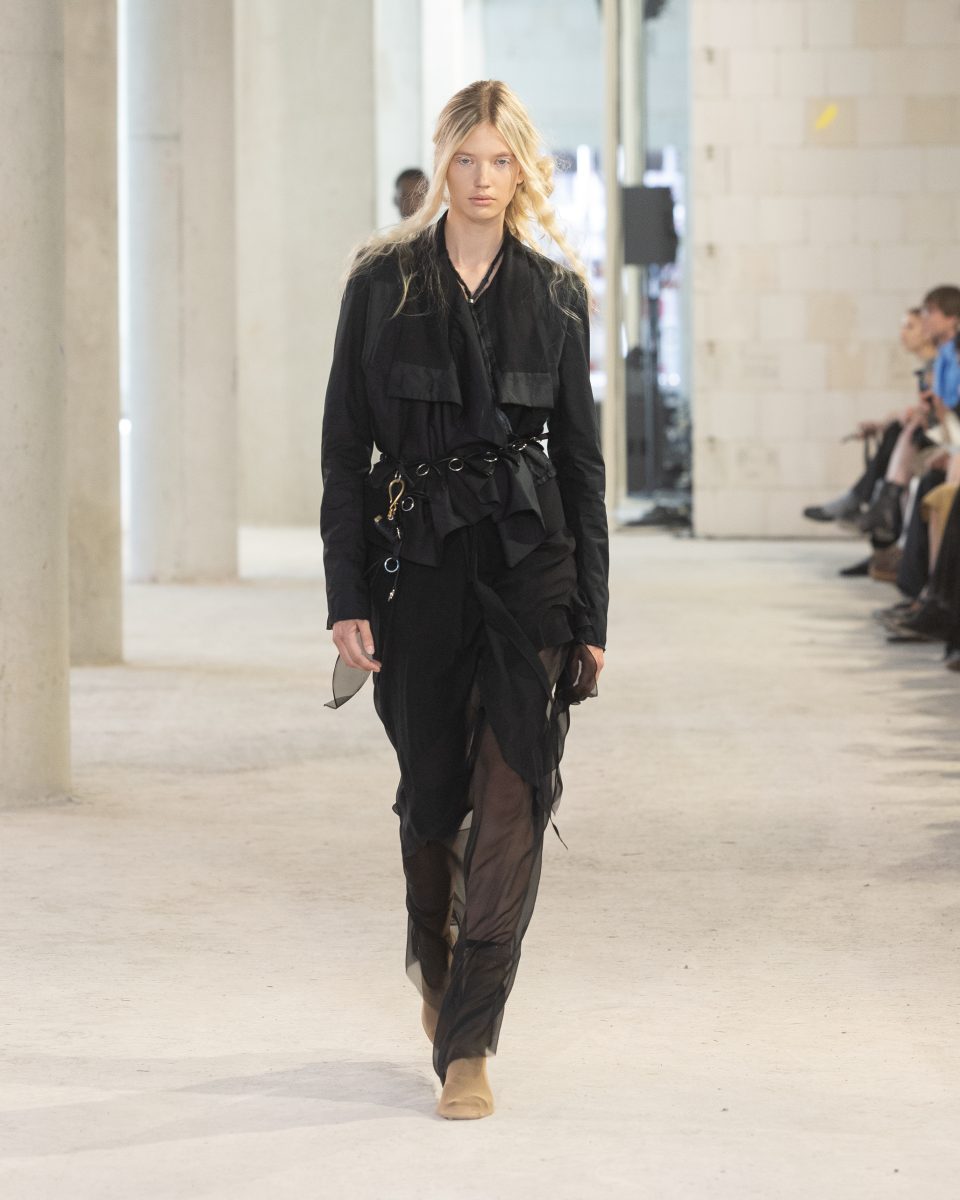
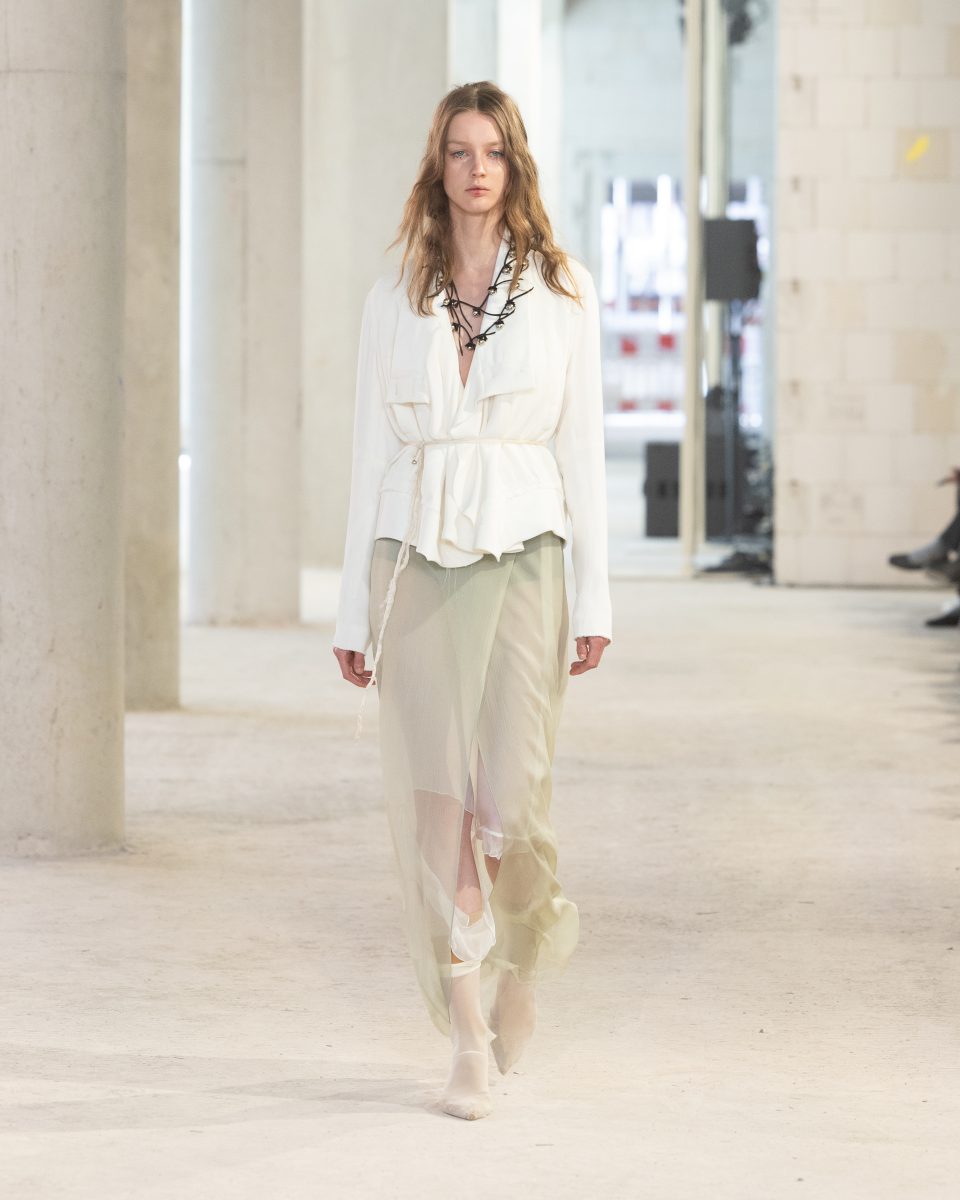
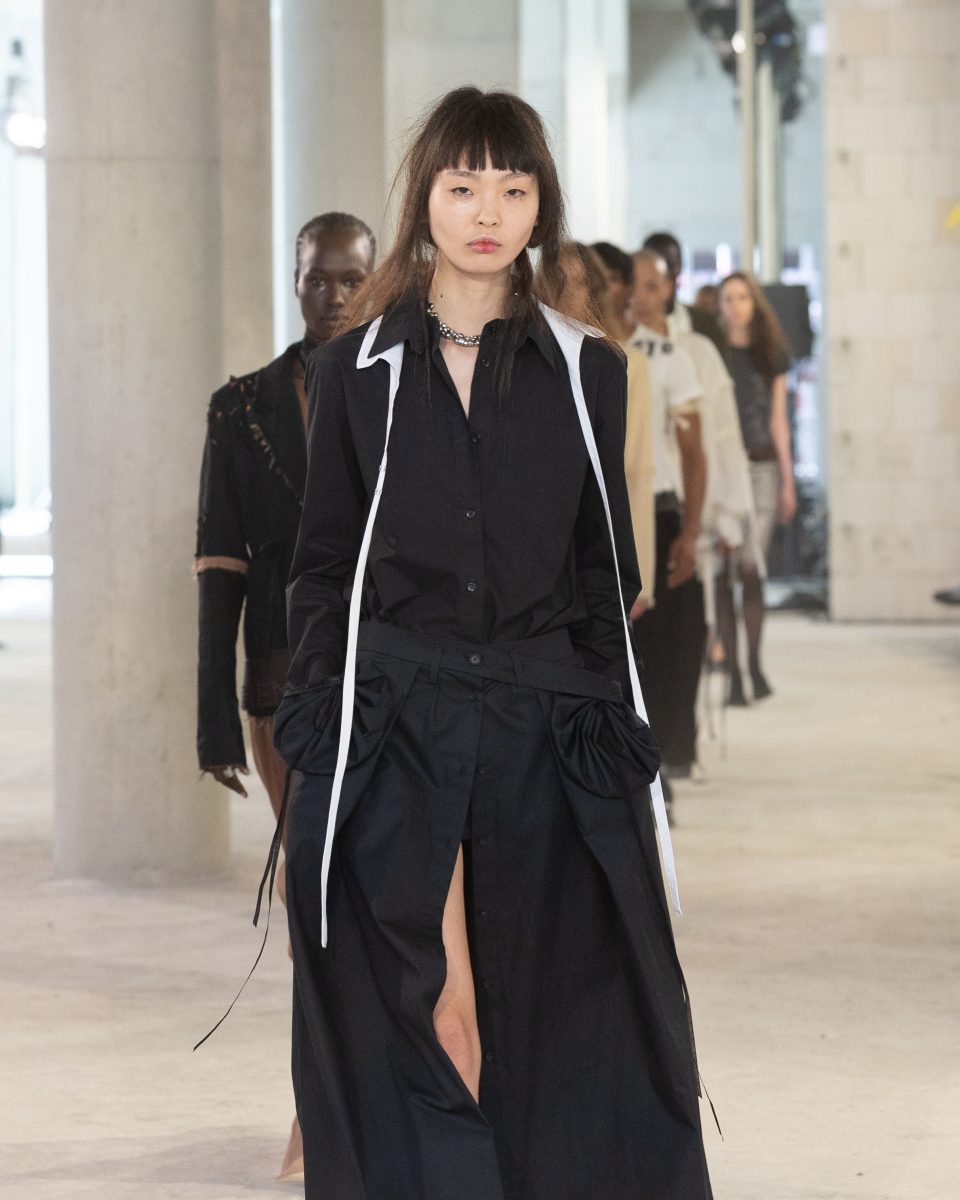
Now let’s talk about your new collection: CHIME.
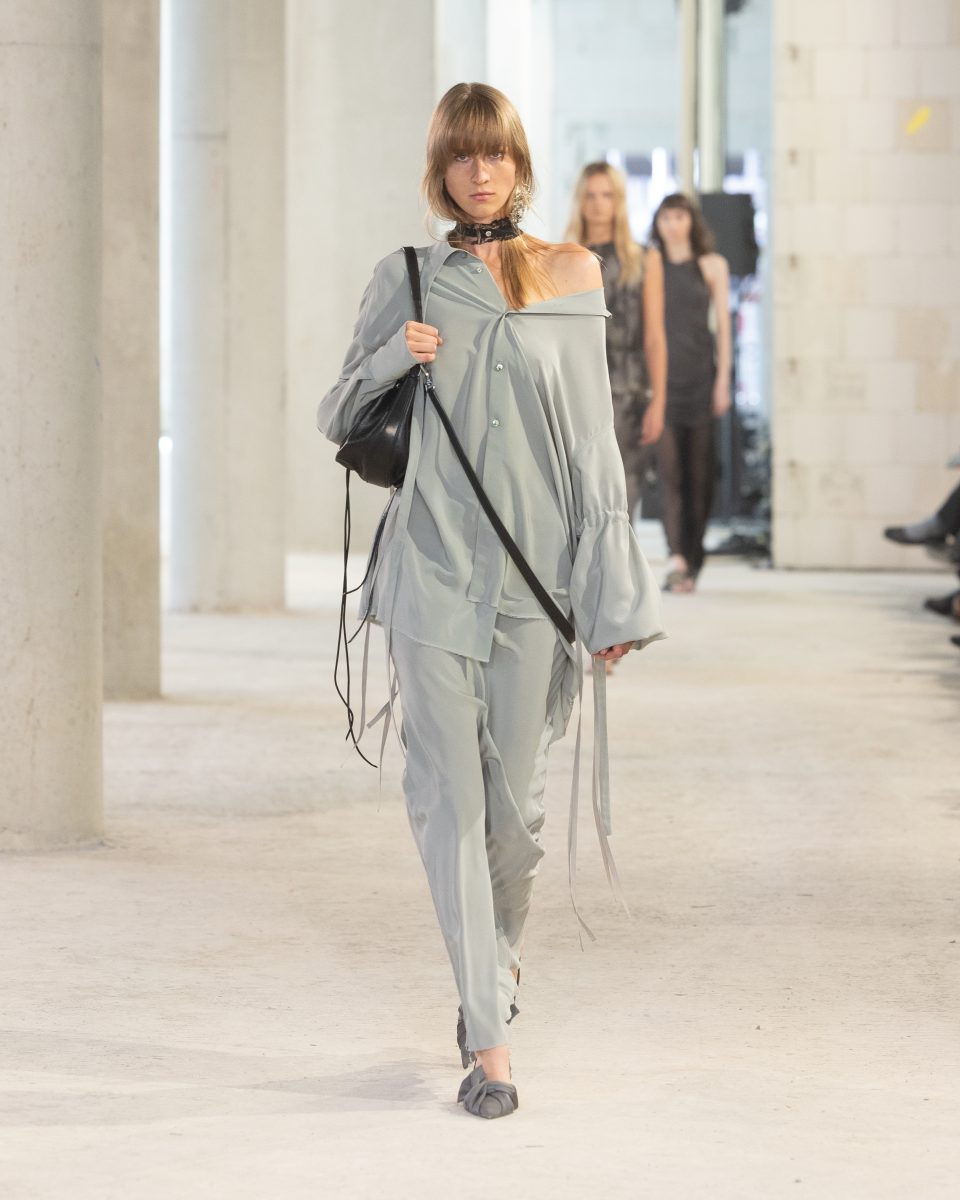
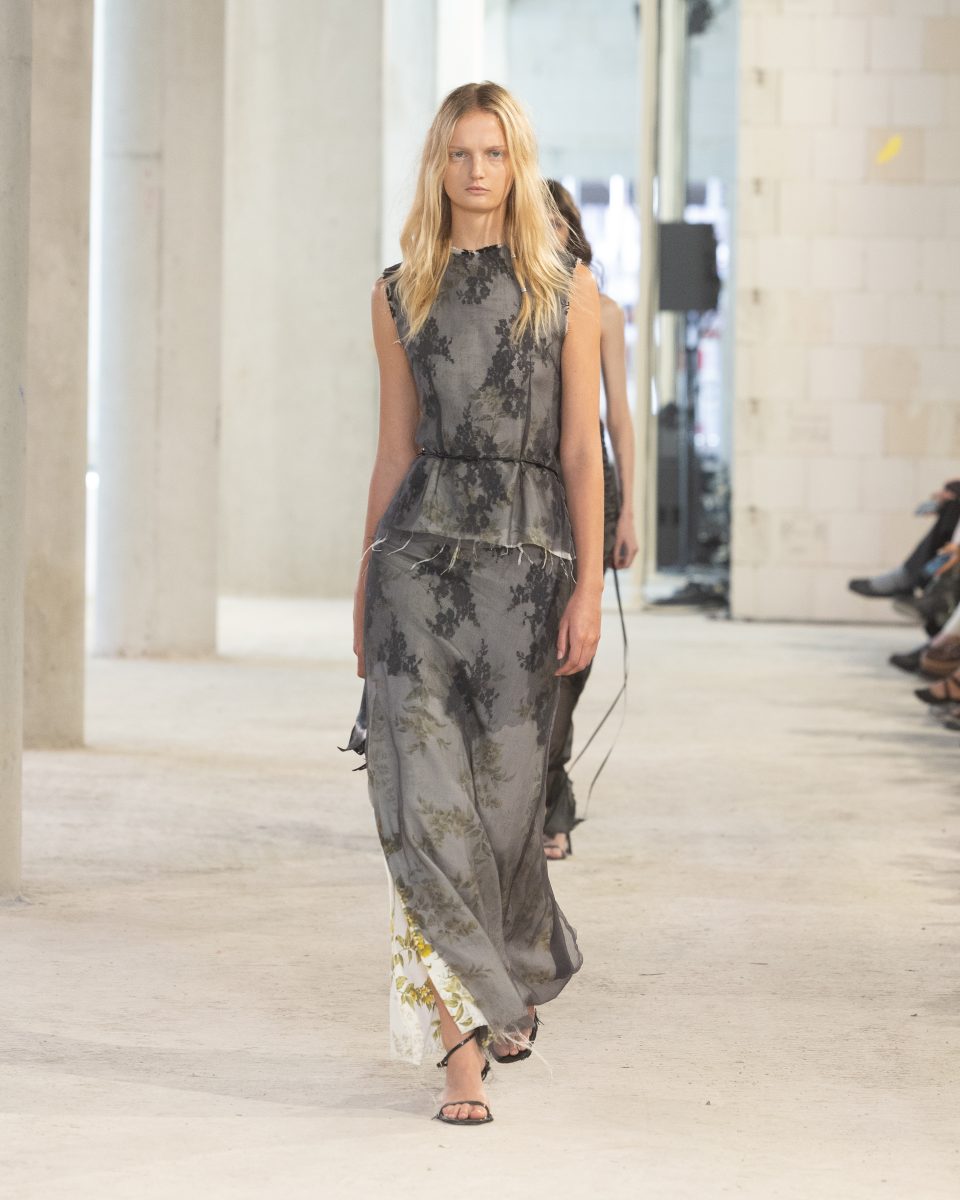
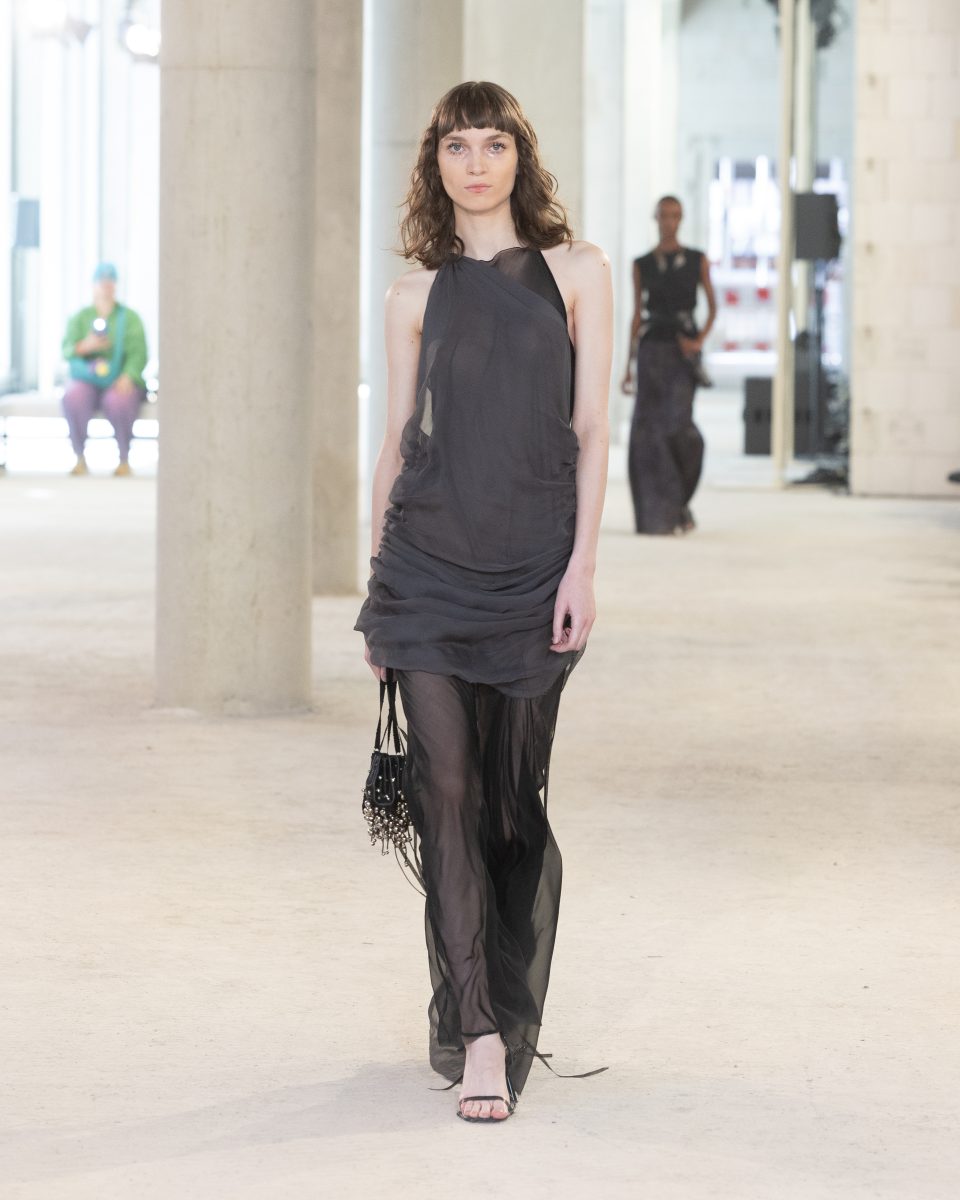
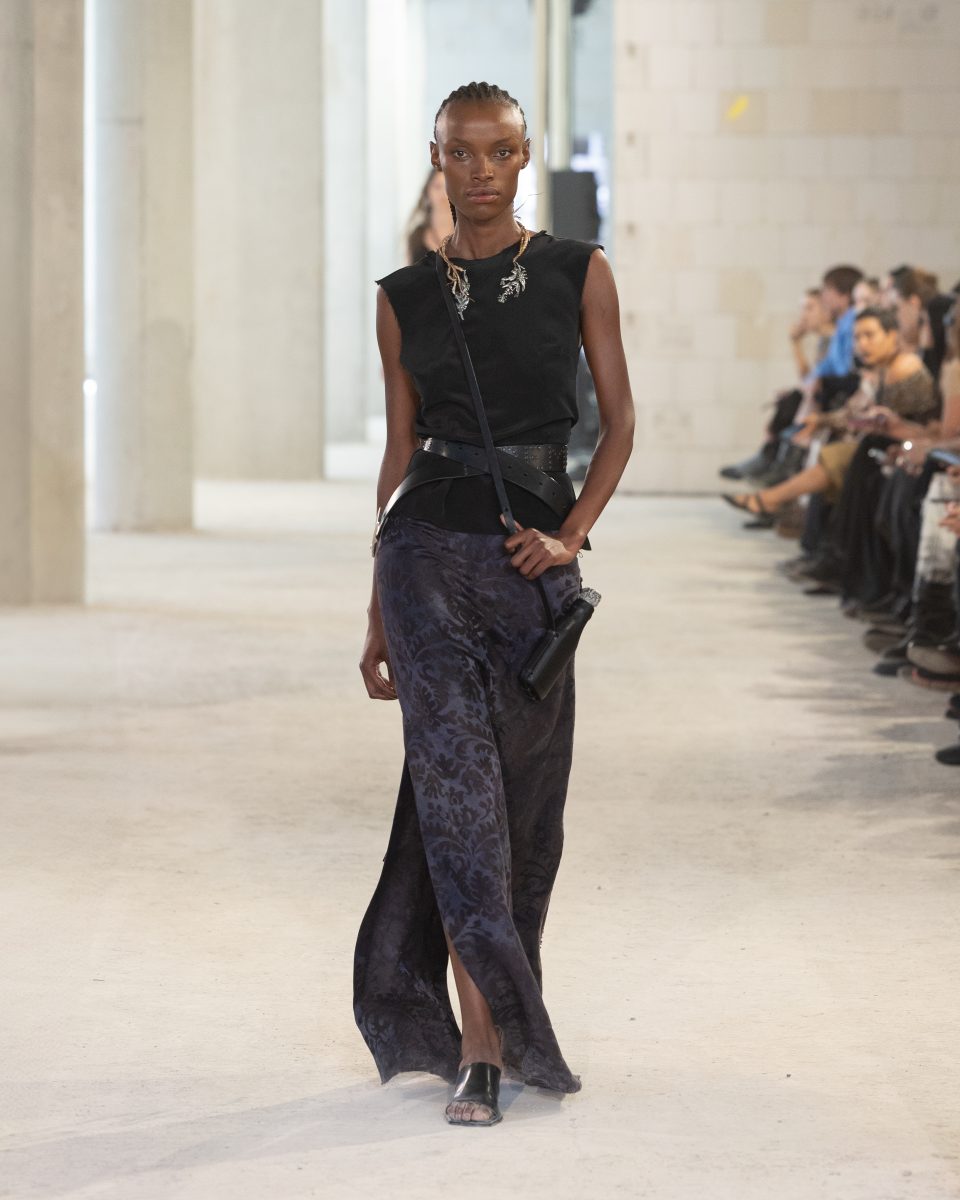
What’s the concept behind it? What did you want to express through it – and what might someone feel when they wear it?
Nico: A lot of clothing is designed as armor these days. We live in harsh times and everyone feels like protecting themselves. We want to present an alternative, I don’t like irony in fashion. I need honesty, openness. I need people to dress for themselves, not for others.
Julia: Our wish is that people fall in love and feel deep resonance. Not only with one another, but possibly with themselves and clothing as well.
Dressing as an act of embracing oneself and one’s ideas. Dressing freely, authentically, and in a way that enhances one’s life.
Who is your audience today?
Where can people find and buy your work? And how do you think about accessibility in fashion – creatively and structurally?
Our audience are people who sense a lack of poetry in our current fashion system and are longing for it.
At the moment, our clothes and accessories can be found online in our webstore and a small boutique in Tokyo. However, we would love to be present in more physical spaces, so this becomes a major goal for the upcoming seasons. Being featured in more stores, organizing our own popup spaces, joining retail events; we are very open and eager to connect to our audience in a face-to-face kind of way. We’re also talking with a farm-to-table restaurant in Belgium about collaborating later this year, a project that enables us to connect agriculture, food and garments.
Our collaboration in the realm of dance is also continuing and premiering in early 2026. Ideally Milk of Lime can cross over with other disciplines and be about more than just ‘fashion’.
A letter to your future self.
What would you write?
Dear Julia and Nico, we hope you’re happy and healthy. We hope you’re still doing what you want, how you want it. We hope you found this farmhouse together and that the atelier and the garden are thriving. We hope many people are feeling special in your clothes, and that we enhance their lives by bringing a bit of poetry into their closets.