Can a fashion house return to the city that made it without turning its own rebellion into an archive?
For Alexander McQueen, the answer arrived on a Sunday night in London, beneath the Gothic vaults of Lincoln’s Inn Chapel, where Seán McGirr staged the house’s first show on the official London Fashion Week schedule since 2001. Twenty-five years after Lee McQueen took his mainline to Paris, McQueen came home. But this was not nostalgia. Or, at least, it wasn’t meant to be.
The location said everything. A seventeenth-century chapel, its stone floor covering the buried bodies of lawyers, preachers and other ghosts of British history; above them, a starry Gothic ceiling. Inside, McGirr placed Piero della Francesca’s The Baptism of Christ next to the rave: transcendence beside intoxication, serenity beside sweat, angels beside Keith Flint. The sacred and the subcultural were not opposites but two frequencies of the same London.
And perhaps that is where McQueen has always lived.
Lee Alexander McQueen understood that Britishness was never really about heritage. It was about what happens when heritage gets disturbed. Savile Row tailoring could become a weapon. A corset could become architecture. A runway could become theatre, ritual, violence, cinema. The beautiful could be made uncomfortable; the uncomfortable could become beautiful.
McGirr knows this history intimately enough to understand its danger. Three years into his tenure, he has been moving through McQueen’s codes almost archaeologically – learning the tailoring, the harnesses, the darkness, the body, the archive – before attempting to push them somewhere else. “In a brand with the legacy of McQueen, it takes a while to learn the codes,” he has said. With SS27, he wanted to take that process “to the next level.”
That next level is London.
Not Lee McQueen’s London. His own.
McGirr arrived in London from Dublin as a teenager, studied at Central Saint Martins, lived in Haggerston and Camden, and absorbed the city through museums, nightlife, clubs and rave culture. His McQueen is therefore being constructed at the intersection of two biographies: the London that created Lee and the London that created Seán.
This distinction matters.
Sarah Burton, who succeeded Lee in 2010 after working alongside him for more than fourteen years, inherited a living memory. McGirr inherits a mythology. Burton could preserve the house through craftsmanship, romance, tailoring and couture because she had been inside the original story. McGirr has to ask what remains when the story has become cultural history.
How do you inherit an instinct rather than an image?
That is the real question behind SS27.
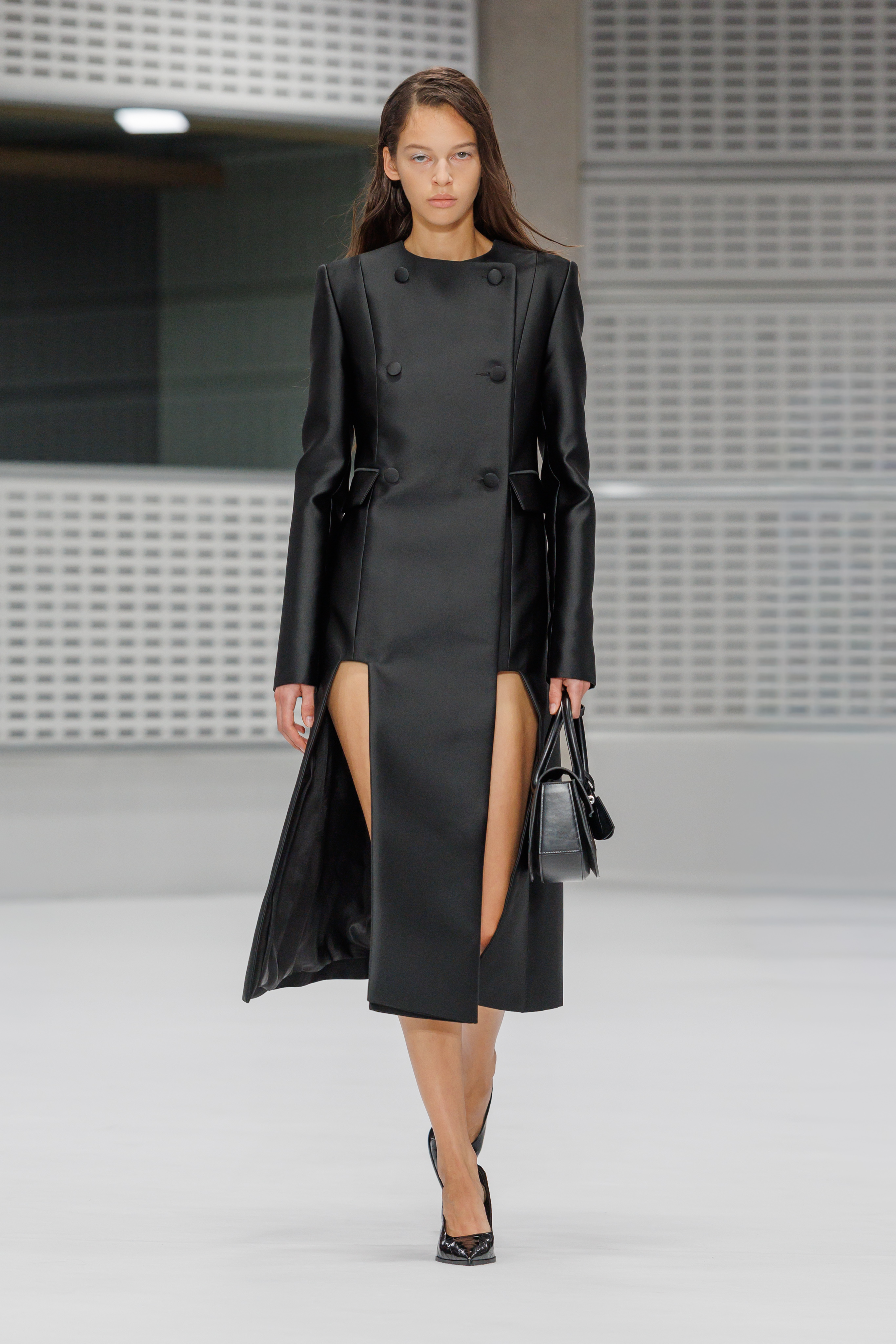
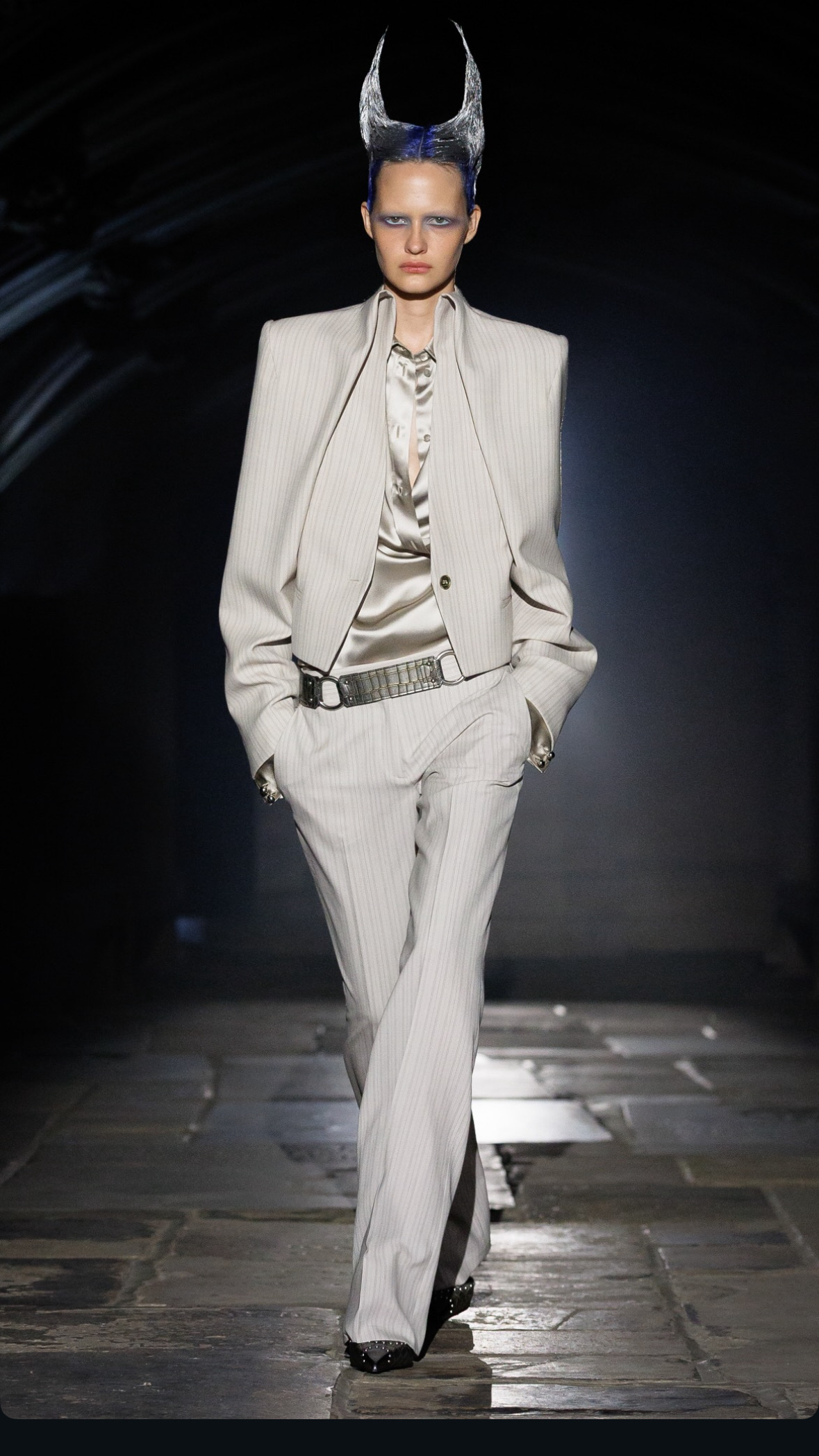
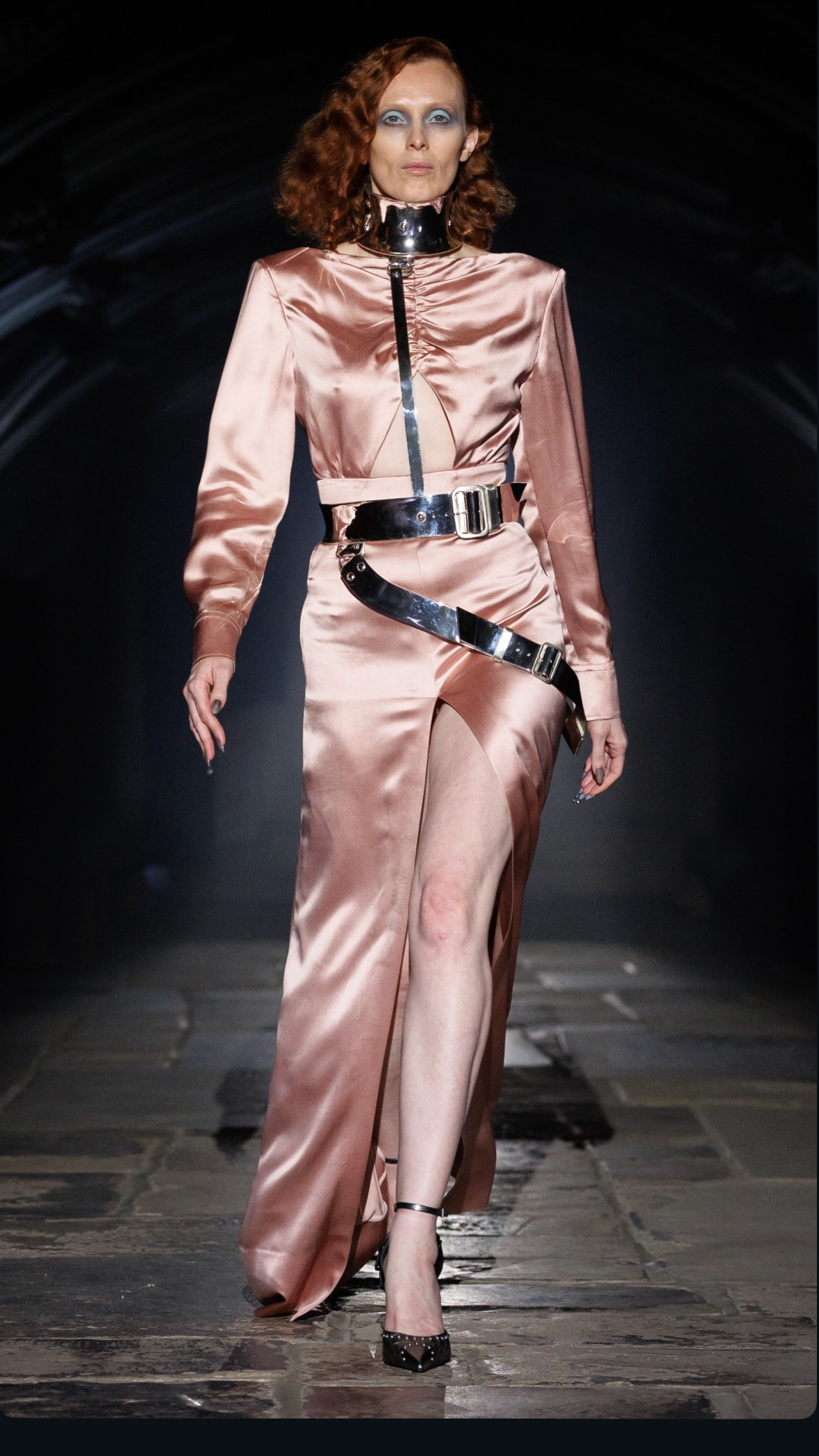
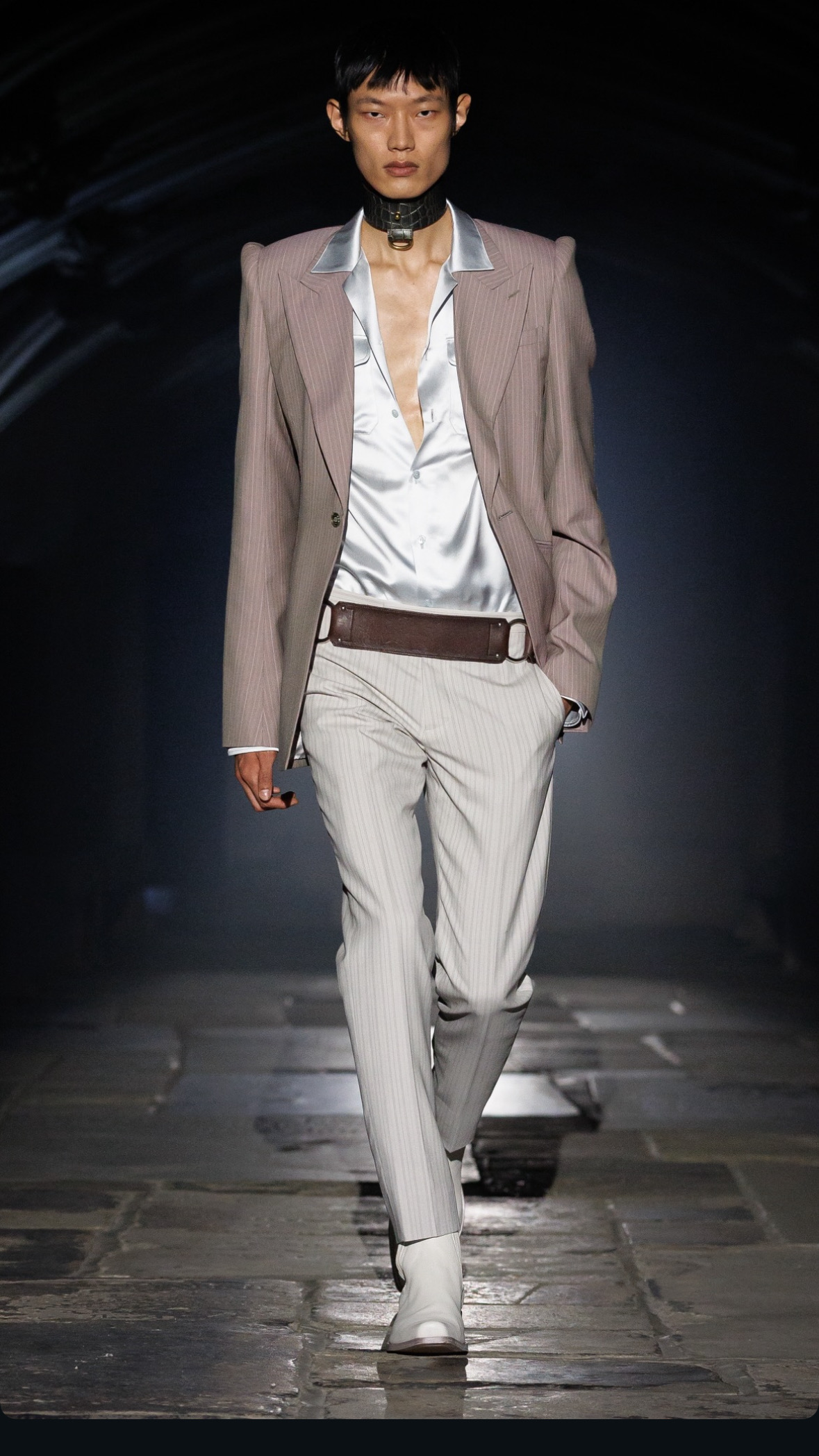
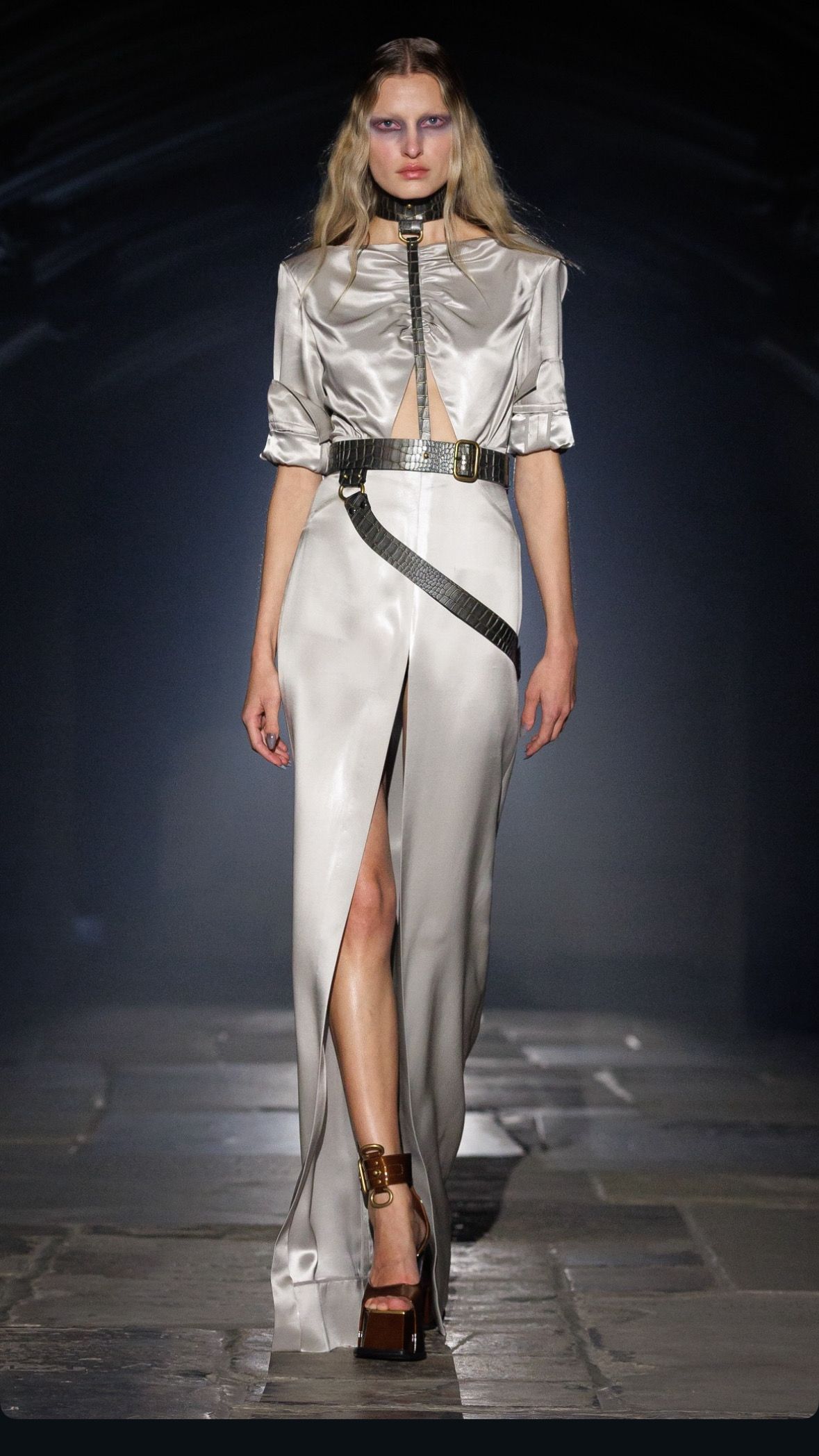
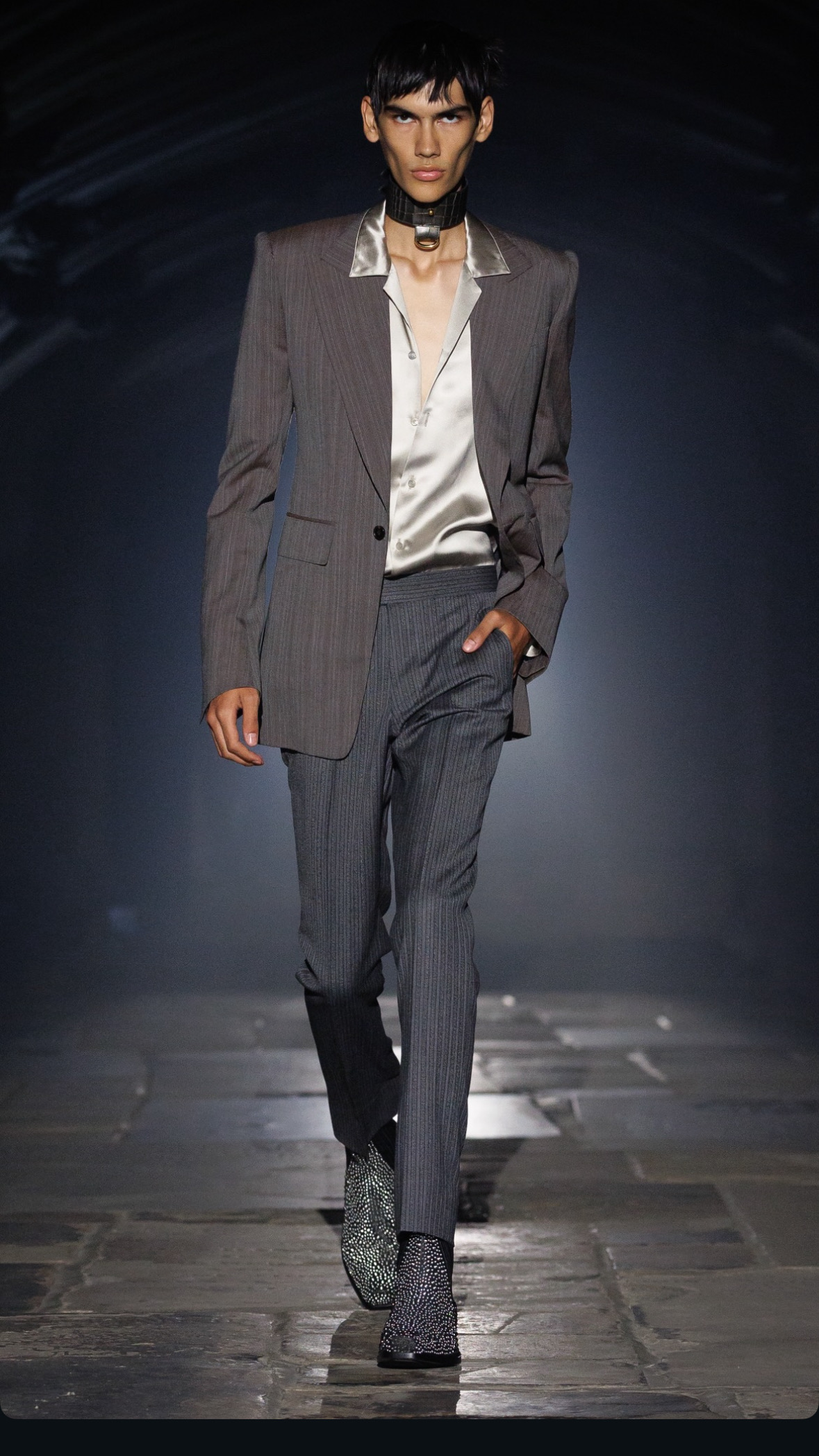
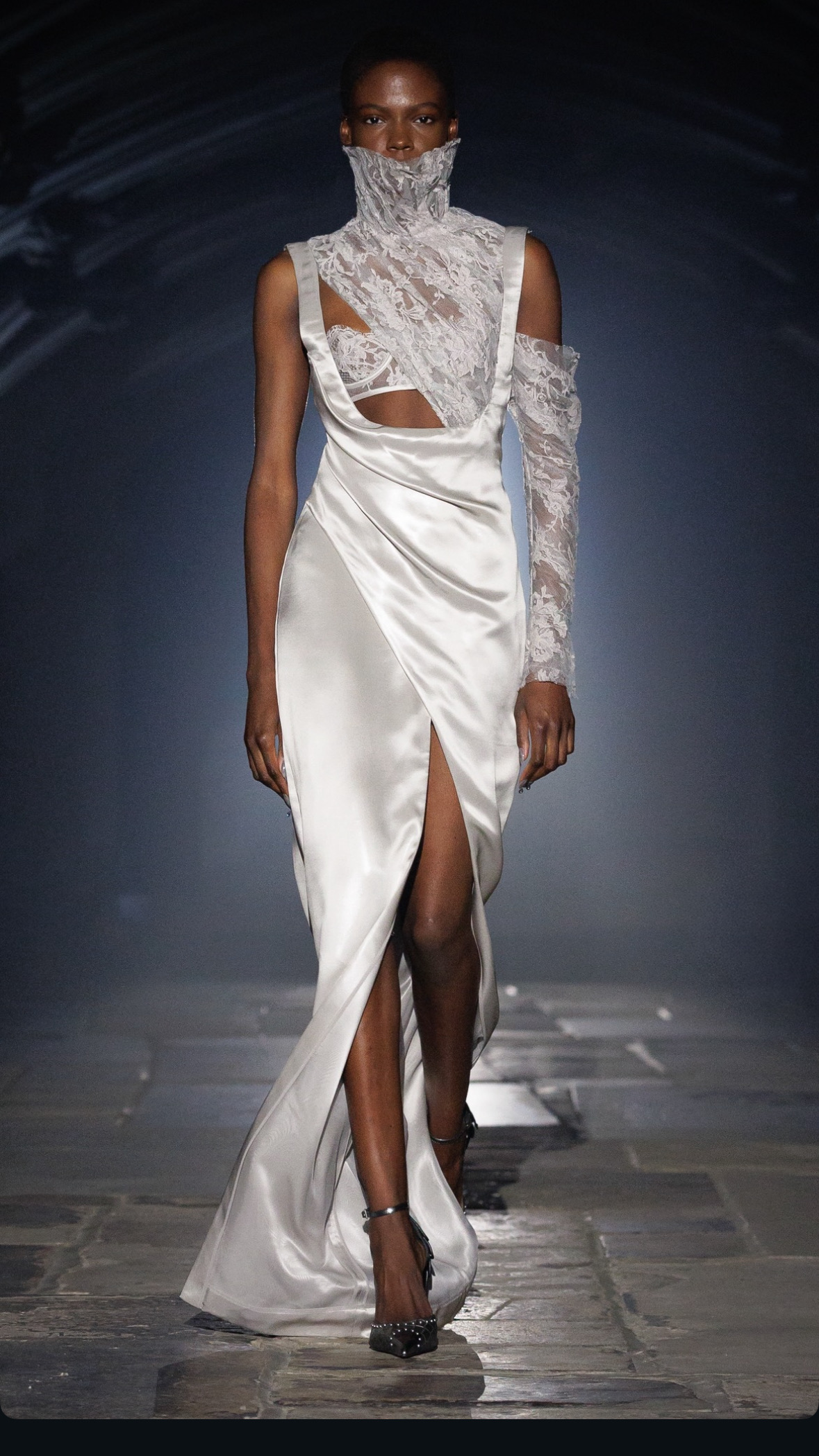
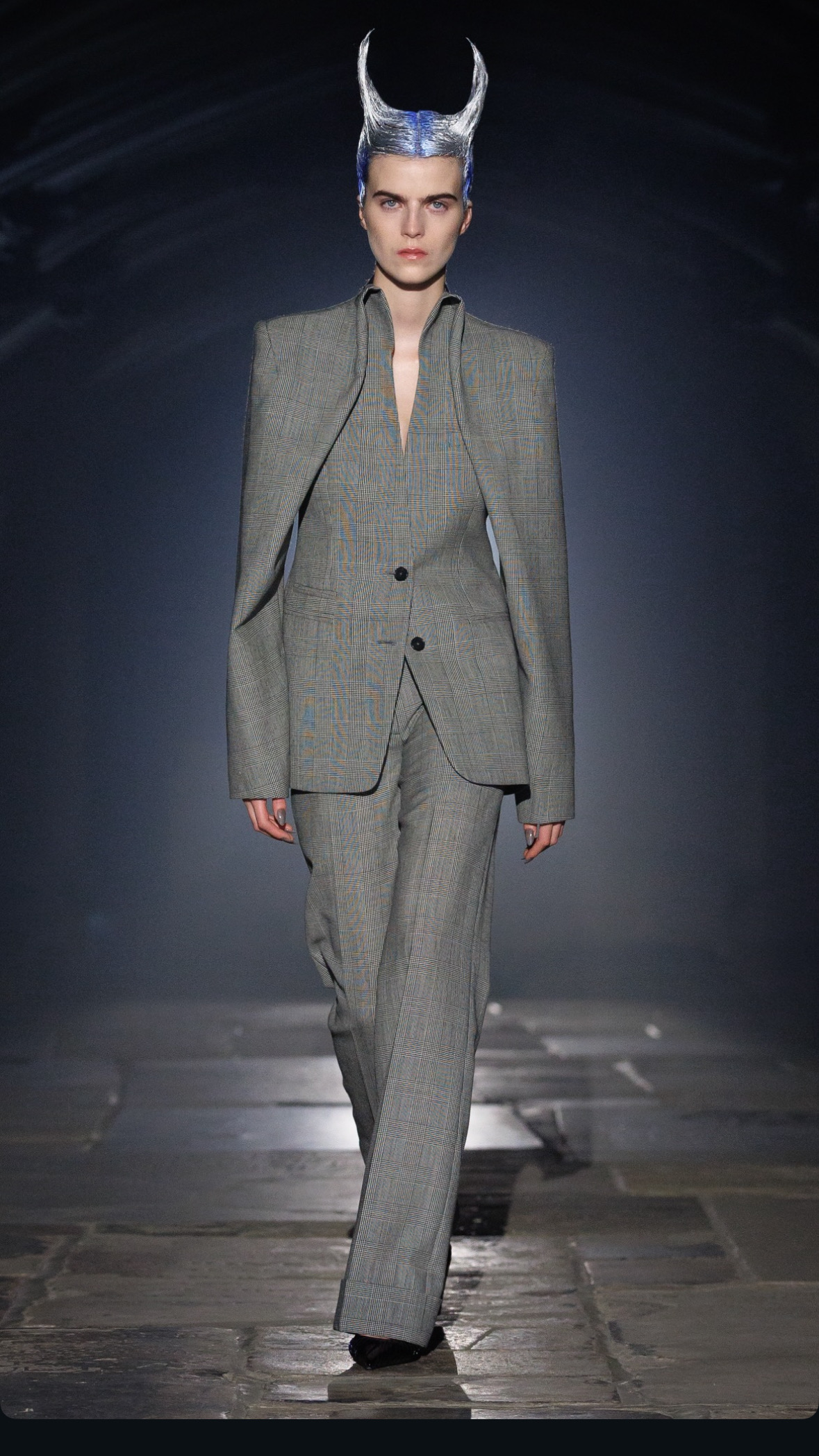
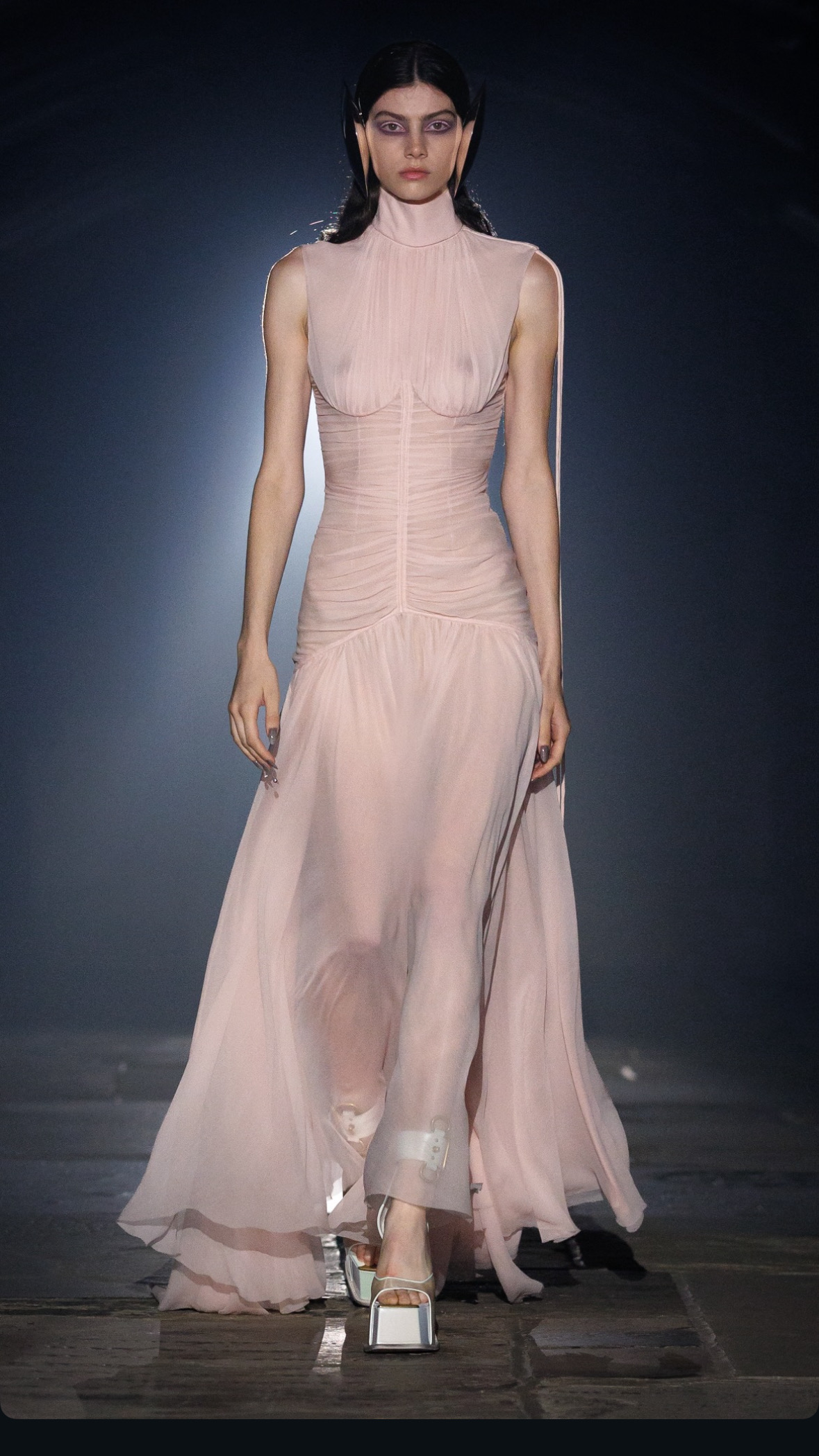
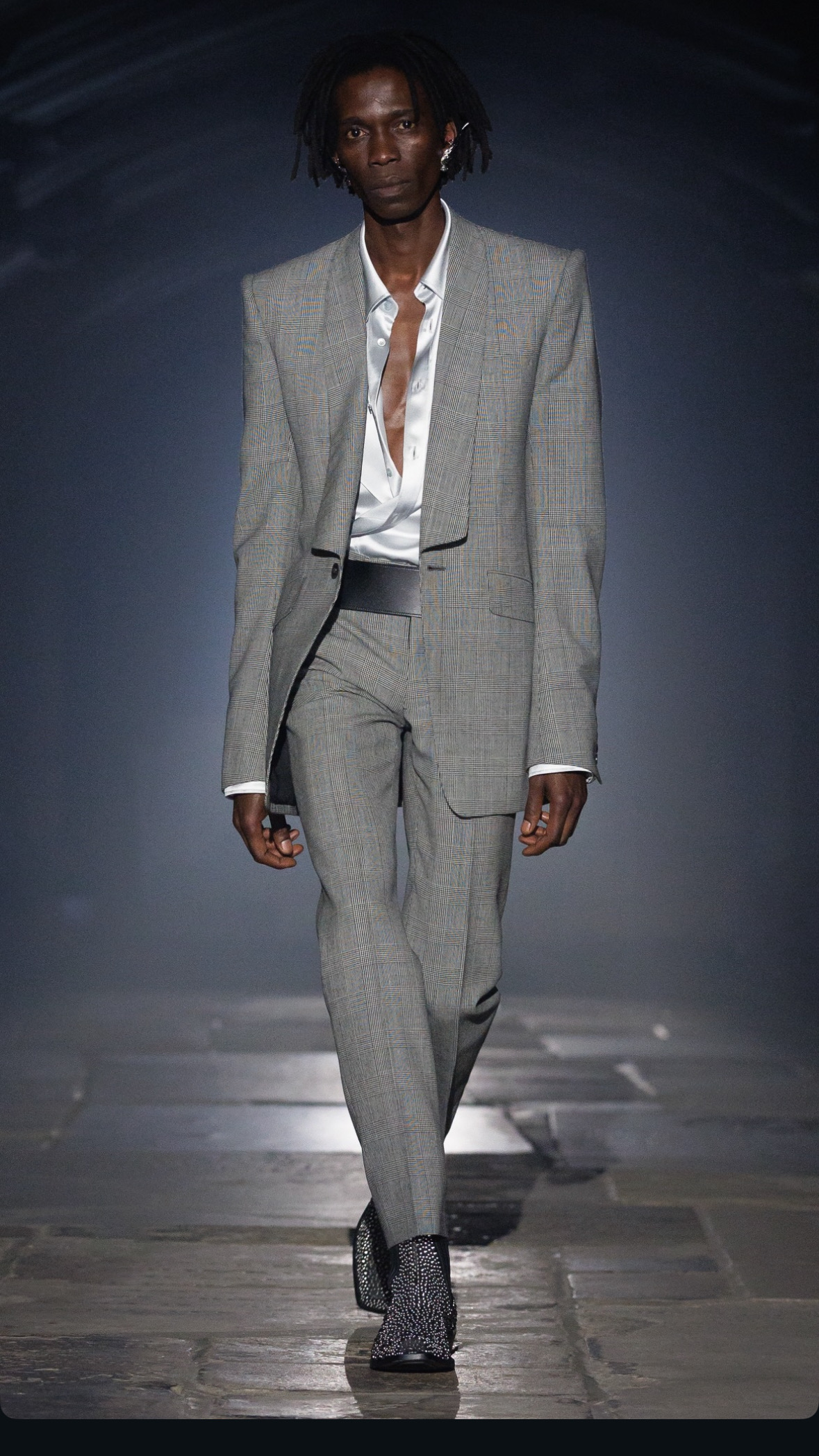
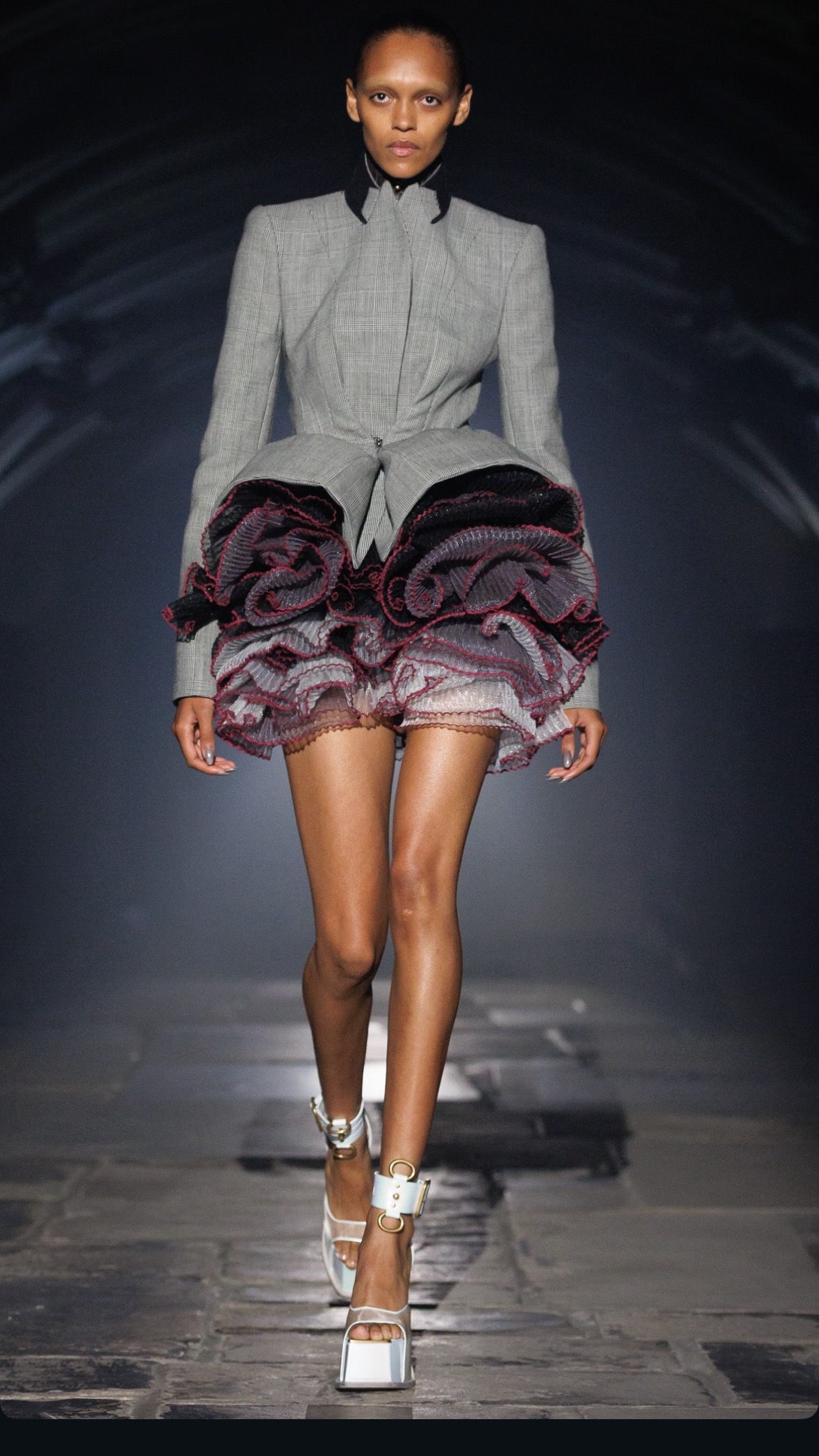
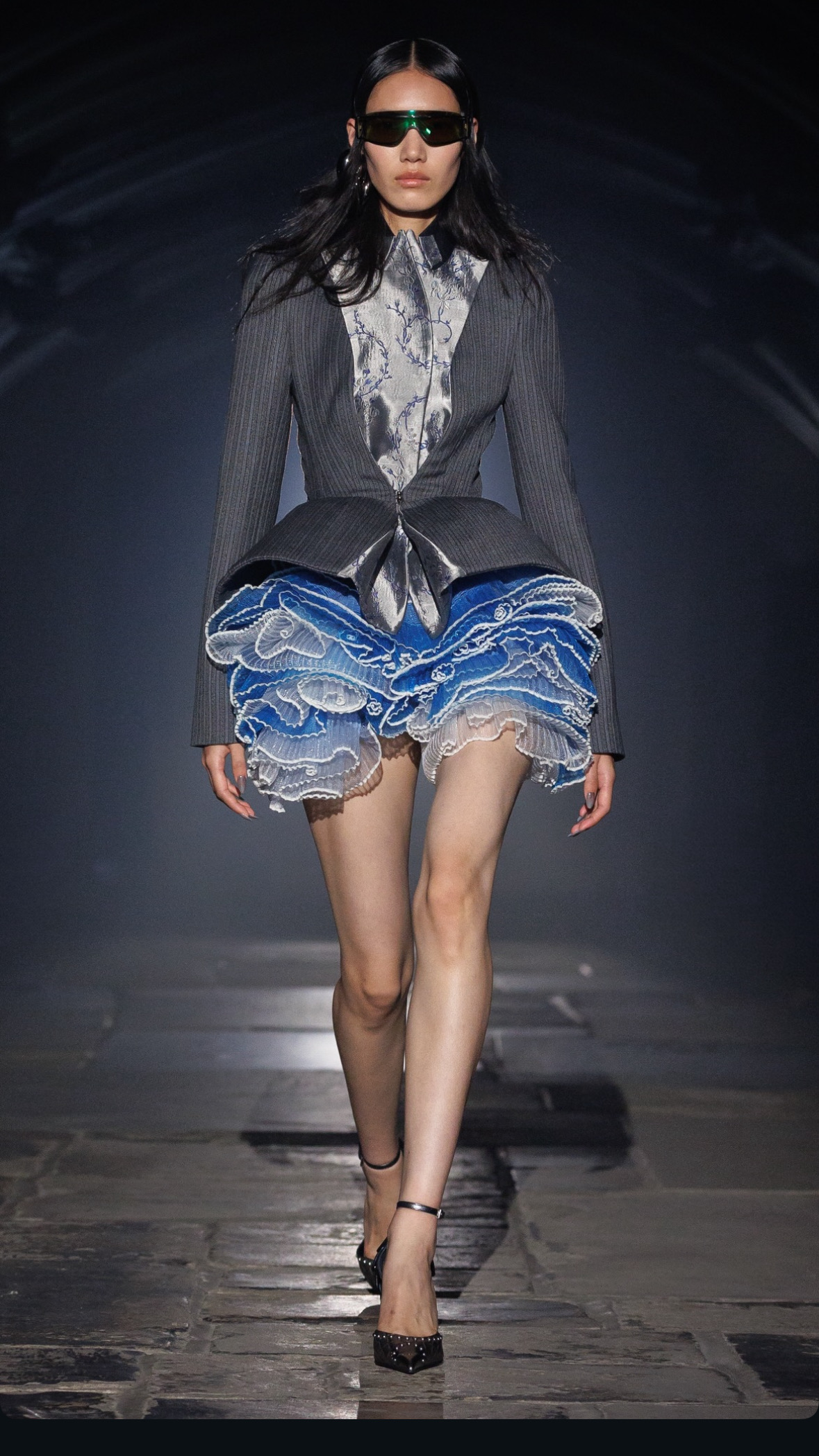
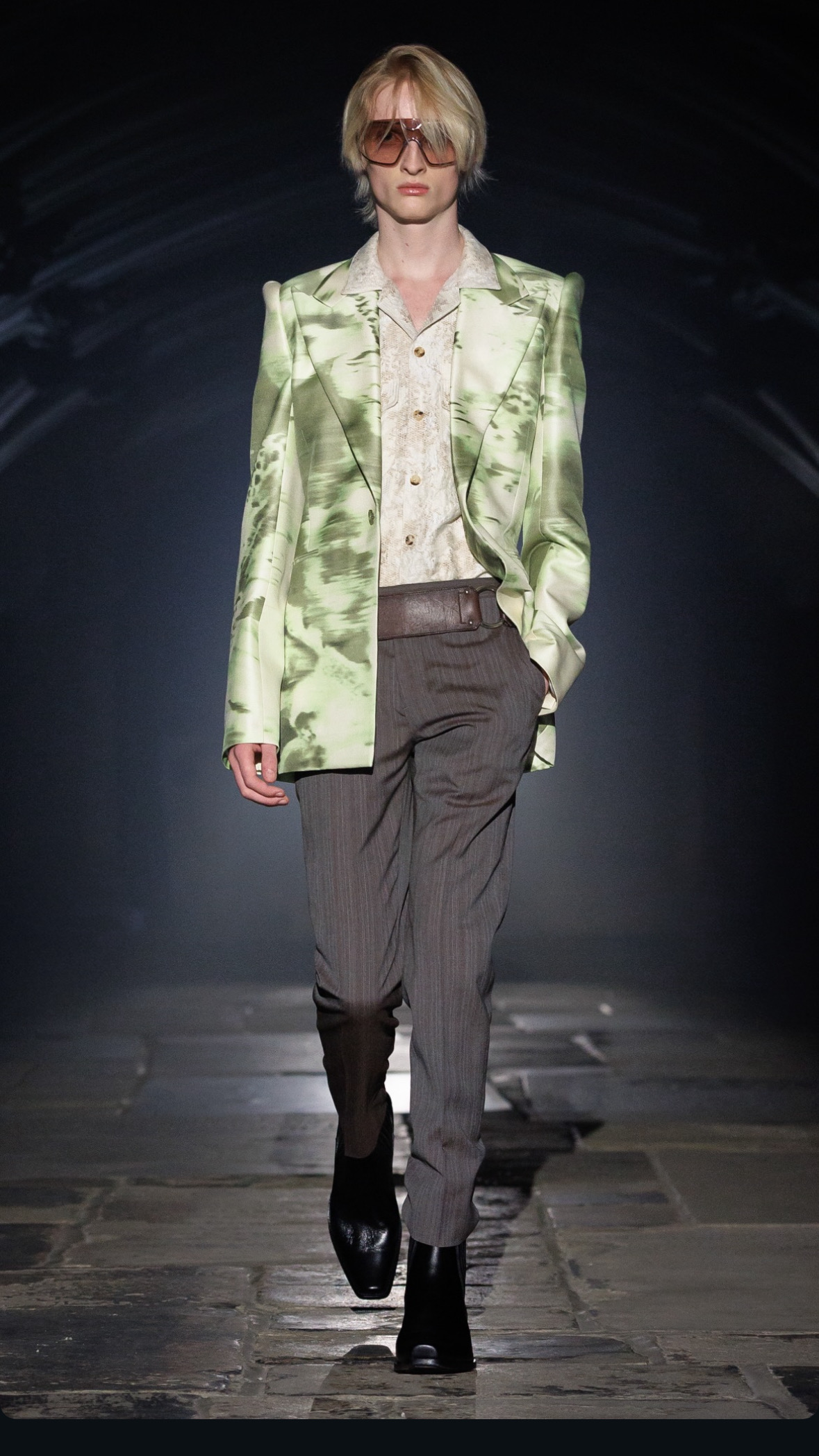
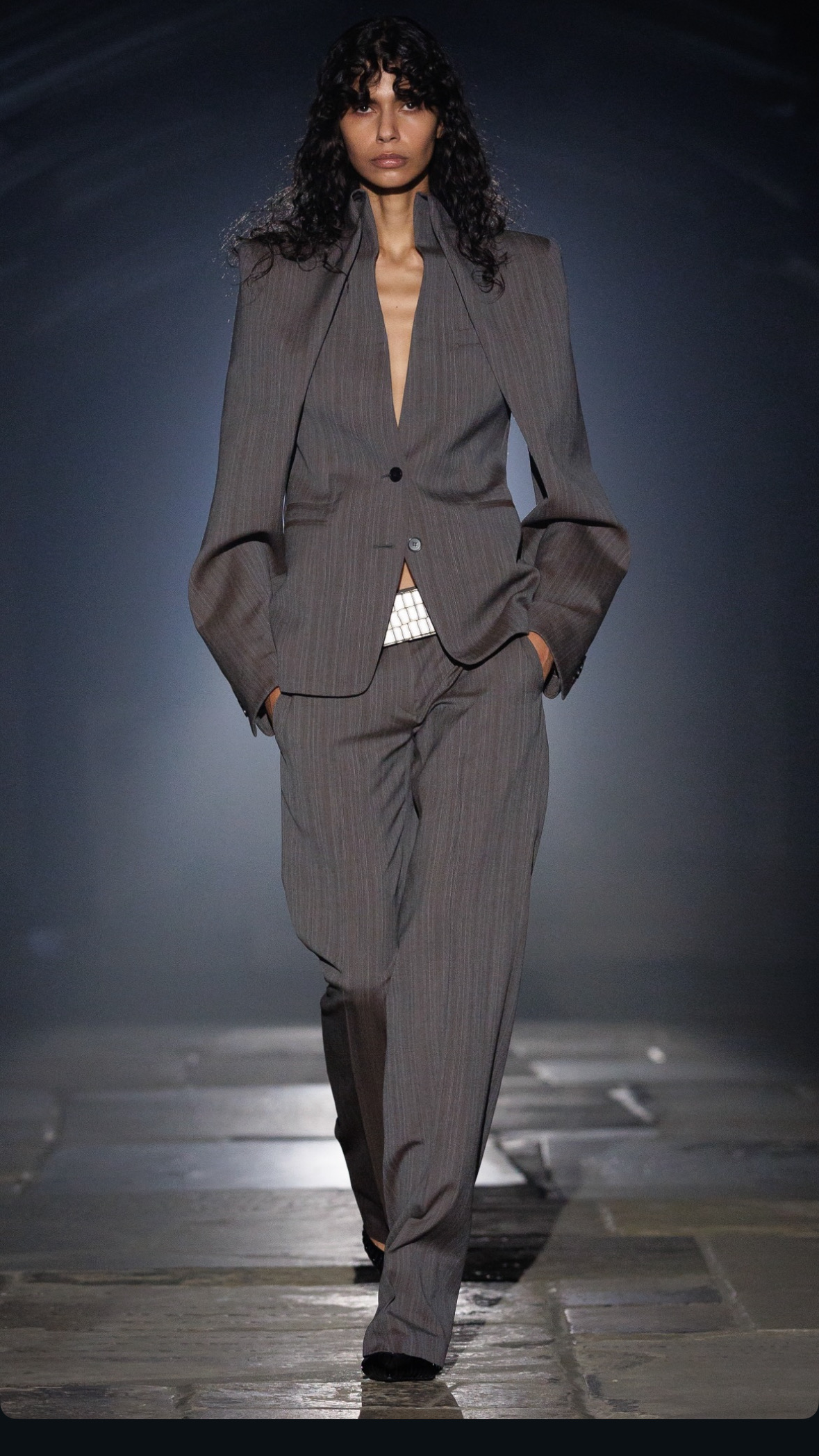
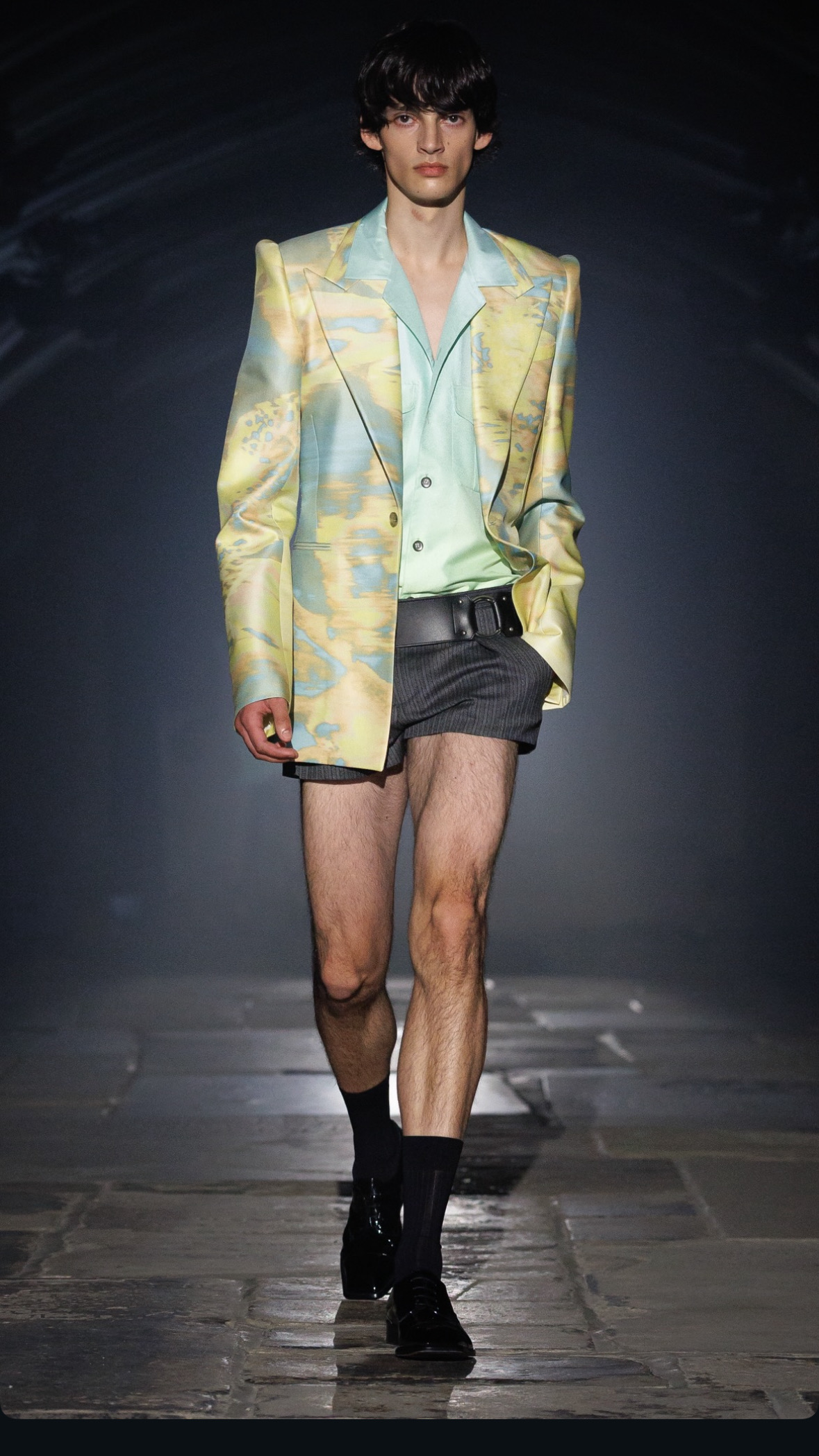
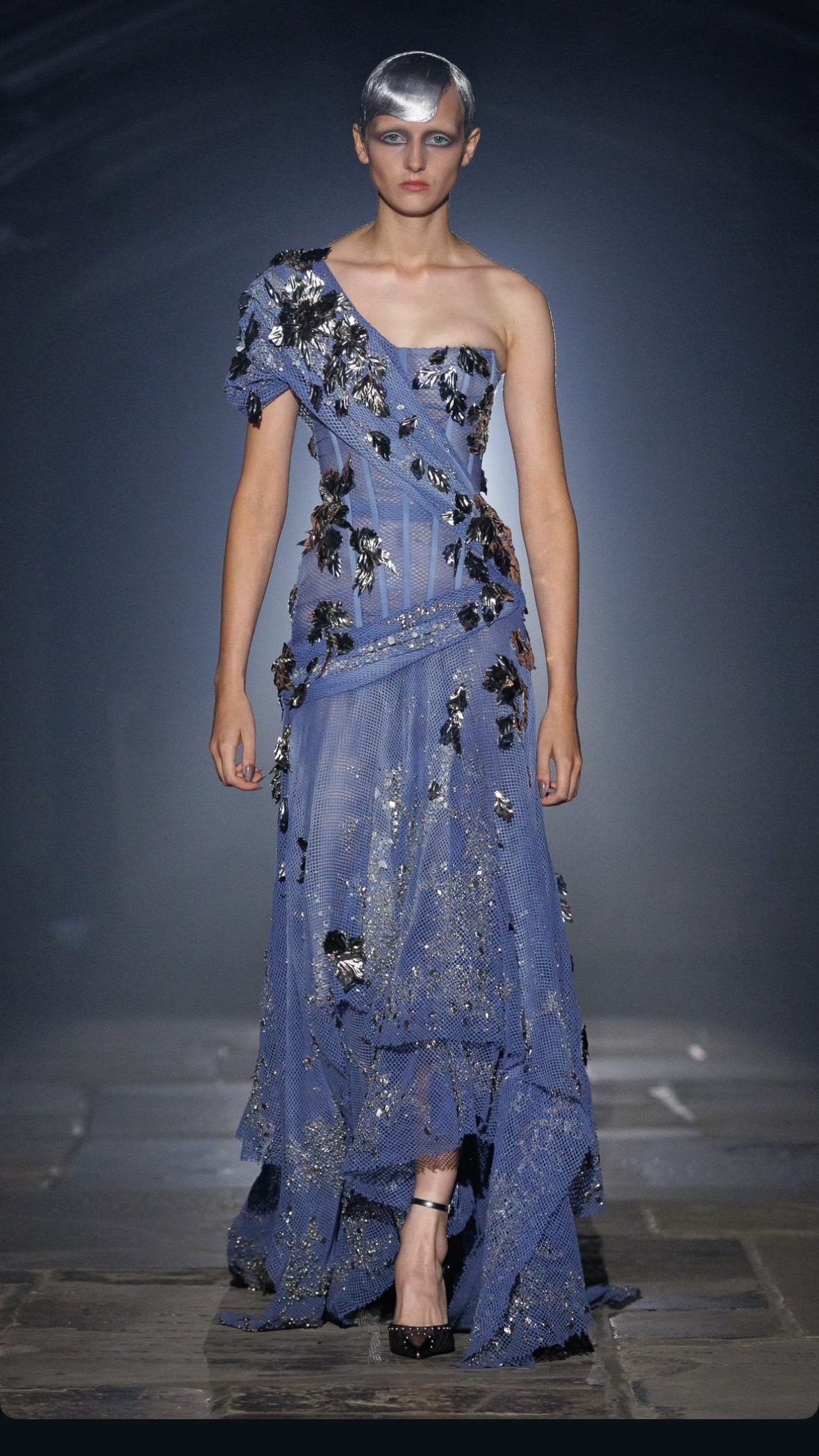
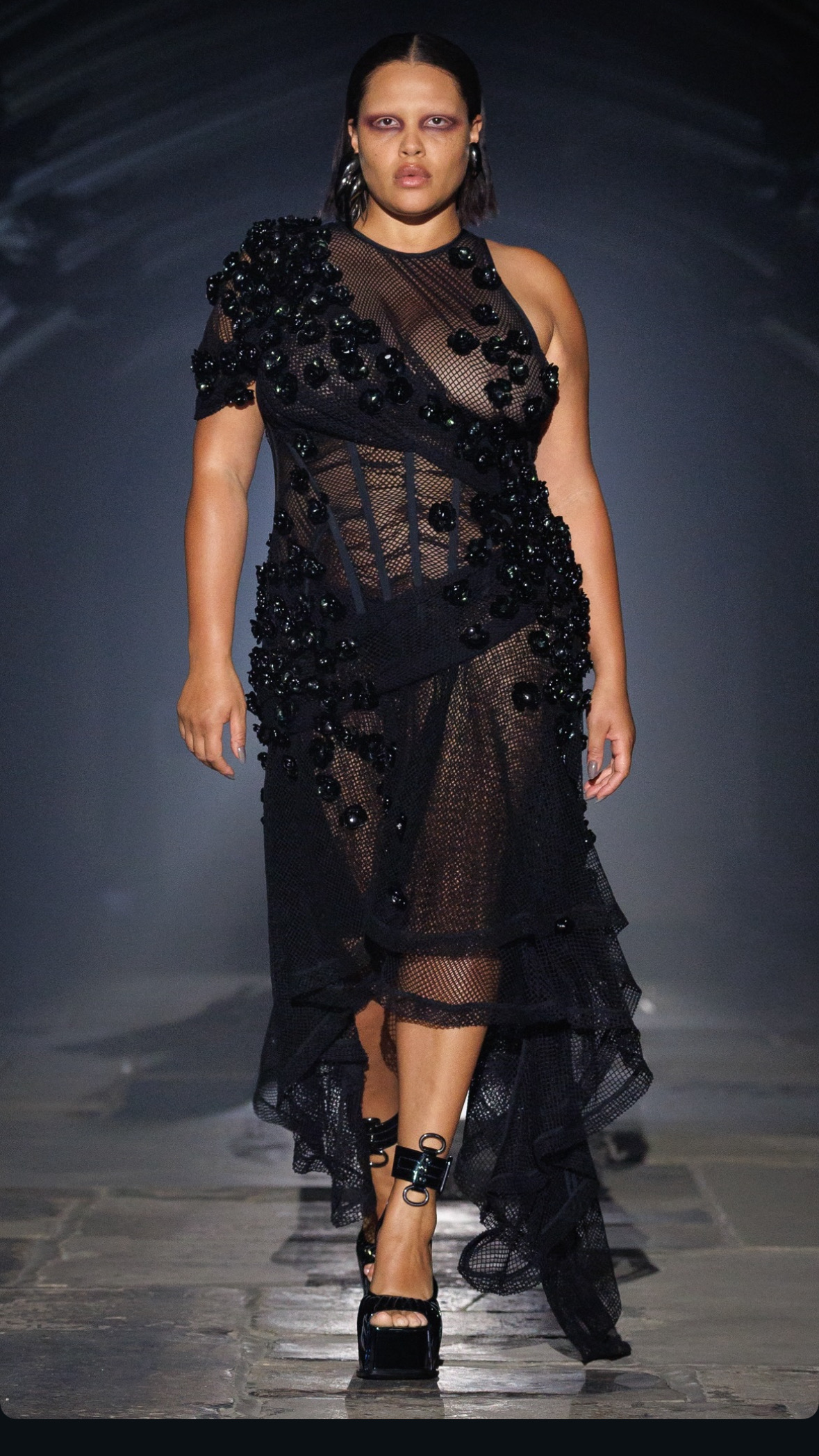
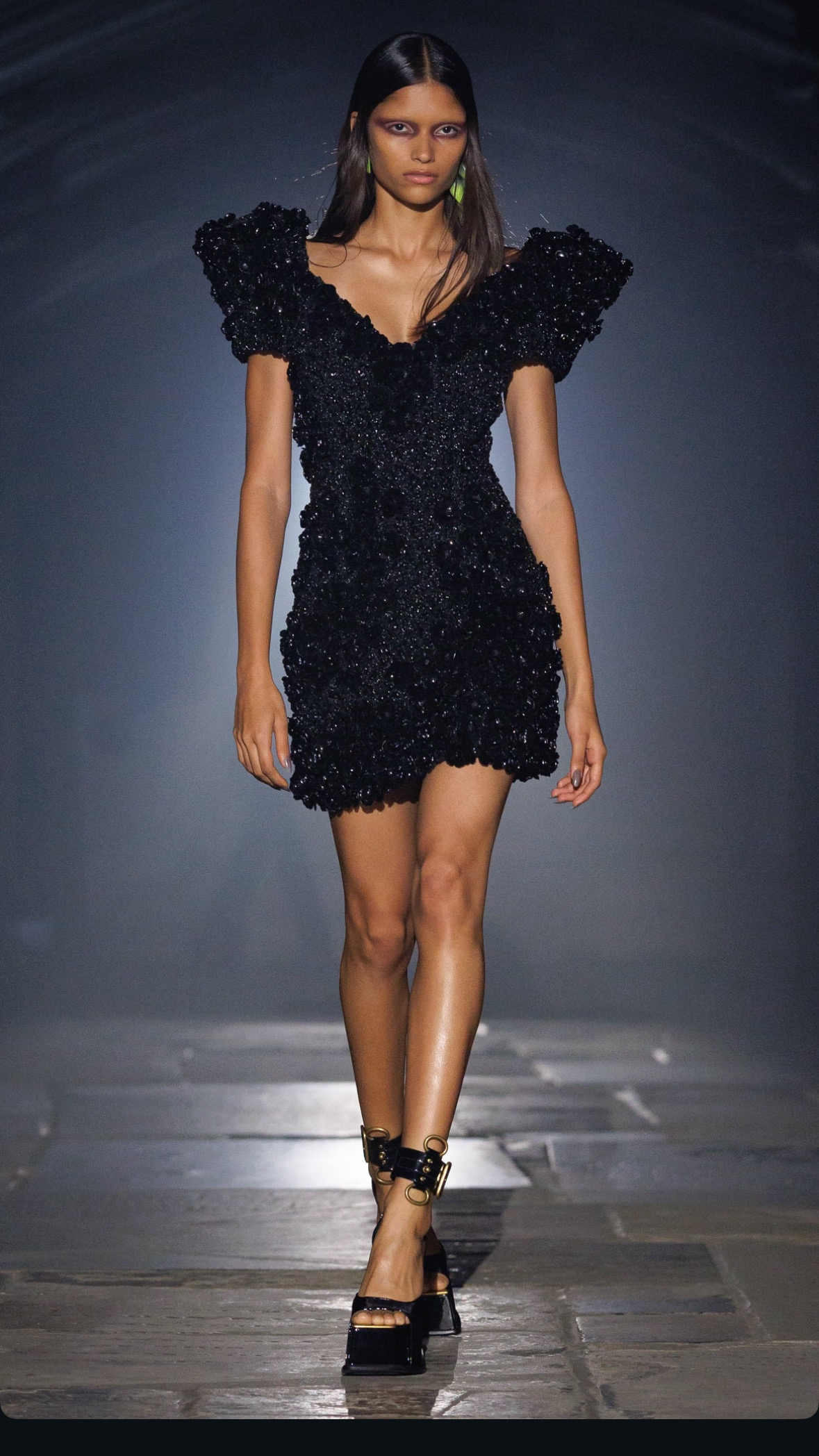
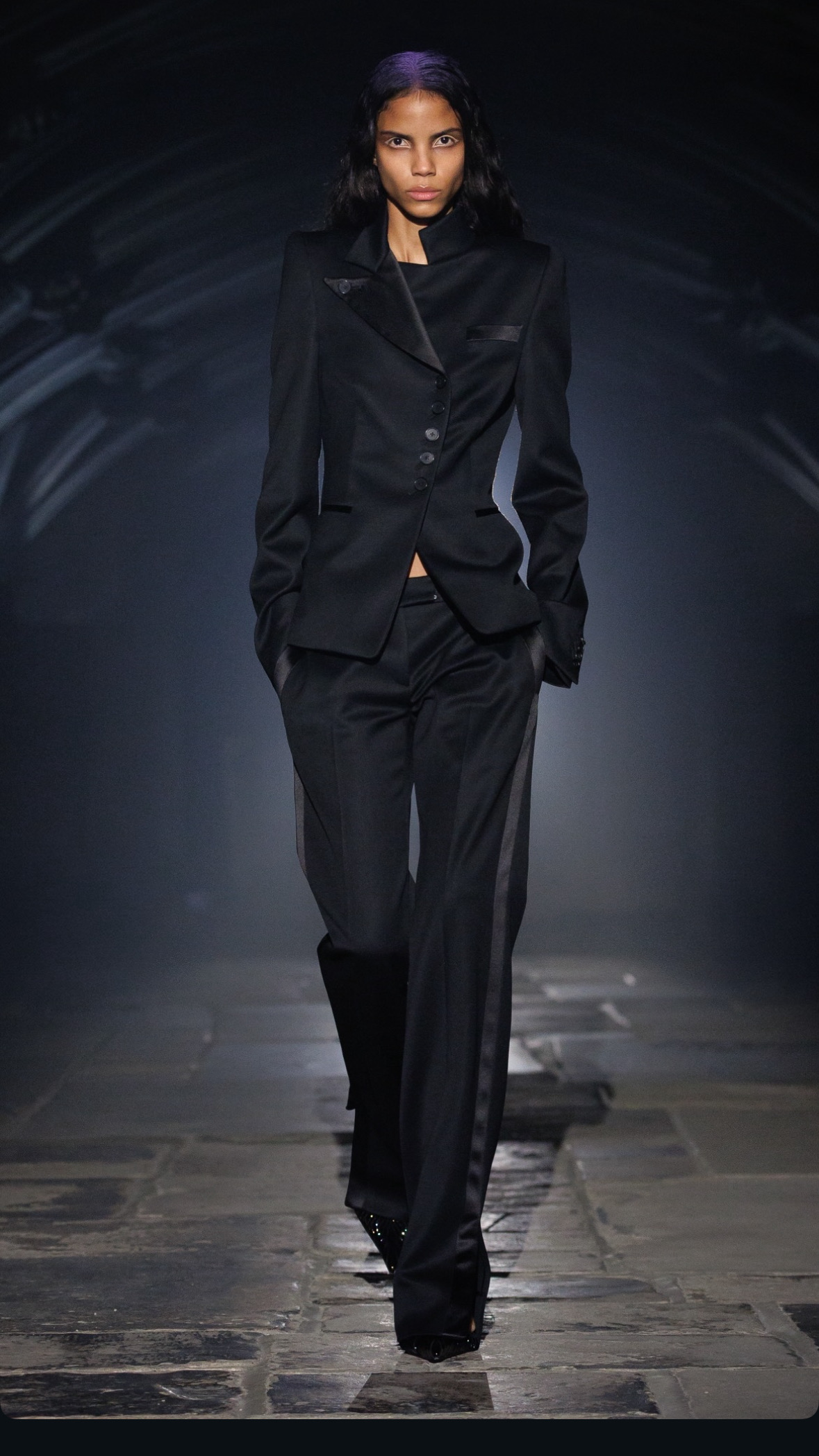
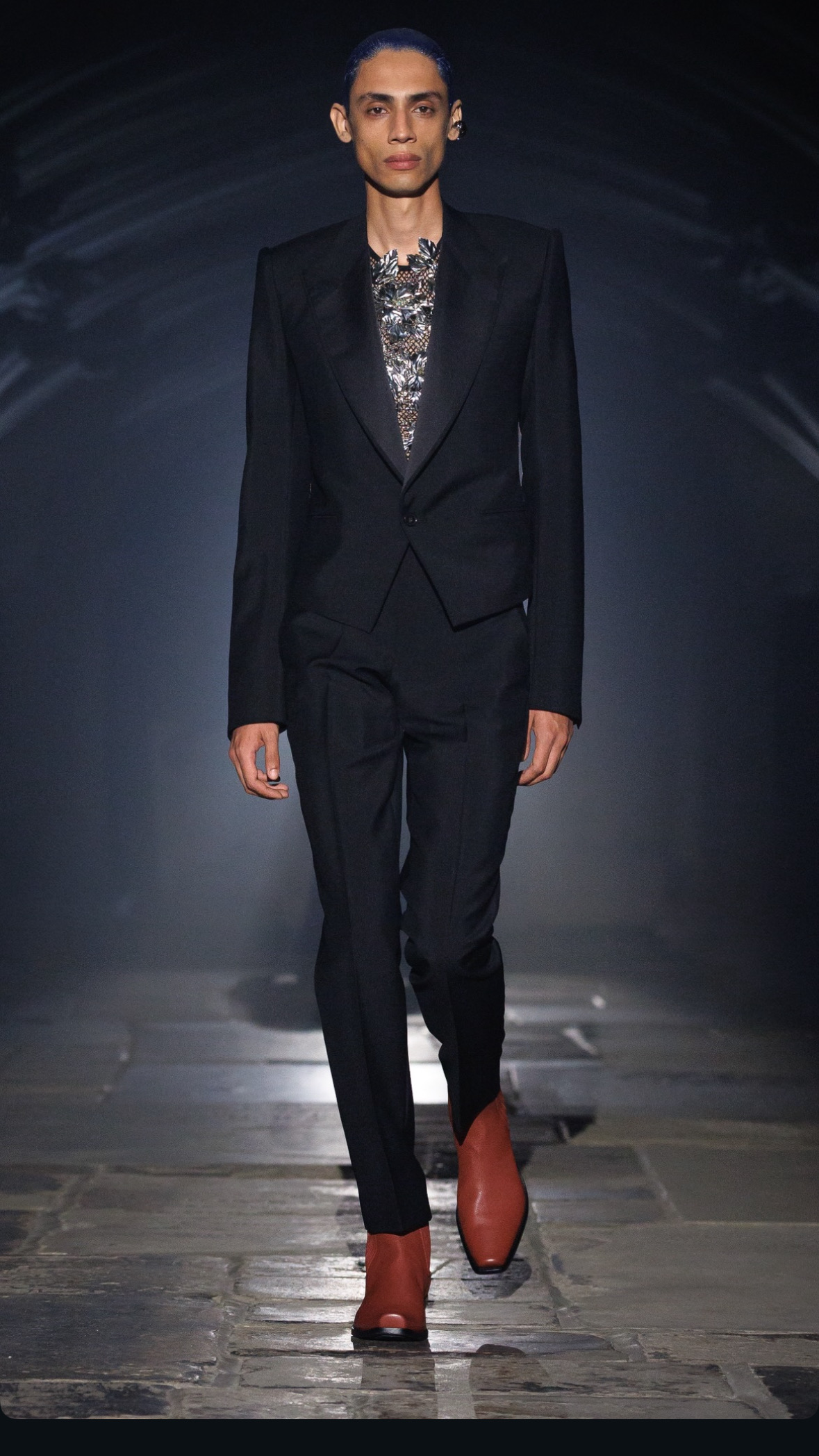
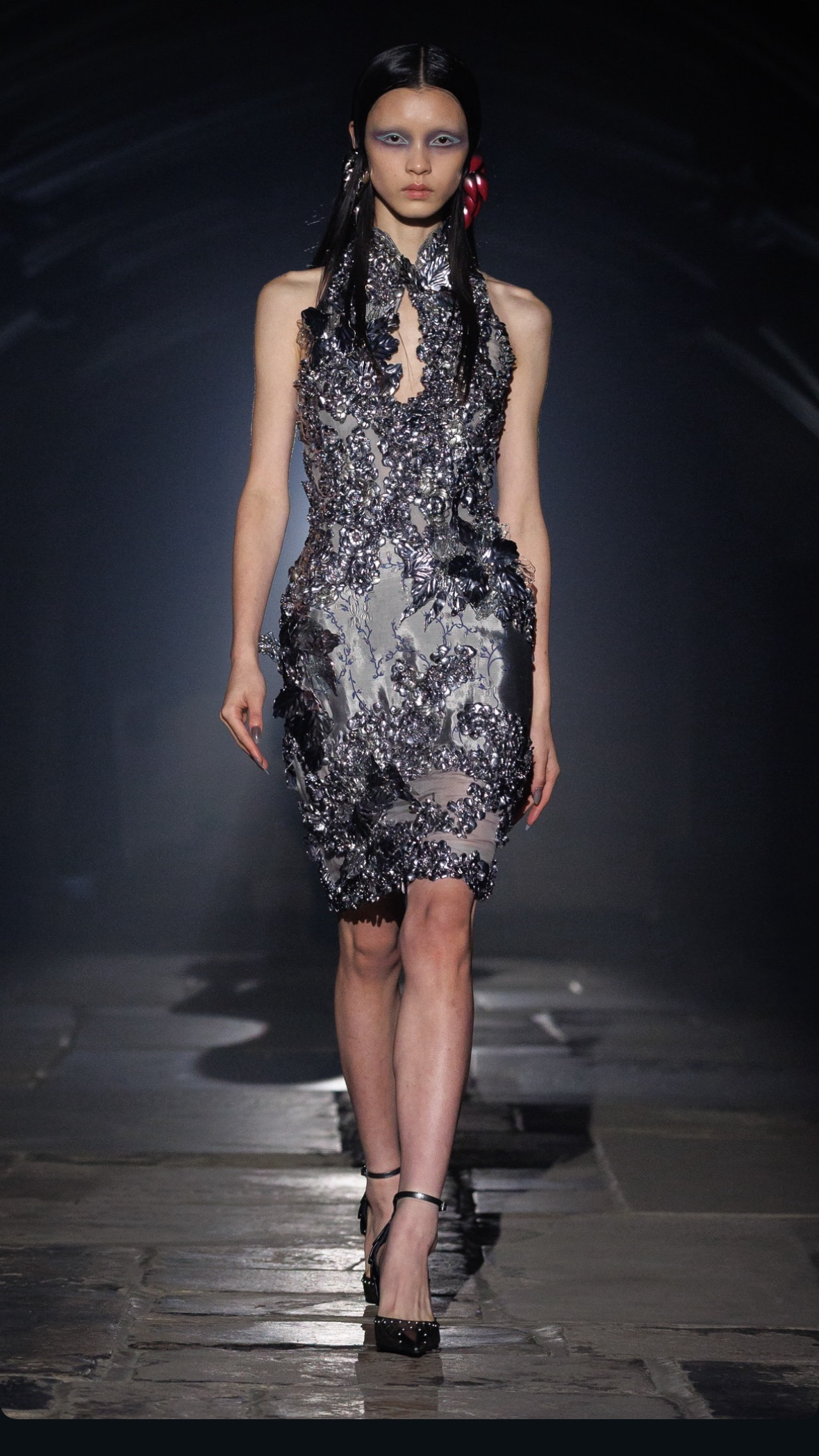
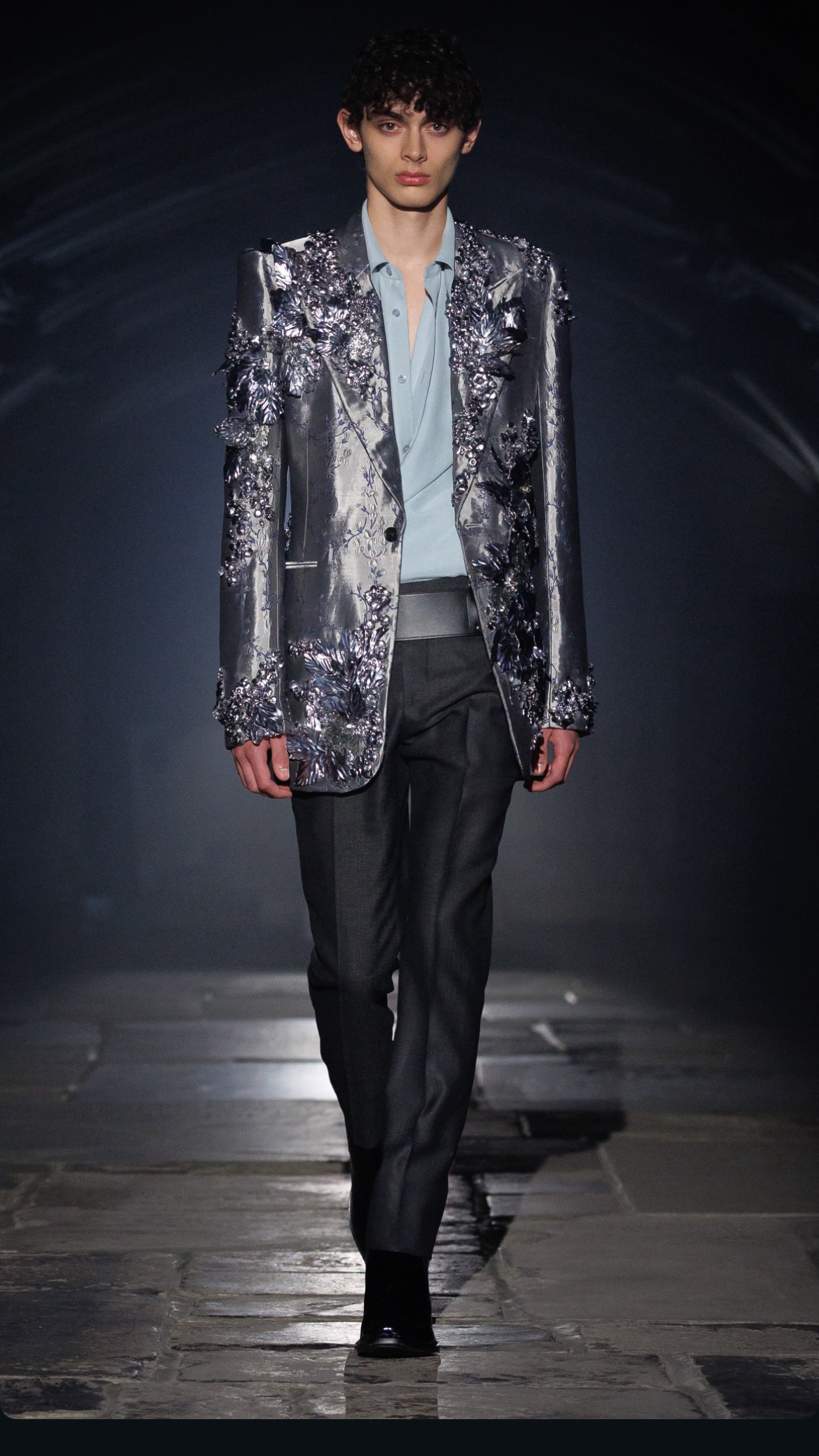
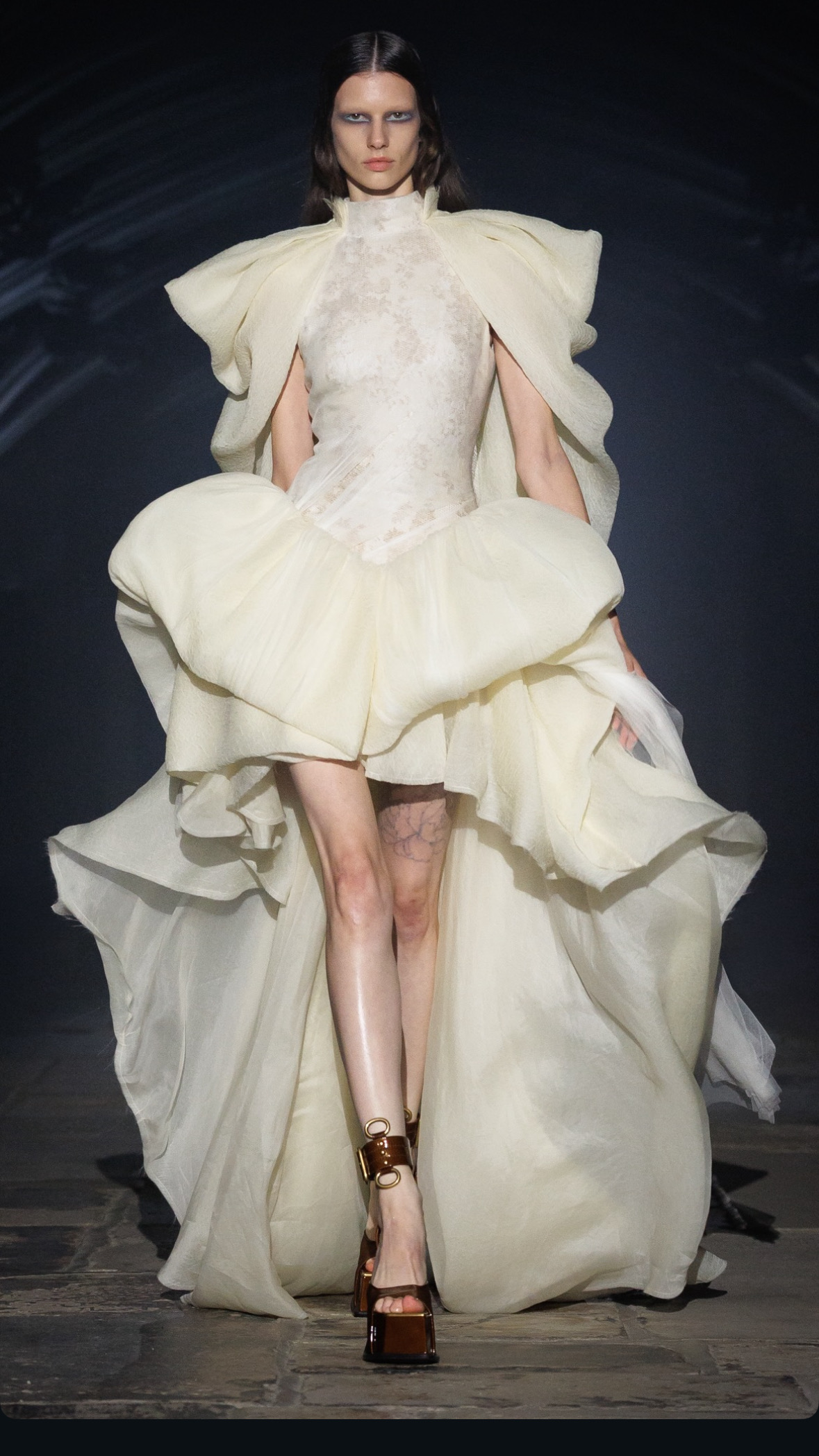
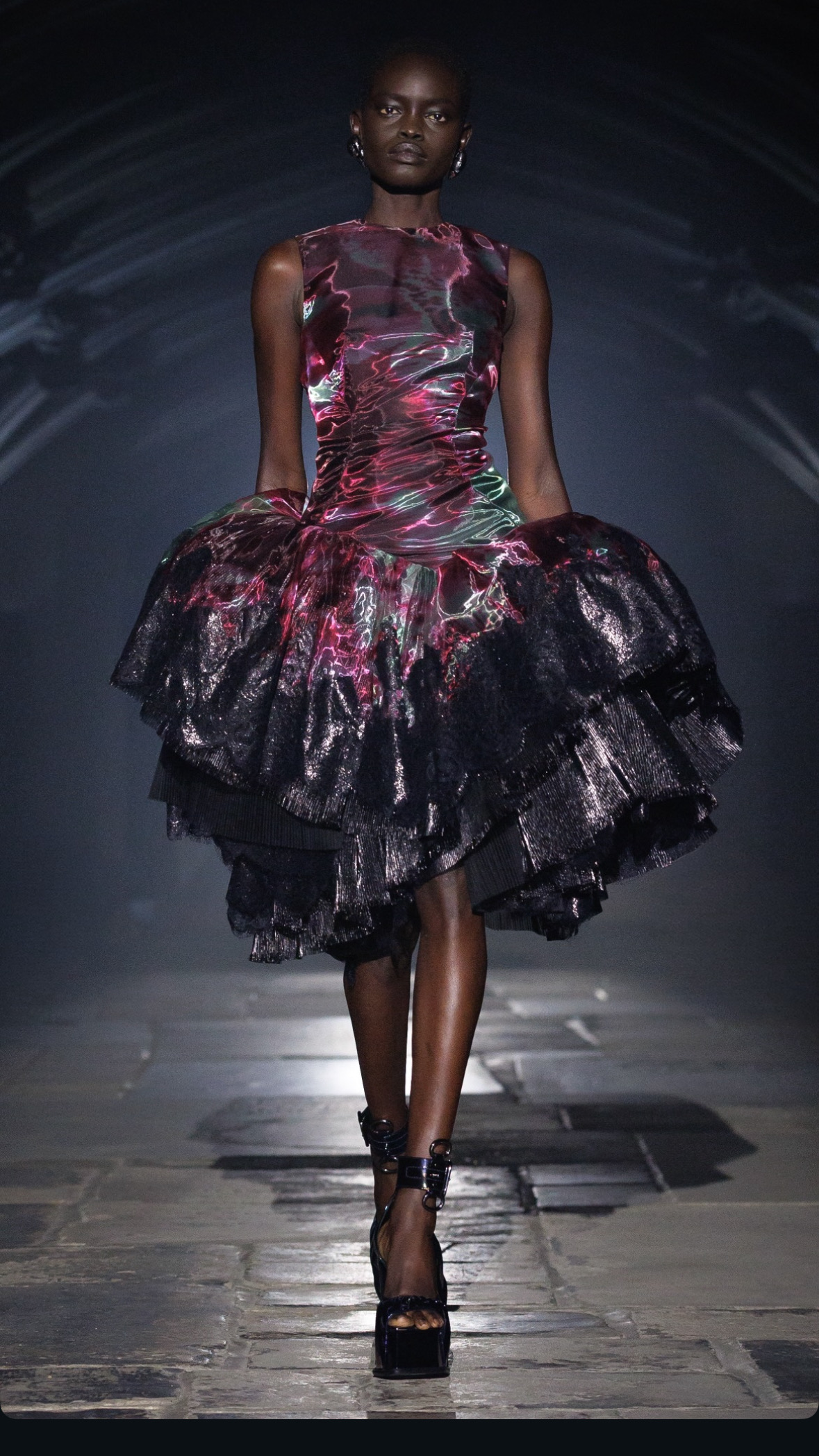
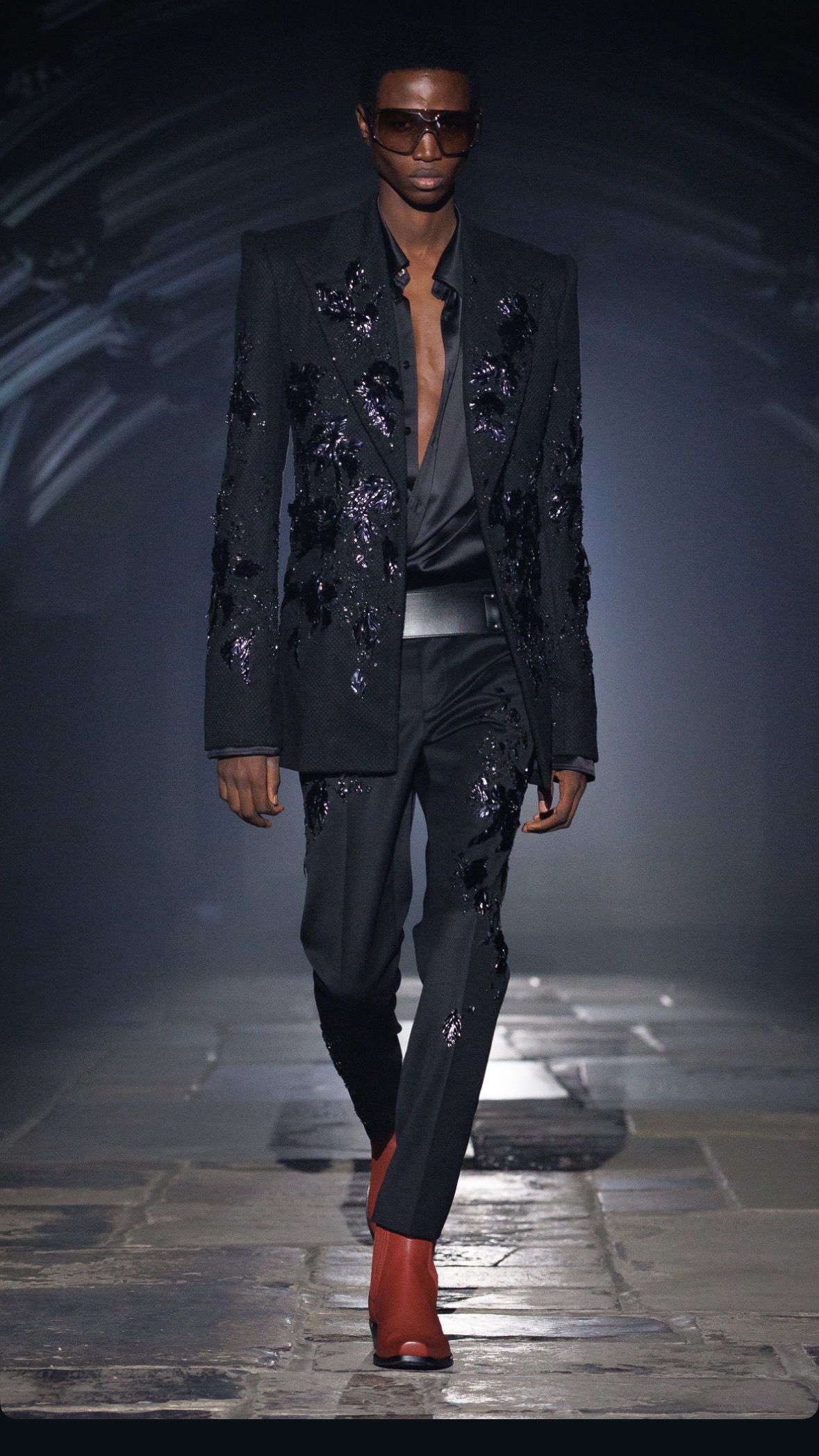
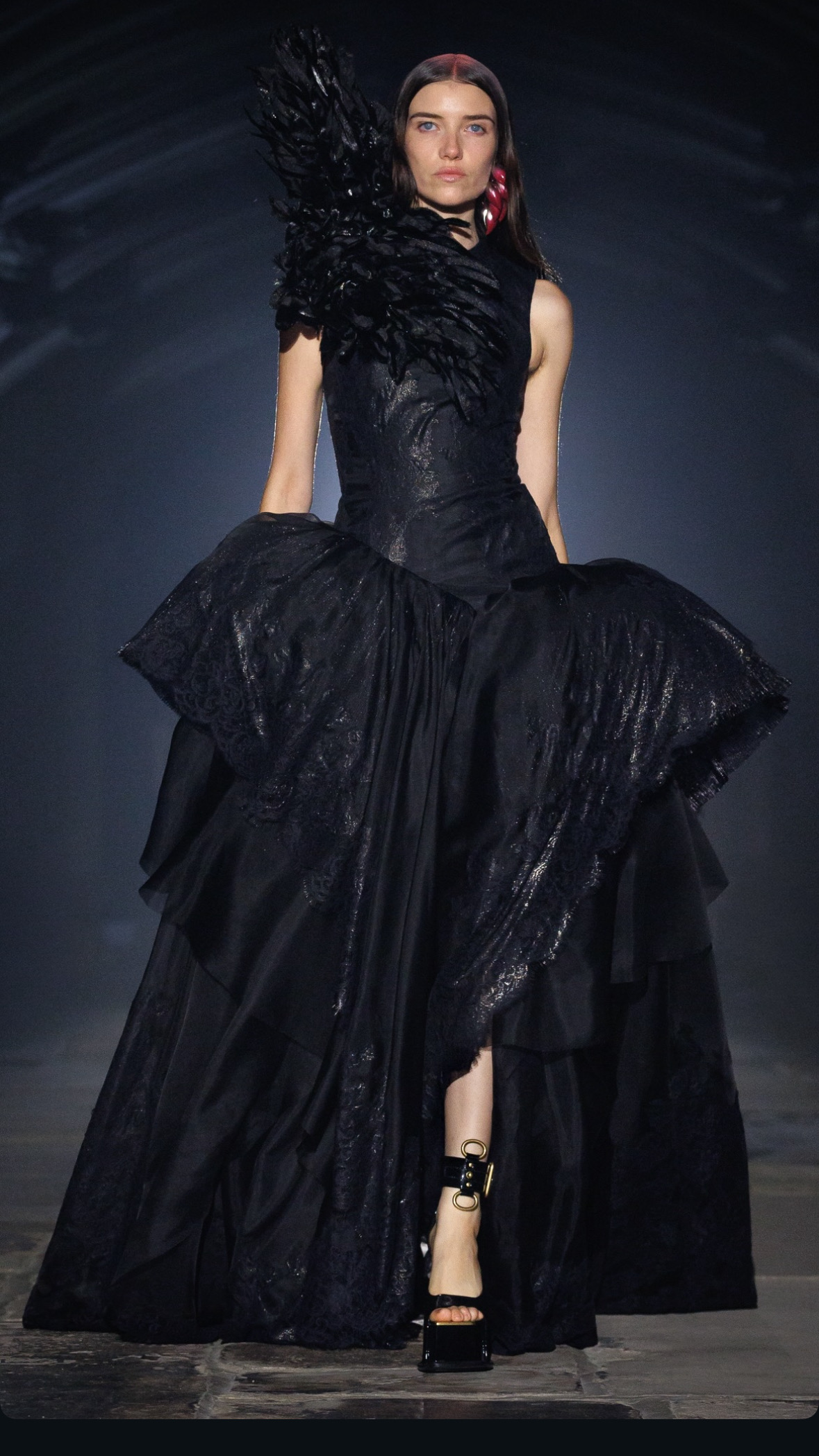
The answer is visible in the clothes. Huntsman of Savile Row provides the tailoring; its severe, elongated structures are pushed into rounded shoulders that resemble folded angel wings. Tommy Nutter – whom McGirr calls “the first rebel of Savile Row” – becomes a bridge between British establishment and British rebellion. Thick leather collars transform the respectable suit into something darker, almost club-bound.
Then comes the body.
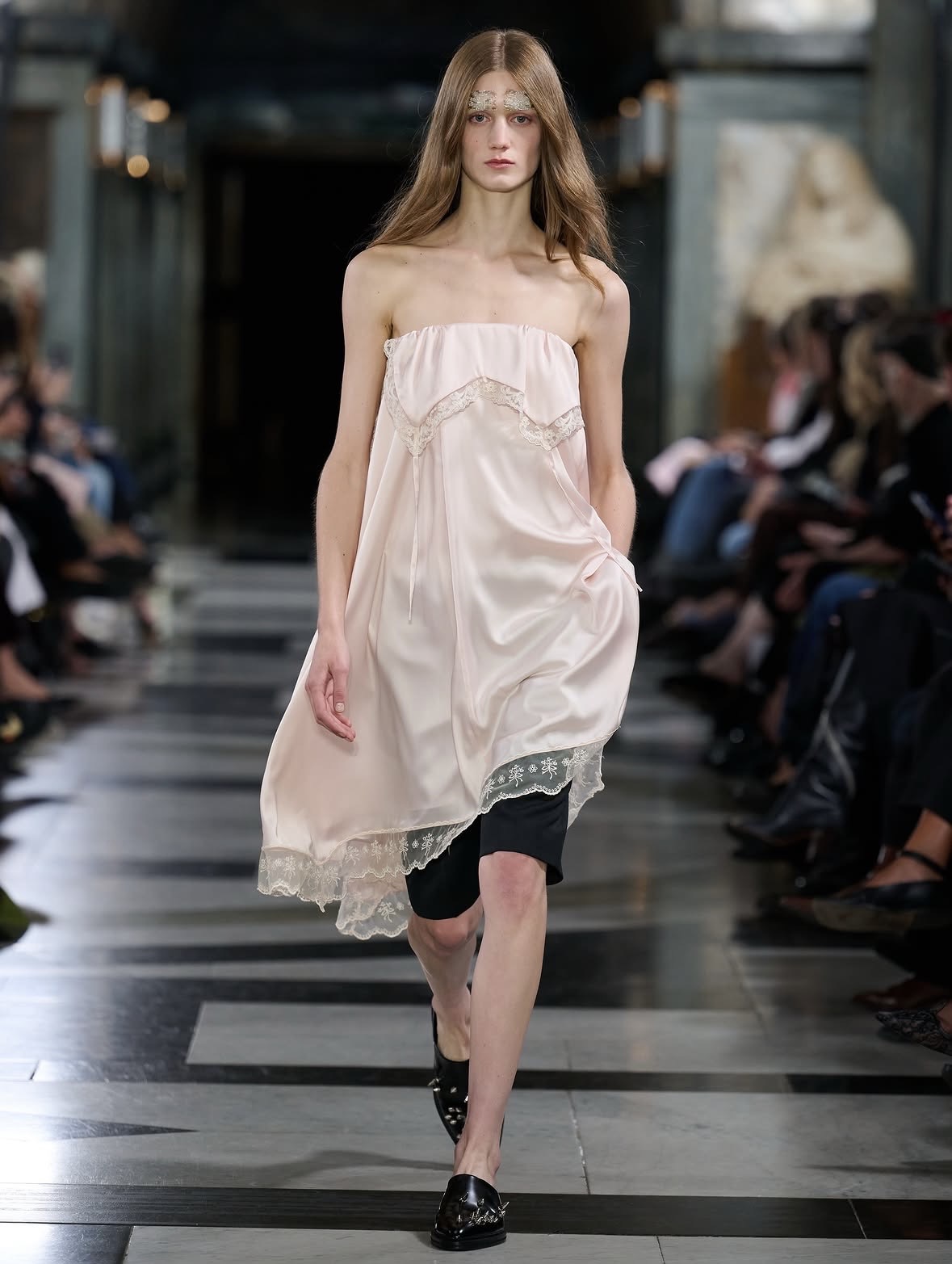
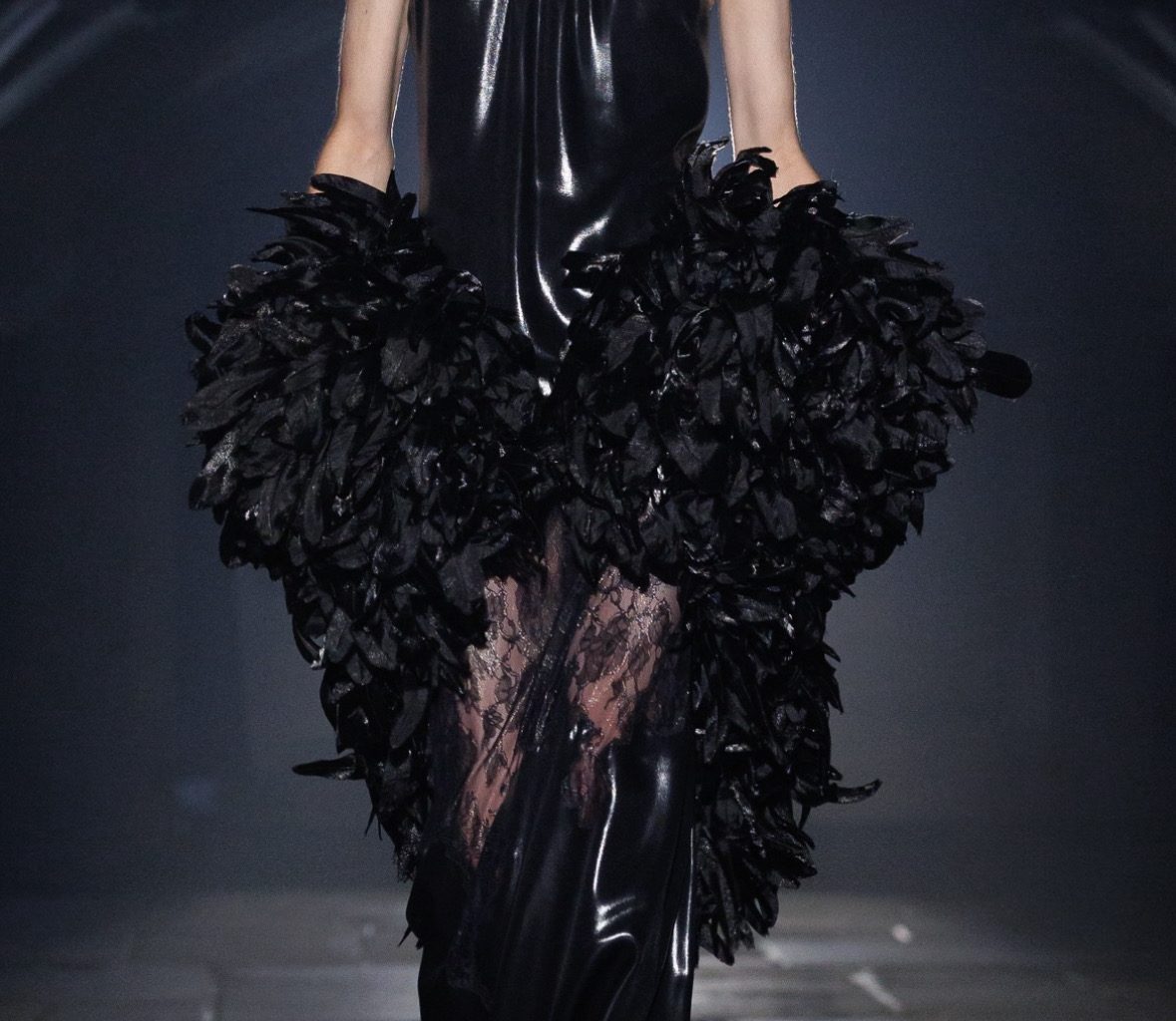
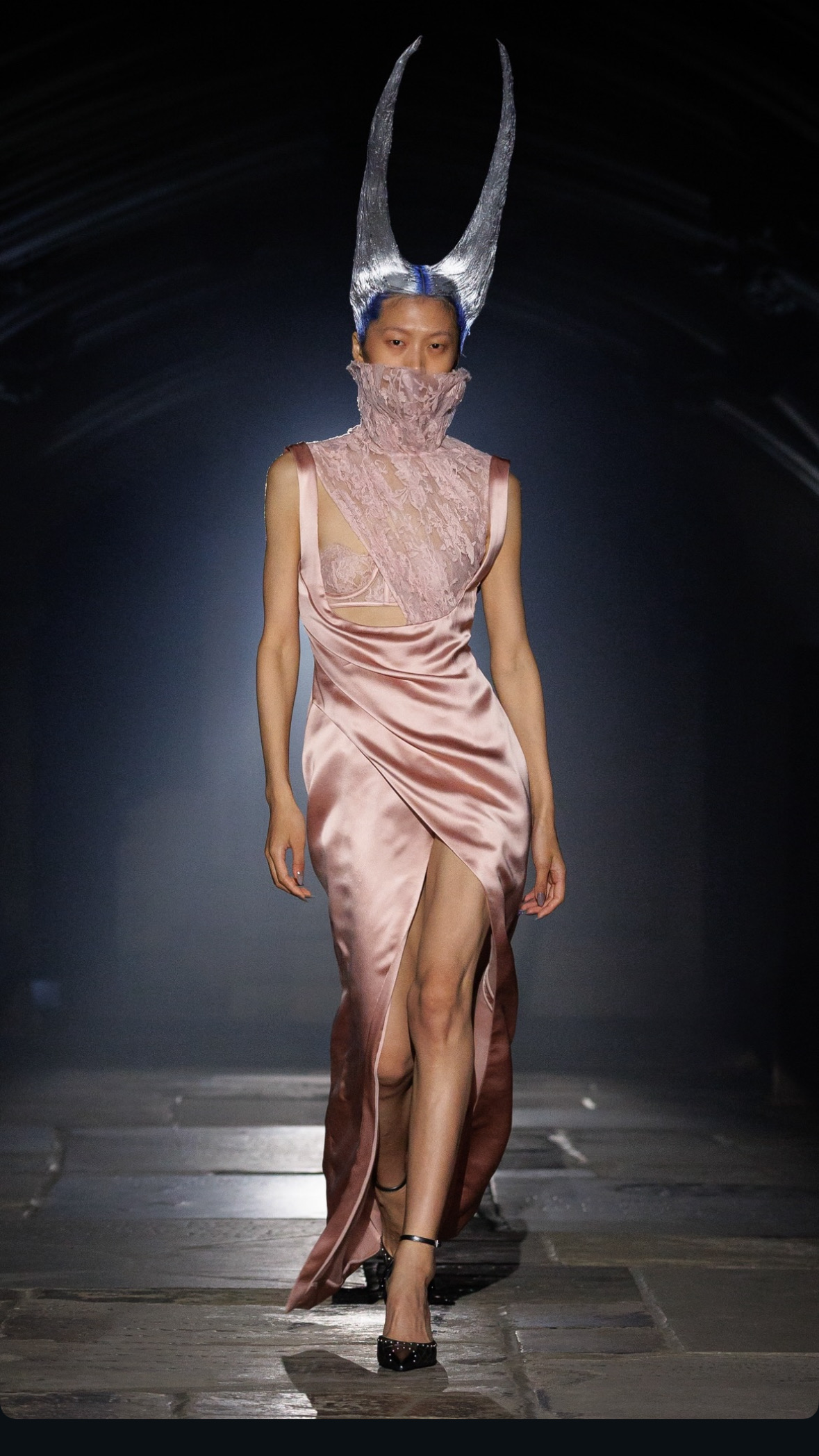
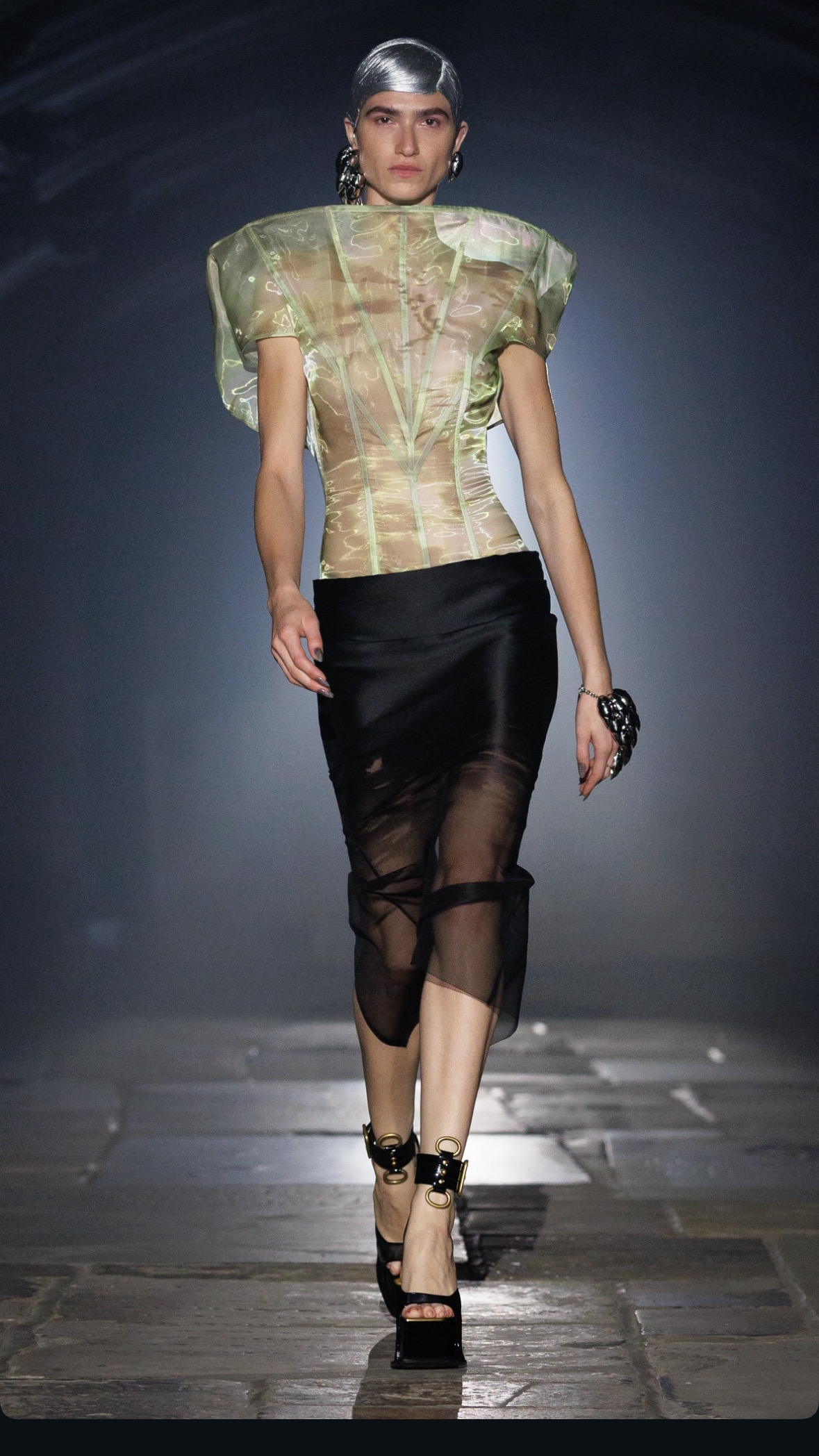
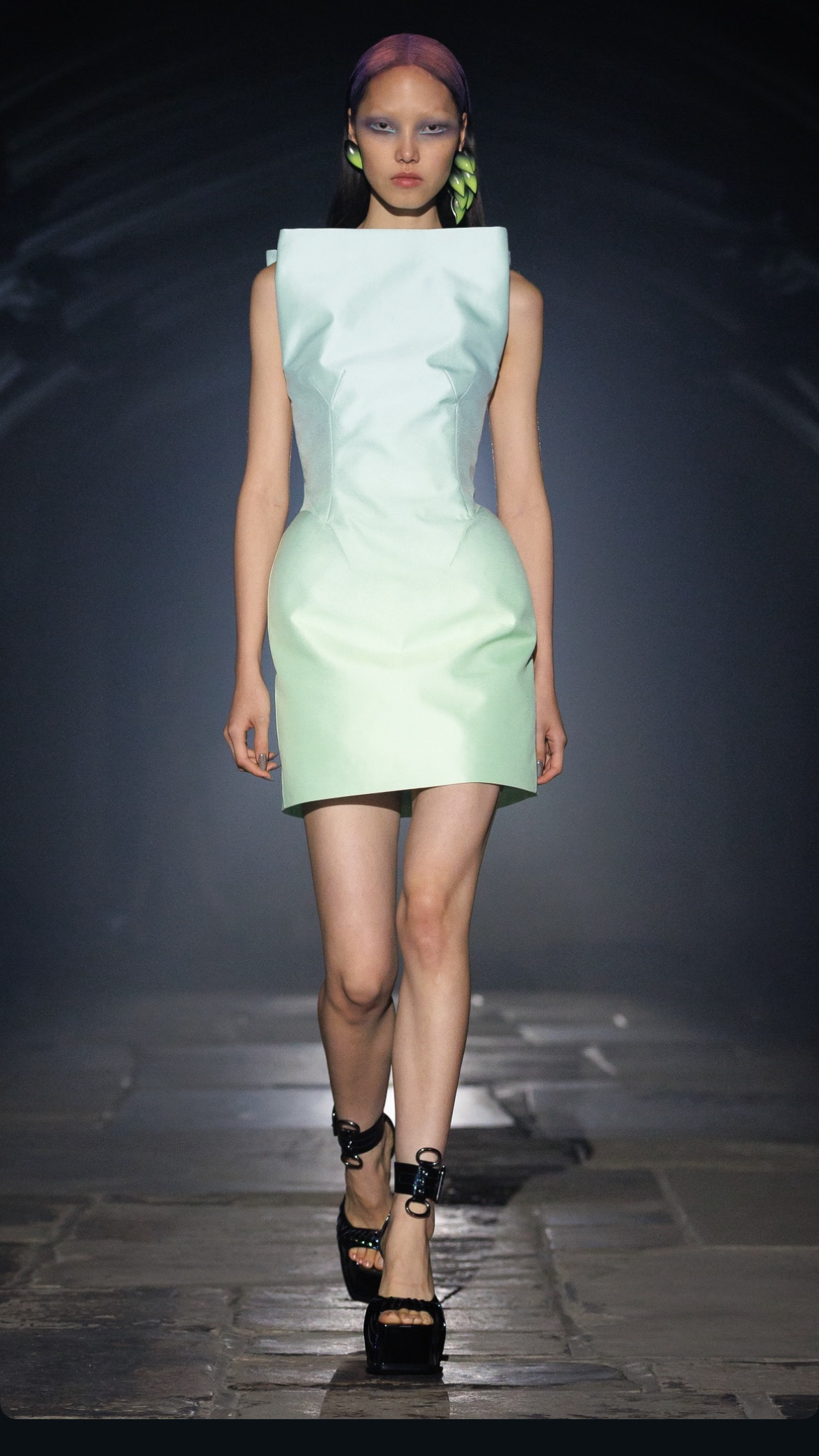
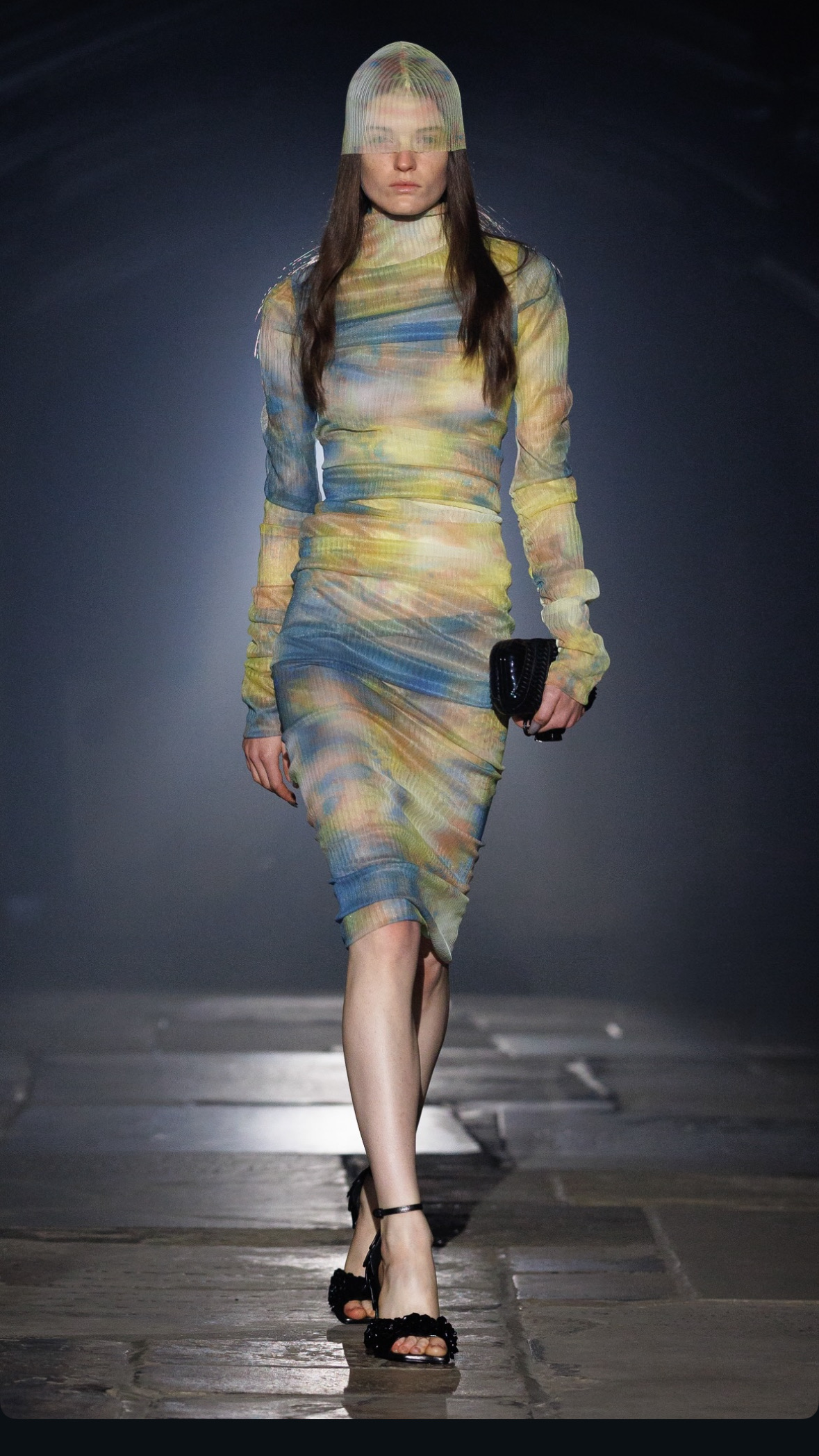
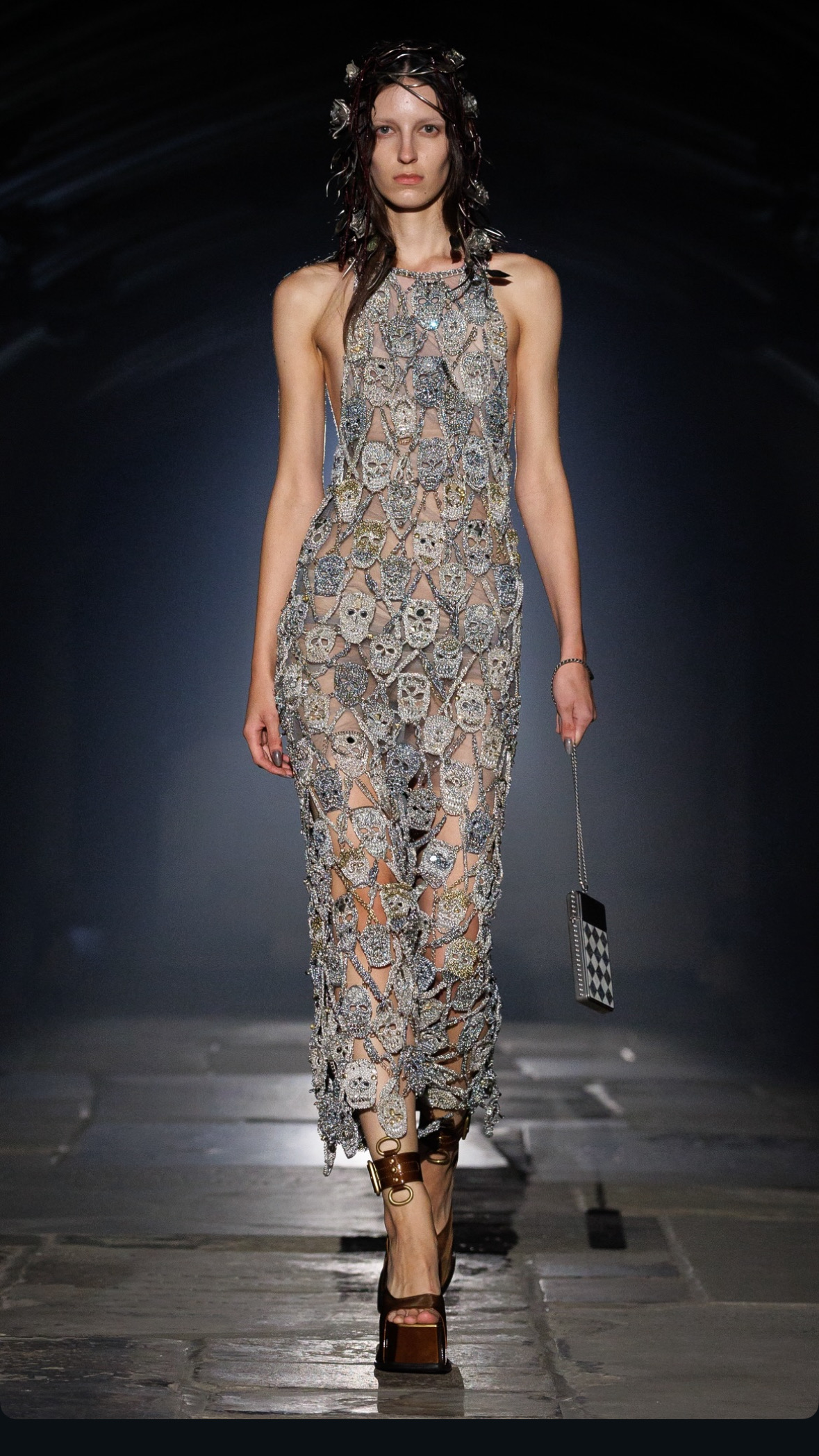
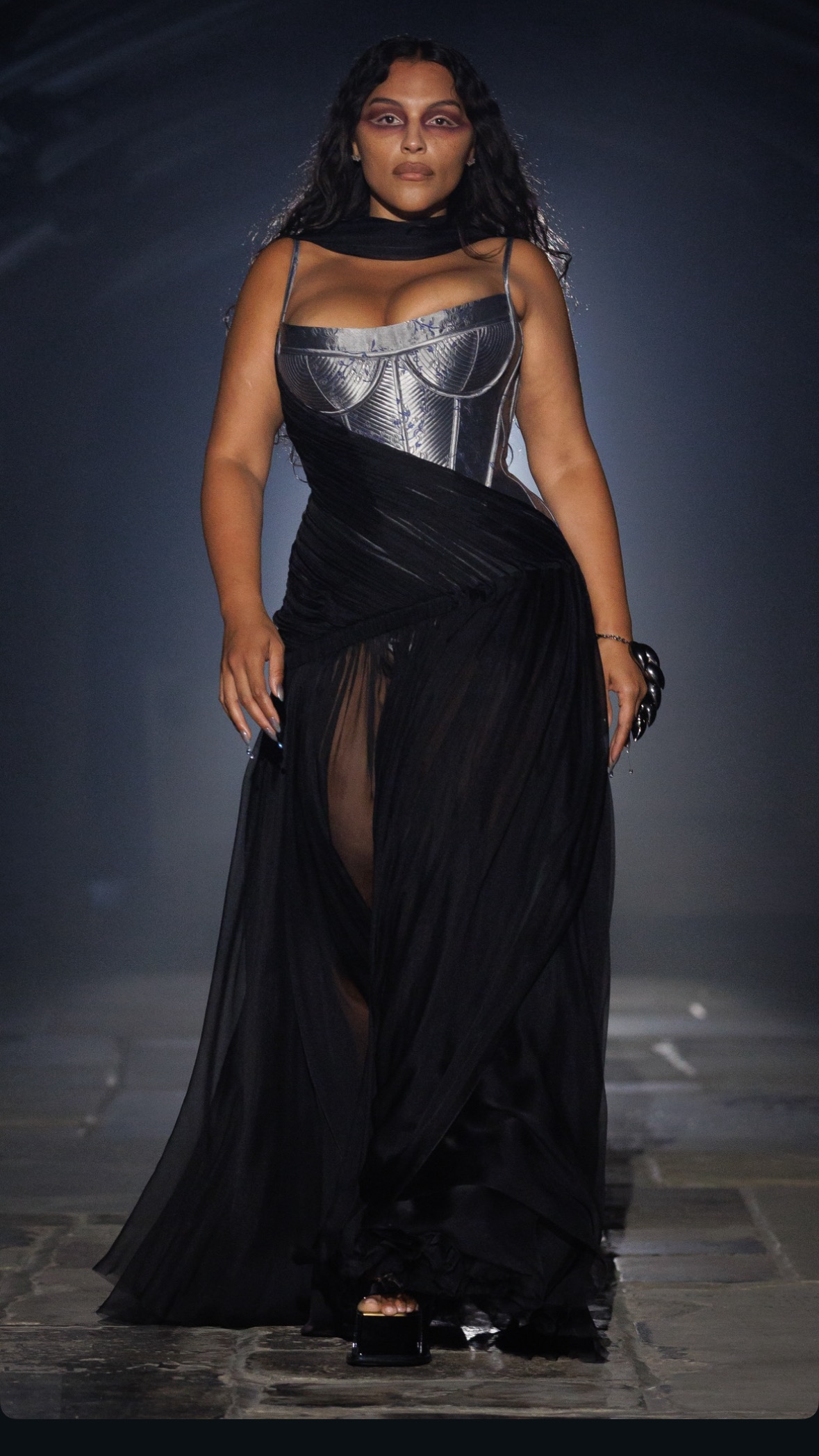
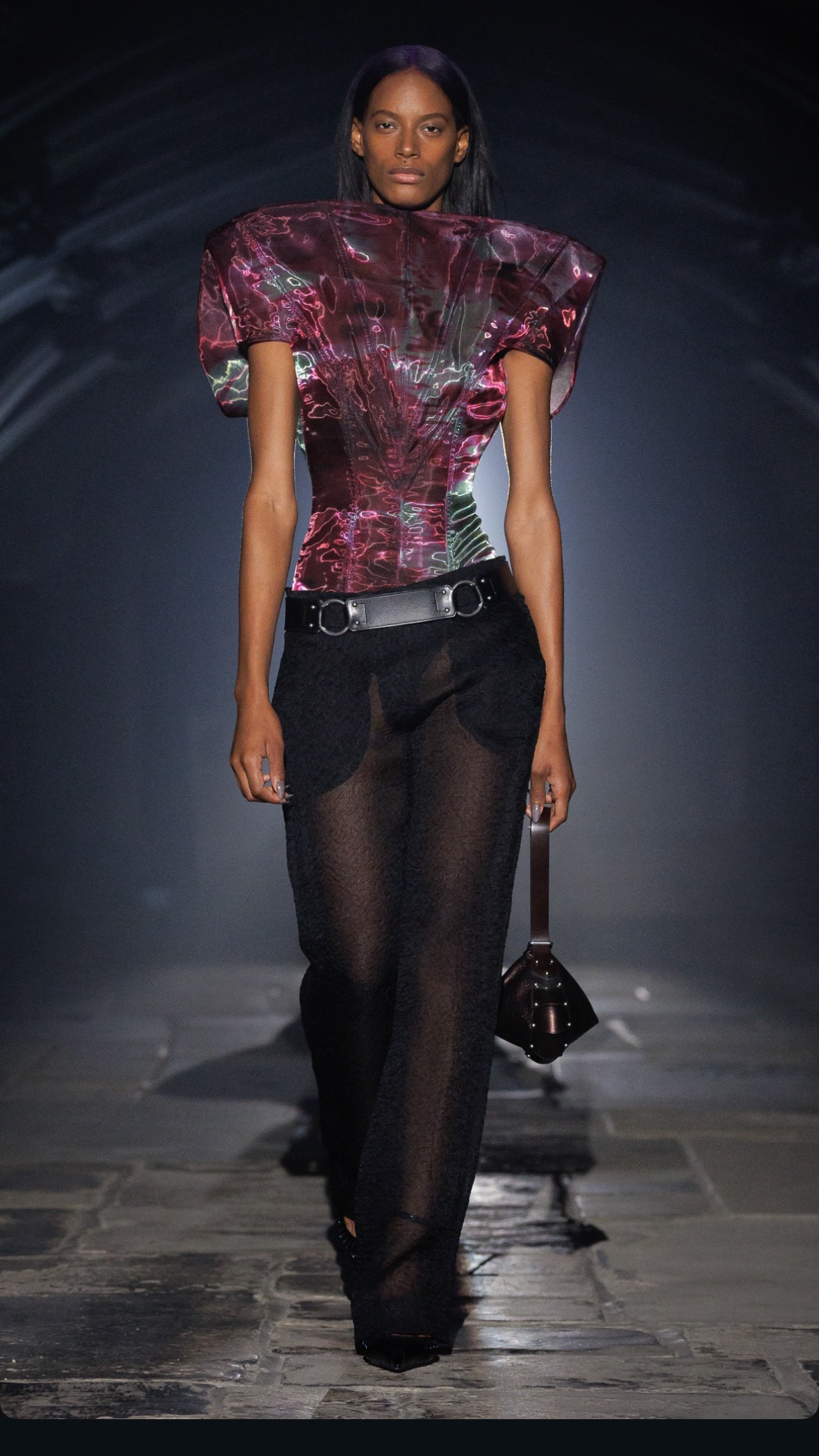
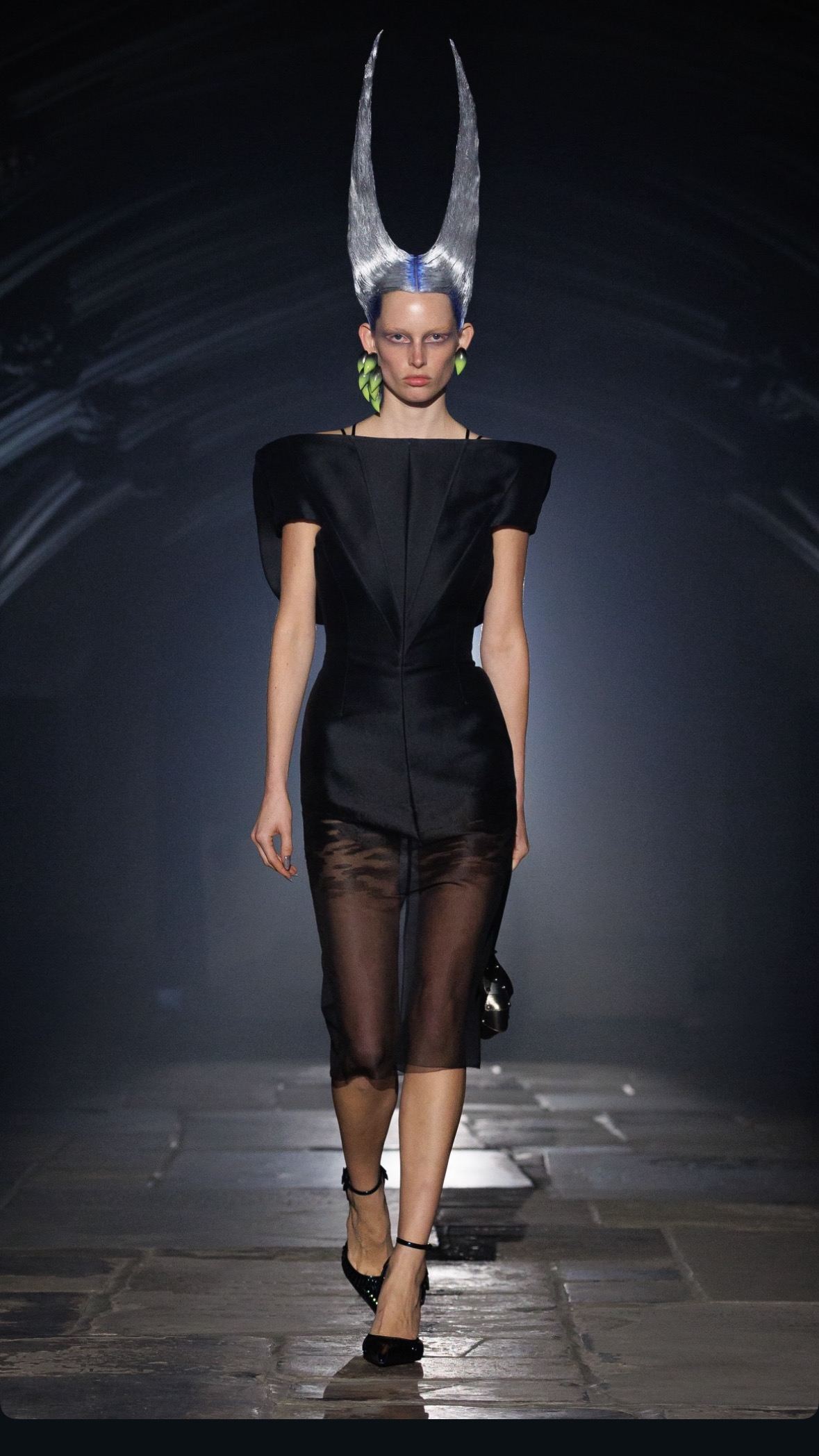
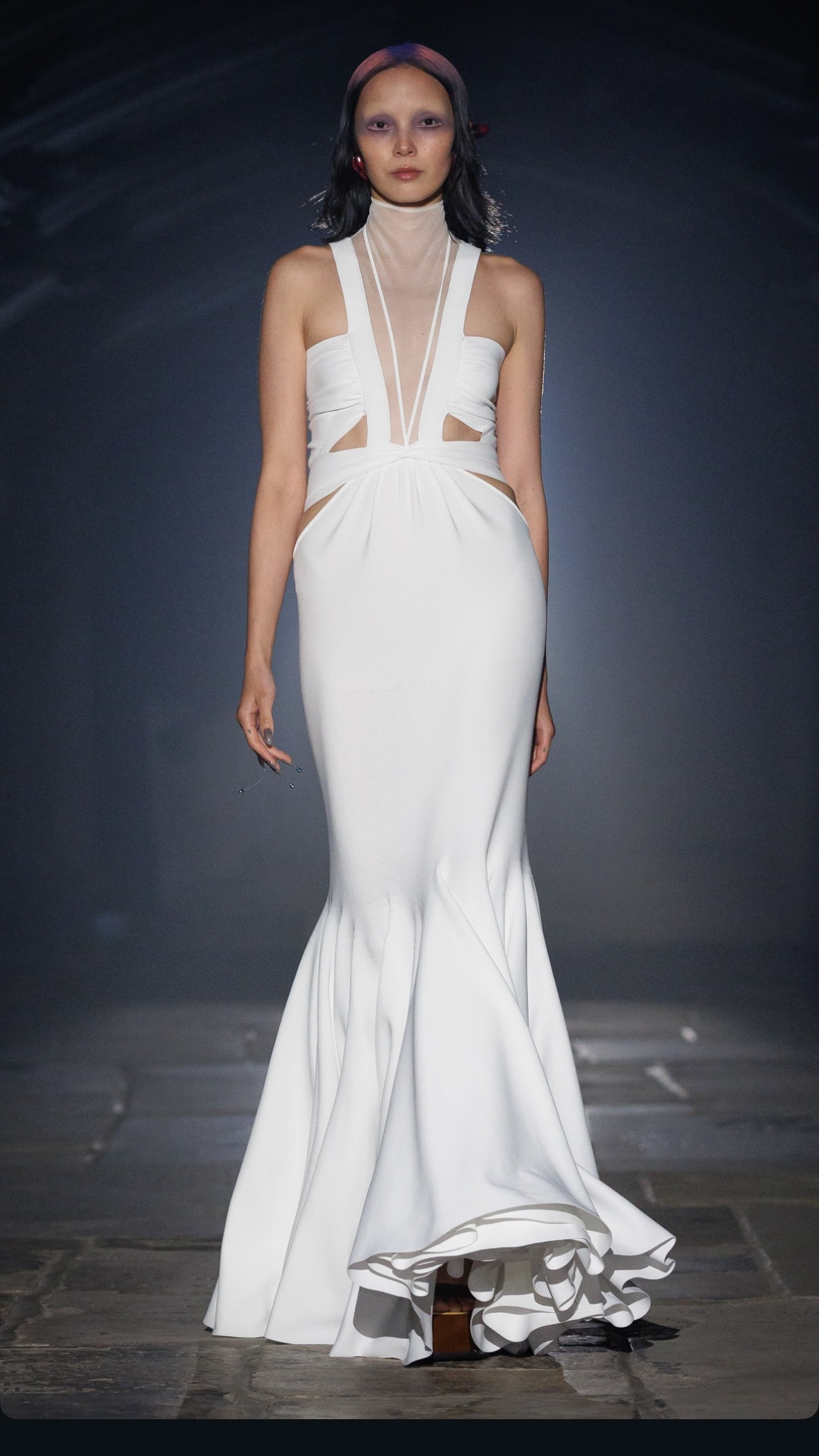
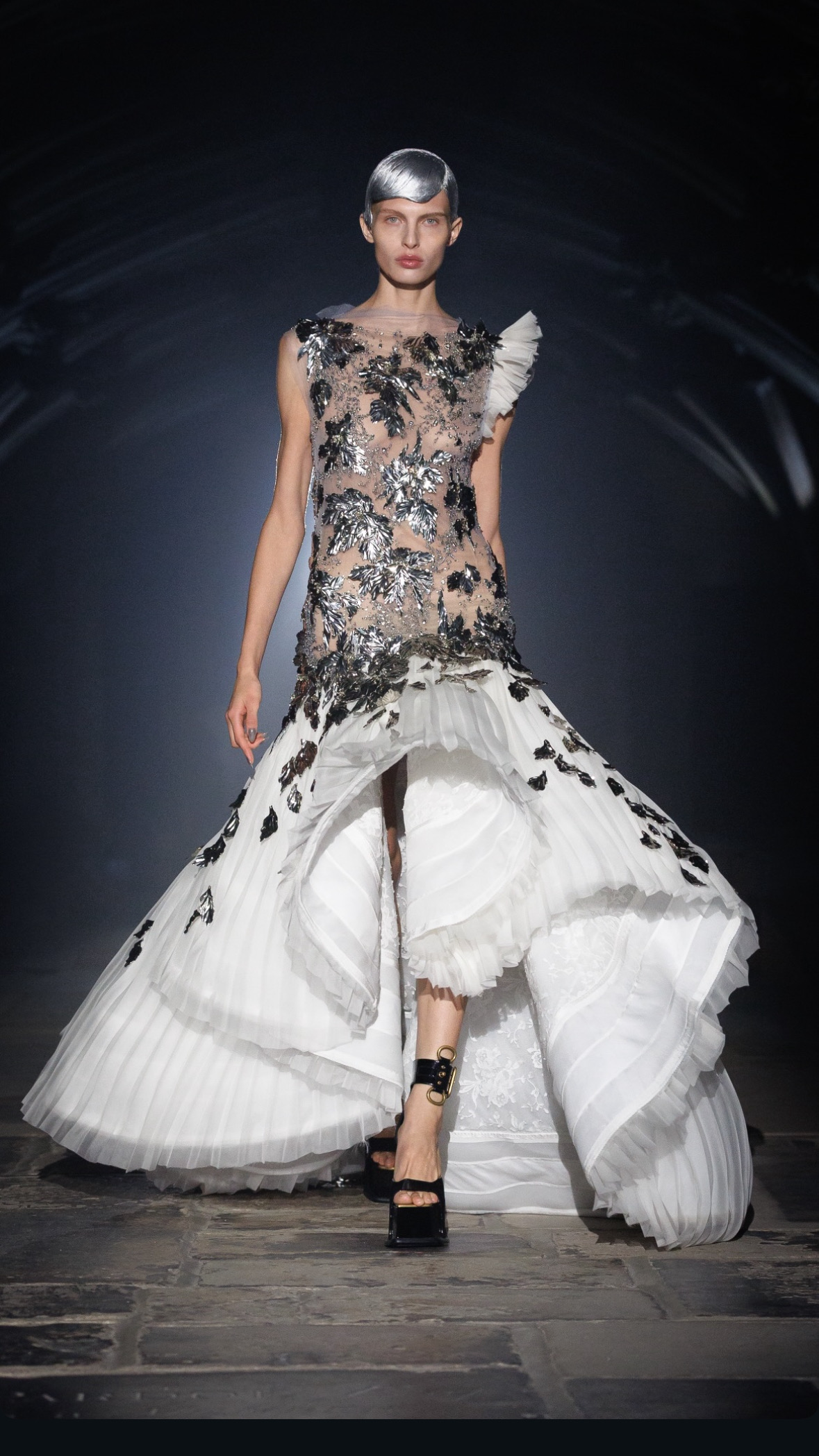
Harnesses by Shaun Leane, one of Lee McQueen’s original collaborators, return after sixteen years. Metal skulls become an entire dress. Silver leaves appear to have landed on clothes during a storm. Sheer fabrics, lacquered satin, perforated leather and metallic surfaces turn the body into something simultaneously angelic, fetishistic and industrial.
The references are recognisable. But the interesting part is what happens between them.
Savile Row meets Camden.
Piero meets Cyberdog.
The church meets the rave.
The angel meets Keith Flint.
Craft meets chaos.
This is McQueen’s oldest trick, updated for a different century: take two incompatible worlds and make them occupy the same body.
But there is a problem.
London has changed.
The city that produced Lee McQueen – the city of cheap studios, warehouses, art-school kids, clubs and precarious creative lives – has been progressively sanitised by wealth, property prices and gentrification. The subcultures that once generated fashion have themselves become references to fashion. The underground has become an aesthetic category. The rough edges have been polished into content.
The Impression made this tension central to its reading of the collection, questioning where today’s designers are supposed to find the rawness, urgency and social friction that once fuelled London’s creative ecosystem.
And suddenly the McQueen problem becomes much bigger than McQueen.
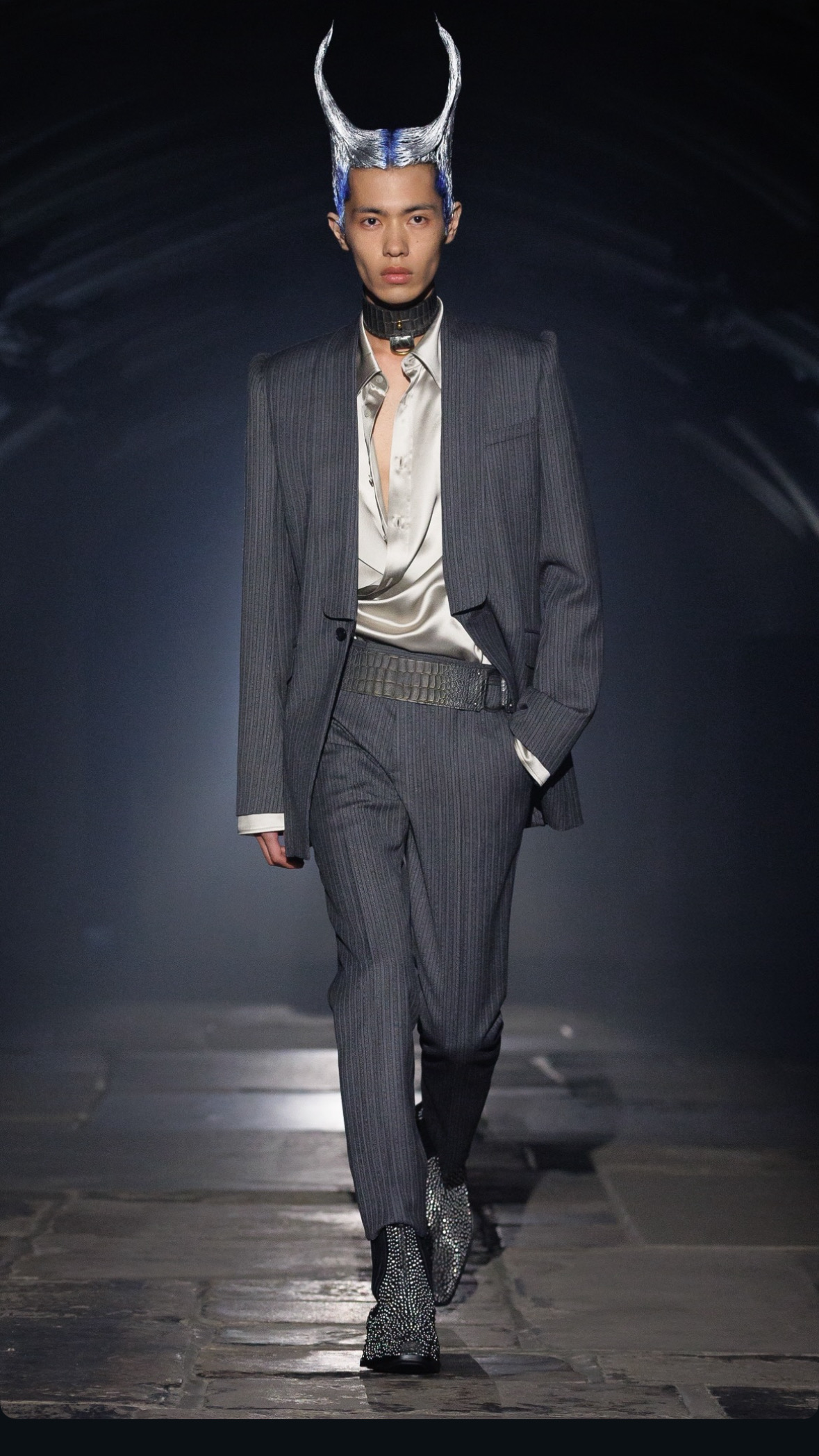
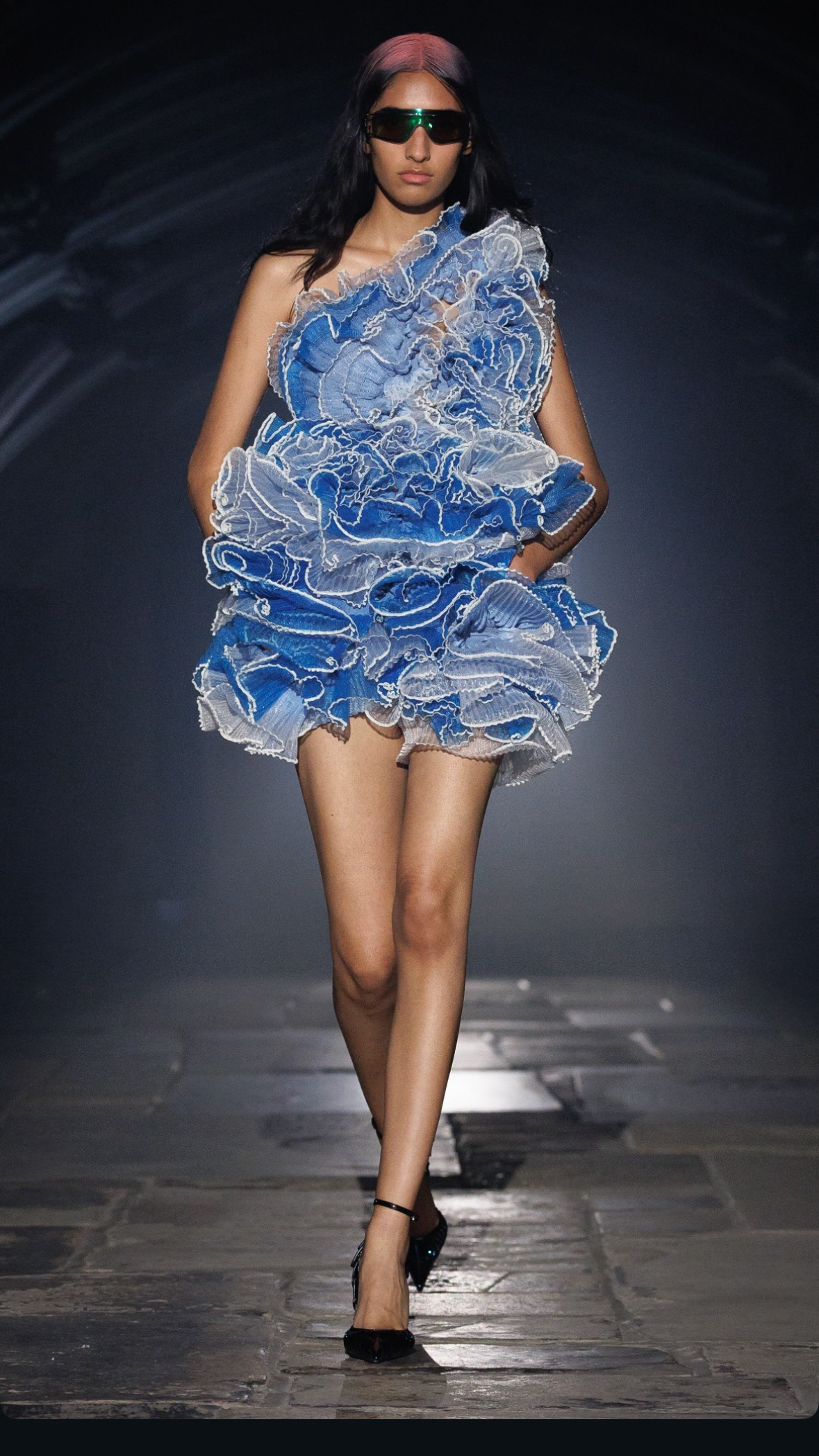
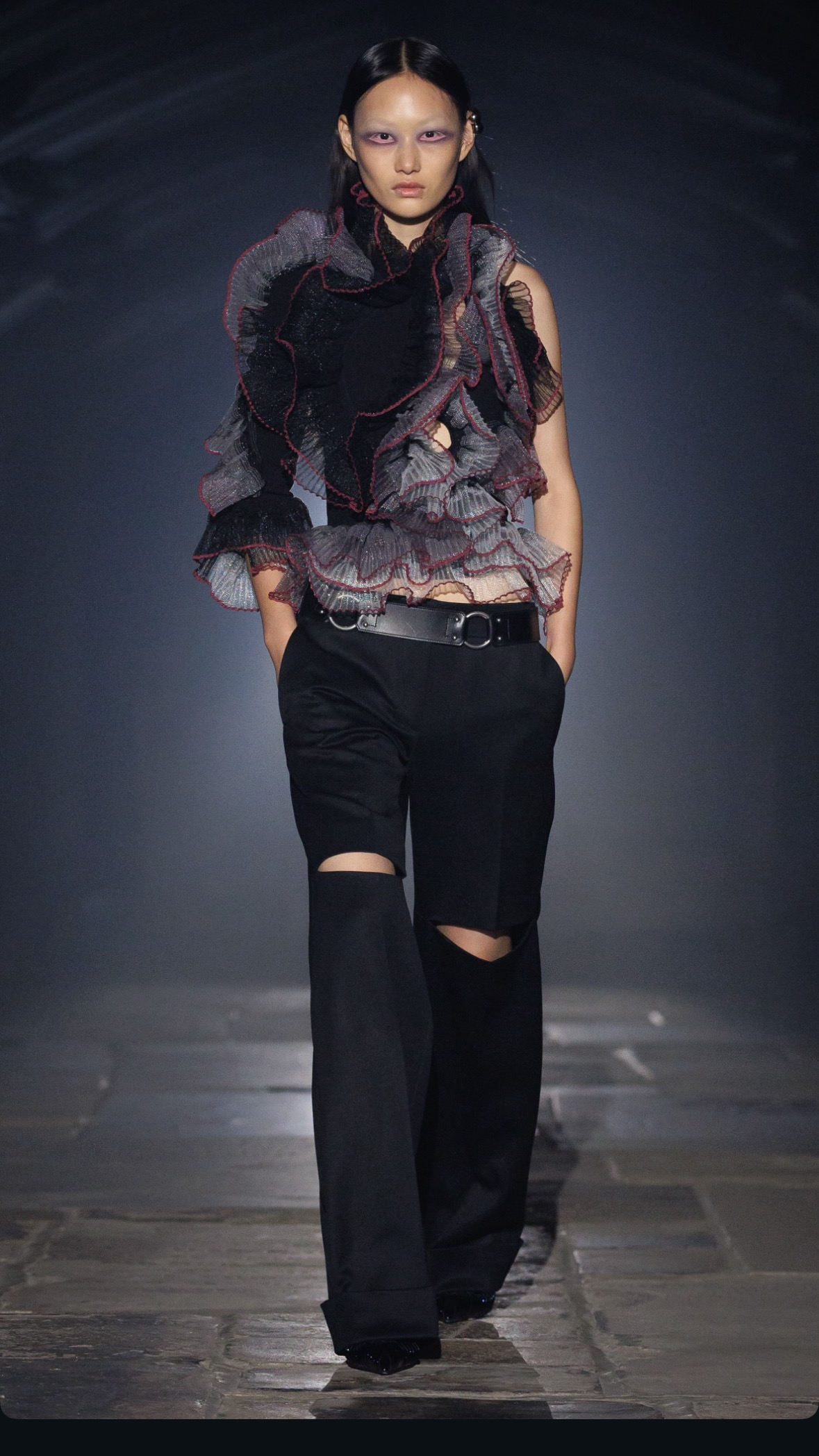
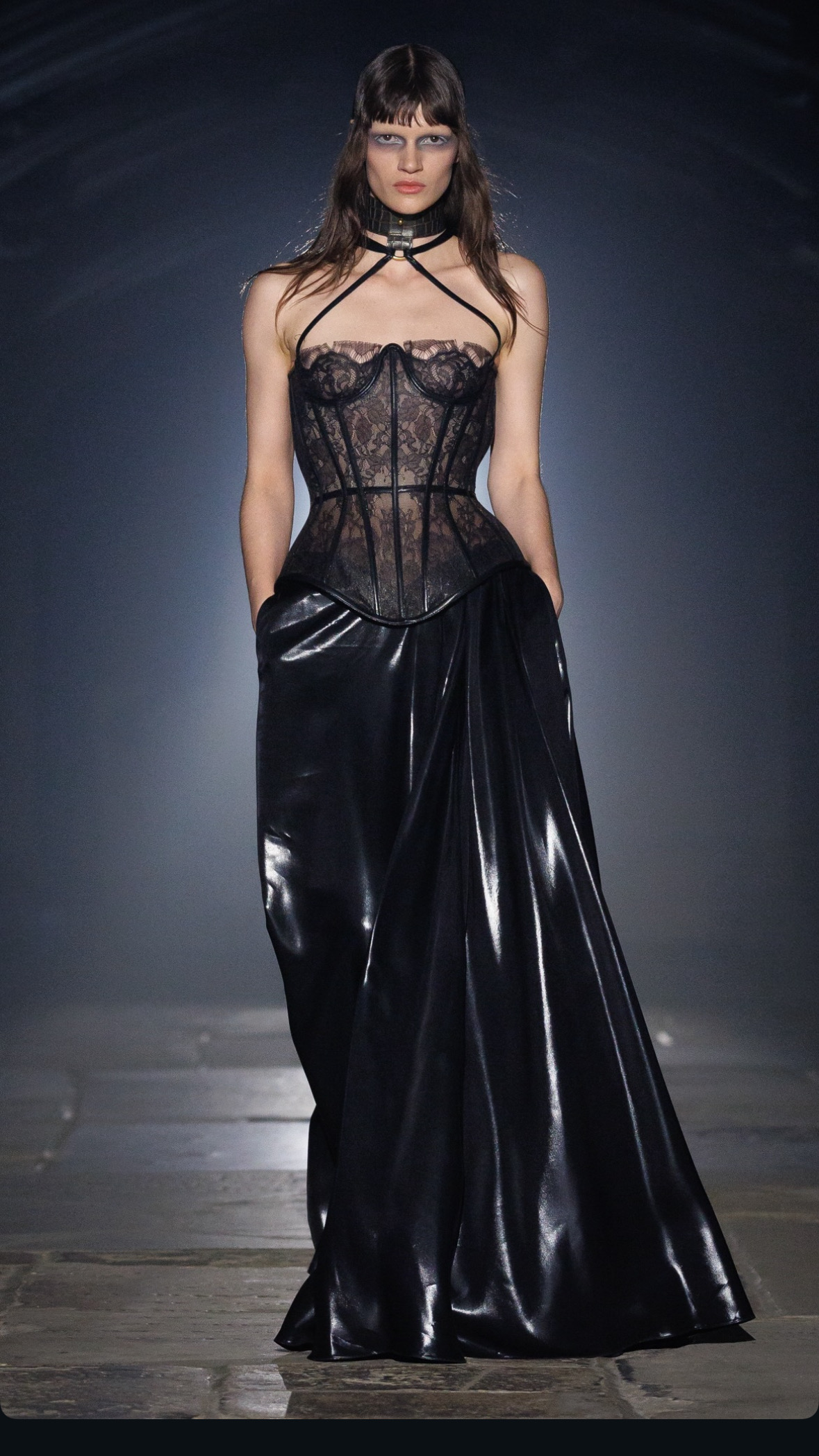
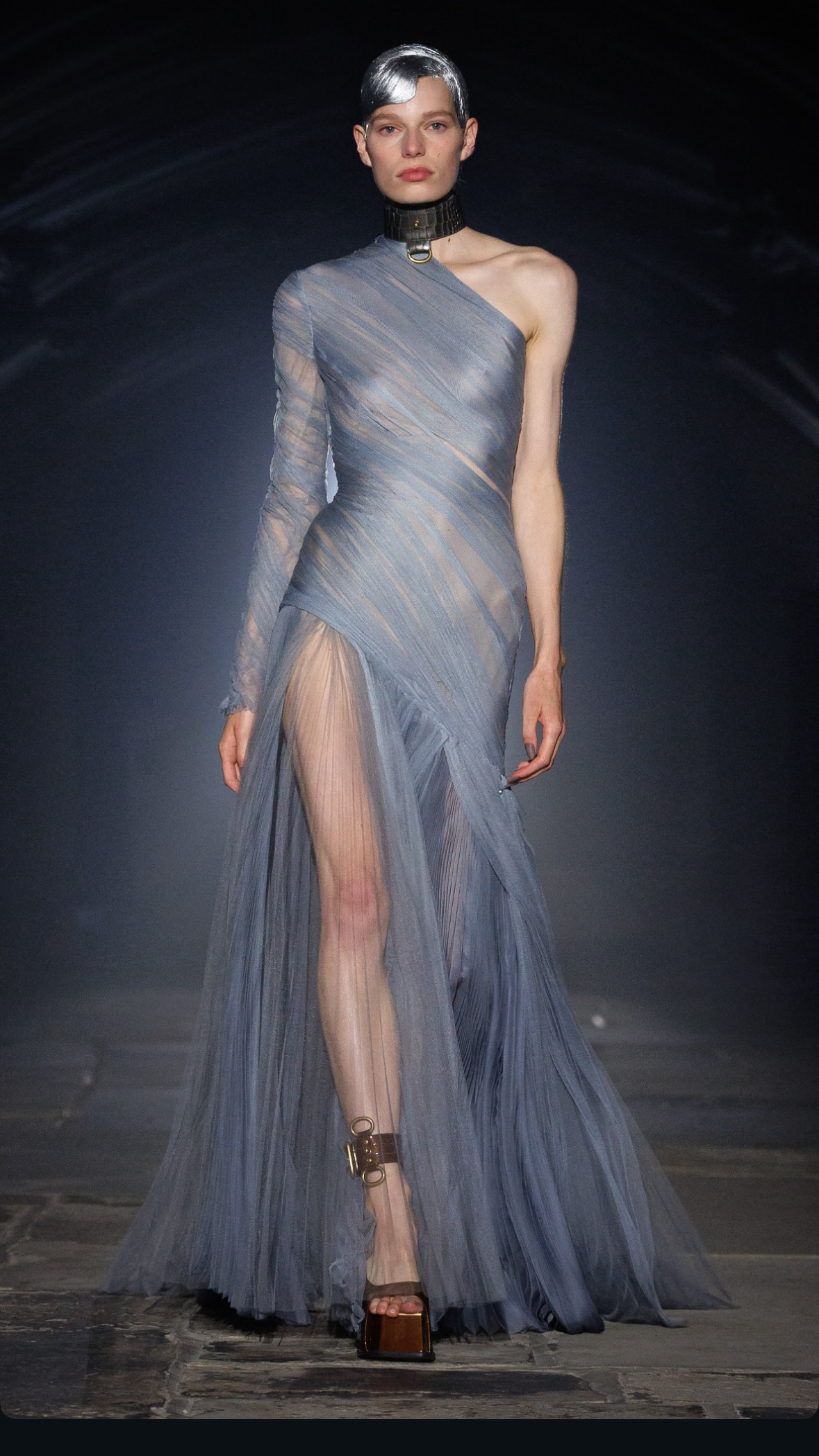
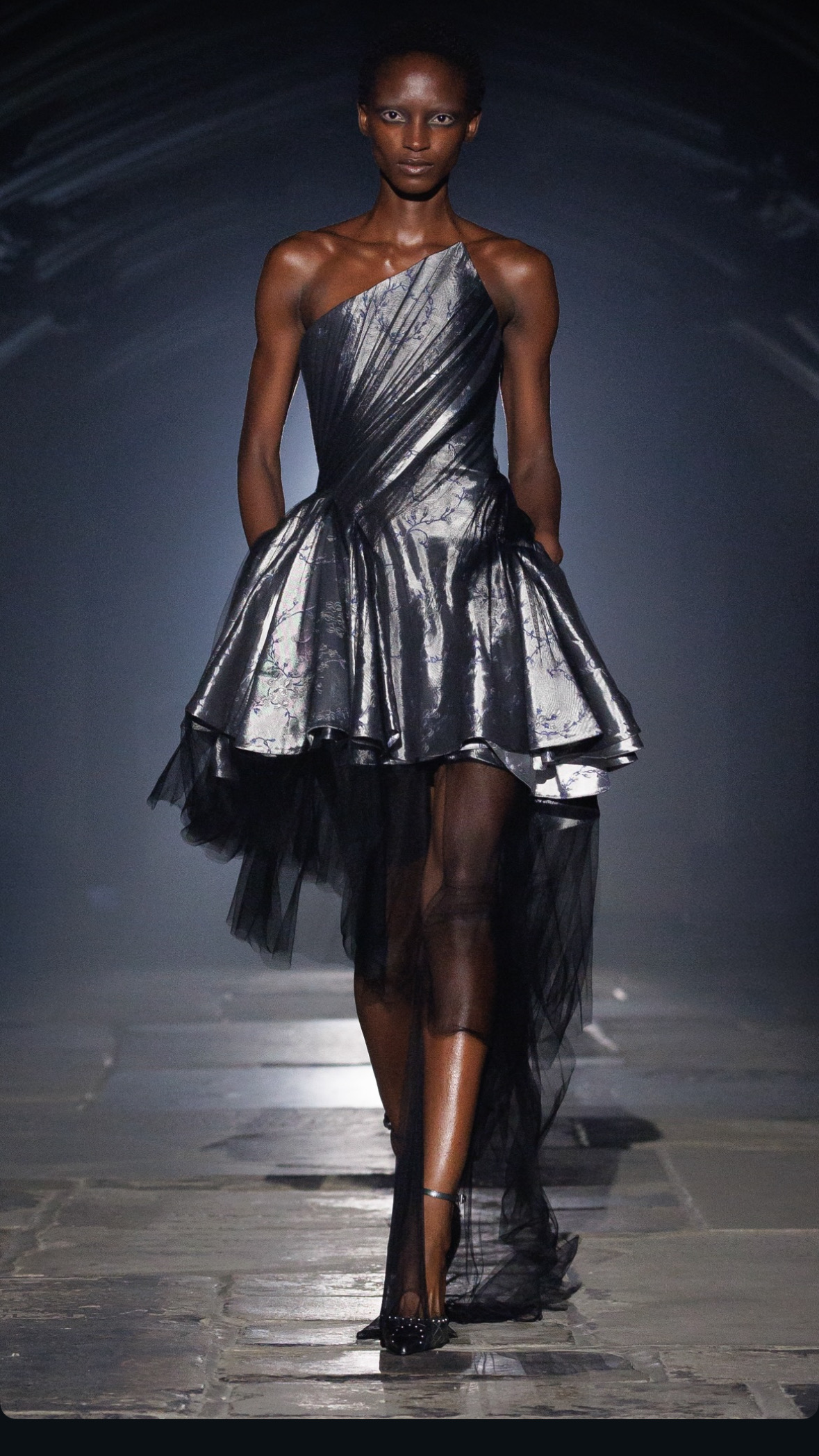
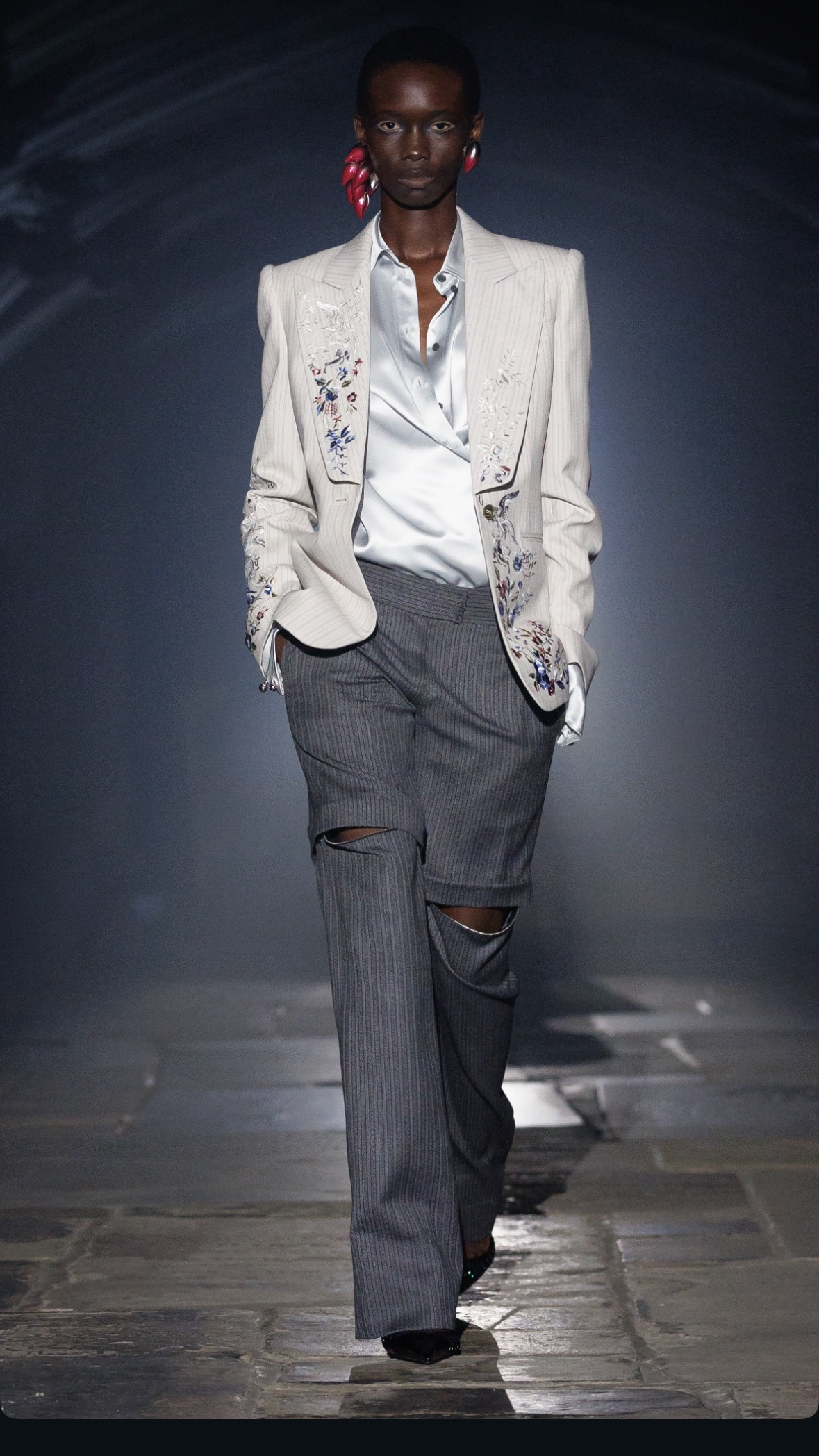
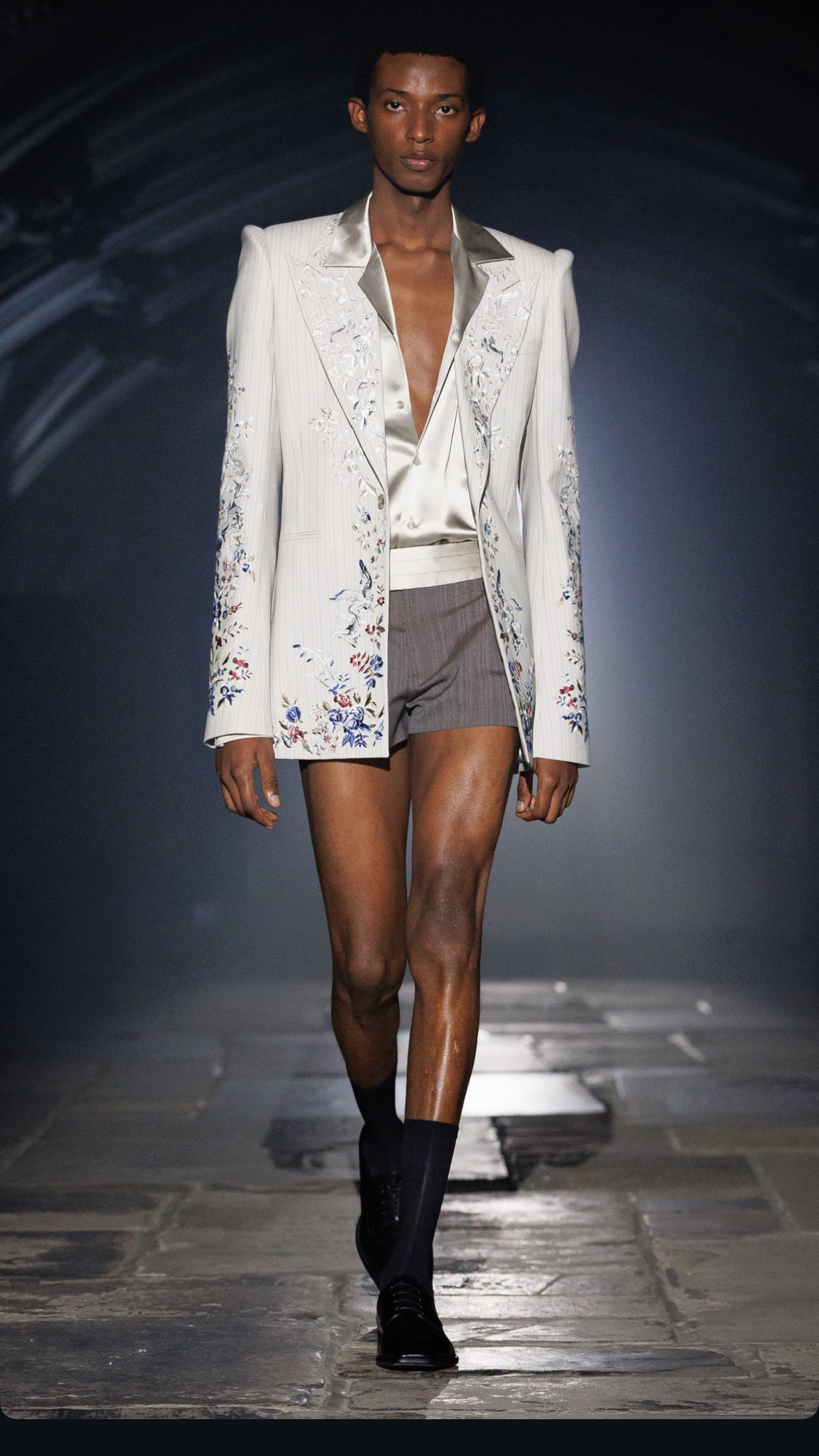
Can rebellion still be rebellious once it belongs to a luxury house?
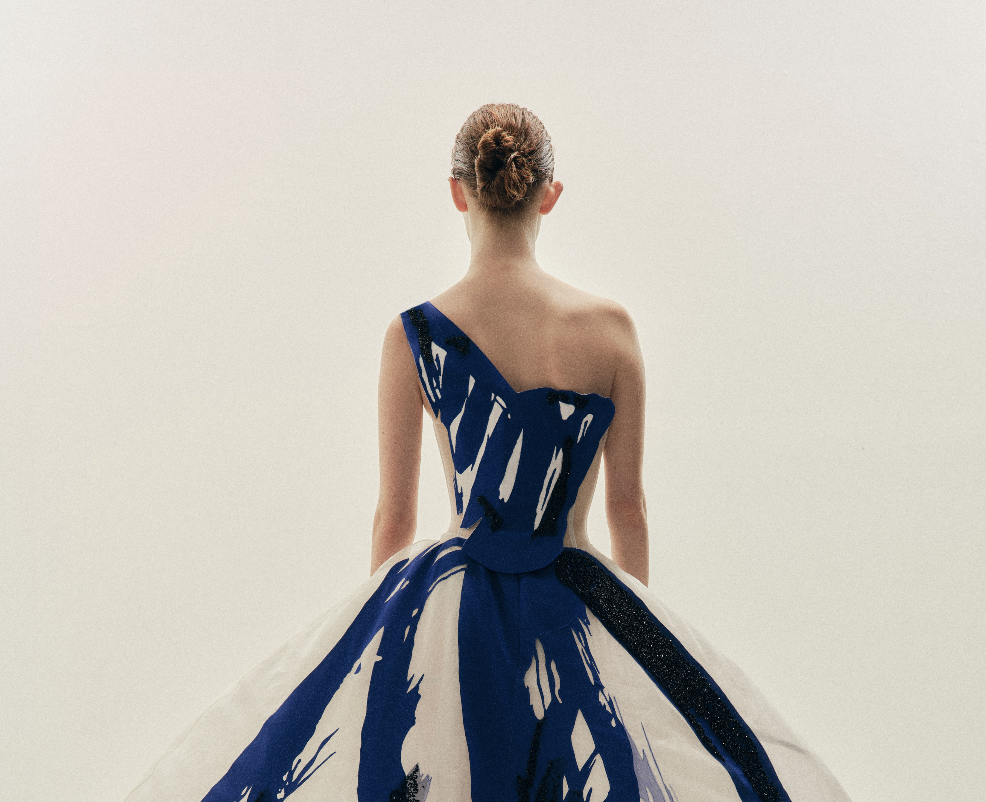
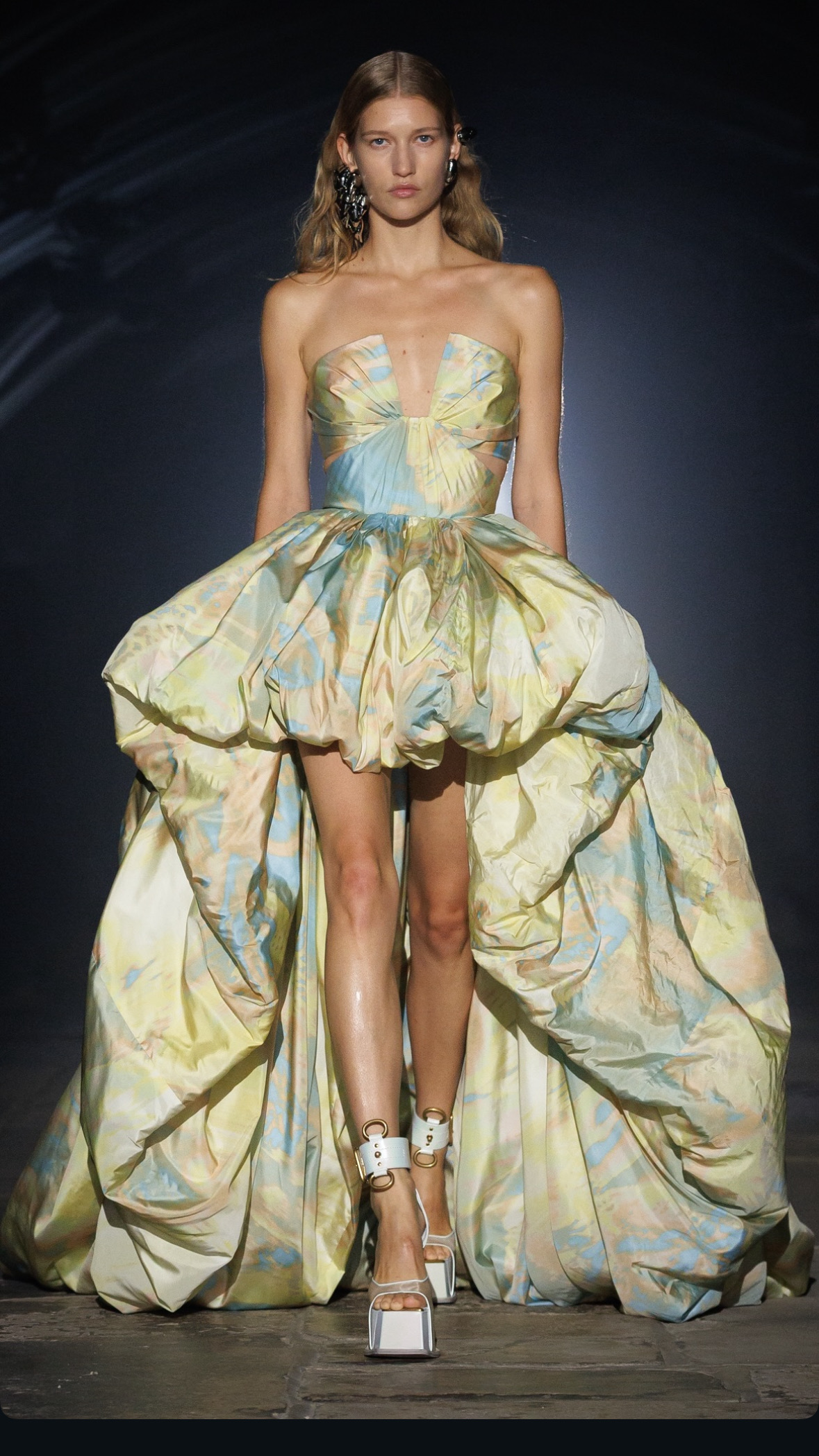
A gown designed for a South London rave is a brilliant idea. But the contradiction is unavoidable: the gown is still likely to be worn in a world of galas, red carpets, VIP rooms and luxury consumption. The Impression noted precisely this tension, suggesting that some of the evening looks could have pushed the rave concept further through deliberately rougher, more unexpected styling.
This is where McGirr’s challenge becomes fascinating rather than simply difficult.
He is not trying to recreate Lee’s underground. He cannot. That London is gone.
Instead, he is trying to locate where friction lives now.
And perhaps that is why the return to London is so much more important than a return to “the roots”.
In 2001, McQueen moved to Paris because London had given him the cultural language and Paris could give him the international stage. The move marked the transformation of an enfant terrible into a global luxury institution.
Twenty-five years later, the movement reverses.
Paris made McQueen global.
London has to make McQueen relevant again.
That is a very different task.
The house is currently undergoing a broader strategic reset under CEO Gianfranco D’Attis, with a renewed emphasis on tailoring, occasionwear and craftsmanship and a tightening of the brand’s product and distribution strategy. The timing of the London return therefore feels less accidental than symbolic: McQueen is attempting to locate a sharper centre of gravity.
Less noise.
More identity.
Less category expansion.
More McQueen.
But identity is precisely what makes the house difficult.
McQueen possesses too much history, not too little.
Its founder has become an icon. Its archive has become a visual vocabulary endlessly recycled by fashion itself. Its skulls, tailoring, corsets, harnesses, feathers and gothic romance are now part of the collective fashion imagination.
The paradox is brutal: the greatest threat to McQueen may be McQueen.
When the past is this powerful, every attempt at innovation is measured against a dead designer who has become increasingly alive through images, exhibitions, archives and social media.
McGirr therefore finds himself in a uniquely contemporary trap: he has to make a historic house feel young without pretending history never happened; he has to make McQueen recognisable without making it predictable; he has to use the archive without becoming its curator.
And SS27 is his most convincing attempt so far to change the question.
Not What would Lee do?
But: What does McQueen mean in London now?
That shift is subtle, but fundamental.
The answer is not a new logo, a new product category or another nostalgic recreation. It is a collision of worlds. The kind of collision that Lee McQueen understood instinctively, but which every successor has had to rediscover for themselves.
In the chapel, the clothes moved between heaven and hell, tailoring and rave, discipline and release. The collection did not completely solve the contradiction — and perhaps it shouldn’t. Some of the most interesting fashion exists precisely in the space between the idea and its impossibility.
Because McQueen was never really about darkness.
It was about what darkness makes visible.
And perhaps London, in 2026, is not the place McQueen returns to because it is still the city of rebellion.
It returns because it is a city where rebellion has become harder to find.
That makes the homecoming less sentimental, and much more radical.
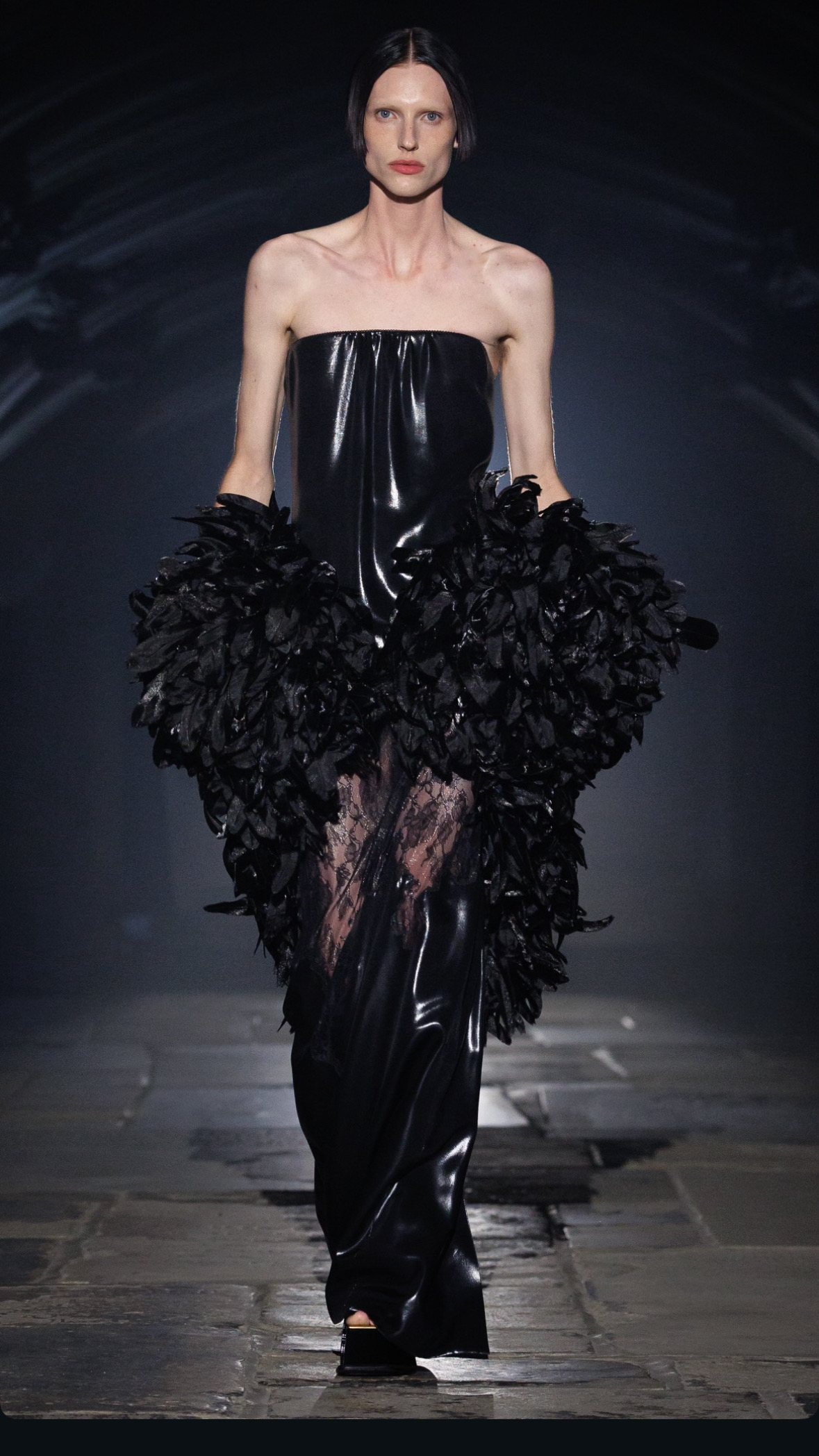
McQueen left London to become an institution.
It has come back to find out whether an institution can still be dangerous.