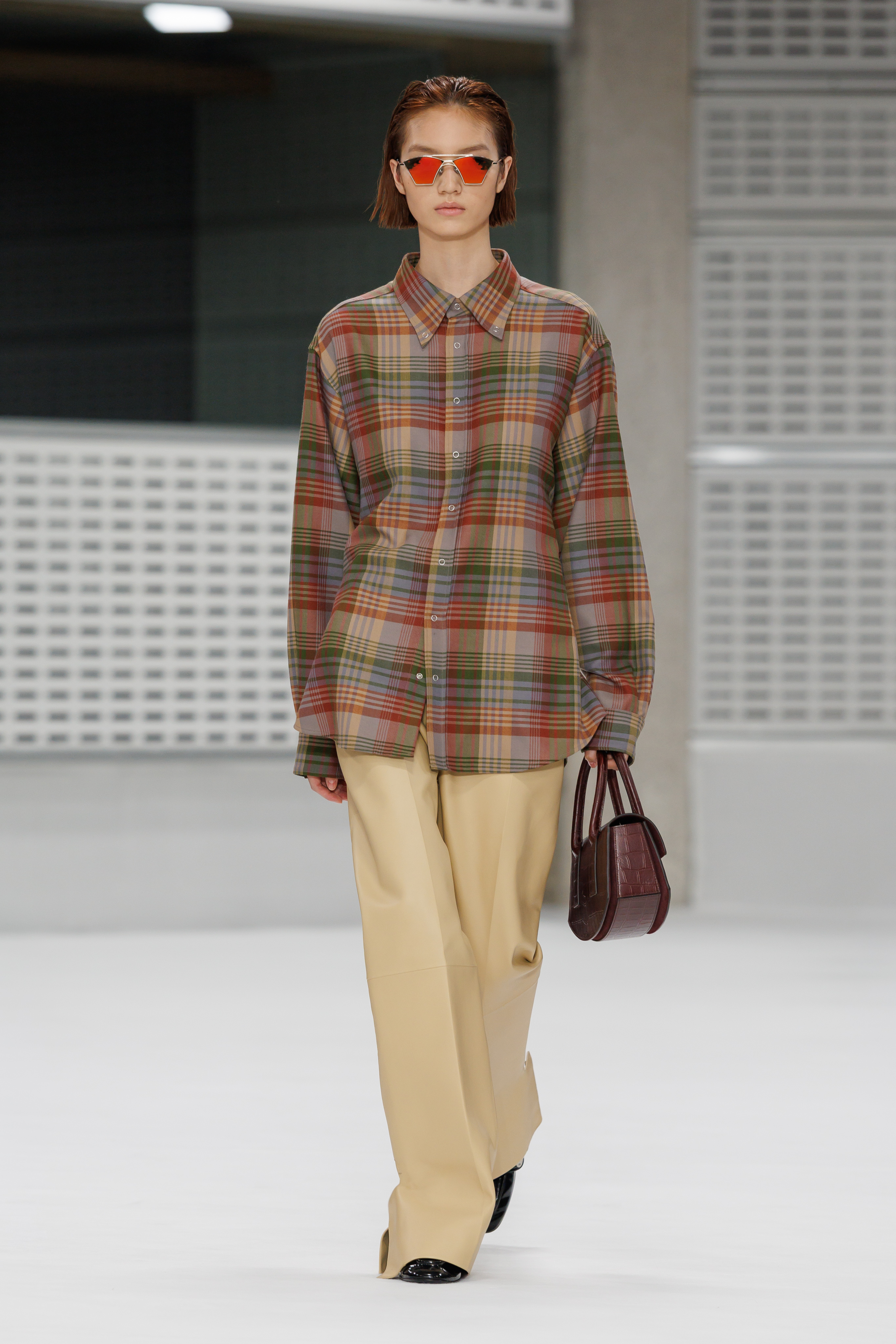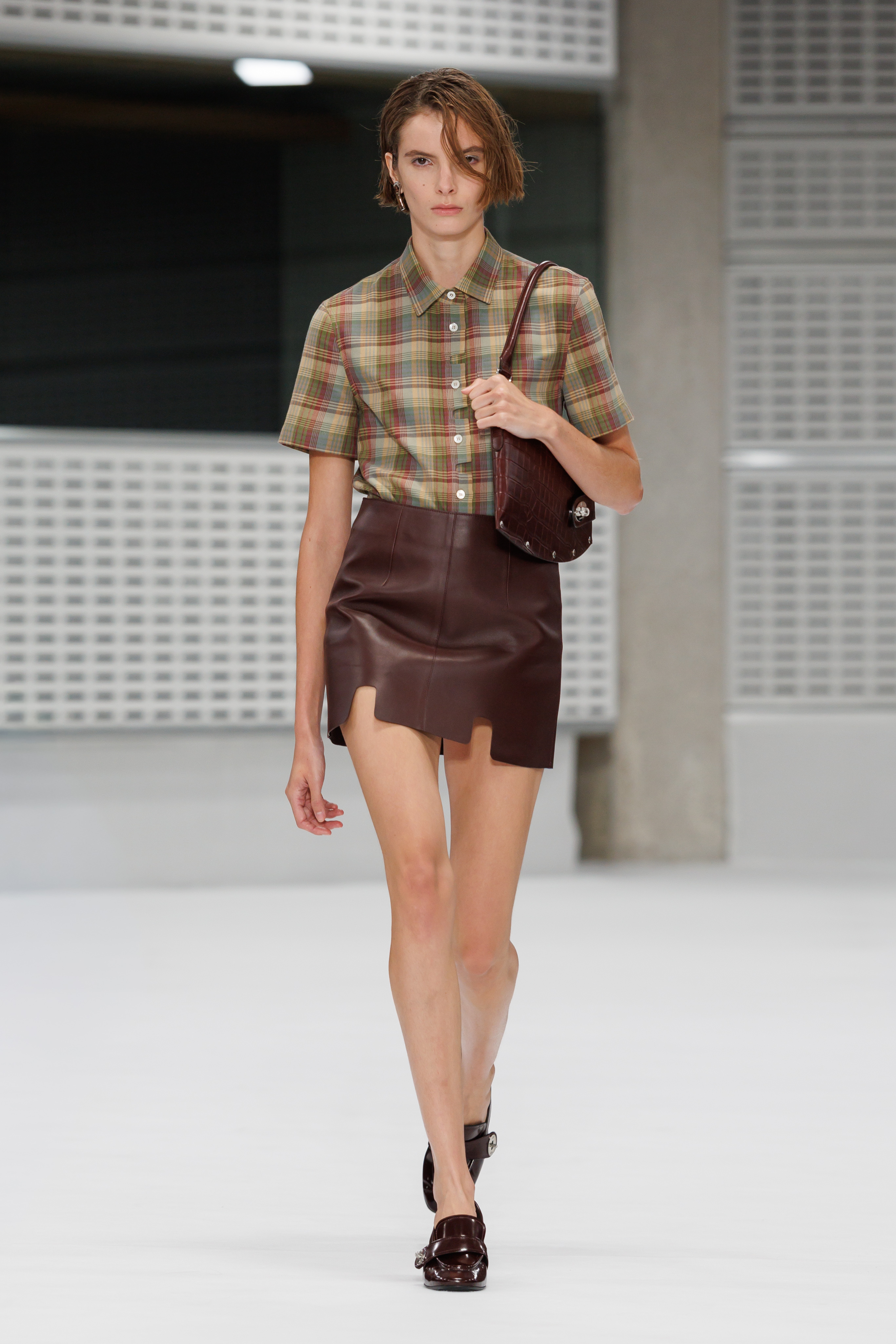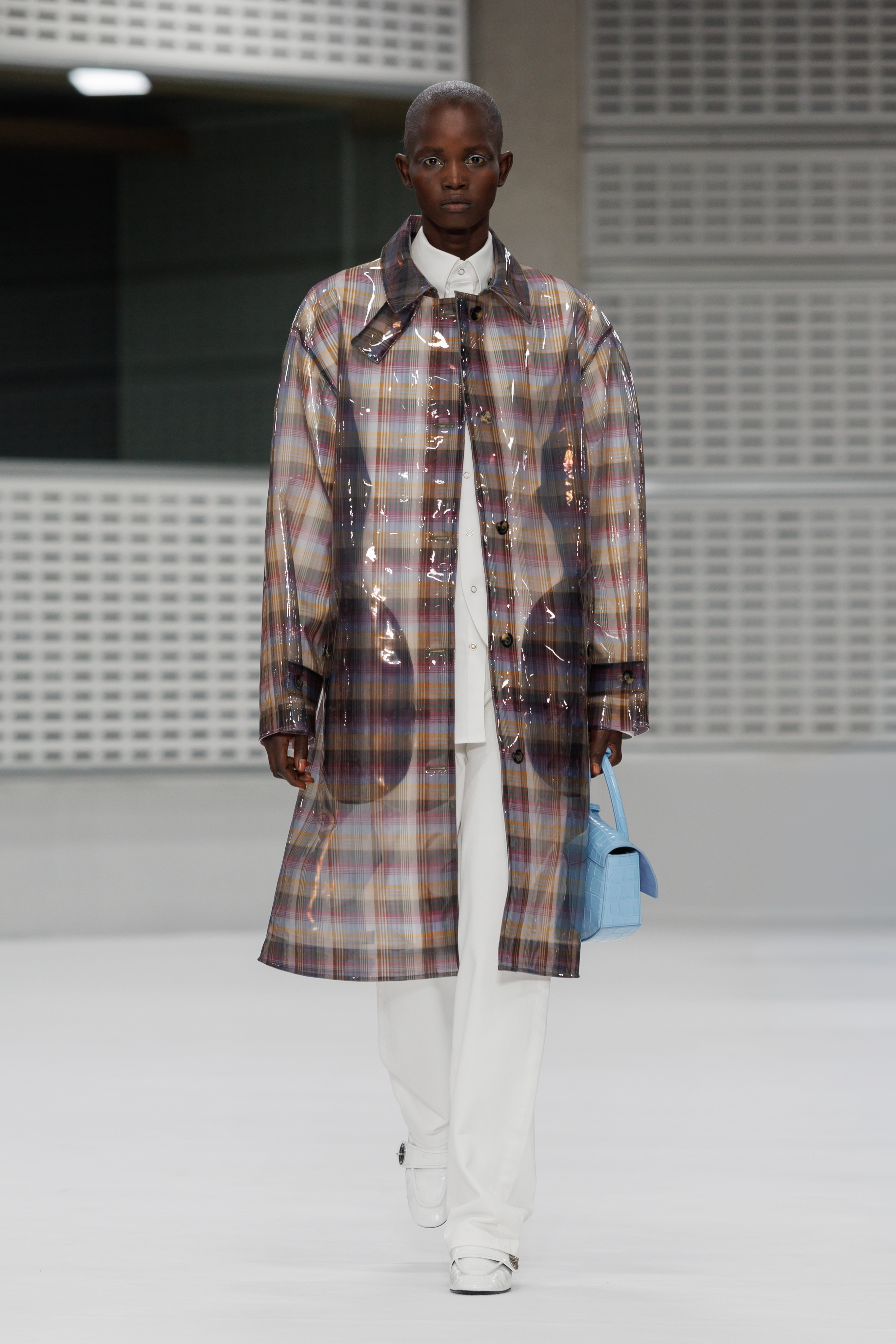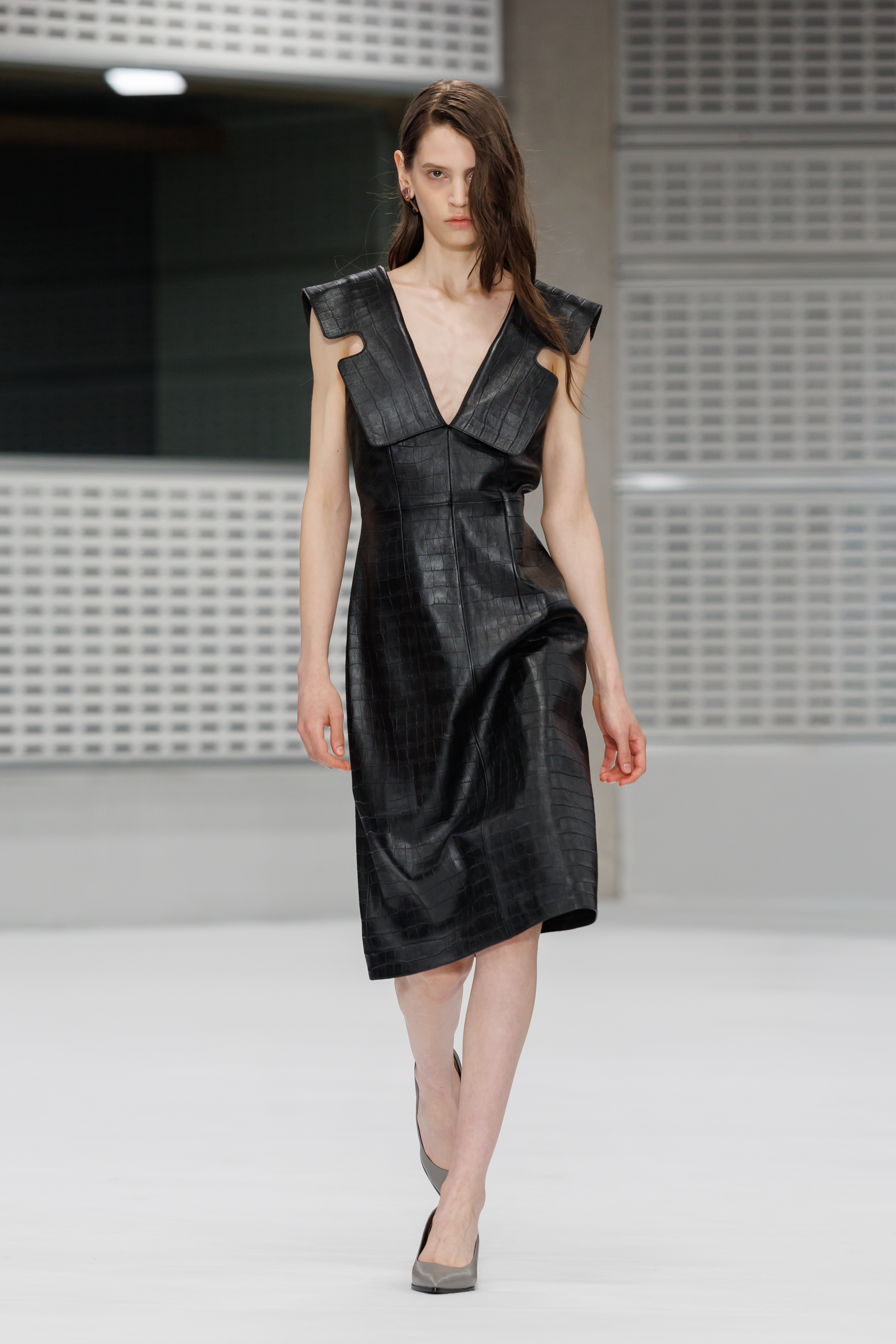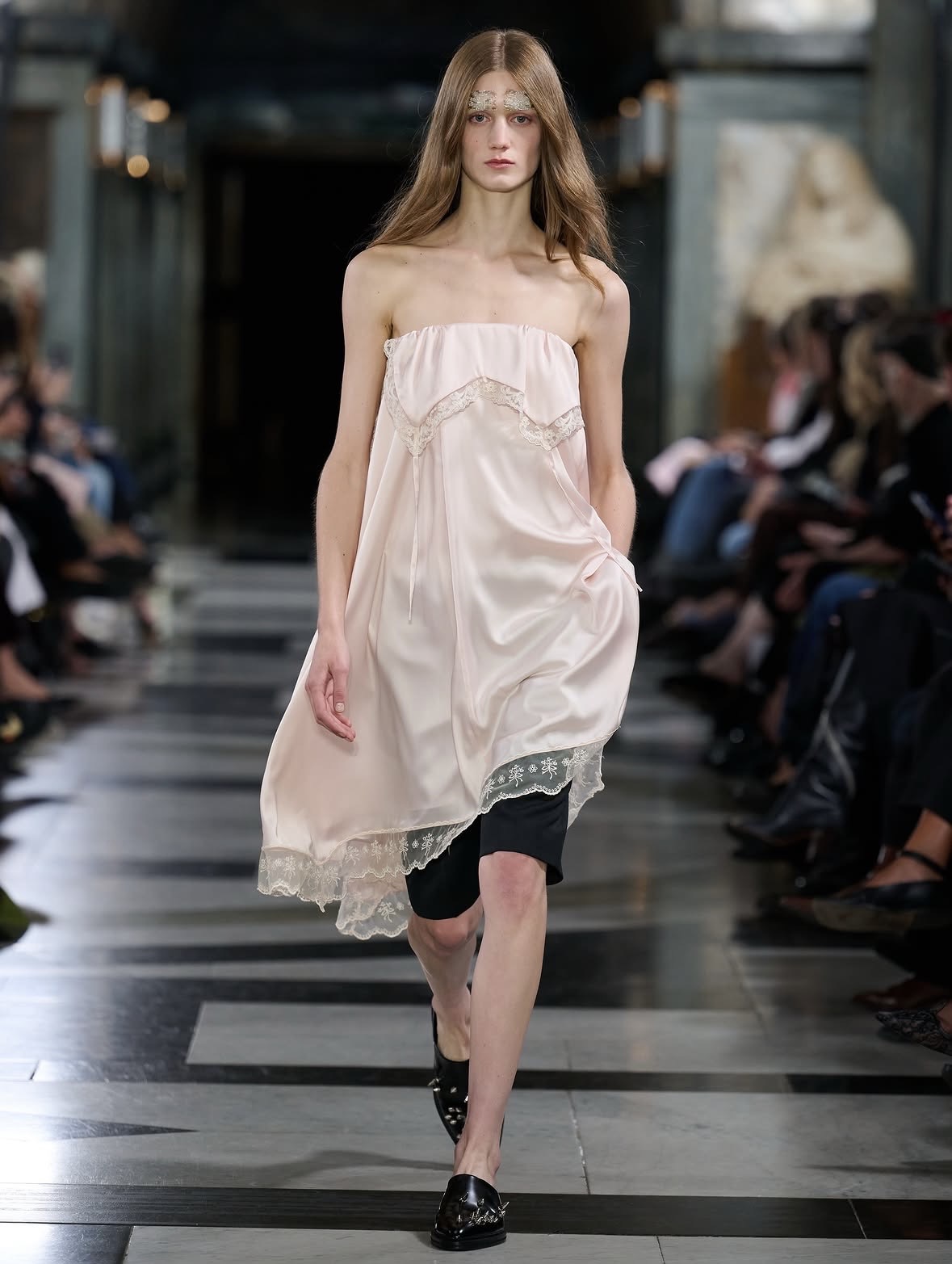
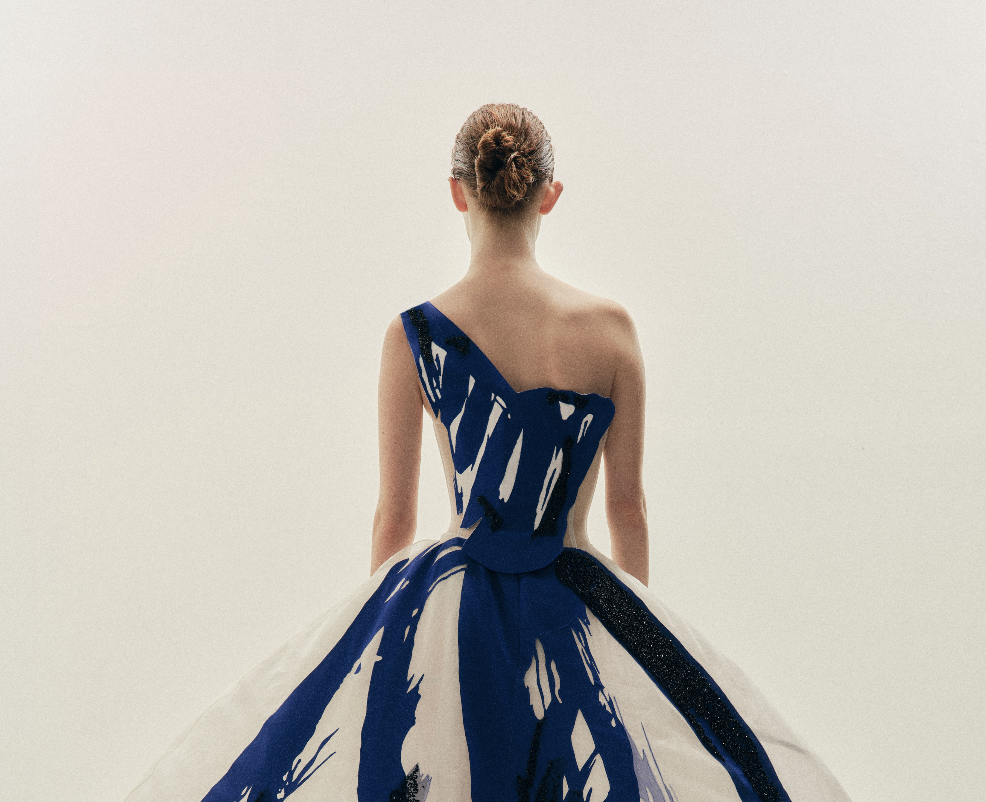



What happens when one of Britain’s most instinctive fashion houses meets one of its most unruly designers?
For Spring/Summer 2027, Christopher Kane returns to London – and Mulberry returns to the runway – in a collision that feels less like a creative appointment than a reunion between two very different versions of British fashion. Mulberry brings Somerset, leather, craft and the mythology of the British It-bag. Kane brings Glasgow, sex, provocation, pop culture and a lifelong fascination with turning the ordinary into something strange.
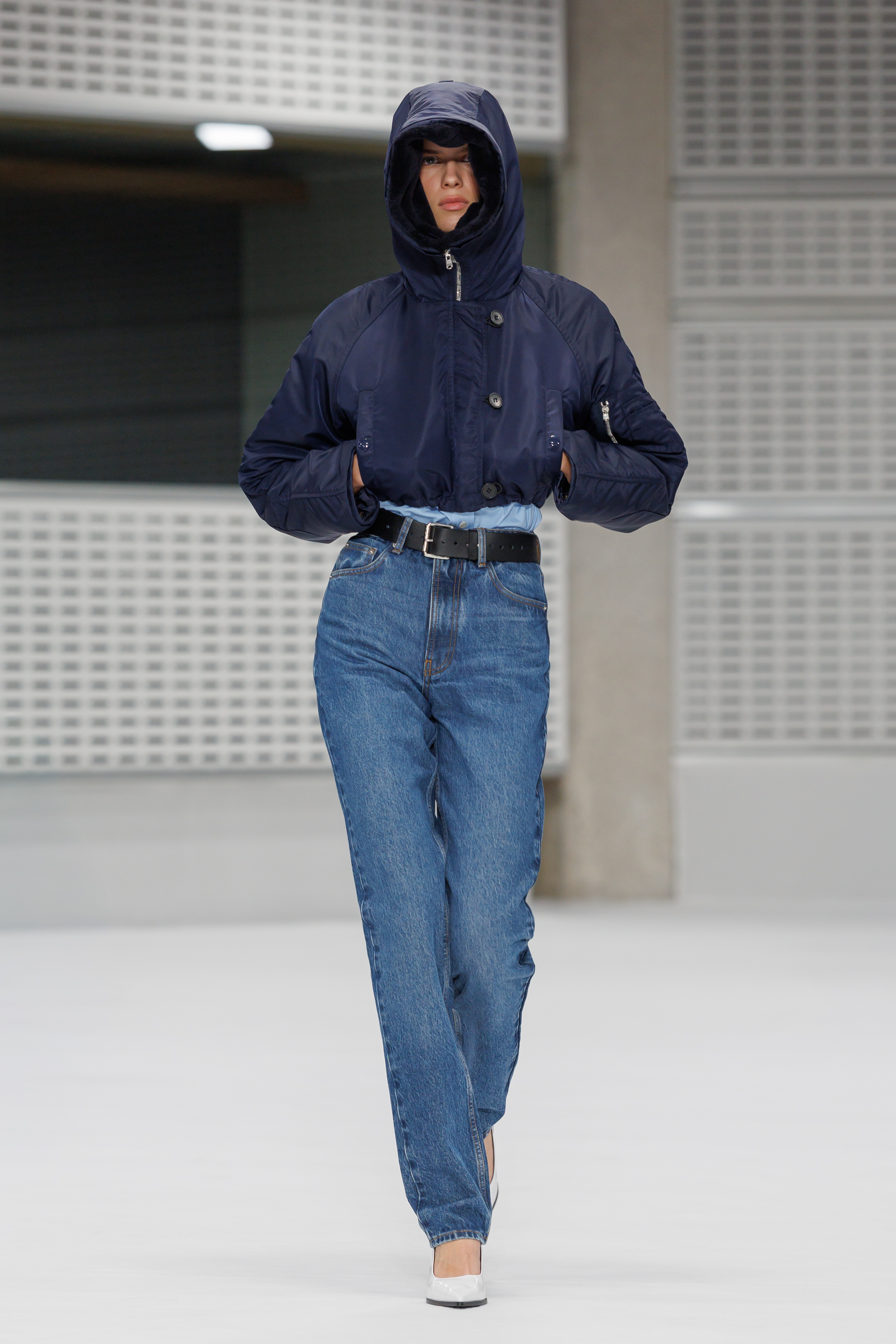
The result is “Town, City, Country”: not a romanticised Britain of afternoon tea and country estates, but the Britain Kane knows/ industrial, provincial, metropolitan, messy and alive. He has spoken about the “real” Britain beyond the postcard image of Big Ben and high tea, drawing instead from the grey concrete and coal-miner orange of the post-industrial Scotland where he grew up.
And this is where the collection becomes more than a comeback.
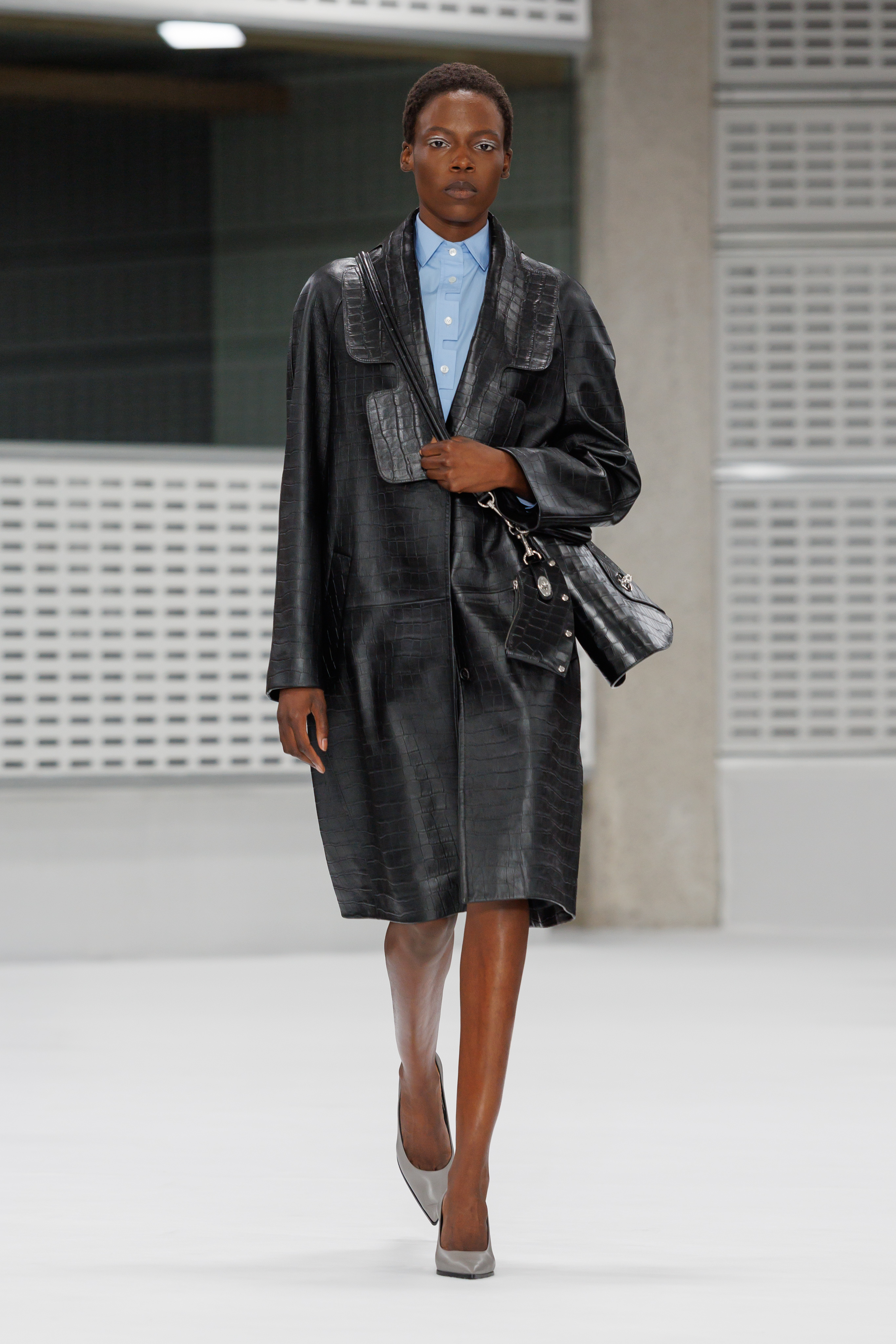
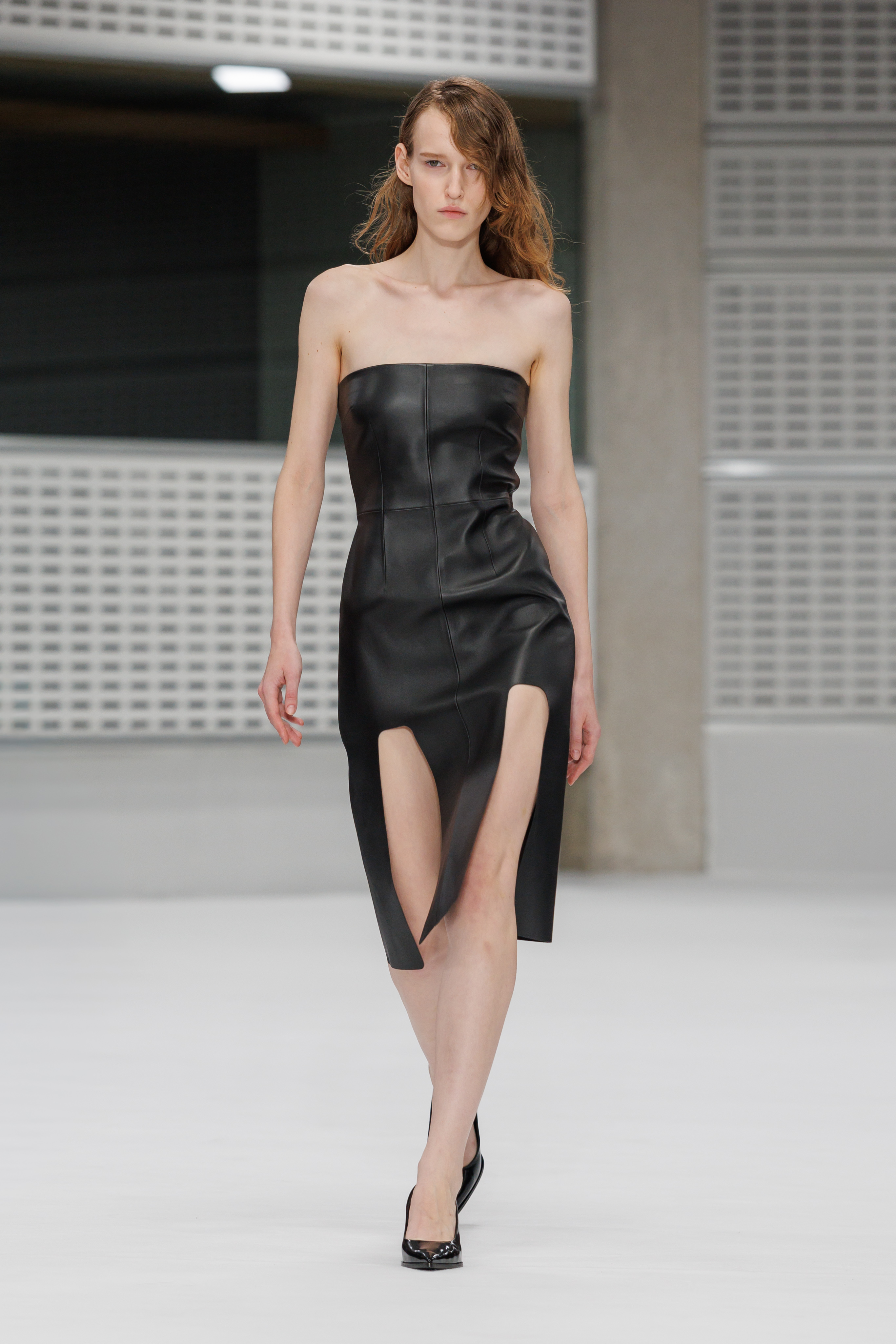
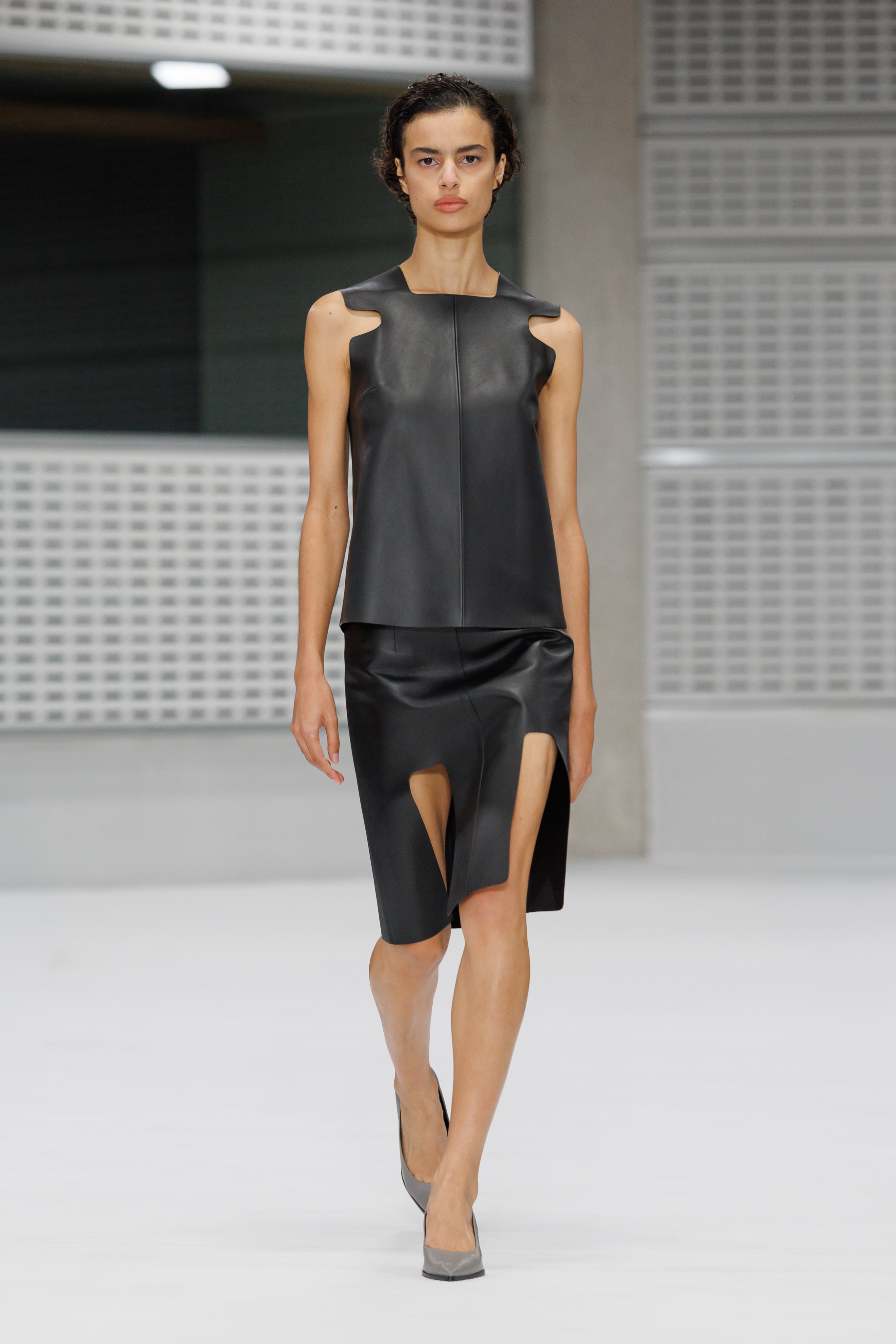
Leather becomes the meeting point: Mulberry’s most intrinsic material passing through Kane’s more provocative vocabulary. Sheath dresses and car coats sharpen the house’s craft heritage; the castellated flaps of the Bayswater are transformed into notched hems and necklines; the Postman’s Lock migrates onto shoes, while new bags reconnect Mulberry with the cultural force that once made it one of London’s great It-bag houses.
There is something almost sociological in that gesture. Heritage is no longer being treated as an archive to protect, but as a language to speak differently. Mulberry supplies the history; Kane disrupts its grammar.
It makes sense that this happens now. Mulberry has spent recent years reconnecting with its British identity and craftsmanship, while London Fashion Week itself is attempting to reclaim some of the cultural gravity that migrated to Paris. Mulberry’s return to the runway – its first since 2017 – arrives alongside McQueen’s return to London, making Kane’s debut part of a broader conversation about what British fashion can mean in the present tense.
But Kane has never been interested in heritage without friction. From his earliest collections, he has found glamour in unlikely places and pleasure in the tension between good taste and bad taste, sophistication and instinct. His Mulberry does something similar: it makes Britishness feel desirable without making it feel safe.
That may be the real significance of this comeback. Christopher Kane is not simply reviving Mulberry, and Mulberry is not simply giving Kane a new platform. They are testing whether heritage can still have an attitude; whether a house can look backwards without becoming nostalgic, and whether British fashion can still feel dangerous when it knows exactly where it comes from.
Mulberry has the history. Kane brings the trouble. London gets the moment.