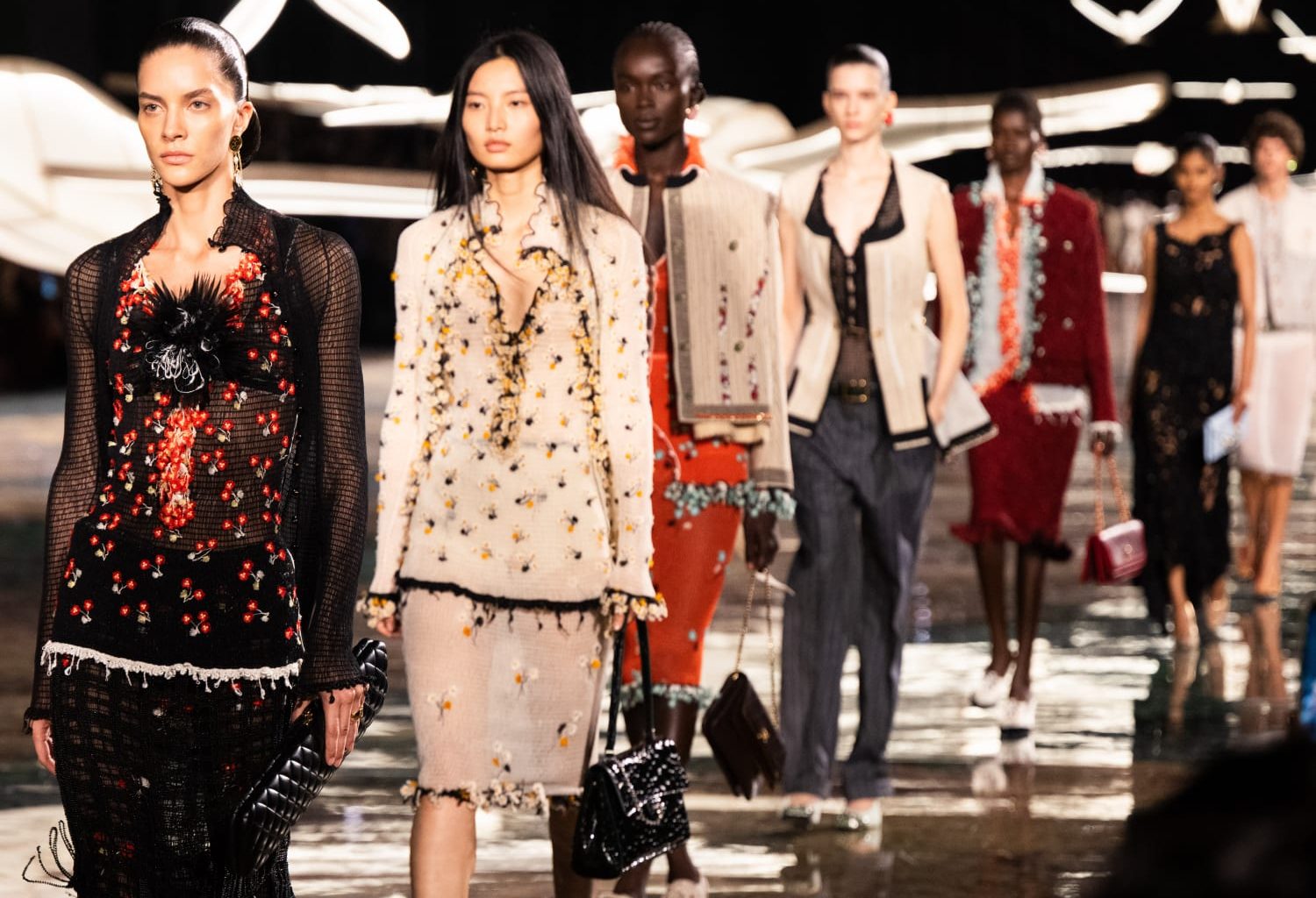
From Gabrielle Chanel’s own 2.55 bag to a new generation of faces and increasingly recognizable square-toe shoes, Chanel Spring Summer 2027 continuous to make Chanel’s history feel personal, youthful and alive
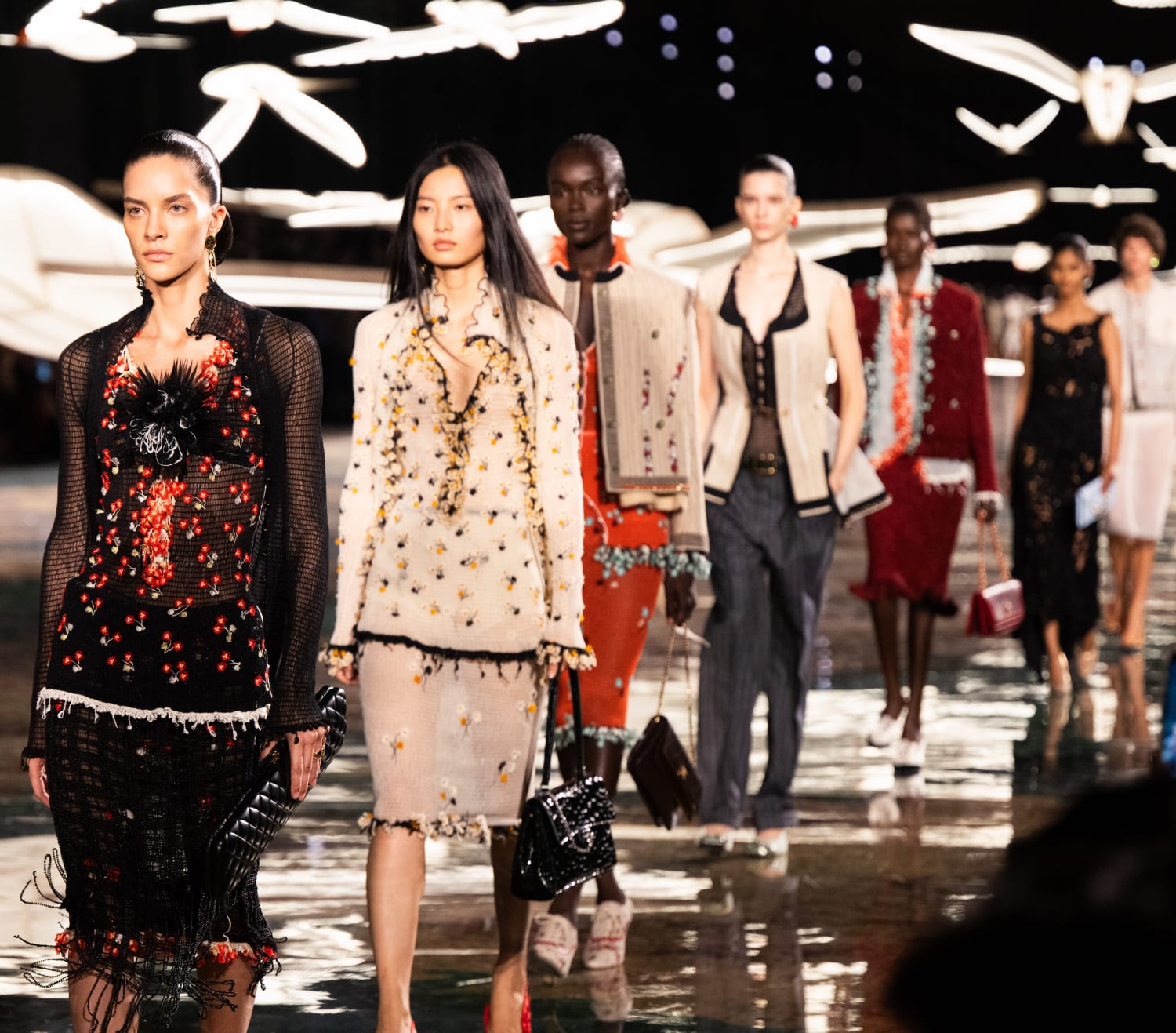
Chanel Spring Summer 2027 was a sensation at Paris Fashion Week. There is a tendency, when a designer inherits a house as monumental as Chanel, to speak about heritage as if it is always the starting point of the collection. Matthieu Blazy seems more interested in what happens when you move the conversation forward.
For Chanel Spring Summer 2027, he does not begin with Coco Chanel the myth, the logo, the perfume bottle or the endlessly reproduced black-and-white portrait. He goes further back, toward Gabrielle: the younger woman who was still inventing herself, testing identities, rejecting some of them and carrying others forward. This is what makes this collection fresh and desirable, never nostalgic or stuck in time. Blazy describes women as containing “multiple selves”, and his Chanel is built around that idea of identity as something accumulated rather than fixed.
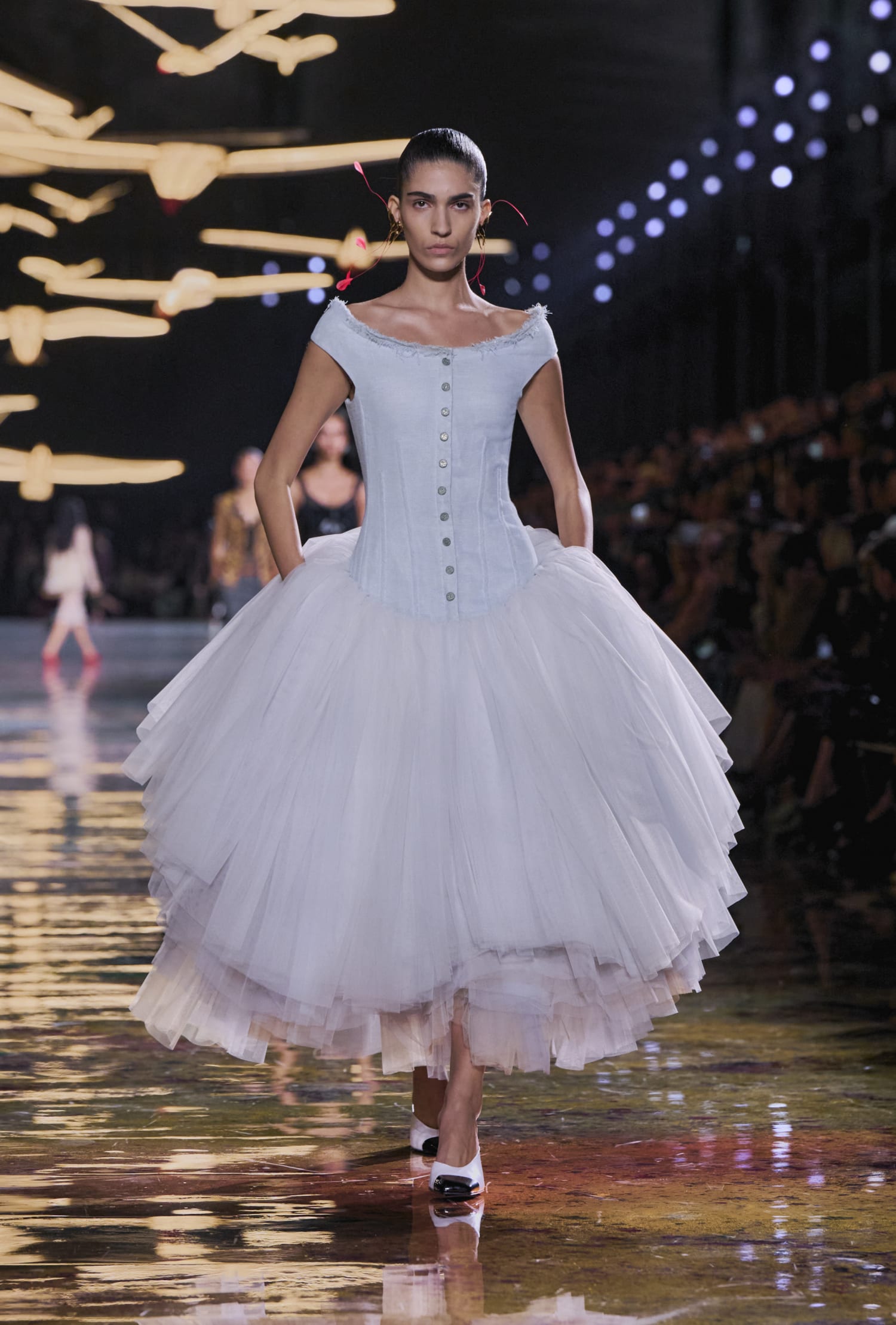
Gabrielle appears not as one coherent historical character but as a succession of possibilities: the woman walking in a Edwardian dress, the woman drawn toward masculine tailoring, the woman who discovers jersey, the woman who turns the suit into a everyday uniform. Chanel Spring Summer 2027 seems to be Gabrielle’s very own closet 2.0.
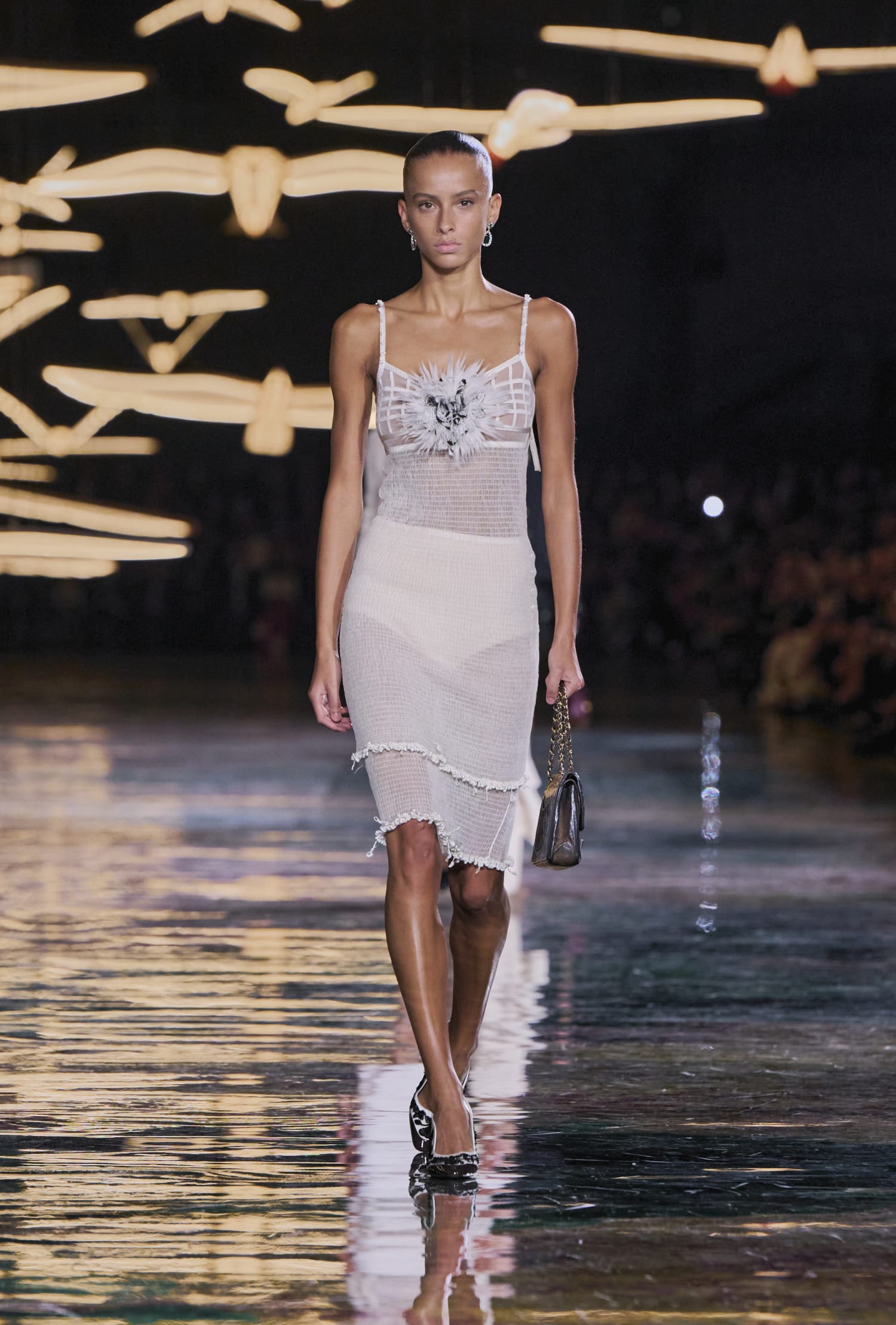
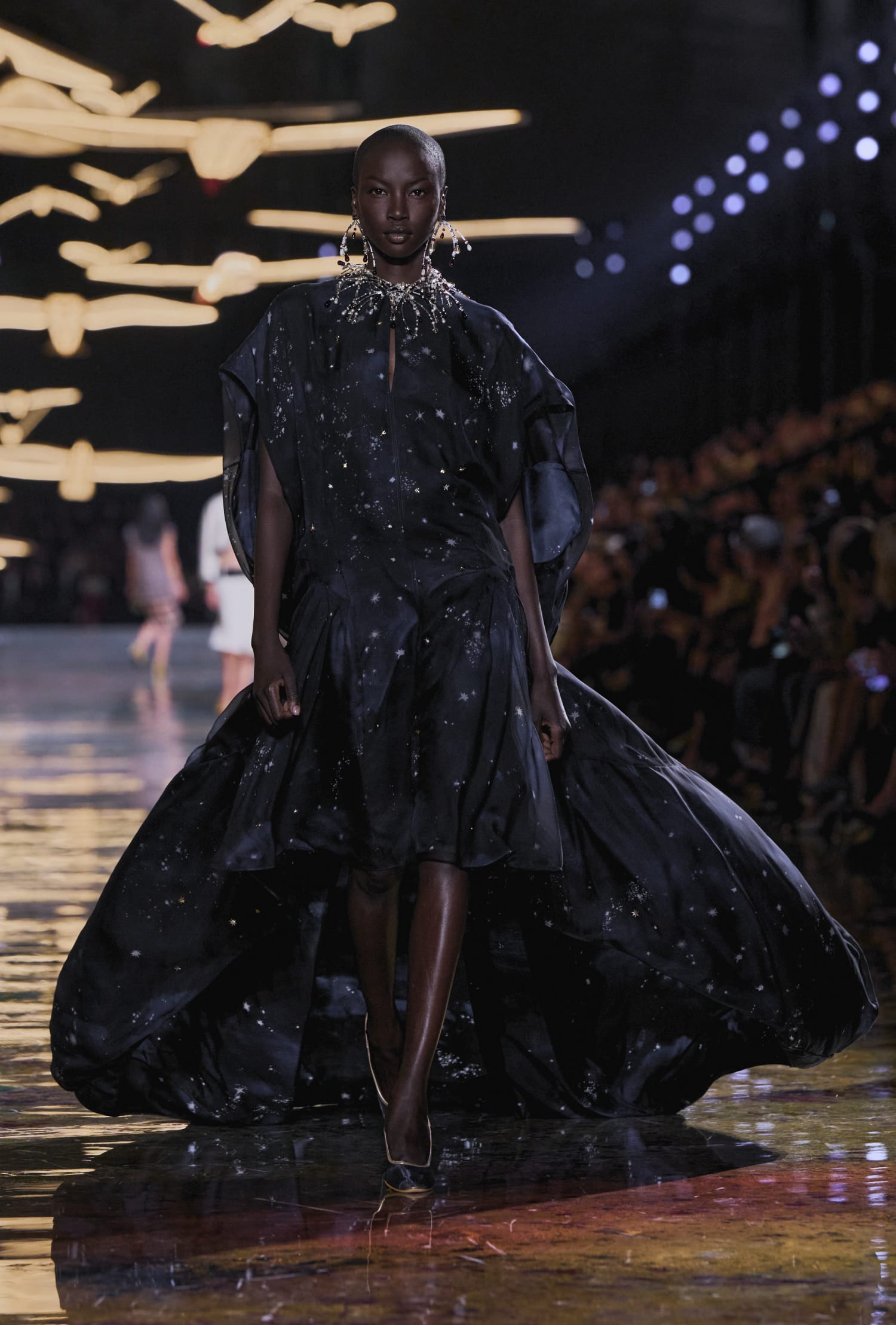
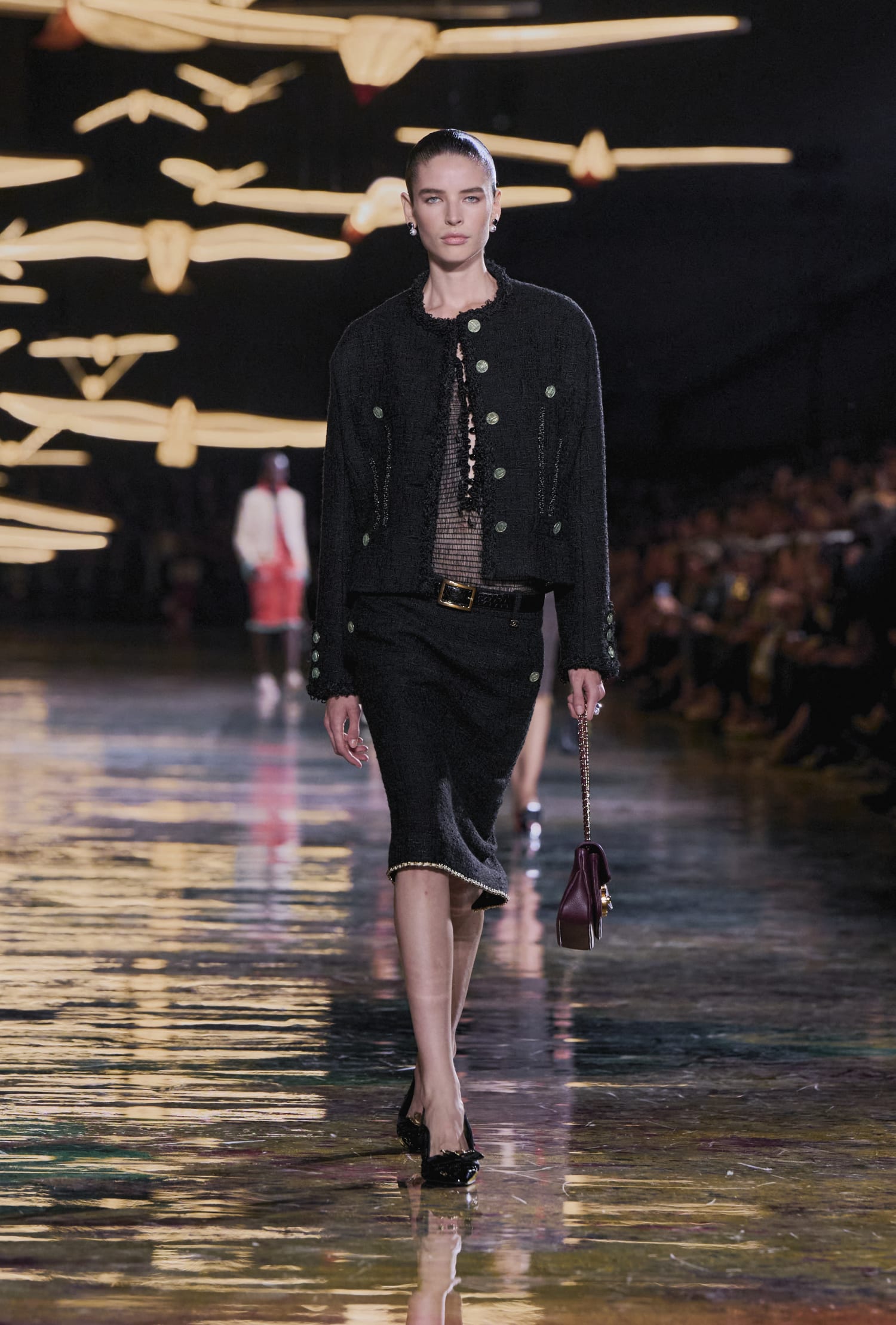
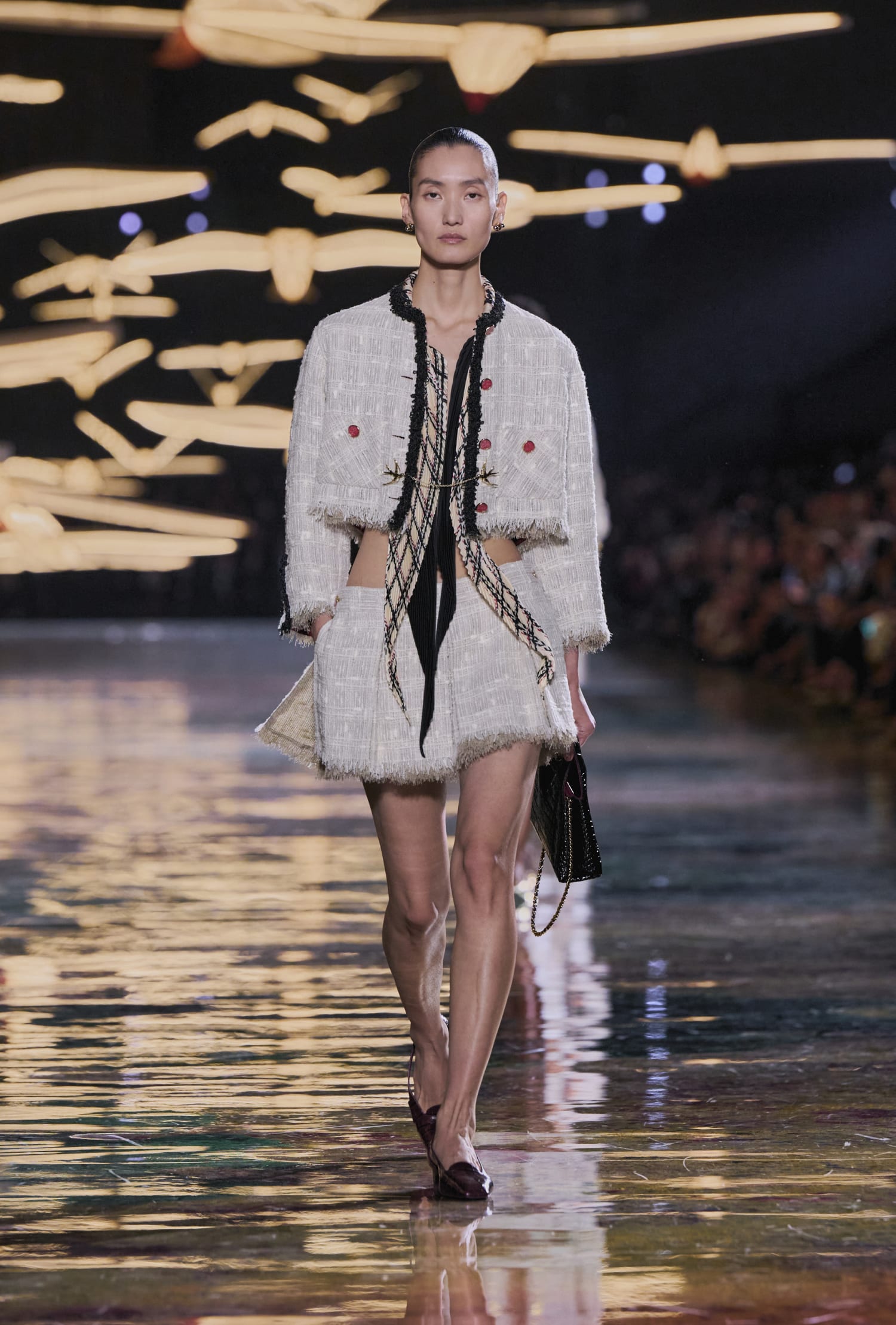
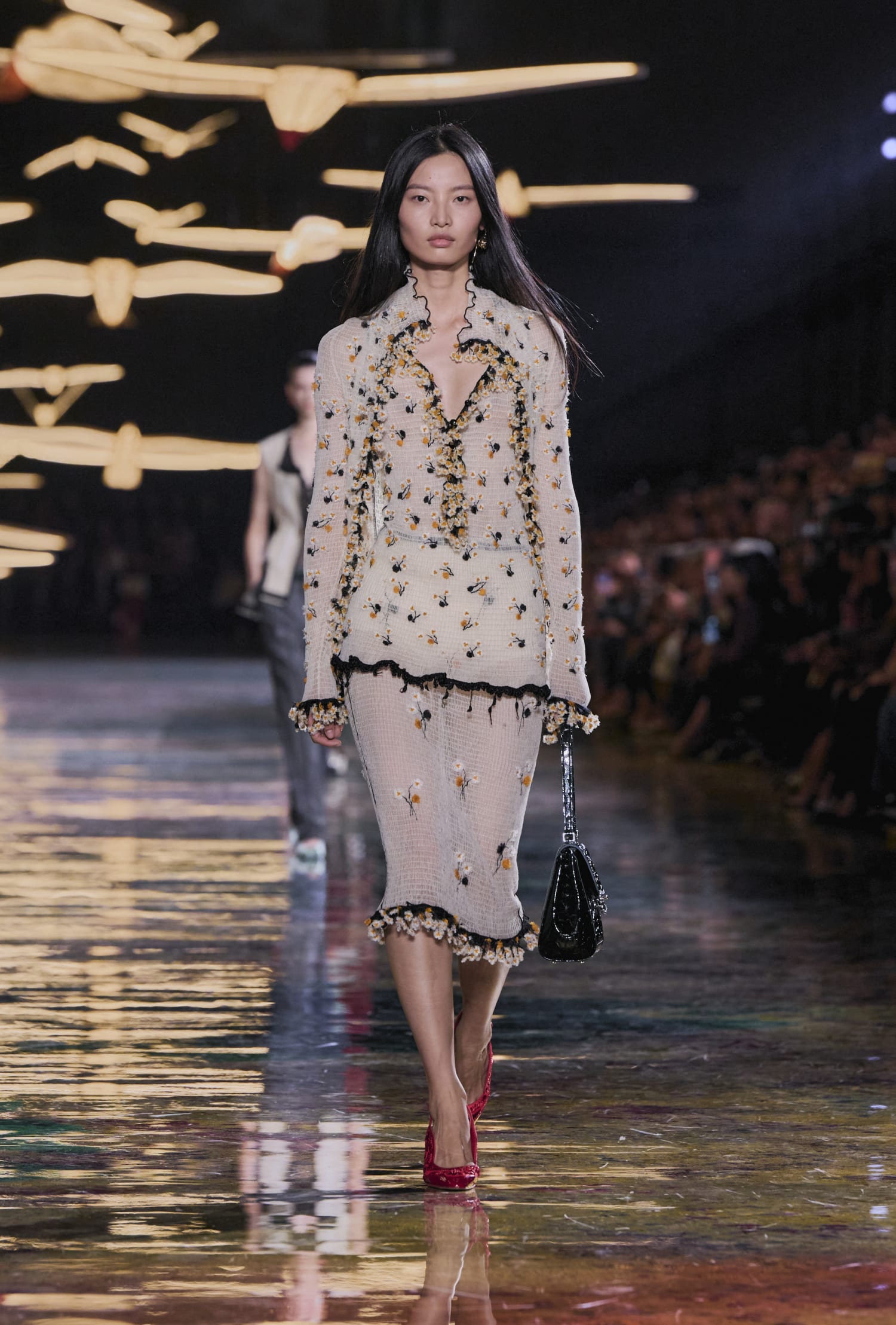
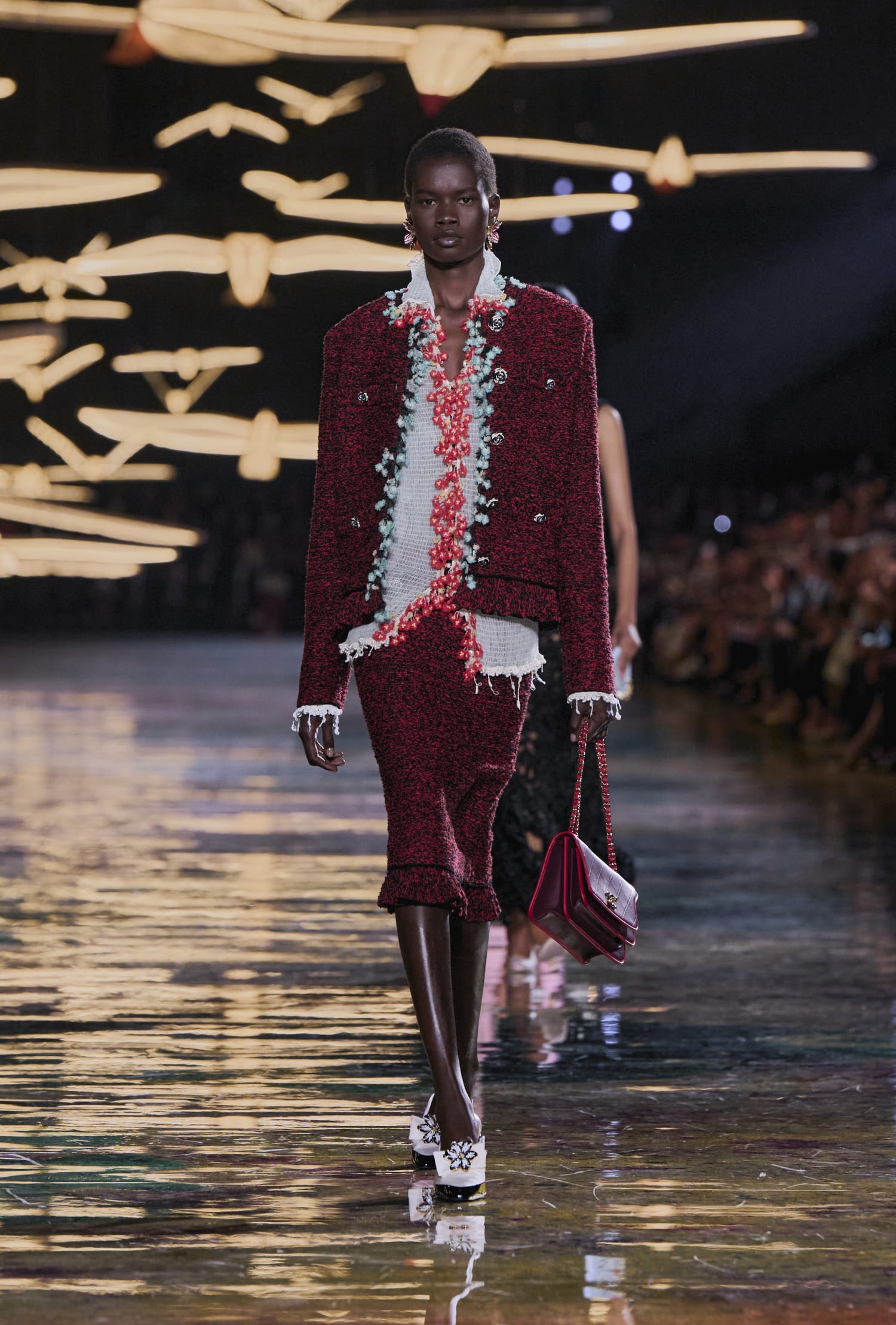
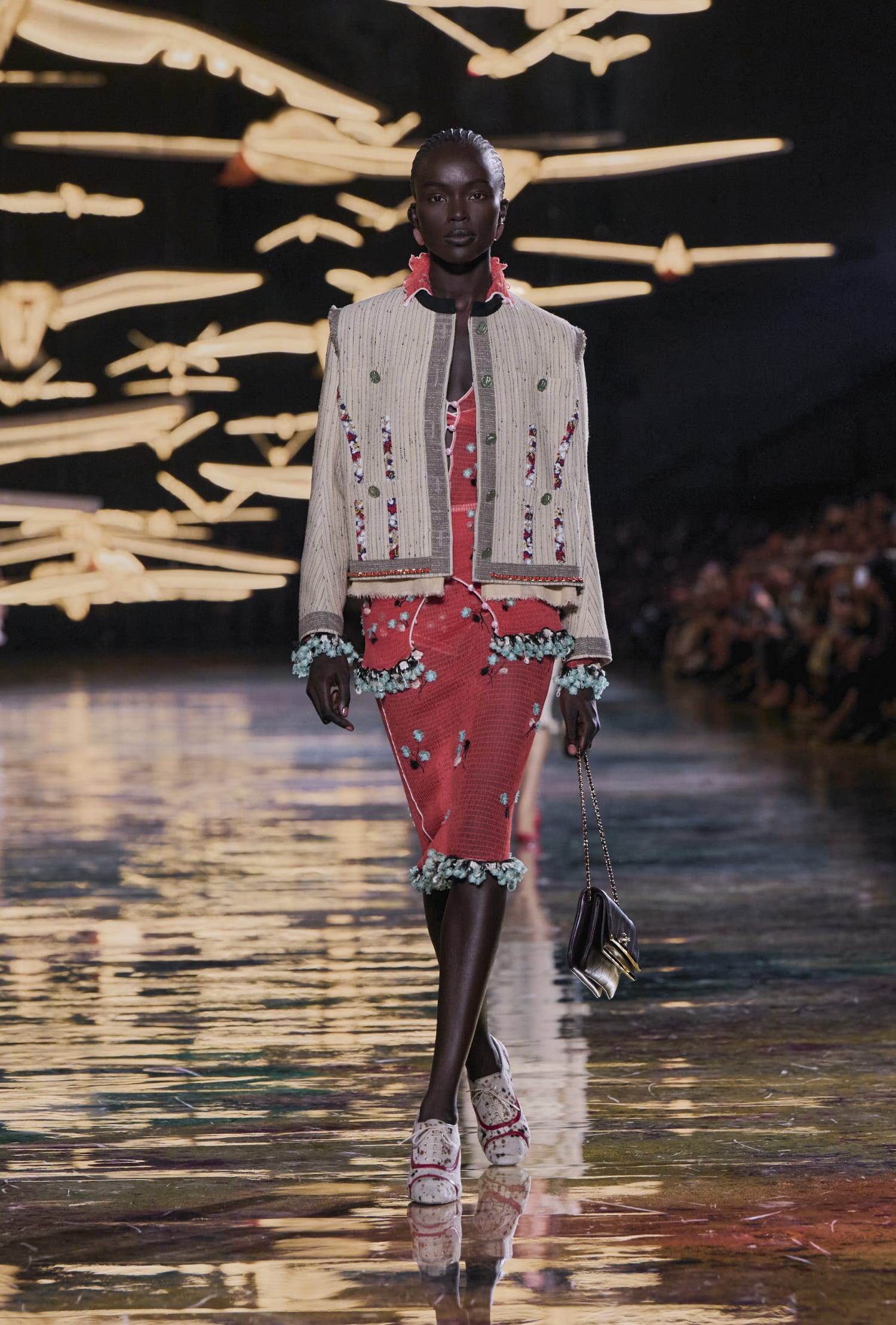
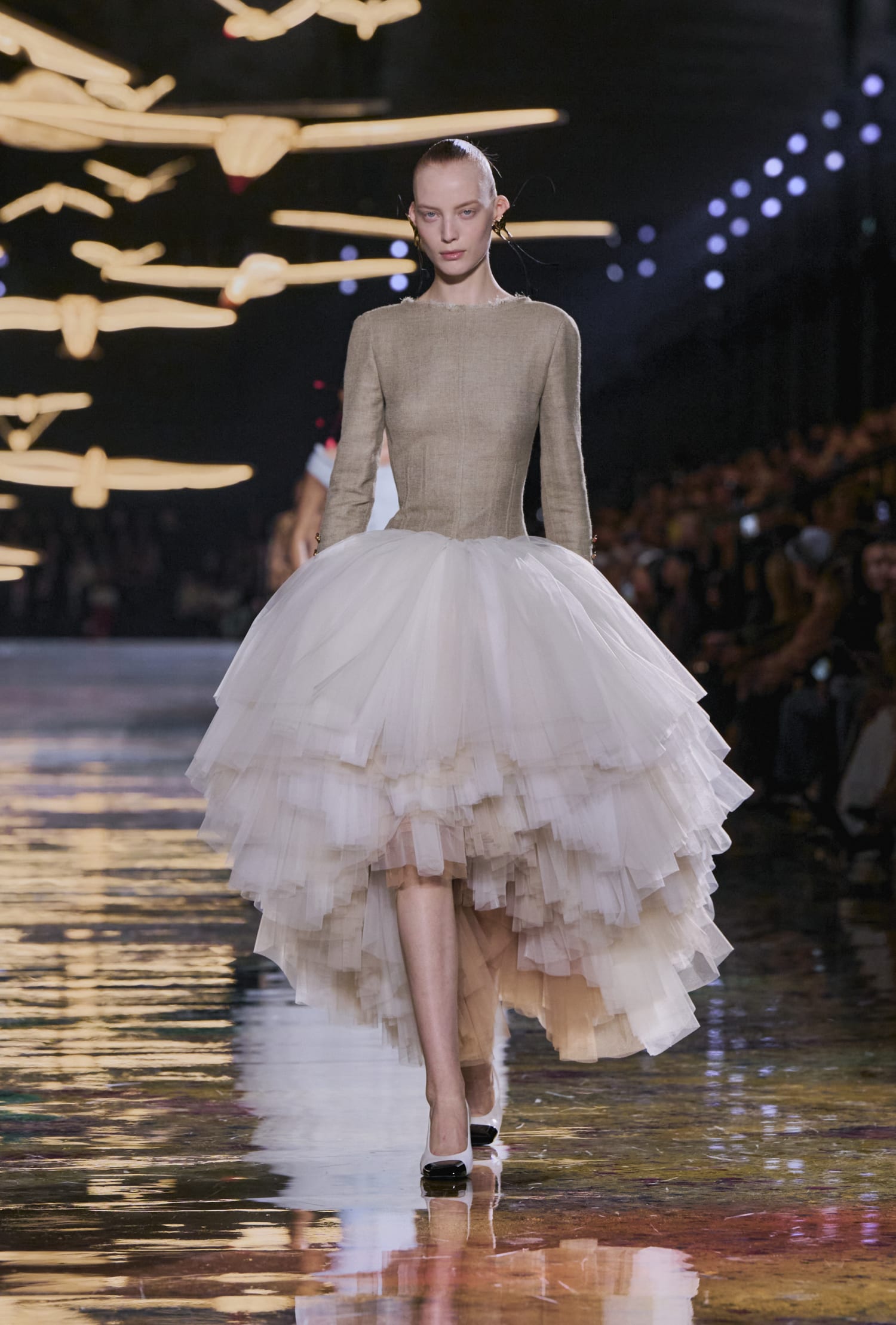
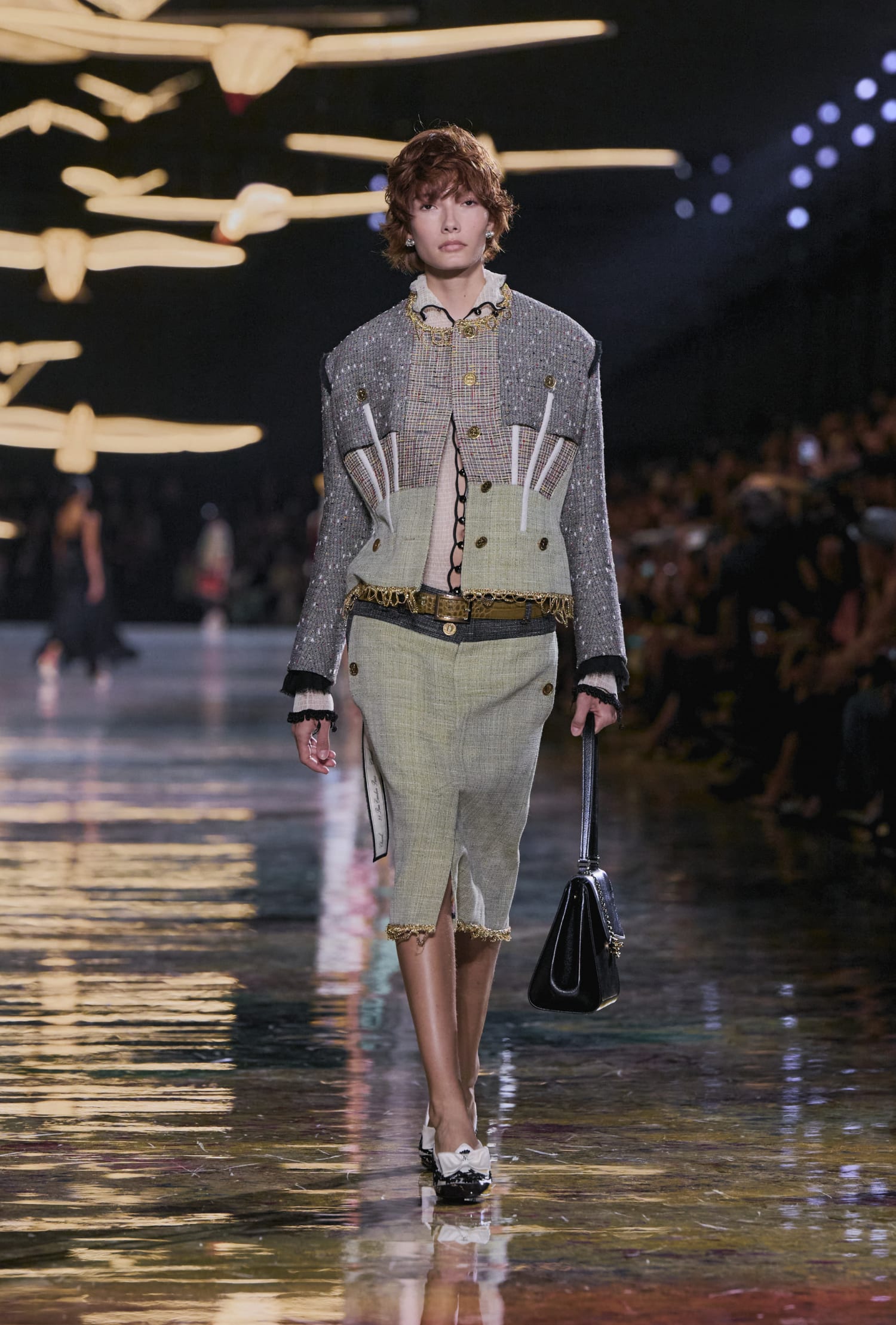
Chanel Spring Summer 2027 has many different influences. Nothing feels entirely resolved into a single era. Corsetry leaves only a shadow behind. A peplum appears like a memory rather than a quotation. Men’s tailoring is dismantled and redirected toward the female body. Evening clothes have the ease of something much less ceremonial. The collection moves through Chanel’s history without dressing the models as characters from it.
And then there is the most iconic Chanel bag.
One of the most intelligent gestures of the show is also one of the quietest: Gabrielle Chanel’s own 2.55, taken from the Patrimoine archives (the historical archives of the Maison), appears at both the beginning and the end of the collection, carried by Dyanira Hurbuscher.
The significance lies precisely in the fact that this is not a reproduction and it became the star of the Chanel Spring Summer 2027 show.
We are so accustomed to thinking of the 2.55 as a fashion icon that it is easy to forget it was once simply a woman’s personal possession. Placed back on a young body, it momentarily loses the weight of its mythology. It becomes a bag again.
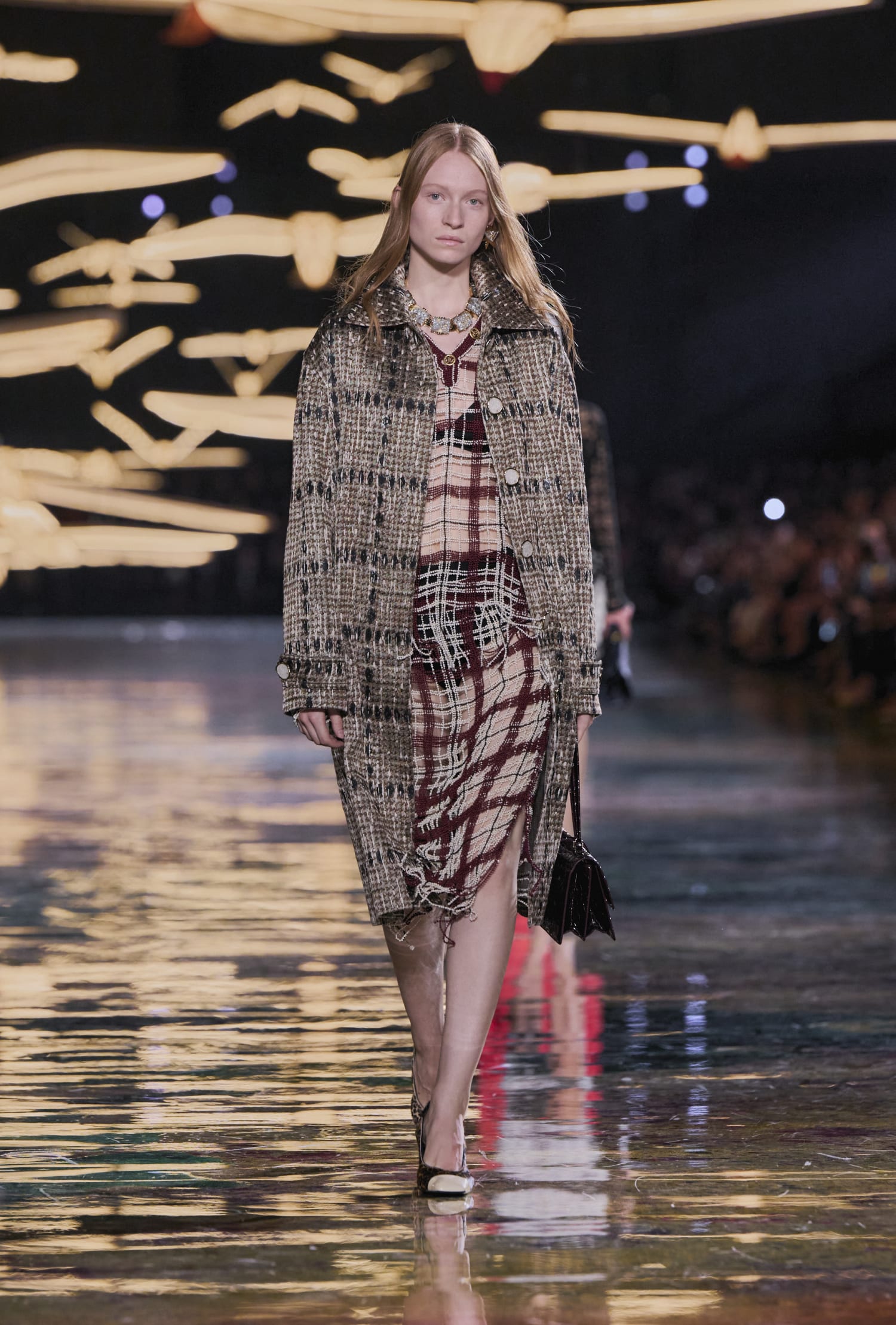
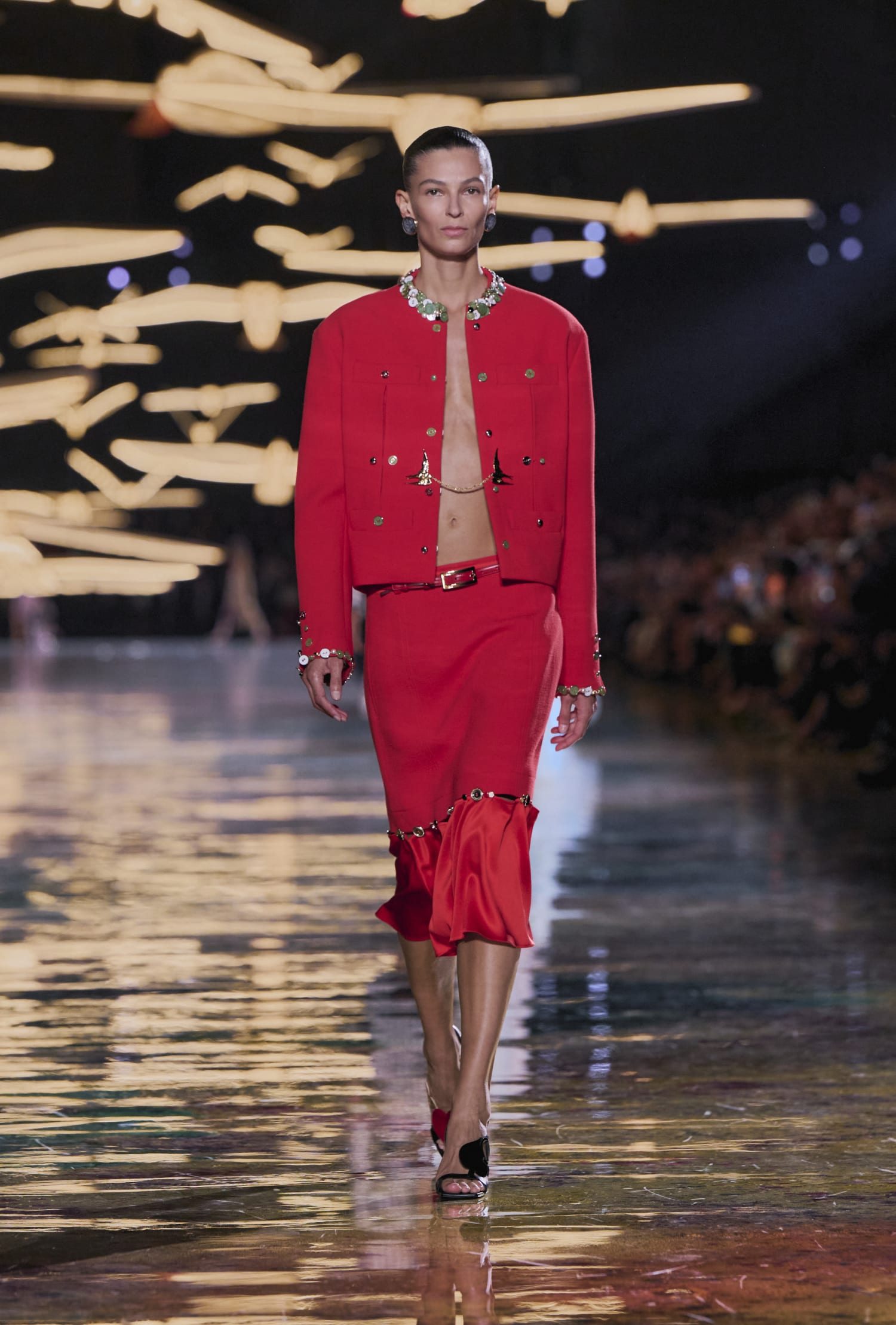
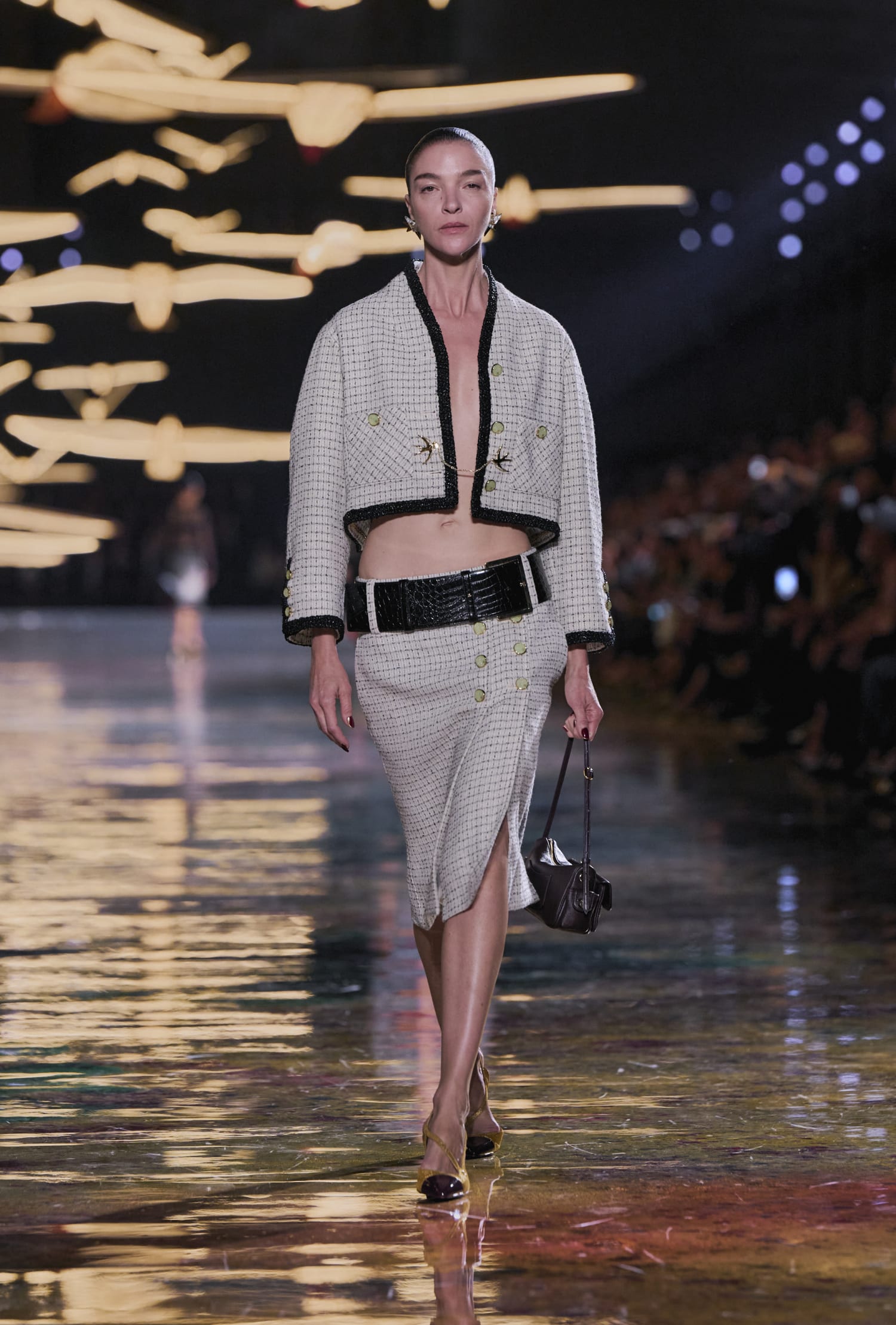
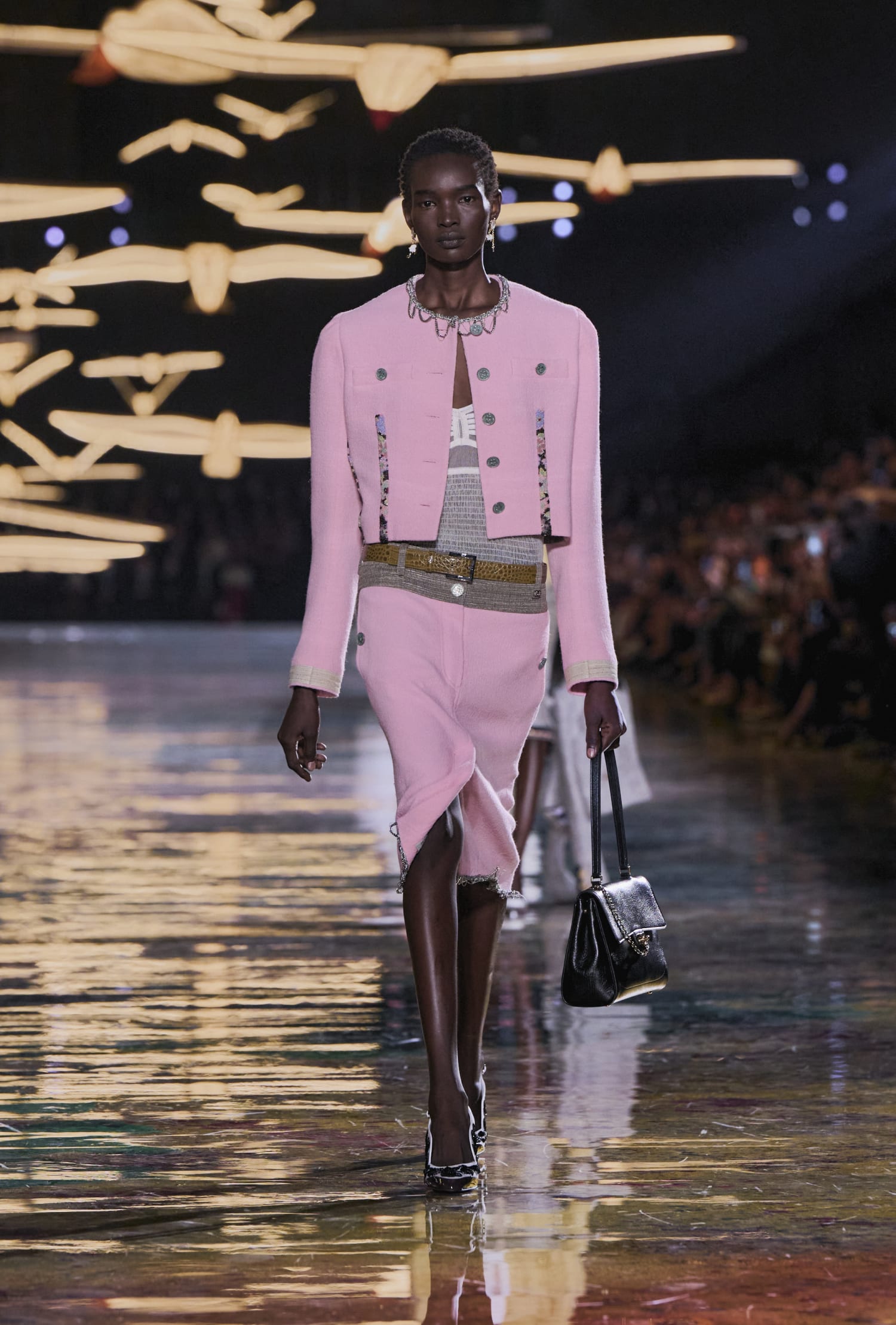
He is not trying to modernise the archive by making it louder. He is making it intimate.
The same instinct can be found in the casting.
Bhavitha Mandava is by now becoming closely associated with Blazy’s Chanel, and that continuity matters. In an industry permanently searching for the next face, there is something compelling about allowing a model to become part of a house’s visual language over time. It creates recognition without needing a campaign slogan to explain it.
But one of the most interesting presences on the runway is Rachel Ojuromi, whose path to Chanel began far away from the conventional modelling system.
The Lagos-based creative became widely shared online after recreating the atmosphere and styling of Chanel’s Métiers d’Art collection using pieces from her own wardrobe and the resources around her. It was fashion interpretation at its most instinctive: not copying a look literally, but understanding its attitude well enough to rebuild it from another cultural and economic reality.
That gesture caught Matthieu Blazy’s attention. Her eventual appearance on the Chanel runway is therefore much more than an inspired casting choice. There is something almost circular about it: a woman first enters the Chanel universe by interpreting it independently, and the house later invites her inside.
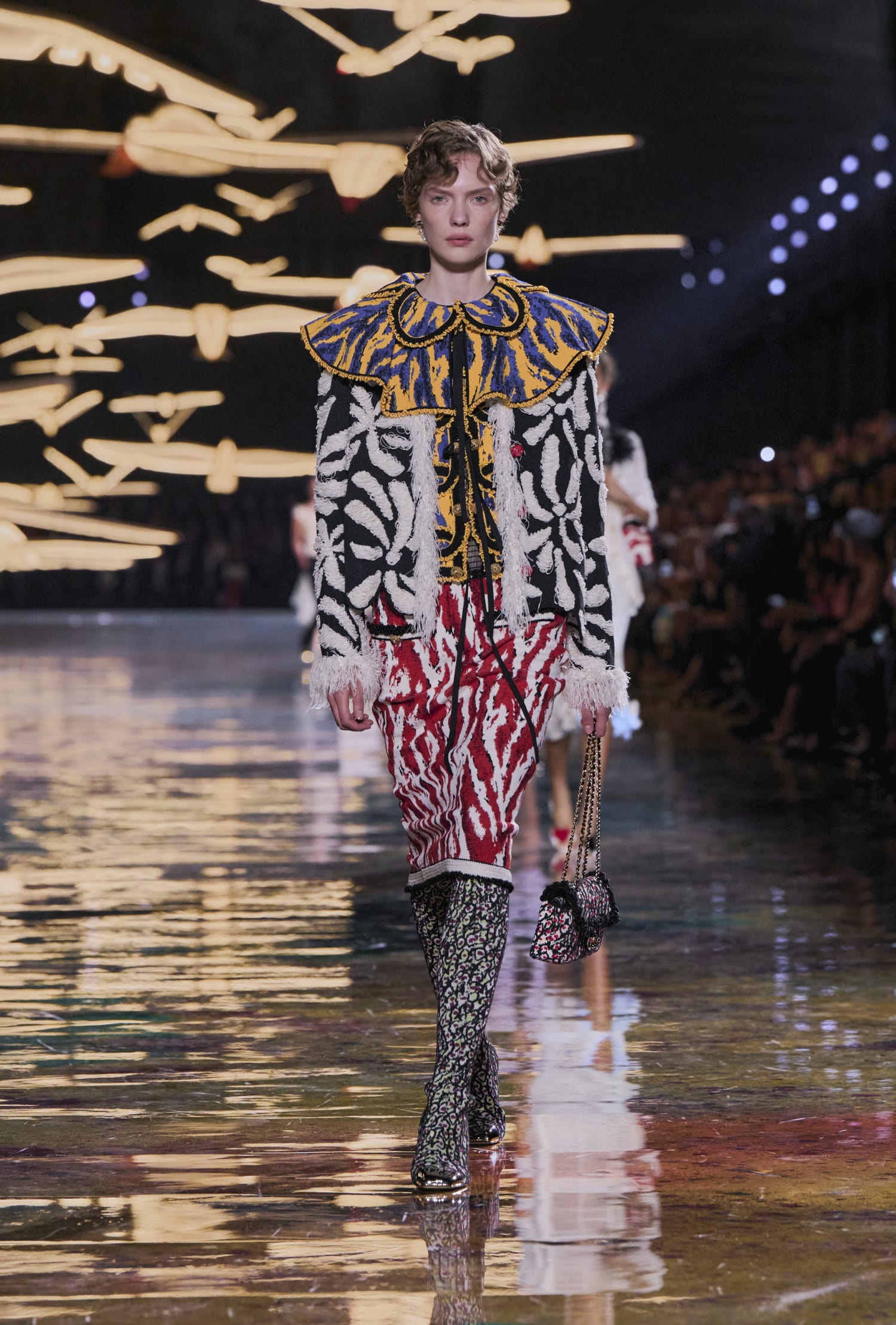
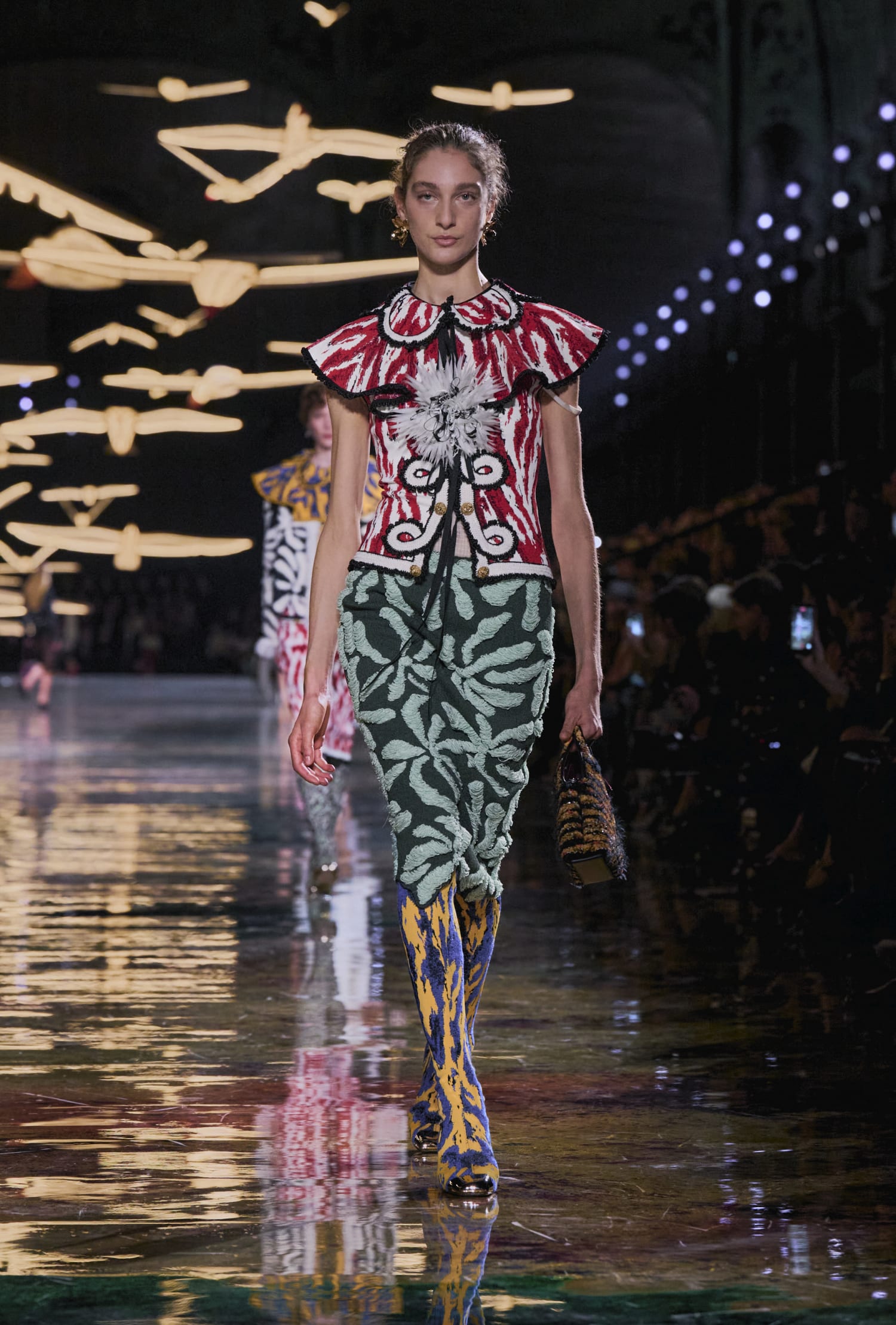
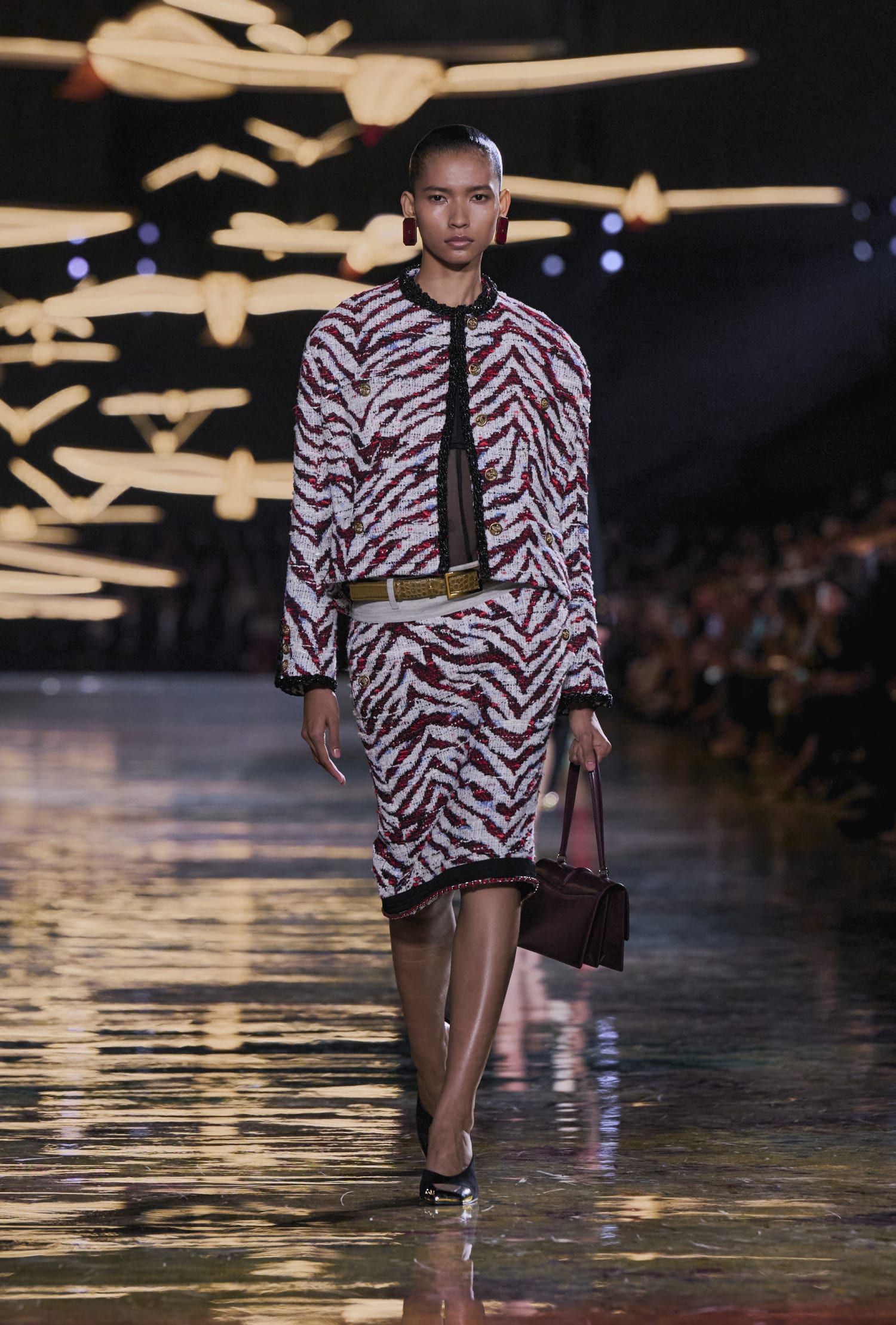
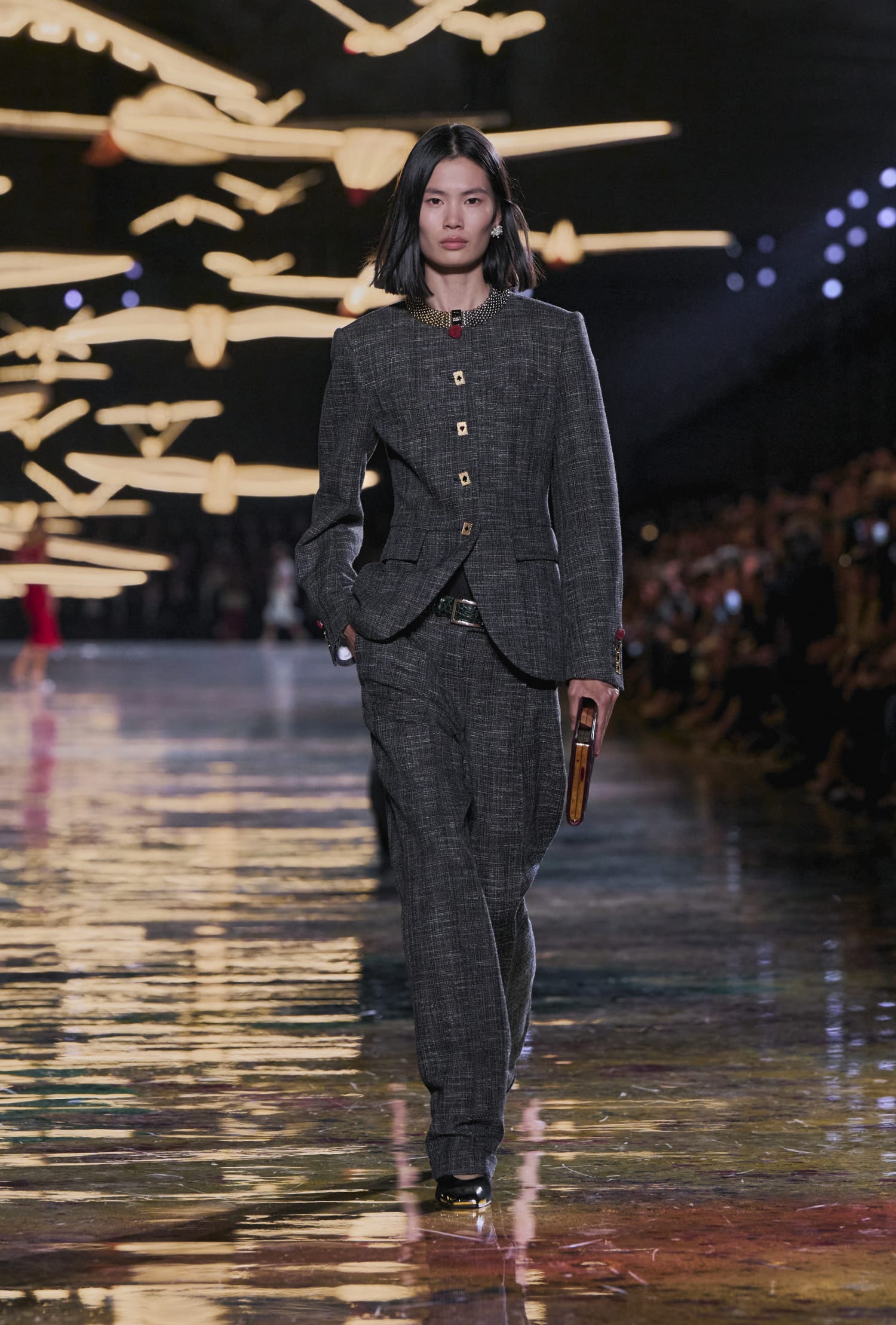
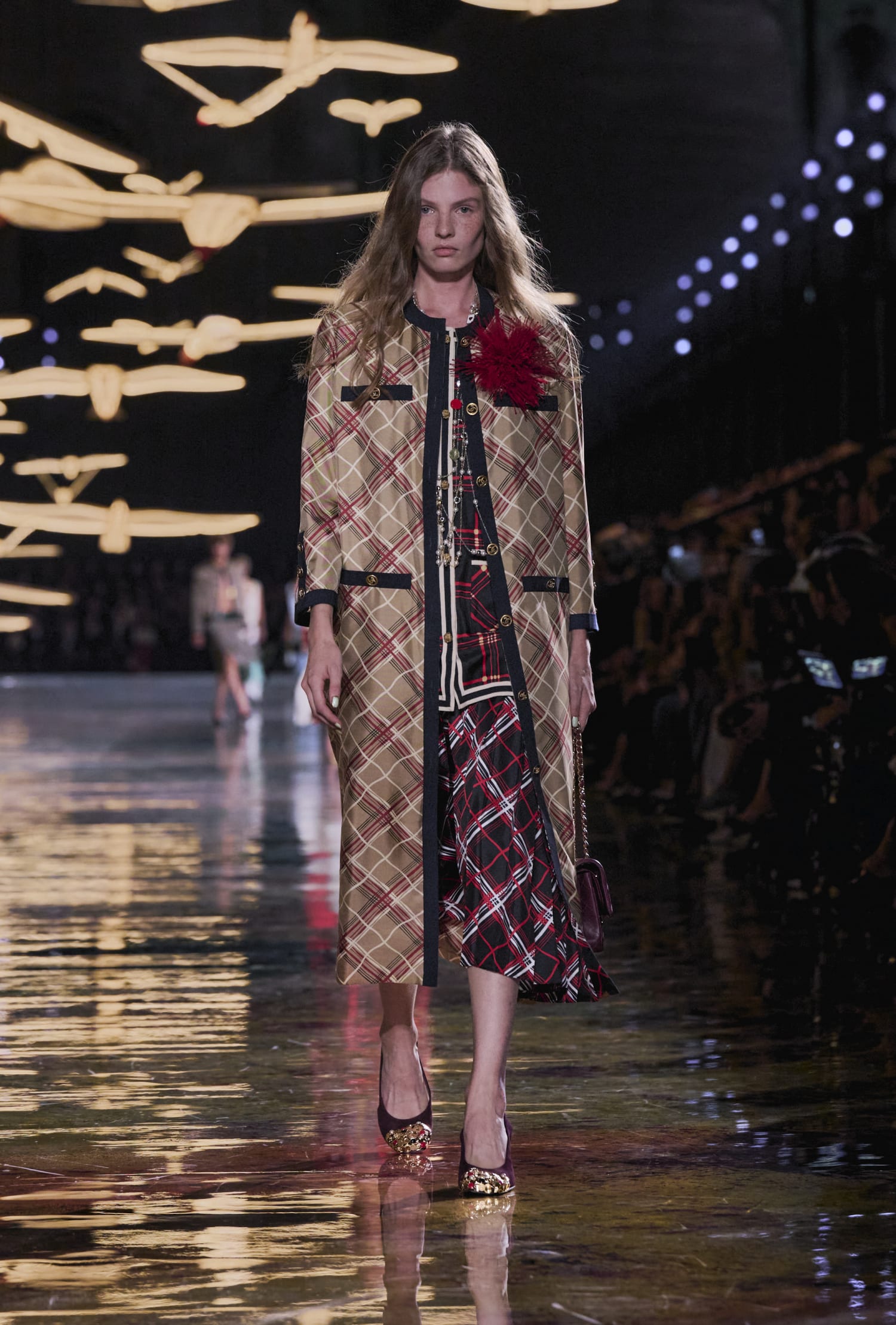
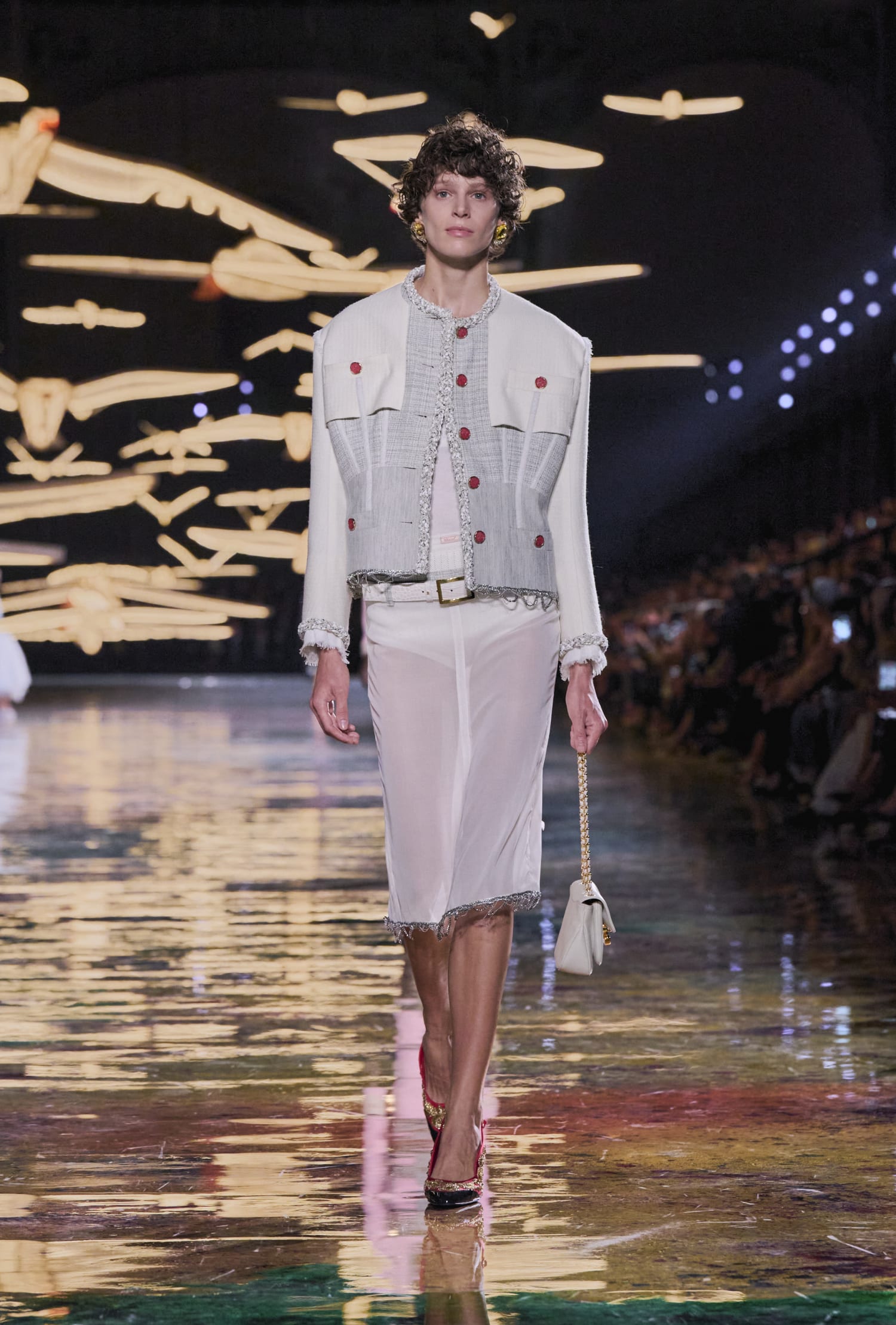
Blazy applies logic of transformation to Chanel’s most familiar codes.
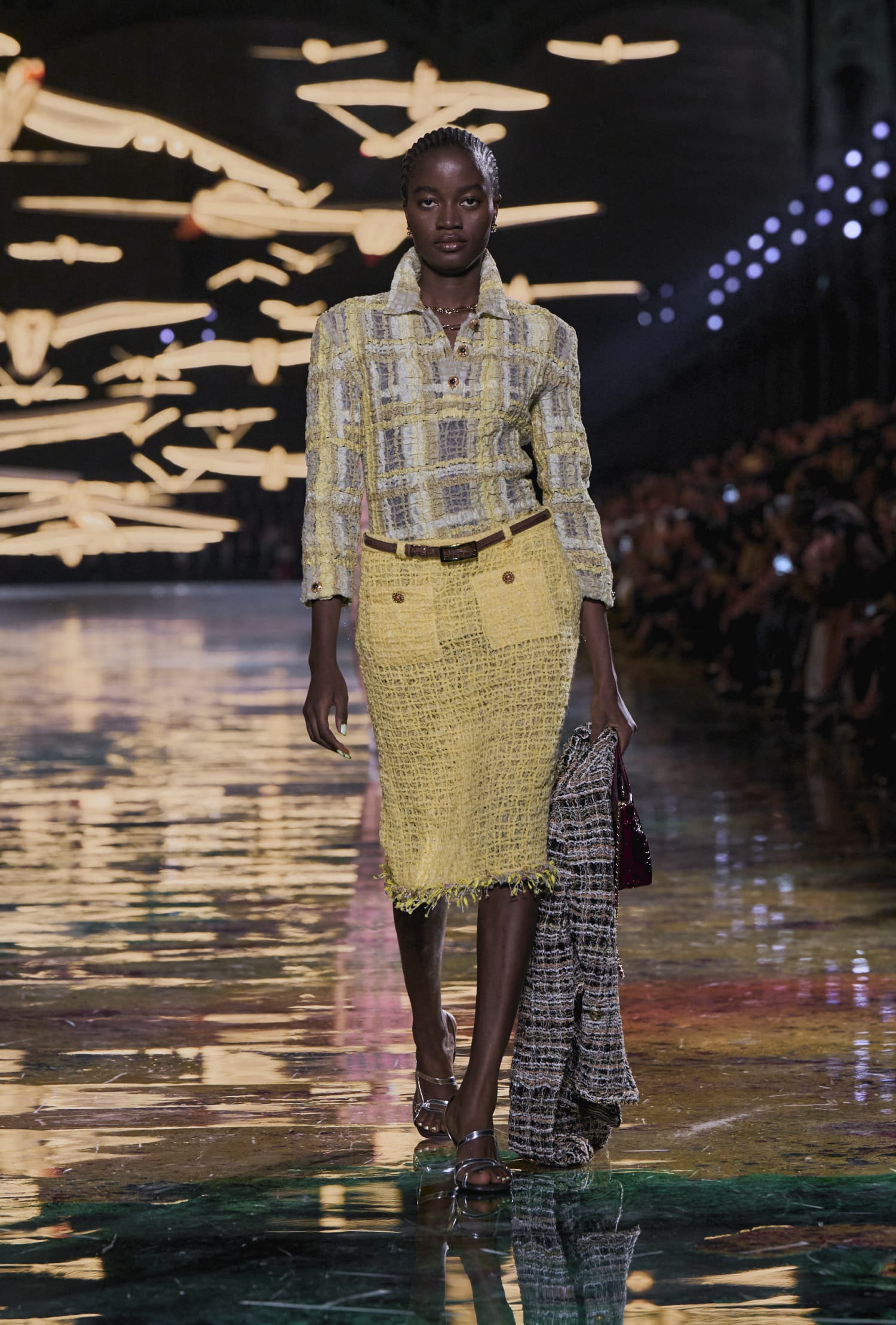
The suit becomes lighter and almost physical rather than formal. The new smocked tweed stretches and moves in a way traditional tweed cannot, bringing one of the house’s most recognisable materials closer to performance clothing. The innovation is technical, but the purpose is completely consistent with Gabrielle Chanel’s original obsession: allowing women to move. chanel_spring-summer-2027_en
Birds appear throughout the collection — particularly swifts and swallows — on jewellery, embroidery and buttons, functioning as a recurring symbol of escape. chanel_spring-summer-2027_en Yet the idea of freedom is more convincing when it is embedded in the clothes themselves: in lightness, transparency, loosened construction and the refusal to treat the female body as something that needs to be contained.
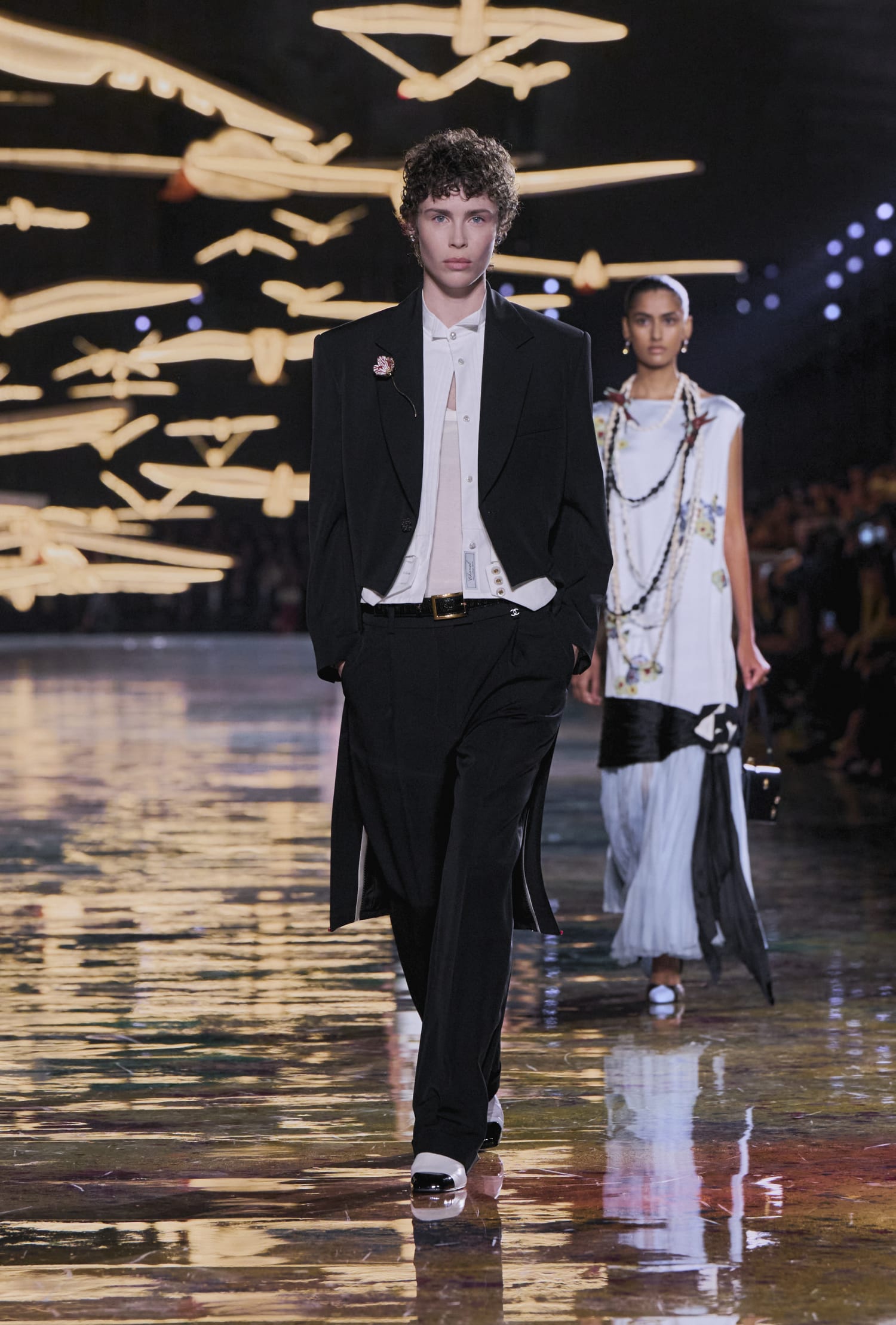
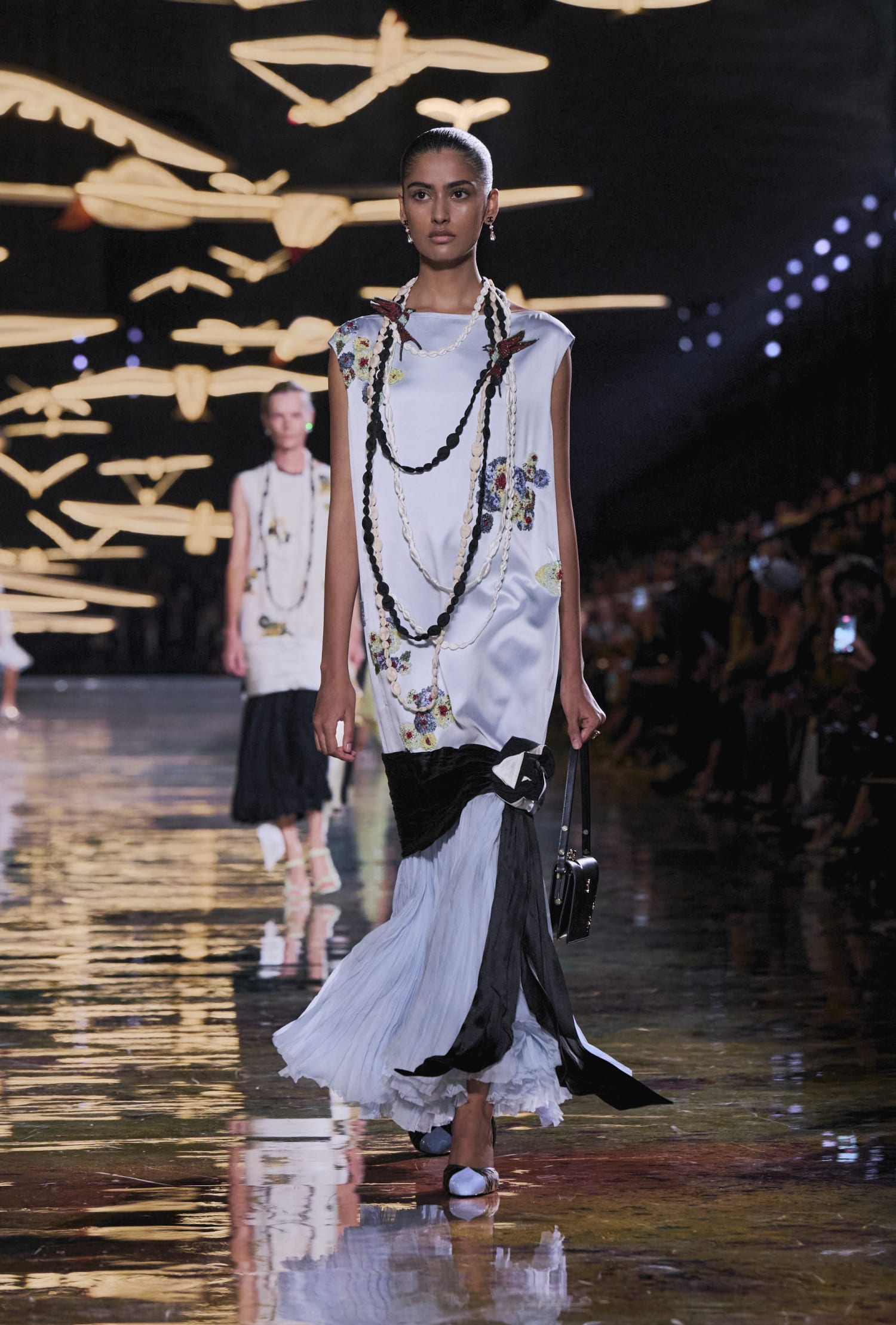
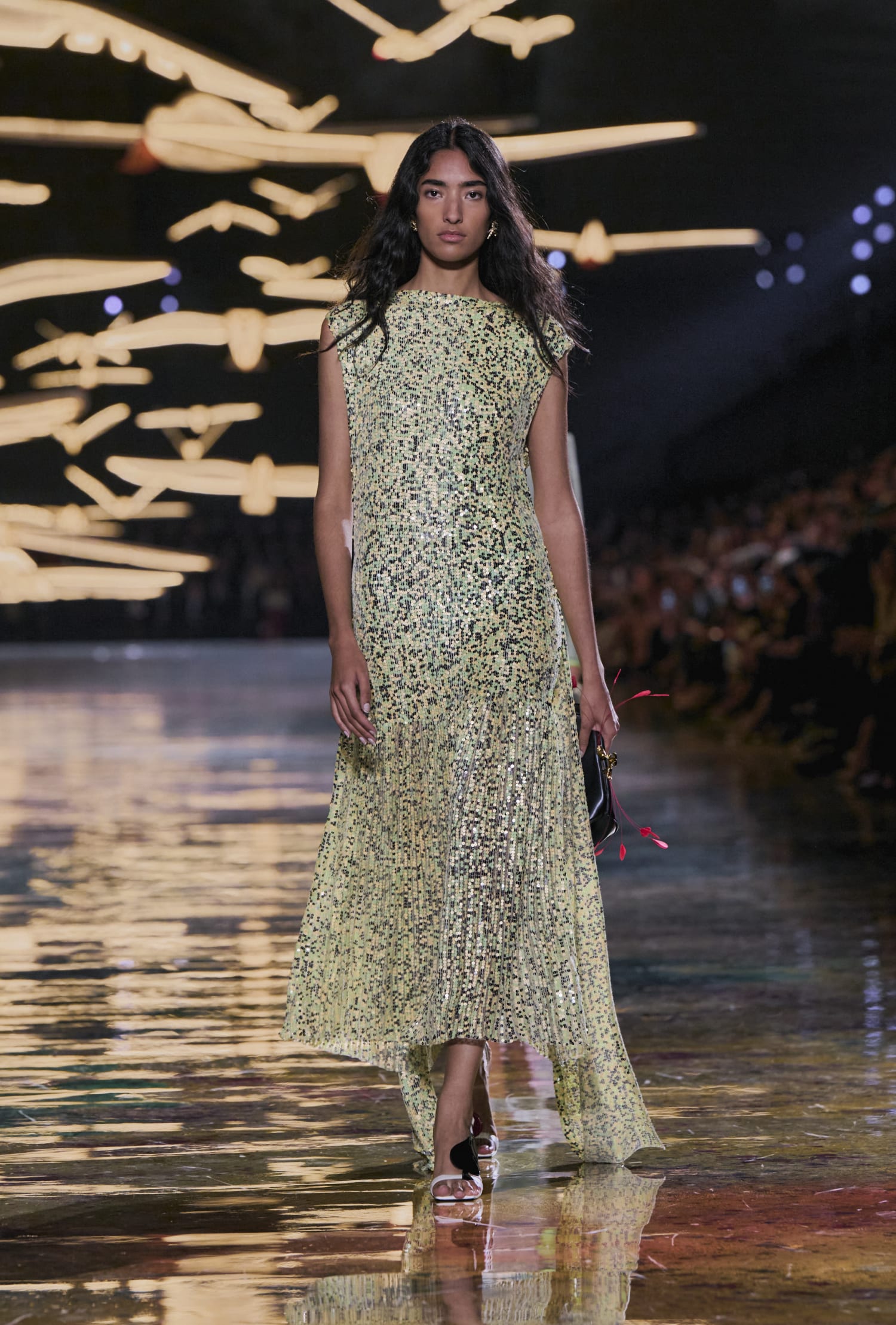
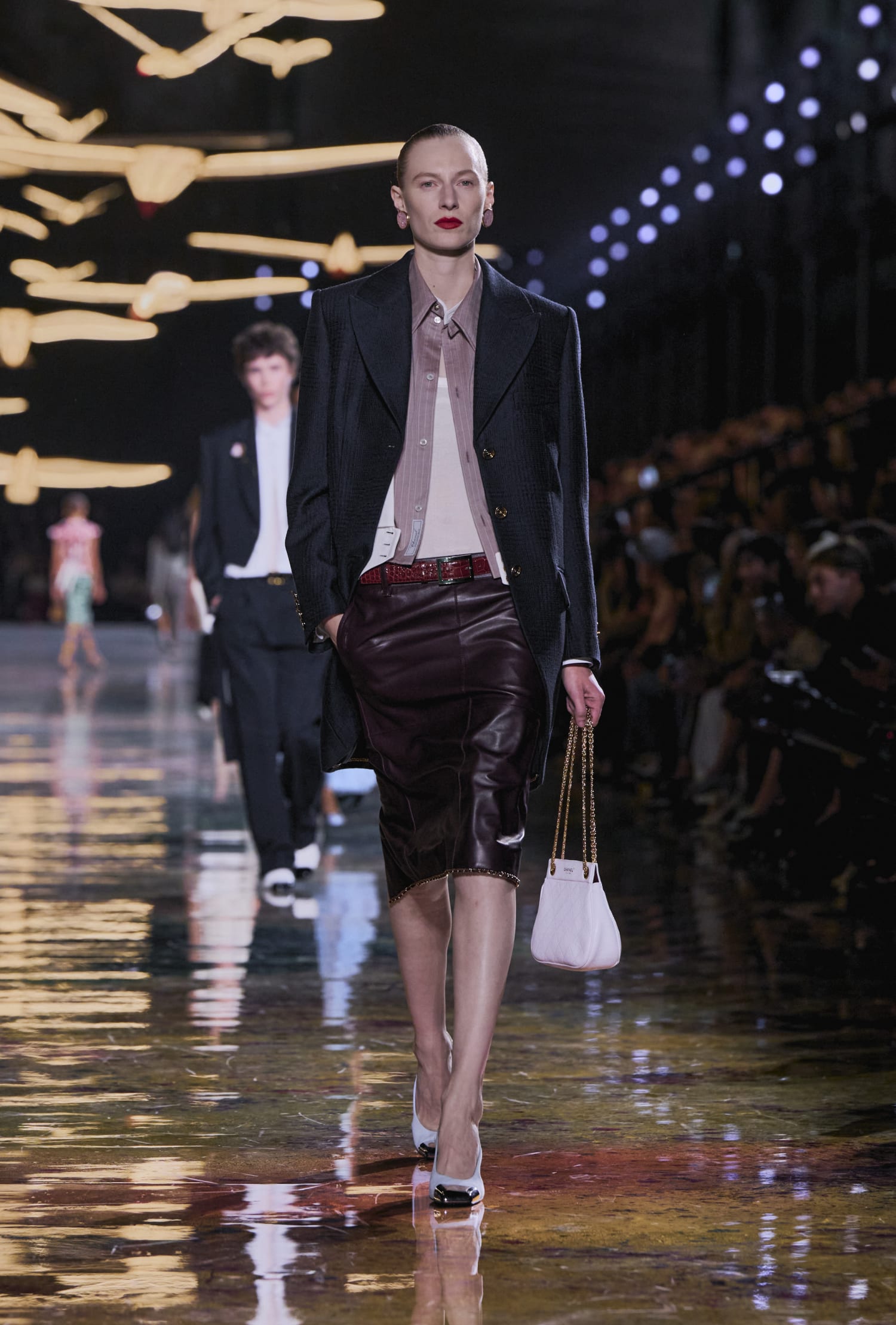
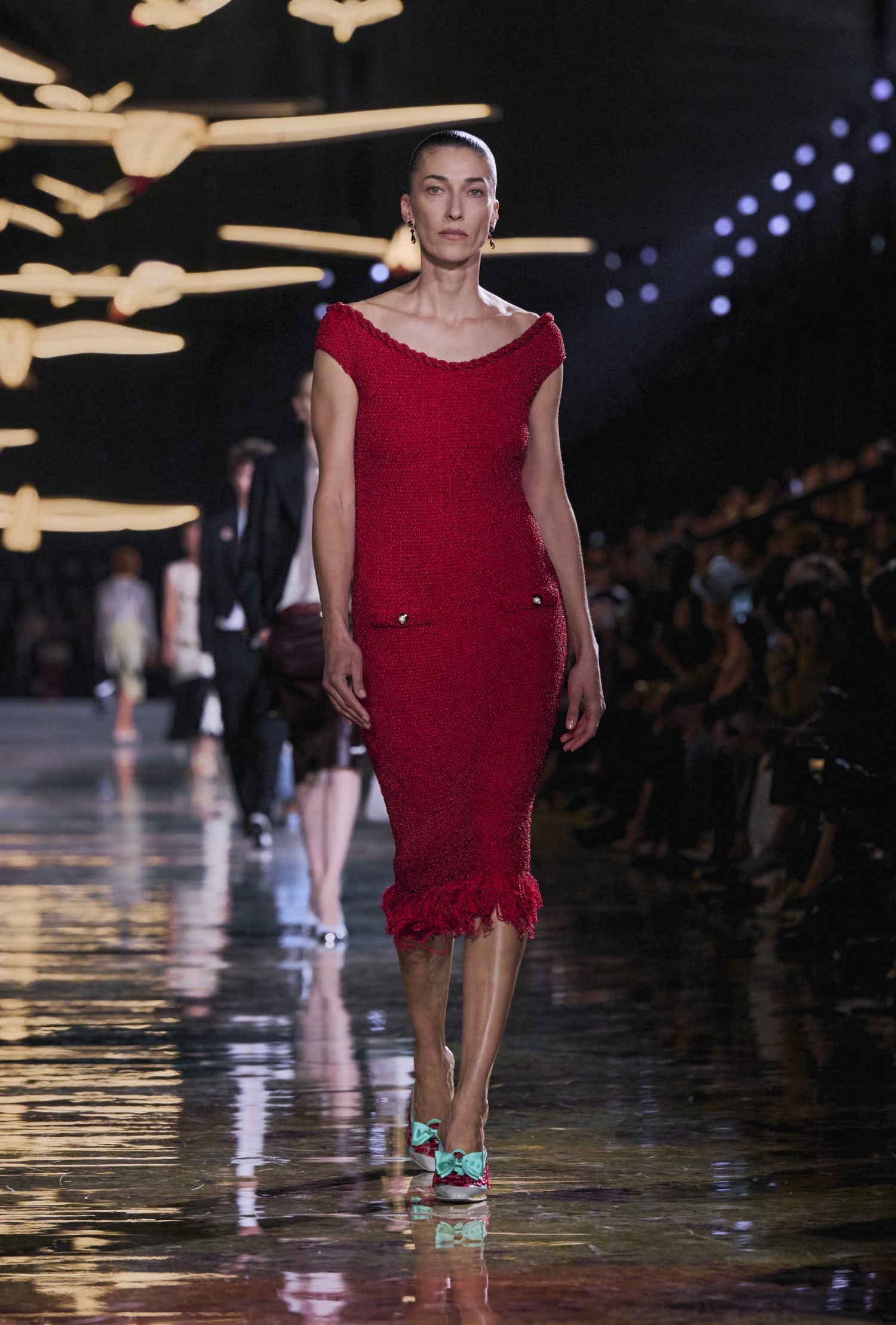
Blazy may still be relatively early in his Chanel chapter, but footwear is already emerging as one of the clearest places where his personal vocabulary is taking shape.
The increasingly exaggerated square toe is difficult to ignore. It interrupts otherwise familiar Chanel propositions with something slightly awkward, slightly severe and immediately recognisable. Rather than pursuing conventional prettiness, the shoes often rely on proportion — extending, flattening or sharpening the foot until it becomes almost graphic.
They are beginning to feel less like seasonal accessories and more like a signature.
That is significant because a successful creative director eventually needs to contribute something that can be identified without the logo. Chanel already owns some of the most recognisable accessories in fashion history; Blazy’s challenge is not to invent another icon on command, but to allow new codes to develop naturally and write a new chapter.