What if we were never the centre of the universe, just the ones arrogant enough to act like it?
We track our bodies, map our movements and turn almost everything into data. The contemporary obsession is to measure the world until nothing remains unknown.
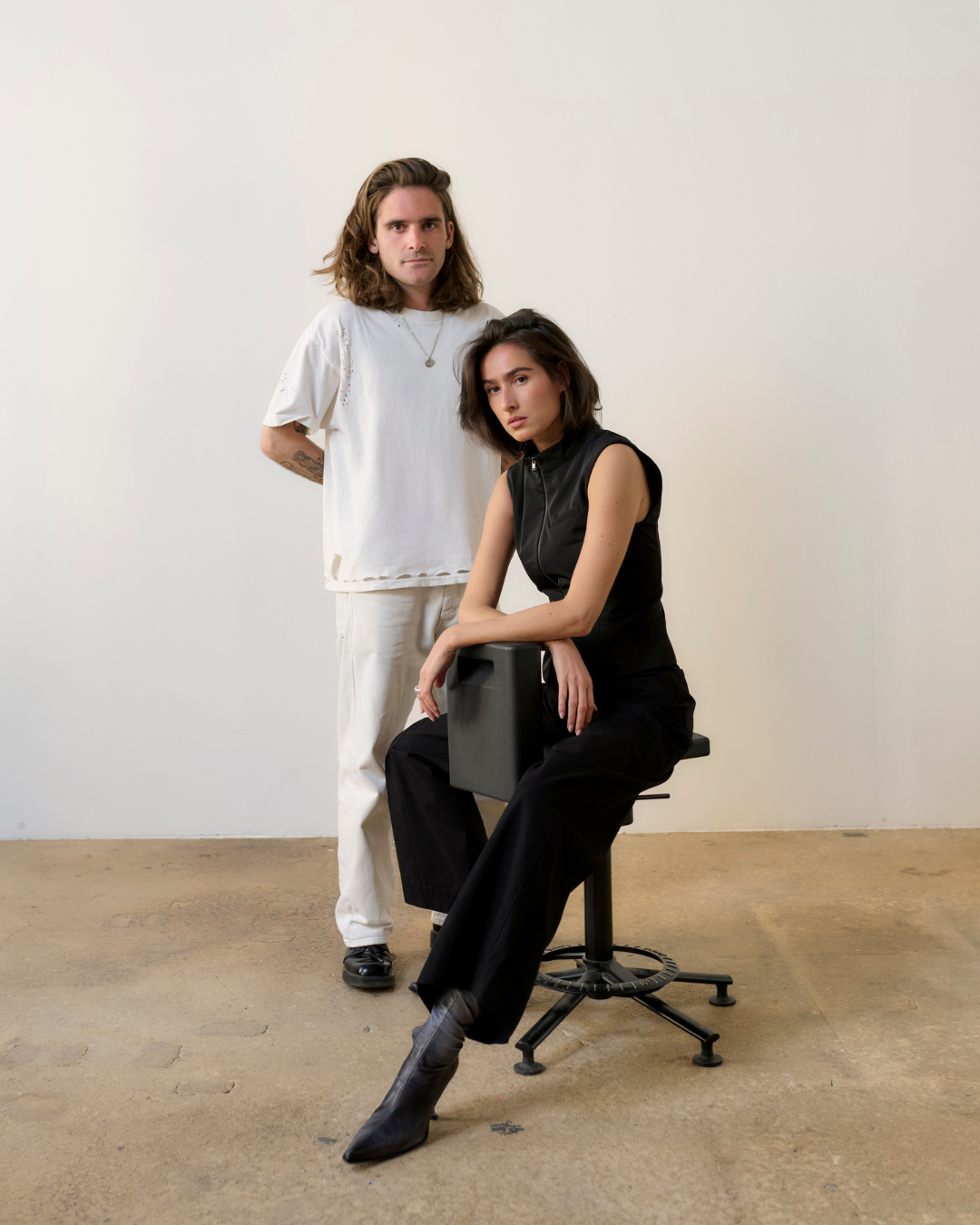
Swiss artist duo KiefferWoodtli are interested in what happens when that illusion of control begins to crack.
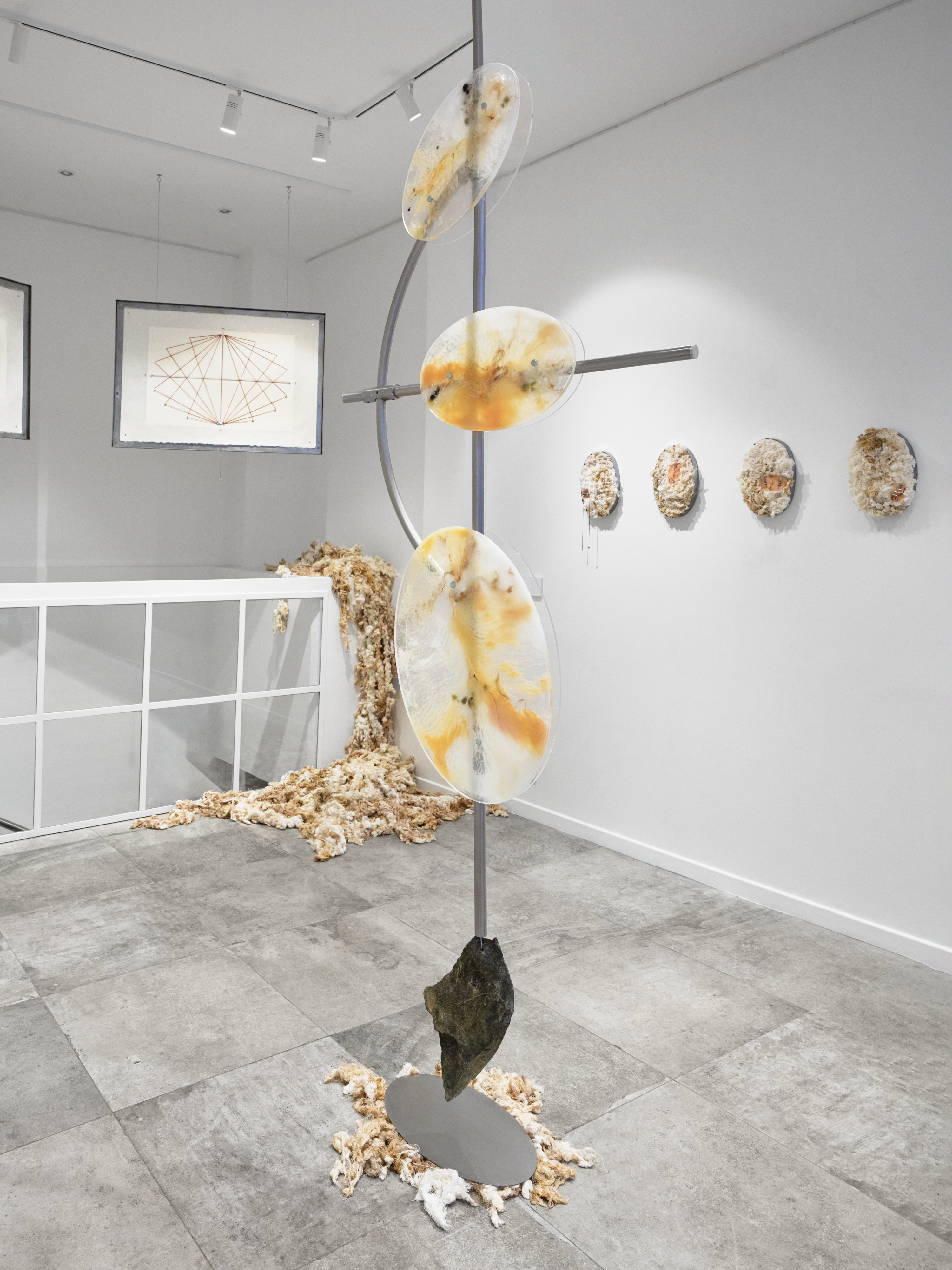
Presented by Mexico City gallery Alvarez Chida, AXES:TOTUM takes over 23 Rue de Miromesnil in Paris from October 20 to 25, bringing together sculpture, drawing, sound, installation and performance. Revisiting their earlier project AXES, the exhibition transforms individual works into a network of relationships, where nothing exists entirely on its own and no single perspective tells the whole story.
At its centre is a deceptively simple question: what if the problem isn’t losing our bearings, but believing we should always be in control?
The Centre Is a Fiction
KiefferWoodtli’s practice moves between art, science and the natural world, translating biological processes and astronomical data into sensory experiences.
Their 2025 project Arboreal Serenade, presented during Art Basel, transformed signals from a living Japanese pagoda tree into an evolving audiovisual composition. The tree wasn’t simply represented. Its own physiological activity helped shape the work.
That distinction matters in a culture that has turned nature into everything from lifestyle branding to an aesthetic backdrop. For KiefferWoodtli, the natural world isn’t waiting to be rediscovered by humans. It operates according to systems that precede us, exceed us and continue without our approval.
The uncomfortable part? We’re inside those systems, too. We just prefer the view from above.
An Ellipse Against the Ego
The conceptual backbone of AXES is the ellipse: a geometric structure defined by two foci rather than a single centre. For the duo, it becomes a way to rethink orientation, suggesting that stability emerges through relationships rather than absolute positions.
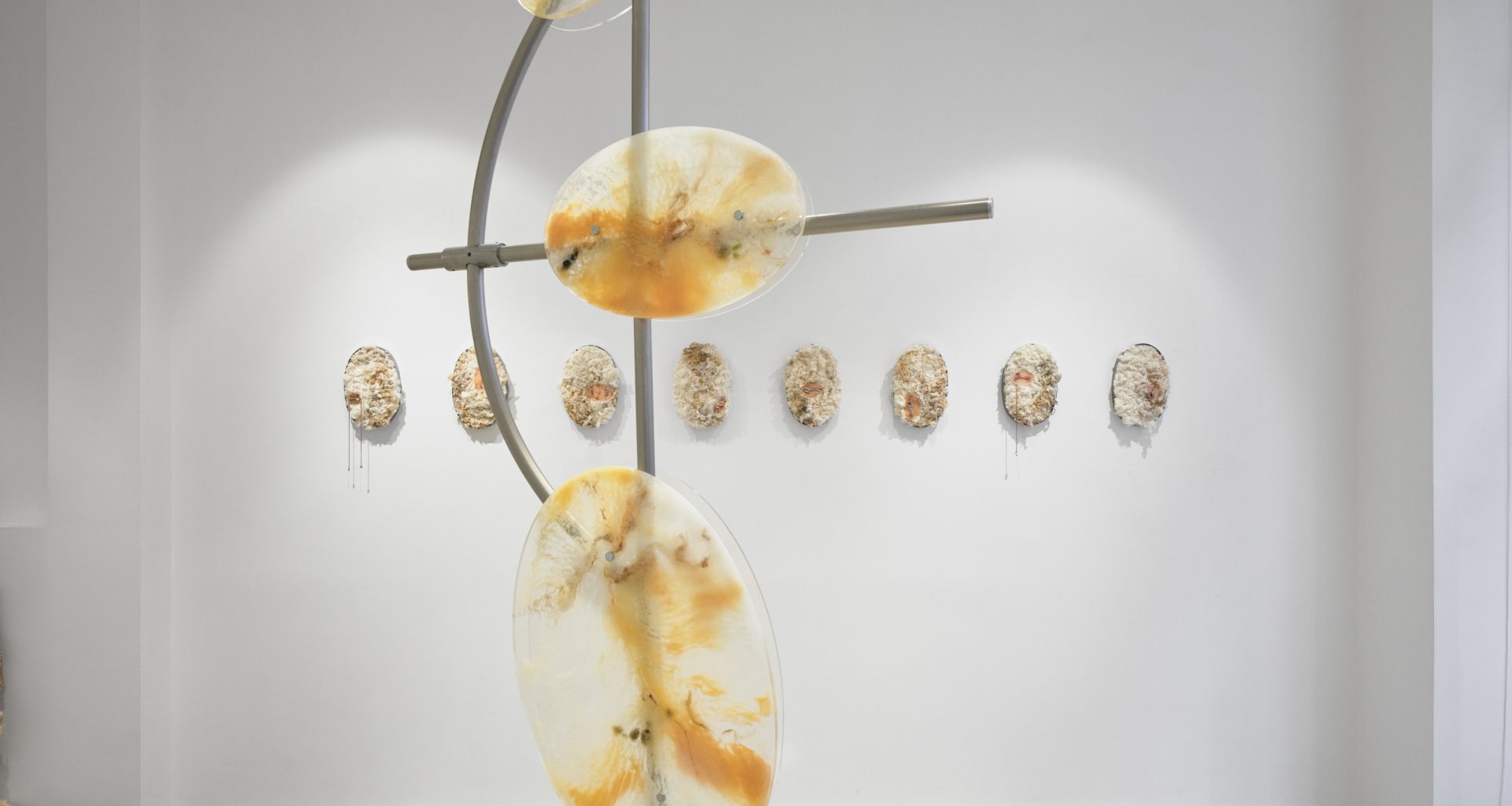
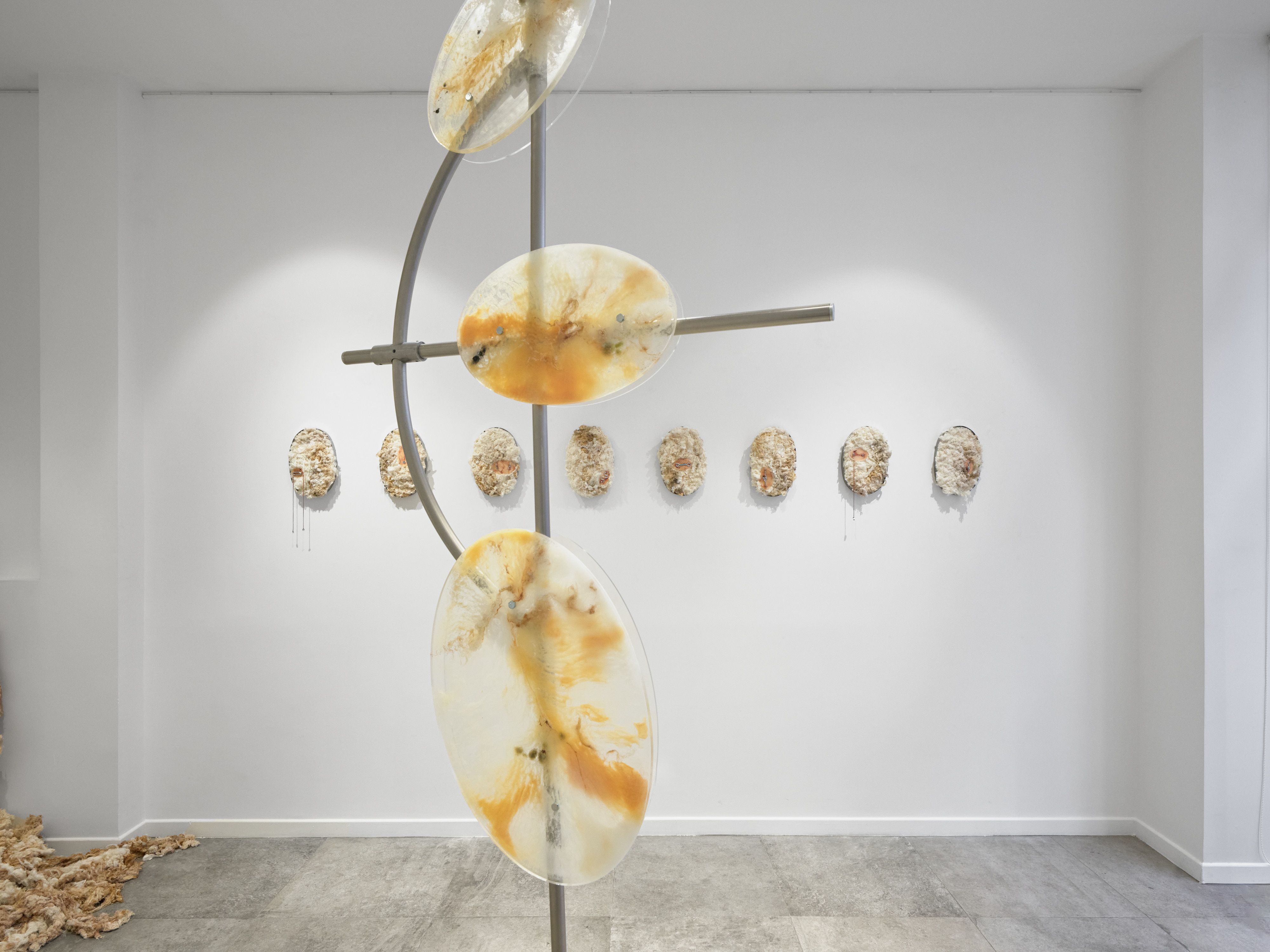
In heliosPlates, the sun’s trajectory becomes a sequence of diagrams. Pendulum explores gravity and balance through stone, metal and translucent forms. Resonance Studies turns thread and handmade paper into fragile maps of invisible connections.
These works don’t offer the satisfaction of a final answer. They propose something more interesting: orientation as a continuous negotiation with forces we cannot entirely control.
In an age obsessed with optimisation, certainty and the perfect angle, the ellipse quietly challenges the fantasy that everything should revolve around us.
Immersion Without the Spectacle
The installation Cave translates solar data specific to Mexico City into an enclosed environment of crystallised textile fibres, light and sound. Rather than simply presenting a spectacular image, it places the visitor inside a relationship with a process that exists beyond the room itself.
This is where KiefferWoodtli’s work separates itself from the increasingly predictable promise of immersive art. Enter a room, take a picture, leave with content. The artwork becomes a backdrop; the visitor becomes a distribution channel.
Cave suggests another possibility. The body doesn’t simply consume an image. It enters a system whose logic extends beyond what can be seen.
Their ecological investigation becomes even sharper in Arboreal Severance, developed for Swissnex during Climate Week NYC in 2025. Drawing on signals from a living tree, the work explored how human presence could alter an environment’s sonic experience. The implication is clear: our presence is not always neutral.
There is a necessary tension here.
Scientific data never reaches an audience without mediation; sensors select, technology translates, artists interpret. KiefferWoodtli don’t eliminate that distance between measurement and understanding. Their work makes it tangible.
No Outside Position
During the week of Art Basel Paris, AXES:TOTUM brings this research into a new architectural context. Its premise is to compress a larger system into a smaller space without losing the relationships and tensions that hold it together. A movement performance at the opening extends that investigation into the body, turning orientation into something physical rather than merely theoretical.
The timing is significant. Paris becomes a temporary capital of cultural spectacle, where objects compete for attention and novelty is often mistaken for meaning. KiefferWoodtli offer a different proposition: an encounter that doesn’t promise mastery, but questions the desire for it.
Their work sits between contemporary art, design, scientific research and ecological thought, using technology not as a gimmick but as a way to expose the limits of perception. The tree was alive before its signals became an artwork. The sun followed its trajectory before anyone translated it into diagrams. Gravity never needed a sculptor to make it real.
The universe doesn’t need us to organise it around ourselves.
The radical gesture is not to invent another map, but to question the authority of the person holding it. AXES:TOTUM leaves us moving through a system that existed before our arrival and will continue long after we leave.
We have spent centuries trying to put ourselves at the centre of everything. Perhaps the next cultural shift begins when we finally realize we never were.