Has Nicolas Ghesquière finally liberated the body from his own future; or simply made it easier to sell?
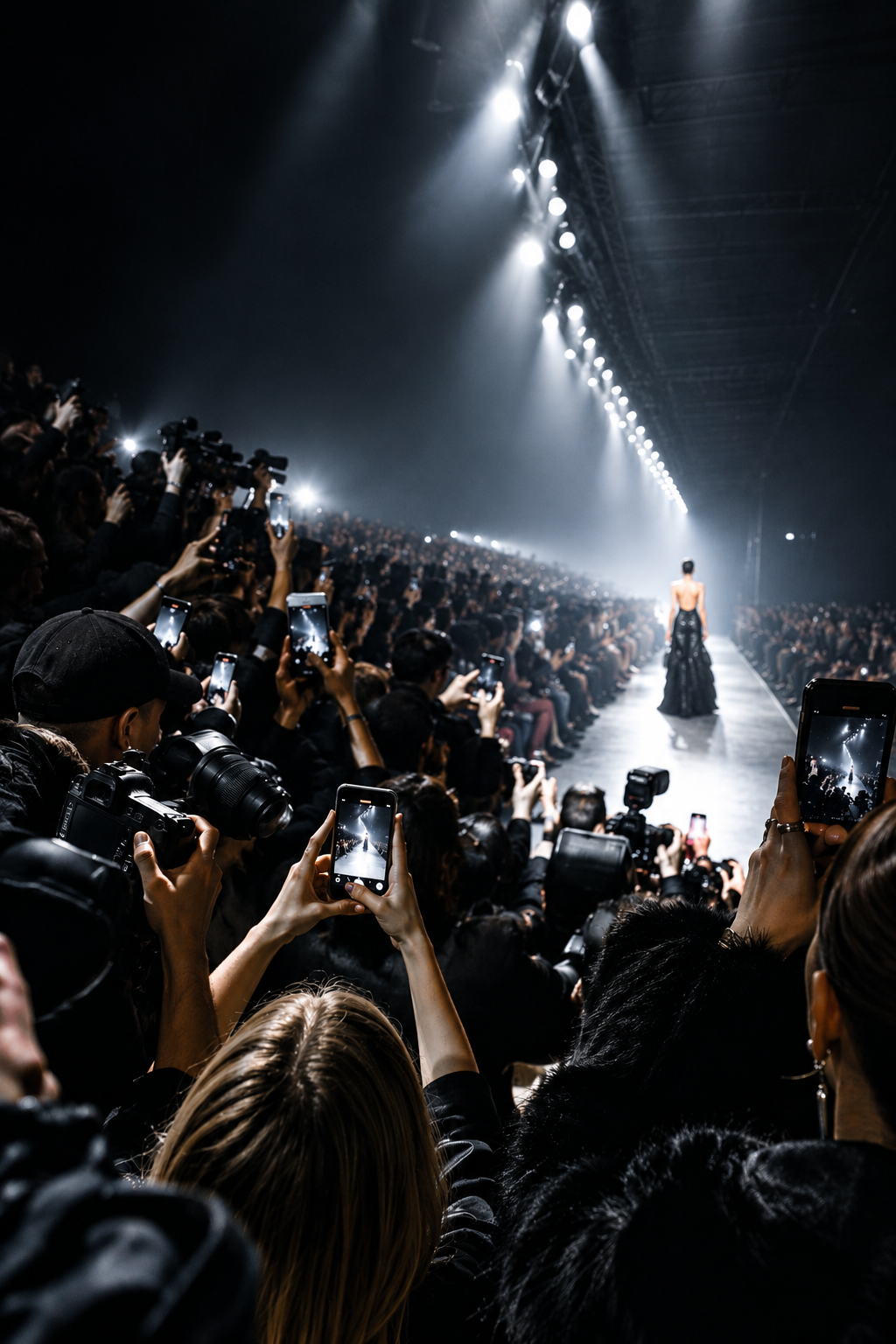
Paris Fashion Week ends at the Louvre, naturally. Louis Vuitton closes the official schedule with flying cars hovering above the Cour Carrée, as if The Jetsons had been given a luxury budget and an invitation to the front row. It is spectacular, slightly ridiculous and completely on brand.
Then the clothes arrive.
They are light.
Almost suspiciously light.
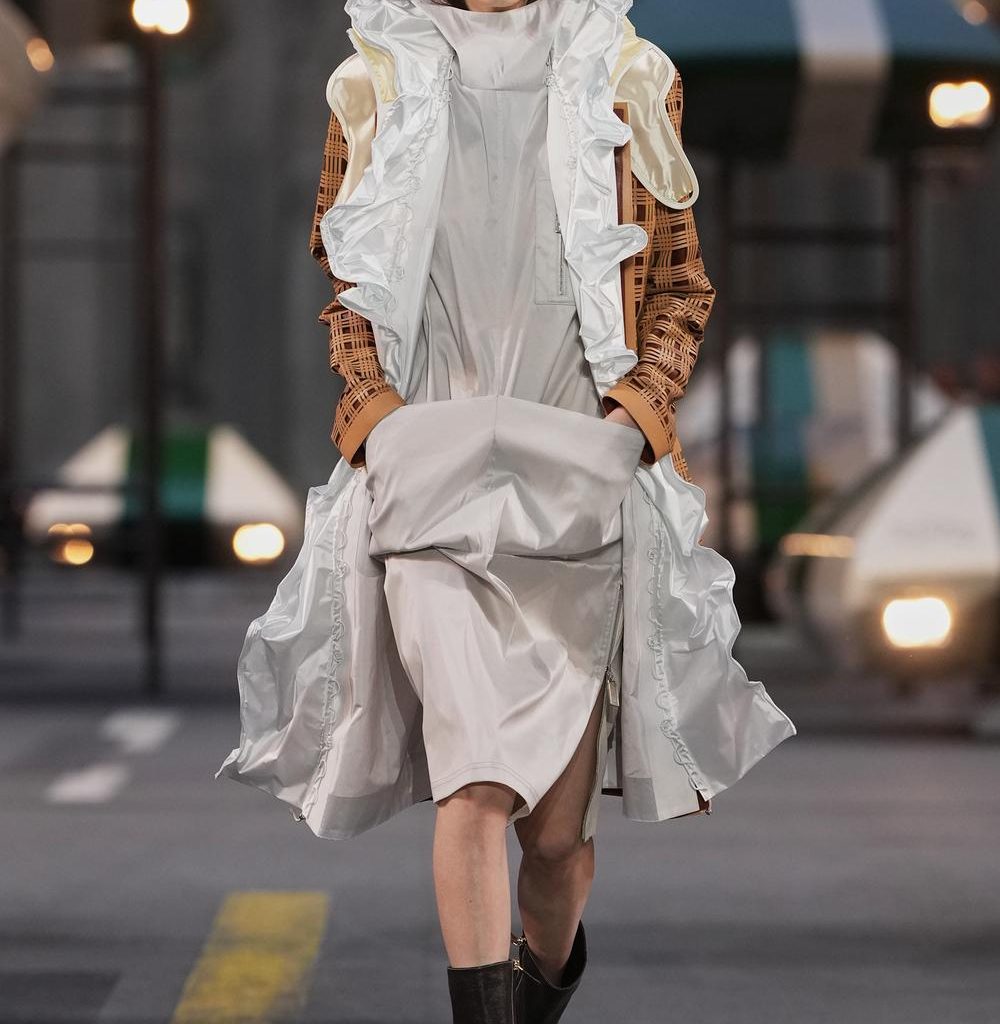
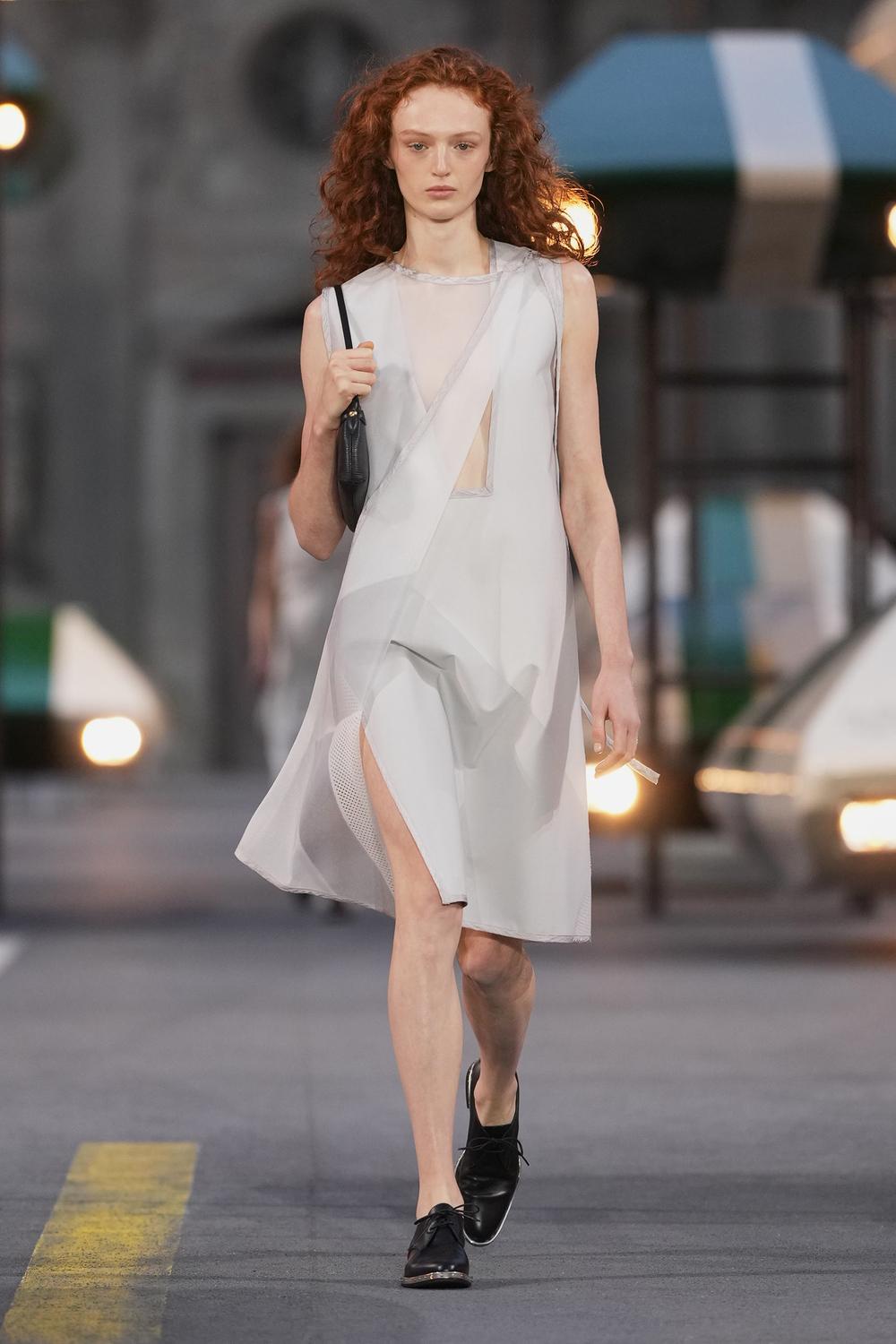
For Spring Summer 27, Nicolas Ghesquière calls the collection Ergonomie and replaces much of the armour that has defined his career with transparency, fluidity, exposed skin, soft tailoring and ultra-light fabrics. The designer who spent decades making the body look engineered suddenly wants it to breathe.
That is the story.
The more interesting story is whether we should believe it.
Ghesquière has always imagined fashion through the future. At Balenciaga, where he arrived as a 25-year-old prodigy in 1997, the future was structural: sculpted shoulders, technical surfaces, exaggerated proportions, clothes behaving like architecture. His clothes did not merely cover the body. They redesigned it.
Louis Vuitton gave that obsession a much larger mythology.
Here, the future was connected to travel, technology and movement, while the house itself provided the perfect historical infrastructure. Louis Vuitton began with the problem of how to move through the world: trunks, packing, lighter constructions, objects designed to travel. Ghesquière spent more than a decade translating that logic into a contemporary fashion language.
The irony is that his most convincing Louis Vuitton future might be the one in which he finally removes the machinery.
Ergonomie is built around a simple proposition: clothing should work with the body, not against it. It should move, breathe, adapt. The idea sounds almost banal until you remember how much contemporary fashion has been built around the opposite fantasy — the body as spectacle, the garment as architecture, the silhouette as an achievement.
Ghesquière is asking for less.
Less weight. Less rigidity. Less visual effort.
The result is often very good.
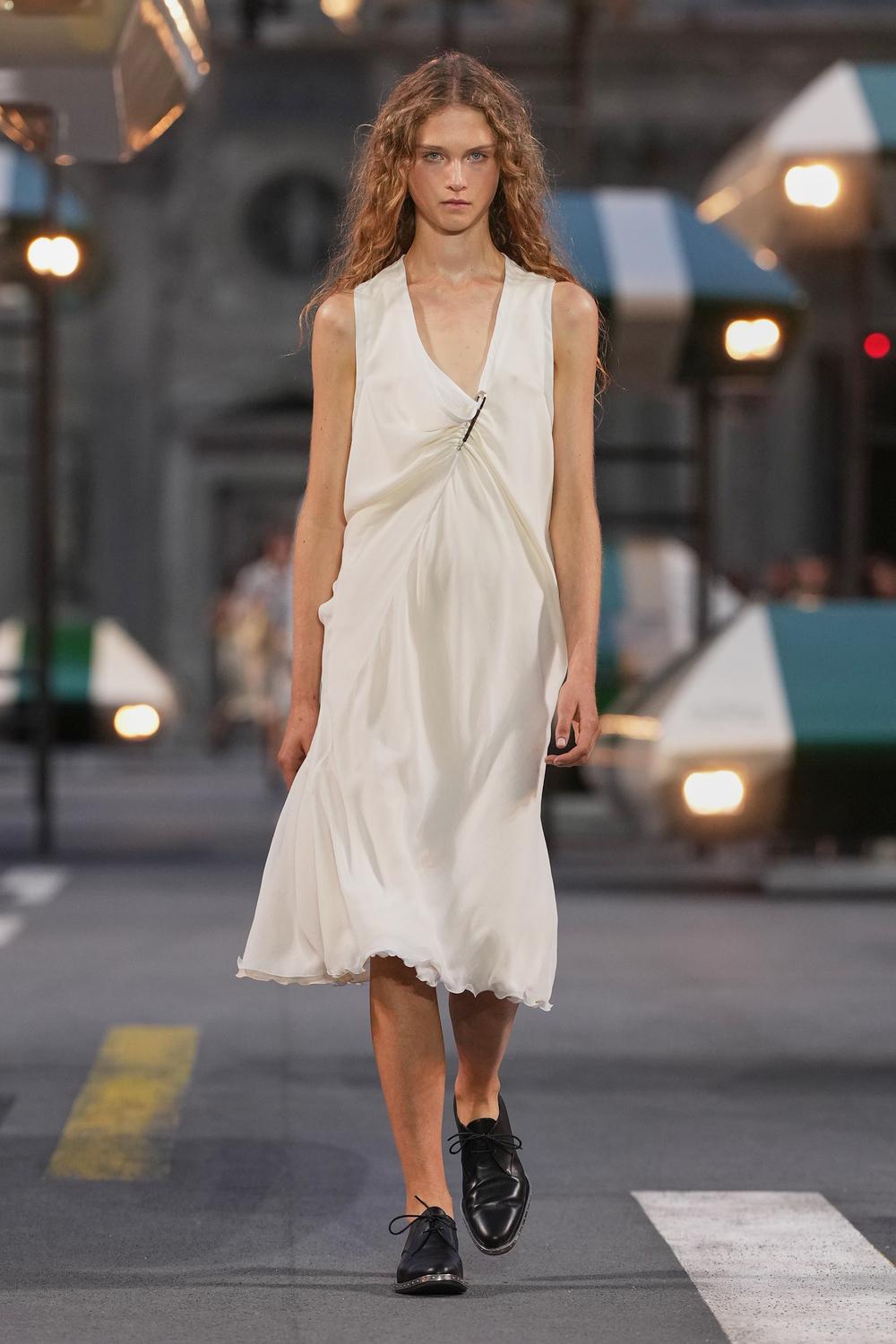
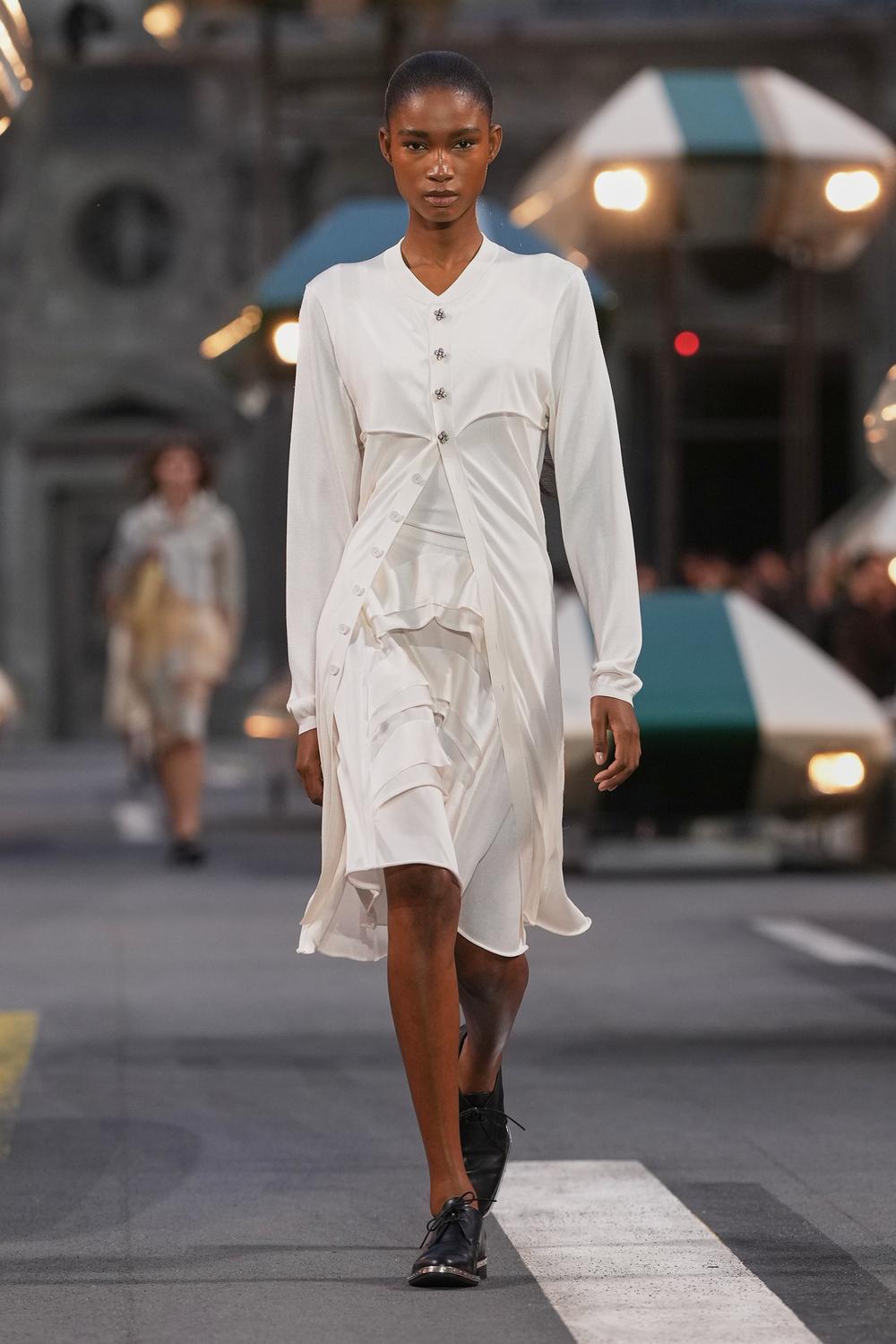
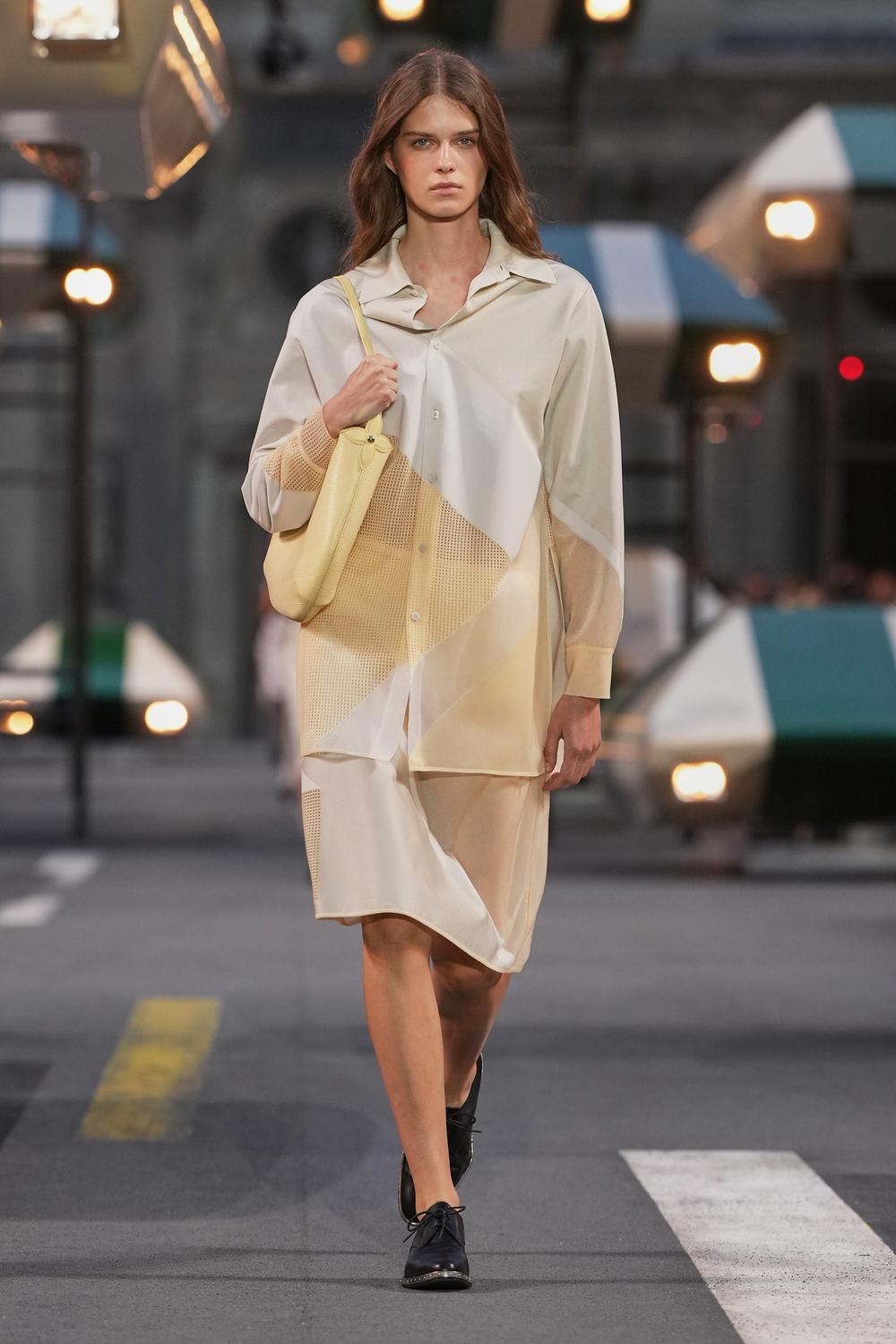
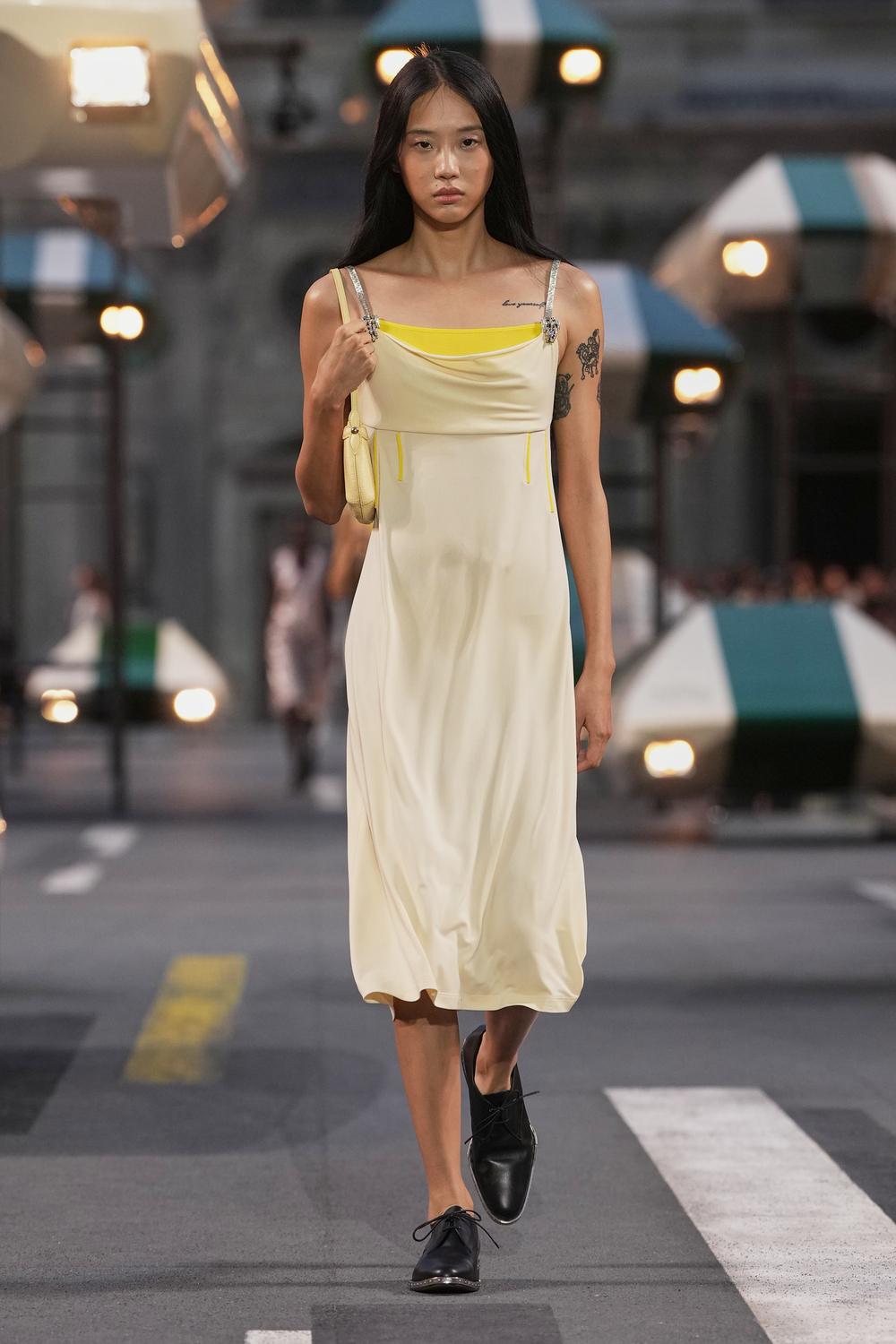
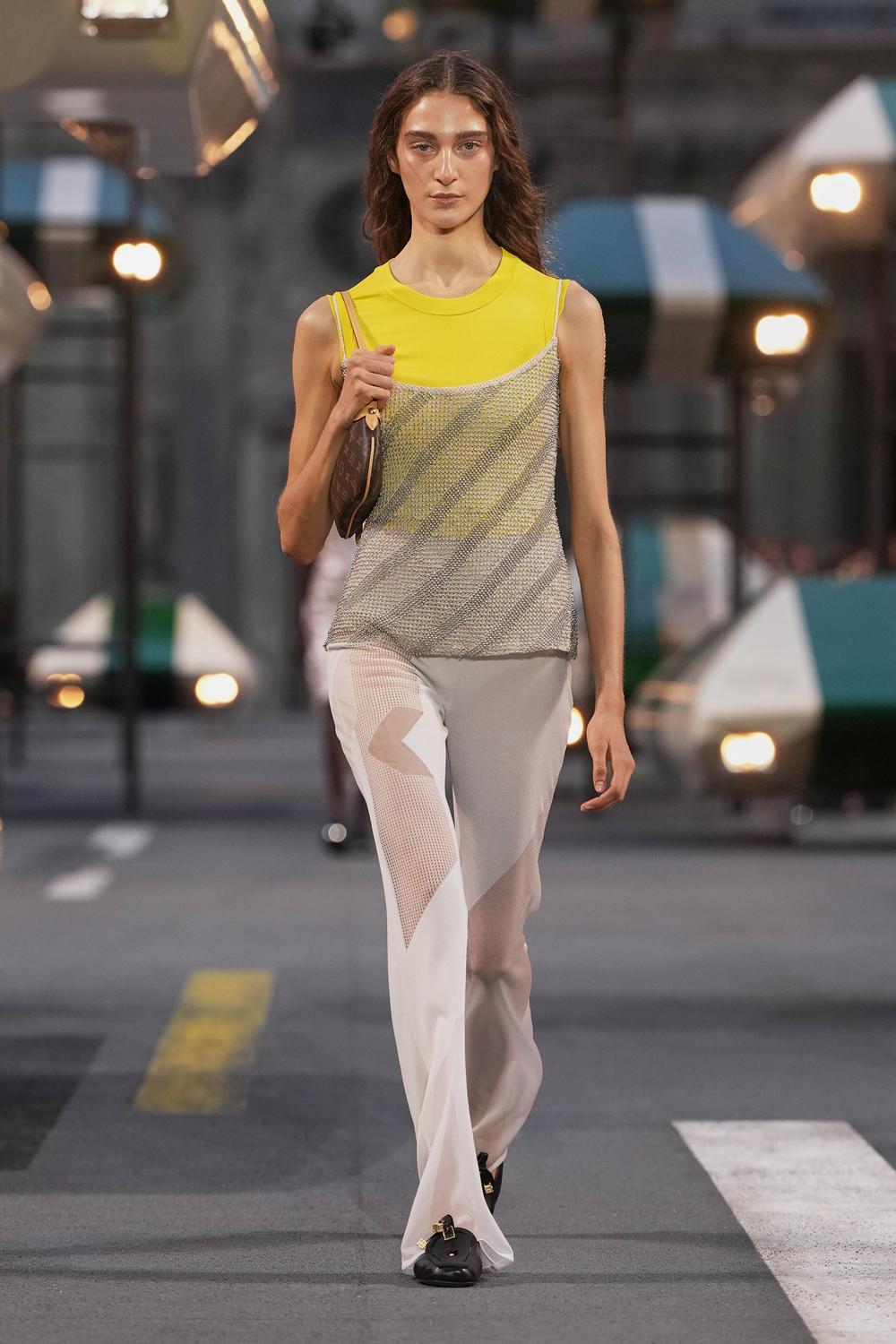
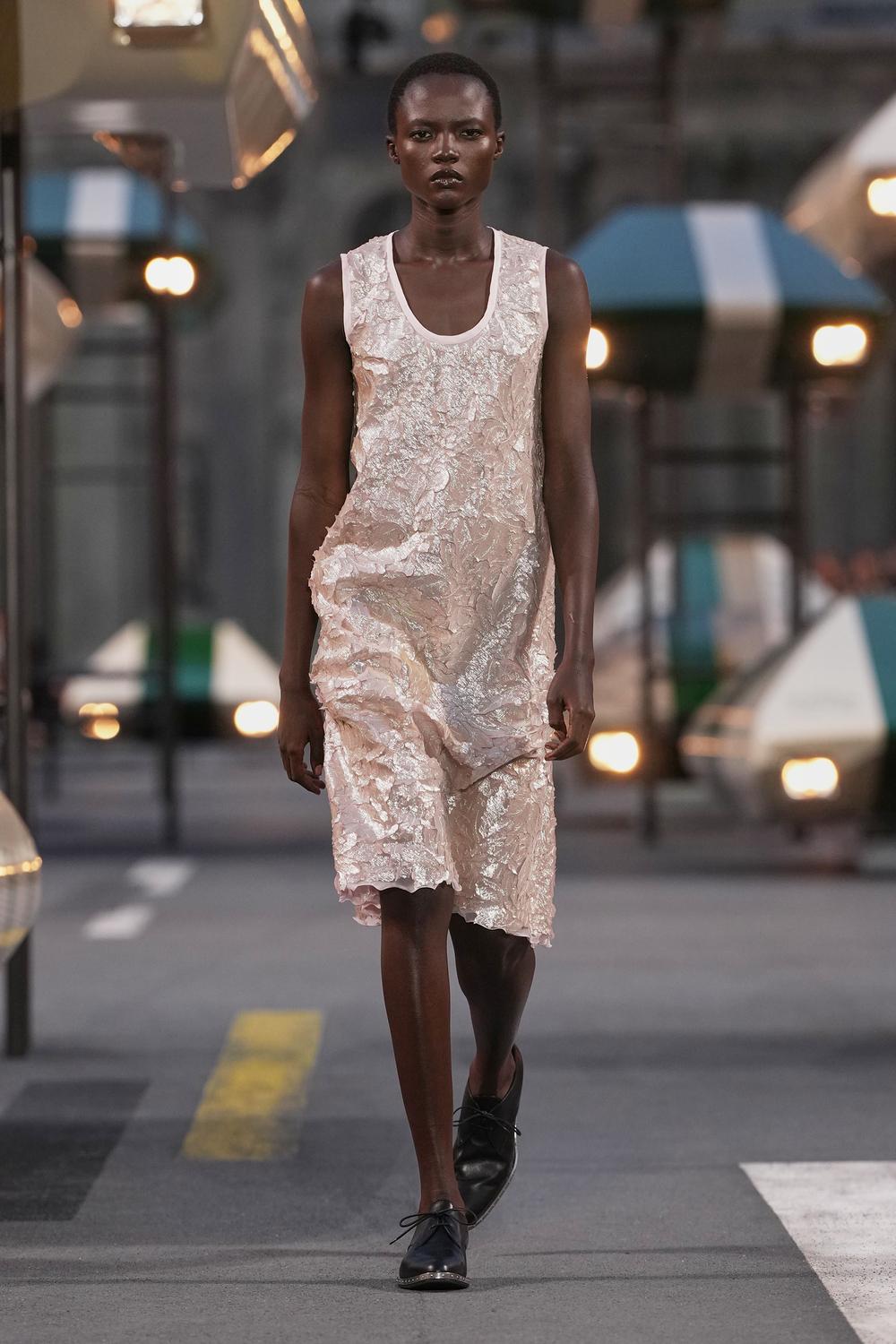
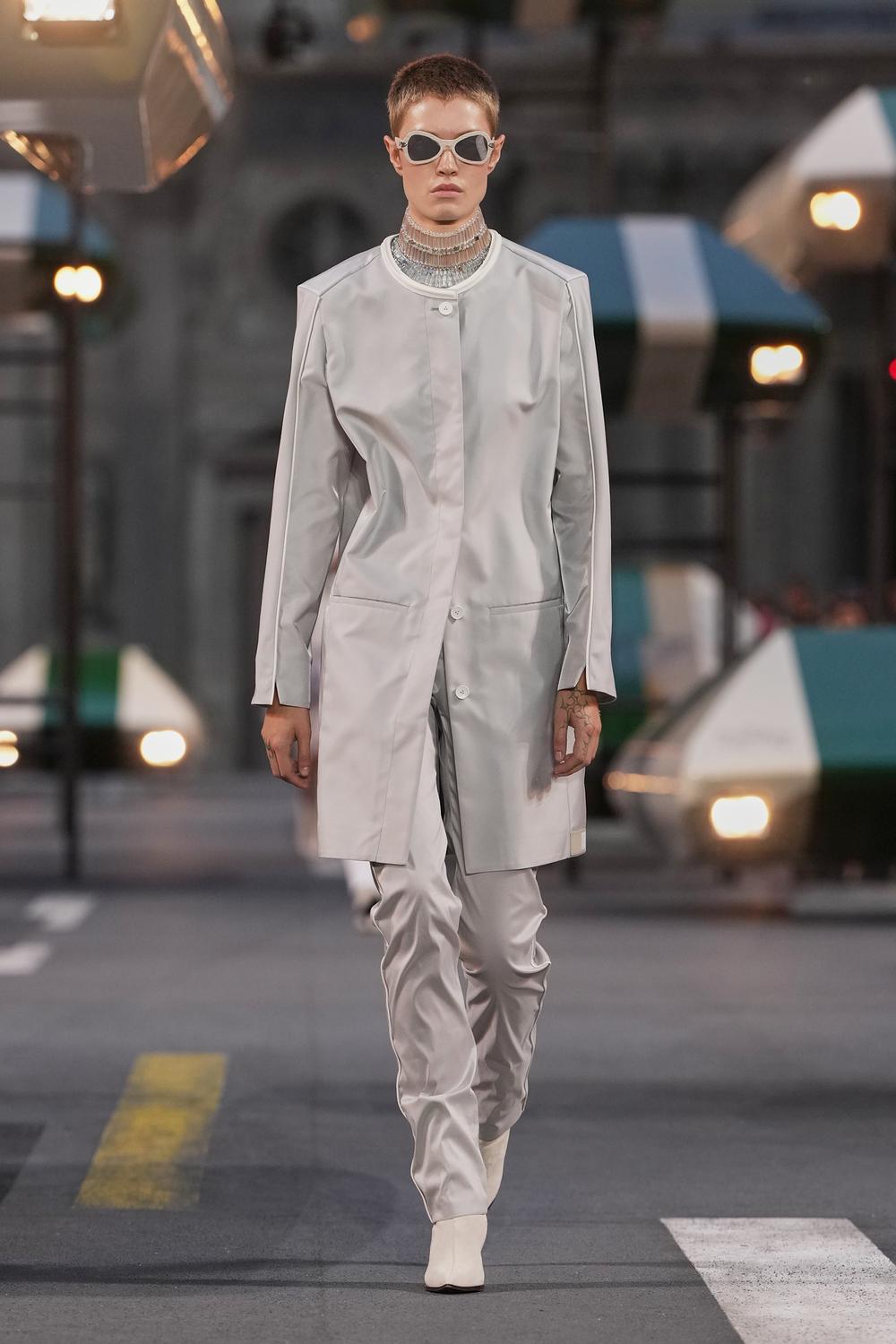
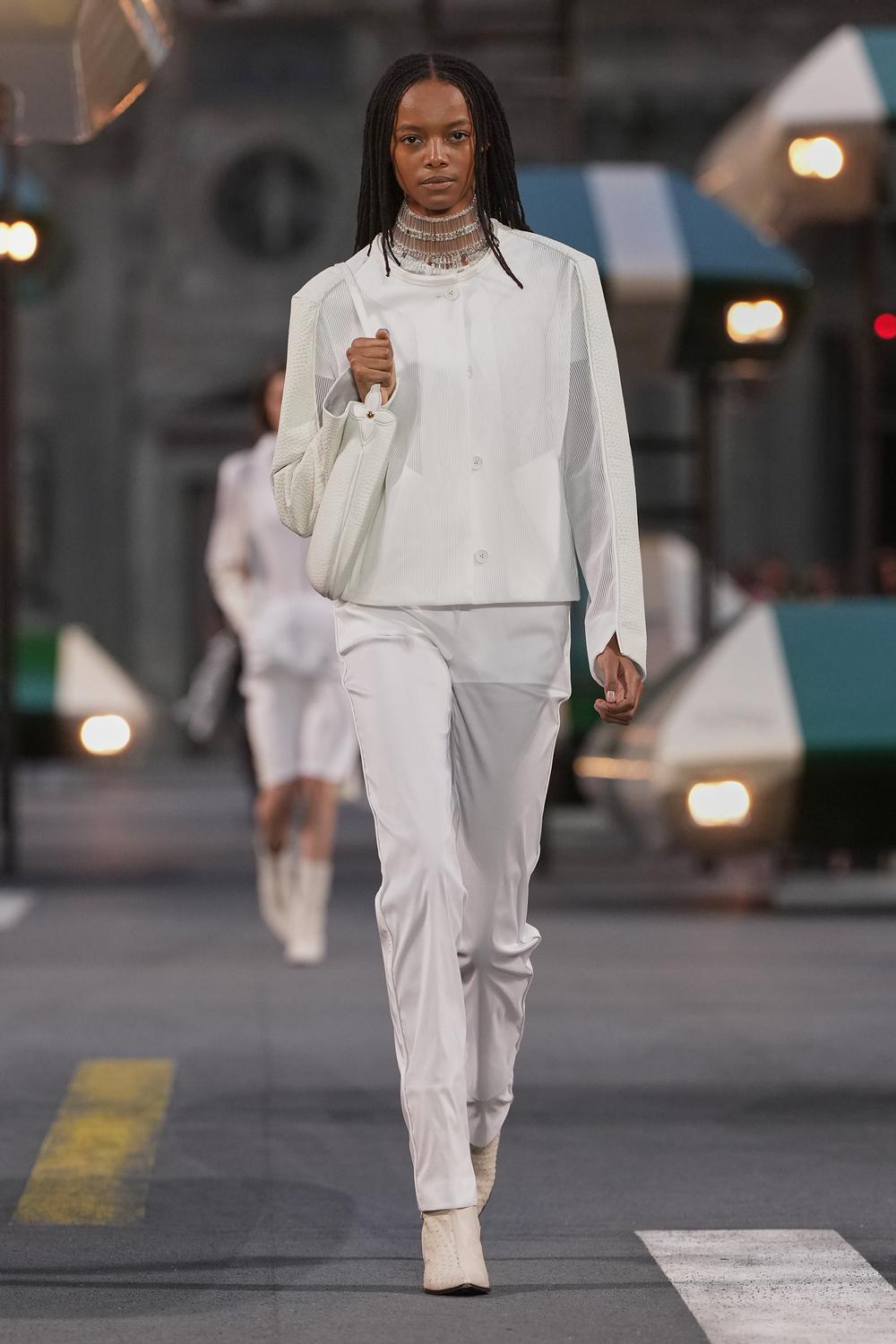
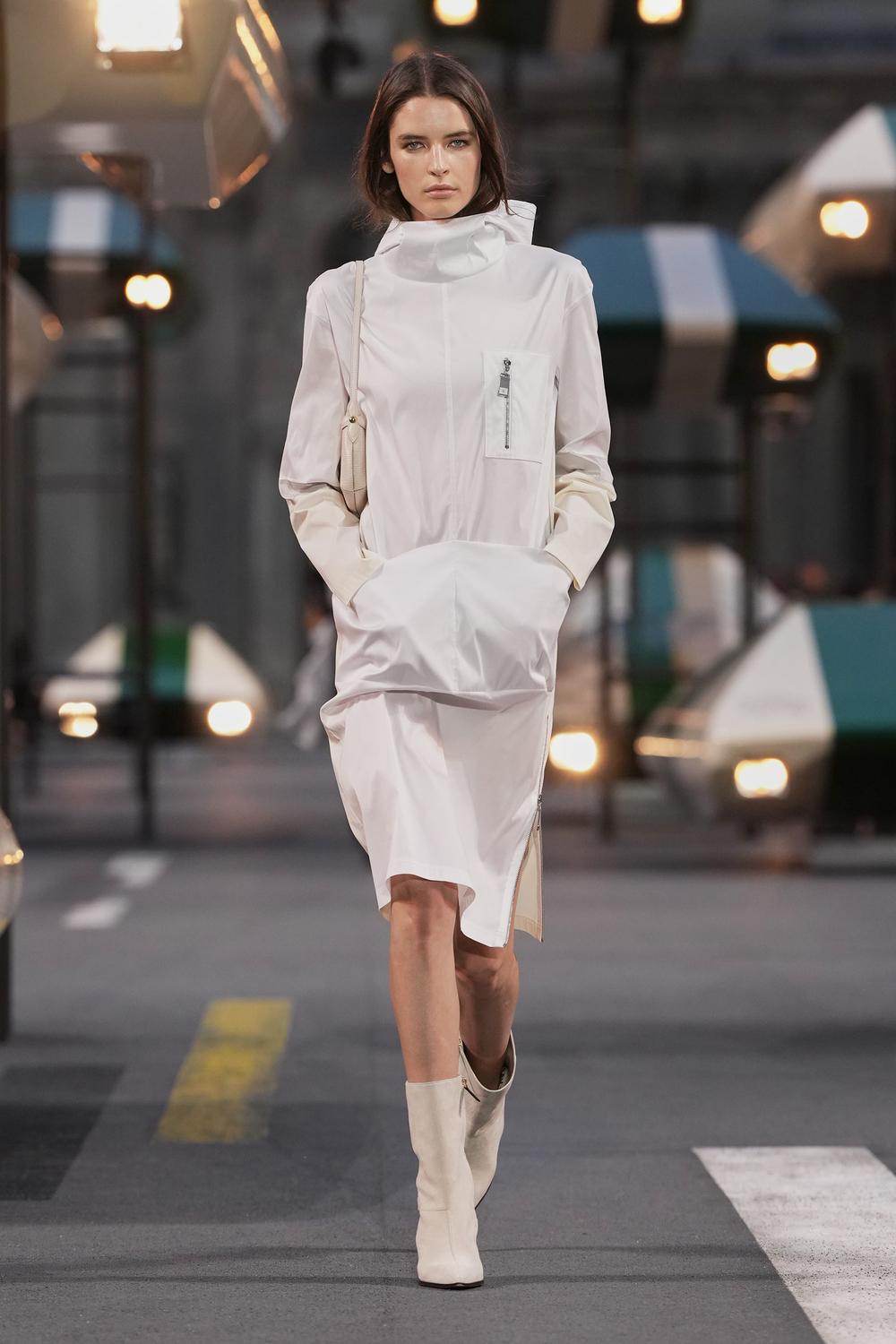
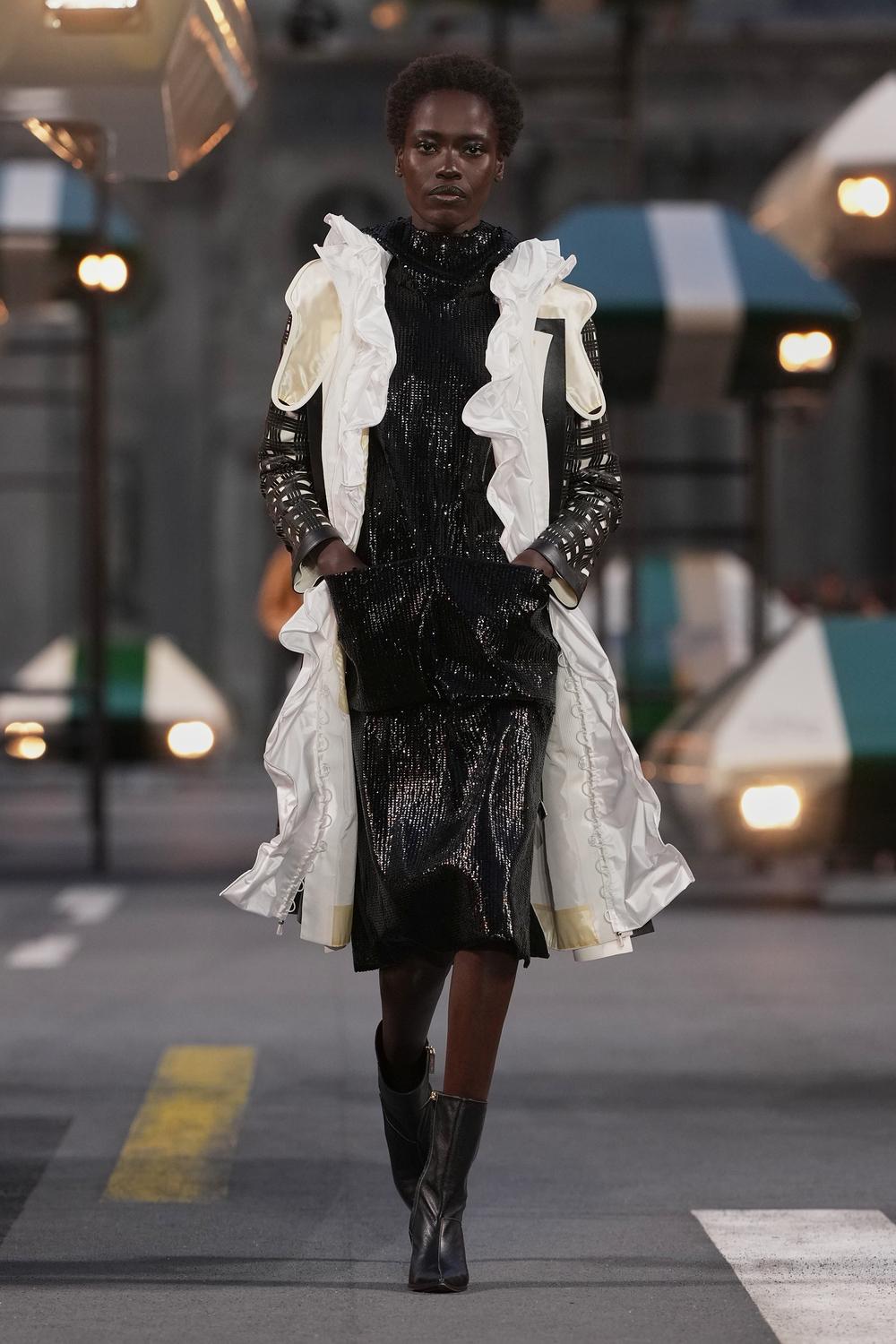
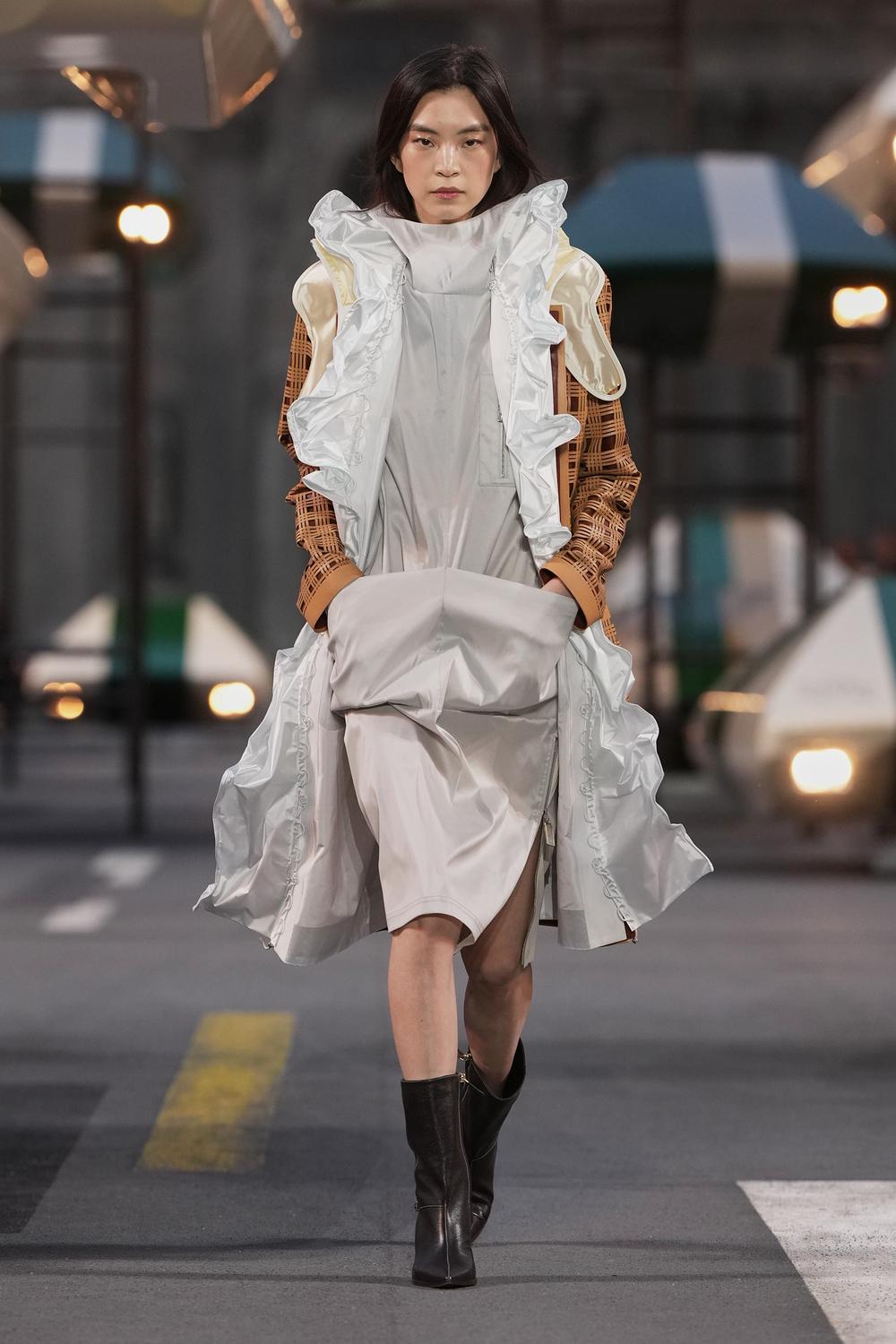
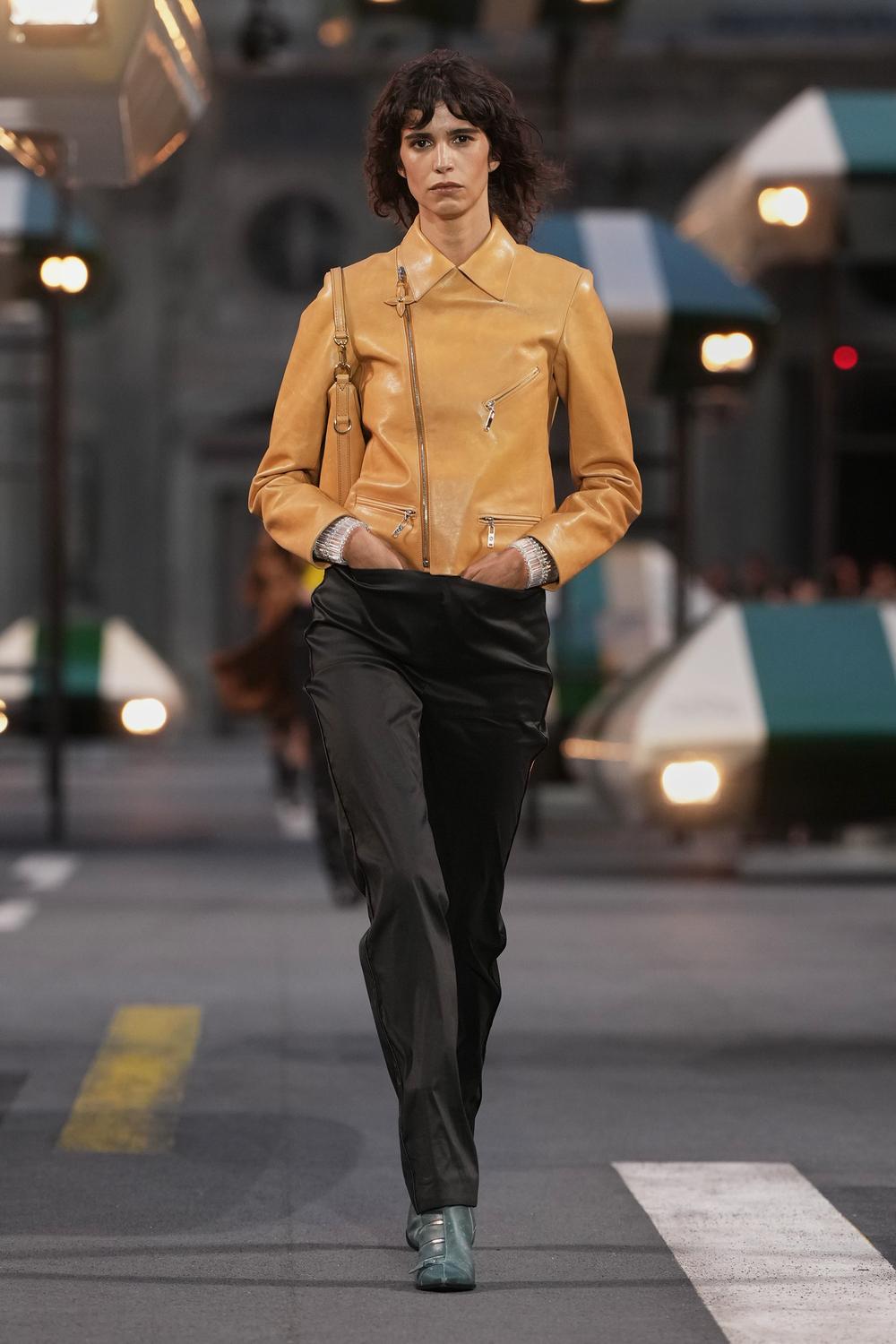
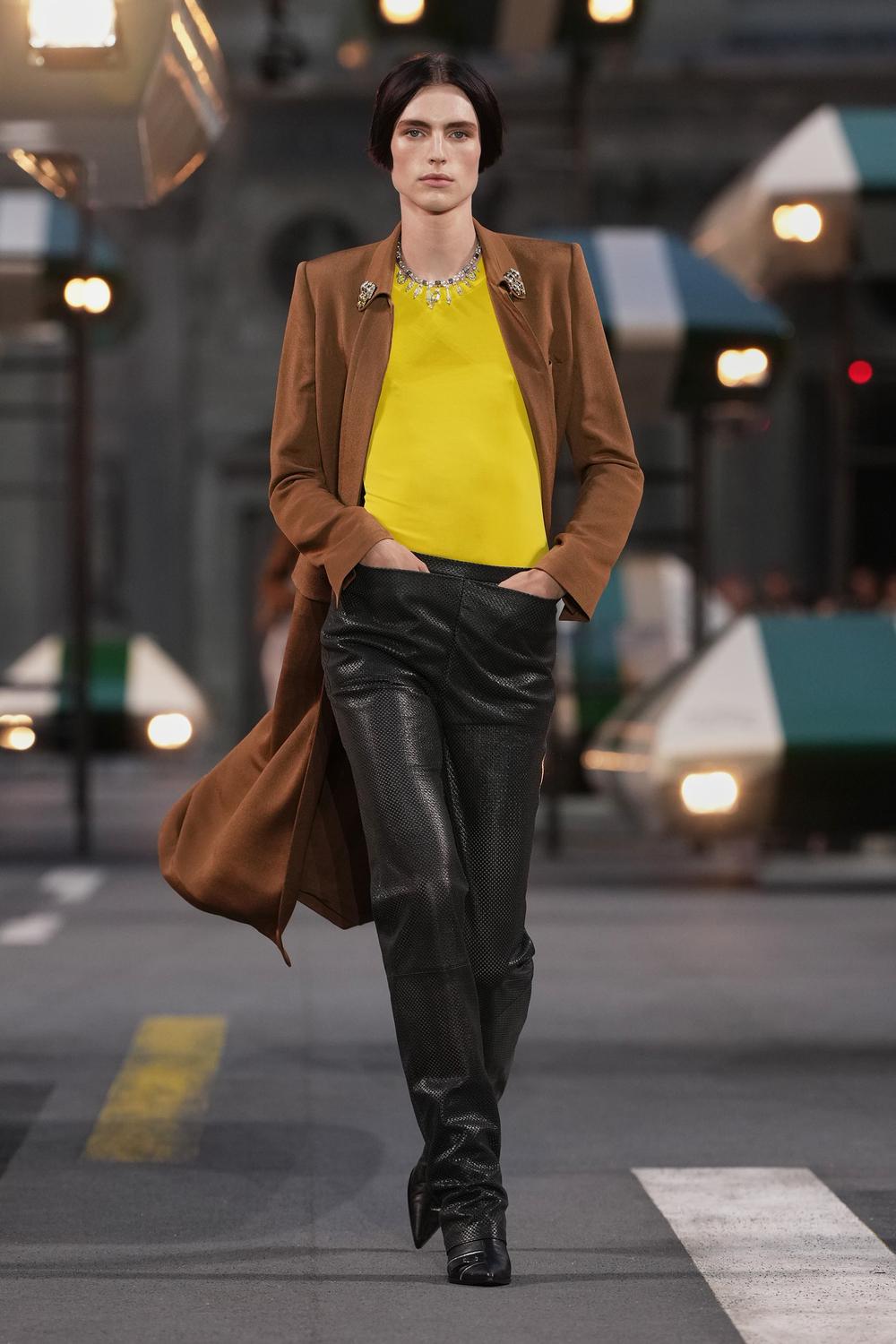
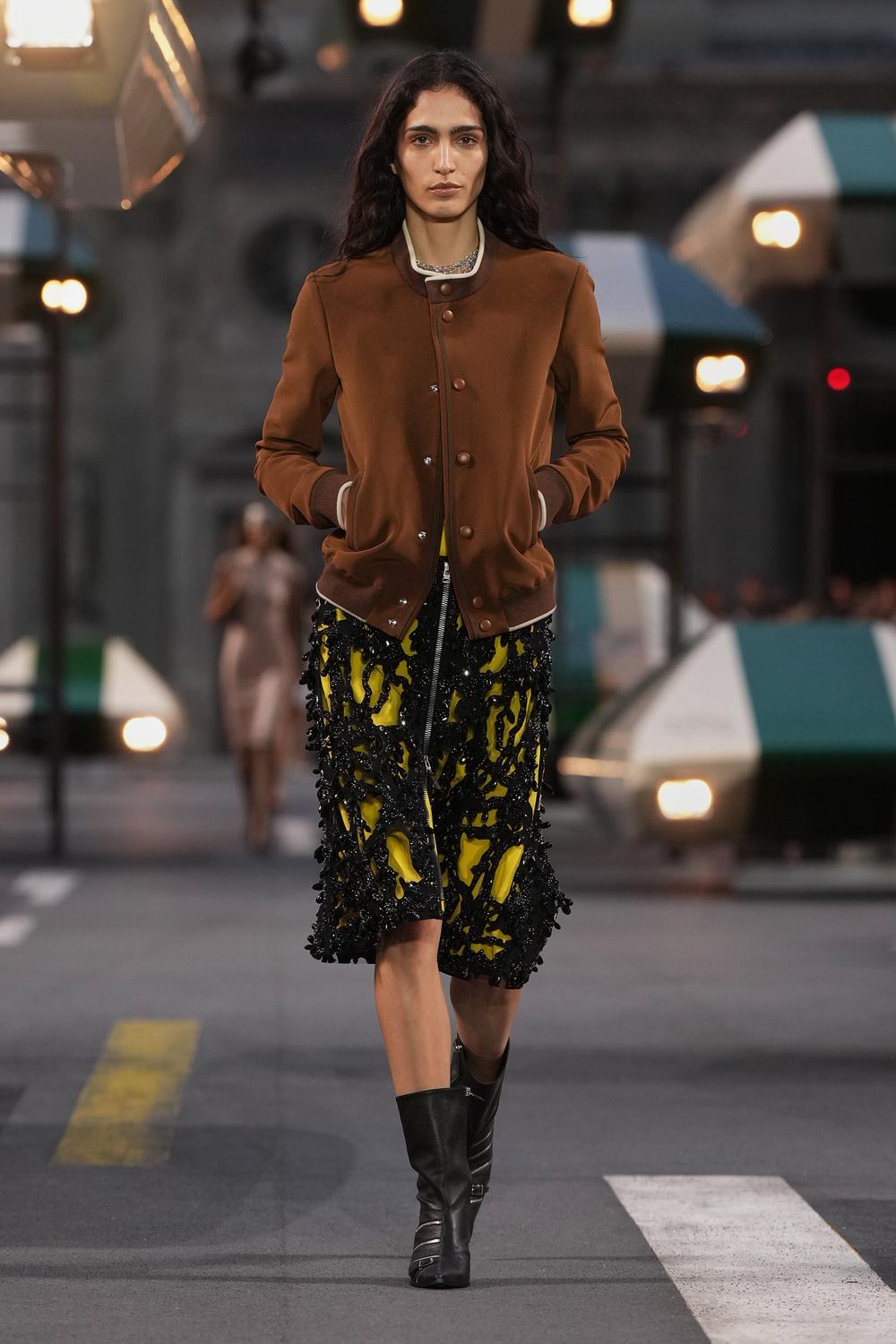
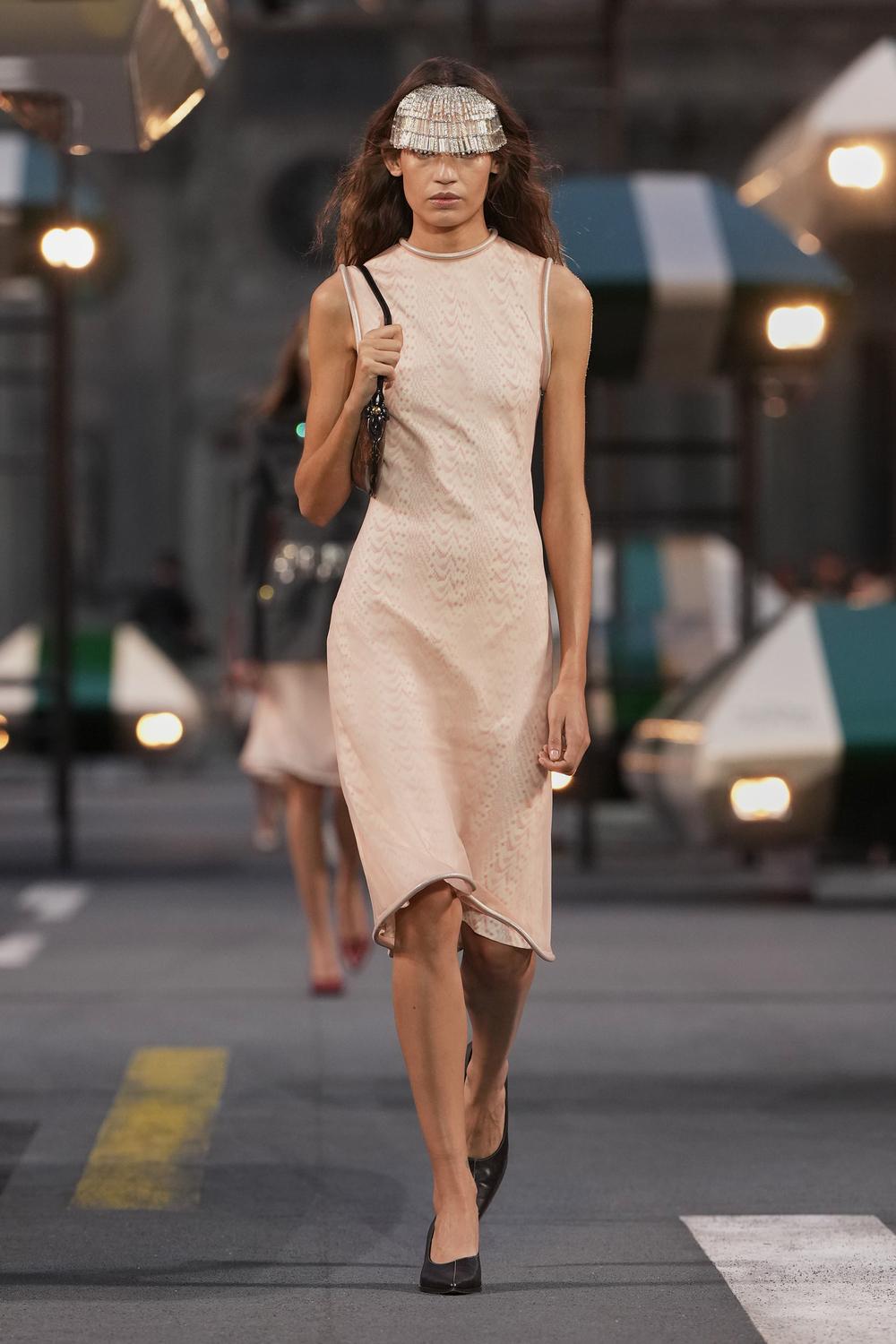
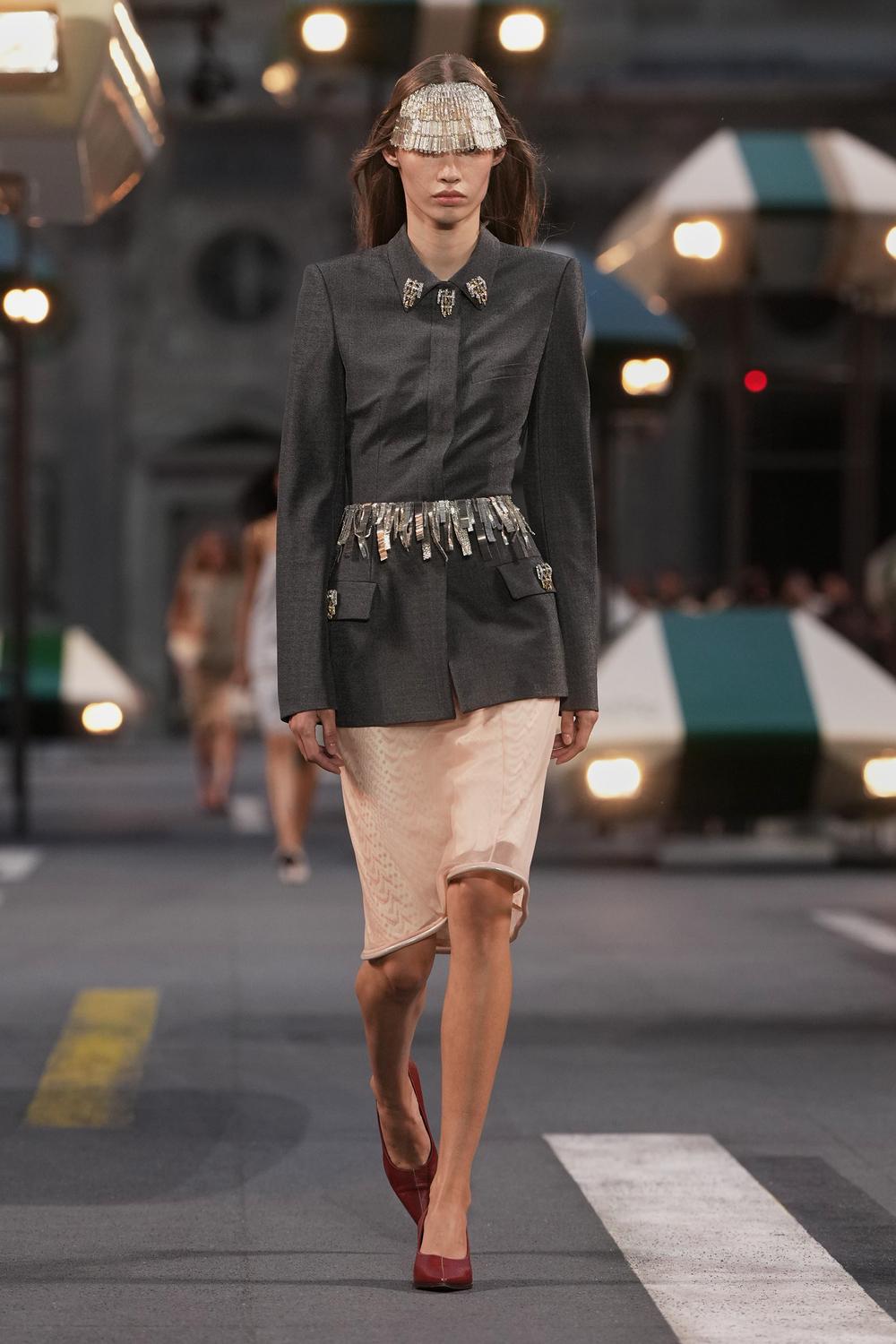
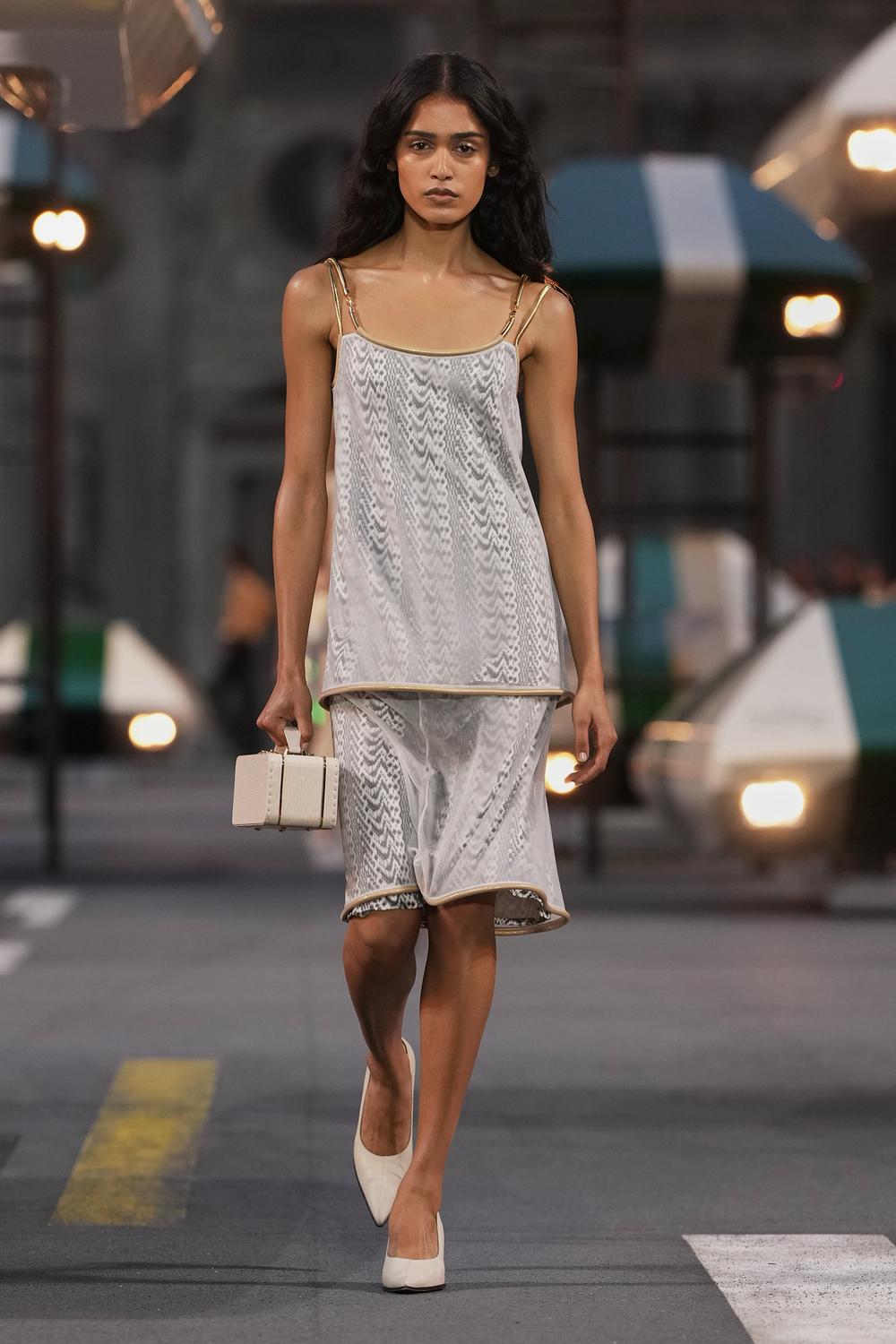
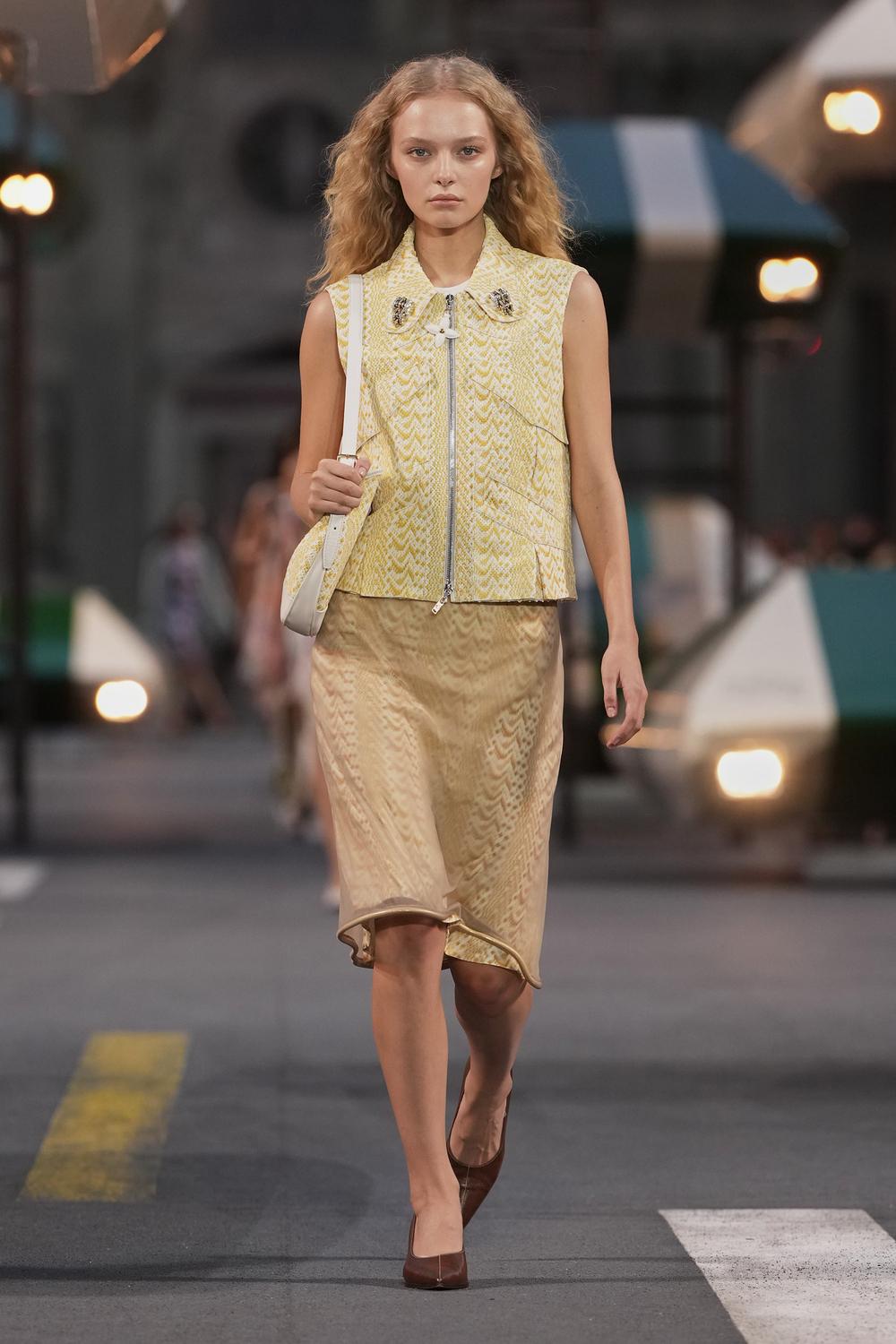
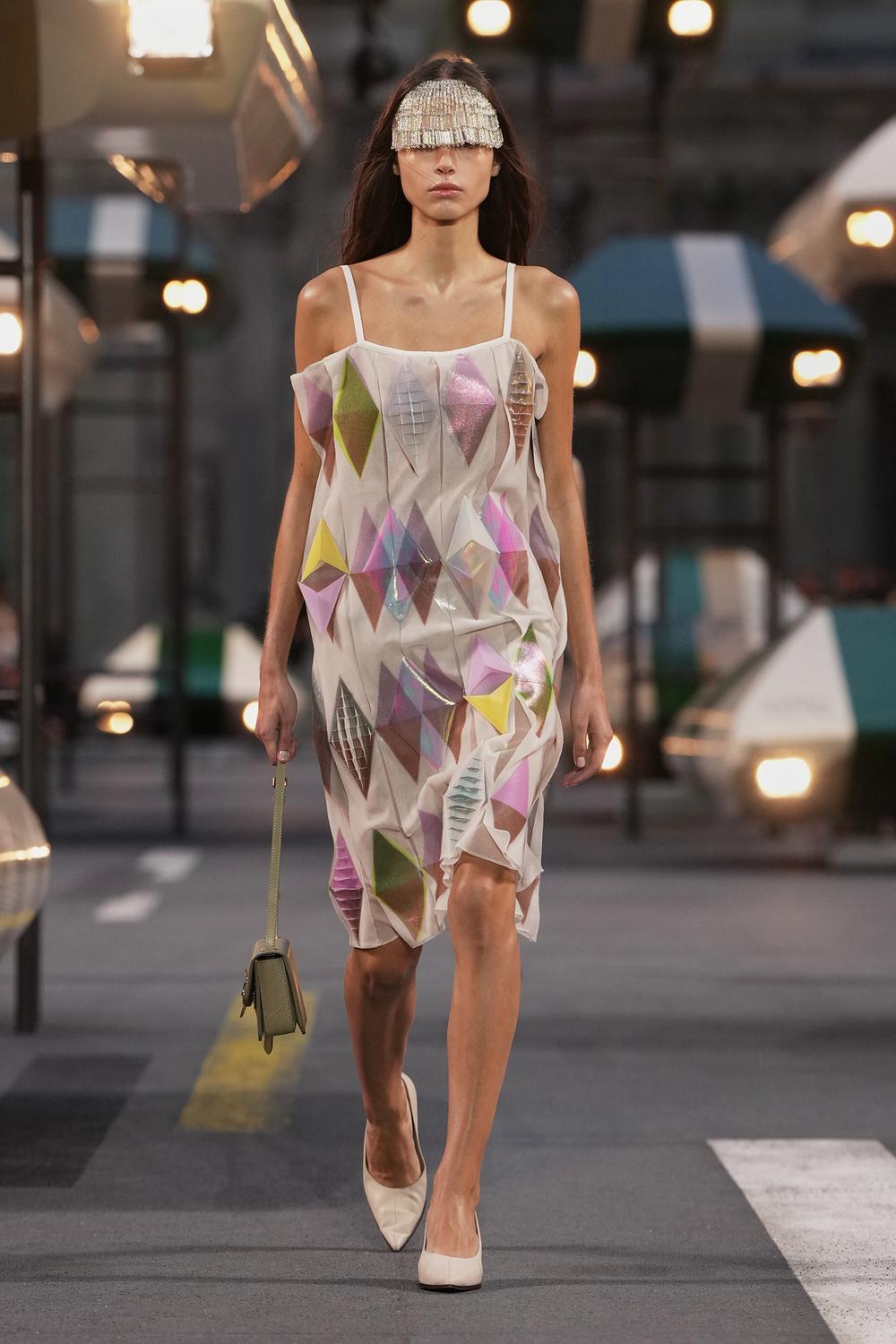
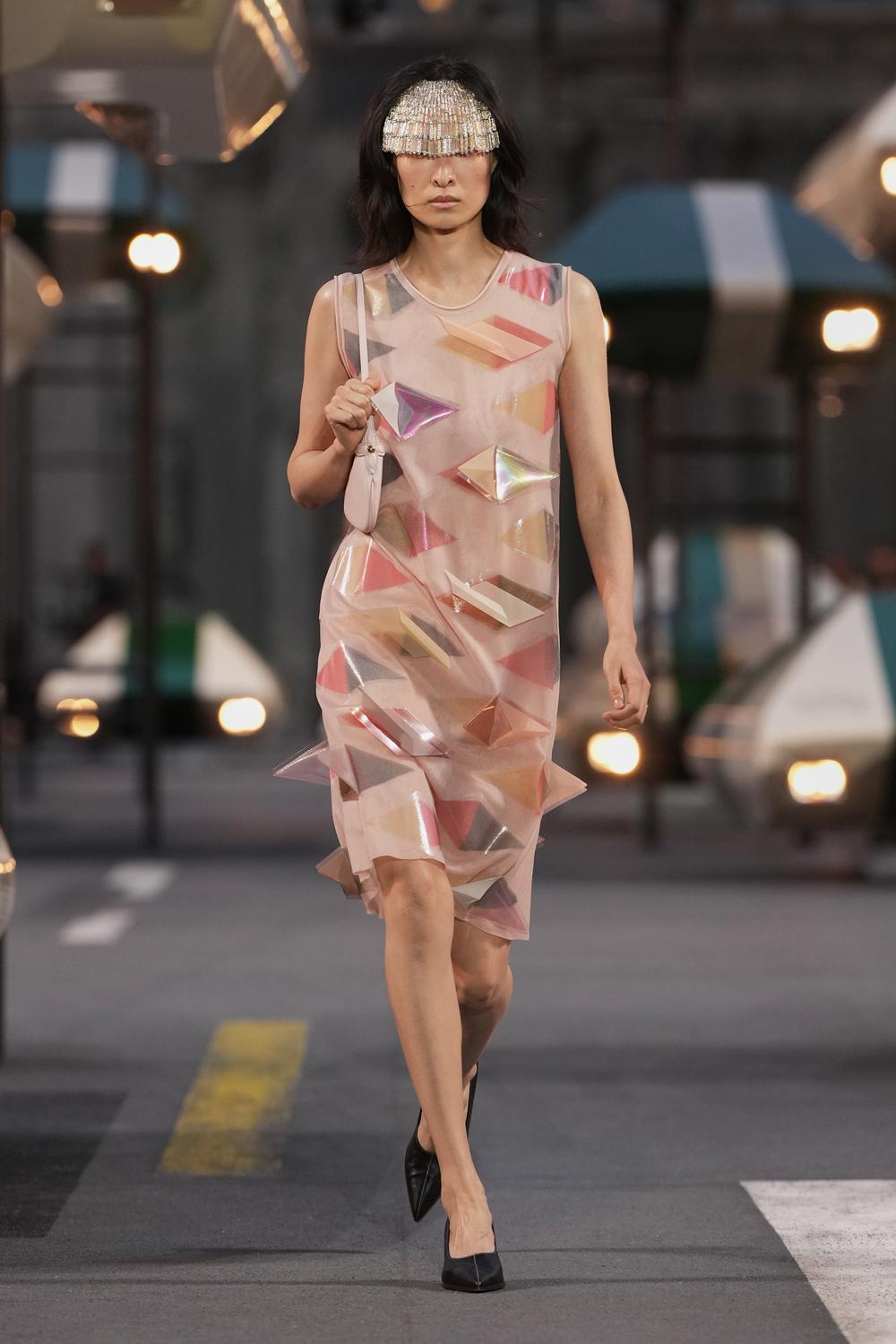
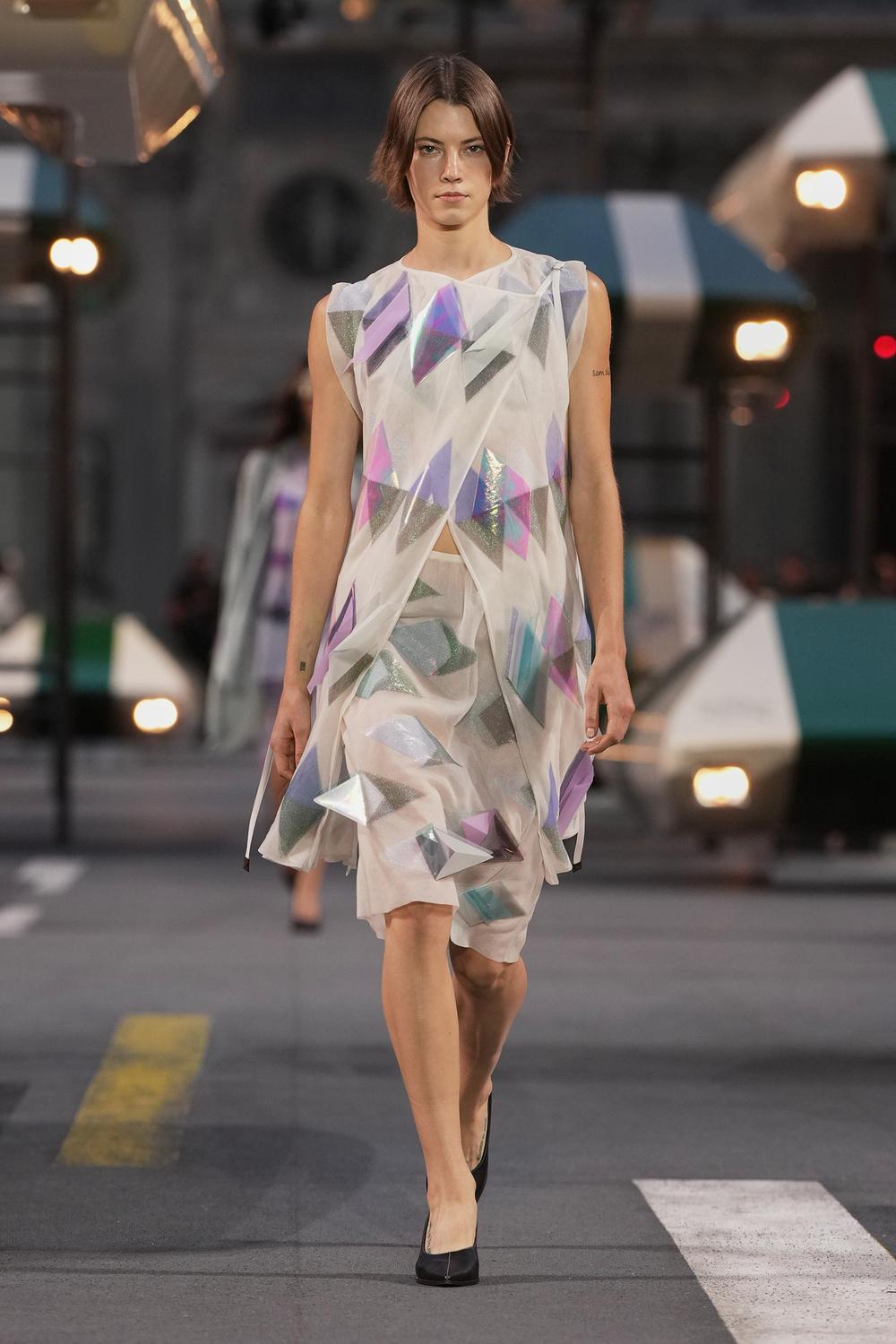
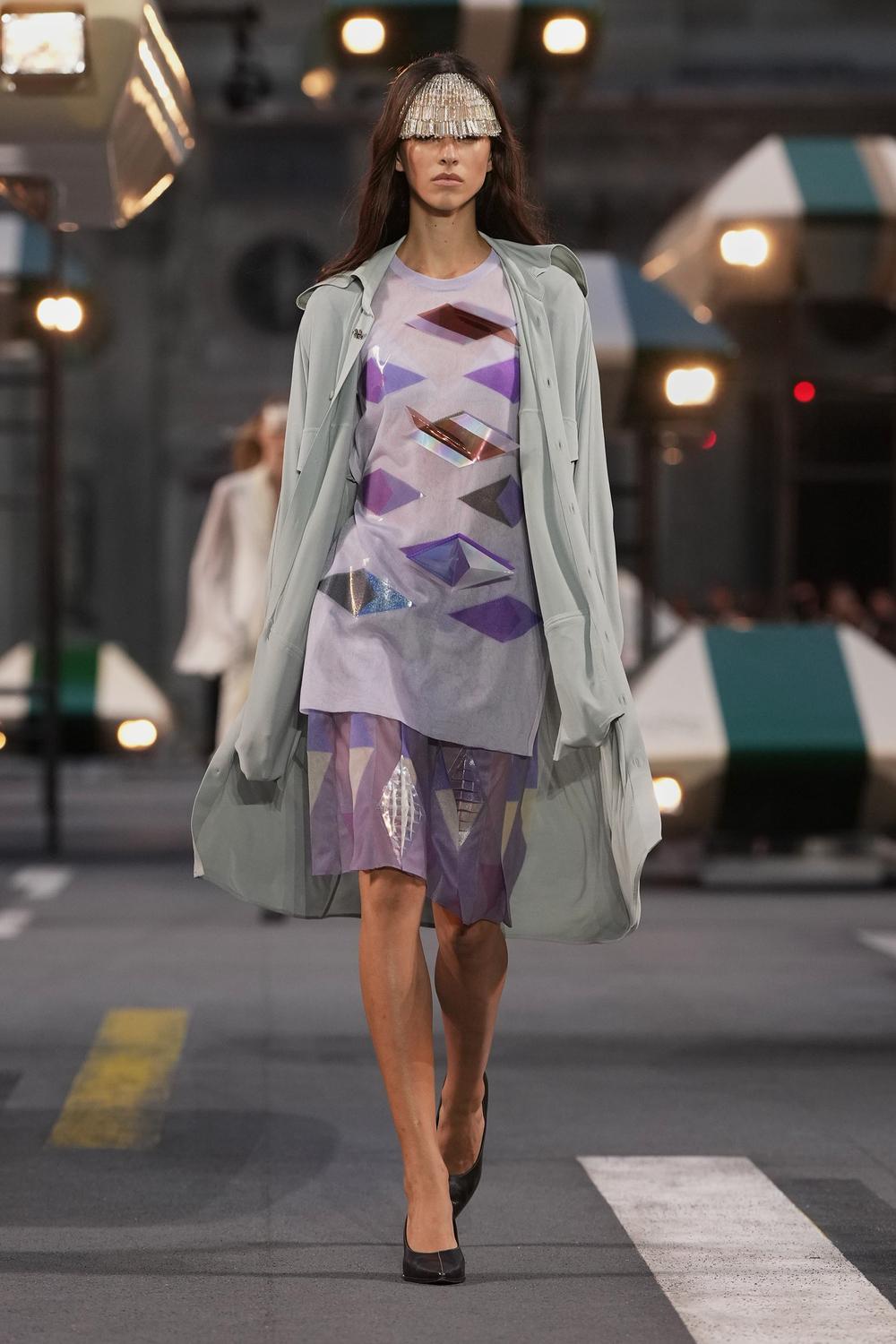
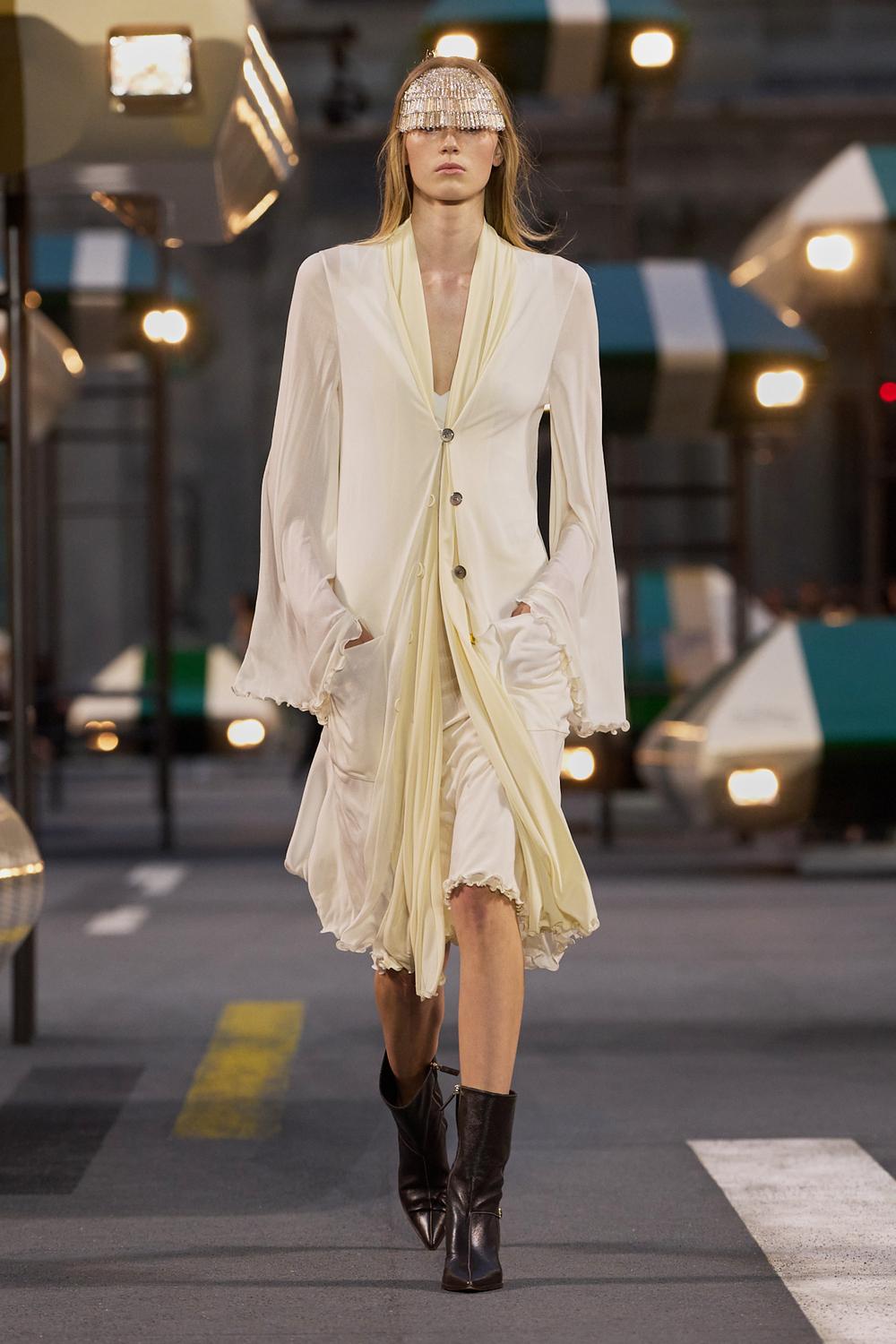
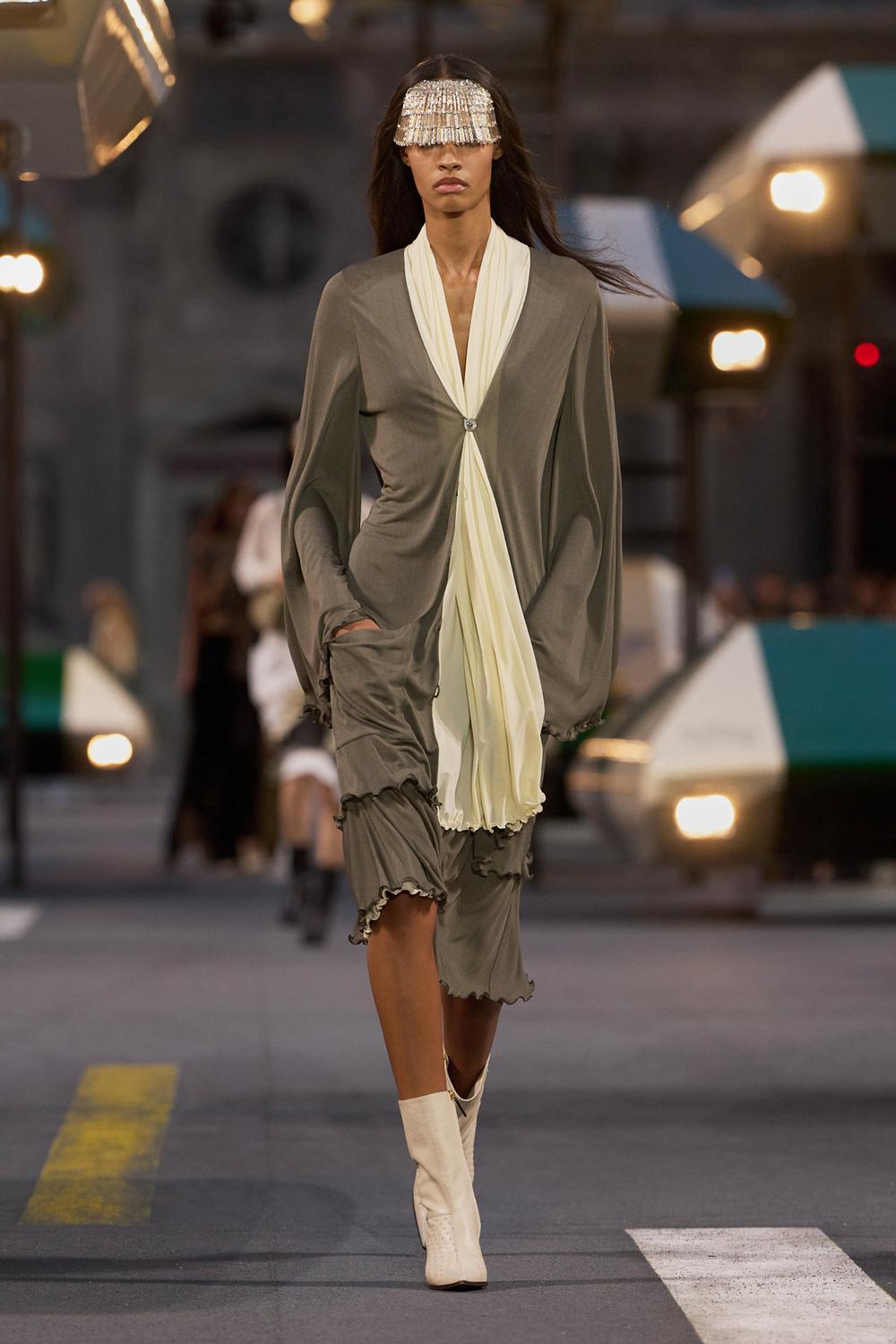
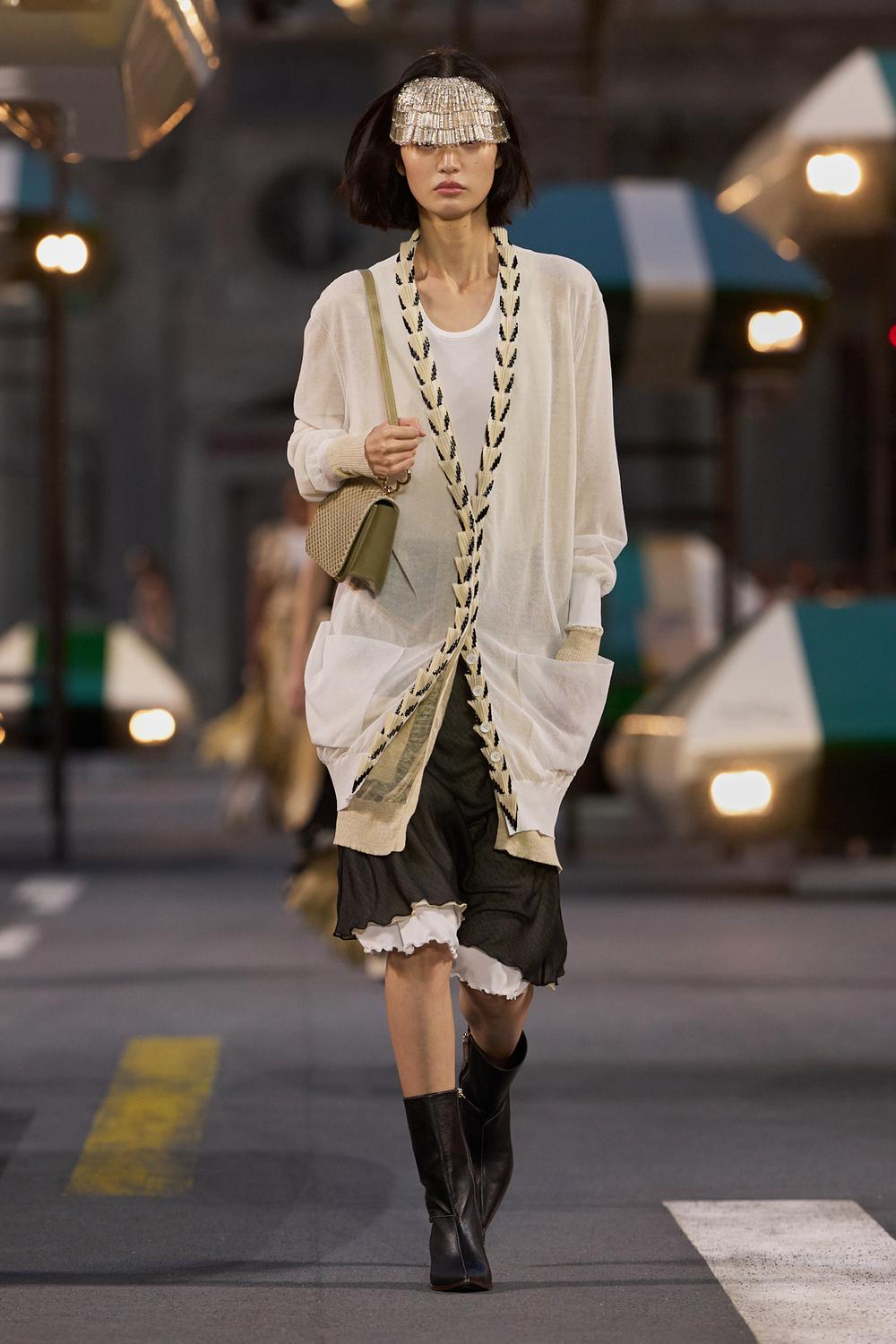
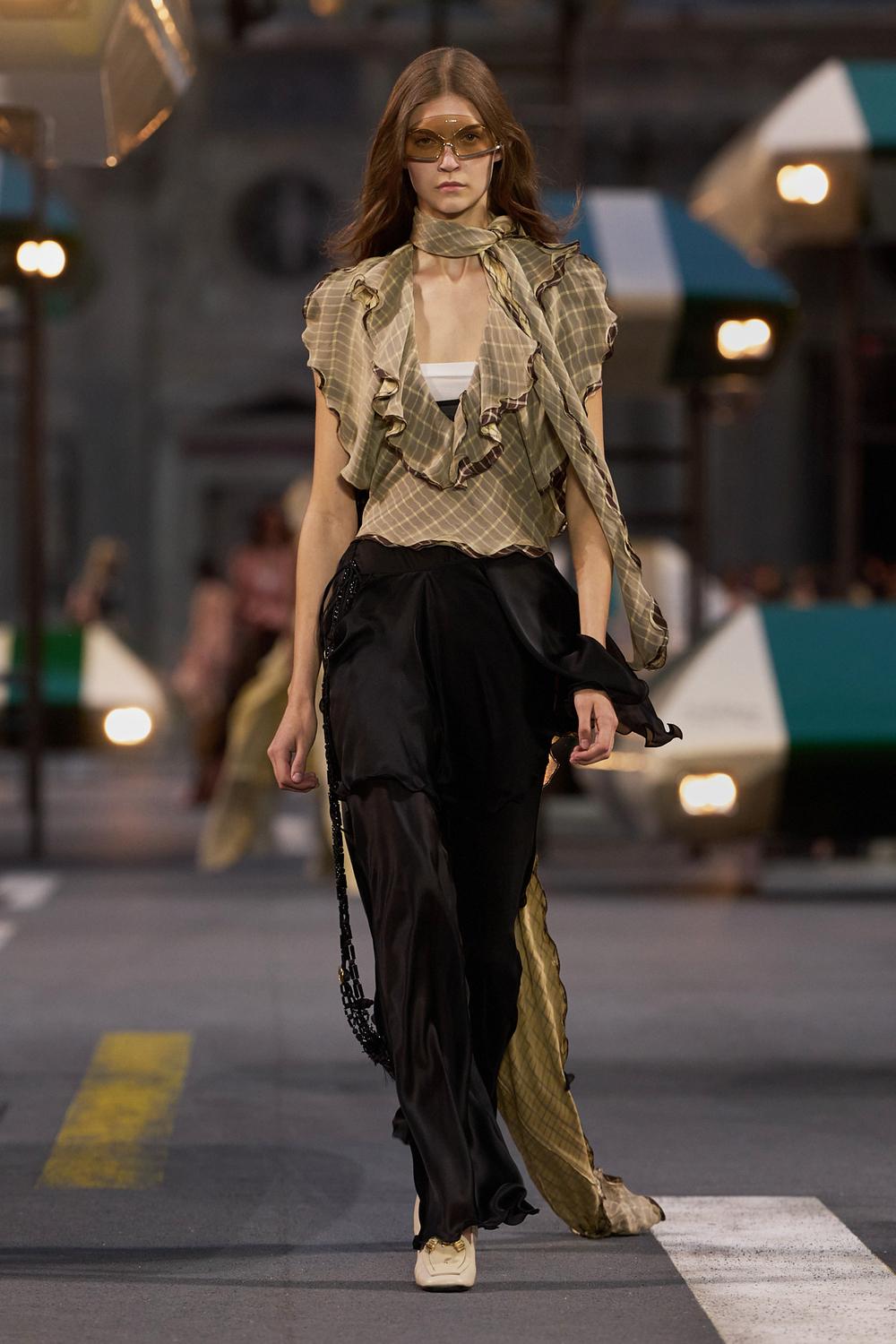
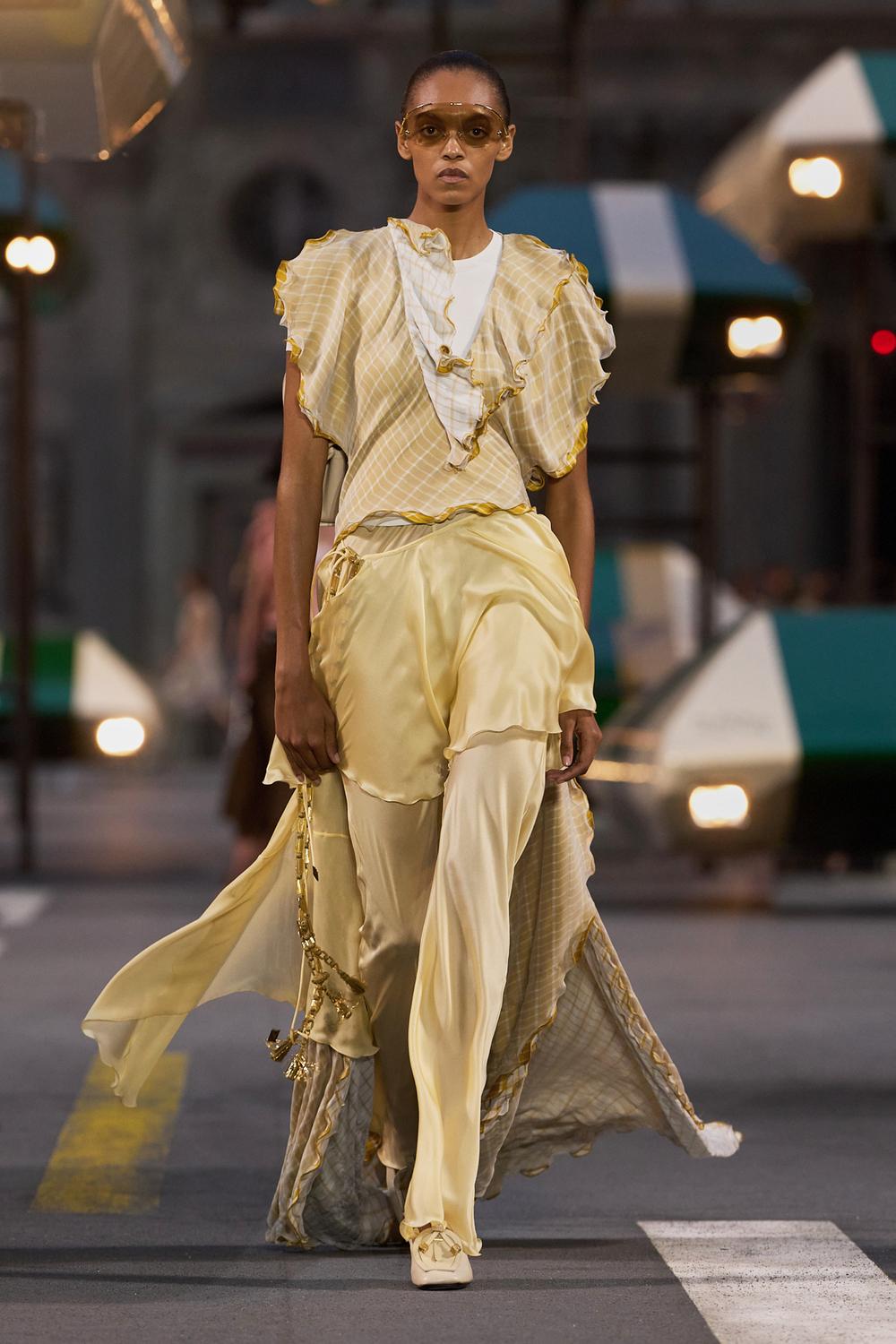
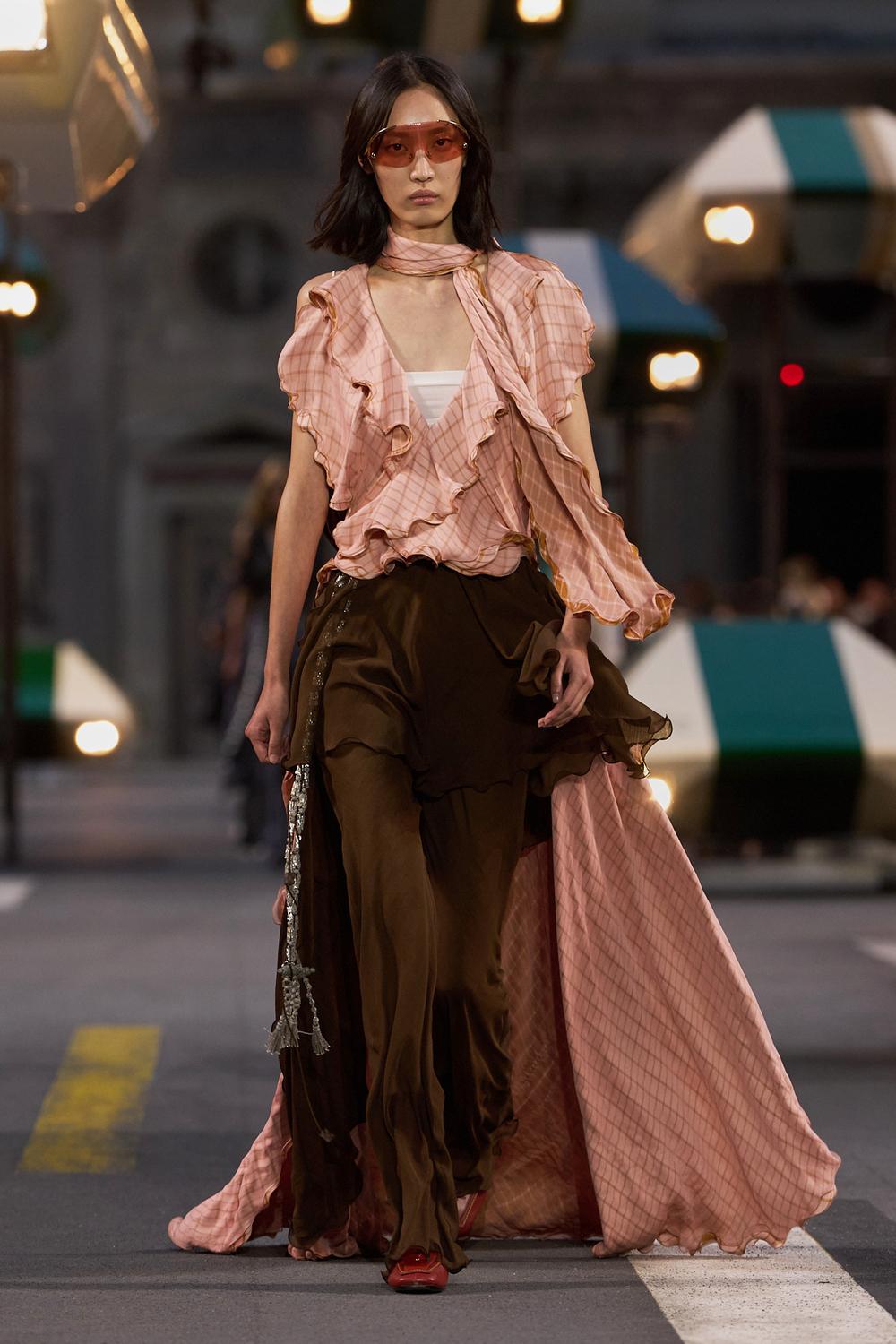
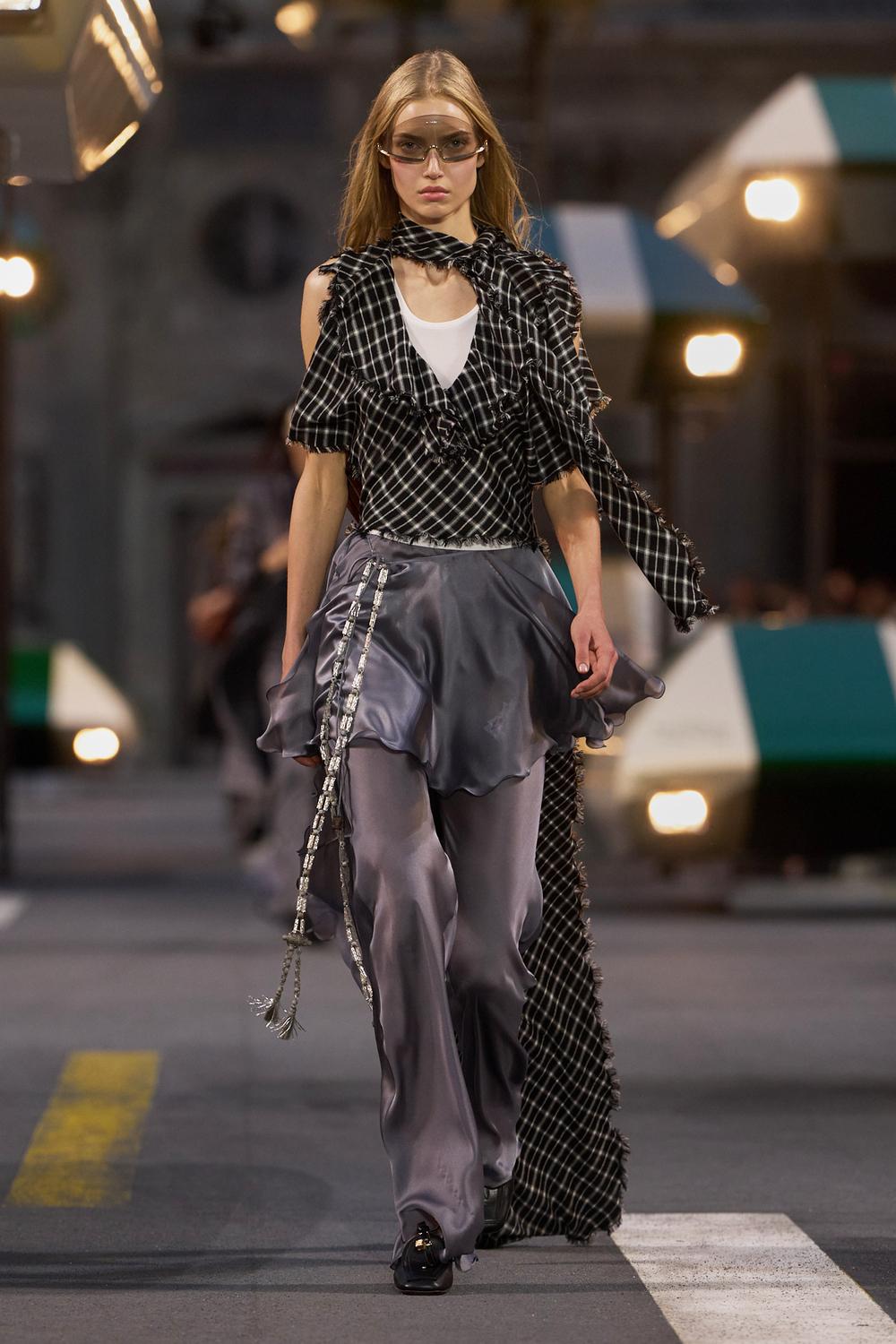
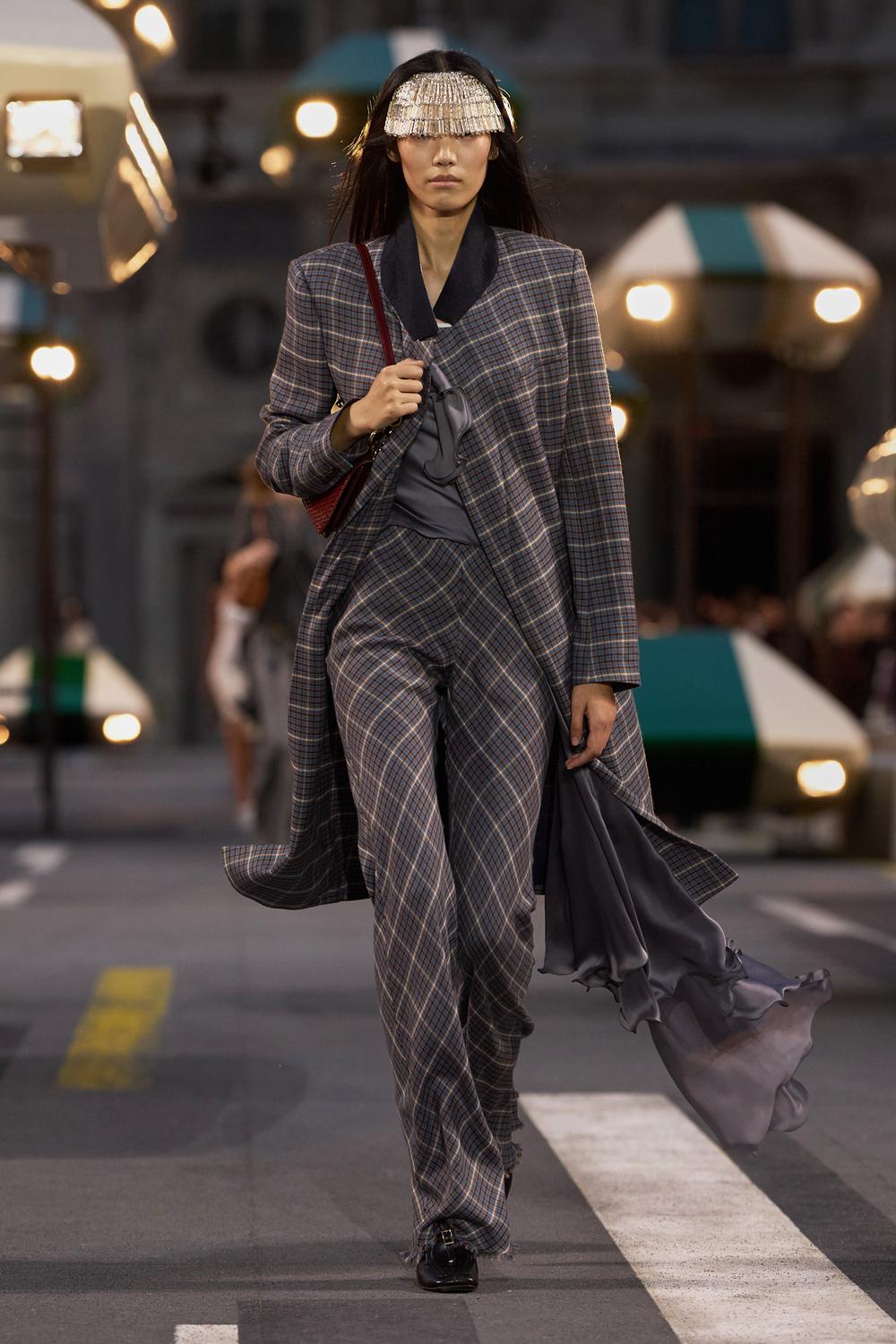
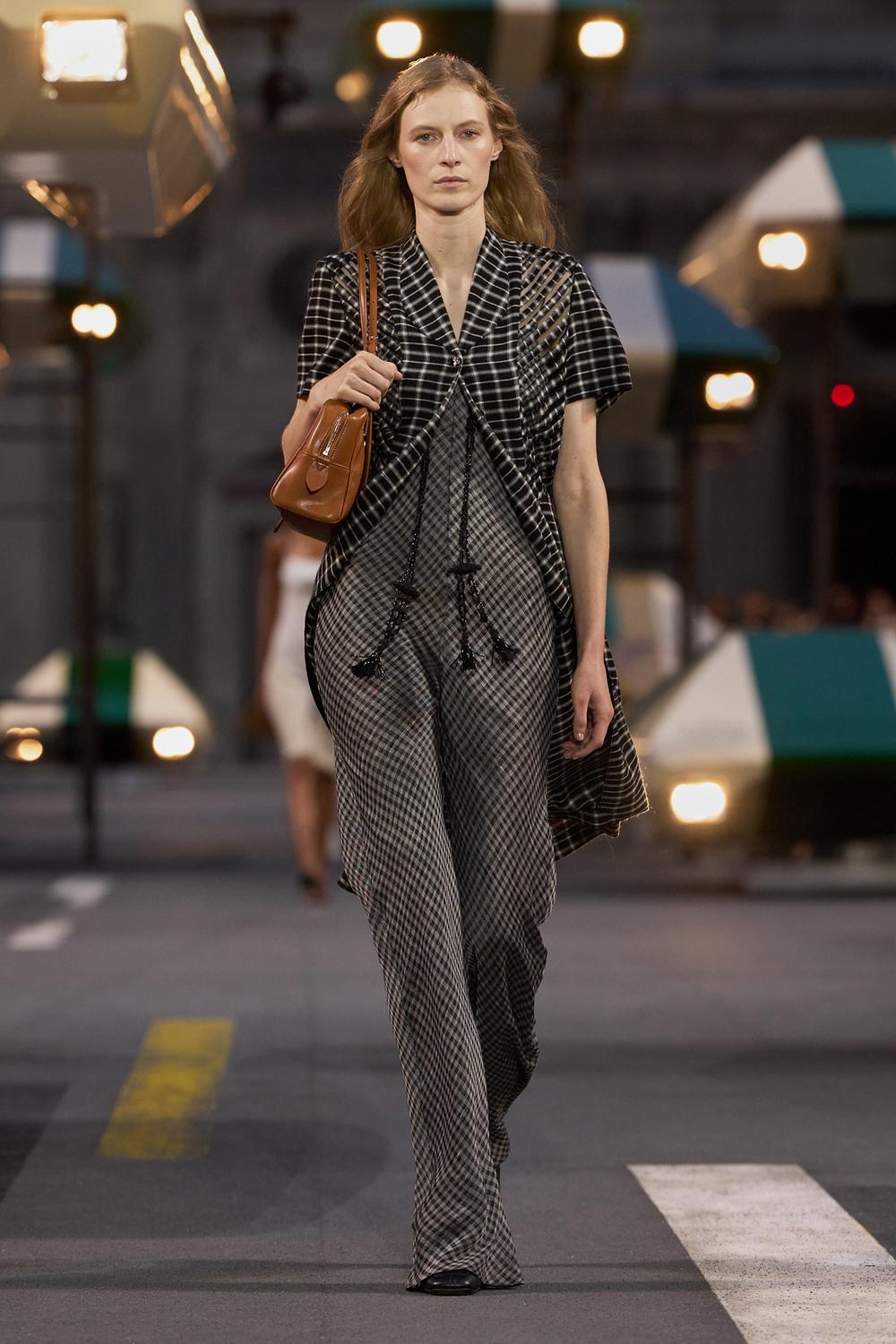
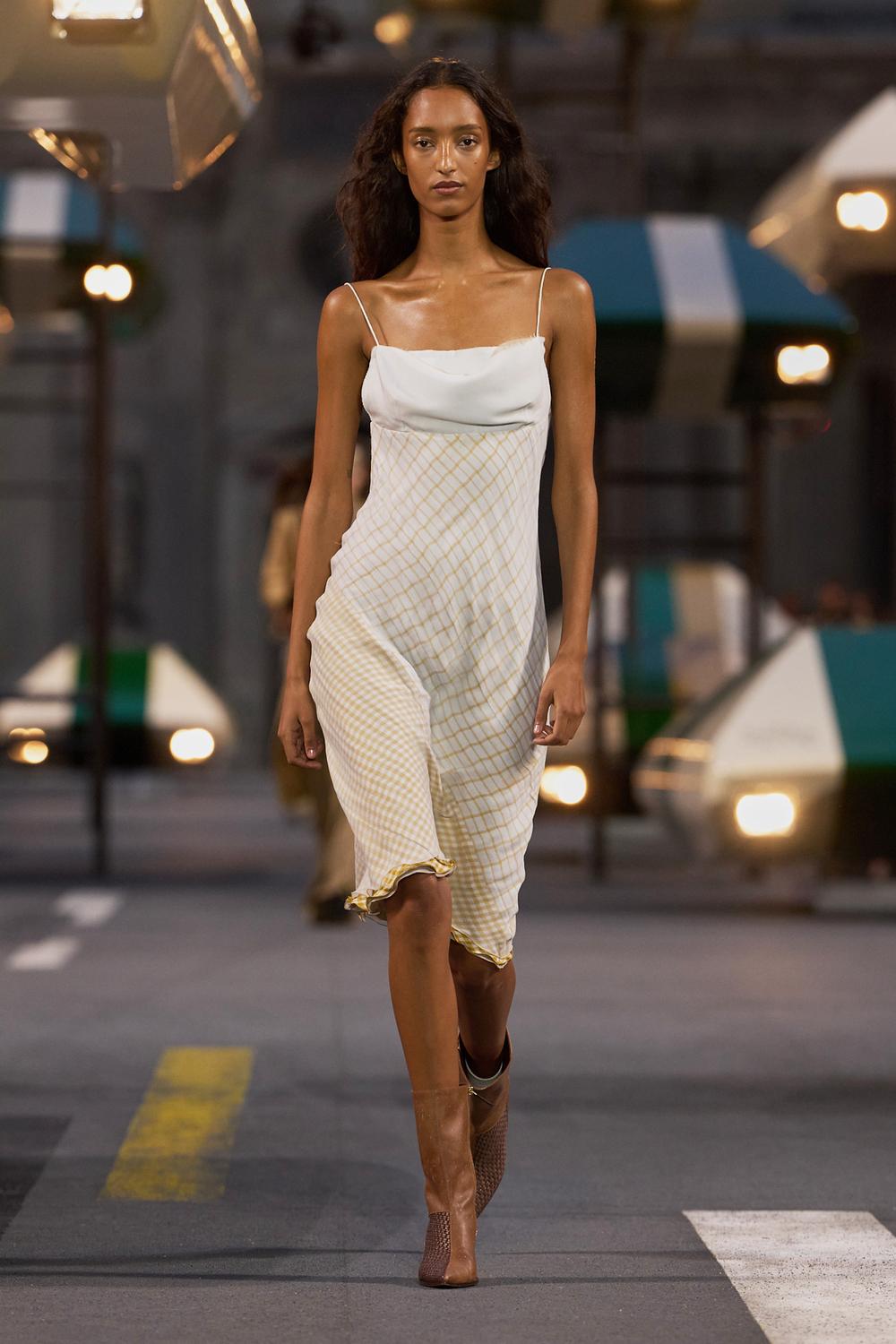
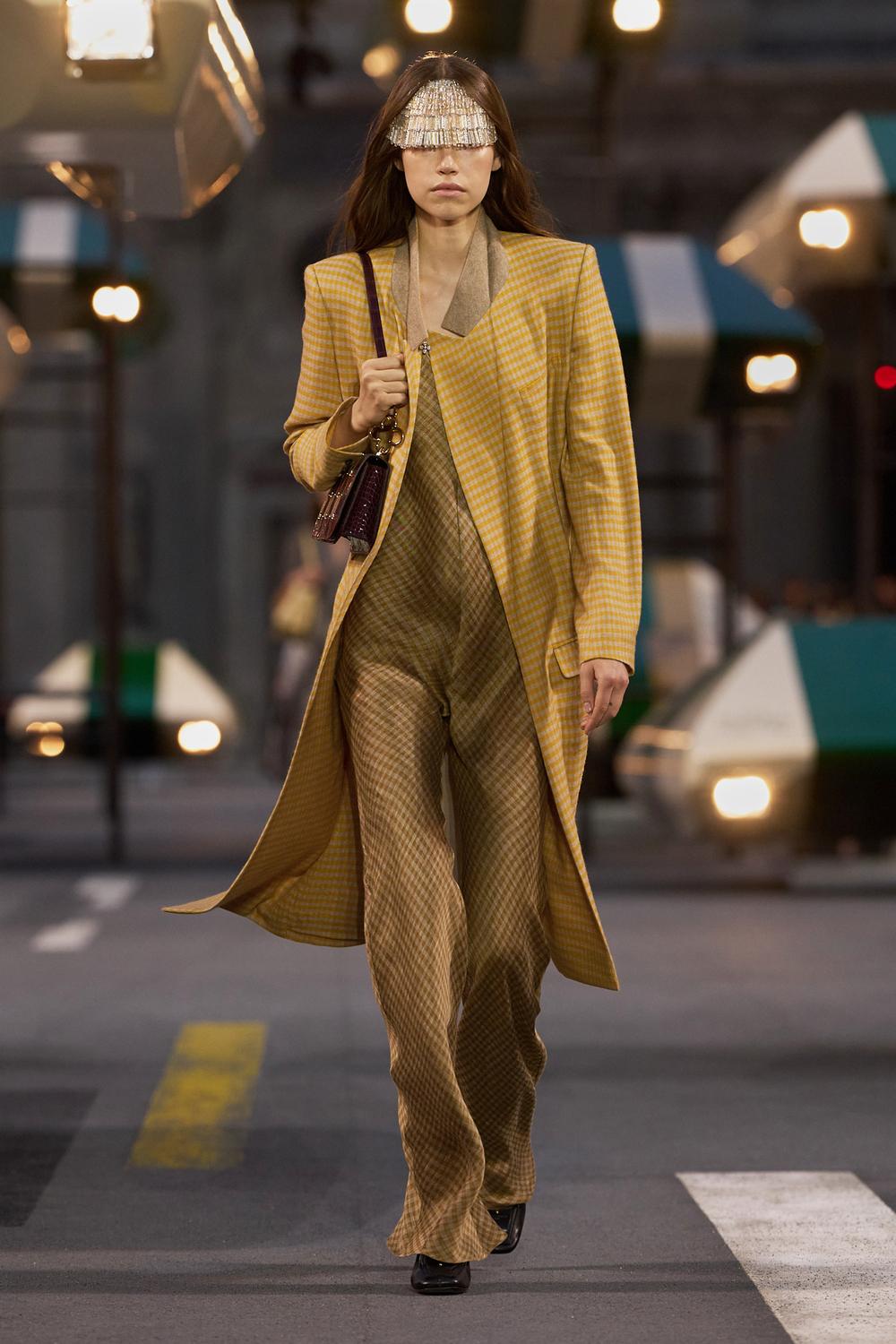
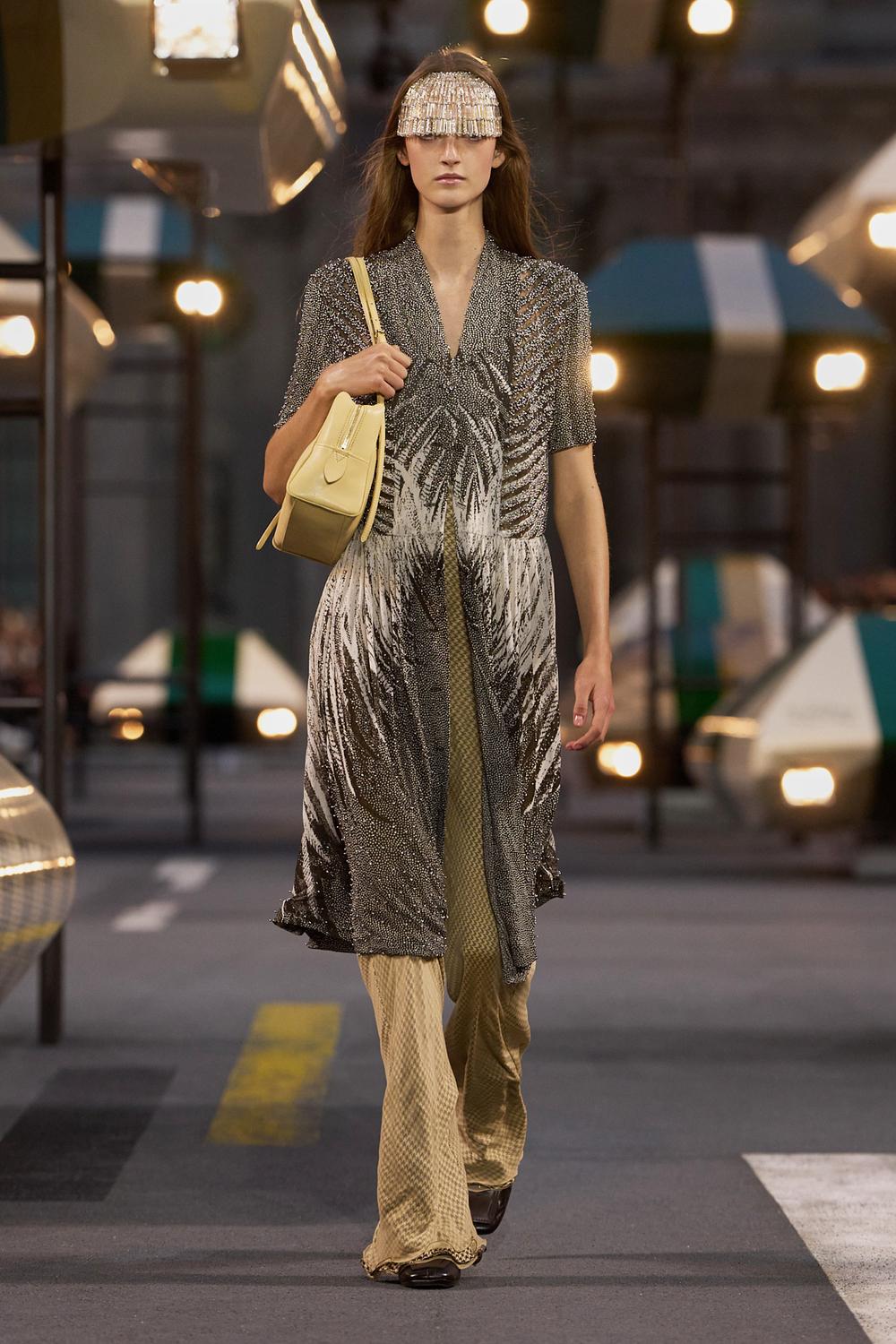
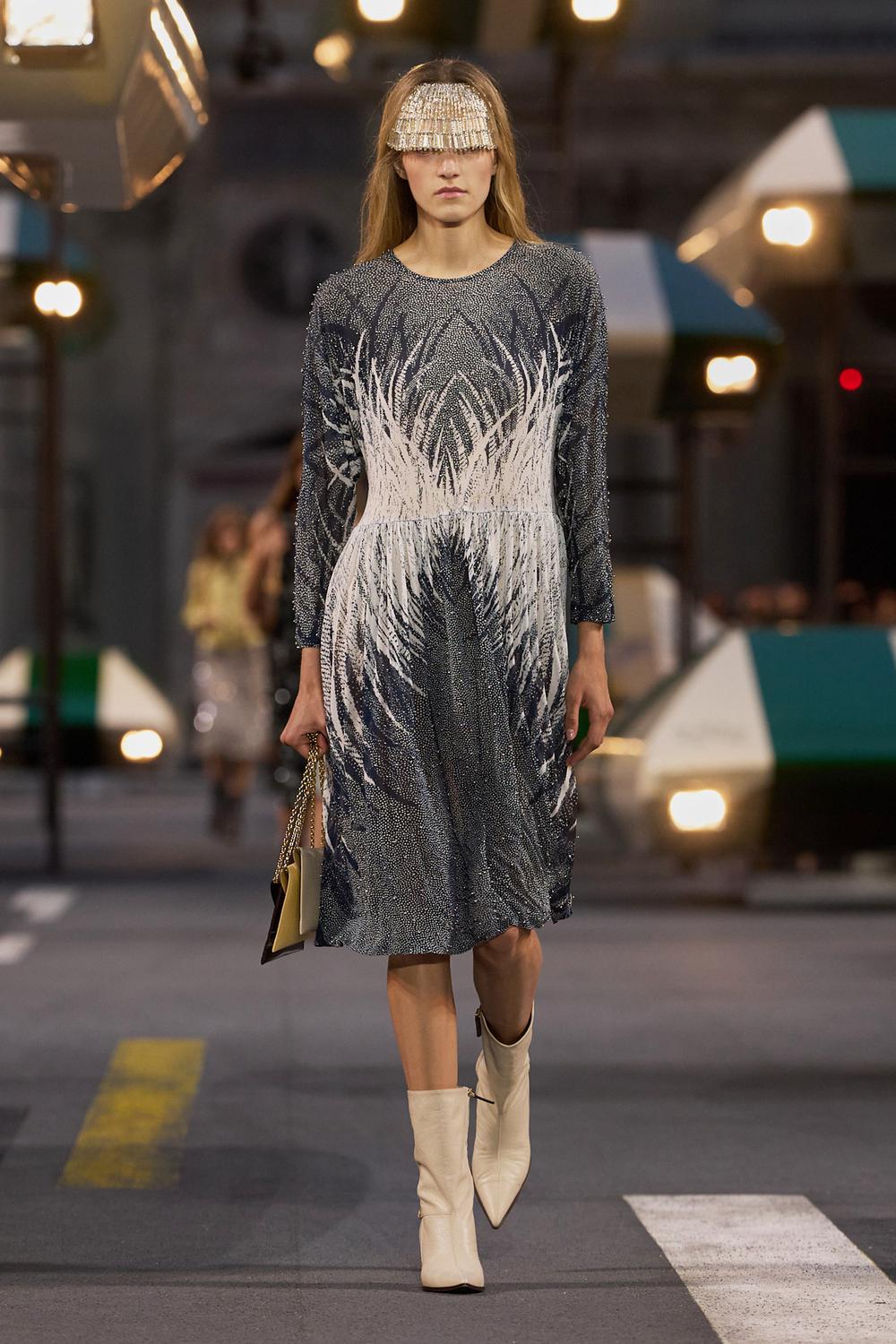
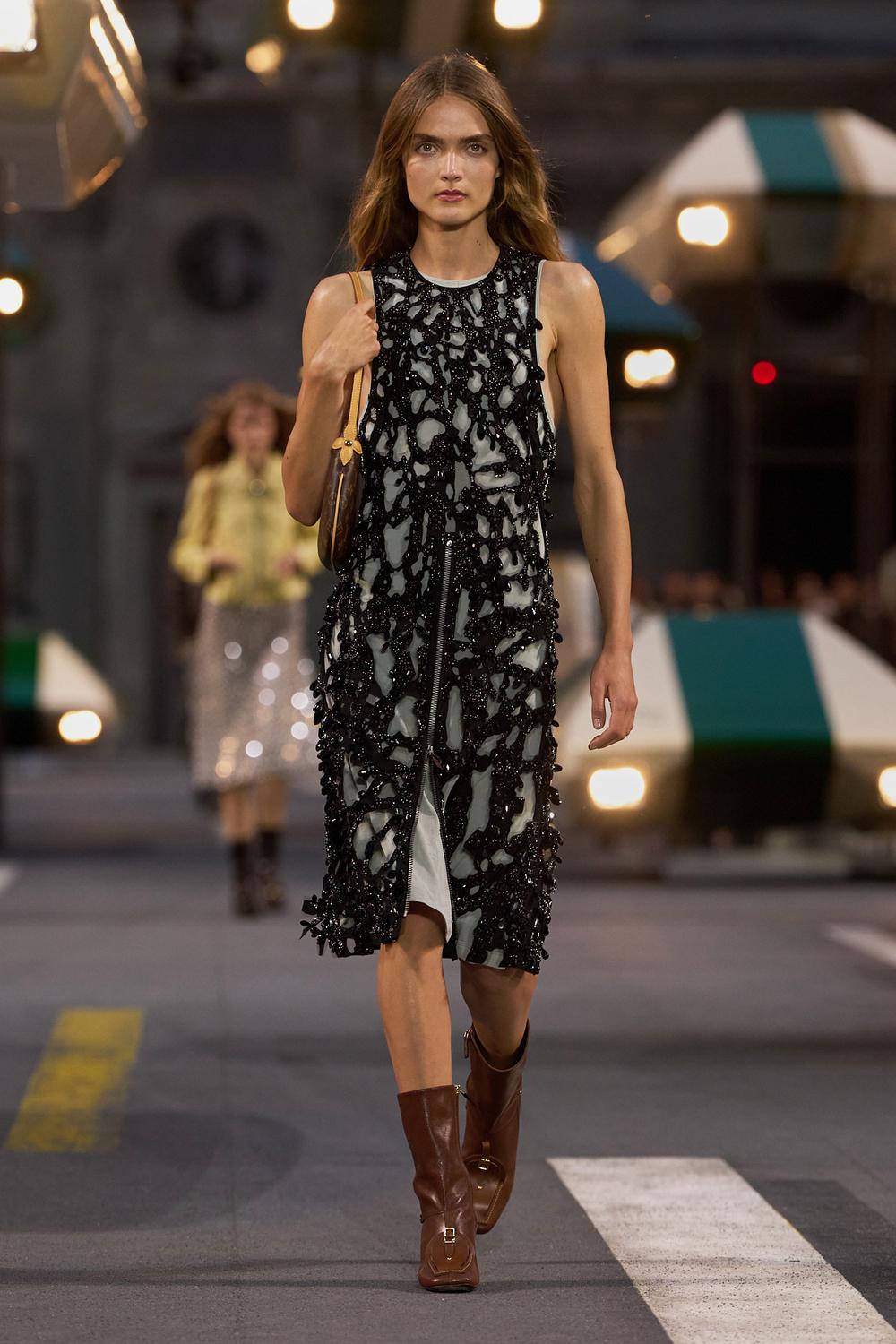
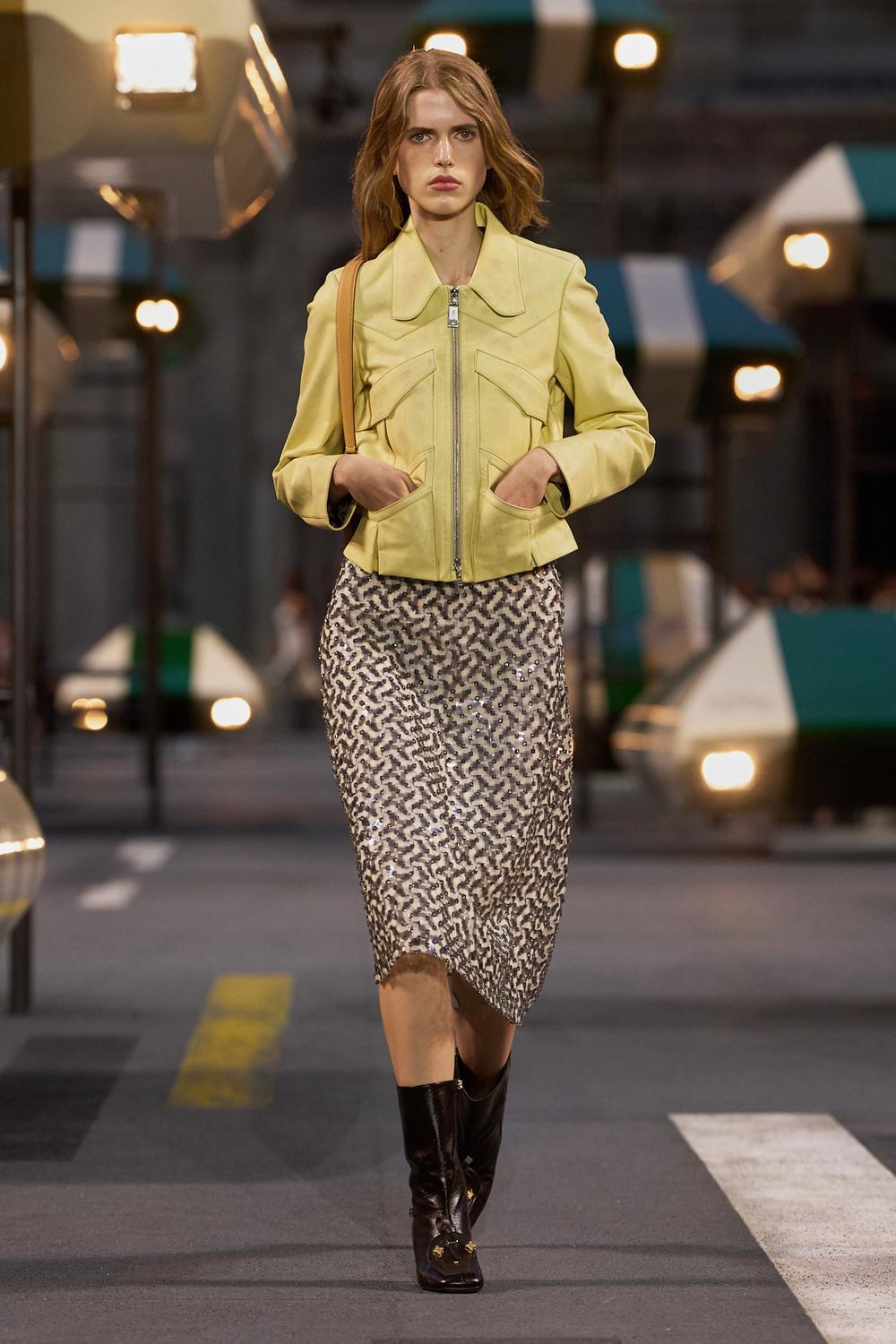
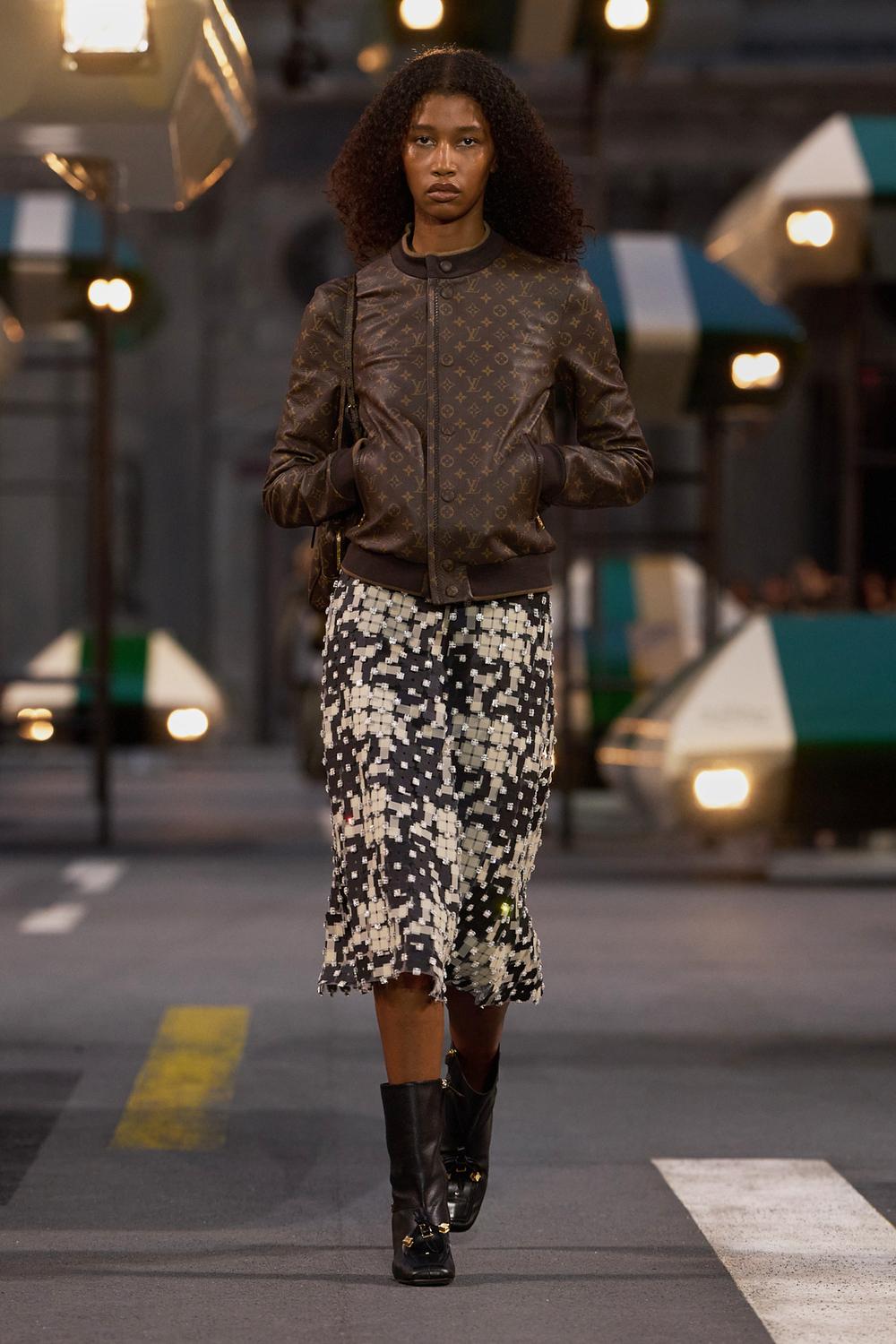
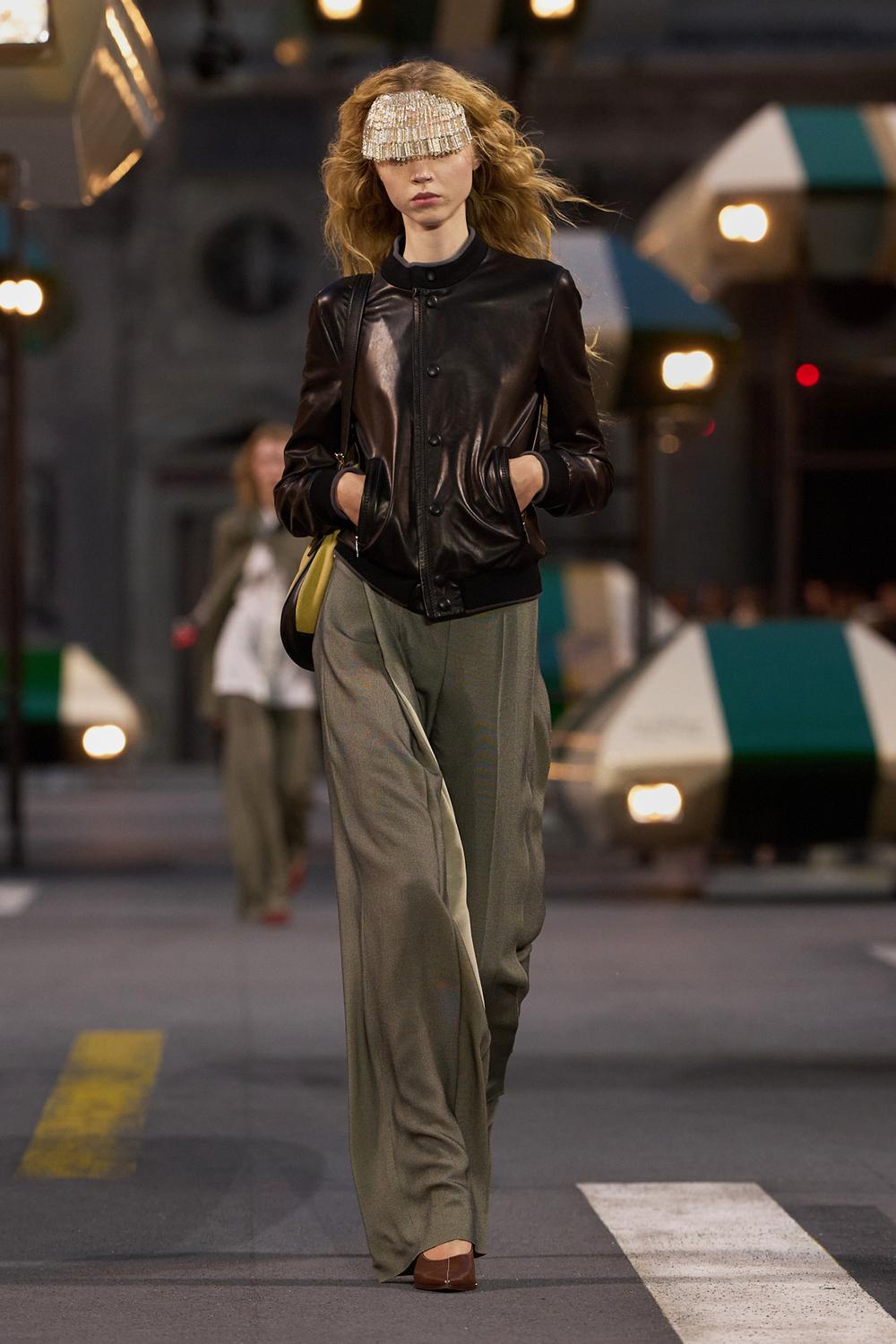
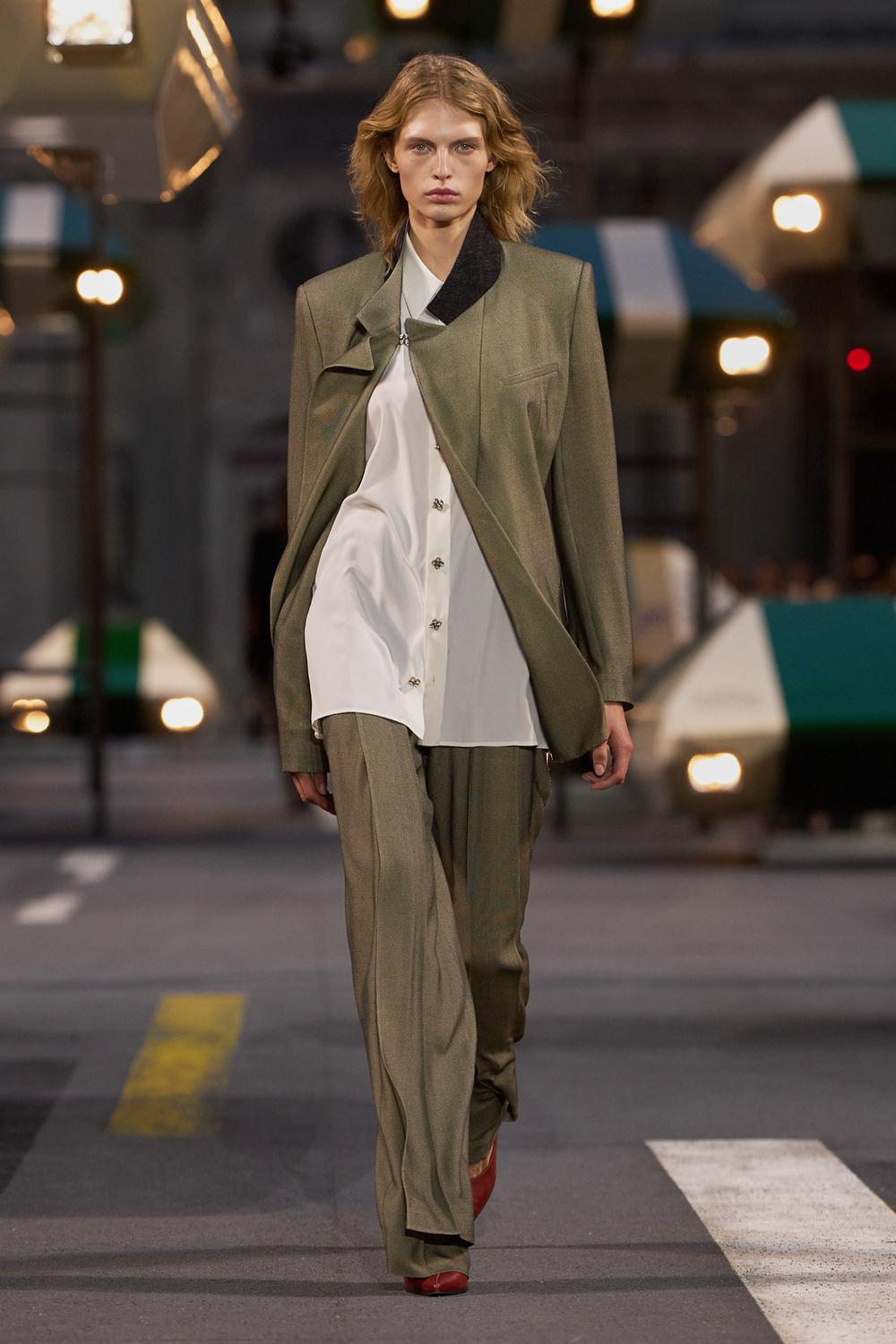
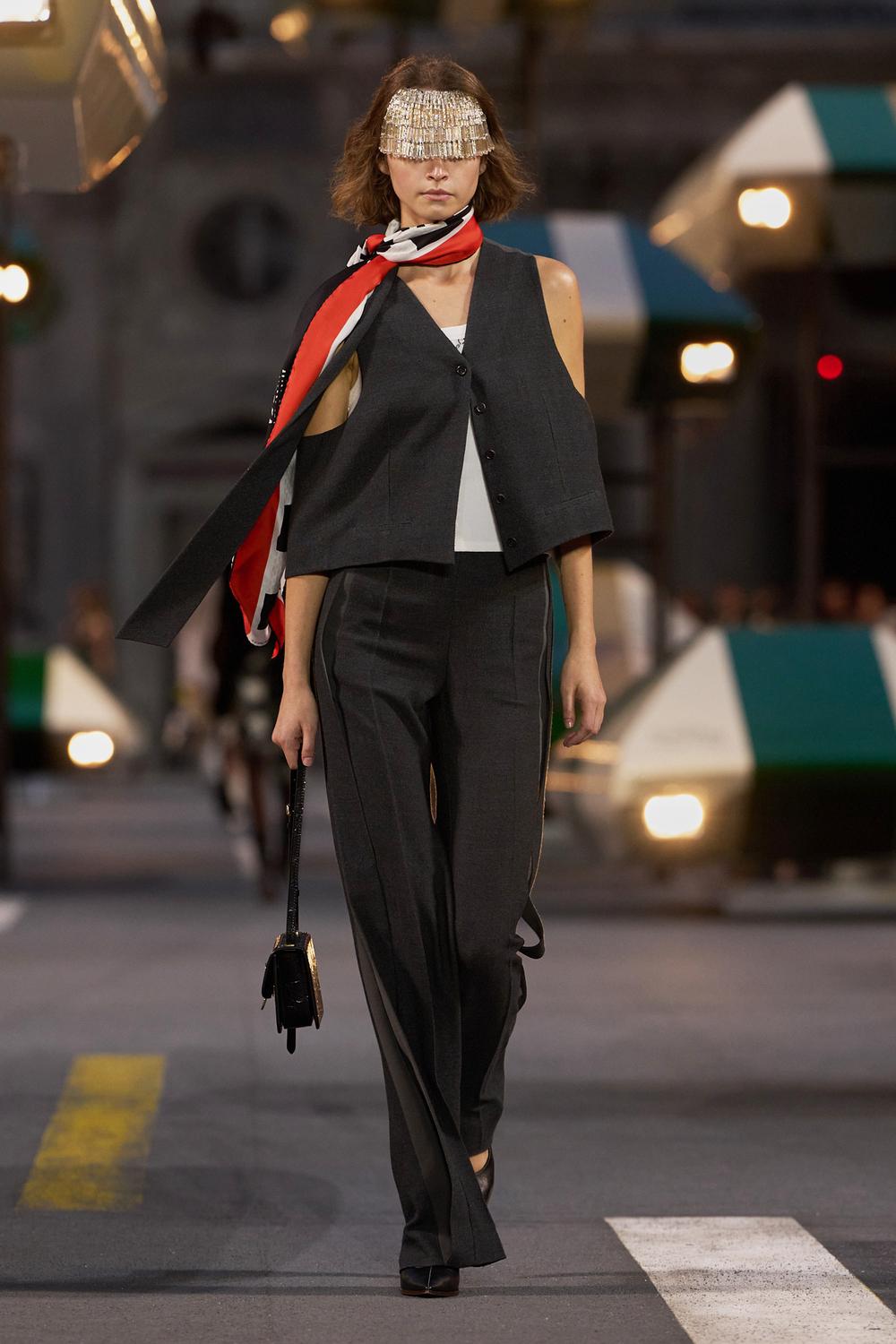
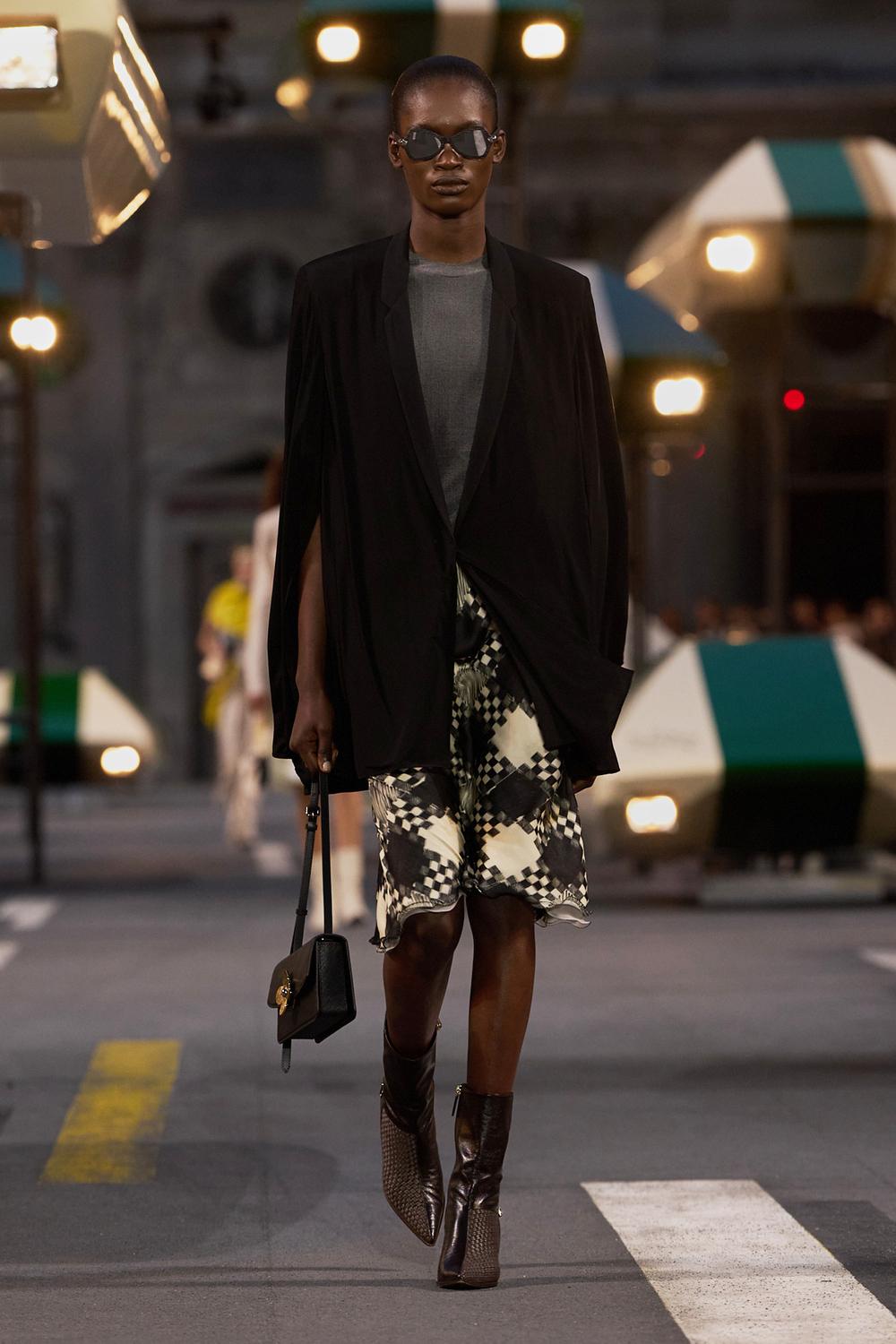
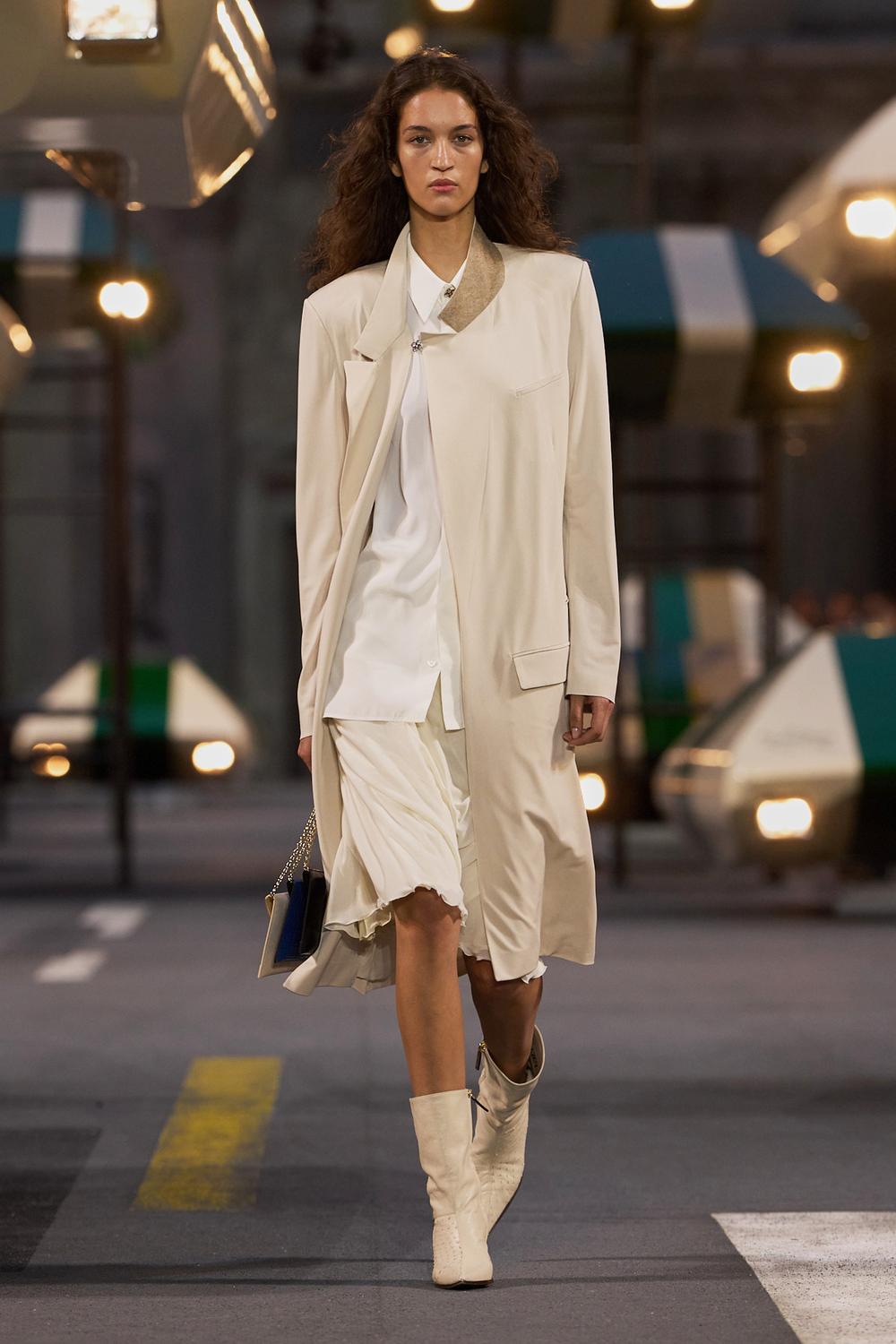
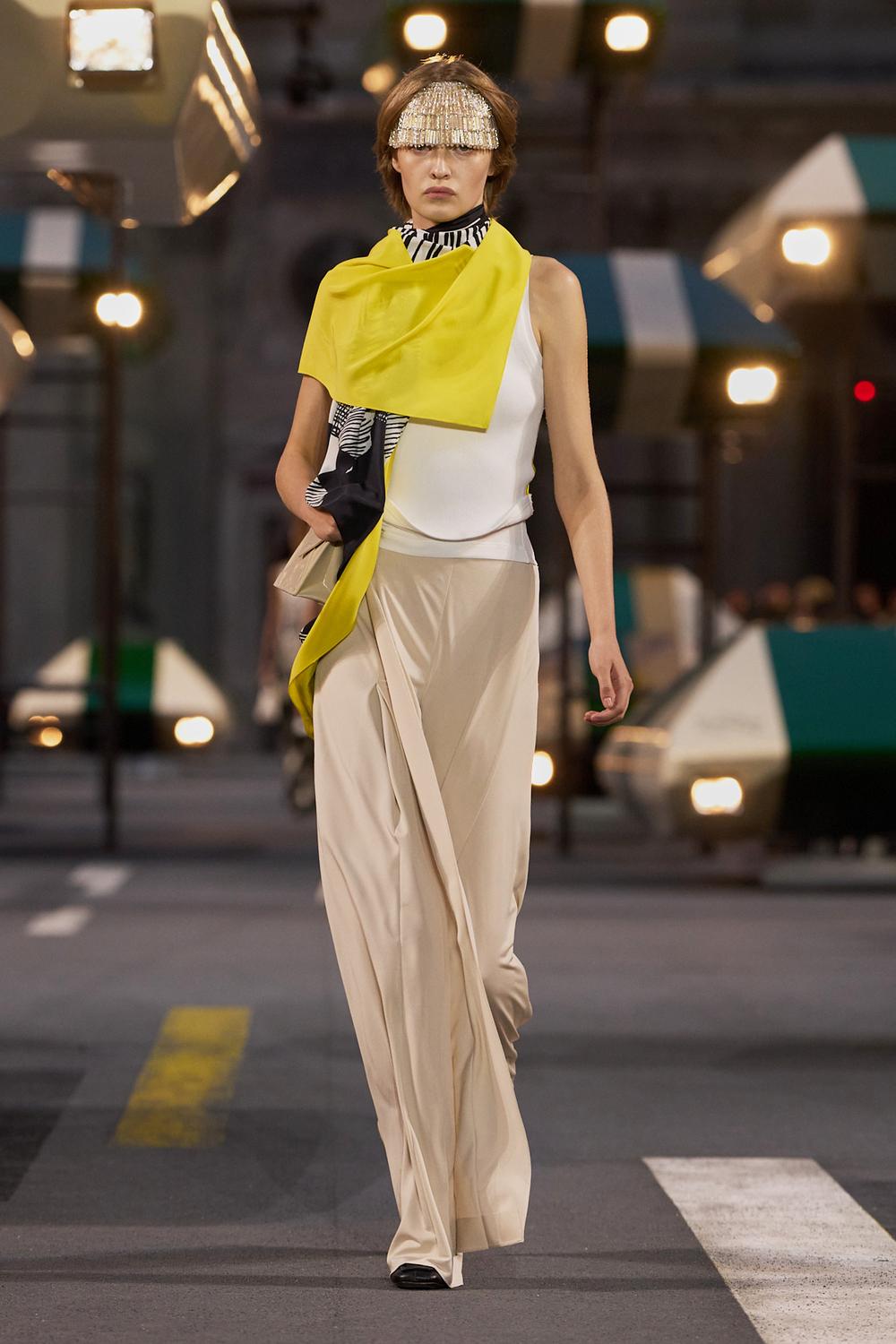
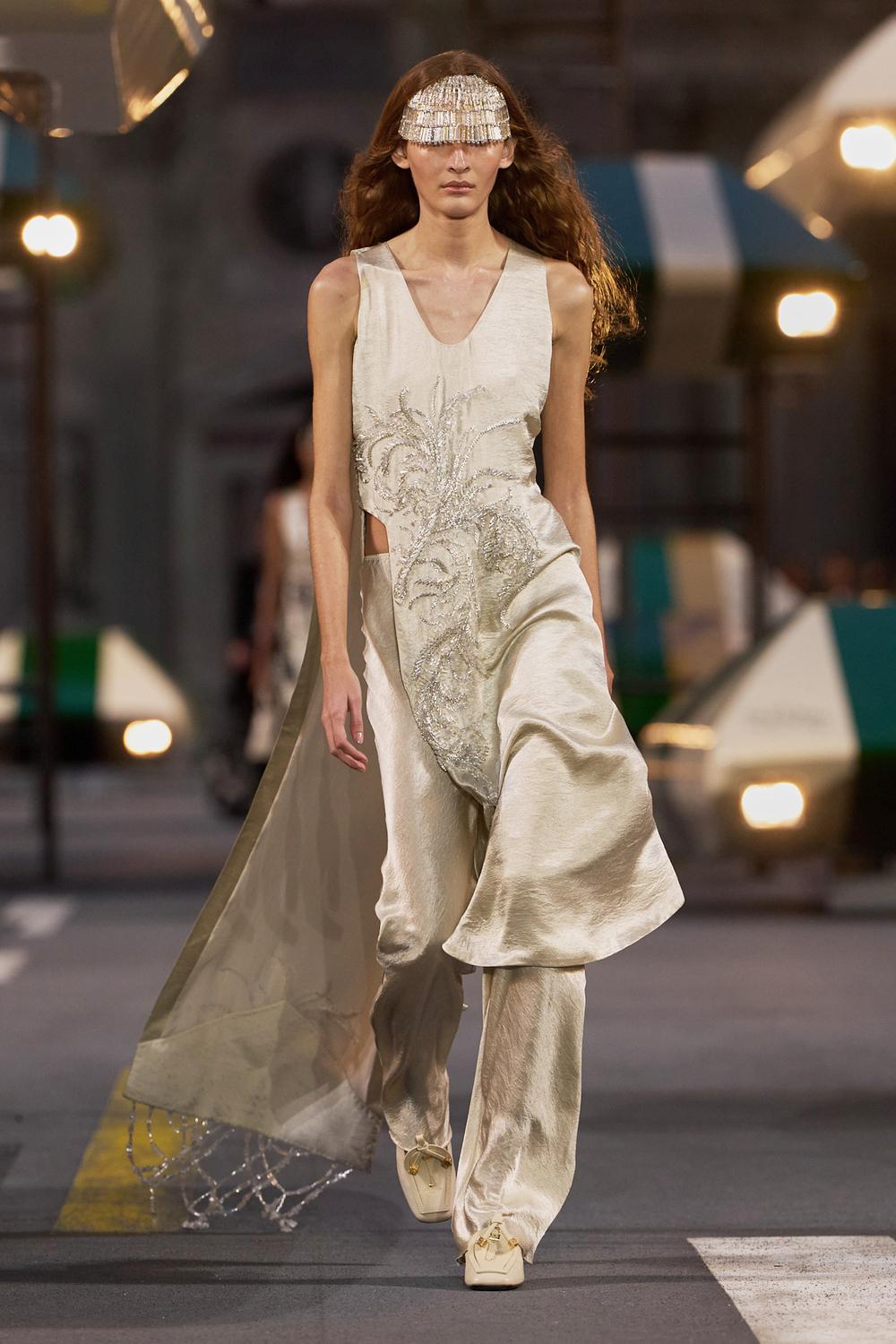
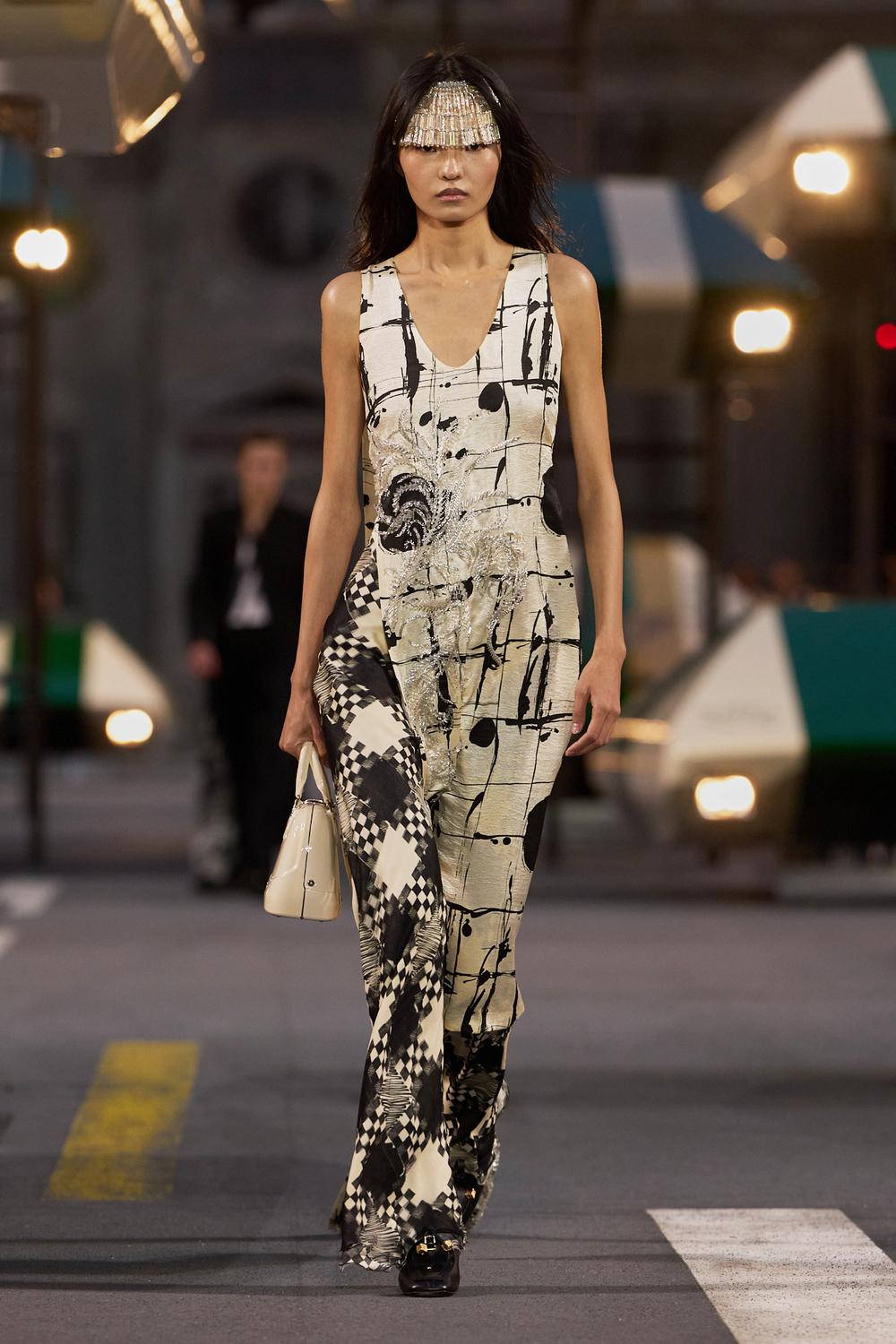
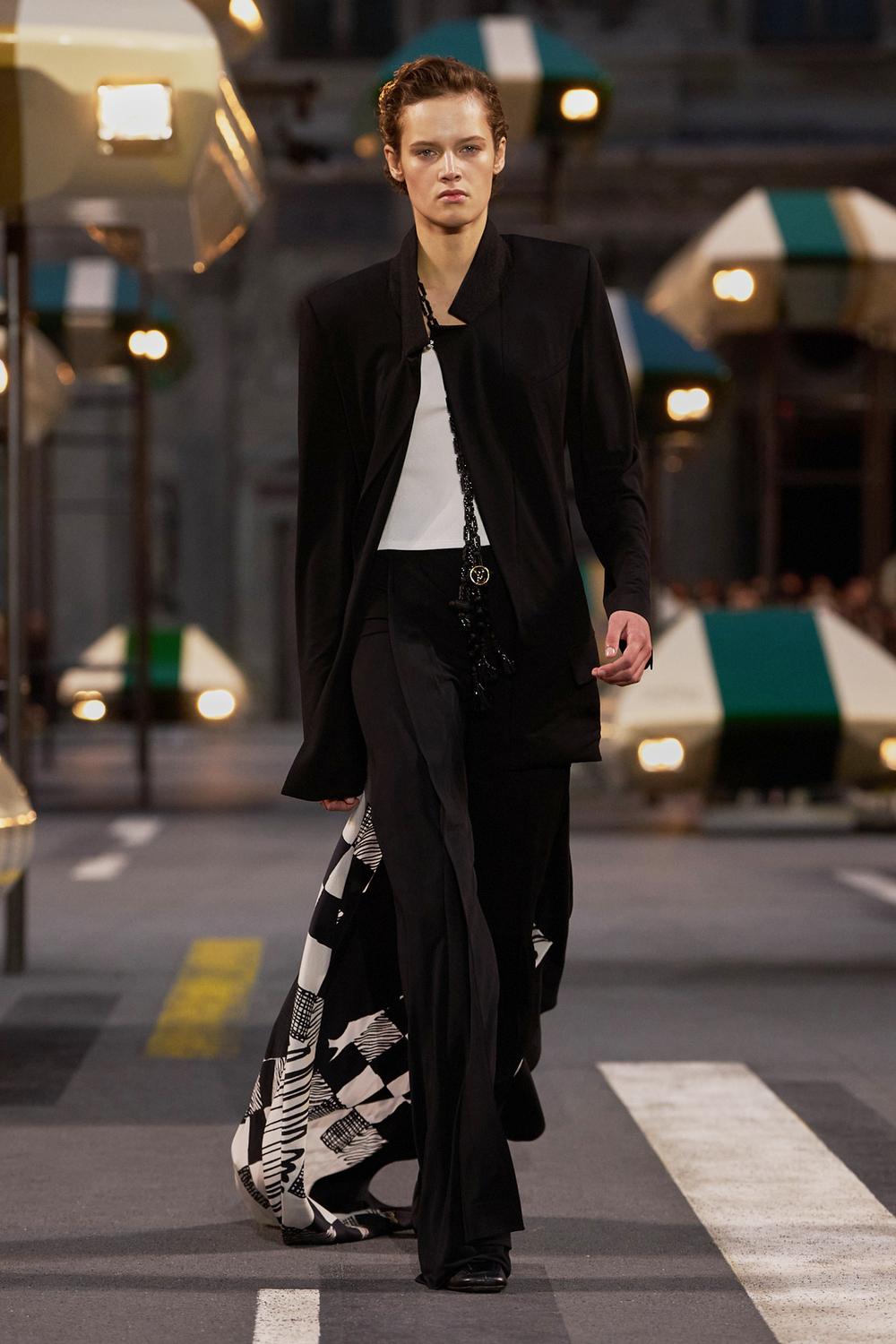
At its strongest, the collection feels liberated rather than diluted. The fabrics barely seem to touch the body. Dresses slip, jackets open, trousers split, surfaces become translucent. The clothes look made for a city that is hotter, faster and less patient with unnecessary complications.
Climate change is not treated as a mood board here. It becomes a design problem.
That is where Ergonomie gets serious.
Making something look effortless is one of fashion’s oldest tricks. Making it technically effortless is another matter entirely. The lighter the garment becomes, the more difficult it can be to control structure, movement, opacity and finish. The apparent simplicity hides the engineering.
This is classic Ghesquière territory.
Except now the technology is disappearing from view.
The question is whether that disappearance is an artistic evolution or simply extremely intelligent market positioning.
Because Louis Vuitton does not exist outside the luxury economy. Paris Fashion Week is increasingly obsessed with clothes that people can actually wear, buy and live with. Ghesquière’s answer is almost suspiciously perfect: take one of fashion’s most recognisable futurists and make his future comfortable.
The radical designer becomes easier to wear.
The intimidating silhouette becomes fluid.
The avant-garde becomes retail-friendly.
That does not necessarily make the collection less interesting. It might make it more relevant.
The mistake would be to call this a revolution.
It is not.
There are decorative passages where the argument becomes less convincing, moments when the collection slips back into familiar Ghesquière codes and Louis Vuitton ornament starts doing the talking again. The Art Deco references, embellishment and occasional visual overload feel less inevitable than the quieter pieces. When the clothes are trying to explain themselves, they lose some of their power.
When they simply move, they win.
And that is where the show’s absurdly futuristic set becomes almost a perfect joke.
The flying cars remain suspended above the runway, frozen in an imaginary tomorrow.
The clothes below are concerned with gravity.
With heat.
With skin.
With walking.
With living.
The future is literally floating above the woman while Ghesquière is finally designing for the woman underneath it.
That may be the most consequential shift in his Louis Vuitton career.
Marc Jacobs turned Louis Vuitton from a legendary luggage and leather-goods house into a fashion and cultural institution. Ghesquière inherited that transformation and spent years constructing its contemporary mythology: architecture, travel, technology, handbags, memory, sci-fi, movement.
Now he is stripping some of that mythology away.
Not abandoning it. Editing it.
The bag no longer has to dominate the image. The monogram does not need to shout. The futuristic reference can remain in the background. The body becomes the thing worth designing around.
Even the presence of Zendaya in a previously worn Louis Vuitton jacket – rather than an entirely new red-carpet object – accidentally fits the mood. Fashion’s obsession with novelty suddenly gives way to something more useful: repetition, reuse, attachment, life.
For all the flying machines above the Louvre, this is not really a collection about escaping gravity.
It is about stopping fashion from becoming a burden.
Ghesquière may have liberated the body. He may also have made his futurism considerably easier to sell.
For once, those two things do not have to contradict each other.
Paris Fashion Week ends in the air.
Louis Vuitton lands on the body.
And the woman keeps moving.