by Ada Maria Francesca Romeo
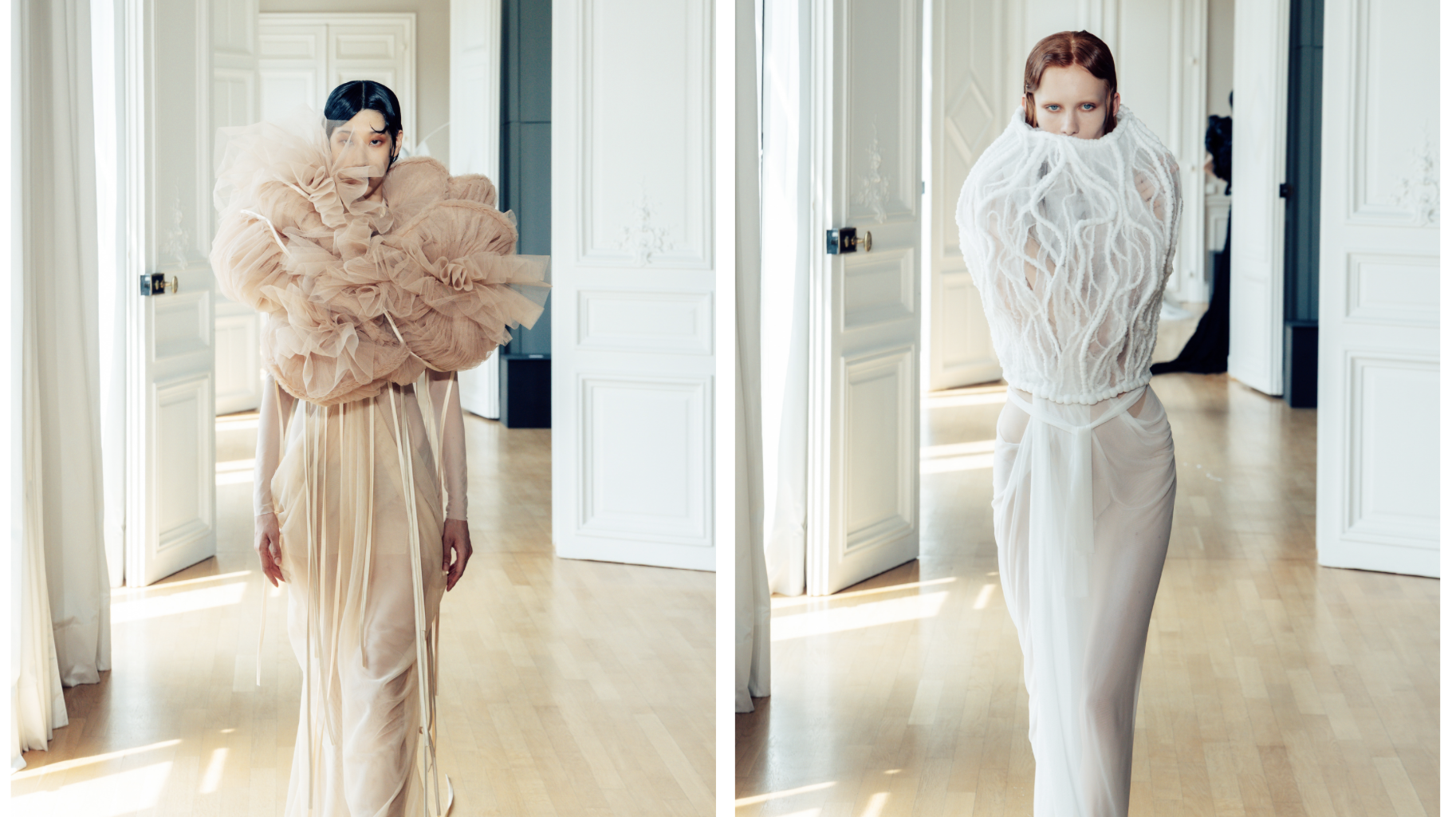
Aziz Rebar’s Haute Couture Fall/Winter 2026 collection, Aether, combines architectural craftsmanship with emotional storytelling. Devided in three acts, the collection explores identity, social expectations and the symbolic journey from control to freedom.
Among the most compelling new voices to emerge during Paris Haute Couture Week is Iranian designer Aziz Rebar, now based in Germany, a talent who still deserves far greater recognition. Known for his architectural creations worn by artists such as Lady Gaga and Björk, Rebar goes far beyond designing garments. He fuses engineering, haute couture and exceptional craftsmanship into a creative language suspended between reality and imagination, where every silhouette possesses the presence of a moving sculpture.
His relationship with fashion began in childhood. Growing up in Iran, he spent countless hours in his father’s atelier, where his father worked as a traditional tailor, observing his techniques and learning the foundations of the craft. After relocating to Germany, Rebar initially pursued mechanical engineering before ultimately returning to fashion to study fashion design. This dual background has become the defining characteristic of his work: the structural precision of engineering meets the sensitivity and artistry of couture. The result is a series of sculptural, dramatic constructions infused with a dark, gothic, and deeply poetic aesthetic.
For Haute Couture Fall/Winter 2026, Rebar presents Aether, a collection inspired by Andorra, the play by Max Frischthat explores how prejudice and society’s expectations can shape an individual’s identity until they become the very person others expect them to be. Building on this premise, the collection examines themes of social projection, identityand the roles imposed upon the individual. Rather than depicting transformation itself, Aether captures the suspended moment that comes just before it, the final second before everything fractures, when freedom is within reach but has yet to reveal itself.
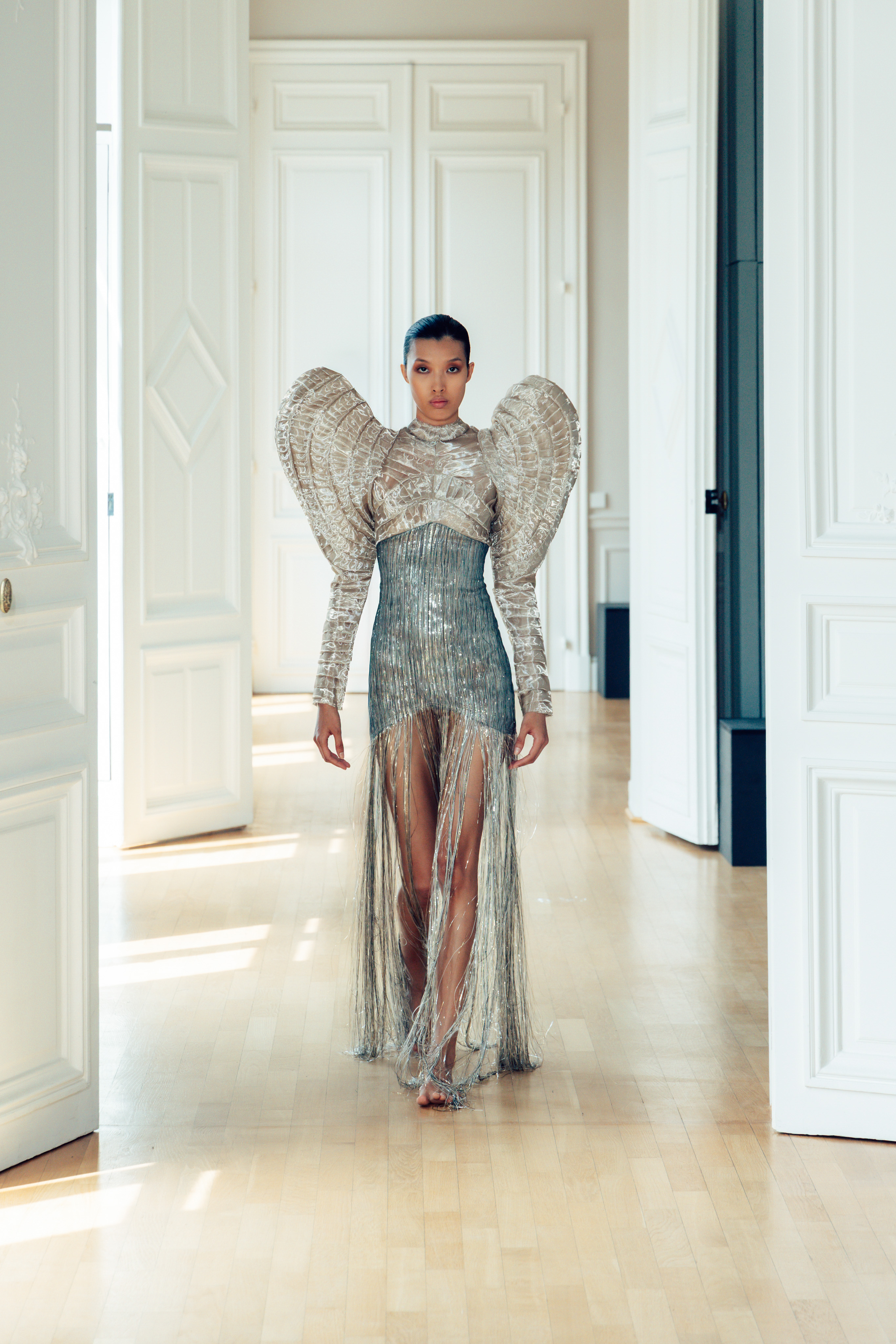
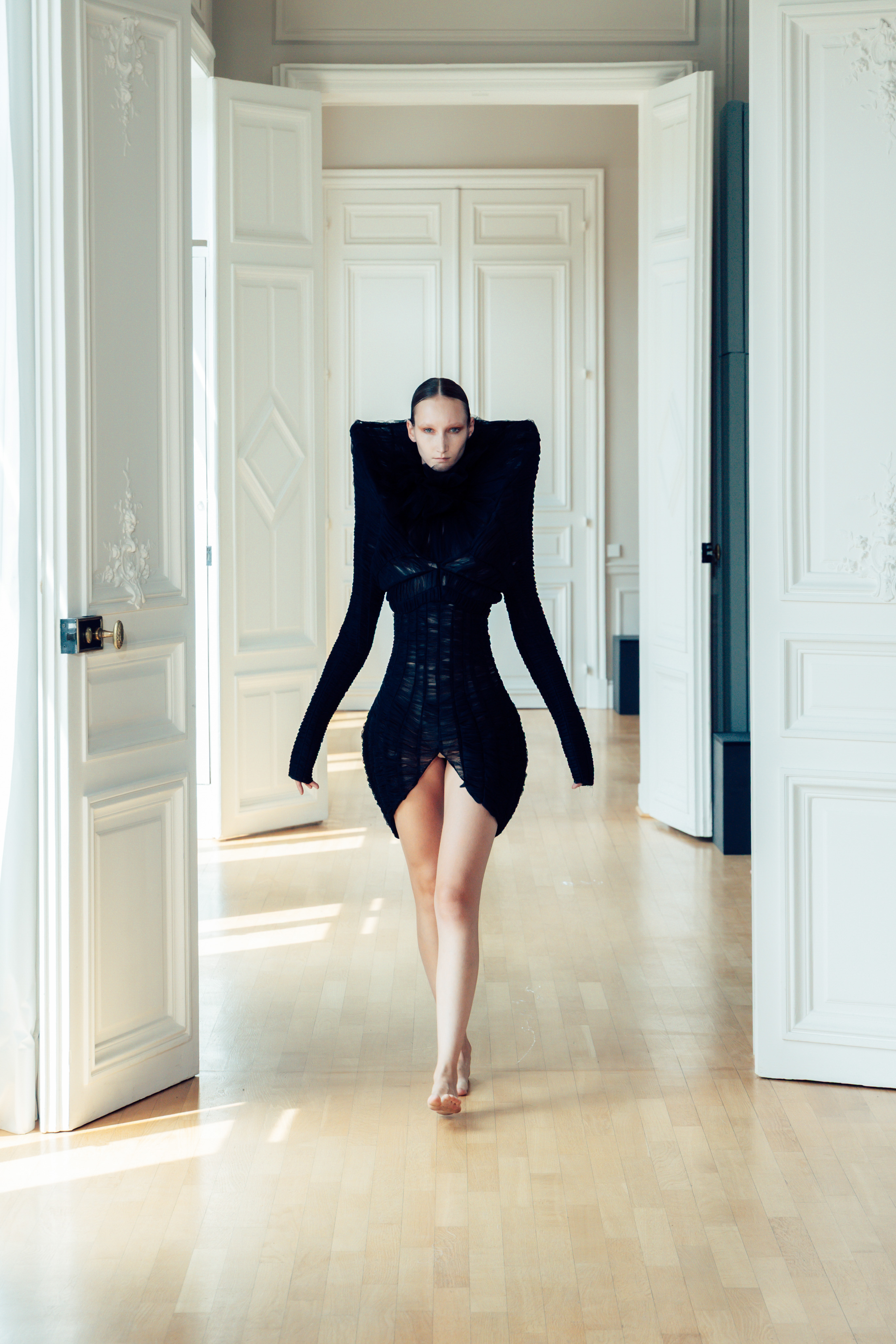
The show unfolds as a narrative in three acts. The opening chapter is dominated by control. Silhouettes are meticulously symmetrical, defined by monumental shoulders and geometric constructions that evoke an identity shaped by external expectations. Every element, including the models’ hairstyles, appears carefully orchestrated, almost frozen in an artificial perfection that conveys discipline, restraint, and emotional confinement.
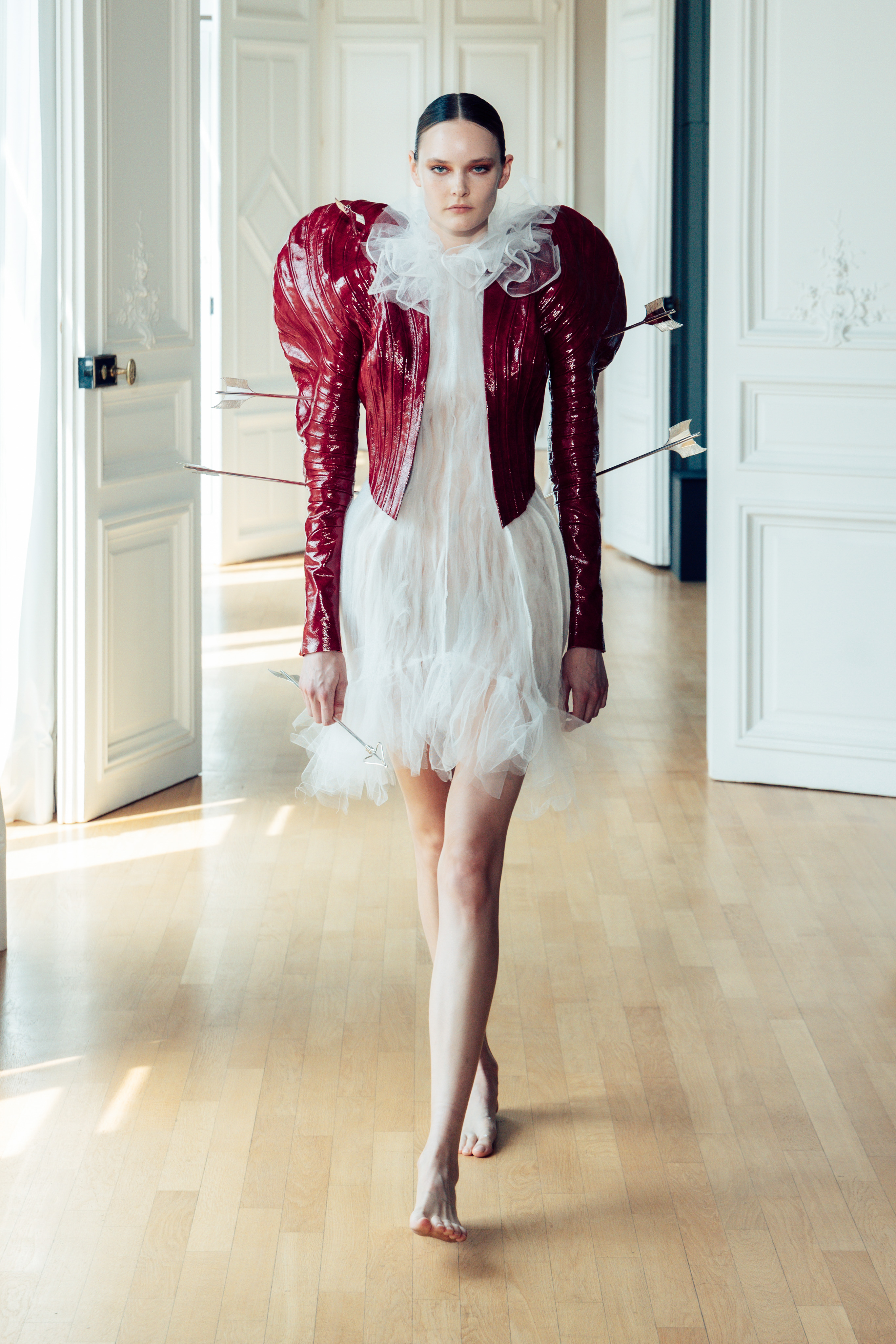
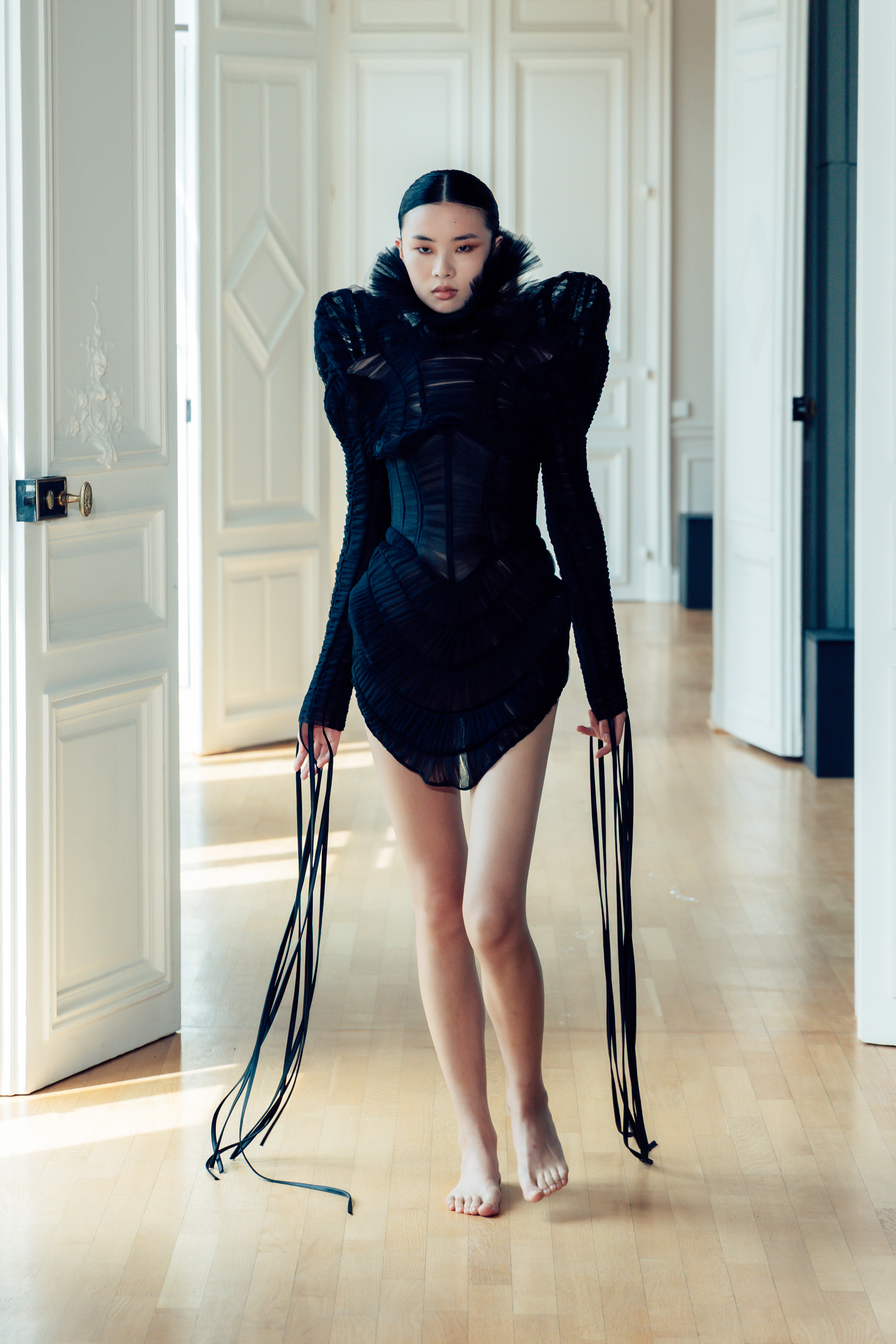
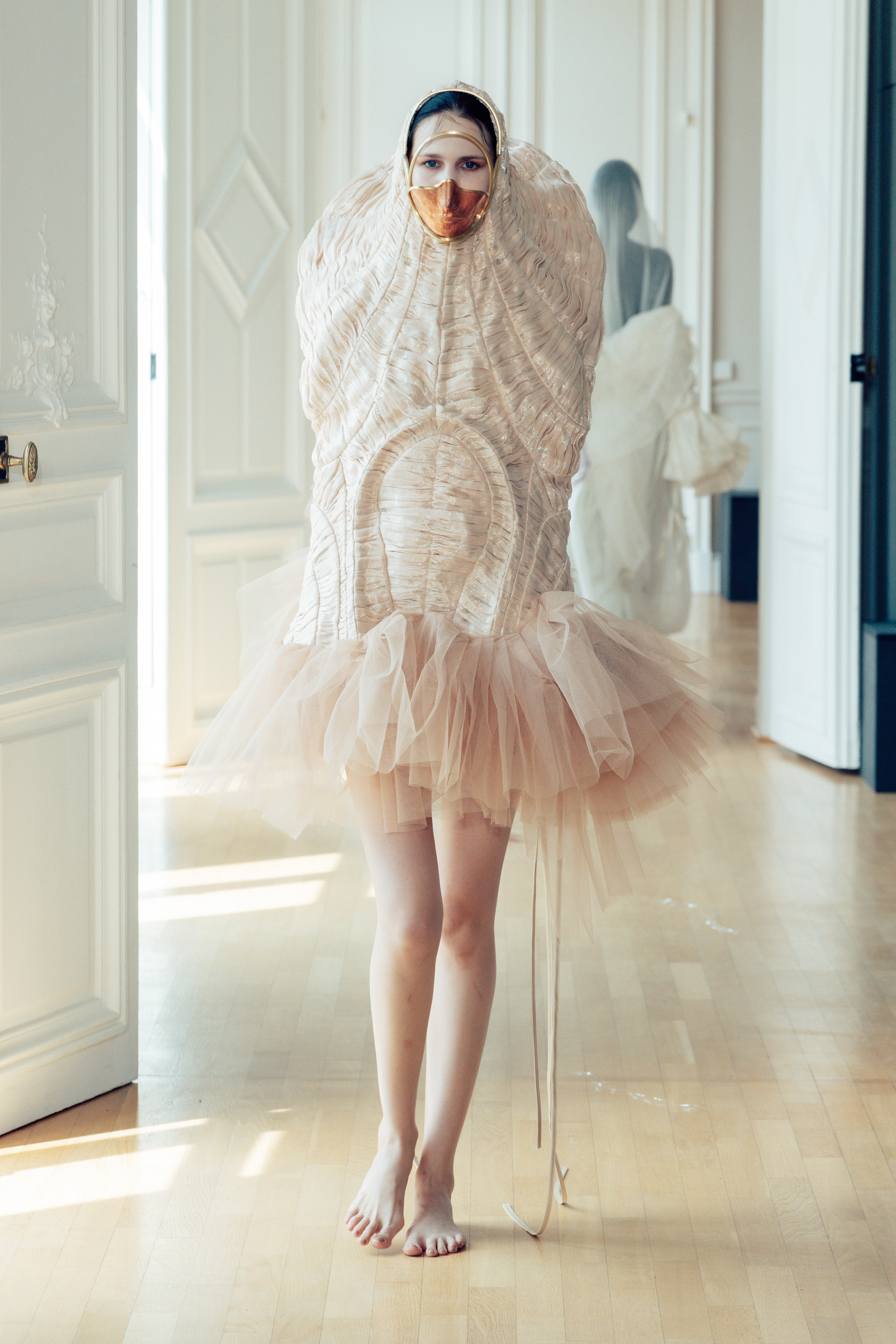
The second act introduces the first rupture. The silhouettes gradually soften, rigid structures begin to loosen, and movement enters the garments. It is an intermediate state suspended between restriction and liberation, where vulnerability slowly emerges and imposed order begins to give way to quiet resistance. Symmetry, once the collection’s defining principle, gradually dissolves.
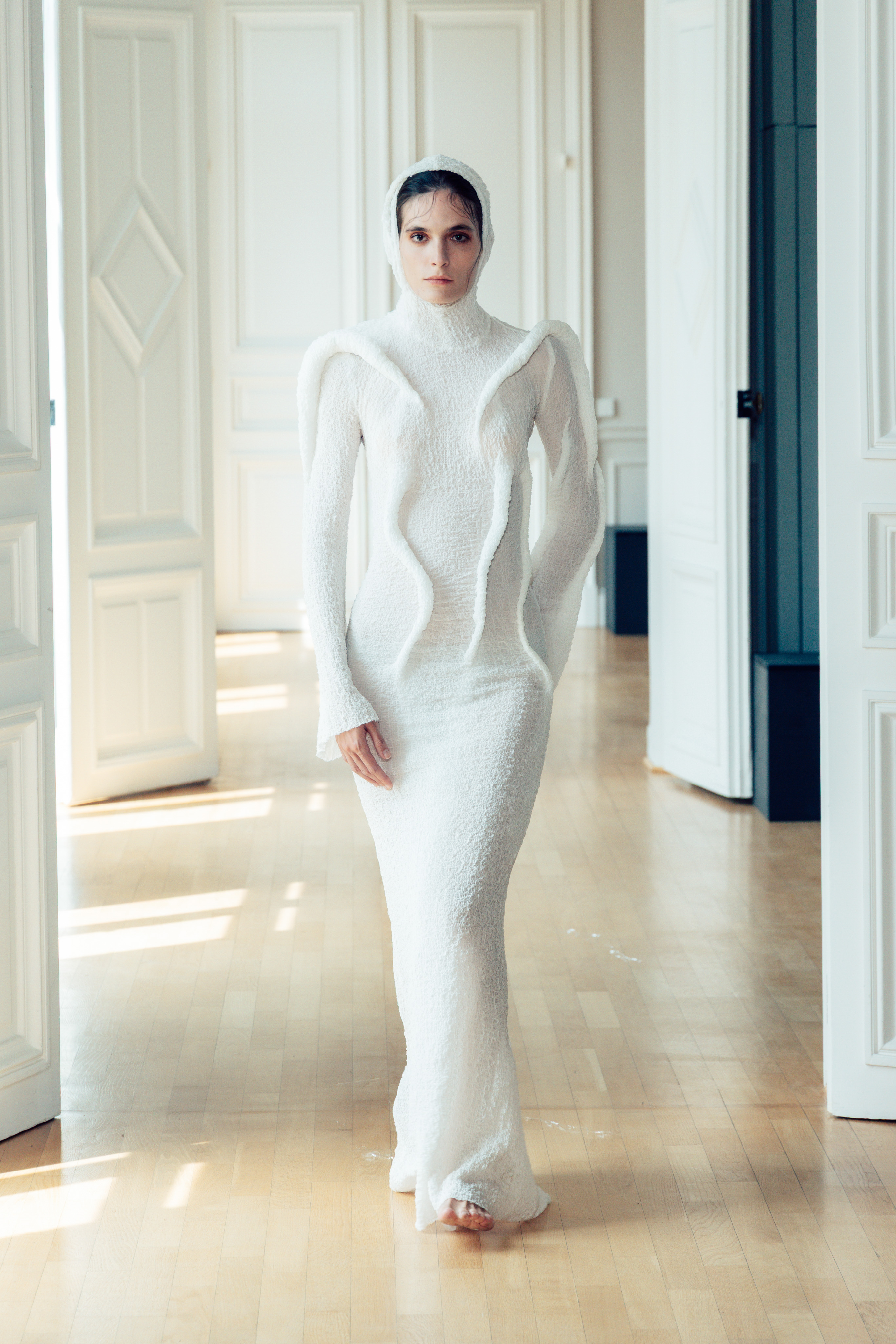
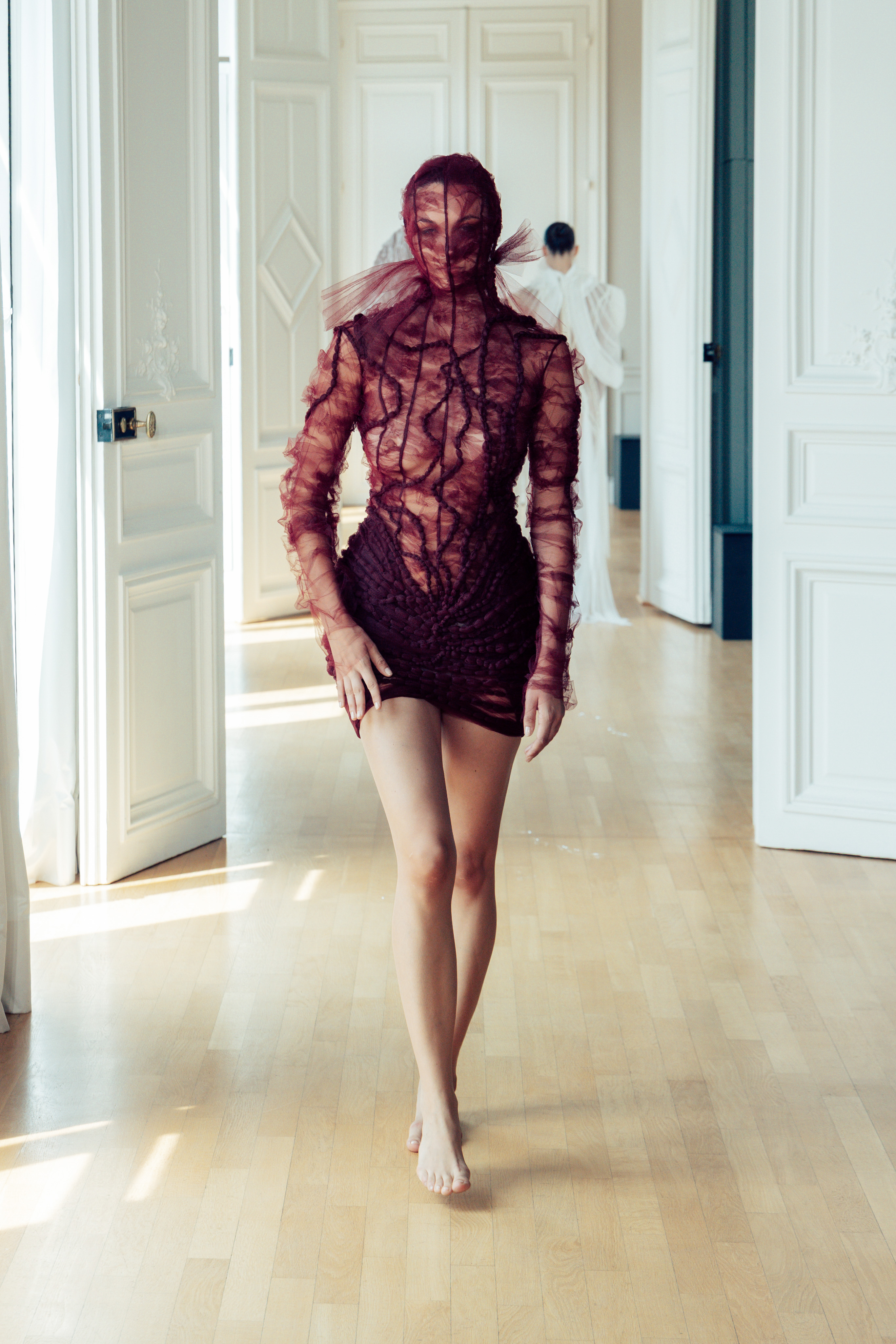
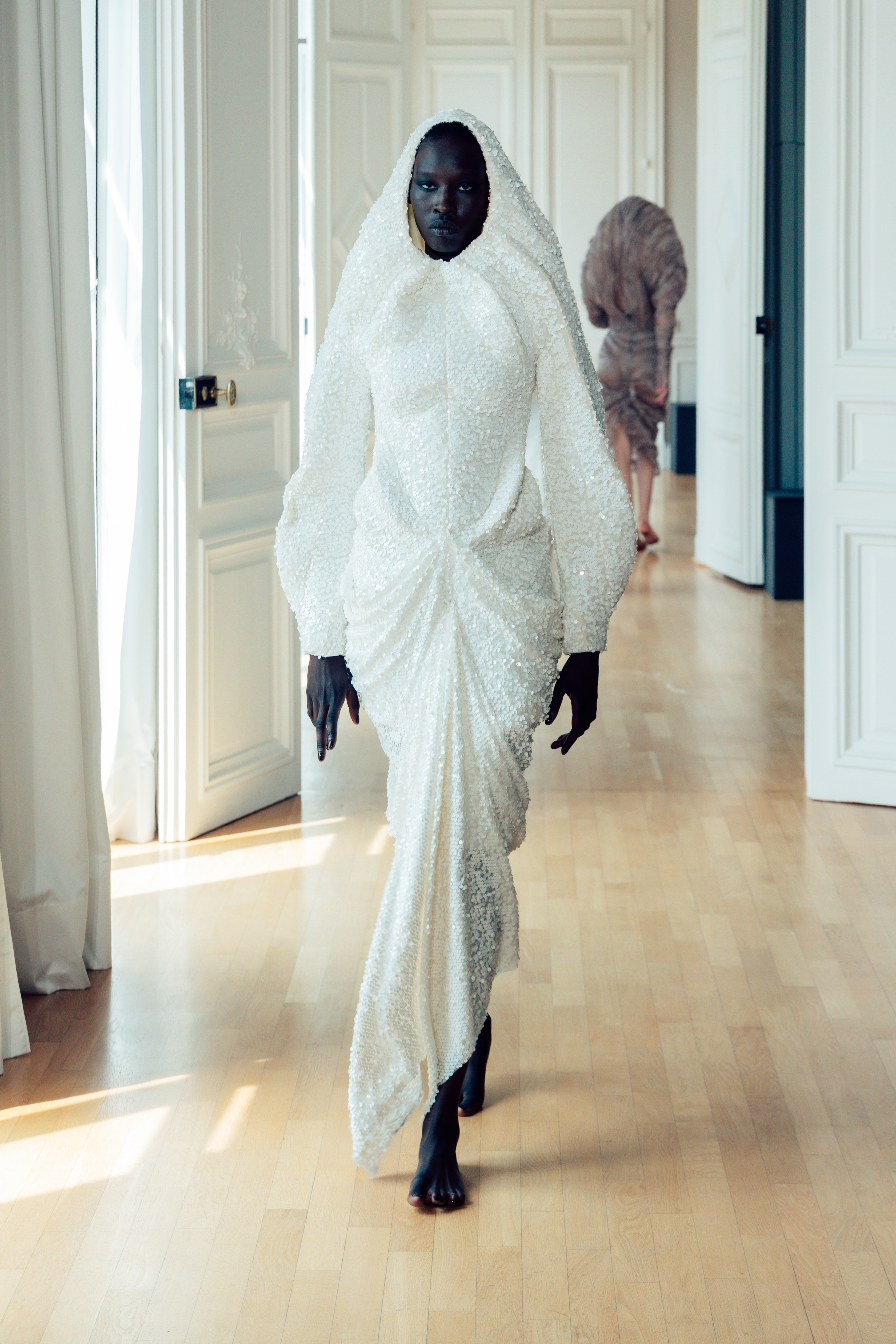
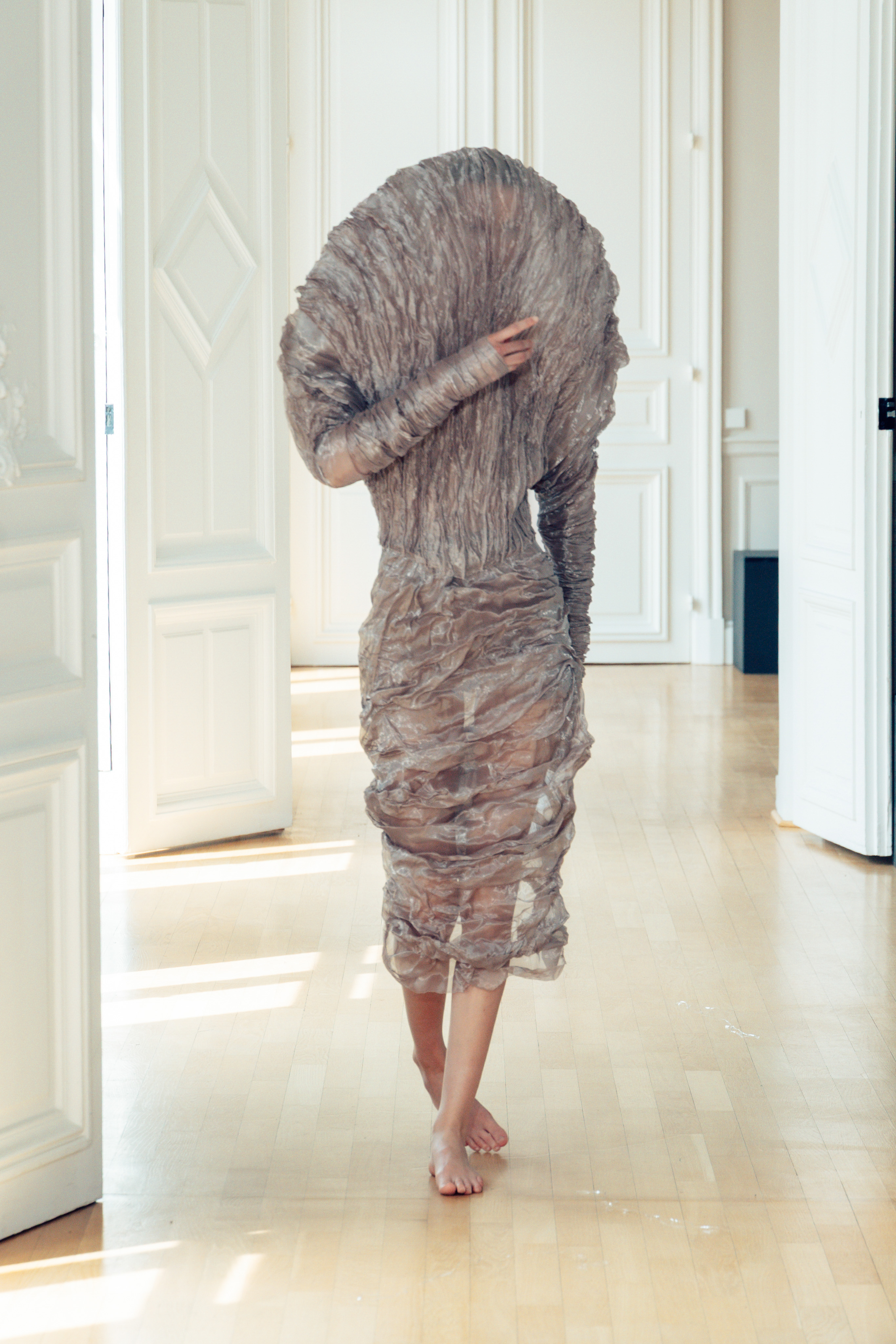
The final act embodies complete liberation. Architectural constructions evolve into fluid, instinctive forms, while the garments reject rigidity entirely, following the body’s natural movement instead of controlling it. Fabrics become weightless and ethereal, freeing the body from both physical and symbolic constraints and revealing a new expression of freedom.
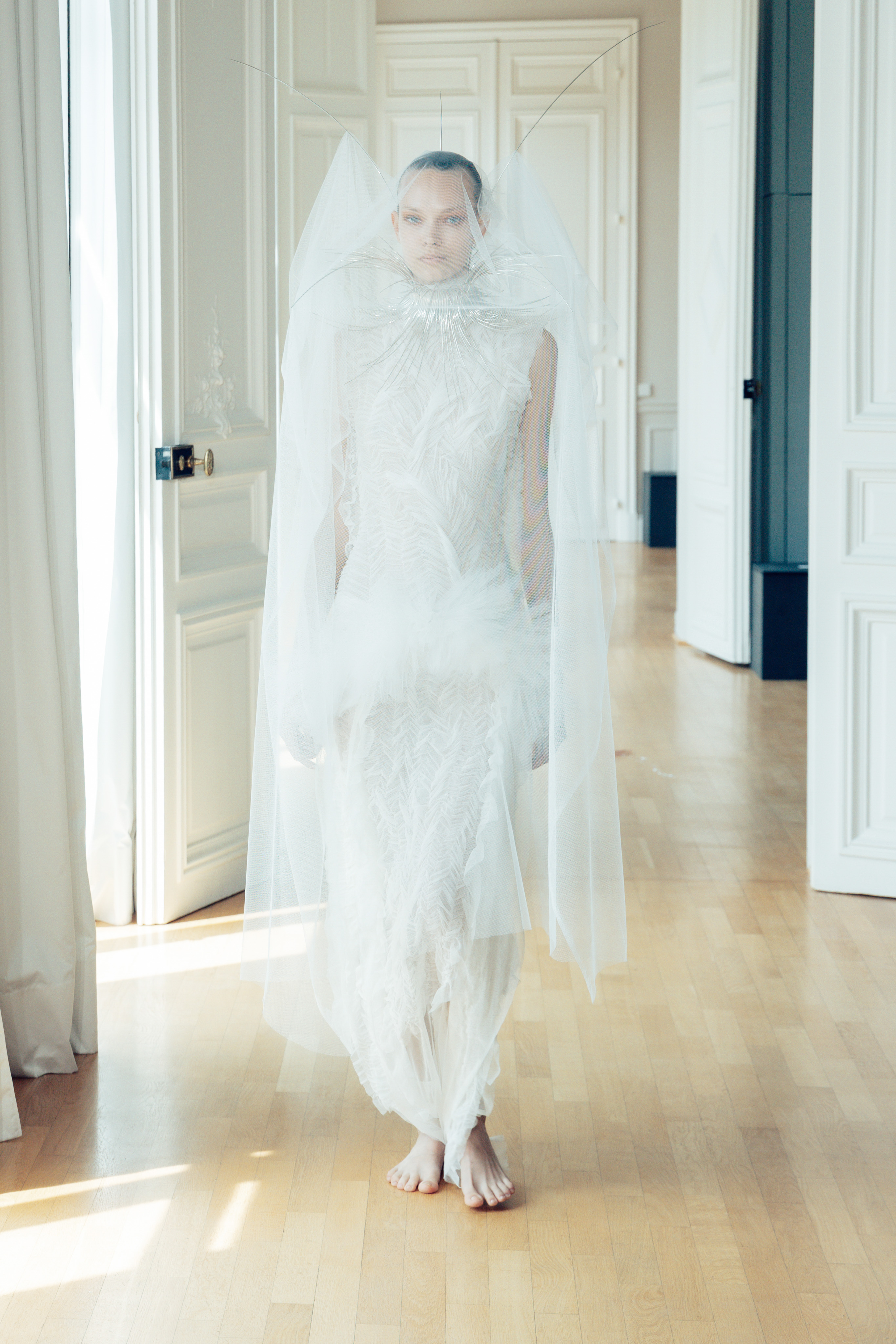
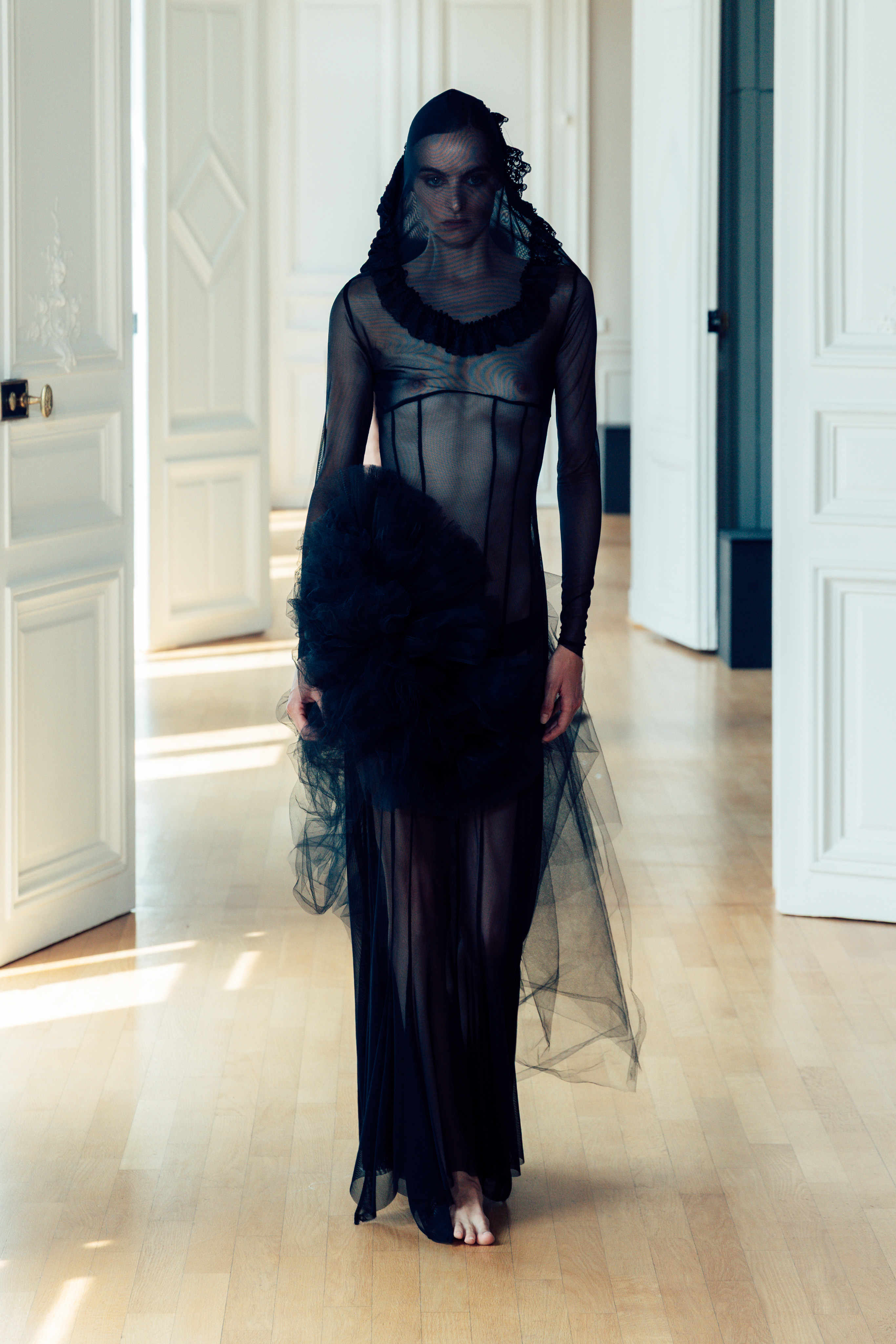
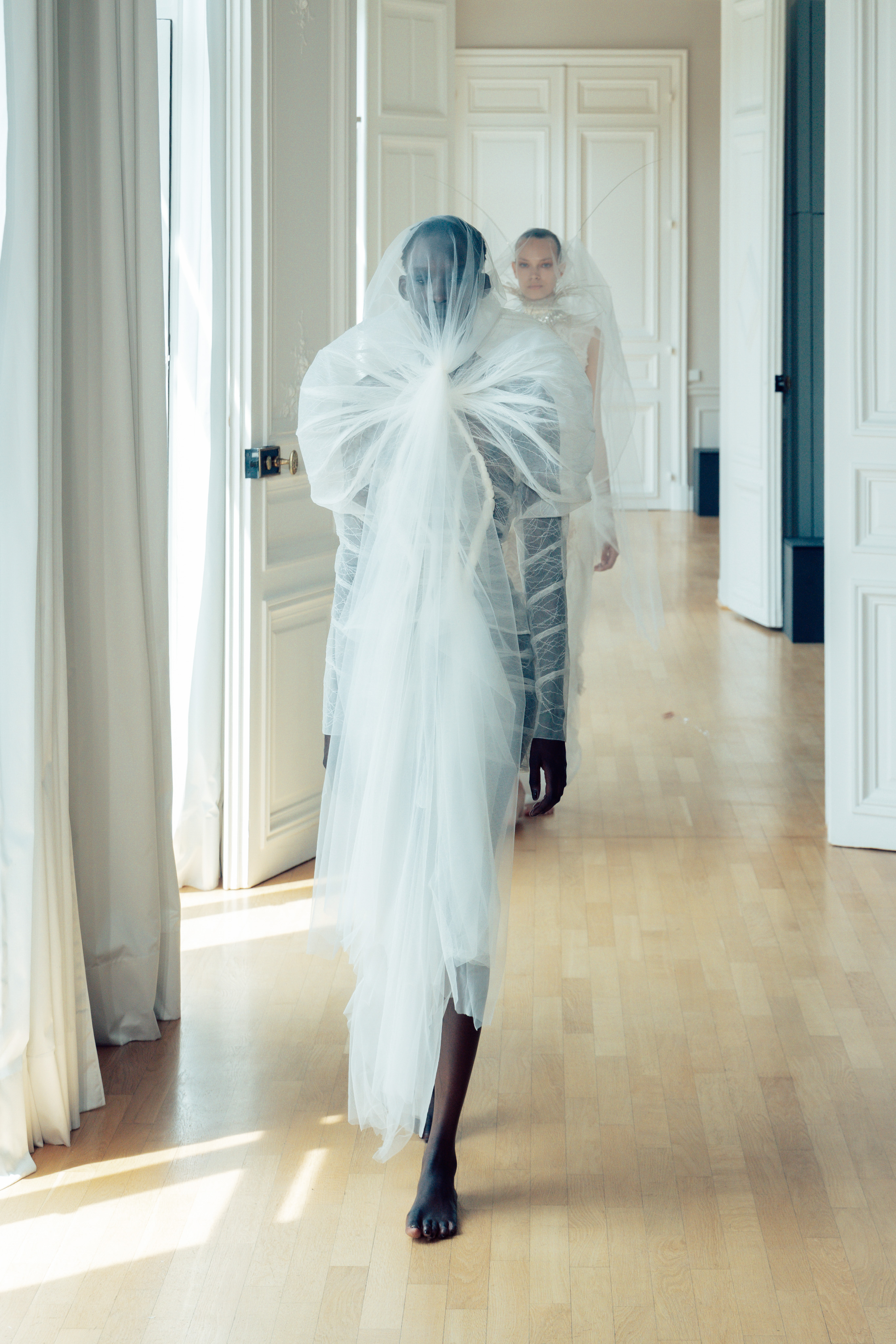
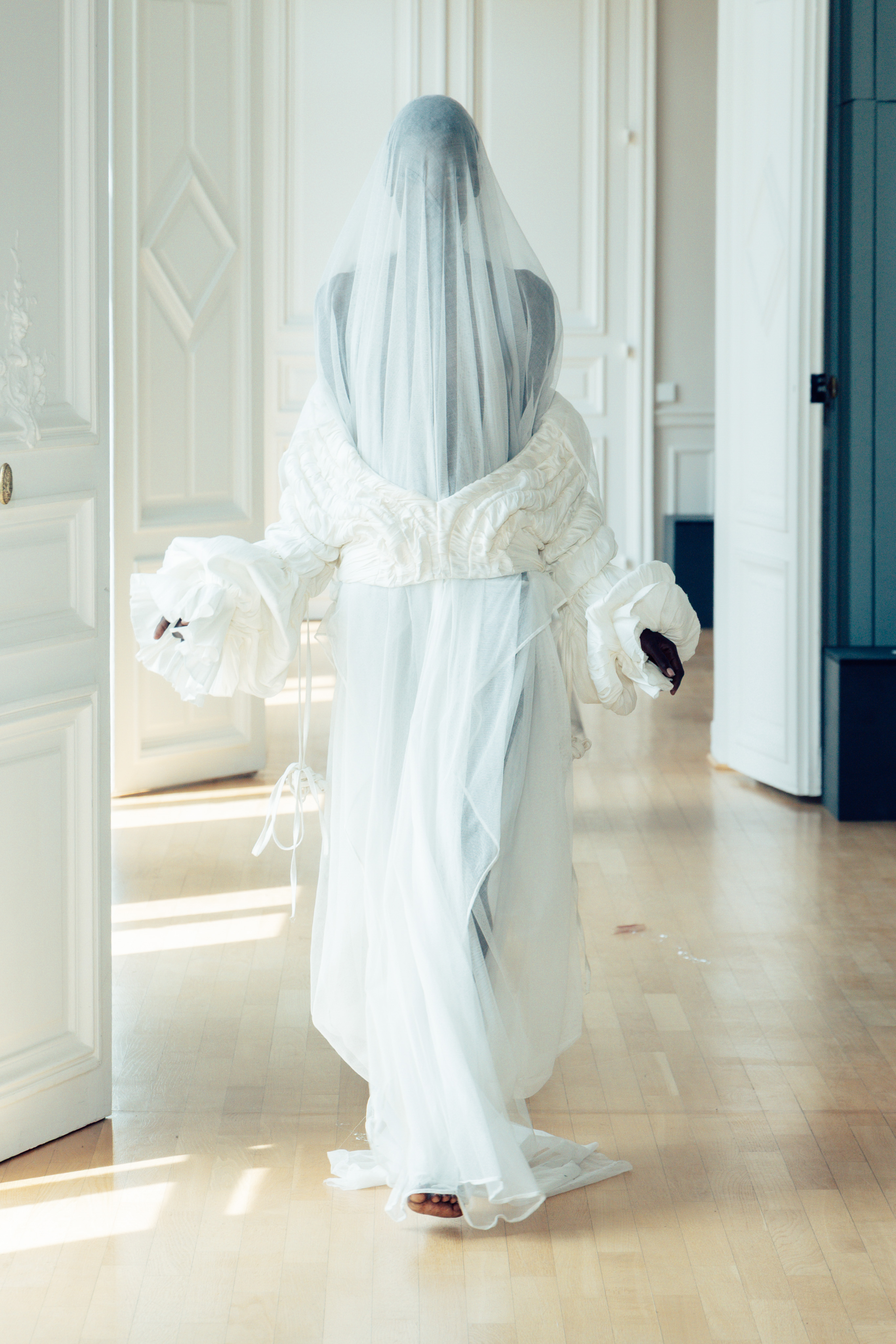
Aether demonstrates that couture can be far more than an exercise in beauty. Every look contributes to a cohesive narrative in which technical mastery, craftsmanship and conceptual research exist in perfect balance. Rather than presenting a sequence of visually striking garments, Aziz Rebar stages an emotional journey through identity, transformation and female emancipation. It is this rare ability to translate deeply human experiences into sculptural, three-dimensional forms that establishes him as one of the most promising voices of a new generation of haute couture.