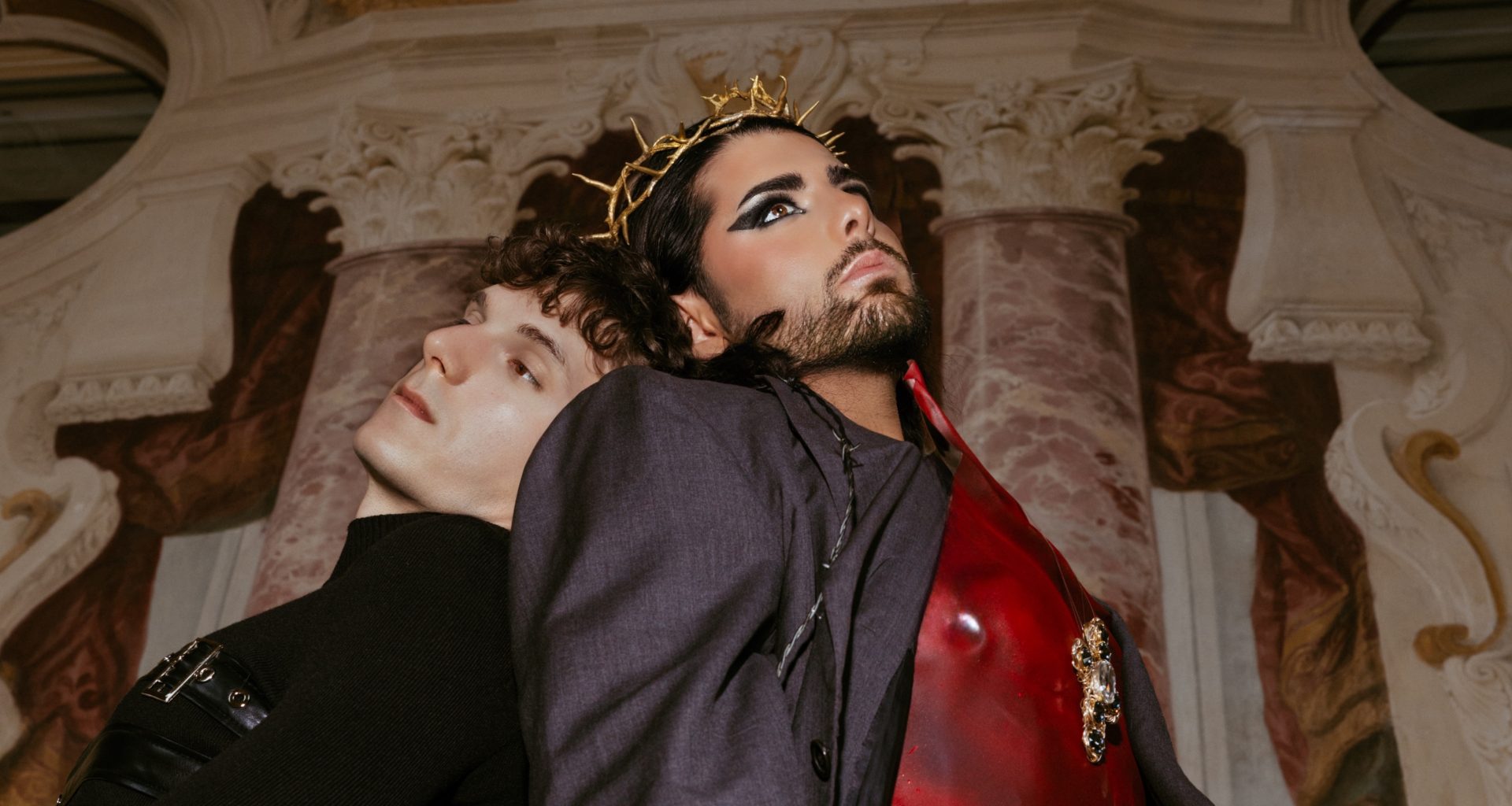
This June, Vanity Teen celebrates Pride by highlighting Alessio, our protagonist of the month, whose latest visual manifesto redefines queer art. Balancing raw intimacy with historical reflection, this exclusive feature explores the artistic intent and the cultural gravity of his work.
Moving past his earlier “soft” phase into a visceral reckoning, Alessio uses striking imagery—including barbed wire—not to provoke, but to remember. For him, art isn’t meant to offer comfort; it is a tool to spark dialogue, challenge structures of exclusion, and honor the resilience of marginalized communities.
As a powerful reminder that Pride is rooted in protest and survival, this editorial refuses to censor or shrink itself. Alessio isn’t just presenting fashion; he is wearing memory, inviting us to confront the historical “wires” meant to hold us back.
Welcome to an unapologetic exploration of queer liberation, memory, and human dignity.
This is my third year creating Pride exclusives, and each year I focus on a different theme. Last year, the work was unapologetically sexual. The imagery was raw, sensual, and unfiltered. It included nudity and explored what society often reduces to taboo: sex and desire.
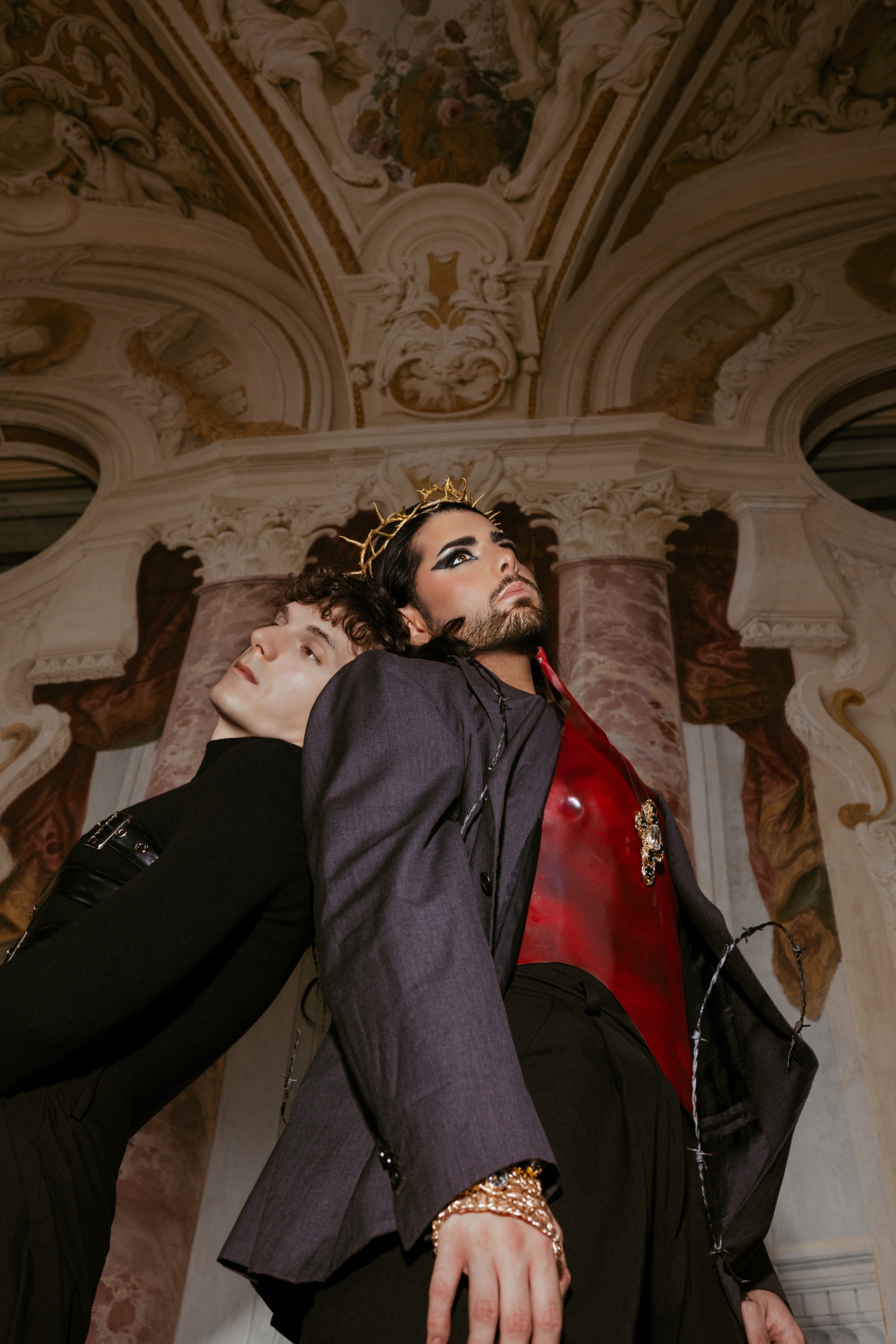
While many found it controversial, the point was never simply what appeared on the surface. The intention was to portray queer love in its entirety, to present queer intimacy as something worthy of being celebrated, displayed, and amplified on the same scale as high-fashion editorials. No censorship. No apologies. No shrinking ourselves to make others comfortable.
As an artist, and as someone fortunate enough to have a platform, my responsibility is not to make people comfortable. My responsibility is to create work that sparks conversation, challenges perspectives, and leaves room for reflection. Art should make us feel something, even when that feeling is discomfort. If it creates a ripple of reactions, emotions, and dialogue, then it has done exactly what it was meant to do.
1. You’ve often spoken about your work as an extension of your own healing. How does the imagery in your latest shoot fit into that personal journey?
“My work has always been a mirror of my own growth. These images feel like a reckoning. I am moving beyond the softer phase of my earlier work into something more visceral, acknowledging that true freedom requires us to face the shadows of the past.”
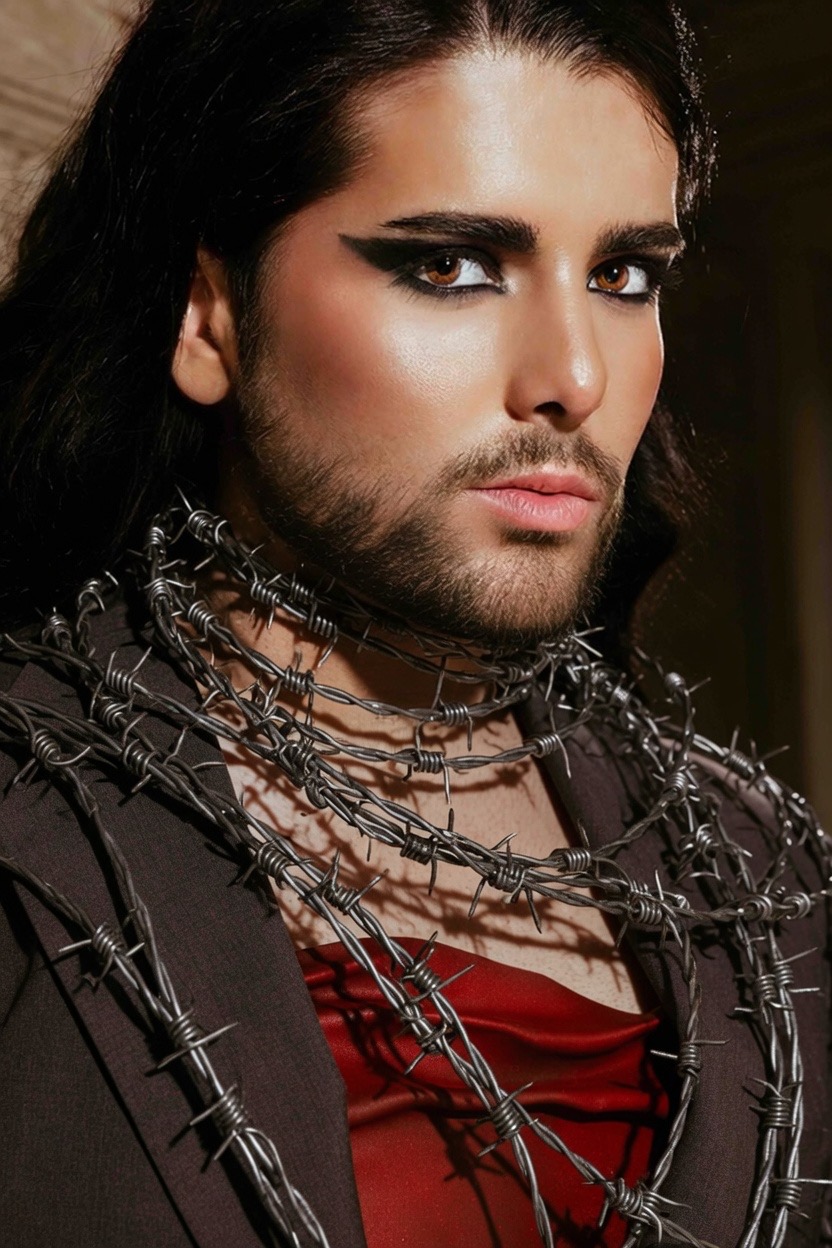
2. The use of barbed wire is striking. What are you trying to convey by placing such a restrictive element against your own body?
“The wire is a historical symbol of confinement. It belongs to the visual language of borders, camps, division, and systemic erasure. By wearing it, I am not playing with its symbolism. I am embodying the resilience of those who were marginalized, silenced, or trapped by the structures society built to contain ‘the other.’”
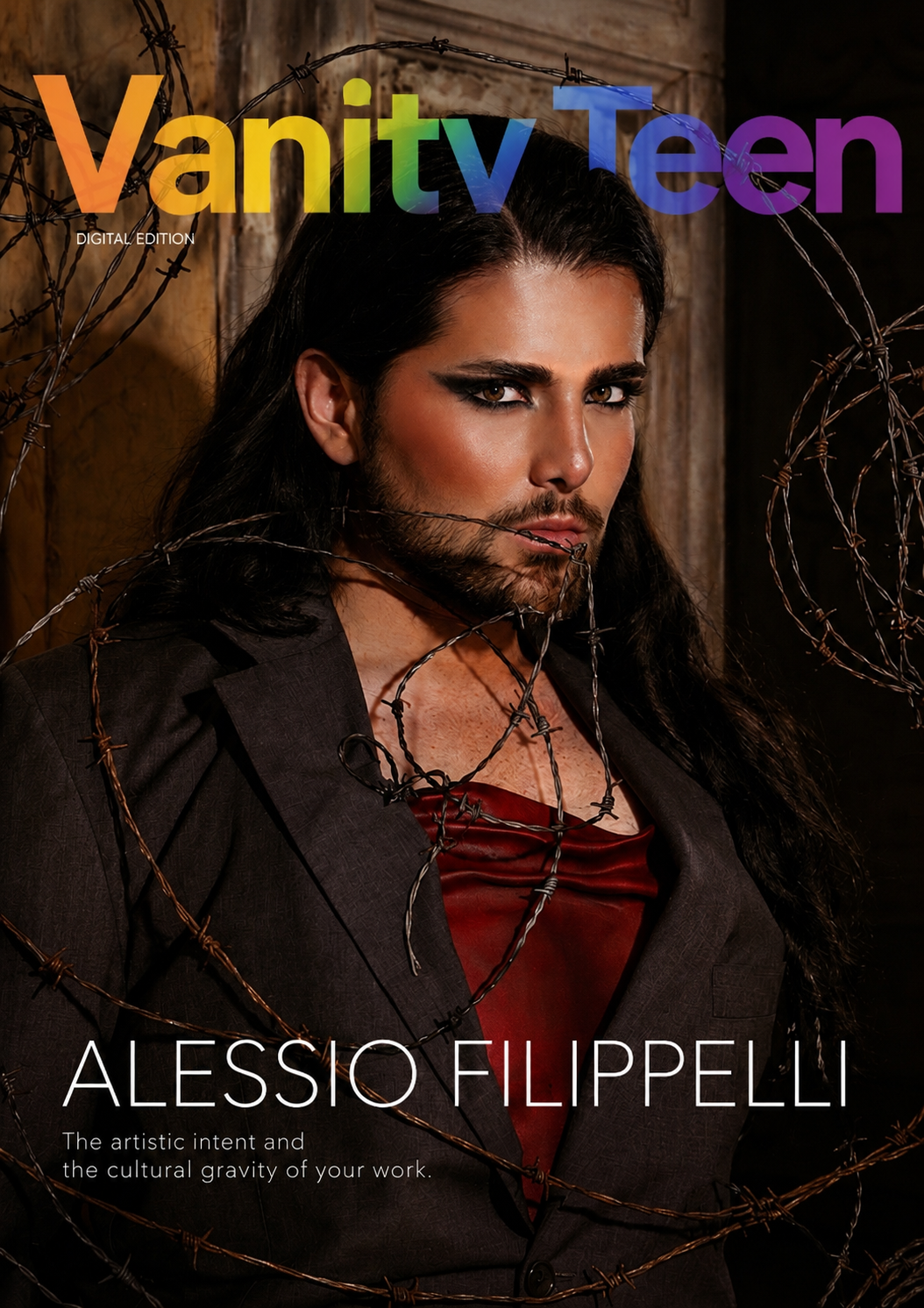
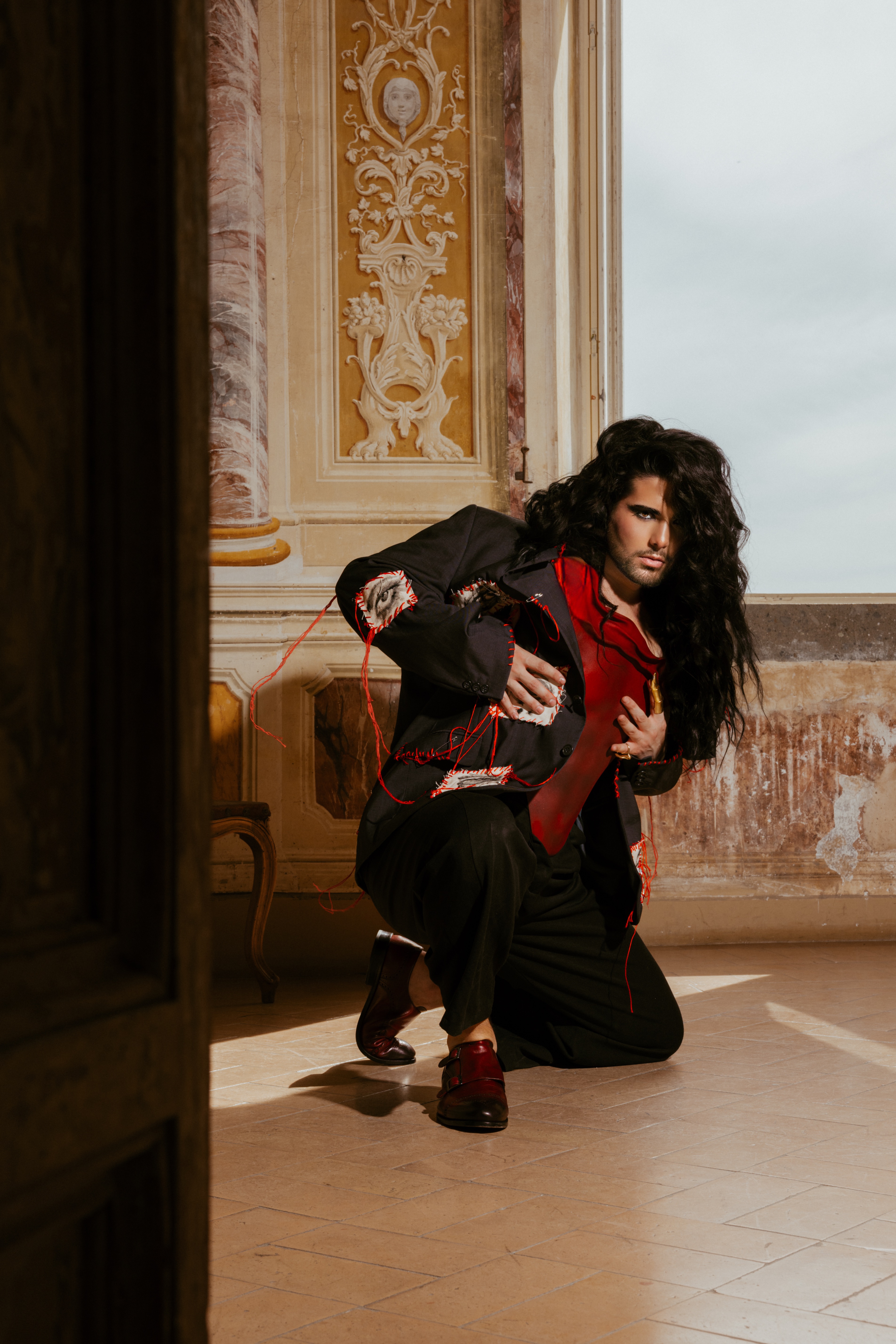
3. In the cover photo, the barbed wire appears prominently. How do you reconcile these symbols with the narrative of queer liberation?
“I see these symbols as representations of the weight of history, a burden that has too often been used to judge, divide, and exclude rather than protect. In these images, the wire is not meant to provoke. It is meant to remember.
It is woven into human history, from some of the darkest chapters of the twentieth century to the systemic exclusion and persecution that have targeted marginalized communities for generations, including queer people.
My intention is to confront the viewer with the uncomfortable reality of how humanity has historically treated those deemed ‘other.’ These images invite us to examine the structures of exclusion that shaped our past and to recognize that many of those barriers still exist today, even if they have become less visible.
When I look at these photographs, I do not see blasphemy, controversy, or provocation. I see a mirror held up to our collective history: the stories of those kept behind fences, those denied a voice, and those forced to fight simply to exist. I also see the reality that we are still confronting systems that attempt to keep people in their place.
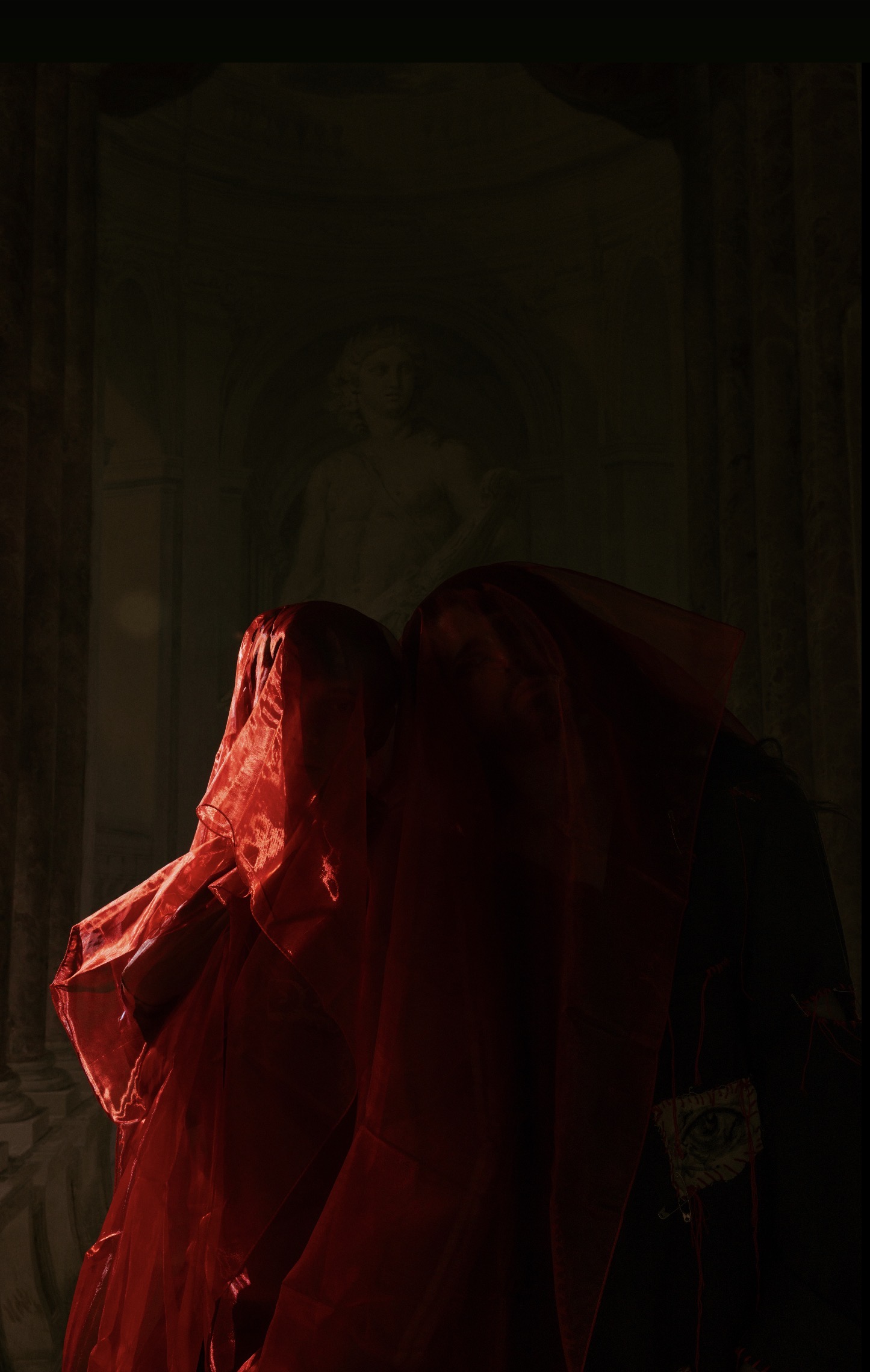
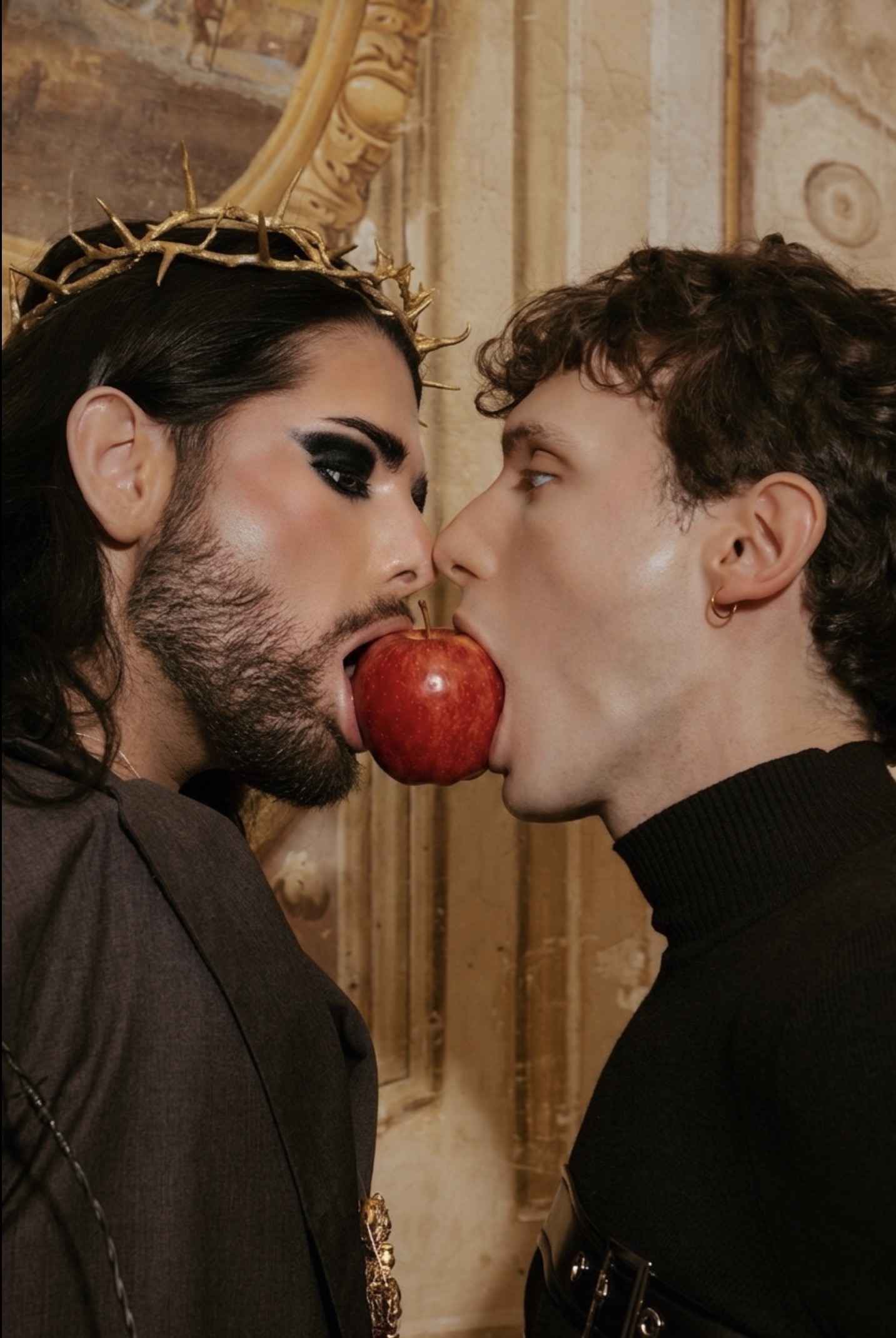
These images are my way of grappling with that legacy. To be seen today is to acknowledge the pain that came before us. We are not simply wearing clothes; we are wearing memory. We are carrying history. By reclaiming these symbols, I am stripping away dogma and focusing on the human capacity to endure suffering and emerge with dignity.”
4. Some might find the imagery provocative. Is that your intention?
“I never set out to be provocative for its own sake. My goal is to spark a dialogue about the architecture of our past. If an image makes someone pause and question why certain barriers were built, then the art is doing its job.”
5. How does this visual manifesto serve as a message for Pride?
“Pride is not only a celebration. It is also a protest born from survival. This work is a reminder that our liberation is tied to our history. We have to understand the wires that were meant to hold us back before we can truly cut them.”
Credits:Talent: Alessio Filippelli @ale_ssiofilippelli
Photography: Fay Valentine @timewallbyfay
Official Sponsor and Shoes supplier: Ingiliz @Ingiliz_Official @remsiingilizov
Outfit: Sara Limone @22des_igner
Custom Made Corset: Isabella Marinelli @isabellamarinelliart
Custom Made Jewelry: Francesca Salvati @f.salvatigioielli
Crown: @mahija.official
Make-up: Iram Rahman @iramrahman_
Hair: Alessio Cirillo @_alessiocirillo
Extra On-Set Model: Roberto Romeo @roberto._romeo
Ingiliz Coordinator: Ivel Grigorova @iveljan