



by Giorgia Cantarini
From 19 July, major fashion companies can no longer destroy unsold clothing and footwear across the European Union. It is a historic step — but unless the industry confronts how much it produces, its waste may simply be redirected rather than eliminated.

For decades, fashion’s excess inventory was treated as a problem to be hidden rather than prevented. Clothes that had never been worn, shoes still sealed inside their boxes and customer returns considered commercially inconvenient could be incinerated, sent to landfill or otherwise destroyed.
From 19 July 2026, that practice is prohibited for large companies operating in the European Union. Under the Ecodesign for Sustainable Products Regulation, businesses must prioritise keeping unsold apparel, accessories and footwear in circulation through sales, discounts, donation, repair, refurbishment, remanufacturing or reuse. Medium-sized companies will be brought under the same rules in 2030, while small and micro-businesses are currently exempt.
This is not a symbolic intervention. The European Commission estimates that between 4 and 9 per cent of all textile products placed on the European market are destroyed before ever being used: between 264,000 and 594,000 tonnes of clothing and textiles every year. Companies relying on limited exemptions — for example when a product is unsafe, irreparably damaged, counterfeit or rejected by donation organisations — will have to document their decisions and retain evidence for inspection
the “no”: europe has banned destruction, not excess
The regulation addresses what happens to unsold products, but it does not impose a limit on how many garments companies may manufacture.A brand can still produce far more clothing than the market requires. It simply has to find another destination for the surplus.
Some of that inventory may enter legitimate resale, donation, repair or recycling systems. But there is also a risk that the environmental burden will be displaced geographically: away from European incinerators and warehouses and towards second-hand markets, fragile waste-management systems and communities elsewhere in the world.
This concern is not abstract. The European Environment Agency reports that exports of used textiles from the EU almost tripled between 2000 and 2019, reaching nearly 1.7 million tonnes. Around 46 per cent were sent to African countries, particularly Tunisia, Ghana and Cameroon. Only slightly more than half of the textiles exported to Africa were ultimately reused; much of the remainder was landfilled, burned or dumped.
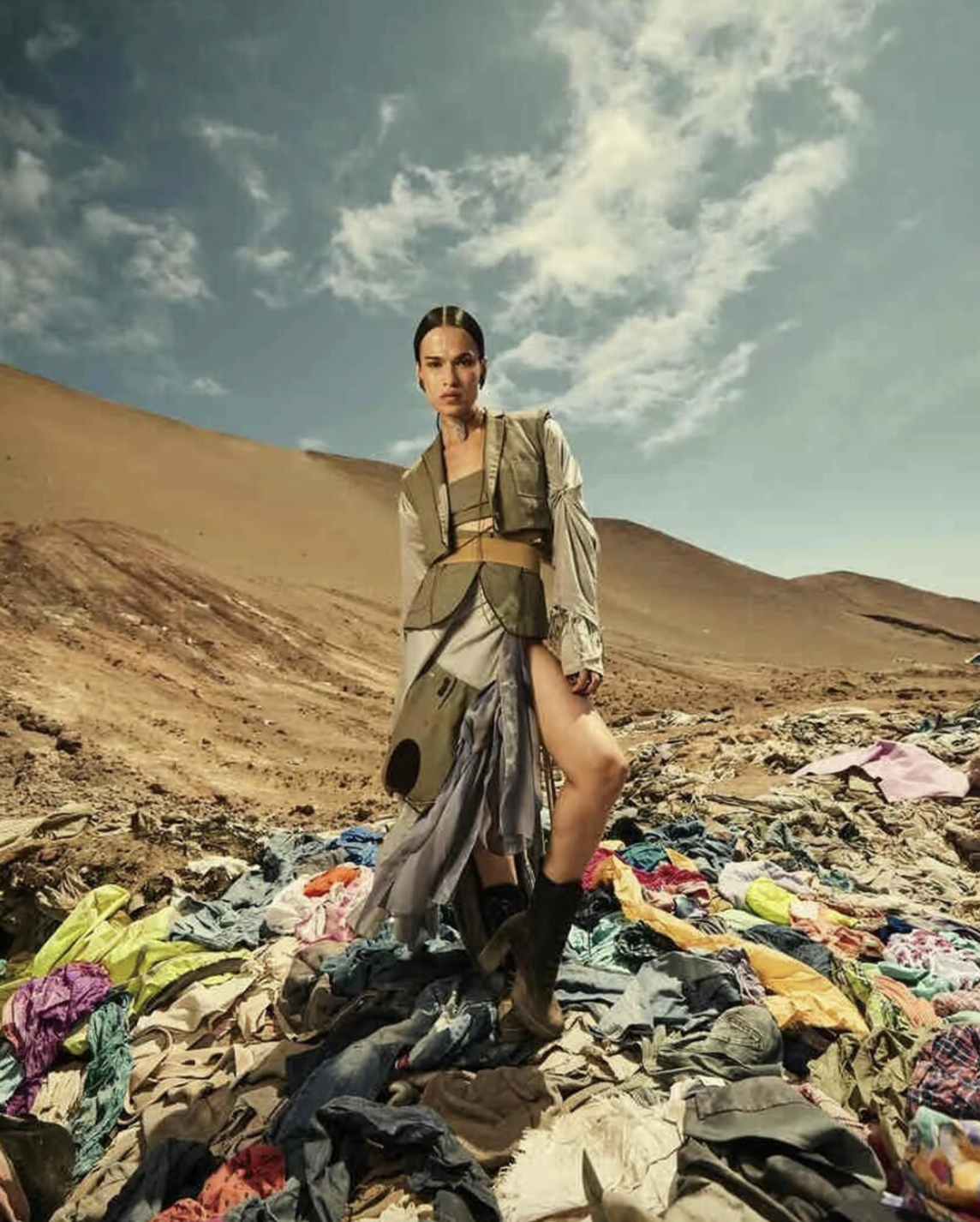
A similar crisis is unfolding in northern Chile. In the Atacama Desert, enormous piles of discarded clothing have accumulated near the city of Alto Hospicio, largely from garments imported through the Iquique free-trade zone that could not be resold. The scale of the dumping grounds is so vast that the textile piles have been captured in satellite imagery and are frequently described as visible from space.
The Atacama is not evidence of what the European ban will inevitably produce. It is a warning of what can happen when clothing is moved out of one market without clear responsibility for where it ultimately ends up. A product does not become circular simply because it disappears from a European warehouse.
Preventing destruction is essential. But unless brands reduce production volumes, improve demand forecasting and remain accountable for garments beyond their first destination, the new rules risk changing the geography of fashion waste rather than eliminating it.
Recycling cannot become permission to produce more
Recycling is essential, but it should not be confused with waste prevention. Less than 1 per cent of textile waste is currently recycled into new fibres for clothing; much of what is described as recycling is actually downcycling into insulation, industrial cloths or lower-value materials.
The correct hierarchy must therefore begin with producing less, followed by keeping products in use through repair, resale and remanufacturing. Recycling should manage materials that have genuinely reached the end of their usable life — not legitimise the continuous creation of excess inventory.
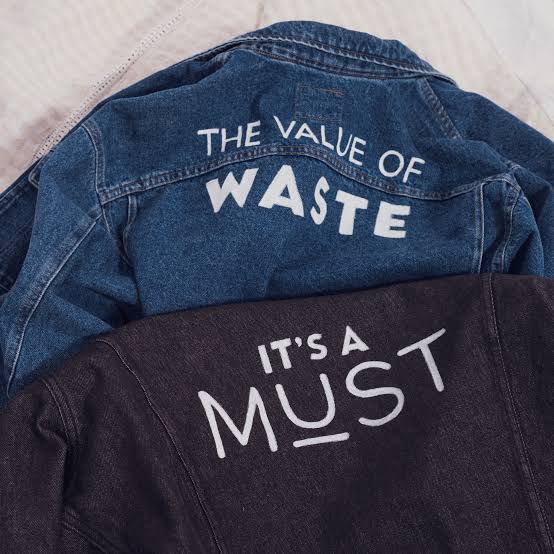
This is where companies such as the Italian fashion-tech platform Musthad can play an important role. Musthad should not be described simply as a recycler. It provides brands with a digital system for mapping and managing unsold inventory, returns, samples, defective products and textile waste. According to the company, its platform connects businesses with more than 300 specialised operators working across resale, donation, upcycling and recycling, while tracing material flows and measuring their impact.
This type of infrastructure is necessary because circularity is not achieved by placing unwanted clothing into a container marked “recycling”. It requires traceability, sorting expertise, appropriate destinations and proof of what actually happens to every product. But even the most sophisticated circular platform cannot compensate indefinitely for uncontrolled production.
The real test begins before a garment is made
The European ban establishes an essential principle: a usable garment must no longer be destroyed simply because it has failed to sell.
Its success, however, should not be measured only by the number of products saved from European incinerators. It should be measured by whether brands reduce surplus at its source, disclose their total production volumes, invest in product durability and take financial responsibility for what happens to their clothing everywhere — not only within European borders.Fashion does not need to become better at finding places for its excess. It needs to become better at avoiding that excess in the first place.
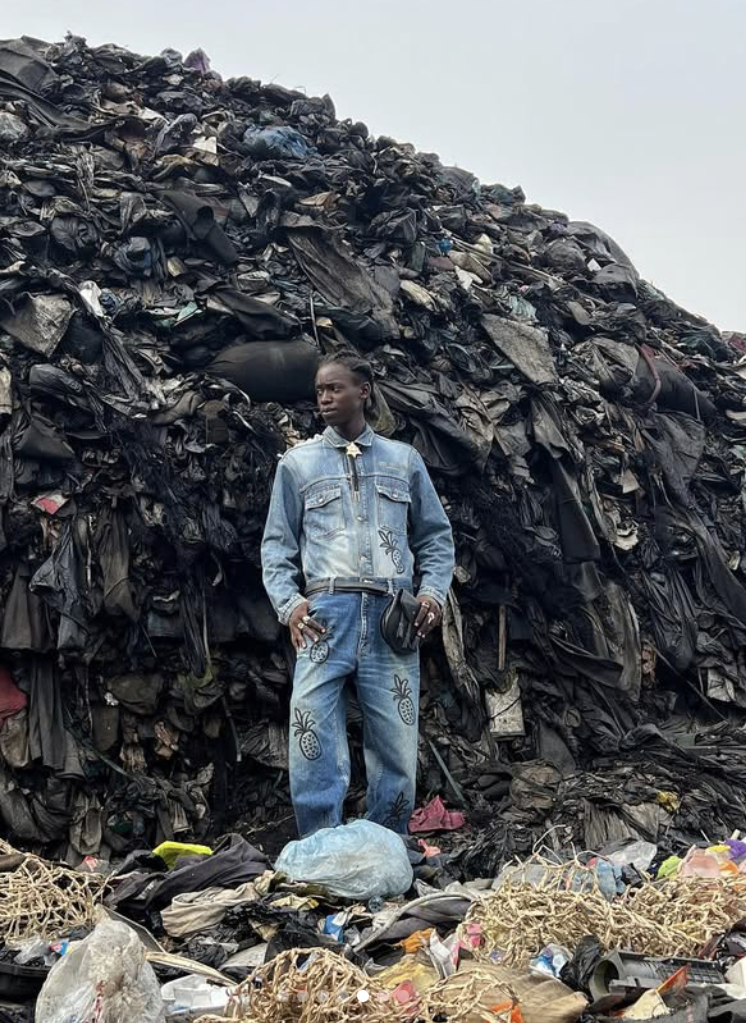
The question is no longer simply where will the industry put its waste? It is why did it produce it at all? The question is that the problem we have with waste will be moved even more elsewhere. Okoko (founded by a designer from the Central African Republic based in Accra, Ghana) is an activist-driven upcycling brand that raises his voice against consumption and fast fashion. Operating near the Kantamanto Market, he transforms discarded fast-fashion waste into high-end streetwear. His work actively challenges the global “waste colonialism” crisis in West Africa.
France is attempting to regulate desire — but only at the extreme
While the EU is intervening at the end of the product’s commercial life, France is also targeting the mechanisms that stimulate consumption.
On 8 July 2026, France promulgated a law addressing the environmental impact of the textile industry. From 1 January 2027, advertising for products and brands classified as ultra-fast fashion will be prohibited, including paid or gifted promotion by influencers. The law also prevents these companies from using the word “free” as a promotional device and introduces environmental penalties linked to factors including the scale of product ranges and the lack of incentives to repair garments.
It is a significant precedent: France is recognising that fashion’s environmental impact is produced not only inside factories and waste facilities, but also through marketing systems designed to accelerate desire.
Yet the compromise is evident. The law applies to ultra-fast fashion rather than fast fashion as a whole. The exact thresholds will be determined through future decrees, and critics have warned that the narrower definition may leave many major European and international retailers outside its scope.
Once again, it is a major step — but not a production cap.