When a brand has built its entire identity on transformation, what happens when transformation itself becomes its most recognizable signature?
Sacai has spent almost three decades making change look effortless.
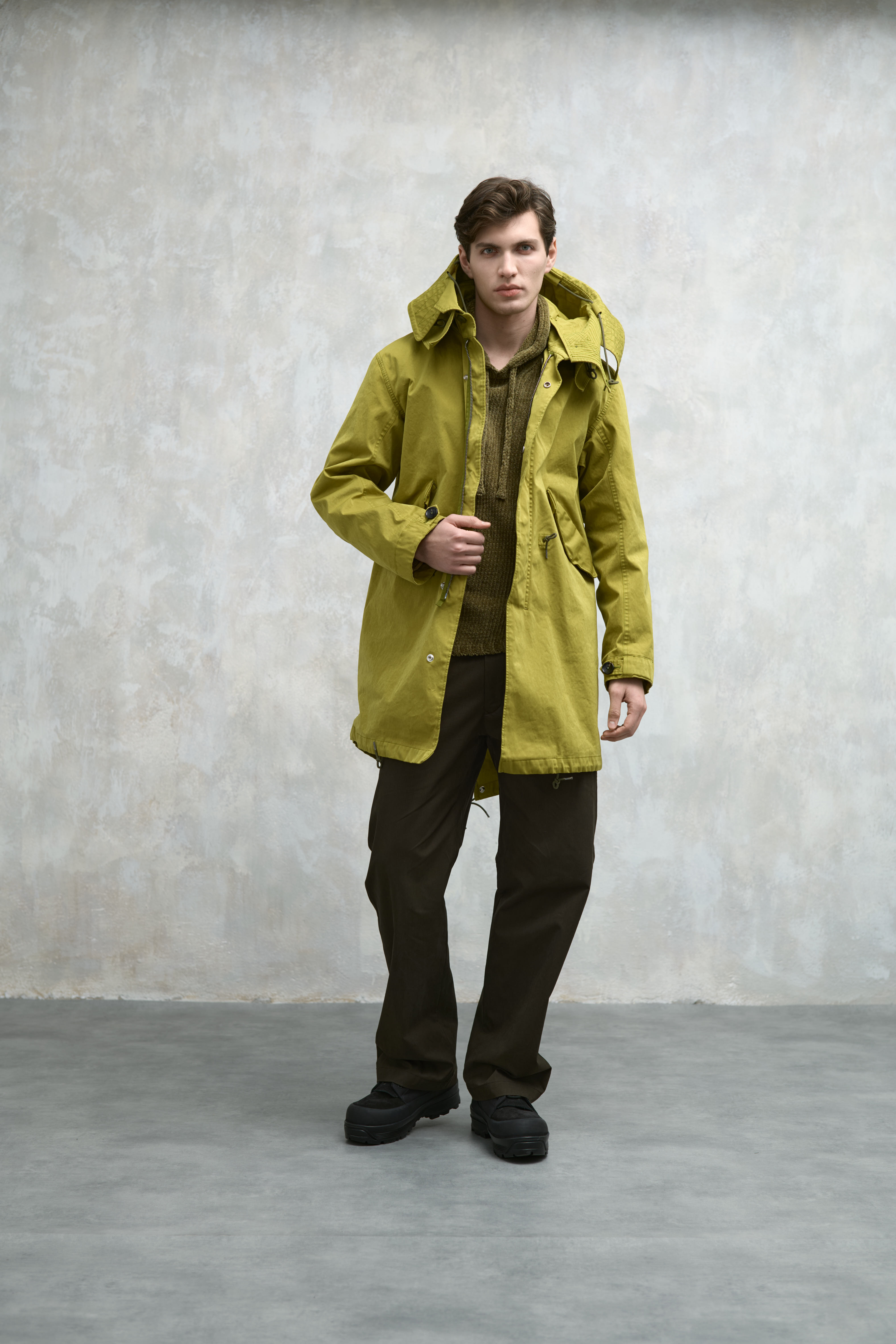
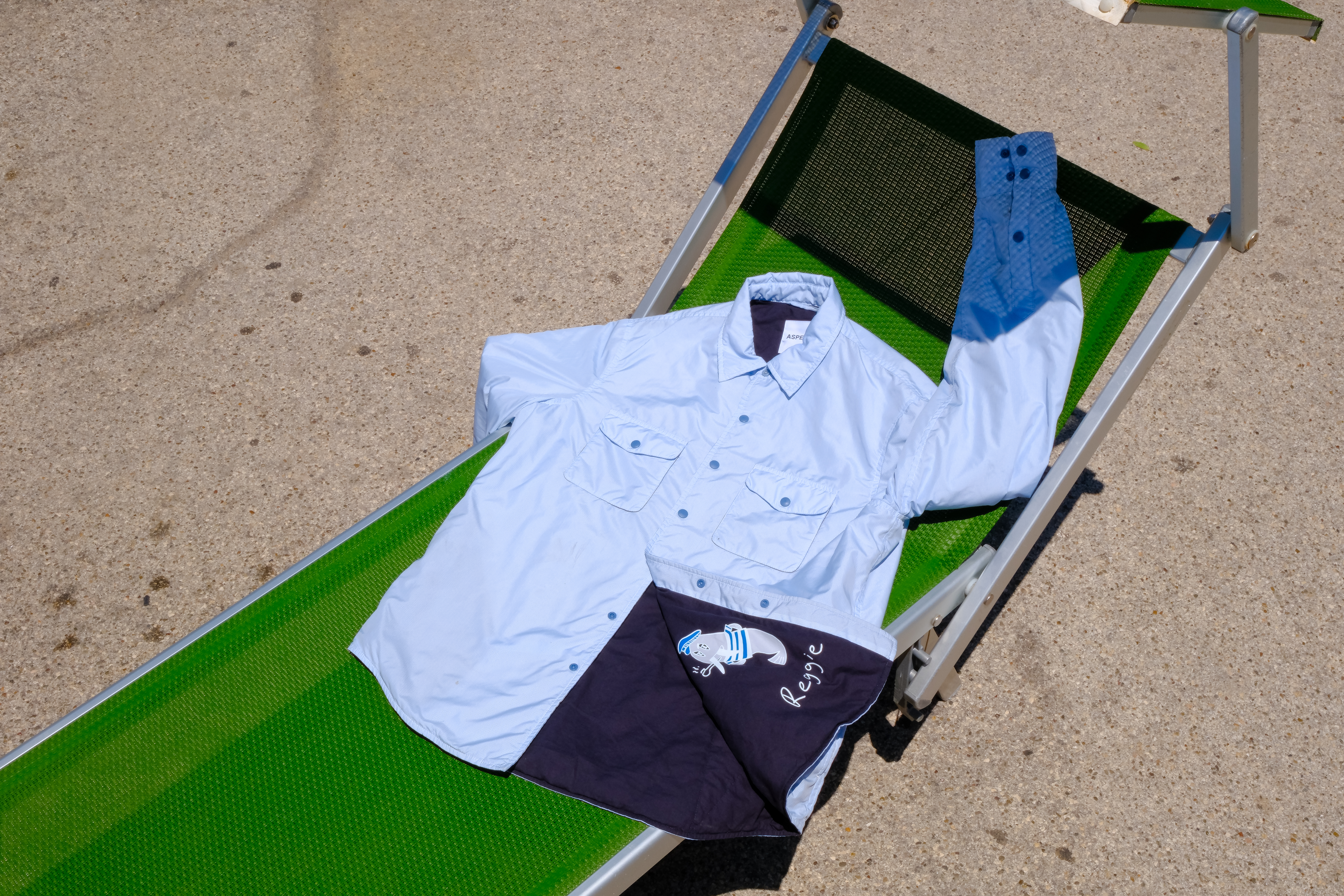
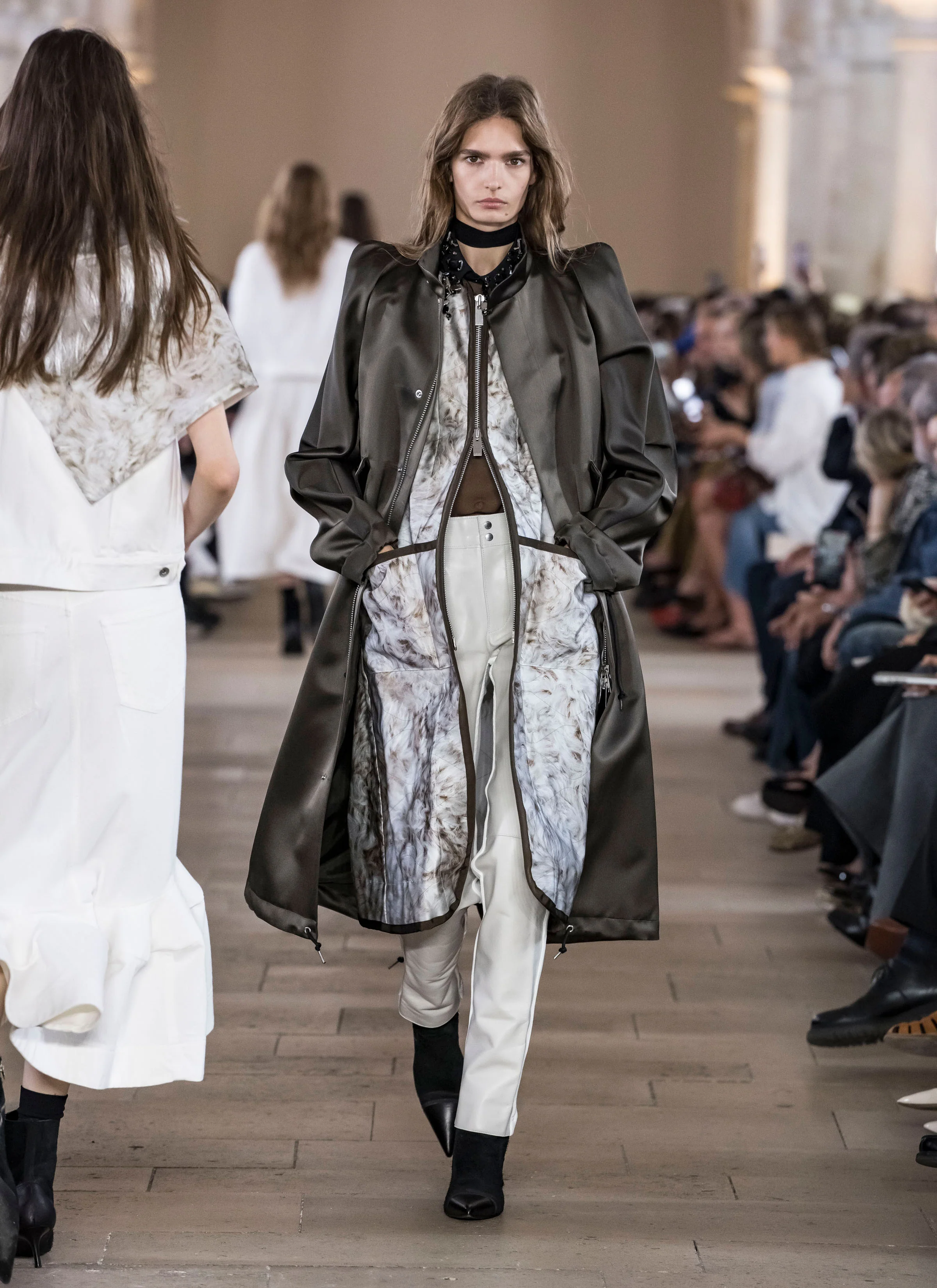
Chitose Abe takes something familiar, breaks its certainty, puts it back together and makes us question why we ever thought it could only exist in one form. A shirt is no longer just a shirt. A parka can become tailoring. Military codes can become femininity. A lining can become the most important part of the garment. The inside can suddenly become the outside.
This has always been Sacai.
Now Sacai has a problem.
It has become very good at being Sacai.
Spring/Summer 2027 arrives after a pause.
Abe stepped away from the women’s runway for a season, creating something increasingly rare in contemporary fashion: distance. A reset. A moment in which the system was allowed to continue without her before she returned to it.
That absence matters.
Fashion has become addicted to continuity. The constant drop, the constant image, the constant newness. Designers are expected to produce evolution on command, season after season, without ever admitting that evolution sometimes requires stopping.
Sacai stopped.
Then it came back by questioning its own formula.
That is what makes SS27 interesting.
The collection is not a revolution against Sacai. It is a confrontation with it.
A Moment of Becoming is therefore less a title than a condition. Sacai is caught between what it has already mastered and what it still needs to discover. The collection does not try to erase the codes of the house. It turns them inside out.
Literally.
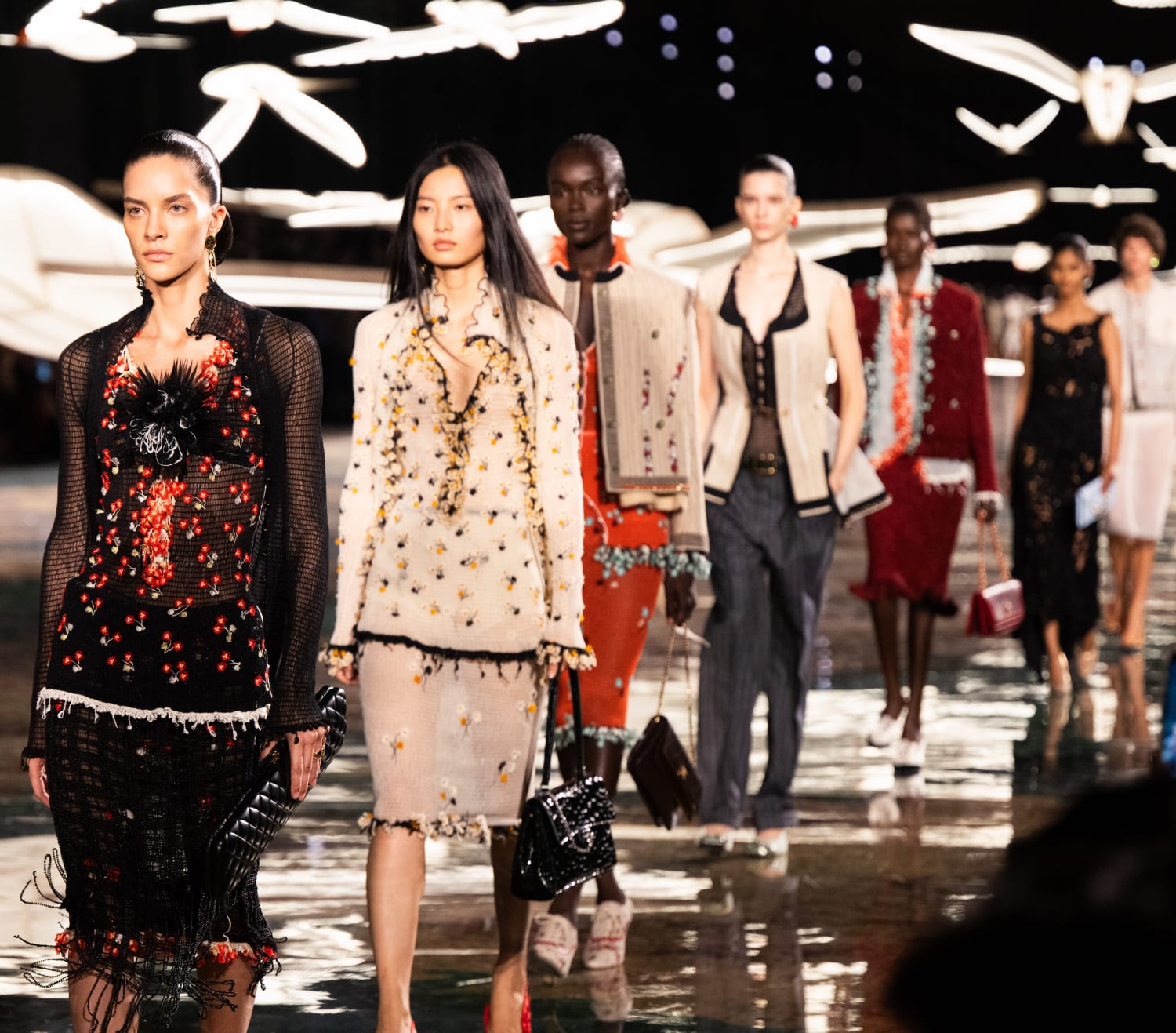
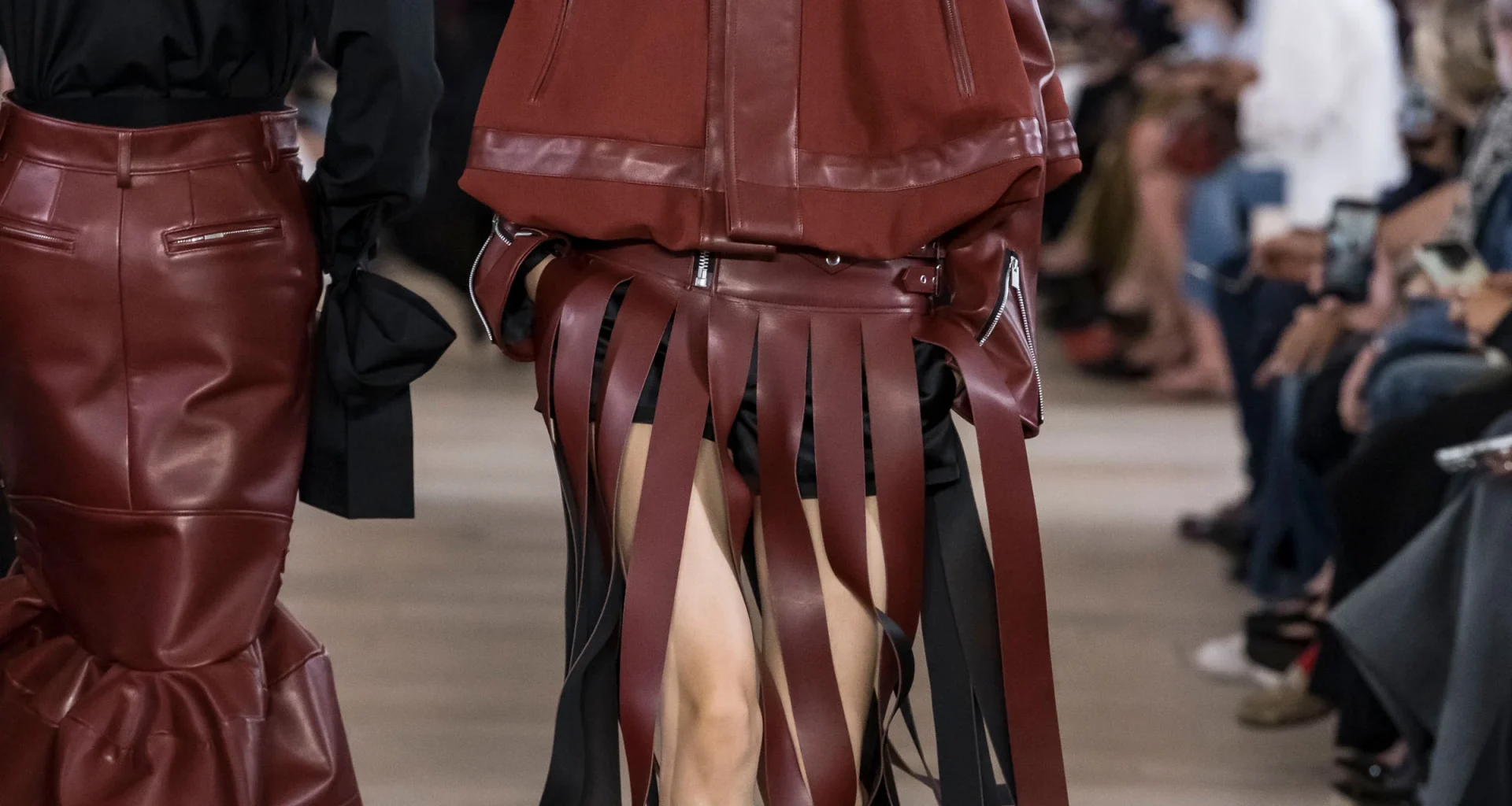
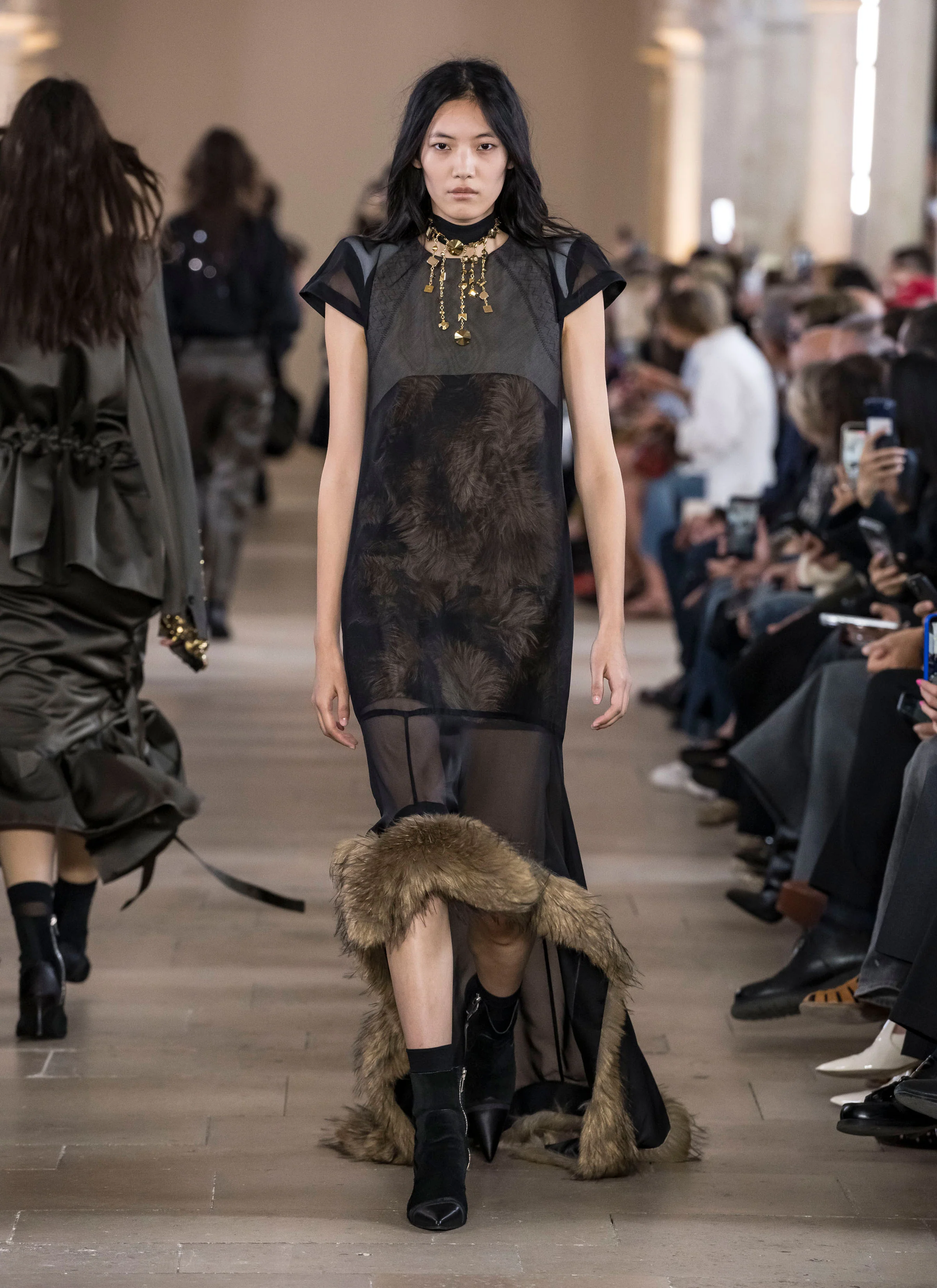
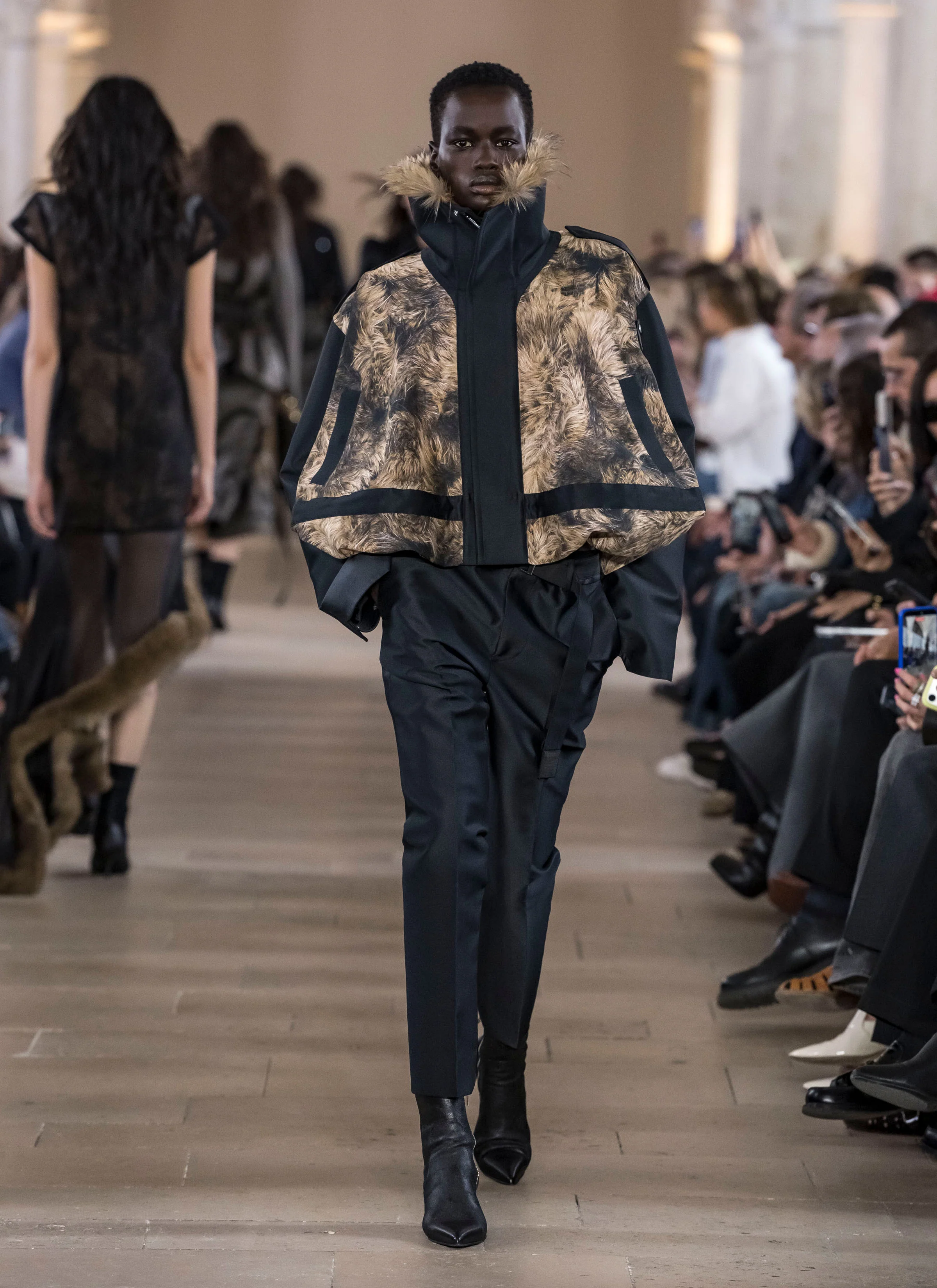
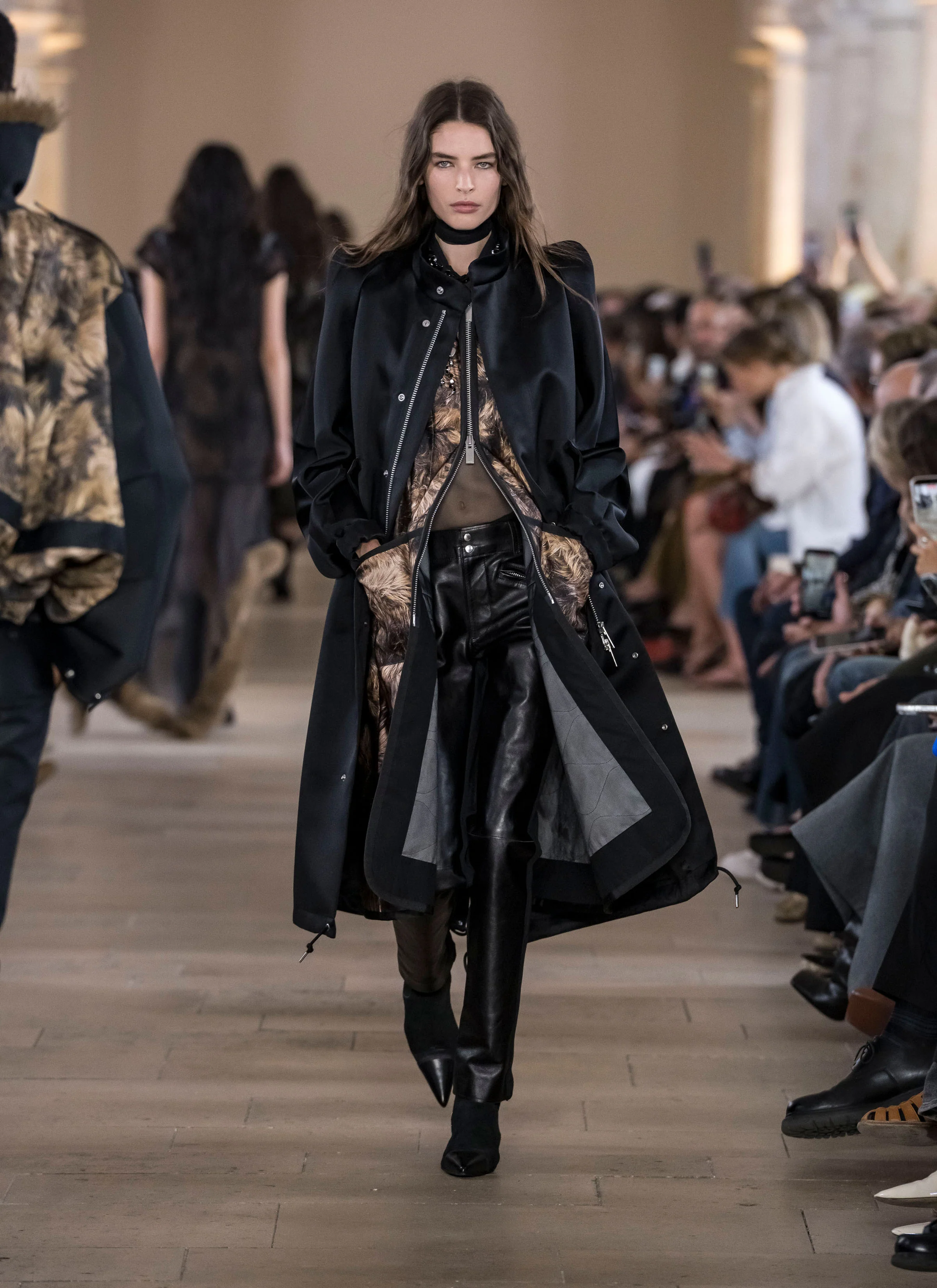
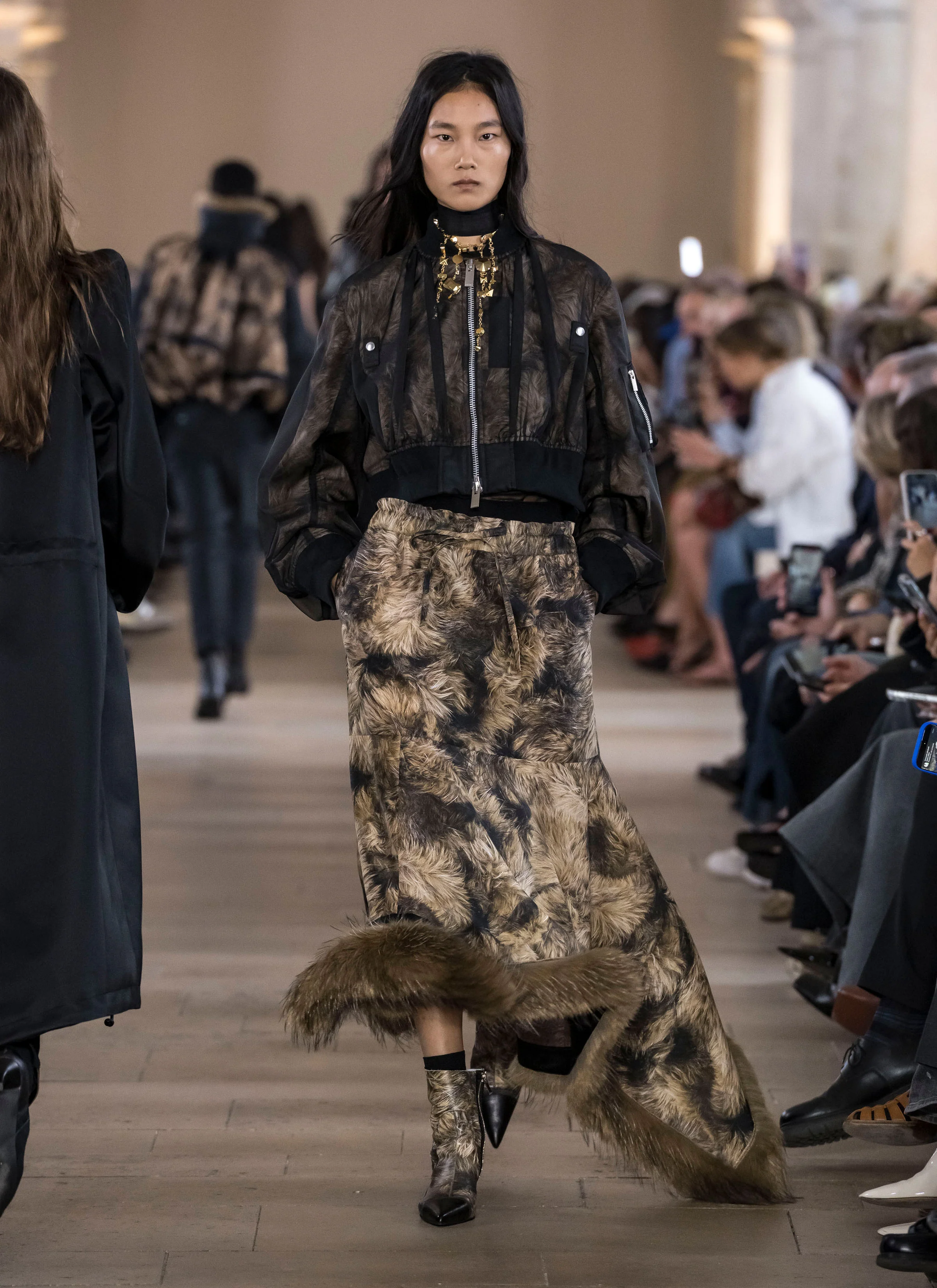
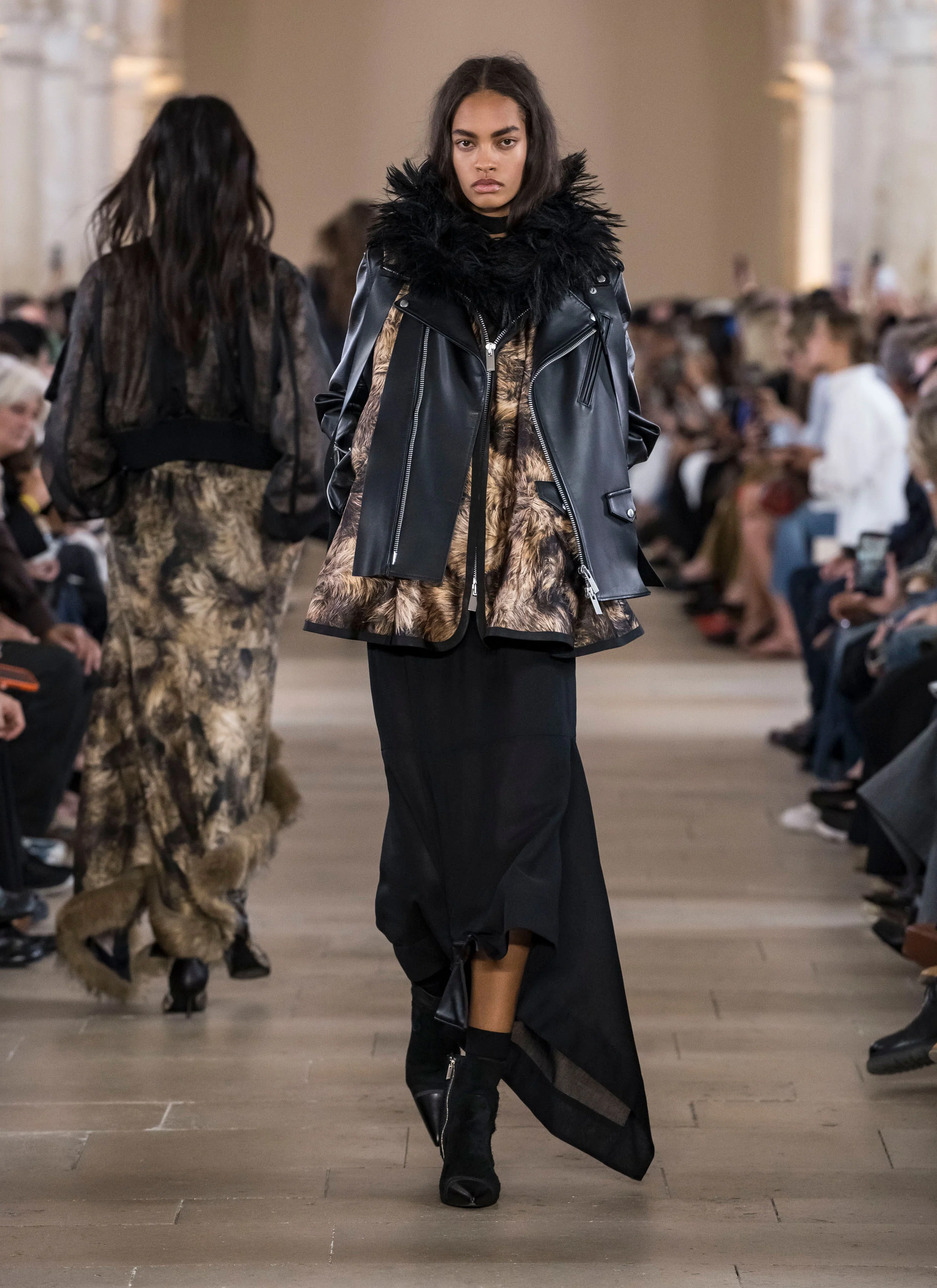
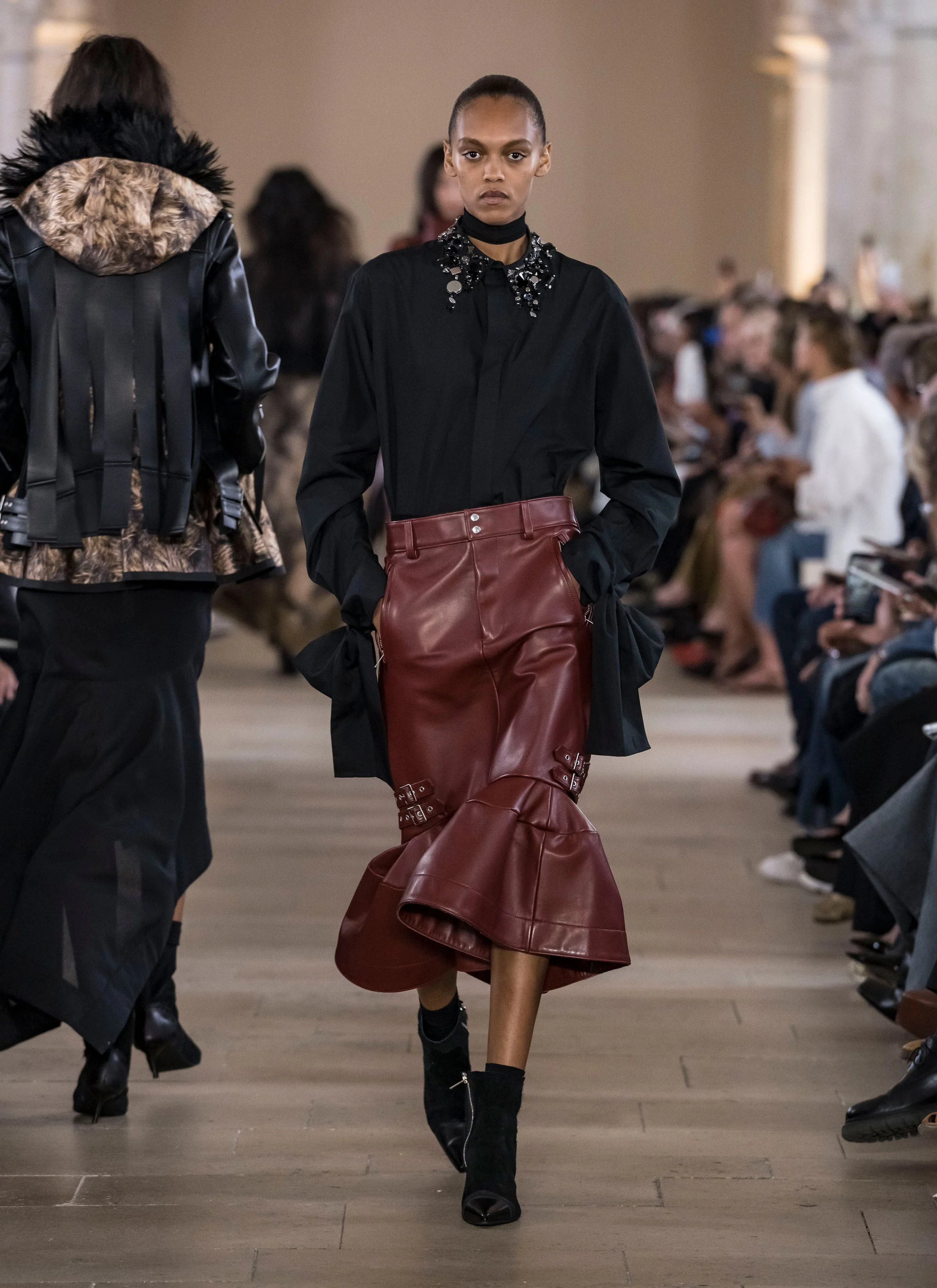
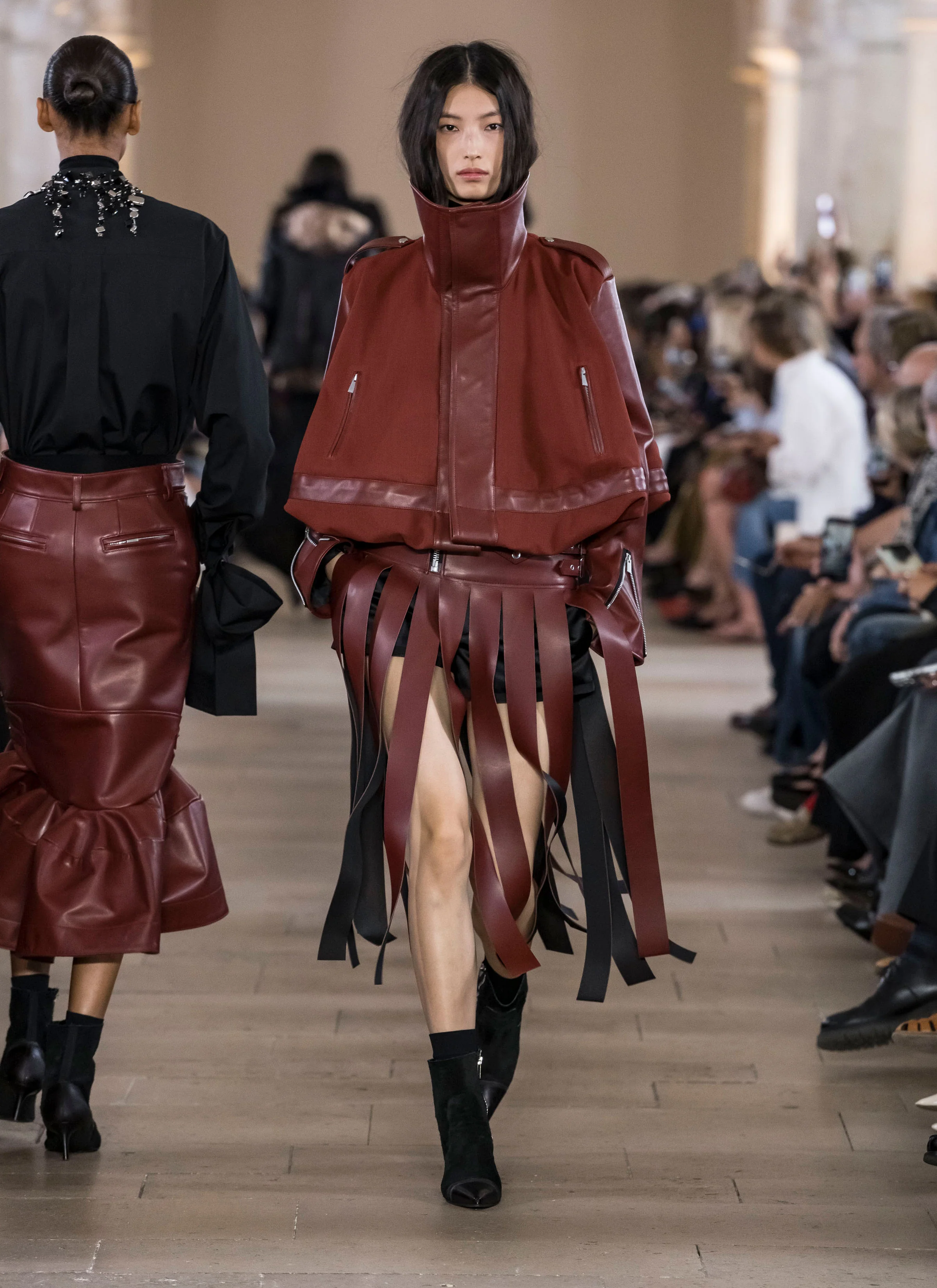
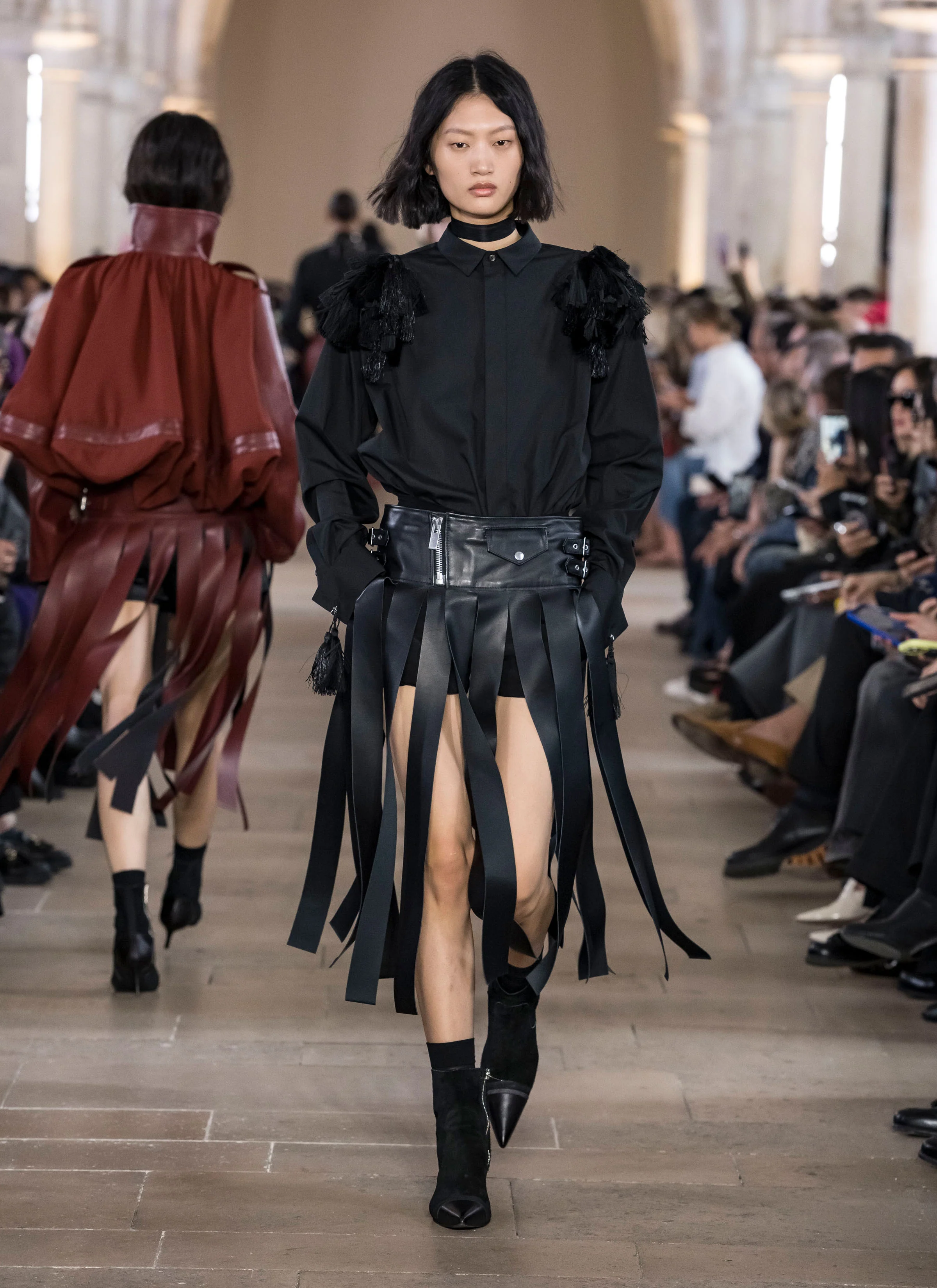
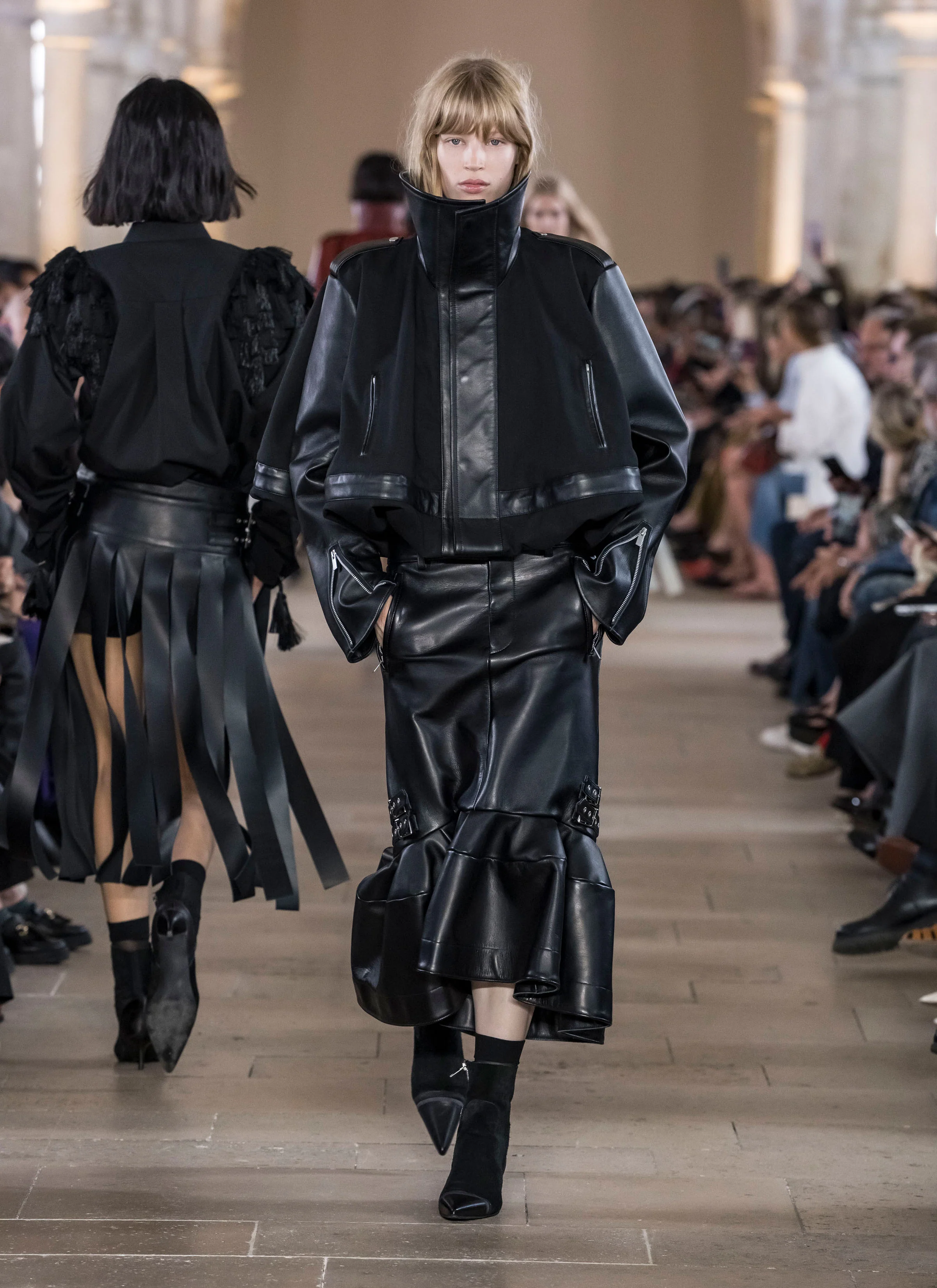
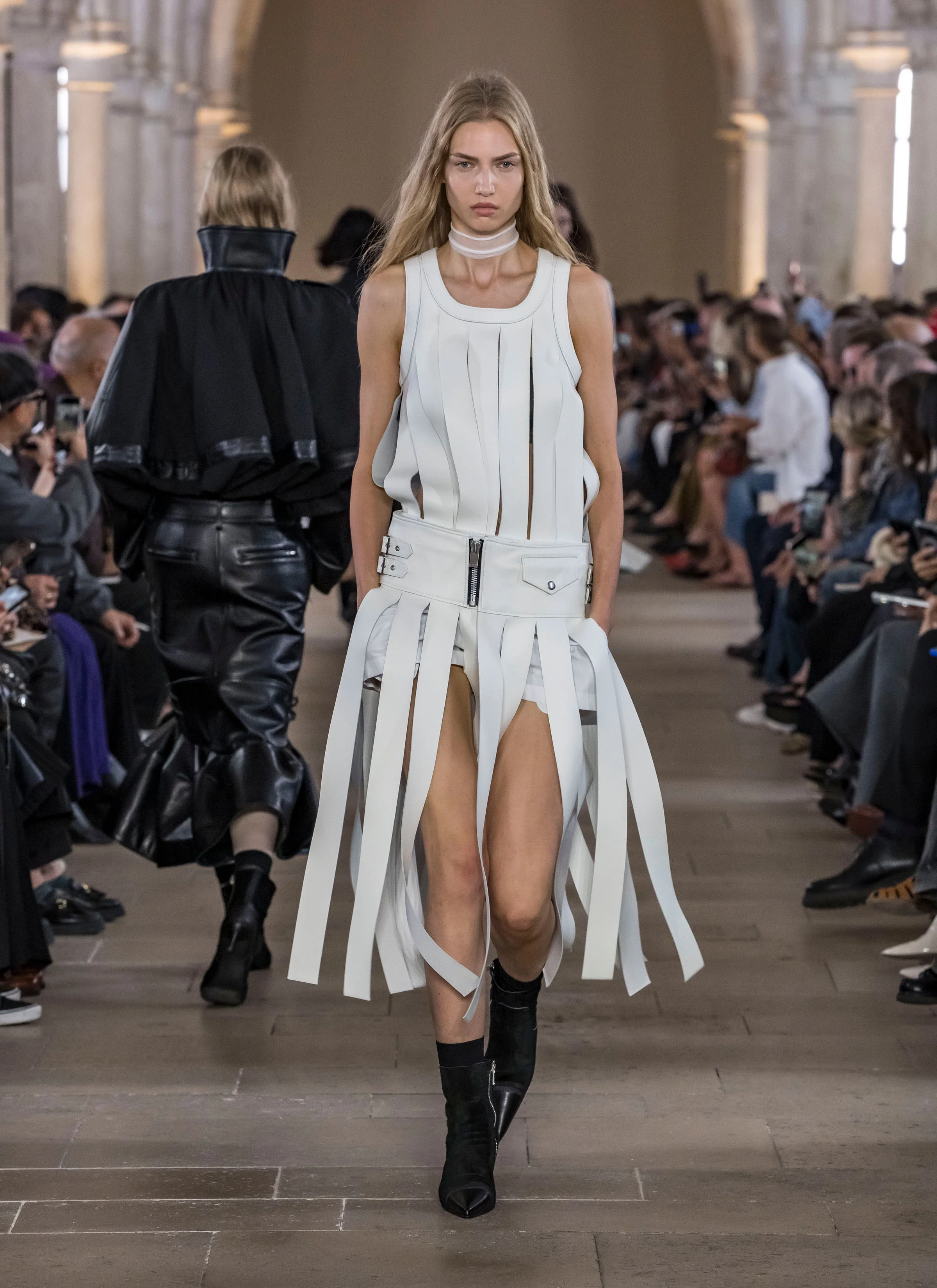
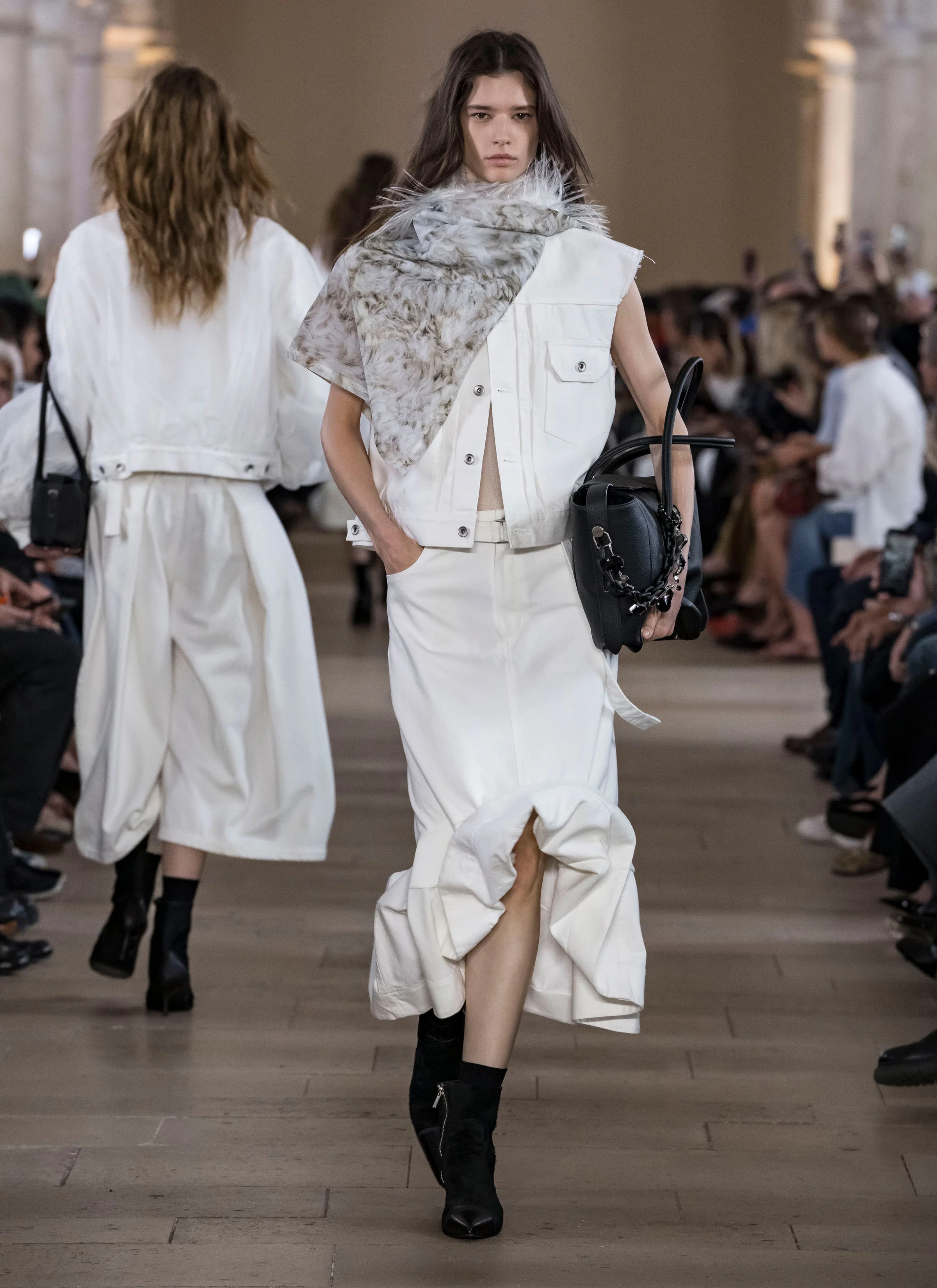
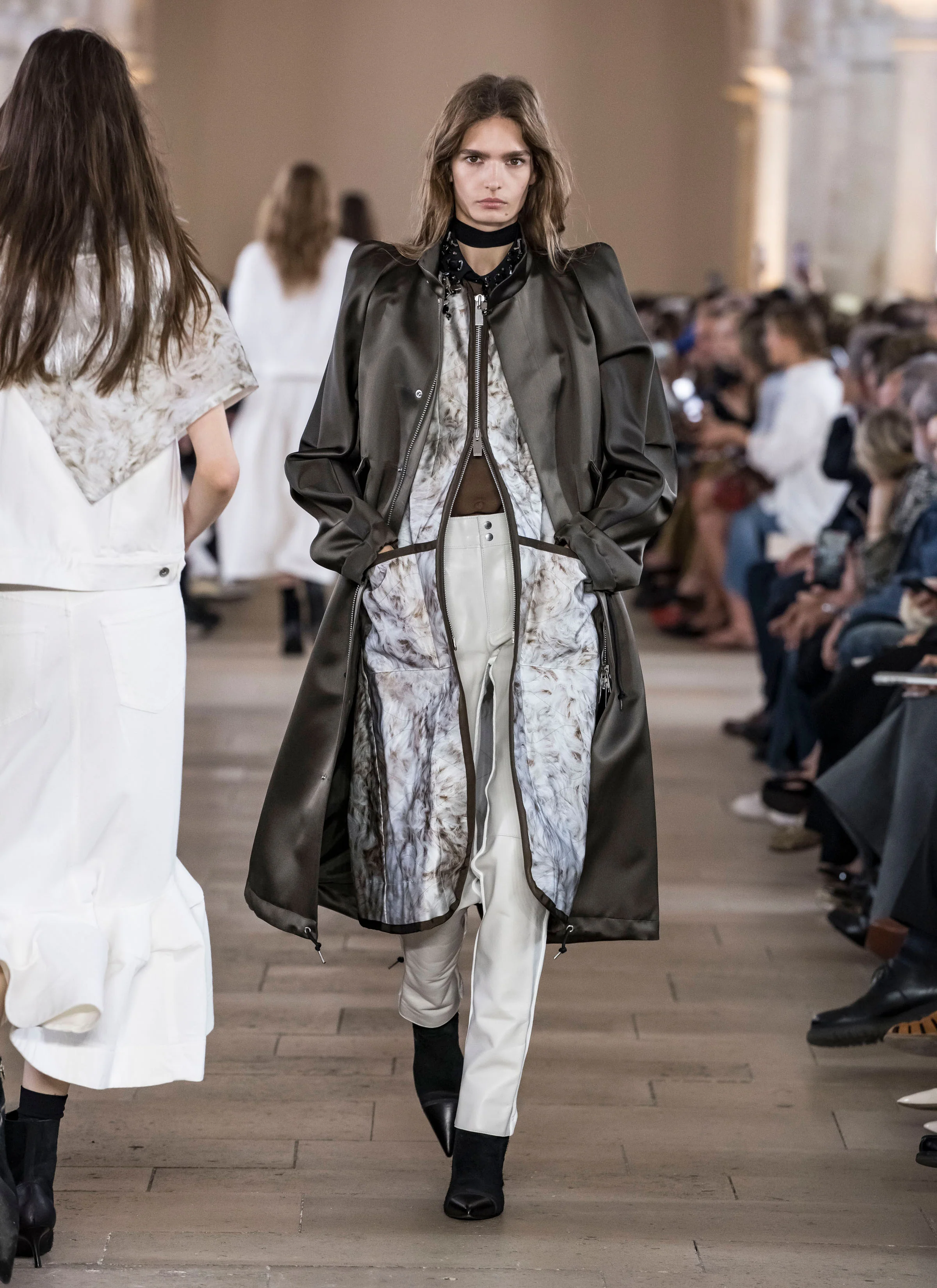
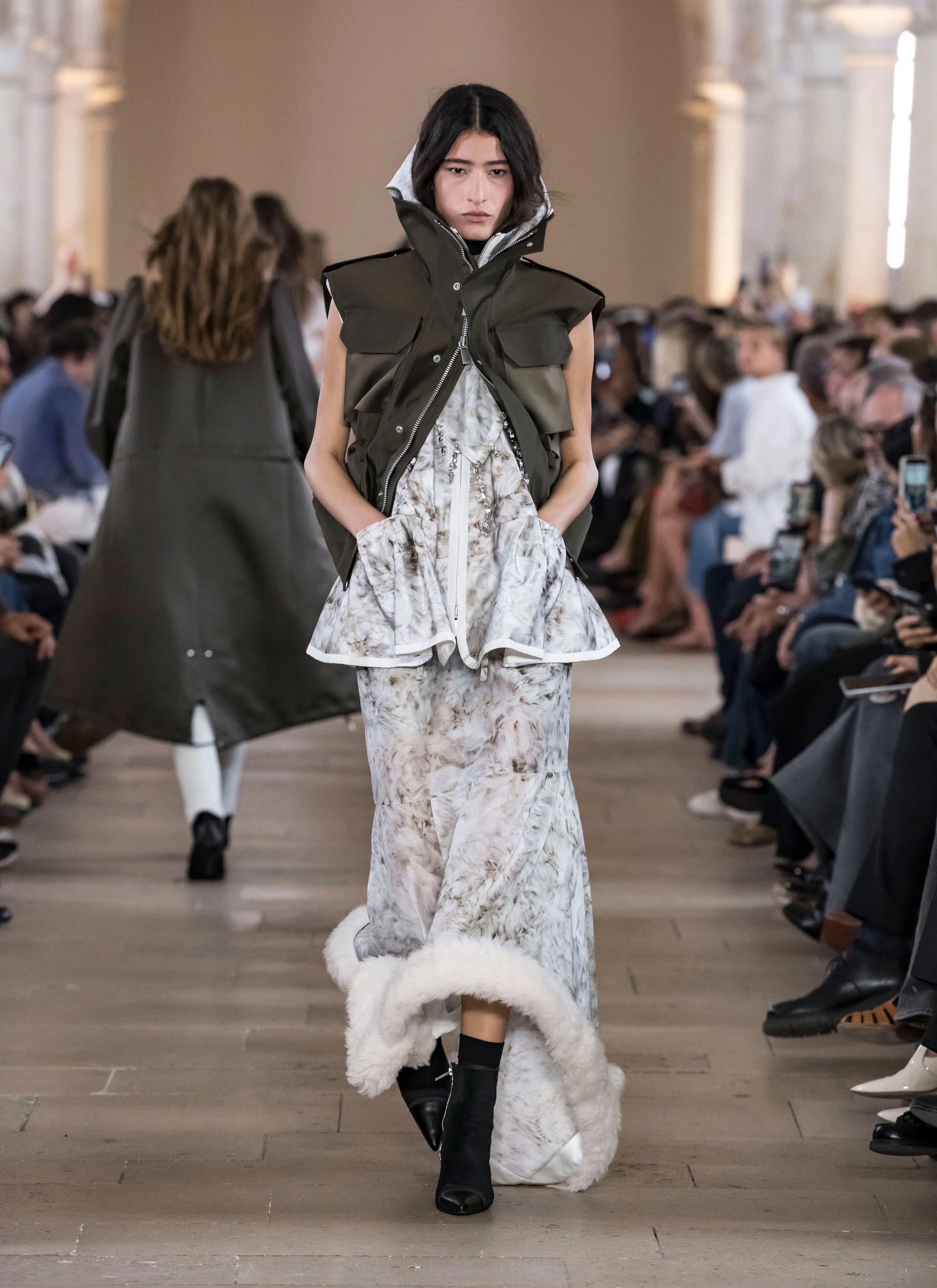
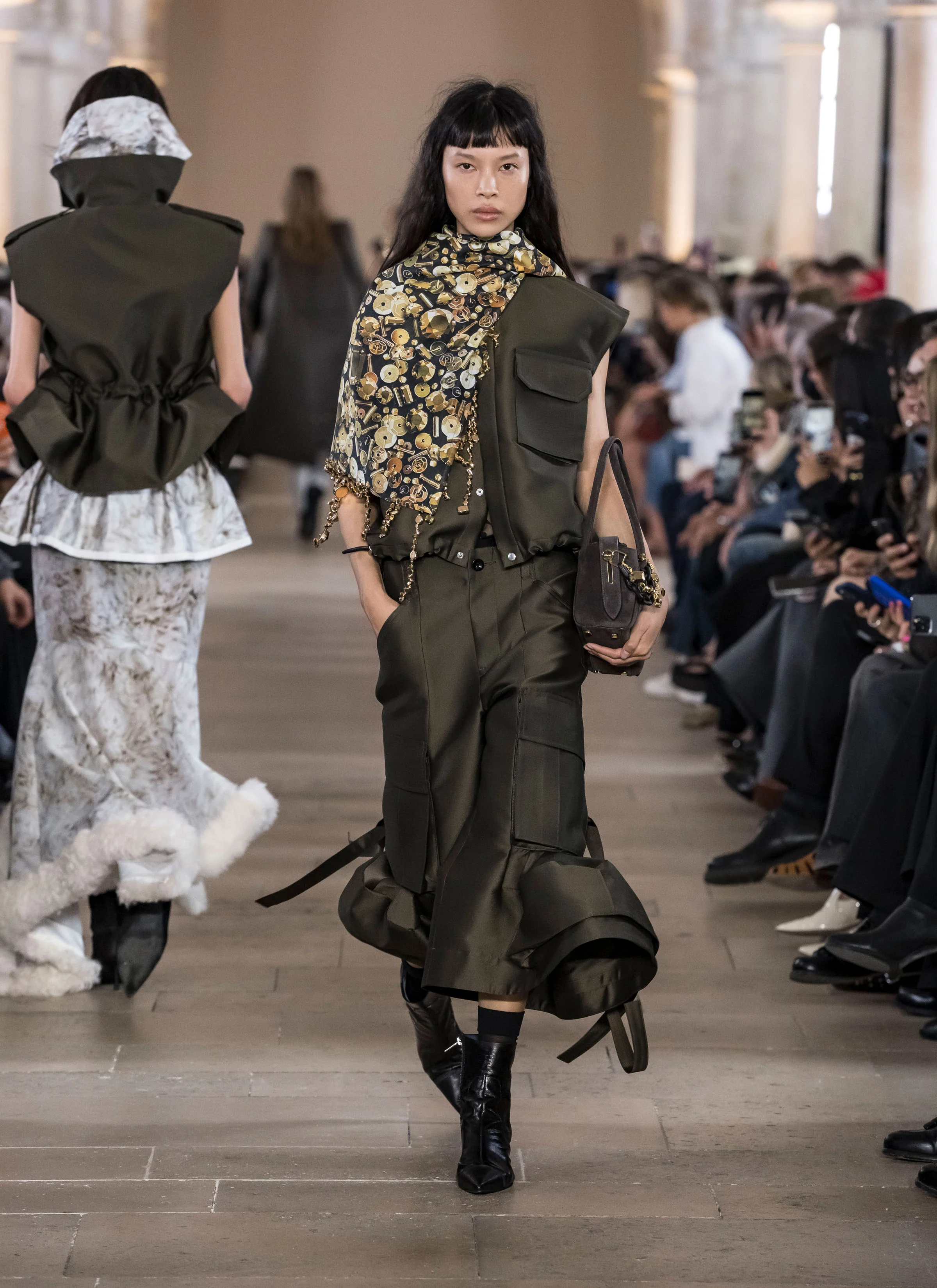
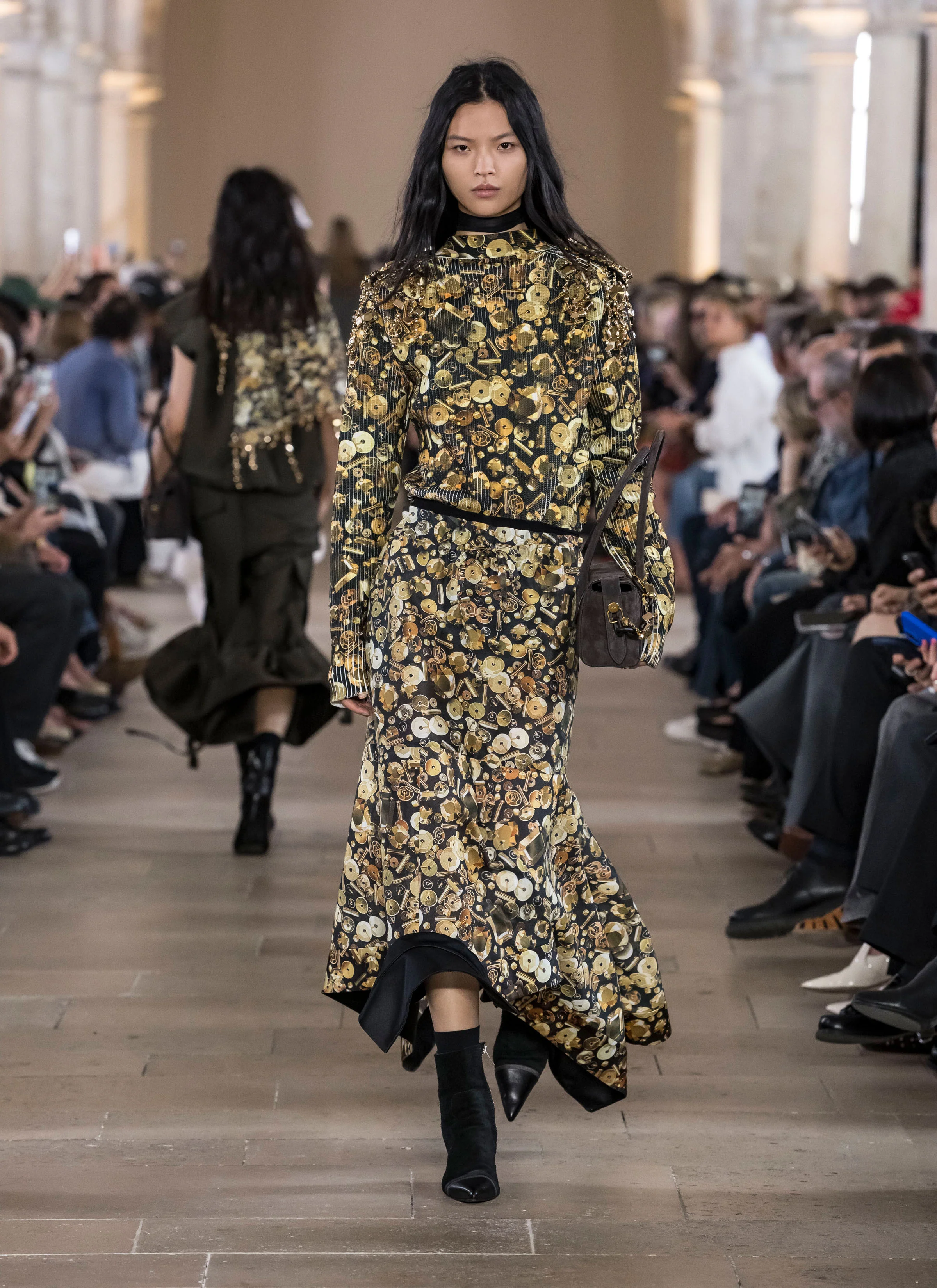
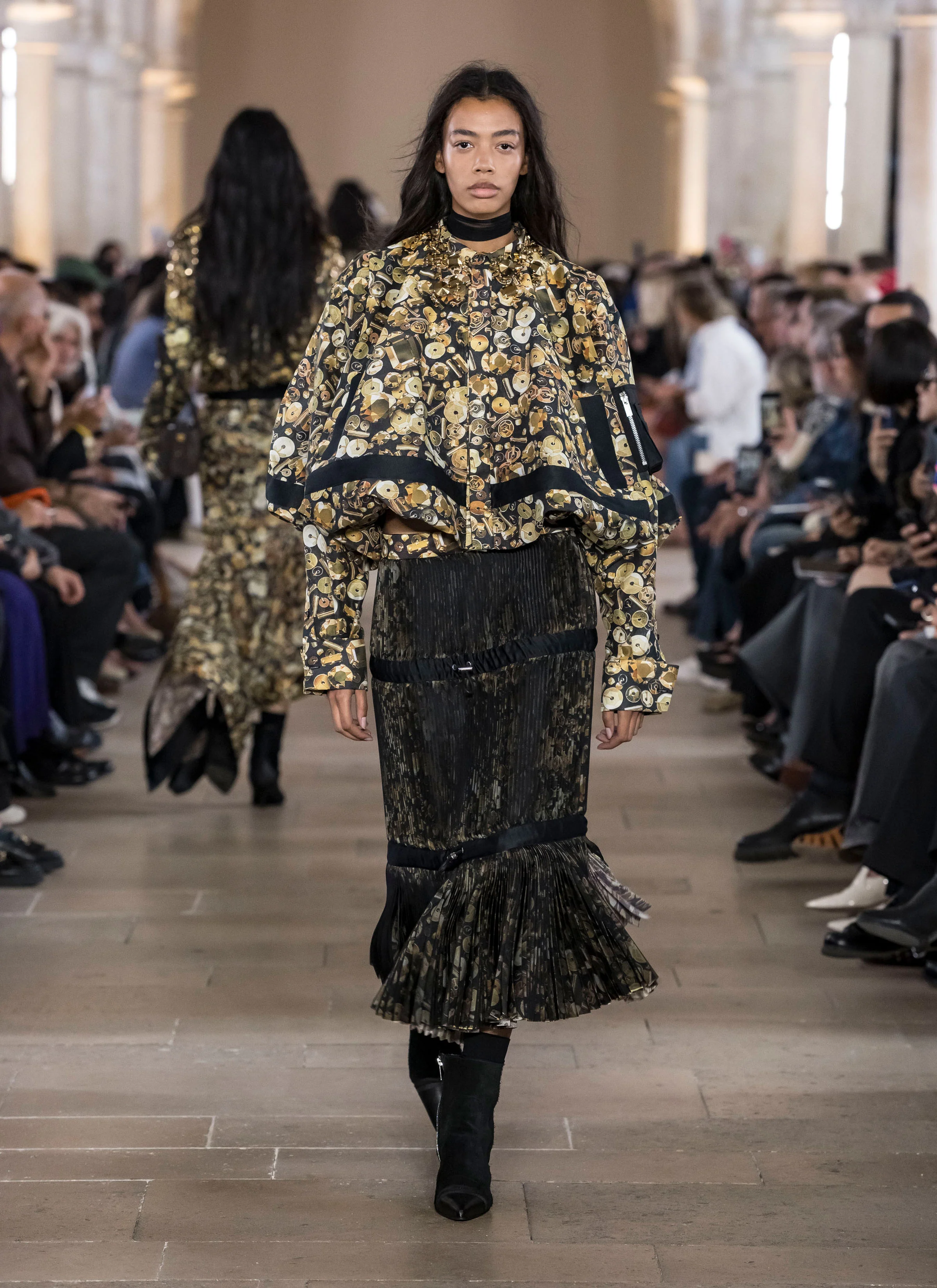
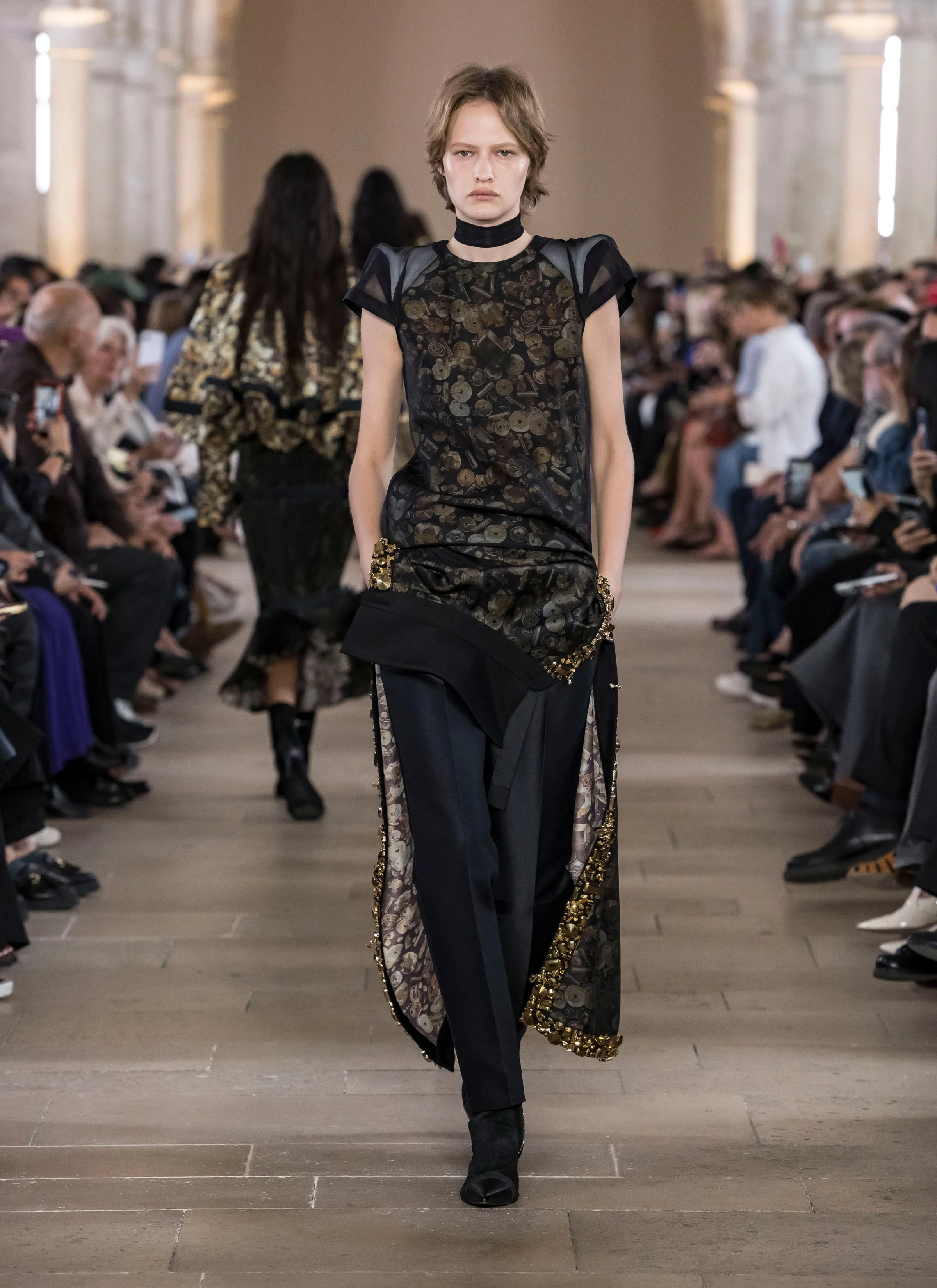
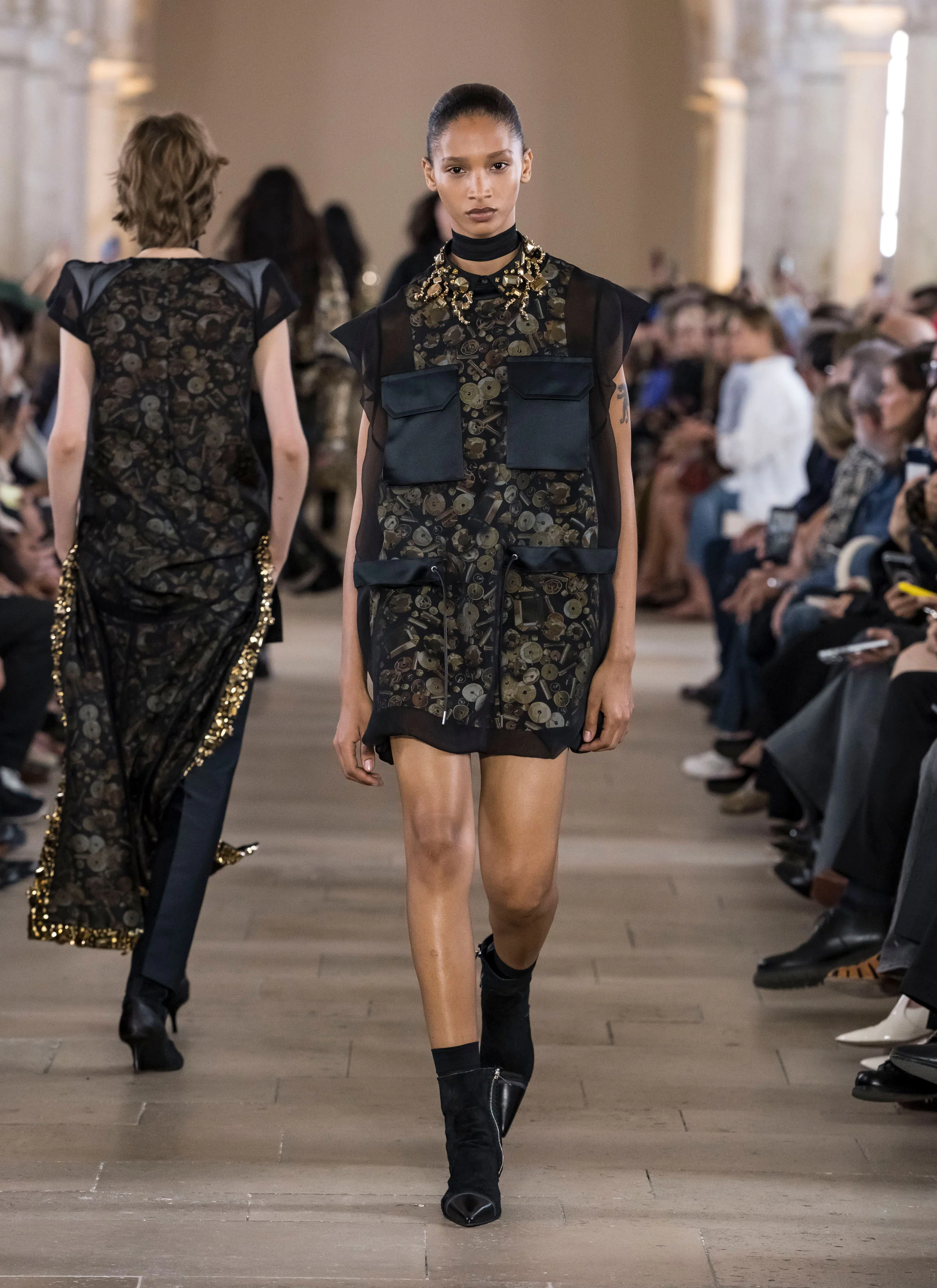
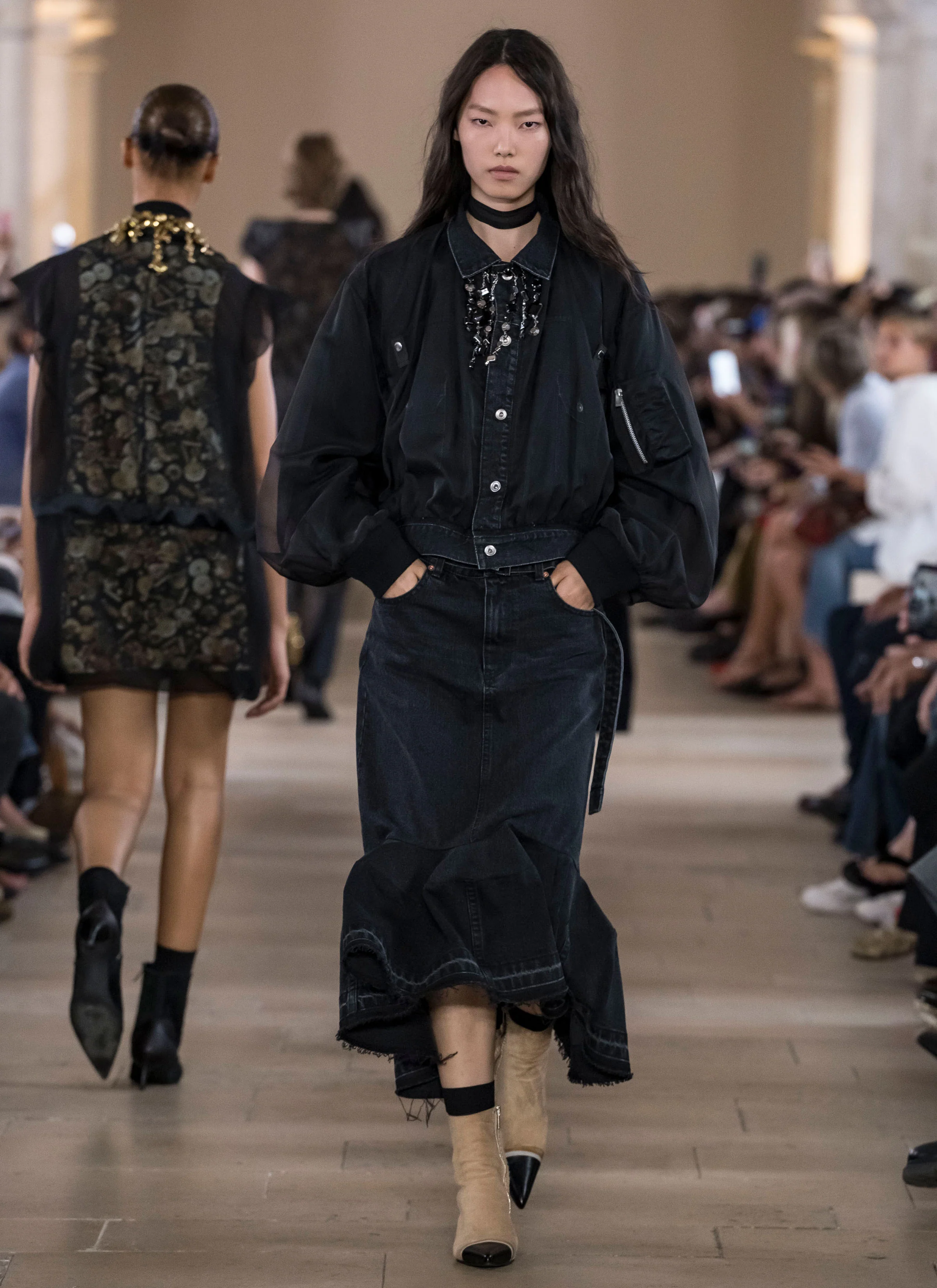
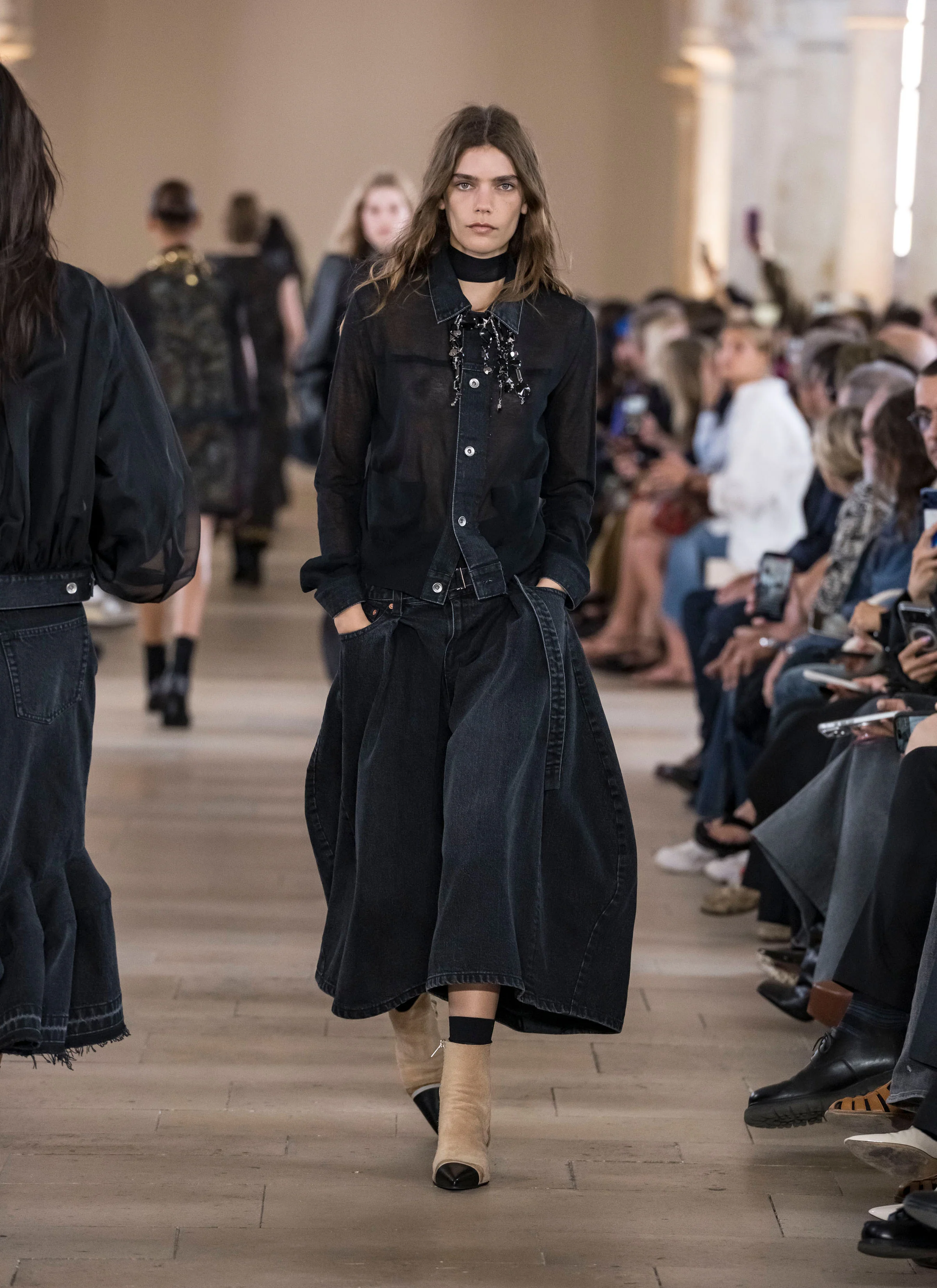
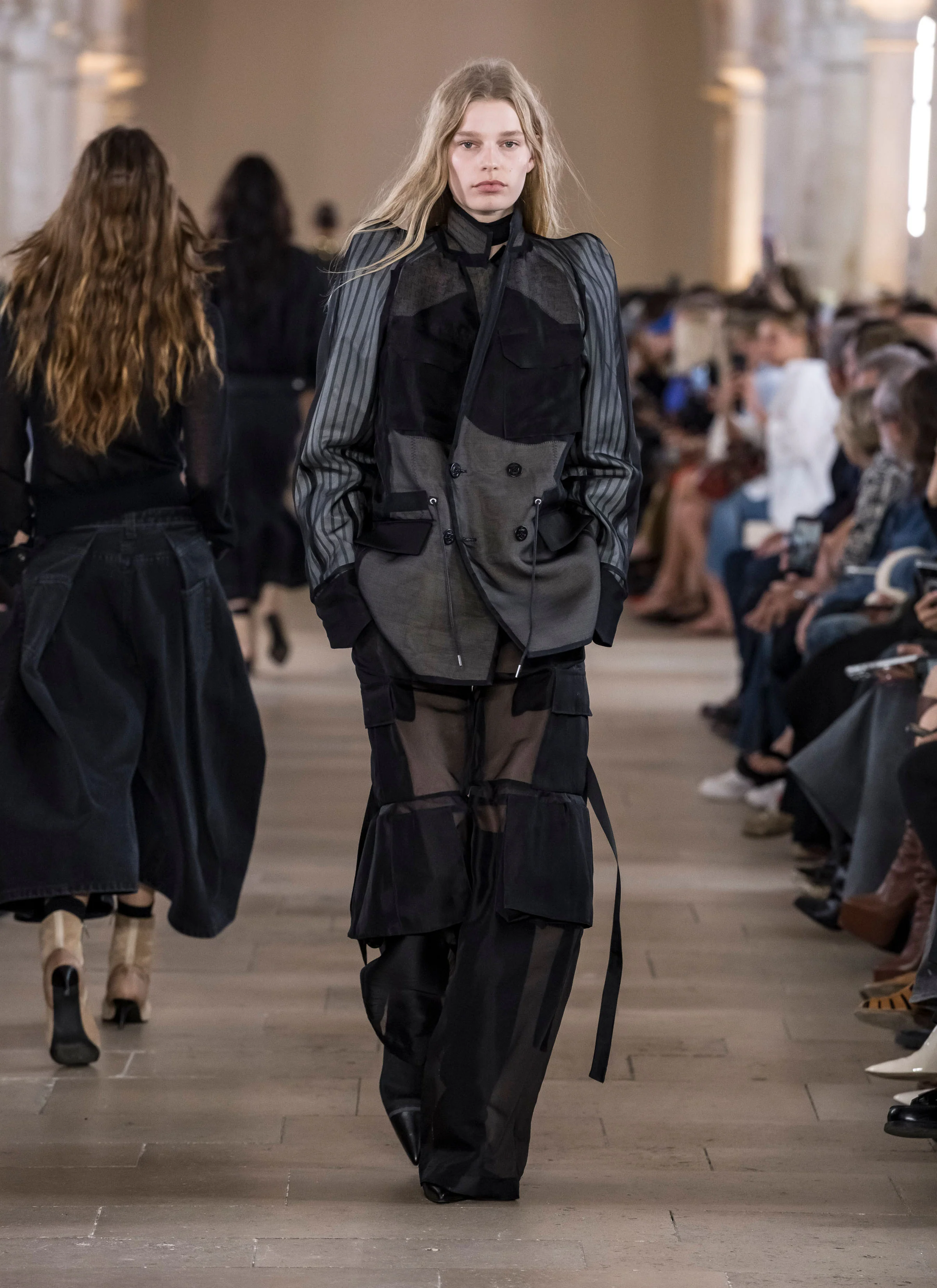
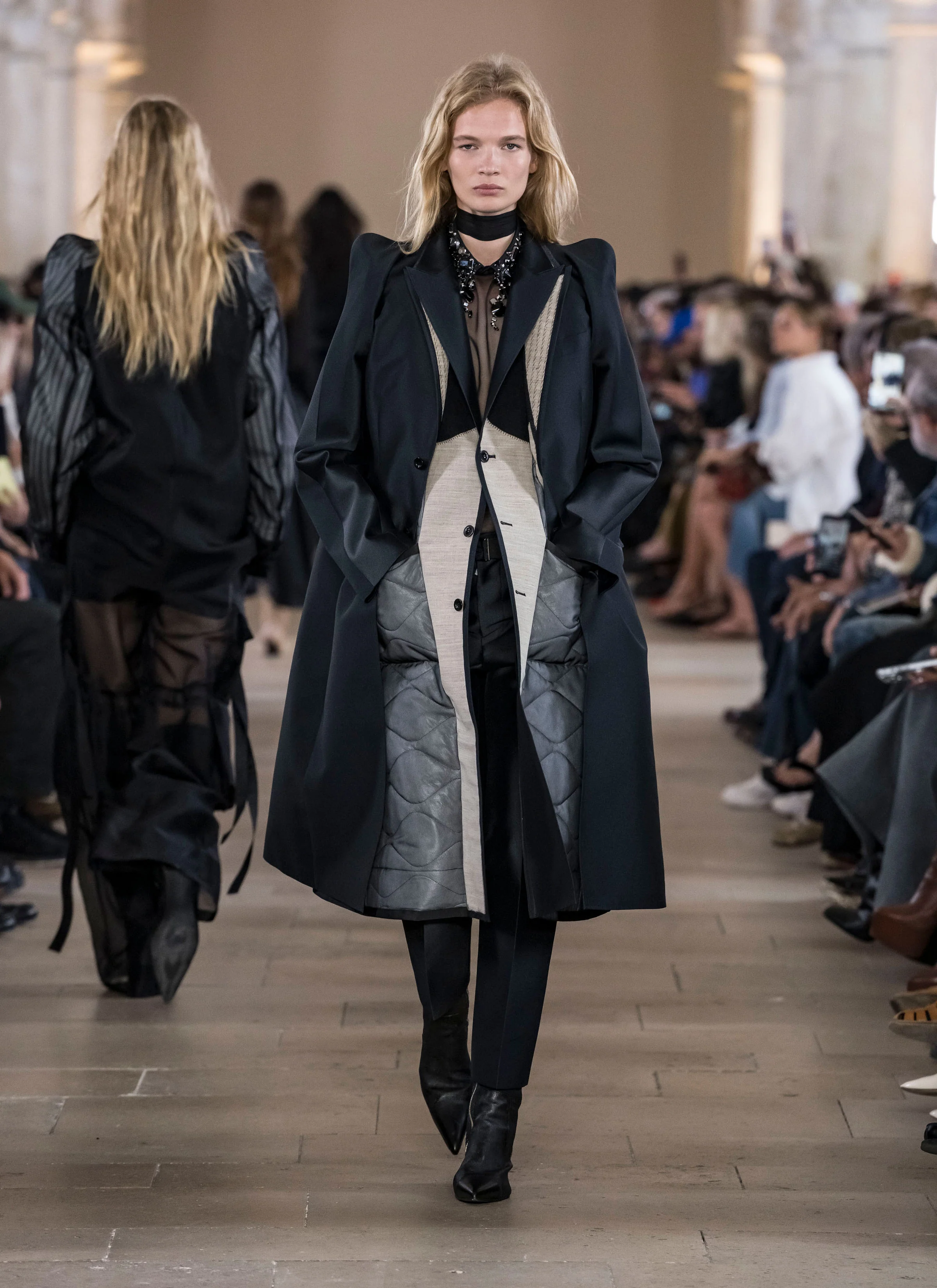
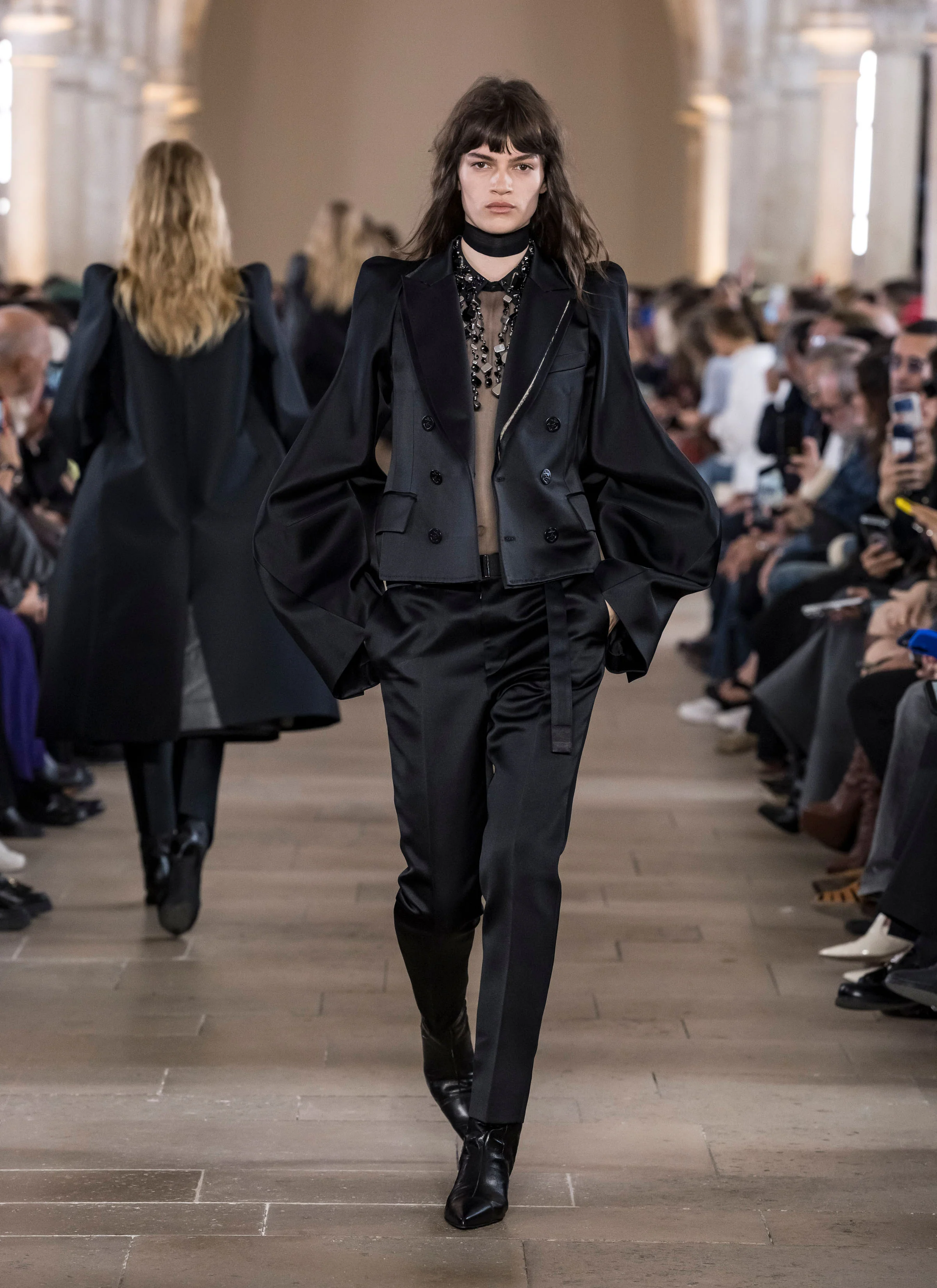
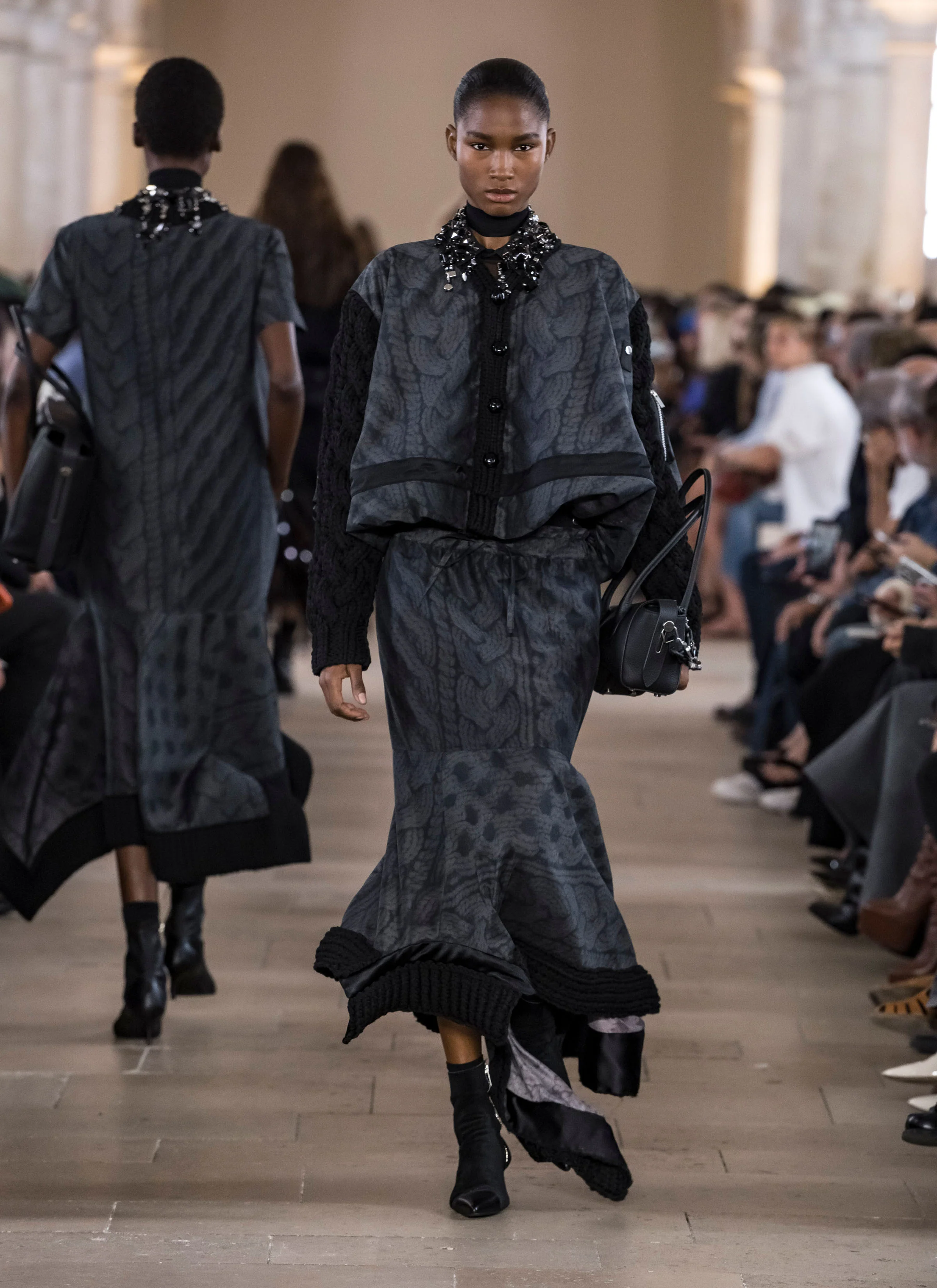
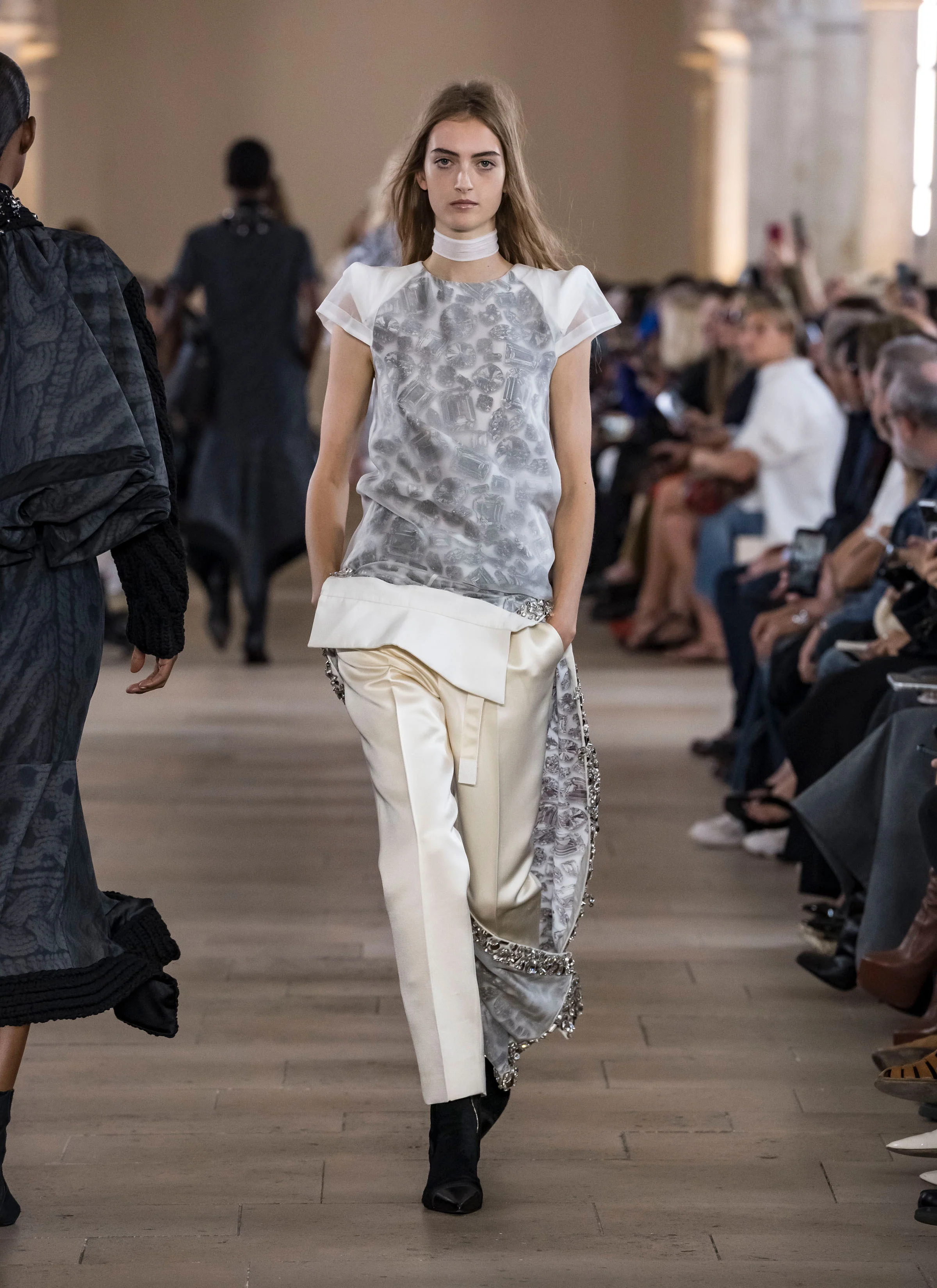
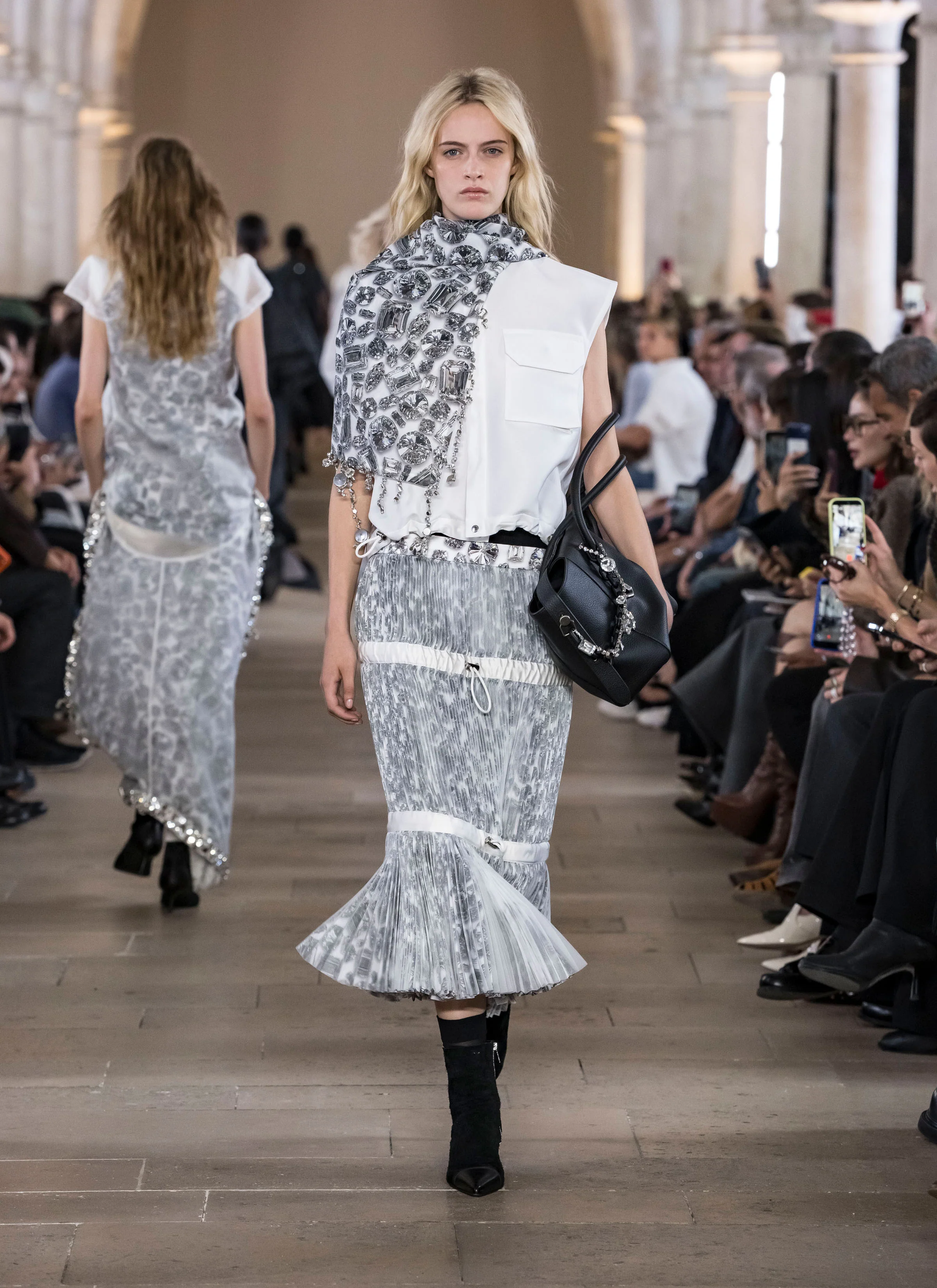
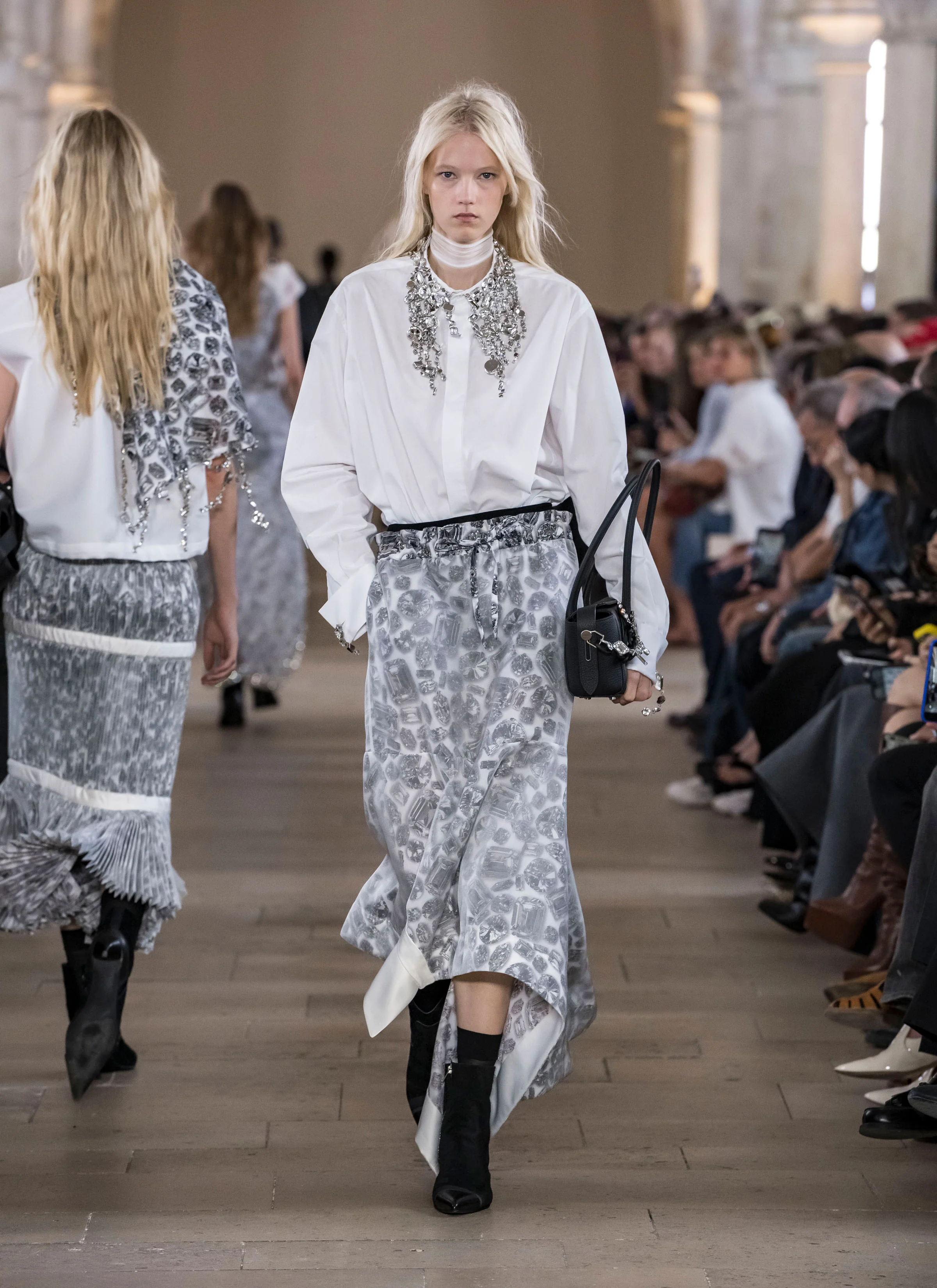
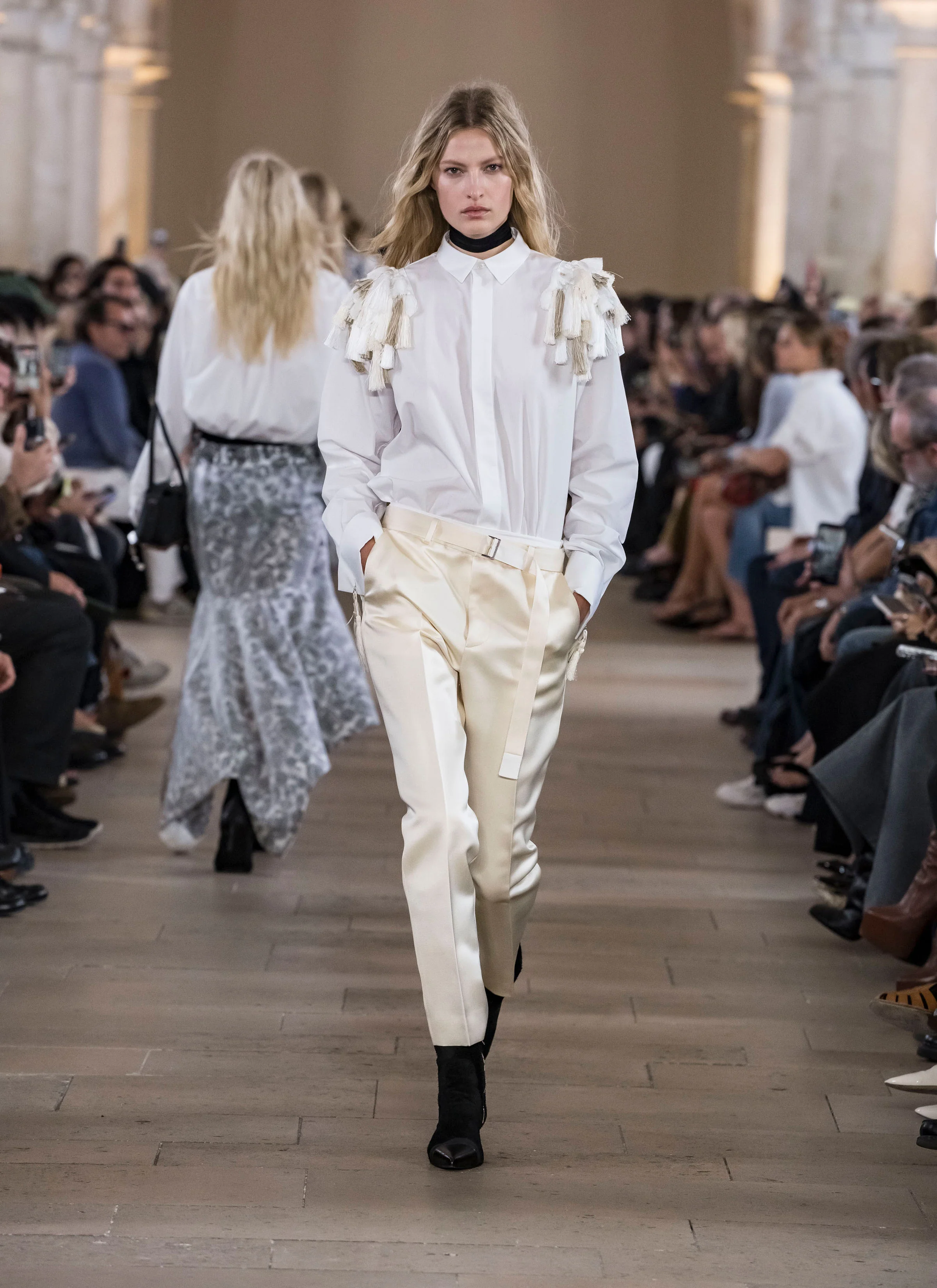
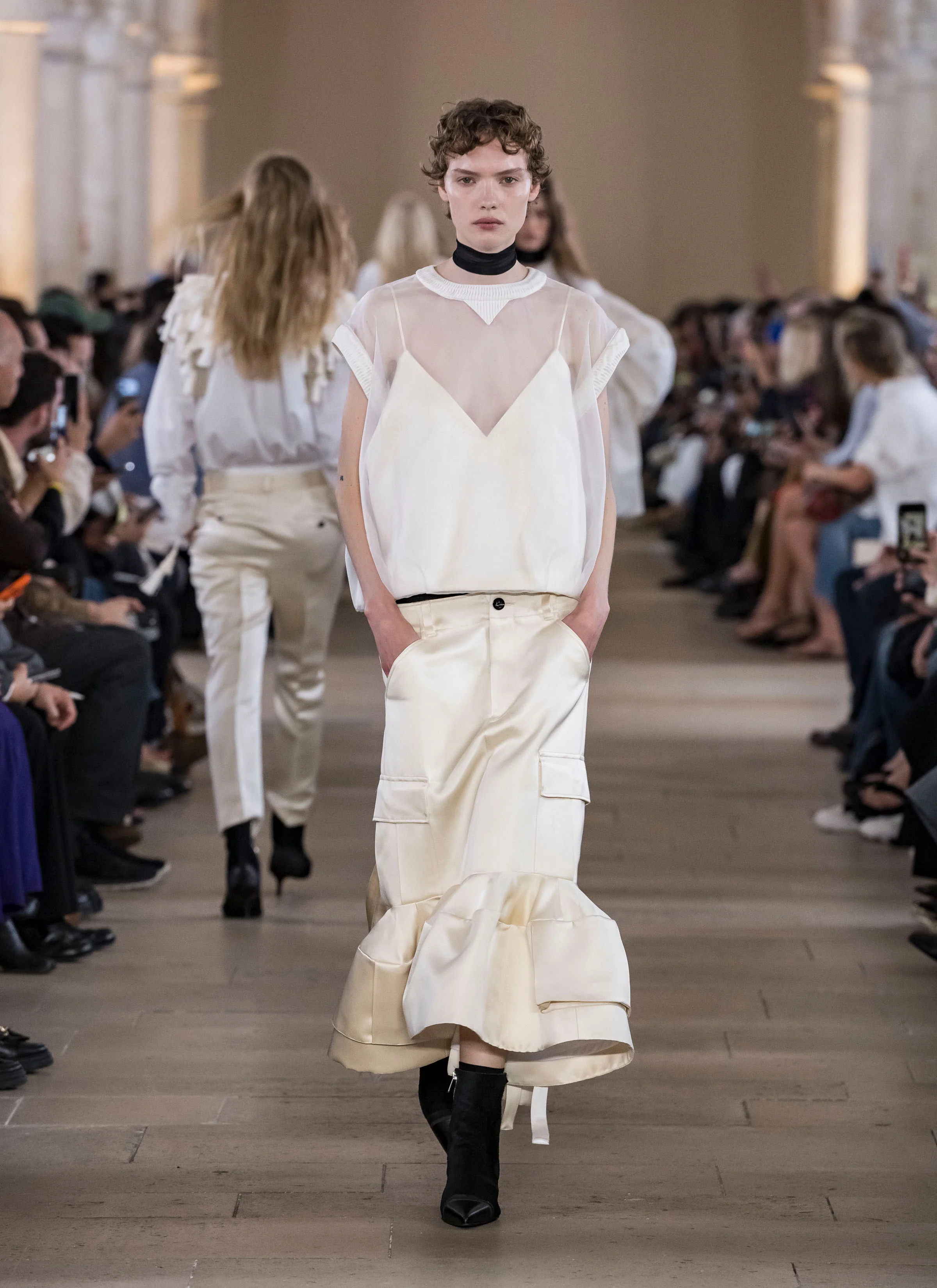
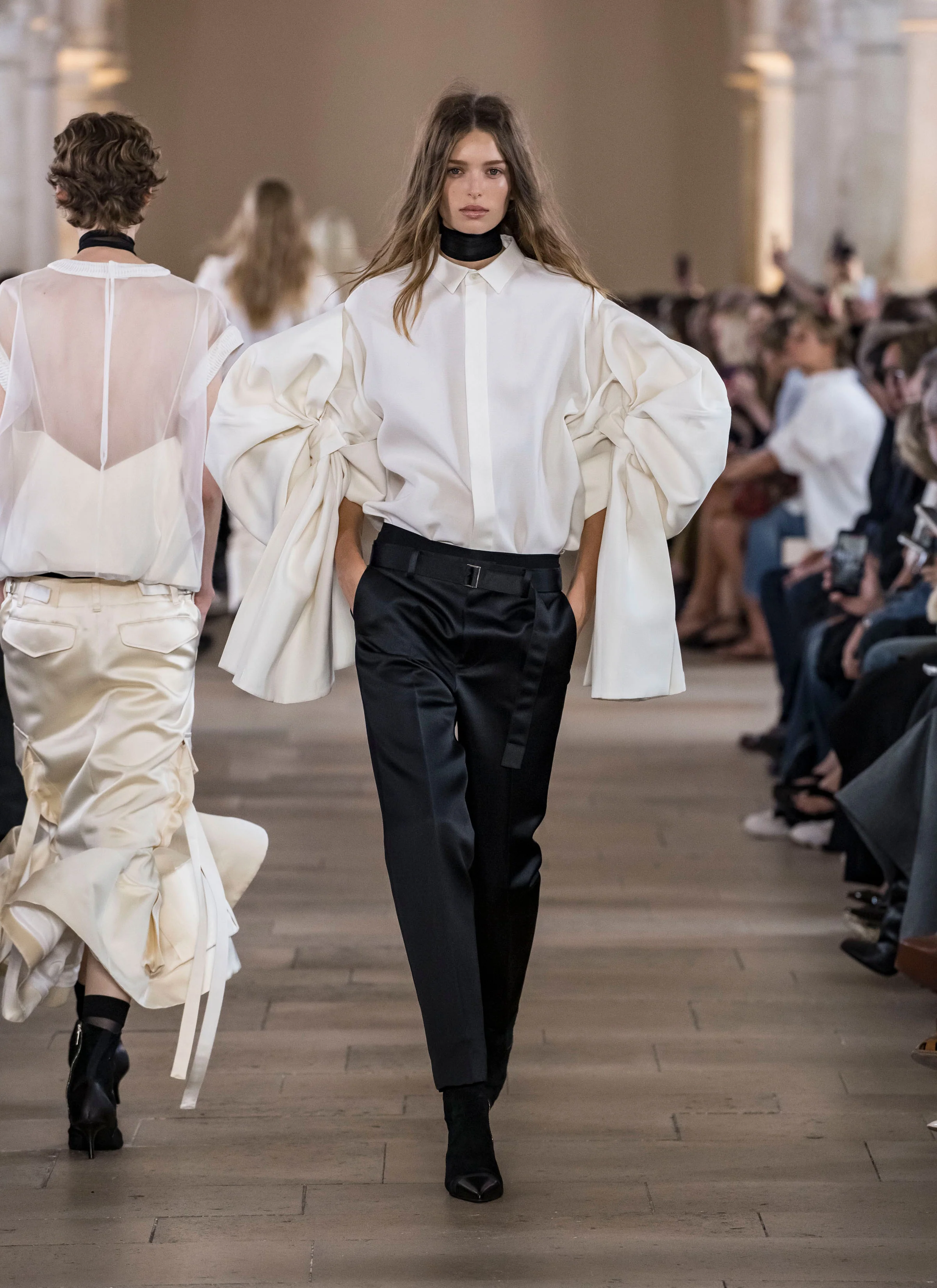
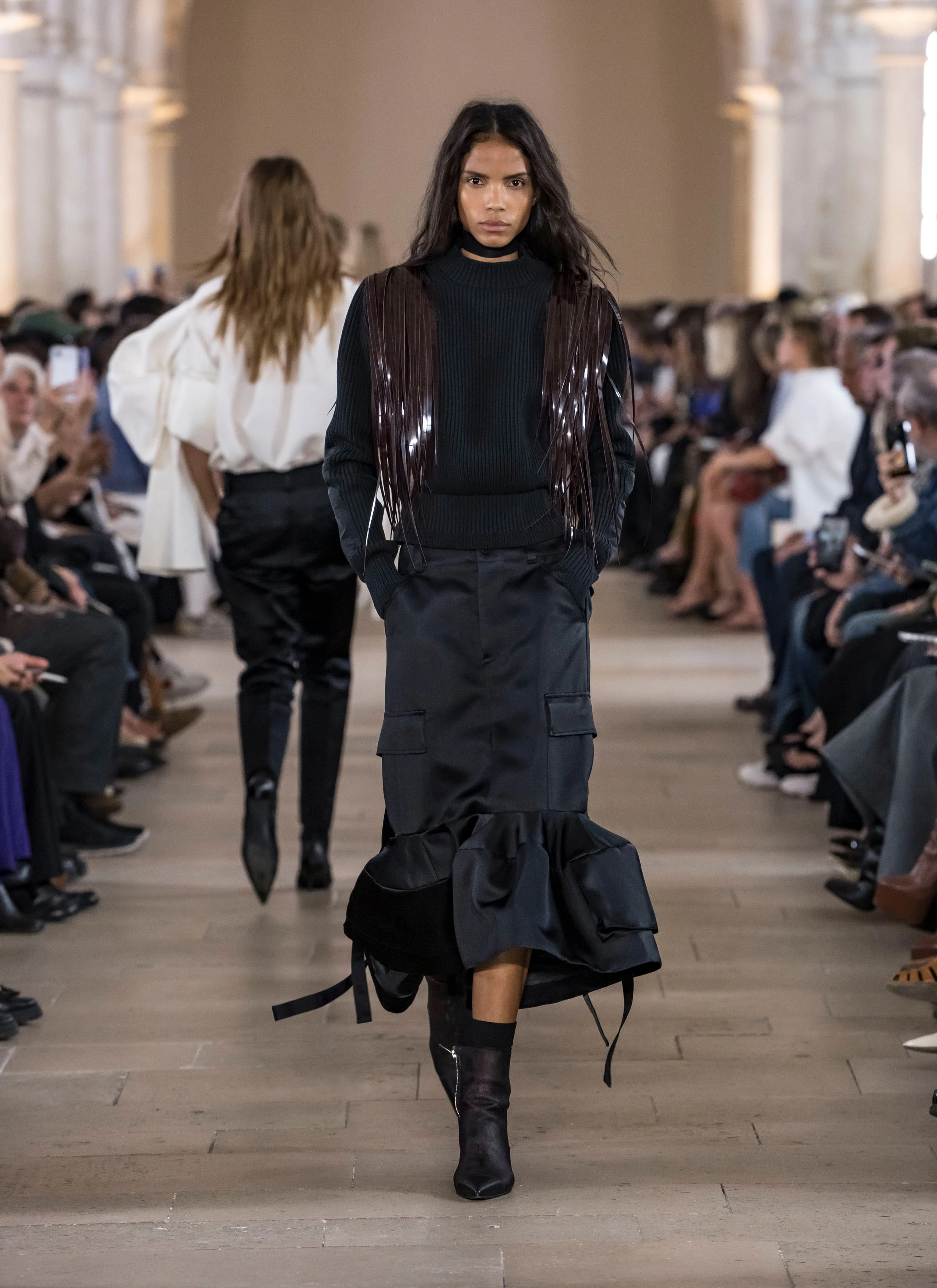
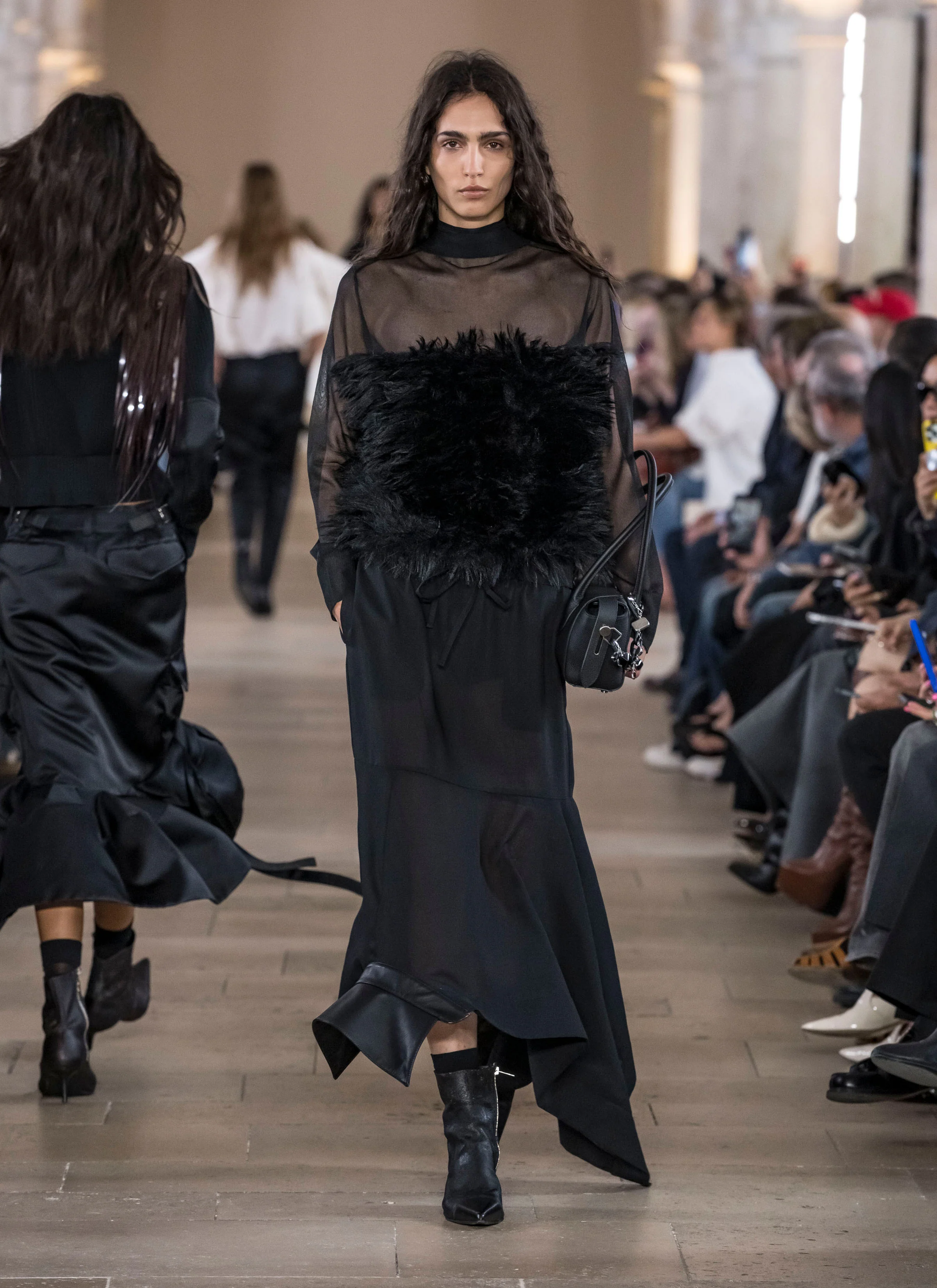
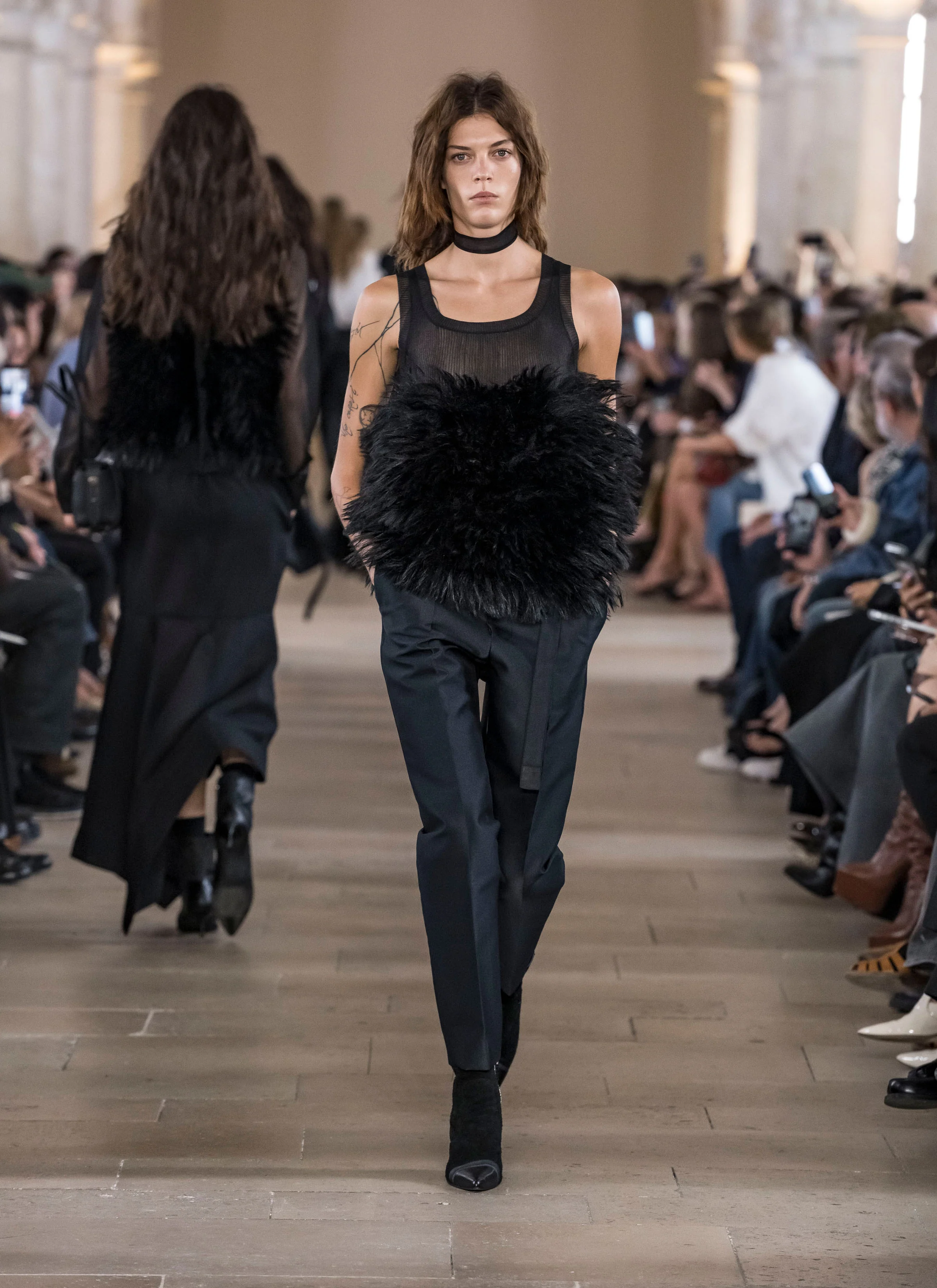
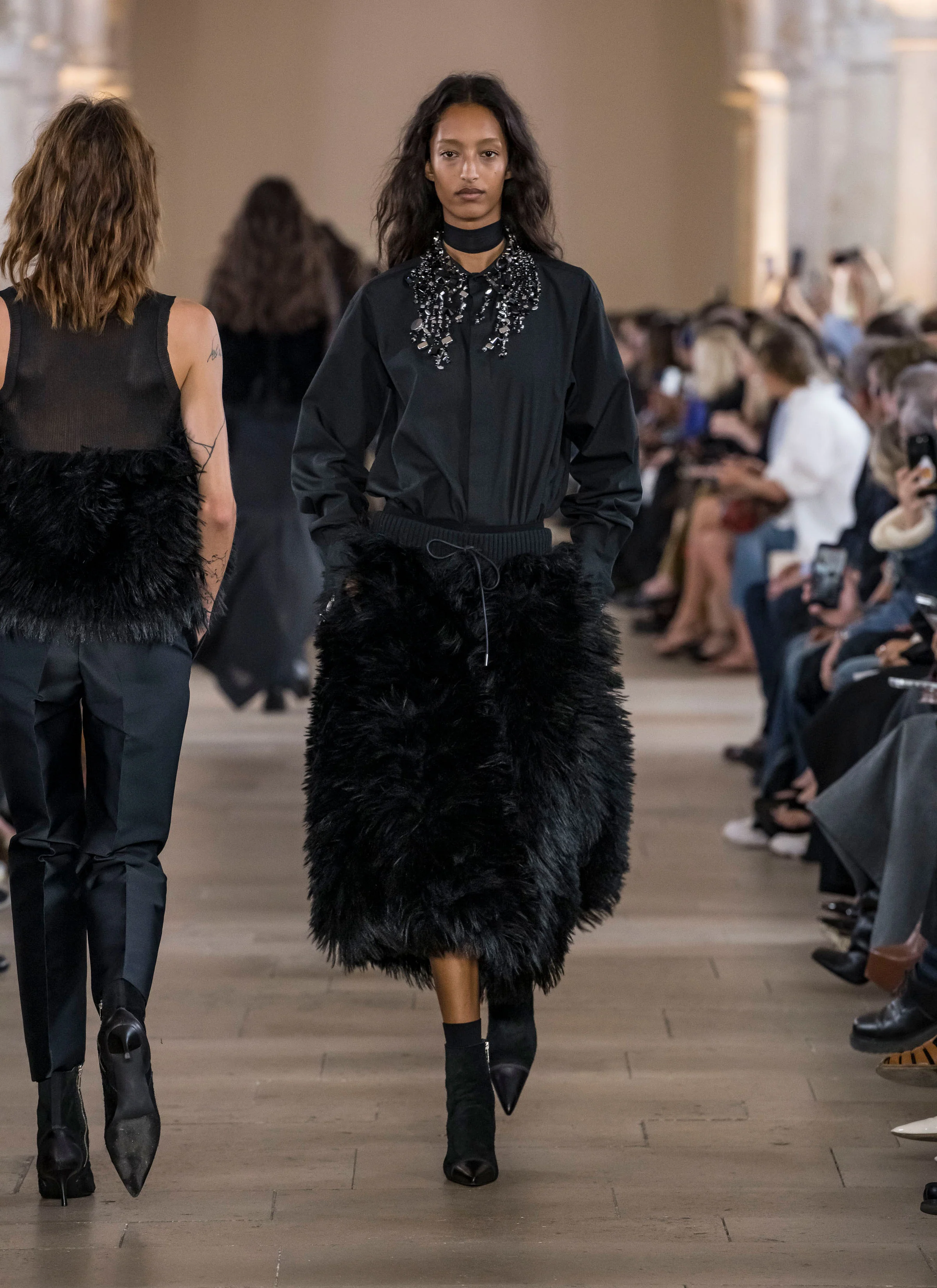
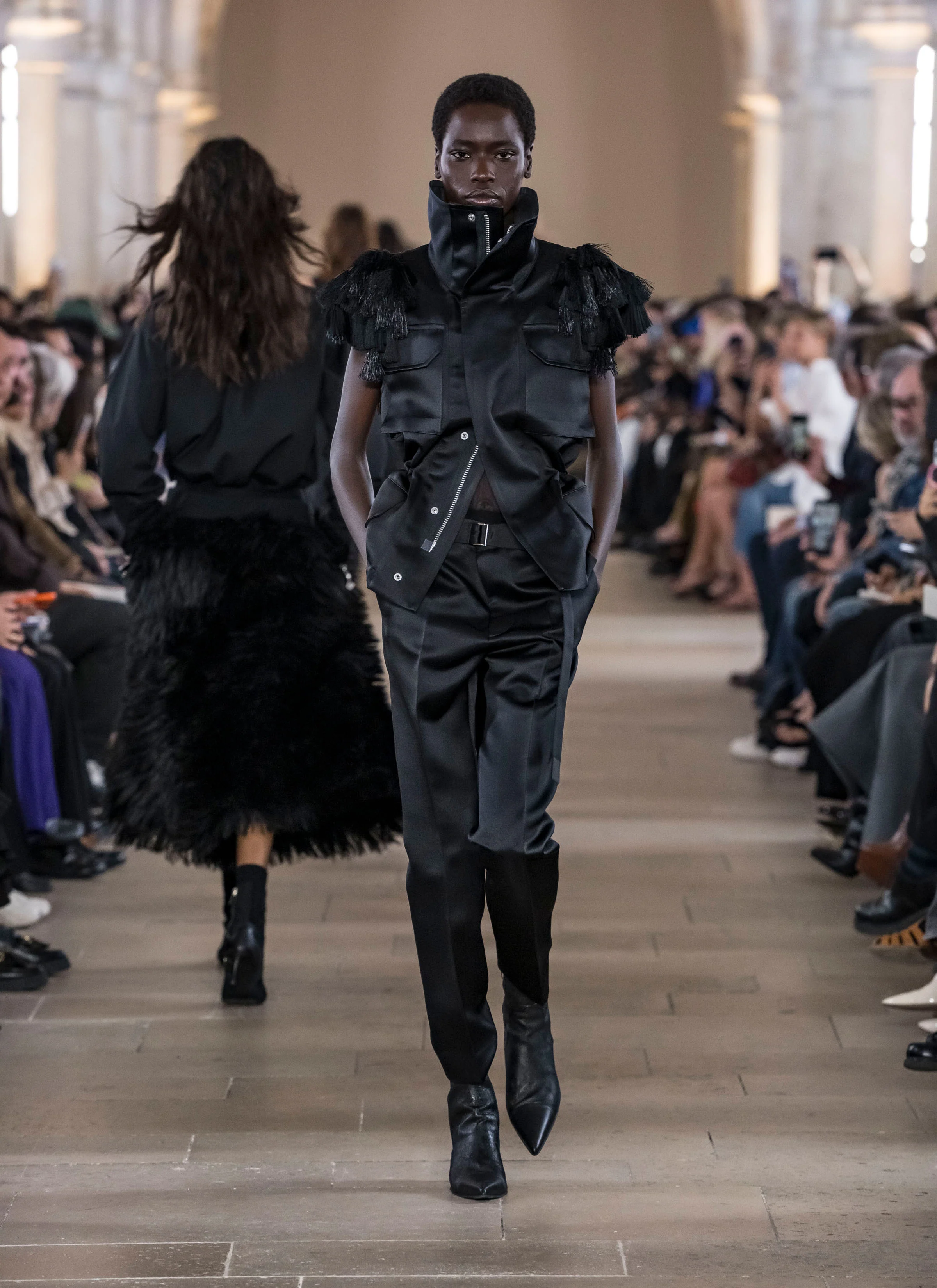
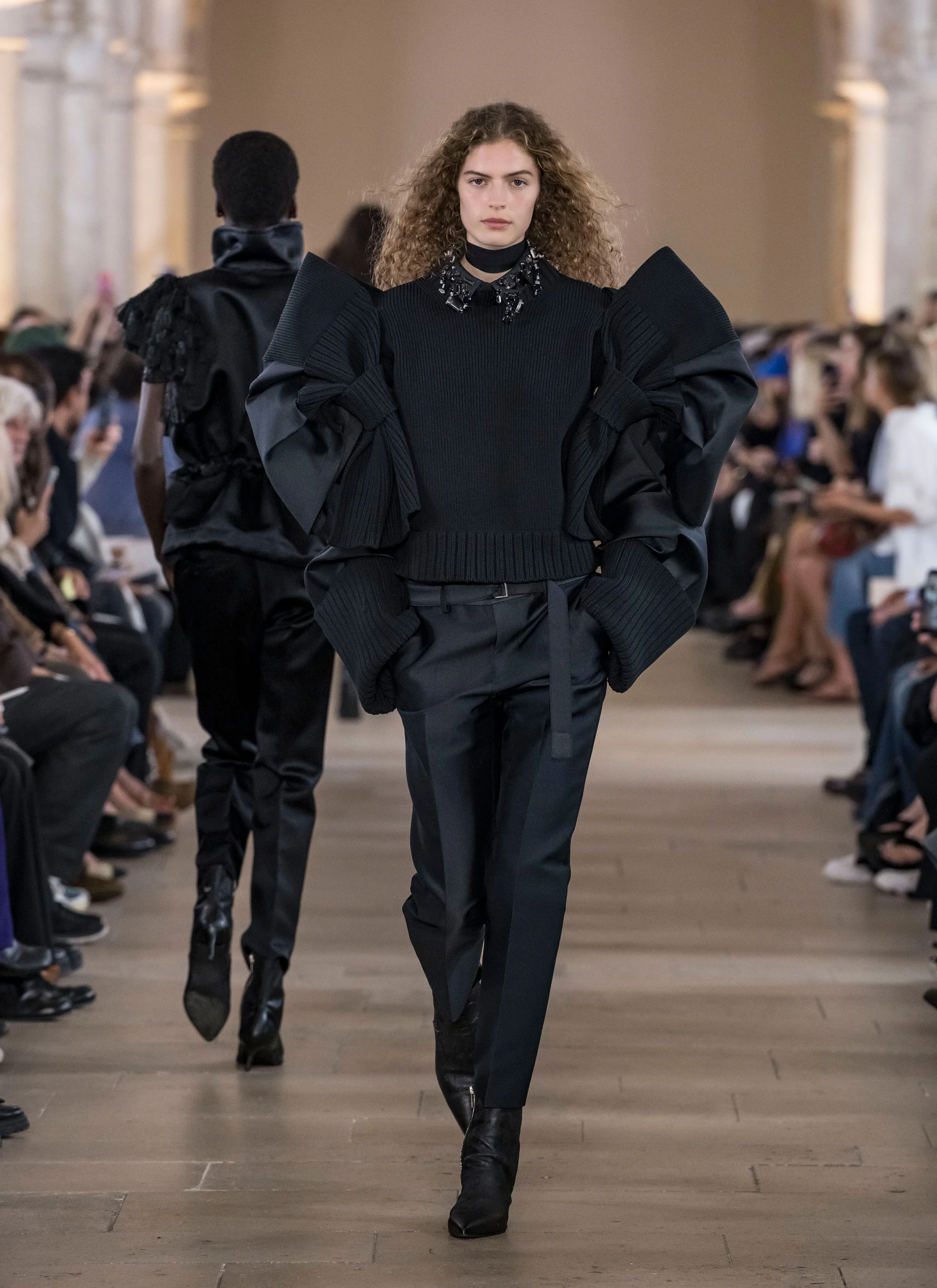
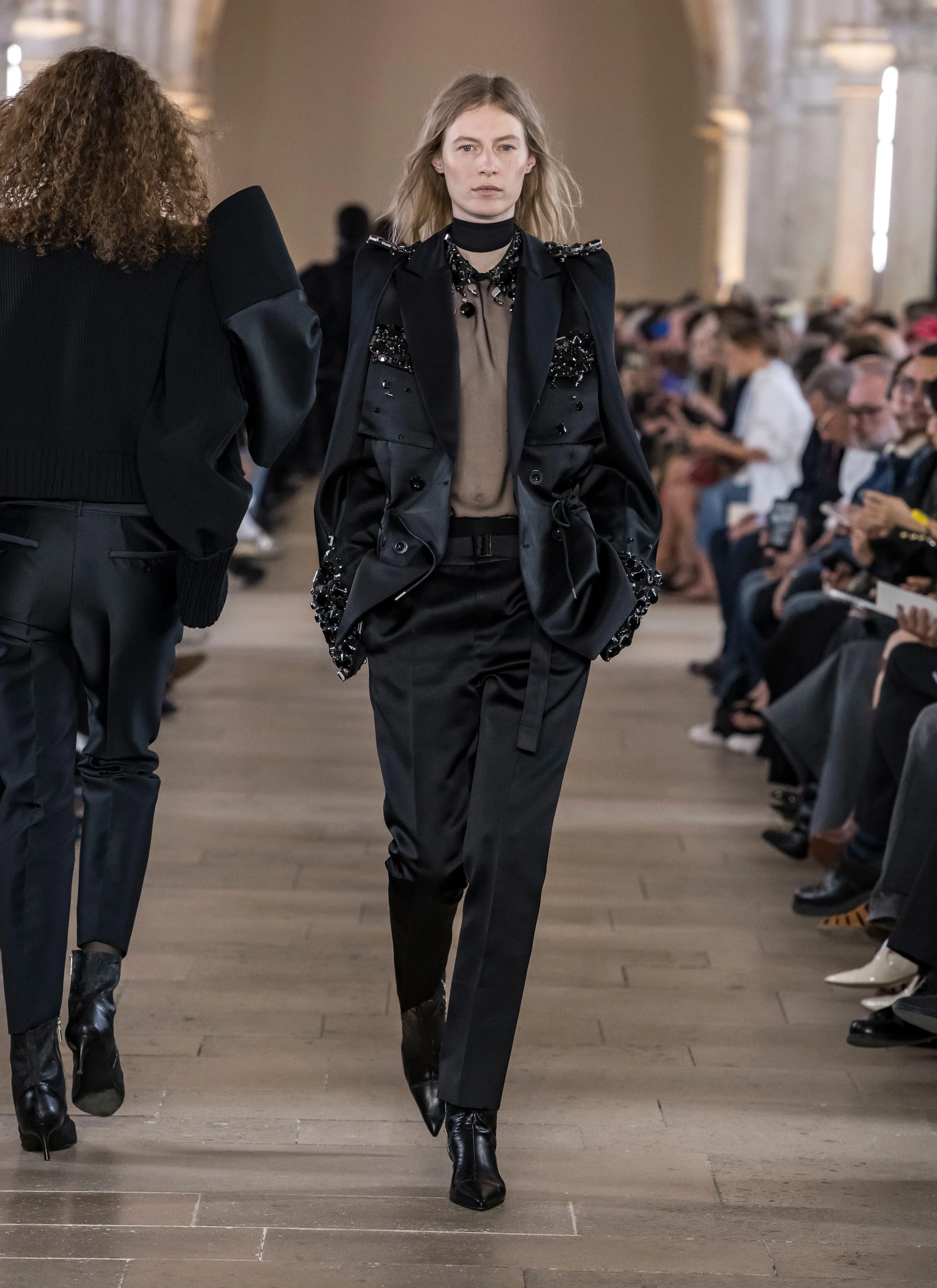
Construction becomes decoration. Linings emerge. Layers become visible. Seams and structures are no longer merely technical solutions but part of the emotional language of the clothes. Garments appear interrupted, spliced, exposed, reconstructed. Nothing feels entirely finished because nothing is supposed to feel entirely resolved.
This is the great Sacai gesture: the reversal.
Take the expected thing and turn it around.
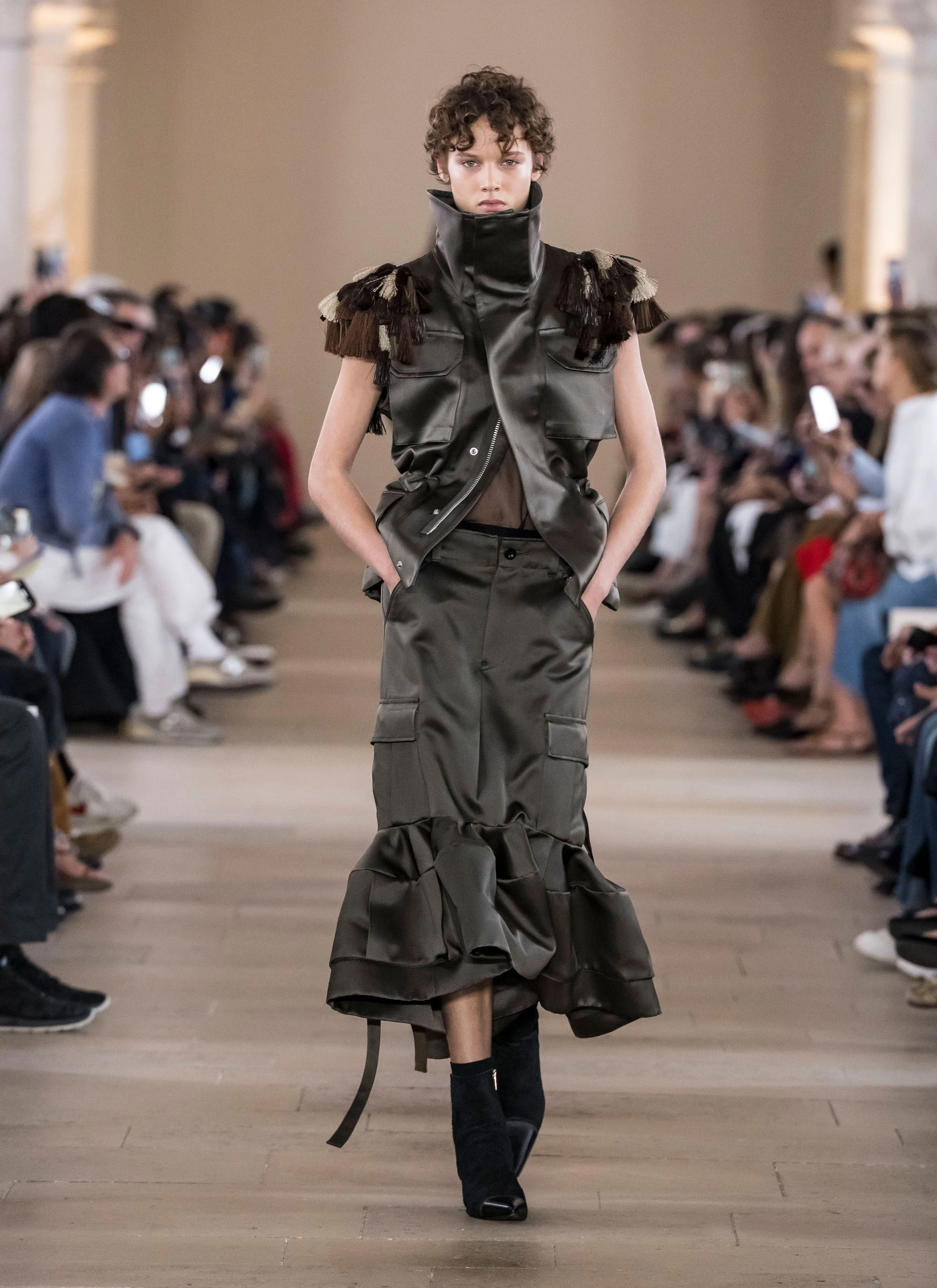
Take the masculine and make it intimate. Take the military and make it sensual. Take utility and make it ornamental. Take tailoring and destabilise its authority. Take something luxurious and allow it to look imperfect. Take something familiar and make it strange again.
For years, this method made Sacai feel radical.
Today, it has become one of the most recognisable languages in fashion.
That is precisely where the tension begins.
Hybridisation is everywhere. Deconstruction has become a commercial category. The collision between streetwear, tailoring, sportswear, military clothing and femininity has become almost standard practice. Fashion learned the trick.
Sacai invented a way of thinking.
SS27 asks what happens when the trick is no longer enough.
The answer is not to become minimal, conventional or suddenly “new.” The answer is to go deeper into the contradiction.
Abe understands that Sacai does not need to abandon its identity. It needs to destabilise it.
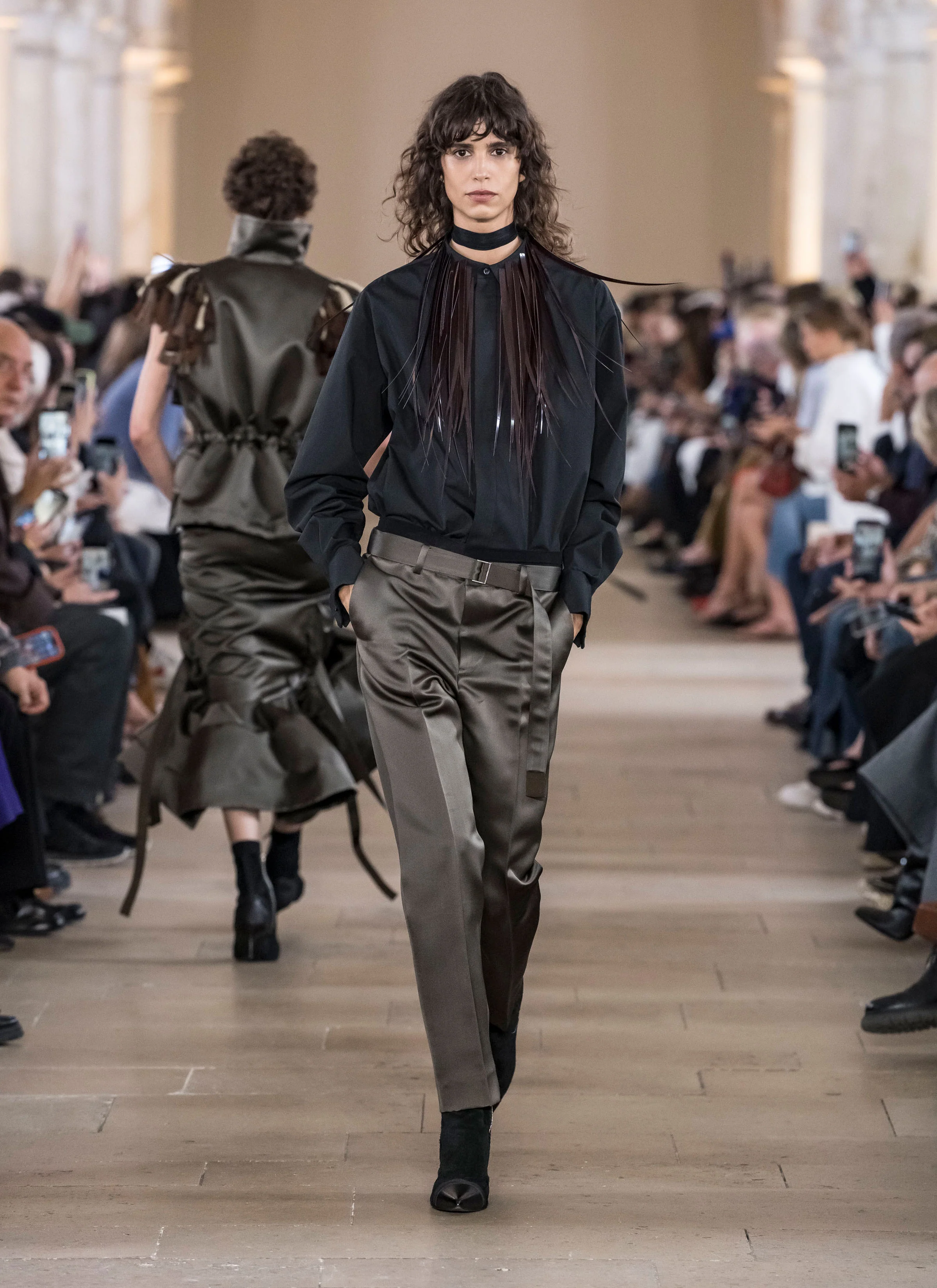
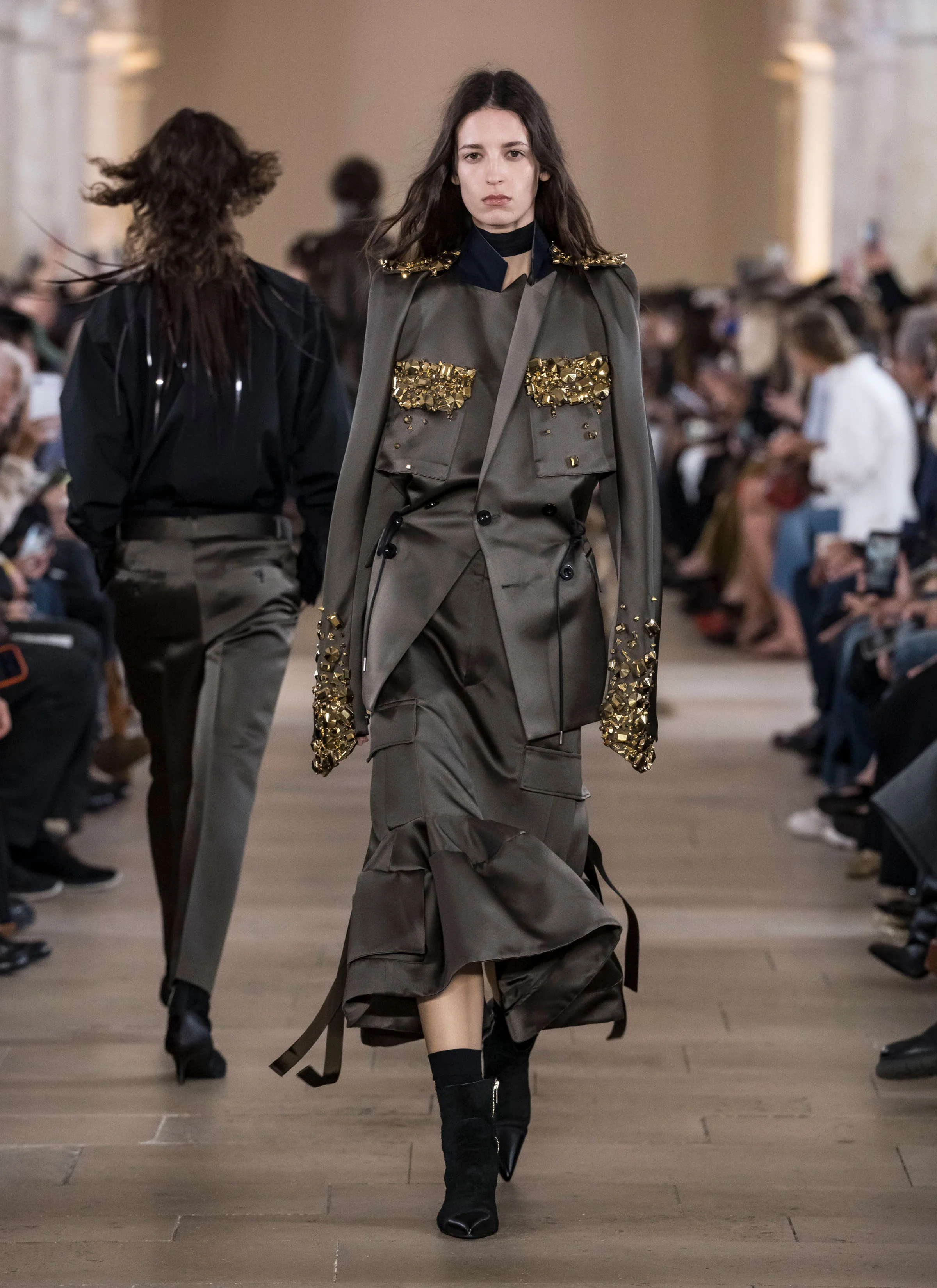
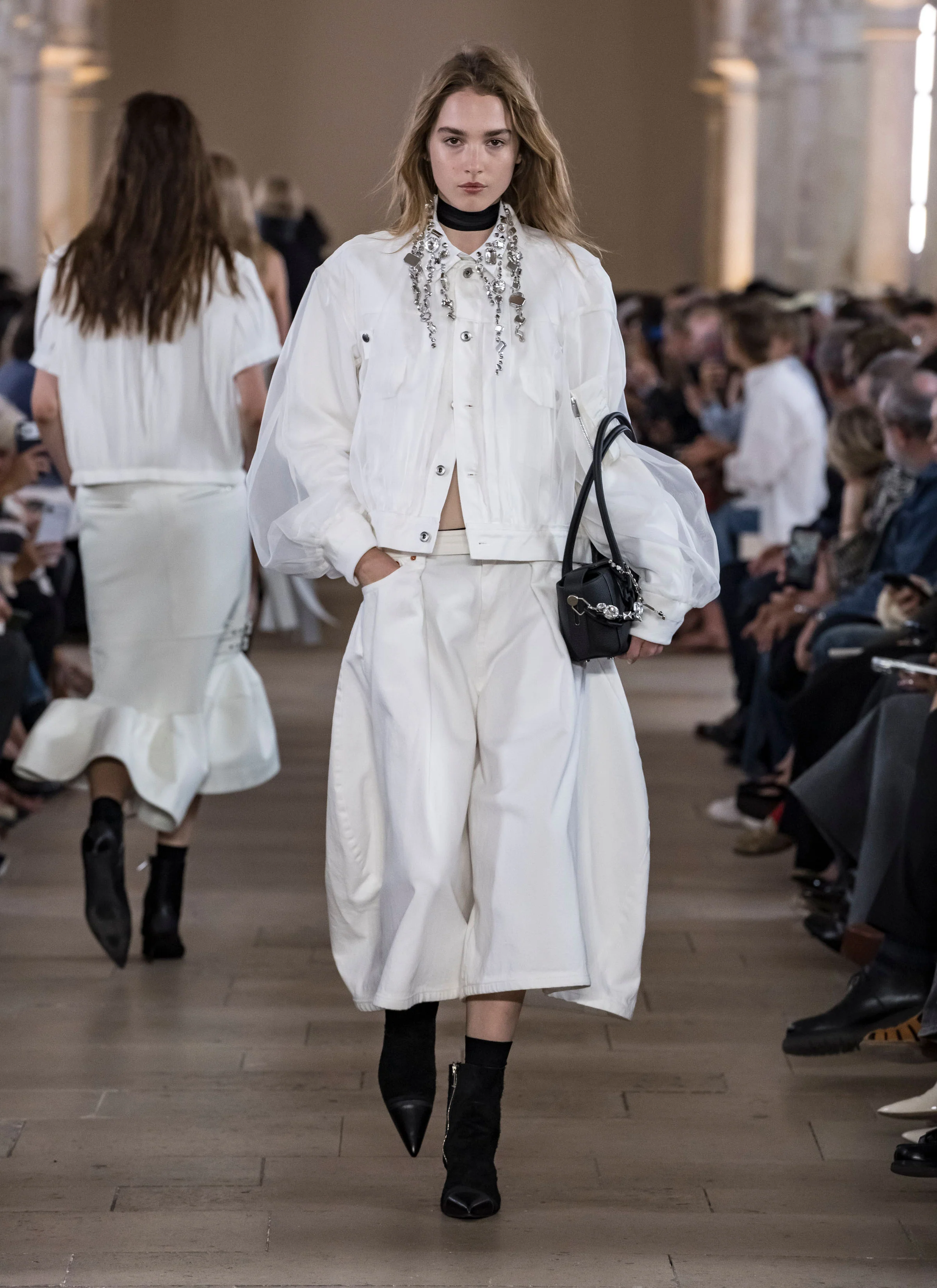
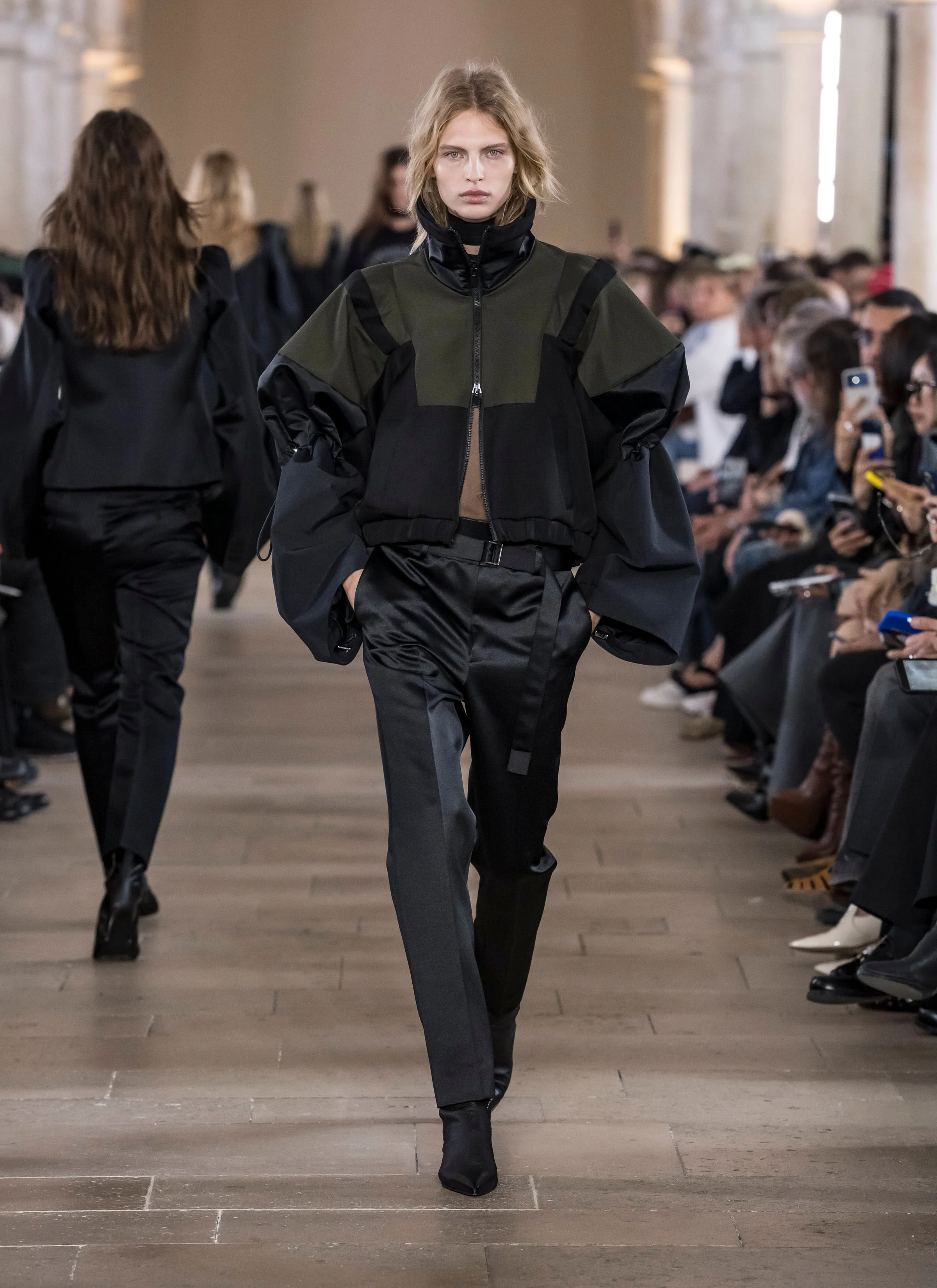
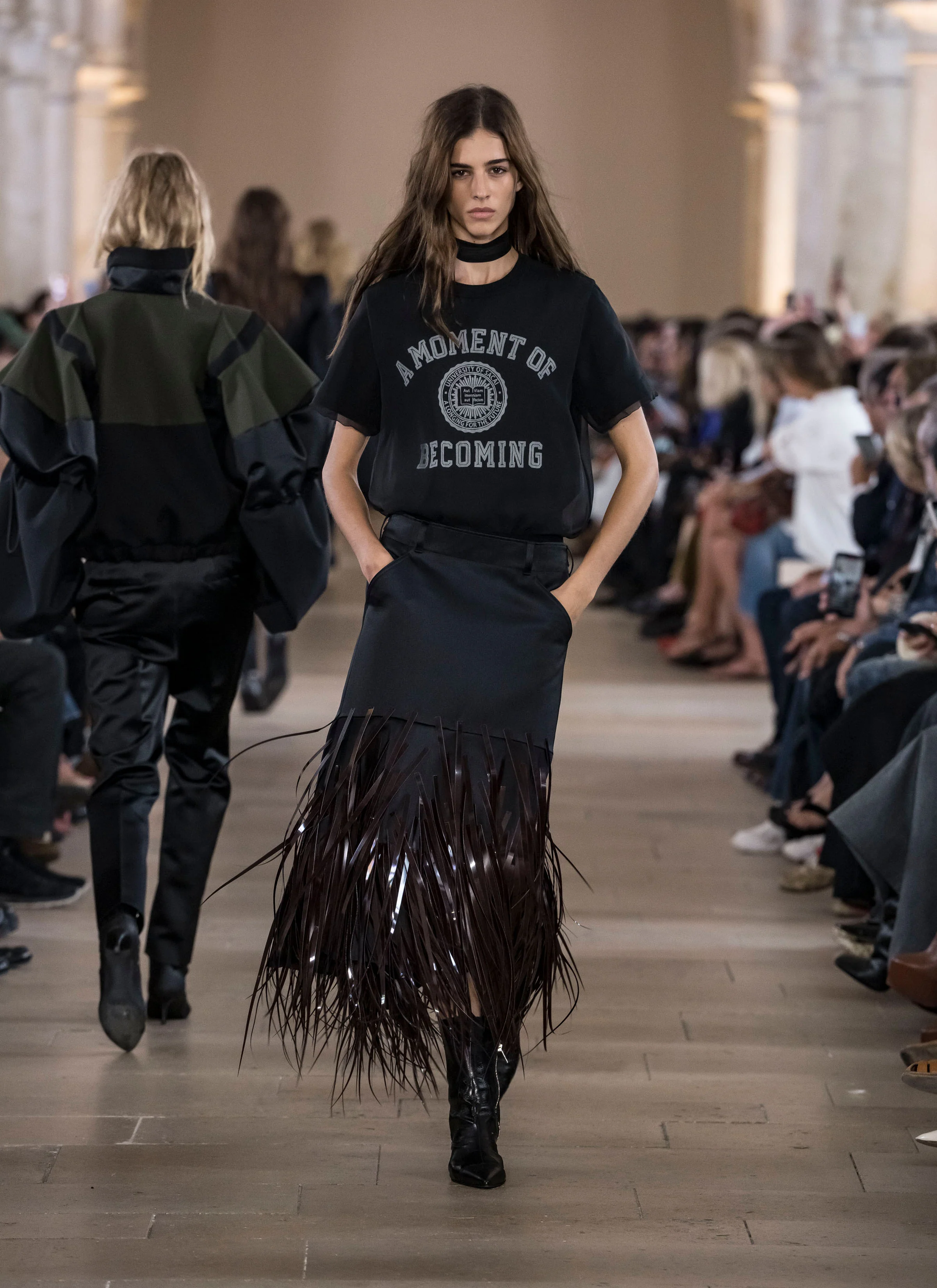
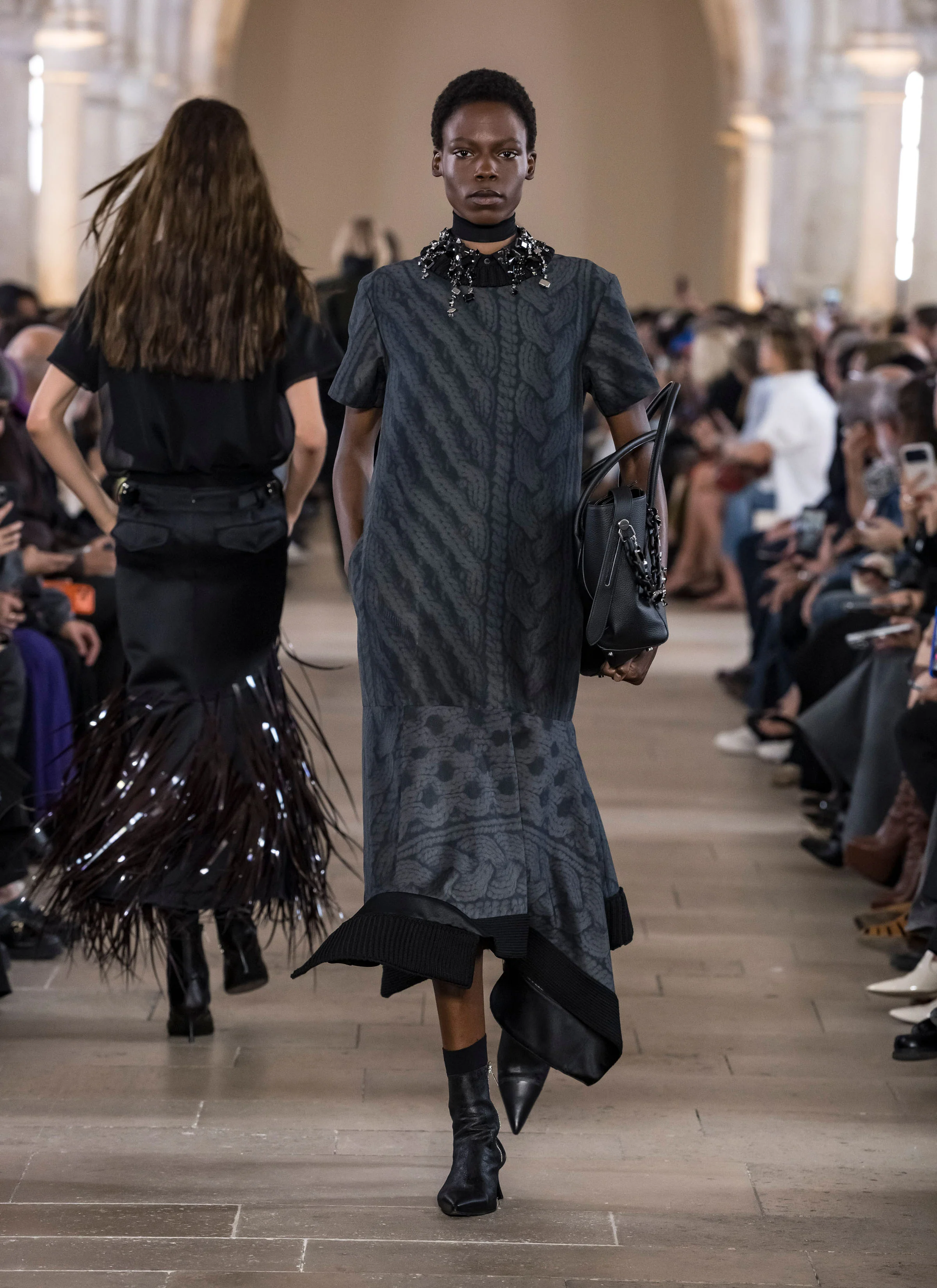
The clothes feel darker, more exposed, more psychologically charged. Black, khaki, grey and white create a severe foundation interrupted by red, metallic surfaces, fringe, crystals, satin, leather and transparency. Strong outerwear sits next to fragile surfaces. Utilitarian pockets coexist with ornamental details. Volume expands and collapses. Masculine structures are softened without losing their force.
The woman at the centre of this collection does not choose between opposites.
She inhabits them.
That matters because Sacai’s femininity has never been about decoration alone. It is about multiplicity. Strength can look delicate. Vulnerability can have armour. Ornament can be aggressive. Utility can be sensual.
The clothes do not resolve these contradictions. They protect them.
This is where Sacai becomes more than a design language.
It becomes a philosophy of identity.
The person is never one thing. The garment does not have to be one thing either.
Abe’s obsession with hybridization began with an almost radical simplicity: what happens when two familiar garments are forced to coexist?
Over time, that question expanded from the garment to the entire Sacai universe. Knitwear met tailoring. Workwear met femininity. Sportswear met couture. Japanese street culture met Parisian fashion. The past met the future.
Sacai never really invented new things.
It transformed existing things until they became impossible to classify.
That distinction is crucial.
Because SS27 is not about novelty.
It is about relevance.
The fashion industry has spent years accelerating. Sacai’s pause suggests another idea of progress: sometimes you move forward by stepping away.
The reset gave Abe the possibility to look at Sacai without immediately feeding it.
That is why the collection feels strangely familiar and unfamiliar at the same time.
You recognise the language.
You no longer recognise the sentence.
This tension also explains the importance of the collaborations surrounding the house. Levi’s, Brooks Brothers, Birkenstock and other cultural institutions become raw material rather than logos. Sacai does not need to destroy an icon to make it contemporary. It changes its proportions, its function, its context, its attitude.
The familiar survives.
The familiar mutates.
That is the Sacai method.
Yet SS27 suggests something more ambitious: the method itself has become the material.
Sacai is now dissecting Sacai.
The signature becomes the object of experimentation. The hybrid becomes something to hybridise. The archive becomes something to destabilise. The past is no longer a source of references but a structure to be opened, rearranged and pushed forward.
This is why A Moment of Becoming feels right.
Becoming is different from reinvention.
Reinvention suggests a new identity.
Becoming suggests an identity that is never finished.
Sacai does not need to become another brand.
It needs to remain unfinished.
That may be the most radical proposition left to a house that has already spent decades perfecting the art of transformation.
The real challenge for Sacai is no longer how to combine two things.
It is how to surprise us with the combination after the world has learned to expect it.
SS27 does not answer that question completely.
It does something better.
It makes the question visible.
Sacai has built its identity on breaking things apart and putting them back together. Now it has turned that operation onto itself.
Sacai against Sacai.
The brand fighting its own signature. The past confronting the future. The inside becoming the outside. The familiar becoming unfamiliar.
A reset that is not a restart.
A return that is not a repetition.
A collection that does not ask Sacai to become something else.
It asks Sacai to become itself again; differently.