

Some fashion collections borrow a book title for the moodboard. ROT digs deeper.
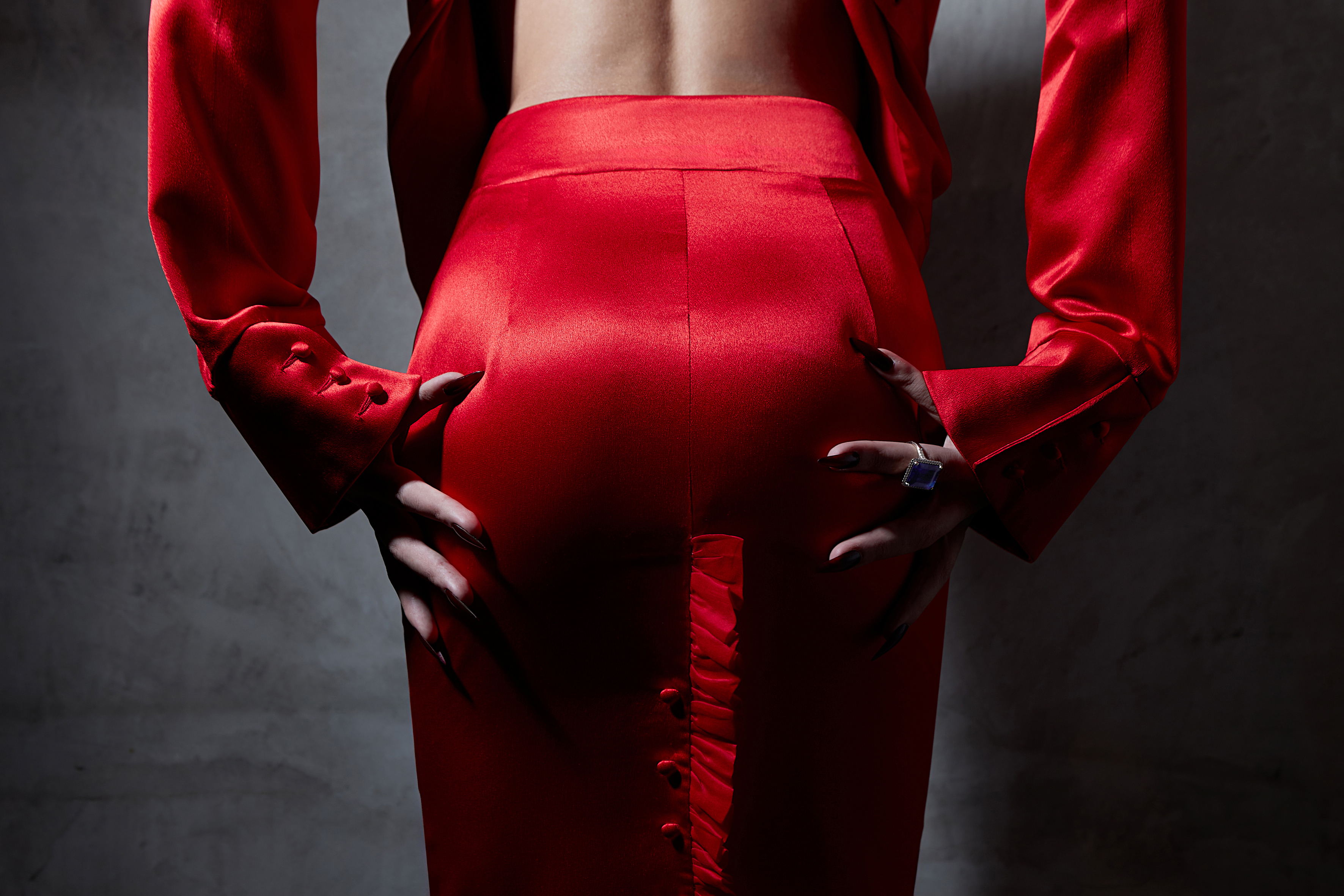
The Italian label has already caught the attention of the fashion crowd, with Shygirl recently appearing on the cover of Schön! Magazine wearing one of its knitted silk kaftans. For its latest collection, however, ROT takes a different direction, introducing eveningwear through a mix of dramatic silhouettes, rich silk fabrics and a surprisingly sharp literary reference.
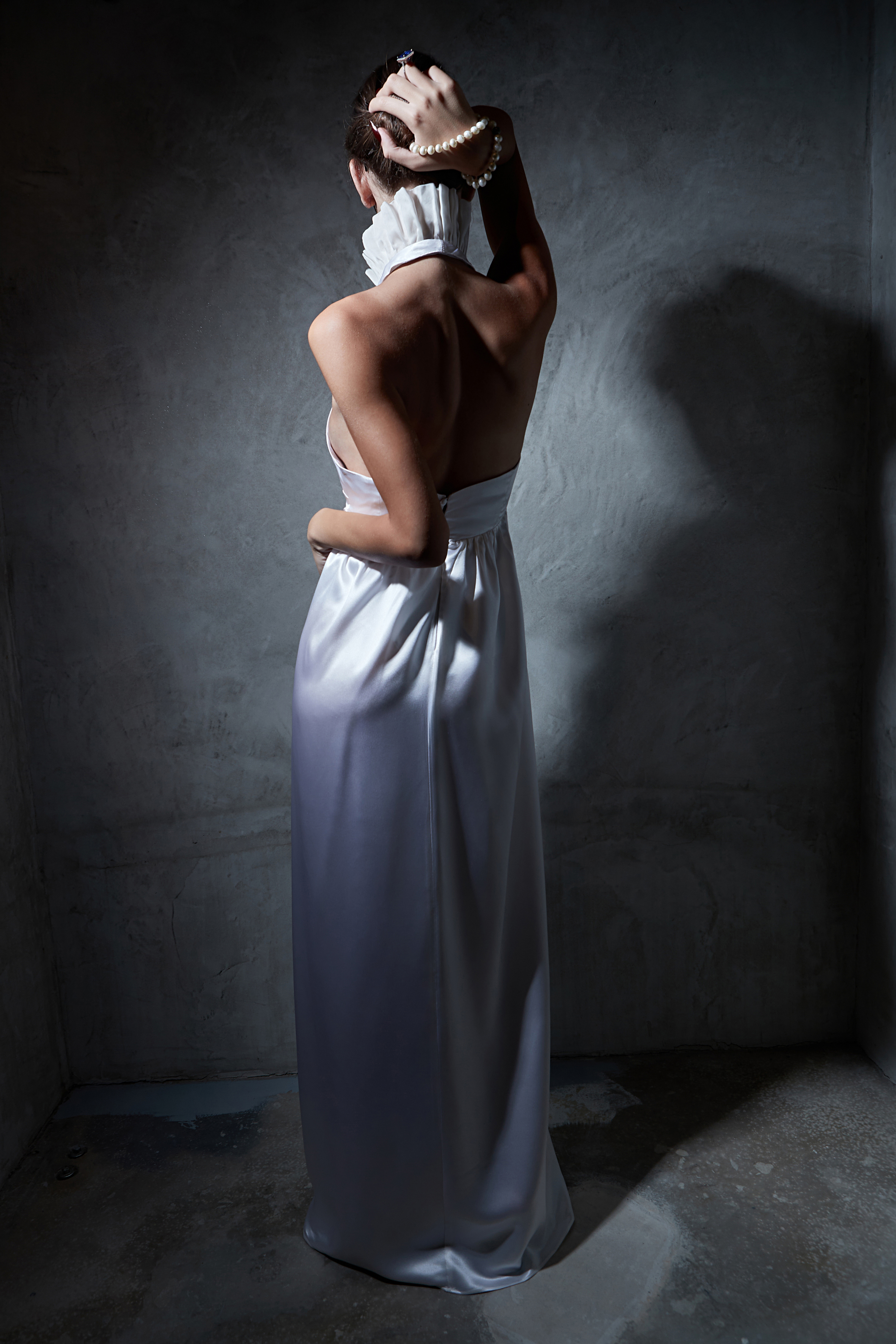
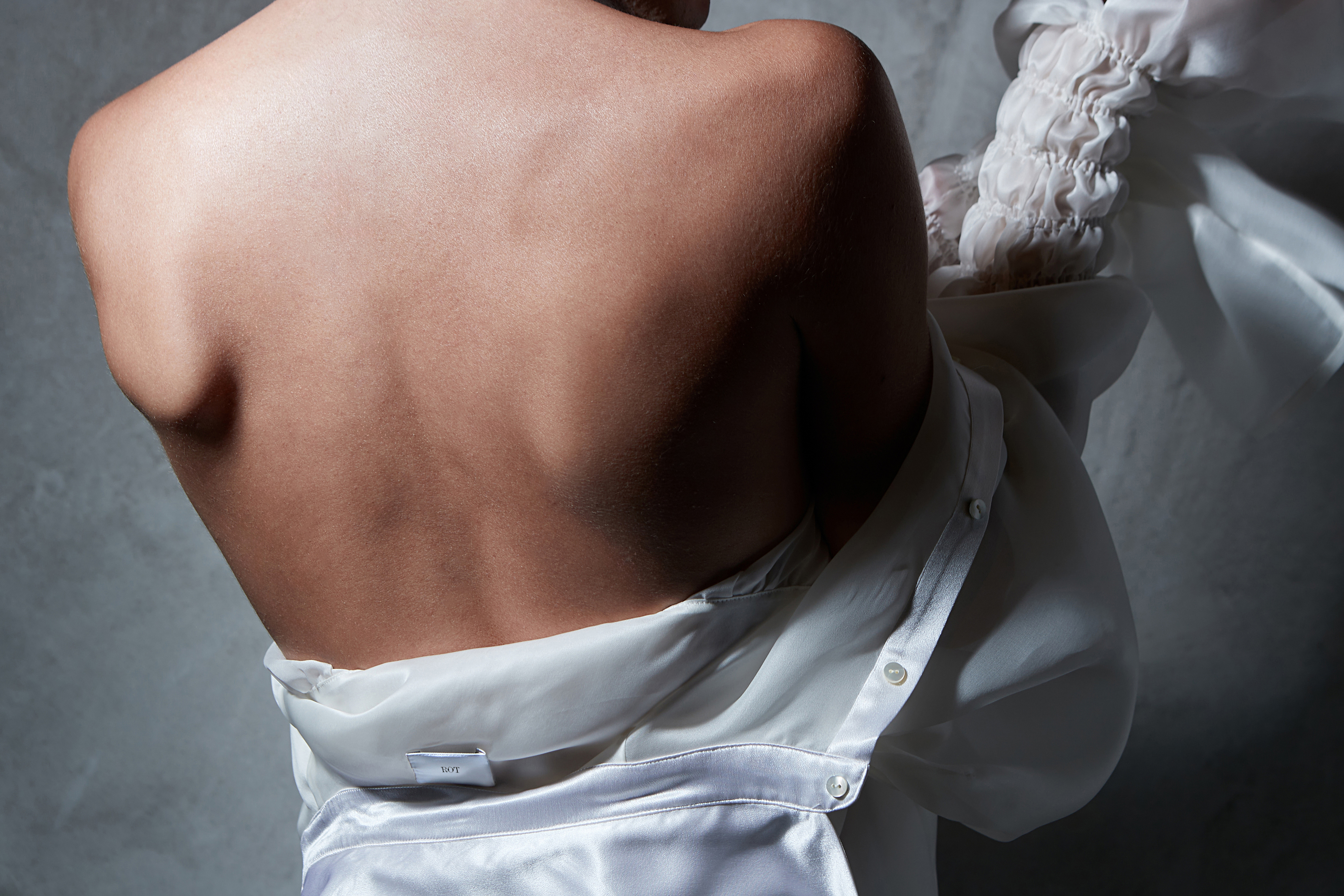
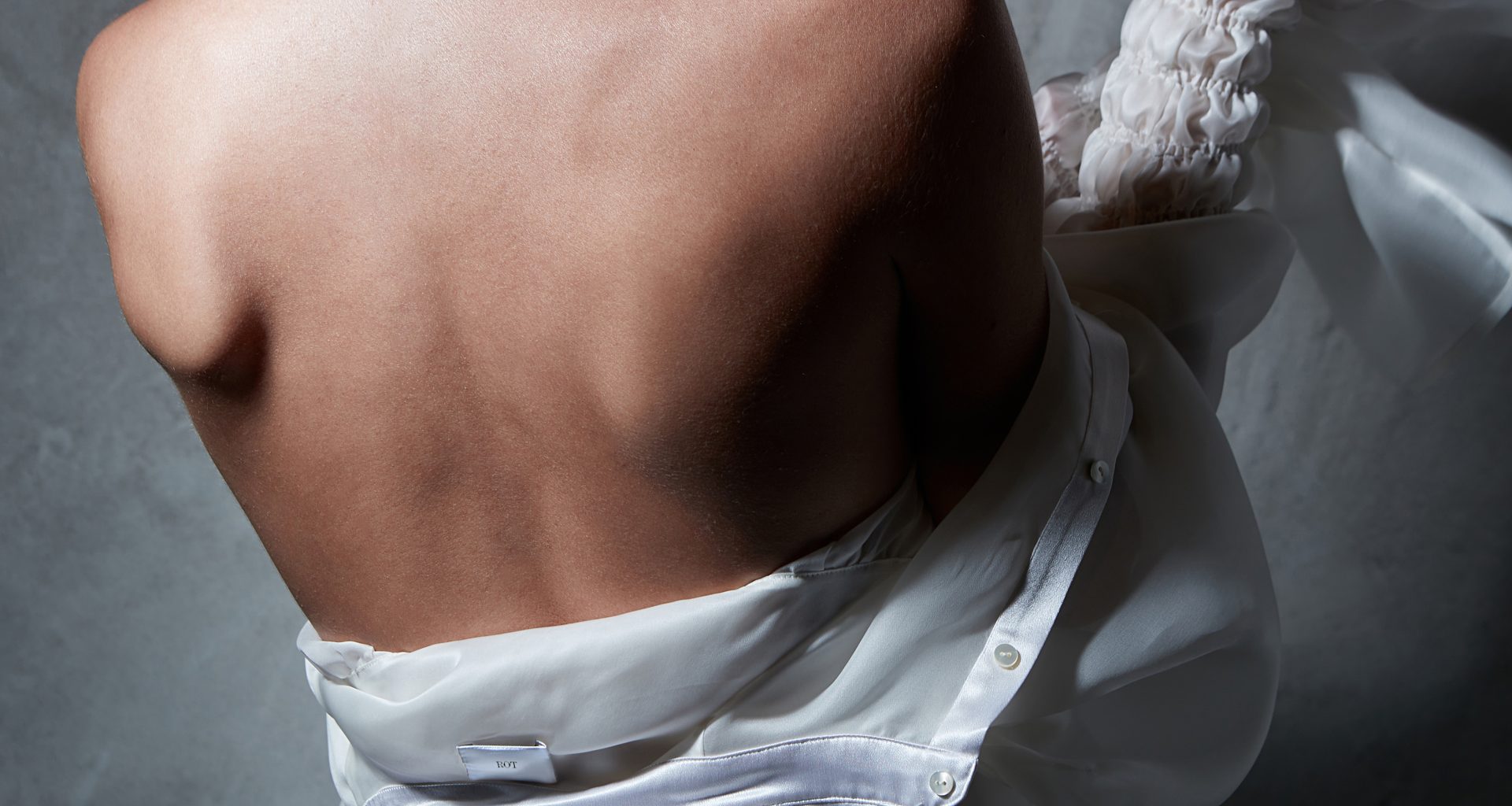
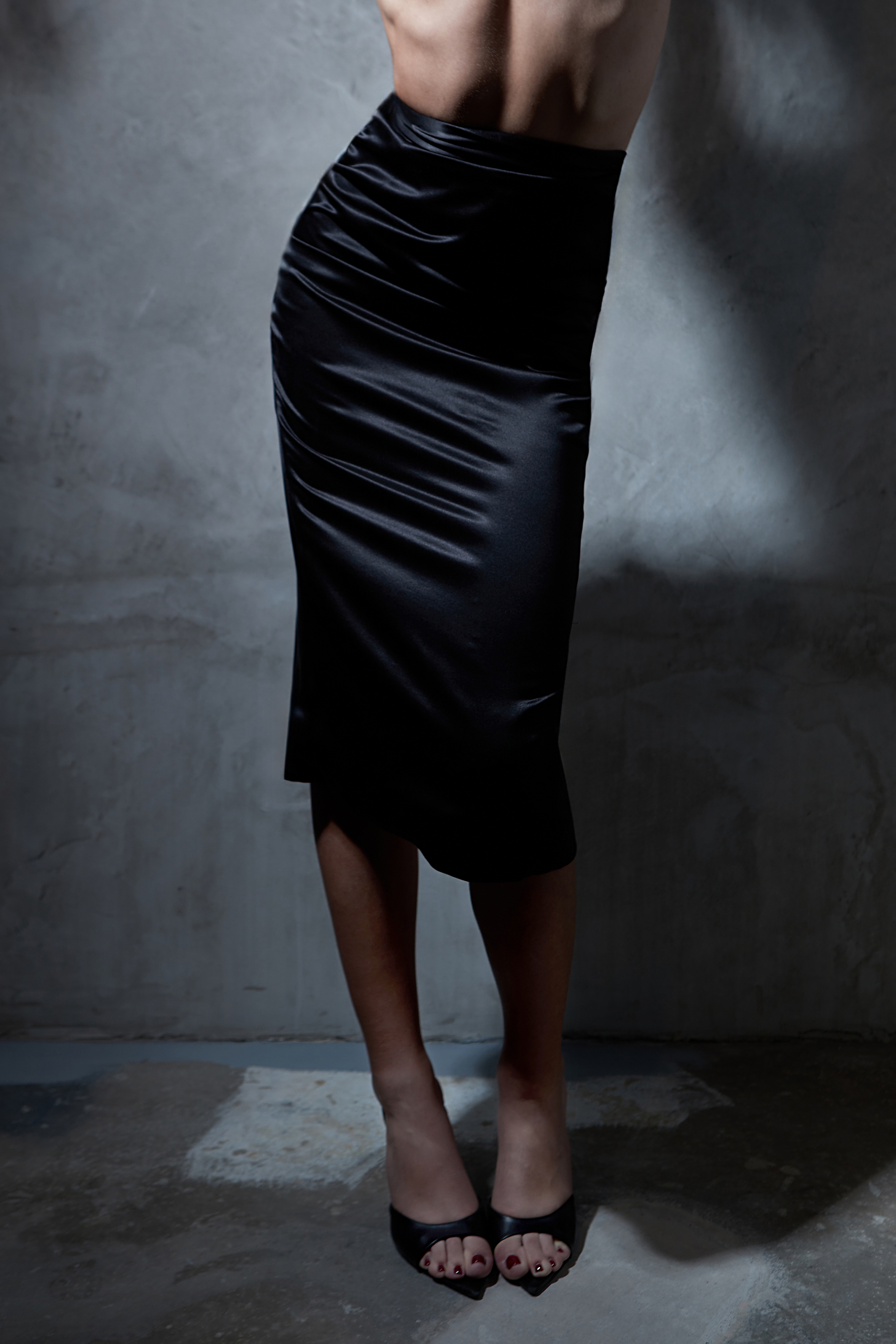
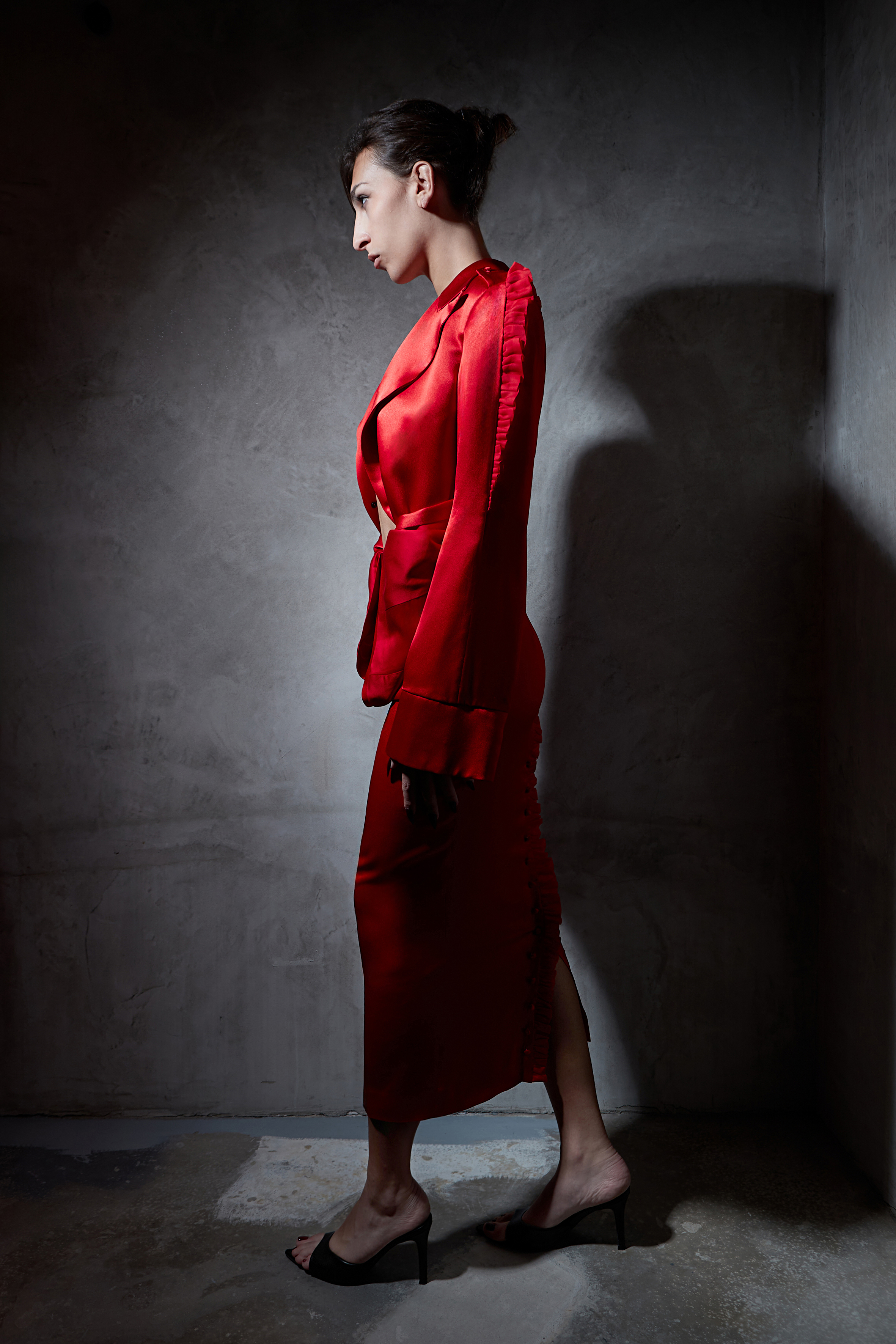
Founded by Emanuele Bonavolta in Reggio Emilia in 2024, ROT has built its identity around a dialogue between fashion and literature. Originally established as a knitwear label, the brand now explores silk satin and silk organza for the first time, with both fabrics produced in Brescia. Titled L’Île du Diable, the FW26 collection comes in two drops, Ouverture and PartenoROT, and moves between red, black and white, with ruffles, sculptural details and revealing cuts giving familiar eveningwear silhouettes a more individual character.
ROT on desirability, judgement and exclusion
Beyond the clothes, Bonavolta uses the collection to address something that feels particularly relevant today: the invisible social hierarchies that decide who is desirable, who belongs and who gets left out.
In the collection’s accompanying text, he speaks directly about the pressure placed on gay men and women. Within gay social circles, desirability can become a form of social currency, creating hierarchies of erotic prestige and leaving people who don’t fit the ideal feeling excluded. Women face a different but equally constant kind of scrutiny: expected to be free, confident and desirable, but never too free or too desirable. There is no official judge handing down a sentence, yet the verdict seems to arrive anyway.
It’s an uncomfortable subject, and an important one to put at the centre of a fashion collection. These expectations can be particularly difficult to escape in spaces that present themselves as open-minded and free. Bonavolta is interested in the contradiction: even in communities that reject traditional rules, people can end up creating new ones, with their own standards of beauty, desirability and acceptance.
The Dreyfus affair as a starting point
The collection takes its name and central reference from the Dreyfus affair. In 1894, Alfred Dreyfus, a Jewish captain in the French army, was wrongly convicted of treason and sent to Devil’s Island in French Guiana. Four years later, writer Émile Zola published J’accuse…! in the newspaper L’Aurore, challenging the conviction and exposing the antisemitism behind the case. Dreyfus was eventually exonerated in 1906.
What interests Bonavolta is the way a story can be written about someone before they get the chance to define themselves. Once a judgement has been made, every action can become further evidence of it. He sees a similar mechanism operating in contemporary social and emotional life, where people are measured against expectations they never agreed to.
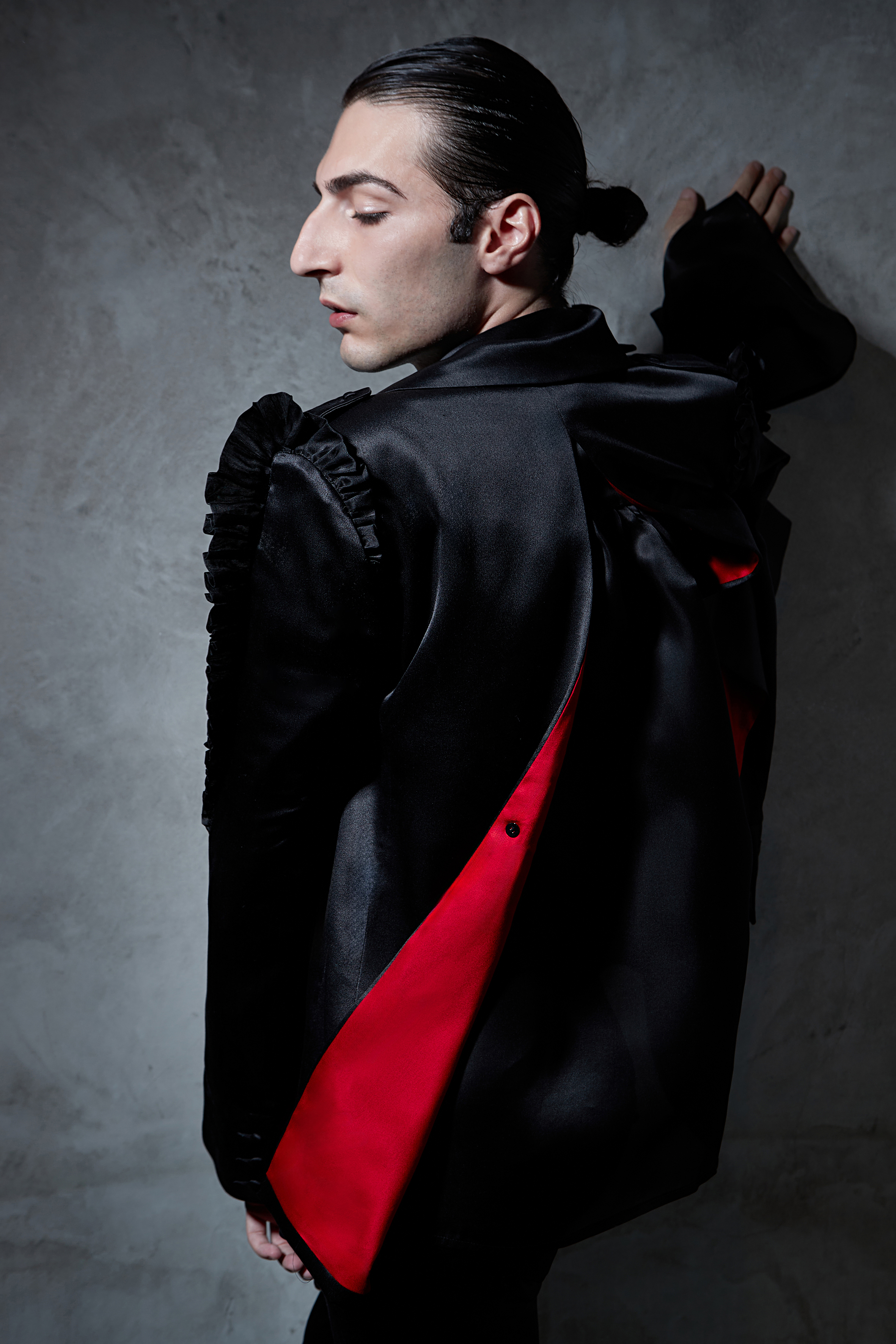
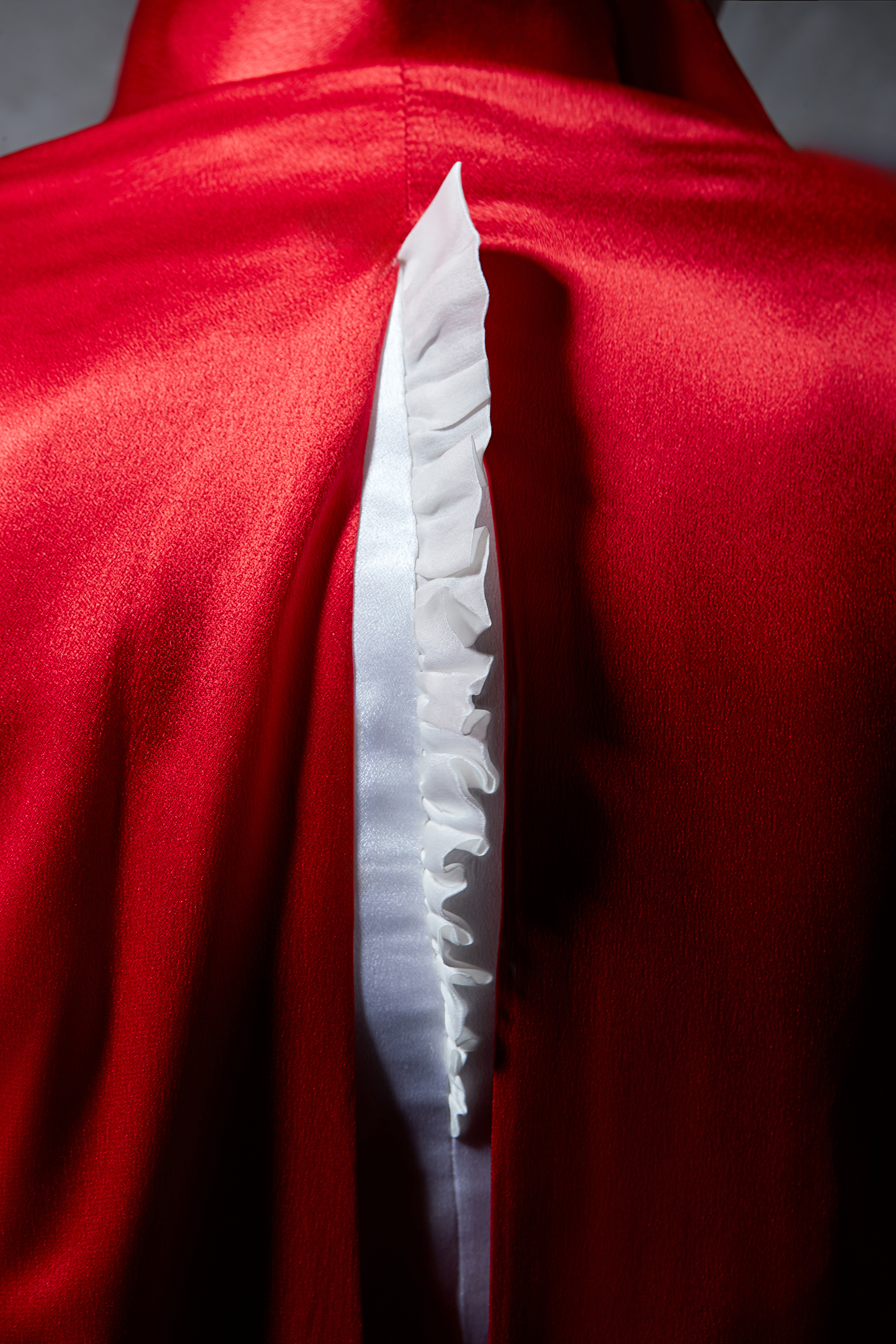
ROT’s answer is to take Zola’s side and embrace exile as a form of resistance: if society has already decided where you belong, perhaps there’s freedom in refusing to play along. The collection’s closing image is of people staying proudly on Devil’s Island, glittering in their guilt.
The FW26 campaign moves between the foggy landscapes of the Po Valley and the atmosphere of Naples, a city connected to Bonavolta’s family background. With L’Île du Diable, ROT moves beyond its knitwear beginnings while keeping its literary references and personal point of view intact. The result is eveningwear with a little more to say than just looking good after dark.