
From a symbol of women’s emancipation to an emblem of 1980s corporate power, the tailored suit has long reflected shifting ideas of femininity and authority. Its return to the runway is a stark reminder that what women wear remains inseparable from the power they hold, and the power they are still fighting to claim.
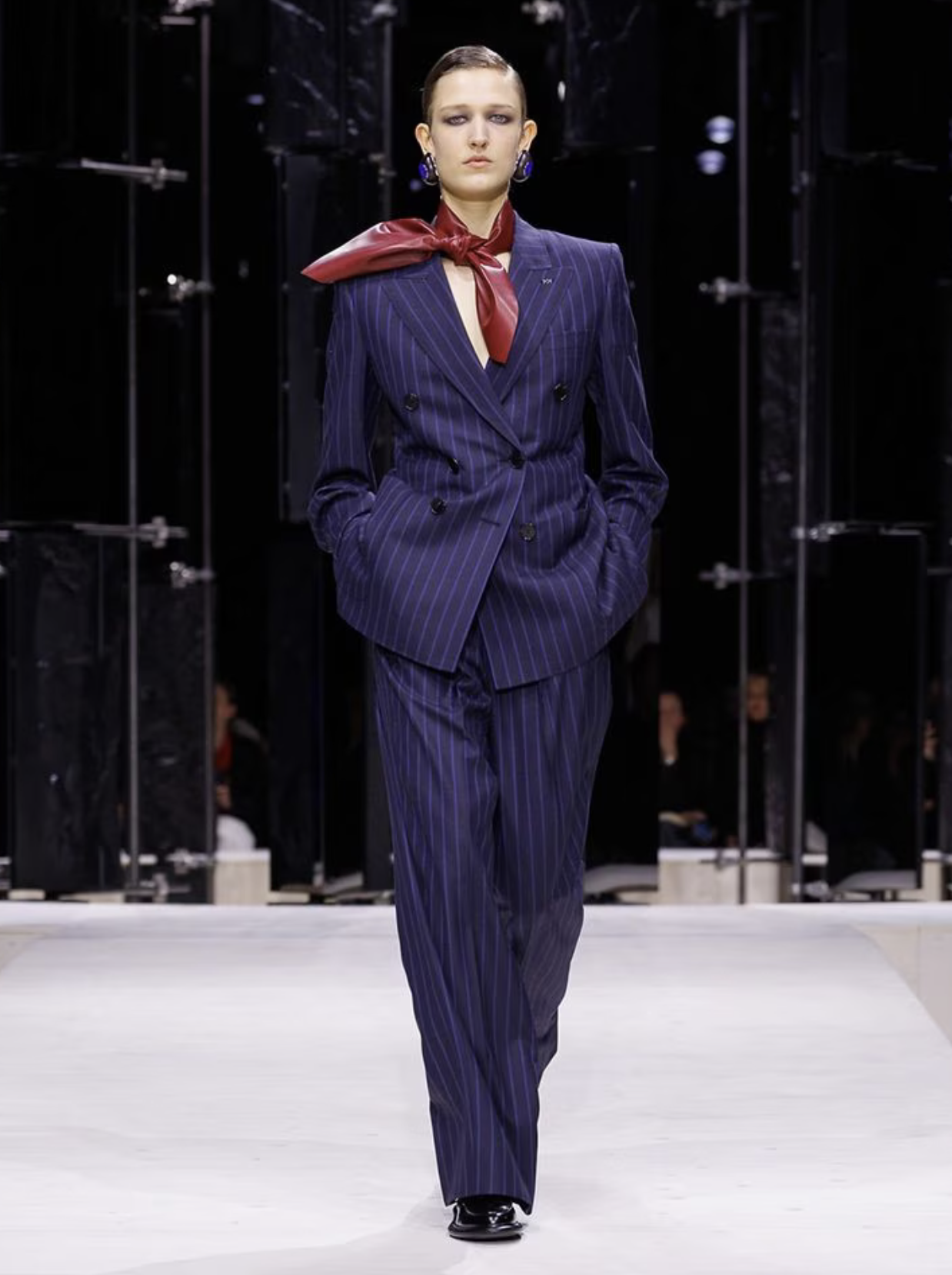
Strong shoulders, sharp silhouettes, structured blazers, and oversized proportions. The power suit is reclaiming its place in women’s wardrobes, bringing back an aesthetic that has represented far more than a passing trend for decades. Yet dismissing its return as another nostalgic revival of the 1980s would mean overlooking the cultural significance of a garment that has long reflected the evolving role of women in society.
If forty years ago the tailored suit served as a form of armour through which women asserted their place in a professional world dominated by men, what does wearing one mean today?
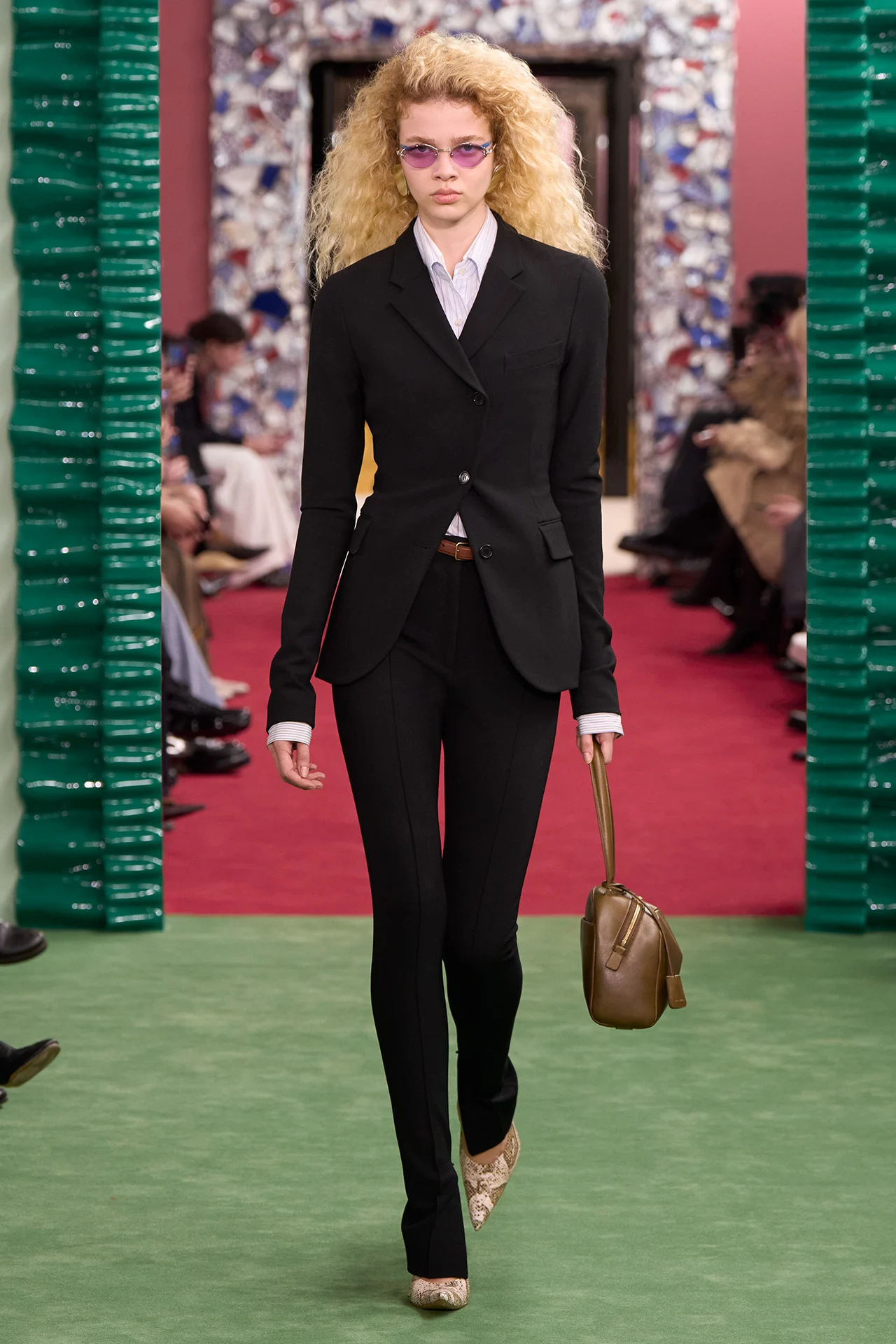
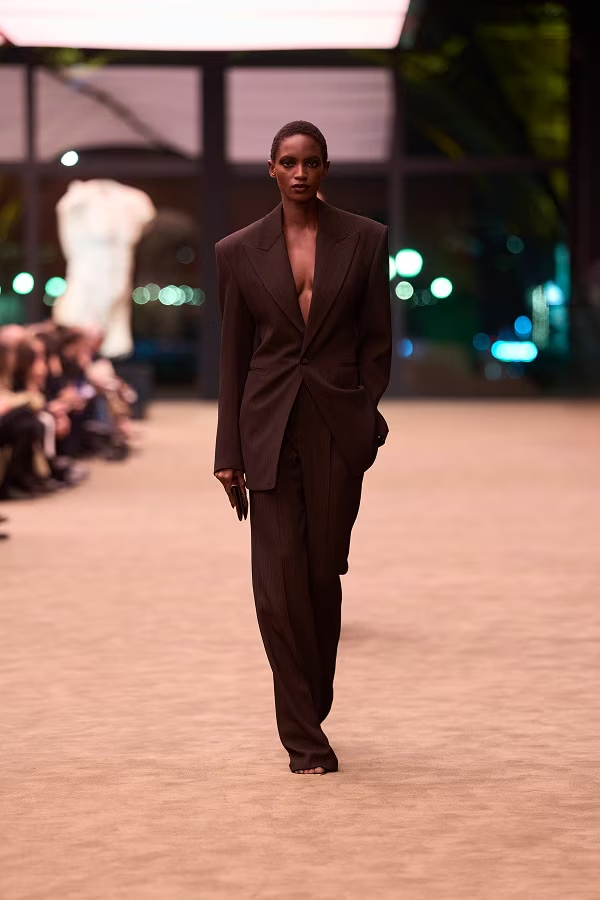
The question feels particularly relevant in light of the Fall/Winter 2026 collections, where fashion houses including Givenchy, Saint Laurent, Gucci, Bottega Veneta, Celine, and Acne Studios brought the power suit back to the runway, reinterpreting a silhouette historically associated with authority and ambition. Its resurgence comes at a time marked by economic uncertainty and changing social hierarchies, reflecting the enduring complexity of the relationship between femininity and power.
When Dressing Became a Matter of Power
Before becoming a symbol of authority, adopting elements of the male wardrobe was, for women, an act of freedom.
In the 1920s, Coco Chanel helped revolutionise women’s fashion by introducing less restrictive silhouettes and an approach to elegance inspired by the practicality of menswear. Gradually moving away from the constraints of traditional clothing also meant challenging the expectations surrounding women’s roles in society.
The two World Wars accelerated this transformation. With men away fighting, many women entered professions that had previously been dominated by men, creating a growing need for practical and functional clothing.
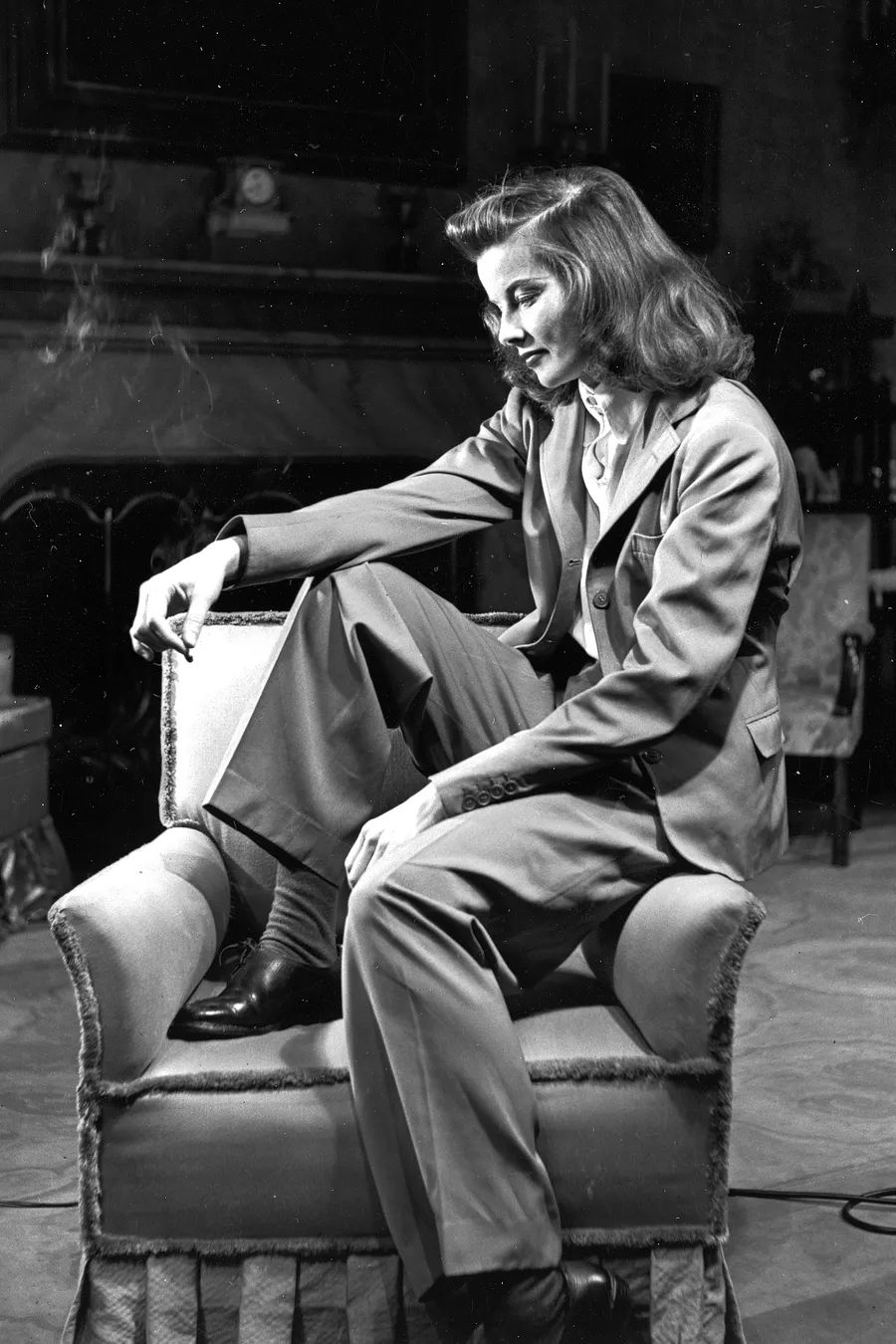
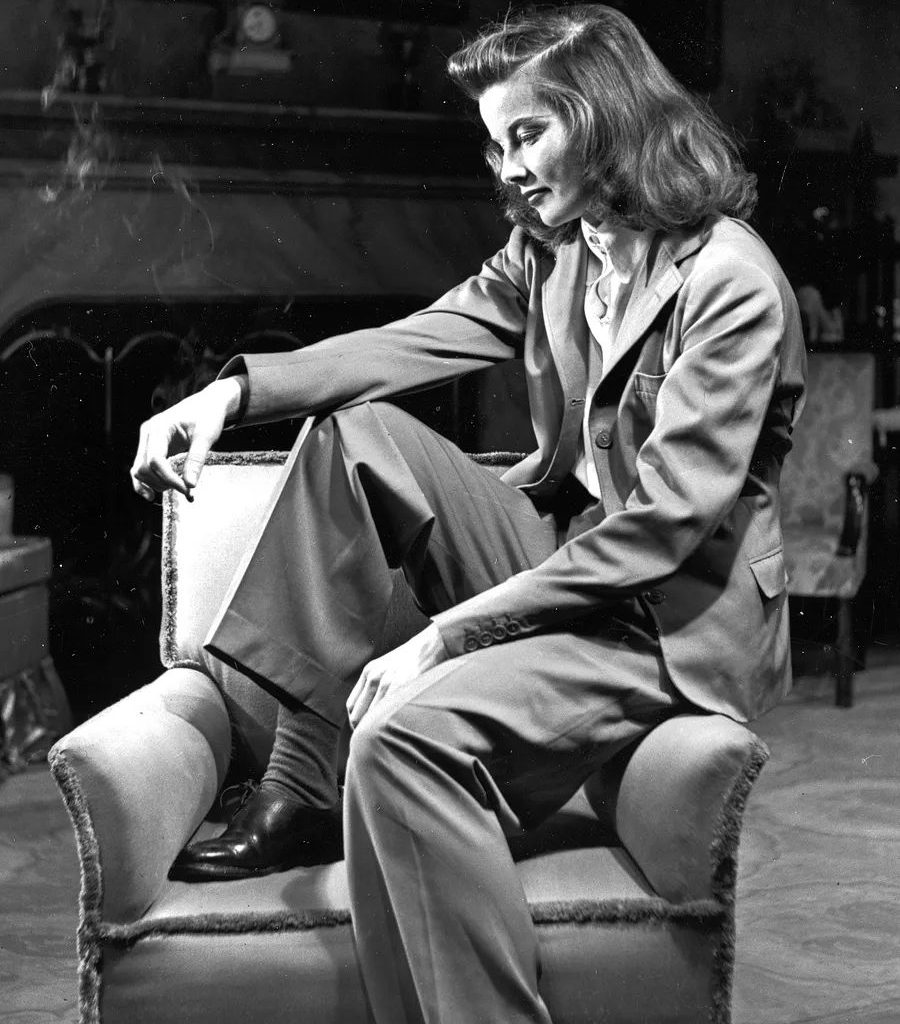
Meanwhile, between the 1920s and 1940s, figures such as Katharine Hepburn, Greta Garbo, and Josephine Baker challenged the aesthetic conventions of their time by embracing trousers, tuxedos, and menswear-inspired pieces. Through their personal style, they helped redefine the boundaries of feminine elegance. Clothing began to carry a meaning beyond aesthetics, becoming a means of expressing independence, identity, and autonomy.
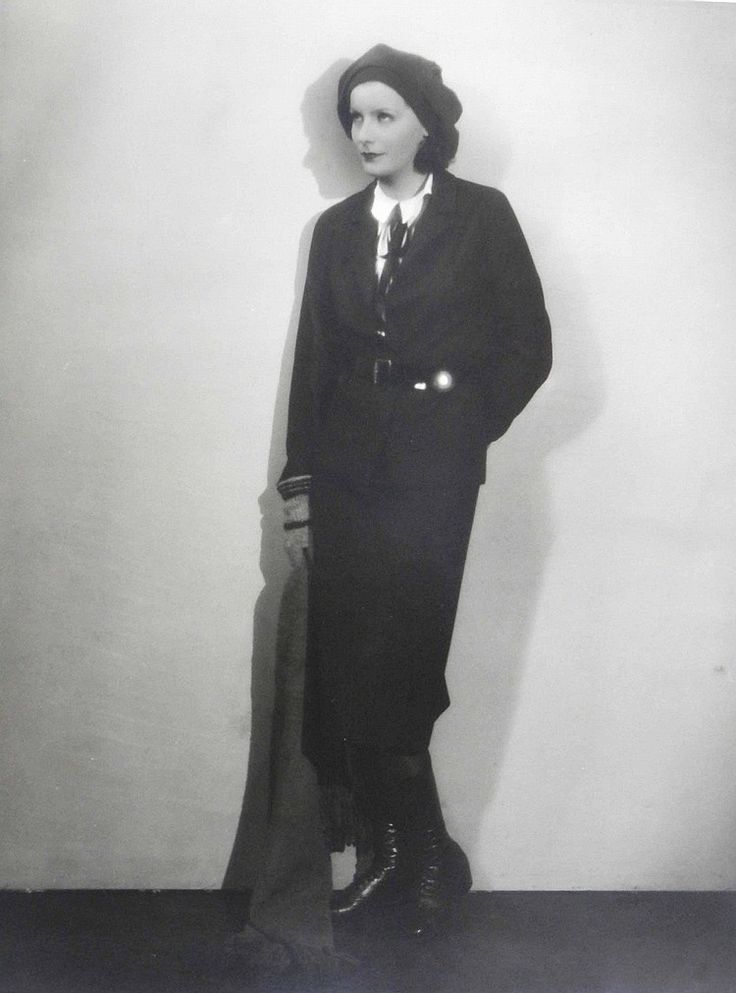
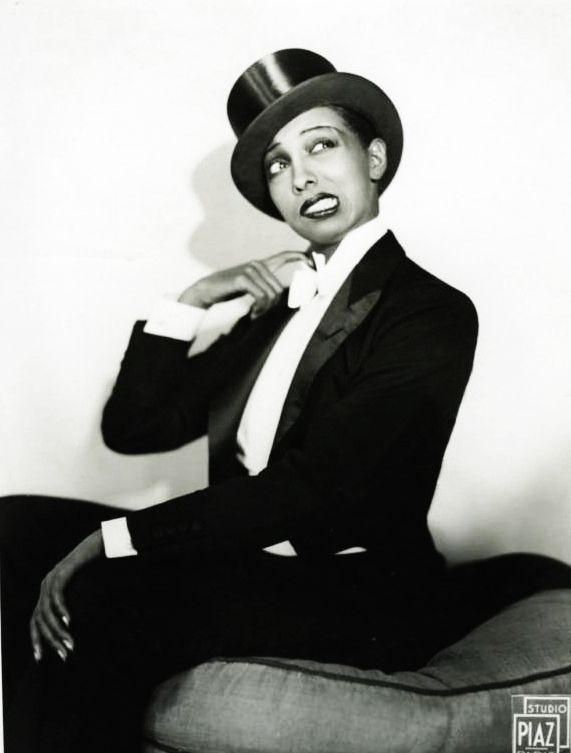
It was during the 1980s, however, that women’s tailoring became explicitly associated with power.
As more women entered corporate environments and managerial positions, power dressing emerged as a visual language of authority. Padded shoulders, sharply tailored jackets, and structured suits created a silhouette that borrowed from the established codes of masculine power.
In a professional system historically designed by men, for men, the power suit became a form of social armour. Dressing according to the codes of authority meant claiming the right to belong, turning clothing into a tool of legitimacy.
The Power Suit Today
Today, the context has changed, but some of the tensions that once made the power suit a symbol of emancipation have not entirely disappeared. Its return can be interpreted as an aesthetic response to a present defined by instability and increasing pressure to perform.
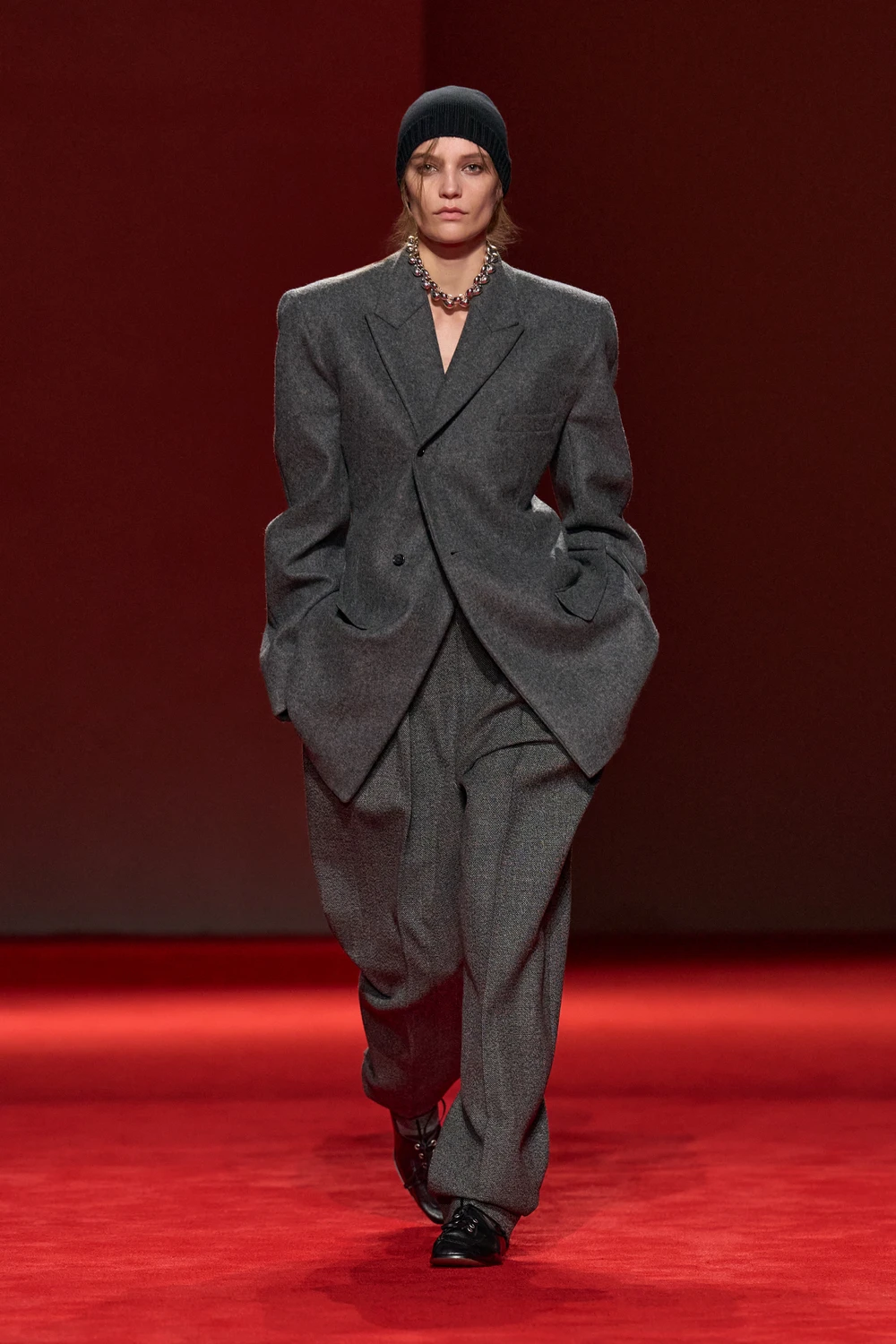
Broad shoulders, sharp lines, and architectural volumes project an image of control, stability, and determination. The tailored suit once again functions as a form of armour, but the meaning behind that protection seems to have shifted.
If women in the 1980s had to prove they deserved the same power as men, today they often seem expected to prove they are worthy of the power they have gained.
It is no longer simply about getting a seat at the table, but about constantly having to justify one’s place there.
The contemporary power suit can therefore be seen as a reflection of the expectations placed on women today: to be independent, competent, ambitious, confident, and seemingly always in control. Clothing becomes the visual expression of a reality in which confidence is no longer something one simply possesses, but something that must constantly be projected.
In this sense, the power suit speaks not only of female emancipation, but also of the new pressures that accompany contemporary ideas of success.
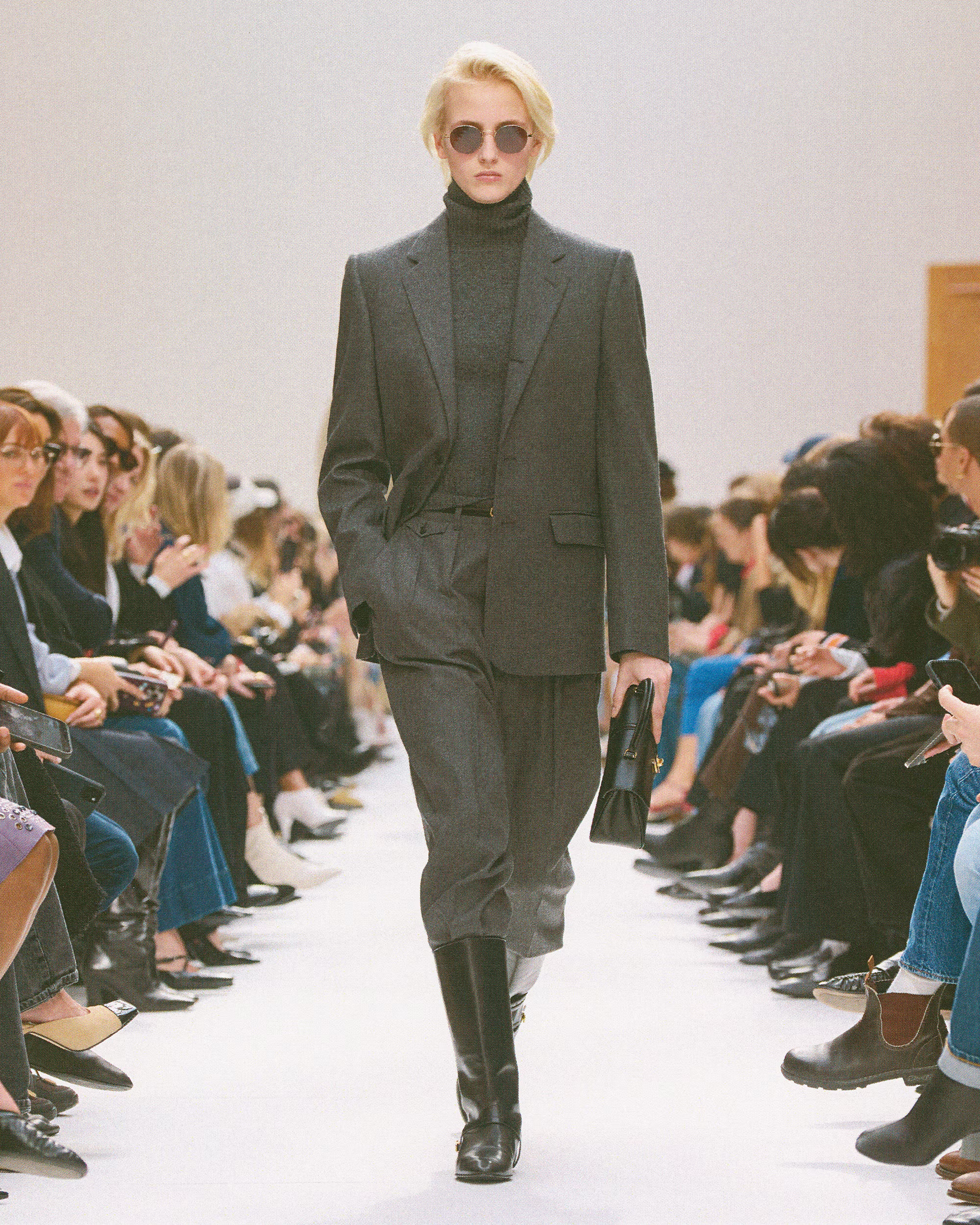
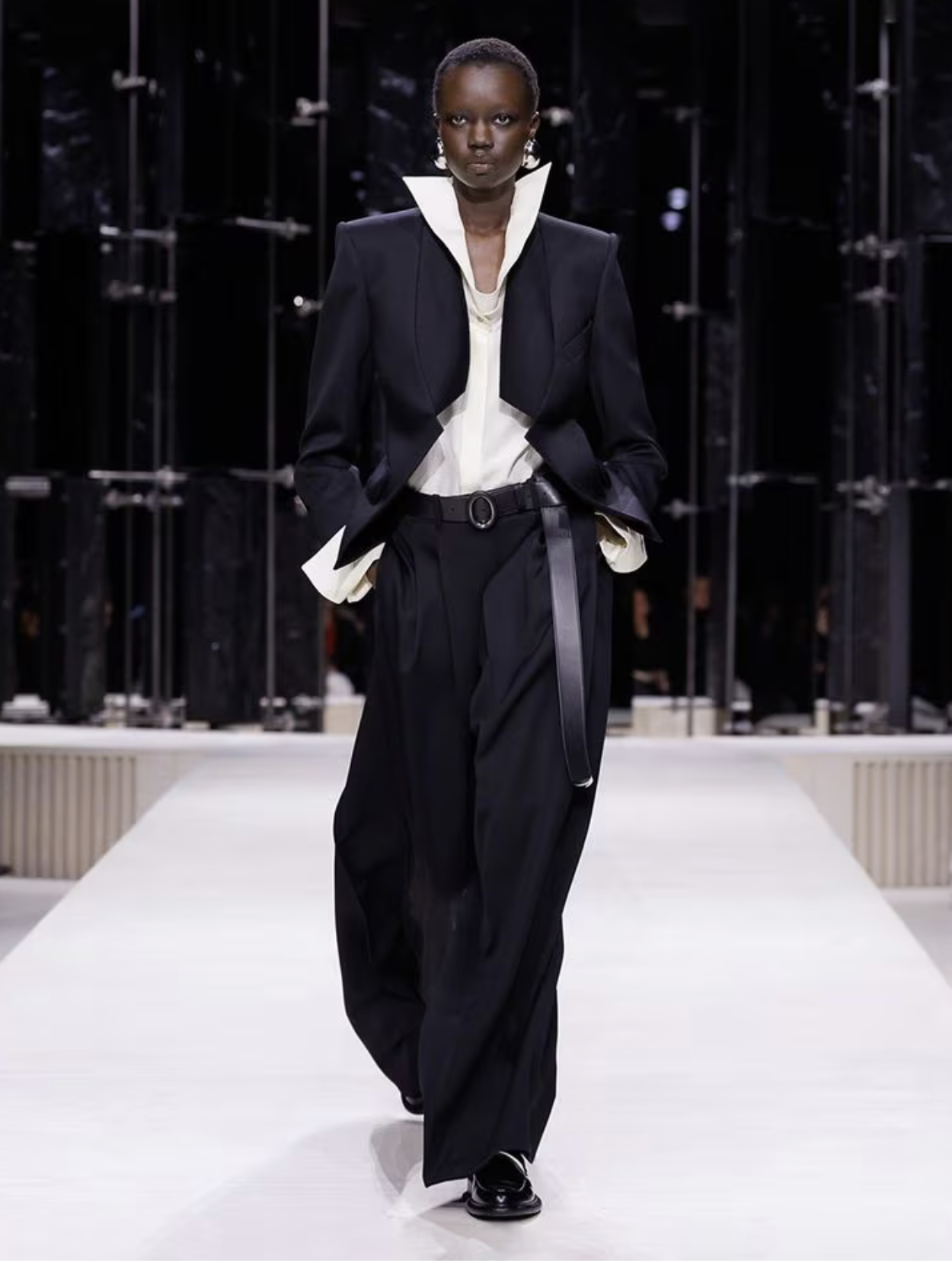
Another possible interpretation of its return lies in the relationship between the female body and the gaze of others.
In recent years, fashion has increasingly embraced an aesthetic centred on the exposure of the body. Sheer fabrics, cut-outs, micro silhouettes, and references to the early 2000s have helped shape a visual culture in which physical visibility plays a central role.
The return of structured tailoring seems to offer a different language. Not necessarily a rejection of sensuality, but an alternative way of representing the female body.
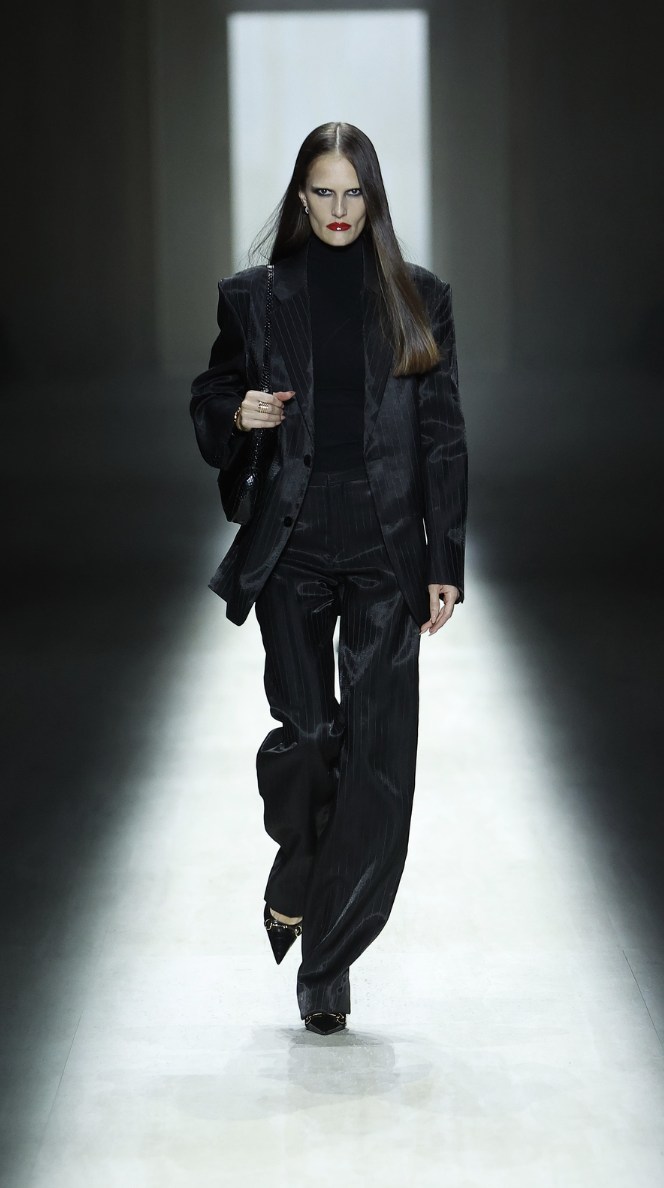
The power suit returns, then, not merely as a nostalgic reference to the 1980s, but as an expression of the contradictions that continue to shape the relationship between female identity and power.
If yesterday the power suit represented women’s right to enter spaces of power, today it might represent something different: the right to occupy those spaces without constantly having to prove they belong.