Fashion loves a plot twist, but it loves a familiar face even more.
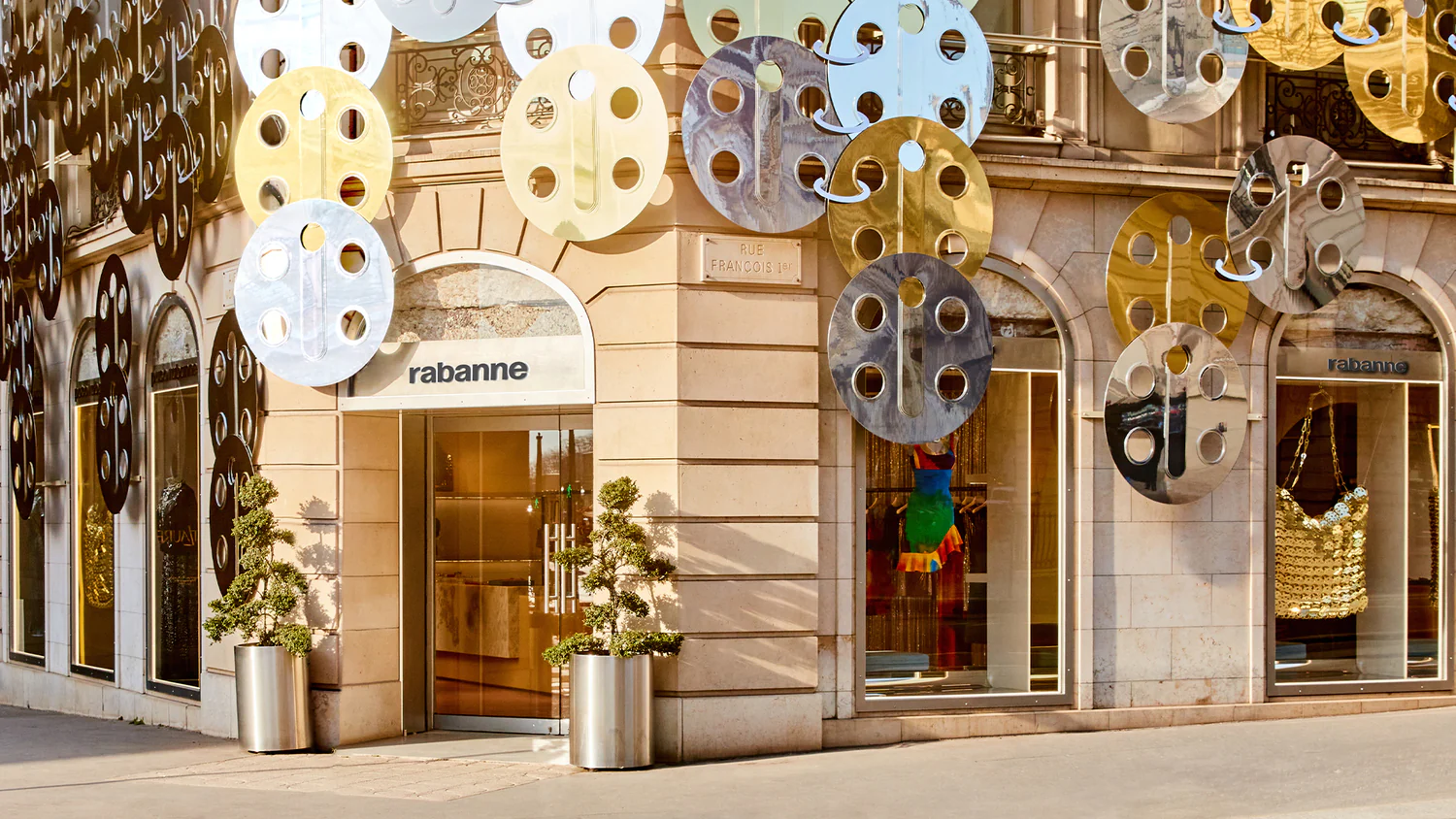
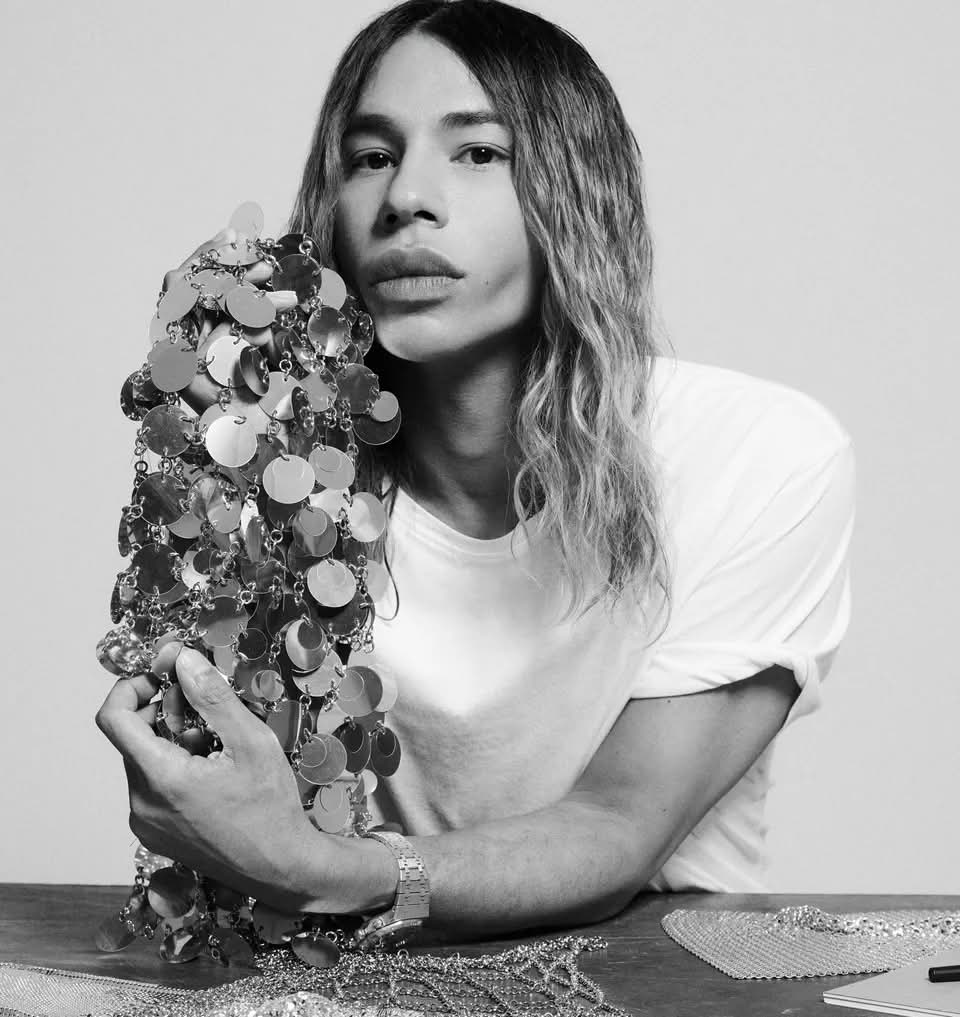
After more than a decade reshaping Balmain into one of luxury’s most recognizable global brands, Olivier Rousteing steps into a new role as Creative Director of Rabanne, succeeding Julien Dossena. It is one of the most consequential appointments in this latest wave of creative reshuffles: not because it is unexpected, but because it raises a more interesting question than the appointment itself: what does Rabanne need to become now?
For the past twelve years, Julien Dossena quietly performed one of fashion’s most sophisticated balancing acts. He transformed Rabanne from a house largely remembered for its metallic archives into one of Paris’ most intellectually compelling labels. Rather than reproducing Paco Rabanne’s futuristic fantasies, Dossena translated them into a contemporary vocabulary, where experimental construction, technical materials and effortless desirability could coexist without nostalgia becoming a costume.
Rousteing arrives from the opposite direction.
His legacy at Balmain is impossible to reduce to silhouettes alone. He understood, perhaps before many of his peers, that luxury had become inseparable from visibility. Celebrity dressing, social media and cultural relevance became part of the design language itself. The “Balmain Army” wasn’t simply a casting strategy, it was a communication system that turned fashion shows into global cultural events.
Rabanne, however, speaks a different language.
The house has always existed somewhere between radical invention and industrial fantasy. Paco Rabanne imagined clothing as architecture, engineering and provocation long before technology became fashion’s favorite buzzword. Even under Dossena’s direction, the brand never chased virality for its own sake. It preferred to build influence through consistency rather than spectacle.
This is where Rousteing’s appointment becomes genuinely intriguing.
The question isn’t whether he can create glamorous clothes. He’s proven that repeatedly. The real challenge is whether he can resist making Rabanne another version of Balmain. Reinvention doesn’t always require amplification. Sometimes it demands subtraction.
The timing is equally revealing. Luxury is entering a noticeably different phase. Years of maximalism, relentless collaborations and algorithm-driven aesthetics have begun to lose momentum. Consumers are becoming increasingly selective, while brands are searching for identities that feel culturally specific rather than universally optimized. In that context, appointing one of fashion’s most recognizable creative personalities is both a confident move and a calculated risk.
From a business perspective, the decision makes perfect sense. Puig is investing in one of the industry’s strongest communicators; a designer capable of speaking fluently across fashion, beauty, entertainment and digital culture. In an era where a creative director is expected to function as both designer and public figure, Rousteing already embodies the hybrid role that many luxury groups now consider essential.
Yet influence has become one of fashion’s most overused currencies.
Today’s audiences are less interested in perfectly engineered image-making than they are in genuine points of view. The next chapter of Rabanne will not be judged by celebrity front rows or viral campaigns, but by whether the collections can introduce a new visual conversation without sacrificing the house’s experimental soul.
Fashion has spent the last few years treating creative directors like blockbuster casting announcements. Every appointment arrives with the promise of reinvention. Few actually deliver it.
Rousteing doesn’t need to prove that he can command attention. He’s been doing that for over a decade.
What remains to be seen is whether, at Rabanne, he’ll choose to make more noise, or make something entirely unexpected.