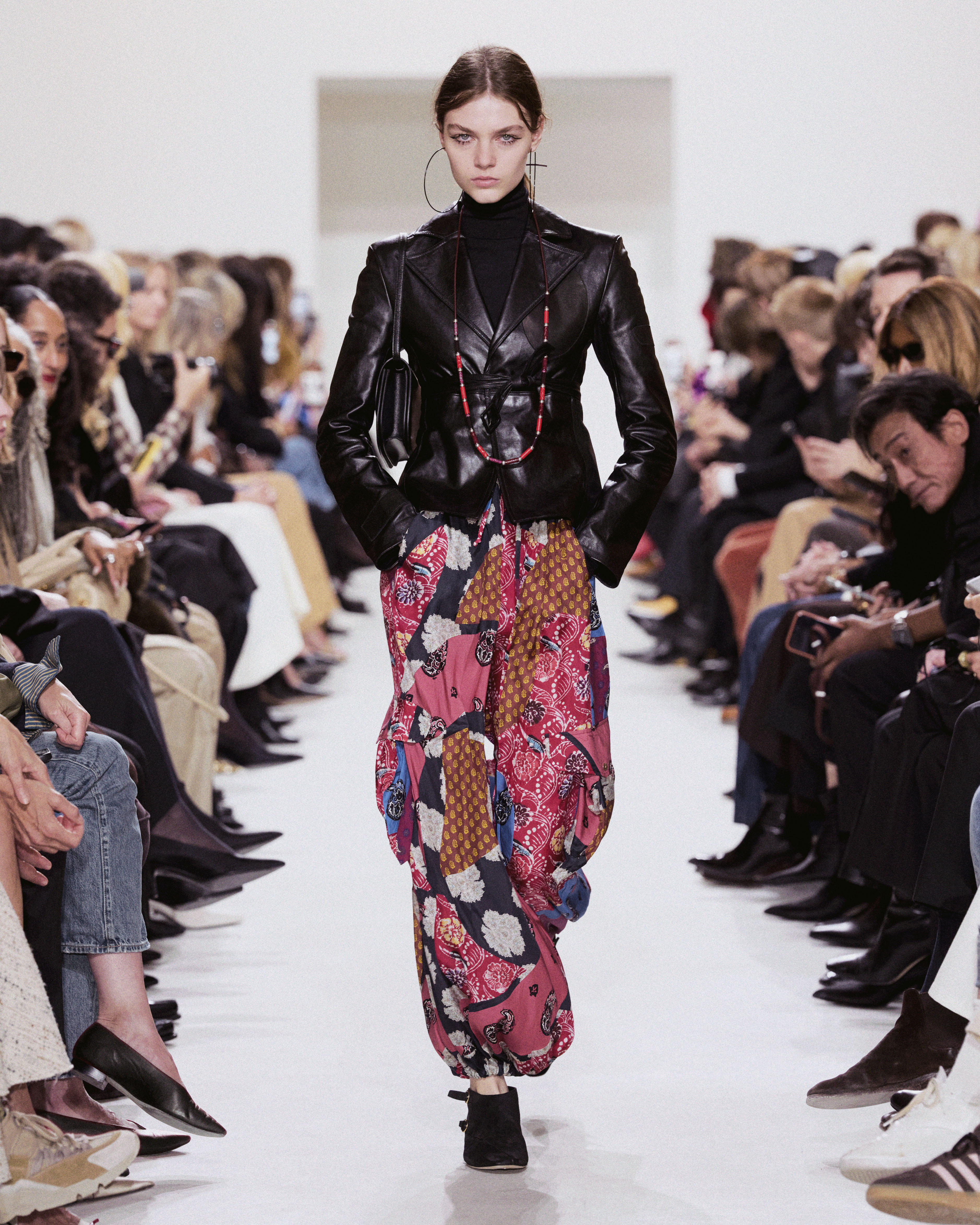
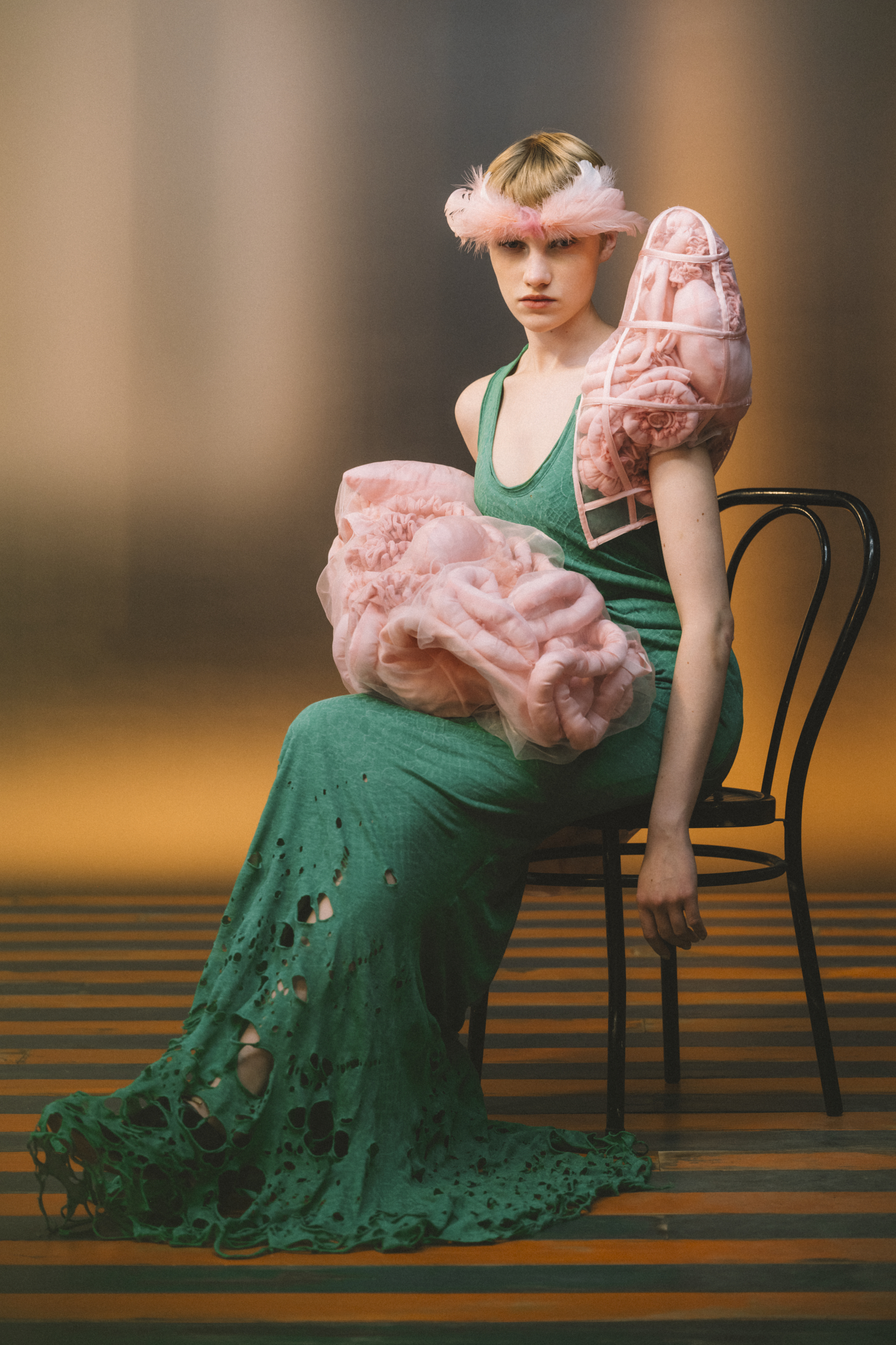
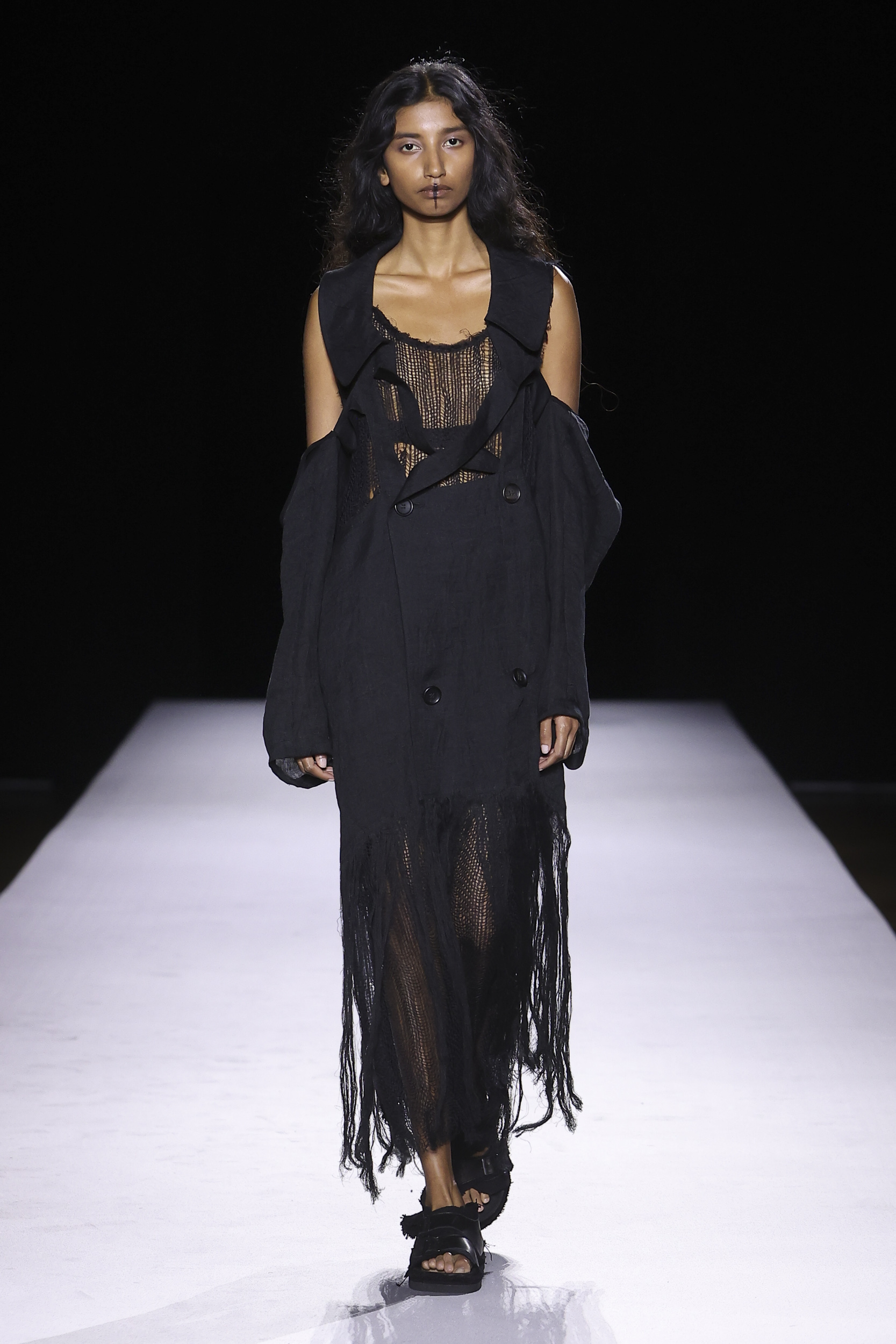
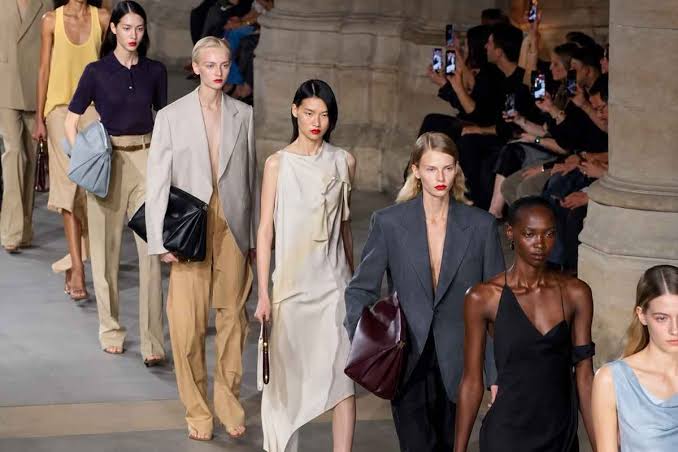
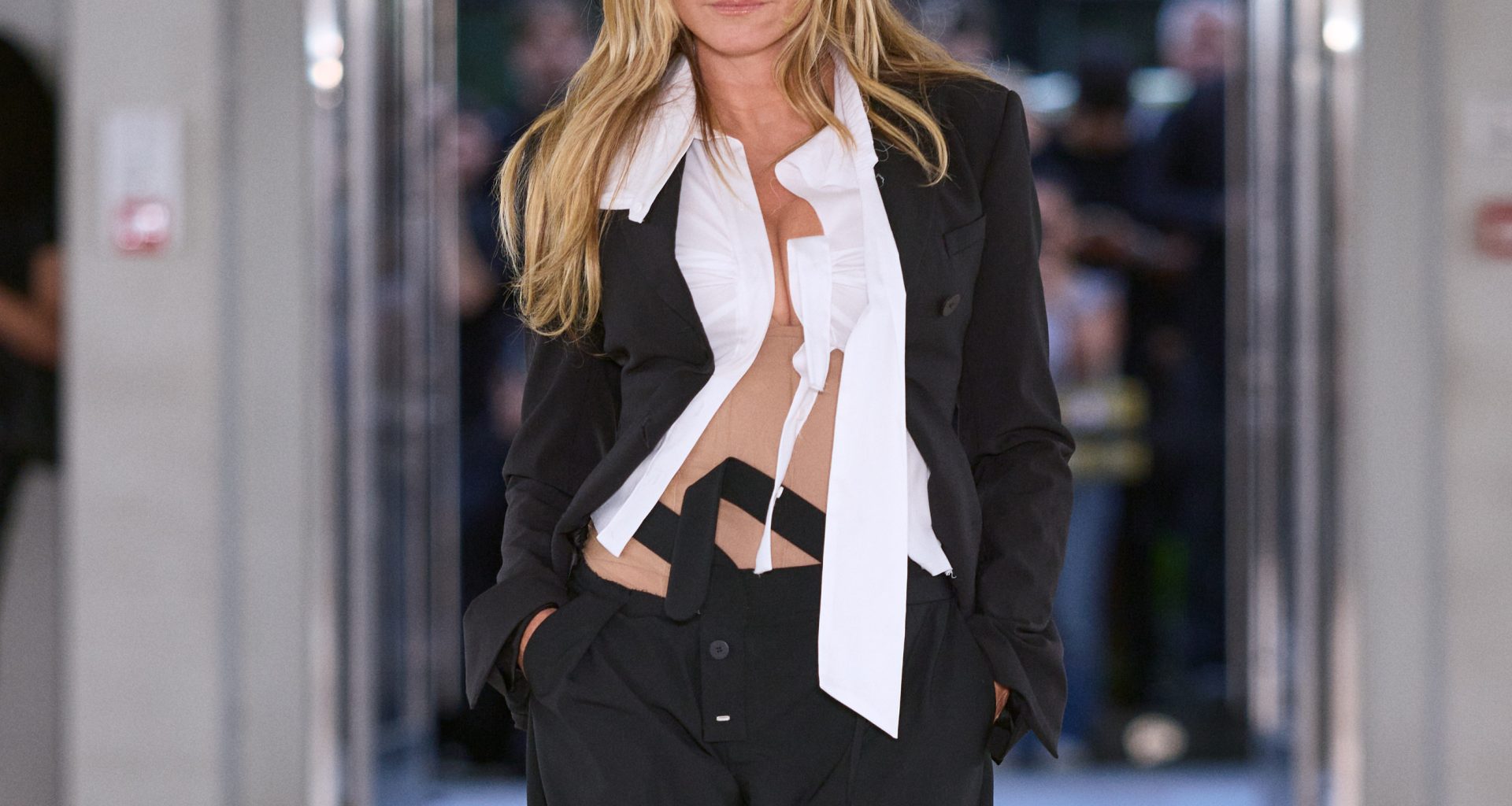
For Spring/Summer 2027, Ottolinger softens its signature language of deconstruction with Moisturizer, a collection exploring clothing as an intimate extension of the skin.
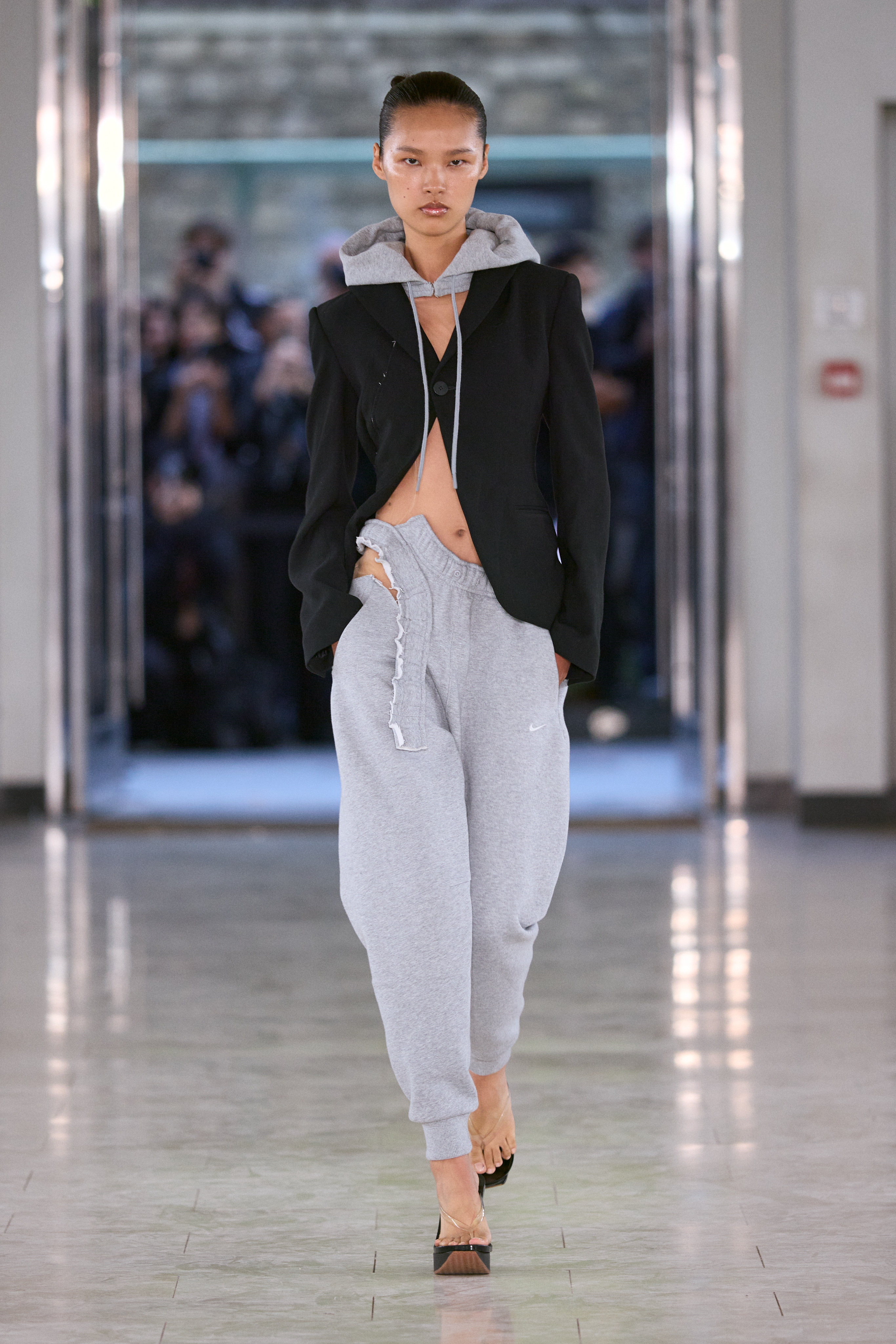
Ottolinger’s Spring/Summer 2027 collection, designed by founders Christa Bösch and Cosima Gadient and titled Moisturizer, was presented in Paris in a deliberately raw setting: the unfinished shell of a former Zara space in the 14th arrondissement. A stripped-back, industrial backdrop that perfectly reflects the brand’s visual language.
The collection takes its starting point from a simple, intimate gesture: applying moisturizer to the body in the morning, before getting dressed and stepping out into the world. It is that moment when we begin to construct our image for the day, deciding what to wear and, in a way, which version of ourselves we want to present to others. This is where Moisturizer begins: the clothes are conceived almost as an additional layer on the skin, offering comfort and confidence while enhancing the body. Getting dressed becomes an act of self-care, tied to the pleasure of feeling good in what we wear and in the image we see reflected back at us, enough to make us linger in front of the mirror for a few seconds longer.
Founded in 2015 by Swiss designers Bösch and Gadient, Ottolinger has built its identity around a highly recognizable aesthetic and an almost destructive approach to garment construction. Cuts, layering and deliberately unfinished pieces have become part of the brand’s vocabulary. Rather than simply designing new silhouettes, Bösch and Gadient often intervene in familiar wardrobe archetypes, jeans, hoodies, shirts and blazers, dismantling their structures and reconstructing them according to new proportions.
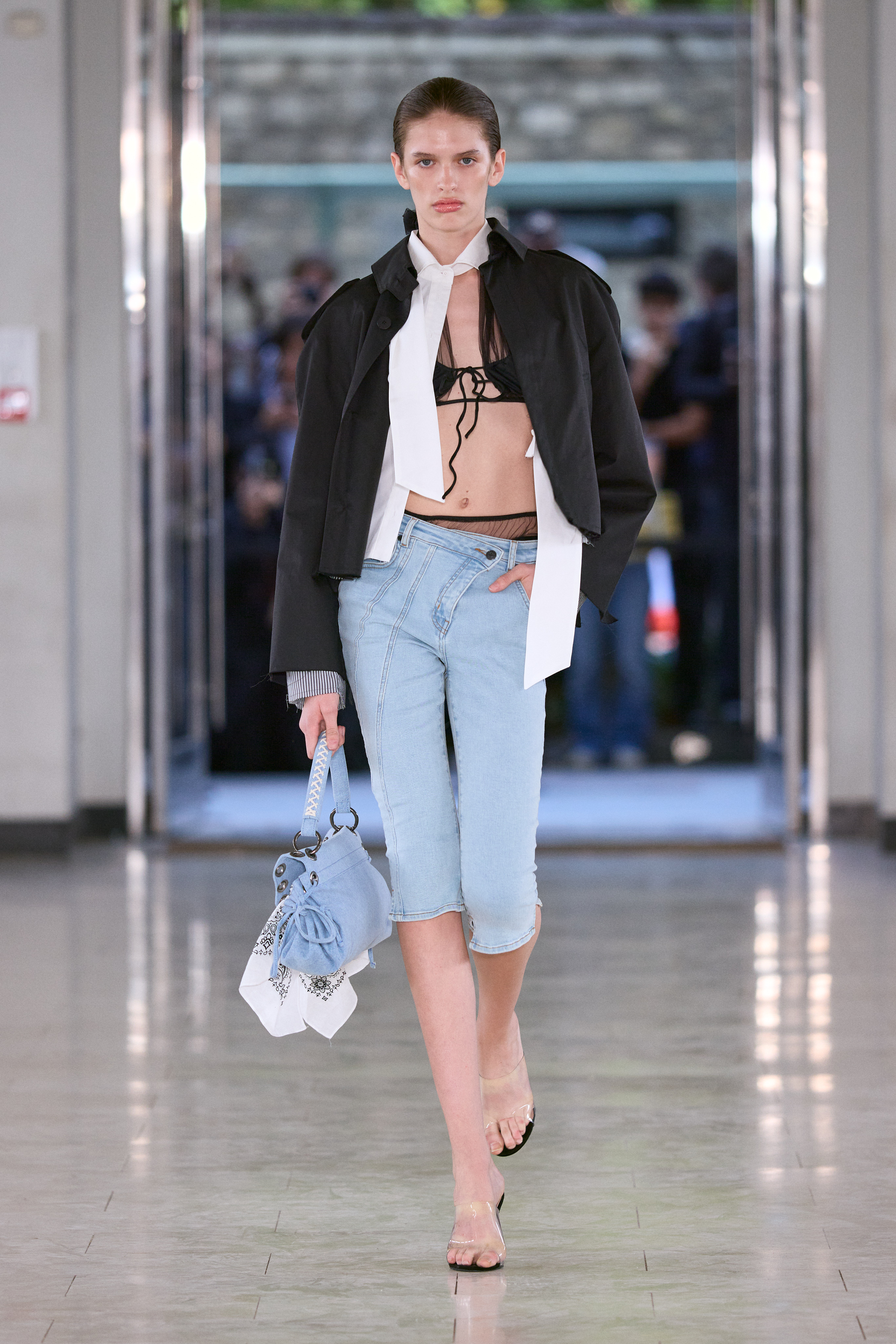
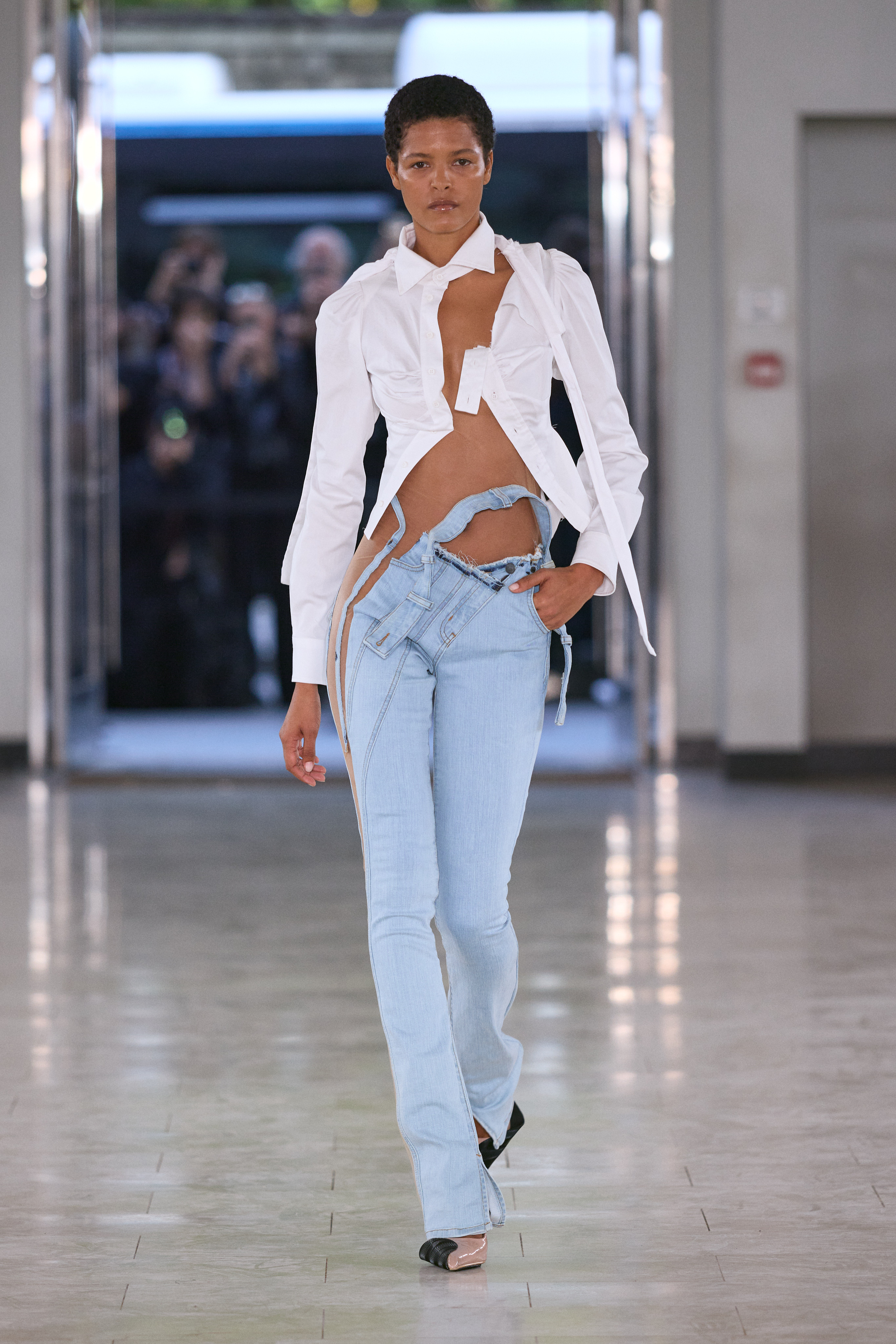
Moisturizer draws on this established vocabulary of deconstruction, manipulated denim, dismantled tailoring, cut-outs and asymmetry, but interprets it in a softer and more fluid way than the past collections. Deconstruction does not disappear; instead, it becomes more controlled, emerging through transparency, suspension and plays on fit and closeness to the body, allowing the relationship between fabric and skin to define the silhouette.
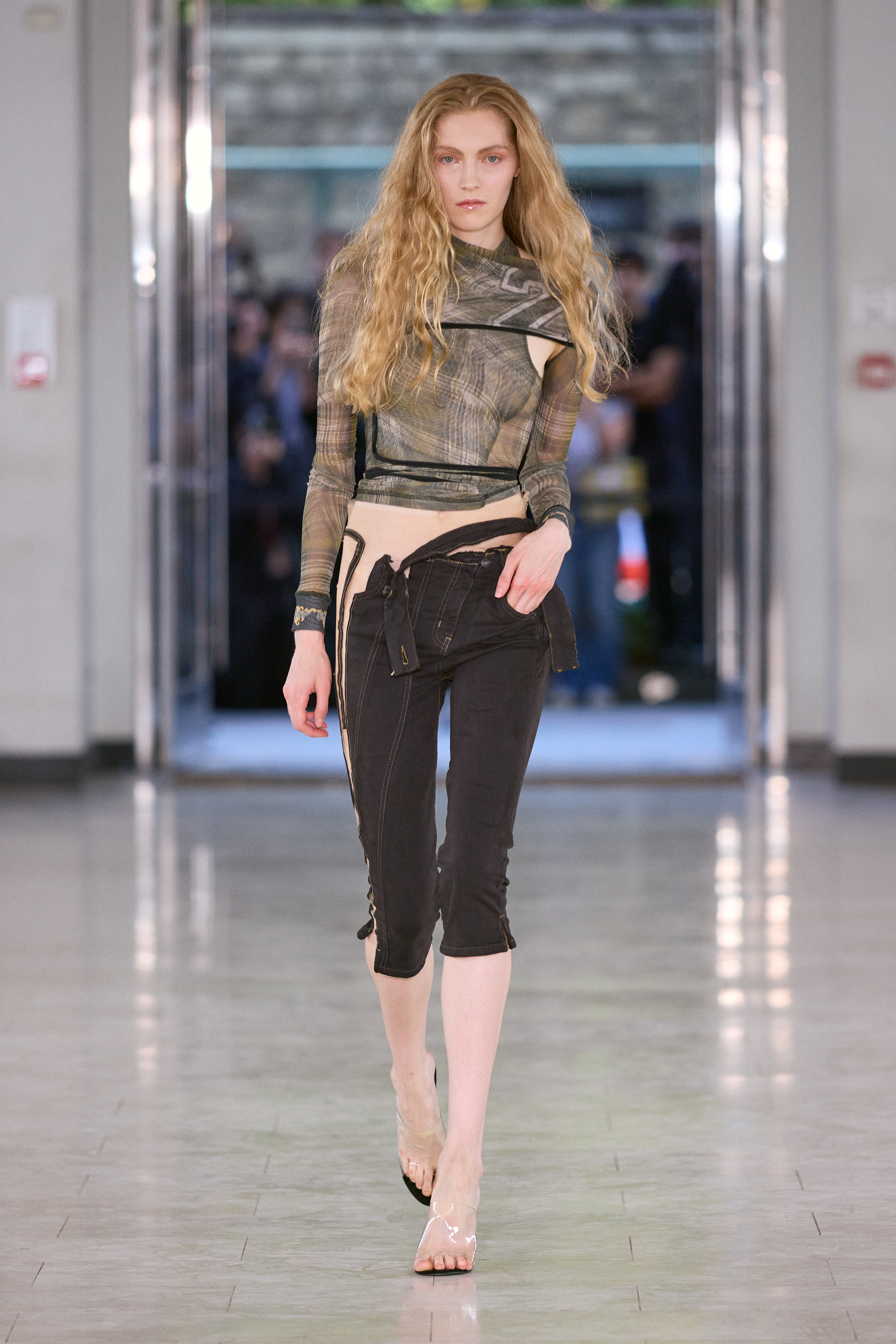
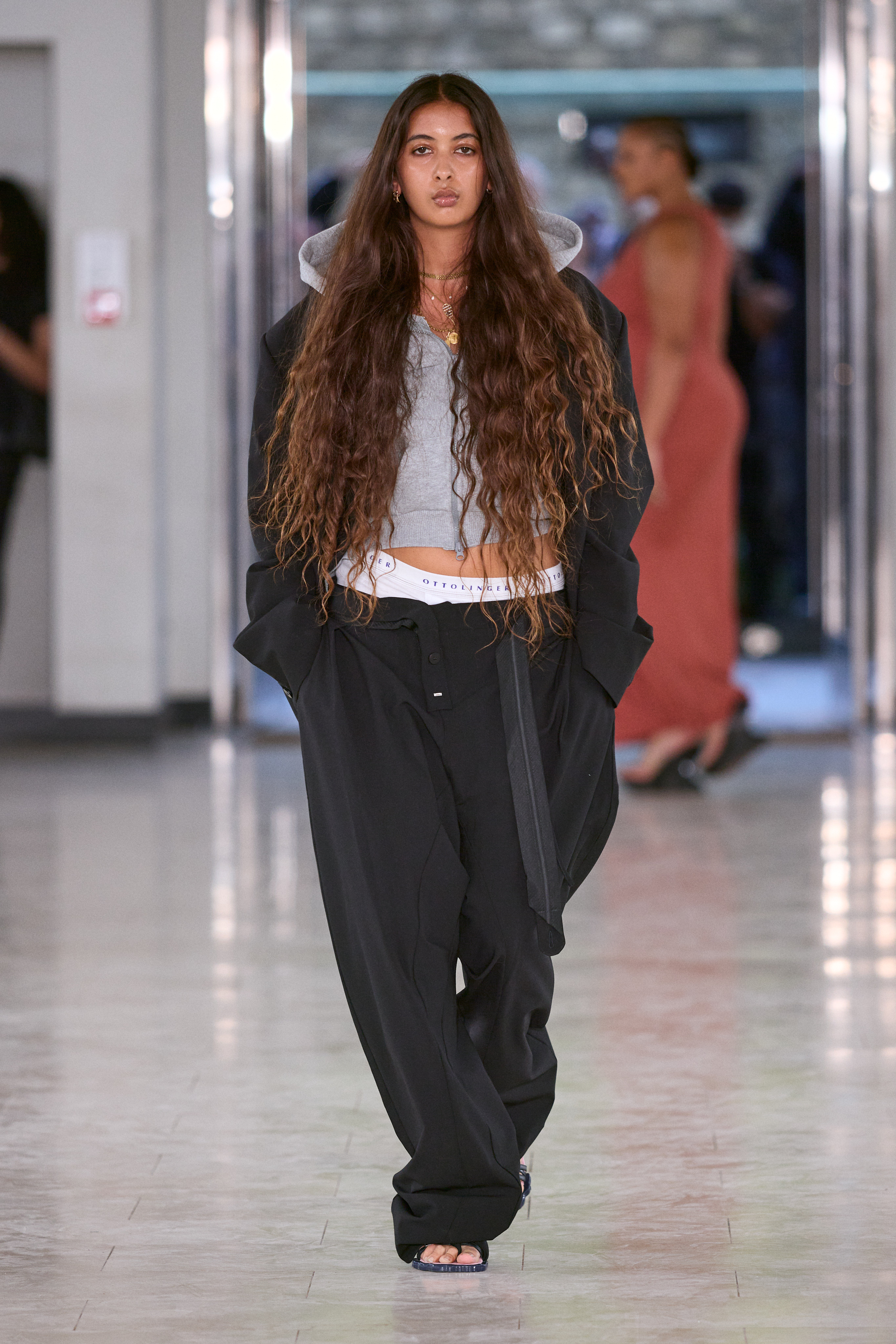
Some trousers appear to detach from the mesh structures underneath them, while sections of denim waistbands separate from the rest of the garment, seemingly floating around the body. The hoodie, another recurring element in Ottolinger’s visual language, is also reduced to its essential components: hoods are cut away and isolated from the rest of the garment, appearing almost suspended around the neck above the bare chest.
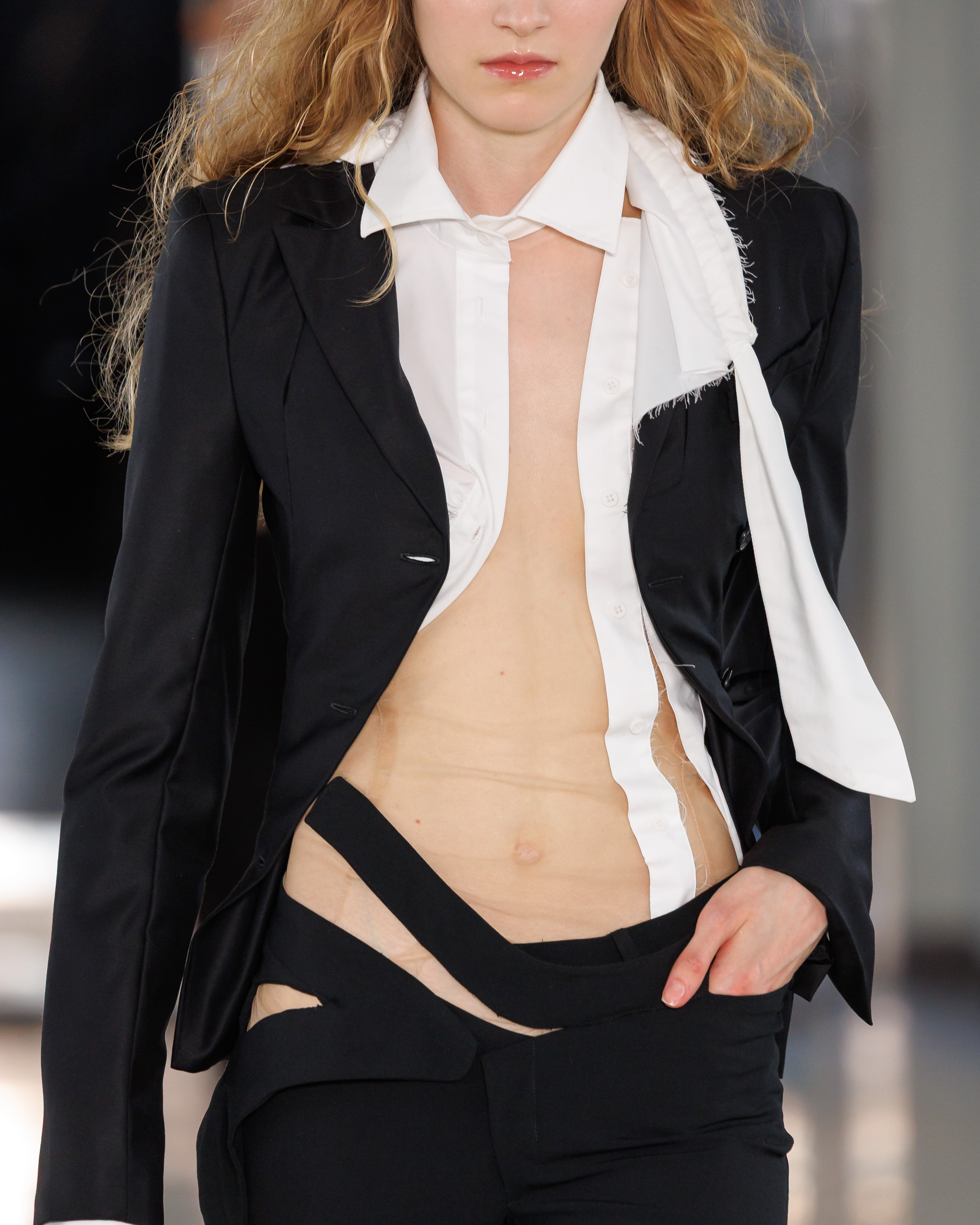
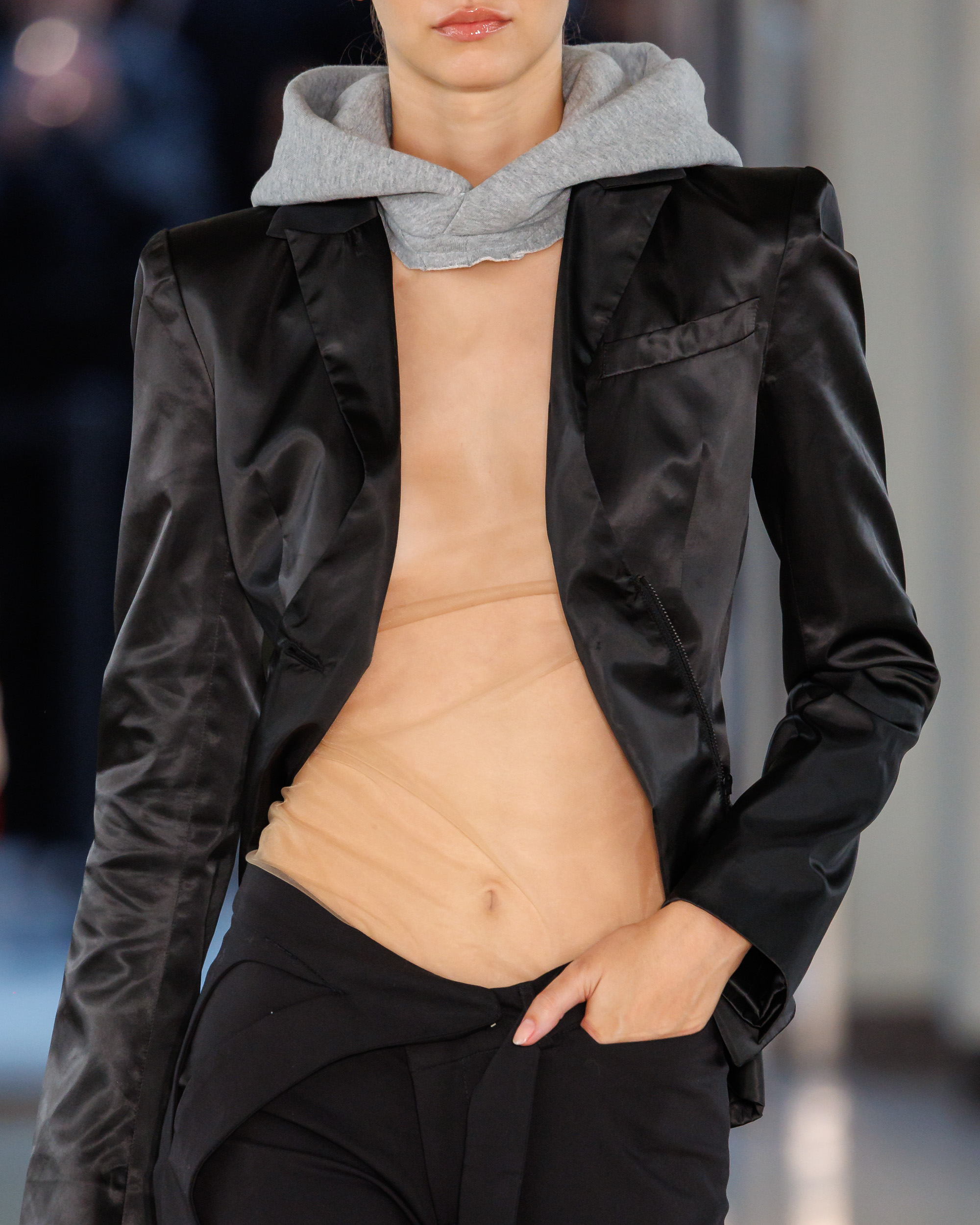
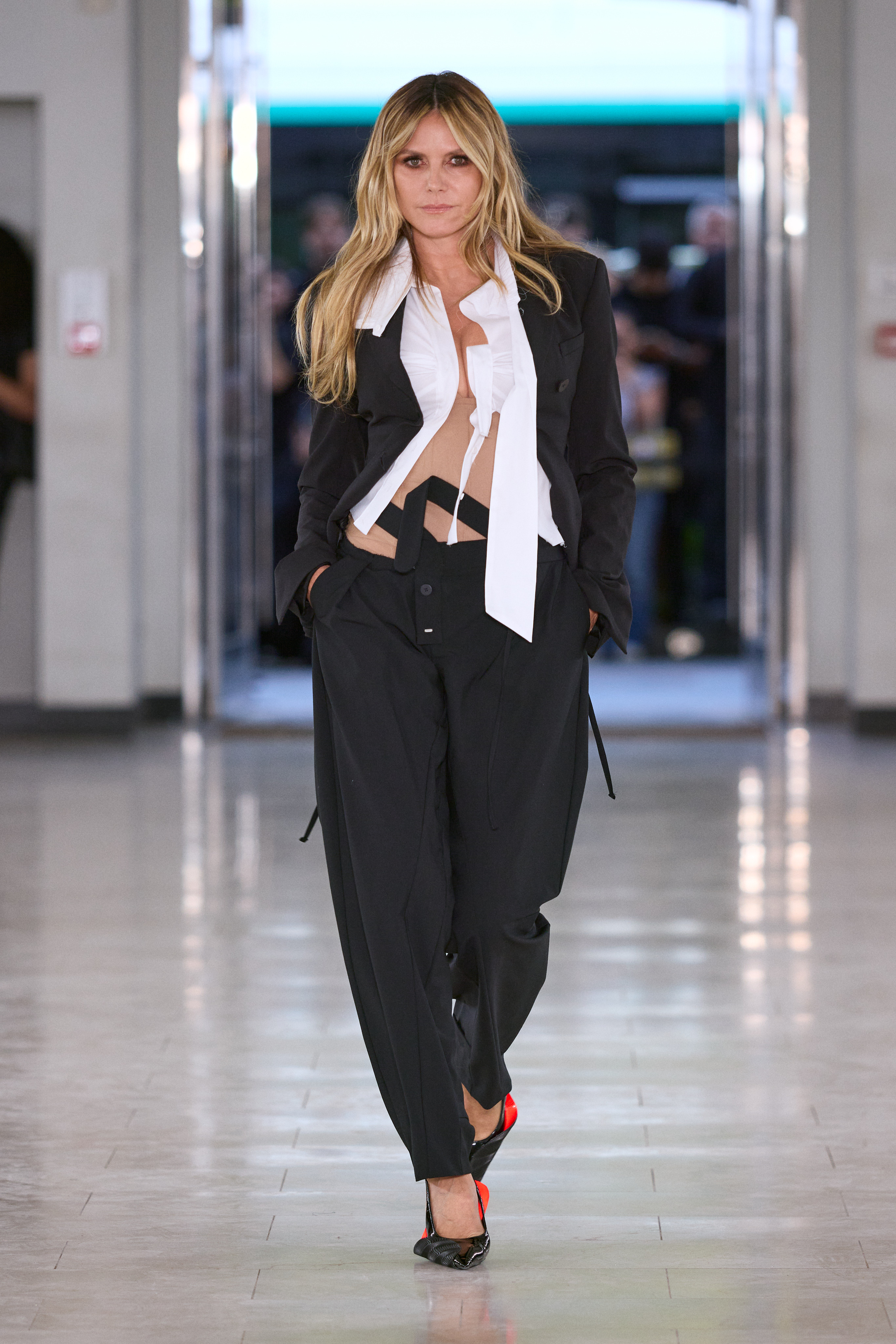
The same process is applied to the codes of more formal dressing. White shirts are sliced open to expose large areas of the torso, sometimes covered only by thin layers of transparent mesh. In the more evening-oriented part of the collection, hybrids of tuxedo tailoring and lingerie emerge, with traditional tailoring progressively losing its rigidity through cuts, asymmetry, lace and transparency.
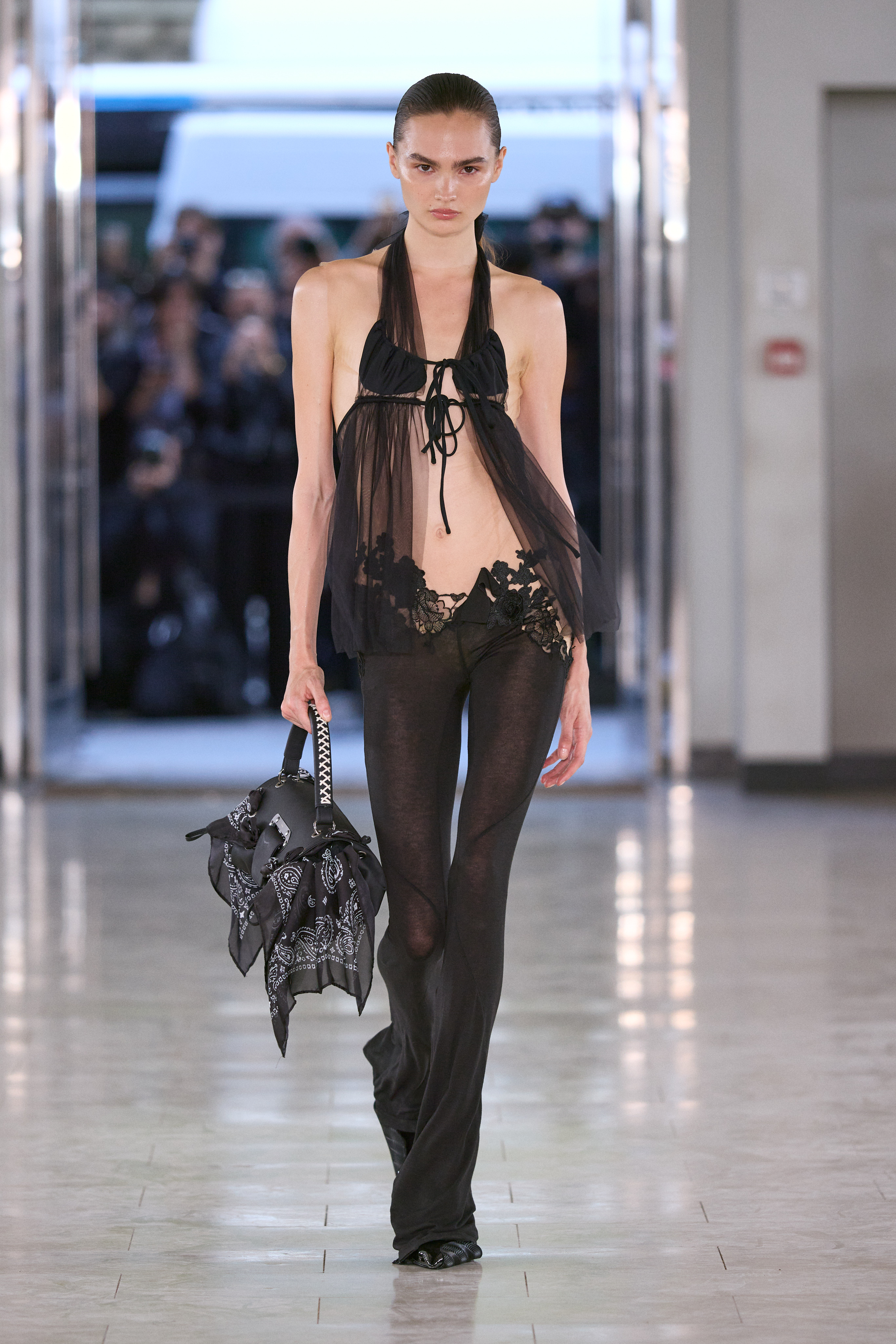
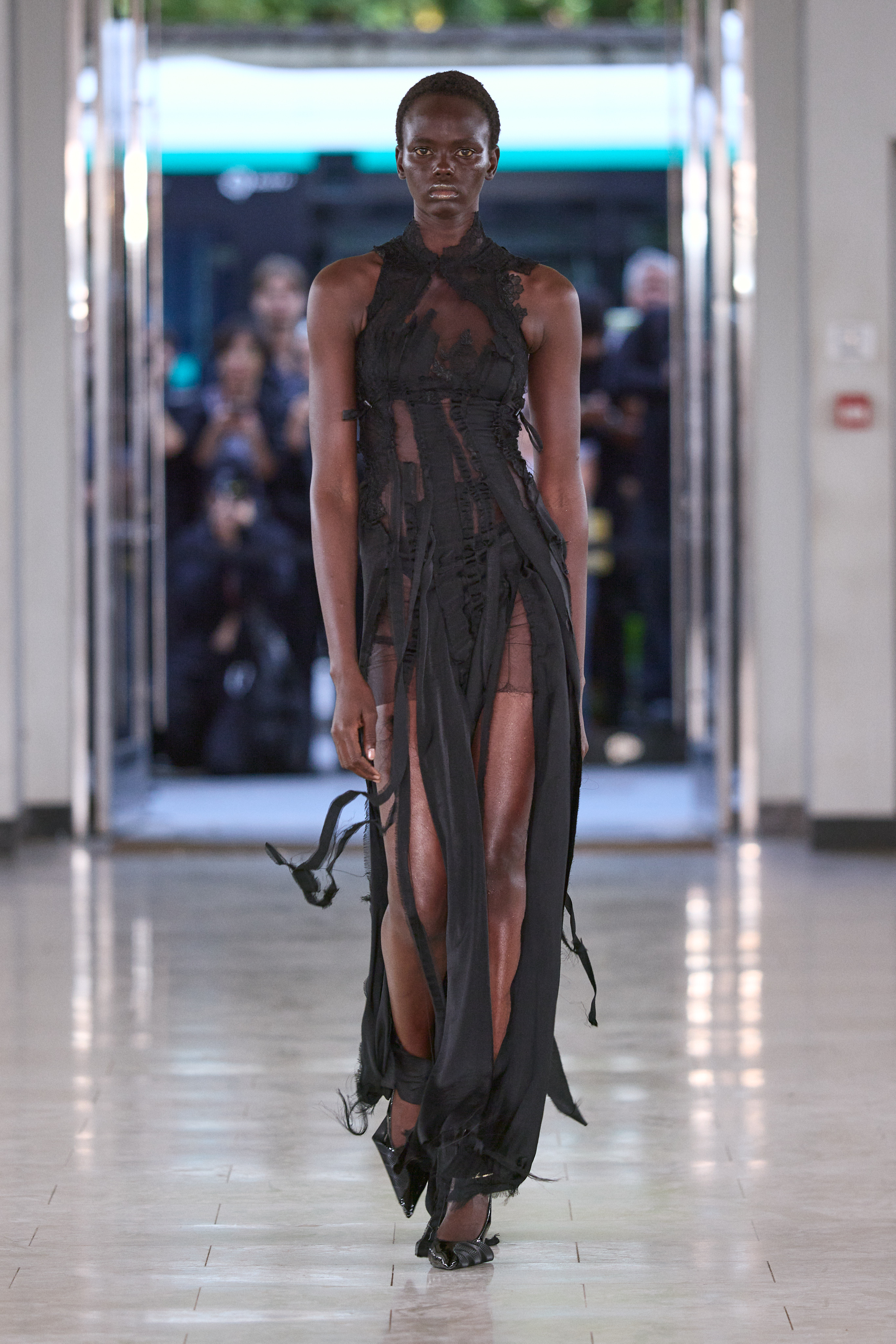
The collection’s greater sense of precision also reflects a significant change behind the scenes. Bösch and Gadient have explained that Ottolinger has moved from four wholesale seasons to two, giving the designers more time to develop ideas, materials and individual garments without immediately having to move on to the next collection. This slower rhythm is clearly reflected in SS27, which does not abandon the deconstruction that has come to define Ottolinger, but instead presents an evolution of it, more measured, more precise and less dependent on shock value.
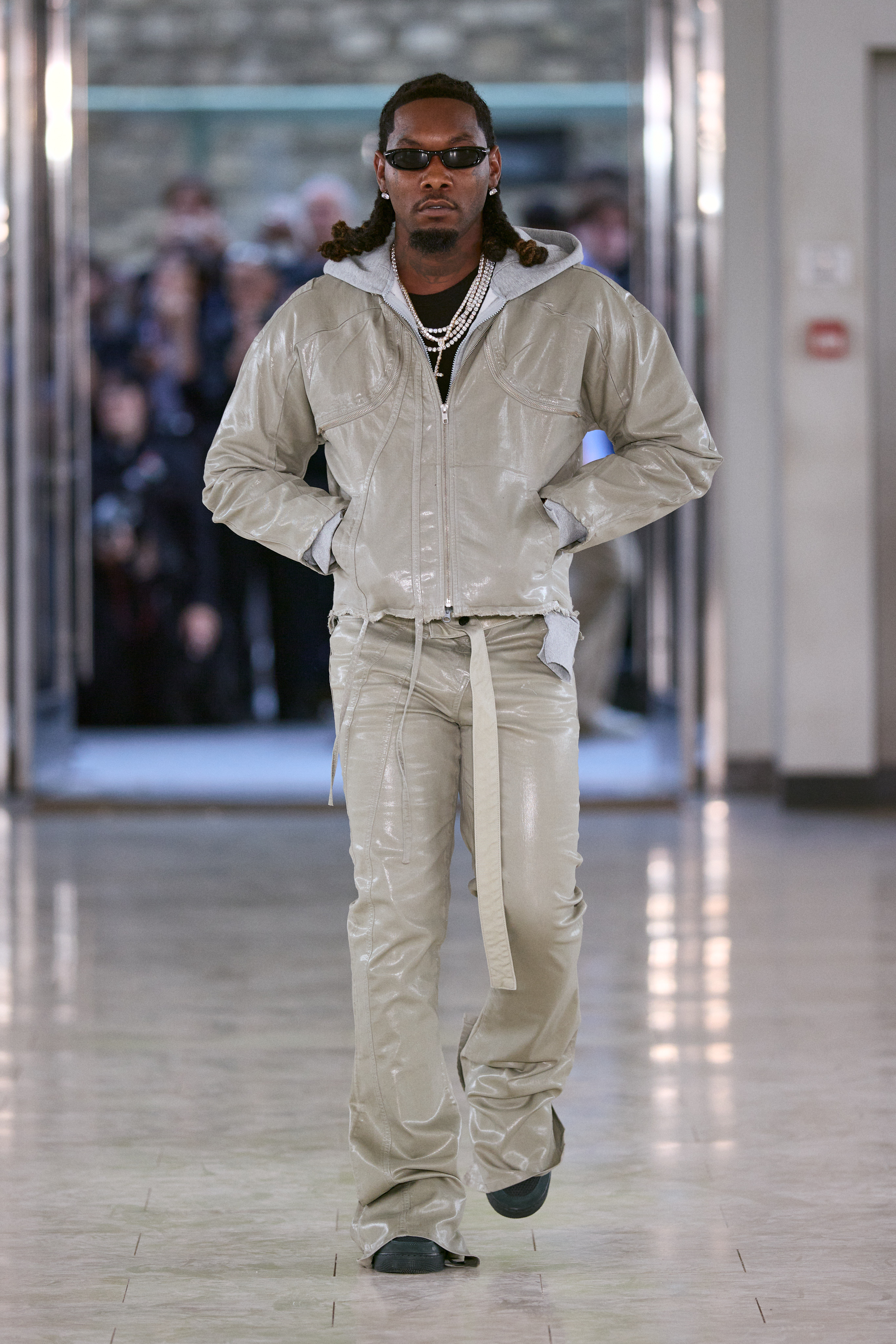
The impact of the show was further amplified by its casting, which brought several familiar faces to the runway. Among them was Offset, the American rapper and a fan of the brand, who reportedly approached Ottolinger himself with the desire to collaborate. Indian fashion designer and influencer Diya Joukani also appeared on the runway, while Heidi Klum closed the show in a deconstructed black suit that effectively encapsulated the language of the entire collection.
With Moisturizer, Ottolinger does not reject the codes that have shaped its identity, but instead seems to soften them. Provocation gives way to a greater sense of intimacy, while deconstruction becomes a tool for exploring the relationship between clothing, skin and self-perception. Like the moisturizer from which the collection takes its name, clothing becomes a layer applied to the body before facing the outside world: not simply something through which to be seen, but something through which to feel comfortable in one’s own skin.