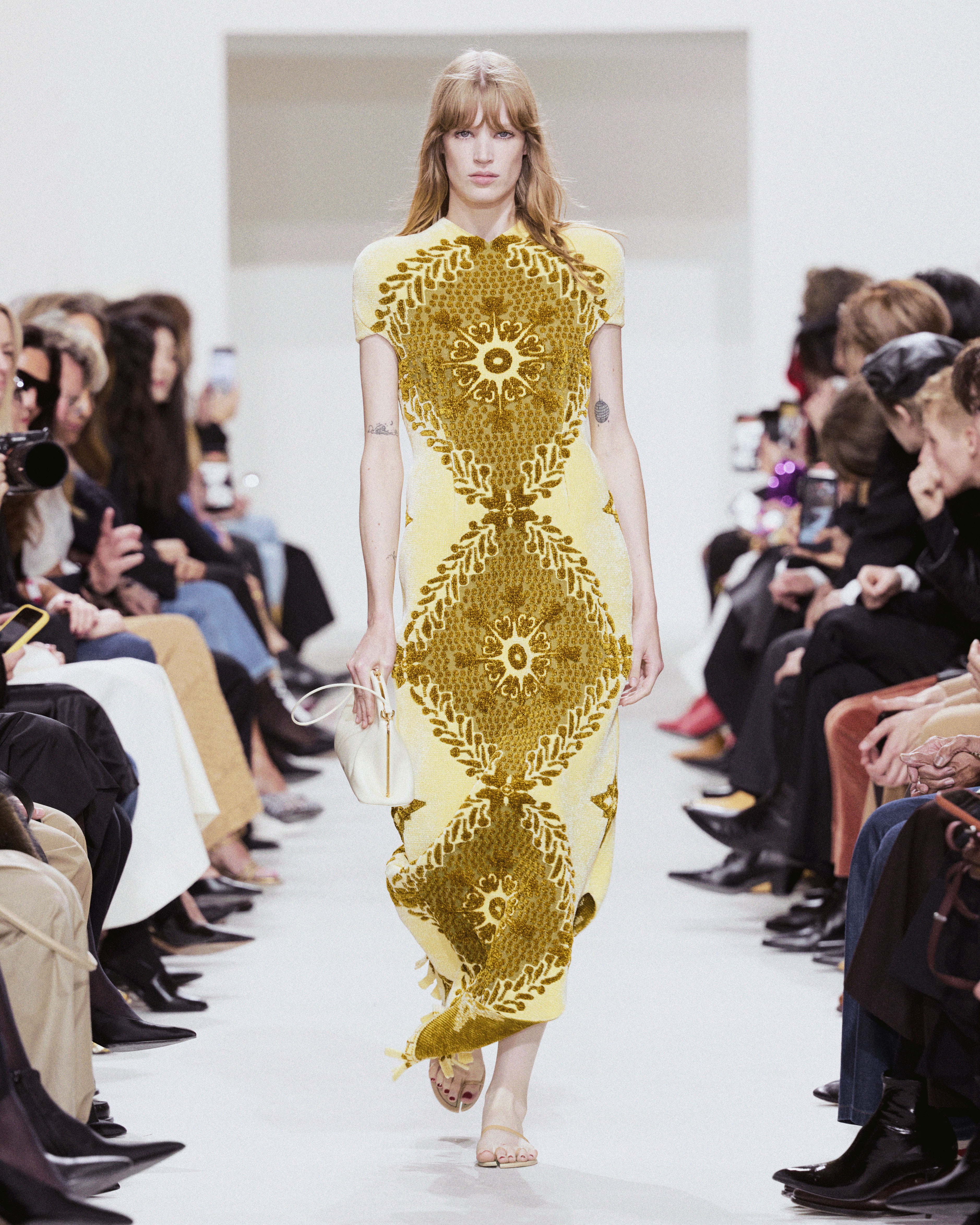
What if the future of luxury isn’t about creating a new woman, but giving her more than one identity?
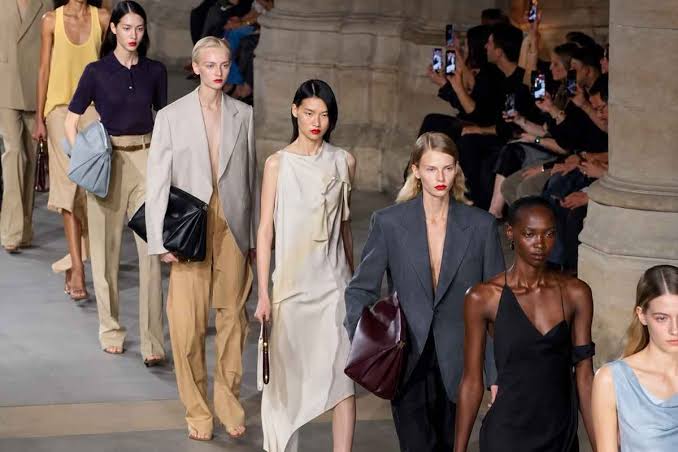
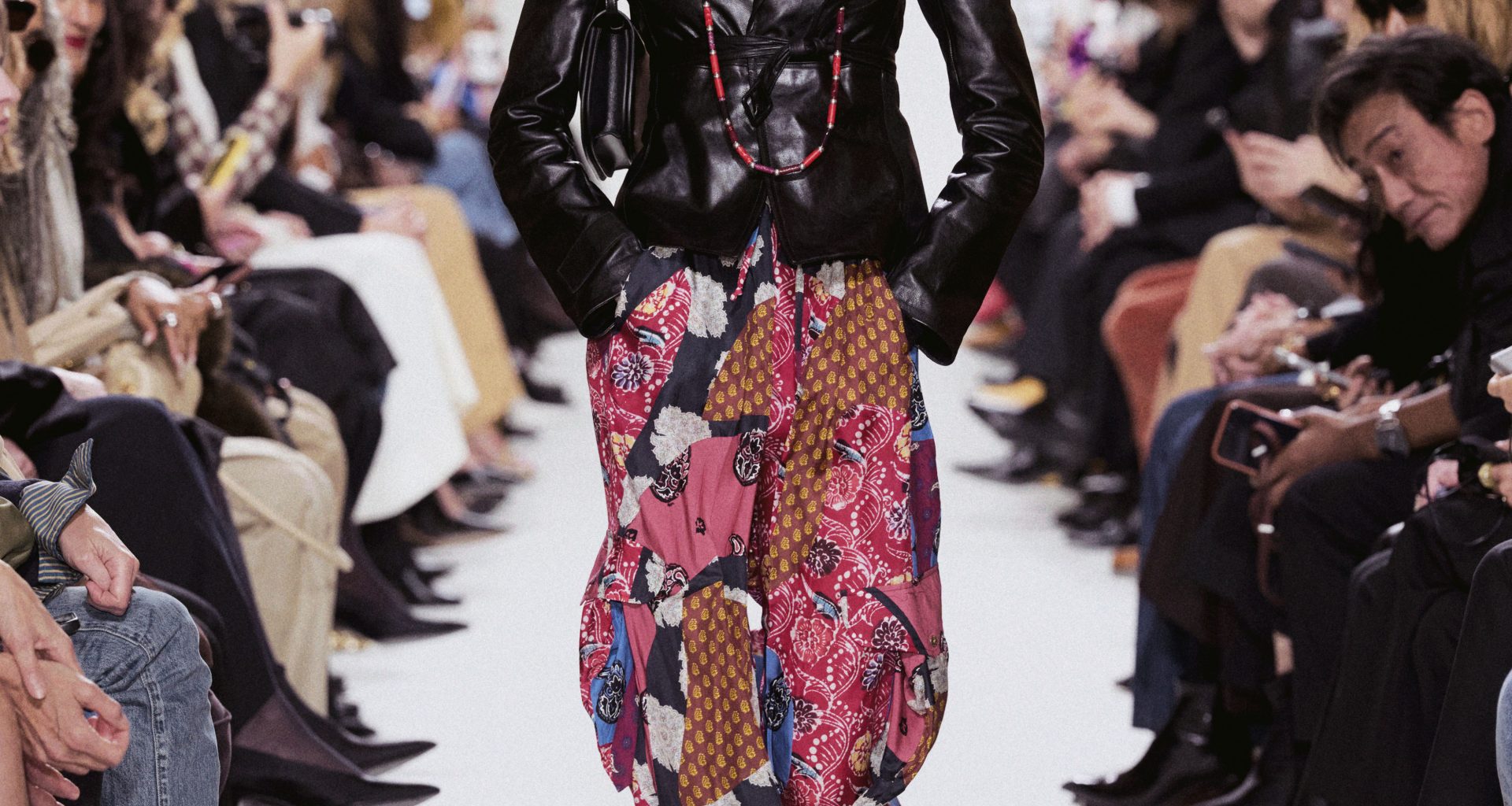
That is the question CELINE Spring Summer 27 seems to ask without ever spelling it out. Michael Rider returns to the body with a collection that, at first glance, feels almost stubbornly straightforward: cut, proportion, jacket, trouser, skirt, dress, accessory. The surface is controlled. But beneath that apparent simplicity lies a far more radical proposition: clothes no longer have to tell you who you are. They should give you the freedom to change.
This is where the reference to Paris Is Burning stops being a cinephile gesture and becomes a key to the collection. Dorian Corey and ballroom culture speak of identity as construction, of clothing as performance, of the self as something that can be invented, altered, inhabited. Rider brings that principle into luxury: not one CELINE woman, then, but a potentially endless cast of CELINE characters.
It is also where the dialogue with Phoebe Philo becomes most compelling. Rider is not trying to recreate the Philo era; he seems to have inherited her method. Start with the clothes. With proportion. With function. With the kind of desire an object can generate when it is designed to actually be lived in. Rider has said it himself: the ultimate piece is not necessarily the most spectacular one, but the one that becomes your favourite: the coat you keep wearing until it shows its age. The difference is that where Philo built a woman through a wardrobe, Rider seems to be building a wardrobe through multiple possible women.
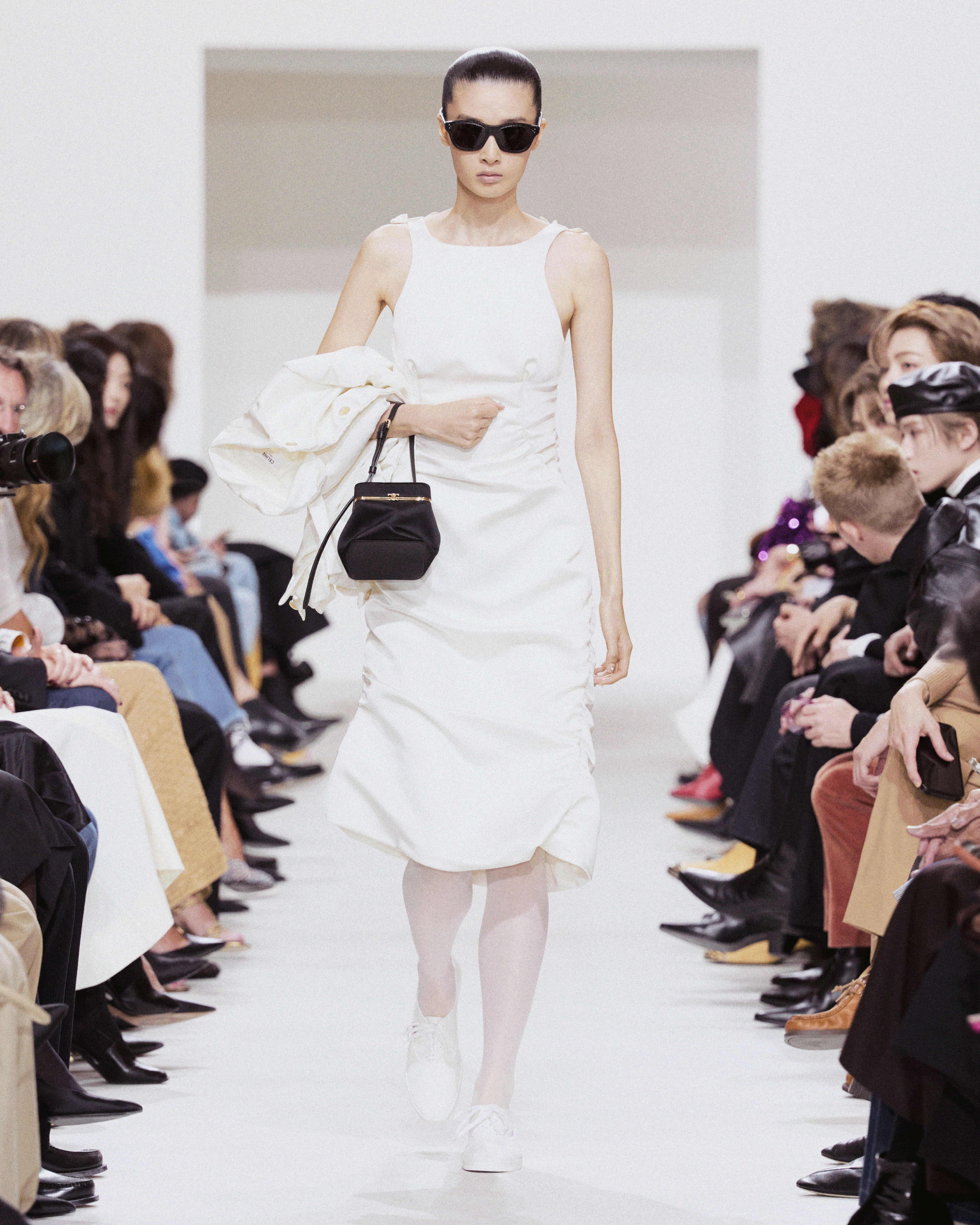
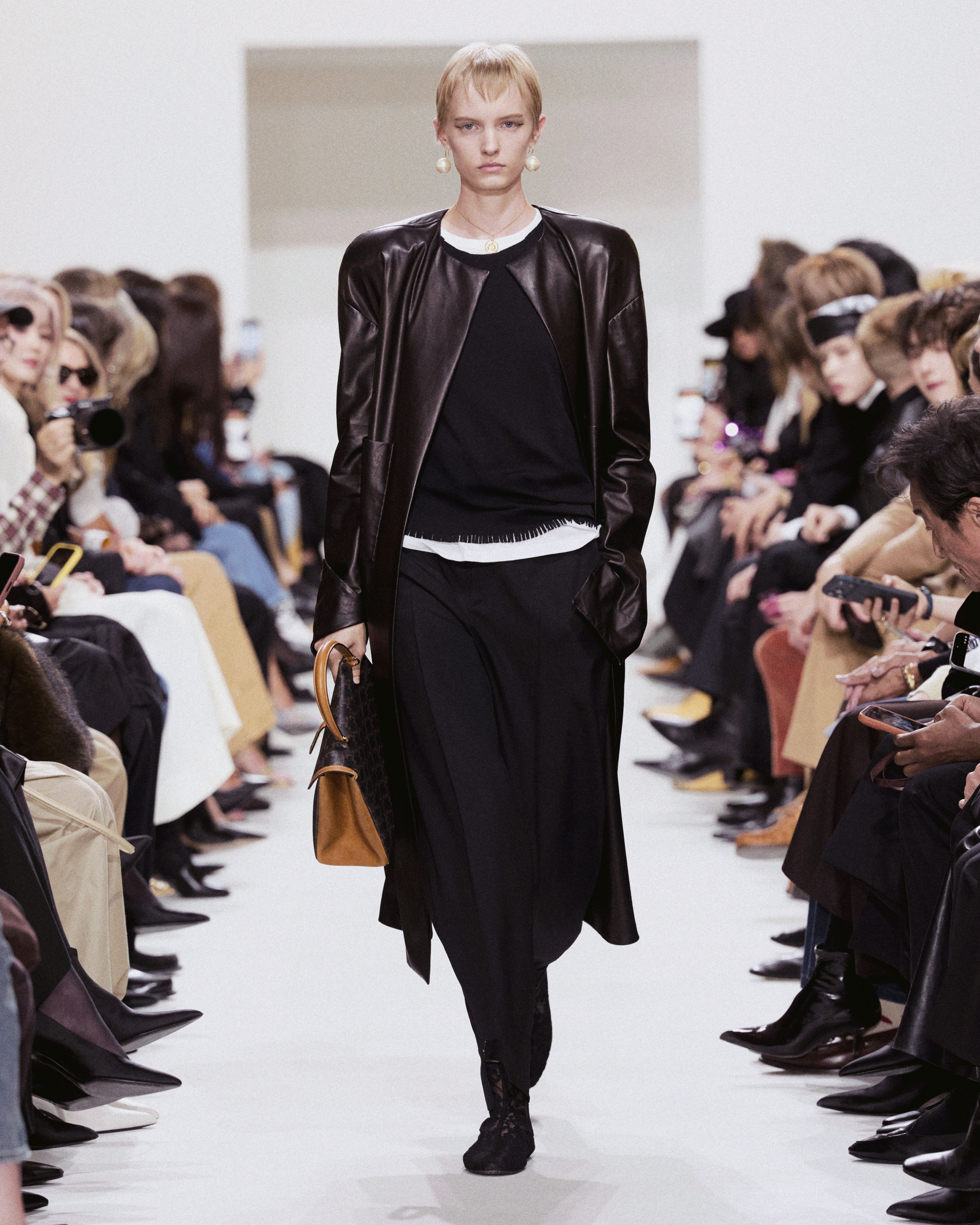
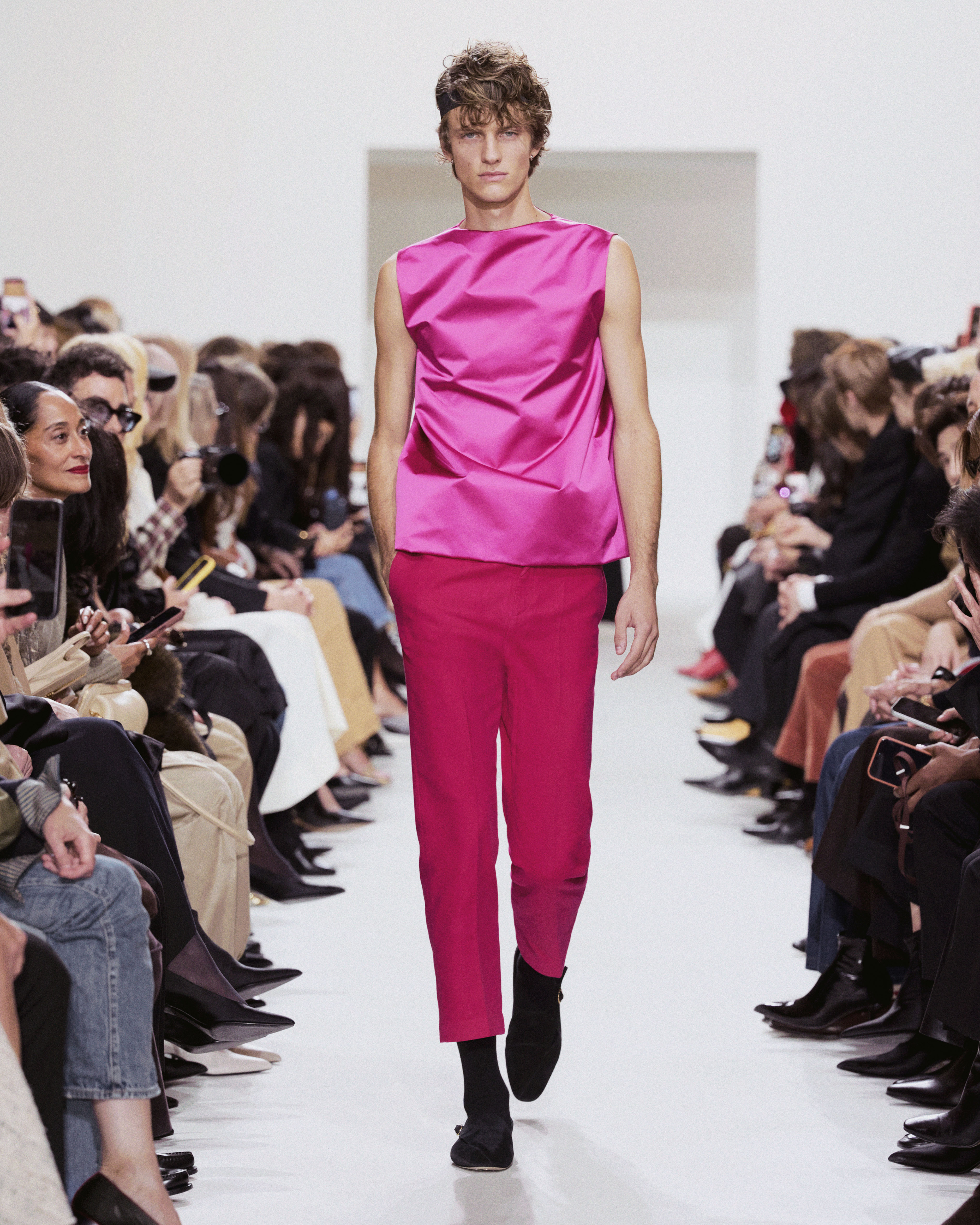
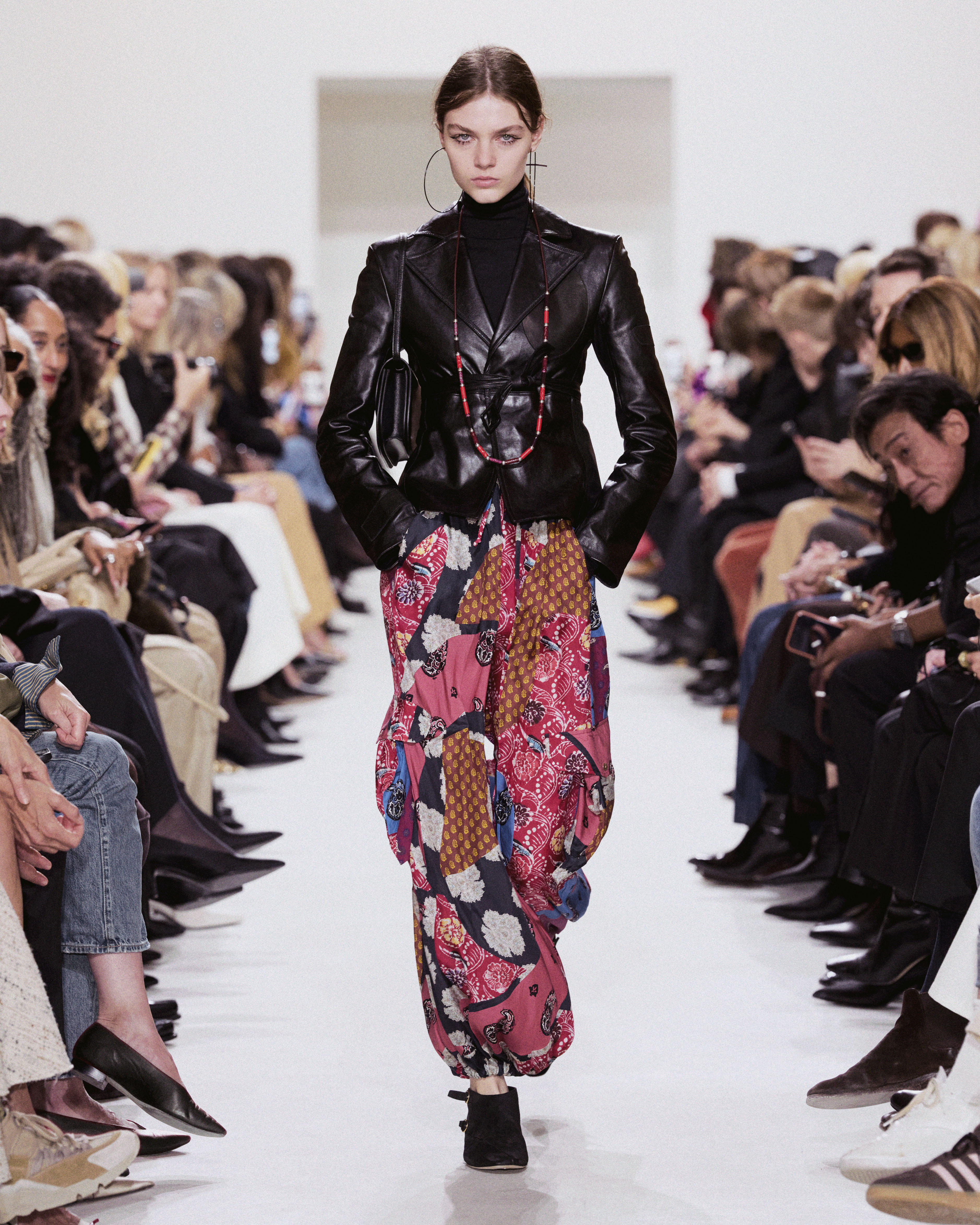
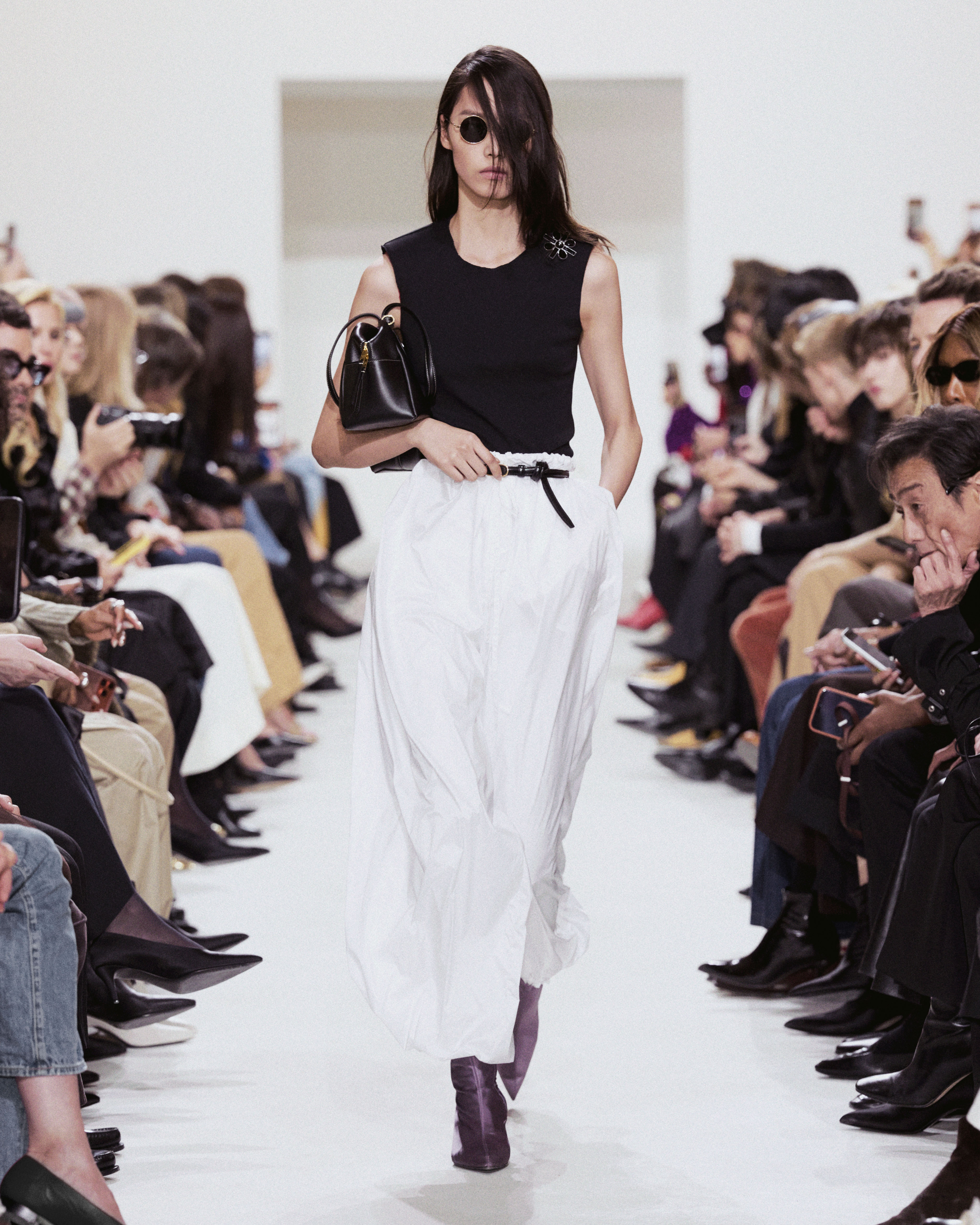
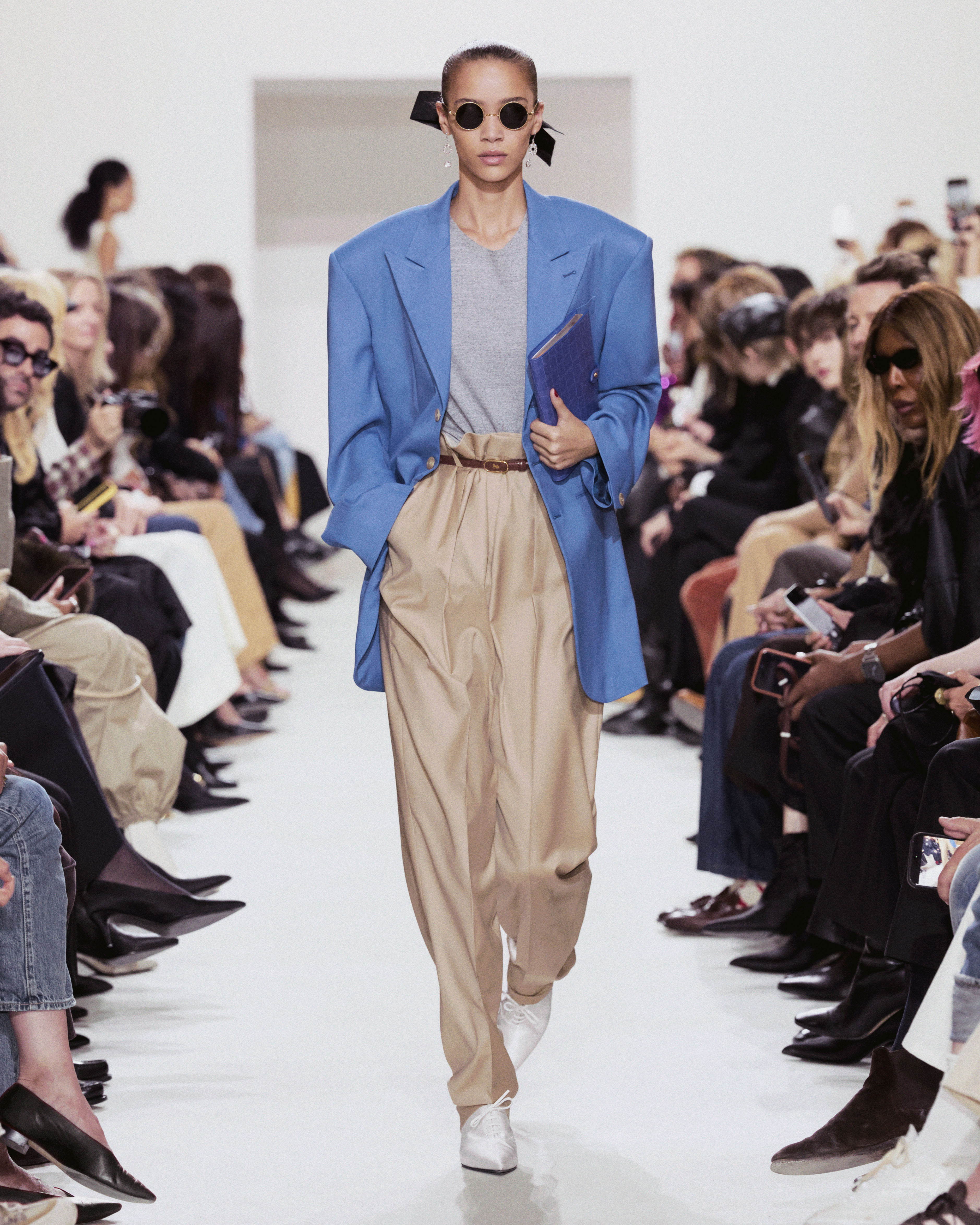
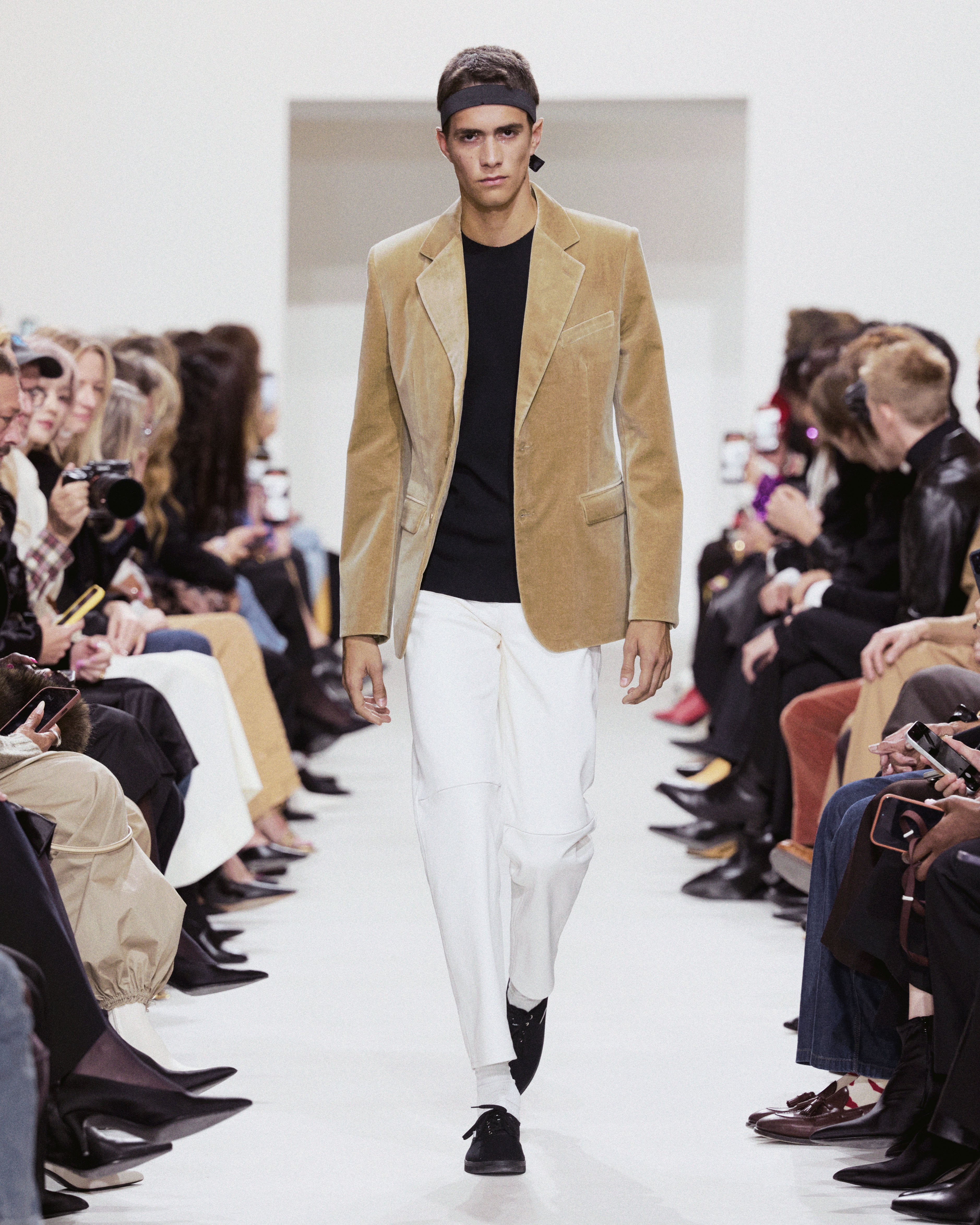
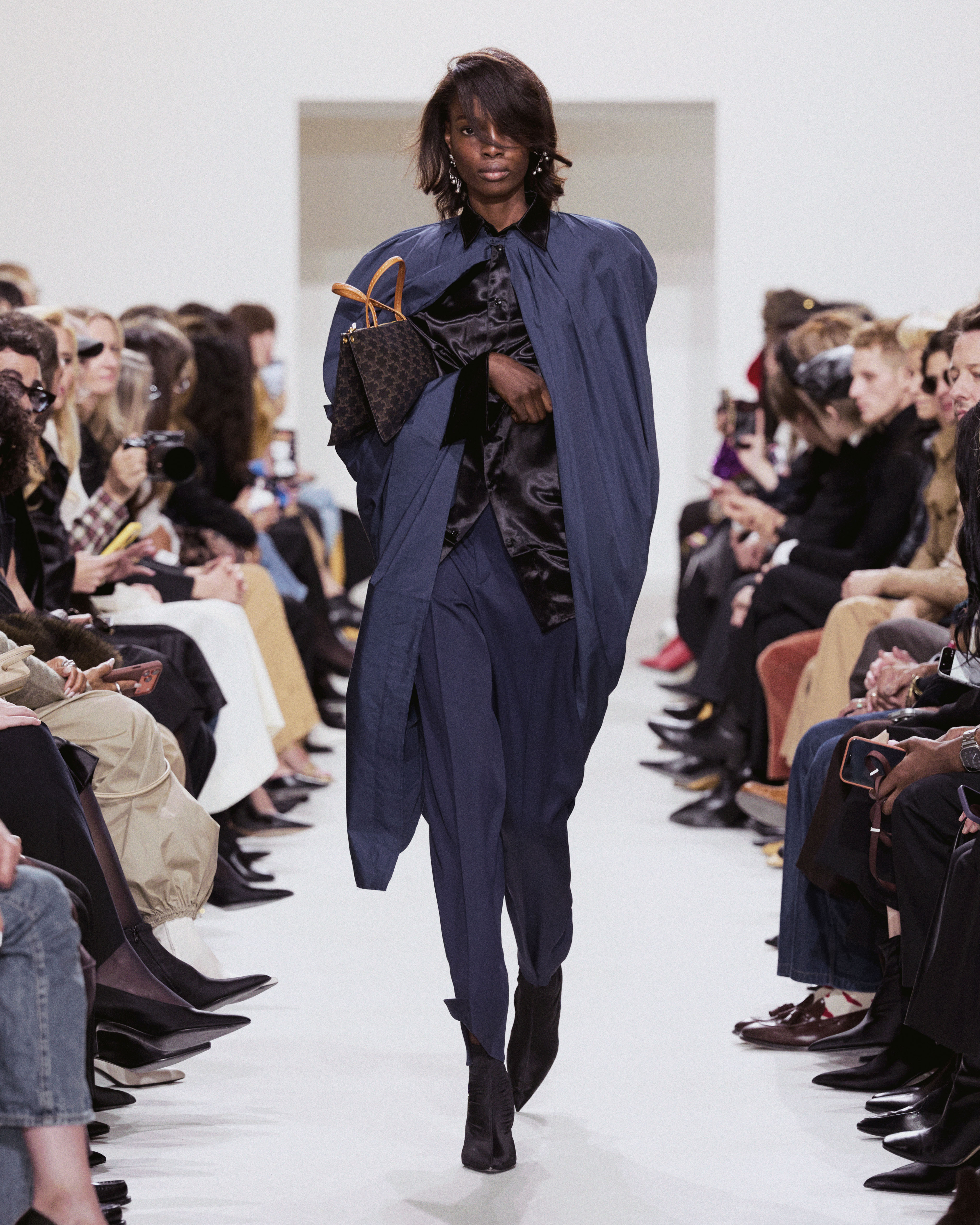
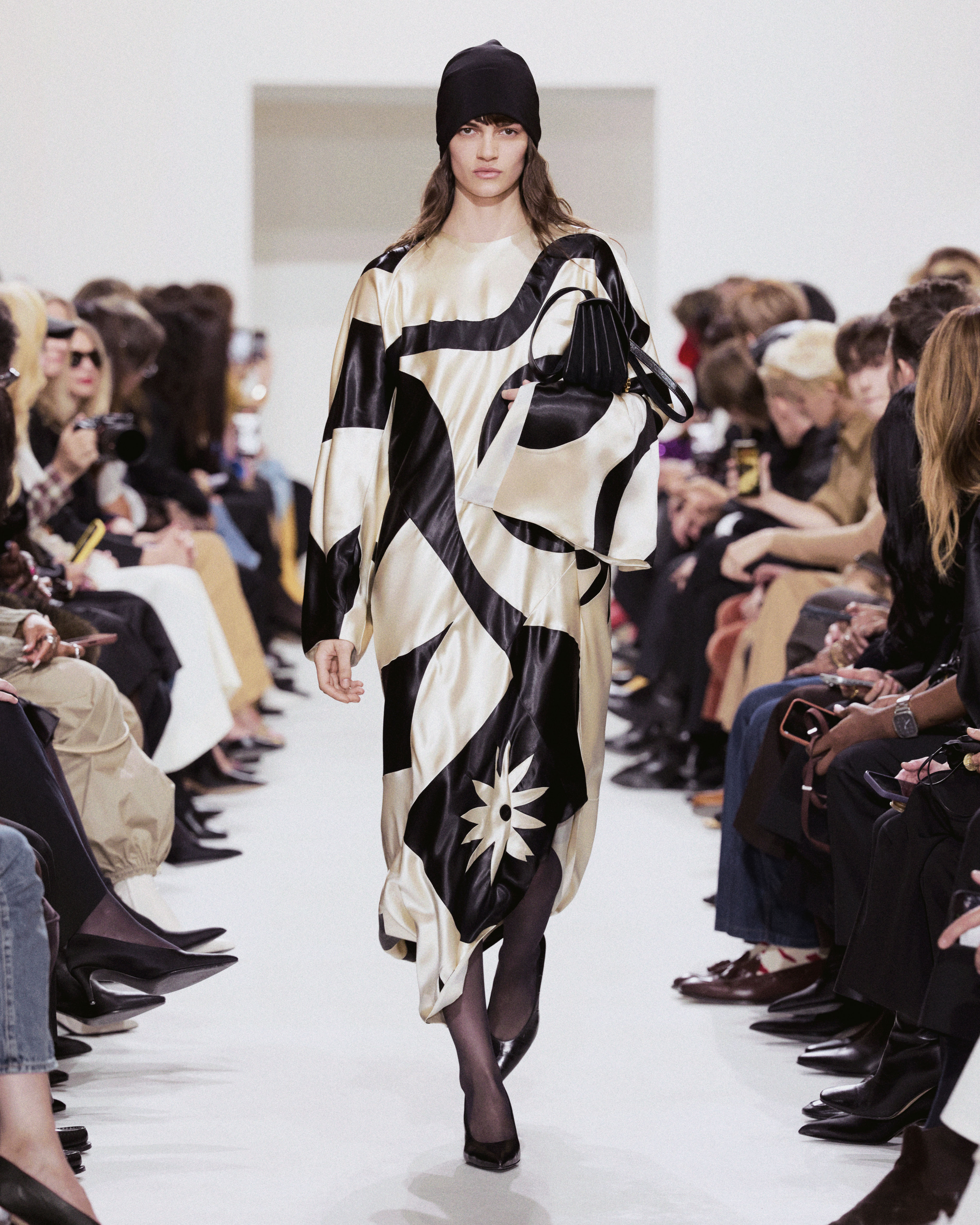
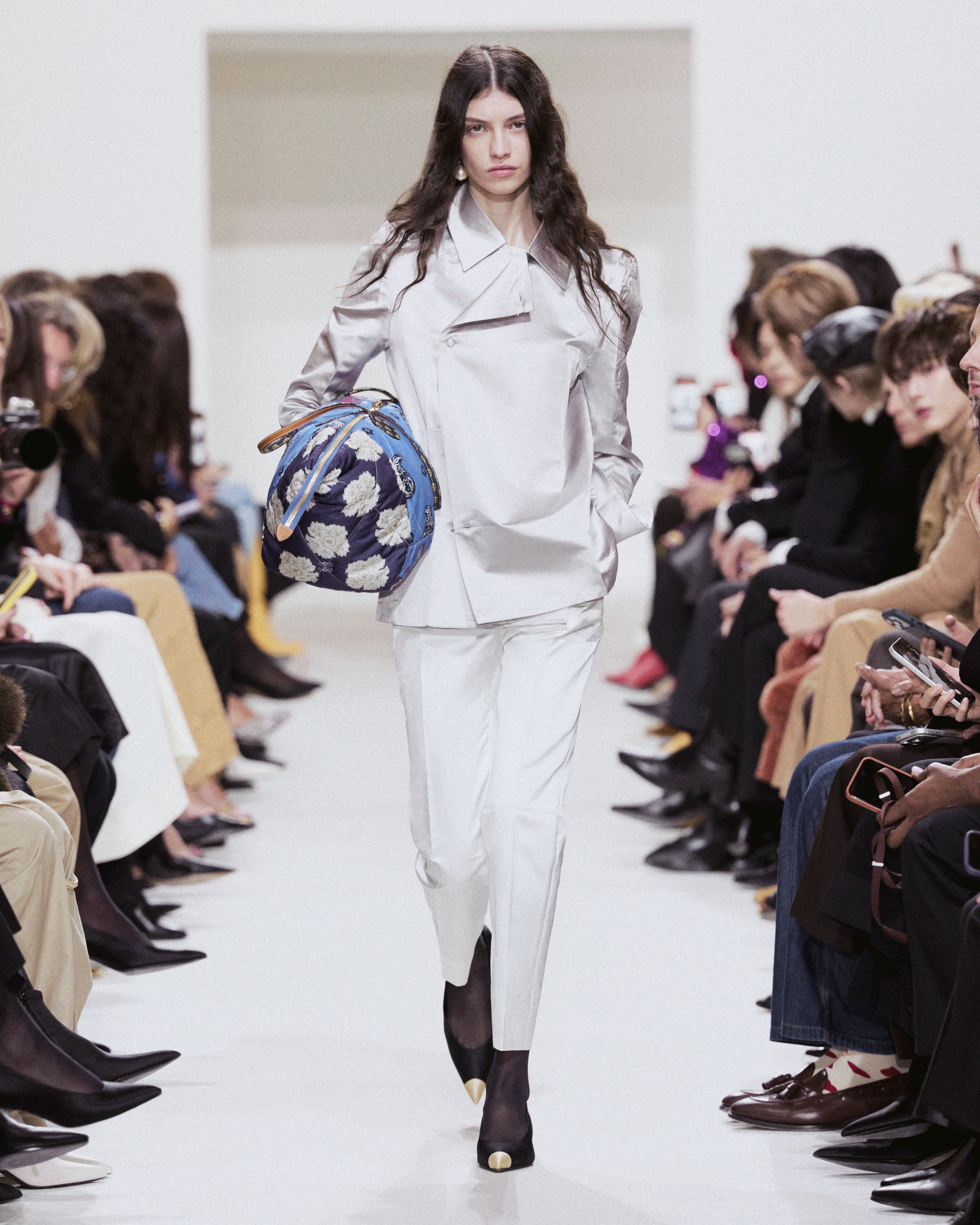
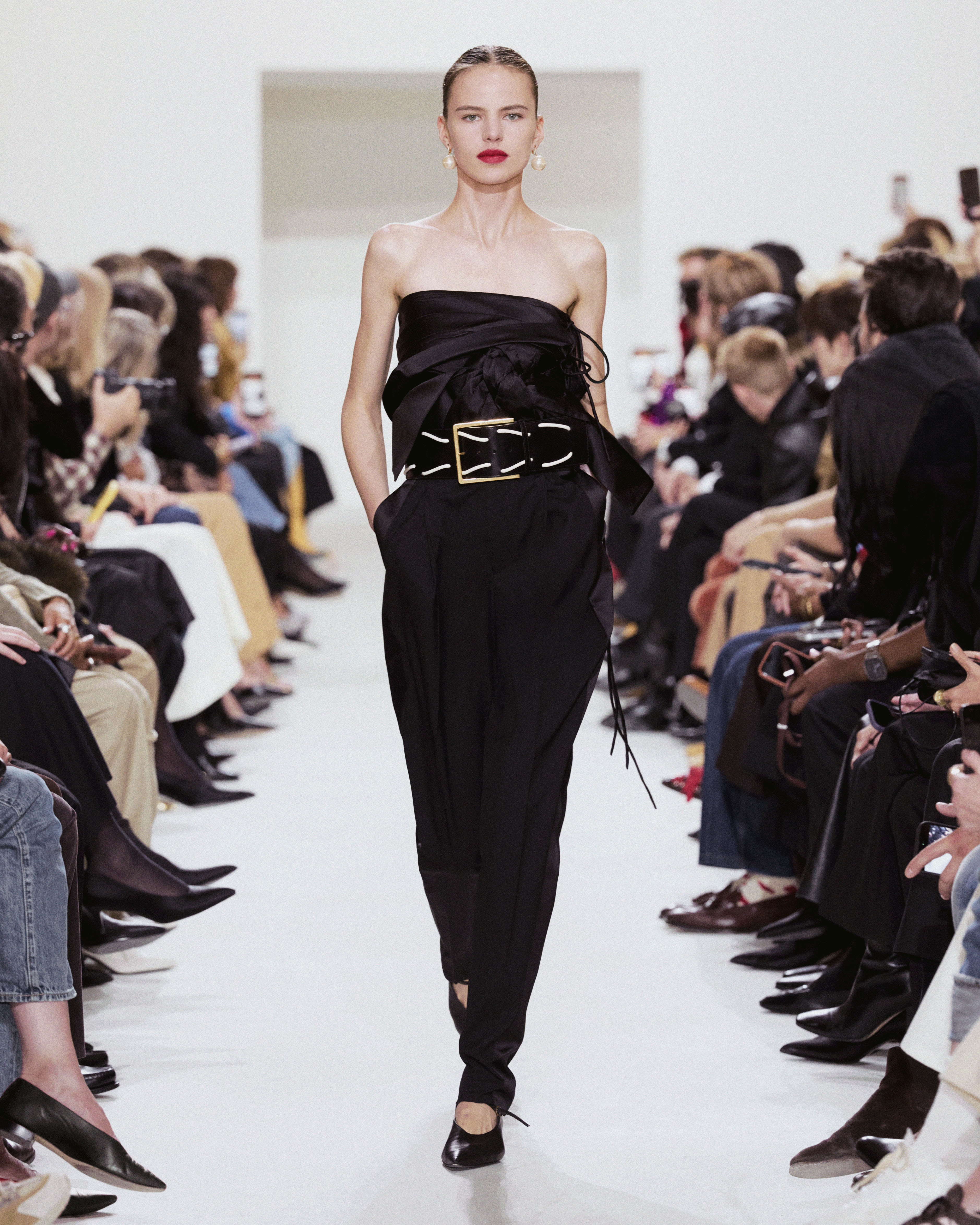
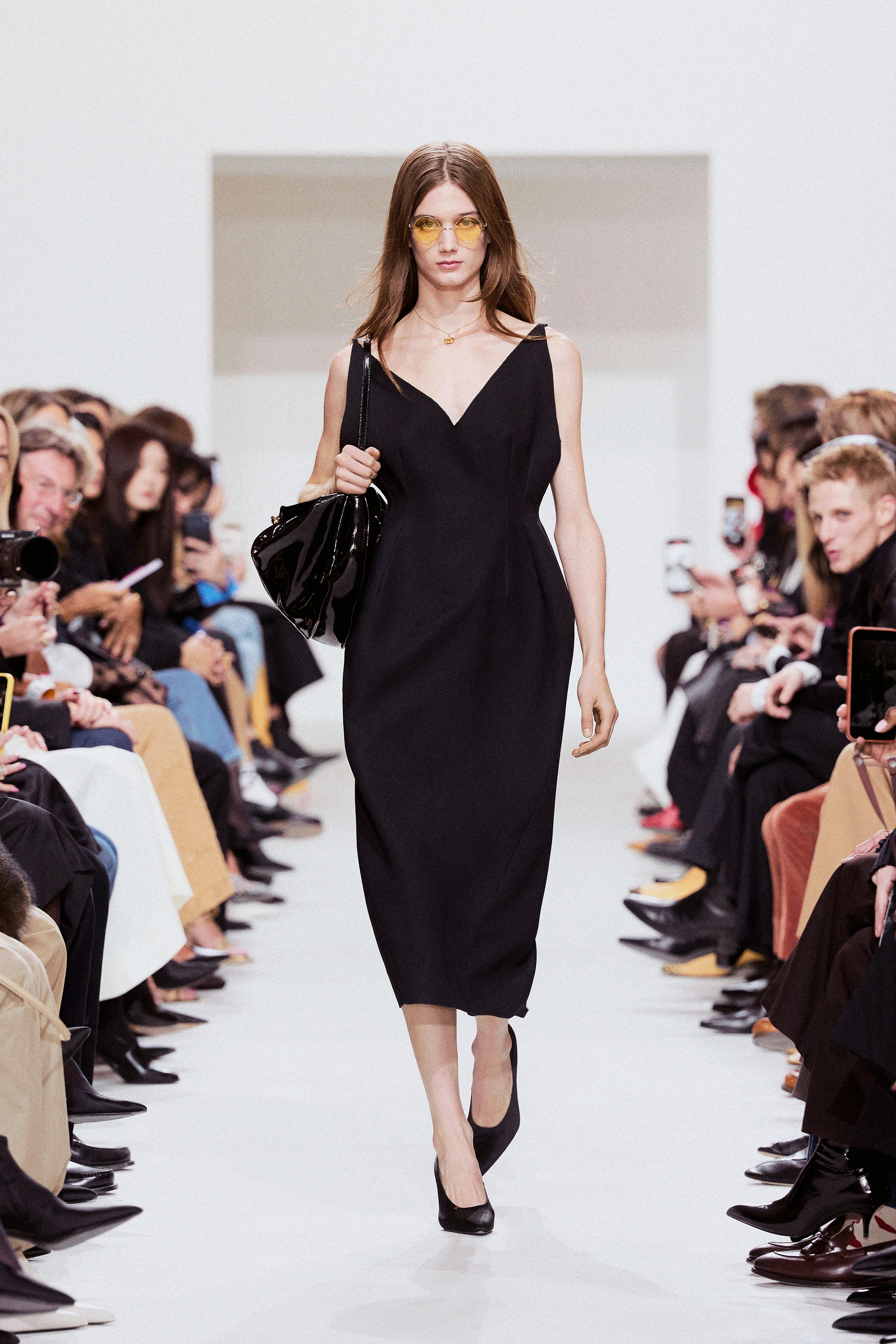
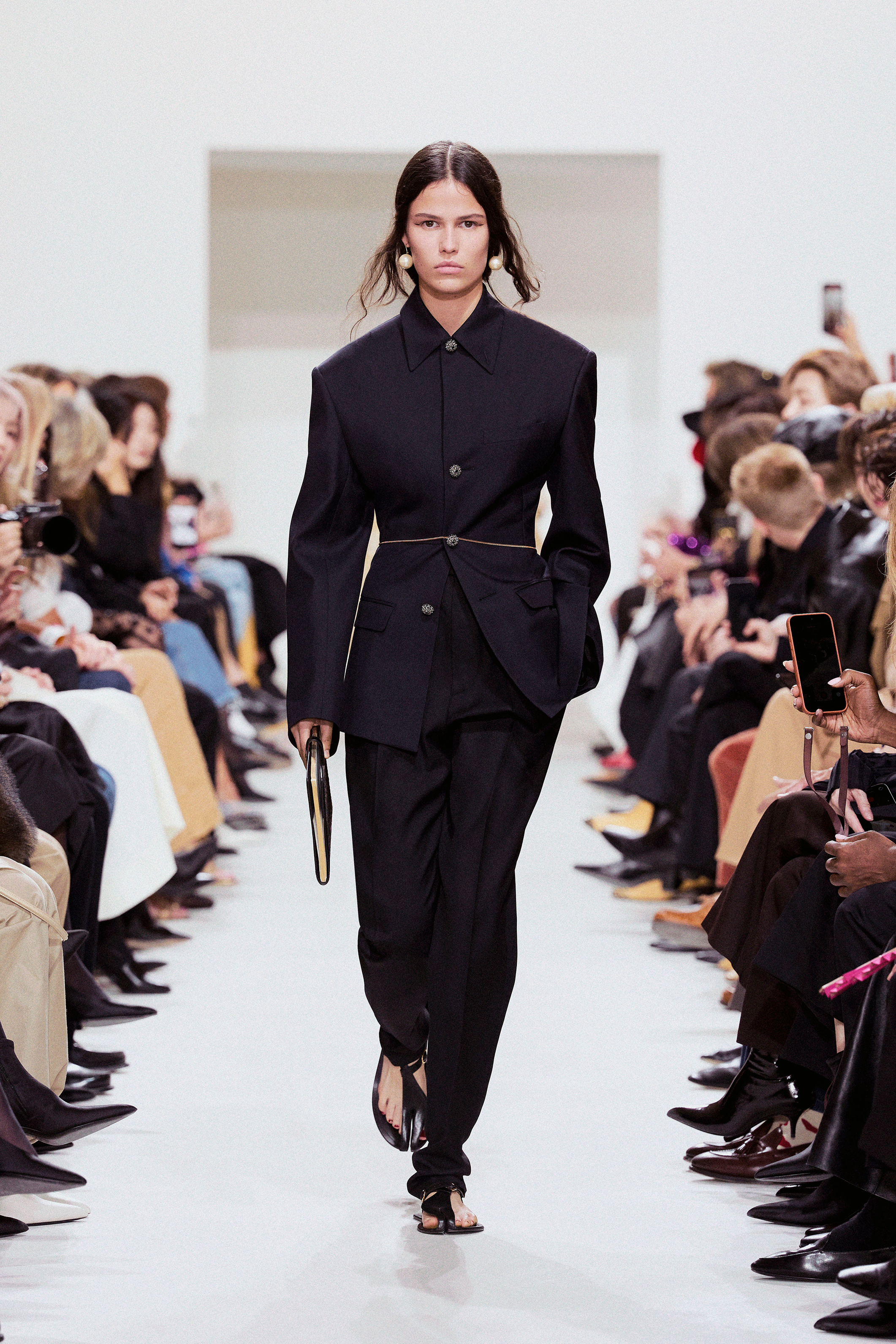
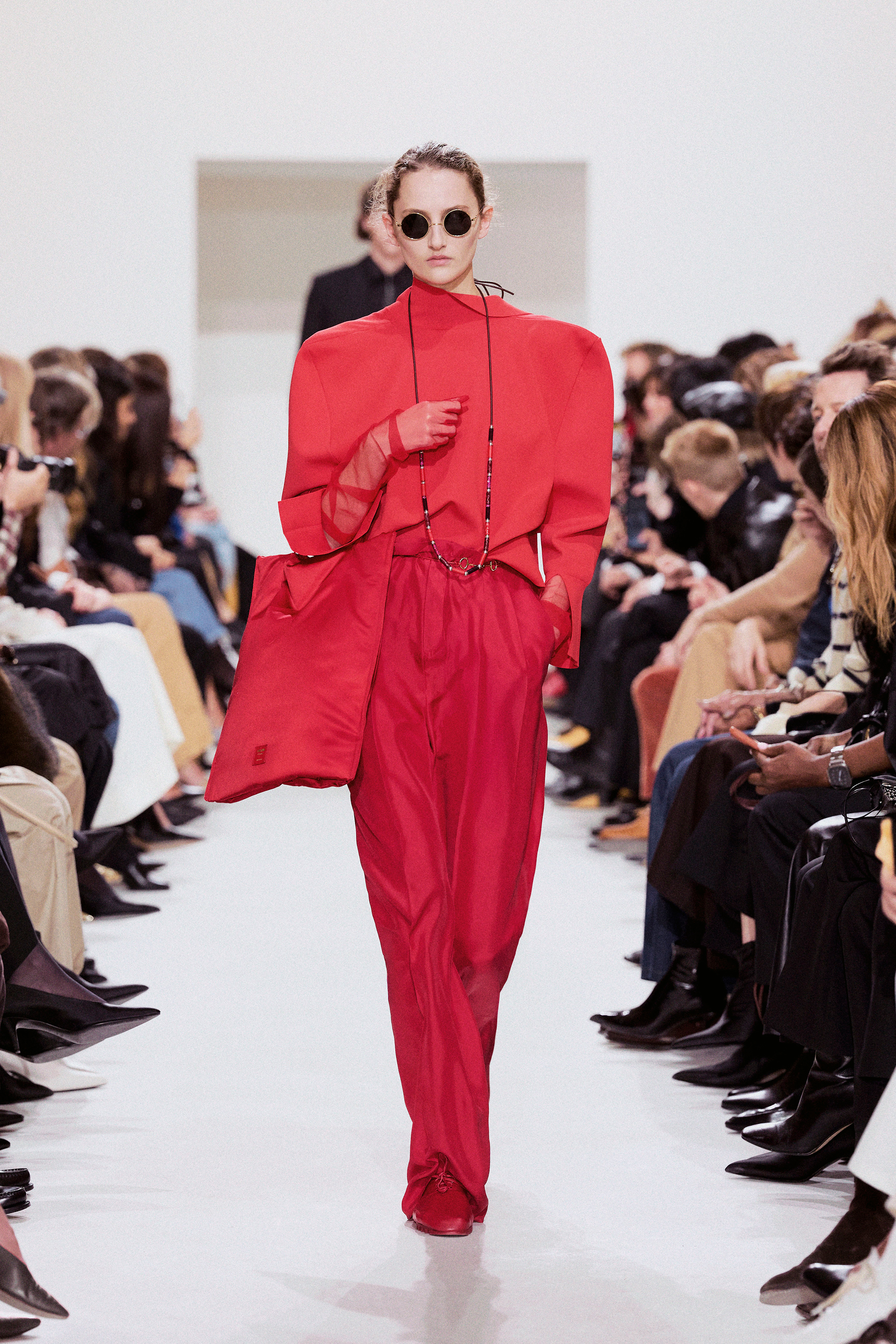
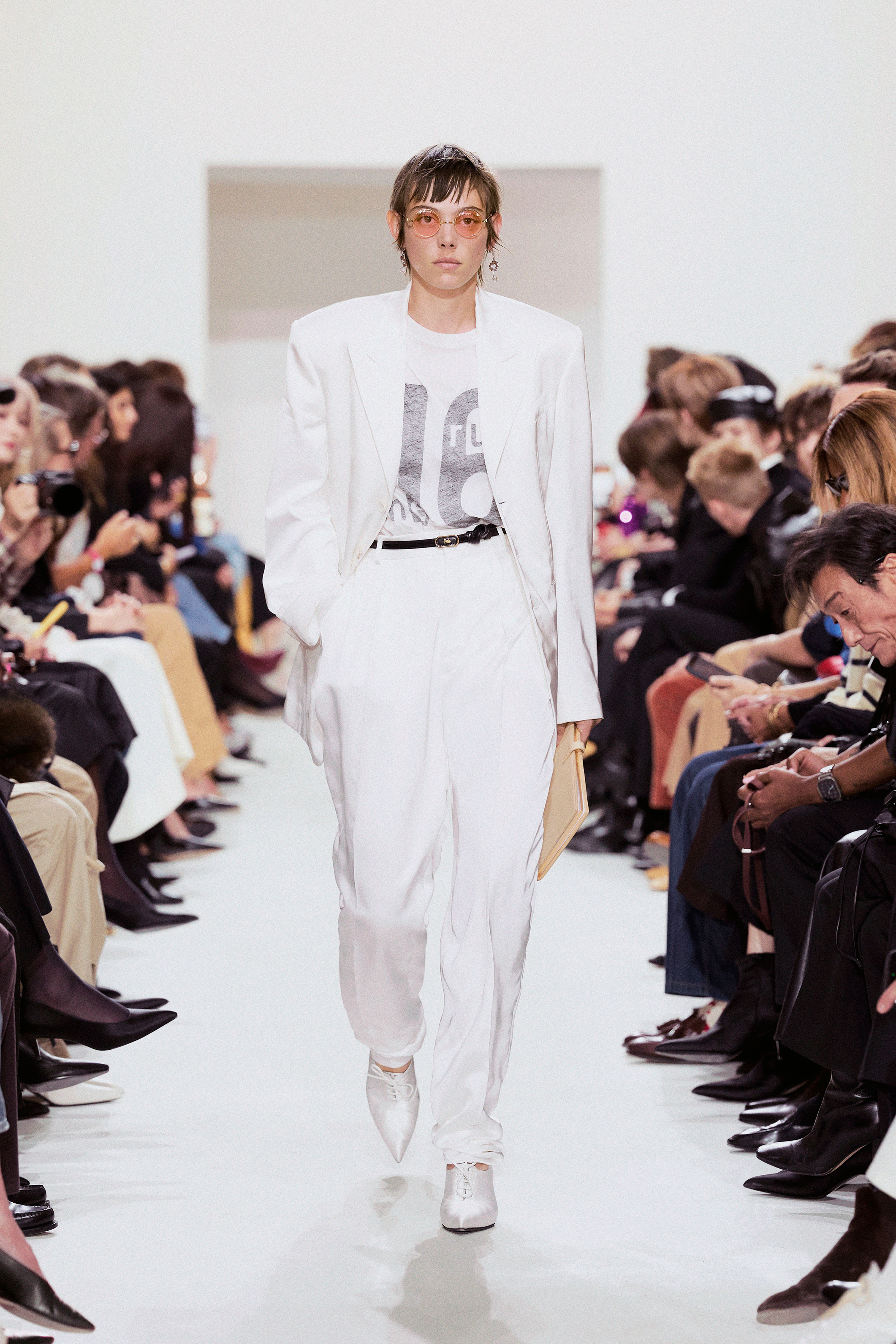
That is why the silhouette refuses to take sides. It does not declare a winner between narrow and wide, masculine and feminine, restraint and eccentricity. It holds them in tension. A grammar Rider had already tested in the SS27 menswear now feels more fully articulated here: the wardrobe as an open field rather than a uniform. Accessories – scarves, belts, jewellery, shoes, bags – do not simply finish a look. They shift its meaning. They are verbs, not nouns.
And this may be where Rider definitively separates himself from Hedi Slimane. Slimane built worlds you entered. Rider seems to be building materials with which you construct your own. Slimane had an image. Philo had a grammar. Rider is attempting to turn CELINE into a language.
The risk, of course, is obvious. An open system can easily become a system without friction. The possibility of being everything can also produce the danger of not being enough. At certain moments, the collection comes close to that territory where sophistication of styling risks replacing the necessity of an idea. This is ultimately where Rider will have to be judged: not by the number of possibilities he offers, but by his ability to make those possibilities feel inevitable.
And yet, that ambition is precisely what makes the collection compelling.
Because at a moment when luxury continues to produce louder and louder images to convince us that something is happening, Rider seems to be doing the opposite: turning down the volume and increasing the space for projection.
Paris Is Burning, Unzipped, John Waters, the Philo archive, the memory of Slimane, the Americana of Ralph Lauren: these are not references to be ticked off one by one. They are ingredients in the same operation.
Don’t invent a new CELINE. Make CELINE open enough for someone else to invent themselves inside it.
Perhaps that is Michael Rider’s real ambition.
And perhaps it is also his most interesting contradiction:
How personal can a language become when it is designed to leave room for everyone else?