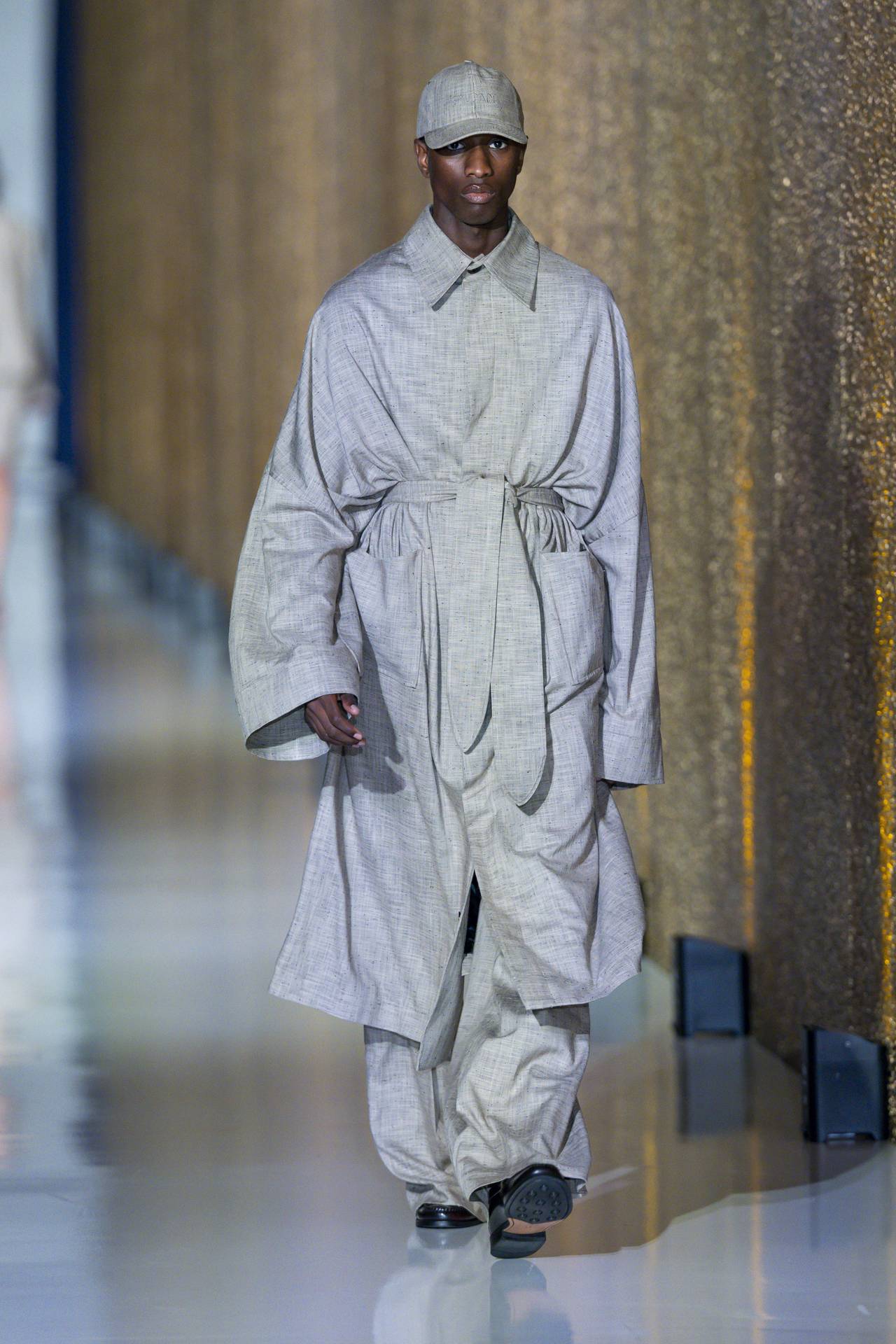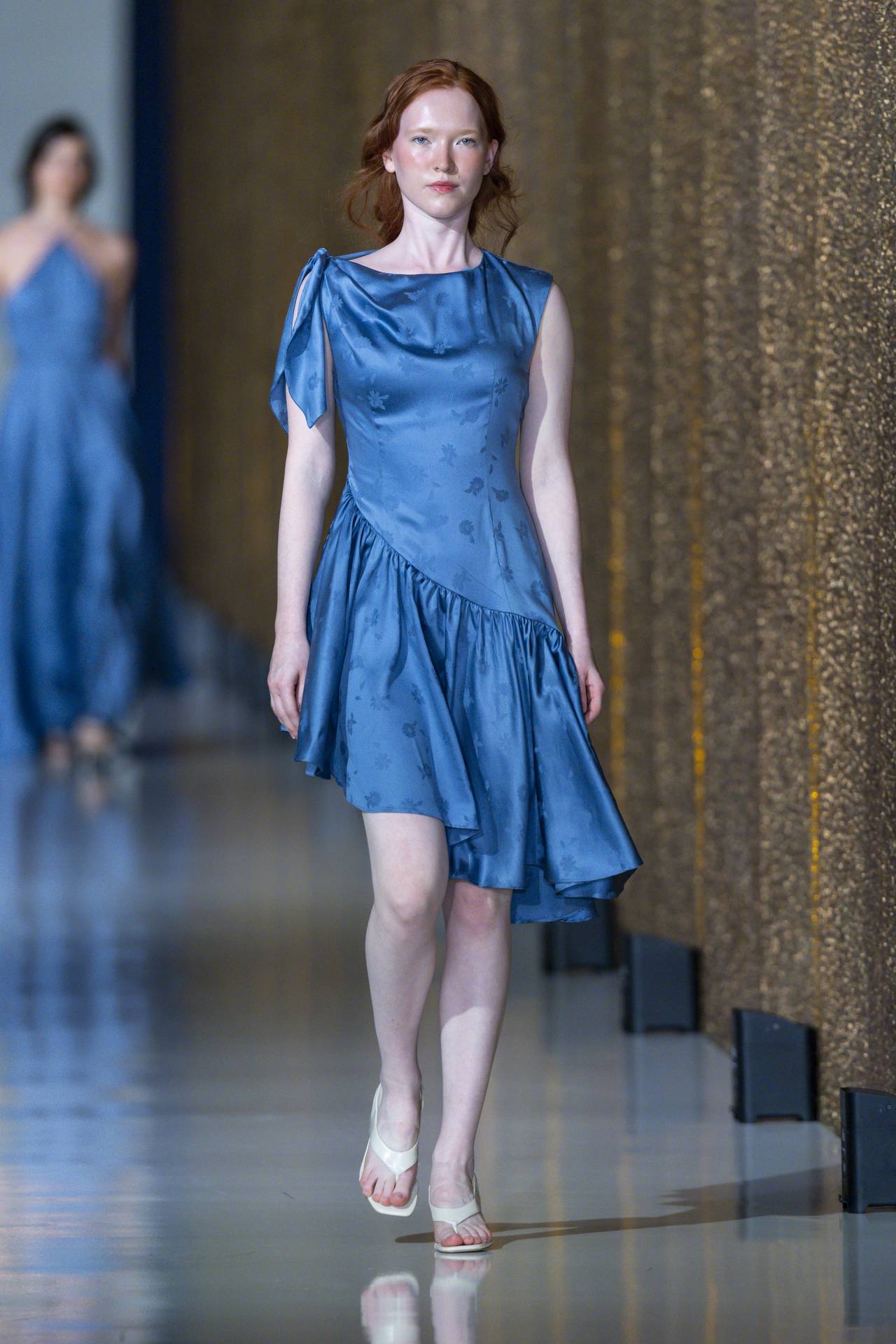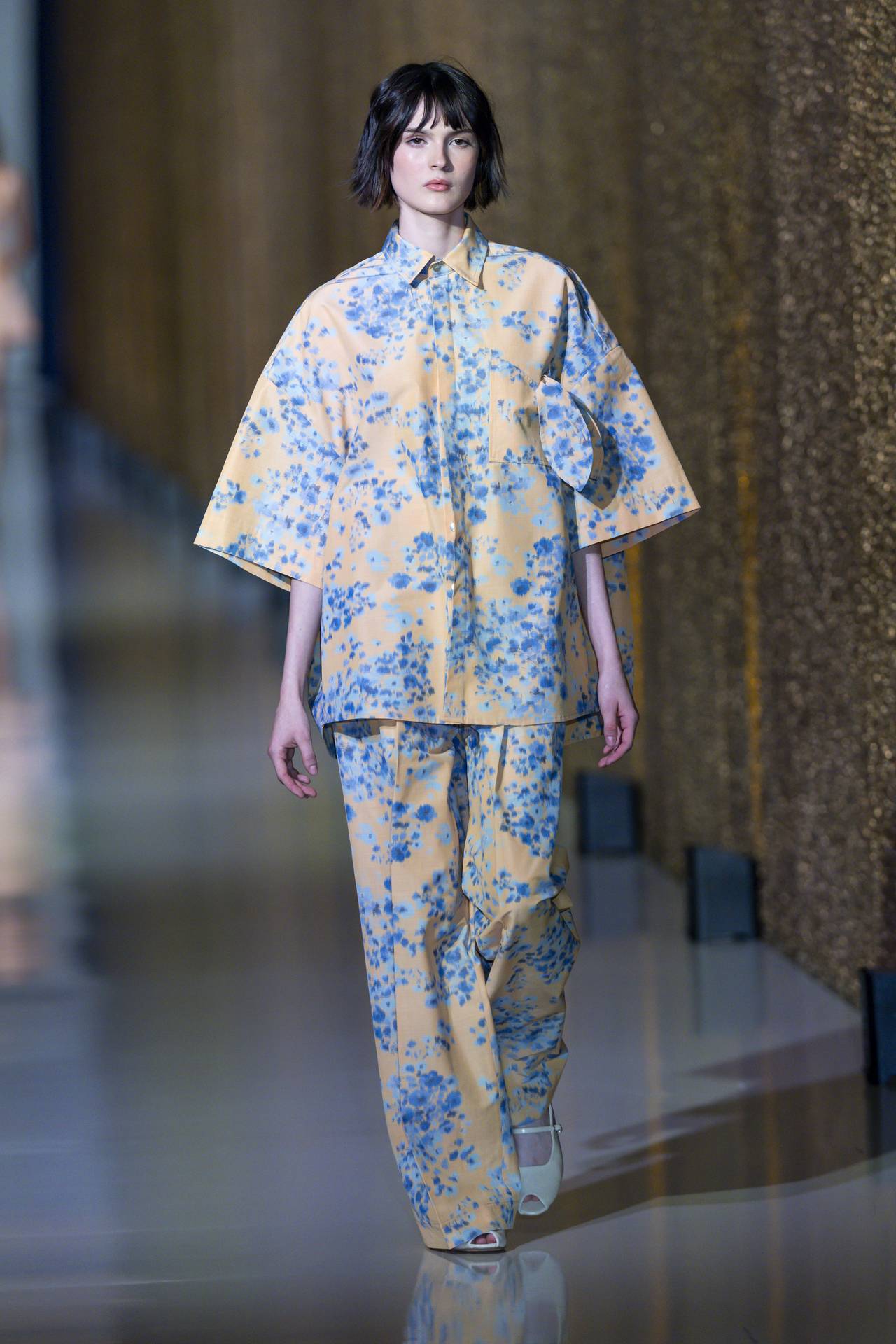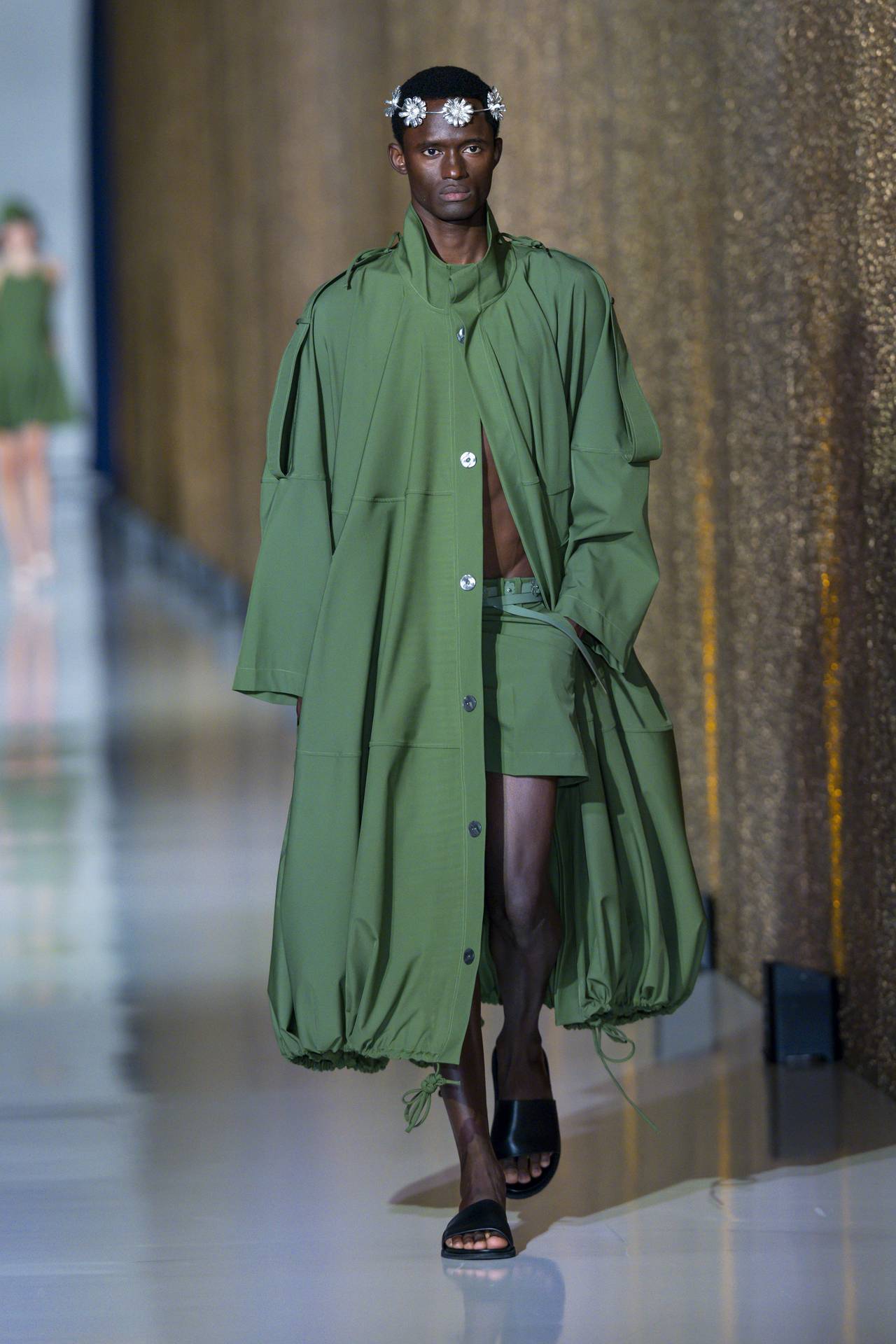
The first two days of ModaLisboa SS27 set the tone for a celebration of Portuguese creativity, bringing fresh perspectives, emerging talent and bold experimentation to the runway. From BÉHEN and Constança Entrudo to Sangue Novo, Ariana Orrico, Francisca Nabinho and Luís Carvalho, the opening days showcased a vibrant fashion scene where tradition meets innovation and new creative identities take shape.
In a city where sunlight bounces off white pavements, creating an almost dreamlike atmosphere, fashion continues to give a voice to local designers and emerging talent. This is the spirit of ModaLisboa, once again shining a spotlight on the creativity of a country historically celebrated for its manufacturing expertise, yet home to a vibrant and often overlooked creative scene. Between fresh perspectives and emerging identities, Lisbon proves to be a space for expression and experimentation, where fashion is not only made, but imagined.
BÉHEN: De Esta Água Não Beberei
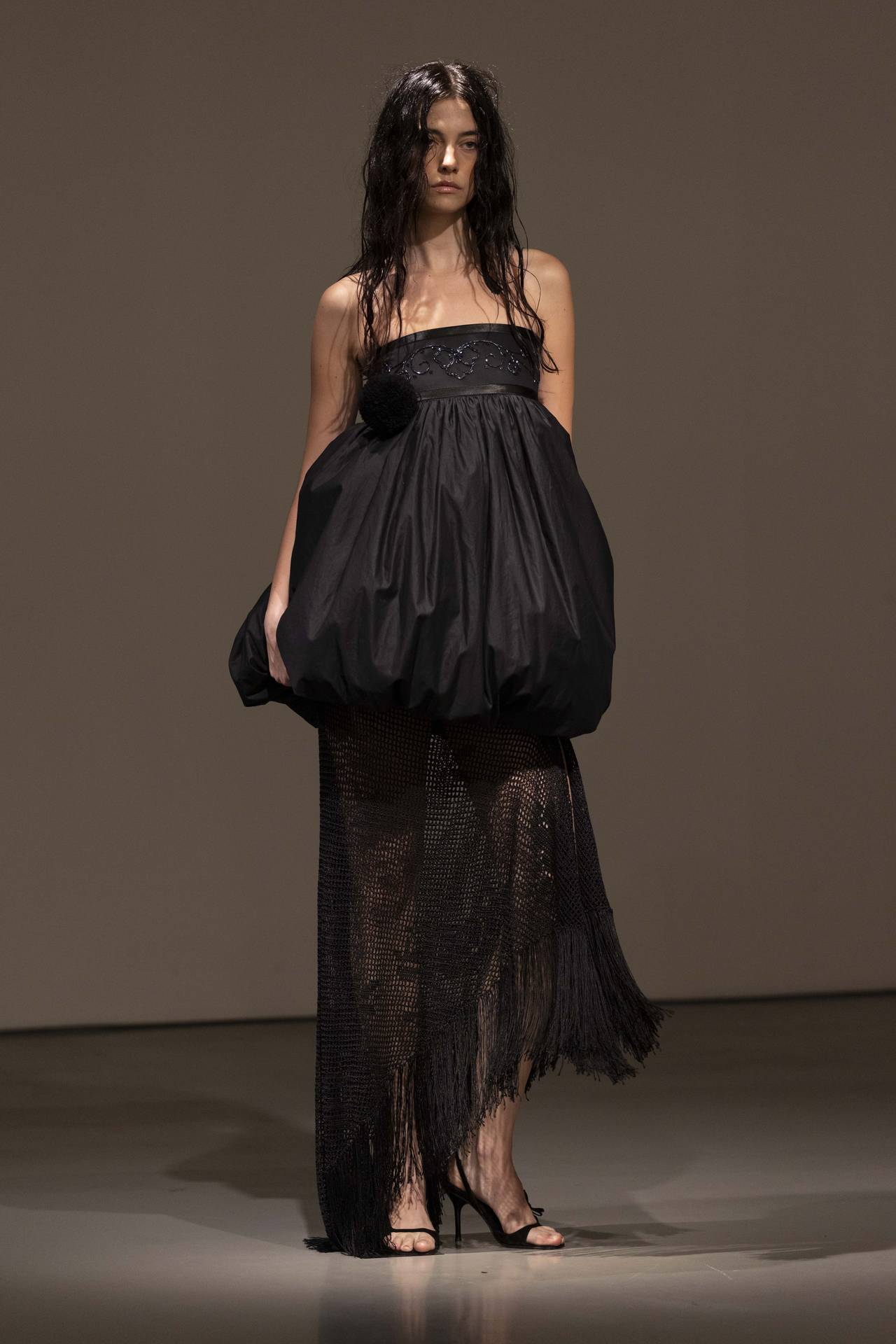
Opening the ModaLisboa runway calendar at MUDE (Museu do Design), BÉHEN brought the traditions of Nazaré to the runway for Spring/Summer 2027. The Portuguese coastal town, historically rooted in fishing culture and now famous for its giant waves and surfing scene, became the starting point for a collection that explores the relationship between heritage, social identity and contemporary fashion.
At its heart is the concept of ir a banhos, the Portuguese tradition of seaside bathing. Through a reinterpretation of the traditional clothing worn by Nazaré’s fisherwomen, the designer explores the contrast between two worlds that once coexisted along the same coastline: the everyday working lives of fishing communities and the leisurely lifestyle of the bourgeoisie arriving for their seaside holidays. The beach becomes the meeting point between these realities, a shared space where necessity and privilege, work and leisure, come together.
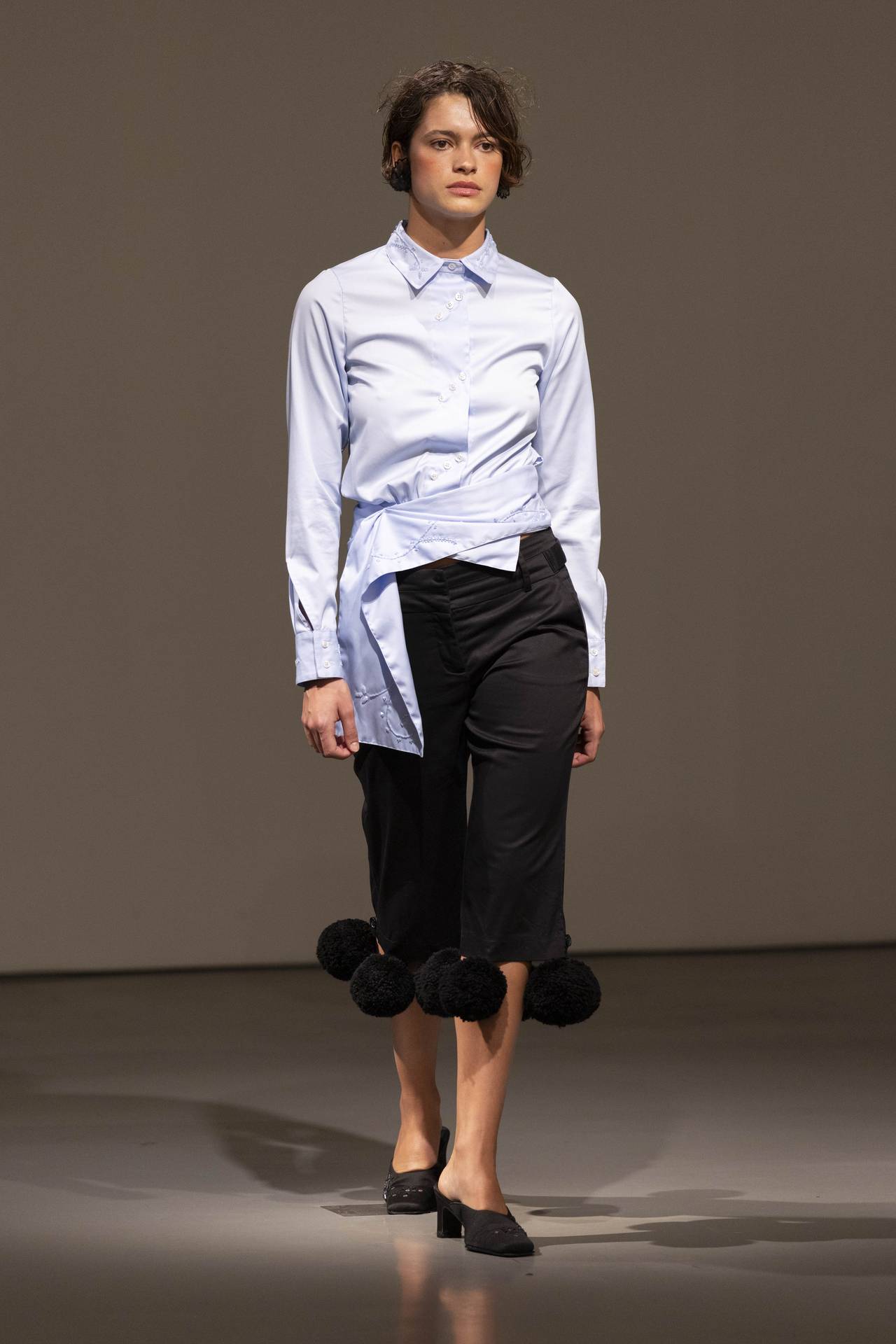
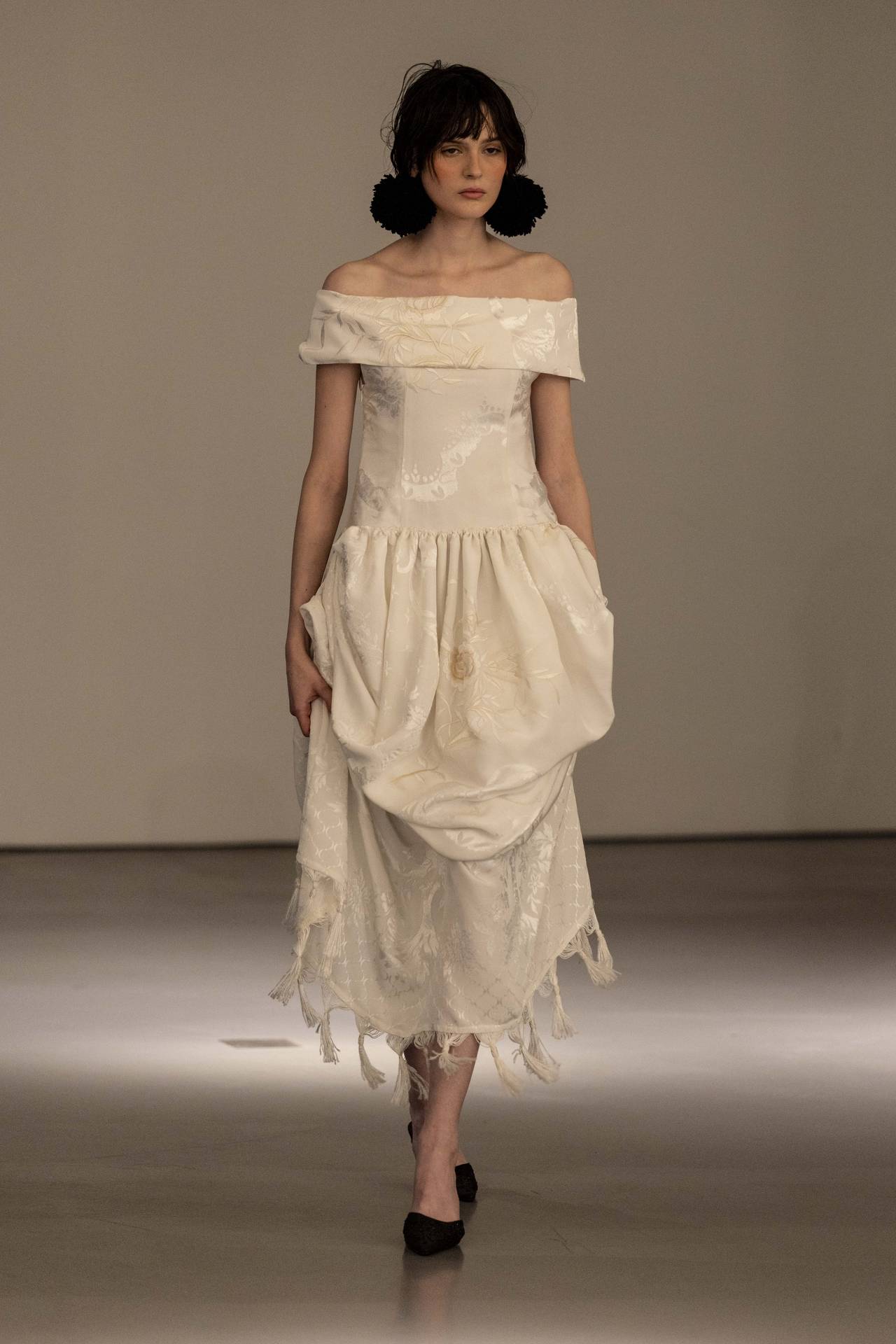
The collection combines 100% cotton and wool with antique, reworked textiles. Silhouettes play with volume and contrast, balancing oversized shapes with delicate, decorative details. Bows, pearl-embroidered sarongs and fringed fishing nets bring a playful dimension to the looks. Among the standout pieces are fisherman-inspired trousers decorated with pom-poms, paired with a matching hat that echoes the same detailing. A contemporary take on Portuguese folklore, where traditional references are transformed into something fresh and unexpected.
Constança Entrudo x Marie Hazard: AD HOC
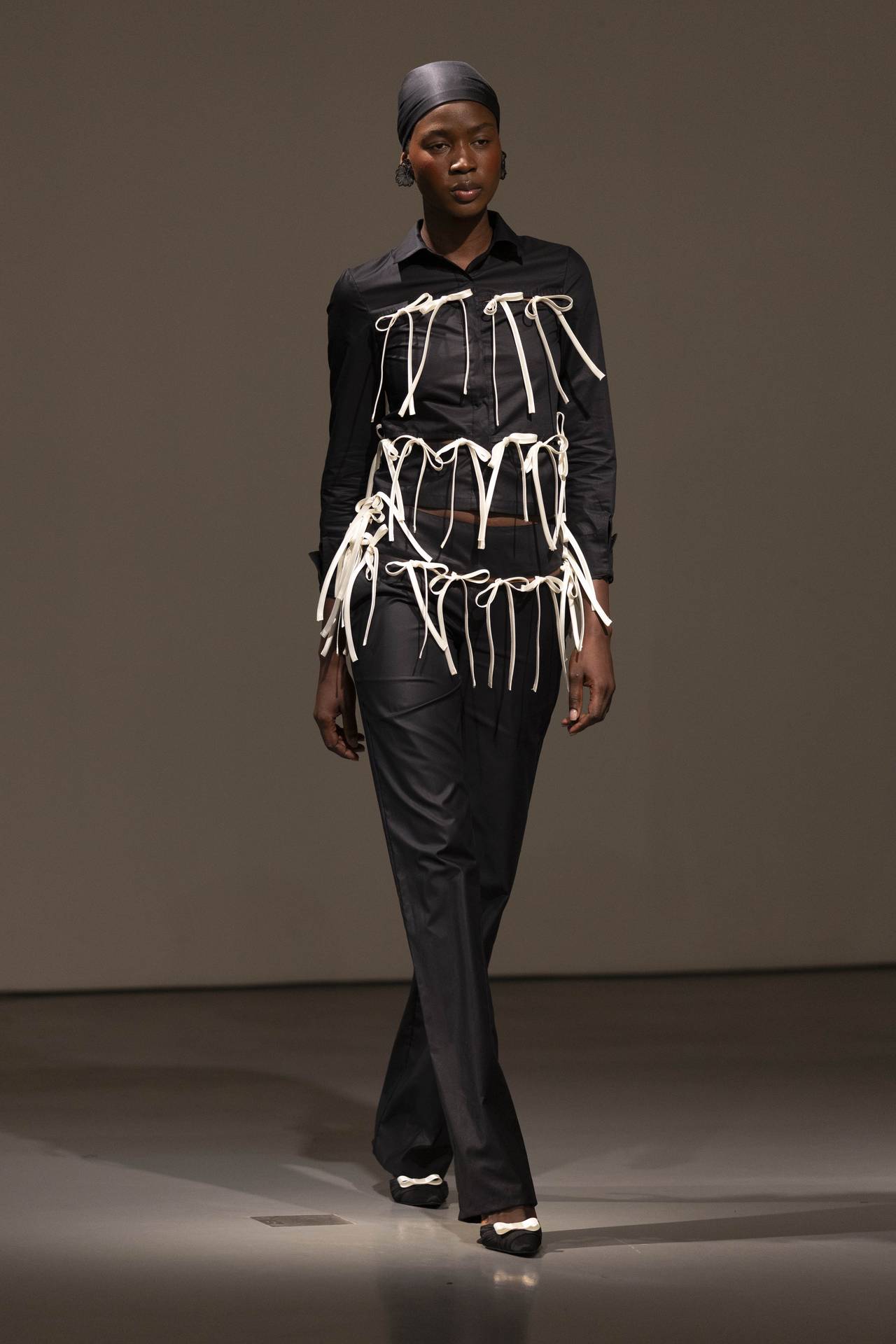
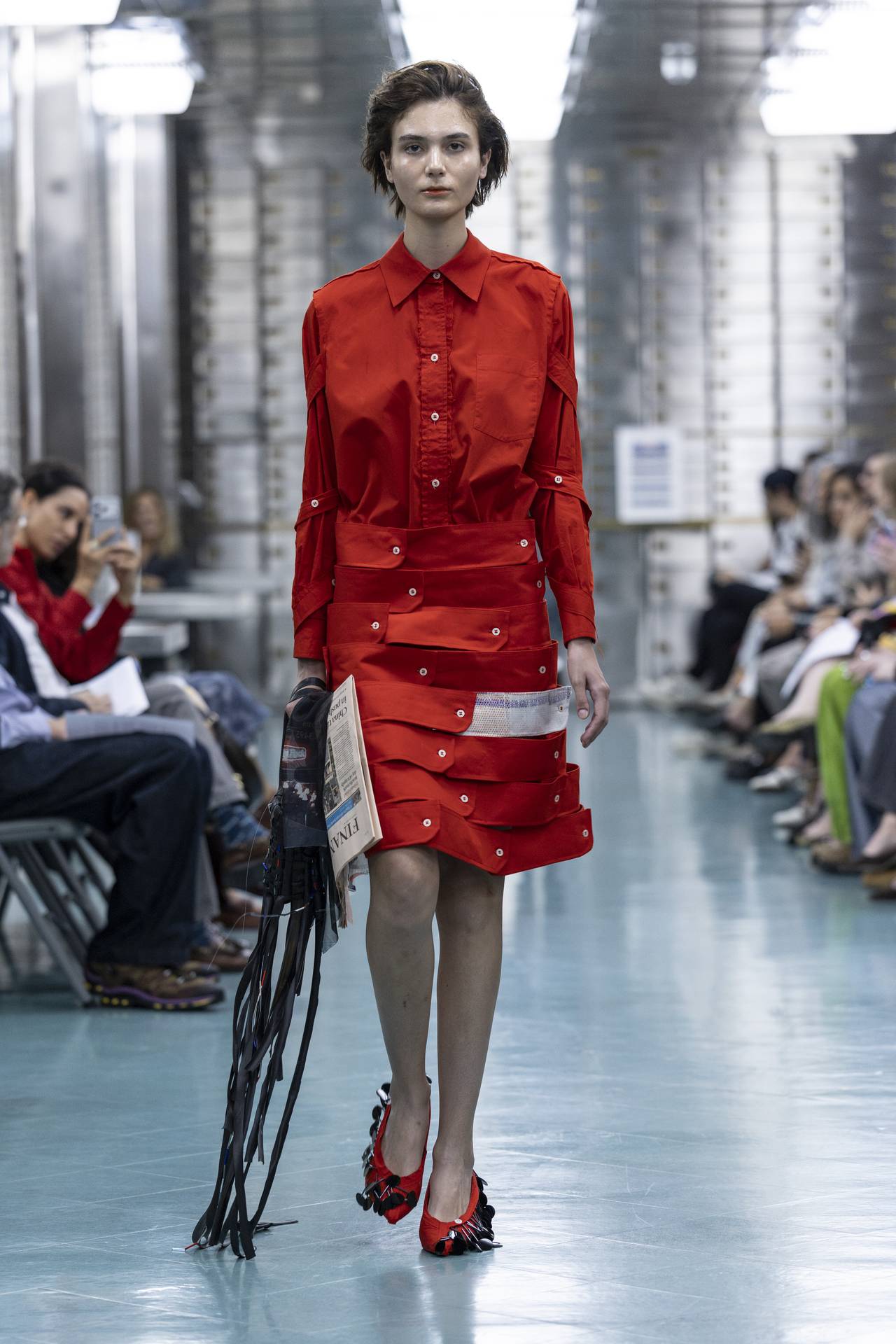
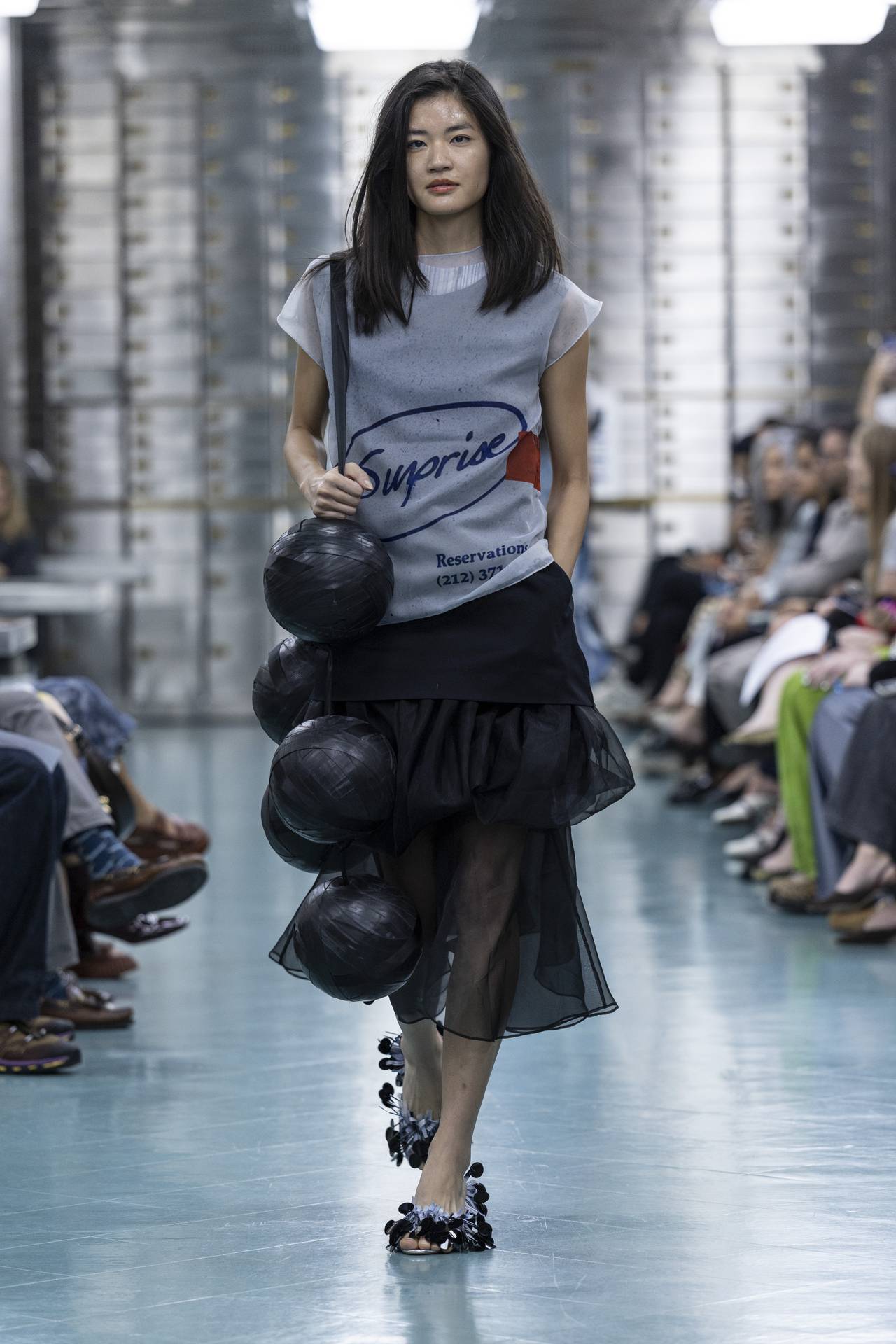
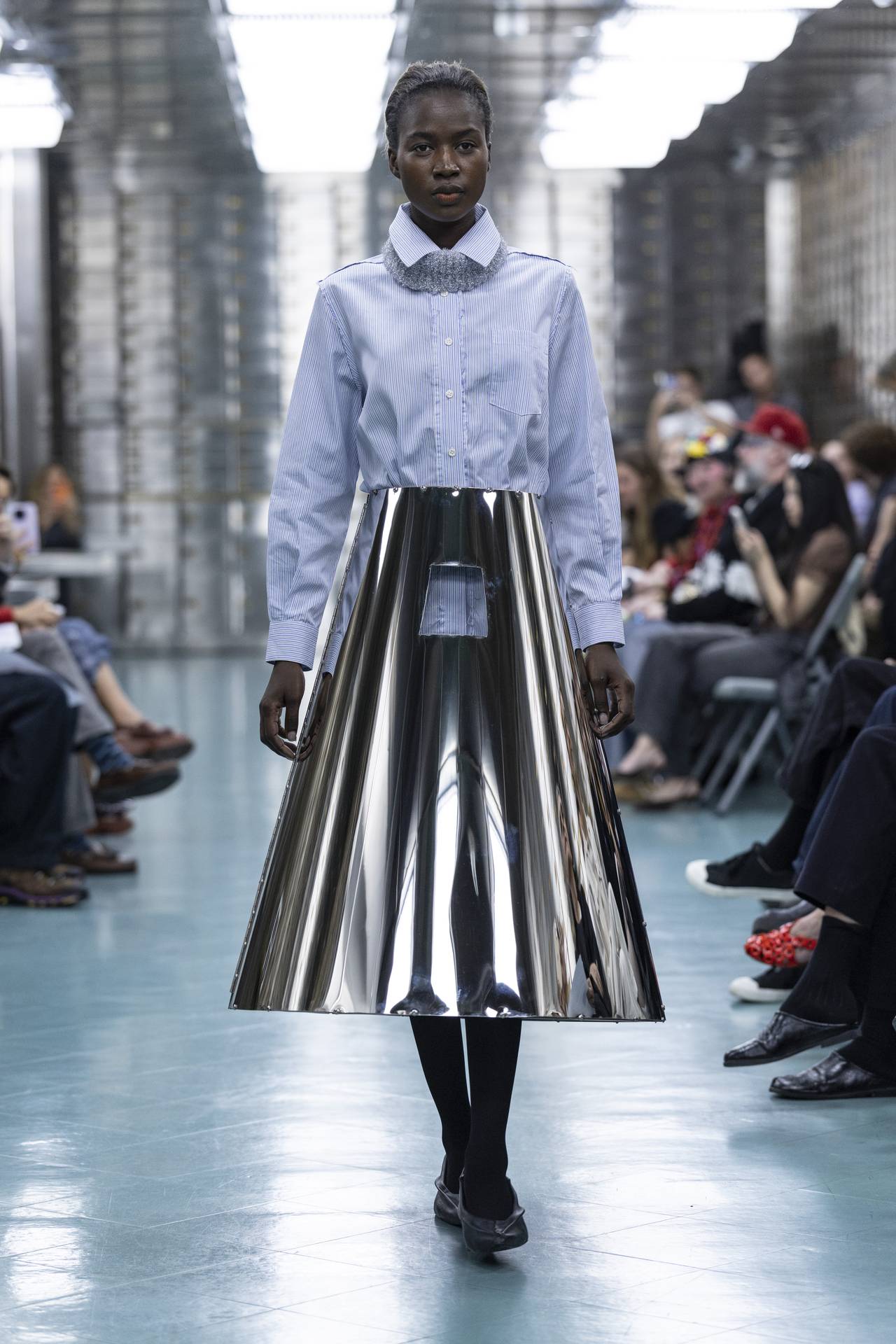
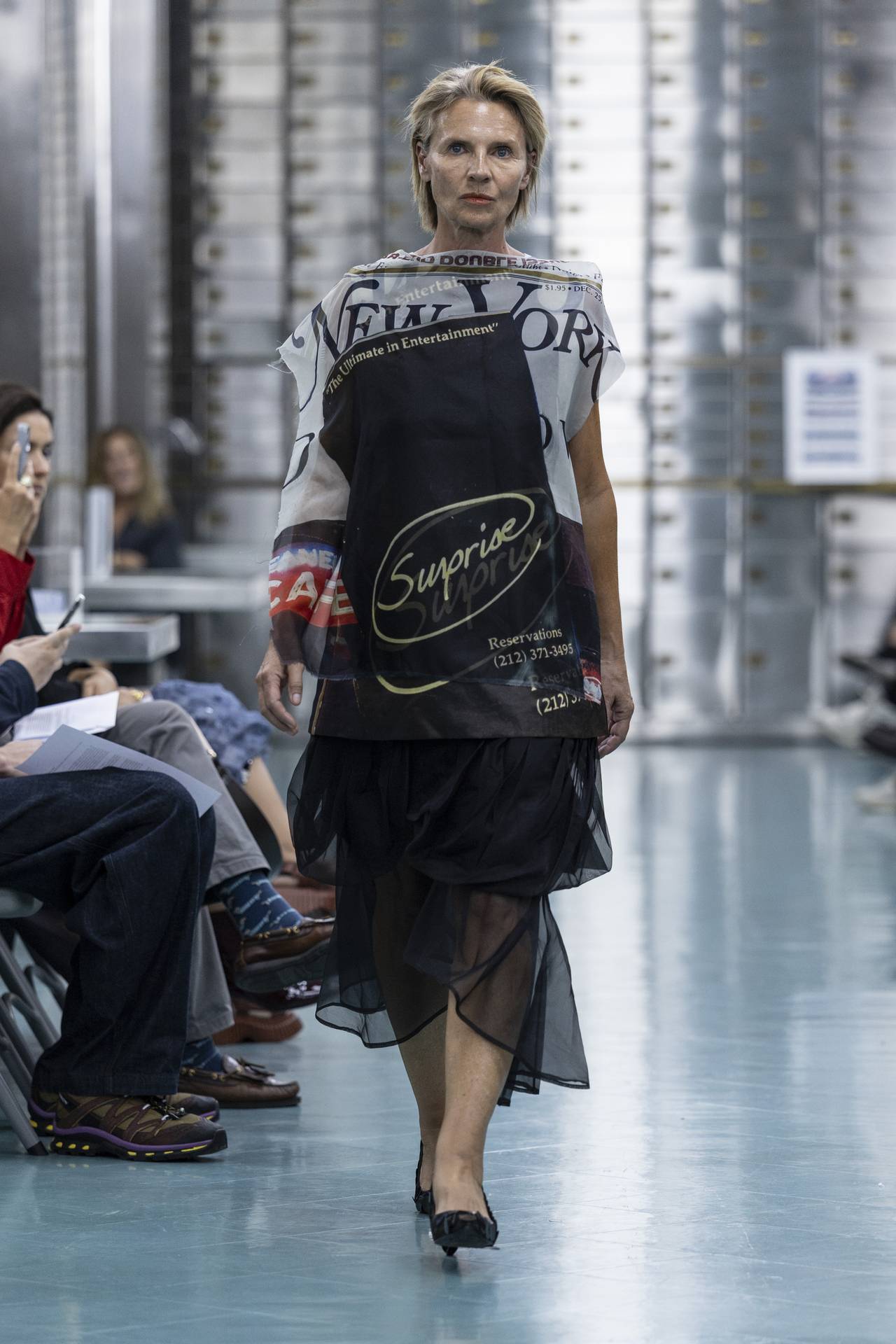
First unveiled in New York, AD HOC, the Spring/Summer 2027 collaboration between Portuguese designer Constança Entrudo and French artist Marie Hazard, made its way to Lisbon for a presentation in the lower level of MUDE. Once a bank, the space still preserves its original vaults and rows of metallic drawers, creating an unexpected setting for a collection that blurs the boundaries between fashion and contemporary art.
The project brings together two creative minds who first met while studying Textile Design at Central Saint Martins in London. While Hazard approaches weaving as an artistic language, Entrudo explores its technical and experimental possibilities. At the centre of Entrudo’s textile research is her signature “(un)woven” technique, developed during her studies. By applying controlled heat to recycled yarns, she creates experimental textile surfaces that challenge conventional weaving methods. The collection also highlights Portugal’s manufacturing expertise, with denim, knitwear and footwear developed alongside established production partners in the north of the country, while buttons and accessories are made locally.
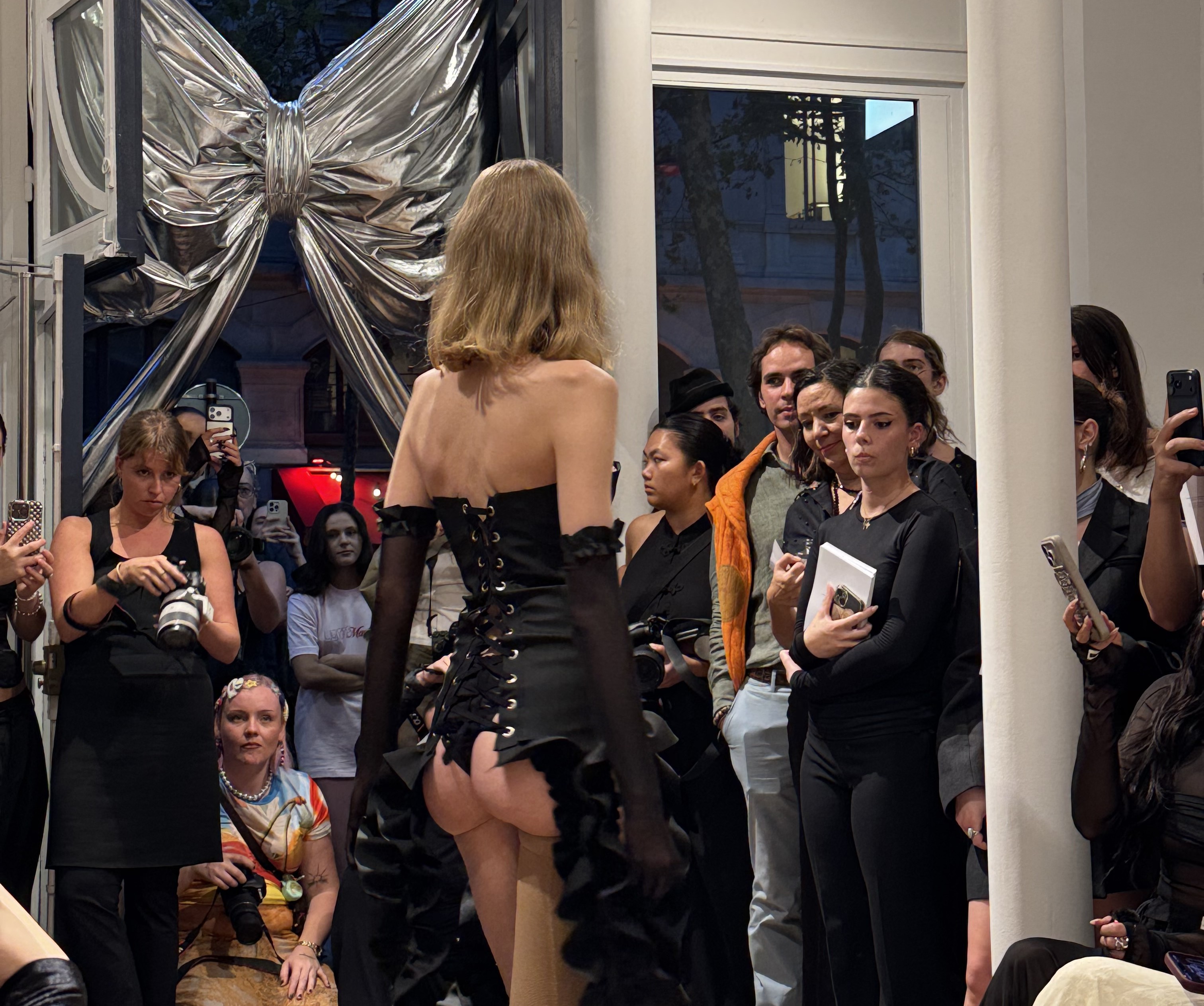
On the runway, this dialogue between art and fashion translates into unexpected constructions and sculptural silhouettes. A metallic silver skirt stands out as a piece designed to be both worn and displayed as an art installation. Classic shirting is deconstructed and reimagined, with collars, cuffs and buttons rearranged into new shapes, including experimental skirts that transform familiar wardrobe staples into something entirely different.
The collection also carries a connection to art history and feminist activism. Its name was inspired by a 1992 interview with sculptor Jackie Winsor, discovered by the two creatives in the former artist’s New York loft. In the interview, Winsor recalled her encounter with the Ad Hoc Committee of Women Artists, a feminist collective founded in the 1970s to challenge the underrepresentation of women in the art world. The reference also finds its way into the collection’s prints, adding another layer of meaning to a project built around creative exchange, collaboration and the freedom to move beyond established boundaries.
SANGUE NOVO
Sangue Novo is ModaLisboa’s platform dedicated to emerging talent, giving ten young designers the opportunity to present their collections and introduce fresh perspectives on fashion, often deeply rooted in Portuguese culture. A space for experimentation and the unexpected, the competition encourages designers to challenge conventions and explore new creative directions, making ModaLisboa a starting point for their journey into the fashion industry.
Five designers are selected as finalists and given the opportunity to work closely with mentors over the following months, receiving guidance to further develop their creative vision and refine the collections presented. Each finalist brought a distinct aesthetic and personal narrative to the runway:
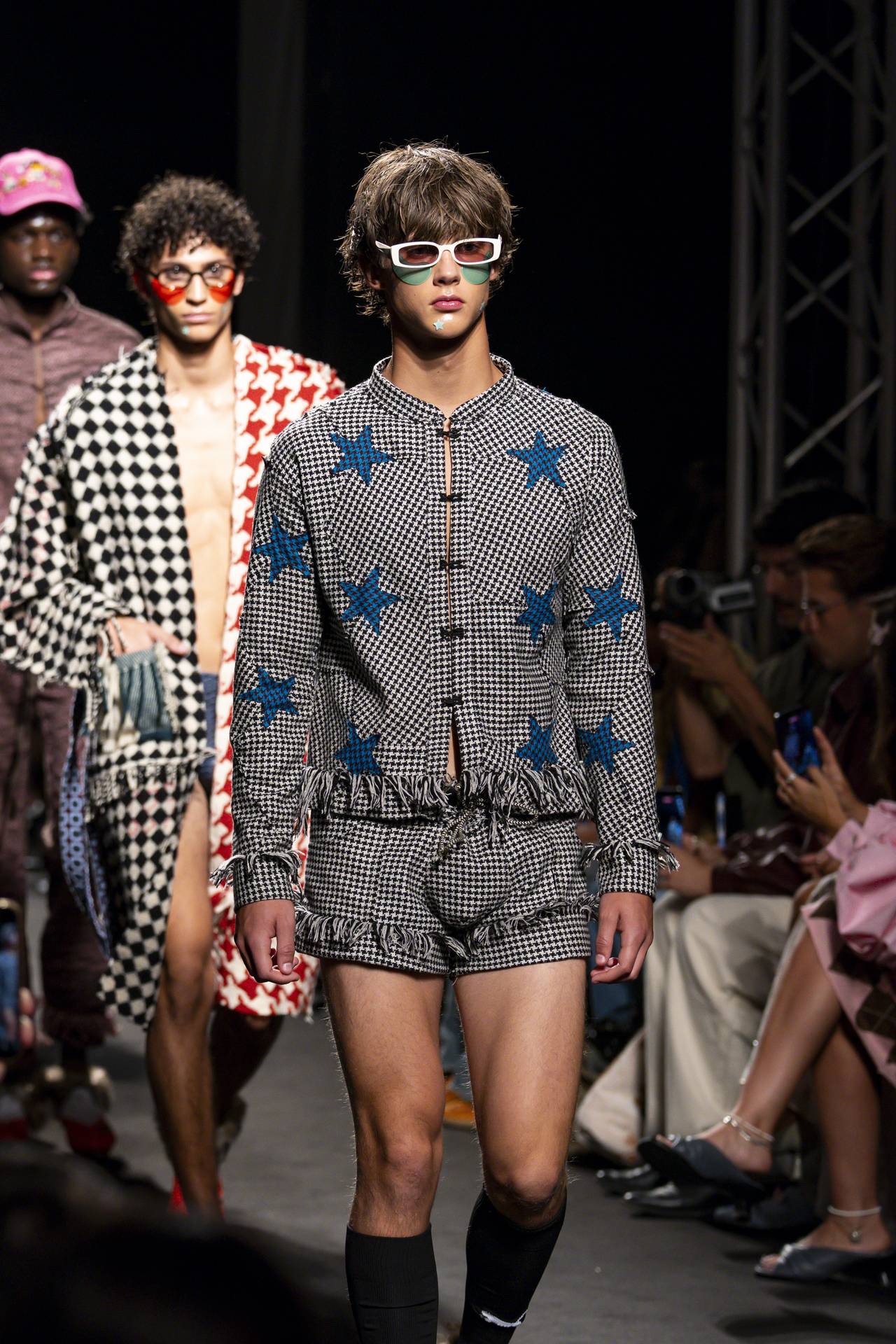
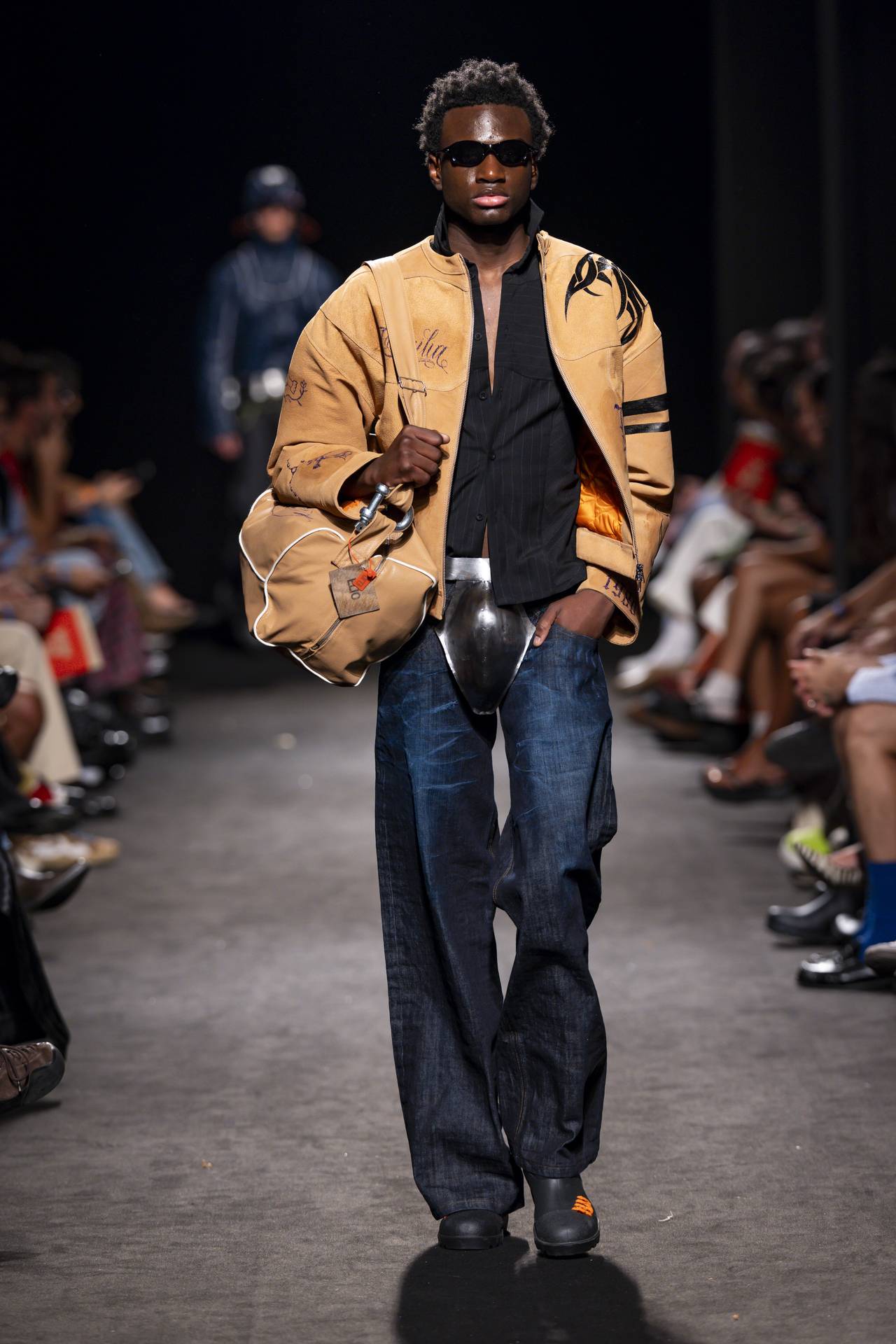
ELIO explores toxic masculinity and the social pressure placed on men to conceal their vulnerability, challenging traditional ideas of strength and emotional expression.
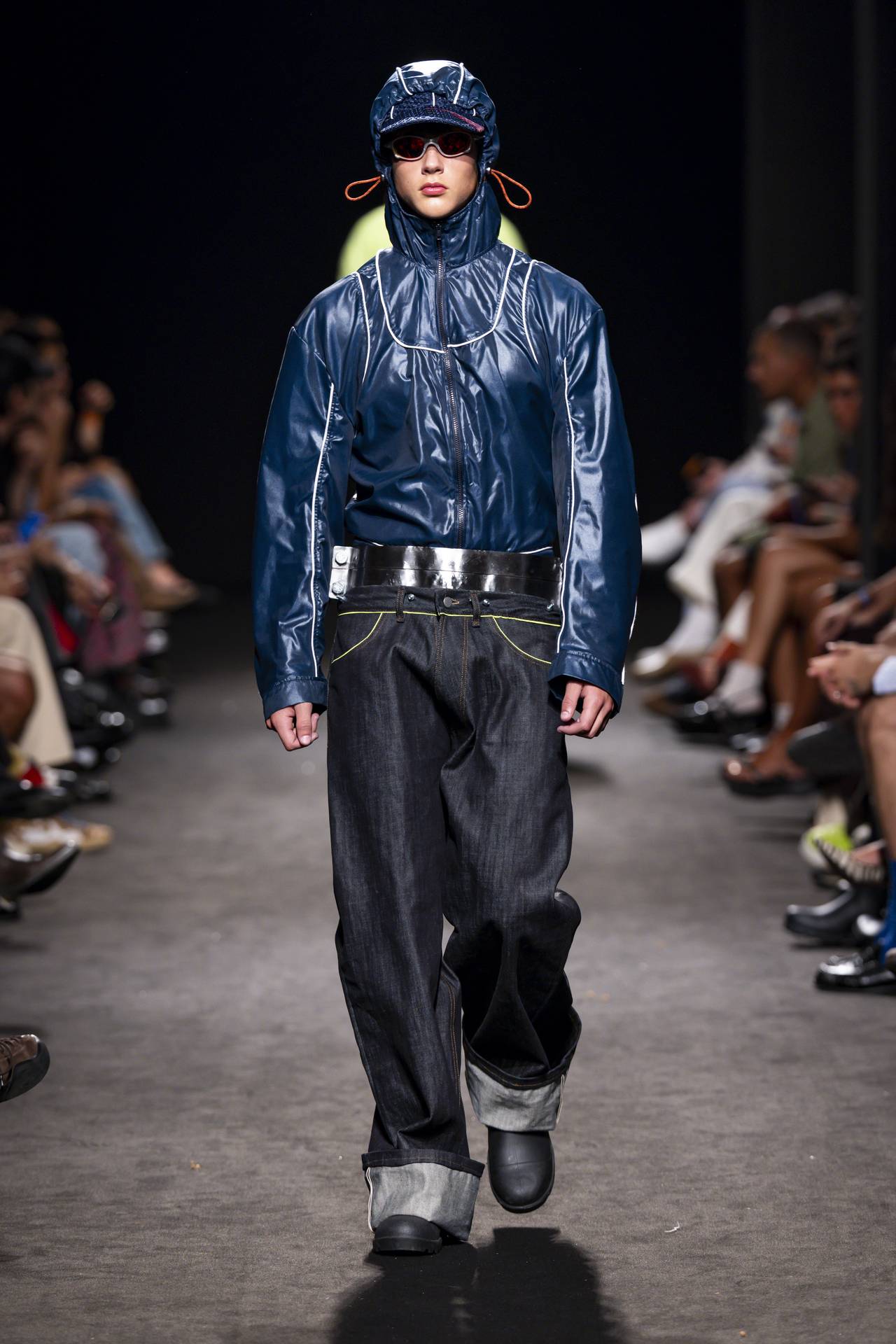
FRANCISCO MARTINHO approaches the human condition through a sense of purity, using movement and deconstruction to explore the relationship between the body and clothing.
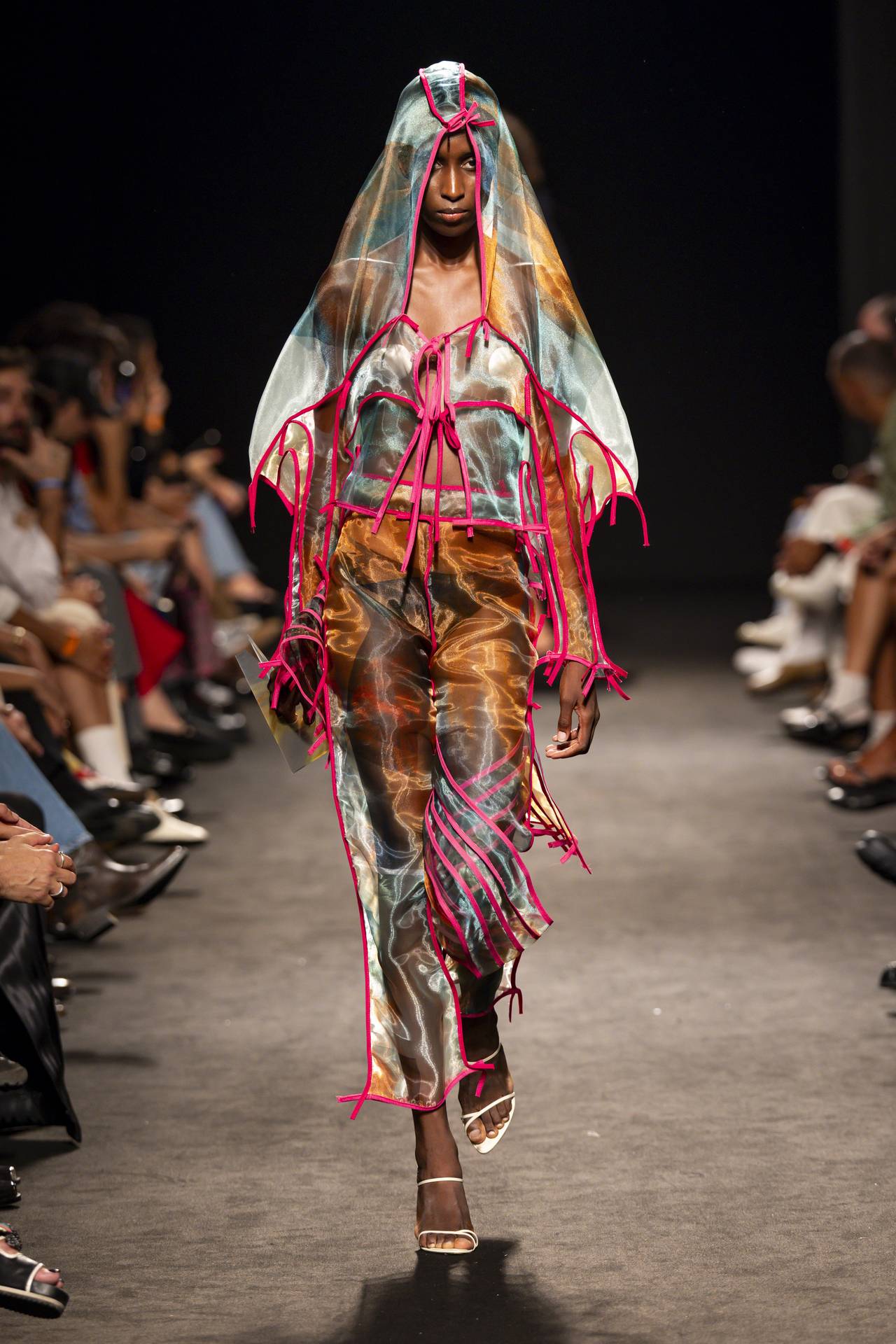
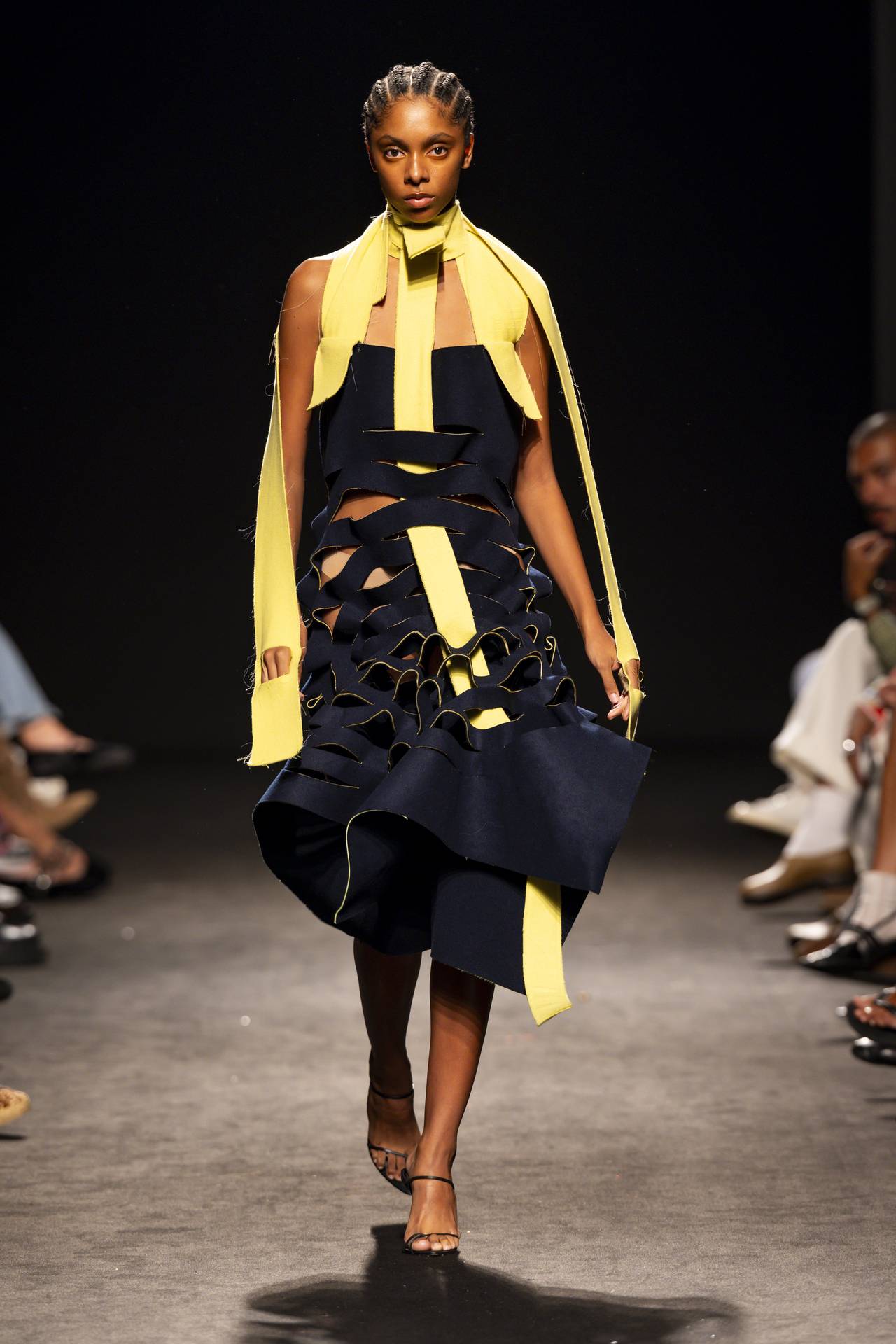
MARTA AMORIM takes a more architectural approach, creating pieces that feel closer to constructed objects than conventional garments. Inspired by origami, she experiments with 3D printing and interlocking systems as alternatives to traditional stitching, pushing the boundaries of garment construction.
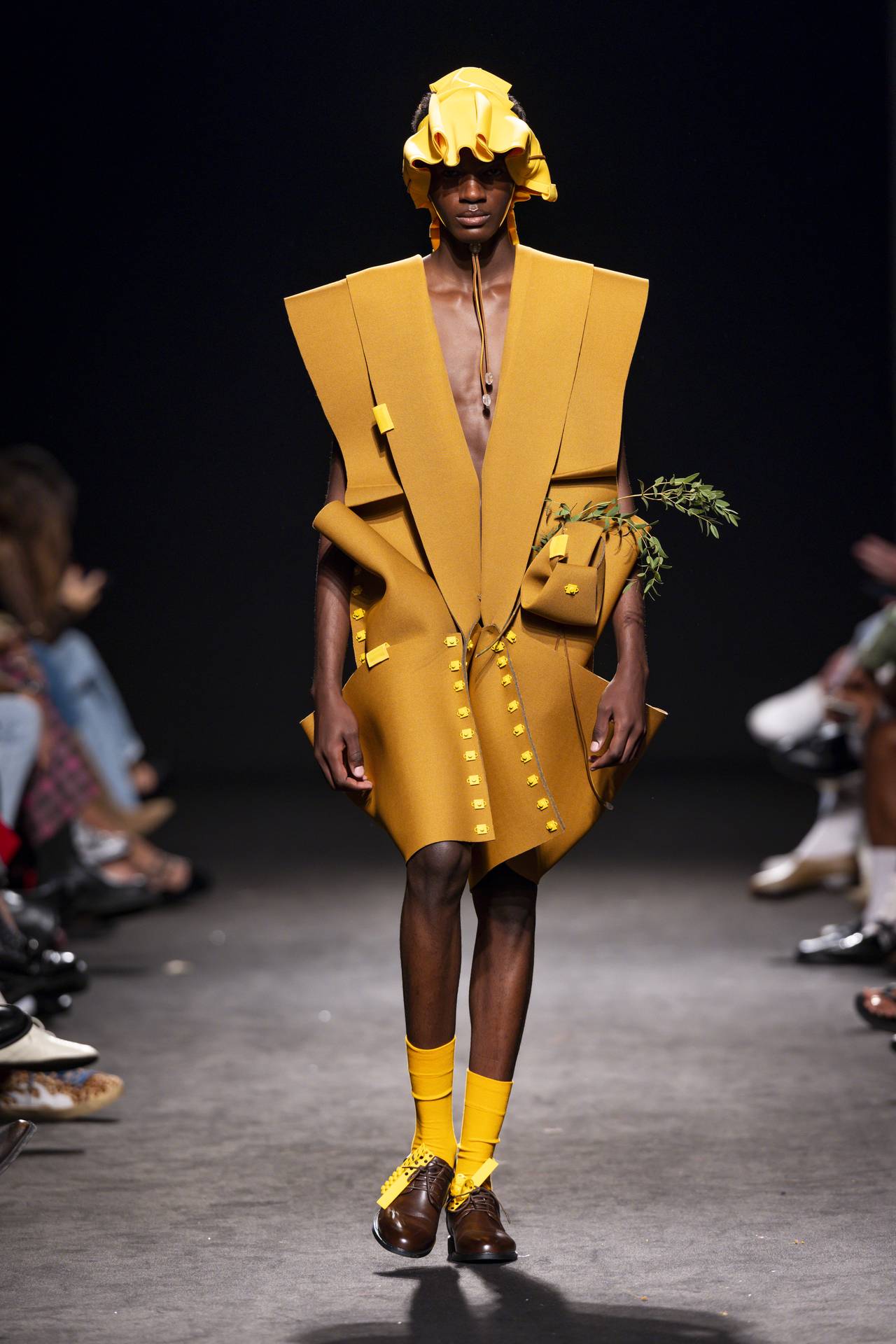
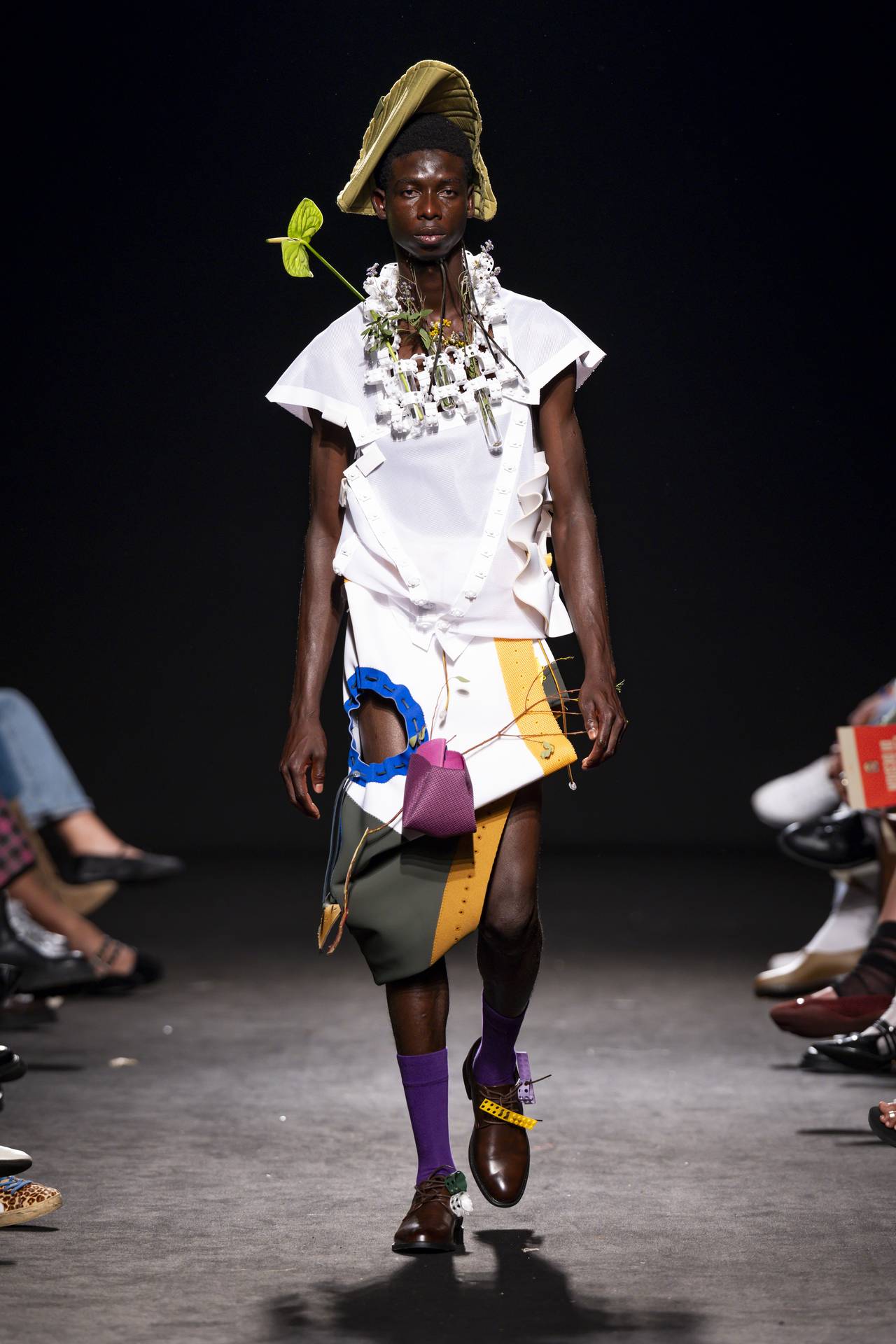
GRANATUM reflects on the relationship between people, territory and time, translating personal memories into a collection that explores identity and the connection between individuals and the places they inhabit.
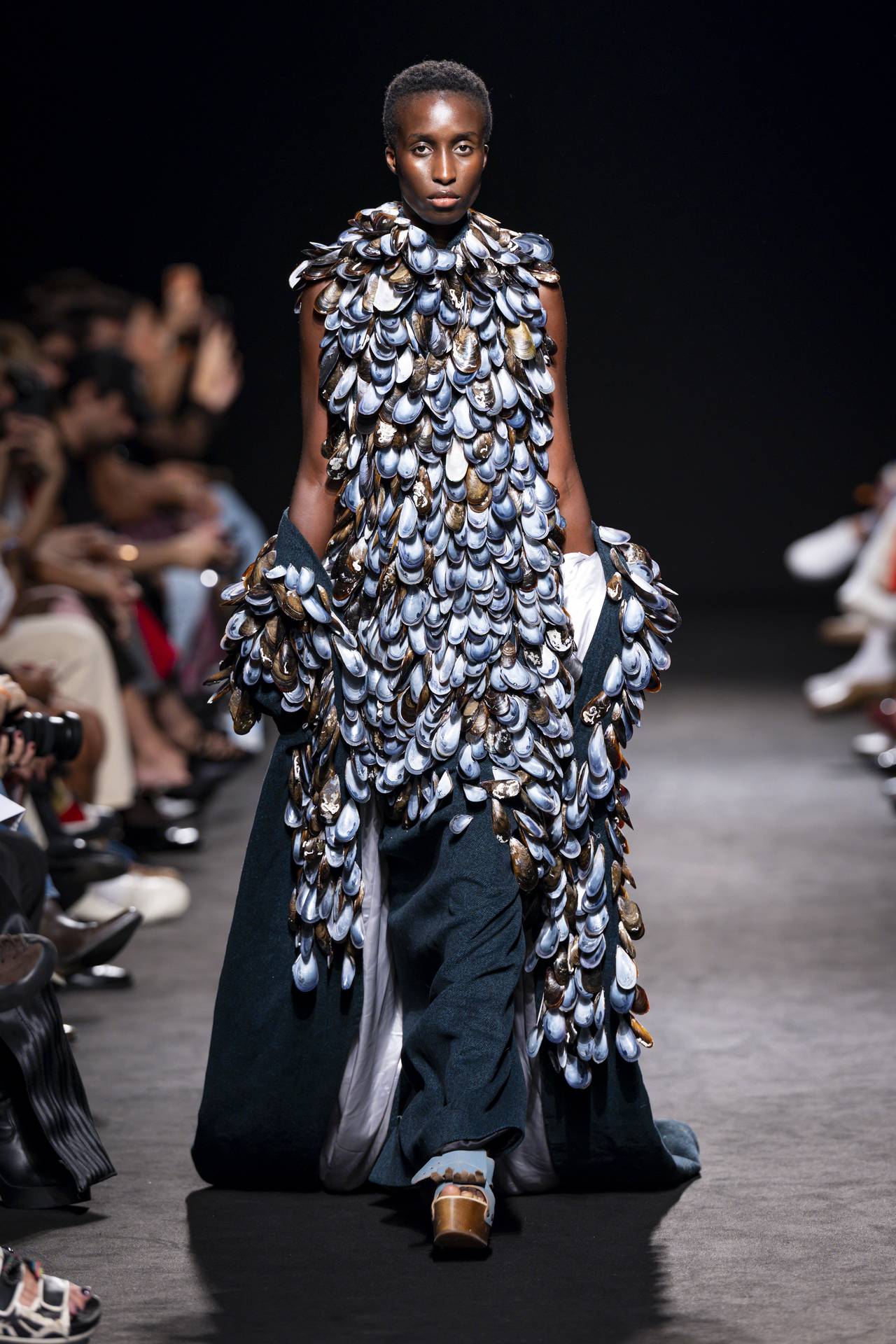
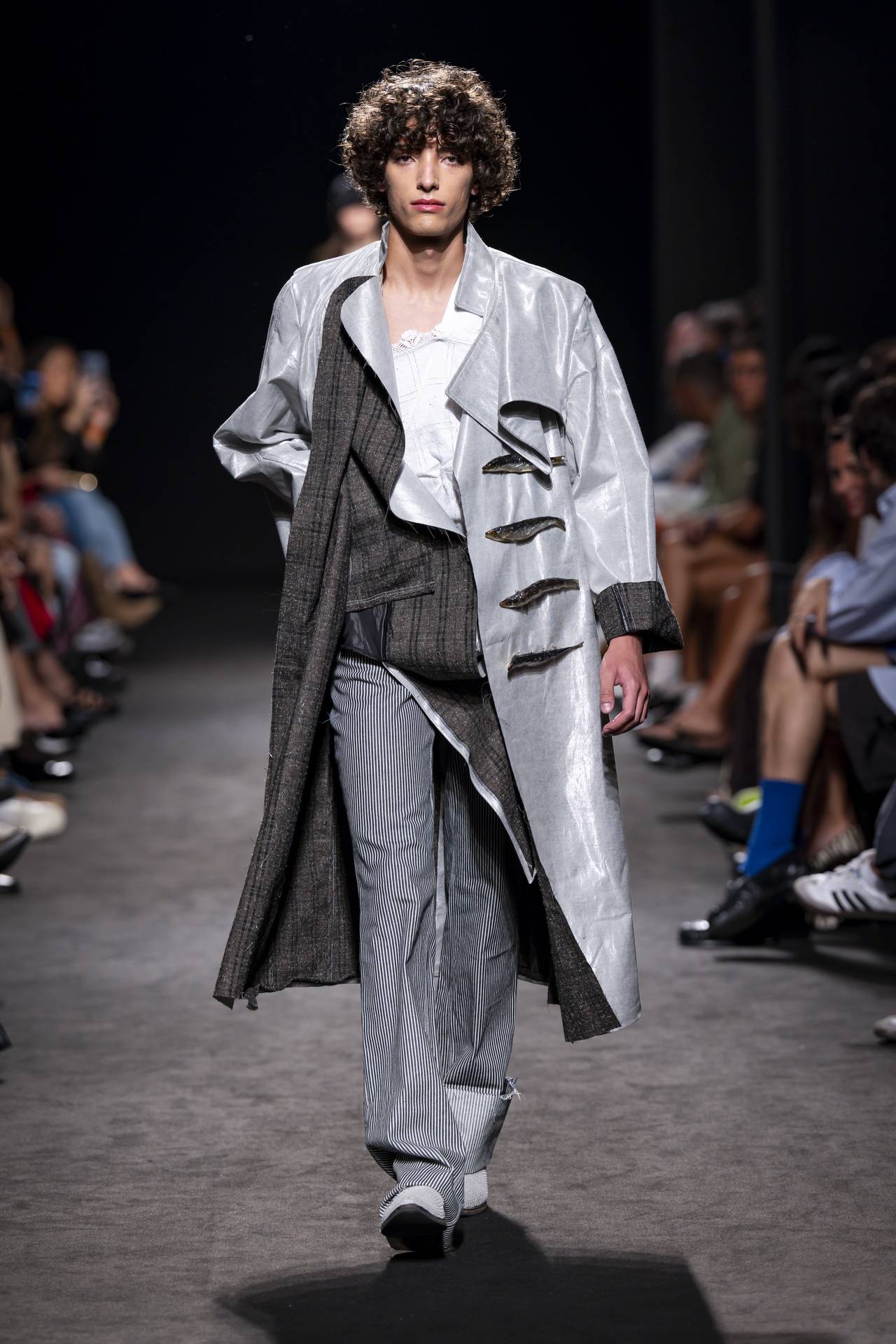
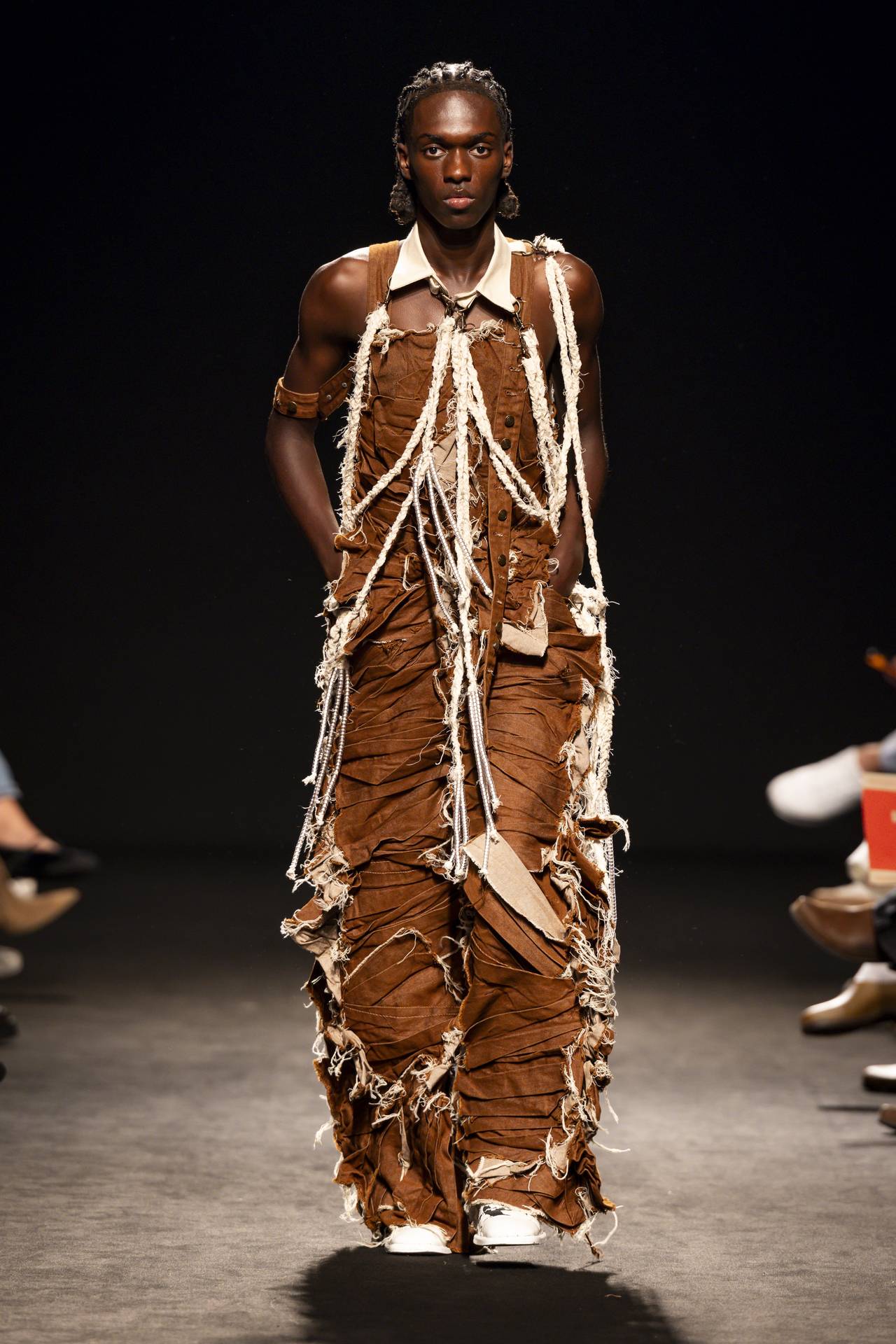
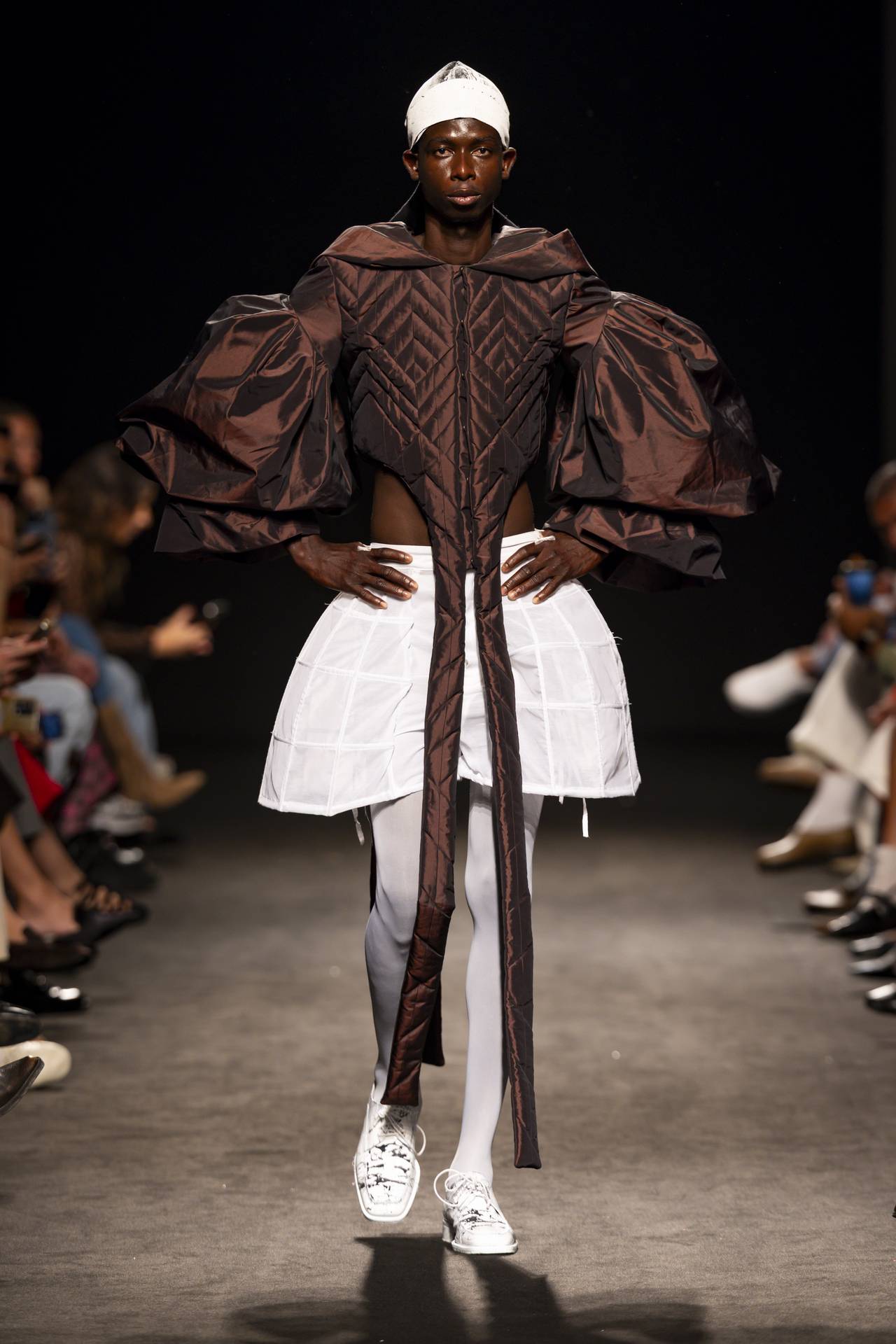
Finally, RONNI brings a deeply personal perspective to the runway, exploring identity through references to his Cape Verdean heritage and Black cultural history. Drawing inspiration from African dandyism and hip-hop, he brings together different cultural influences to create a visual language that celebrates heritage and self-expression.
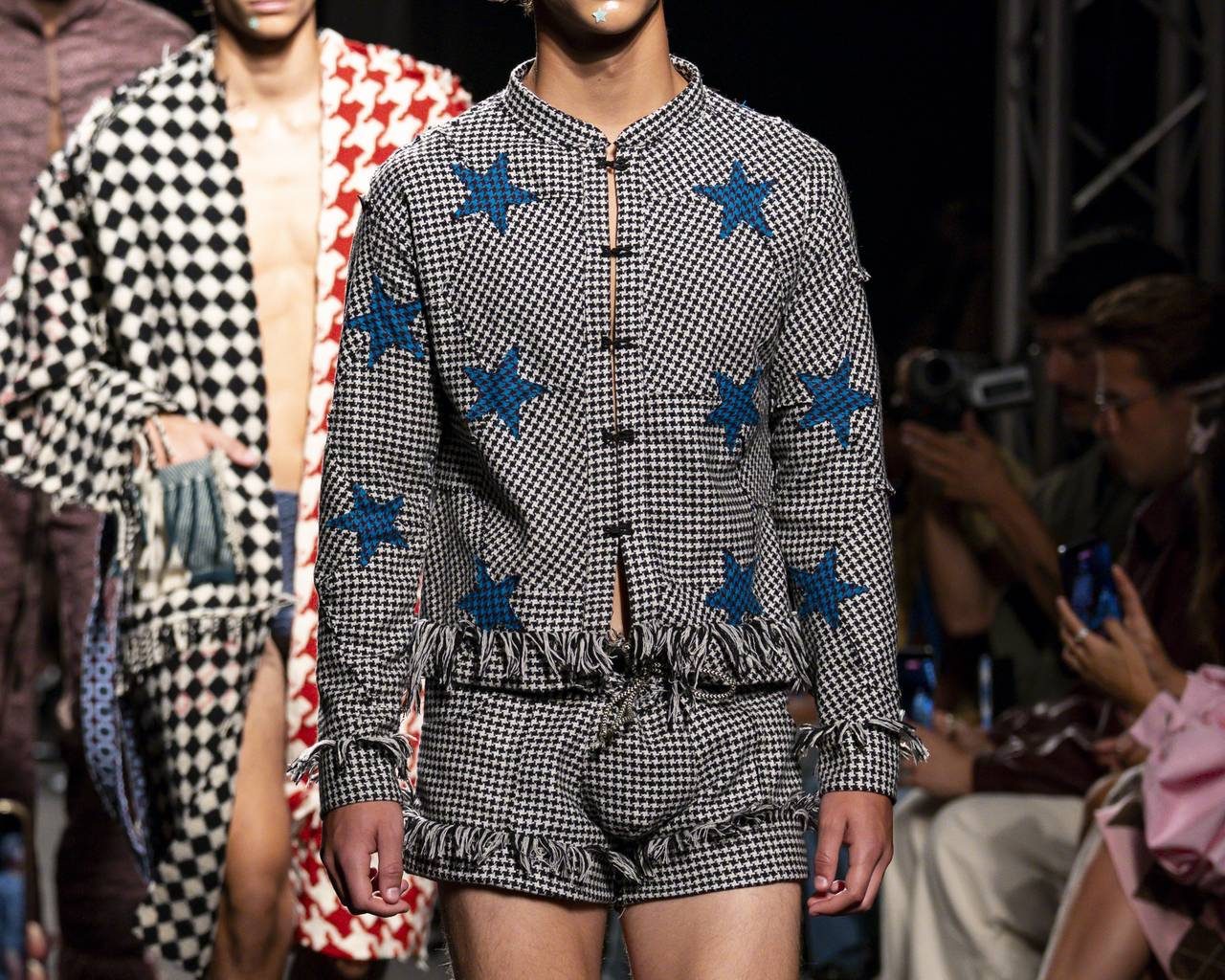
Ariana Orrico: Mui Snob e Sempre Desleal
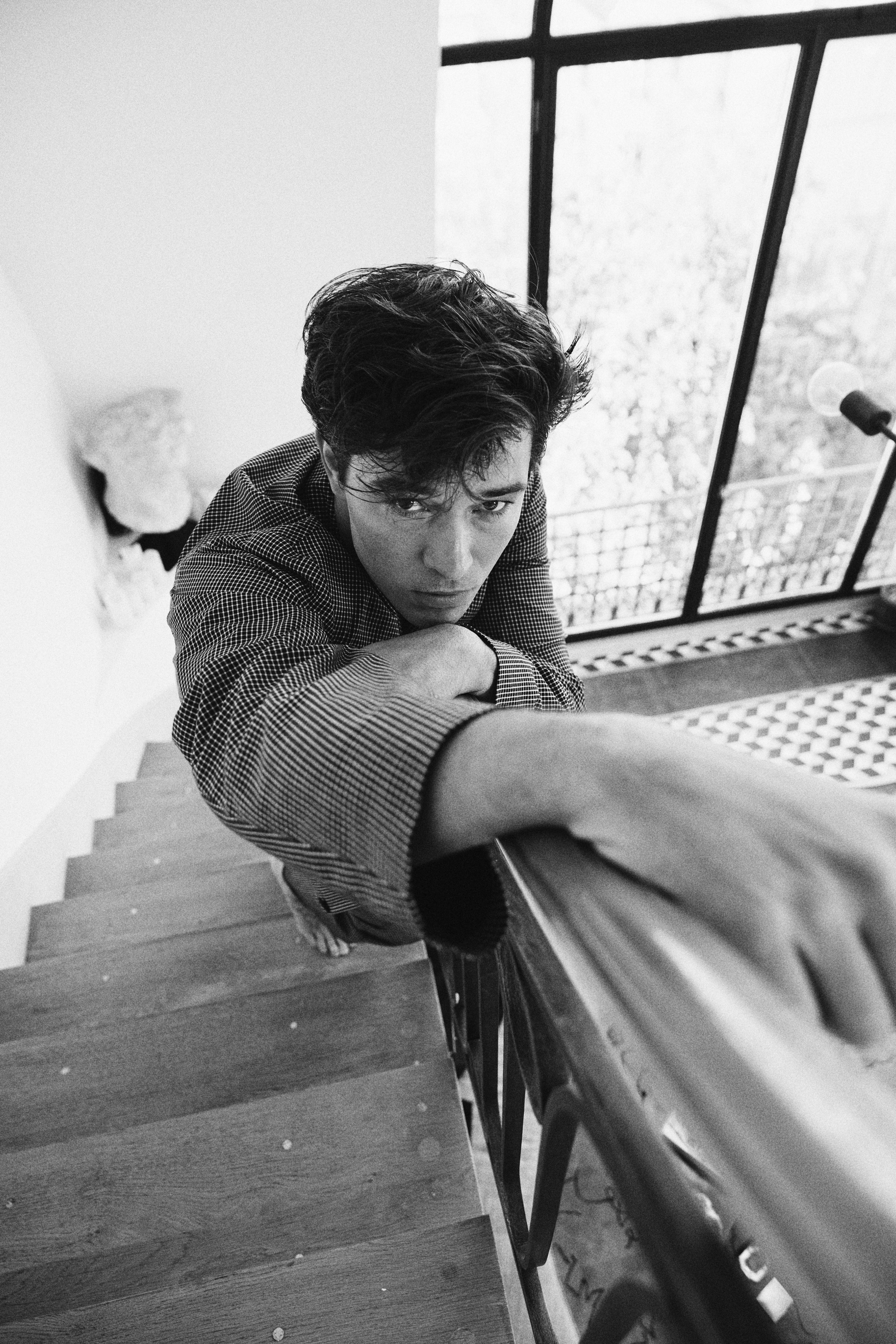
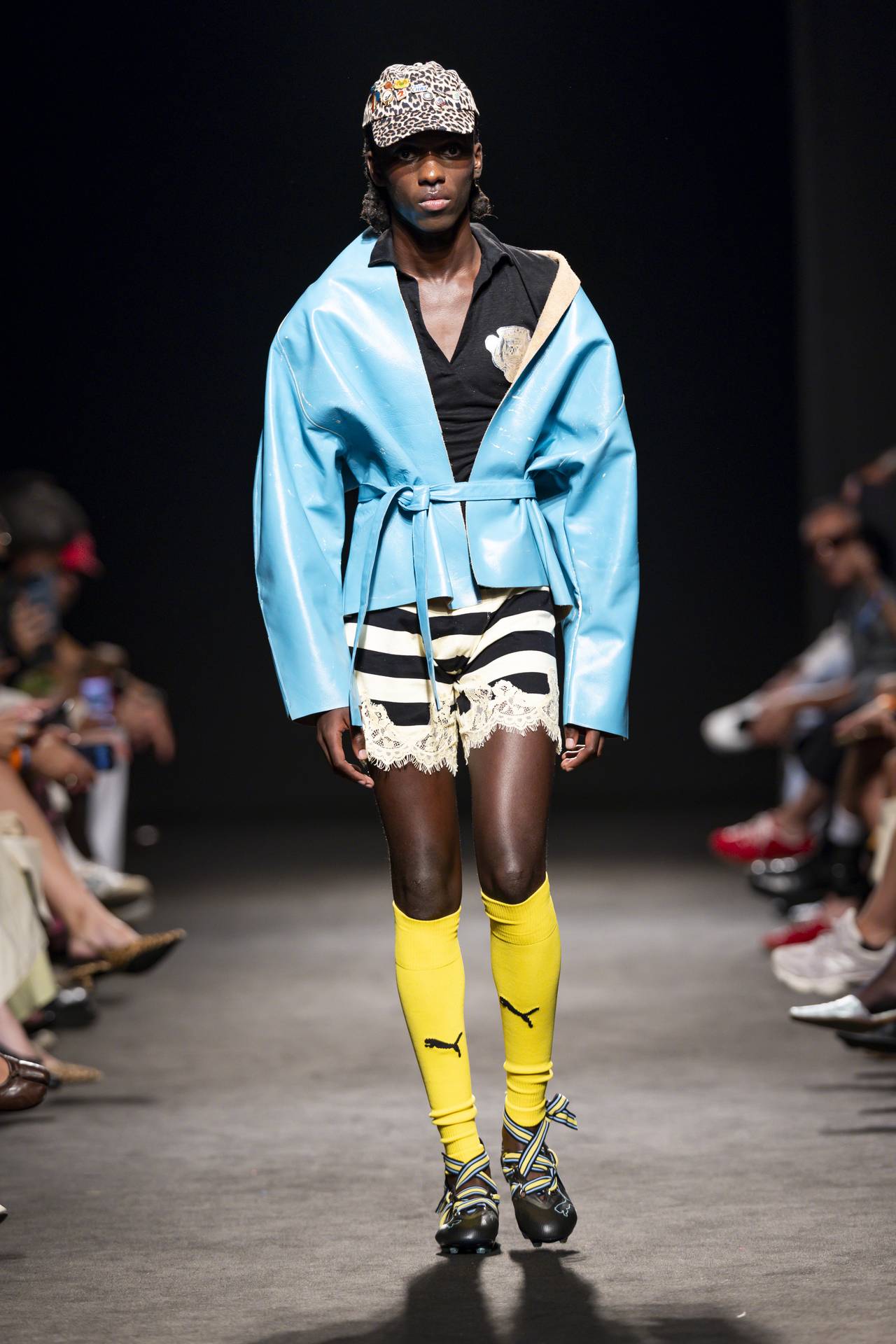
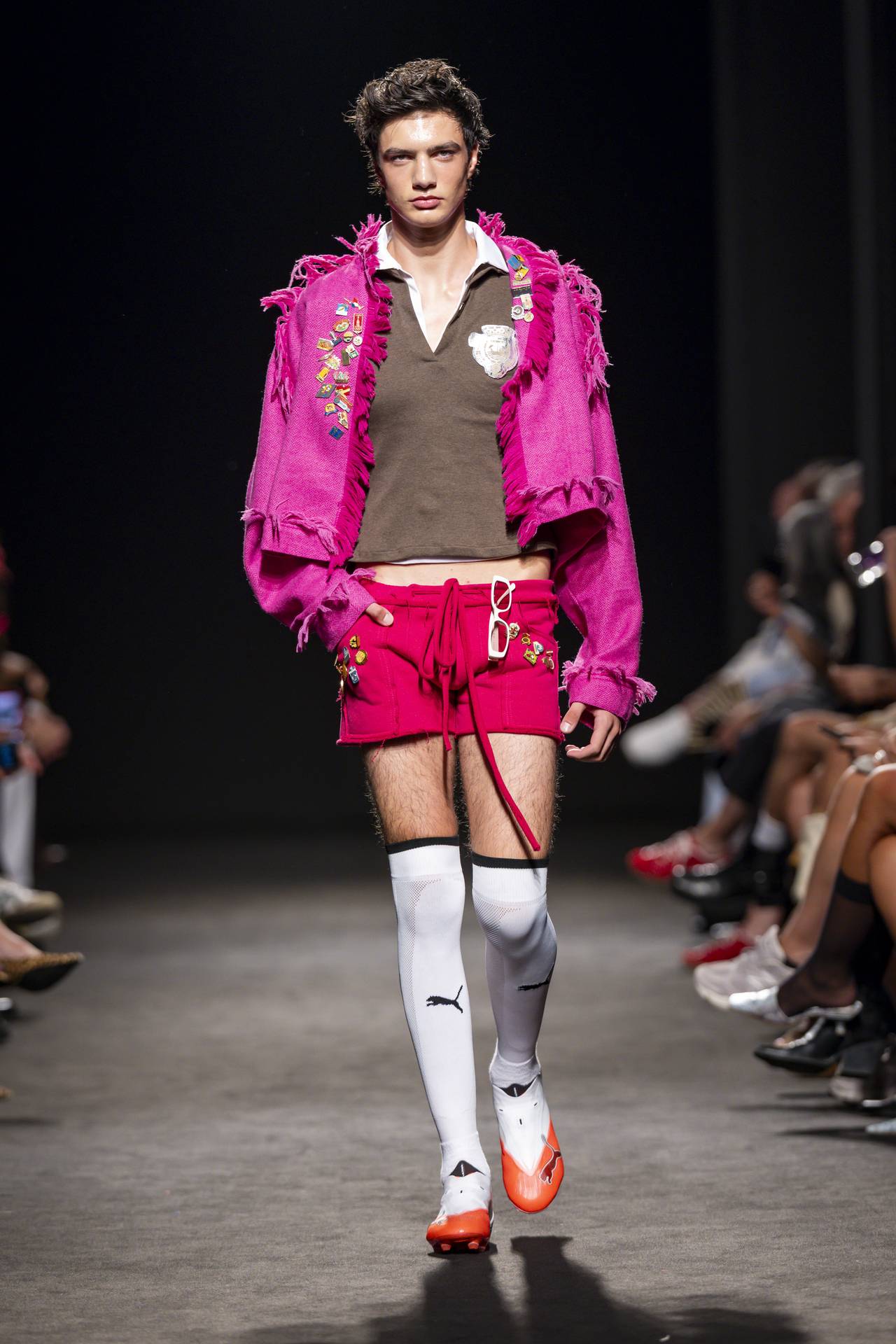
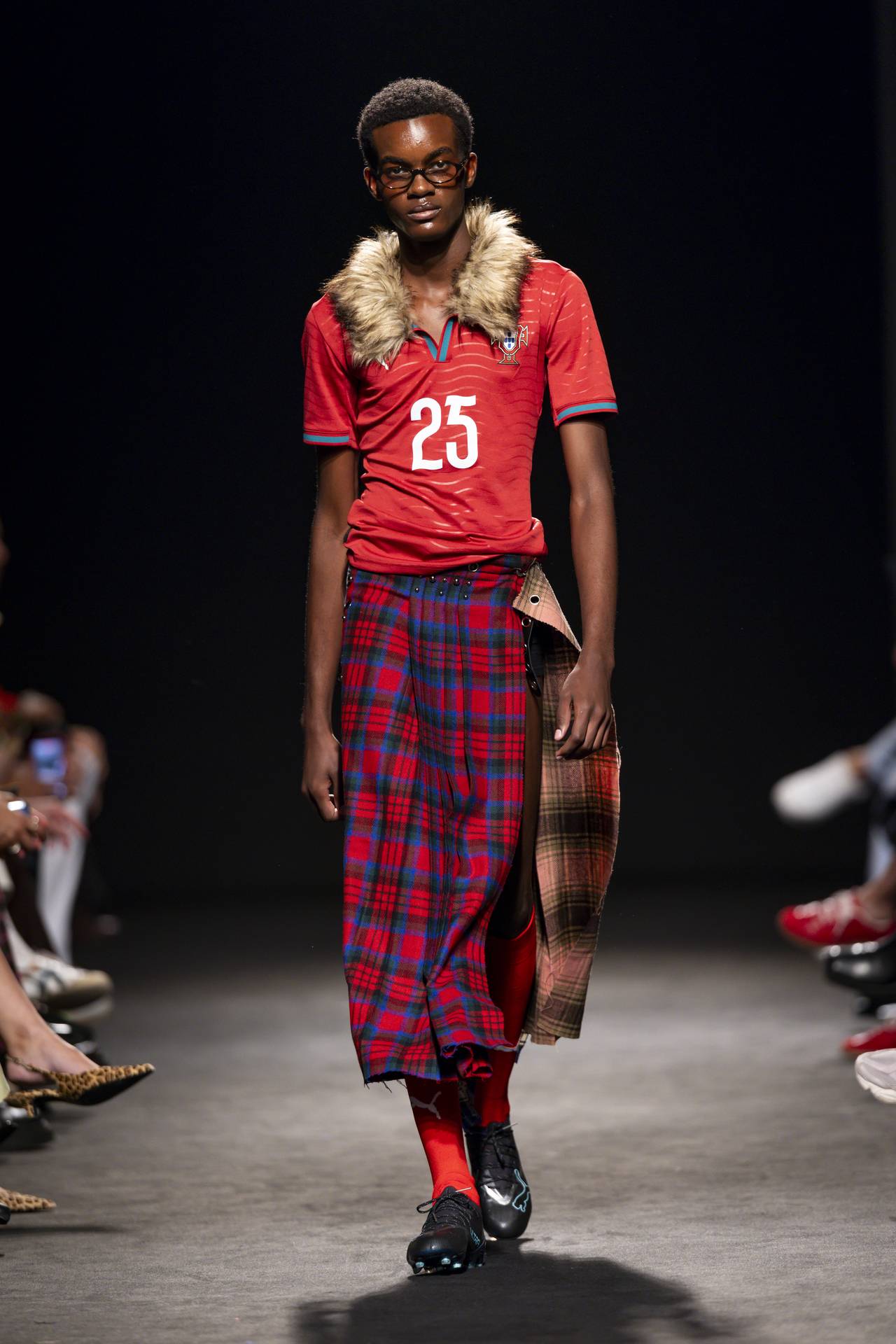
Ariana Orrico‘s collection explores the intimate relationship between the individual and the city, with Lisbon at its heart. It invites us to extend the boundaries of our homes into the streets, allowing the places we inhabit to become part of who we are. This idea takes shape through a domestic aesthetic brought into the urban landscape, where pyjamas, robes and eye patches blur the line between private and public life. The result is a wardrobe that brings the comfort and intimacy of home into the streets of the city, turning everyday urban spaces into an extension of our personal world.
Francisca Nabinho: Point Sur Point
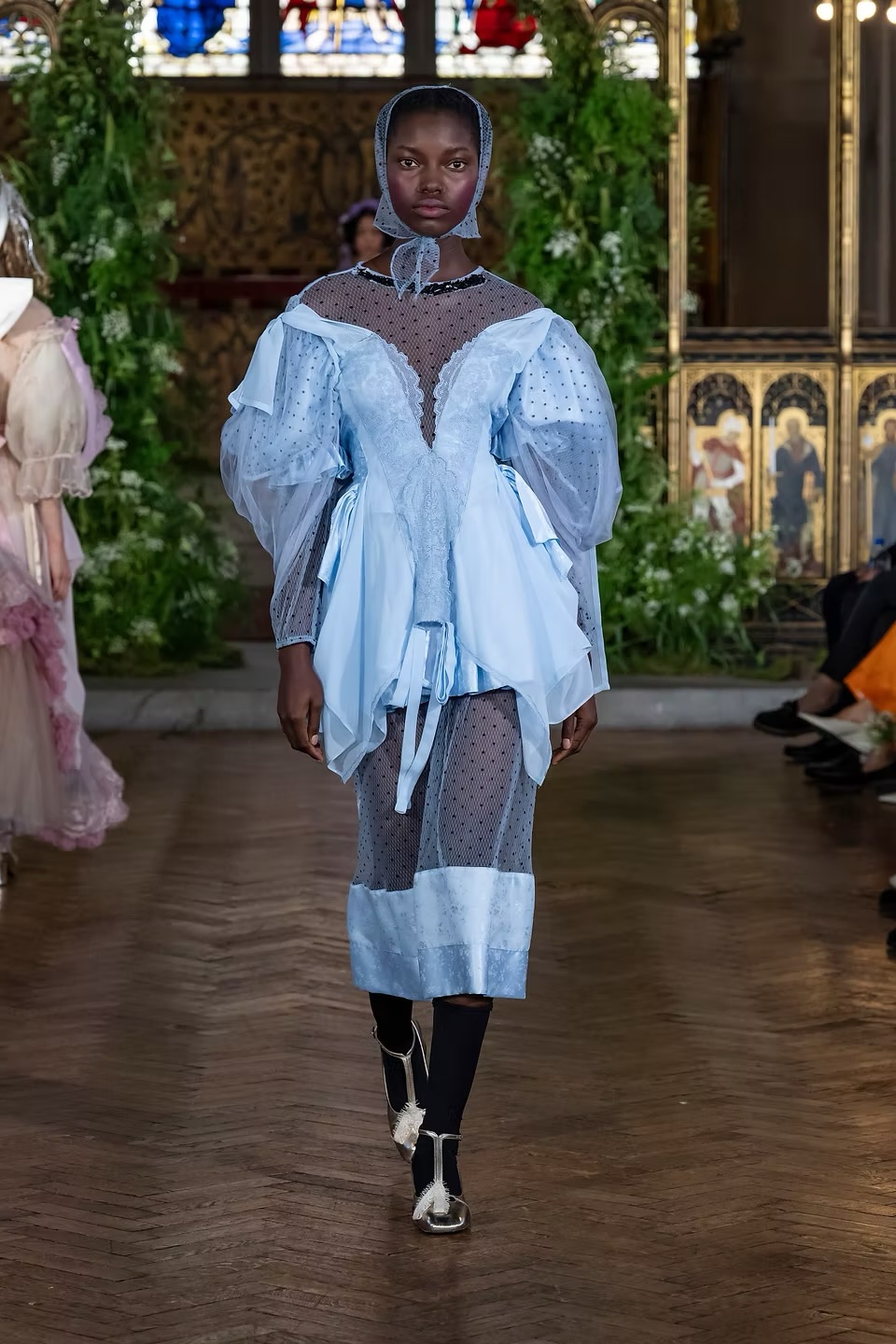
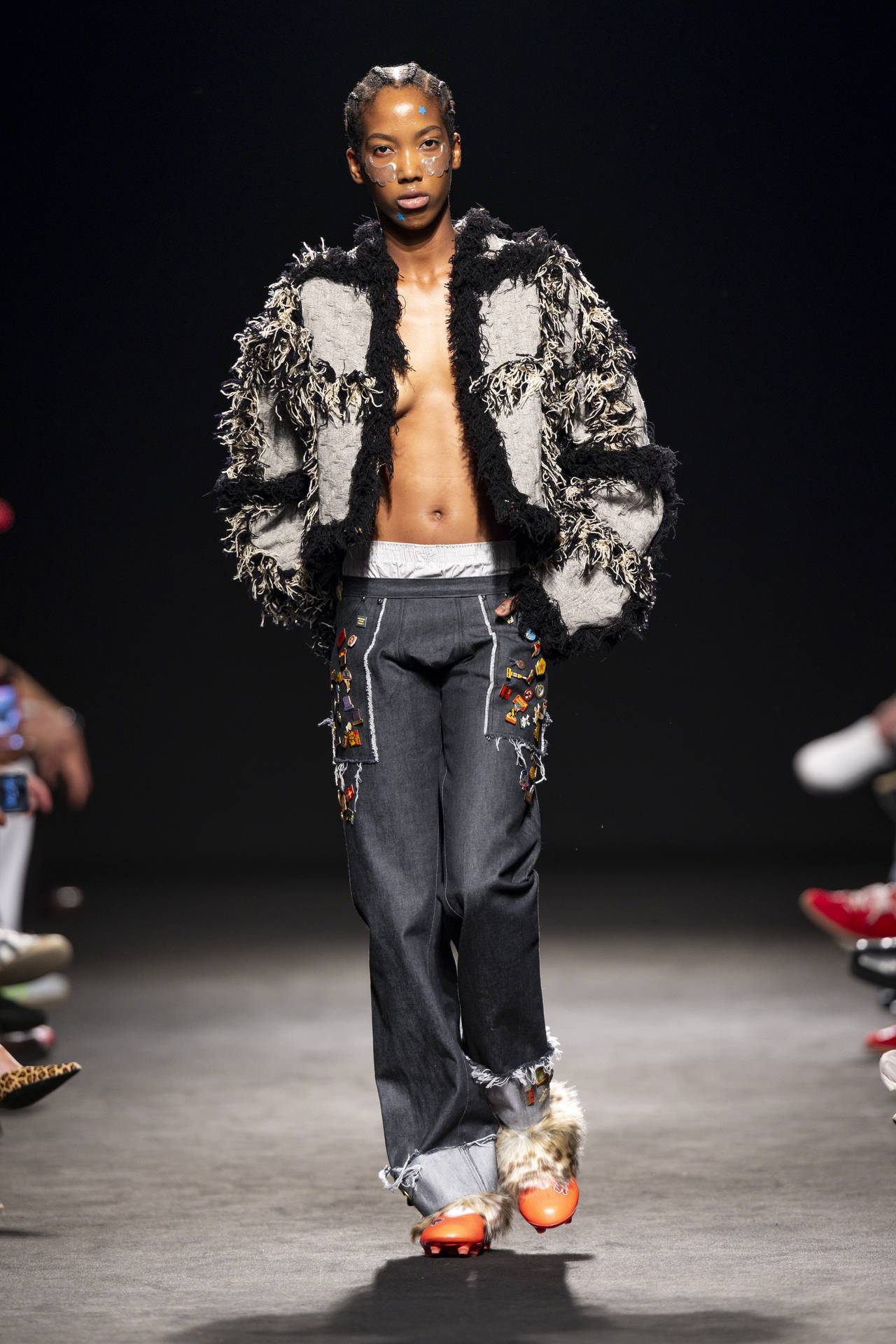
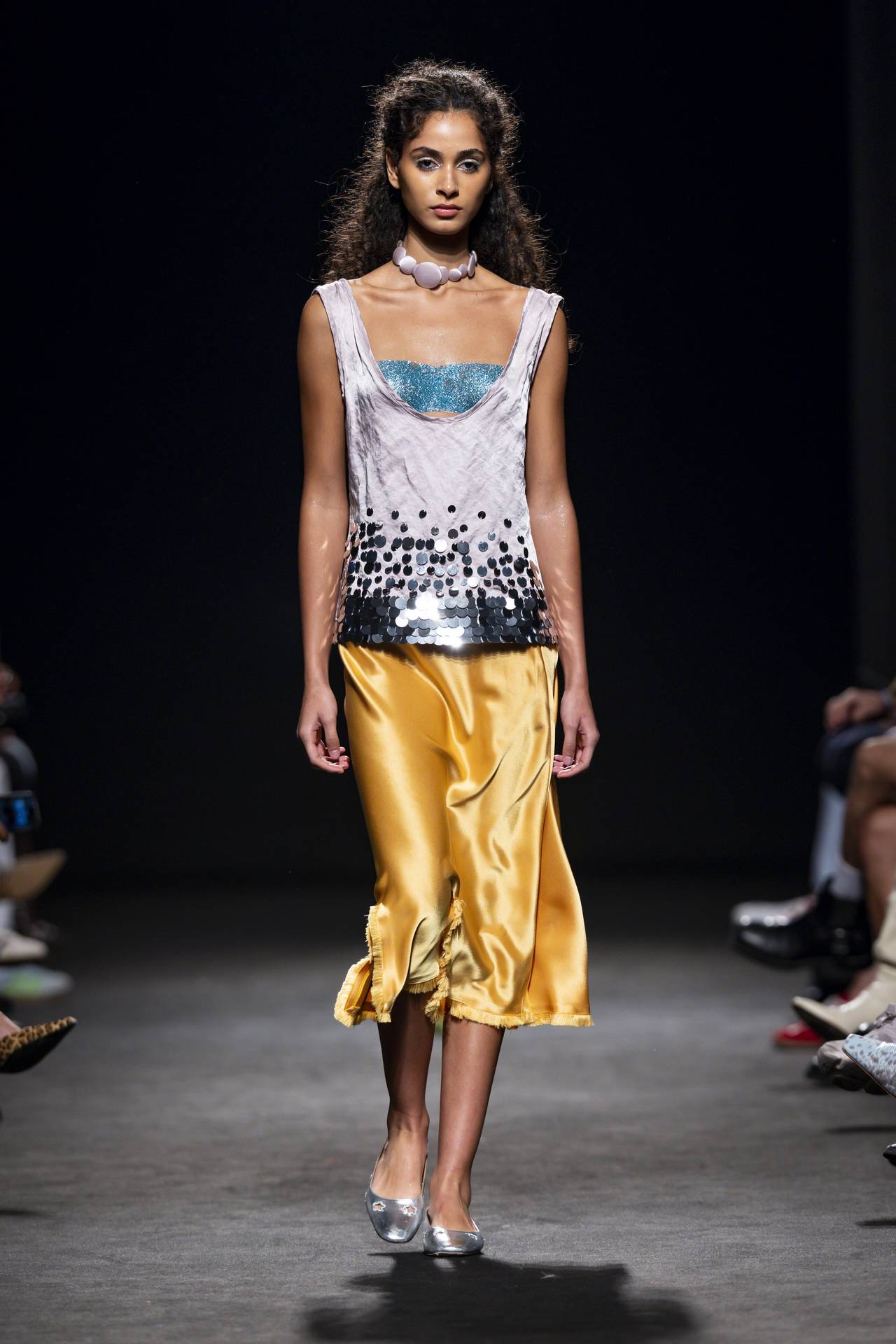
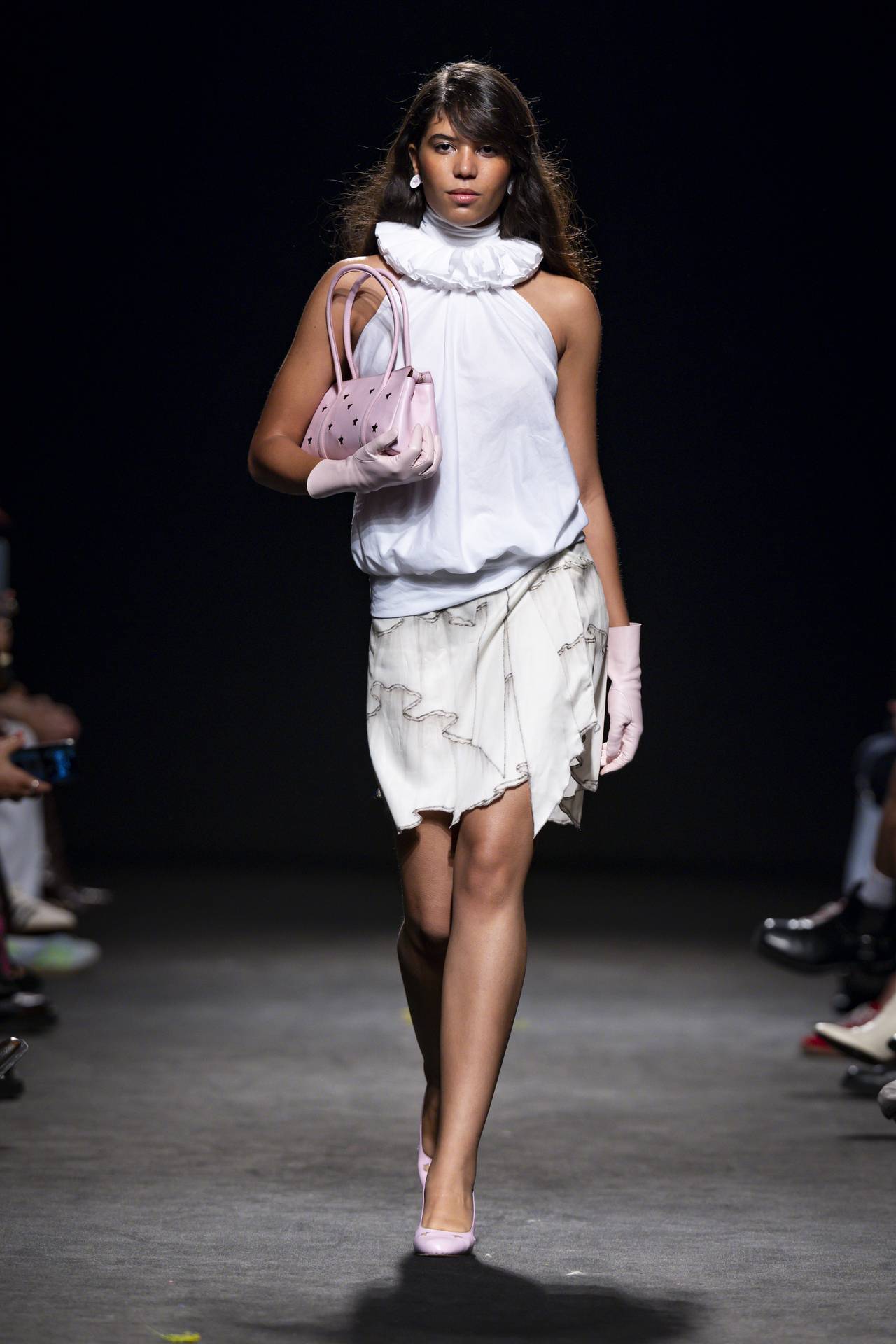
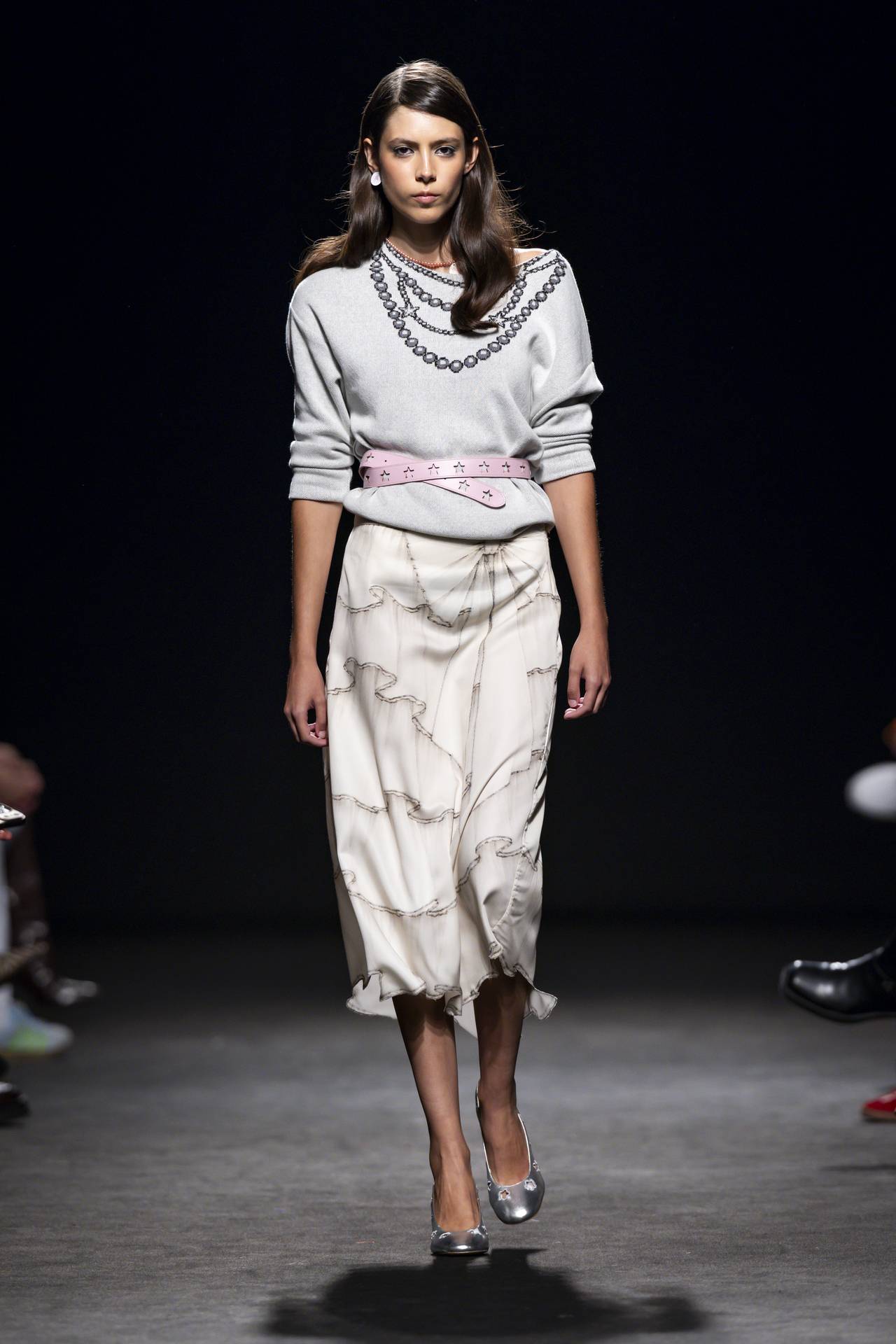
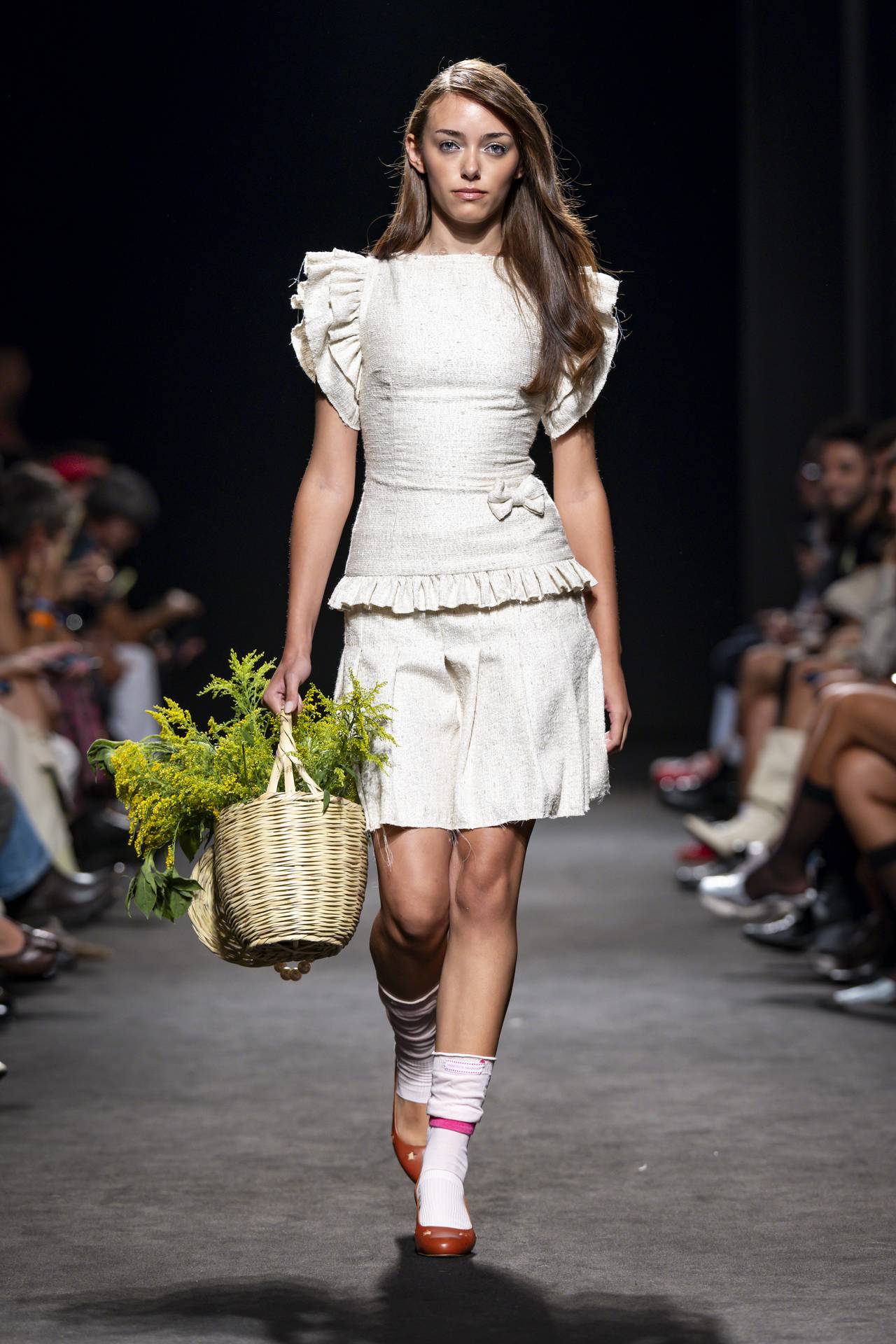
Francisca Nabinho’s collection takes us into a romantic and delicate world, filled with flower baskets, bows, stars, sheer fabrics and shimmering details. Titled Point Sur Point, the collection is built around the idea of a slow and meticulous creative process, where each small element gradually contributes to a bigger picture.
Inspired by Pointillism, the painting technique in which an image takes shape through the accumulation of tiny dots of colour, the collection translates this approach into fashion, making detail and repetition its defining elements. The trompe-l’œil technique also plays a central role, with ruffles, bows, pleats and even jewellery drawn directly onto the garments, creating an illusion of three-dimensionality and blurring the line between what is real and what is merely represented.
Luís Carvalho: Wildflower
With WILDFLOWER, his Spring/Summer 2027 collection presented at the Museu do Tesouro Real, Luís Carvalho takes us on a nostalgic journey back to a childhood before technology became an ever-present part of everyday life. A time when days seemed to move at a slower pace, spent outdoors with endless room for imagination and discovery. Rather than literally recreating those moments, the designer aims to capture the feelings behind them: lightness, freedom, curiosity and the ability to find beauty in the simplest things.
Inspired by rural landscapes and memories of days spent wandering through flower-filled fields, Luís Carvalho‘s collection embraces a natural colour palette of ecru, beige and grey, with touches of grass green, sky blue and salmon pink. Flowers become both graphic and structural elements, translated into details and volumes that seem to bloom directly from the garments. Silhouettes are light and fluid, defined by relaxed proportions and soft constructions, while layering and more structured shapes create a contrast between delicacy and strength. This interplay of layers reflects the nature of memory itself, with some moments remaining vivid while others slowly fade with time.