Junya Watanabe’s SS27 collection transforms the body into a site of construction. Skin-tight bodysuits act as a neutral foundation for sculptural volumes, rigid structures and punk-inflected ornamentation
Junya Watanabe’s SS27 collection is impossible to look away from. It’s a visual magnet that draws the eye in and keeps it captivated, look after look, from the opening silhouette to the very last.
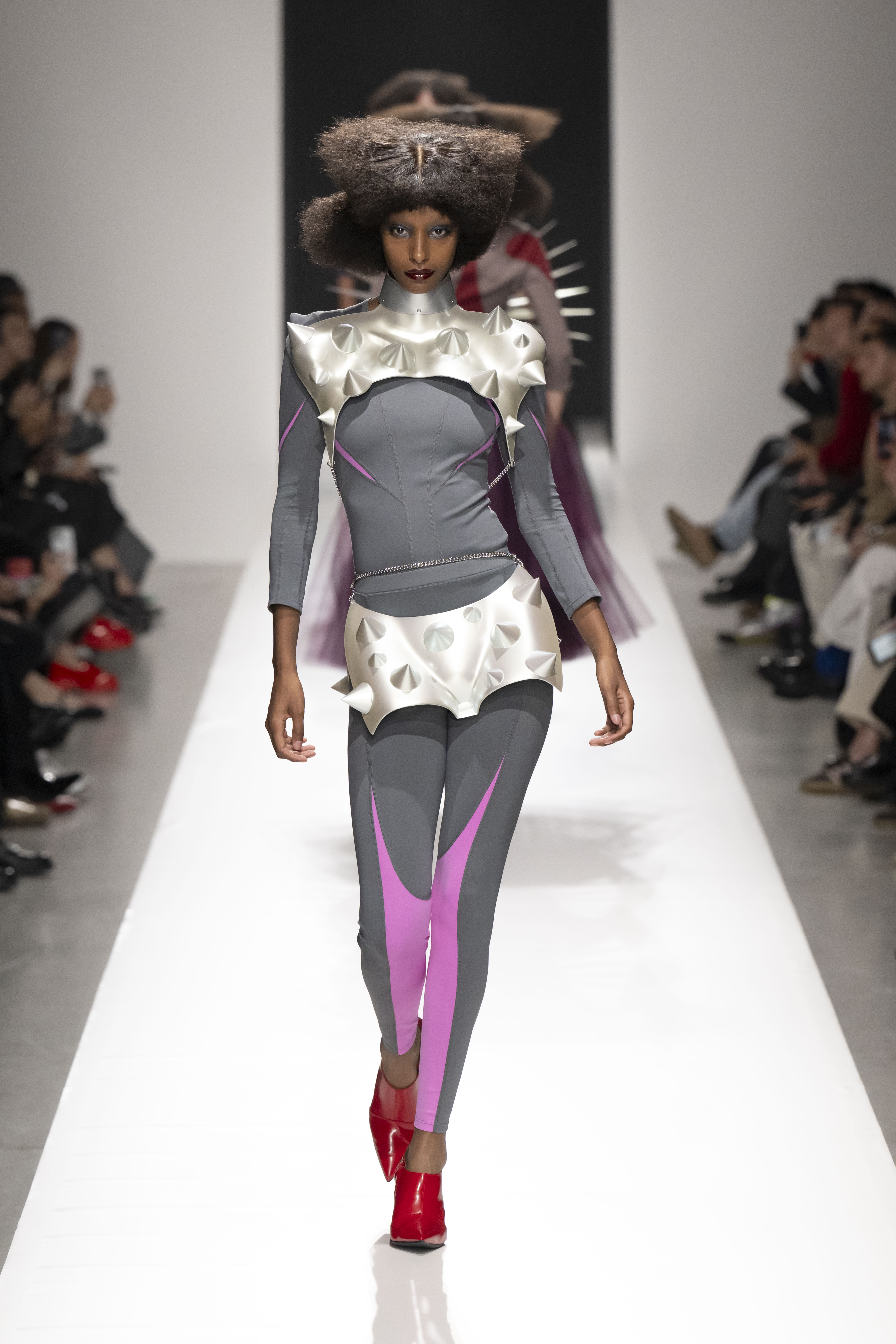
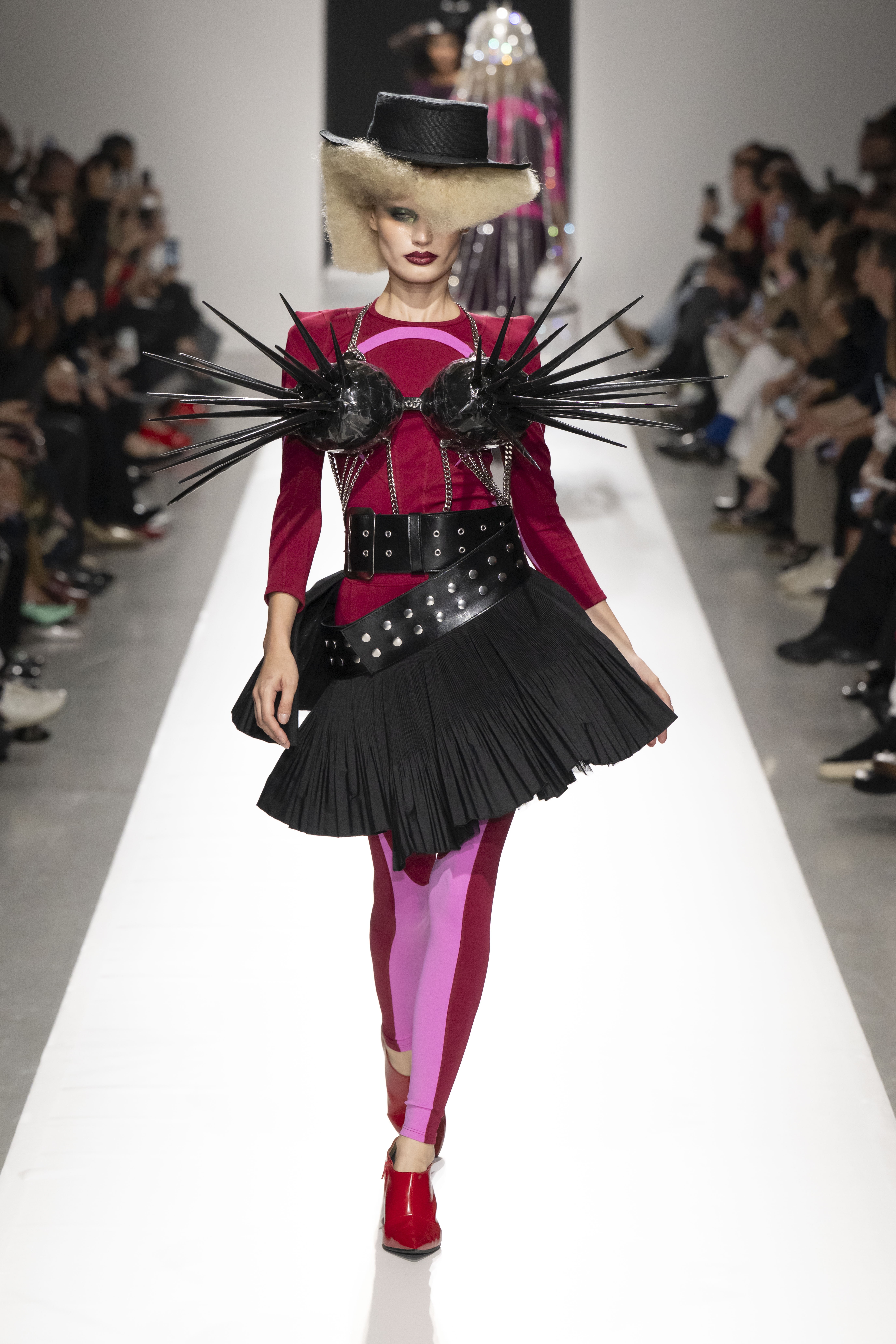
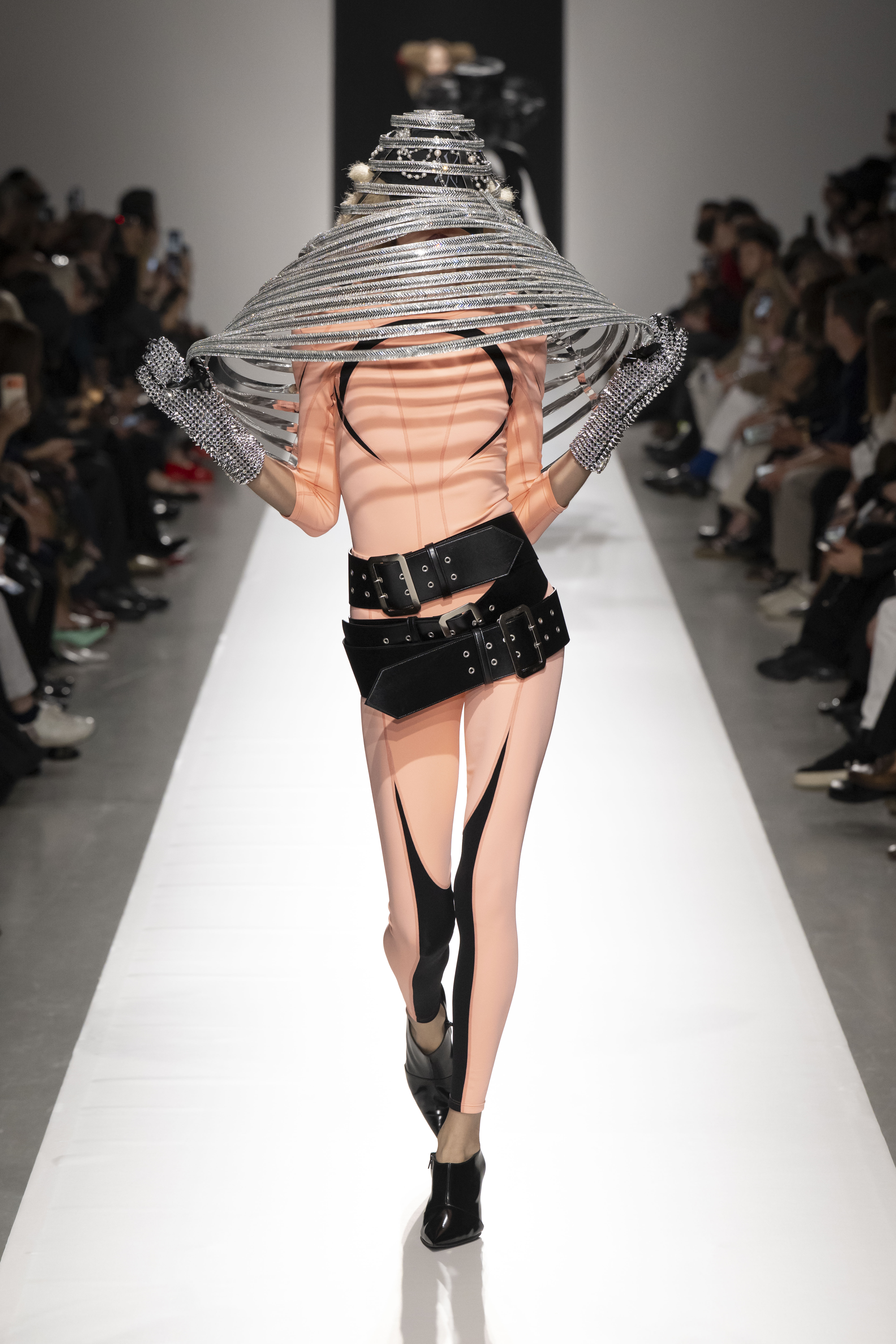
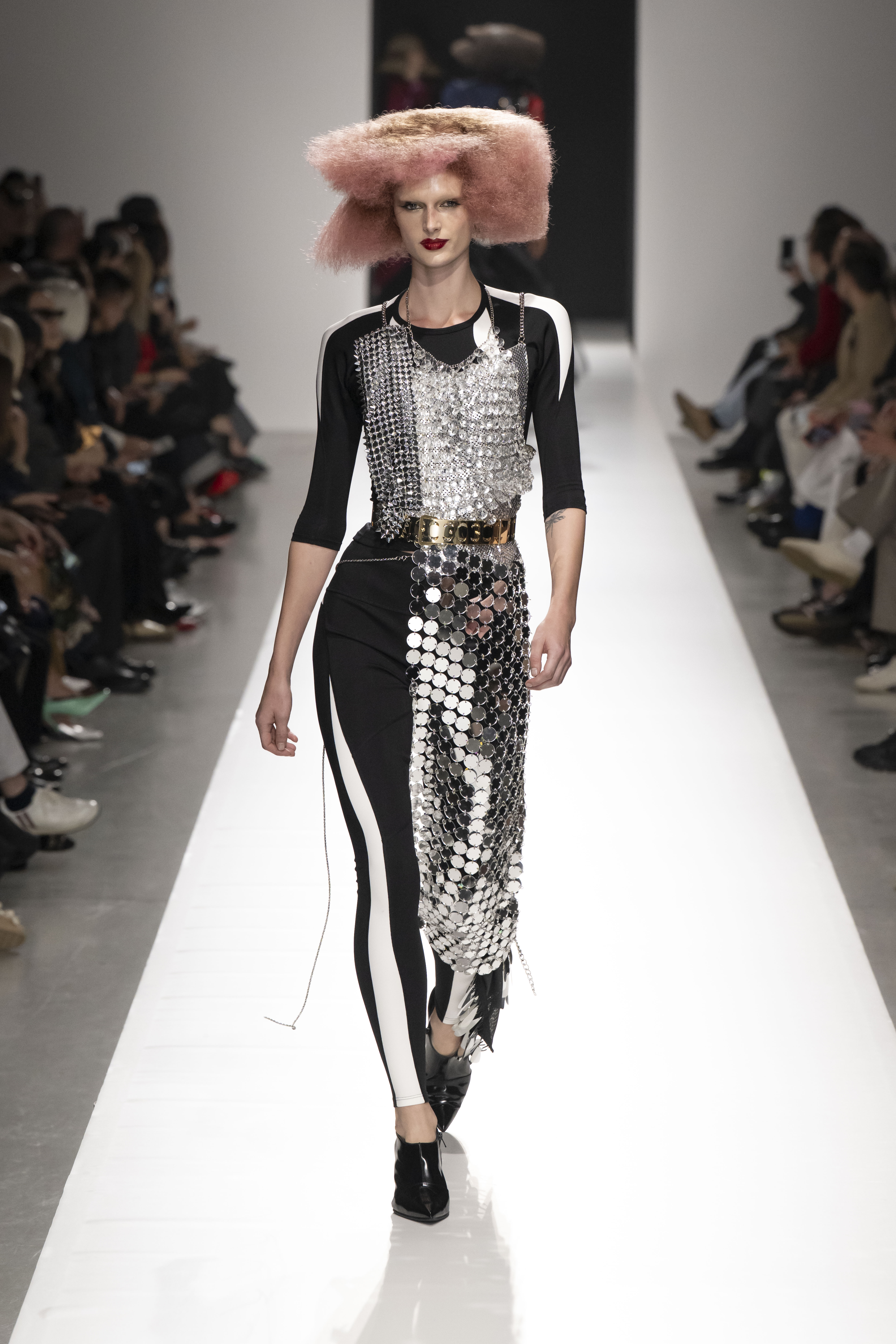
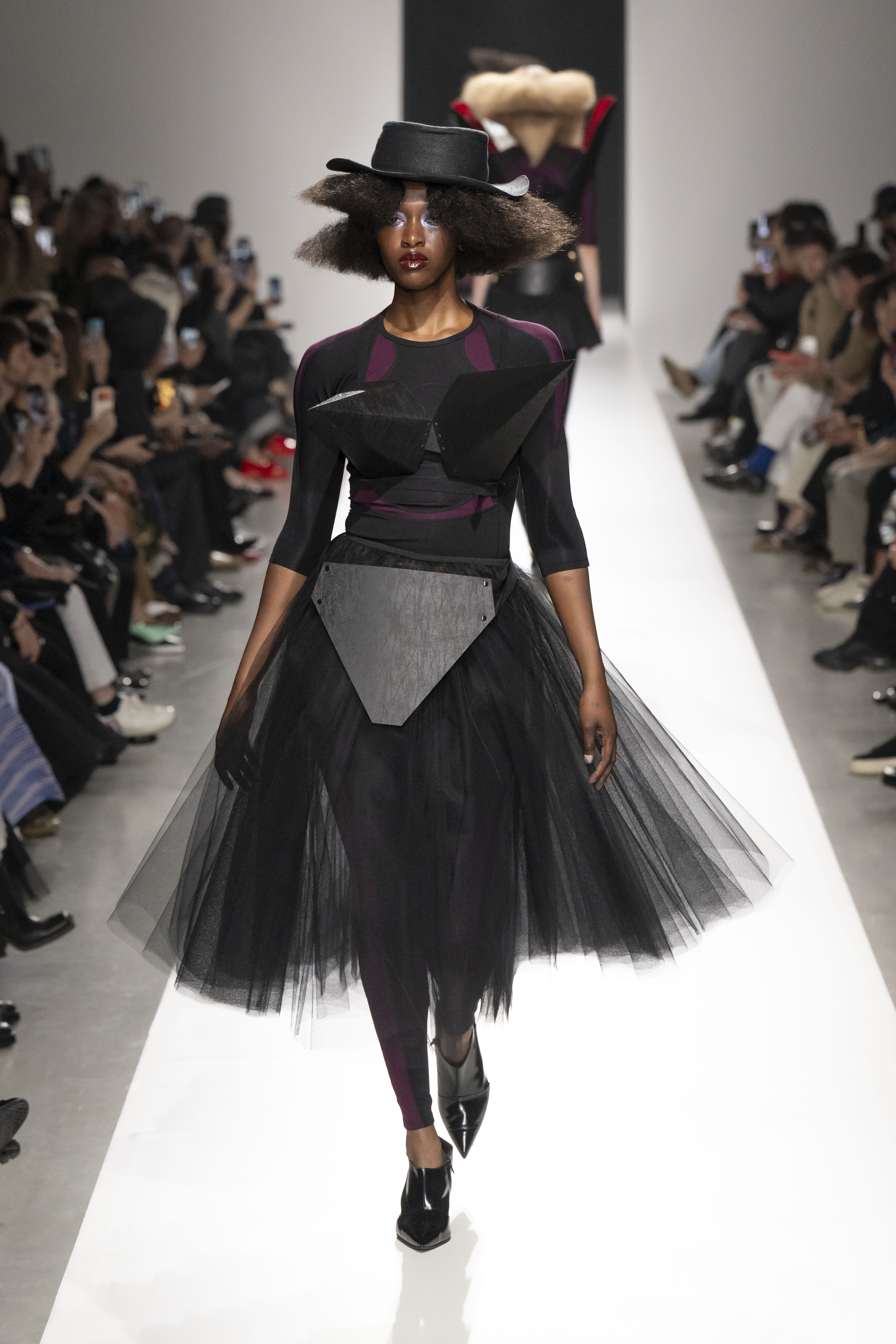
It begins with a silhouette stripped back to its most essential form: an ultra-fitted bodysuit, acting almost as a second skin that follows and exposes the anatomy of the body. This neutral surface becomes Watanabe’s starting point, a foundation upon which he begins to add, distort and construct.
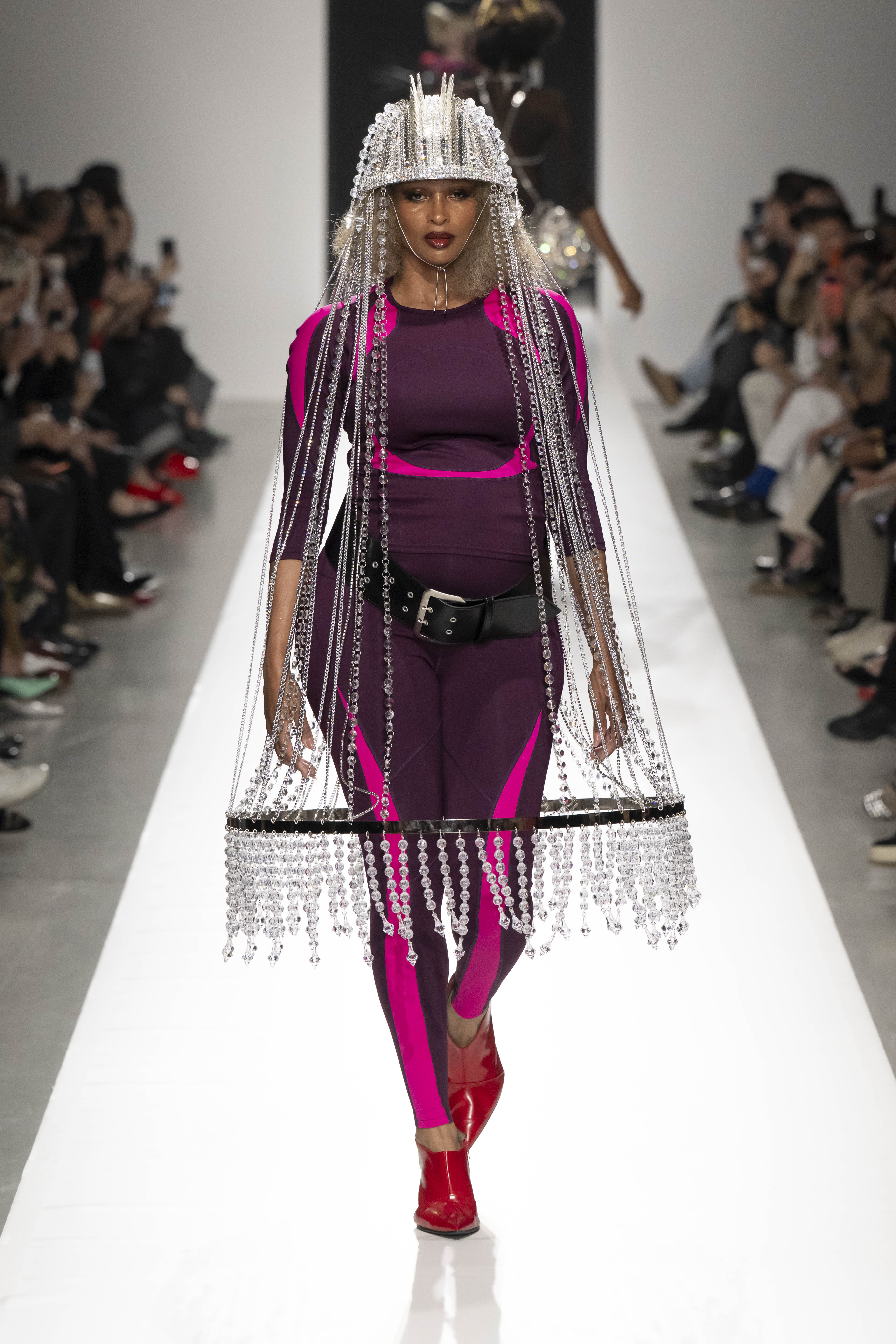
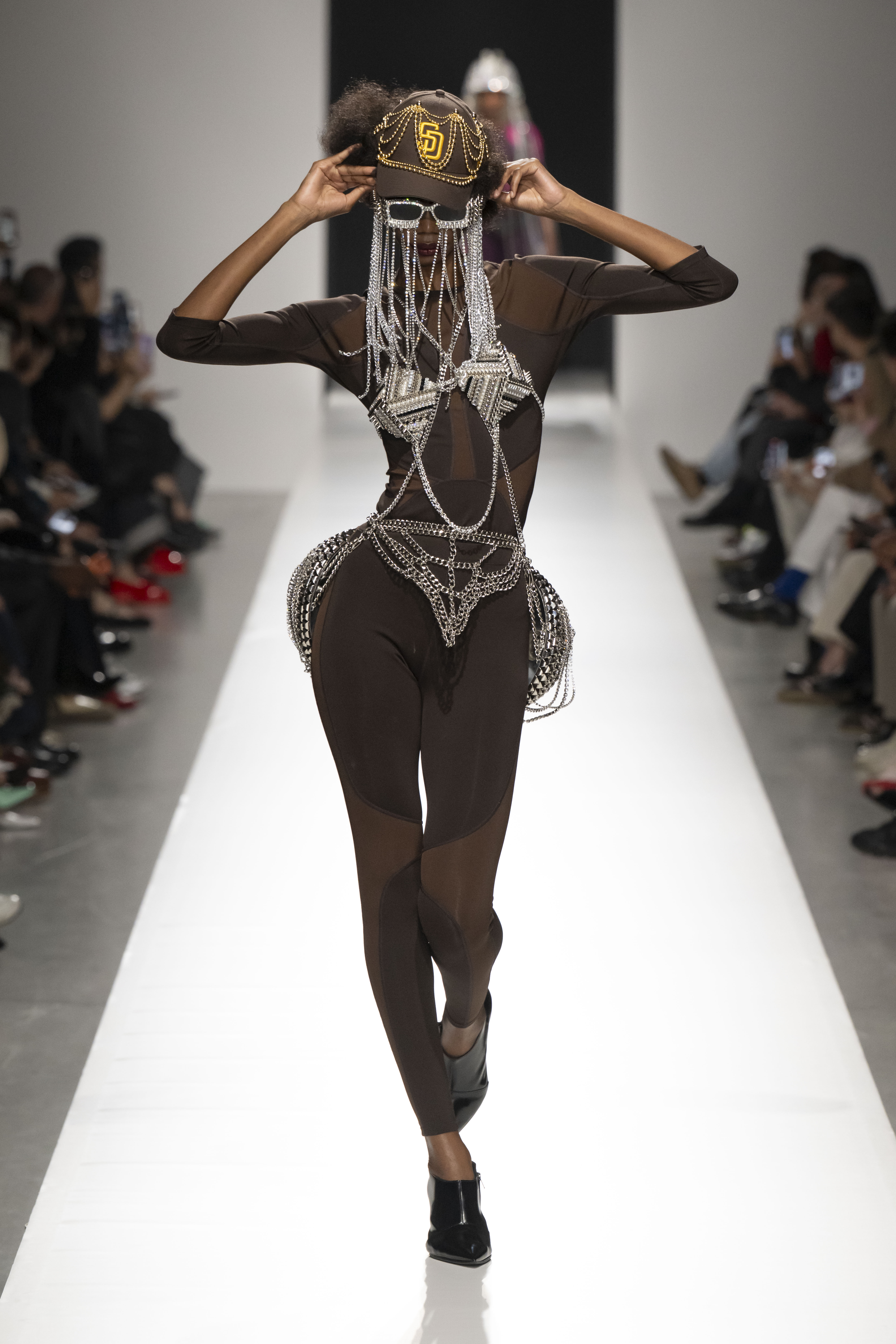
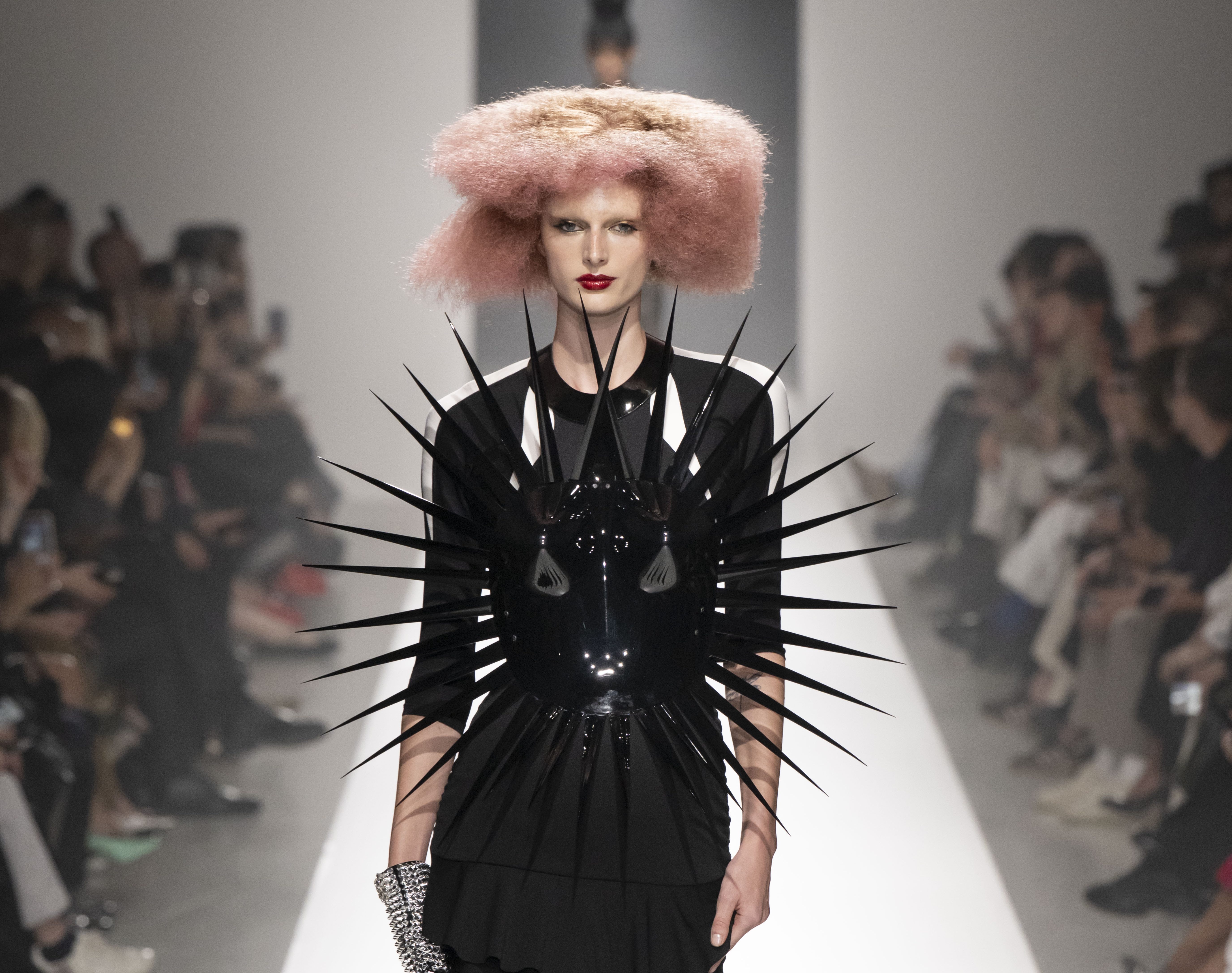
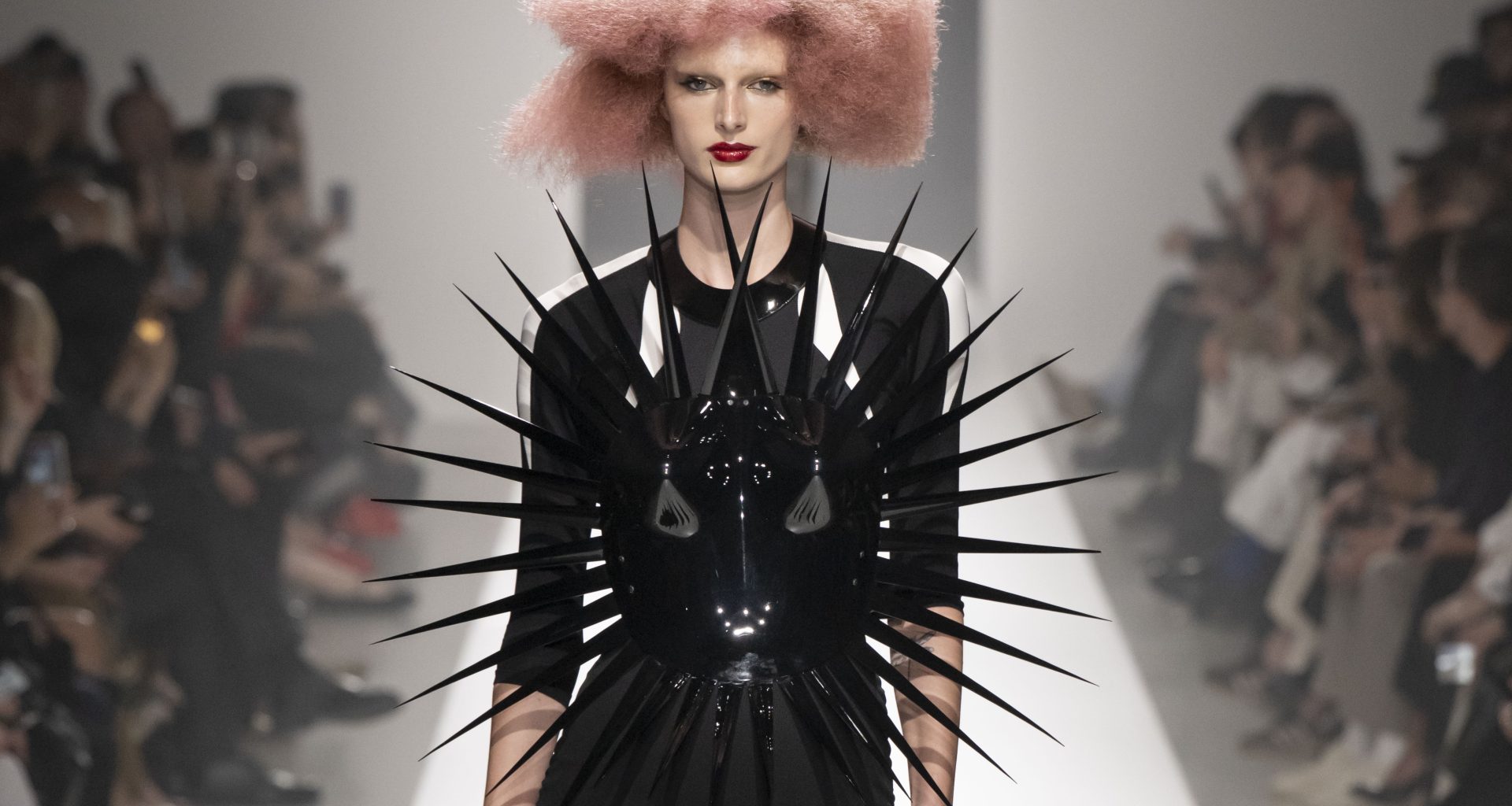
Against this extreme closeness to the body, artificial volumes, protrusions and sculptural structures emerge, reshaping the bust and torso and gradually transforming the human figure into a new form of architecture. Ornament is therefore never merely decorative but becomes structure.
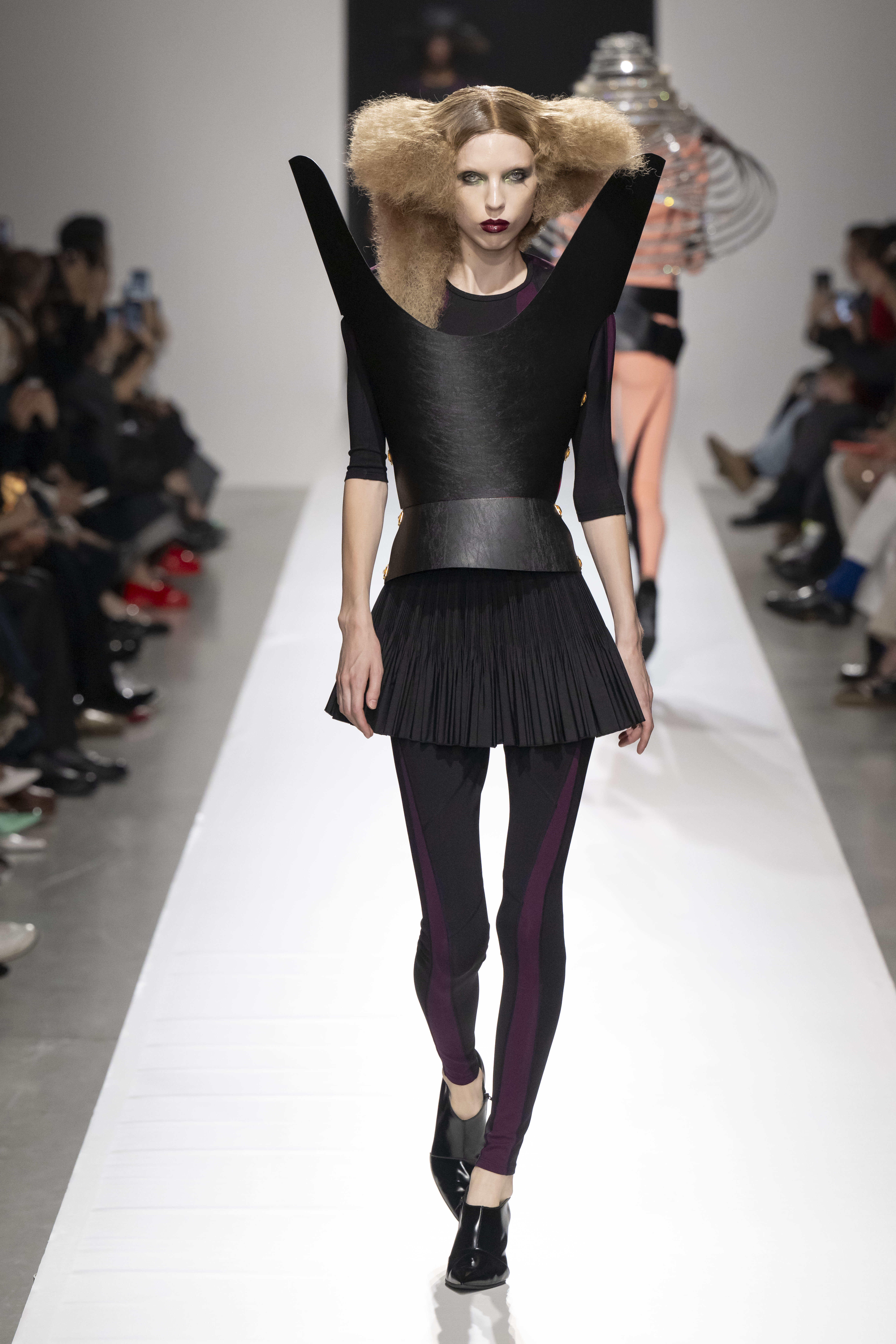
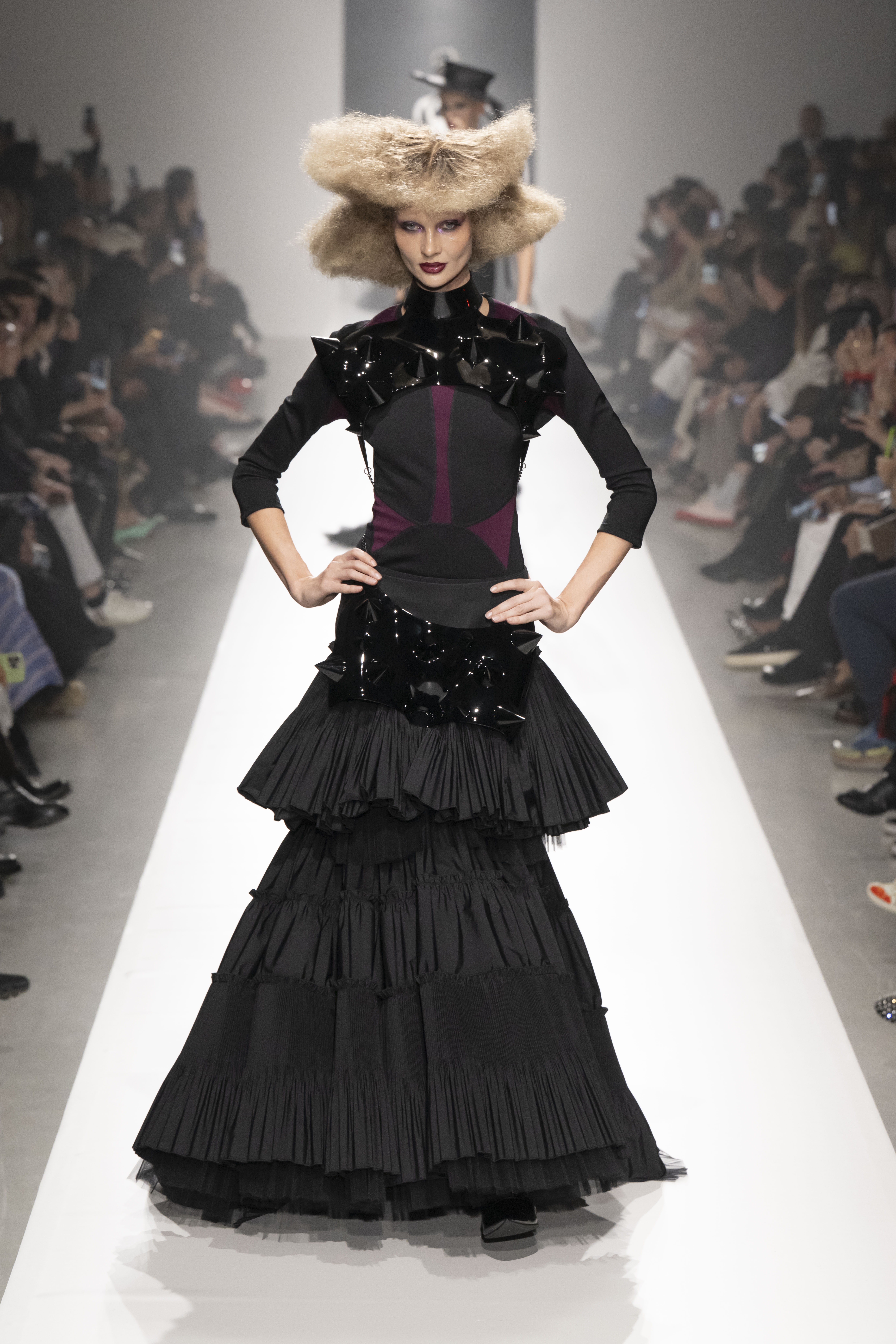
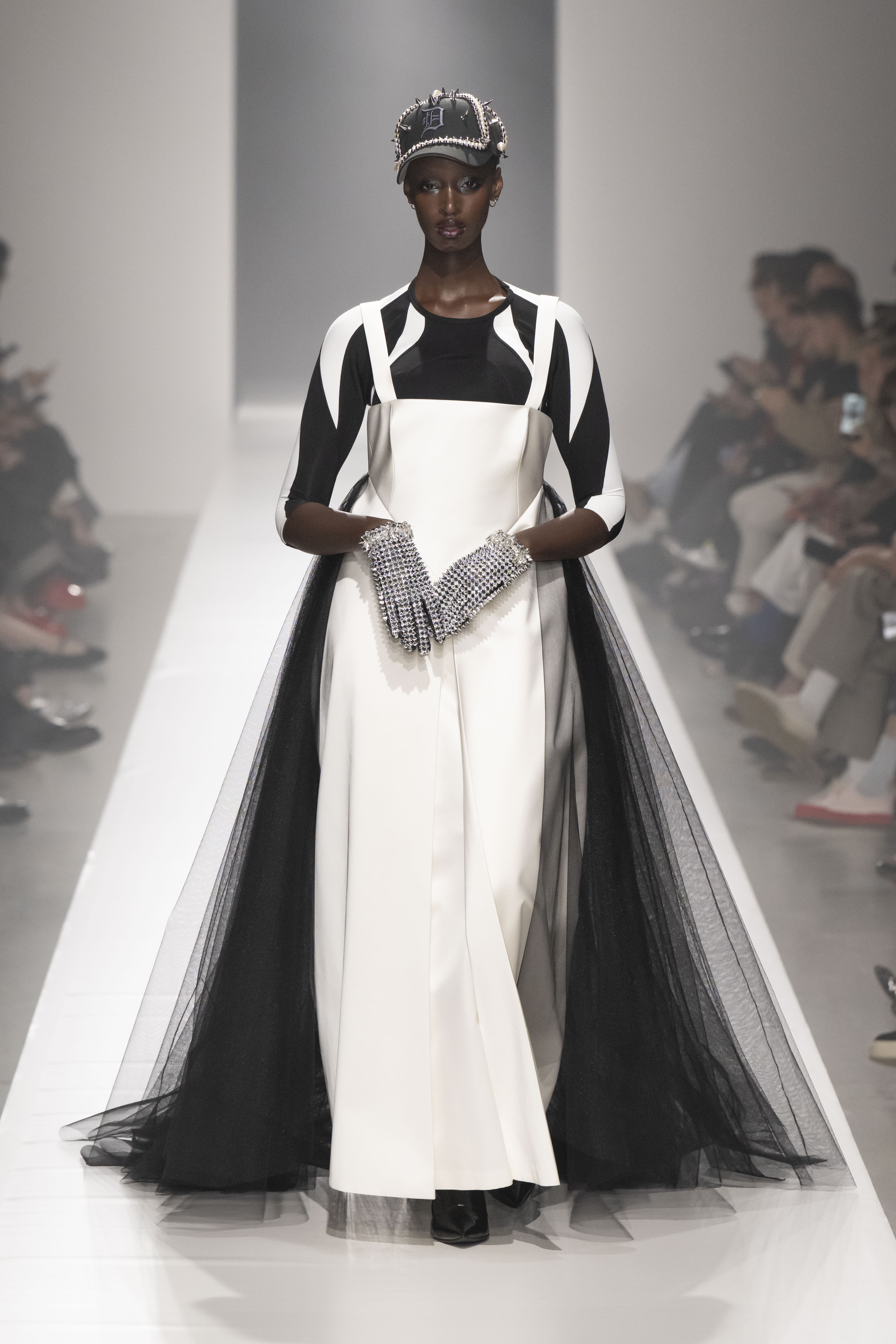
Even the hairstyles follow the same logic of distortion. Rigid, angular, deliberately irregular and asymmetrical, they disrupt the natural proportions of the head. Onto this reconstructed anatomy, Watanabe introduces a distinctly punk vocabulary.
Sculptural bras erupt with spikes and studs, chains trace and encircle the body, and pearls shift from jewellery into structural elements. Leather, corsetry, armour-like constructions and deconstructed jackets create a constant tension between aggression and elegance.
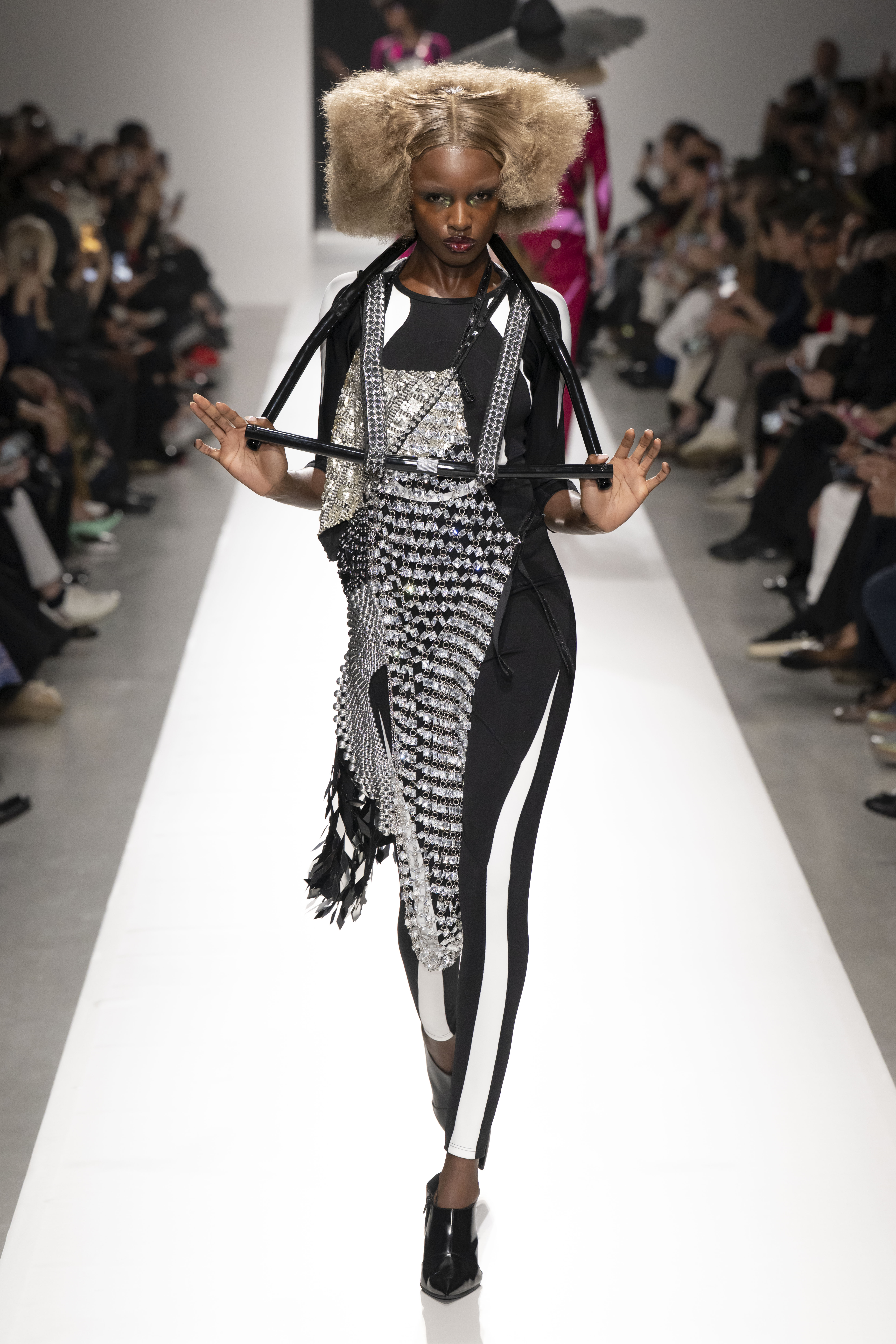
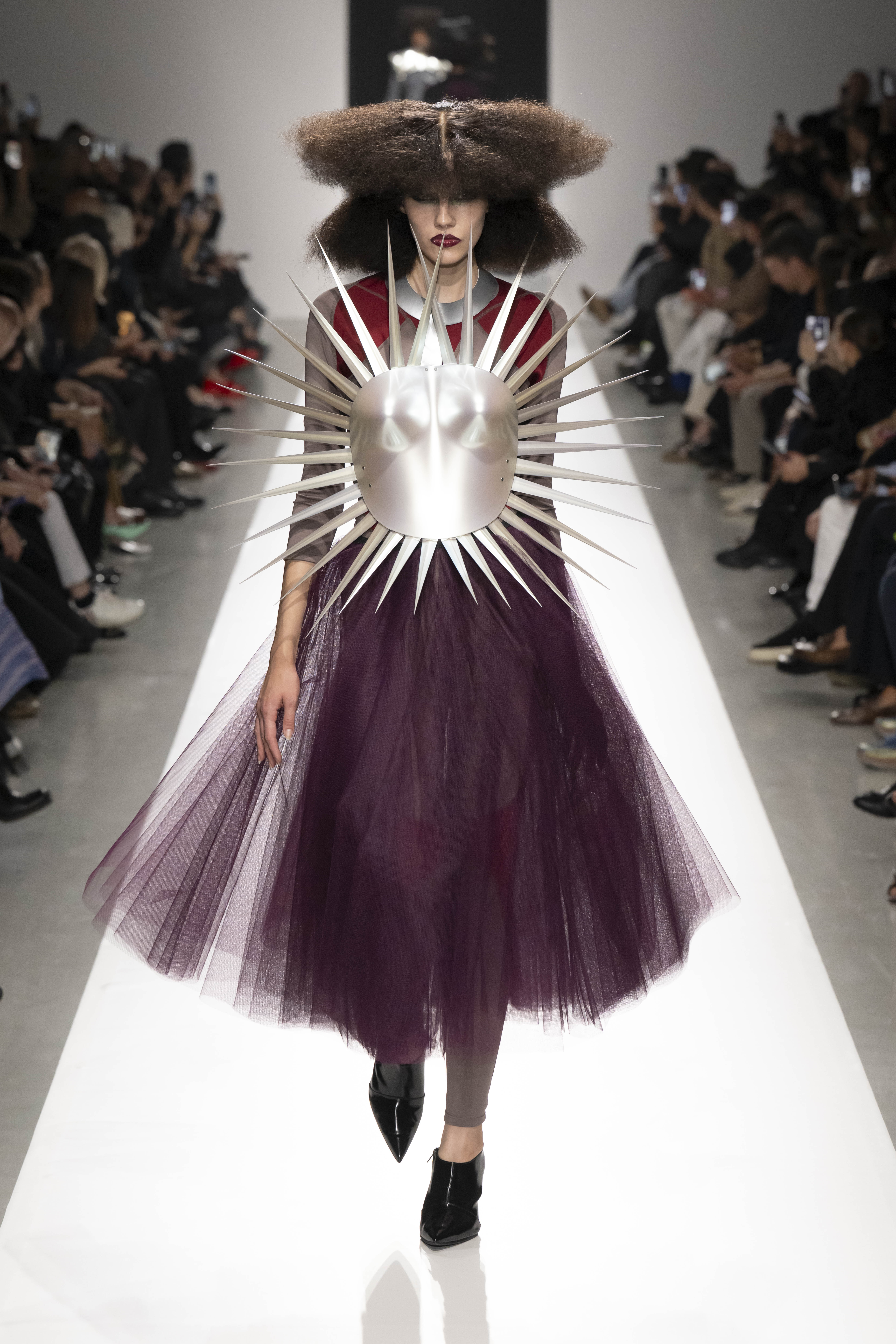
Yet behind this apparent chaos lies an extremely precise methodology.
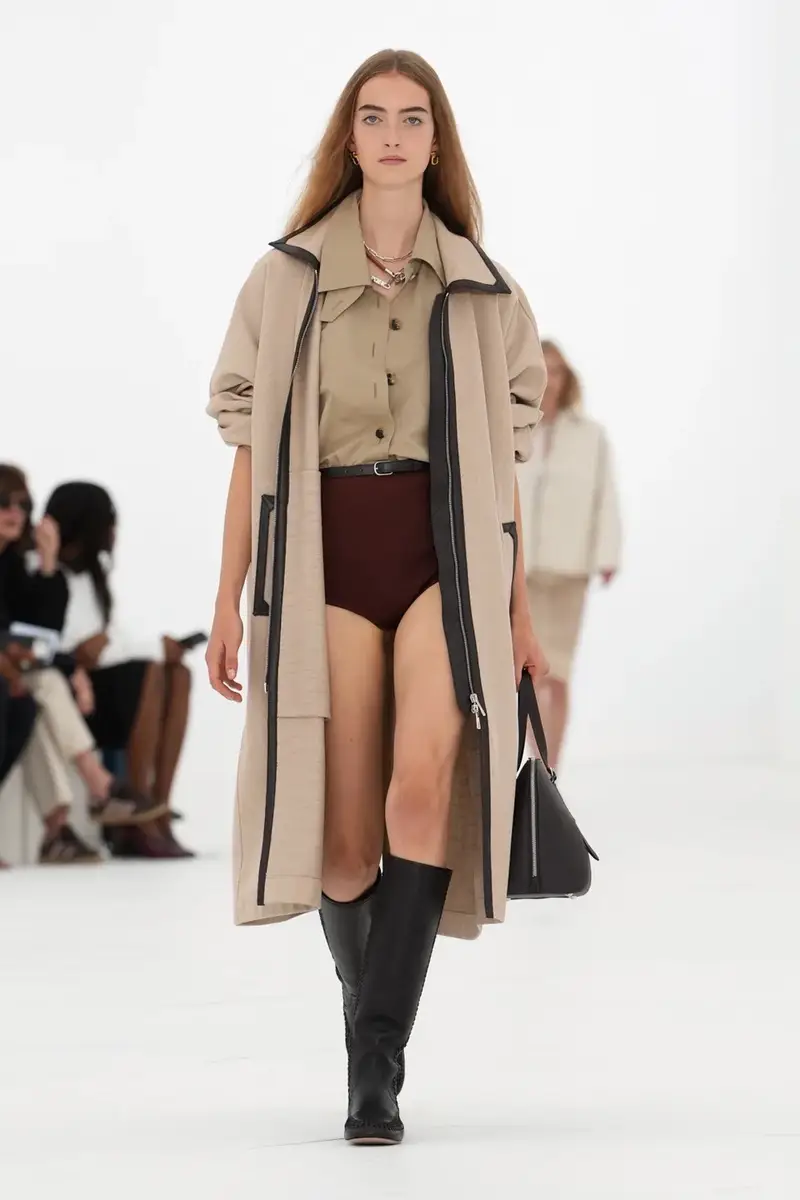
Watanabe begins with wardrobe archetypes (such as the biker jacket, the trench coat, jeans, the corset, the tailored jacket) and subjects them to a process of transformation. He cuts and distorts them without ever completely erasing their original identity. A biker jacket remains a biker jacket, while simultaneously becoming something else.
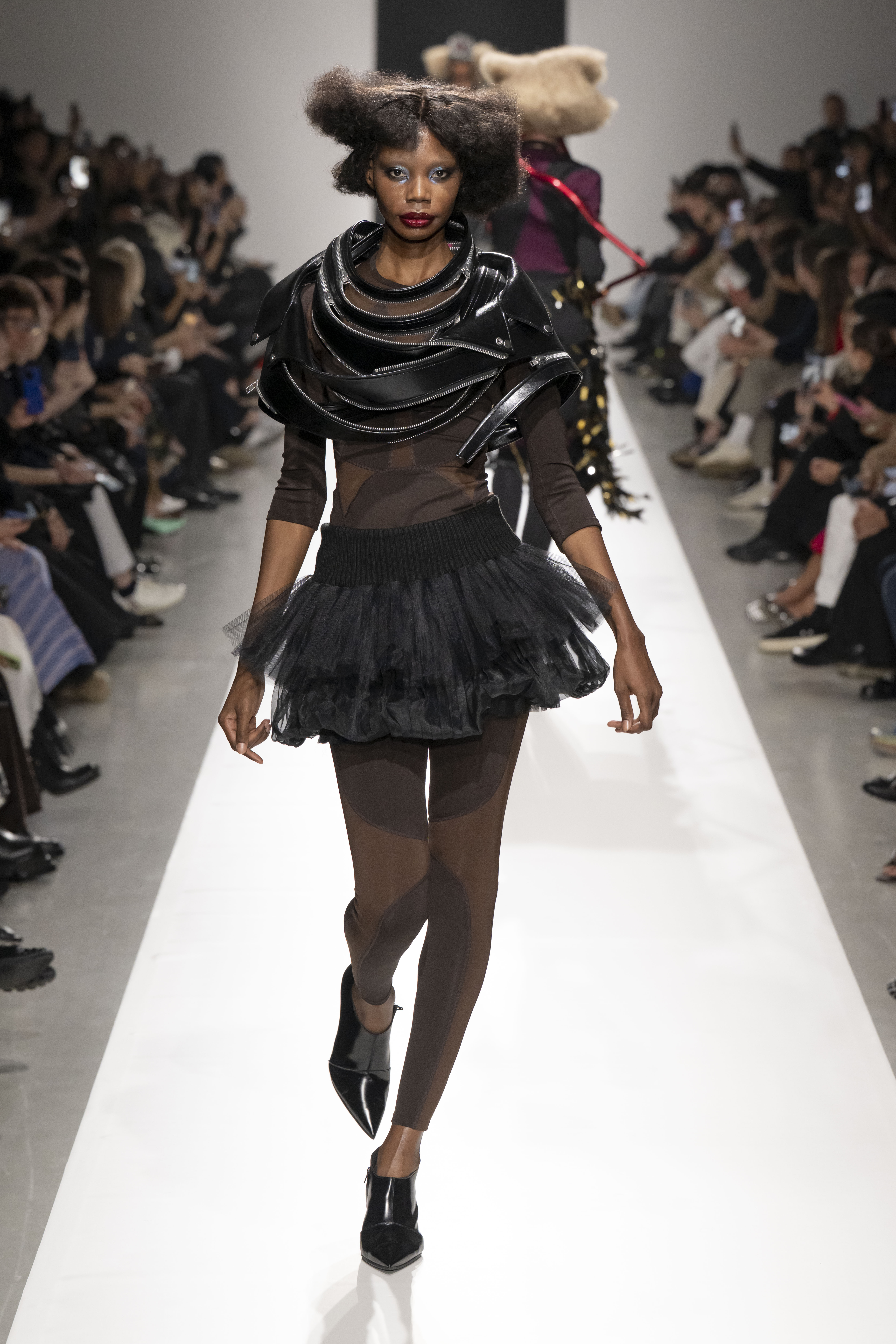
This is precisely where SS27 reveals the core of Junya Watanabe’s design language.
Before establishing himself as a designer, Watanabe trained as a pattern maker at Comme des Garçons, developing an exceptional understanding of garment construction, pattern cutting and the geometry of clothing around the body. His label was born and continues to operate within the Comme des Garçons ecosystem, while maintaining its own distinct creative identity.
That technical background remains deeply embedded in his approach. For Watanabe, a garment is not simply an image or a silhouette; it is a construction problem to be solved.
This is exactly what unfolds throughout SS27: the body becomes the starting point, pattern cutting becomes the tool, and ornament becomes architecture.