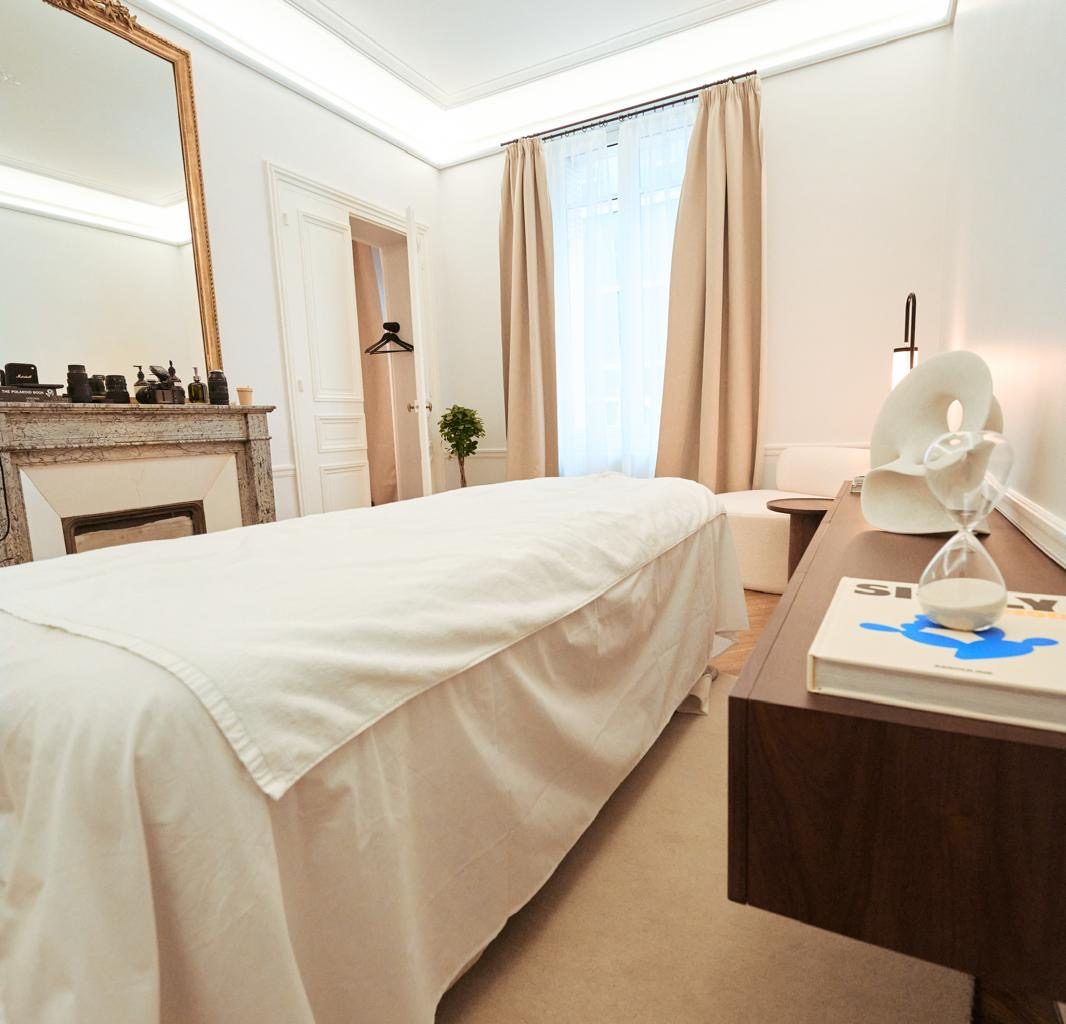
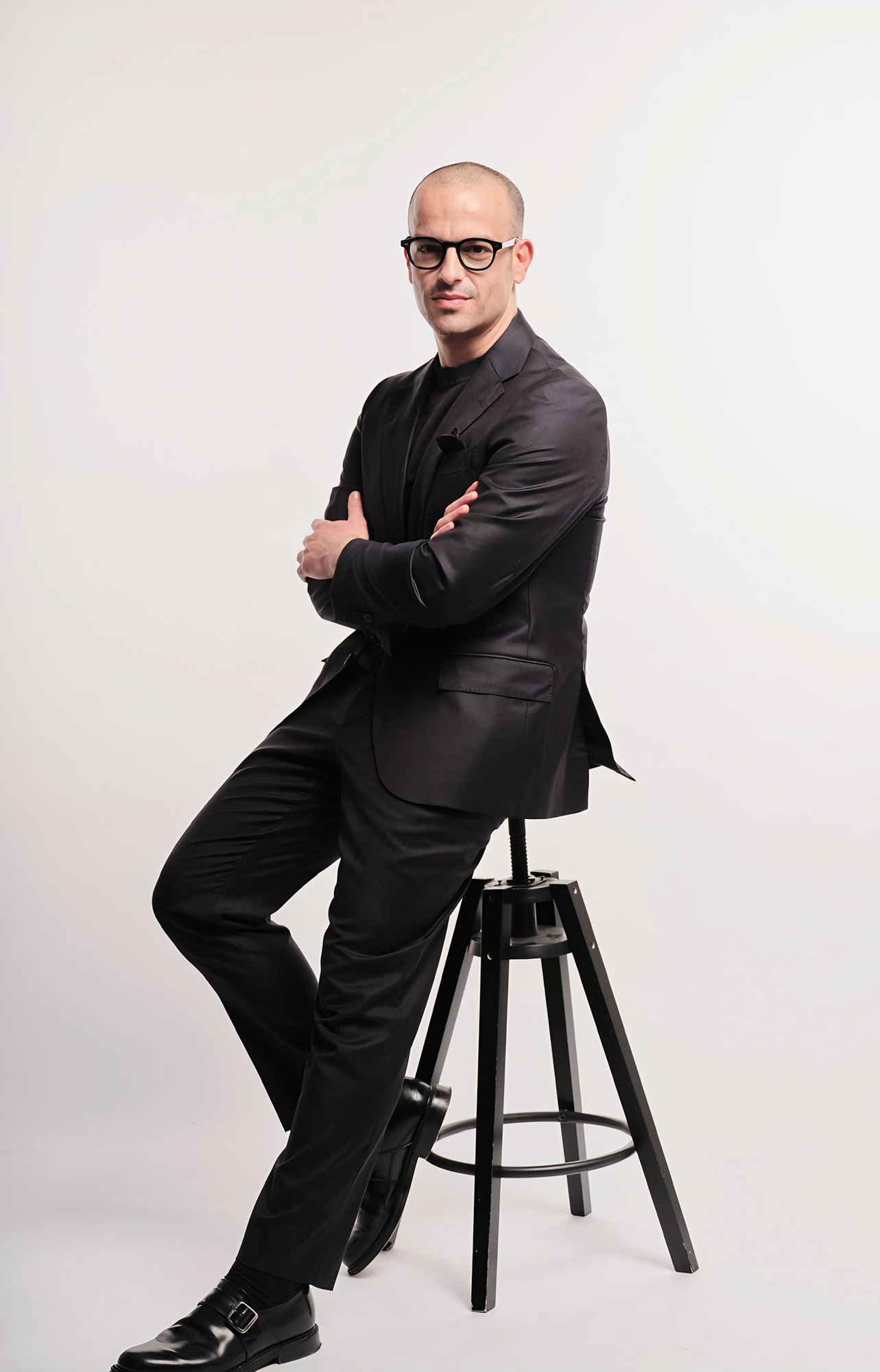
Alessandro Cirino, M.A.S.C. Studio, on the intelligence of touch, the art of facial massage and a new way of looking at beauty.
The beauty industry has become obsessed with fixing faces. Smoothing, lifting, sculpting, correcting. But what if the real art of facial care had less to do with changing how we look and more to do with bringing back what was already there?
Through his work at M.A.S.C. Studio, Alessandro Cirino approaches the face as something far more complex than a surface. Working with muscles, fascia, tension and movement, he explores the relationship between physical expression, emotional tension and the way we inhabit ourselves. From private treatments before some of the world’s biggest red carpets to his own philosophy of natural beauty, he believes the future of facial care isn’t about creating a perfect face, but allowing every face to feel more alive.
We talk beauty myths, the intelligence of human touch, celebrity rituals and why sometimes the most powerful thing you can do for your face is simply let it breathe.
Let’s start with the face. If you had to erase one beauty rule forever, which one would you delete, and what would you replace it with?
I would get rid of the idea that beauty is about correcting the things we don’t like about ourselves. Instead of asking, “What should I change?”, I would ask, “What can I bring back to life?”
Sometimes it’s circulation, sometimes it’s movement, sometimes it’s about releasing tension. And sometimes all it takes is allowing a person’s natural features to regain their expressiveness.
My goal isn’t to give people the perfect face. It’s to give them a face that feels alive again.
You work with muscles, fascia, bones, tension, movement, but ultimately you work on something incredibly emotional: the face we show the world. What can a face reveal that a person would never say out loud?
I think the face can carry a certain tension that a person might not even be aware of. You can see it in constantly clenched jaws, in expressions that struggle to relax, or in muscles that seem unable to fully let go, even at rest.
That doesn’t mean we can read someone’s thoughts or personal history through their face. It’s simply that our habits and emotional states can be reflected in the way we move and express ourselves.
When I work with my hands, I’m not trying to interpret someone’s psychology. I’m learning to feel with my fingertips, to understand what’s happening beneath the skin: what is resisting, and what has caused the face to lose its natural freedom of movement.
Sometimes, when those tensions begin to ease, the face changes immediately, without anything being added or altered.
You’ve treated people before some of the biggest moments of their lives, red carpets, Fashion Week, the Met Gala. What’s the difference between preparing a face for a camera and preparing a person to be seen?
When preparing a face for a red carpet or a photoshoot, you have to be extremely precise with your technique and with what you want to bring out in that person’s features. You need to consider how the massage will affect the skin’s texture, circulation and, ultimately, the way light reflects off the face. You also have to think about how the face will be perceived by the makeup artist and the photographer.
But preparing someone for an event is different from simply preparing their skin. A person doesn’t just bring their skin into the room; they bring their stress, anticipation and pressure, too. Even celebrities have insecurities. At the end of the day, we’re all human. All of that can manifest itself in the breath, the jaw, the shoulders or even the way the face is held.
So my job isn’t simply to make them look their best. It’s also to create a space where they can reconnect with themselves, breathe and properly relax.
When someone leaves my studio, or when I leave the hotel where I’ve been treating them, my goal is for them to feel ready. Not because we’ve created a mask for the camera, but because they’re more present, more connected to their own face and, ultimately, more confident.
“Natural beauty” is probably one of the most overused expressions in beauty right now. What does natural actually mean to you, and when does enhancement become something else?
To me, natural doesn’t mean doing nothing. Sometimes we can go from one extreme to the other. It means making sure that any intervention, in my case, facial massage, enhances the natural identity of the person I’m treating.
I’m not completely against aesthetic enhancement, and I wouldn’t be hypocritical and say that nobody should ever have anything done. It’s an entirely personal choice, and in today’s world, it’s something we have to understand and work alongside, particularly when treating people who may already have undergone aesthetic procedures.
There’s also a different kind of pressure when you’re a celebrity. You’re constantly under scrutiny, with the whole world watching and someone always ready to criticise. That creates a particular set of expectations, and the line can become very thin.
For me, the problem begins when enhancement alters a person’s identity and starts to overshadow who they really are. A serious treatment should enhance individual features, not replace them.
True luxury is when someone looks incredibly good, but you can’t quite tell what they’ve had done. The skin looks healthier, the eyes more open, the face more relaxed. There’s an overall sense of harmony, an aura you immediately notice.
Ultimately, that’s what I want to achieve through my work: the ability to make a difference without erasing the things that make someone unique.
Let’s play a little game. You have 60 seconds, no products, no tools, no mirror. What are the three things you would do to make someone look instantly more alive?
First, breathing. It allows you to be present, to become aware of your current state, release tension and regain a better posture.
Then I would stimulate circulation with my hands. It’s something we hear about quite often, but it’s incredibly important: waking up the skin, encouraging the tissues to move and bringing back that immediate sense of vitality and glow.
Third, I would work on tension around the jaw, temples and neck. These are areas where we tend to accumulate a lot of tension, and they deserve particular attention if you want to create an immediate change.
You don’t always need to add something to bring vitality back to the face. Sometimes you simply need to release everything we carry with us every day, everything that weighs us down.
There’s something almost rebellious about making touch, hands and human expertise feel more powerful than a cabinet full of machines. Are we entering a post-tech beauty era, or are you secretly just a very good salesman for the power of hands?
I’m not sure we’re entering a post-tech era, and I don’t think we are. There’s a huge amount of new technology coming out of Korea, for example. In the US, XERF is having enormous success, and in London I believe there’s currently only one person offering it. Regulations are different in France, where only doctors are allowed to use certain technologies, not professionals in my line of work.
Technology has its place, and it always will. There are results that manual techniques simply cannot guarantee. We have to respect human physiology and myology, and understand that there are limits to what we can achieve with our hands.
But manual contact adds a completely different dimension. There’s a different level of perception, an ability to adapt and respond to what you actually feel beneath your fingers. A machine can’t do that in the same way. Its movements are more mechanical and standardised.
You learn how to operate a machine through training, and then you follow a fairly standardised procedure, regardless of the face you’re treating. With your hands, you can identify differences in tension, observe how the tissues move and adapt the treatment to each individual.
I’ve spent years learning a very specific way of working with the face. So, for me, the future isn’t about choosing one over the other. It’s about understanding when to use manual techniques and when a technology-based approach is more appropriate.
Imagine your face could send you a voice note after a very bad night. What would it complain about, and what would you answer back?
It would probably say: “Between all the cycling and the stress, I’m dehydrated, full of tension and my circulation isn’t at its best. Please stop asking me to look rested when you haven’t given me enough hours of sleep!”
And I would answer: “You’re right. I’ll do my best to wake you up, but I can’t hide everything.”
I think one of the biggest mistakes we make when it comes to skincare is immediately trying to cover things up, correcting or masking the signs of tiredness.
For me, the face needs movement. Movement is what naturally brings back life, light and energy, and allows us to use less makeup or rely less on aesthetic interventions.
Just as with the rest of the body, our muscles respond to the way we live. We shouldn’t separate the head from the body: it’s all one interconnected system. Tensions in the head can have an impact all the way down to the feet, and vice versa.
We can’t expect the face to be a perfect machine every single day. It will always reflect the way we live.
Ten years from now, what would make you look back at M.A.S.C. and think, “Okay, we really changed the way people think about the face”?
It’s a difficult question because there are a billion different variables and factors that will continue to shape this world.
But, in my own small way, I would like to help change one fundamental idea: that the face isn’t simply something to look at, but something to understand and experience.
Facial treatments aren’t just about the appearance of the skin. They’re about expression, movement, blood circulation, lymphatic drainage and the connection between your face and the rest of your body.
If, ten years from now, people come into my studio not just to correct something they don’t like, but to understand their face better and help it express its full potential, then I will feel that I’ve achieved something meaningful.
I simply want to help people build a more conscious relationship with what they already have.
Ultimately, the most interesting result isn’t transforming someone into a different person. It’s allowing them to recognise themselves again: to feel more alive, have greater freedom of expression and reconnect with the authenticity of the face they see every day.