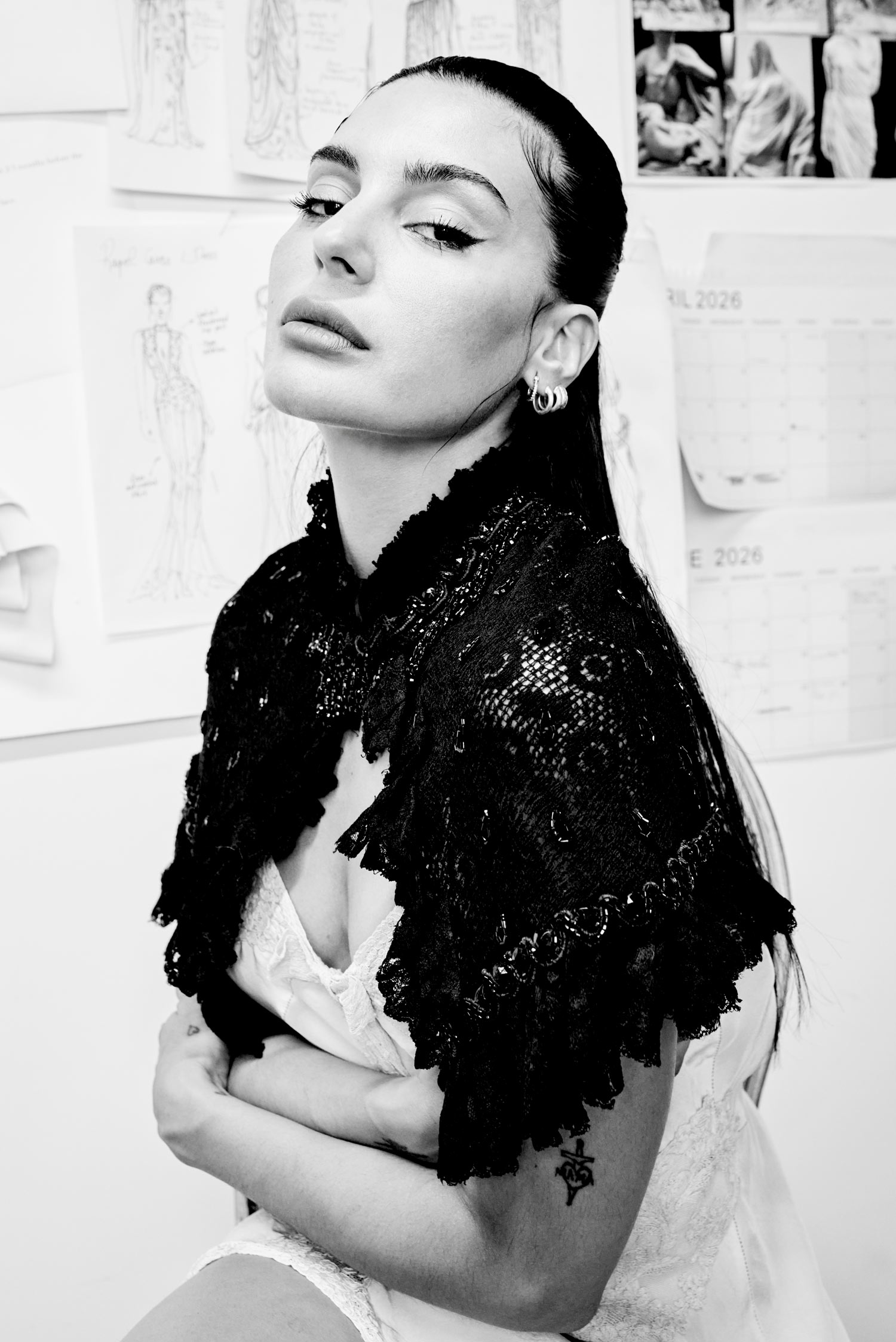
What if the future of fashion depended on what it refuses to throw away?
Fashion has a short memory and an expensive addiction to the new. Every season, it manufactures desire, discards yesterday and calls the cycle progress.
María Bernad has other plans.
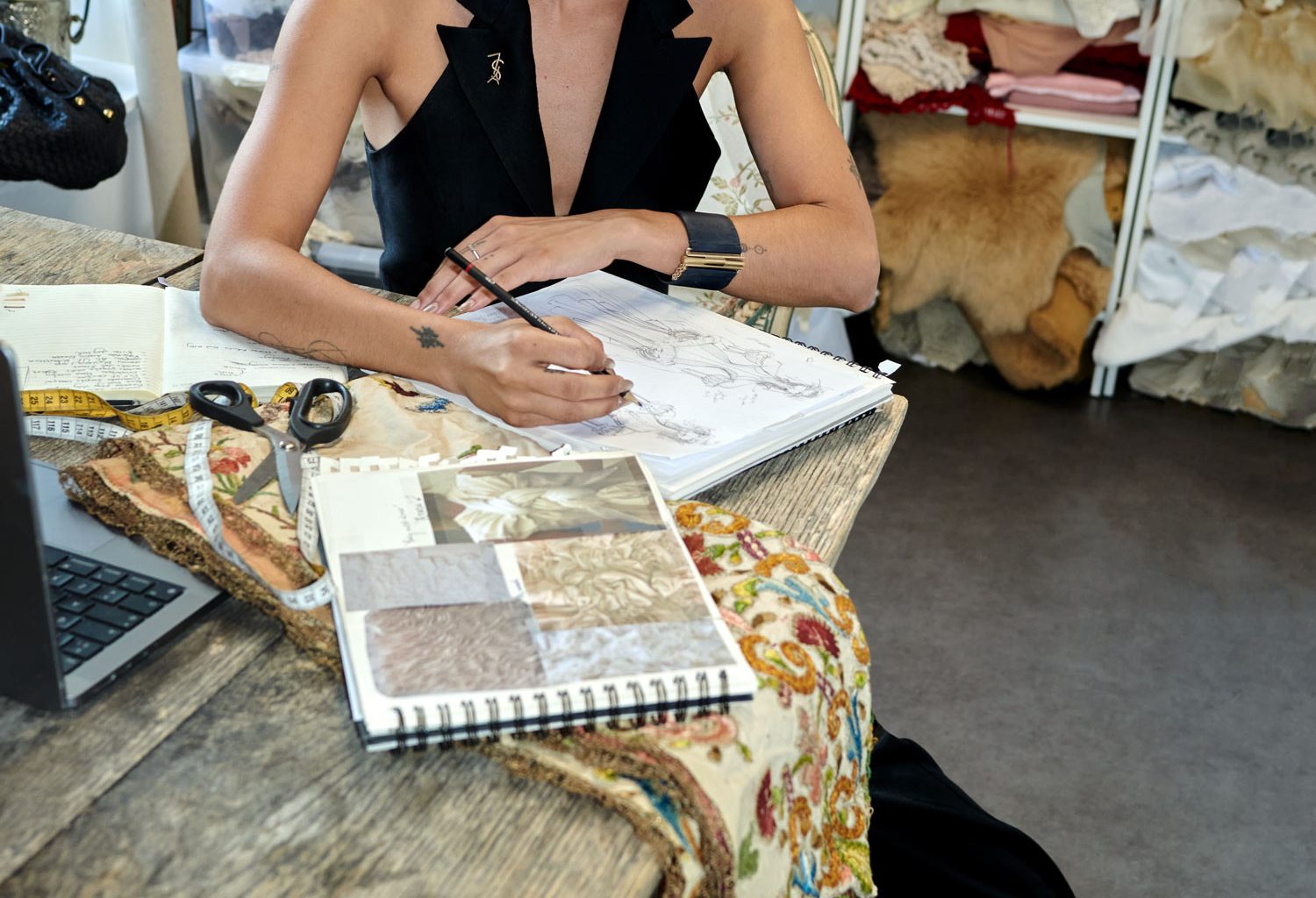
Through Les Fleurs Studio, the Spanish designer turns forgotten textiles, antique lace and discarded garments into pieces that refuse to begin from zero. Their past is not erased. It becomes part of the design. What the industry writes off, she puts back into circulation; with a needle, a sharp eye and little interest in playing by its rules.
Her work exists somewhere between fashion, restoration and costume. It carries the romance of another century without treating history as a museum exhibit. Every fabric arrives with a life of its own; every transformation gives it another. Sustainability, here, is not a marketing angle dressed in neutral tones. It is a position on value, labour and the absurdity of producing more in a world already overflowing with things.
Bernad’s ambition extends beyond the clothes. She wants the world she has created to outlive her name. The distinction matters. In an industry built on visibility, she is interested in what remains after the image fades: the material, the memory, the hand that made it possible.
We spoke to María Bernad about the lives hidden inside fabric, the luxury of slowness, the cost of walking away from fashion’s waste machine and what it means to leave something behind that deserves a future.
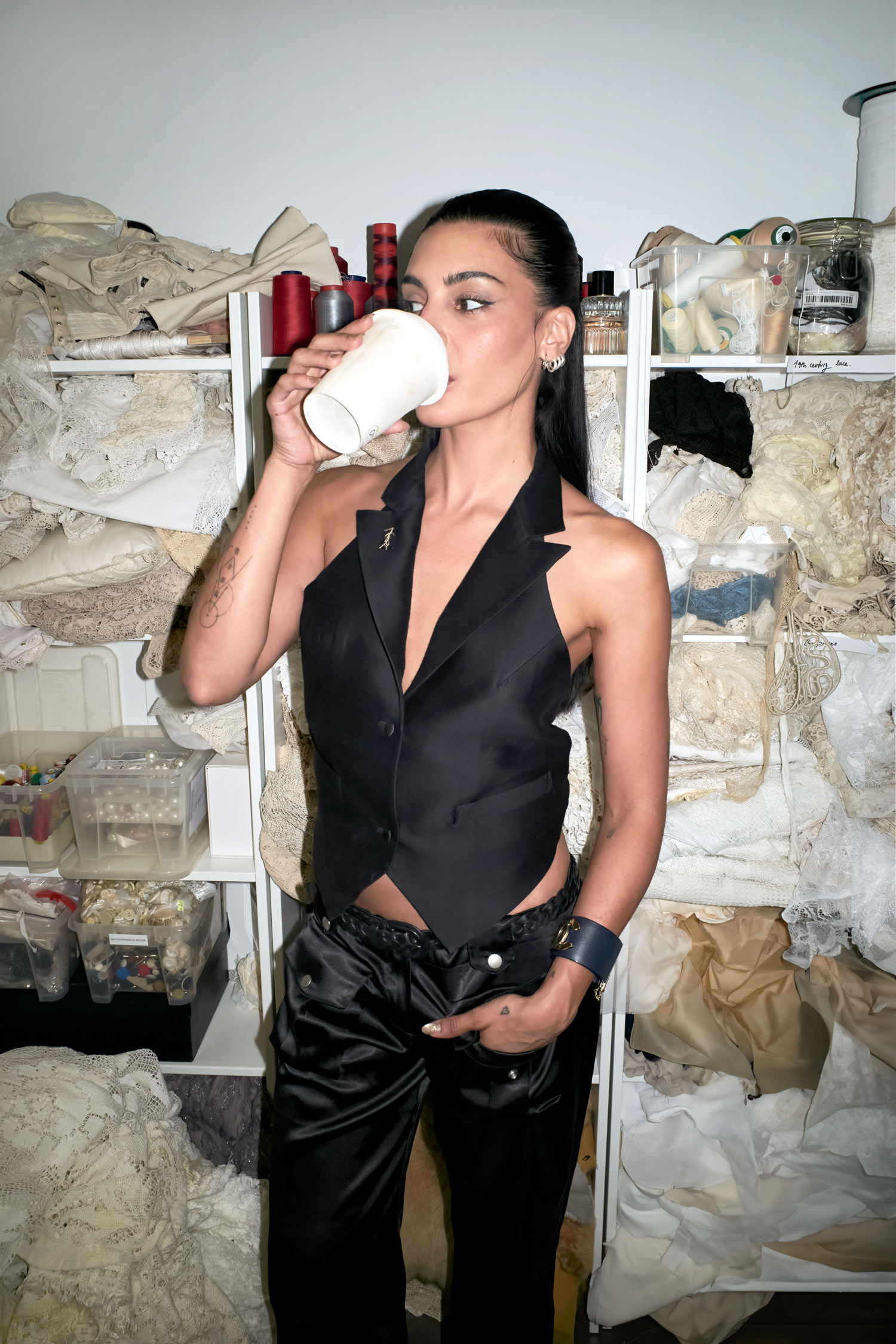
You work with fabrics that have already lived another life. Do you believe objects carry memories, or are memories something we project onto them?
In all my work, and when you know me, you know that I believe in past lives and in pieces that carry these stories. For me, there’s a sort of charm in that, but I also love history and heritage, so it adds value to working with them.
If every garment you have ever created disappeared tomorrow, what idea would you still want people to associate with your work?
When I started the brand, it was always about following the zero-waste movement. The fact that I create not only pieces with history, but also always take a sustainable approach. My goal was to create things using pieces that already exist in the world and, through that, work towards circularity. I would love for that to be remembered, not just because I create pretty things.
Fashion is obsessed with what is next. Your work seems obsessed with what came before. Do you see yourself as a designer, an archivist, or something else entirely?
I have always seen myself as someone with different skills. I love fashion, but I also love art and history — I also love cinema and costume design!
You never know what’s coming next, but I will always follow these passions and my values, especially when it comes to sustainability.
When I was studying, I started with art restoration and conservation before moving into fashion design. My dream was to work in that field, and I’m doing that now. You never know what the future will bring, but I feel that what’s really important is to stay true to your values.
What is the oldest piece of fabric you have ever touched, and what did it make you imagine?
The other day, I found an original 17th-century embroidered silk piece with metallic thread at a market. Pieces like that actually belong in museums.
If Les Fleurs Studio were a person walking through Paris today, what would they be wearing and where would they be going?
They would be going to a bibliothèque, and they might be wearing a fitted black Victorian jacket paired with an undershirt with a lace collar, maybe a sort of mini skirt with lace, and tall, corseted leather boots.
In a world addicted to speed, do you think slowness has become a luxury?
I absolutely think about it. I’ve worked in fashion myself for so many years, and I strongly believe that going slower is going to be the new luxury, along with craftsmanship and heritage.
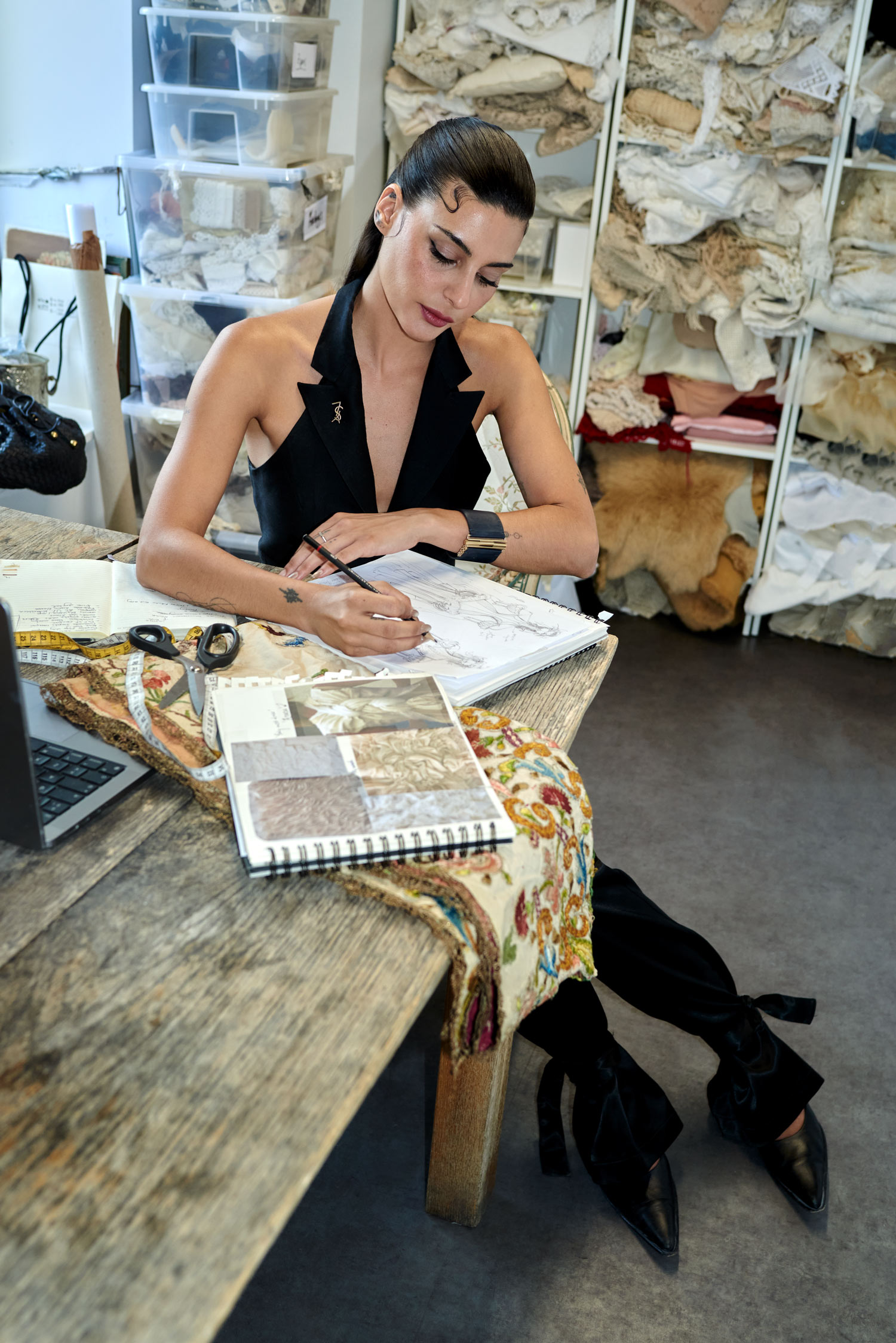
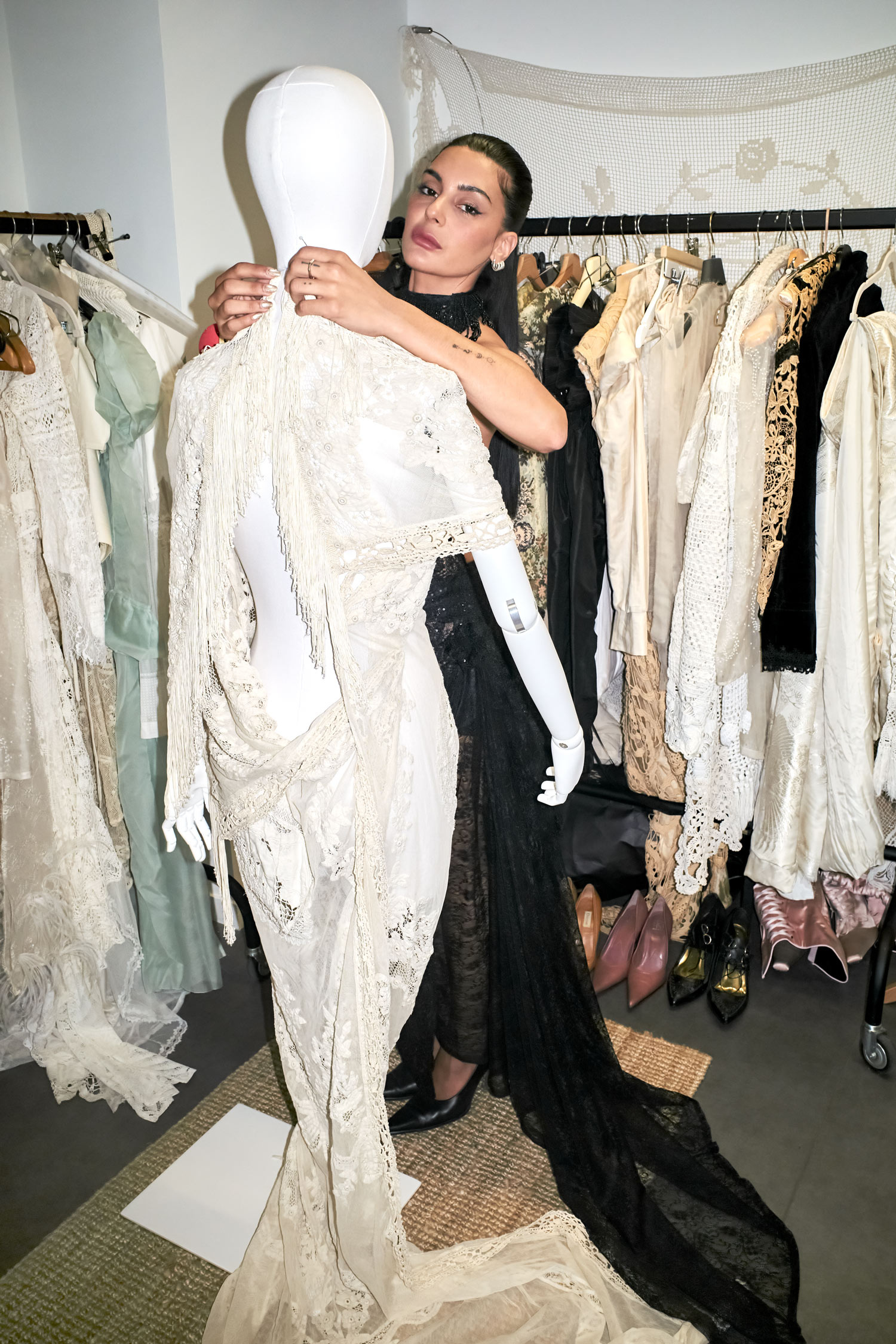
What is something society calls waste that you consider beautiful?
Sometimes society considers something wasteful simply because it has already been used. It blows my mind to think about that. Anything that has had a past life and carries a kind of history has beauty for me.
Do you think clothes reveal who we are, or help us become someone else?
I have always had a very interesting relationship with clothing. I think it changes for different people; it’s not the same for everyone. For me, it’s a way to express myself. The fact that you can even communicate your values through your clothing is beautiful.
I also love costume design and characterisation, and it’s interesting how you can become someone else through clothes.
Imagine one of your garments survives for the next hundred years. What story would you want it to tell about our generation?
I would love to think that, in 100 years, people could look at my clothes and have access to pieces from the past, just as I repair garments that are even 100 years old. It would be as if I had brought them back to life.
I hope people will know that, even with all the fast fashion, there were people in our generation fighting against it and trying to do things differently.
You have built an entire universe from forgotten materials. What part of yourself have you had to leave behind in order to create it?
I had to leave behind part of the fashion industry and its waste system.
If you could write a letter to your future self and hide it inside the lining of a Les Fleurs piece, what would it say?
For myself, it would be in Spanish:
“Gracias por no rendirte y aguantar cuando todo se caía.”
What do you hope people remember first: María Bernad, the designer, or the world she created?
The world I’ve created.
You often give a second life to fabrics. If you could give a second life to one moment from your own life, which one would you choose?
What question do you wish people would ask you more often; but almost never do?
Sometimes people think I’m just someone with a big team behind me, like many brands founded by people who have already worked in fashion. The reality is that I created the brand and everything around it on my own from the beginning. Aside from my team at the atelier, it’s just me.
TEAM CREDITS
Photographer: Fréderic Troehler
Stylist: Luca Imbimbo
Videographer: Maissane Fritz
Makeup Artist: Yanis Envol
Hair Stylist: Jessie Way