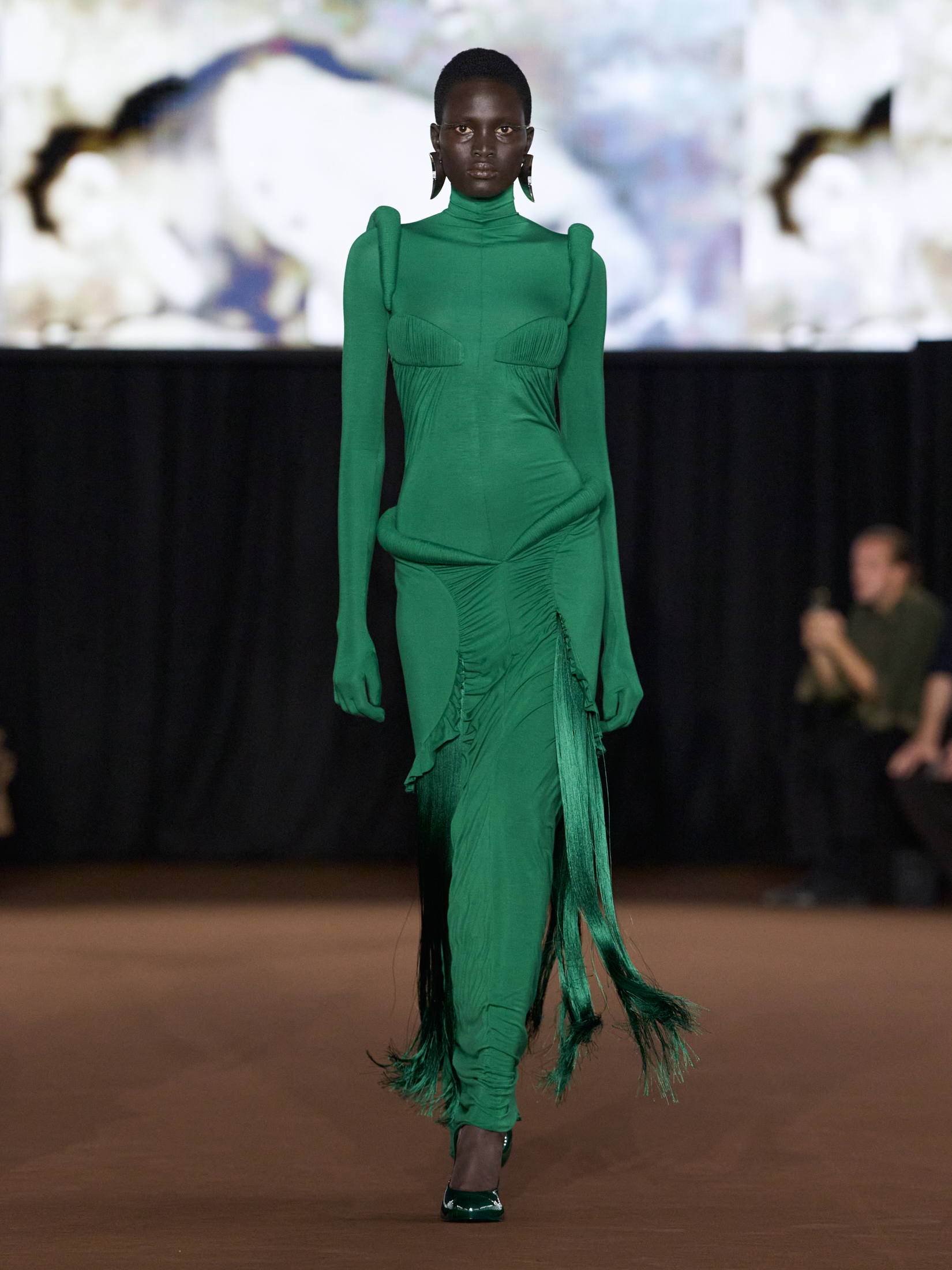
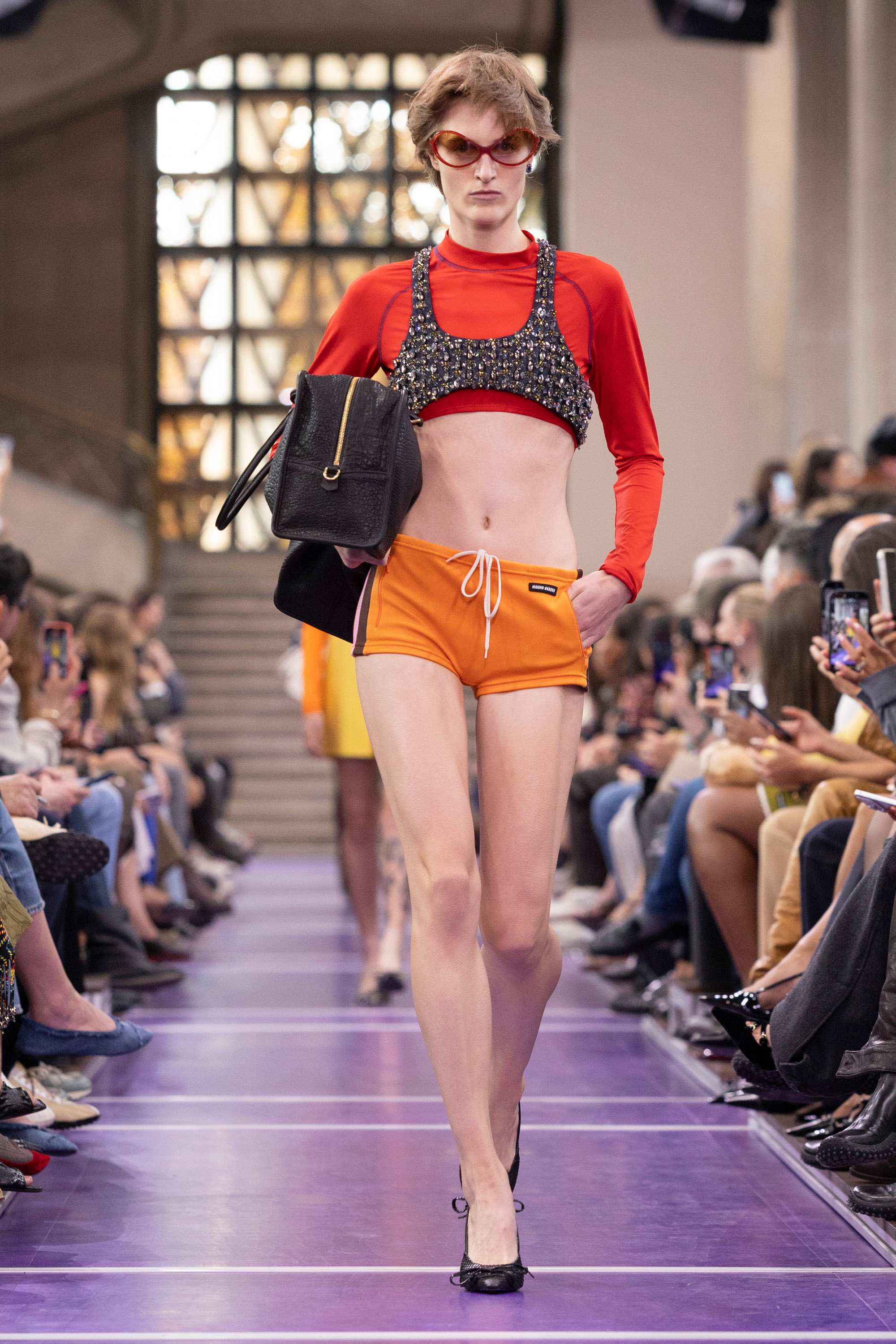
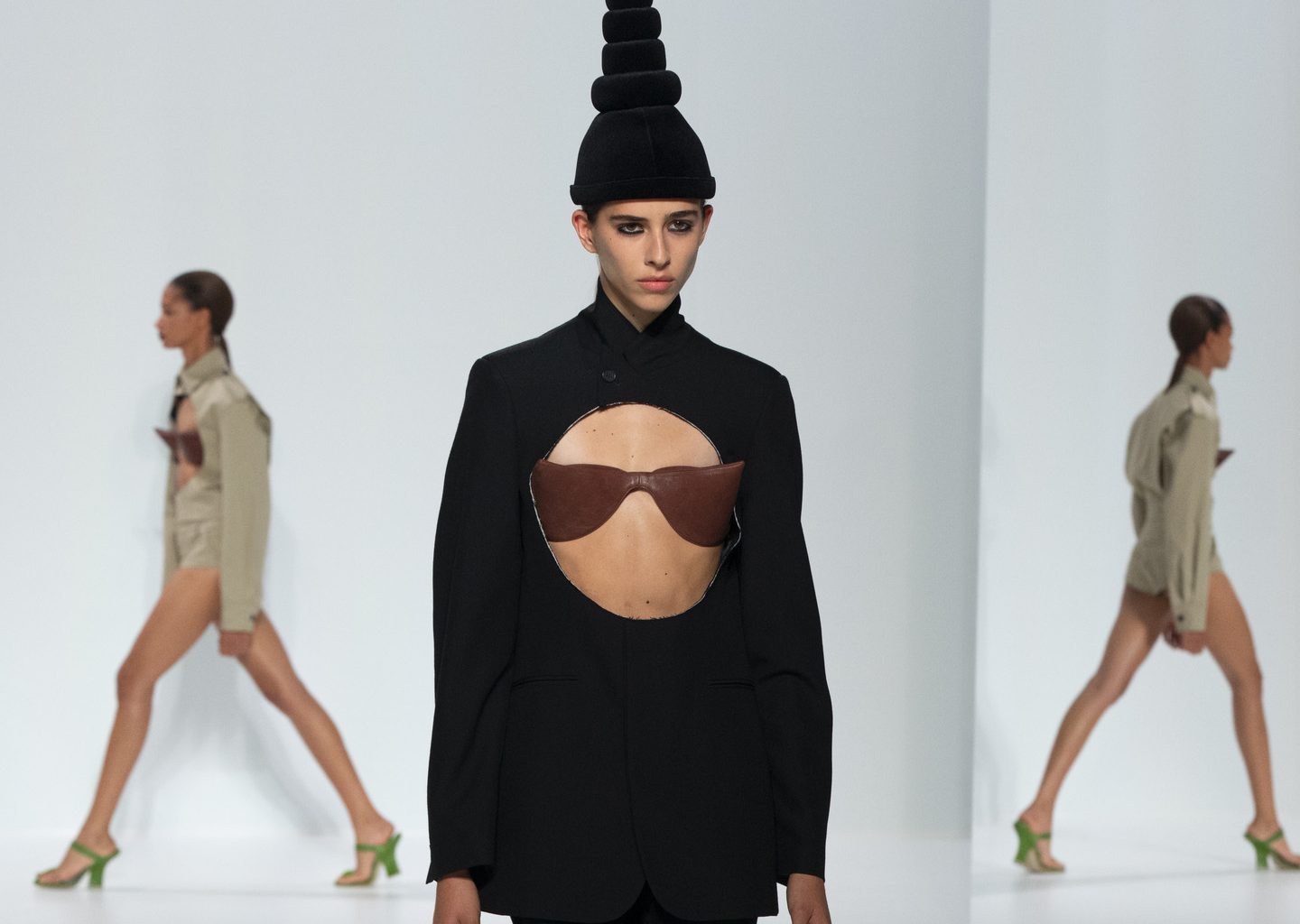
One year into his tenure at Jean Paul Gaultier, Duran Lantink pushes the house’s codes into new dimensions for SS27, balancing experimentation with wearability. The collection transforms Gaultier’s irreverent legacy into a wardrobe designed to exist beyond the runway.
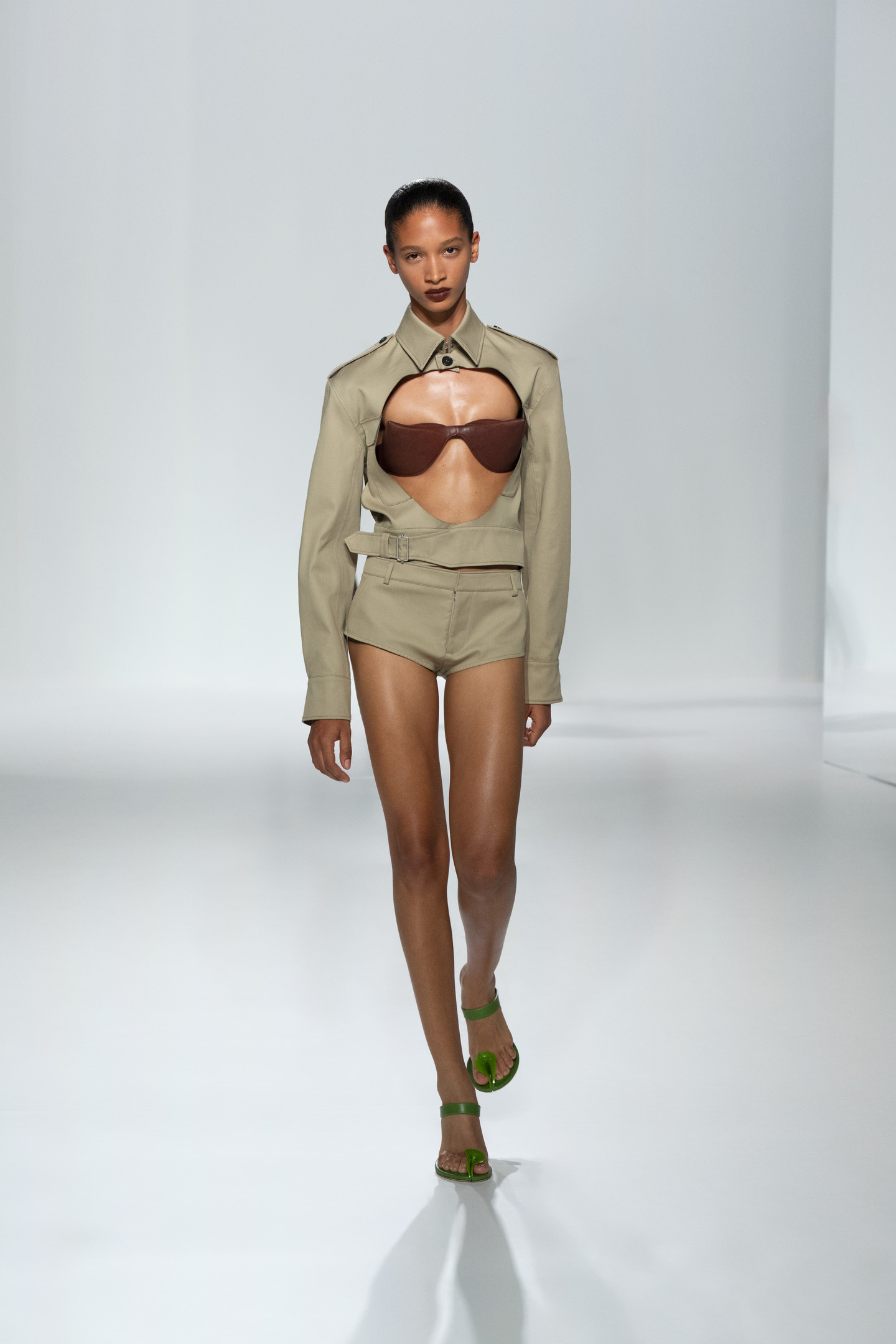
One year after his debut, Duran Lantink brings a new exploration of proportion to Jean Paul Gaultier’s SS27 collection: exaggerated, rigid and unexpected. The designer continues to approach the body as a three-dimensional volume, altering its shape through sculptural constructions while maintaining a stronger sense of wearability.
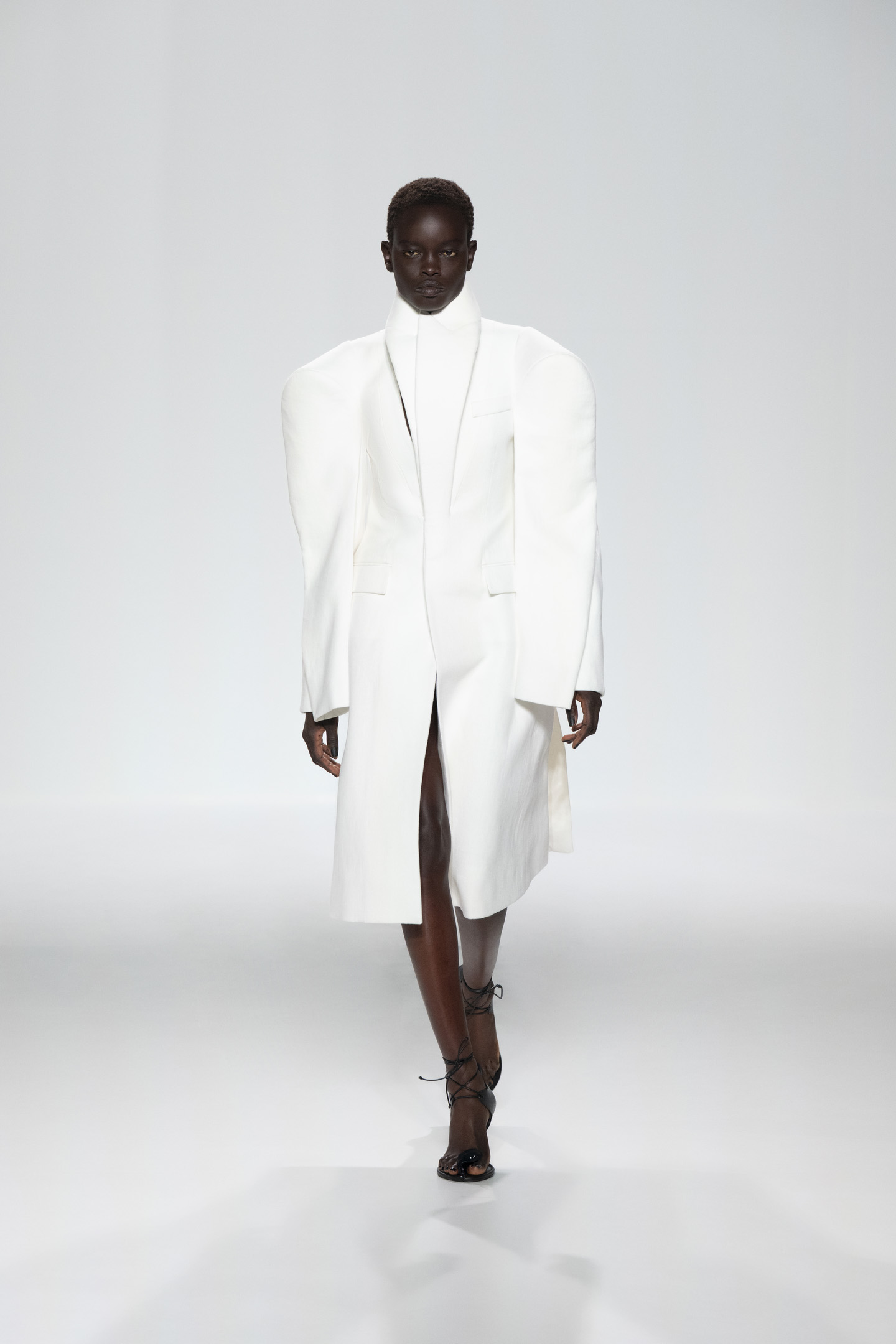
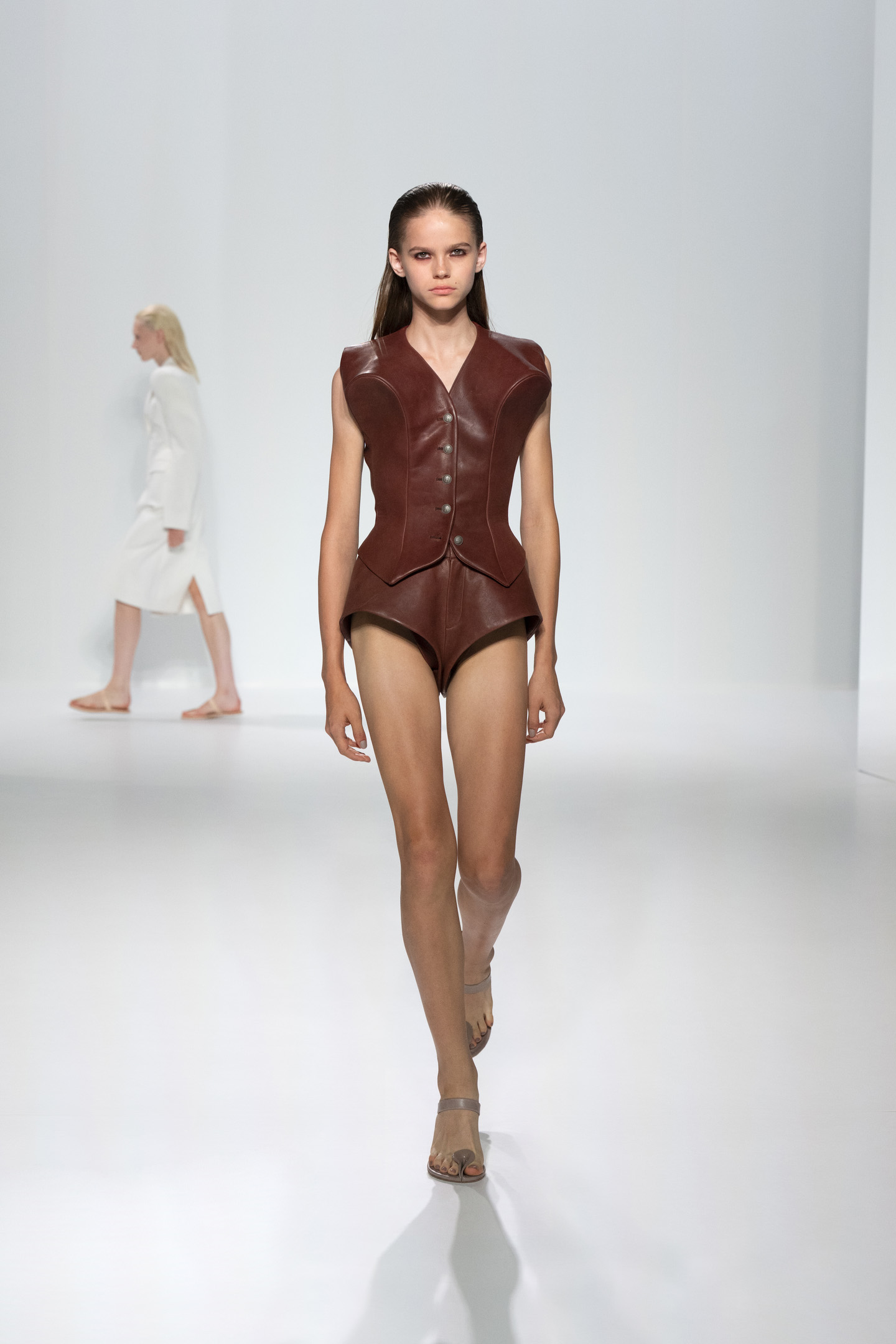
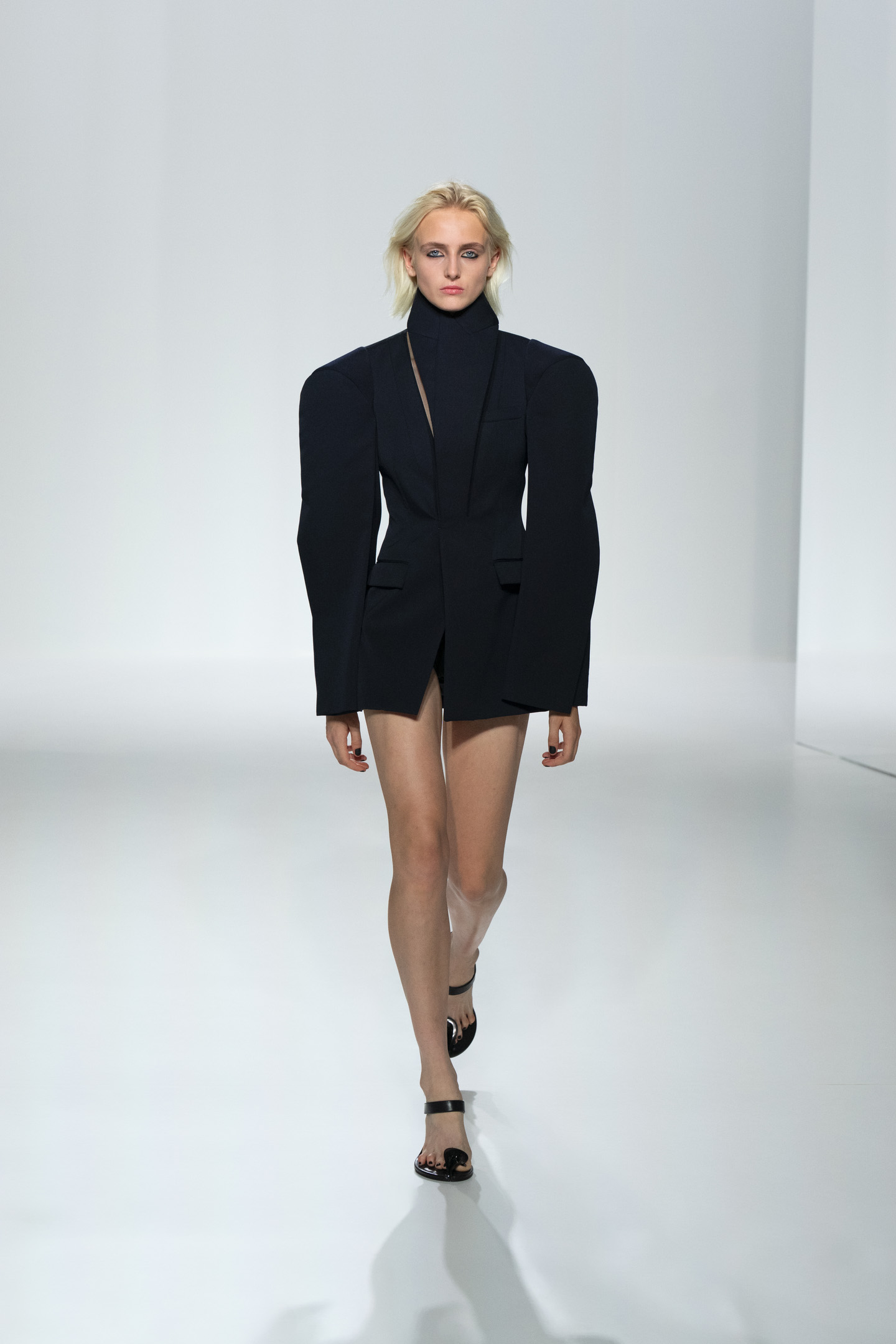
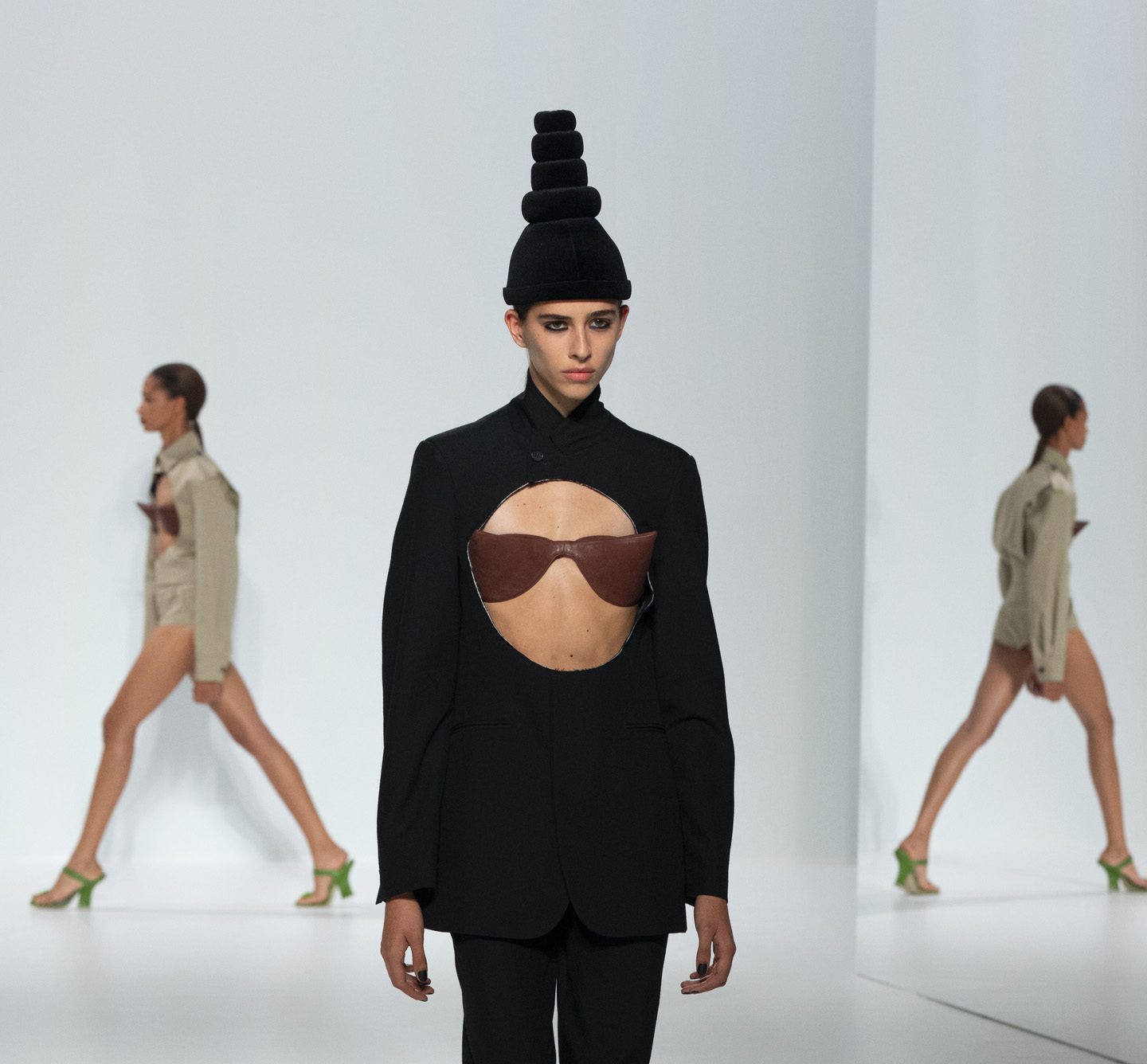
Three-dimensionality therefore becomes one of the collection’s defining elements. Some jackets, seemingly conventional when viewed from the front, transform when seen from a three-quarter angle. Projected collars appear throughout the collection, alongside rigid structures emerging from the torso, circular cut-outs across the chest and exaggerated volumes that reshape the proportions of the body. The silhouette is no longer designed to be understood from a single perspective, but shifts depending on the angle from which it is observed.
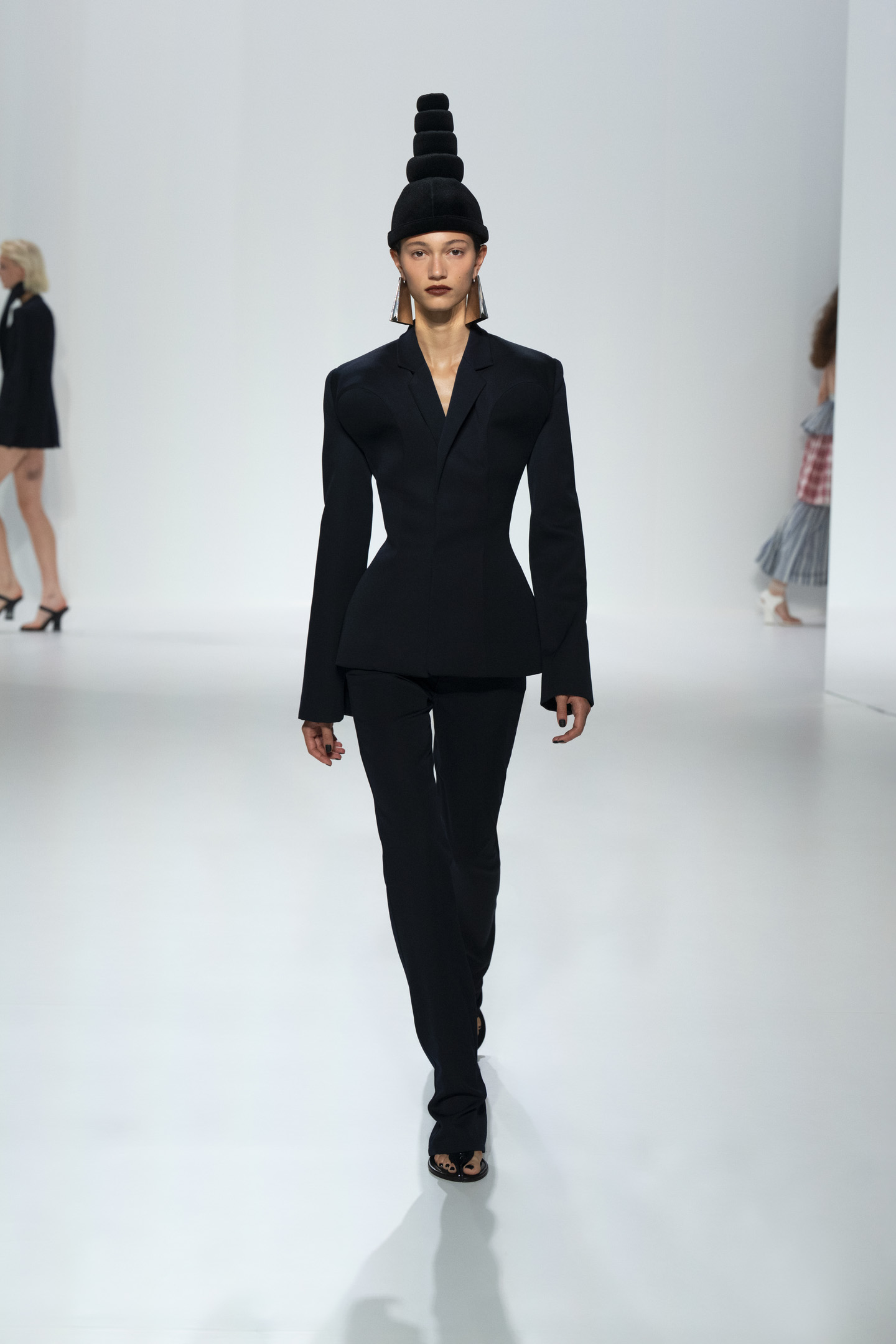
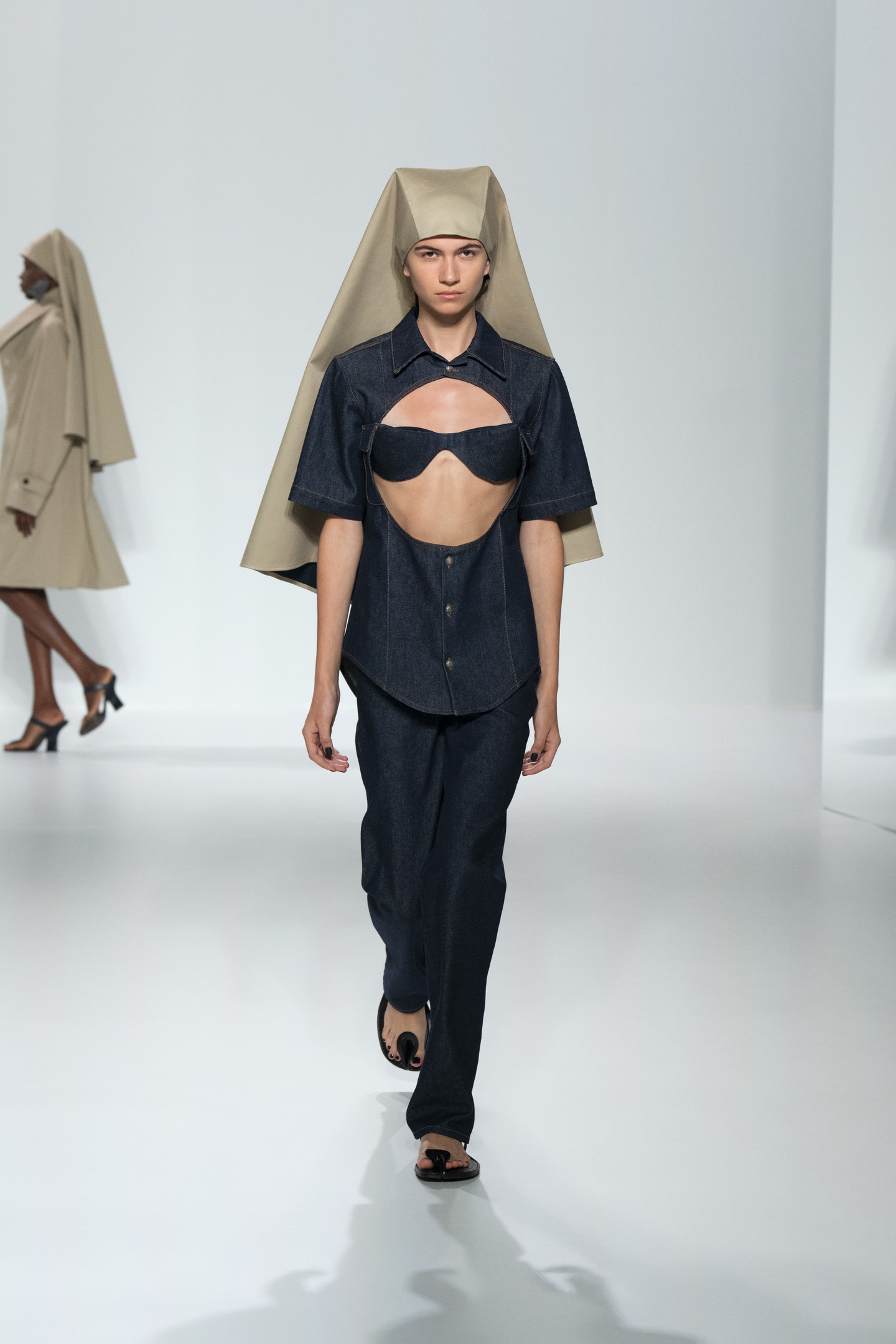
Lantink has openly stated that he is particularly interested in the three-quarter view, rather than the conventional frontal or side perspectives. It is therefore no coincidence that the show itself was staged around a system of mirrors, multiplying viewpoints and allowing the audience to perceive several dimensions of the garments simultaneously.
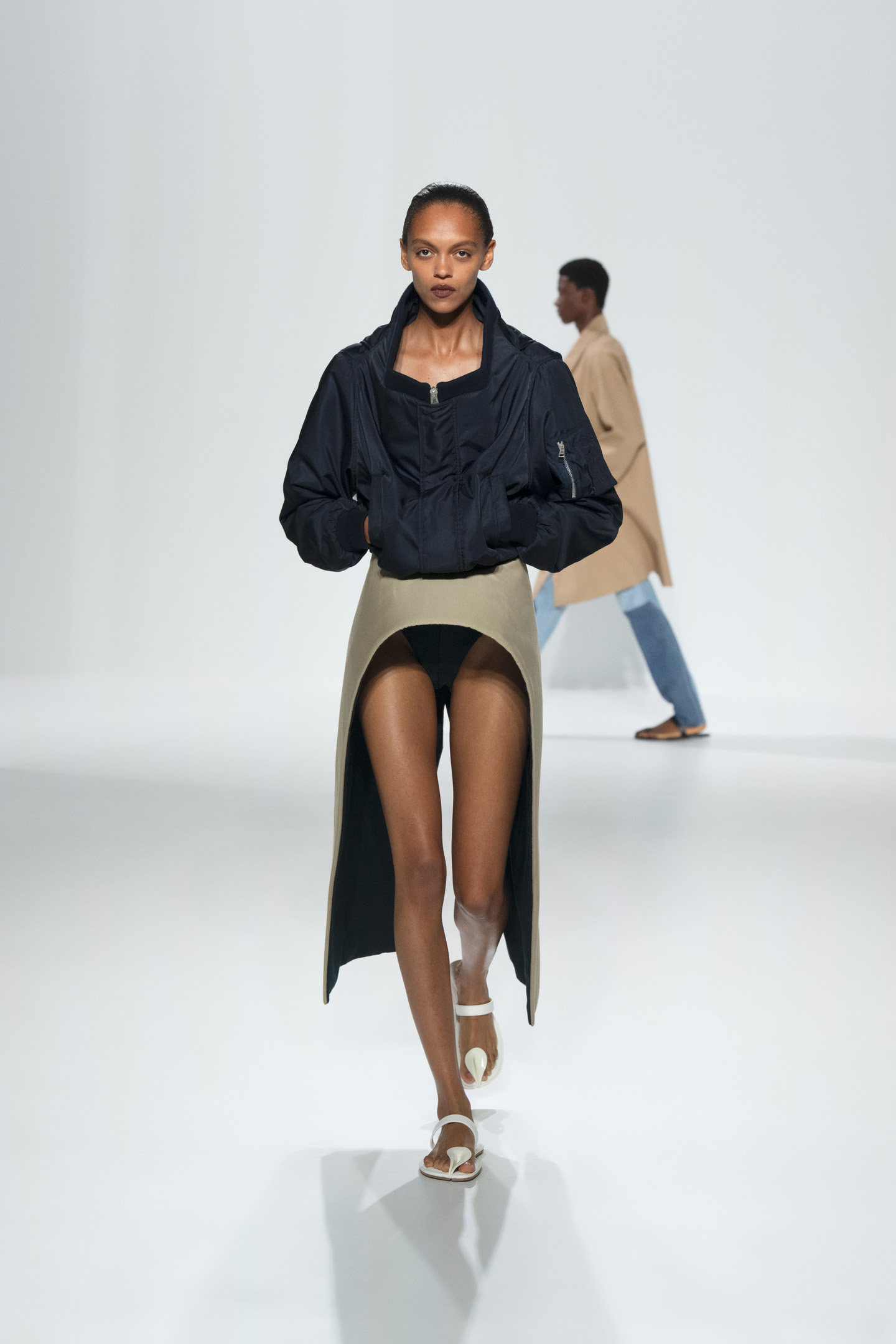
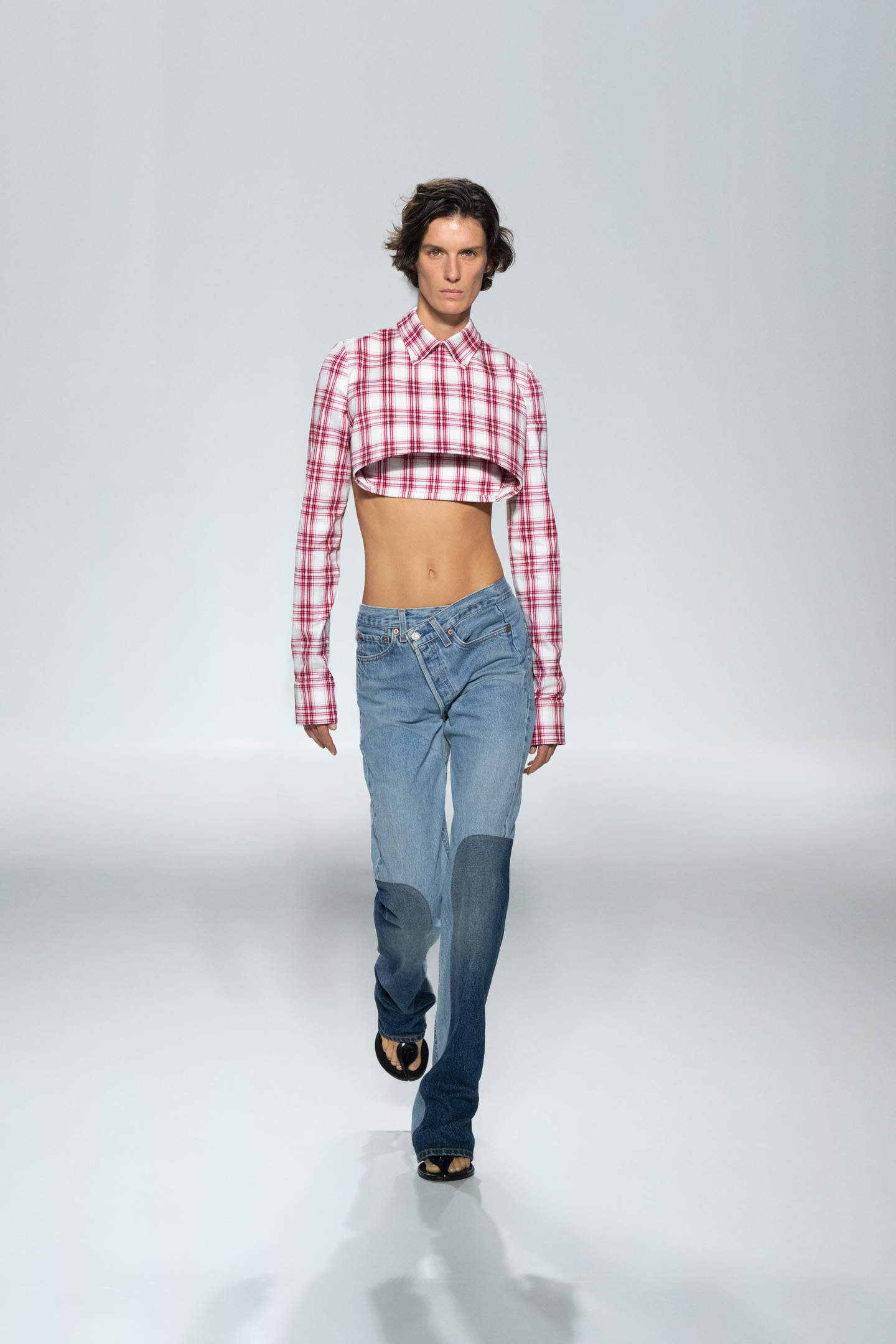
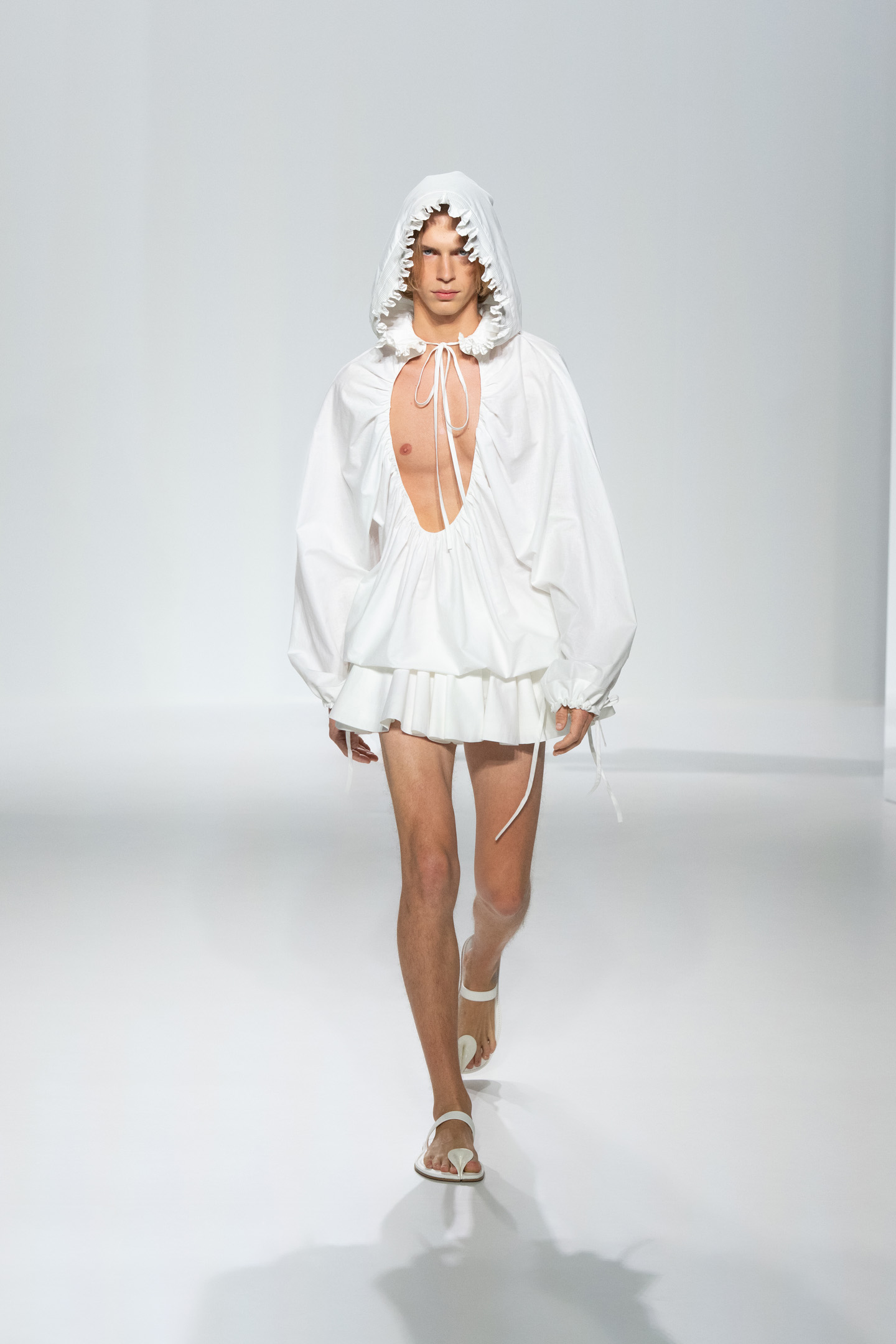
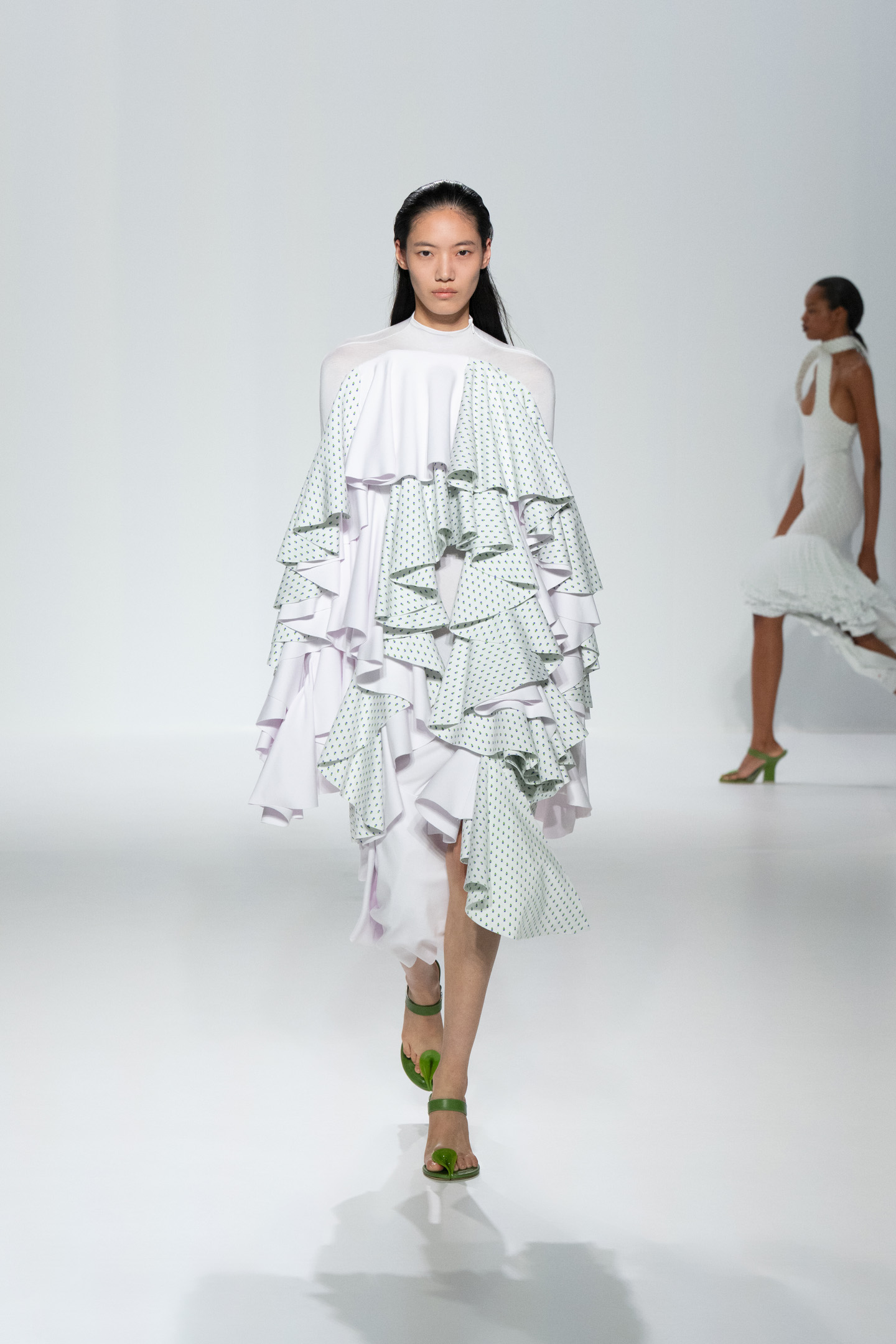
One of the most recognisable codes of the Gaultier universe could hardly be absent: the cone bra, which became a pop-culture icon through the corsets created for Madonna and her 1990 Blonde Ambition Tour. A symbol of provocative and irreverent sensuality, it is filtered through Lantink’s own visual language for SS27 and pushed even further. The shapes move away from realistic anatomy, becoming sharper, more rigid and dramatically upward-pointing. The archival reference remains instantly recognisable, yet it is distorted enough to take on a new identity.
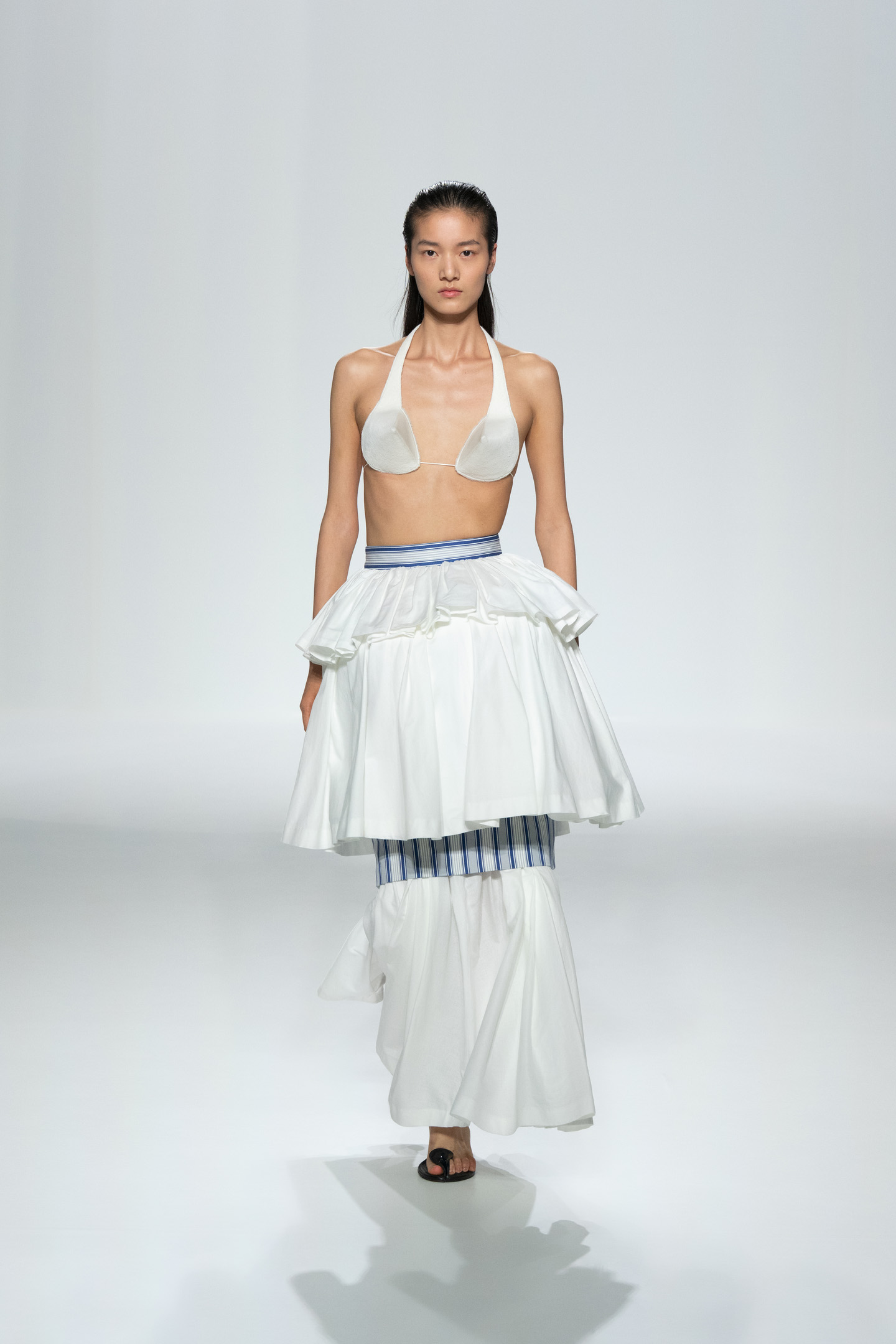
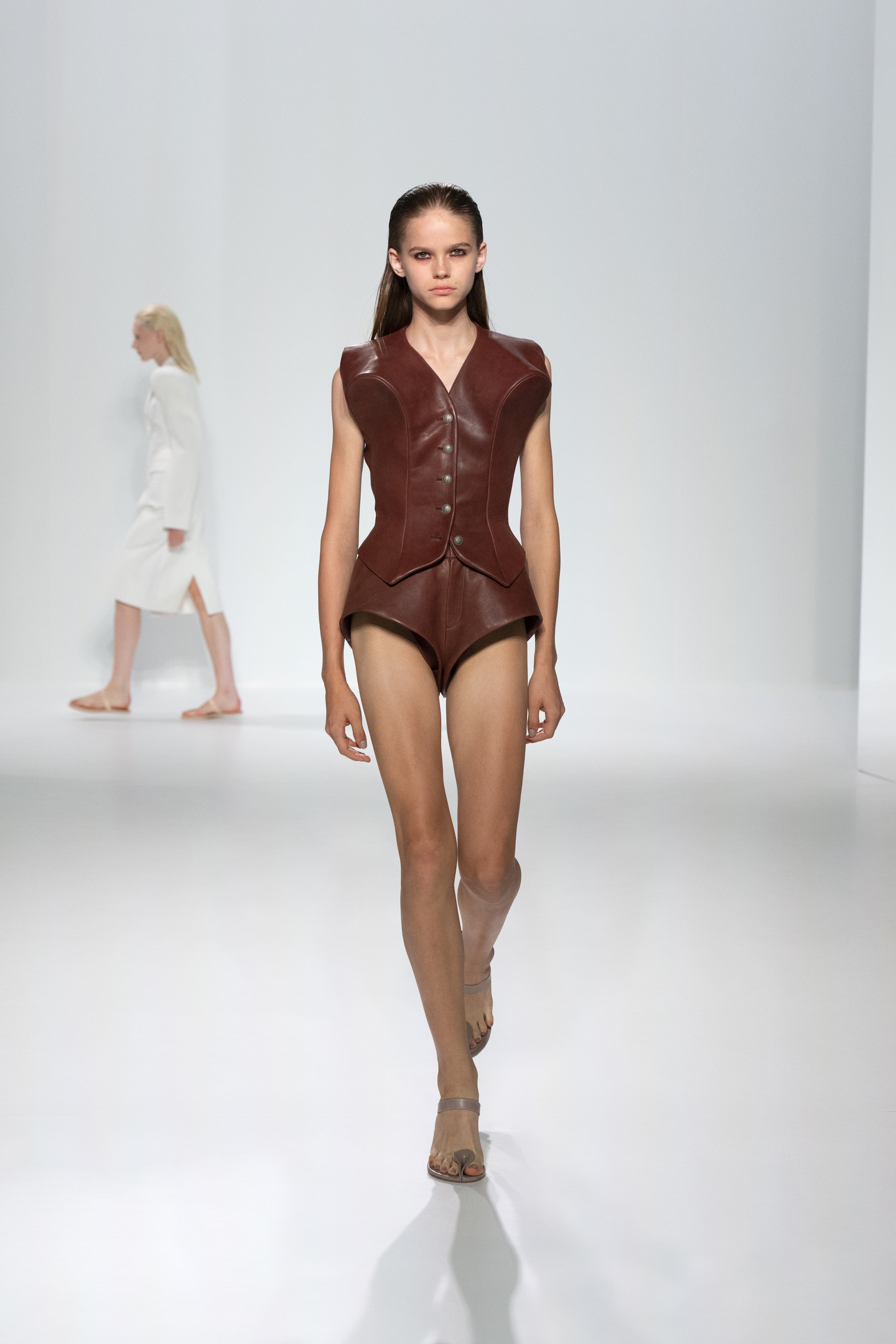
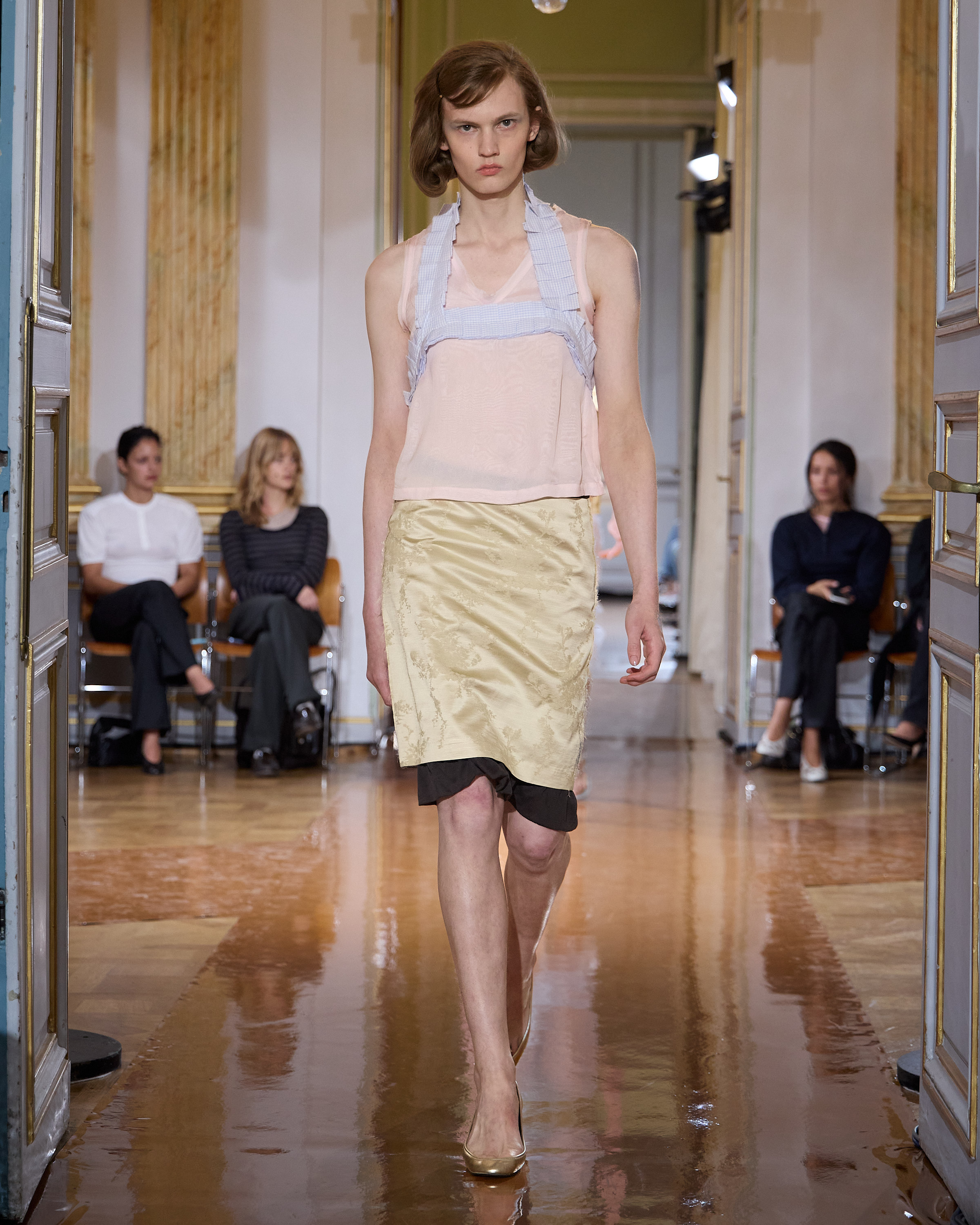
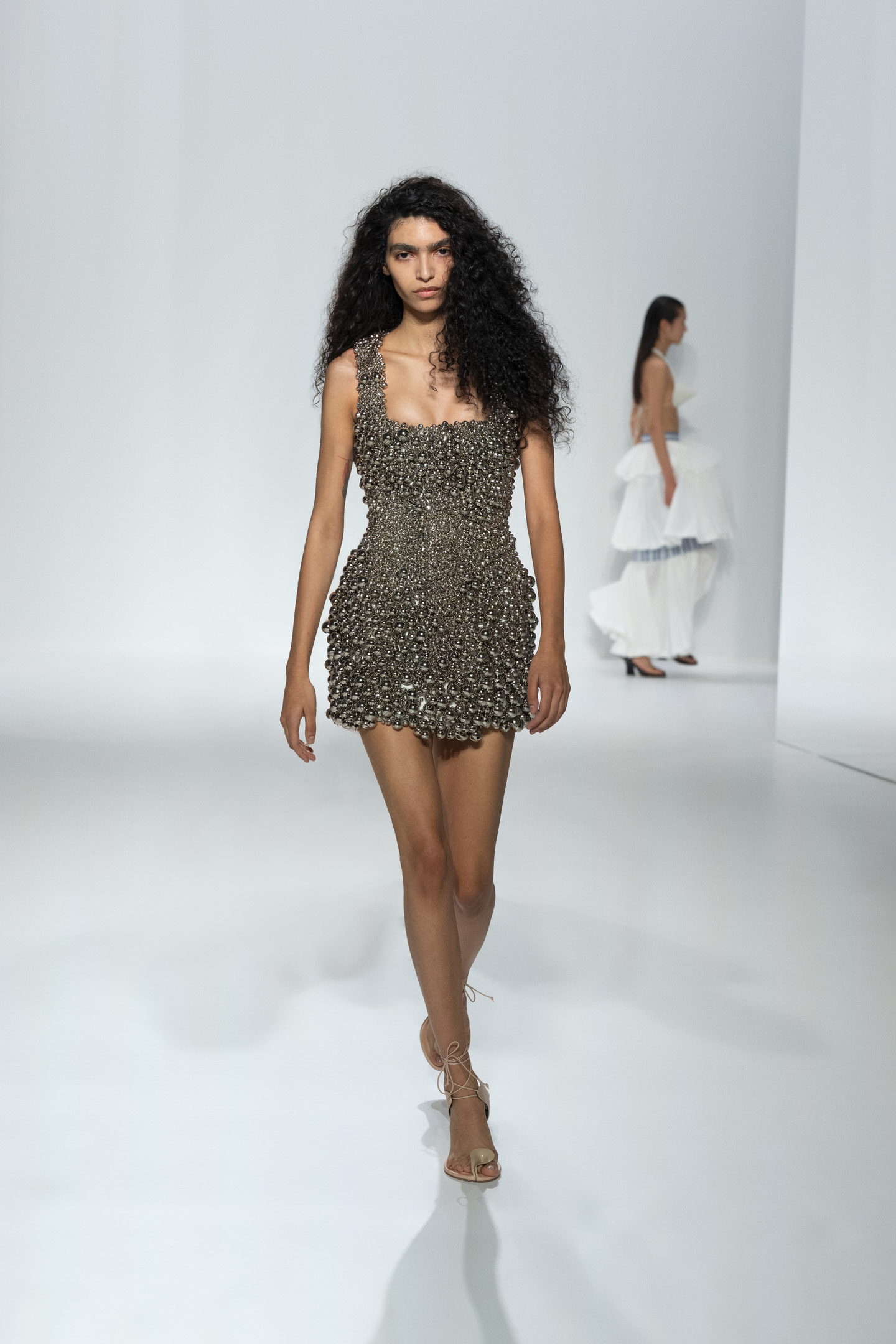
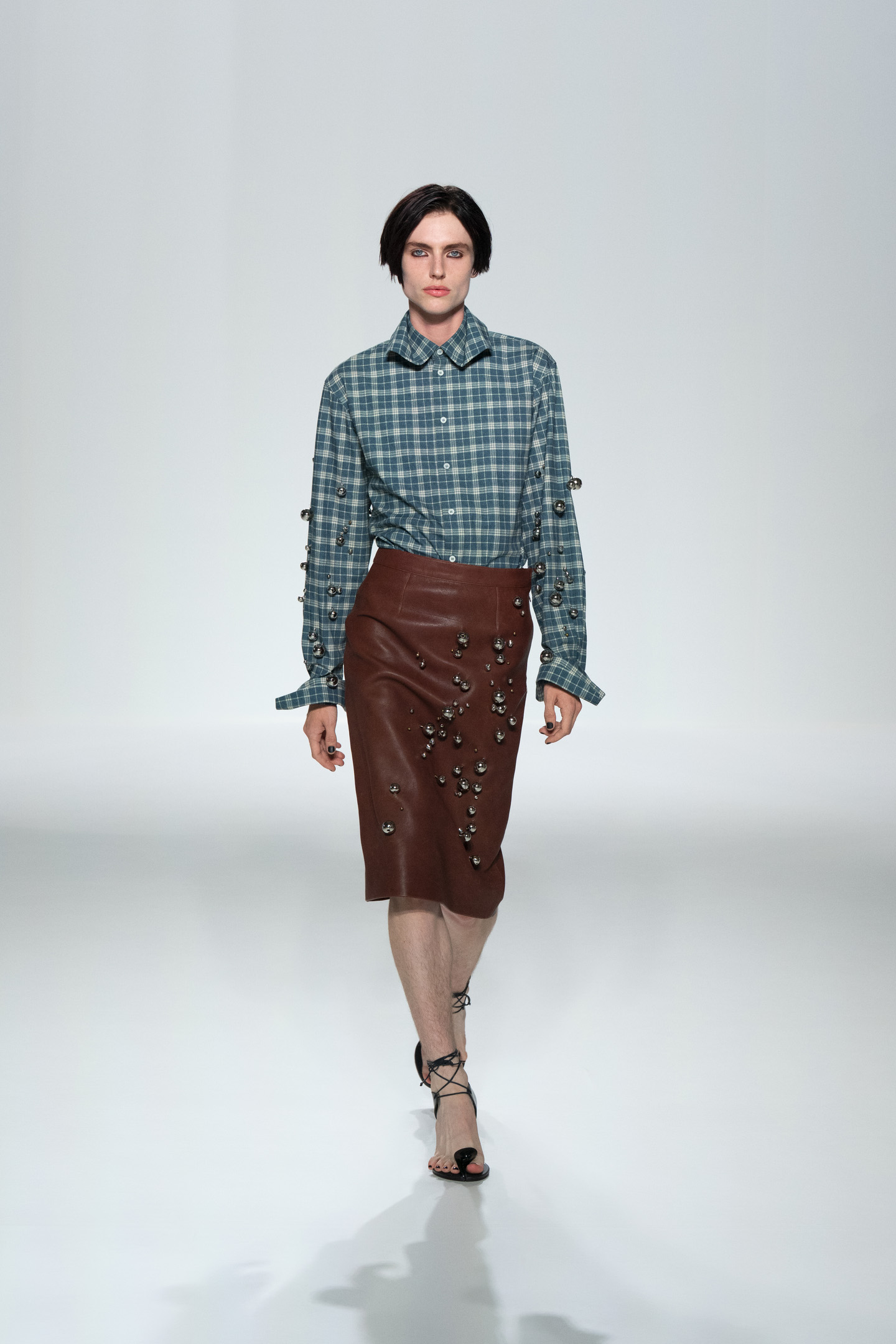
Compared with Lantink’s debut at Gaultier, which was defined by a more overtly provocative and theatrical approach, SS27 introduces far more pieces that can be translated into an everyday wardrobe. Jeans, dresses, trench coats, kilts, leather midi skirts and tailored suits coexist with the collection’s more experimental constructions, creating a balance between formal exploration and wearability.
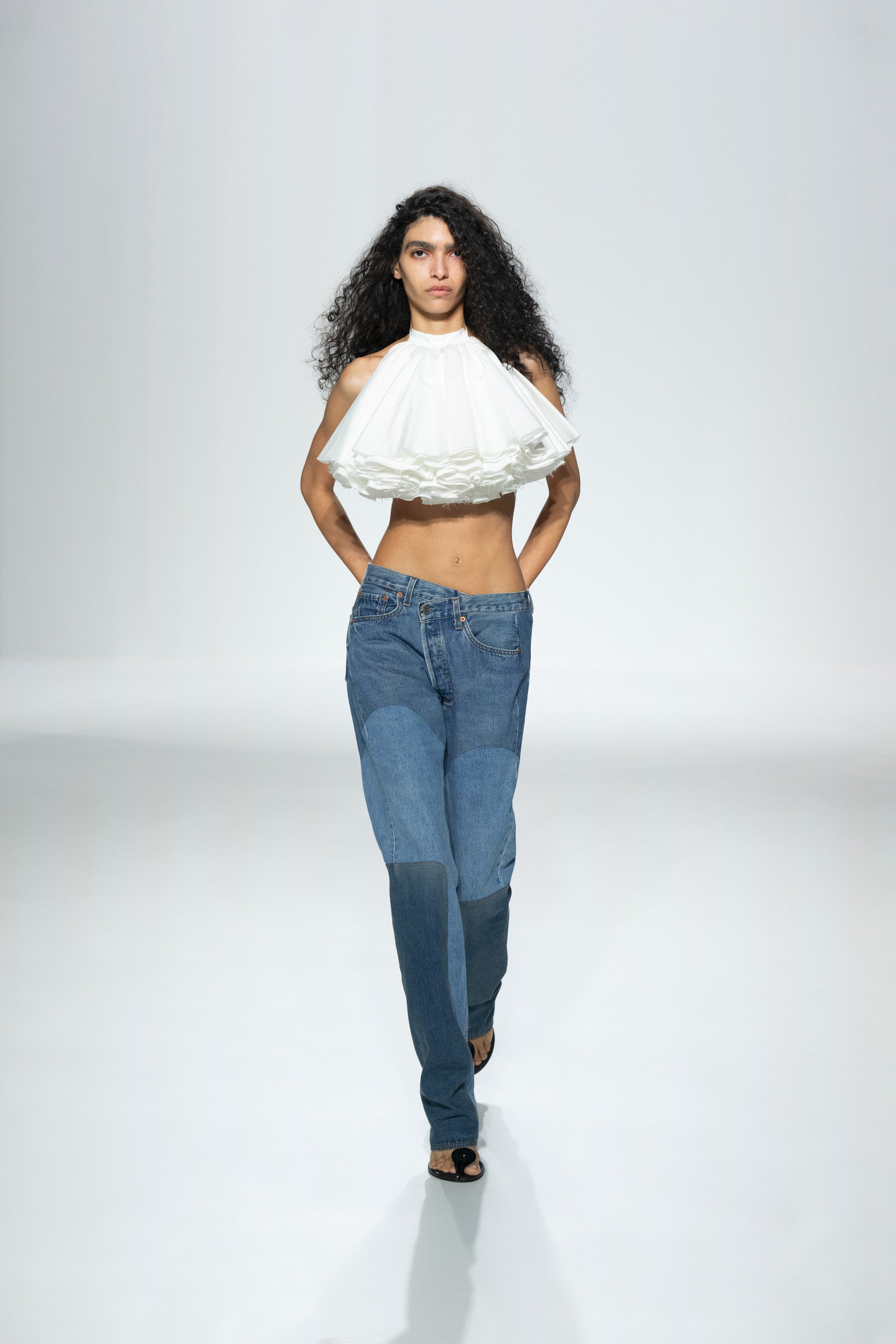
One look that embodies this new direction pairs low-rise jeans with an off-centre fastening, a voluminous white backless top and thong sandals. The starting formula is extremely familiar, almost essential, yet it is made distinctive through unexpected volumes and details.
With SS27, it also becomes clear that Lantink has no intention of confining Jean Paul Gaultier to a single aesthetic or addressing an exclusively niche audience. Instead, he constructs a wardrobe capable of moving across different stylistic identities: from punk and club culture to camp, as well as a more rigorous approach to tailoring. Apparently distant identities coexist within the same universe, connected by a constant exploration of the body, proportion and the possibility of subverting what we conventionally consider wearable.
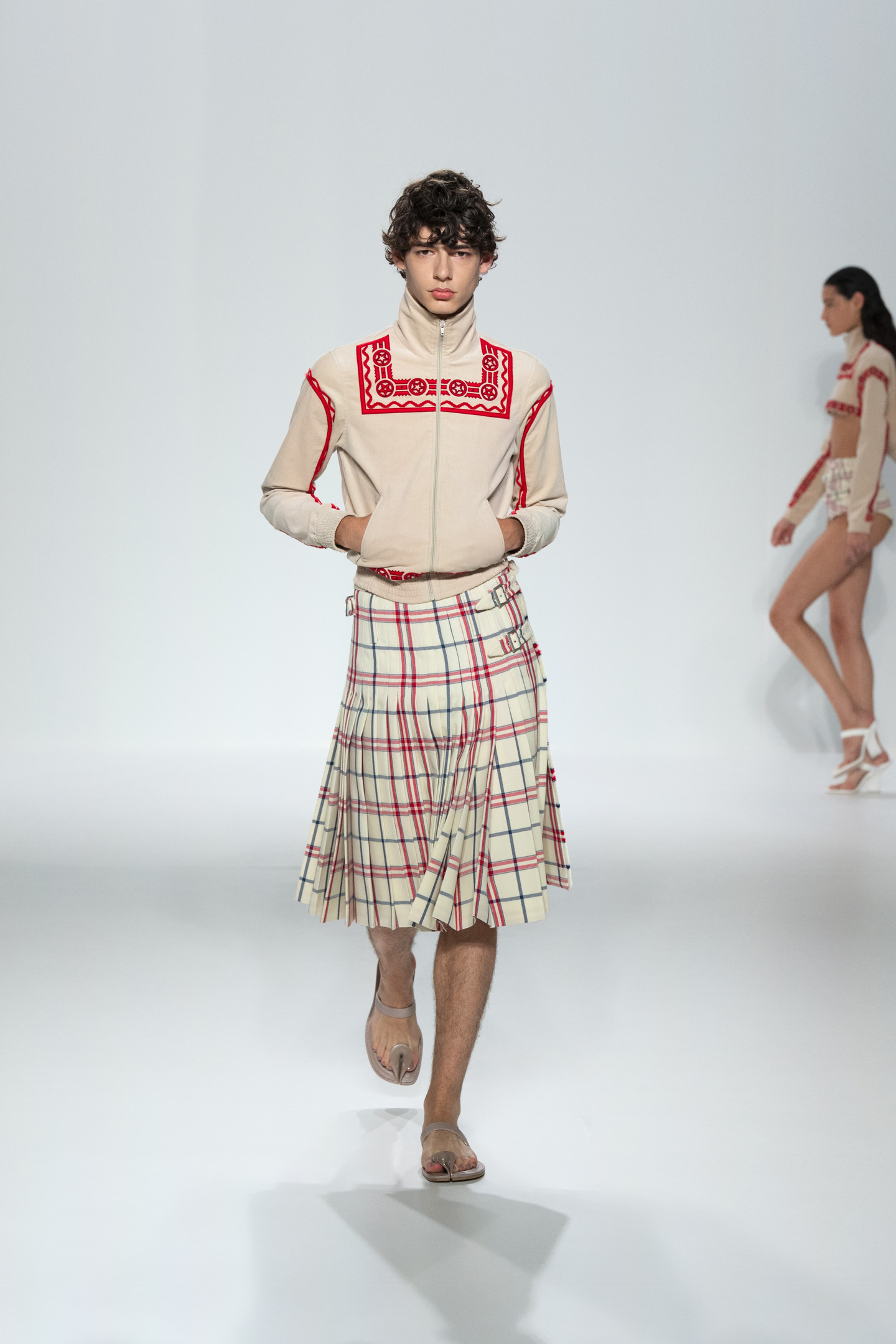
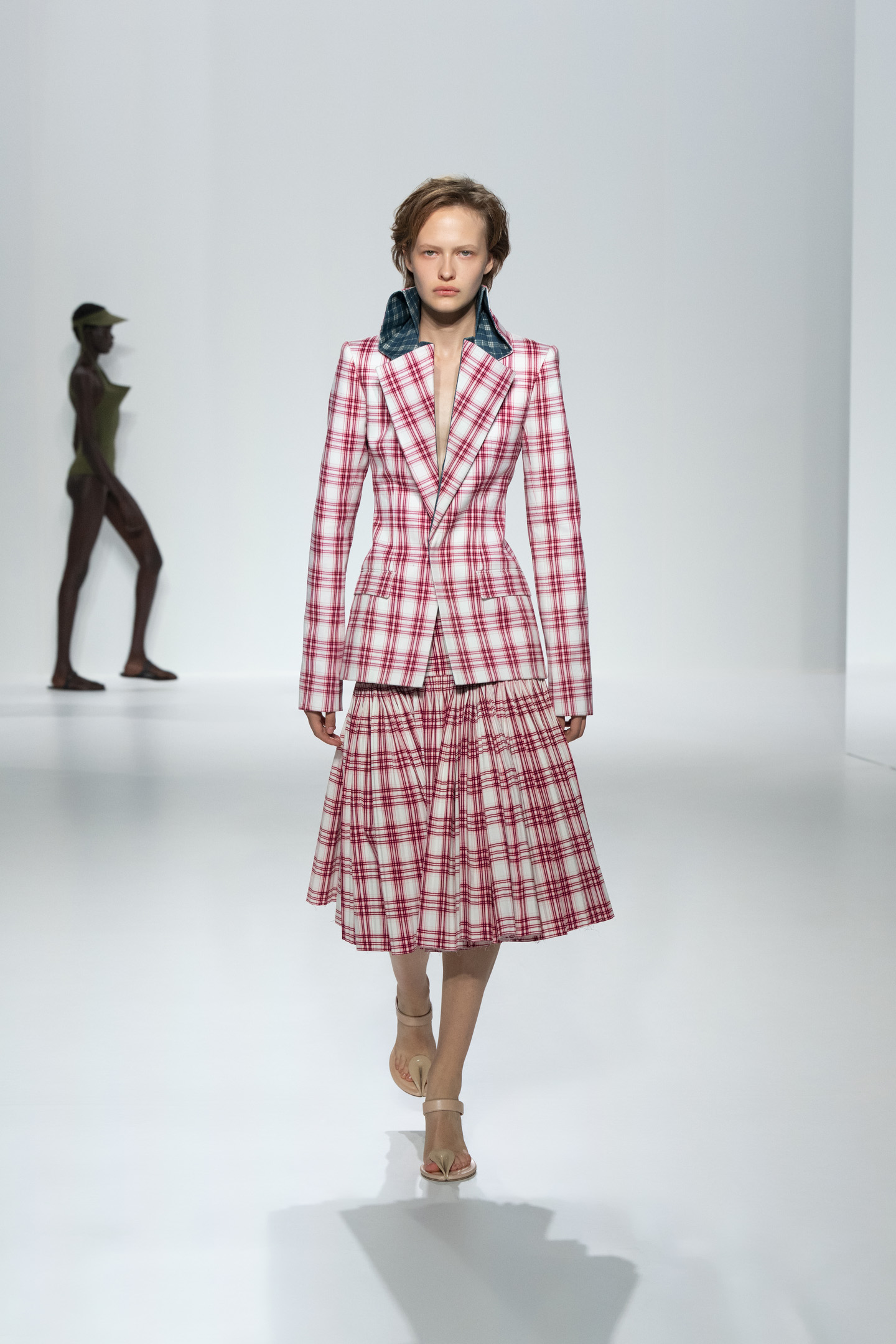
Rather than simply reproducing the house’s historic codes, Lantink seems interested in putting them through a process of transformation. SS27 retains Gaultier’s irreverence, but uses it to build an increasingly personal language and, at the same time, a more tangible wardrobe: experimental in form, yet designed to exist beyond the runway.