Ashley Williams presented her Spring/Summer 2027 collection at London Fashion Week, transforming the runway into an isolated and deeply unsettling dollhouse. Inspired by the concept of an existence confined entirely within the same walls, the show explores a bizarre obsession with comfort objects when the outside world fades away. Amidst furniture-print fabrics, plush toys strapped to the waist like prisoners, and a deceptive sugary sweetness, a visual narrative emerges that conceals a sinister and claustrophobic undertone.
Ashley Williams presented her Spring/Summer 2027 collection at London Fashion Week on September 18th. The starting point is Bonnie Grape, the housebound mother from the 1993 film What’s Eating Gilbert Grape (directed by Lasse Hallström and starring Johnny Depp and Leonardo DiCaprio), and the concept of a life unfolding entirely within the exact same walls.
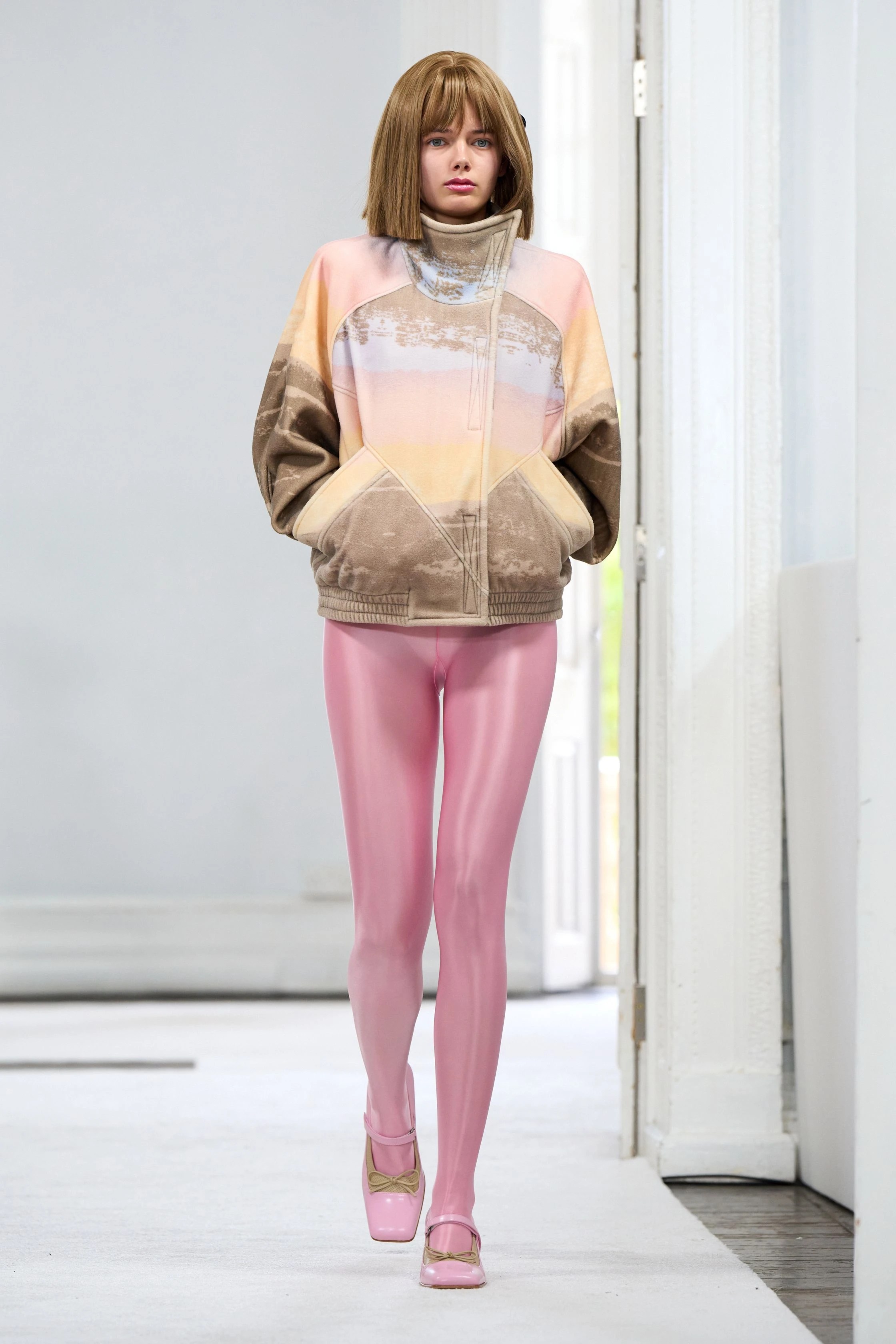
This idea guided the casting just as much as the clothing. Nearly all the models wore the same dark blonde bob with bangs and a pale pink or lilac lipstick, making the runway look like a single recurring character walking through a bare, white room.
Prints Inspired by Furniture
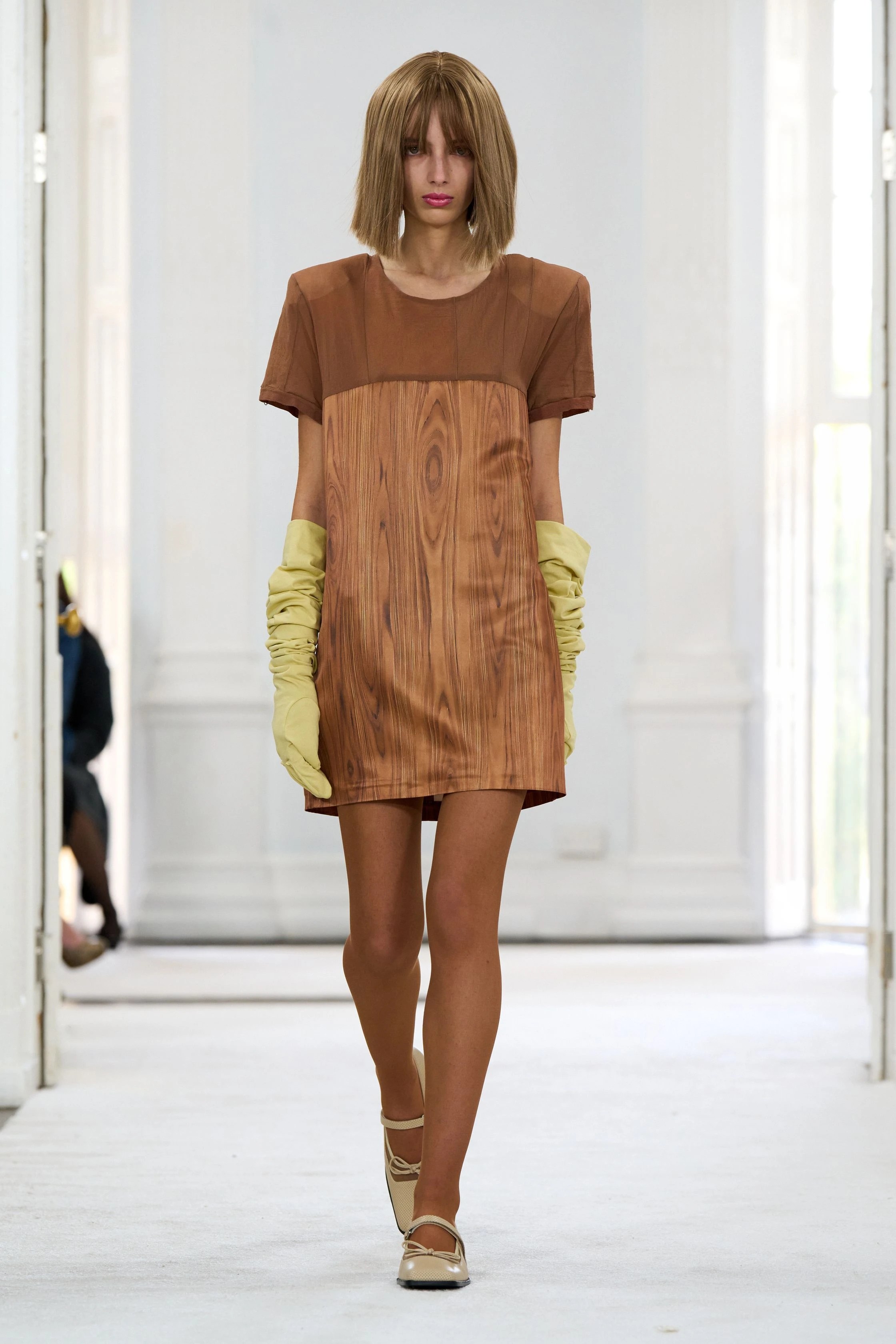
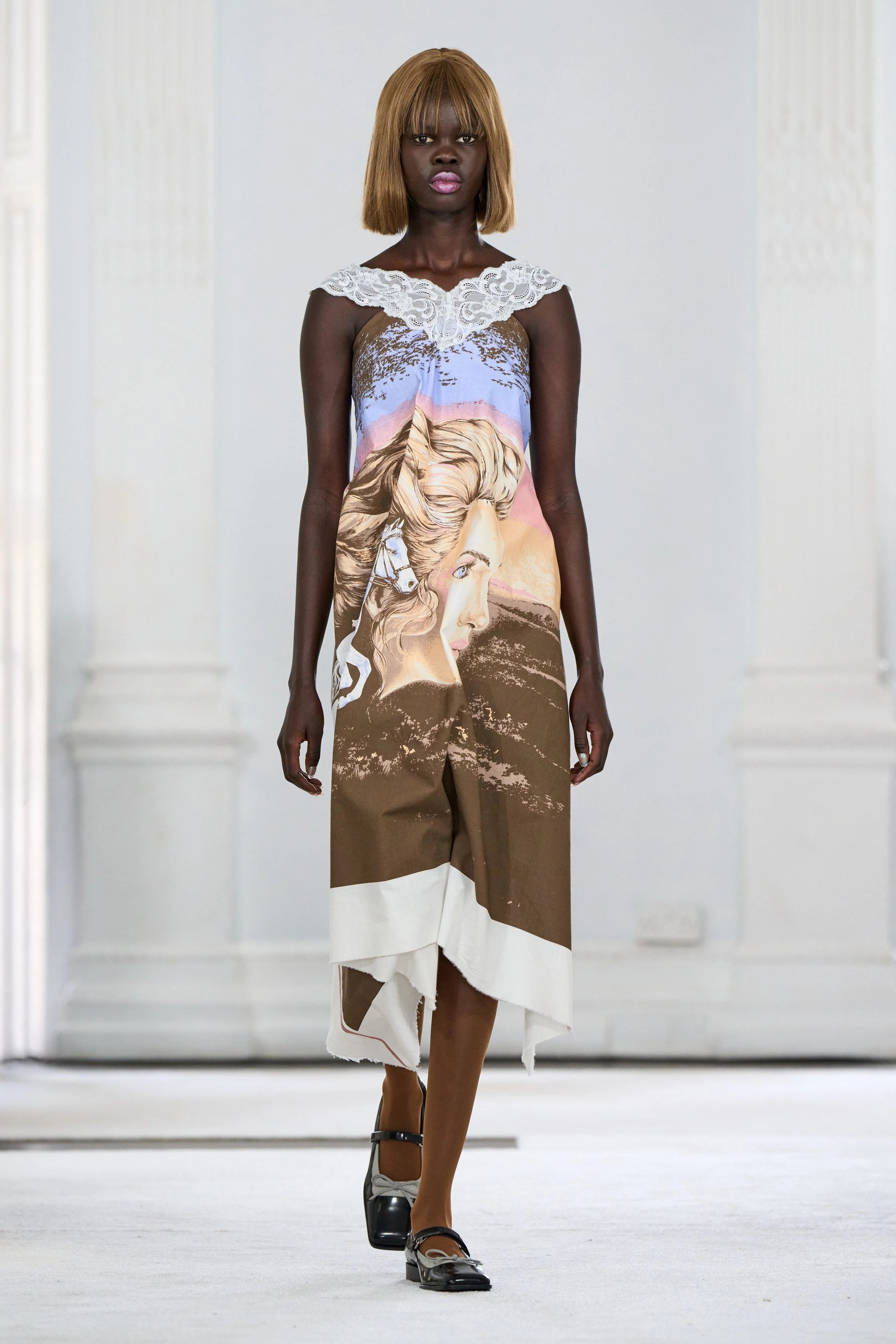
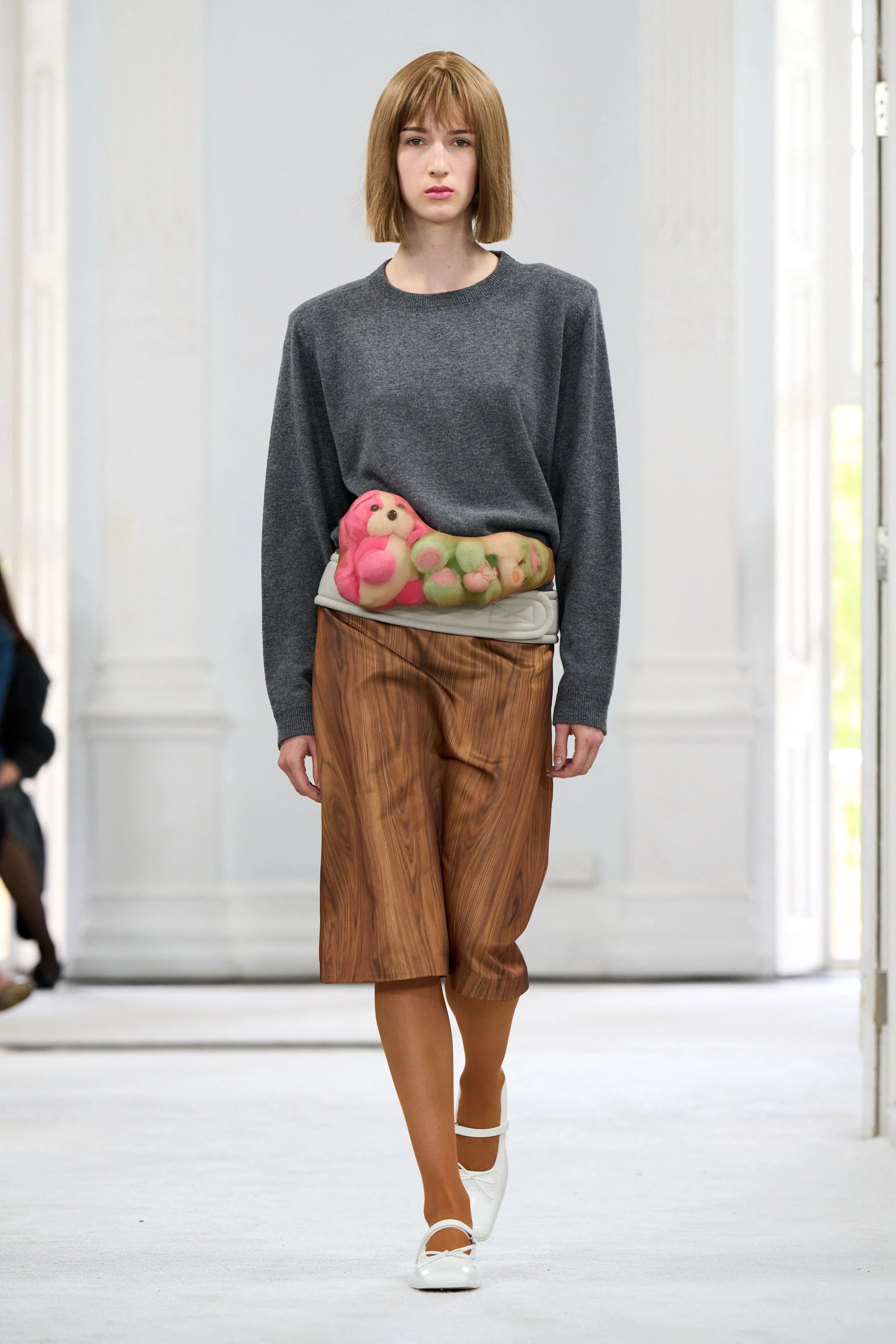
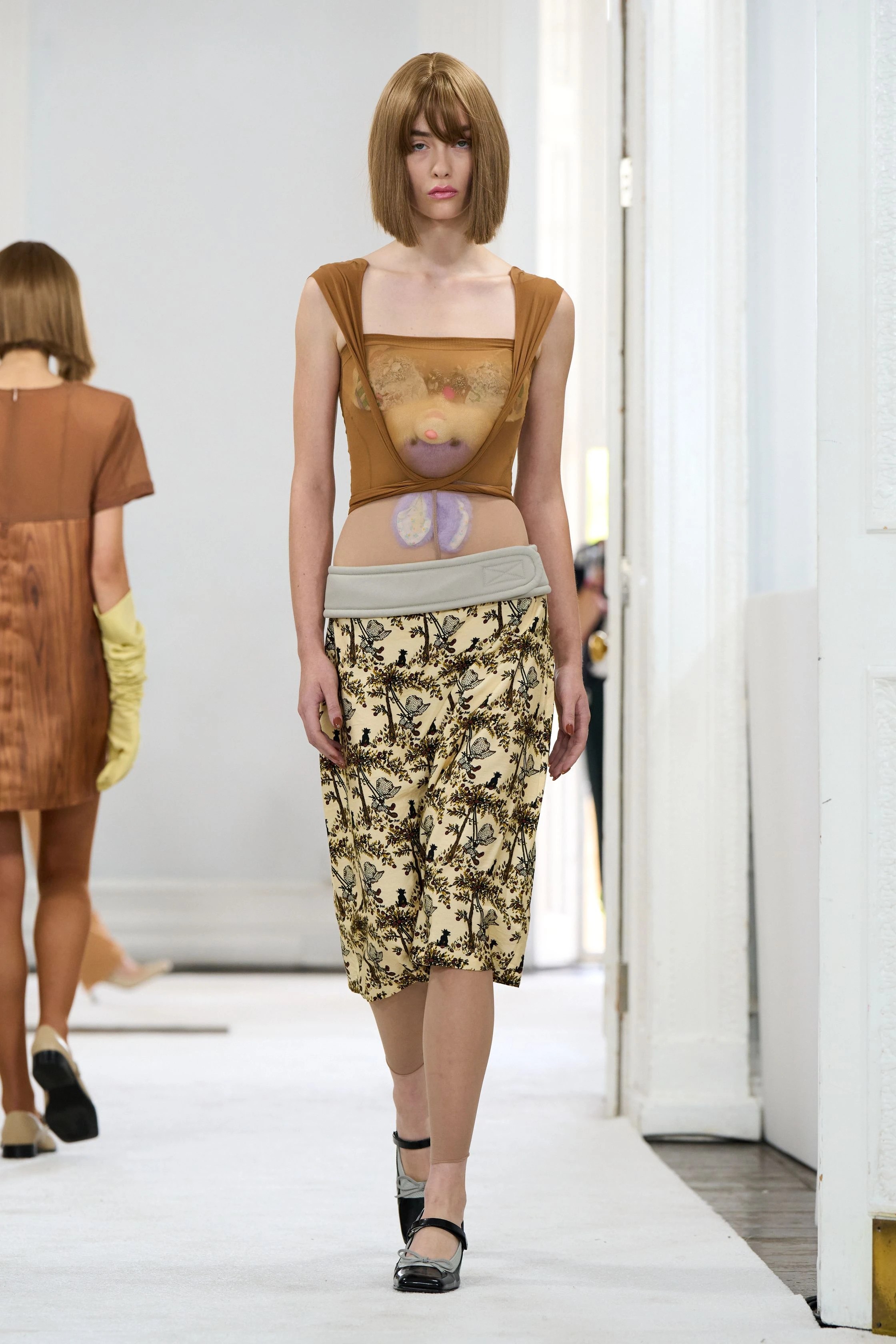
The home was visible first and foremost in the prints. A wood-effect pattern covered the lower part of a short brown dress, paired with pale yellow gloves. A cream and olive print featuring small figures and animals beneath trees appeared on a long dress, a mini, a bomber jacket, and a coordinated tank top and leggings set, resembling the fabric of an old children’s bedroom. Two sleeveless dresses featured a dreamy portrait of a woman with flowing hair and white horses at a gallop, with raw edges that made them look as though they had been cut from an old bedsheet.
Plush Toys at the Waist
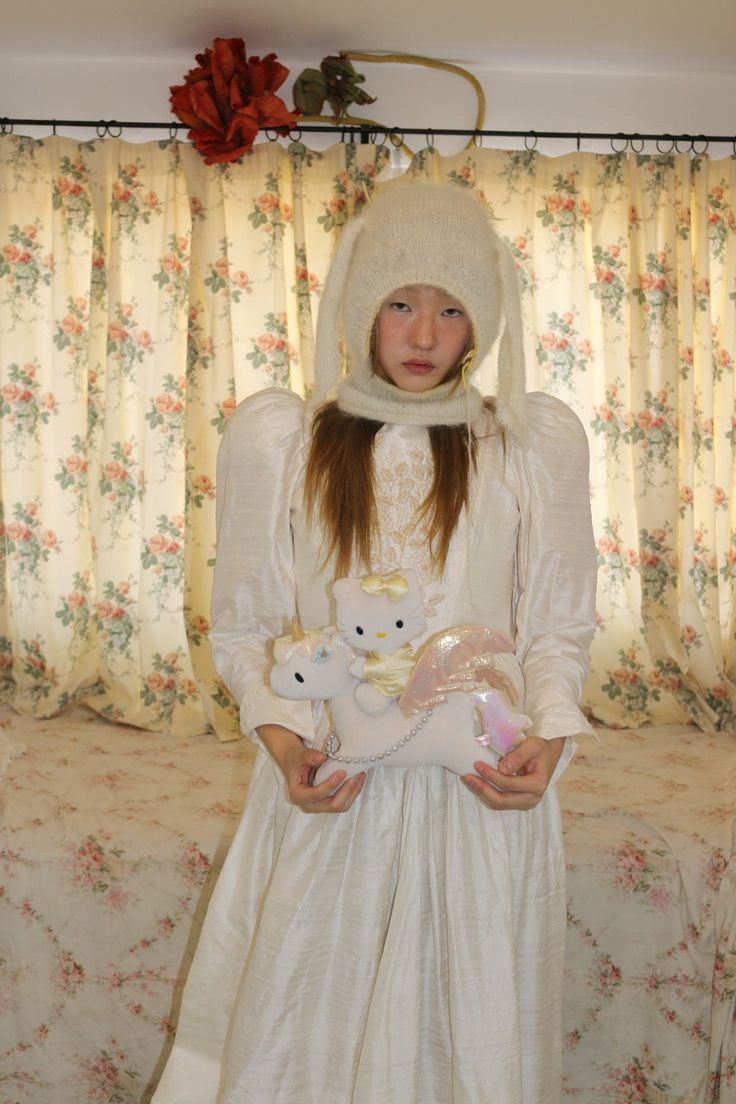
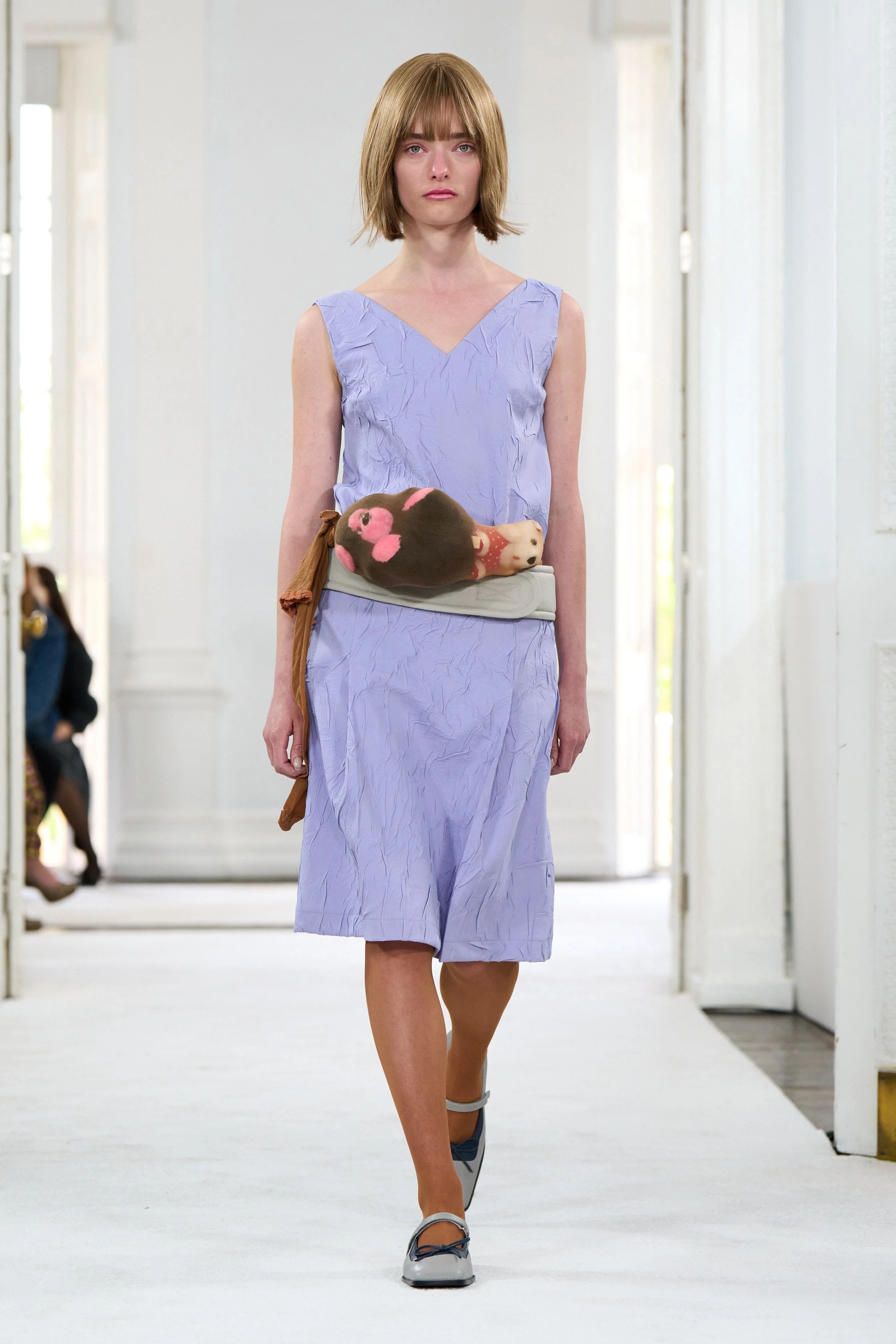
The strongest visual image was the plush toys. Alongside handbags, many models wore a stuffed animal wrapped inside a stocking at the waist, acting almost like a pouch: a little monkey on a lilac dress, a pink and green plush toy on a grey sweater, and other toys on pale yellow looks. Flesh-toned sheer panels joined like old stockings clung to the body, while lace-trimmed slips, a garterized girdle, and pastel satin skirts shifted intimate wear into daywear.
Shapes, Palette and Accessories
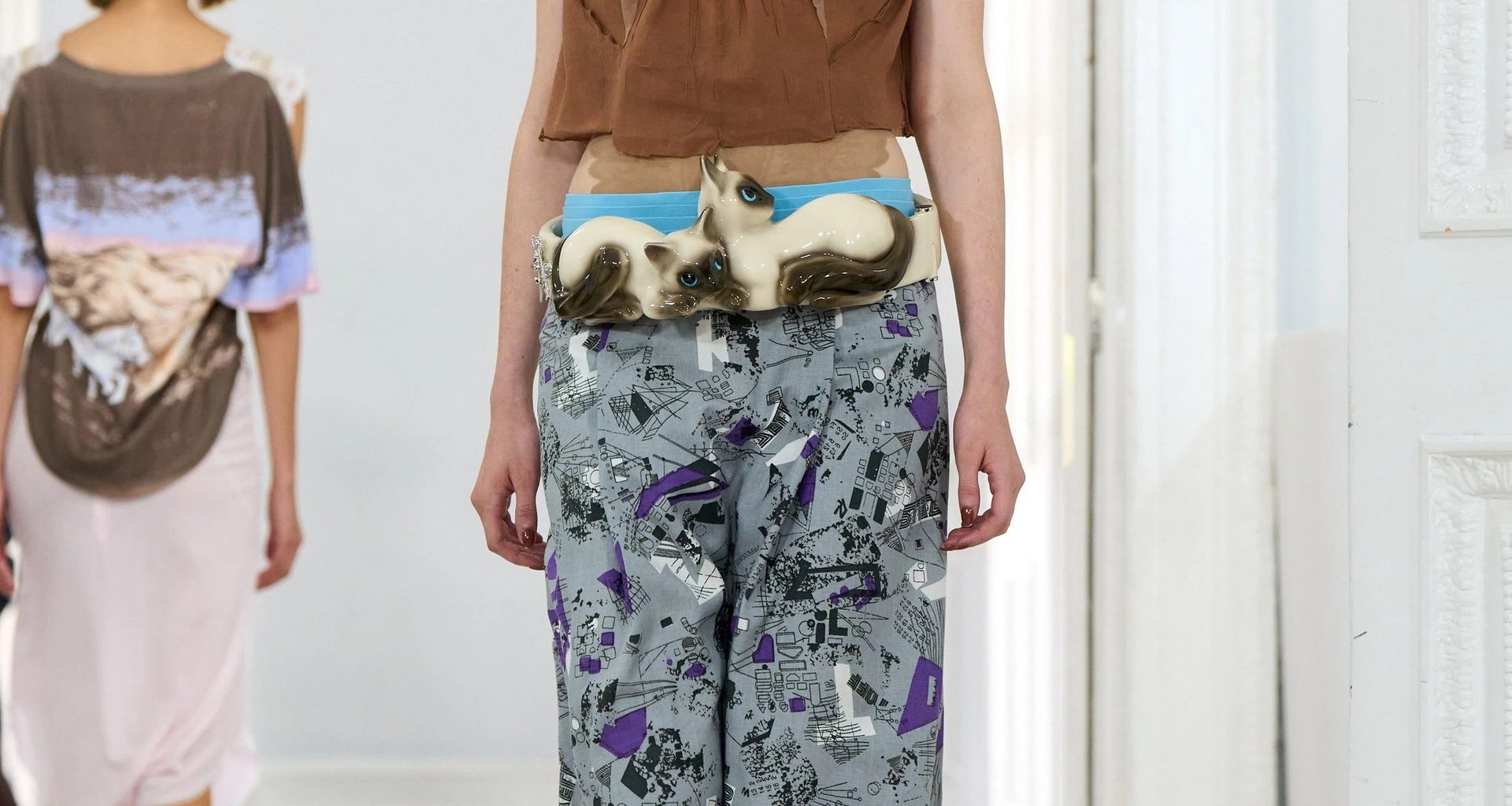
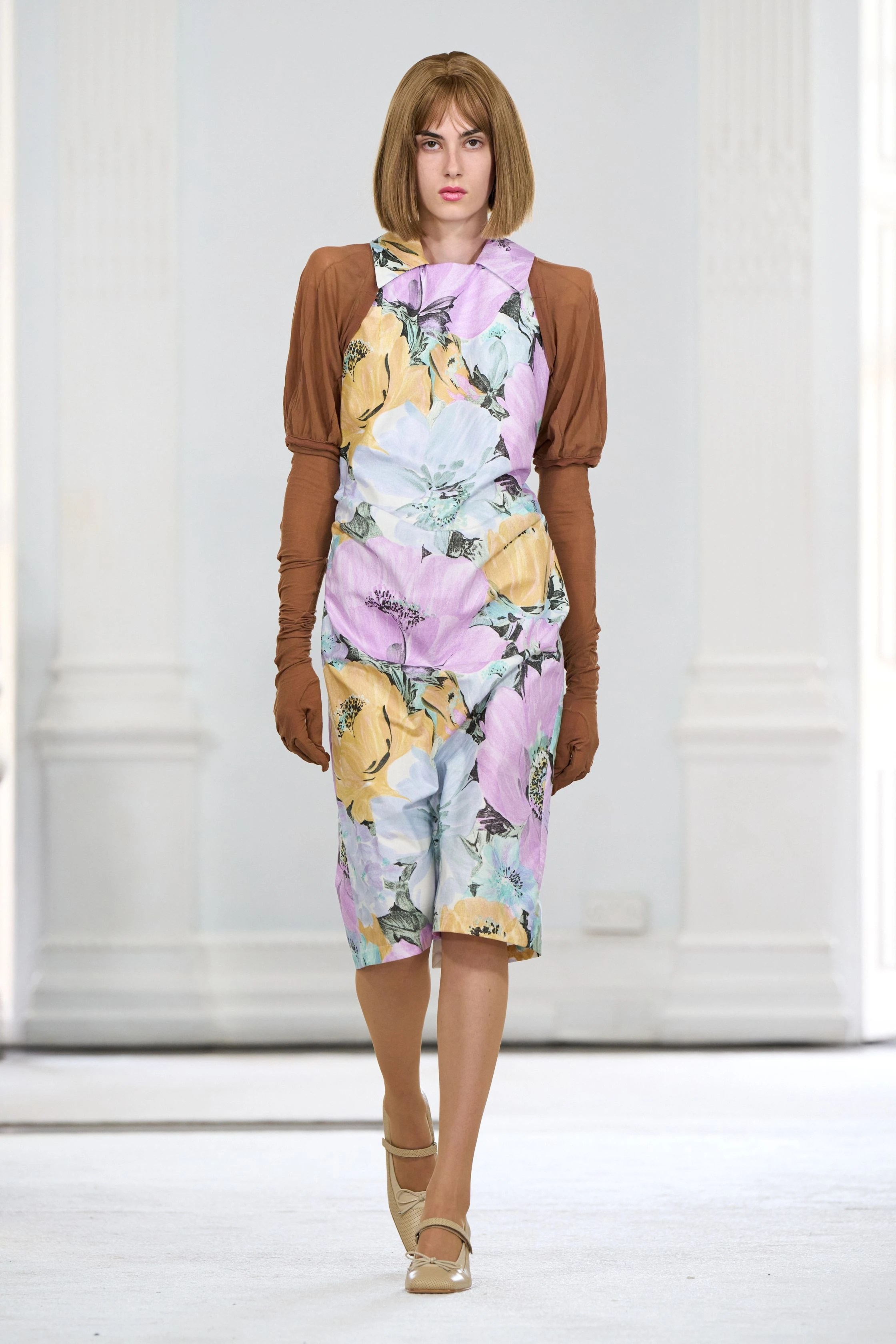
The silhouettes appeared simple yet somewhat rigid, featuring squared and crumpled shirt dresses in shades of lilac and white, pronounced shoulders across multiple blouses and dresses, and cape layers worn over blue and yellow shirts. These domestic elements were contrasted by sporty accents, seen in lightweight nylon jackets, floral tracksuits, and glossy pink and grey tights. The color palette favored lilac, butter yellow, mint, powder pink, and generous amounts of brown. Light-colored, square-toed Mary Janes adorned with bows finished off most ensembles, while long, scrunched gloves in yellow, brown, white, and blue lent many of the outfits the distinct feeling of a house robe paired with kitchen gloves. Among the accessories, key highlights featured a belt adorned with two embracing Siamese cats crafted from faux-porcelain plastic.
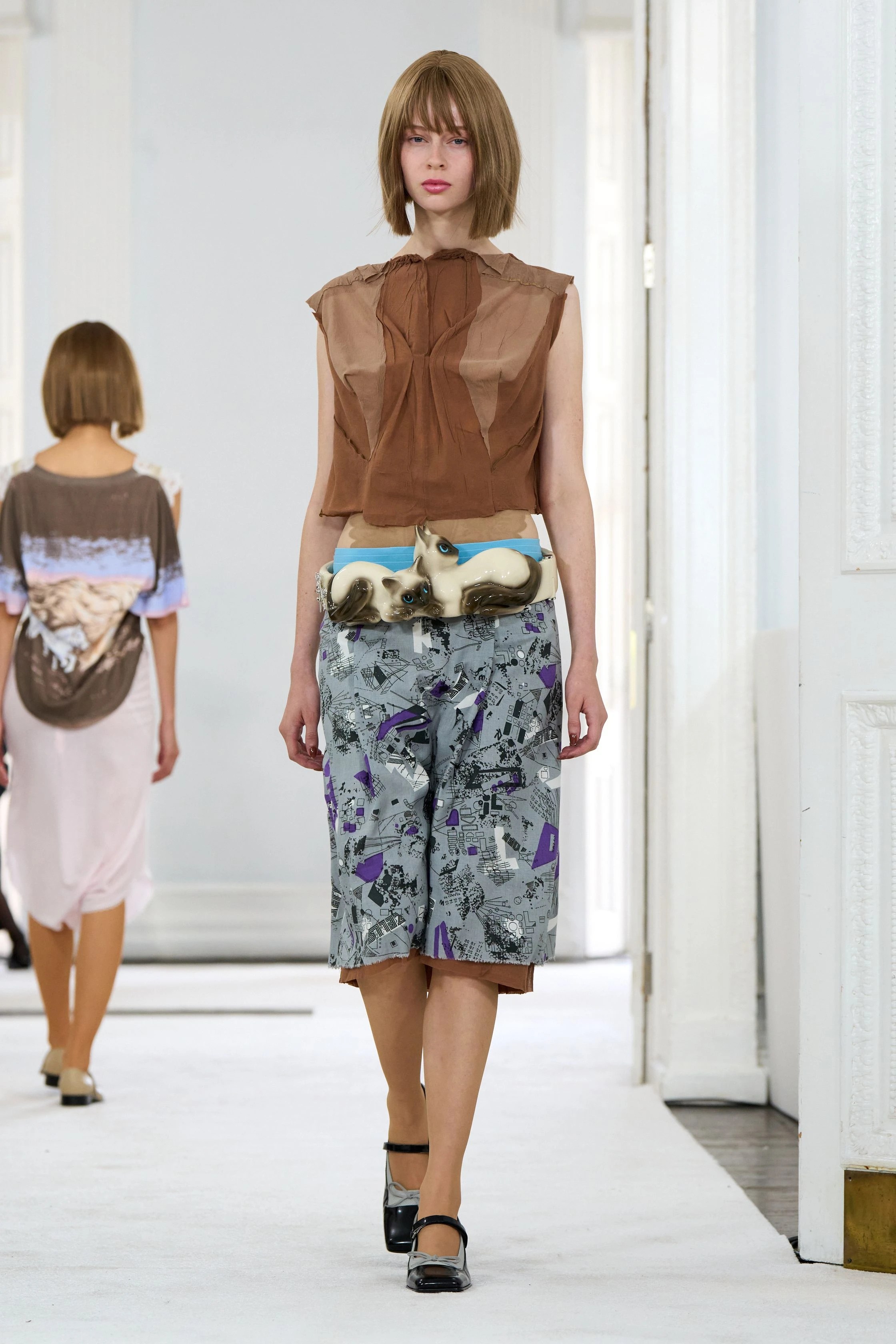
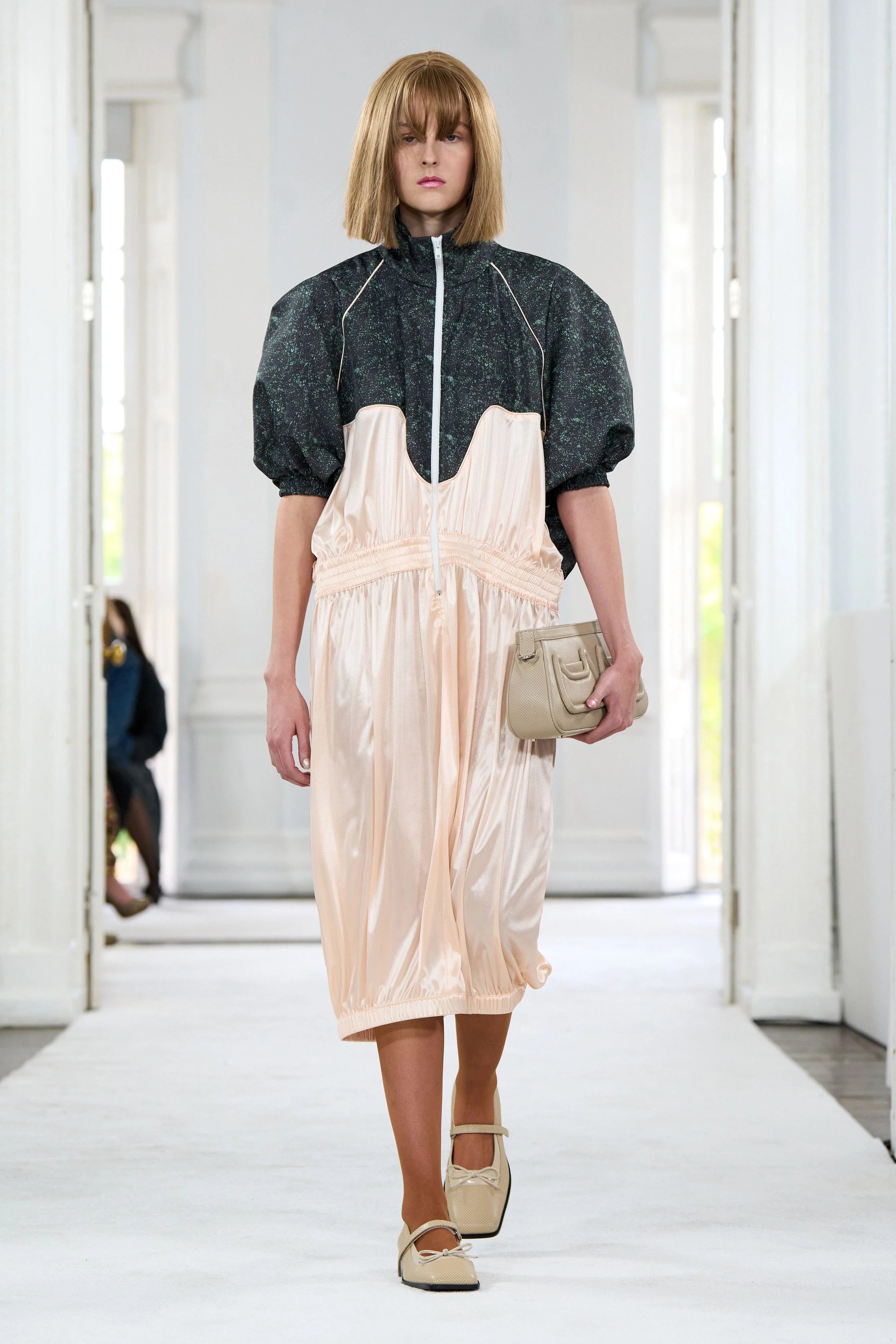
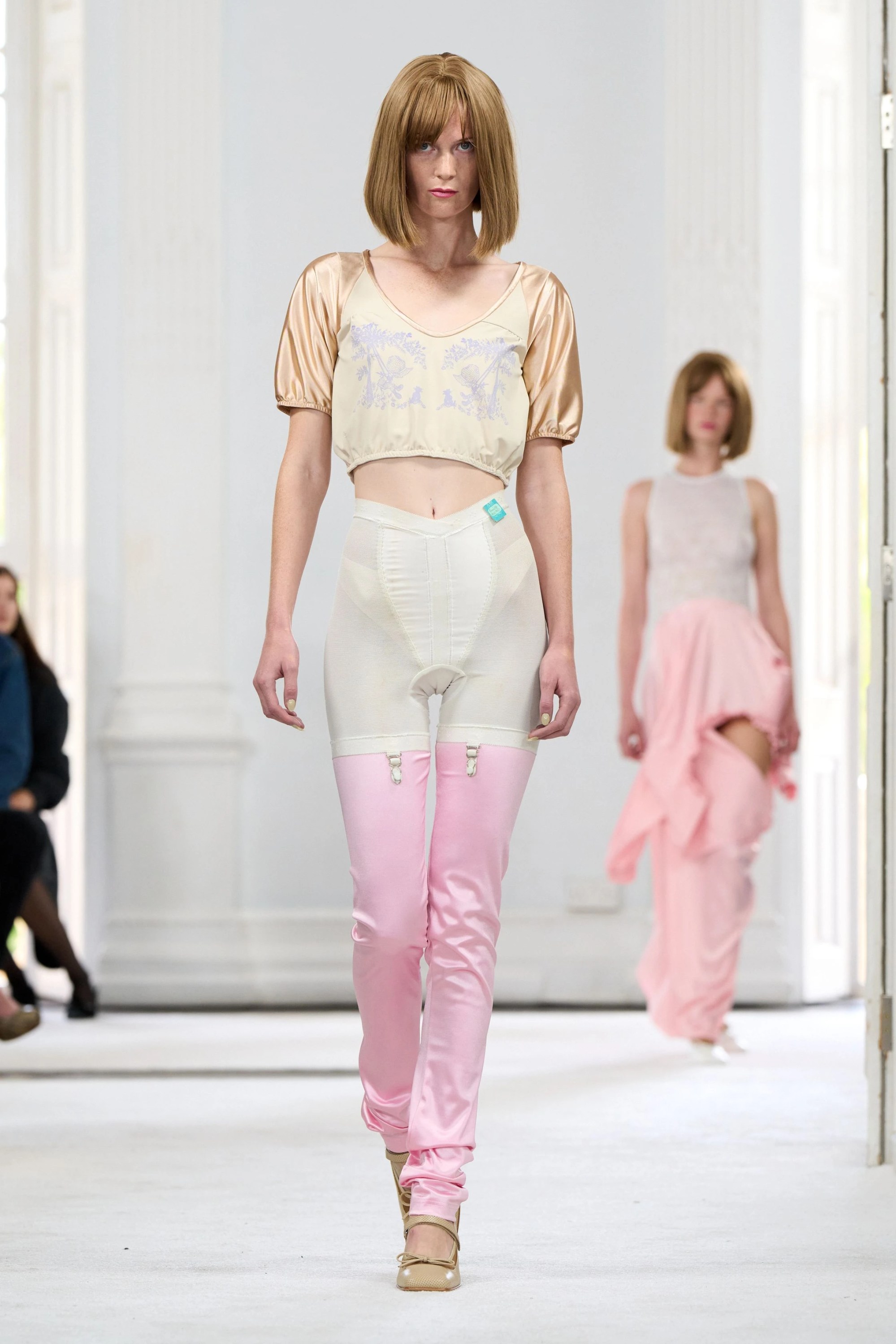
There is a sugary coating to it all, but it conceals something deeply unsettling. The matching cuts, the stuffed animals tethered to the waist like mute prisoners, and the endless pastel tones evoke a sealed dollhouse rather than a real closet. It reads as a staged ritual of isolation, laying bare a disturbing obsession with the security blankets we hold onto long after the outside world fades away.
Giulia Calbi