Alexa Chung goes inside Dior’s ateliers for a new film with Jonathan Anderson, tracing how the house’s Fall 2026 haute couture collection came together by hand.
A navy jumper is just a navy jumper until Alexa Chung puts one on. Same with a battered leather jacket, a pair of loafers, denim shorts at Glastonbury. She didn’t invent any of it. But fashion has watched her wear clothes for long enough that certain combinations now arrive with a faint trace of her attached, which is what happens when you’ve had good taste in public for nearly two decades.
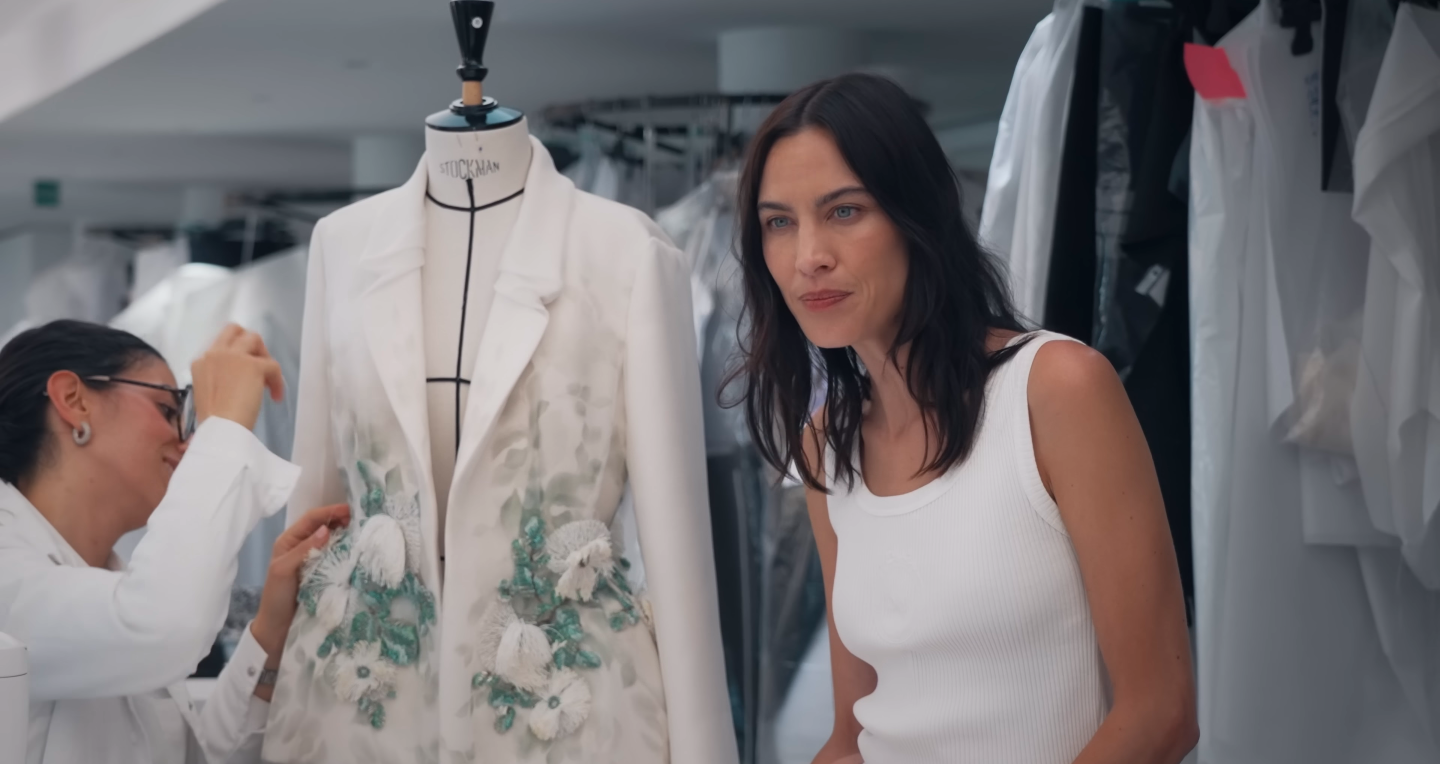
Alexa Chung Goes Backstage at Dior
It’s also, it turns out, the wrong thing to focus on. In Dior’s new film, Discovering Dior Fall Winter 2026–2027 Haute Couture with Alexa Chung, Alexa Chung isn’t there to model the clothes or admire them from the front row. She’s there to find out how they’re made. The film follows her through Dior’s historic address at 30 Montaigne, into fittings where she talks with the seamstresses hand-building the collection, and eventually to Jonathan Anderson himself — Dior’s own description is an exploration of the collection through her eyes, which is a diplomatic way of saying: they let her backstage.
Back in 2015, when she pitched British Vogue on what became The Future of Fashion, the idea was to show the industry “from the inside out”: designers and editors, sure, but also psychologists, forecasters, the people whose work usually vanishes by the time a dress reaches a photograph. Over a decade later, she’s still asking to see the parts nobody points a camera at.
It shows in her writing too. She writes about fashion through objects and half-embarrassing memories, small physical details that trends don’t usually make room for. A recent essay about hunting down a good vintage leather jacket starts with one she found in a cupboard in New York and quickly gets sidetracked by the squeak of the leather, the personality it seems to hand its wearer. A parka sends her back through British weather and teenage dressing. An essay about young love opens, unexpectedly, with a New Forest pony.
Her humour tends to arrive sideways, through a detail sitting quietly next to the glamour and doing all the work. The glamorous stuff is already glamorous; there’s no need to underline it. Which makes couture, of all things, a genuinely good subject for her.
Inside Dior’s 2026 Haute Couture Collection
Haute couture is defined as much by process as by appearance. Before a garment reaches the runway, it has already passed through fittings, adjustments and hours of highly specialized handwork in the atelier. Anderson’s Fall/Winter 2026–2027 collection for Dior gives Chung a way into that process by following the references and decisions that shape the clothes from the beginning, continuing the instinct for reinvention he’s brought to the house’s other lines since taking over.
In Anderson’s hands, that becomes couture built around transformation. In La Galerie Dior, the house’s own archive, Chung is shown Christian Dior’s original 1947 Bar suit hanging near Anderson’s take on it — the same nipped waist and rounded shoulders, but with a central bow that no longer closes the jacket, only decorates it. A subtle intervention in nearly eighty years of history.
Further into the ateliers, that same instinct shows up in stranger material: a skirt built from fine mesh referencing the chicken wire Lynda Benglis once sculpted with, each intersection hand-stitched with invisible thread by someone who will spend hours on a single panel most people will glance at for a second on a runway. The atelier stops looking like an assembly line and starts looking like somebody else’s studio — exactly the kind of room Alexa Chung has always wanted access to.
Chung has occupied nearly every seat in the room at some point: model, designer, presenter, interviewer, magazine subject, contributor.
There’s something fitting about Dior returning to her now. She was already inside these ateliers once before, filming ahead of the house’s Spring 2020 couture show. Six years later, she is back, this time inside Jonathan Anderson’s Dior.
Alexa Chung and Dior’s 2026 Met Gala Moment
Alexa Chung’s relationship with Dior couture has gotten more visible this year. At the 2026 Met Gala, Anderson dressed her in a low-backed chartreuse Dior gown blooming with a single lily, a reference to Monet and his own Fall 2026 collection for the house. It was softer and more overtly sensual than the structured clothes she usually reaches for — she said as much herself, describing it as a departure from what she called her own “sartorial DNA.” When she talked about the night afterward, she gravitated toward the logistics of getting ready with that much of her back exposed, the team it took, the unglamorous choreography behind a glamorous ten minutes.
Which might explain why Alexa Chung is good company for institutions like this one. She knows fashion’s codes well enough to move through these spaces comfortably, while still noticing the odd details that insiders can learn to overlook.
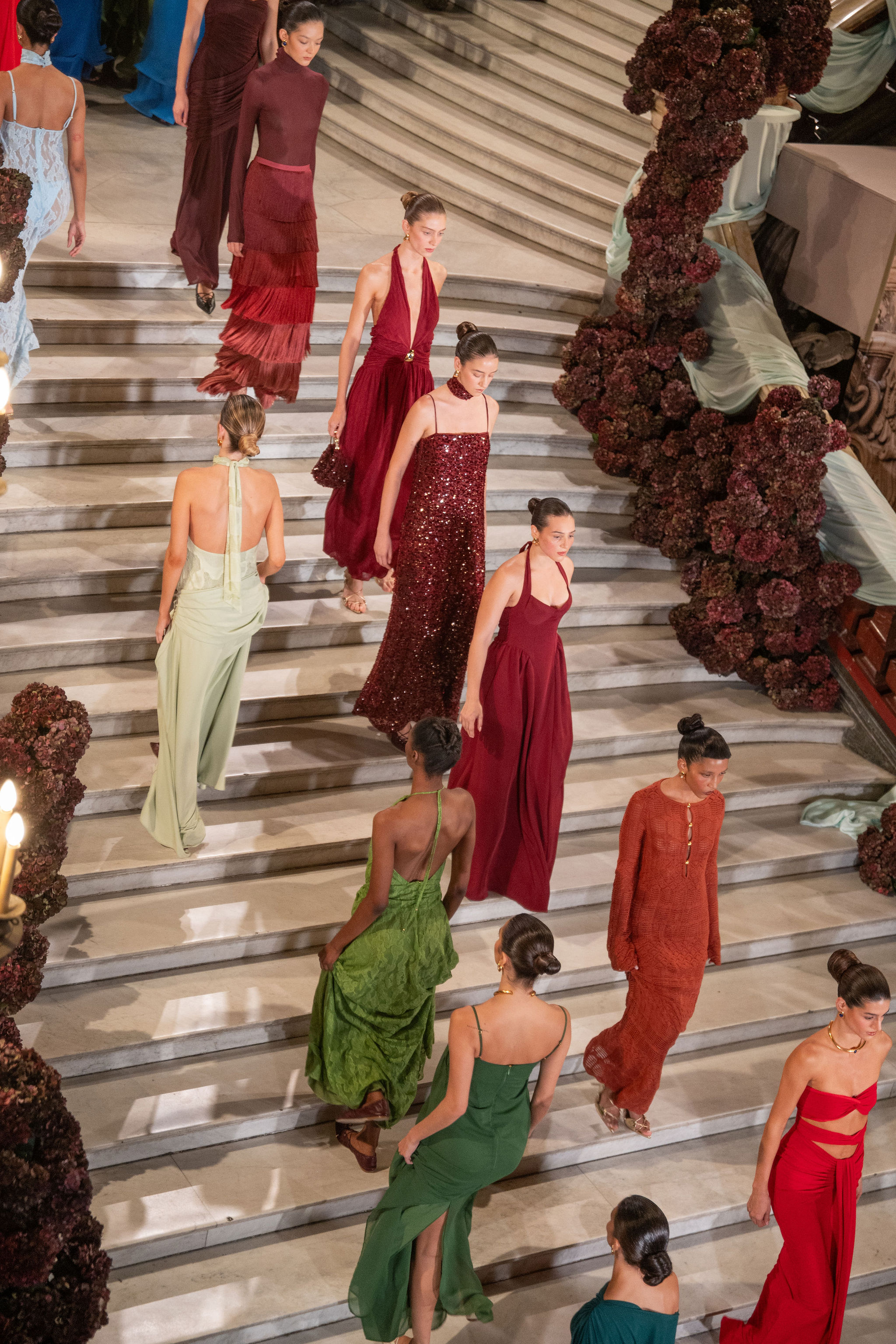
And the Dior show in July was strange, in a good way. Models walked a black reflective runway through the gardens of the Musée Rodin, ferns everywhere, Paris in the middle of a heatwave. Dior had sent black bamboo fans out with the invitations, and by the time the show started, the front row — Chung included, alongside Josh O’Connor and Sabrina Carpenter — was putting them to entirely practical use.
It’s the exact kind of collision her work has always handled well: the fantasy running straight into ordinary life, and neither one flinching.
Maybe that’s also why the clothes associated with her keep resurfacing instead of dating. Parkas, ballet flats, the leather jacket, the little dress under the huge coat — they cycle out and then cycle back. She was writing about vintage leather jackets again this year.
By the time a couture dress reaches the runway, it’s been smoothed into something that looks effortless, as if it simply arrived that way. Chung’s presence in the atelier undoes that a little. When a black coat trimmed with fern lacing finally swept past her on the runway — the same coat she’d watched being hand-finished in the workroom days earlier — she described it afterward as strangely moving, less like watching a show and more like watching something she already knew be born. There are hands behind the dress again, decisions behind the shape, and somebody in a workroom who cut a sleeve a certain way for a reason most people watching the show will never know.