

By Devincan Türkmen
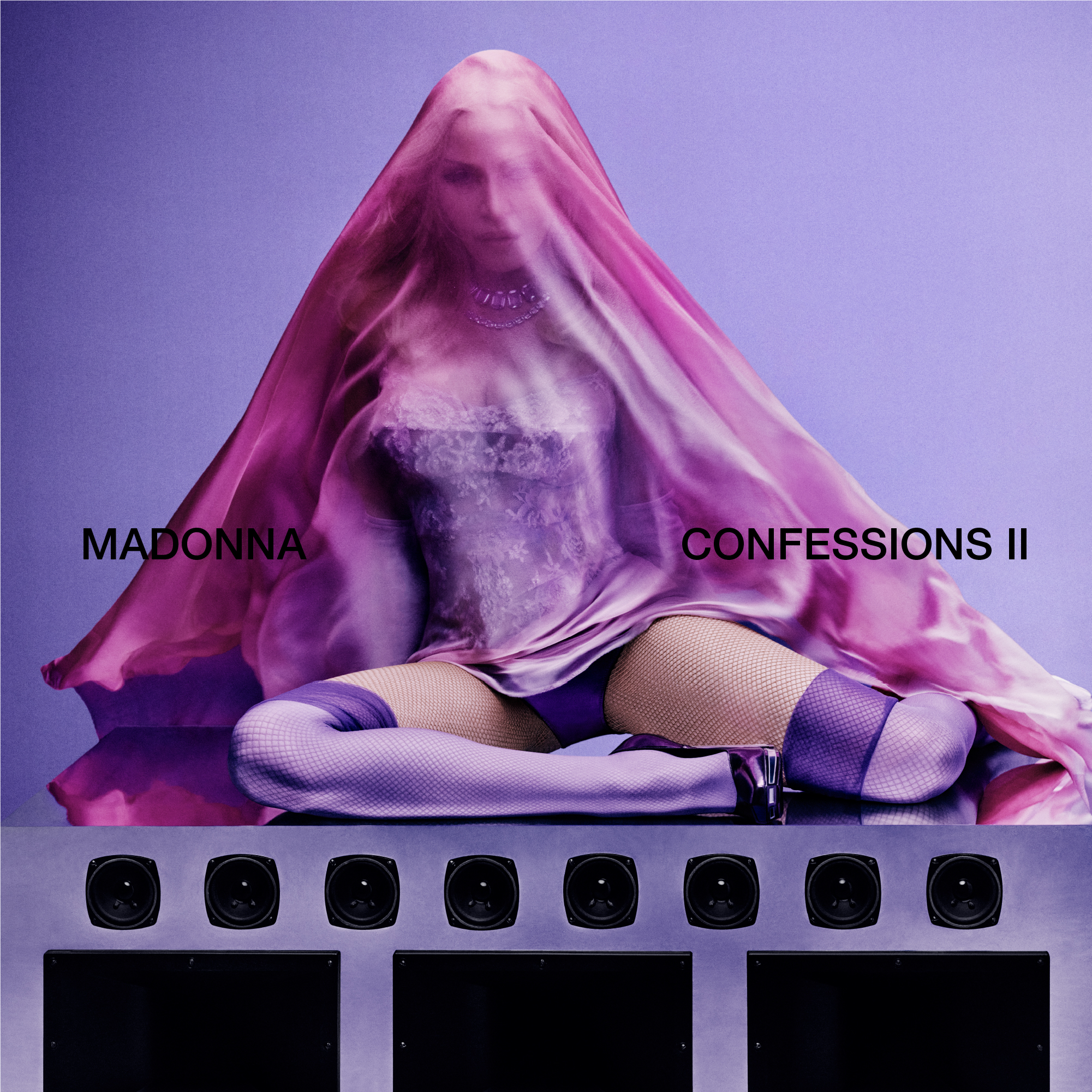
The American singer’s new album Confessions II is a love letter to dance music, inviting fans to express their bodies and emotions through an exhilarating sixteen-track journey.
Why Confessions II Is Her Best Album in 20 years
Twenty-one years ago, Confessions on a Dance Floor reset what a forty- something pop icon was allowed to sound like on a dance floor. A sequel to that record is a dare. Most artists who take it, lose. Madonna doesn’t, because ever since she confirmed in late 2024 that she and Stuart Price were back in a room together, the campaign around this record has run on the same discipline the music itself argues for: Instagram teasers building for months, a surprise slot beside Sabrina Carpenter at Coachella, a full set in Times Square and promotional tie-ins running from Absolut Vodka to Grindr. None of that would matter if the record didn’t hold up. But unsurprisingly, it does.
Released on July 3rd, her 15th studio album did not creep onto the charts. It arrived and simply took the top spot on the US iTunes Top Albums chart the instant it dropped, then repeated the trick in dozens of other countries within hours. It is also on pace to be her 13th UK Number One album, and her first since MDNA in 2012.
What It Cost to Get Here
You cannot understand why Confessions II sounds this hungry without understanding what it was clawing its way back from. MDNA (2012), Rebel Heart (2015) and Madame X (2019) were all produced inside the architecture of a 360-degree deal with Live Nation and Interscope – a contract that, whatever its financial logic, quietly pried her away from Warner, the label that had shaped her for nearly thirty years, and boxed her creative instincts into rooms she hadn’t chosen to be in. She said as much herself, in 2018, in a comment thatVariety and half the trade press dutifully reported at the time: responding to a Ray of Light anniversary post from her manager Guy Oseary, she recalled a version of her career in which she made records start to finish with collaborators of her own choosing, rather than being rotated through songwriting-camp sessions where, in her words, no one could sit still for more than 15 minutes.
What’s less known is how this one actually got built. Once the Celebration Tour wrapped, she and Price went back into the studio to experiment with no agenda at all; only afterward did she start layering in lyrics pulled from the journals she’s kept for decades – the same fragmentary, collage method she’s used across all of her studio albums, well before Ray of Light. What’s new is what she was carrying into those sessions: over the two years it took to finish this record, she lost both her brother, Christopher Ciccone, and her stepmother. That grief sits under nearly every track, whether the song says so out loud or not.
“Thanks for coming/Sometimes I like… to just hide in the shadows/Create a new persona/A different identity/I can be whoever I wanna be/Create a new persona/Honestly, I wish I could be like other people/And just not care/But out here/On the dance floor/I feel so free/Oh, by the way, it all started like this/So, how’s your evening so far?…” — Madonna, I feel so free
The opener, “I Feel So Free” doesn’t pretend any of that healed cleanly. Even at its most euphoric there’s a flinch underneath it, an admission that trust doesn’t come easy to her anymore, and that the floor has always been the one room where she doesn’t have to pretend otherwise.
A Guest List of Ghosts
Nine of the album’s 16 credits list only two names: Madonna and Price, which settles any question of whether this would coast on nostalgia. What actually distinguishes it is how literally autobiographical it gets. Tracks like “Danceteria” aren’t a vague homage; it’s named after the exact club where DJ Mark Kamins first played her demo of “Everybody,” the reason Warner signed her at all.“I get off the train, four, five, six/Walk to the club, don’t wait for shit/Meet this boy named Martin Burgoyne/He’s my best friend, he’s my boytoy/We see the line, it’s way too long/Cut to the front, there’s Haoui Montaug” — Madonna, Danceteria Martin Burgoyne is there again. So is Haoui Montaug, and Debi Mazar, and
Mark Kamins – the entire downtown crowd, resurrected as though it were still 1982, all of them converging on the one New York club that rerouted the rest of Madonna’s career, and by extension a fair share of pop history. The song is built entirely out of the earliest, least mythologized chapter of her career. It does not flinch from naming names that can no longer answer to them – several of them lost far too young to the AIDS crisis, a fact the song does not sentimentalize and does not need to. On this track they are not resurrected as legends. They are simply kids again: dancers, hangers-on, artists who hadn’t yet become the names we now attach reverence to. Some of them had already lived several lives by that point.
With its propulsive pulse and a cadence that can’t help but echo Madonna’s iconic 1990 hit “Vogue”, Danceteria has already muscled its way into the album’s three most-streamed tracks, a genuine feat next to pre-release singles like “Bring Your Love” (with Sabrina Carpenter) and “I Feel So Free.”
At its core, this is an album about memory: about the people who are no longer here, and what they left behind in the people who are. It manages to be nostalgic without ever calcifying into a museum piece because the production is simply too alive, too physically insistent, to let that happen. First and above all, Confessions II is a superbly danceable house record, one that wanders, occasionally and deliberately, into trip-hop and EDM.
Family Business
“Love Sensation,” “Bring Your Love” and “Danceteria” land with the kinetic snap that made the 2005 original so influential. Fine, that was never in question. What’s more instructive is what’s hiding in the quieter writing. Oneverse on track 10 “Bizarre” points at a specific ex through details longtime fans will clock instantly: a movie star with famously blue eyes, a Shelby Cobra given as a wedding gift, without ever needing to say a name. “Movie star, deep blue eyes/(Bizarre, bizarre, bizarre, bizarre)/In Hollywood, we’re a perfect prize/He drove way too fast/Shelby Cobra wasn’t meant to last” – Madonna, Bizarre
„.Betrayal“, track 14, works a colder register entirely. And “The Test” is the first song Madonna has ever co-written with her daughter, Lourdes Leon; by her own account it started less as a track and more as an attempt to repair something between them.
The back stretch of the album lets go of momentum on purpose, in favor of something closer to reckoning, and it lands on “L.E.S. (Lower East Side) Girl“. A spare, folk-leaning ballad that feels deliberately out of step with the rest of the record’s clock. Built on guitar work that nods toward 1960s folk traditions, it circles back, one final time, to her own beginnings on the Lower East Side. It is quiet. It is aching. It does not perform either quality for effect. As a closing track, it doesn’t resolve the album so much as force you to reconsider everything you’d just heard: after an hour of clubland spectacle, reinvention and excavation, it ends on something starkly, almost uncomfortably human.
Nothing Left to Prove, Everything Left to Say
Structurally, the whole thing plays as one continuous mix, exactly like Confessions on a Dance Floor did no gaps between tracks, with a twelve-song standard edition and a sixteen-song deluxe. The first eleven tracks occasionally push toward excess, but never toward indulgence, and that distinction is the entire job. Price and Madonna clearly still know how to keep both tempo and crowd sustained across a long set: when to pull back and let a room breathe, when to stack in another layer of hi-hats, snares and cowbells.
Surprisingly enough, Madonna does not arrive on Confessions II as a diva reclaiming her throne. She arrives as one thread in a much larger story, one thatshe knows she helped author, and one she is content to be smaller than. She is not asking to be worshipped here. She is pointing at the room and the people in it. Asked recently, in Interview magazine, whether it felt natural to revisit her own past for this record, Madonna made clear she wasn’t interested in doing it the way anyone expected – she wanted to take her old songs apart and actually examine what was underneath them, rather than simply replay the greatest hits. That’s the whole album, really. At sixty-seven, four decades into a career built on reinvention, she has nothing left to prove — and Confessions II doesn’t behave like it’s trying to. It behaves like something living entirely in its own present tense. If you’re still asking why we remain this invested in Madonna forty years in, stop asking. This album is the answer.