
by Ada Maria Francesca Romeo
Berlin Fashion Week Spring/Summer 2027 reaffirmed the German capital’s position as one of the most compelling creative laboratories on the international fashion calendar, where fashion continues to evolve as a vehicle for cultural research and social reflection. Moving beyond purely commercial narratives, both established designers and emerging talents explored belonging, resilience, transformation and memory.
From reimagined artisanal traditions and explorations of gender to reflections on community, survival and cultural identity, the collections demonstrated how contemporary fashion can engage with complex social and cultural questions while maintaining a powerful visual language. The result was a Fashion Week that once again positioned Berlin as one of the most exciting places to observe where fashion is heading next.
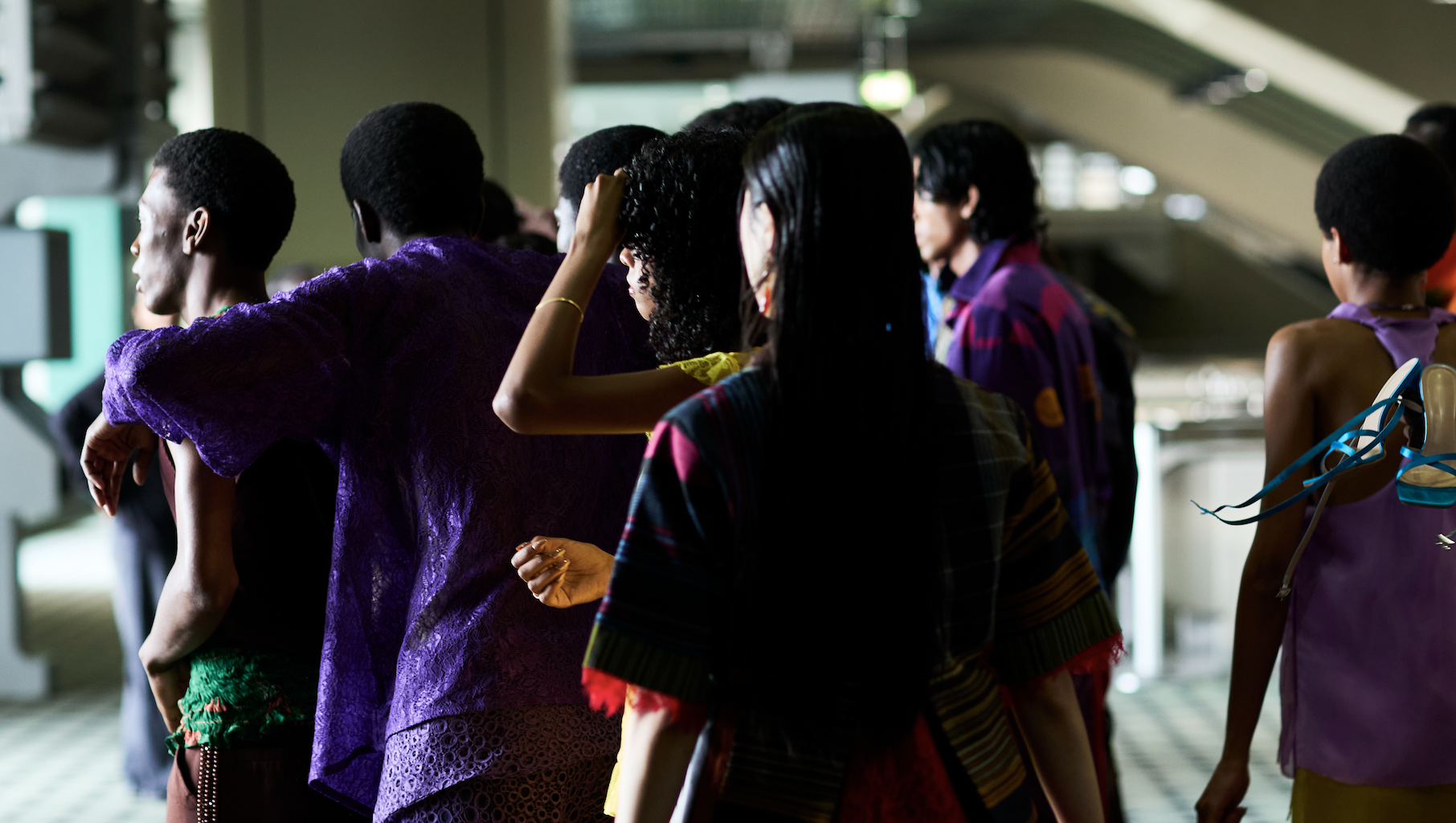
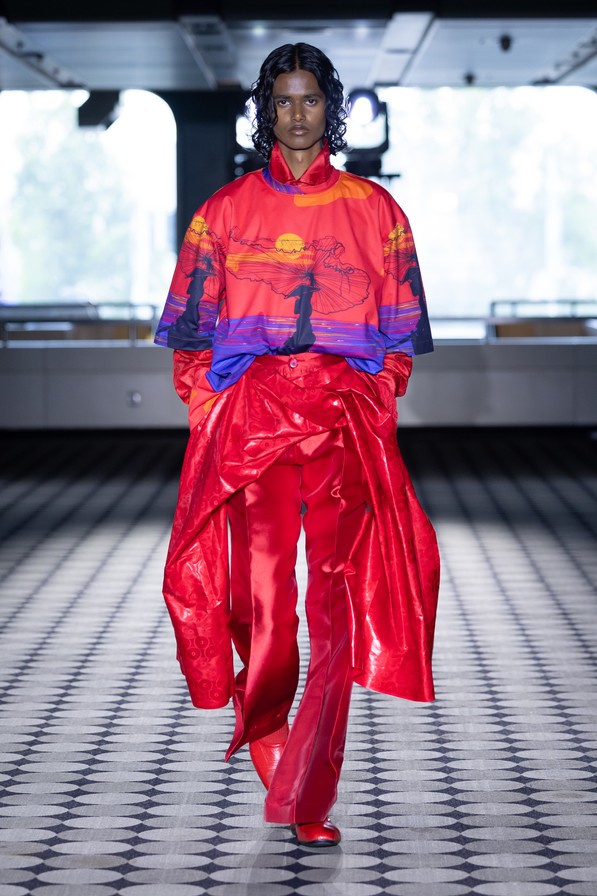
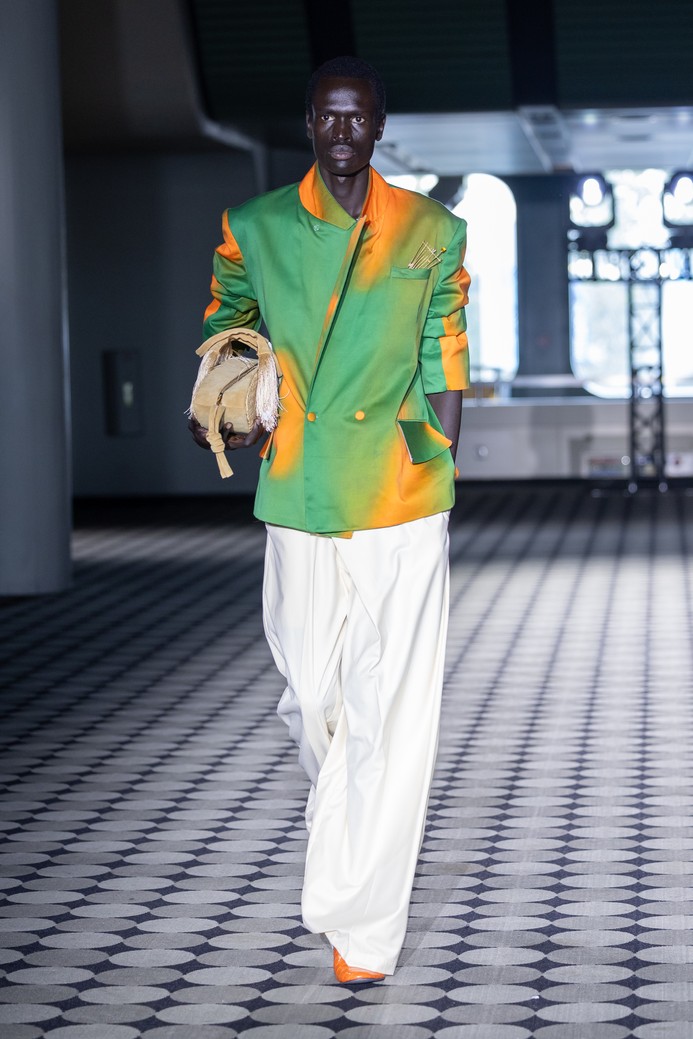
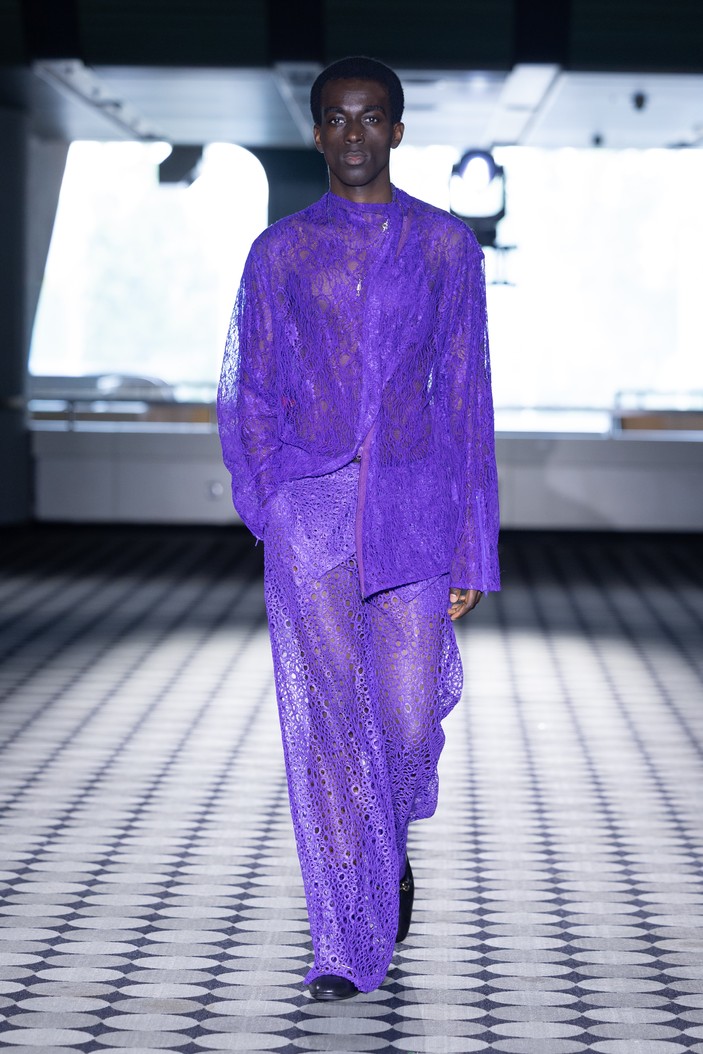
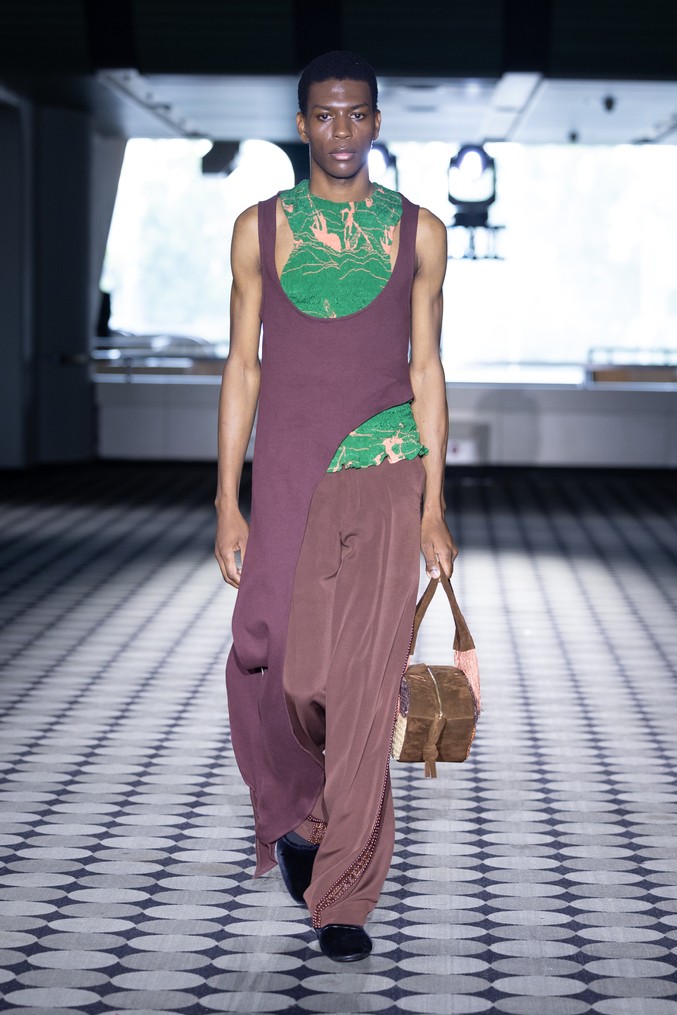
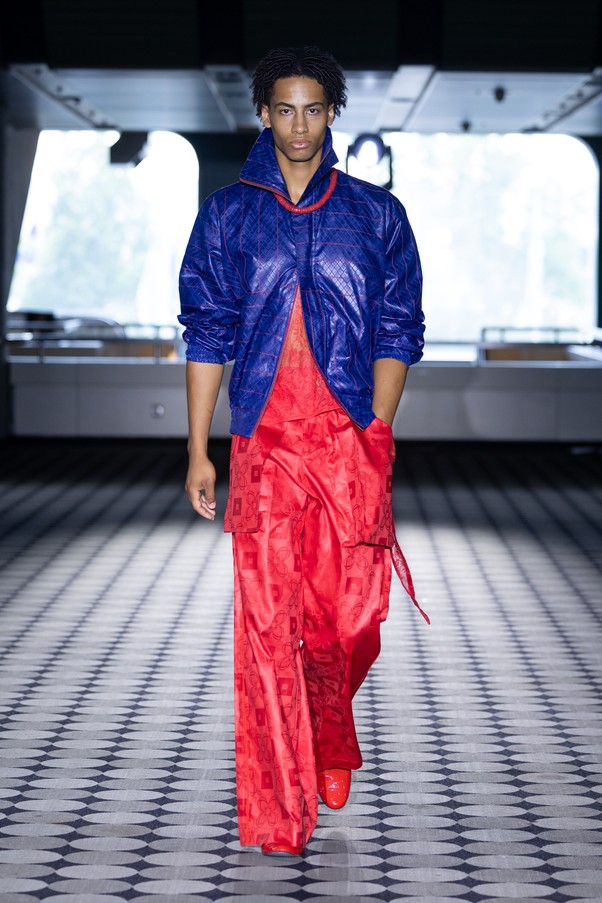
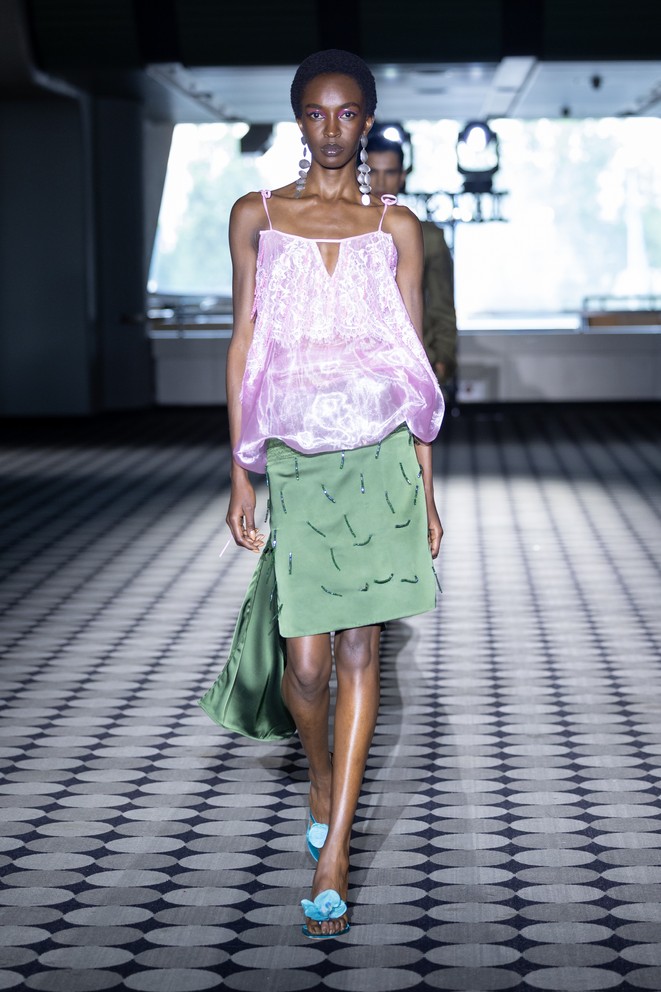
With Water Will Carry Us, Orange Culture looks to Makoko, Lagos’ historic waterfront community and one of Nigeria’s strongest symbols of urban resilience. Built on stilts above the water, Makoko exists in a constant state of negotiation between fragility and adaptation, where daily life unfolds within precarious structures sustained by remarkable ingenuity. Rather than focusing on collapse, the collection celebrates the strength of communities that preserve identity, rituals and belonging despite continuous social and economic pressures.
This narrative unfolds through intentionally imbalanced proportions, layered textures, sheer fabrics and intricate hand embroidery. The silhouettes reference shelters, scaffolding and protective structures, while the color palette moves between earthy tones and unexpected bursts of vibrant color that evoke childhood innocence and joy. Even in uncertain environments, the collection reminds us that beauty continues to flourish.
Images courtesy of Orange Culture
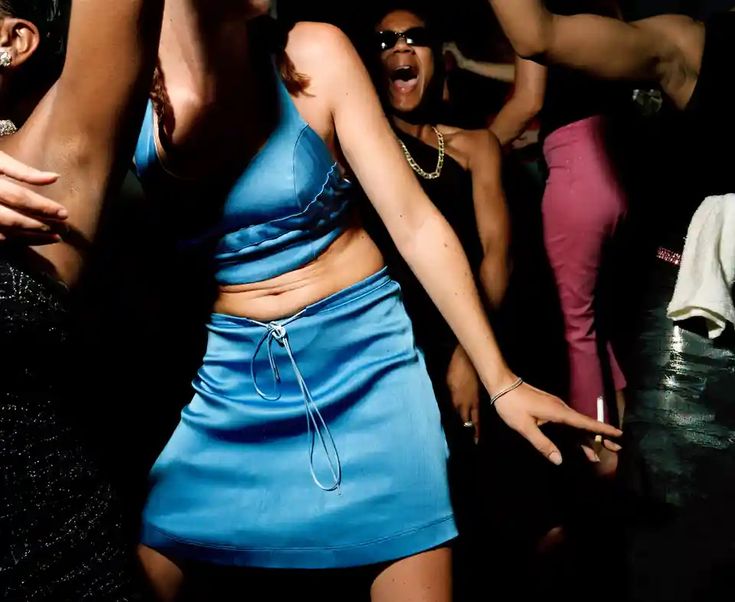
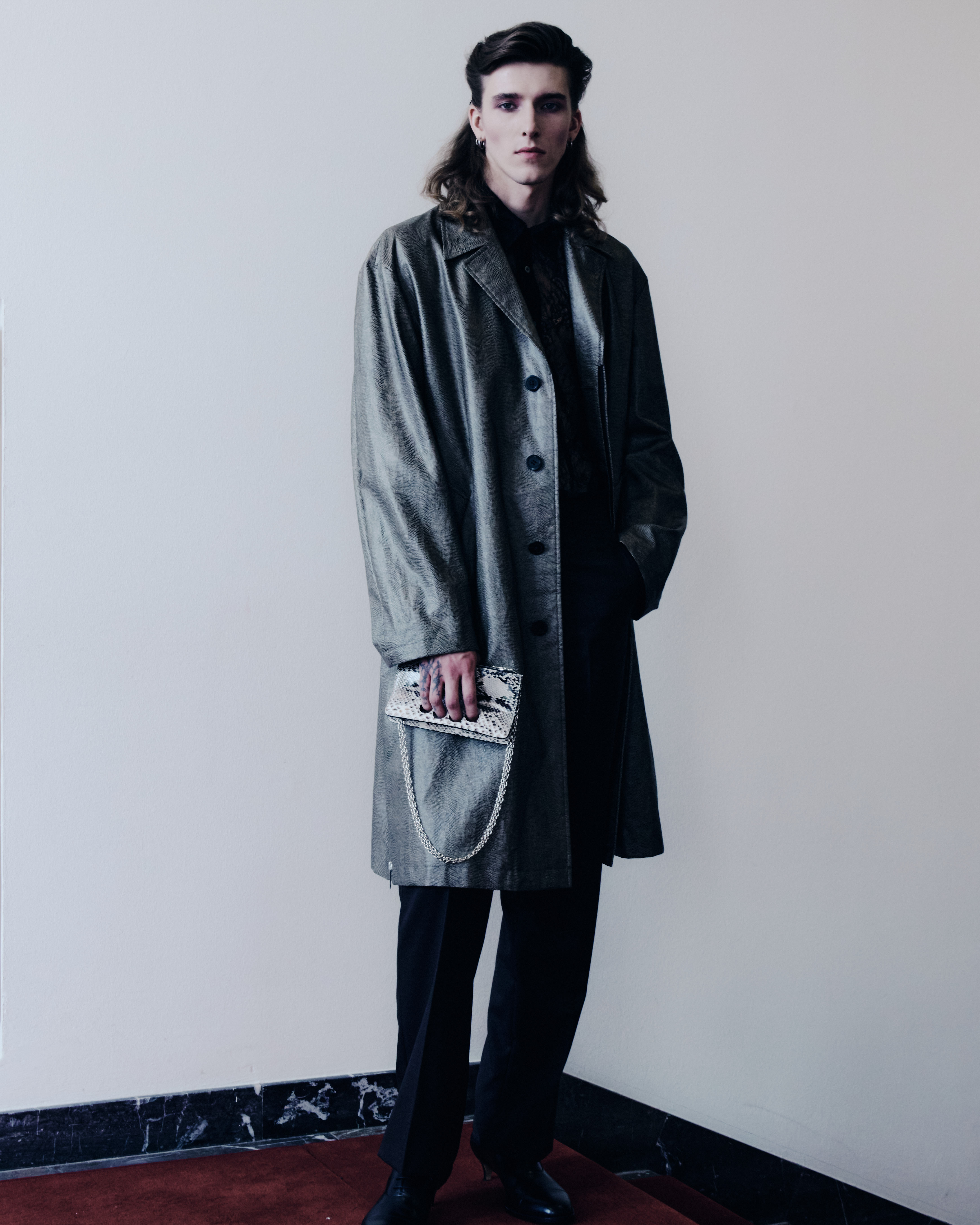
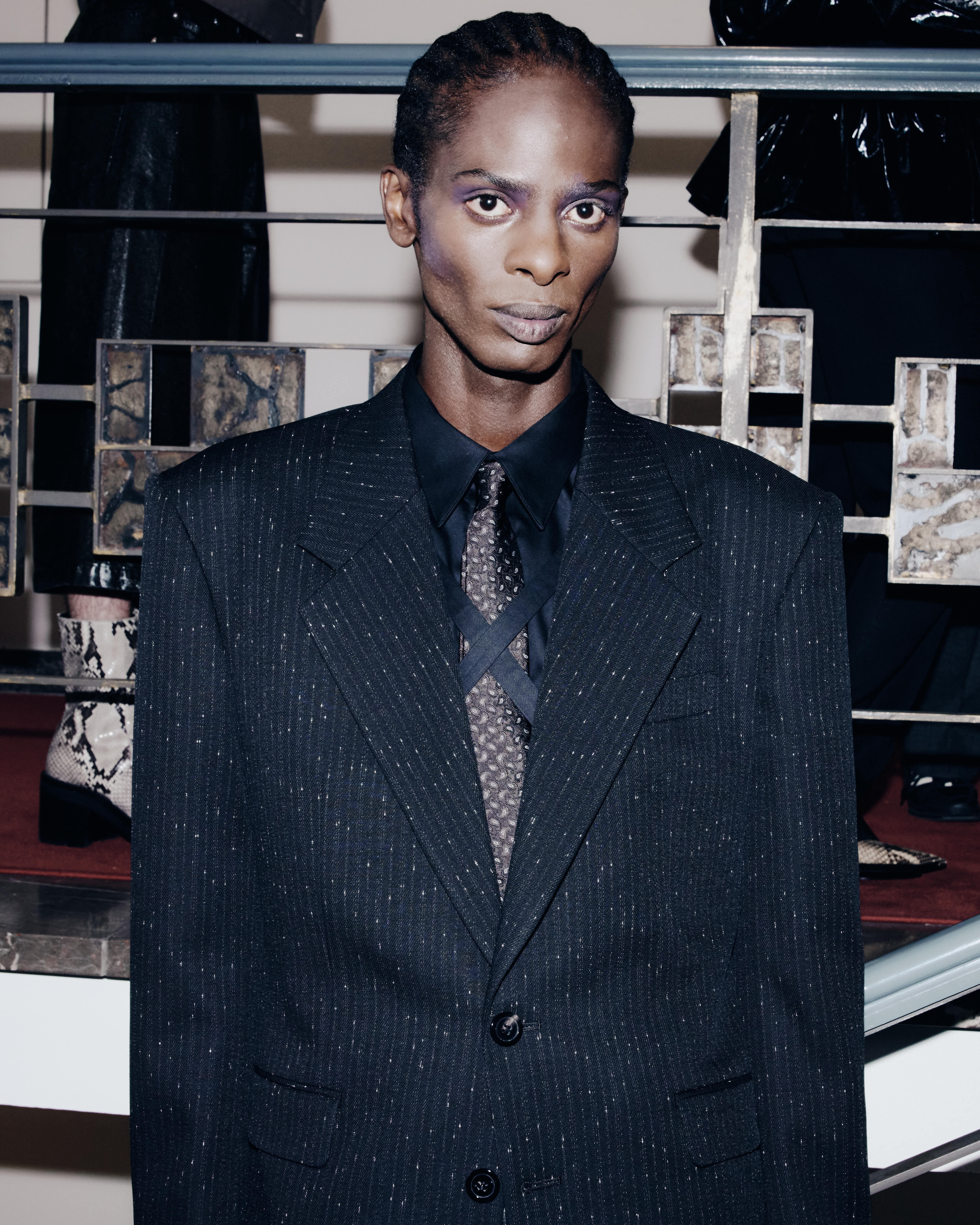
Presented during the sixth edition of Intervention, the cultural platform curated by Reference Studios, the Japanese label John Lawrence Sullivan unveiled Androgyny, a collection that examines the body as a space of ambiguity, where conventional gender categories gradually dissolve. The starting point is Modern Lovers (1990), the iconic photographic series by French photographer Bettina Rheims, portraying bodies liberated from traditional ideals of masculinity and femininity.
This concept is reflected throughout the wardrobe itself. Boat-neck tops, skirt-like shorts and heeled footwear appear within the menswear offering, while double-cuff shirts and military-inspired mini jumpsuits move into womenswear. Raschel lace, net tulle, crushed velvet and glossy finishes (materials traditionally associated with femininity) are reinterpreted to create an androgynous silhouette that challenges established dress codes. The collection further develops its narrative through the symbolism of the snake, an enduring emblem of transformation and renewal. Snake and lizard motifs, together with python leather details, function as a metaphorical “second skin,” extending across shoes, belts, bags and gloves.
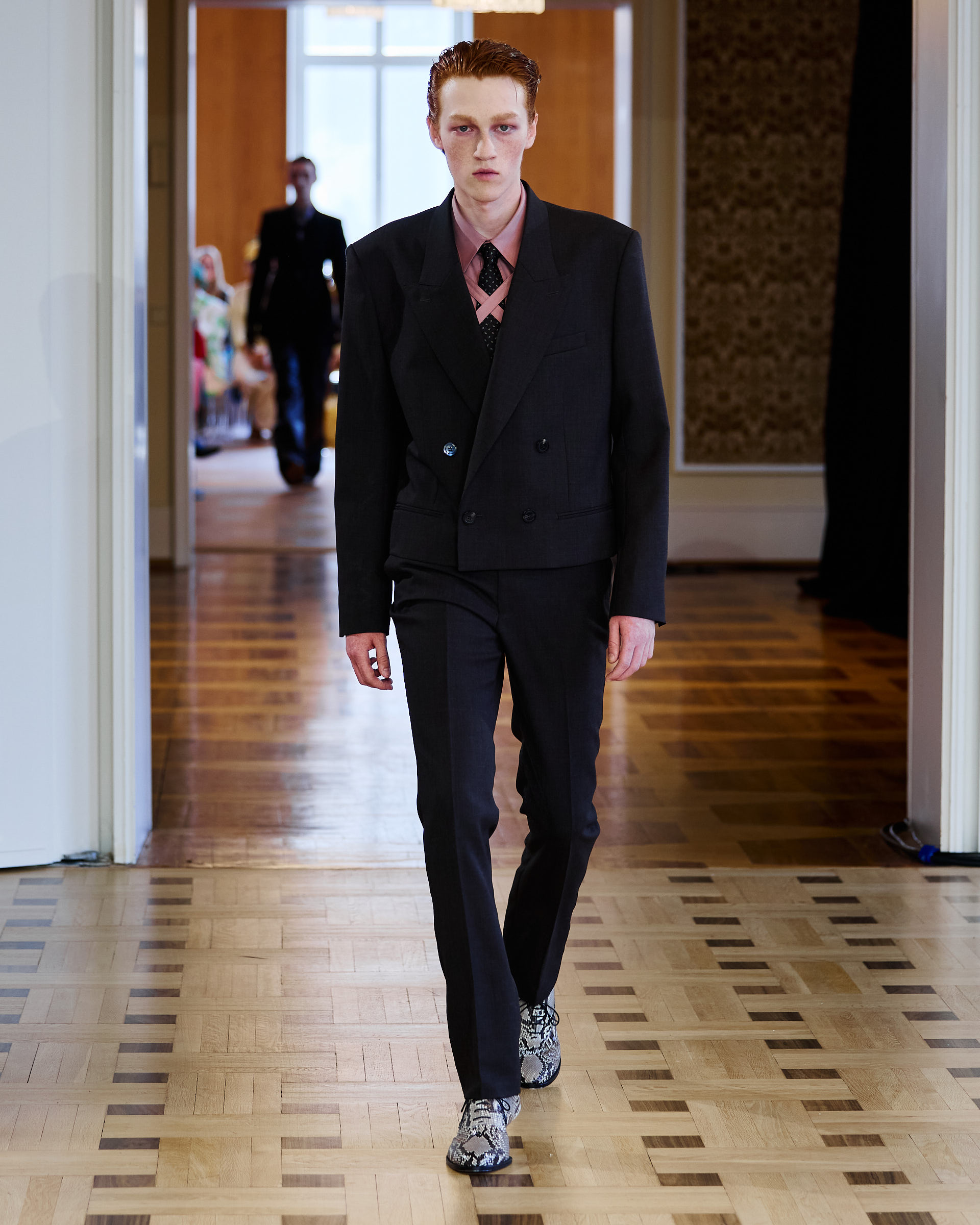
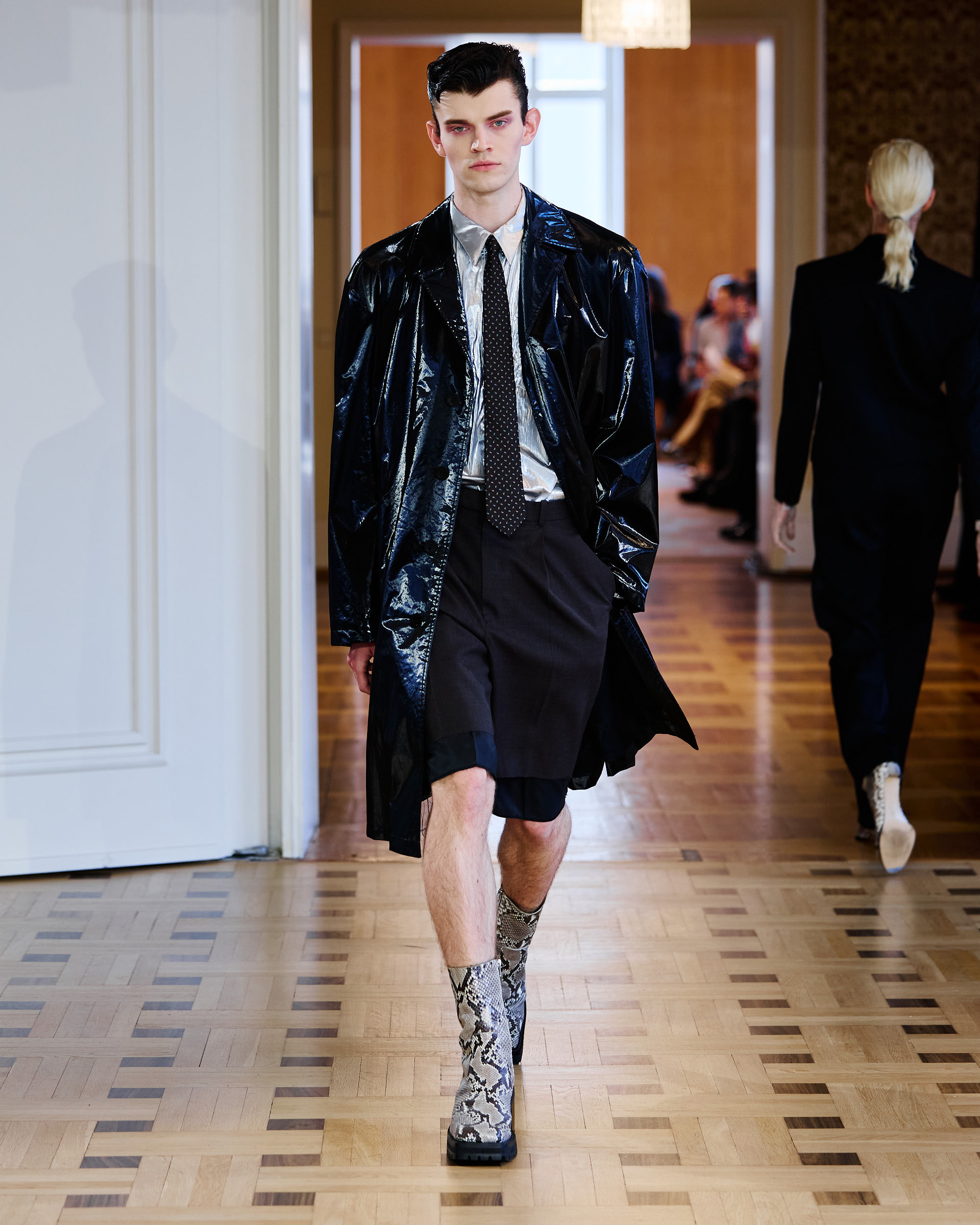
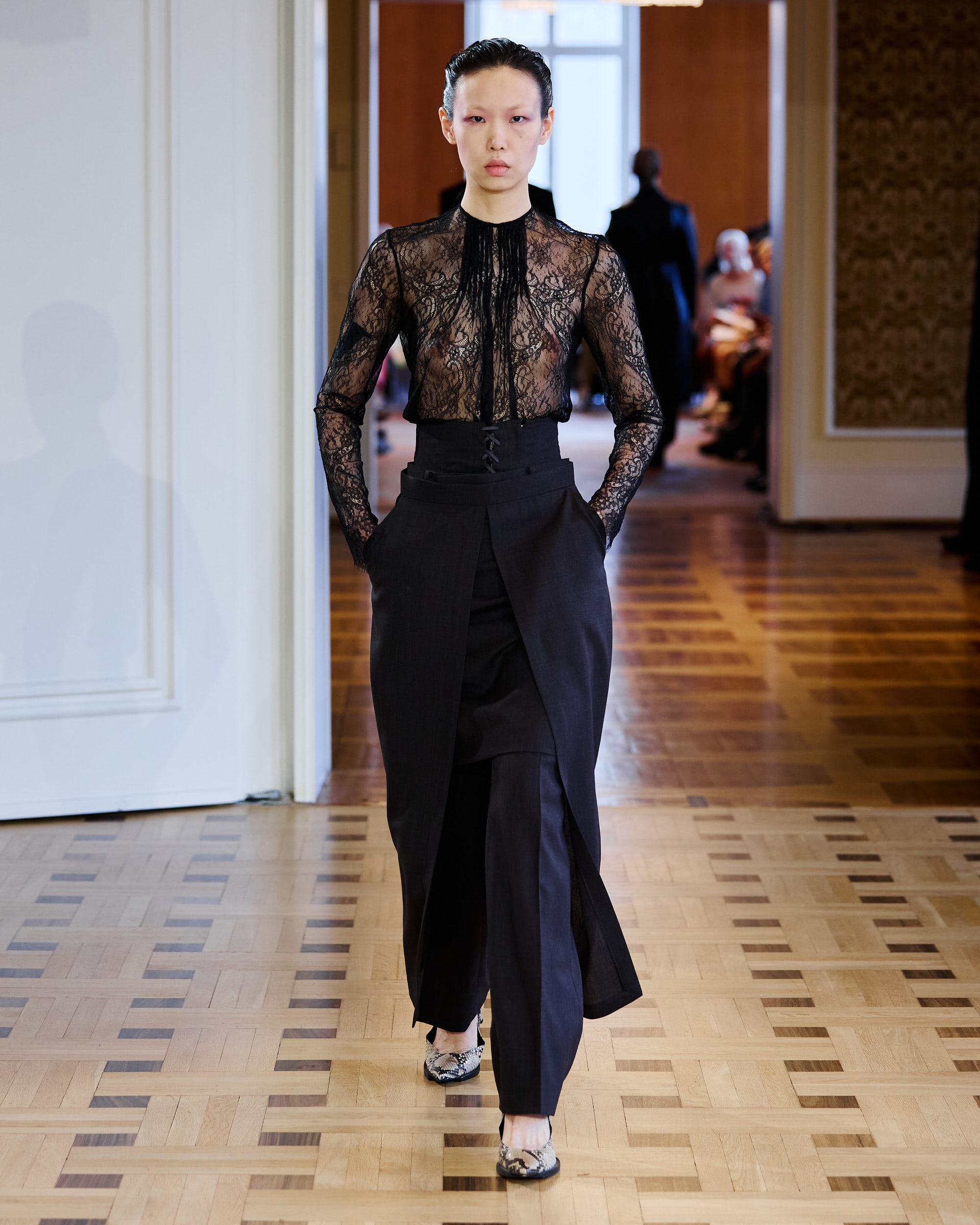
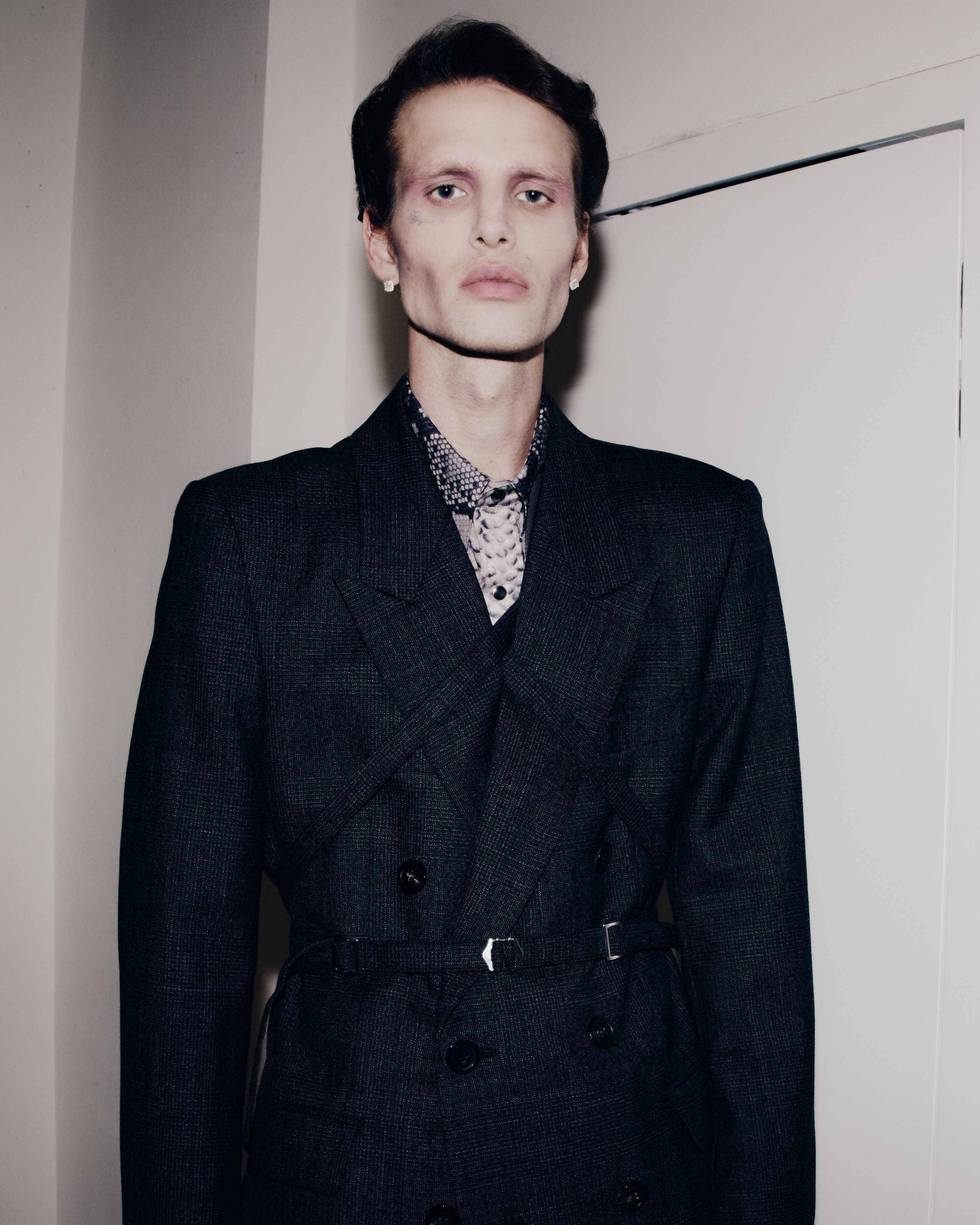
images courtesy of John Lawrence Sullivan
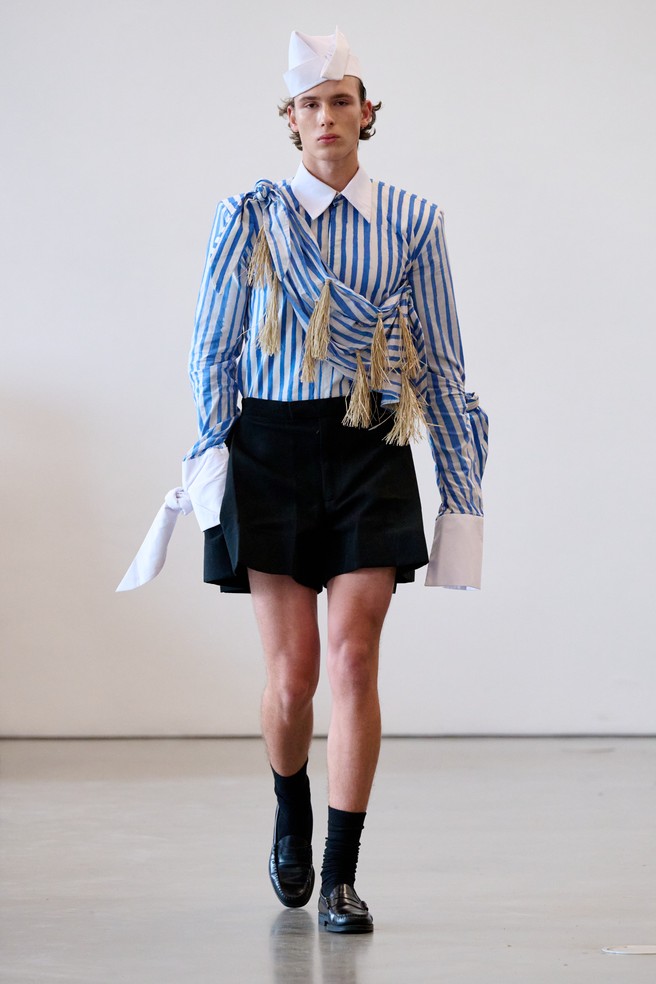
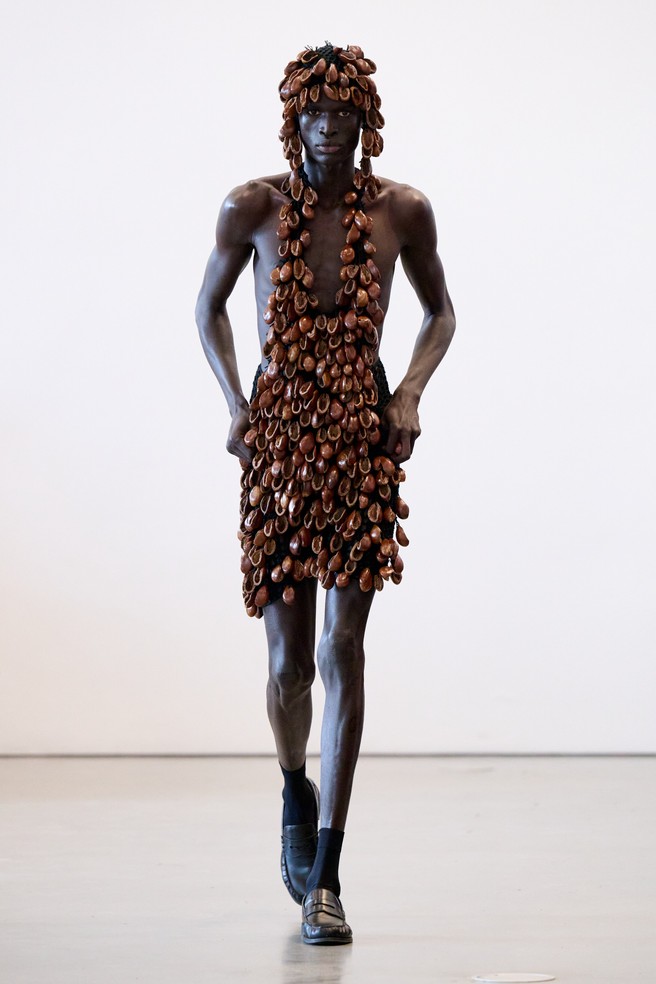
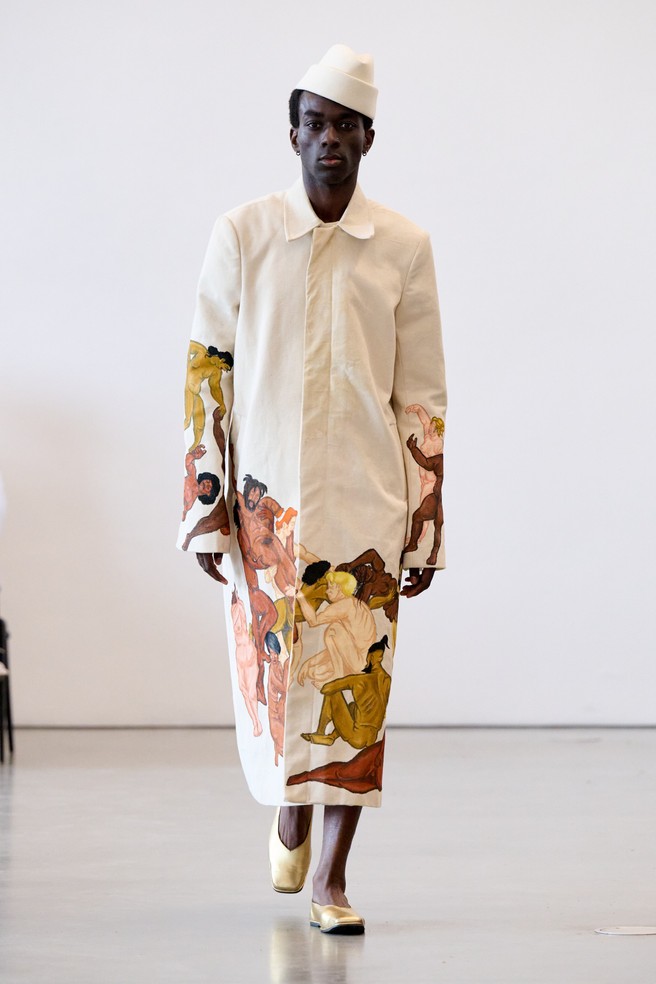
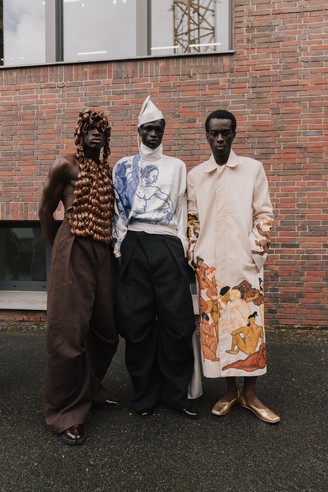
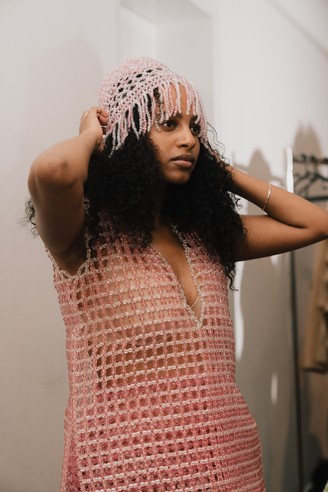
Lagos-based label Fruché presented KLEG, a collection exploring body image, self-perception, body dysmorphia and the beauty found in human difference. K-leg is a Nigerian Pidgin expression referring to knock knees, but it is also commonly used to describe something perceived as imperfect or “not quite right.” Fruché reclaims the phrase, transforming it into a celebration of individuality and imperfection as essential aspects of the human experience.
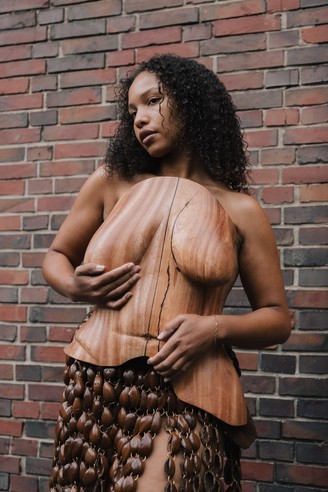
Drawing on precolonial Nigerian craftsmanship, the collection creates a dialogue between heritage and contemporary African aesthetics. Handwoven Aso Oke textiles, wood carving, beadwork, and ceremonial wooden chimes are reimagined as wearable works of art. The narrative is further enriched through collaborations with Nigerian artists, including Fredrick Aghuno, who hand-painted diverse human figures, and sculptors Emmanuel Opeyemi and Oluwalere Israel Adewale, whose carved wooden bodice and sculptural hats blur the boundaries between fashion, craftsmanship and contemporary art.
images courtesy of Fruché
Among the standout collaborations of Berlin Fashion Week was the partnership between eyewear brand ic! Berlin and fashion label GmbH, presented during Intervention. The collaboration felt like a natural meeting point between two brands deeply embedded in Berlin’s creative identity and united by a shared commitment to innovation, cultural storytelling and community.
Celebrating its 30th anniversary, ic! Berlin showcased customized pieces from its archive alongside current collections, highlighting its signature screwless stainless-steel eyewear. GmbH, marking its tenth anniversary, continues to redefine contemporary fashion through narratives shaped by migration, identity and belonging. More than a simple styling collaboration, the partnership embodied Berlin’s creative spirit while hinting at the possibility of a deeper collaboration in the future.
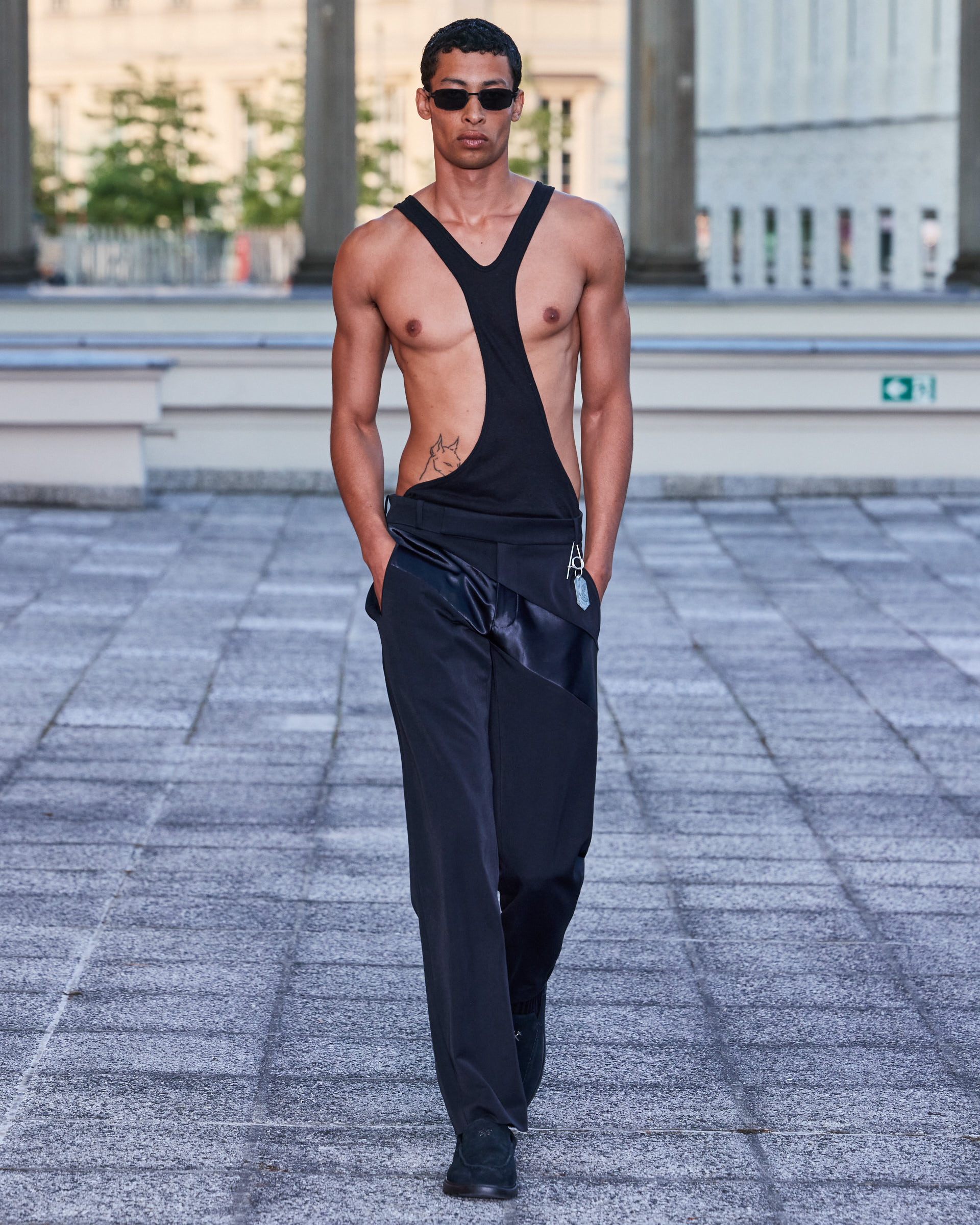
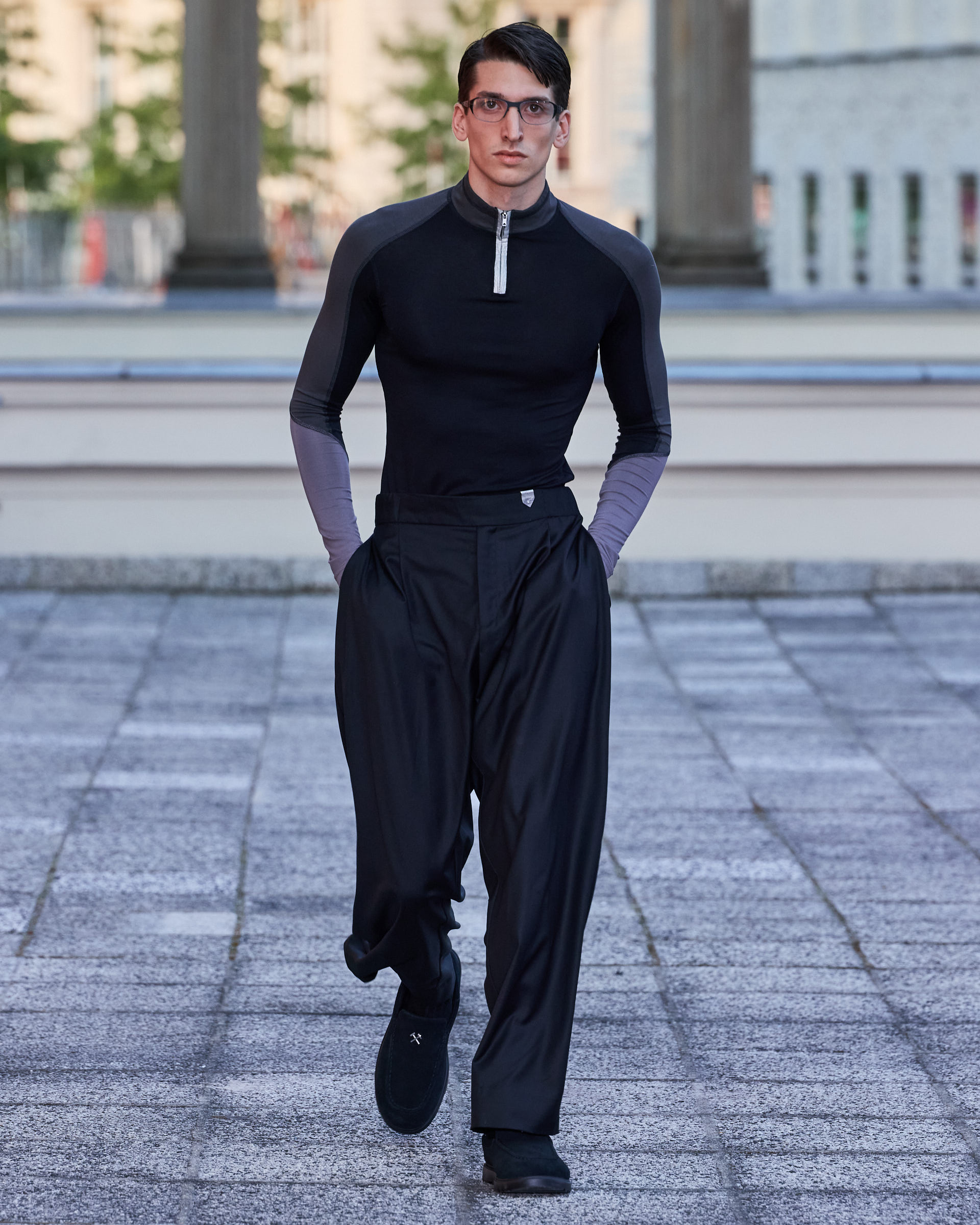
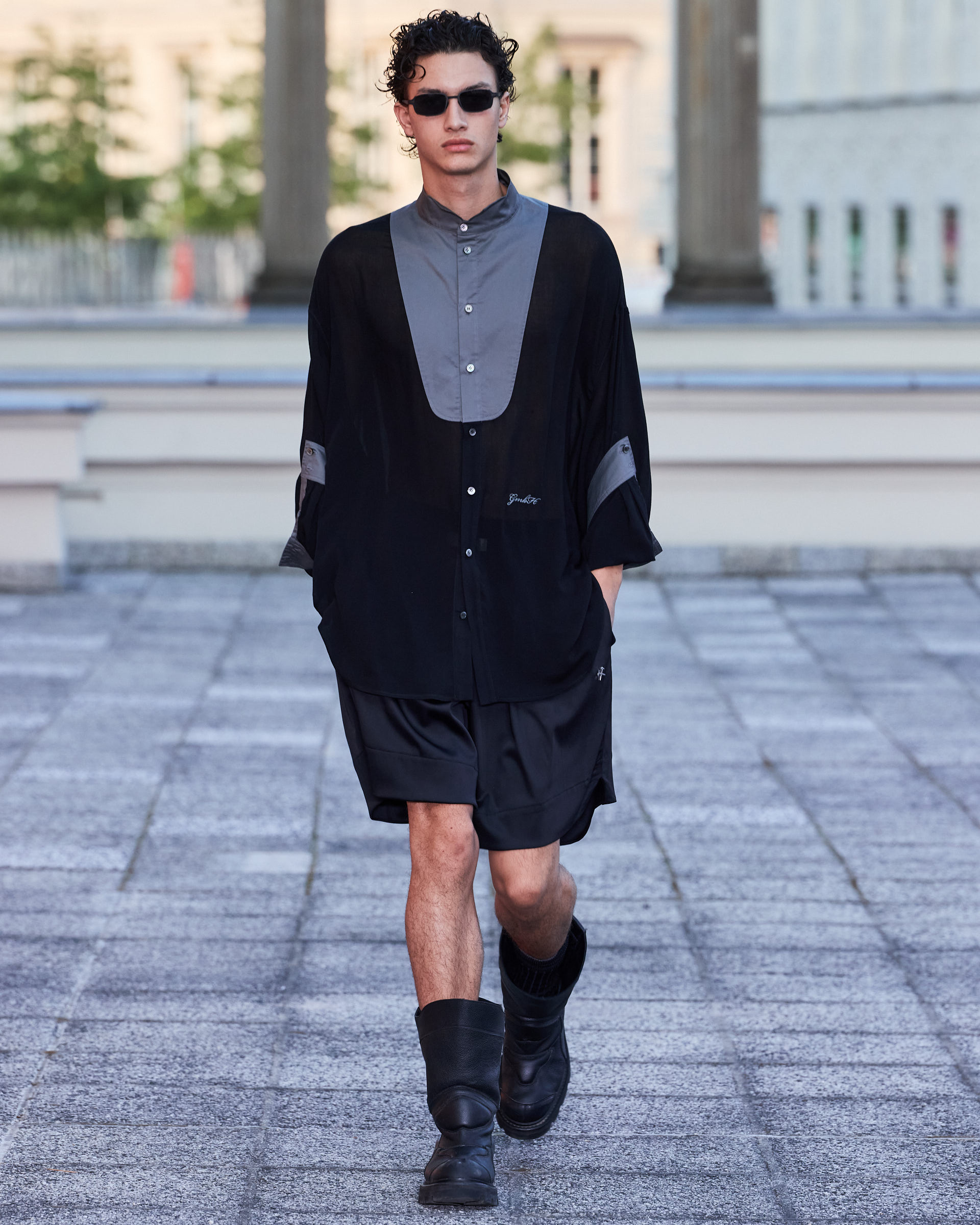
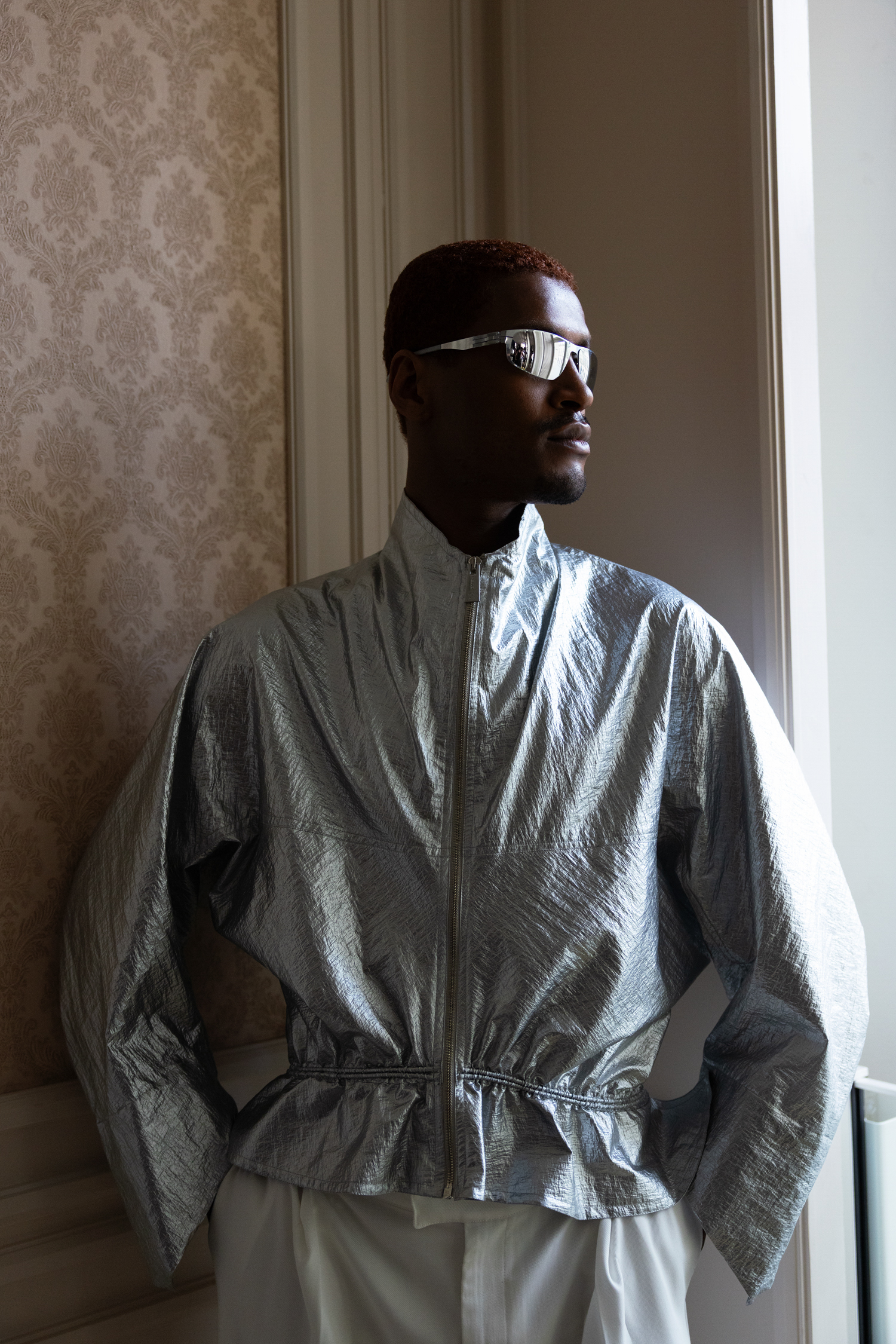
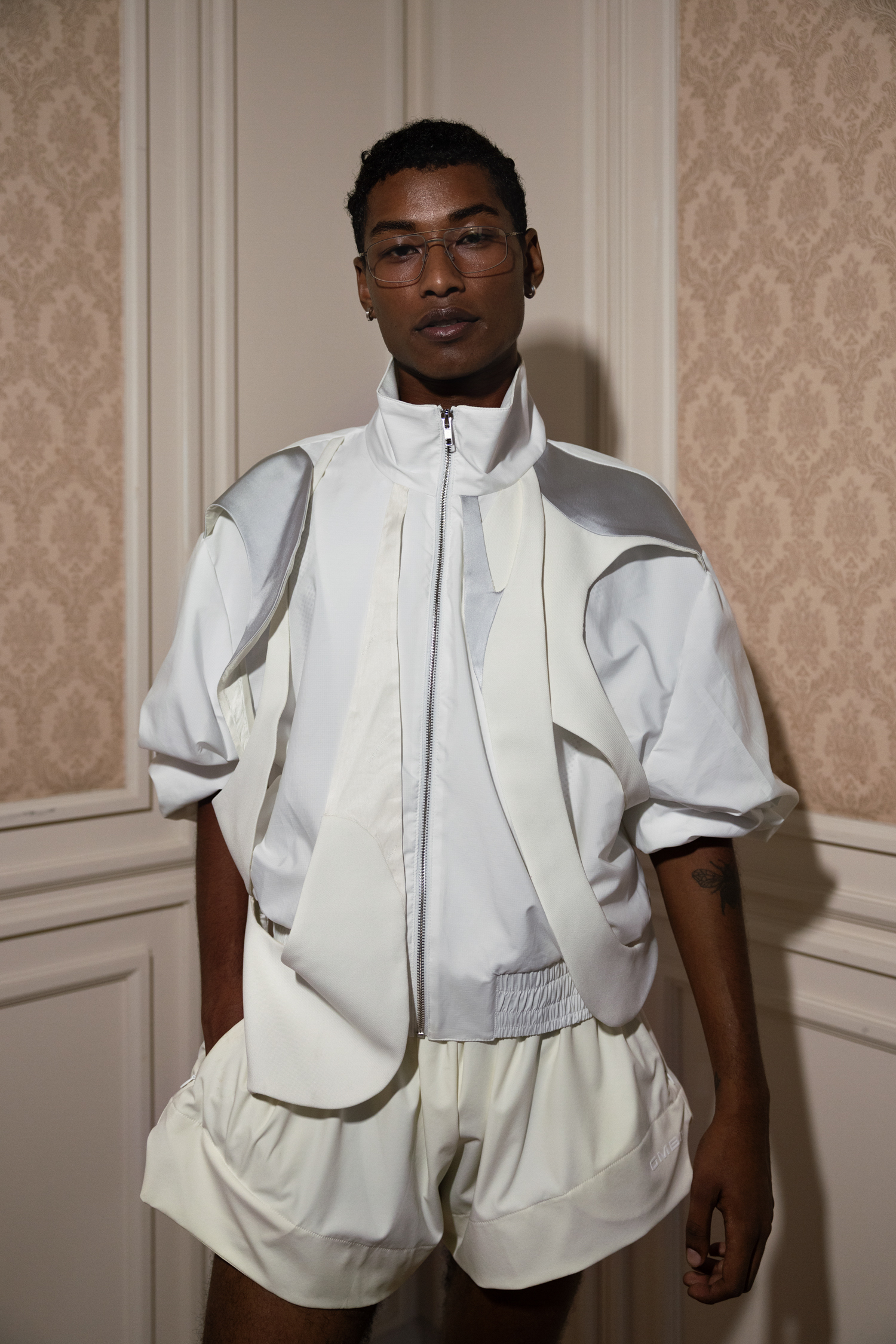
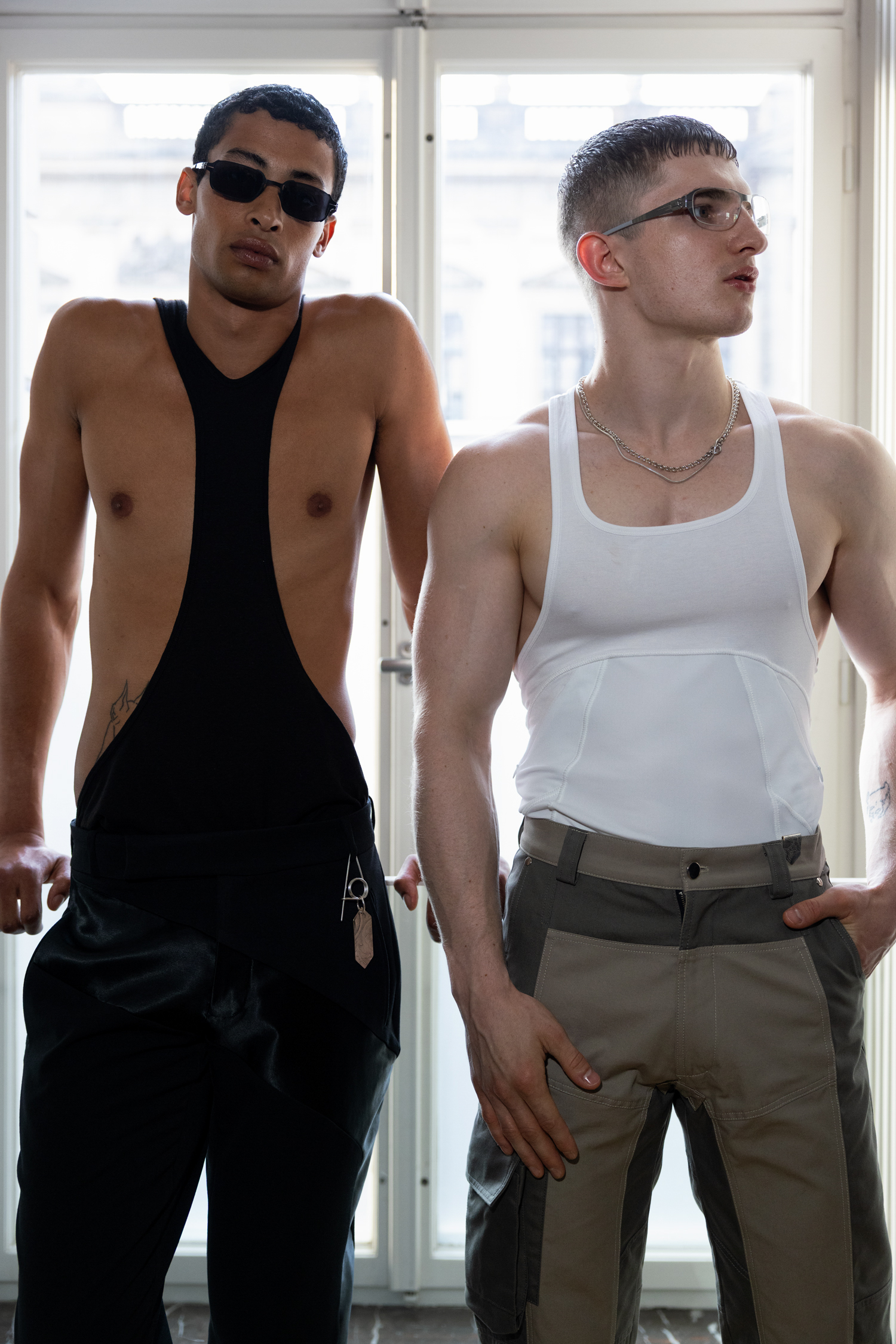
images courtesy of ic! berlin
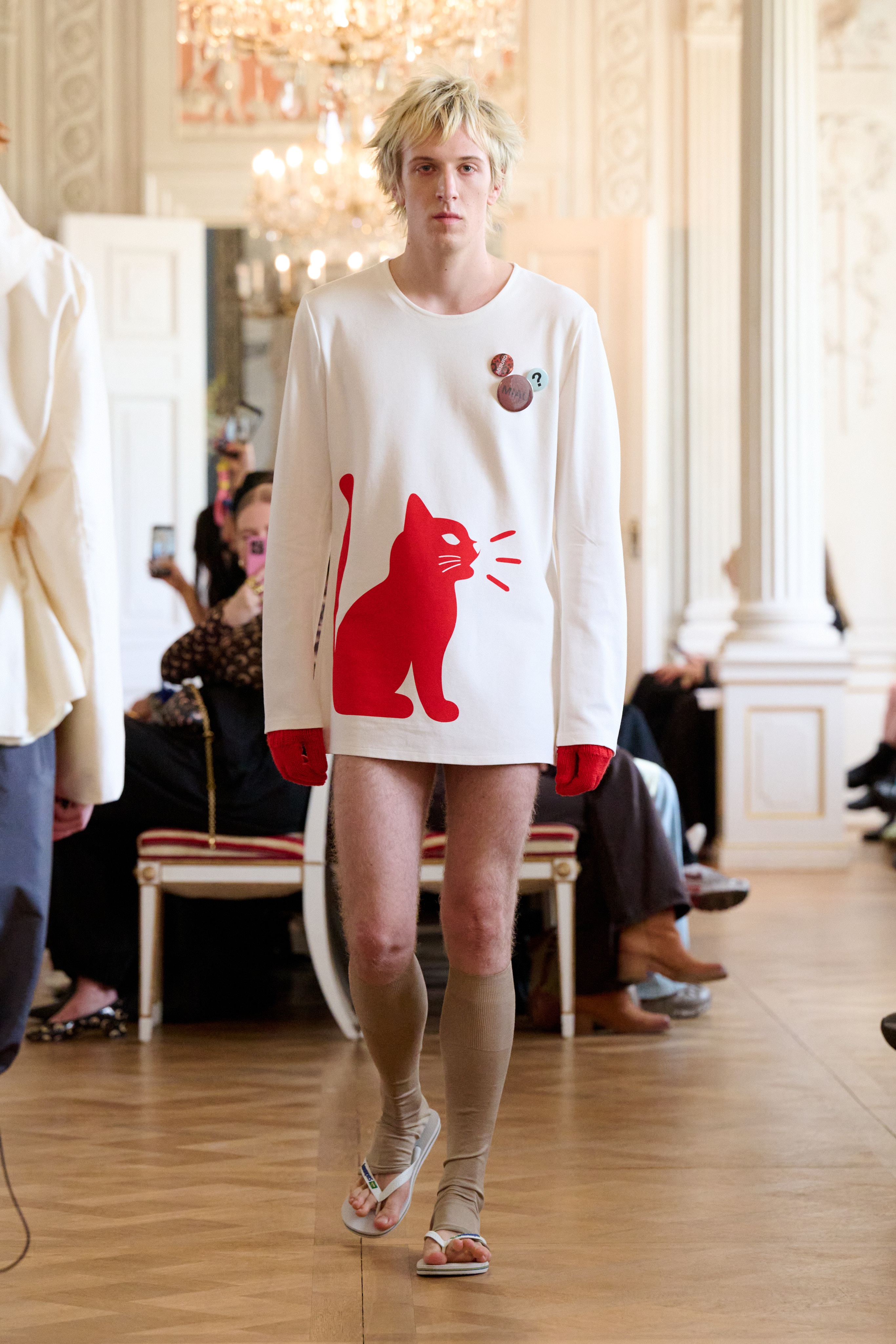
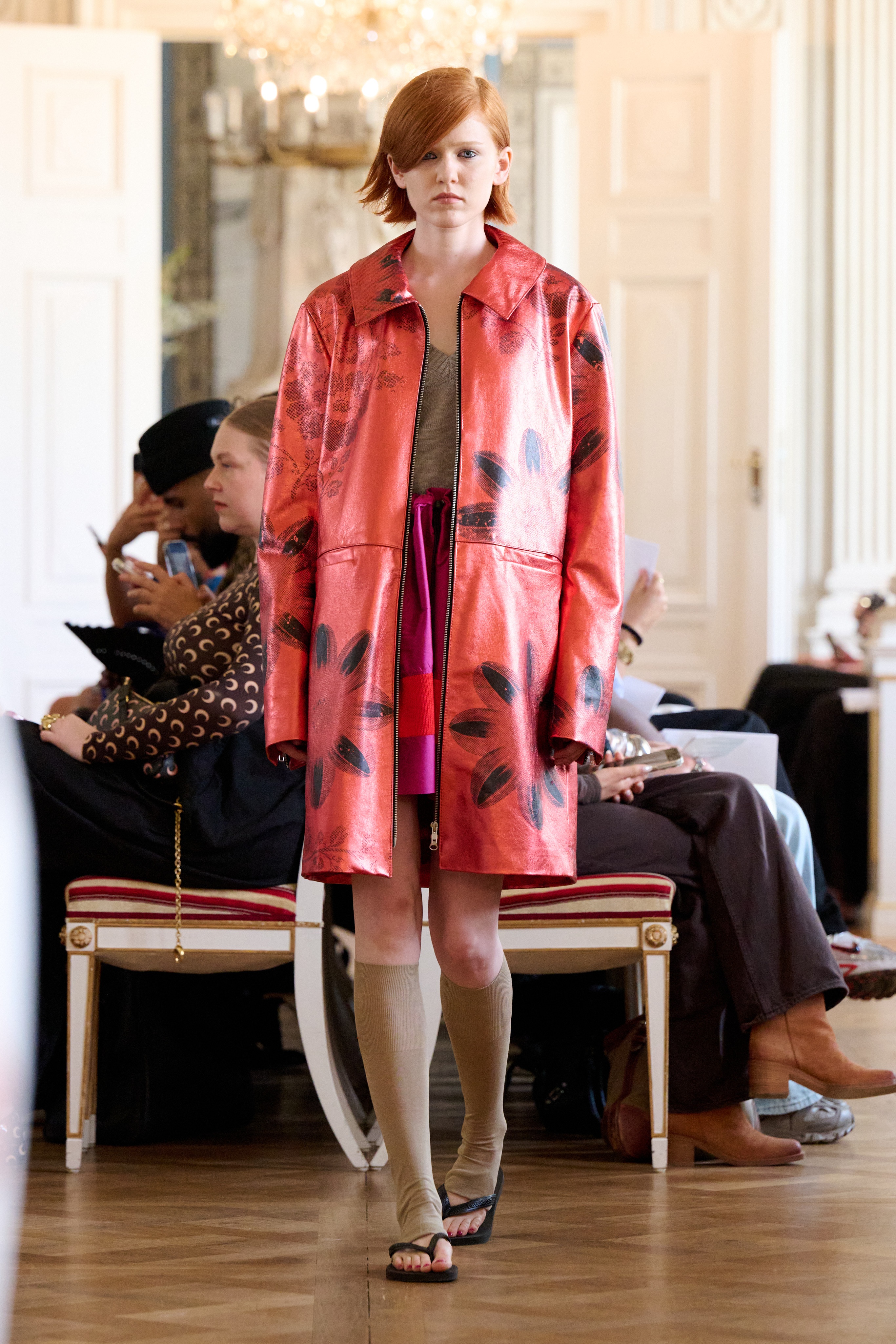
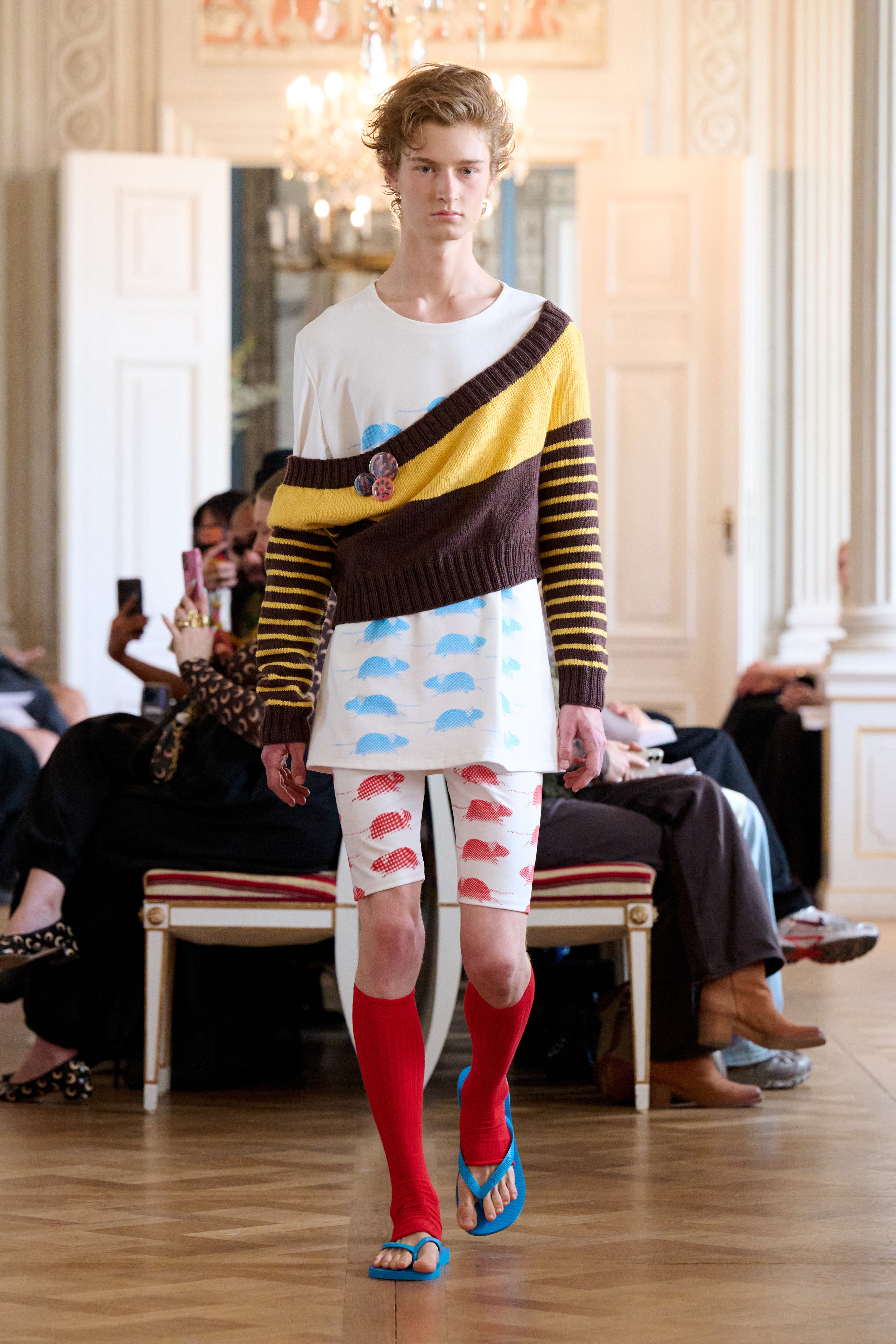
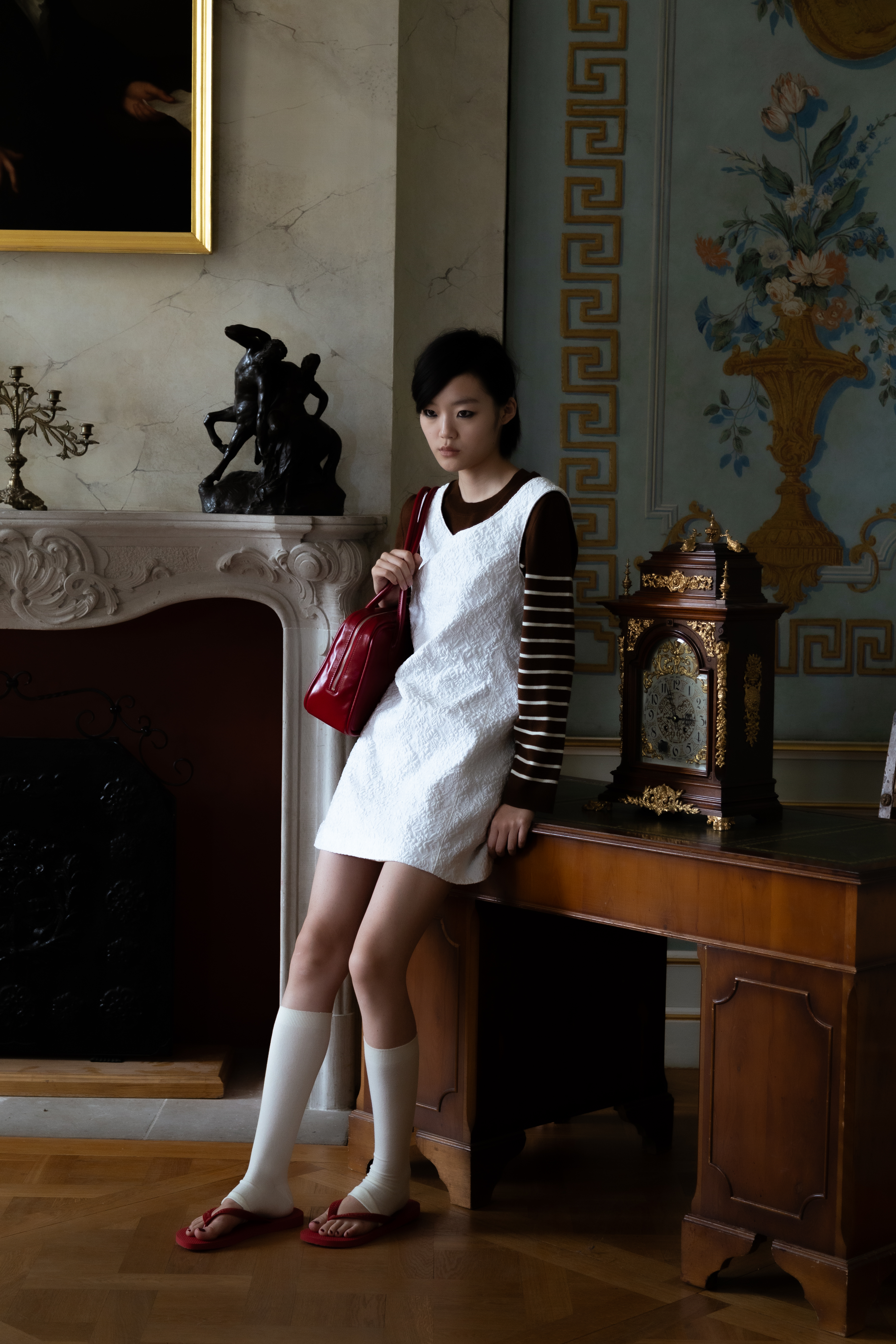
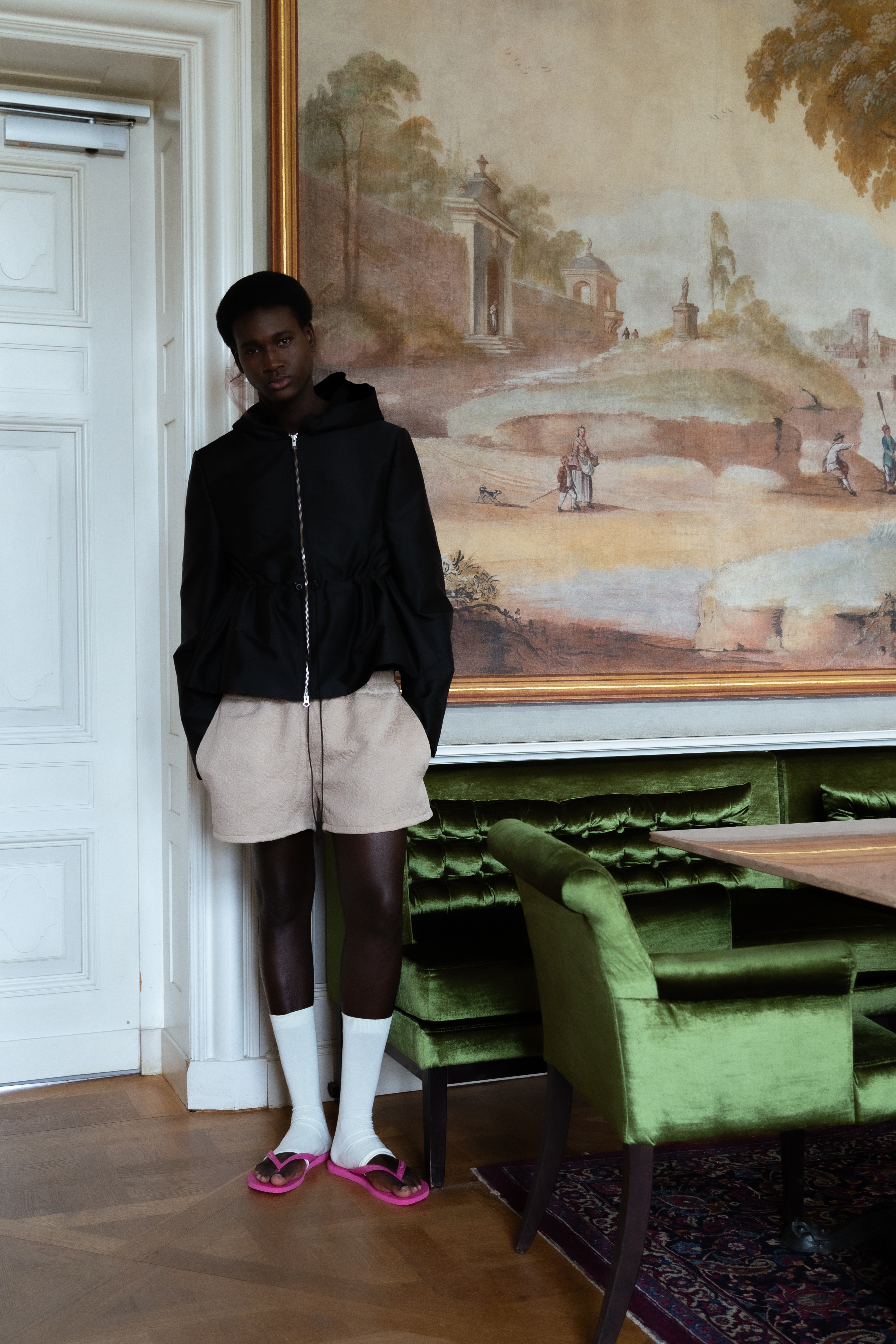
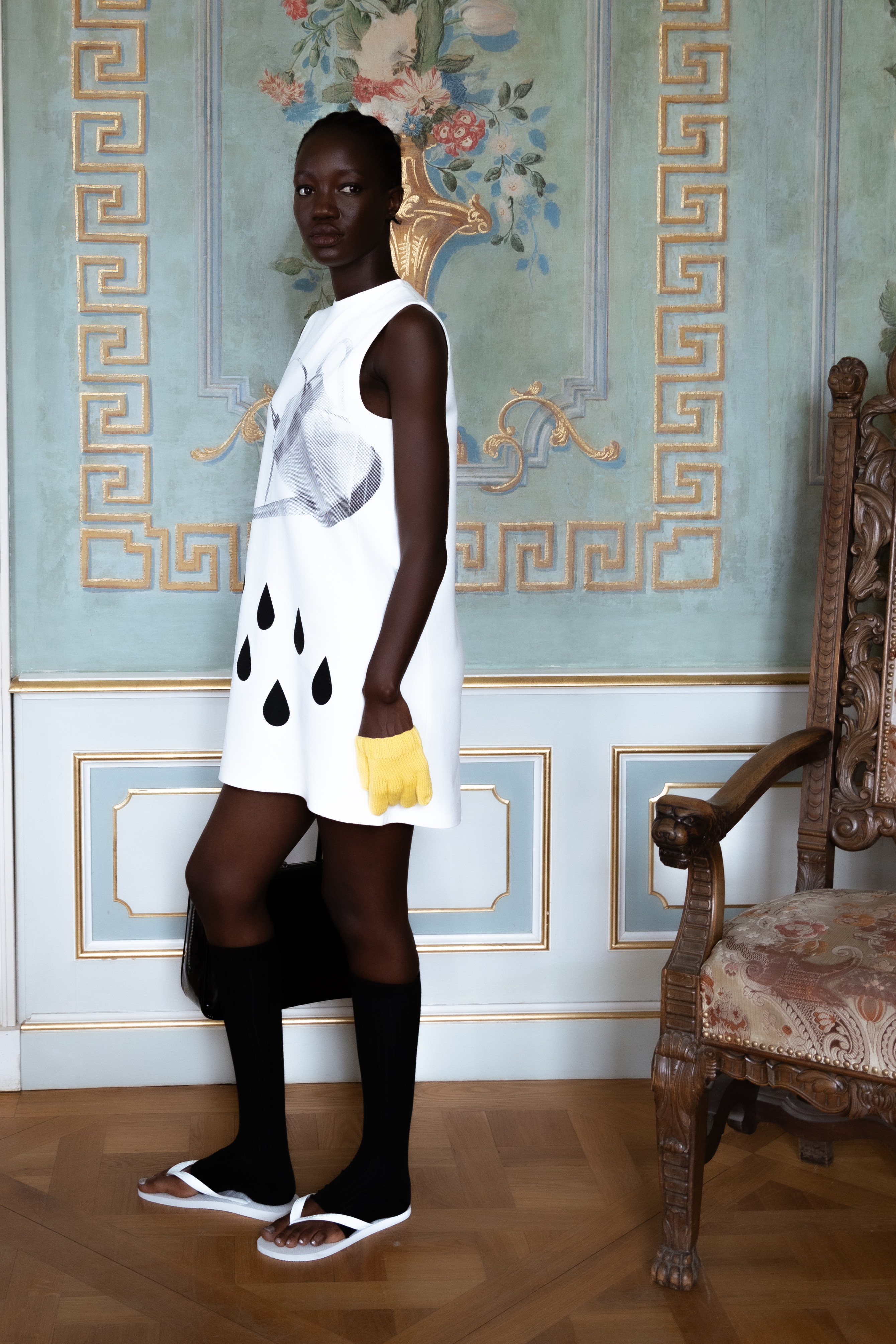
With Island’s Isolation, Andrej Gronau explores metamorphosis as a gradual process shaped by subtle shifts in perception rather than sudden change. Inspired by the paintings of Francis Bacon, the collection examines the instability of reality, where the familiar slowly becomes unfamiliar. Gardens serve as the conceptual starting point: constructed ecosystems capable of containing forests, tropical islands and imagined landscapes within confined spaces. Here, ordinary elements become sites of discovery, suggesting that exploration does not always require distant destinations.
Screen-printed cats, mice, everyday objects and botanical studies by Karl Blossfeldt populate the garments as characters within an evolving ecosystem. Earthy greens and browns contrast with vivid floral tones and metallic finishes, creating a dialogue between nature and artifice. The layered silhouettes dissolve the boundaries between formalwear and casualwear, work and leisure, travel and everyday life, ultimately presenting transformation as a permanent state rather than a final destination.