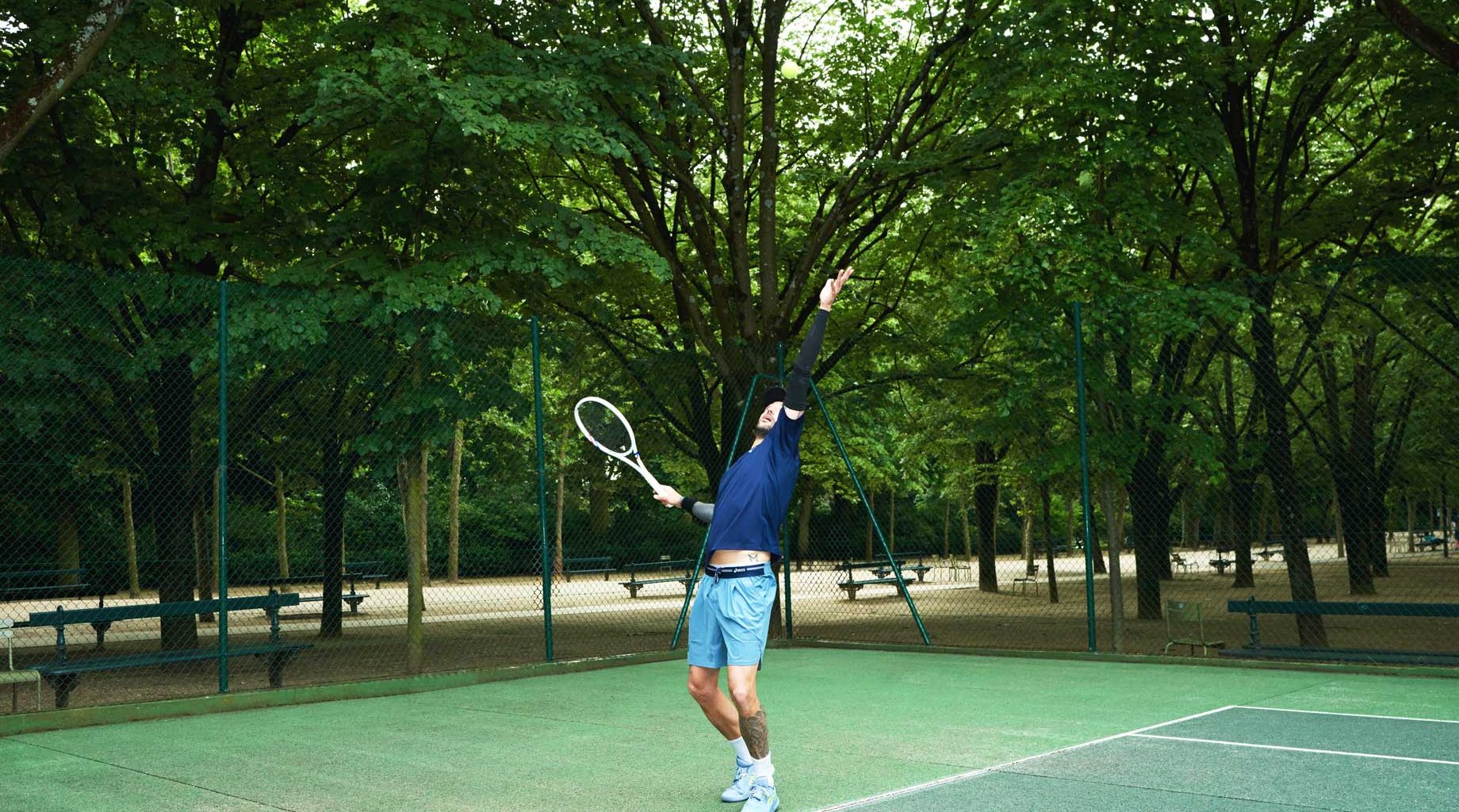
The tennis player and fashion employee on competition, reinvention and the identities we discover through sport
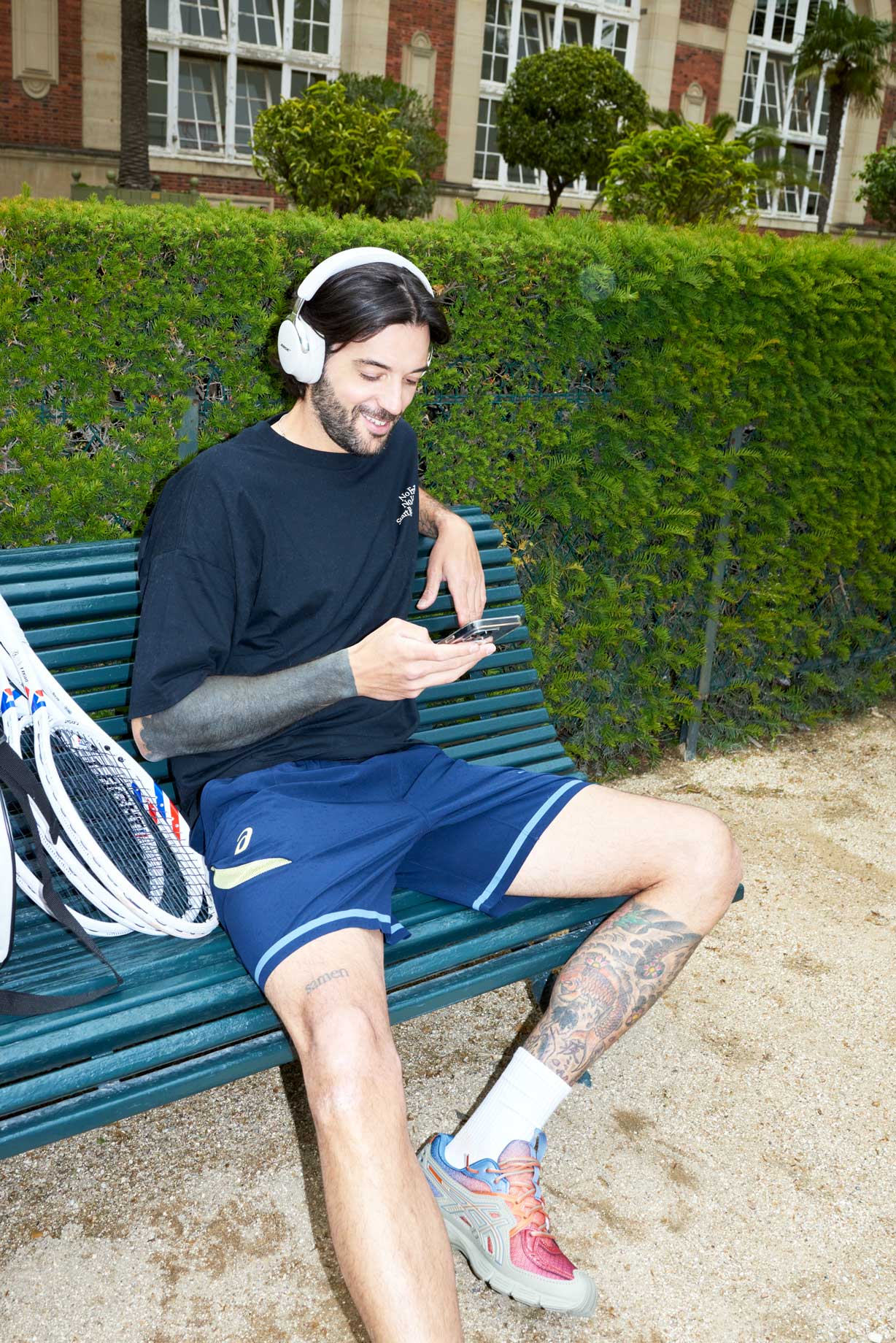
Some people spend their entire lives chasing a single version of themselves. Others learn when to let go, change direction, and begin again.
Salvatore Gaglione belongs to the latter.
Before Paris, before tennis, before fashion became part of his daily landscape, there was basketball. Years of competition, national team selections, and a future that seemed already mapped out. Then, at twenty-four, he made an unexpected choice: he walked away. Not from sport, but from the idea that a single passion should define an entire life.
What followed was not an ending. It was a second life.
Today, moving between fashion consulting, international travel and competitive tennis, Gaglione embodies a generation that refuses traditional categories. Careers overlap, passions evolve, and identity remains a work in progress. Sport, for him, has never been about becoming someone else. It has always been about discovering who was already there.
In this conversation for Vanity Teen Sports, he reflects on ambition, defeat, reinvention, the emotional legacy of his father, and why curiosity remains the most valuable quality any athlete can possess.
“Sports do not build character. They reveal it.” – Heywood Broun
They reveal it. How true is that statement for you?
I came across that quote by Heywood Broun a while ago and it immediately resonated with me. People often say that sport builds character, but I only partially agree. Sport has certainly taught me discipline, resilience and how to face challenges, but more than anything it has revealed aspects of my personality that were already there.
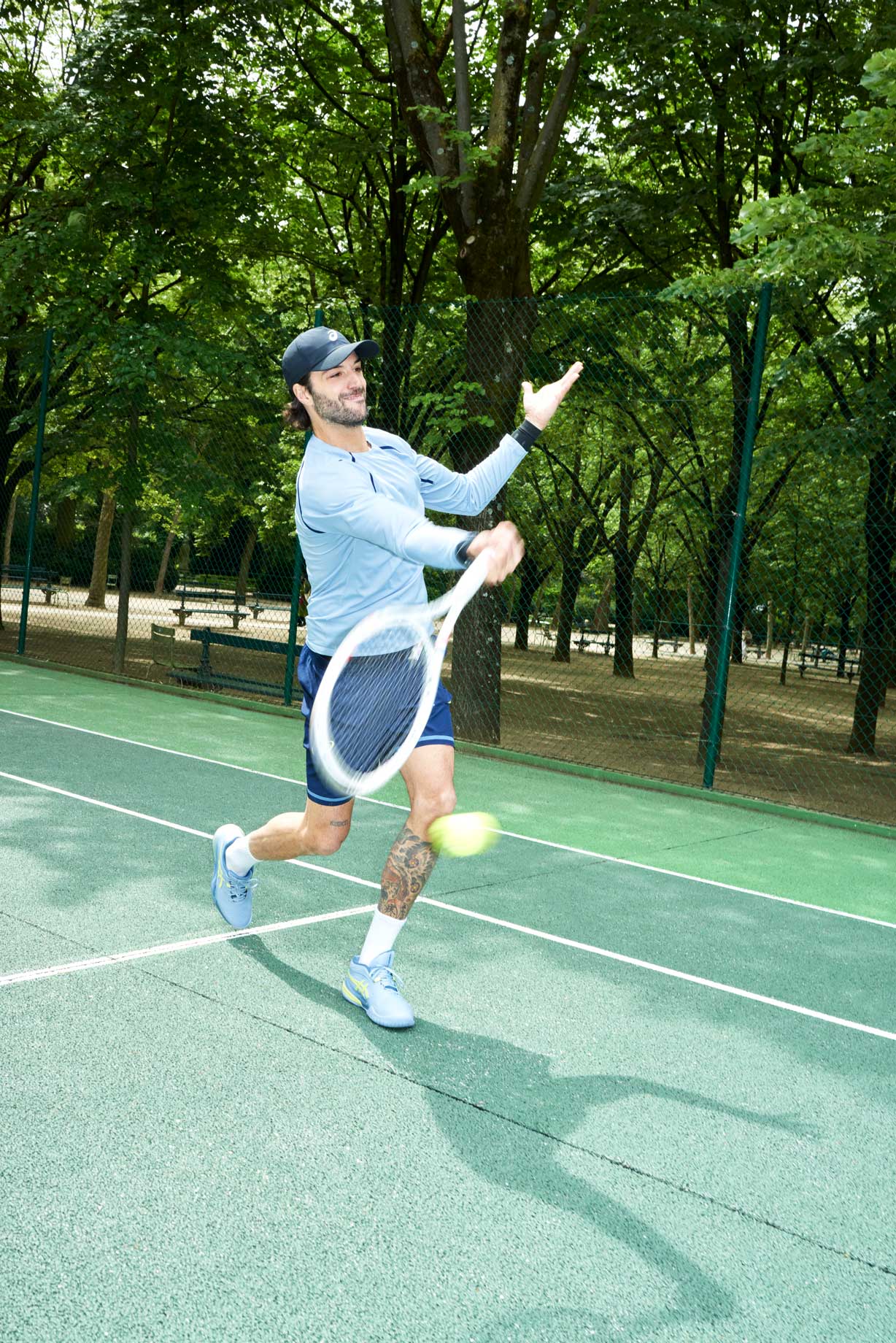
Off the court, I’m naturally calm and reserved. On the court, however, a completely different side emerges. A competitive side. A fighting spirit that rarely appears in my everyday life. Sport has always been the place where that part of me could exist freely.
You grew up surrounded by sport. Was there ever a moment when you imagined a different path?
Not really.
Growing up in Naples, football was almost unavoidable. I started playing in the streets when I was six years old. My grandfather was the club doctor for Turris, one uncle was the president, and my other grandfather ran a football academy in Venafro.
Sport was everywhere around me. It became a natural language before it became a choice.
You played basketball at a very high level before deciding to walk away. Why?
I played with Italy’s youth national competitions alongside players who later reached Serie A, including Giuseppe Poeta.
At that level, life revolves entirely around the game. Training twice a day, constant travel, very little social life. By the age of twenty-four, I made a decision that surprised many people: I stopped.
Not because I had fallen out of love with basketball. Quite the opposite. I simply realised that I didn’t want basketball to become my profession. And if I couldn’t be a player, I wasn’t interested in remaining in the sport as a coach or executive.
It felt like a personal defeat at the time, but I already had a Plan B. More importantly, I understood what I truly wanted.
What did tennis give you that basketball no longer could?
Tennis had always been somewhere in the background.
I played as a child before basketball took over completely.
When basketball ended, tennis naturally returned. Working in fashion, I also noticed how strongly tennis culture and aesthetics were re-emerging. That inspired me to take the sport seriously.
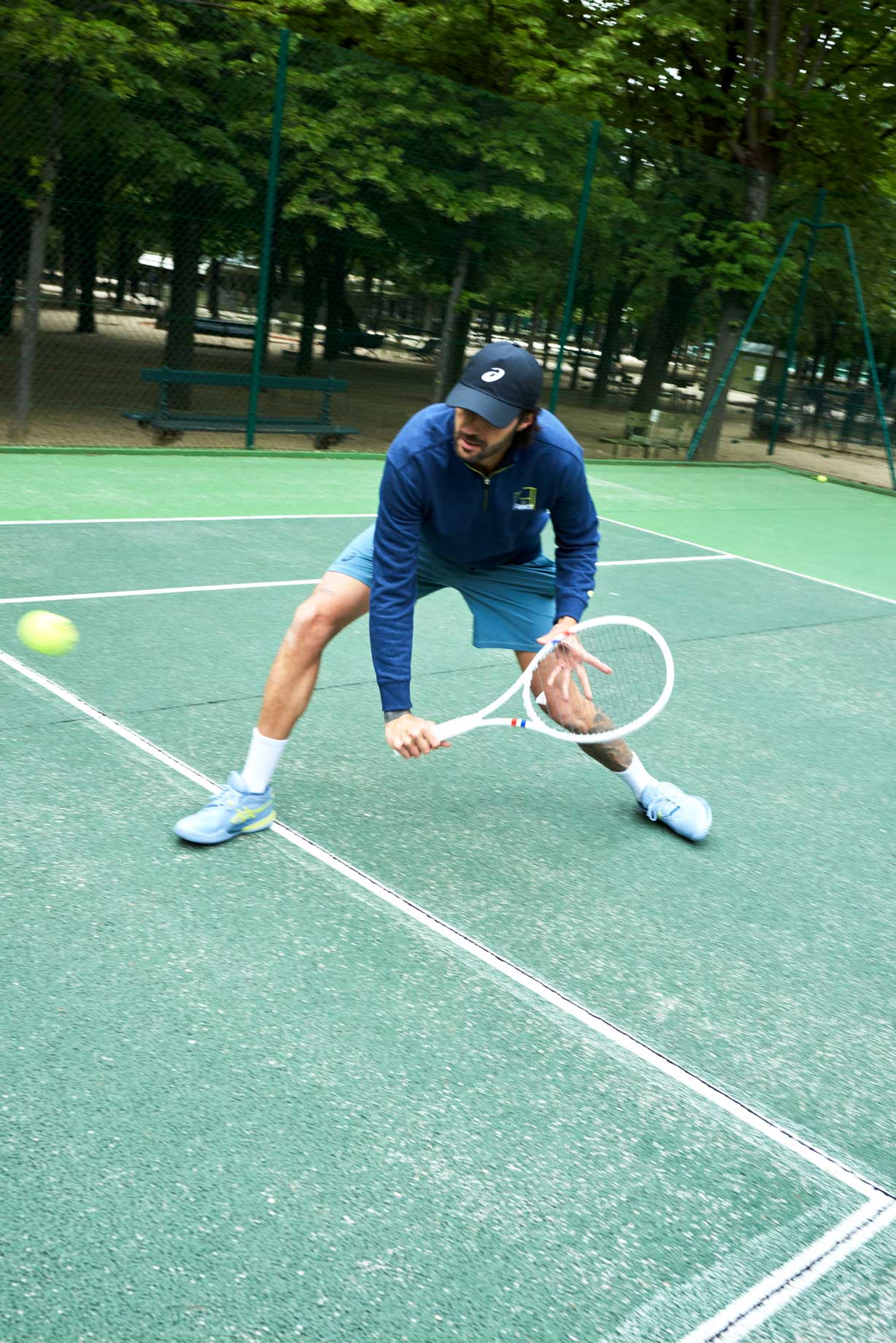
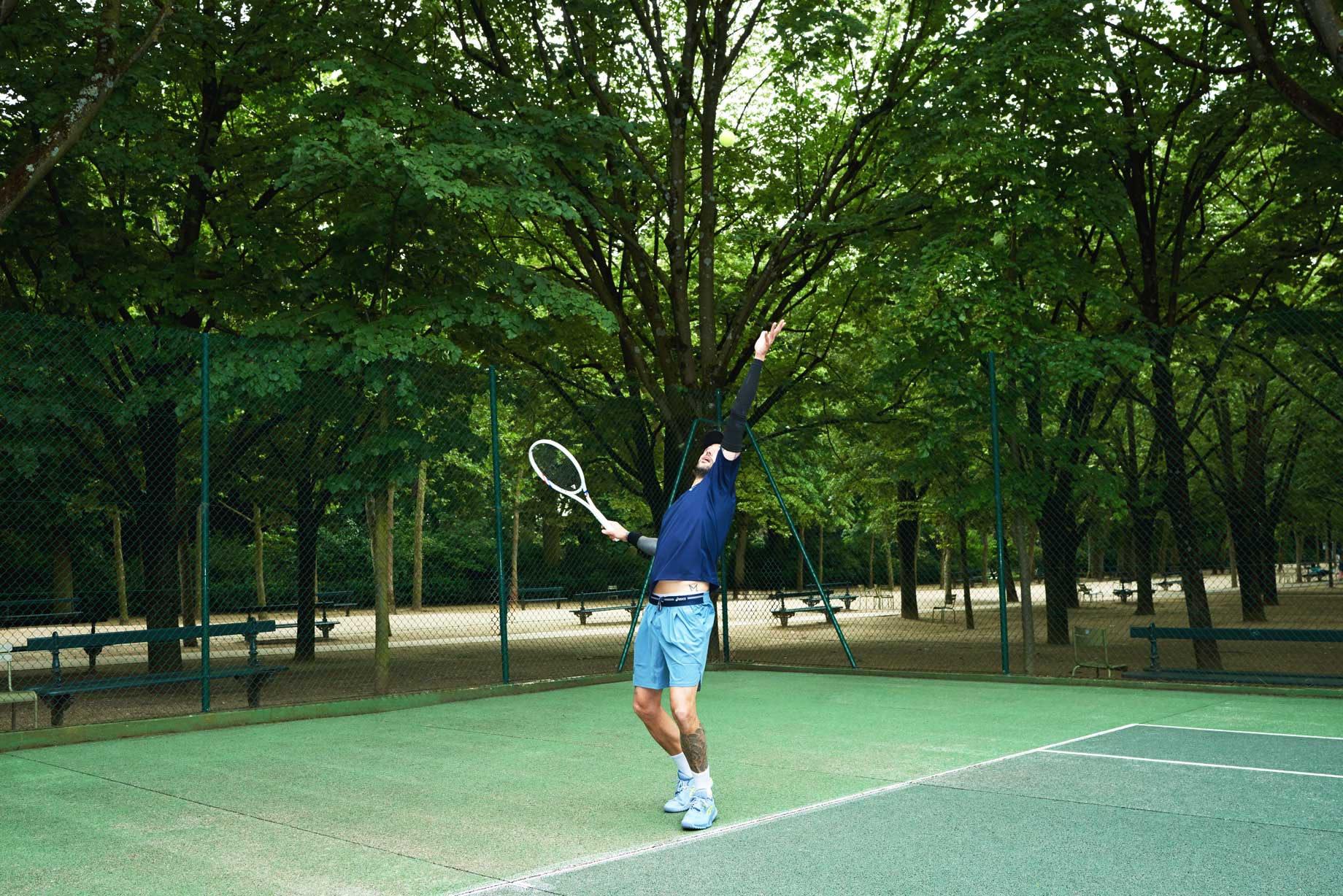
I knew I would never become a professional player, but I wanted to become the best tennis player I could possibly be.
After moving to Paris, I trained for a year with a former ATP Top 600 player. Later, a collaboration with a brand introduced me to the international tennis community. The more time you spend in that world, the more it becomes part of your identity.
Is there a match you still think about today?
Actually, there are two.
The first was my return to competitive tournaments. I was leading 5–0 in the opening round when my opponent suddenly changed tactics and started hitting nothing but lobs. I completely lost focus and ended up losing 7–5.
A week later, I entered another tournament. I lost the first set 6–1 and could easily have collapsed mentally. Instead, I fought back point by point, eventually winning the match in a tie-break and then a super tie-break.
Without that first defeat, the second victory would never have happened.
And then there was the opportunity to play points with Iga Świątek. A few years earlier, I could never have imagined that becoming reality.
Have you ever wanted to quit?
Never.
That simply isn’t part of my mentality.
The hardest period came when I struggled to find a coach I truly trusted. I entered a technical and personal crisis. I wasn’t sure what kind of player I was becoming.
Everything changed once I found the right coach. Someone young, experienced, and equipped with a modern methodology. That relationship gave me clarity again.
Who has influenced you the most outside of sport?
My father.
He was less of a professional mentor and more of an ethical compass. He passed away in 2016, but his presence continues to guide many of my decisions.
Photography was his passion, and he served as president of a photography club. One day, I would love to organise an exhibition of his work. So far, I haven’t found the emotional strength to do it.
But the idea remains with me.
Italian tennis is experiencing a historic moment. How do you see it from the inside?
Italian tennis has never been stronger.
Of course, Jannik Sinner is the symbol of this moment. His mentality is extraordinary and he represents the modern ideal of what a number-one athlete looks like.
But this success extends far beyond one player. Lorenzo Musetti, for example, possesses remarkable talent and creativity. Across the board, there is a new generation bringing energy and visibility to the sport.
Participation is growing, enthusiasm is everywhere, and Italian tennis is experiencing a genuine renaissance.
Fashion and sport often seem like separate worlds. For you, they are not.
Not at all.
Consulting, tennis, networking, travel—they all belong to the same ecosystem. I never feel the need to switch from one identity to another.
The real challenge today is mental flexibility: being able to move between different projects without losing focus.
And languages matter. Not just speaking them adequately, but speaking them fluently. Real connections begin when communication feels effortless.
How do you approach social media?
Social media is not my profession.
For me, it remains a space for sharing moments rather than building a business. I tend to post positive experiences—not because I want to hide the difficult ones, but because I prefer to contribute something constructive.
If something inspires me, I share it. If it doesn’t, I simply move on.
What advice would you give to a young athlete today?
Stay curious.
Discipline is essential, but don’t isolate yourself inside a sporting bubble. Explore different worlds, meet different people, and remain open to opportunities beyond competition.
Otherwise, you risk missing experiences that could shape your future in unexpected ways.
If you could write a letter to your future self, what would it say?
The first question would be simple: where are you today?
I’m not someone who plans every detail years in advance. I prefer to reinvent myself as I go.
I would ask about tennis. About work. About the projects I still dream of launching.
Most of all, I would ask whether I’ve become more open, less shy, and whether I’ve continued to stay curious.
Because curiosity, more than anything else, is what keeps us moving forward.
CREDITS
Photography: Frèdèric Tröhler
Styling: Luca Imbimbo
Grooming: Jasmine Bouguermouh
Fashion Assistant: Sonay
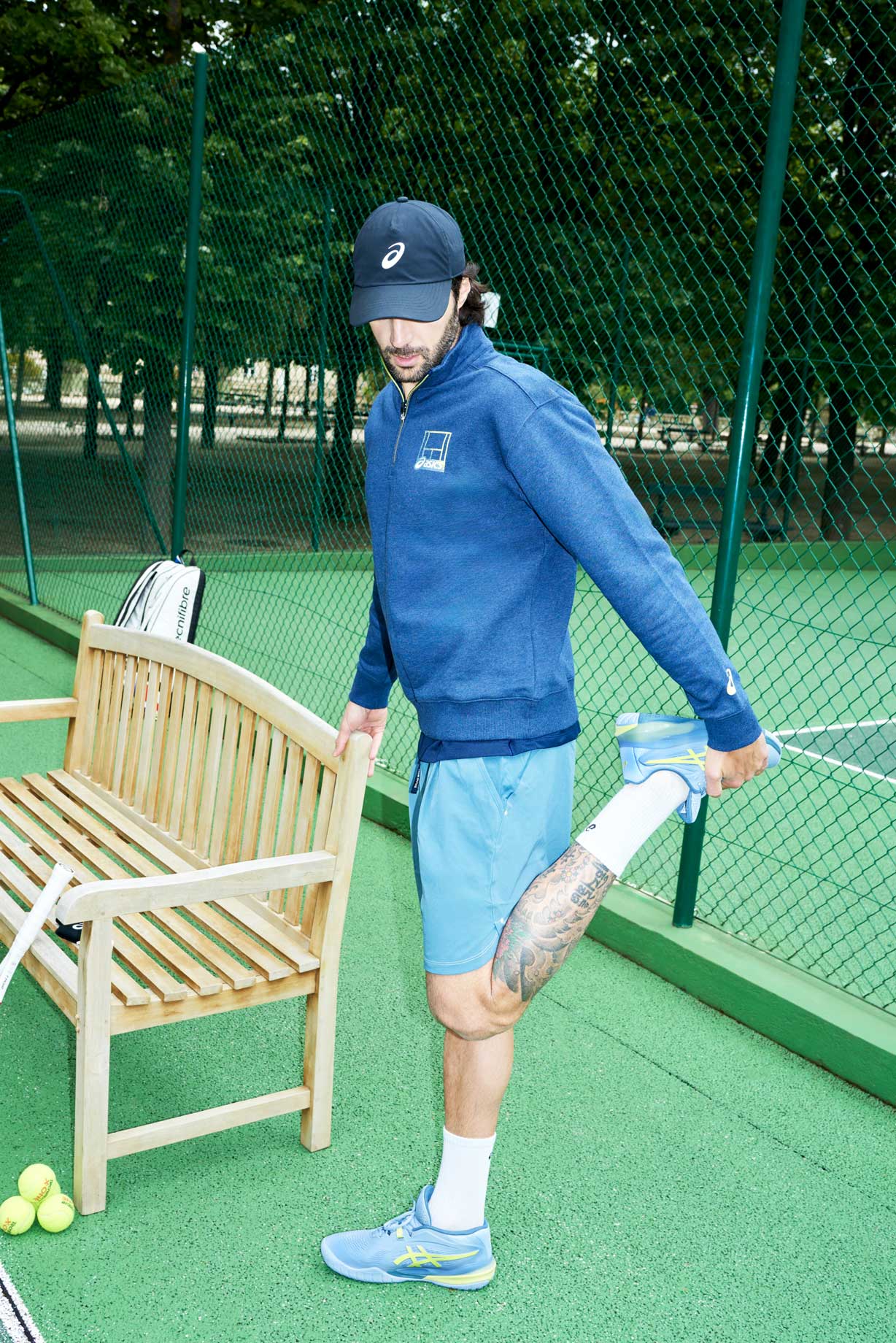
Salvatore Gaglione wears ASICS TENNIS