
From John Galliano’s couture universe to the poetry of everyday dressing, the Met Gala 2027 raises a bigger question: is fashion rediscovering the beauty of simplicity, or running out of ideas?
Can an ordinary outfit still be extraordinary, or has fashion simply run out of ideas?
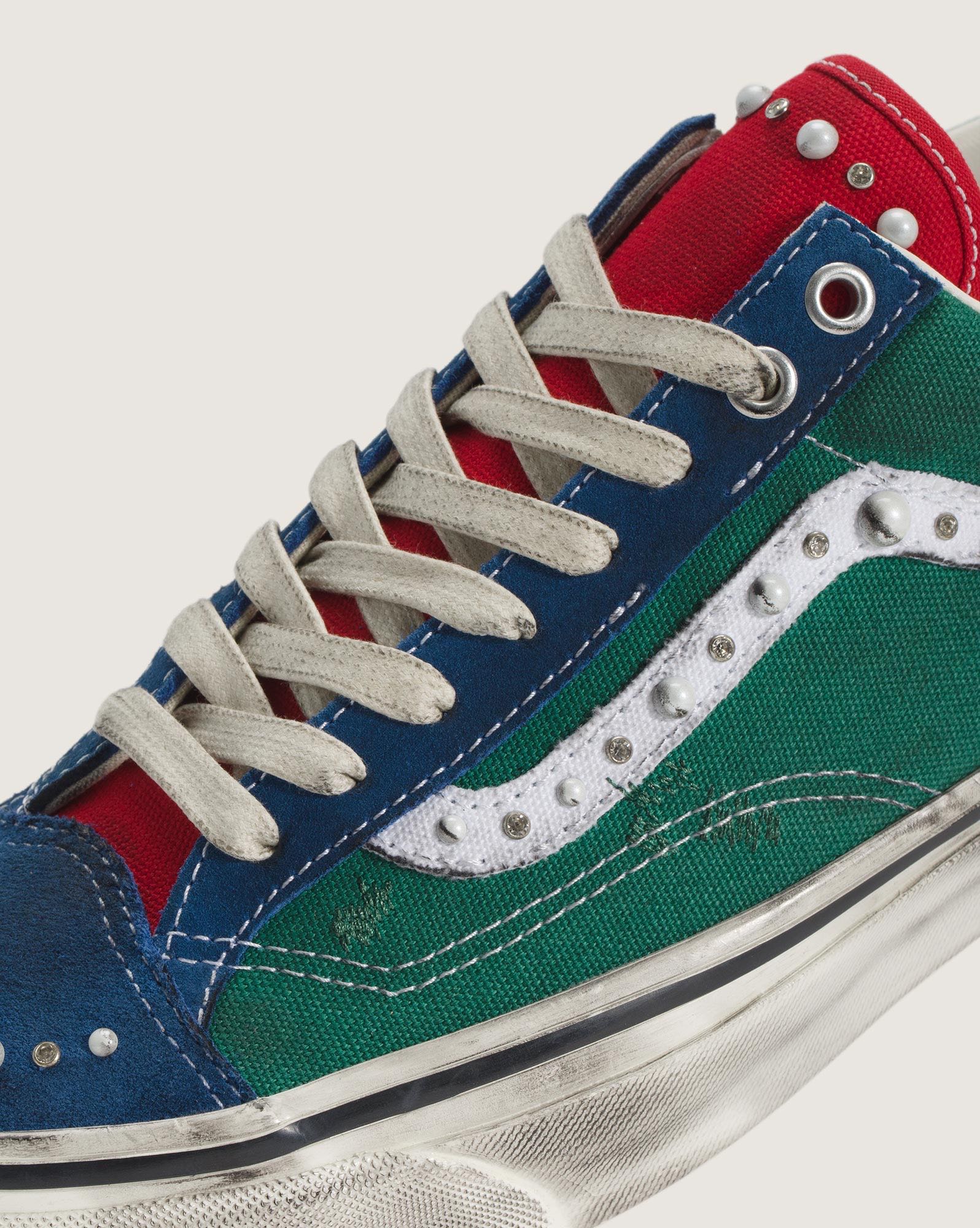
The Metropolitan Museum of Art’s announcement of extraORDINARY: Fashion and the Poetics of the Everyday for its 2027 Costume Institute exhibition invites precisely this question. Following the cancellation of John Galliano: Horizons, the new project shifts the focus from the extraordinary imagination of one of fashion’s most influential couturiers to the creative potential of familiar garments and everyday materials: jeans, T-shirts, hoodies, puffer coats, paper, plastic and metal.
The conceptual shift is considerable. Galliano’s proposed retrospective was built around the relationship between imagination, historical research, storytelling and craftsmanship. It sought to reveal how an individual creative vision could materialize through extraordinary technical skill. The new exhibition reverses that direction: rather than starting with a designer’s imagination, it starts with objects already embedded in everyday life and asks what fashion can make of them.
There is something compelling about this proposition. There is also something troubling. In an industry that has spent years escalating spectacle, complexity and visual excess, turning to the ordinary could represent a meaningful cultural reset. It could equally signal a shortage of ambition, particularly after the withdrawal of a project that promised to examine the work of a singular creative force.
The difference between these two possibilities will define the success of the exhibition.
The Nineties Never Really Left
The most interesting way to read extraORDINARY is not as a celebration of casual dressing, but as a possible rediscovery of the intellectual sophistication of 1990s minimalism.
The decade produced a radically different idea of luxury. Following the exaggerated silhouettes and conspicuous glamour of the 1980s, a new generation of designers began stripping fashion back to its essentials. Calvin Klein, Donna Karan, Helmut Lang, Jil Sander and Miuccia Prada developed distinct approaches to a quieter, more considered wardrobe. In Europe, Martin Margiela challenged the very definition of luxury through deconstruction, recycling and the reinvention of standardized garments.
In America, Calvin Klein helped establish a visual language of clean lines, restrained sensuality and effortless elegance. Donna Karan approached minimalism through the practical realities of women’s lives. Her Seven Easy Pieces, introduced in 1985, proposed a flexible wardrobe capable of moving between work, private life and evening. The idea was not to own more clothes, but to understand how a smaller number of carefully designed pieces could do more.
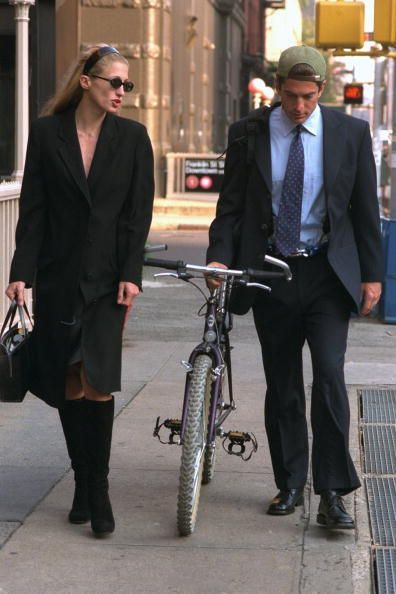
Carolyn Bessette Kennedy remains one of the most compelling expressions of this aesthetic. Her wardrobe was deceptively simple: white shirts, black skirts, tailored coats, straight-leg denim, understated accessories and beautifully considered proportions. Her connection to Calvin Klein was important, yet her style extended well beyond one designer. Prada, Yohji Yamamoto and other voices of intelligent minimalism helped shape a wardrobe that felt personal rather than prescribed.
Bessette Kennedy understood something fashion repeatedly forgets: simplicity is not the absence of styling. It is the result of editing. The precision of a white shirt, the weight of a coat, the cut of a pair of jeans and the proportion of a skirt can communicate more than an entire wardrobe of statement pieces.
Her enduring appeal is not simply nostalgia for the Nineties. It reflects a contemporary desire for visual clarity in a culture saturated with images, trends and constant self-presentation.
From Prada and Margiela to the Philo Effect
European minimalism offered a more complicated interpretation of the everyday.
Miuccia Prada never treated simplicity as an unquestioned ideal. Her approach to the ordinary was often intellectual, ironic and deliberately uncomfortable. Industrial nylon, unfashionable colors, utilitarian references and seemingly banal garments became tools for challenging conventional ideas of beauty. Her 1990s work demonstrated that an ordinary object could become extraordinary without losing its original character.
Martin Margiela pushed this proposition further. Through reconstructed garments, found objects, vintage fabrics and deconstruction, he questioned the relationship between value, authorship and consumption. His work was not about making everyday clothing look expensive. It was about exposing the hidden history and construction of the things we wear.
The distinction matters enormously, particularly in the work of designers such as Raf Simons, who have consistently explored how the most familiar elements of a wardrobe can become expressions of cultural identity, personal attitude, and contemporary desire. At Jil Sander, where he served as creative director from 2005 to 2012, Simons brought a new energy to the house’s precise minimalism, introducing references to youth culture and streetwear without compromising its rigorous approach to form and construction. At Dior, from 2012 to 2015, he translated that sensibility into the language of haute couture, finding a contemporary relevance in the house’s historic codes. His appointment at Calvin Klein in 2016 took this exploration of the everyday even further. Denim, underwear, sportswear, and classic American wardrobe staples became the foundation of a broader cultural and visual statement. Rather than treating these pieces as mere basics, Simons elevated them into symbols of American identity, desire, and collective memory. The everyday was no longer simply what people wore; it was a language through which they could express who they were.
A parallel can be drawn with Kris Van Assche, who led Dior Homme from 2007 to 2018, including the years in which Simons was at the helm of the women’s collections. While Simons explored the relationship between couture, youth culture, and everyday American dressing, Van Assche developed a more relaxed interpretation of contemporary menswear, reworking traditional tailoring through softer proportions, sportswear references, and an increasingly fluid approach to the male wardrobe. Their visions were distinct, yet both questioned the boundaries between formal and casual dressing, suggesting that modern elegance could emerge not from rigid codes, but from the way clothes are actually worn and lived in.
The more recent chapter belongs to Phoebe Philo. Her arrival at Céline in 2008, followed by her Spring 2010 collection, redefined modern luxury for a generation of women. Her minimalism was not cold, austere or purely conceptual. It was intelligent, sensual, practical and deeply connected to how women actually live.
Philo understood that a woman did not necessarily want to dress like a fashion image. She wanted clothes that made her feel more like herself. Luxurious fabrics, oversized tailoring, precise proportions, exceptional outerwear and unexpected accessories created a wardrobe that was recognizable without being obvious.
Her influence extended far beyond Céline. The aesthetic language associated with her work helped shape the contemporary market for elevated essentials, from Khaite and The Row to the broader design sensibility of COS. COS, founded in 2007, predates her Céline tenure, so the connection is not a direct origin story. It is a shared cultural evolution toward considered design, material quality and lasting wardrobe pieces.
The Row, founded by Ashley and Mary-Kate Olsen in 2005, represents another important development. Its approach to luxury is rooted in exceptional fabrics, precise tailoring and an almost radical refusal of unnecessary decoration. The result is not ordinary clothing. It is extraordinary attention to ordinary clothing.
Philo and The Row did not invent minimalism. They made its principles feel urgently relevant again.
The Problem With Making the Ordinary a Luxury
This is where the Met’s proposition becomes more complicated.
Celebrating everyday clothing through the lens of high fashion inevitably raises a question of value. When a T-shirt becomes a couture object, what exactly are we celebrating: its original simplicity, the designer’s technical achievement, or the extraordinary price attached to its transformation?
There is a risk that the exhibition will turn the everyday into another luxury commodity, extracting its cultural meaning while adding another layer of exclusivity. The irony is difficult to ignore: an event built around some of the world’s wealthiest and most photographed people is preparing to celebrate the universal wardrobe.
The contradiction could become the exhibition’s greatest strength if it is addressed honestly.
Craftsmanship should be the central argument. A pair of jeans reconstructed through sophisticated pattern-making, a white shirt transformed through architectural cutting, or a garment made from discarded materials can demonstrate genuine creative intelligence. The point is not to make something look expensive. It is to make something meaningful through skill, imagination and construction.
Without that distinction, extraORDINARY risks becoming a glorified mood board of elevated basics.
A Creative Reset, or a Failure of Imagination?
The timing makes the question even more pressing.
The original Galliano exhibition was conceived to examine both his extraordinary creative contribution and the ethical accountability demanded by his antisemitic, racist and anti-Asian conduct. Its cancellation followed a public controversy that exposed the complicated relationship between artistic achievement, institutional recognition and moral responsibility.
Galliano himself acknowledged that meaningful accountability cannot be achieved through a museum exhibition or a single public gesture. That distinction deserves to remain clear.
Yet the transition to extraORDINARY also invites a broader institutional question. Has the Costume Institute found a genuinely compelling new direction, or has it retreated toward a safer subject after an unusually difficult moment?
A retrospective devoted to Galliano would have demanded a complex conversation about authorship, genius, responsibility and the limits of cultural forgiveness. The new exhibition proposes a more universally accessible subject. Accessibility is valuable. Intellectual ambition should not be sacrificed in the process.
The Met has an opportunity to do something genuinely important: connect the radical minimalism of the Nineties, the conceptual intelligence of Prada and Margiela, the lived-in luxury of Phoebe Philo and the uncompromising craftsmanship of The Row to a new generation that is increasingly questioning consumption, identity and the visual noise of contemporary fashion.
The strongest version of this exhibition would not simply celebrate jeans and white shirts. It would explain why these garments became cultural icons, how designers reinvented them, and why the ability to edit, construct and refine can be as radical as the ability to invent.
The ordinary does not need to be rescued by fashion. Fashion needs to rediscover what made the ordinary extraordinary in the first place.
In many ways, the most compelling image of the 2027 Met Gala would not be the most elaborate dress on the red carpet. It would be a perfectly cut white shirt, a pair of impeccable jeans and a silhouette so assured that it makes everything else feel unnecessary.
That would be a statement.
Anything less risks looking like a lack of ideas dressed up as a concept.