


When did we stop seeing the other as something deserving of care, and start treating respect as a choice rather than a fundamental condition of living together?
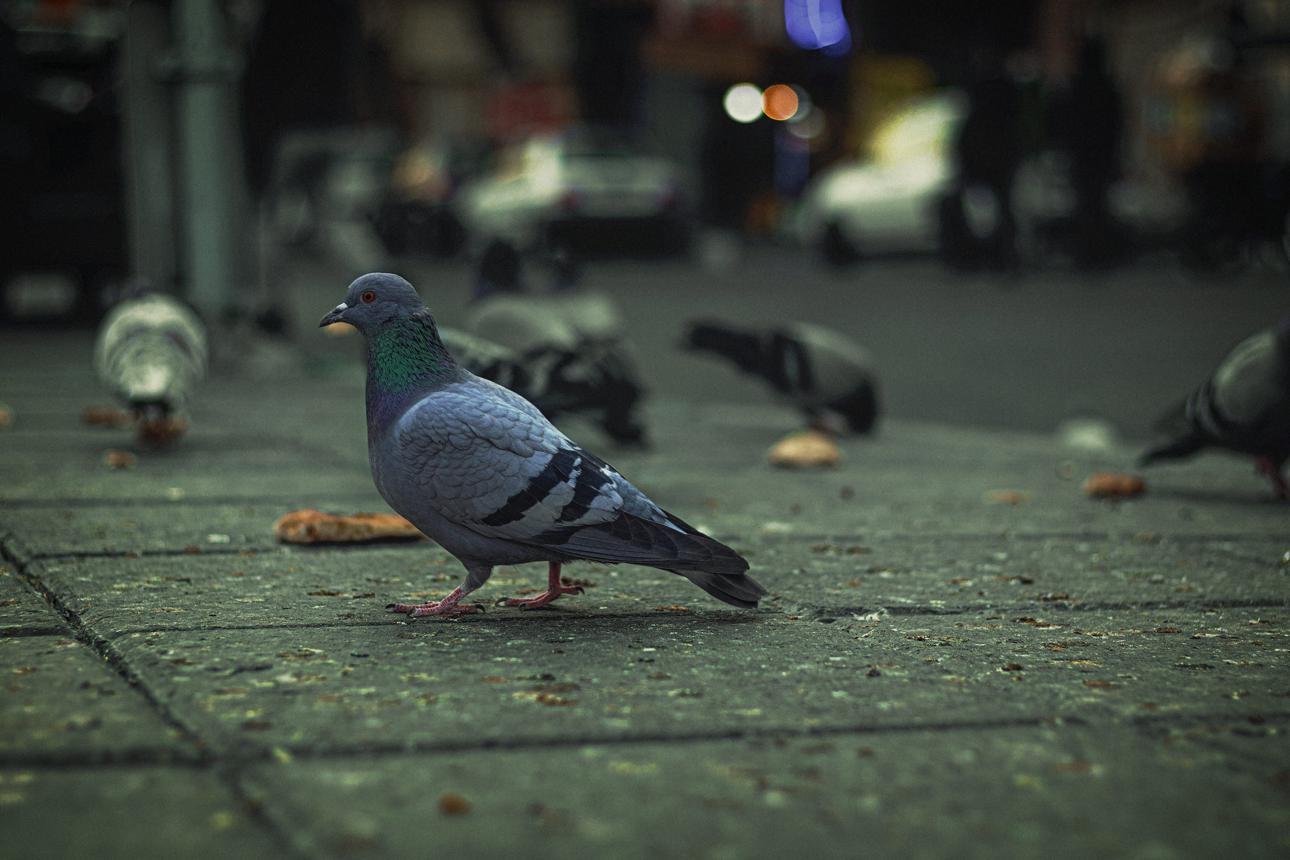
I watched a boy spit on a pigeon.
I was in my hometown in Italy for a few days of rest following the Fashion Week, walking my miniature dachshund, Moka, when I noticed a group of boys sitting on a bench. One of them kept spitting at a pigeon searching for food nearby. The bird was doing nothing but trying to survive. The boy seemed entertained by making its existence a little more difficult.
I intervened immediately, calmly telling him that this was not acceptable, that animals deserve respect, and that we have a responsibility toward the nature surrounding us.
My reaction brought me back to a sentence my grandmother repeated throughout my childhood: Never hurt even a fly.
A seemingly simple lesson, almost old-fashioned by today’s standards. Yet it contained an entire philosophy of existence. It was about recognizing that life has value beyond its usefulness to us, that vulnerability should invite protection rather than exploitation, and that our relationship with the world should begin with an awareness of our responsibility toward it.
That small encounter left me with a much bigger question: when did we become so comfortable with the suffering of others?
And, more importantly, when did we start confusing the absence of consequences with the freedom to do whatever we want?
THE PHILOSOPHY OF SEEING THE OTHER
Empathy is often reduced to the ability to understand another person’s feelings. Its meaning, however, reaches much further. It involves the capacity to step outside our own immediate perspective, recognize another living being’s experience, and allow that recognition to influence our behavior.
The philosophical foundations of this idea are centuries old.
Aristotle understood human beings as social and political animals, whose existence finds meaning within a community. For him, virtue was not simply a private quality but something developed through habits, relationships, and participation in collective life. Being human, in this sense, has always implied a responsibility toward others.
David Hume later placed sympathy at the center of moral judgment, arguing that our ability to be affected by the experiences of others is fundamental to how we distinguish right from wrong. Adam Smith, often associated primarily with economic thought, explored a remarkably similar principle in The Theory of Moral Sentiments: our moral imagination depends on the ability to place ourselves, imaginatively, in another person’s position.
Then comes Arthur Schopenhauer, whose philosophy offers perhaps one of the most powerful foundations for the argument we are making.
For Schopenhauer, compassion (Mitleid) is the true foundation of morality. Moral behavior does not emerge primarily from obedience to social conventions, legal systems, or religious commandments. It begins when the boundary separating the self from the suffering of another becomes less absolute. We recognize another’s pain as something that matters, even when it is not our own.
This is a radical proposition. It suggests that morality begins precisely where self-interest stops being the only measure of our actions.
Schopenhauer’s perspective also extends beyond the human species. His defense of animals challenged the idea that human beings possess an unquestionable moral privilege over other forms of life. The capacity to suffer, rather than the ability to speak, reason, or participate in society, becomes a compelling reason for moral consideration.
That distinction matters enormously today.
THE EMPATHY GAP IS NOT JUST ABOUT ANIMALS
The boy and the pigeon are not the whole story. They are a symptom of a much wider cultural problem.
The same inability to recognize vulnerability appears in our relationships with other people, in public spaces, in political discourse, and in the way we treat the communities we inhabit.
We see it in everyday aggression, in the casual humiliation of strangers, in the normalization of online harassment, in the disregard for shared spaces, and in an increasingly confrontational public culture where listening is frequently mistaken for weakness.
Respect has gradually become conditional. We extend it when someone resembles us, agrees with us, serves our interests, or occupies a position we consider worthy of consideration. Everyone else risks becoming an obstacle, an inconvenience, or simply background noise.
Psychology offers several ways to understand this phenomenon.
Empathy requires more than recognizing another person’s emotional state. It also requires emotional regulation, perspective-taking, and the ability to resist the immediate impulse to prioritize ourselves. Social psychology has repeatedly demonstrated how group dynamics, deindividuation, conformity, and the diffusion of responsibility can weaken individual moral judgment.
When responsibility becomes collective, individuals can become less willing to assume it. When cruelty is rewarded with laughter, attention, or social approval, it can become a performance. When the suffering of others is repeatedly presented as entertainment, our sensitivity risks becoming increasingly desensitized.
Digital culture has intensified some of these dynamics. Behind a screen, the person receiving an insult becomes an abstraction. A stranger becomes a profile, a photograph, a username. The distance between action and consequence makes it easier to forget that another human being is experiencing the impact of our behavior.
The problem is not technology itself. It is the possibility of living increasingly disconnected from the consequences of our own actions.
WHEN DID THE GAP BEGIN?
It would be too simplistic to suggest that the 1980s or 1990s represented a golden age of empathy, or that younger generations are inherently less compassionate than those who came before them.
Every generation has inherited its own forms of violence, exclusion, and indifference. Nostalgia is not a sociological explanation.
Something did change, however, in the cultural conditions through which we experience relationships and collective responsibility.
The expansion of consumer culture, the growing centrality of individual achievement, the acceleration of everyday life, and the increasing influence of media built around visibility and competition have contributed to a society in which personal success often takes precedence over shared well-being.
The individual increasingly becomes the center of the narrative, while the community risks becoming a secondary consideration.
This does not mean individual freedom is the problem. Freedom without responsibility, however, can easily become disregard for everyone else.
The distinction is crucial: being free to act does not mean being free from the moral consequences of our actions.
NATURE IS NOT OUR BACKGROUND
Our relationship with the natural world exposes one of the deepest fractures in contemporary empathy.
We have built a civilization around the idea that nature exists primarily to serve us. Animals become resources, landscapes become real estate, forests become commodities, and ecosystems become economic calculations. We have become remarkably skilled at measuring the value of almost everything while struggling to recognize the intrinsic value of life itself.
Yet the philosophical challenge to this anthropocentric worldview is not new.
From Schopenhauer’s compassion for animals to Albert Schweitzer’s principle of reverence for life, from Aldo Leopold’s land ethic to Arne Næss’s deep ecology, an alternative understanding of our place in the world has progressively emerged.
These thinkers, despite their different intellectual traditions, challenge the assumption that human beings stand outside nature, entitled to dominate it without limits.
The environmental philosopher Aldo Leopold proposed an ethical framework in which human beings are members of a broader ecological community rather than its masters. This is an essential shift in perspective. We do not simply inhabit the environment. We belong to it.
Respecting nature, therefore, is not an optional expression of kindness. It is an acknowledgment of our interdependence.
The pigeon searching for food on an Italian pavement and the destruction of an ecosystem might appear to belong to entirely different scales of concern. Yet both reveal the same underlying question: what happens when we stop recognizing value in forms of life that exist beyond our immediate interests?
A society that cannot teach a child not to torment a defenseless animal should also question what it is teaching that child about power, vulnerability, and responsibility.
THE POLITICS OF EMPATHY
Empathy is not politically neutral in its consequences.
The way we treat people, animals, public spaces, and natural resources reflects an underlying understanding of what we believe society should be.
A functioning democracy requires more than institutions, legislation, and the formal recognition of individual rights. It requires a shared ethical foundation: the ability to acknowledge that our freedom exists alongside the freedom and dignity of others.
This is particularly relevant when looking at the recent protests across Europe, which we have also examined in a previous in-depth article. Their social and political implications deserve a much broader reading than the immediate images of demonstrations, confrontation, and disruption.
Collective dissatisfaction cannot be understood simply by looking at what happens in the streets. It must also be understood through the conditions that bring people there: the erosion of trust, the perception of institutional distance, social inequalities, and the growing difficulty of feeling represented within a common political project.
The right to protest is fundamental to democratic life. Empathy does not mean suppressing dissent, demanding conformity, or avoiding conflict. It means recognizing the humanity of those with whom we disagree, while understanding that collective rights and responsibilities cannot simply disappear when tensions rise.
The real question is not whether society should be more accommodating. It is whether we can still disagree without dehumanizing one another, defend our interests without erasing those of others, and demand change without losing sight of the collective good.
Hannah Arendt’s reflections on political responsibility and the human condition remain particularly relevant here. A shared world cannot survive if individuals cease to recognize their responsibility for the spaces, institutions, and relationships they have in common.
Empathy, in this context, becomes a condition of democratic coexistence.
THE EXISTENTIAL QUESTION: WHAT KIND OF HUMAN BEING DO WE CHOOSE TO BE?
Existentialist philosophy brings the discussion to an even more personal level.
Jean-Paul Sartre placed responsibility at the center of human freedom. We are not simply defined by what we believe about ourselves; we are also defined by what we do. Our choices contribute to shaping the world in which others must live.
Emmanuel Levinas took the ethical encounter further, placing the vulnerability of the other at the beginning of moral responsibility. The other person’s presence makes a demand on us before we have even decided whether we want to respond.
This is perhaps where the entire discussion comes together.
The pigeon did not ask for protection. It could not articulate its suffering, appeal to social conventions, or demand that someone intervene. It was simply vulnerable. Recognizing that vulnerability was enough to establish a responsibility.
My grandmother’s words suddenly seem less like a childhood instruction and more like an existential principle: our humanity is measured, in part, by how we behave toward those who cannot give us anything in return.
That principle applies to strangers, children, older people, animals, marginalized communities, and the natural environment. It applies whenever we encounter something whose existence is not ours to control.
EMPATHY IS NOT WEAKNESS. IT IS CIVILIZATION.
Empathy is not simply an emotion. It is a measure of our capacity to coexist, recognize others, and take responsibility for the world we share.
Empathy without action can remain a comfortable sentiment. Respect without awareness can become an empty performance. Rules can regulate behavior, but they cannot independently create moral sensitivity.
A truly civilized society cannot rely exclusively on punishment, surveillance, and legislation to prevent cruelty. It must also cultivate an internal understanding of why certain behaviors are unacceptable in the first place.
This begins with education, but it extends into families, schools, public institutions, political leadership, media, and everyday interactions. It requires teaching children that kindness is not submission, that sensitivity is not fragility, and that respecting another living being does not diminish our own importance.
It requires adults to embody the same principles they expect younger generations to follow.
In my opinion, the most important question is not whether we have become less empathetic than previous generations. It is whether we are building a society that makes empathy easier to practice or increasingly difficult to sustain.
The answer will not be found in a philosophical book alone, in a political manifesto, or in another set of social rules. It will be found in the ordinary choices we make when nobody is watching, when there is no reward for doing the right thing, and when the person or living creature in front of us has absolutely no power over us.
I keep thinking about that pigeon. About my grandmother’s words. About how little it takes to choose not to cause harm, and how much that small choice reveals about the person making it.
Respect should never depend on the power, usefulness, or visibility of the one receiving it.
The true measure of a society’s progress lies not in how much it has learned to control the world around it, but in its ability to coexist with it.
Humanity’s next great evolution will not be defined solely by artificial intelligence, technological acceleration, or economic growth. It will depend on something far more fundamental, something we seem to have lost sight of along the way: our ability to recognize the value of a life beyond our own.