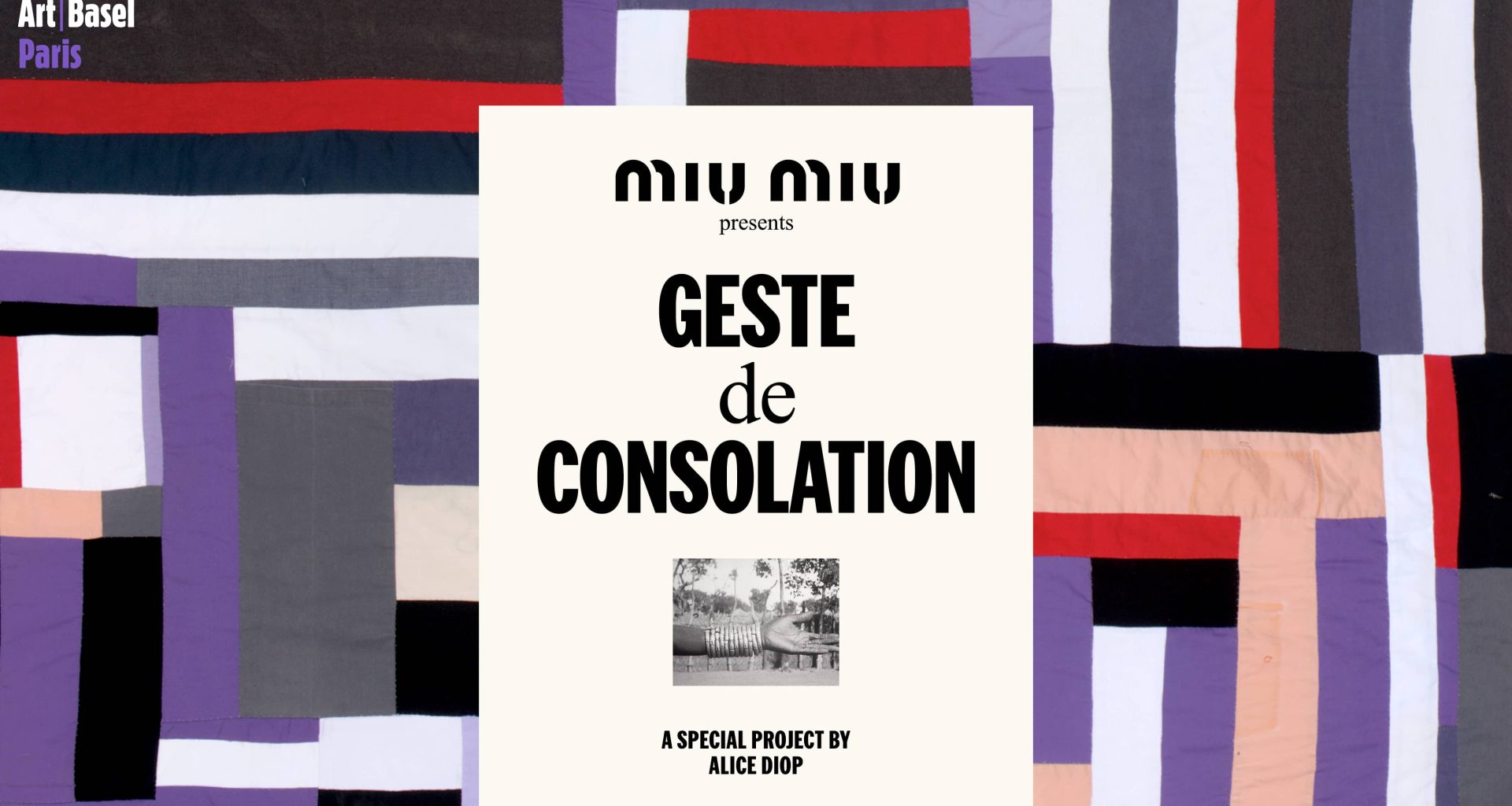
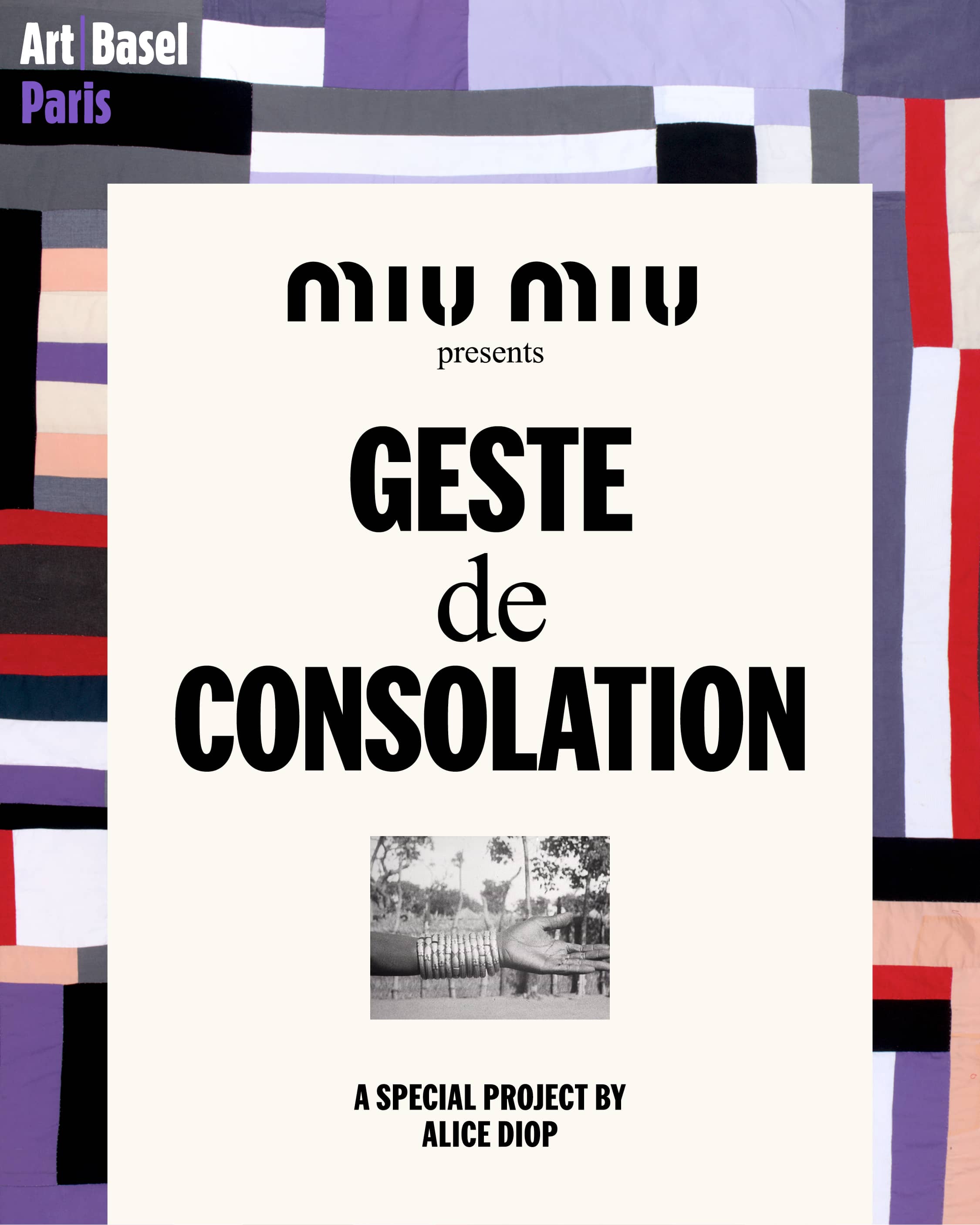
Can an image hurt you? Can another one hold you?
At the Palais d’Iéna this October, Miu Miu asks a question that has very little to do with fashion; and perhaps everything to do with it.
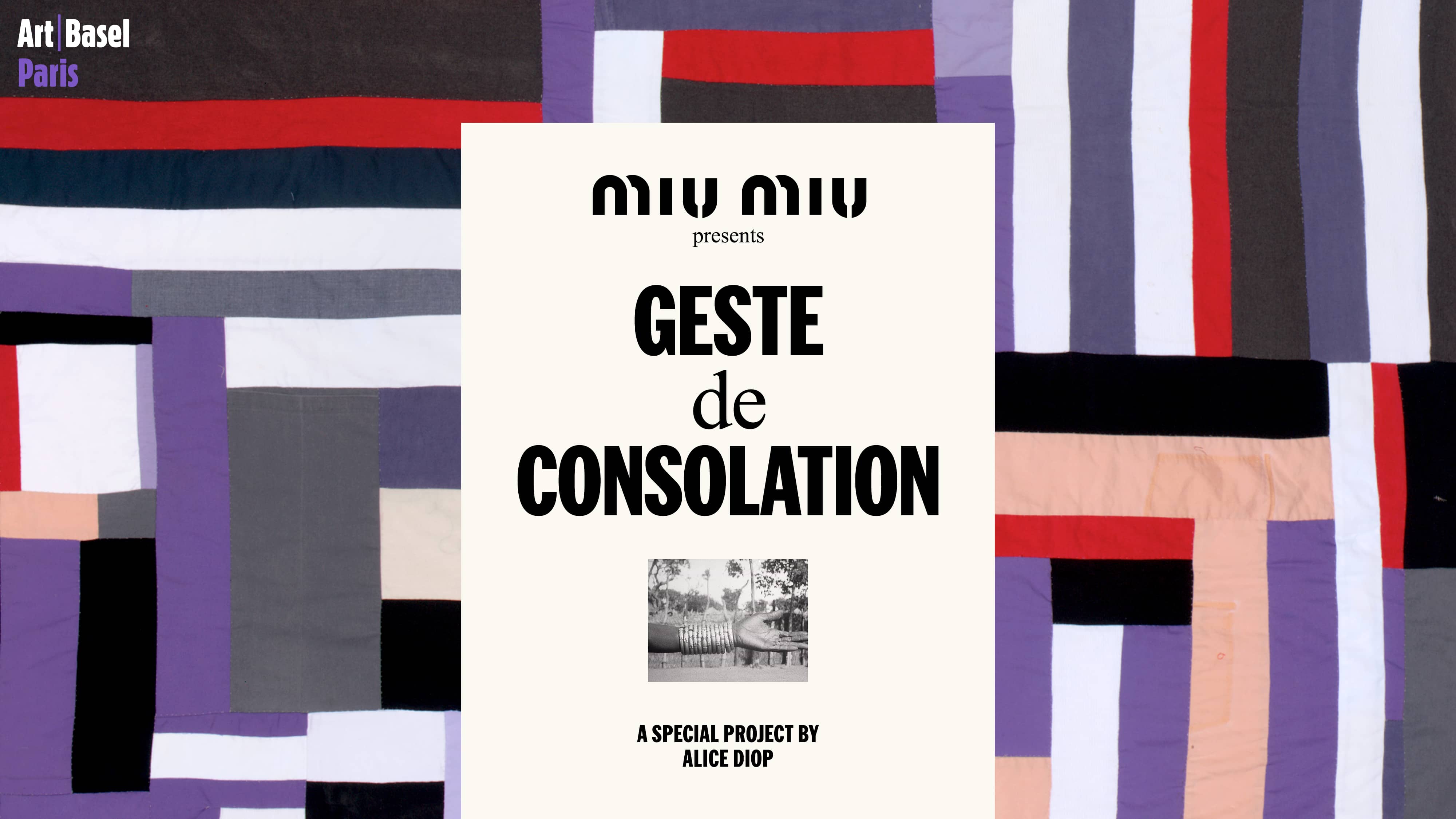
For the third consecutive year as Official Partner of Art Basel Paris’ Public Program, Miu Miu hands its cultural platform to French filmmaker Alice Diop, who transforms the monumental Parisian institution into Geste de Consolation, an exhibition about looking, memory and the possibility of repair.
It is not a fashion show. It is not quite an exhibition. It feels closer to entering someone else’s mind.
That someone is Diop.
Since the beginning of her cinematic practice, Diop has been interested in the distance between the image and the person trapped inside it. In the ways Black women have been photographed, filmed, imagined and desired; and in what happens when those images refuse to remain in the past.
With Geste de Consolation, she doesn’t simply critique that history.
She rearranges it.
Cinema becomes architecture. Literature becomes a voice in the room. Sculpture becomes a body. Dance becomes memory. Music becomes a pulse. The exhibition unfolds as a sequence of encounters, almost like walking through a film whose cuts are made with your own body.
This is where Miu Miu’s relationship with culture becomes particularly powerful.
For years, Miuccia Prada has treated fashion as an intellectual discipline: something that can exist in conversation with cinema, architecture, art, literature and design without needing to explain why.
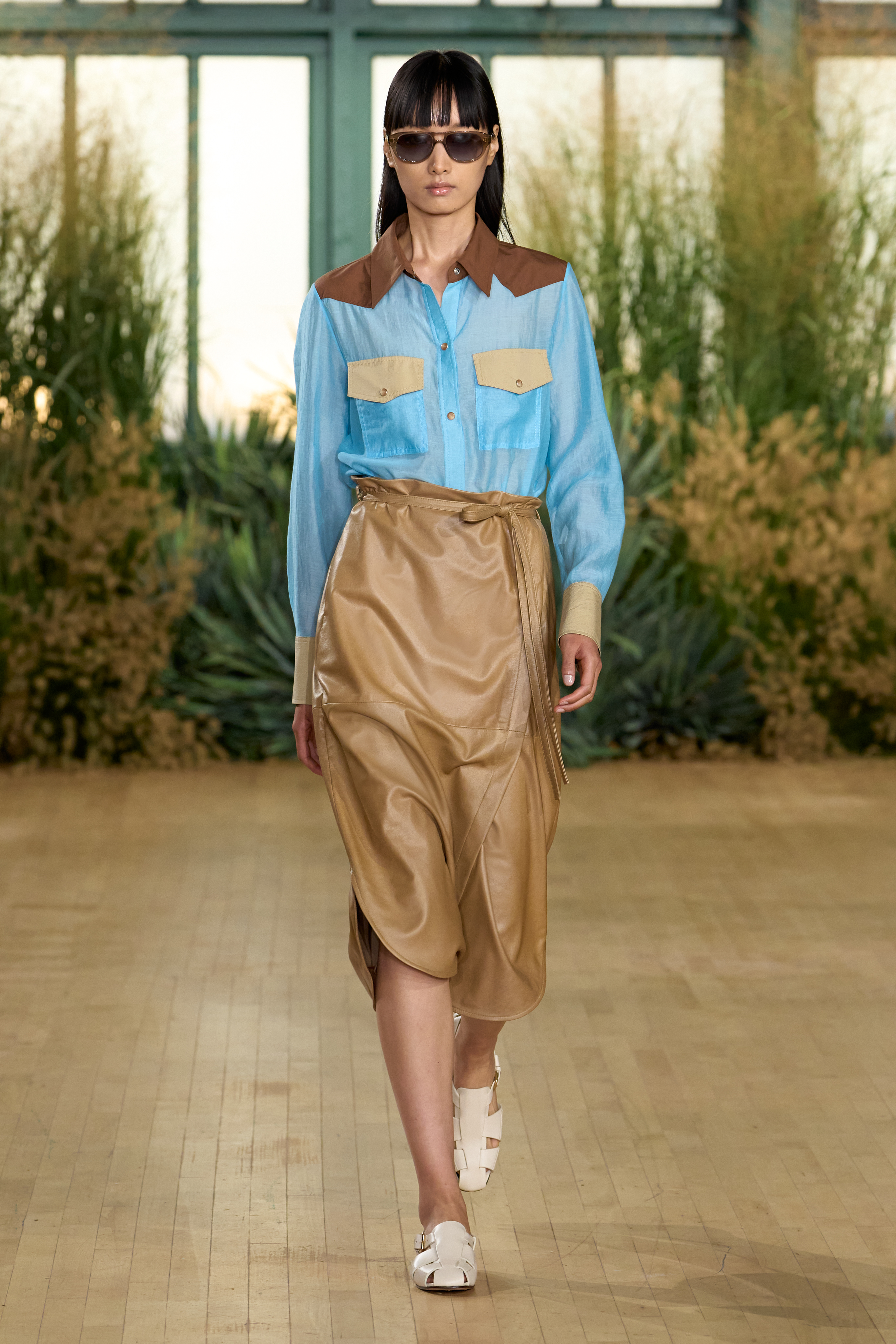
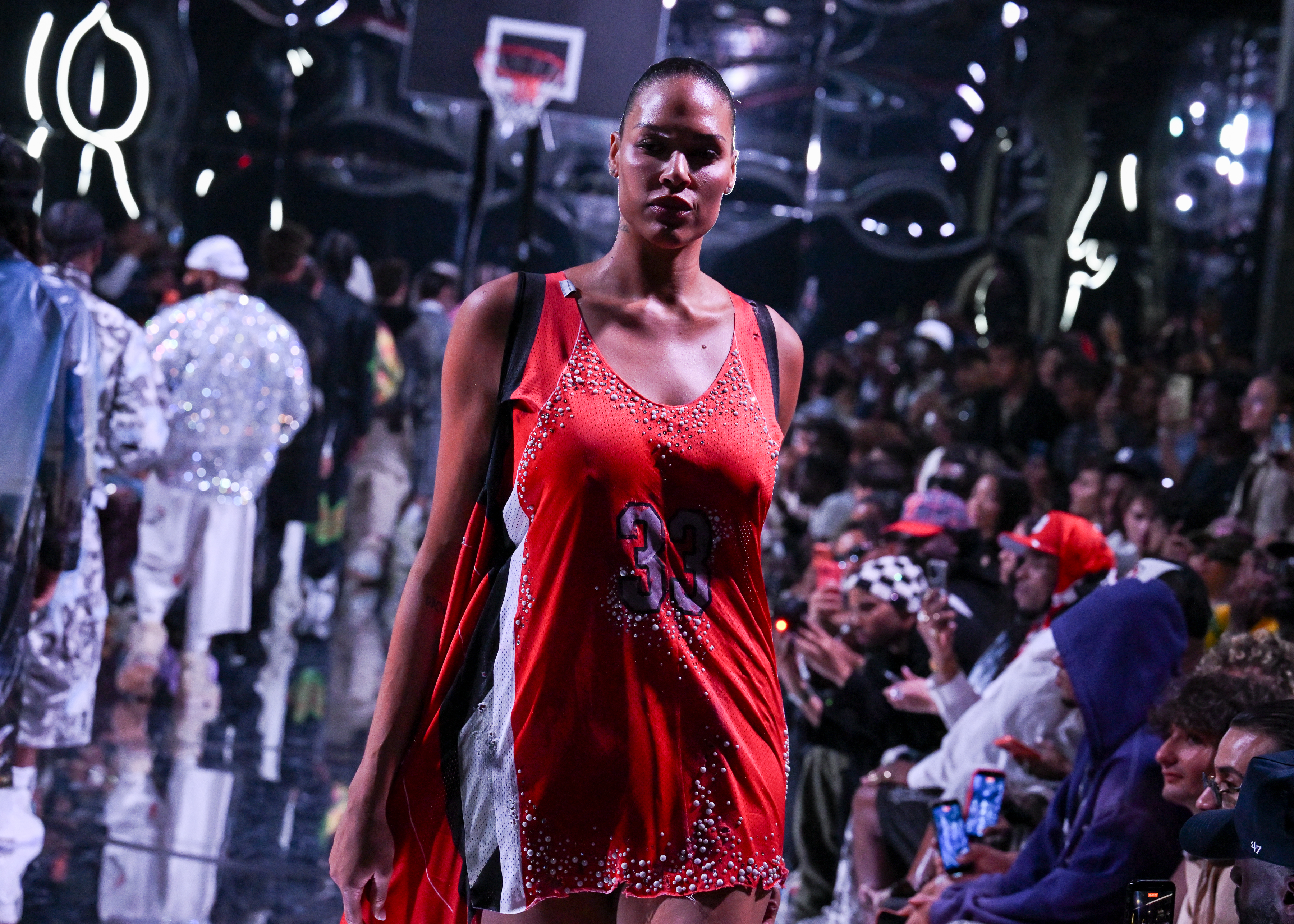
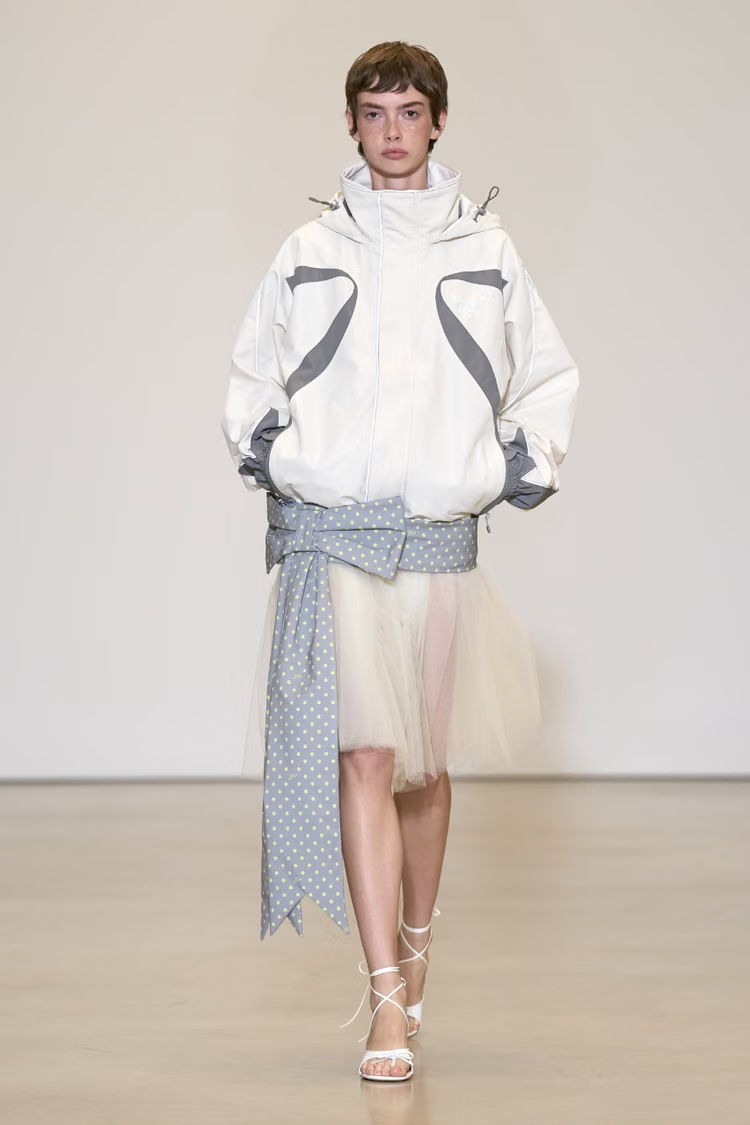
Miu Miu has increasingly operated less like a traditional fashion house and more like a cultural laboratory: a place where women’s stories can move between different forms, different generations and different ways of seeing.
The clothes are sometimes the beginning of the conversation.
They are rarely the end.
At Iéna, the first image belongs to Zanele Muholi.
Then Diop’s cinematic chamber appears: two screens carrying archival photographs and film fragments, images that have shaped her own gaze; some violent, some unbearable, others unexpectedly consoling.
And then something changes.
The concrete monumentality of the Palais gives way to Chambre à soi: a room of books, carpets and thought. Mary Lee Bendolph’s visual language appears underfoot. The library contains the books that have accompanied Diop’s intellectual life, but its real subject is larger: the possibility of creating an interior space for a Black woman to think without being watched.
A room of one’s own, inside a public institution.
There is something almost radical about that.
Because the exhibition keeps returning to spectatorship. Tiered seating turns watching into part of the work. We watch the images. We watch the performers. We watch other people watching. The act becomes circular. The viewer is no longer safely outside the image.
The room fills with words by Audre Lorde, Zora Neale Hurston, June Jordan, Marie NDiaye, Zadie Smith and Penda Diouf. Nadia Beugré’s choreography enters the space. Angel Bat Dawid and Sistazz of the Nitty-Gritty bring music into the architecture.
The disciplines begin to collapse into one another.
And at the end, almost like a final shot, stands Simone Leigh’s Sentinel (Mami Wata).
Five metres of bronze. A female body. A serpent. A water spirit whose history has travelled across Africa and its diasporas. She is not simply looking back at the visitor. She watches over the entire room.
A monument, but also a witness.
This movement – from image to body, from archive to imagination, from violence to consolation – is what makes Diop’s project feel bigger than its institutional setting.
And perhaps it explains why Miu Miu belongs so naturally here.
Miu Miu has never been particularly interested in the idea that fashion should stay inside fashion. Its most compelling cultural projects understand that a dress, a film, a photograph, a book, a piece of furniture or a building can all be part of the same conversation. Art and design are not decorations around the clothes. They are part of the way the house thinks.
At Art Basel Paris, that philosophy becomes physical.
The Palais d’Iéna becomes a camera.
The audience becomes part of the frame.
The archive becomes material.
And the gaze – the oldest instrument of power – becomes something that can perhaps be redirected.
Maybe consolation isn’t about making the past disappear.
Maybe it is about giving the past a different image to live inside.