What happens when the light goes out?
Marine Serre has always understood that fashion is better when it carries a contradiction.
Since the label emerged in 2017, Serre has built a language somewhere between survival gear, couture, sportswear and second-hand memory. The crescent moon became a signature almost overnight; deadstock, vintage scarves, lace, jersey and discarded garments became raw material rather than evidence of compromise. The idea was never simply to make sustainable clothes. It was to make the old look strange again.
For Spring–Summer 2027, The Deep Shine pushes that language somewhere quieter.
The moon is still there, but it has stopped shouting.
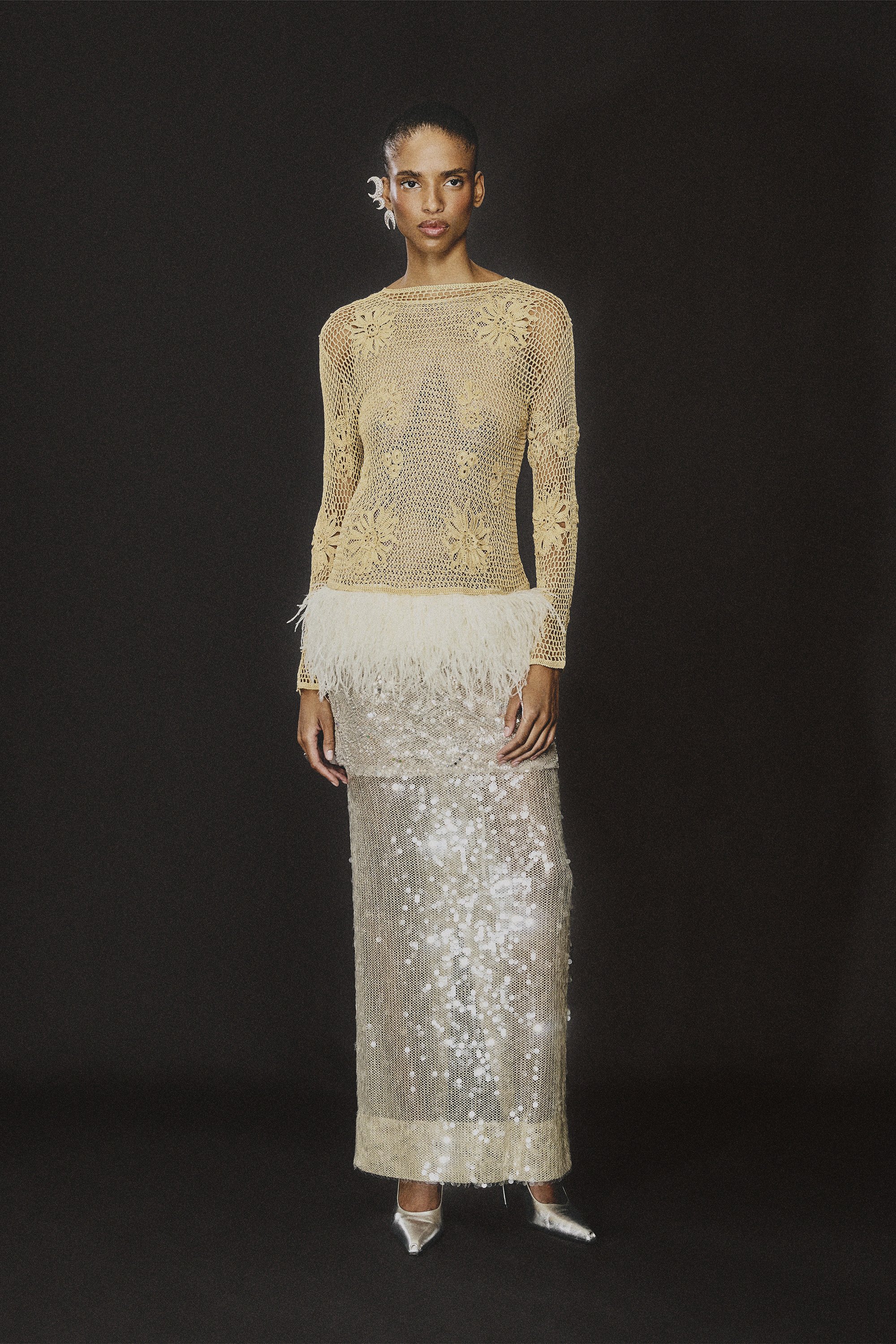
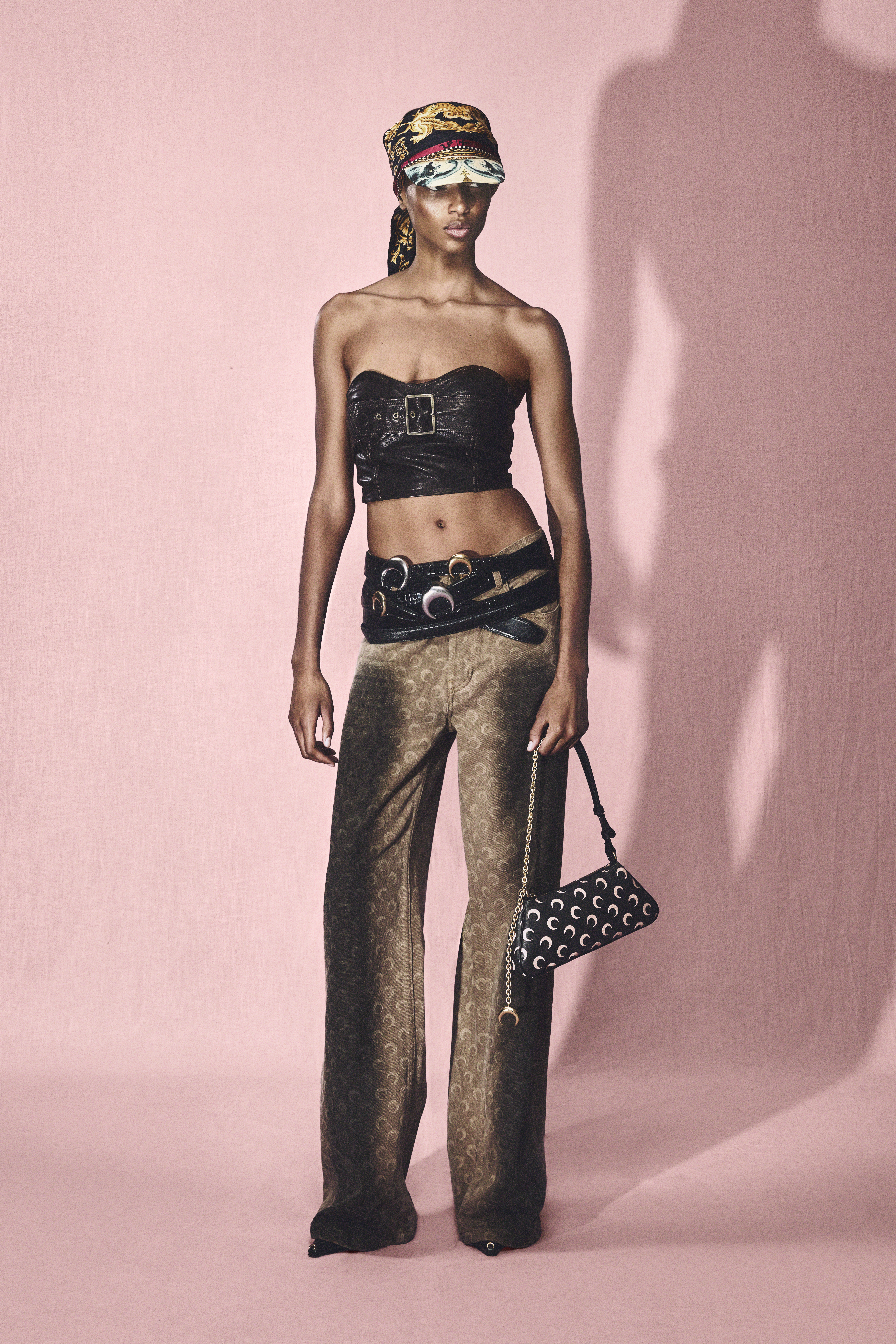
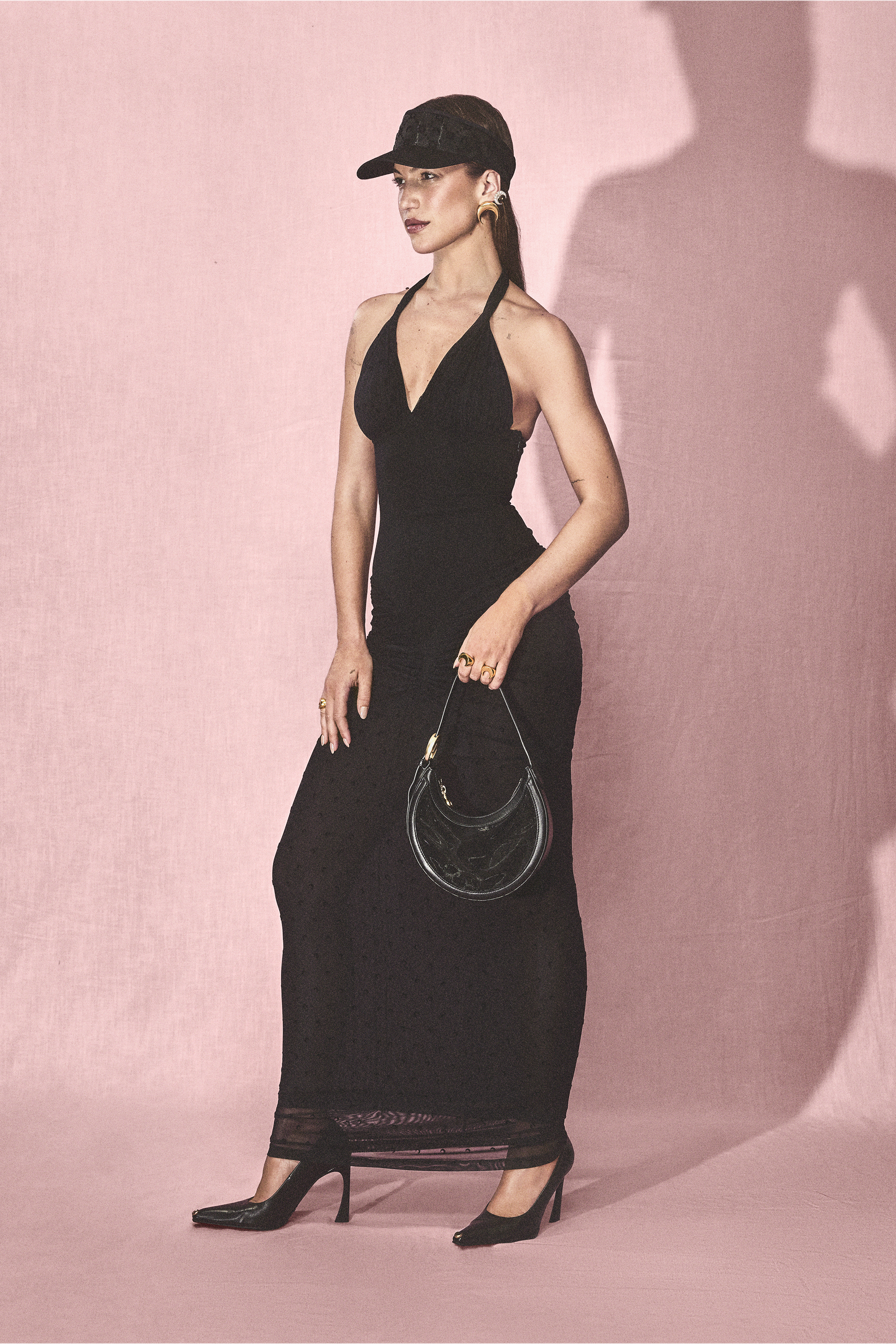
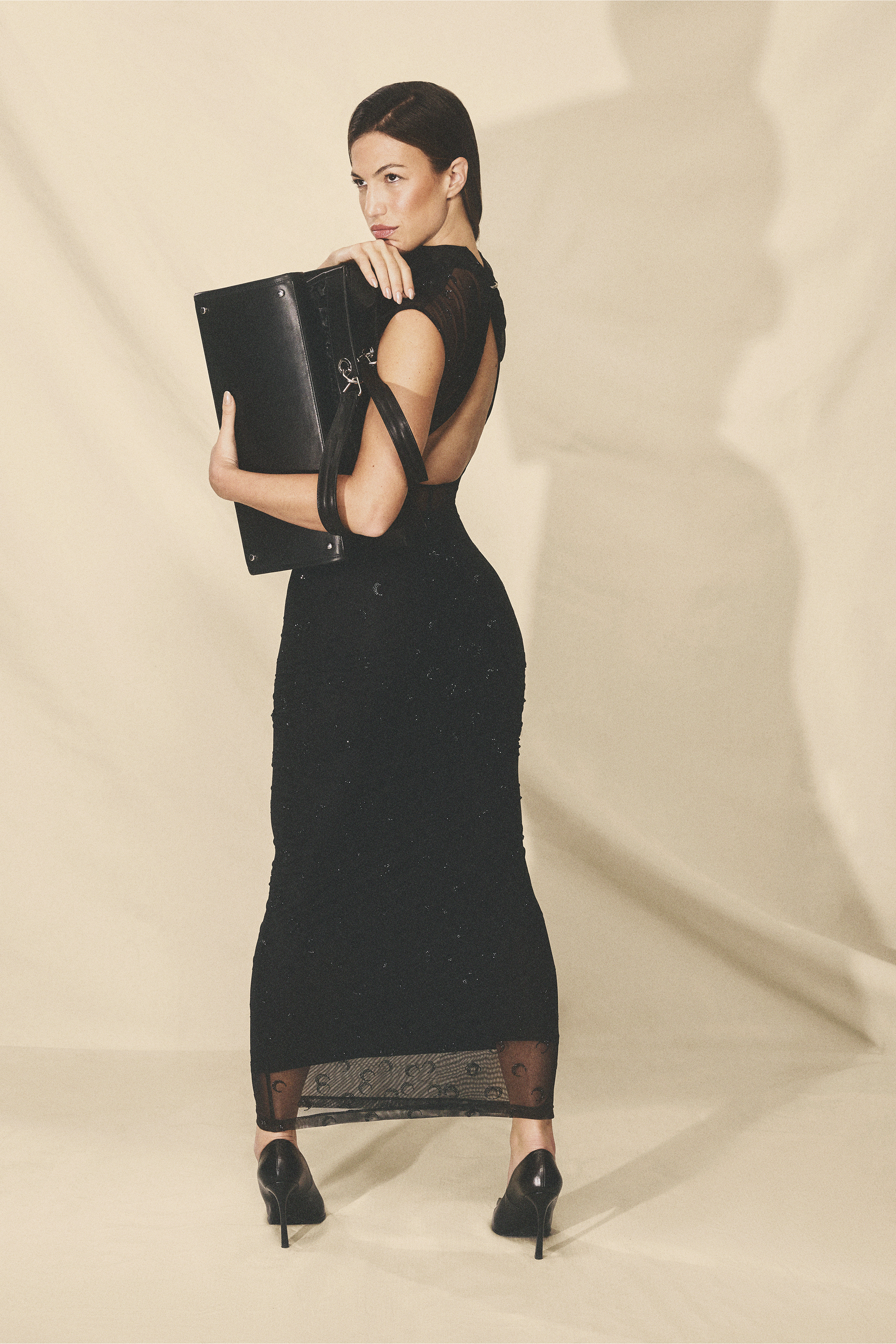
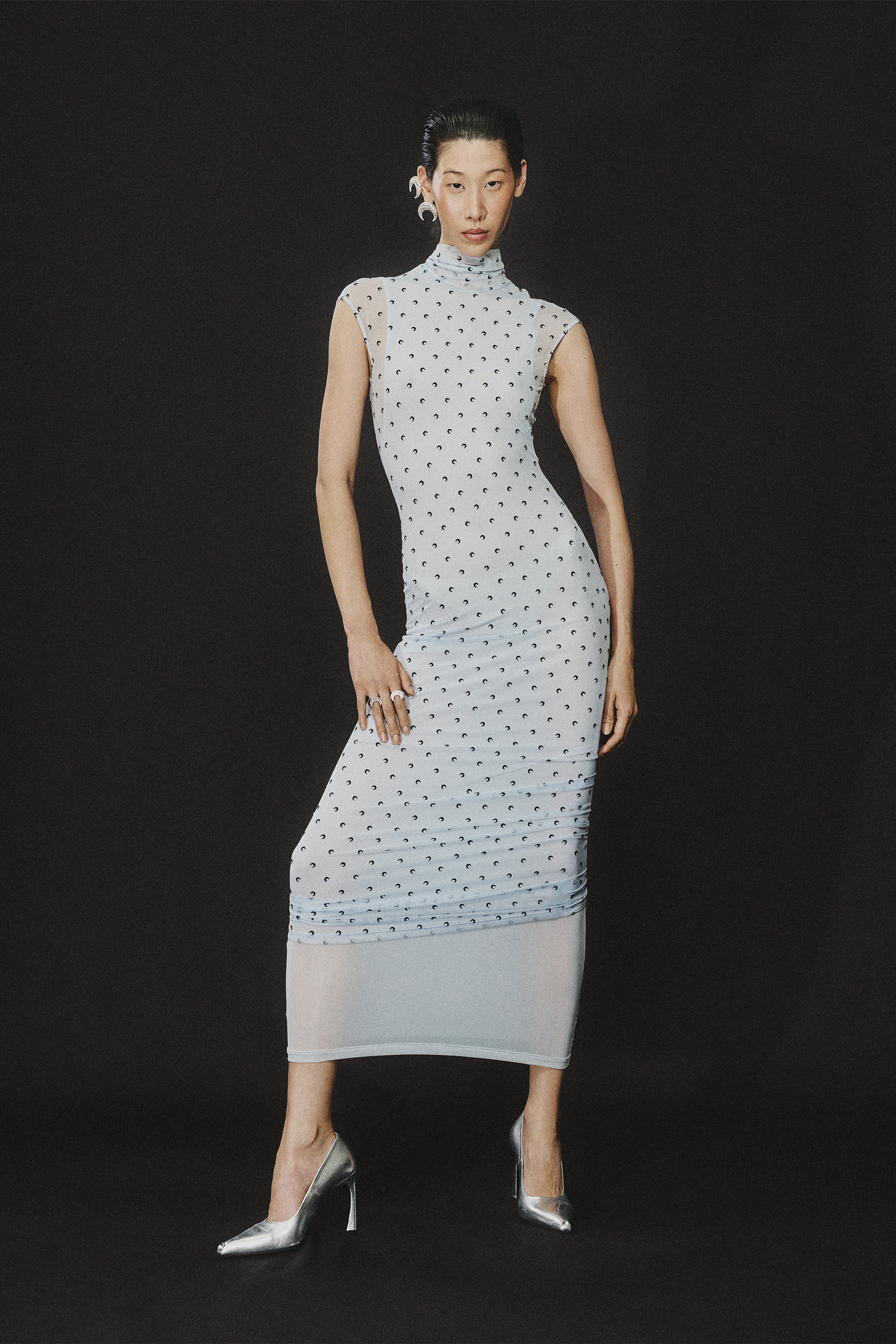
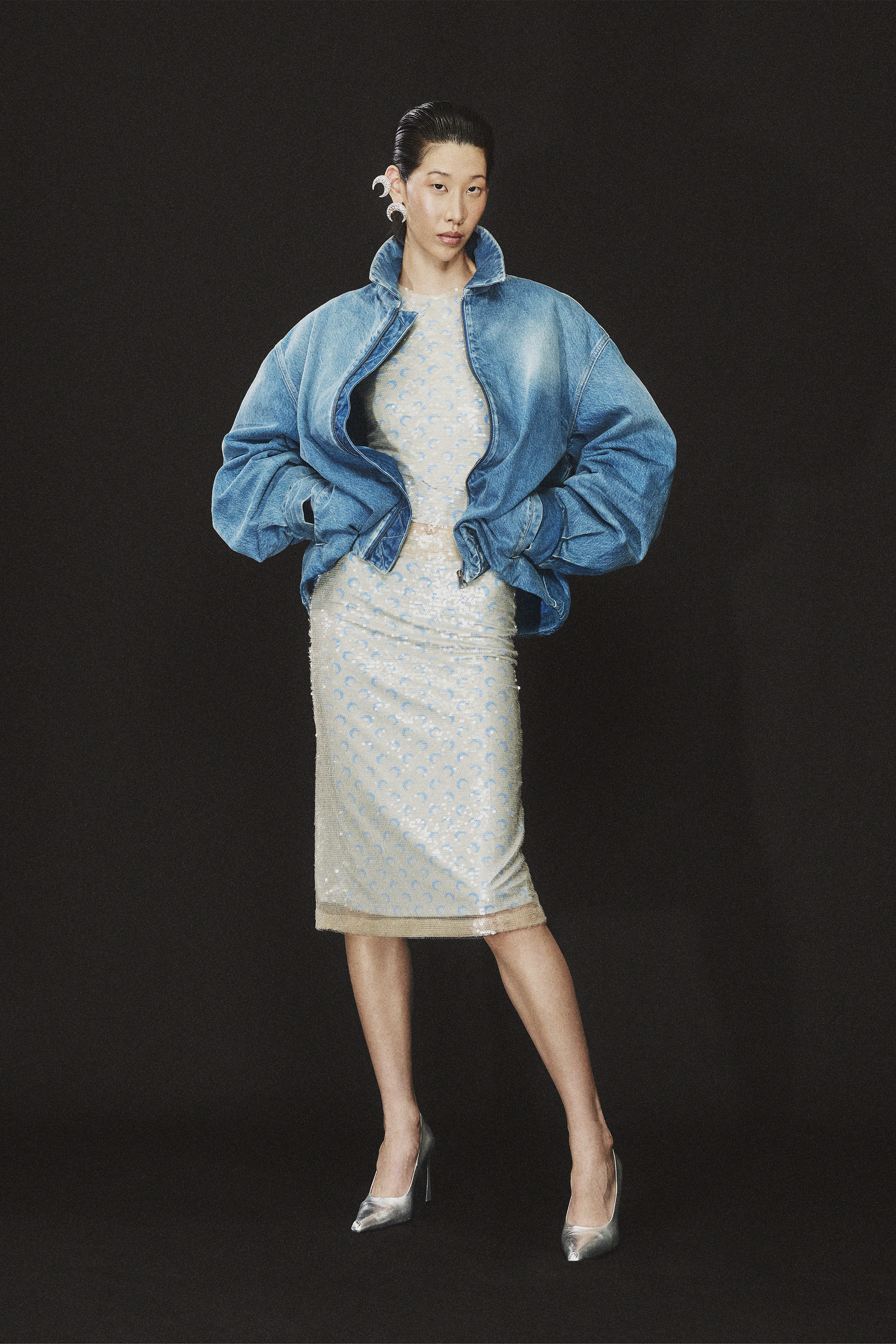
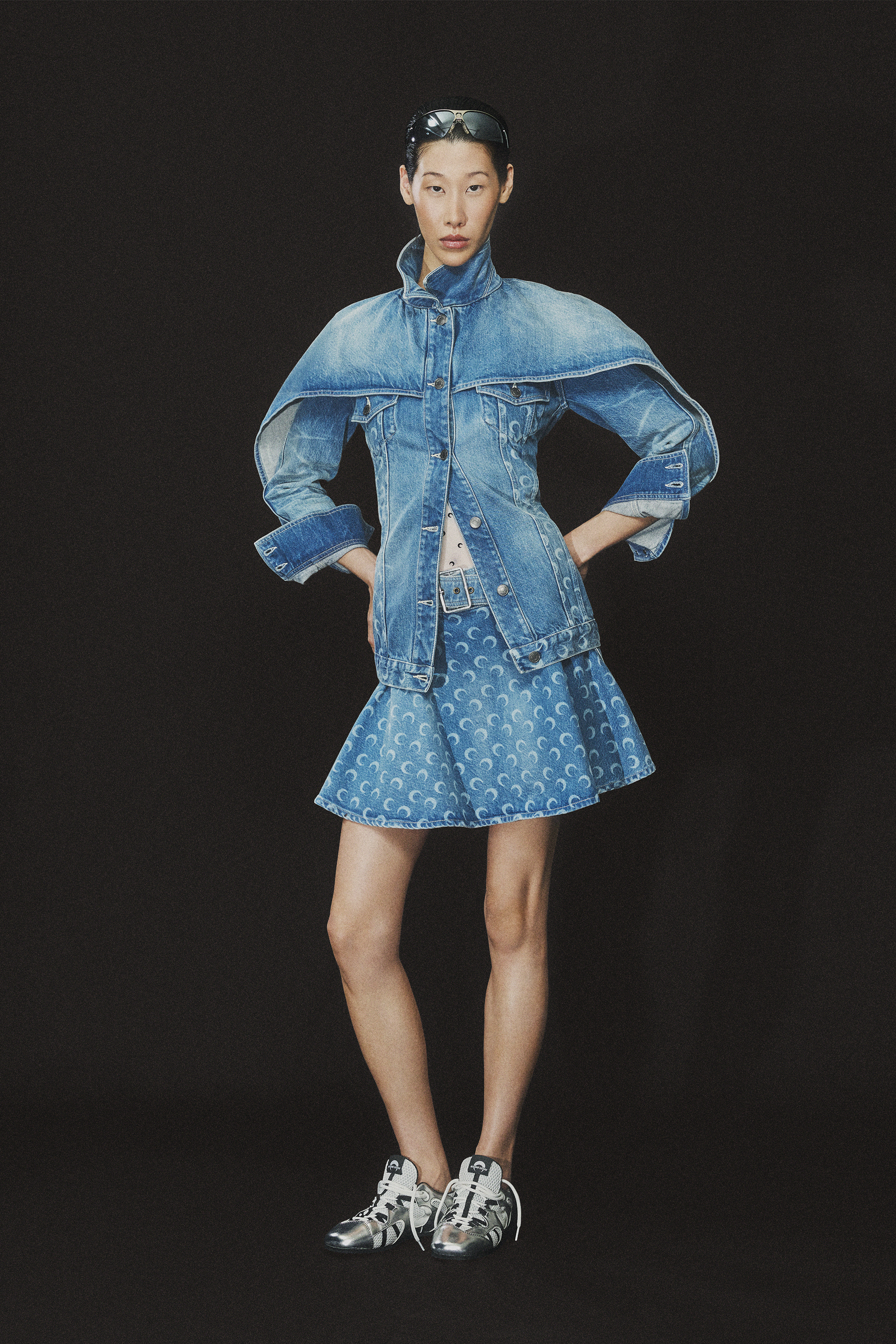
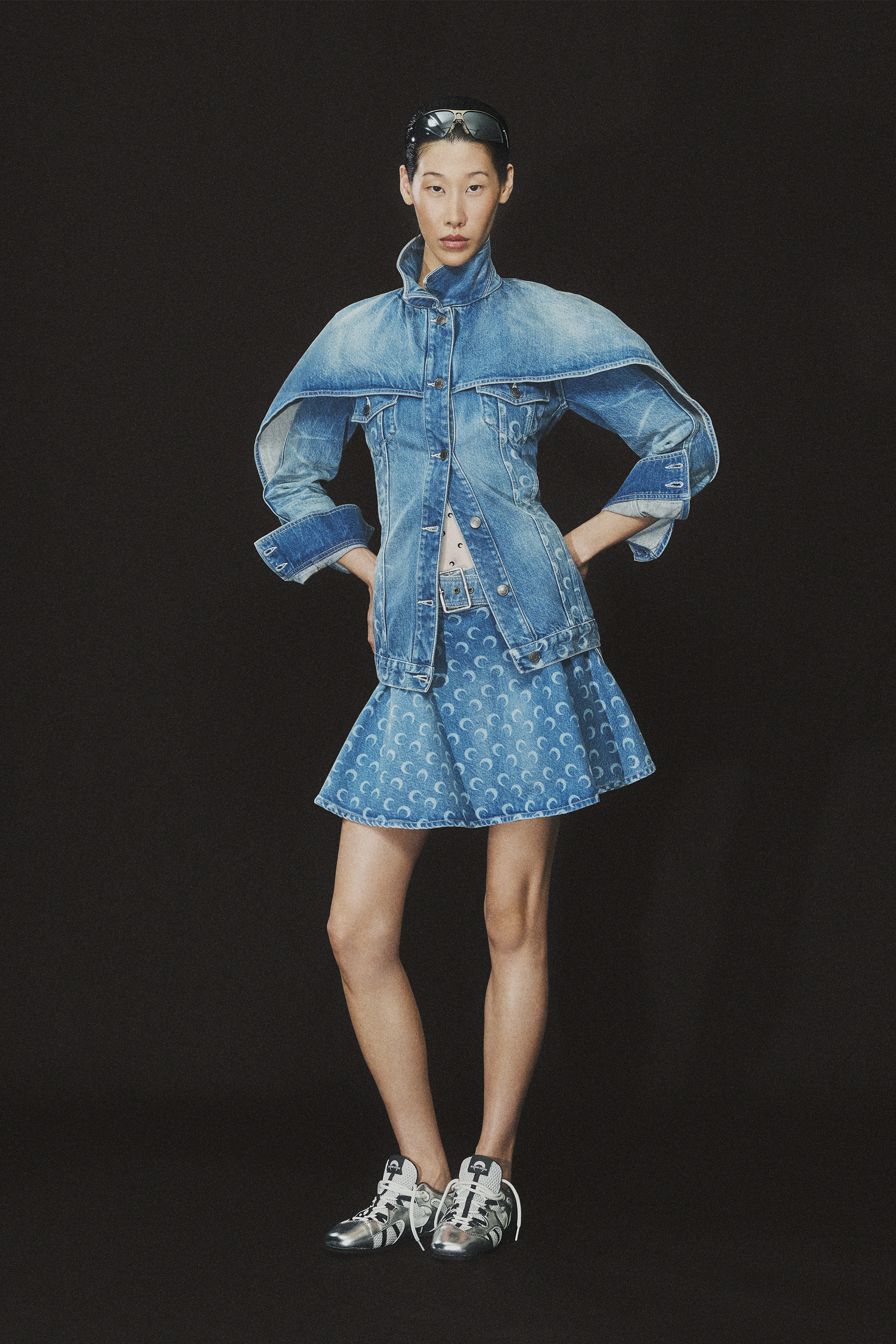
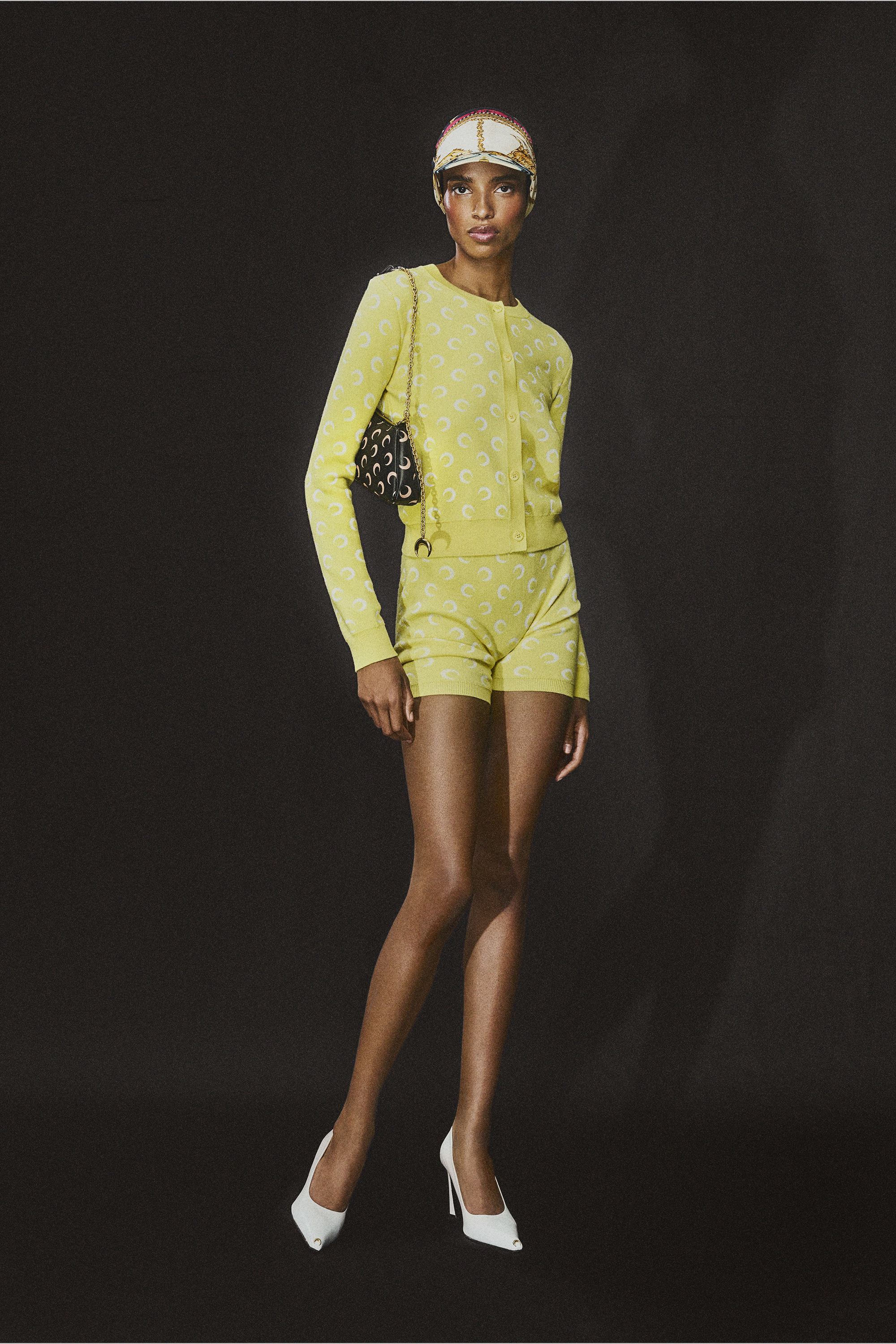
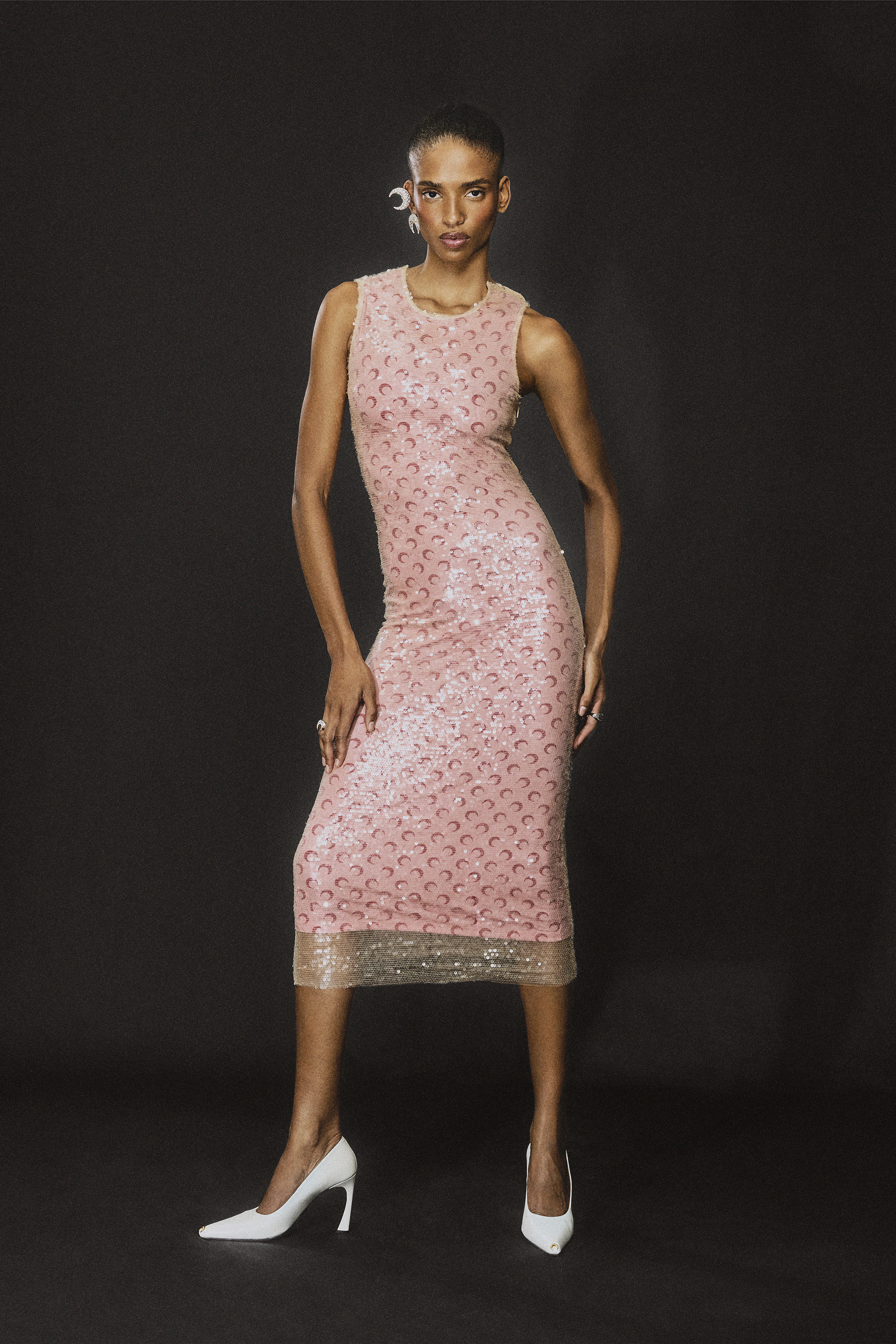
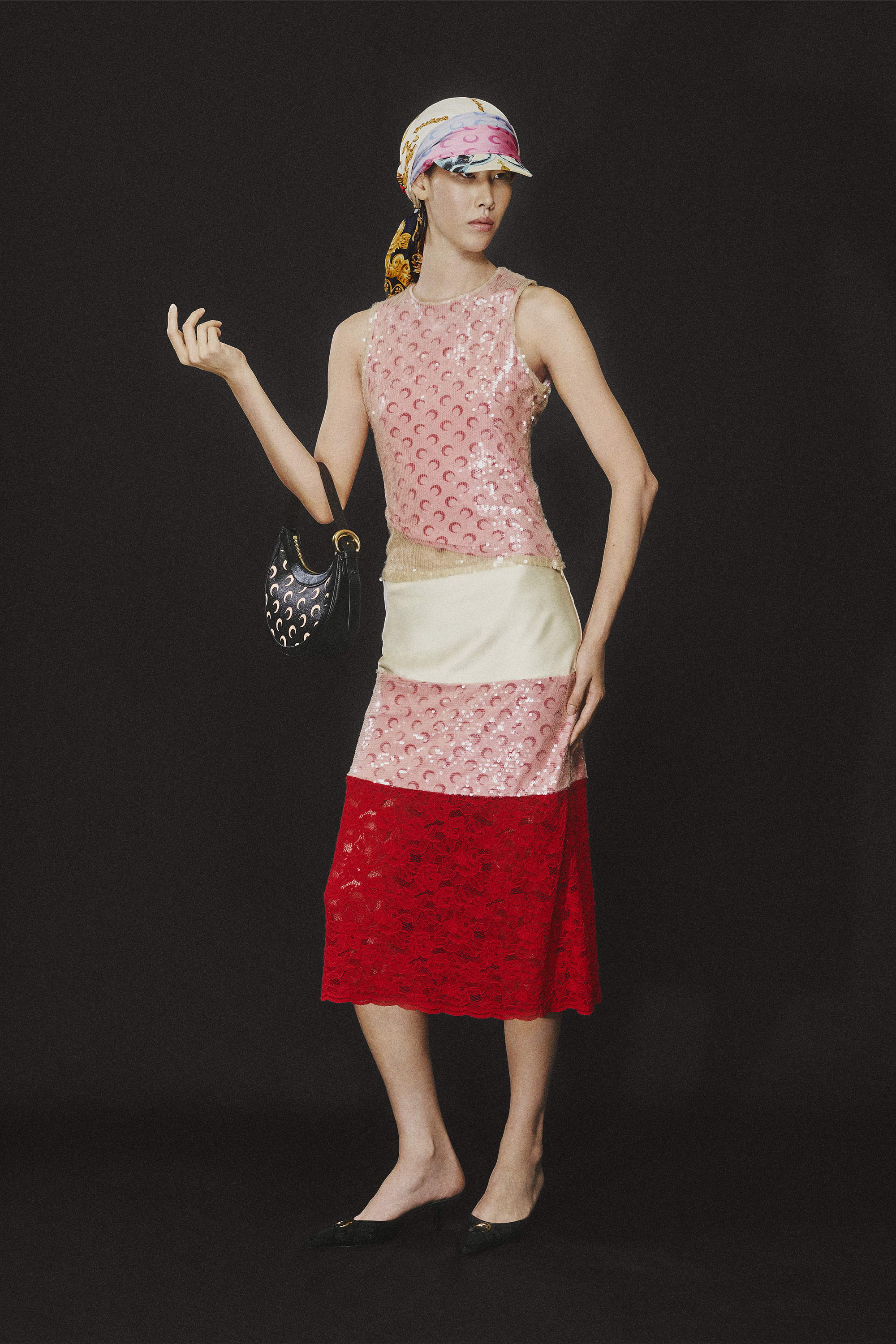
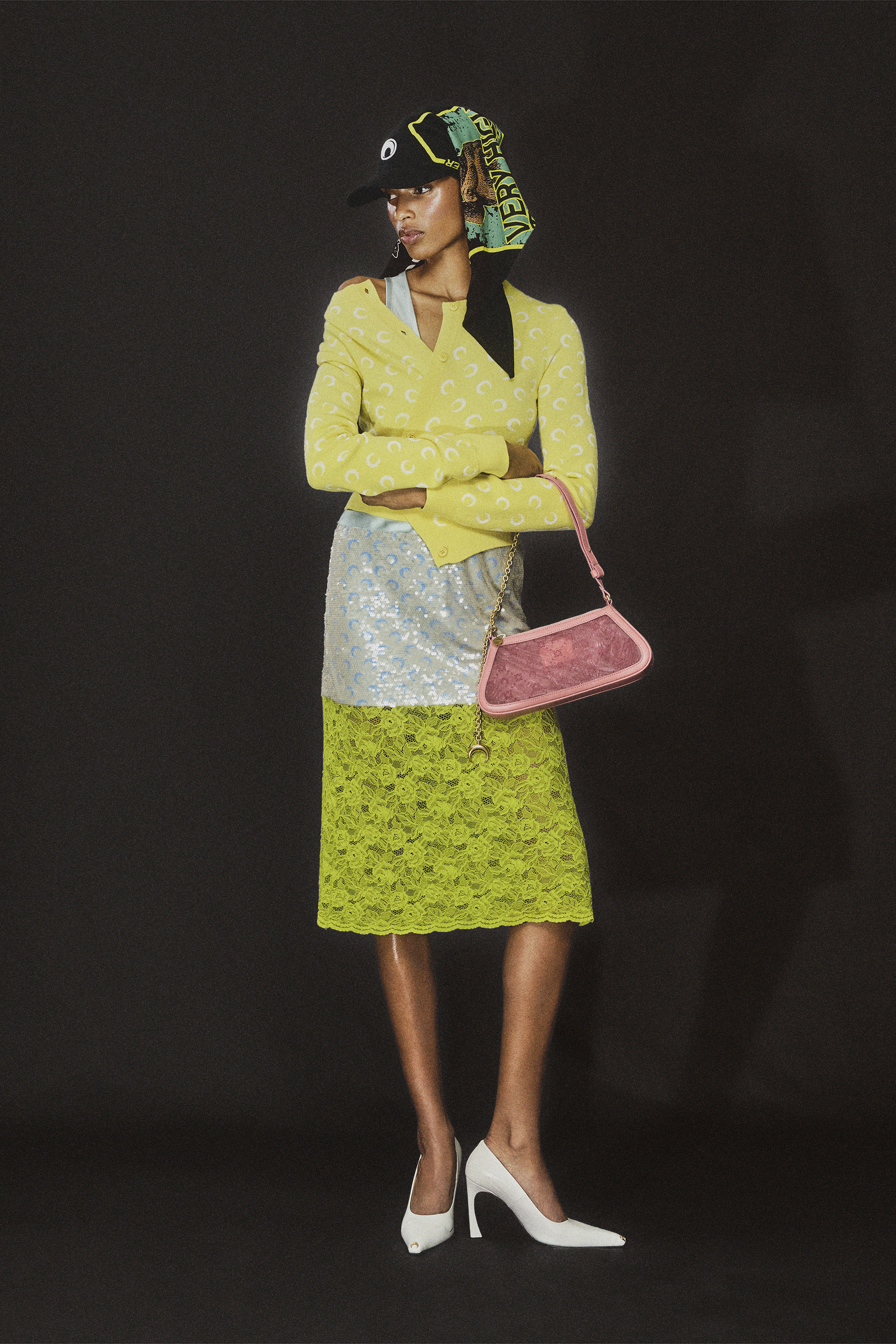
It appears as a near-invisible flock on transparent dresses, buried in jacquards, interrupted by transparency, hidden inside colour. The logo becomes texture. The signature becomes something you discover rather than something you are instructed to recognise.
That shift matters.
Because Marine Serre has reached the point where recognisability can easily become a trap. The crescent moon is one of those fashion symbols that escaped the collection and became a piece of cultural shorthand. The danger, as always, is that a signature becomes a formula.
The Deep Shine tries to avoid exactly that.
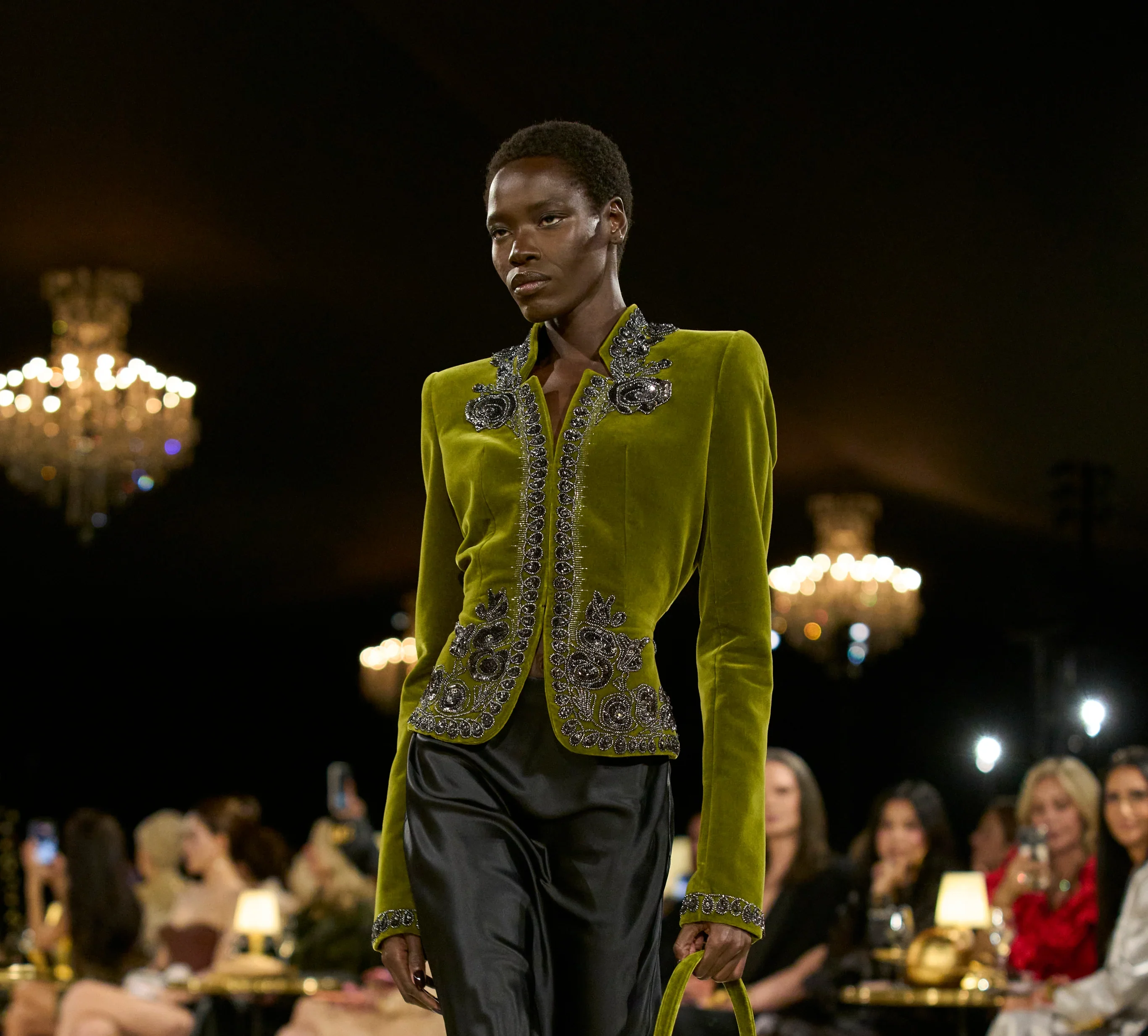
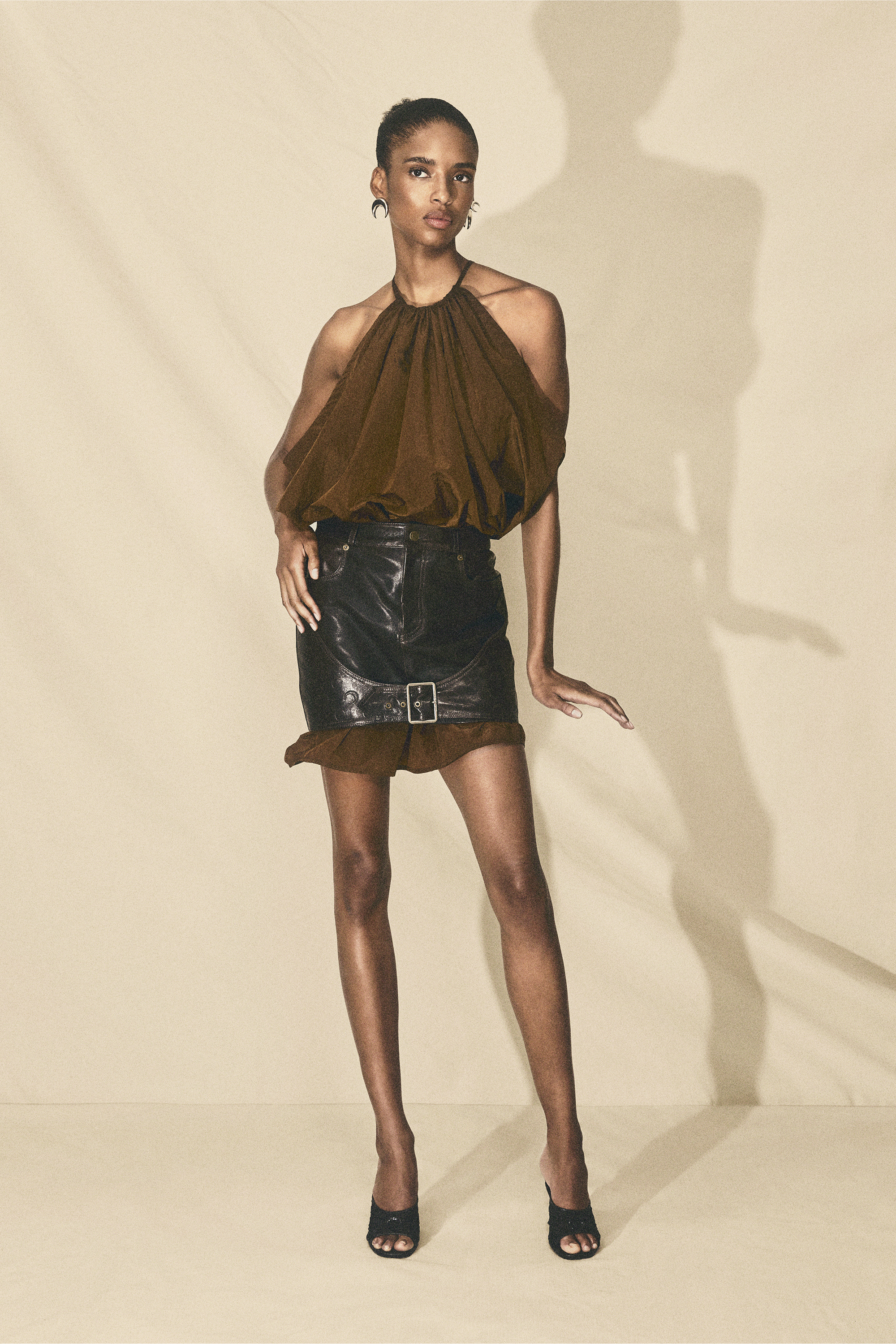
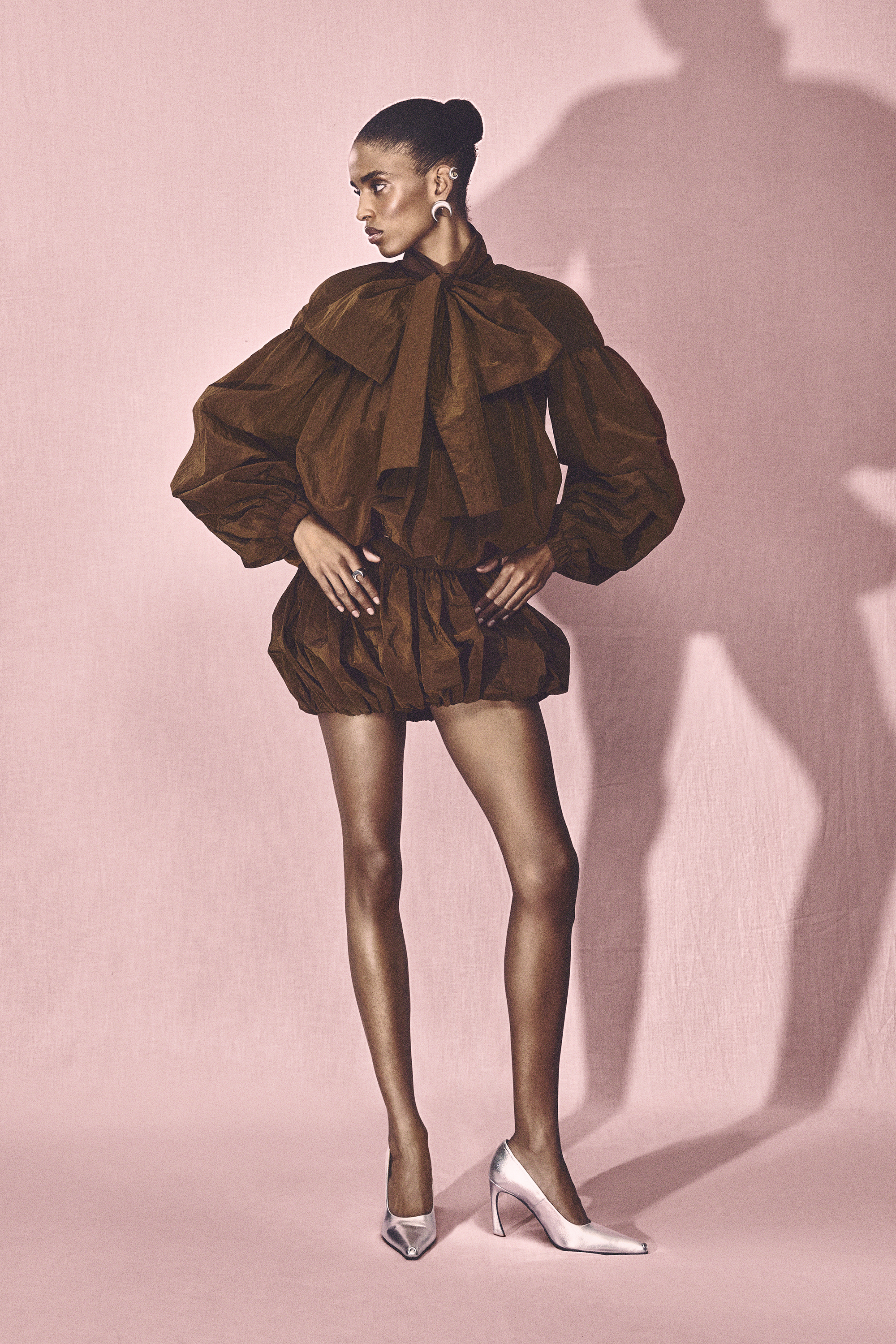
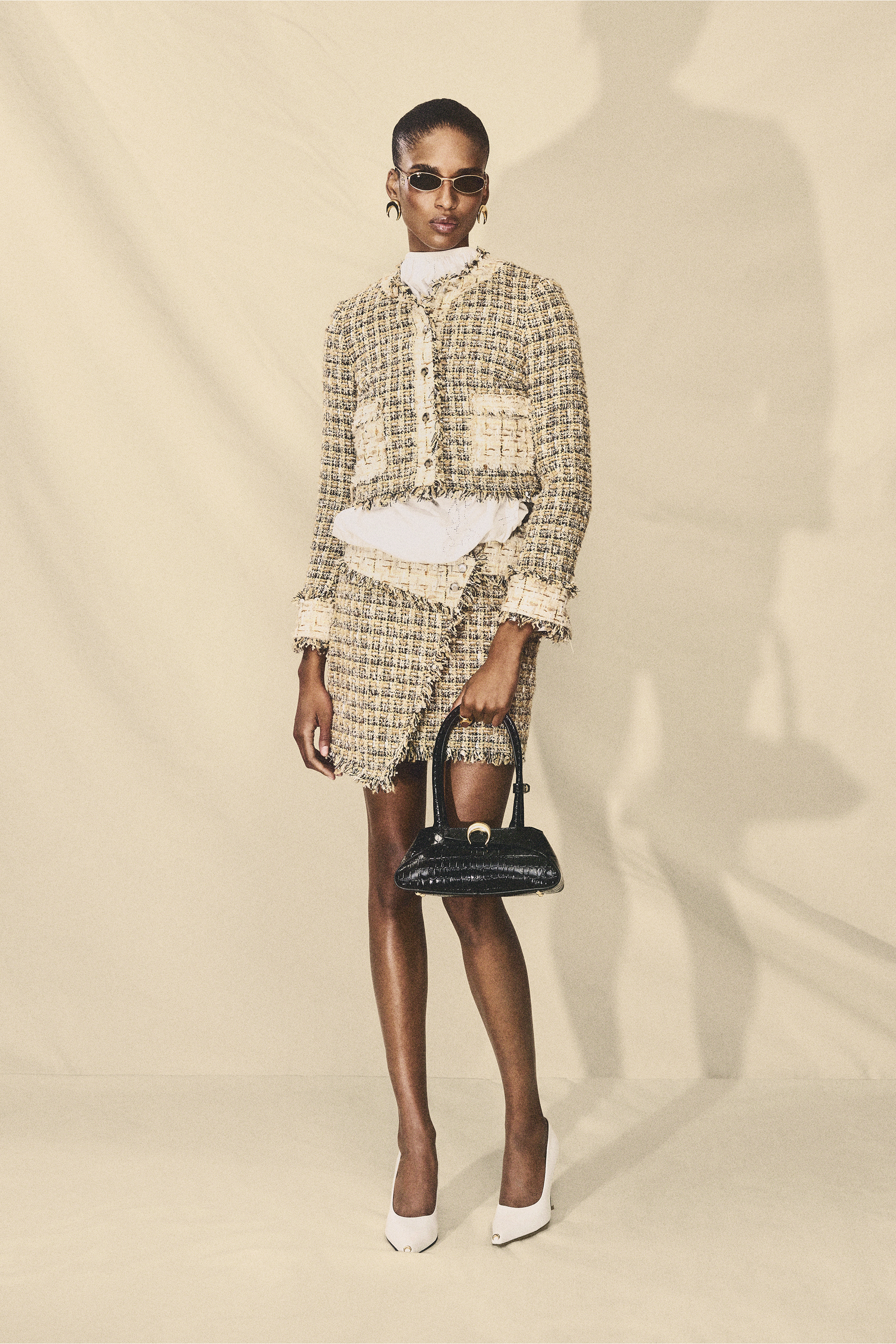
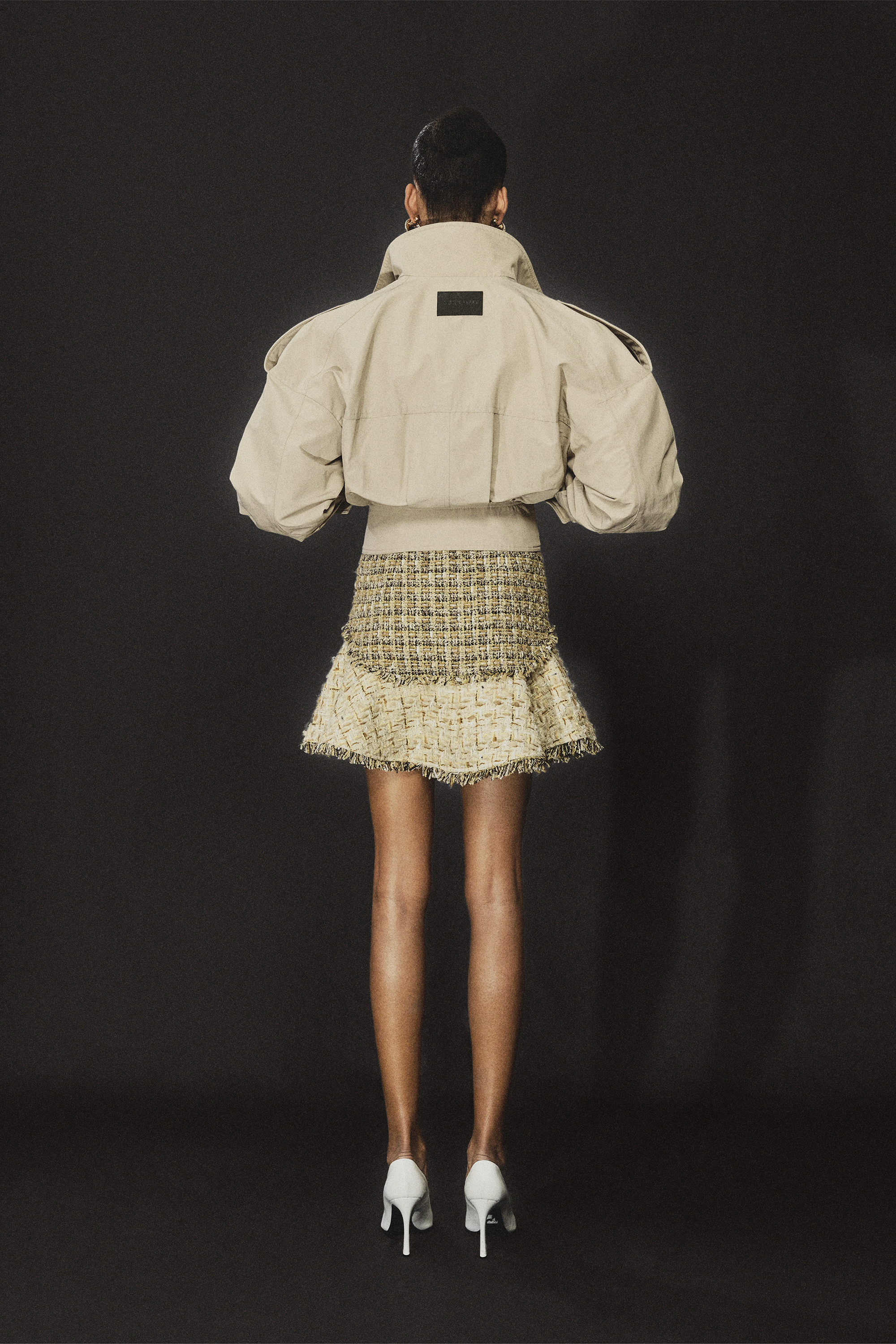
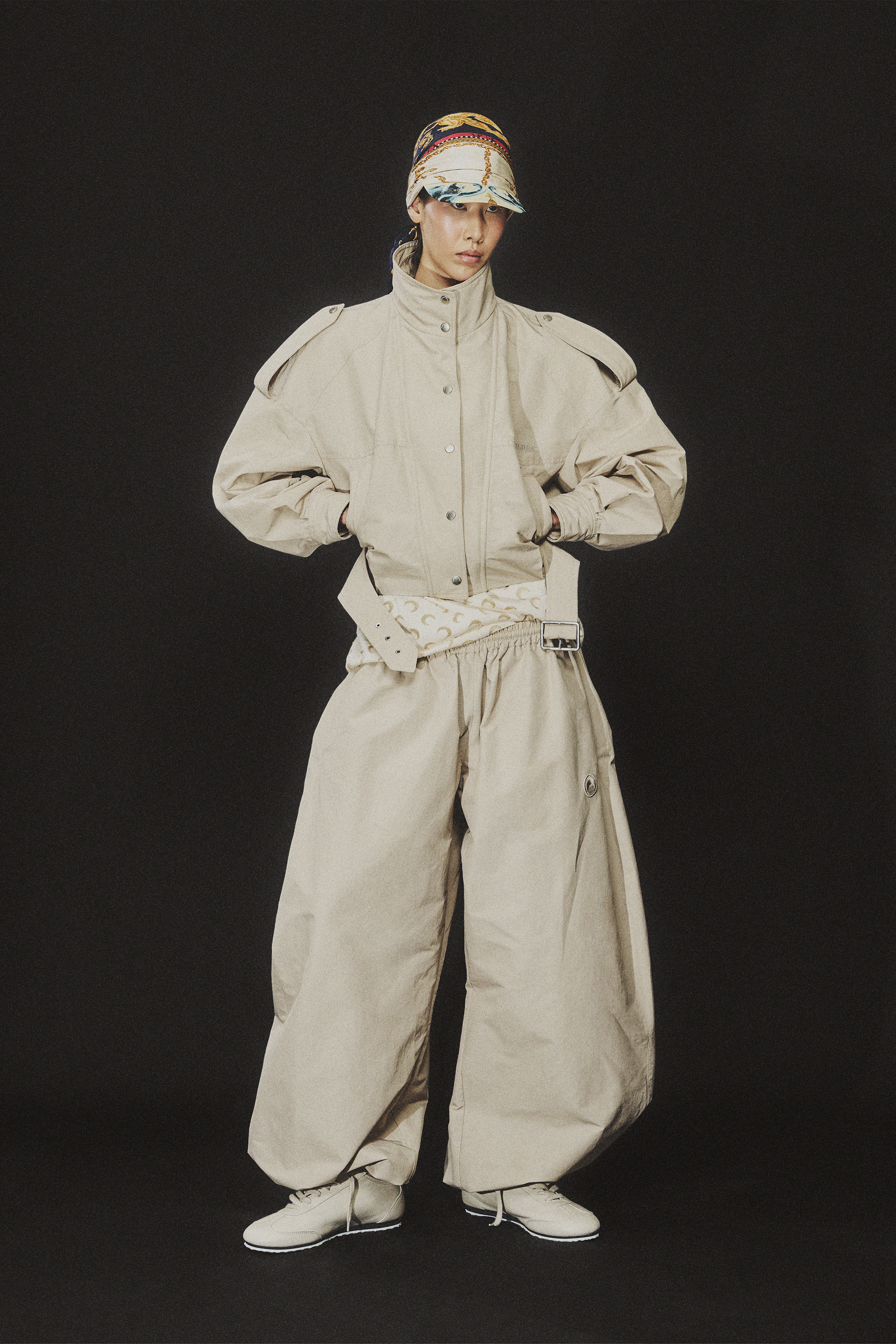
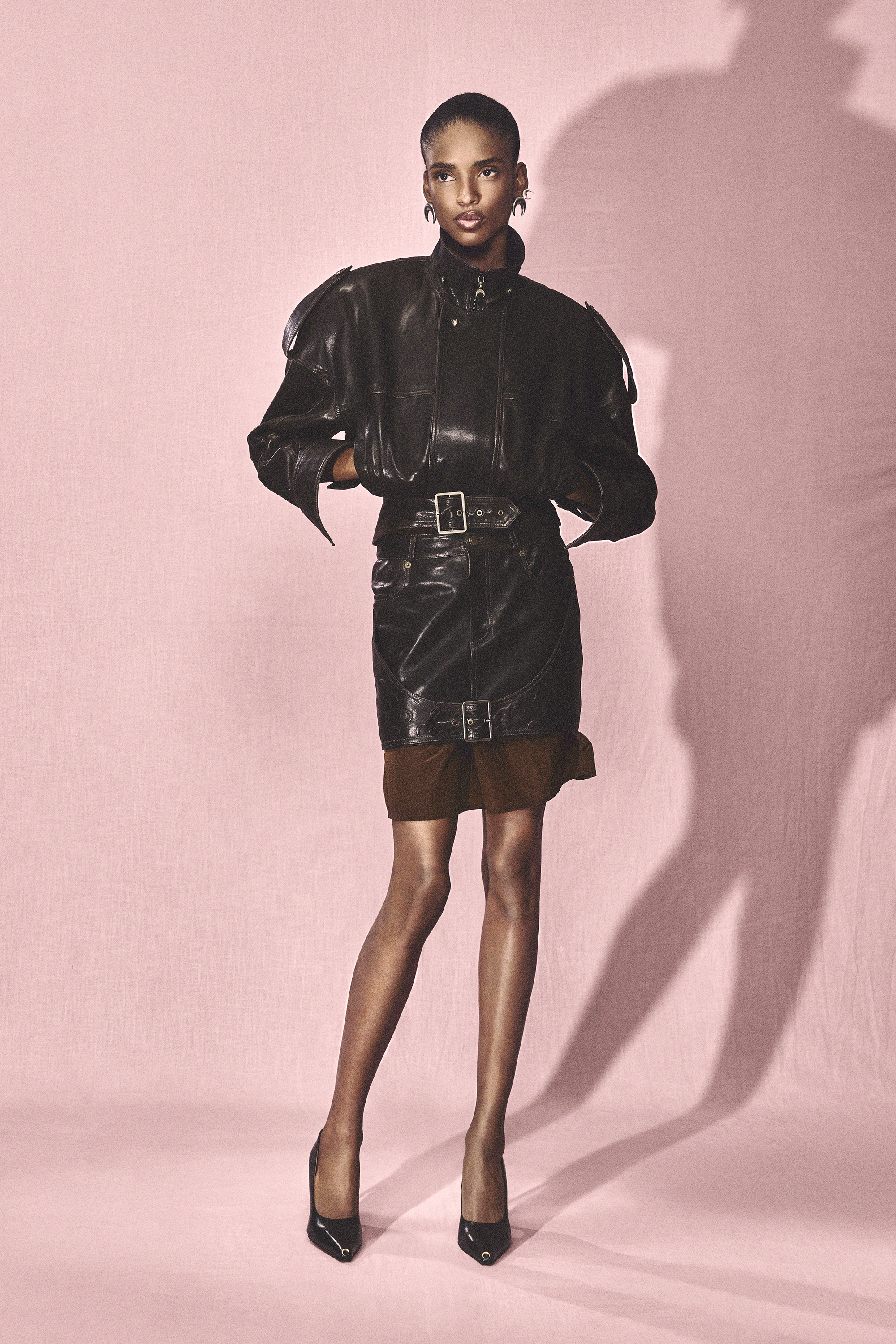
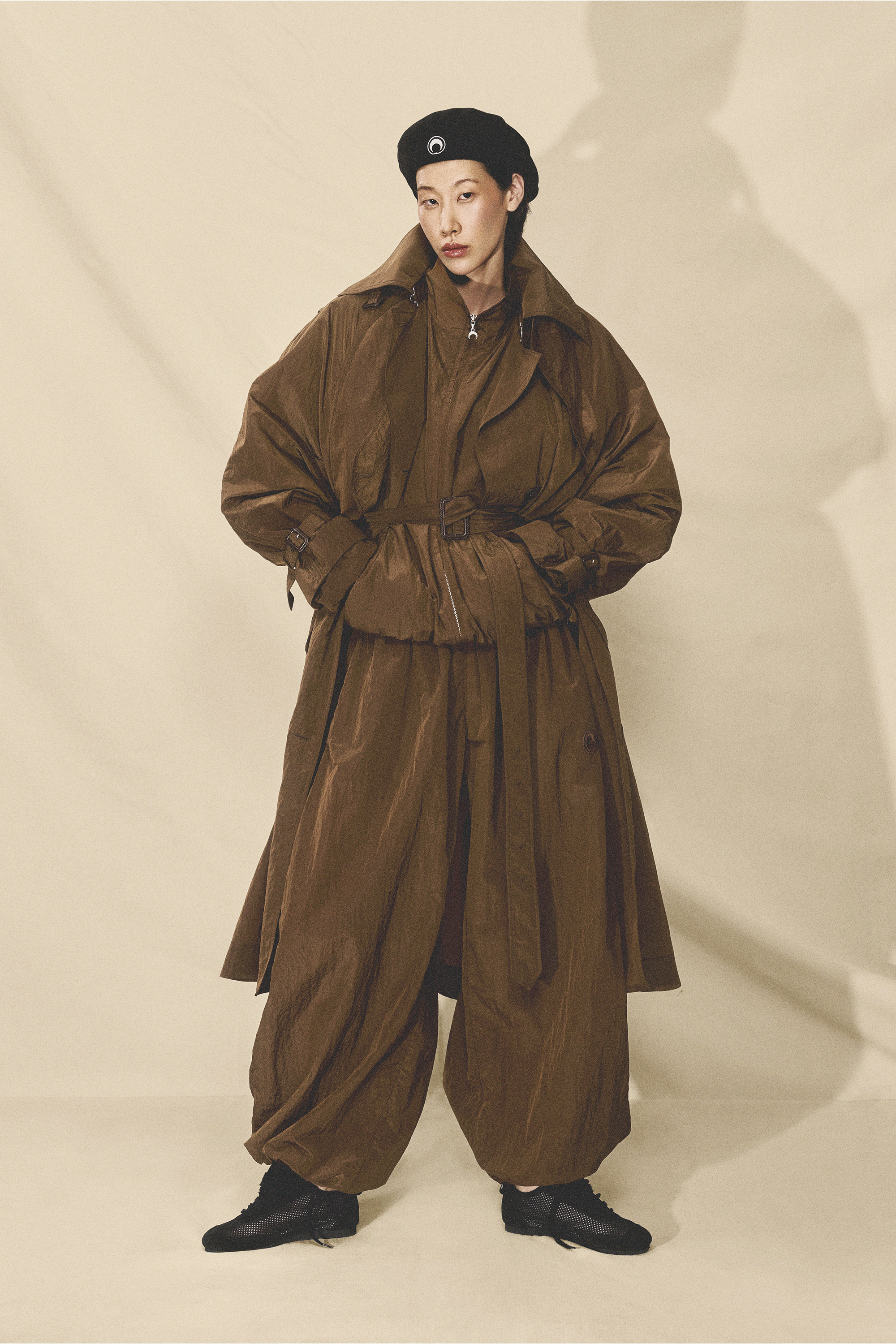
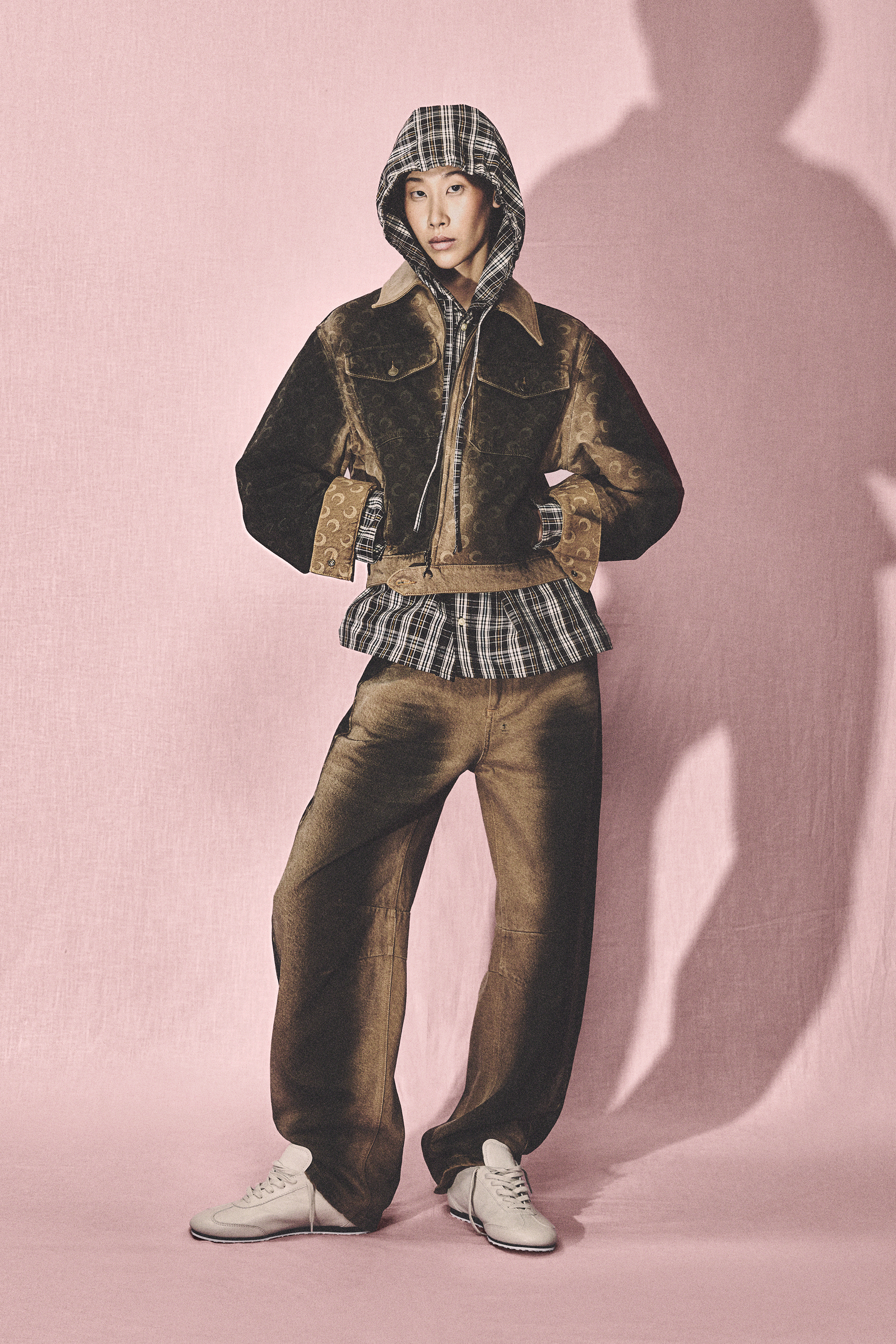
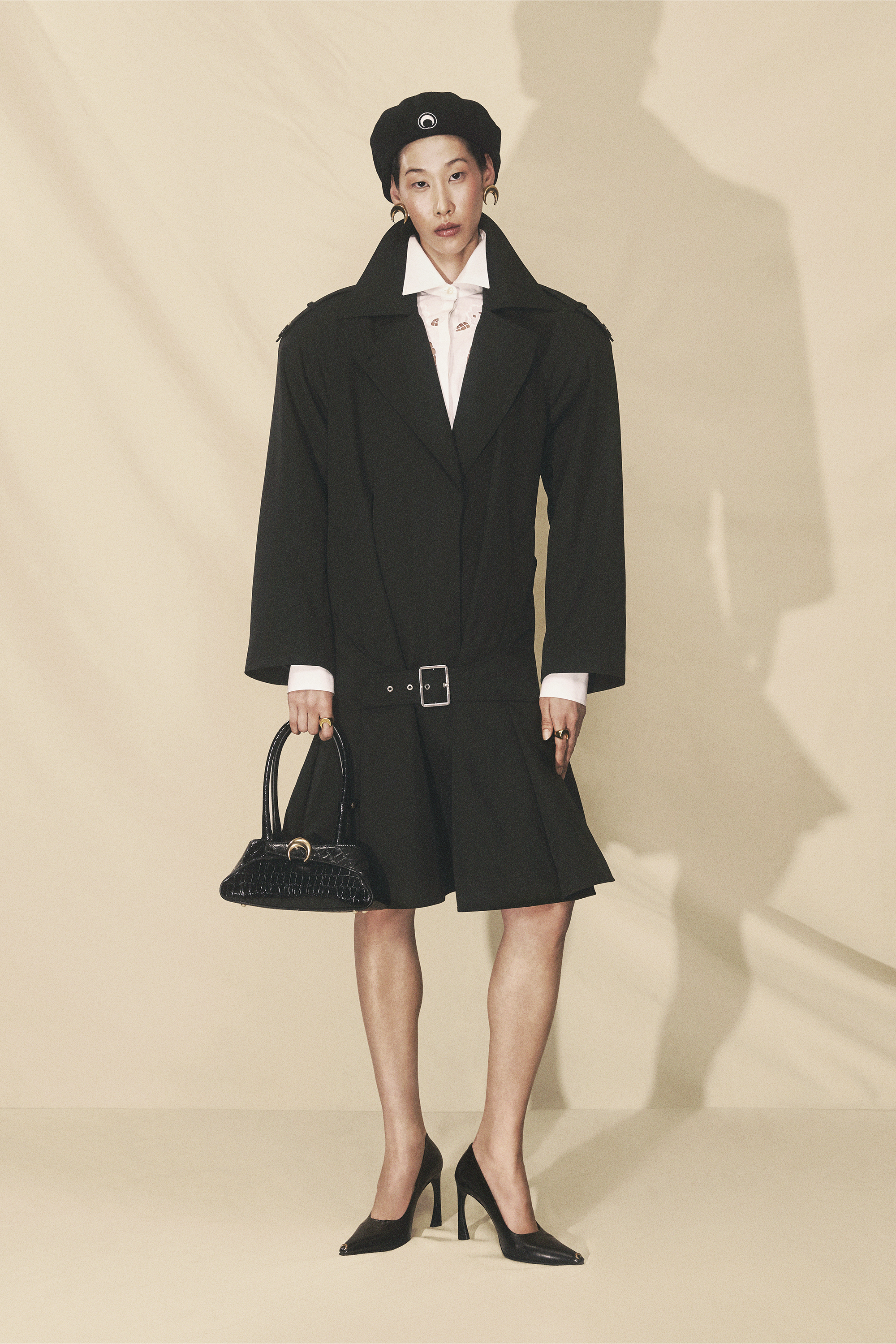
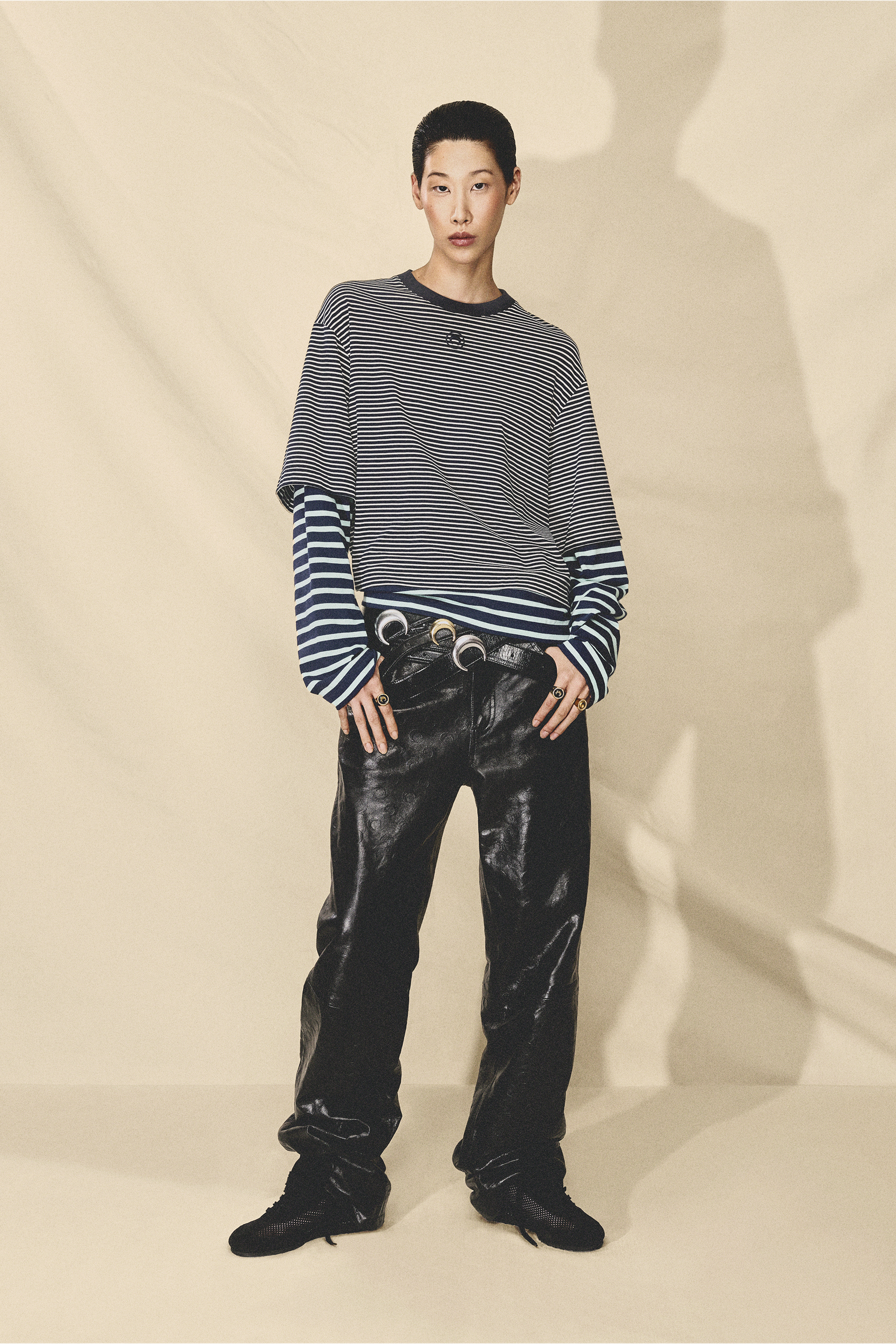
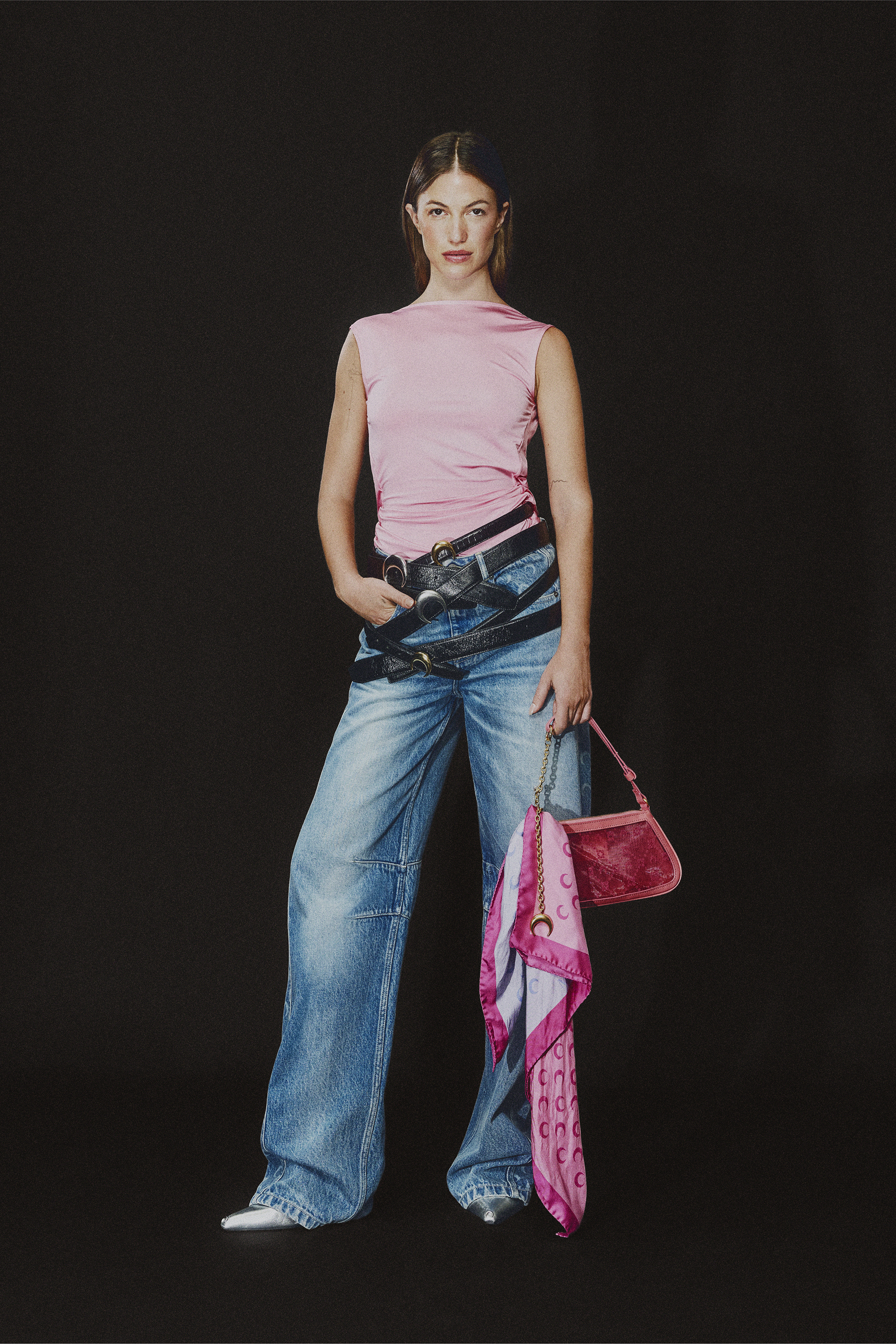
The opening looks pull from the 1980s without falling into costume: gathered trench fabrics, leather, amplified shoulders, long legs, fluid proportions. The silhouette is strong without becoming armour. Deep brown, beige, straw-effect tweed and bleached denim establish a palette that feels almost deliberately ordinary before the collection begins to mutate.
Then the materials start talking back.
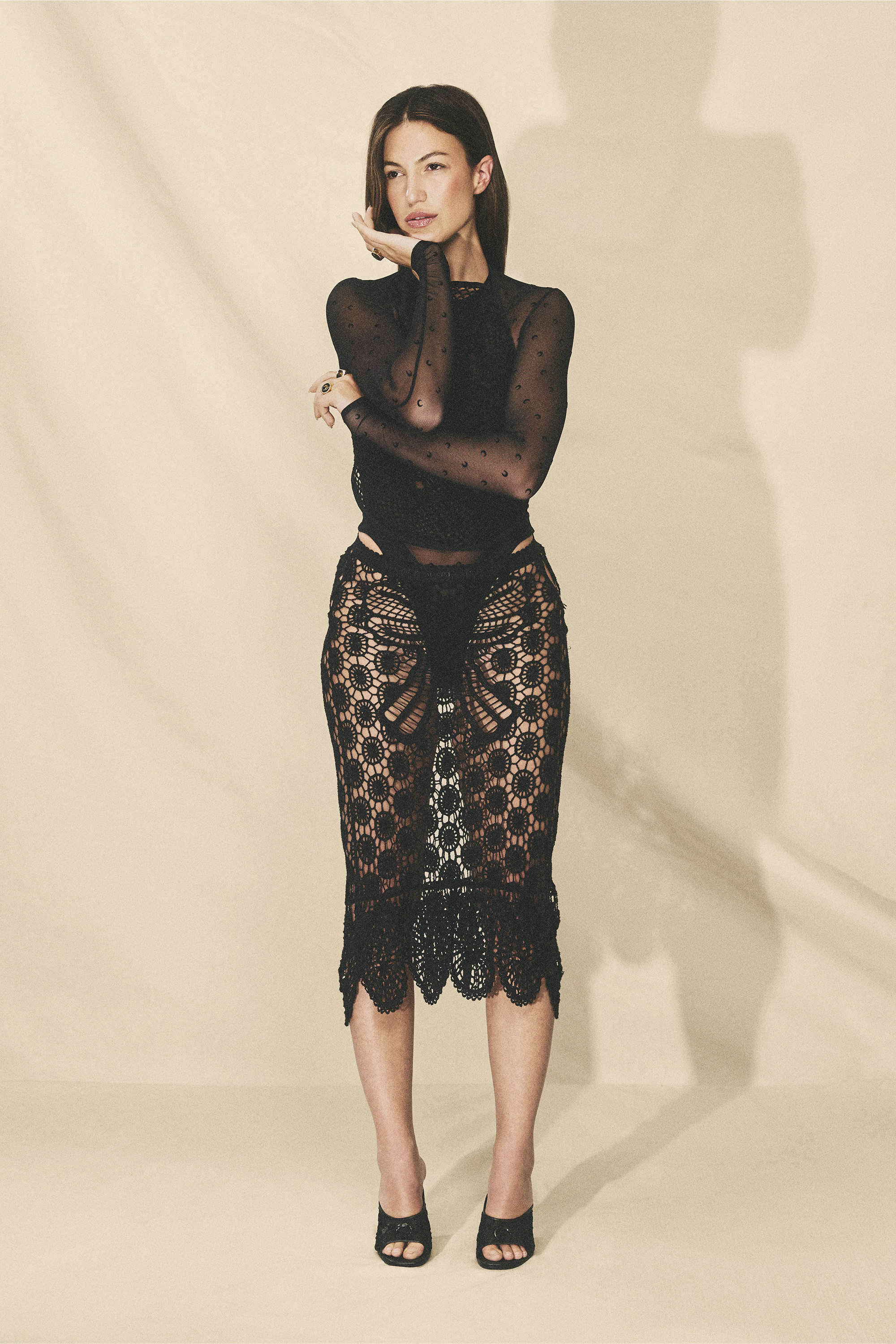
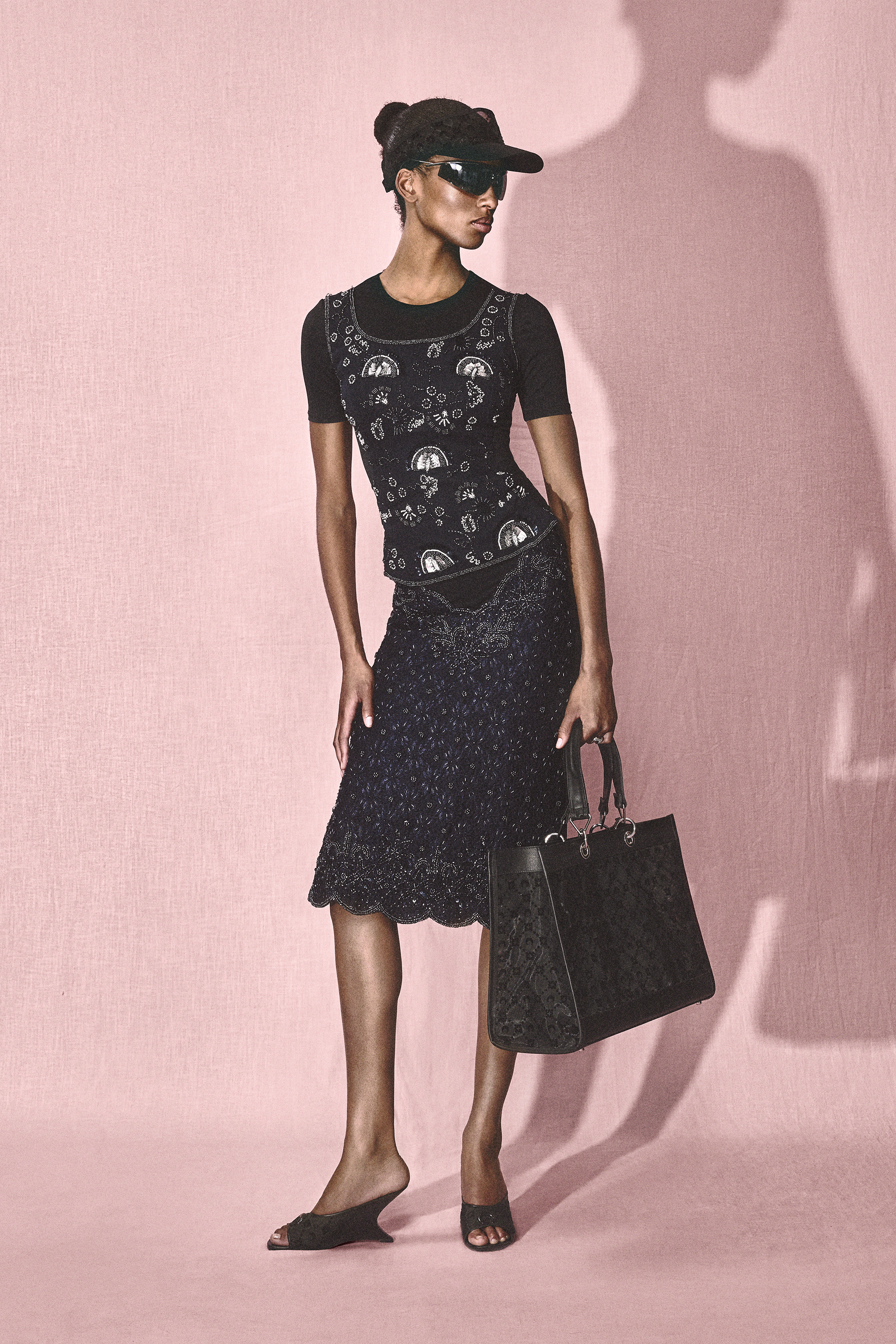
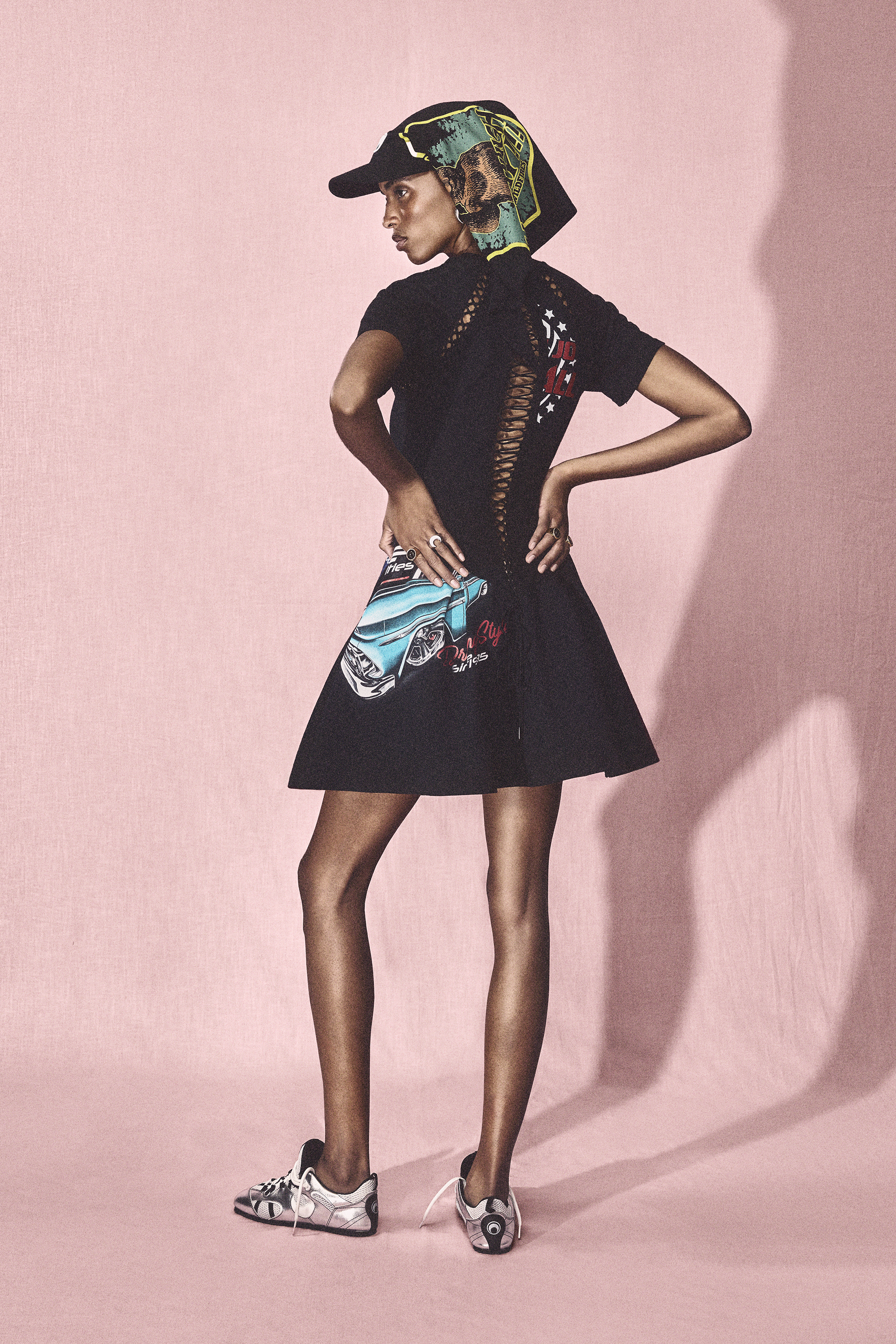
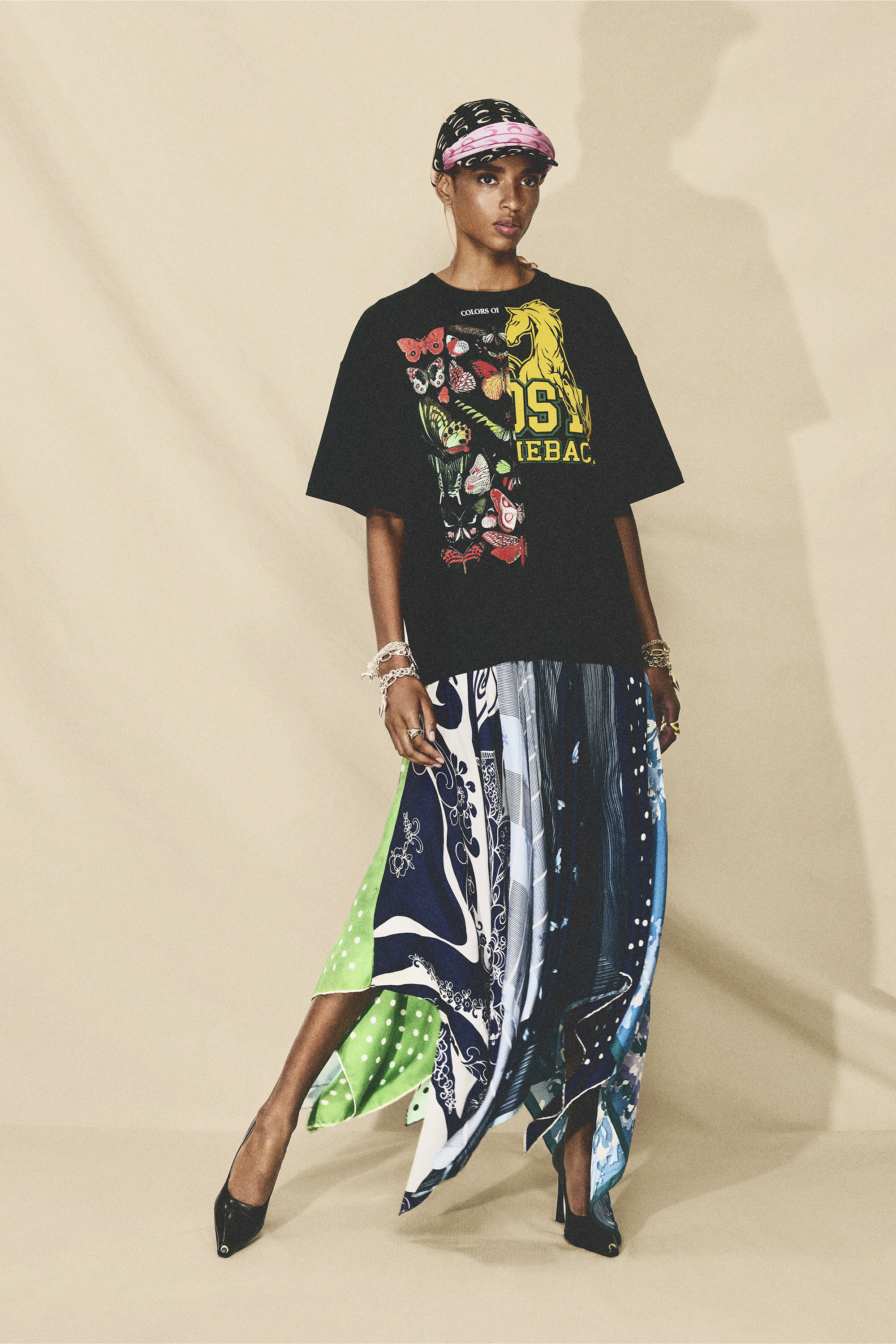
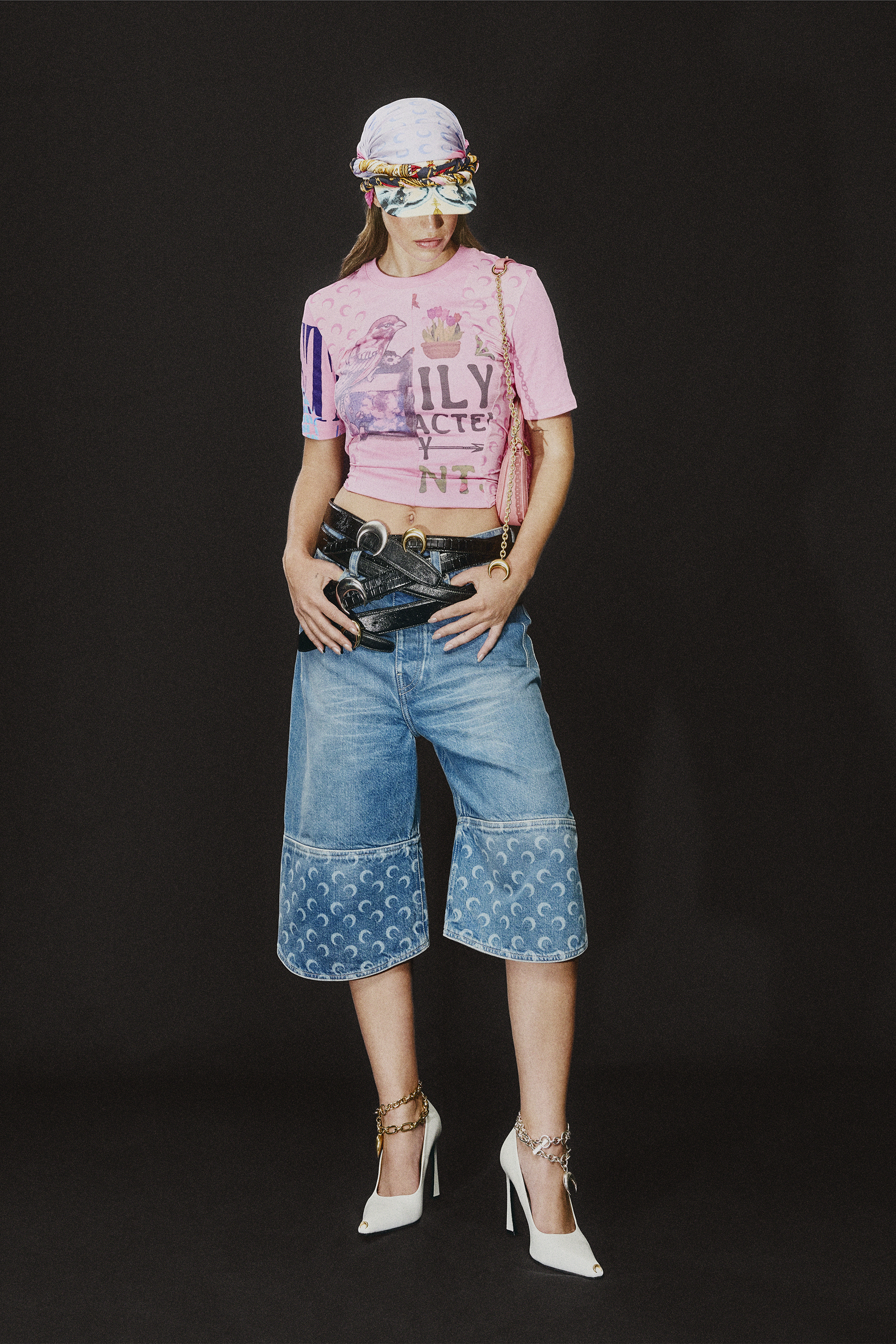
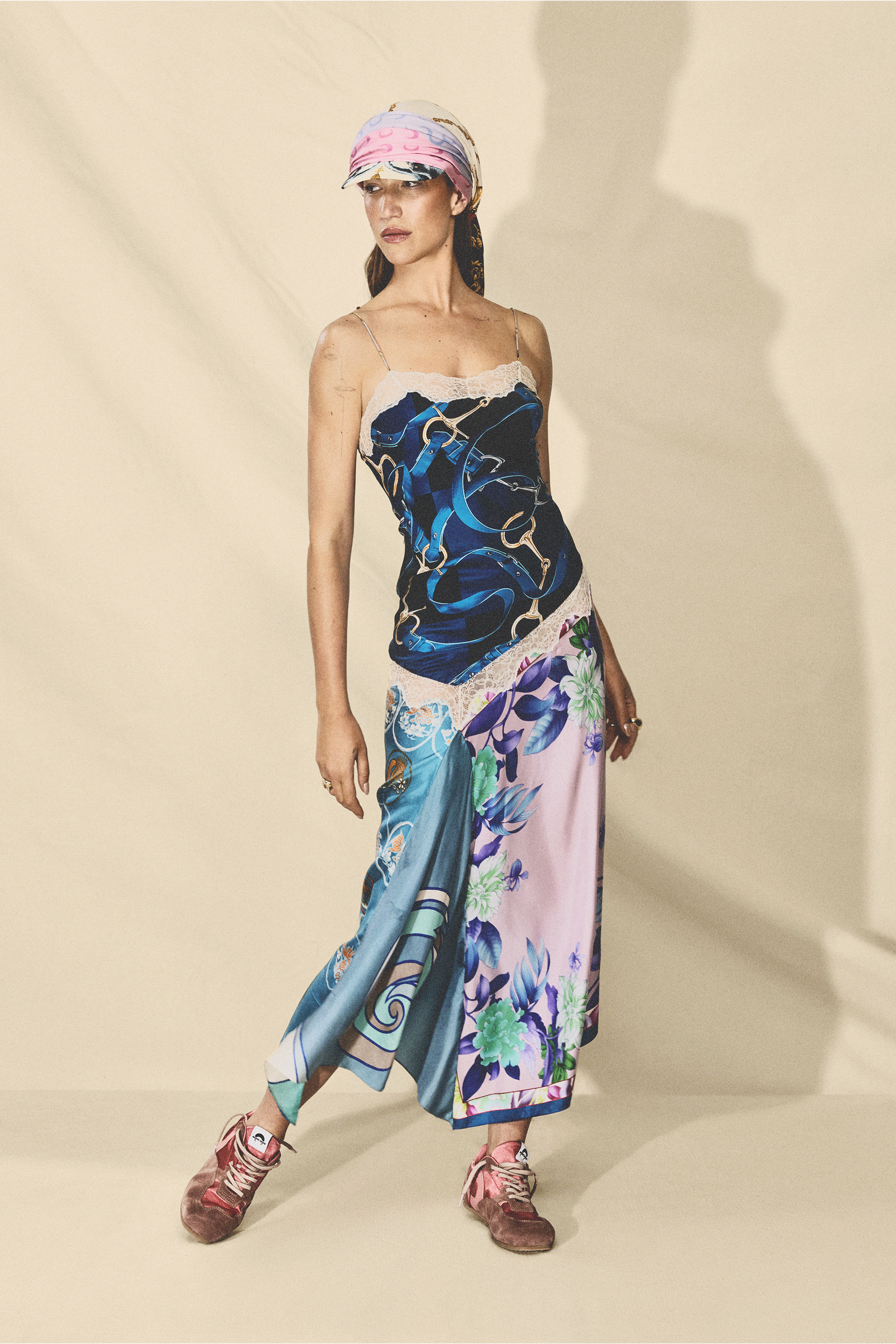
Vintage silk scarves, T-shirts, sequins, lace and crochet are dismantled and reconstructed. Frayed tweed and damaged surfaces are not polished into anonymity. Their histories remain visible. This is where Serre’s regeneration idea is most convincing; not when it is presented as virtue, but when it creates an actual design problem.
What can you do with something that already had a life?
The answer here is fragmentation: density against transparency, roughness against shine, old textiles against precise construction. Upcycling becomes less of a moral statement and more of a formal weapon.
Then comes eveningwear.
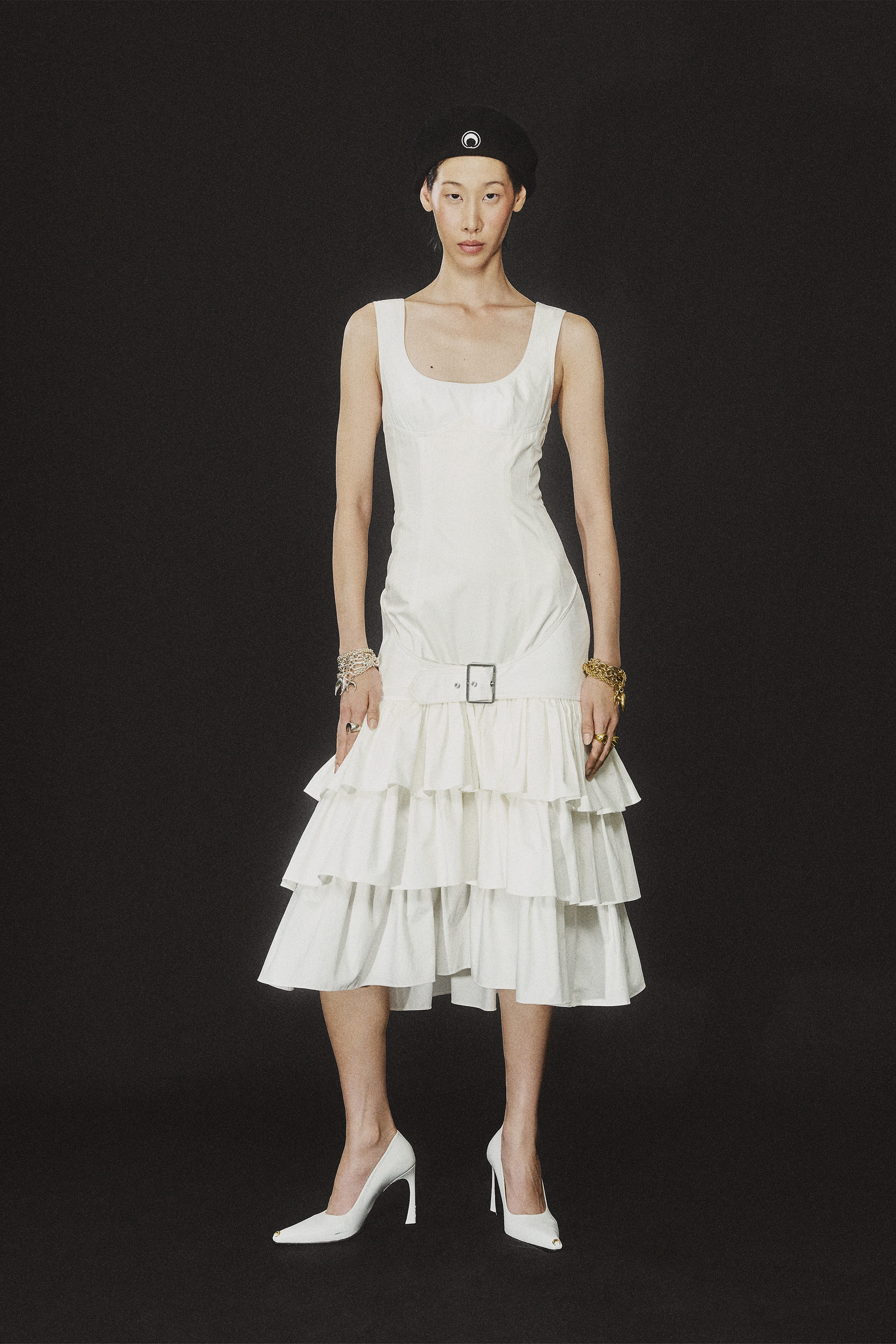
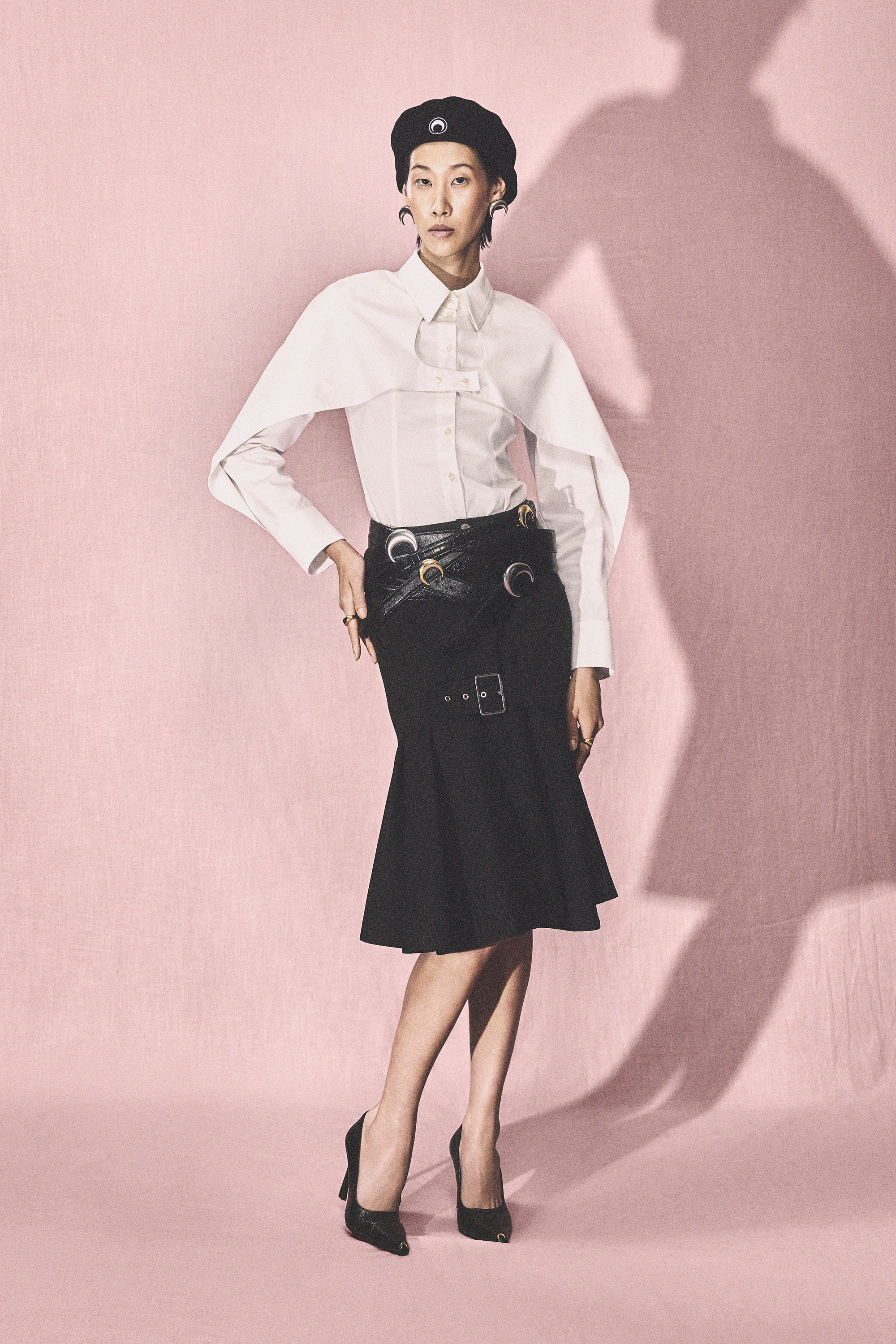
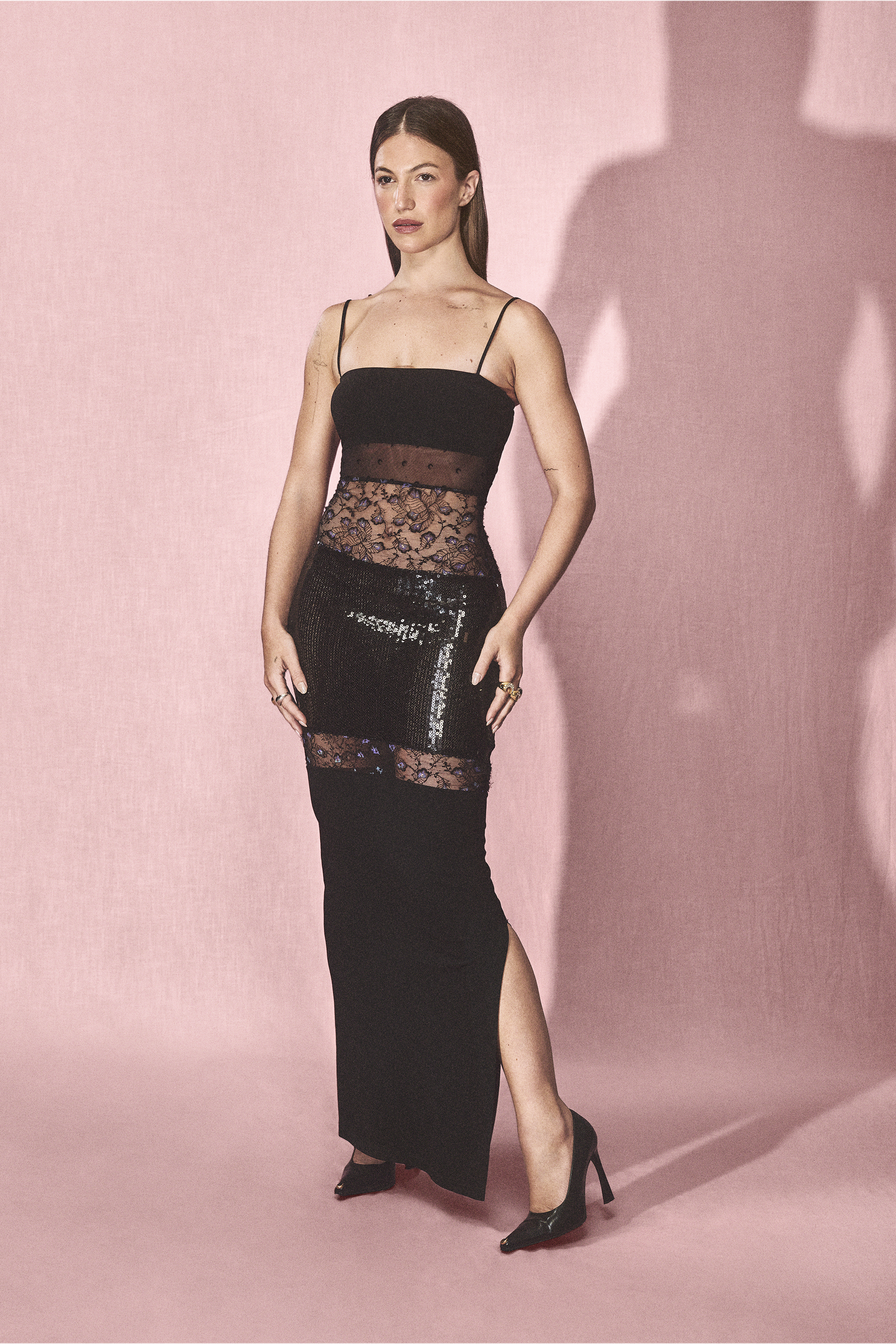
Dropped belts sit low on the hips, almost provocatively low. Volume gathers underneath. Ruffles move around the knees. Shoulders become architectural. Crisp white shirts acquire small capelines. Lace, cut-outs and transparent layers trace the body without freezing it in place.
It is sensual, but not particularly interested in asking permission.
And then the colour arrives.
Sky blue. Acid yellow. Saturated blue. Green. Pink. Red.
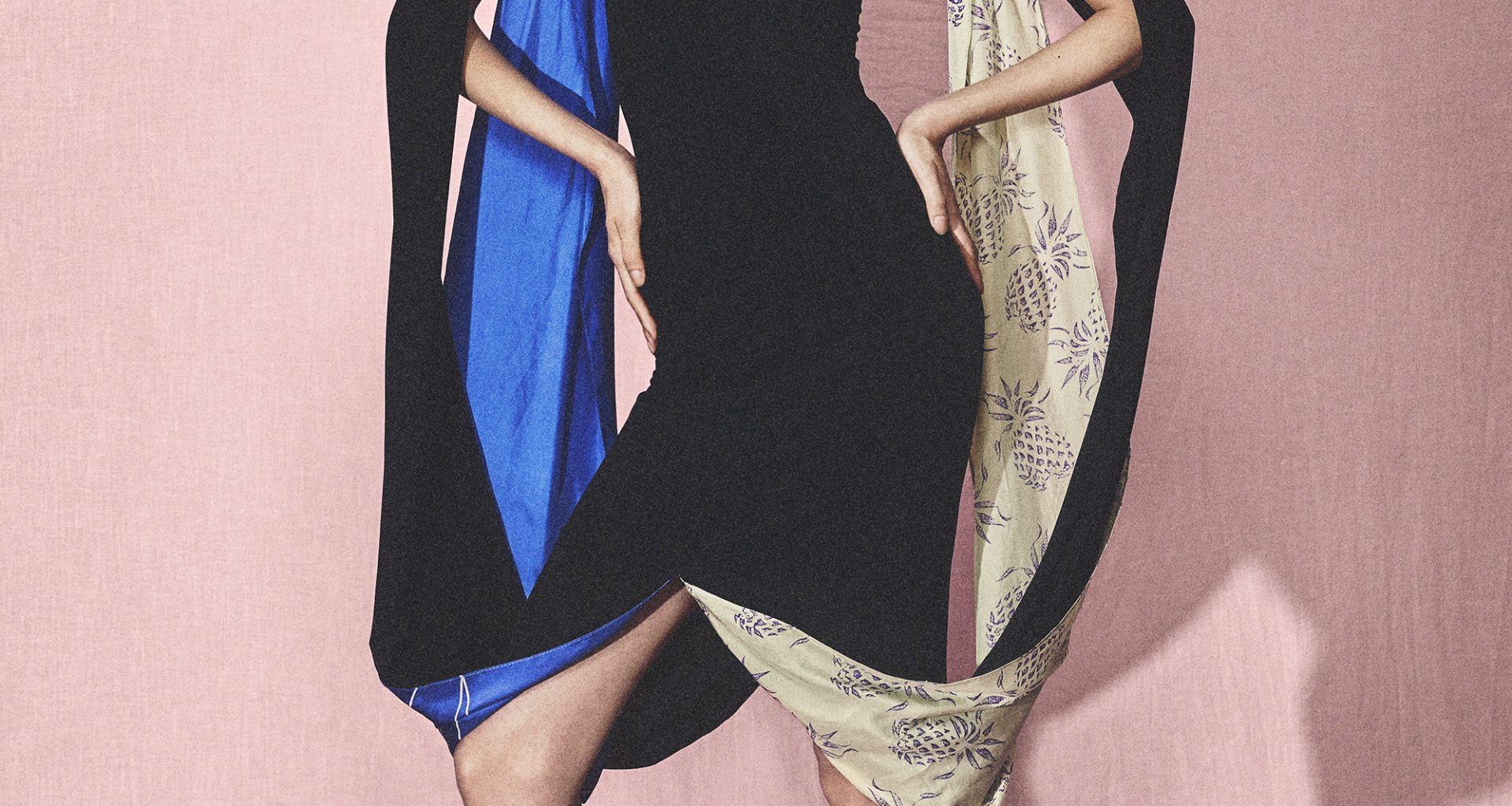
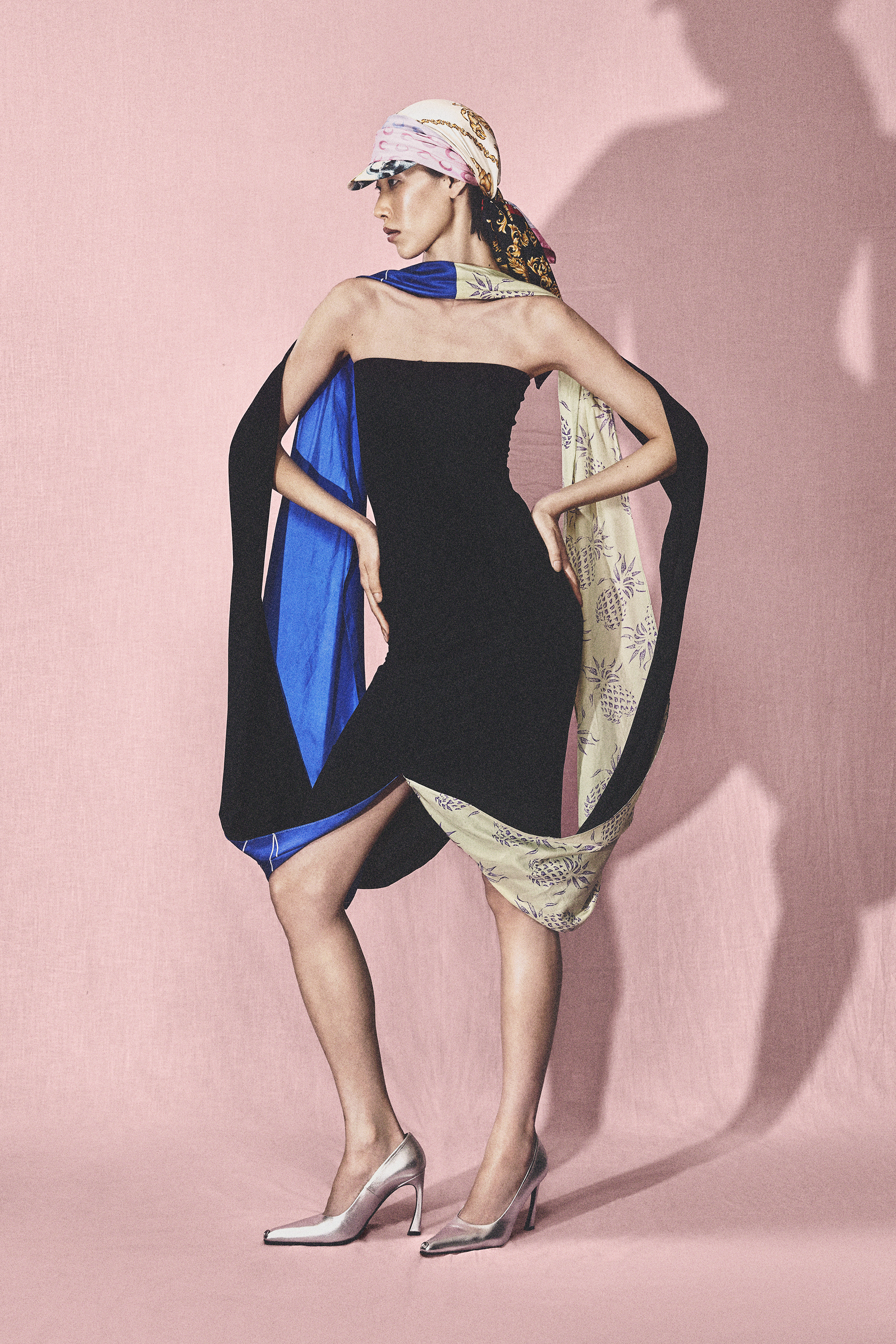
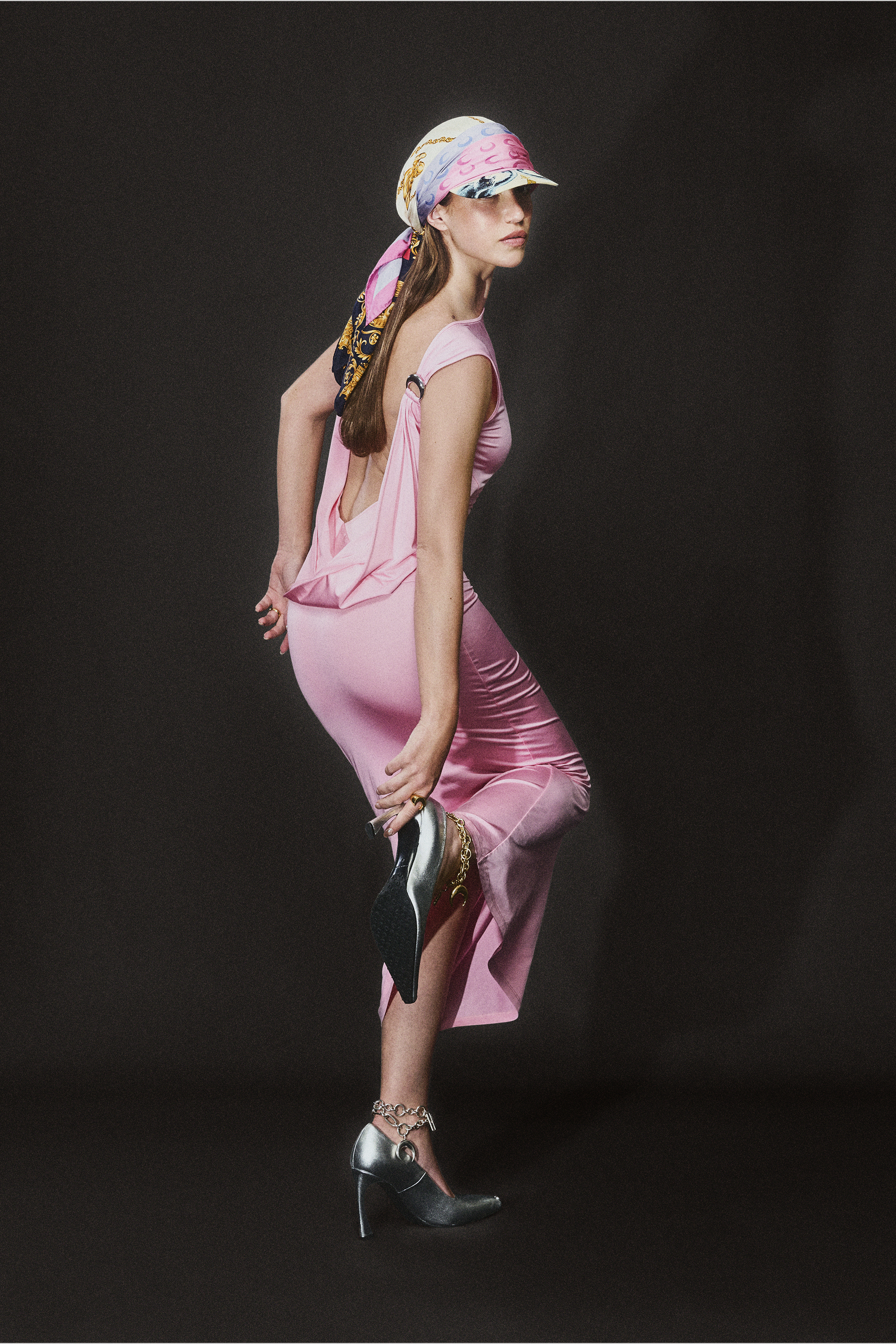
Sequins catch the light like scales. Silk scarves become dresses, drapes become wings, accessories start behaving like garments. A tube dress grows two long silk extensions and suddenly stops being a tube dress at all. The collection becomes increasingly fluid, increasingly excessive, without abandoning the central Marine Serre proposition: clothes should move.
This is perhaps where The Deep Shine is strongest: not in its mythology, but in its physicality.
The collection wants to be worn.
That sounds obvious. It isn’t.
A lot of contemporary fashion is designed to photograph well before it is designed to live well. Serre’s best clothes have always understood the opposite equation: the image comes from the movement of the body, not the other way around.
But there is another story running underneath this collection, and it is harder to ignore.
In July 2026, Marine Serre SARL entered redressement judiciaire, the French court-supervised restructuring procedure. The company had declared a cessation of payments dated May 11 and has been seeking a financial investor. The brand has attributed the pressure to unpaid client invoices, weaker consumption and rising costs. (societe.com)
That changes the way The Deep Shine reads.
Not because a difficult balance sheet automatically makes a collection more interesting. It doesn’t. And not because financial trouble should be turned into fashion mythology. That would be lazy.
It matters because Marine Serre has spent almost a decade proposing regeneration as both an aesthetic and an operating principle. Now the question is uncomfortably literal:
Can the business regenerate too?
The irony is hard to miss. A label built around giving materials a second life is itself being forced to find one.
There is no need to romanticise that.
Marine Serre’s cultural relevance has never guaranteed commercial stability. A recognisable logo is not a business model. Critical attention is not cash flow. And an uncompromising creative language can become expensive to maintain precisely because it refuses the shortcuts that make a larger fashion machine easier to scale.
That tension makes The Deep Shine more interesting, not less.
The collection does not look like a brand desperately trying to reinvent itself. If anything, it looks more controlled. More sensual. Less dependent on the obviousness of the Moon. The house code is still there, but it has moved underneath the skin.
Maybe that is the real test for Marine Serre now.
Not whether the moon can still be recognised.
Whether the clothes can still make us look twice.
The light is still on. The question is what happens next.